RSS
 

Archive for February, 2013

Anatomy of a Modeling Session

05 Feb

This was taken with the Canon EOS-1D X and EF 85mm f/1.2L II. I had a 600EX-RT speedlite on camera to provide just a touch of fill. Exposure was 1/250, f/1.2, ISO 100.

I am often contacted by people who are interested in modeling, either as a hobby, or to build a portfolio to try and model professionally. It’s one of the more fun things I get to do with a camera, as it allows me to be creative and really direct things a bit.  Models can be great to work with- both to build their portfolio as well as your own.  Aspiring models are often looking to diversify their portfolio, and are willing to trade time for images. I’ve developed working relationships with several models so that when I want to try something new, they are usually game.  In addition, they will call me when they have an idea they want to add to their portfolio.  This type of relationship can be liberating, since you are creating portraits for a client who is paying, and depending on your for an image.  Rather, it’s a joint collaborative effort that yield phenomenal results.
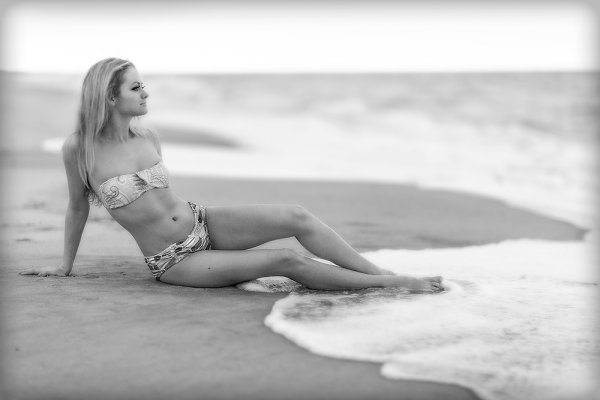
The headshot above was taken within the first few shots of the session. This one was the next sequence. I backed off to shoot her full length. Exposure 1/1250, f/1.2, ISO 100. Lens was the EF 85mm f/1.2.

I enjoy working on location with models because locations can offer a variety of settings. They also offer their own set of challenges.  When I begin planning a model session, I propose several locations, as well as an overall concept.  It’s important to agree on these things ahead of time so you are both on the same page for overall direction.

Once the shoot and location is agreed on, I always hold a discussion with my subject, discussing the goals of the shoot, as well as any ideas I had.  I would ask the model to let me know if he or she had any ideas or shots in particular as well. Once the general concept is down, we discuss outfits. Many times the model will send me photos of outfits they have or want to try, and this will lead to more discussion.  Generally, by the time this exchange happens, both myself and the model have a very good idea of what we want, and what the plan is, that when the day of the shoot comes, we’re ready to go with no questions.  By the way, this process works great for my portrait sessions as well.

Locations present their own benefits. In this case, the lifeguard stand offered some nice options for posing. A reflector to the right of the model helped kick a bit more light into her face. EOS-1D X, EF 85mm f/1.2L II. Exposure is 1/640, f/2.8, ISO 100.

So we’ve discussed outfits, concepts, and location. Once I know what the model is looking for and what we want to do, I pack my bag.  Camera body, speedlites, spare batteries, lenses.  Which lenses? Depends on the shots I’m looking for, but  my go-to lenses for portraits and models are pretty much the EF 85mm f/1.2L II, the EF 100mm f/2.8L IS Macro, and the EF 70-200 f/2.8L IS II. Depending on what else I’m looking for, I’ll use a EF 24-70mm f/2.8L II for wider shots that become more of a landscape with a model in it than a portrait.  If I’m planning on using off camera speedlites, I’ll also bring however many I plan to use- usually two or three- as well as modifiers such as soft boxes. In addition, I ALWAYS have a reflector with me to use with both speedlites or natural light.  Right now, my camera of choice is the Canon EOS-1D X.

You’ll notice my go-to lenses are all f/2.8 or faster.  The ability to blur the background using a wide aperture is important to me, so anything distracting or unimportant can simply be blurred out.  I like to show a context without being literal about it.  So while you’ll see the sand and water in the background, it doesn’t have to be sharp. The furthest I’ll stop down, generally, is about f/5.6, but I normally will shoot at anywhere from f/1.2 to f/4.

When I do a model portfolio, or even a portrait shoot, I generally go in with an idea of the look I want to achieve. I try to maintain the same look for every file. When shooting on location, this assumes the light and the weather cooperate.  Invariably, there are times when the weather does not cooperate and you have to adjust.  The shoot that produced the accompanying photos are a case in point.  I planned a sunrise shoot.  I envisioned soft, warm, light on the model’s face, with orange glows on the sand and soft pink sunrise skies.  Instead I got fog and flat grey clouds.  Change of plans.

I pretty much decided when I arrived at the location that I was going to go for a monochromatic look.  The light was flat, the sky was grey, everything just “felt” black and white.  That’s not to say I didn’t do any color- but overall the look was for black and white.  Generally when I’m shooting a model my goal is variety.  If it’s for a portfolio, I want to be able to get several shots they can use for their book.  I’ll work wider for full body shots, then close in for tighter head shots.  I’ll generally let the model pose as he or she feels comfortable, tweaking the poses when I see something that needs to change- a tip or turn of the head, a repositioned hand, a stray hair.

I always have a reflector on hand. Even on a dull, cloudy day, a reflector can add enough punch to the light to create catch lights in the eyes, fill in the soft shadows around the eye sockets, and generally just make things pop better.  I use a two-sided reflector by Westcott, with one side silver and the other side uncoated muslin. On a day like the one the accompanying photos were taken on, I used the silver side of the reflector since it kicked more like back up than simply using the white side.
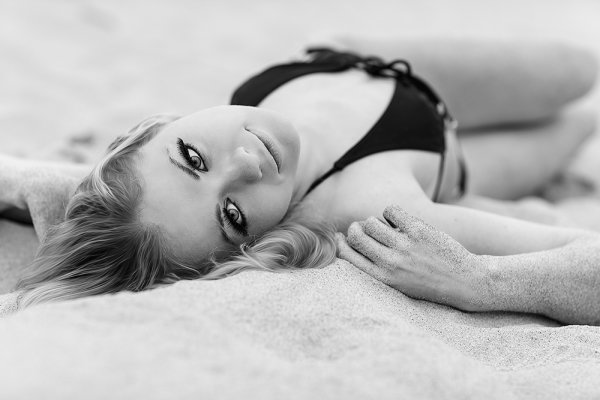
For this shot, I asked Yuliya to just pose in the sand. Rather than have her move, I moved around her 360°. She did her thing and we ended up with a few nice images. EOS-1D X, EF 85mm f/1.2L II. 1/250, f/2.8, ISO 100.

During the session, I try to mix full-length shots with tight closeups.  Once I think we’ve captured the essence of the current outfit, I’ll quickly ask the model if there was anything else he or she wanted from it that we didn’t do, and then suggest a change to next one. This avoids belaboring one outfit or using so much time on one outfit that you don’t get to the rest.

I will show the model what I’m getting periodically so they know what we’ve got.  The last thing I want to hear is that they wanted something we didn’t get, after the fact.  This feedback is valuable because if the model doesn’t feel they look right, it can be changed before it’s too late.  It also gives them an idea of what you’re capturing and allows them to modify their posing accordingly.

When it comes to processing the images, I try to make sure the look of all the files is fairly uniform.  I want each session to stand alone as its own body of work.  I do vary certain things, but generally I will use the same styles.   Once all images are downloaded, I go through and choose the keepers.  Then I process each, retouching the skin, the hair, and the eyes.  To me, portraits and model photography isn’t about reality.  It’s about flattery. You want to make your subject look good.
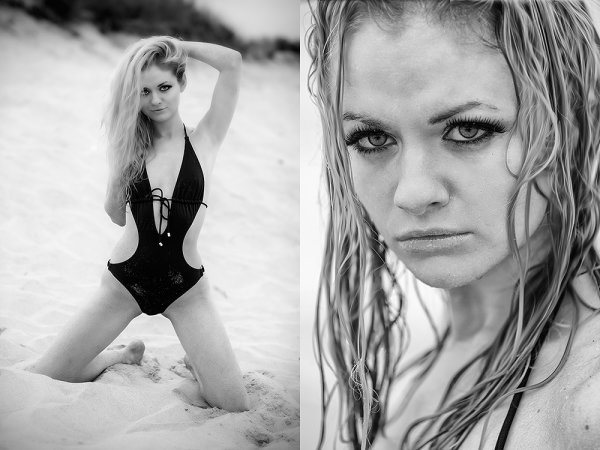
These two images were taken with the EF 70-200 f/2.8L IS II on the 1D X. It's one of my favorite lenses because it allows me to start off loose and then go in tight without being in the model's personal space.

Post originally from: Digital Photography Tips.

Check out our more Photography Tips at Photography Tips for Beginners, Portrait Photography Tips and Wedding Photography Tips.

Anatomy of a Modeling Session


Digital Photography School

 
Comments Off on Anatomy of a Modeling Session
Posted in Photography


Casio’s Jin Nakayama rules-out mirrorless, promising fast future for compacts

05 Feb

Jin_Nakayama.jpg

CP+ 2013: Casio wants to make cameras that allow non-photographers to take better images, and that could mean large sensor compacts, says Jin Nakayama, Senior General Manager of the company’s QV Digital Camera Division, but don’t expect a mirrorless camera. The company, which makes some of Japan’s best-selling compacts, has a development strategy Nakayama believes will distinguish it from smartphones while also staying a step ahead of its camera rivals, he says.

News: Digital Photography Review (dpreview.com)

 
Comments Off on Casio’s Jin Nakayama rules-out mirrorless, promising fast future for compacts

Posted in Uncategorized


Panasonic discusses its GH3 and the challenge of making a high IQ compact

05 Feb

Uematsu-Inoue.jpg

CP+ 2013: Panasonic is considering which cameras it needs to appeal to the different demands for Micro Four Thirds in different countries. We spoke to Michiharu Uematsu, Special Adviser, Imaging Business Group and Yoshiyuki Inoue, Senior Engineering Planner, Marketing Group, Imaging Business Group. They explain the challenges of making and marketing a high image quality compact and suggest the GH3 won’t get focus peaking.

News: Digital Photography Review (dpreview.com)

 
Comments Off on Panasonic discusses its GH3 and the challenge of making a high IQ compact

Posted in Uncategorized


(Cover) Lemon Tree – Fools Garden – One Man Band by Miguel P. Senent

05 Feb

Well, here is something I’ve been working on these last two weeks in my spare time. This song is simply awesome, everybody knows that, so I decided to do a full one man band cover 🙂 I started transcribing every sound I could hear in the original song, but I arranged it to be played using various instruments that are clearly not used in it, like my old Oboe, which I hadn’t played since I dropped it when I was 14! haha I recorded everything into REAPER using an M-Audio Fast Track Pro interface and the t.bone SC600. The electric guitars, bass, piano and synth were plugged directly into the interface via line in. Sadly I don’t own any drum set, so I had to do that using Addictive Drumms, a really cool vst plug-in. Guitar Rig 4 was used for both electric guitars and bass. The video was recorded using my Nikon D90 and edited in Sony Vegas. I hope you enjoy! And don’t forget to subscribe 😉 And thanks to my friend Jordi for the bass guitar!

Jessops ‘The Shot’ Directed by Dave Thomas. A short documentary shot at dawn following S?awek Staszczuk as he works to capture a unique and illusive image of the Seven Sisters cliffs. Will this talented landscape photographer achieve his perfect shot or not? CREW Dave Thomas (Co-producer /director) editor, camera, composer Nell Garfath-Cox (Co-producer/director), camera S?awek Staszczuk — Landscape photographer
Video Rating: 4 / 5


7 Abandoned Wonders of Residential Architecture

04 Feb

[ By Steph in Abandoned Places & Architecture. ]

Abandoned Homes Main

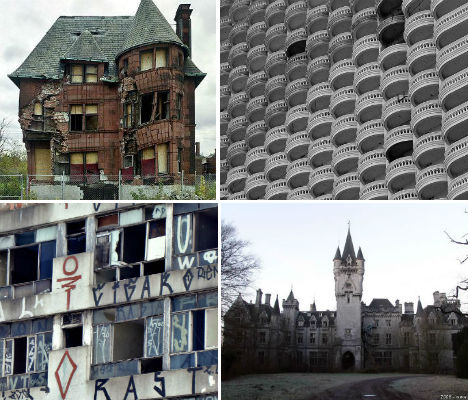
Palatial chateaus, ordinary suburban homes, skyscraper residences and vertical slums alike have been abandoned by their human inhabitants and given over to rot and ruin. Whether they represent once-opulent refuges for the rich or some of the most shocking conditions of abject poverty in the world, these 7 ghostly abandoned wonders of residential architecture are deliciously creepy and strangely beautiful, if a bit sad.

Chateau de Noisy, Belgium

Abandoned Homes Chateau de Noisy 2

Abandoned Homes Chateau de Noisy 1

(images via: polanri)

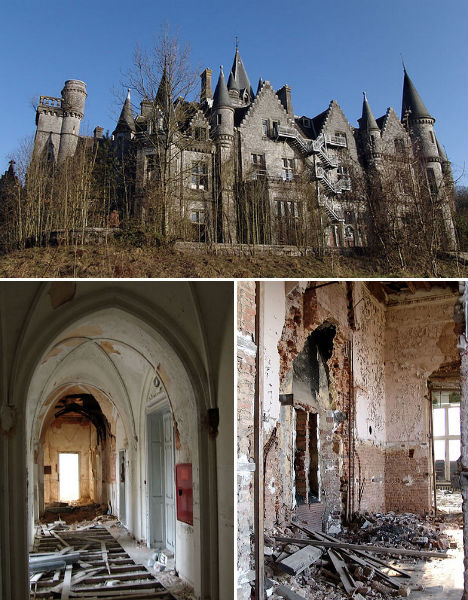
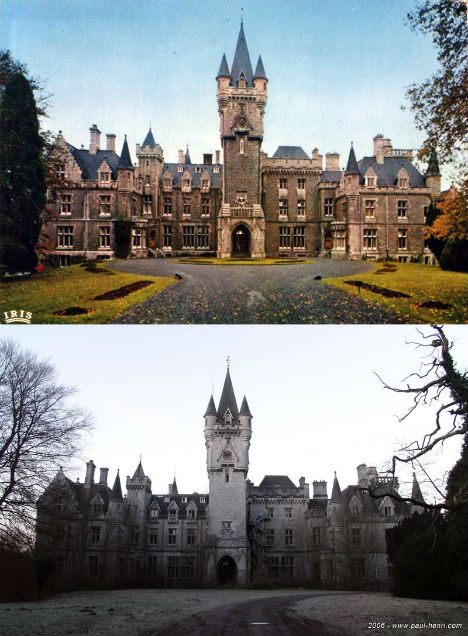
Officially named Chateau Miranda, this neogothic castle was built in 1866 by an English architect who passed away before it was completed. It served as a summer residence for a wealthy family until it was commandeered by Nazis during World War II. For decades afterward, Chateau Miranda operated as a hotel and accommodation for children of Belgian road employees, but in 1991, a fire led to its abandonment. Since then, it has been given over to decay.

Touring the dilapidated chateau is fairly dangerous, as most of the upper floors have decayed and fallen through. It’s a shame to see something that was once so beautiful fall into ruin. Urban explorers give a firsthand account of sneaking in and taking some beautiful photos of the interior at TalkUrbex.com.

Sathorn Unique Skyscraper, Thailand

Abandoned Sathorn Unique Skyscraper 2 Abandoned Sathorn Unique Skyscraper 3 Abandoned Sathorn Unique Skyscraper 1

(images via: abandonedjourney.com, earth-bound misfit)

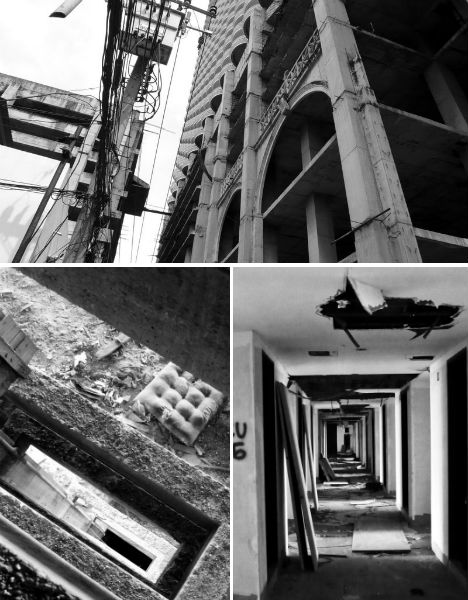
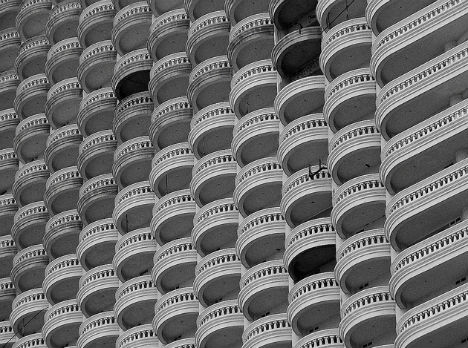
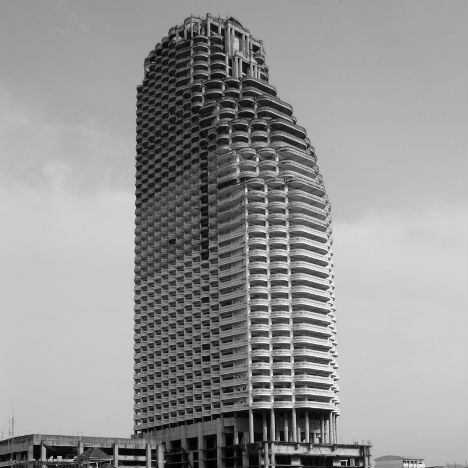
The 47-story Sathorn Unique Tower was supposed to be a well-appointed modern residence for well-to-do citizens of Bangkok, Thailand. Now, it’s a ghost tower, standing eerily empty and silent against the skyline of the city, its concrete surfaces already stained and rusted. Developers built this and many other skyscrapers in Bangkok during an economic boom, but fortunes fell, the developers went bankrupt, and the buildings stand empty. During storms, debris from the structures rain down upon the streets below. Inside, it’s virtually pitch black, and exposed metal pipes and frames should make explorers wonder when they last had a tetanus shot. At the top, however, it’s easy to see why this would have become one of the city’s most prestigious addresses.

Abandoned Prince’s House, Russia

Abandoned Homes Russian Prince 1 Abandoned Homes Russian Prince 2 Abandoned Homes Russian Prince 3

(images via: english russia)

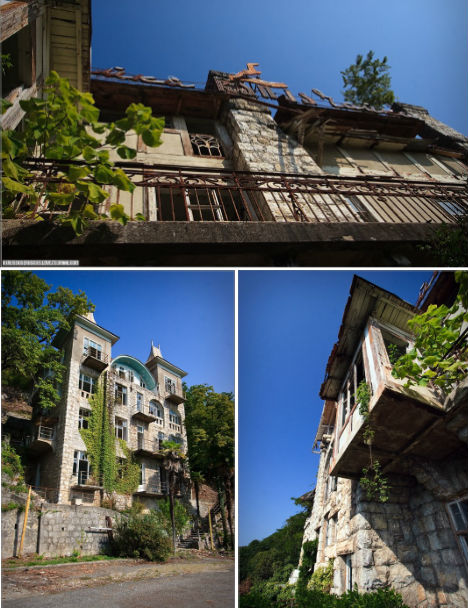
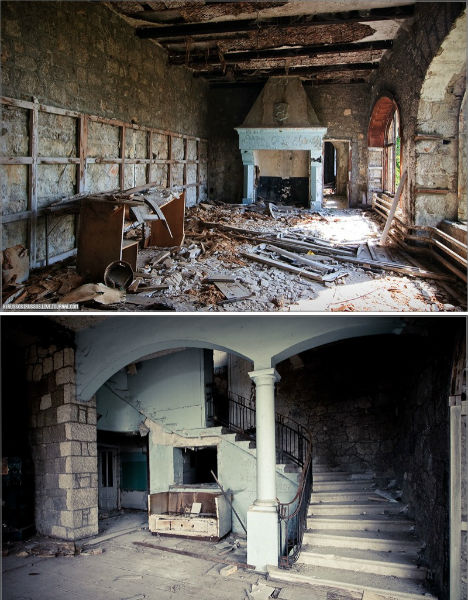
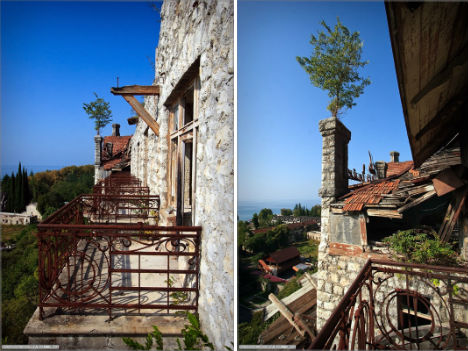
Perhaps abandoned mansions, castles and chateaus are so fascinating because it’s difficult for many of us to understand how something that cost so much money could be allowed to decay. Someone went through the trouble of designing the home, choosing decorative elements and purchasing fine fixtures, only for them to be ruined far before they should have. This Russian prince’s house located on the Black Sea in Abkhazia is one example. Overlooking what was known to upper-class Russians as the ‘Russian Riviera’, the castle is nearly 200 years old.

But, like many things, it lost its grandeur during the Soviet era. It was converted to the Hotel Seagull on Stalin’s orders, a summer residence for male government officials from Moscow. Once the Soviet Union collapsed, it was abandoned; with the nation of Georgia so often at war, restoring it is not exactly a high priority.

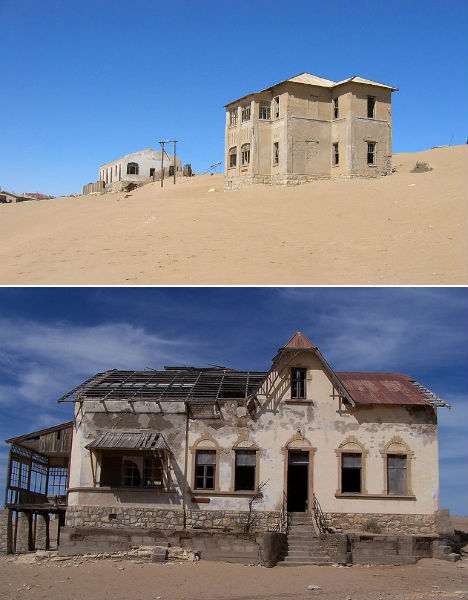
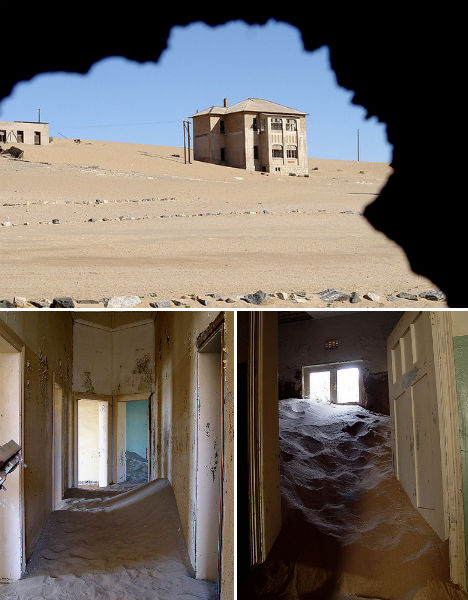
Kolmanskop, Namibia

Abandoned Homes Kolmanskop 1 Abandoned Homes Kolmansop 2

(images via: wikimedia commons, geoftheref, coda)

Among the most surreal abandonments is the old diamond mining town of Kolmanskop in Namibia. This ghost town was once a small but very rich village, filled with German miners who were attracted by the potential for quick and easy wealth. It’s built in a German architectural style. The town declined after World War I, and was abandoned altogether in 1954.

The most interesting thing about Kolmanskop is the fact that its homes, hospital, ballroom, school and other buildings are now filled with sand, making it seem as if they’re sinking. The hot, windy desert climate blows sand in through the windows and doors.

Next Page:
7 Abandoned Wonders Of Residential Architecture

Share on Facebook


[ By Steph in Abandoned Places & Architecture. ]

[ WebUrbanist | Archives | Galleries | Privacy | TOS ]


WebUrbanist

 
Comments Off on 7 Abandoned Wonders of Residential Architecture

Posted in Creativity


Panasonic promises high sensitivity sensors using ‘Micro Color Splitters’

04 Feb

mcsthumb.jpg

Panasonic has devised a method to increase the sensitivity of image sensors, by replacing the near-universal colour filter array with prism-like ‘Micro Color Splitters’ to generate colour information. The key advantage is that all of the incoming light is directed to the sensor, instead of half or more being absorbed by the color filter dyes. This promises to deliver images with less noise in low light. The development is published in the journal Nature Photonics, and outlined in a press release on Panasonic’s website.   

News: Digital Photography Review (dpreview.com)

 
Comments Off on Panasonic promises high sensitivity sensors using ‘Micro Color Splitters’

Posted in Uncategorized


The Vagina: An Erotic Short Film

04 Feb

Sony A77 Shot at 1080p 24fps Directed by Derek Souders Written By Quinn Parker Starring Quinn Parker Short film shot on entirely on the Sony A77 (Test footage). At some random Parking Lot near Orlando, Florida. About 15 mins from Walt Disney World We go to film at Full Sail University. So we would like some feedback please so we can improve are selves. So please comment below and tell us how you feel about it. Canon EOS 5D Mark III key specifications 22MP full frame CMOS sensor ISO 100-25600 standard, 50-102800 expanded 6 fps continuous shooting Shutter rated to 150000 frames 1080p30 video recording, stereo sound via external mic 61 point AF system 63 zone iFCL metering system 100% viewfinder coverage 1040k dot 3:2 LCD Dual card slots for CF and SD
Video Rating: 3 / 5


VSP Visual Street Performance 2007 @ Fabrica Braco de Prata, Lisbon, Portugal

04 Feb

A few nice visual art images I found:

VSP Visual Street Performance 2007 @ Fabrica Braco de Prata, Lisbon, Portugal
visual art
Image by Graffiti Land

 
Comments Off on VSP Visual Street Performance 2007 @ Fabrica Braco de Prata, Lisbon, Portugal

Posted in Photographs


How to Charge for Your Work: Making the Leap from “Favor” to “Job”

04 Feb

So you’ve got a passion for photography, a slew of great photos that show you’ve really got talent and the desire to transition your photography skills from something that has been strictly a hobby into something that will allow you to earn money. What happens next? If you’re like most folks, you may start by offering to take photos of Continue Reading

The post How to Charge for Your Work: Making the Leap from “Favor” to “Job” appeared first on Photodoto.


Photodoto

 
Comments Off on How to Charge for Your Work: Making the Leap from “Favor” to “Job”

Posted in Photography


New York City (Canon 7D)

04 Feb

This is short video I put together while in New York City (December 2009). It’s my second test with the Canon 7D. Equipment used: Canon 7D, Nikkor 50mm/f1.4 (w/Fotodiox pro adapter), Canon 10-22 f/3.5-4.5. Canon 28-135 f/3.5-5.6 Transcoded with CineForm Neoscene. Edited and graded in Sony Vegas Pro 9. www.facebook.com