RSS
 

Archive for January, 2013

Hidden Beauty: Savvy Secret Room & Passageway Engineers

16 Jan

[ By Steph in Design & Fixtures & Interiors. ]

Hidden Rooms 1

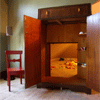
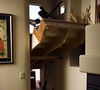
Whether they hold a cache of high-tech, Batman-style weaponry or just a quiet retreat from the kids, secret rooms can make anyone feel as if they lead a life of mystery and intrigue. A company called Creative Home Engineering designs incredible secret passage systems that are virtually undetectable, hiding private spaces behind bookcases, wine racks and ordinary-looking walls.

HIdden Rooms 2

Hidden Rooms 5

While many secret rooms involve replacing a regular door with a bookcase on hinges, Creative Home Engineering’s carefully designed systems contain hidden cavities with steel structural support, so they won’t begin to sag or scrape over time due to weight and humidity.

Hidden Rooms 4

They’re also designed to blend flawlessly with the surrounding room. The key to security for any secret room, of course, is proper concealment. You could also get an optional vault door with a super heavy-duty locking system that can be integrated into your home security system. Other options include armored doors and biometric access control devices, like fingerprint scanners.

Hidden Rooms 6

While armor-plated panic rooms with hidden surveillance aren’t exactly accessible to most of us, financially speaking, it’s fun to dream about creating an network of secret passageways in our own homes.

Share on Facebook


[ By Steph in Design & Fixtures & Interiors. ]

[ WebUrbanist | Archives | Galleries | Privacy | TOS ]


WebUrbanist

 
Comments Off on Hidden Beauty: Savvy Secret Room & Passageway Engineers

Posted in Creativity


WP Photography – Cokin ND Grad Kit

16 Jan

A short video on the Cokin ND Grad Kit and filters put together a few months after I purchased them. Found them essential to my landscapes 80% of the time. www.wp-photography.co.uk http
Video Rating: 5 / 5


Let Them Run Around: Photographing Children

16 Jan

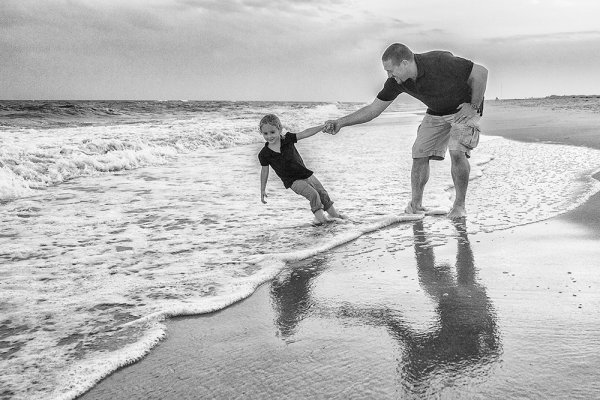
The girl in this photo was like the Energizer bunny- she wouldn't sit still! This photo was taken as part of a family portrait session. The posed shots were challenging because three young children didn't want to sit still. Once we allowed her to play in the surf a little, we got much better shots of her.

I am often asked by people, “What can I do to get my children to sit for a photo?” Children can be among the most compelling of subjects to photograph, and as a professional, one of the most profitable.  But children have this odd tendency to want to move around, and not sit still.  This can at times be frustrating when looking for that perfect portrait.  To combat this, as a photographer, a change in mindset is in order. Rather than trying to force the child to sit still, try allowing the children to move around.  Let them get involved in exploring their surroundings. No, you won’t get the traditional portrait of the subject sitting in front of the camera, but you may just get something better, more natural, and more fitting with the child’s personality.

Children can sometimes be the hardest subjects to photograph because they become self conscious in front of the camera.  The worst thing I’ve ever heard a parent say to a child when being photographed is something along the lines of “Let’s see a REAL smile!”  Parents think they are helping but saying such things makes the child wonder what’s wrong with the smile they just gave, and the next one will invariably be worse.  By putting children in their own element, allowing them to explore, to play, you elicit a more natural response that shows their true personalities.

This shot was taken in the child's own home. She was shy around the camera and wouldn't sit still for me. By allowing her to roam around, talk to me, get to know me, she let her guard down, and I was able to get some candid shots of her.

One of the ways to encourage children to be themselves is to put them in a setting that they’ll want to explore. A studio setting, while great for the photographer, can be a nightmare for children.  The lighting, the stands, the backgrounds are at times intimidating and at others distracting.  If a child is going to be distracted, have them be distracted by something that will make a great picture. Often, when I am approached by people to photograph their children, I’ll suggest a setting like a beach, a park, or even their own bedroom. These types of settings put them at ease. Once they are at ease, a variety of shots, including the traditional portrait, can be captured.

Another tack to take would be to schedule the session to specifically be a play session.  In the winter, with snow on the ground, a hillside with sleds can be an ideal setting for capturing children.  Bring a couple of sleds and let them have fun! Build a snowman! Have a snowball fight! In the summer, at the beach, playing in the water and in the sand provides a wonderful glimpse into children’s personalities. A pool will work just as well. Any park setting with a jungle gym is a great starting point for a children’s session. Let them climb, let them swing, let them get dirty.

Get the kids out and let them play!  Just be sure you are ready with the camera when they do.

In the winter, a snow-covered hillside can be the perfect setting for a children's session.


Post originally from: Digital Photography Tips.

Check out our more Photography Tips at Photography Tips for Beginners, Portrait Photography Tips and Wedding Photography Tips.

Let Them Run Around: Photographing Children


Digital Photography School

 
Comments Off on Let Them Run Around: Photographing Children

Posted in Photography


Sony 18-200mm f3.5-6.3 LE Lens Review

16 Jan

A variant of the original 18-200mm for the E-mount, I take a quick look at the differences of both 18-200mm lenses as well as its performance You can follow me on: Facebook – on.fb.me Twitter – bit.ly Blog – bit.ly
Video Rating: 4 / 5

Light – is one of the most impotent aspects of photography. Every photographer should know how to see light and how to use it. In this lesson we will be talking about light and its characteristics. A lot of examples for better visualization and understanding. Music: Kevin MacLeod. (Licensed under Creative Commons “Attribution 3.0”)
Video Rating: 4 / 5


Wintersun – Winter Madness Solo Cover (Garrett Peters)

16 Jan

My cover of Wintersun’s Winter Madness Solo Guitarist: Jari Mäenpää Album: Wintersun Tuning: E Standard So here it is! I really wanted to nail every aspect of this video, from the playing to the look. Wintersun is one of my favorite bands, one of the few albums that I can listen to front to back and love every second of it. This video took me a long time to do but I’m not going to upload something that isn’t what I want it to be. So again, thanks for the patience 😀 If you liked this video please consider subscribing or liking me on Facebook Huge thanks to Michael Berger of Engl amps for letting me use the Fireball 100 and my good friend Thomas Coatney for the interface, camera and helping me with the mix. I’m using the Engl Fireball 100 head paired with the Engl Standard V60 Cabinet. Wintersun’s Links: www.WinterMadness.net www.Youtube.com www.Youtube.com My Links: www.Facebook.com www.Youtube.com


3 Tips for Better Black and White Conversion using Lightroom

16 Jan

Ever wondered how the professional photographers get those dreamy black and white or sepia toned images? Wonder why yours come out looking dull and flat looking?  I’m going to give you 3 tips to help you do better black and white conversions using Adobe Lightroom, and solve that problem!

Today’s cameras are pretty smart, and many of them offer a black and white setting or shooting mode. I recommend using those to start, especially if you’ve never done any black and white (B&W) or if you are not currently doing any post processing or image editing on your files. BUT, if you have some experience with b/w photography, and you are processing your images, I recommend doing the conversion yourself as you have more control over the look of the final image.  I’m going to show you a few ways of converting them into B&W using Lightroom.

Note:  for the most part these tips will work in Photoshop as well, using the Adobe Camera Raw features and sliders.

First a quick note about my background. Back when I took my photography degree (dare I say, in 1987-88, and date myself) I spent the entire first year shooting black & white only, using a 4×5 view camera no less. I processed my own film and made my own prints. I spent a lot of time in a black & white darkroom, so I’m pretty well versed in how it works and how to control it to my advantage.

To grab some info from those film days, it’s important to note and understand that your camera sees light and colours differently than does the human eye. Black and white film sees blue tones much lighter than our eyes, for example.  Coloured filters were used to shift how the B&W film “saw” and rendered the scene.  Using a red filter would lighten anything red in the image and darken blue tones.  So if you were a landscape photographer you’d often use a red filter to darken the sky and make it less washed out.   A green filter would lighten green and blue tones and darken red and orange.  So photographers used the appropriate filter to capture the scene as they envisioned it.

In Lightroom and ACR (Adobe Camera Raw) in Photoshop you have the same tools at your disposal!  So without the use of filters, you can adjust how the scene is rendered in B&W.  That brings me to the first tip.

Tip #1 – use the B&W mix to do your conversions

In Lightroom’s Develop module (and ACR) there are a few ways that you can convert your images into B&W.  You can just pull the saturation slider all the way to left to -100. You can also do similar with the Vibrance slider, but it may not give you a 100% B&W image, depending on the image. Both of those options will give you a black & white result. However, they give you no control over how the colours render into the various shades of grey. A better choice, in my opinion, is to use the B&W mix, located on the third panel down on the right in Develop – see below.
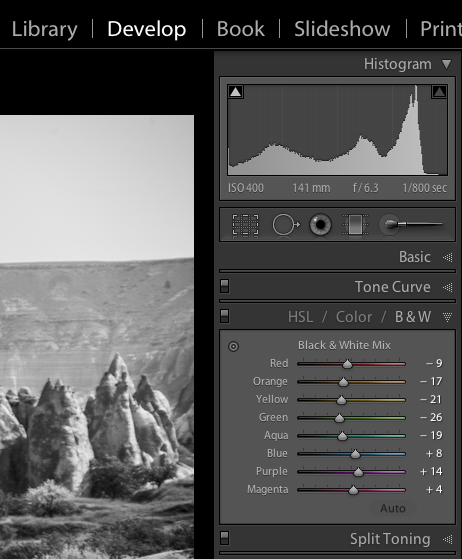
Black and white mix panel in Lightroom Develop module

Let’s take a look at an example using the same image.
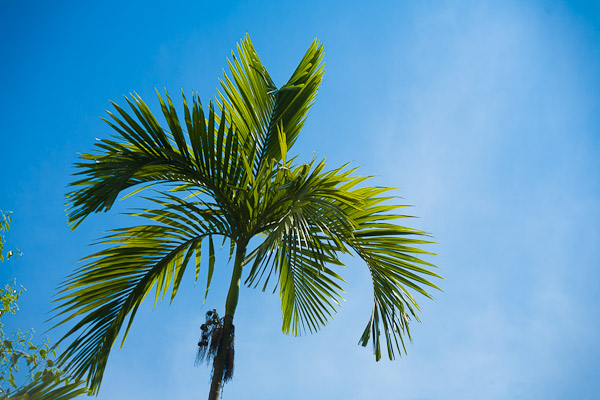
Original colour image
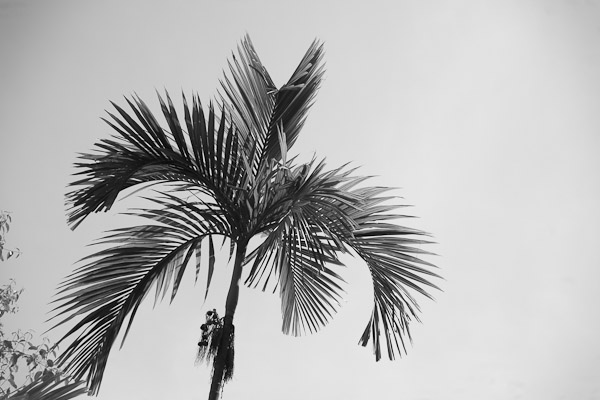
B&W conversion done using the Saturation slider at -100
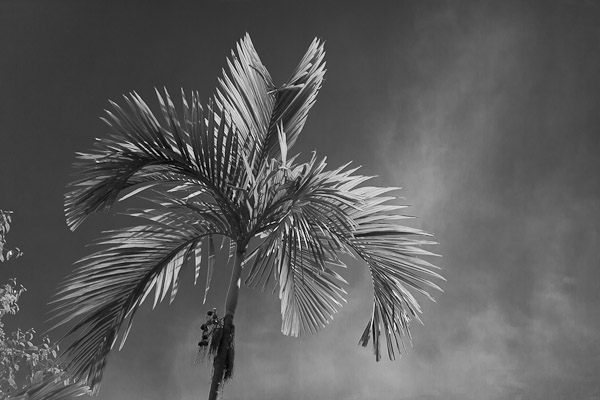
B&W conversion done using the B&W mix in LR

In the images above, notice how the blue sky went really light using the desaturate method?  This is often the case when you have a lot of blue sky in an image, as I explained above.  Using the B&W mix and pulling a few of the sliders I was able to get very different tones.  This is what my sliders in the B&W Mix panel look like on the third image:
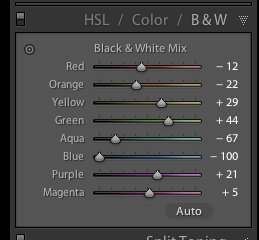
Notice the blue slider is pulled all the way to the left to -100.  That is what is darkening my sky.  Also worth noting is the green and yellow sliders are moved in the opposite or plus direction.  This lightens both yellows and greens (most grass and trees are often a mix of green and yellow, sometimes more yellow than green).  I have not done any selective adjustments to darken the sky here, just the sliders you see to the right!  How very different this image is from the desaturated one, and so simple to do using this method!

Also on this panel notice there is an “Auto” button.  Clicking it will allow Lightroom to apply a predetermined B&W mix for you.  You can also set up in your Lightroom preferences to apply that for you when B&W mix is selected, then you can just fine tune from there.  Otherwise all the sliders will start at “0″.

Another little known trick for using these sliders is the funny looking little double circle thing on the top left.  As you move the mouse over it, you will see this:
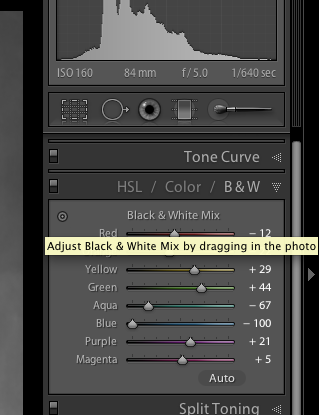
Adjust Black & White Mix by dragging in photo. So what on earth does that mean, you may wonder?!  If you click on the little circle your mouse pointer will now have little up and down arrows, as well as your cursor showing the same icon as you hover over the image. Click anywhere on the image, hold and drag, and it will adjust ONLY the colours that you’ve clicked on.   Drag up to move the sliders to the right (+) and drag down to move them to the left (-). How cool is that?!

This is very helpful if you do not know which sliders to adjust.  Just select the area of your image you’d like to adjust the tones on and drag away!

Tip #2 – don’t just stop there, add some punch

Sometimes even using the B&W mix sliders the resulting image still looks a bit flat and dull looking.  Take it up a notch by adding some punch to your image.  I do the following to most of my B&W images:

  • increase the clarity:  if it’s a scenic I’ll push it quite far like +60 or higher, if it’s a person I keep it under +30 or they start to look a bit crunchy and overly wrinkled (especially if the photo is of your mom or your spouse, they tend not to be too happy about that)
  • lower the black slider, until it looks good.  Highly scientific, yes! Here’s a little trick for you as well using the Blacks slider:  if you click and hold the Opt/Alt button while you slide it, you will get to see exactly where your blacks are clipping (meaning going off the chart on the histogram and having no detail). You can use that information to make sure you have just enough blacks, but make sure you keep all the detail in important areas.
  • increase the contrast either using the Contrast slider or Curves

Occasionally after making these contrast adjustments it will affect the overall image and you may want to go back and rework the B&W sliders a bit too.  It’s a dance, play them back and forth until you get a mix you like.   Here’s the final version of the image above, with contrast and punch adjustments applied.

Notice how much more snap it has, while still maintaining that nice rich, dark sky!

Secret to making great B&W images that the pros won’t tell you . . .

Black!  That’s it.  Make sure you actually have some black, and some white in your image.  Check the histogram and use my little tip on seeing the clipped bits. Add contrast or increase the blacks, whites, or both to get a full range of tones.  No matter what the subject is in the photograph, having enough contrast to have pure white, and pure black is key to having a stunning B&W image.  Otherwise you’re just left with a bunch of grey mud.

Tip #3 – creating selective coloured images

There are a couple ways to make selectively coloured images, and also to create that faded look that is really popular. Once again you can use the Vibrance and Saturation sliders in the Basic panel, however they will affect colours in the entire image the same.  You can also use the Adjustment Brush and paint in a lower saturation onto parts of your image where you want to fade out the colour.  I use that method quite often, even on full colour images, to do tone control on items in the background that are distracting.

Lastly you can use the sliders in the HSL panel.  By sliding selected colours to the left you can desaturate only those colours.  You can also use the little Click and Drag tool we used earlier to do the B&W Mix to click on your image and pick the areas to fade.   Here’s an example using each of these methods.  None is right or wrong, just give you a different look and some have more control than others.  Choose the one that works for you on in individual image basis.
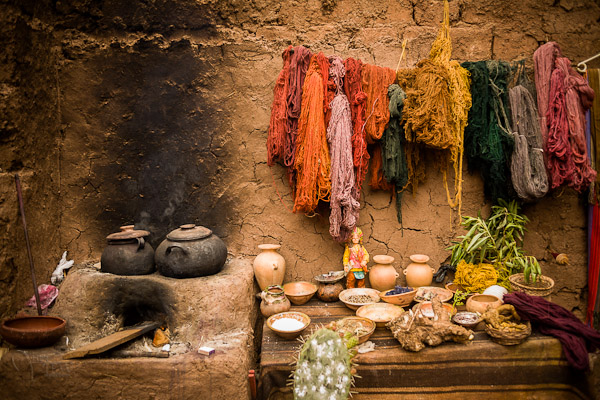
Original colour image
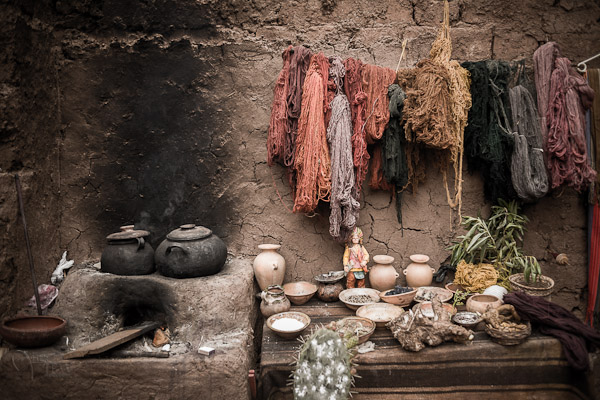
Vibrance slider set to -75

Saturation slider set to -75

Adjustment brush used to paint in saturation at -75 to the whole image except for the wool
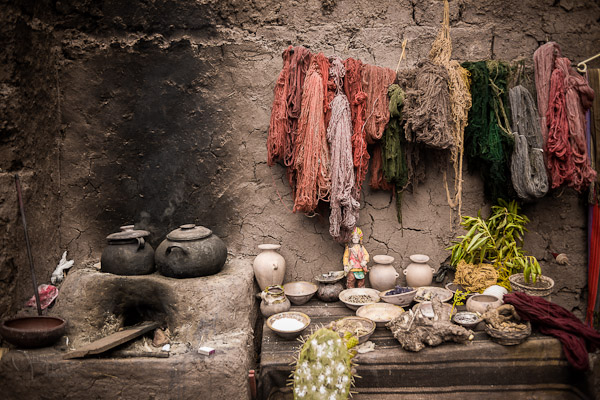
HSL sliders used to desaturate by separate colours

*Bonus Tip – making a nice duotone or sepia toned image

A little extra bonus tip for you.  Adobe has made it super easy to create a really nice duotone (just means two tones, go figure!) image, which includes Sepia.  Just go to the Split Toning panel after you’ve done your B&W conversion, it’s the fourth one down.
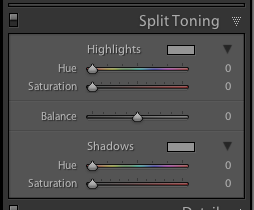
You will see sliders for both Highlights, and Shadows.  My personal tip on how to keep a nice clean sepia or toned image is to use ONLY the Shadows sliders and do not touch Highlights.  That will leave you with clean, crisp white highlights even after you’ve applied the toning.

How to create the duotone

First start by choosing the Hue slider (for Shadows).  If you want a nice brown colour, start with it around 40-45. Each image tones slightly differently, so start there and adjust to your taste and style.  You may notice that nothing happened, right?  That is because you need to increase the Saturation slider before the tone will show up.  The more you increase saturation, the deeper and more vibrant the colour tone will become.  Again, there is no right or wrong, it’s all about preference.  For a subtle, dark, chocolate brown try 10-20.  For a deeper colour go higher with saturation (NOTE: make sure the “balance” slider is set to zero)

If you want a different tone just move the Hue slider.  You can create some really neat affects this way including Blue Tone or a true Duotone.

Example using a portrait

For this final example I’ll show all the steps we’ve just covered using a portrait.  This is applicable to any people photos, you don’t need to make portraits to use this information.
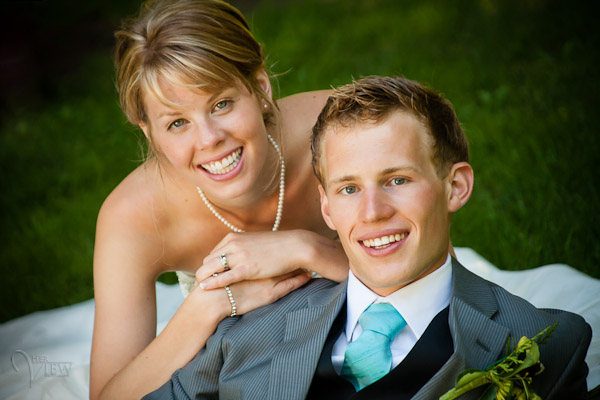
Original colour image
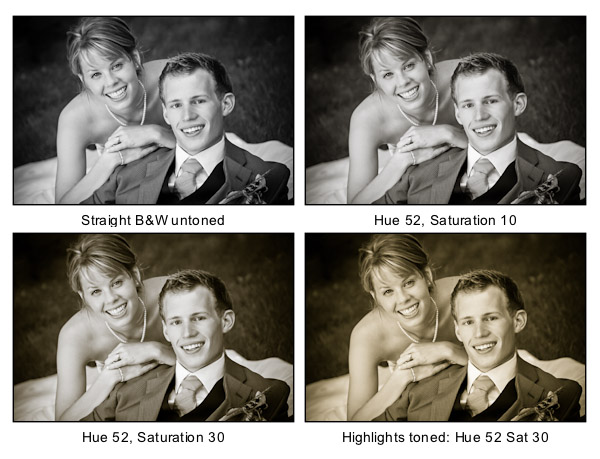

Notice the last image where I’ve added in colour to the Highlights and how it completely changes the look of the image. The whites have a yellow tint now instead of a nice clean look. I personally prefer the third one but there are times I do use this option. Do what feels right for your image, you’ll know what to do.
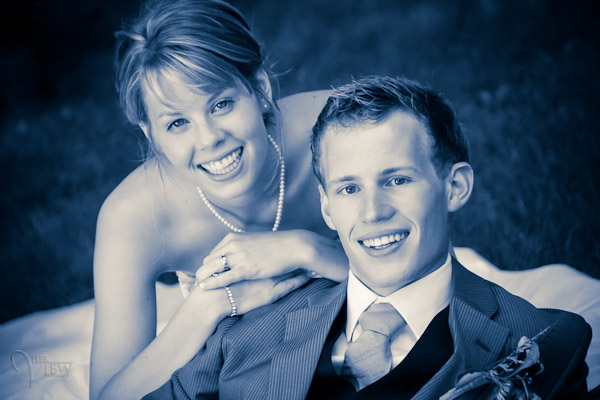
A "duo" tone using different colours for the Highlights and Shadows. Shadow settings: Hue 232, Sat 70 – Highlight settings: Hue 52, Sat 37. I did move Balance to -27 to skew the colours more towards the Shadows as well.

What next?

As always I encourage experimentation.  If you have another way that you like better, that’s awesome!  Please share it with us if you will.  Another way to do some really quick B&W inside Lightroom is to find some good presets. There are literally tens of thousands of Lightroom Develop presets available for free on the internet.  Try a Google search for:   Free lightroom b&w presets.  Then just pick the ones you like and install them.

Now get out there and go make some images and let’s see what you can do in Black & White!


Post originally from: Digital Photography Tips.

Check out our more Photography Tips at Photography Tips for Beginners, Portrait Photography Tips and Wedding Photography Tips.

3 Tips for Better Black and White Conversion using Lightroom


Digital Photography School

 
Comments Off on 3 Tips for Better Black and White Conversion using Lightroom

Posted in Photography


Just Posted: Canon PowerShot SX50 HS Review

16 Jan

canon_sx50hs.png

Just Posted: Our review of the Canon PowerShot SX50 HS. Canon’s latest superzoom, the SX50, features a 24-1200mm (equivalent) lens and a feature set that compares well to its competition, in what is now one of the most competitive segments of the compact camera market. Specifications include a 12MP CMOS sensor, 2.8in fully-articulated LCD screen, Raw capture and full manual control. Is this the travel camera enthusiasts have been waiting for? Read our review – created in collaboration with Jeff Keller of The Digital Camera Resource Page – to find out. 

News: Digital Photography Review (dpreview.com)

 
Comments Off on Just Posted: Canon PowerShot SX50 HS Review

Posted in Uncategorized


Cool Visual Art images

16 Jan

A few nice visual art images I found:

The Carnegie Arts Center, Covington, Kentucky
visual art
Image by elycefeliz
The Carnegie Visual and Performing Arts Center is a multidisciplinary arts venue for all ages which provides events, educational programs, and art exhibitions to the Northern Kentucky and Greater Cincinnati community. The Carnegie facility reflects its threefold nature: within its 17,000 square foot facility are The Carnegie Galleries, crowned by a landmark Beaux Arts dome; the magnificent, newly renovated Otto M. Budig Theatre; and the newer Eva G. Farris Education center. The Carnegie is the largest arts venue in Northern Kentucky.

The Carnegie was established in 1972 in a former Carnegie Library which originally was constructed in 1902. The building is on the National Register of Historic Places. Saved from the wrecking ball by local residents during the 1970s, The Carnegie has grown from a grassroots arts alliance into a major venue in the Greater Cincinnati/Northern Kentucky region. It is an Associate Member of the Fine Arts Fund and receives funding from the Kentucky Humanities Council, from local businesses and corporations, from individuals, and private foundation grants.

Located at 1028 Scott Boulevard, The Carnegie public library and adjoining auditorium were built in 1904 for a grand total of ,000 with funds given to the city of Covington by Andrew Carnegie.

The interior of the original library building is made up of two floors, connected by ornately carved dual winding staircases. A circular balcony and open rotunda overlook the main floor underneath an impressive amber glass dome.

www.thecarnegie.com/about/abt_hist.html

www.thecarnegie.com/

CRW_9445
visual art
Image by Mvejerslev
Visual installation (nature)

 
Comments Off on Cool Visual Art images

Posted in Photographs


ICON FJ44 New School Design Details

16 Jan

This is a short video showing the details of craftsmanship involved in hand building an ICON. This truck is sold, and just delivered to the client. icon4x4.com
Video Rating: 5 / 5

artoftheimage.blogspot.com – DSLR Video 5 Tips to Get Better Video Out of Your DSLRCheck out the new Art of the Image Recommended Photography Gear List at goo.gl PS If you have kids or know someone with kids, check out my latest online book, “Diary of a Nerd King” at www.nerdkingdiary.com. It’s funny and it’s FREE! Please pass it along… thanks! PSS If you have toddlers or small children, check out http for my children’s ebooks for Kindle, iPad, iPod, iPhone, laptops, etc! Please pass it along… thanks!


Top Ten Destinations in the World for Landscape Photography

16 Jan

With so many beautiful and inspirational locations all over the world just waiting to be captured, knowing where to take your camera next can be a battle. From the breathtaking British Isles to the peaks of the picturesque Peruvian mountains, we’ve compiled a list of the top ten destinations in the world that every landscape photographer should add to their Continue Reading

The post Top Ten Destinations in the World for Landscape Photography appeared first on Photodoto.


Photodoto

 
Comments Off on Top Ten Destinations in the World for Landscape Photography

Posted in Photography