This video will show you how to make the Easy cap work with WIndows XP. I take no credit in the making and or helping make modern warfare 2, easycap, and this song is property of Finger Eleven.
This video will show you how to make the Easy cap work with WIndows XP. I take no credit in the making and or helping make modern warfare 2, easycap, and this song is property of Finger Eleven.
[ By Steph in Gadgets & Geekery & Technology. ]

Most of us have wished, at some point, that we could control the weather – to keep it from raining on a special day, perhaps, or conjure up a snowstorm that results in a few days off work and school. Artist, designer and animator Karolina Sobecka has come about as close as one individual can with ‘Cloud Machine‘, an invention that travels up into the atmosphere with a weather balloon.

Cloud Machine may not be able to create or disperse storms, but what it can do is still pretty fun: once it reaches a specific altitude, it disperses Cloud Condensation Nuclei (CCN) heat and water vapor. This causes moisture in the air to condense into cloud droplets around the CCN, creating small clouds.


“This method is inspired by a geo-engineering technique proposed to create brighter, more reflective clouds which shield earth from sun’s radiation, and thus partly counteract the climate change,” says Sobecka.

The Cloud Machine is part of Amateur Human and Nephologies, a project commissioned by V2_Institute for Unstable Media for a Blowup event exploring “the how and why of speculative realism, object-oriented ontology and artistic practice.”
via PSFK

A Dutch design studio packs an amazingly complex Rube Goldberg machine into two suitcases, two years after producing the world’s largest room-sized machine.
Click Here to Read More »»

An unassuming Edwardian residence in Australia gets an incredibly unexpected cloud-shaped addition perched on the edge of a sky-blue pool.
Click Here to Read More »»


[ By Steph in Gadgets & Geekery & Technology. ]
[ WebUrbanist | Archives | Galleries | Privacy | TOS ]
 Extra photos for bloggers: 1, 2, 3  |
|||
Did you know that white balance is the quickest way to turn your camera into an InstaLomoCrosstography machine?
This tutorial is a fun, simple way to play with color a la Instagram or Lomography without any apps or chemicals!
All you need to do is take the correct white balance and set it to the “wrong” white balance to get sweet shifts in tones and colors.
We put together a guide on exactly what kind of color shifts you’ll get with each setting. No Android-based technology here. You can do it all with the settings your camera already has!
Create Sweet White Balance Experiments
p.s. We’re giving away an iPhone Lens Dial (our primo iPhoneography gizmo) today! Here’s how to enter.
 Did you know that your brain has magic color changing abilities? Well, sort of.
Your brain can’t change it’s own color (bummer!), but it does an awesome job at making sure the color white always looks that way. In other words, our brains are stuck in Auto White Balance.
Our cameras are a bit different. To them, white isn’t always white, but is influenced by the source of the light, whether it’s a buzzy fluorescent light in the ceiling or a cozy tungsten bulb under a lampshade.
This technique involves forcing your camera’s white balance to the incorrect setting for the scene so that the colors are purposely skewed. Sometimes it looks a little weird, and sometimes it looks awesome; it’s all about experimenting, with no computer or fancy editing programs required!
For an awesome explanation on how to achieve correct white balance and color temperatures, follow this tutorial by our friends over at SLR Lounge!

 First things first, we need to locate where the White Balance settings are on the camera.
Here’s where ours is located. Look for the letters “WB” or the for “White Balance” if it’s under a set of menus.
 White Balance settings are most often denoted by a set of symbols that represent the light source. They either warm things up, or cool them down!
 Now that you now where the settings are located and what each symbol means, it’s time to start experimenting!
Remember, the AWB or Auto setting will let your camera determine the correct White Balance for the scene; we want to set the “wrong” White Balance to get cool colors!
Featured below are examples of how you can use this technique!
 In this example, the natural light was from an overcast day (lame!).
In this instance, Cloudy would be the correct setting. Compare that to the Shade and Fluorescent settings.
The Shade setting is much warmer, which gives a stronger orange and yellow hue. The Fluorescent setting adds some neat purple and blue hues.

This time we paired up another overcast day (round 2!) with Fluorescent and Tungsten.
We have to admit, the Fluorescent setting is one of our favs for getting sweet colors
 This time we’re inside under a mix of Fluorescent and Daylight.
We got even more experimental this time and tried to dial in our own Kelvin temperatures for the white balance! 2,500 Kelvin shifts the photo towards blue, and 10,000 Kelvin shifts the photo towards a warm orange.
 Using the “wrong” White Balance goes against the grain for most photography teachings, so we want to share an awesome photographer that uses this technique to achieve great results.
His name is Ryan Waite, and he creates some really sweet portraits! He shared a few tips with us on how to use White Balance to get cool effects. These are a little more advanced and will likely require some editing software to accomplish.

Related posts:
Hi everyone! The Sony DSLT-A99 is Sony’s replacement for the A900. Despite me being a bit sick (bear with me in this video), that’s not going to stop me from unboxing Sony’s flagship camera, the A99. I find out what you can expect when you purchase the A99. You can follow me on: Facebook – on.fb.me Twitter – bit.ly Blog – bit.ly
Video Rating: 4 / 5
This is just a very quick overview and some test footage of 4x 200mm lenses. A full write-up with analysis and more in depth info on each lens can be found my here: www.budgetfilmmaker.co.uk I now have about 80 lenses to test, so if you like the idea of cheap lenses for video work, please SUBSCRIBE to make sure you don’t miss the upcoming test videos. Follow BF on tweeter for latest updates: twitter.com
Video Rating: 4 / 5
www.artoftheimage.com – Zoom H2 Mic Review – My Favourite Mic (DSLR Video D7000 D5100 T3i 600D T2i 550D 60D 7D 5D MkII)Check out the new Art of the Image Recommended Photography Gear List at http PS If you have kids or know someone with kids, check out my latest online book, “Diary of a Nerd King” at www.nerdkingdiary.com. It’s funny and it’s FREE! Please pass it along… thanks! PSS If you have toddlers or small children, check out http for my children’s ebooks for Kindle, iPad, iPod, iPhone, laptops, etc! Please pass it along… thanks!
Video Rating: 0 / 5
Playing Chopin Etude op.10, no.6 on my Kawai CA63 The video is shot with a Nikon D90 and Nikkor 50/1.8D. The audio is recorded with a MacBook Pro and Audacity. Created with iMovie.
Video Rating: 4 / 5
You’ve been reading their articles for months or years, have you ever wondered “Who are the photographers who write for DPS”? We thought it would be a good time to introduce them to you through a series of interviews. No worries, Darren will get his turn too.
Today meet Elizabeth Halford.

I’ve been taking pictures since I was about 10 years old. I spent all my pocket money on film for my Kodak 110 instamatic. I’ve been seriously teaching myself photography since 2008.
 2. Do you have a full time job or are you a full time photographer?
I’m a full time photographer and blogger. I also have a hand in running a charity, Cure Rett.
If I had to choose just one genre of photography, it would be children’s portraiture
I started writing for DPS in 2009 when I first started blogging about photography to keep my own site interesting. Darren hired me and so I was writing for DPS before I really even knew what blogging was all about! Thanks to that opportunity, I’ve built a really fantastic readership on my blog where I write about photography and business in “real.plain.english”. I learned from Darren that being nice to people online is a total win-win and that we highly underestimate the power of giving!
I shoot with a Canon 5DmkIII. A 7D is my backup. My two favourite lenses are the 70-200mm f/2.8 L IS II and 50mm f/1.2. I wear a ShootSac to keep my lenses accessible while shooting.
Take pictures!
Well one of my most exciting projects this year has been getting my branded car. It’s certainly made waves! I got the attention of Mini who went and branded one of their test drive models because they loved mine so much!
My biggest project in 2013 will be my first live workshop “How to sell in Plain English” in March in Southampton to teach photographers how to do in person sales so they can actually make money photographing people! It ain’t rocket science!
I’m also the key photographer on the Picture the Hope Photography Tour which is touring the UK to photograph girls with Rett Syndrome. Some of those shots can be viewed here on the blog I write about my daughter, Grace, who has Rett.
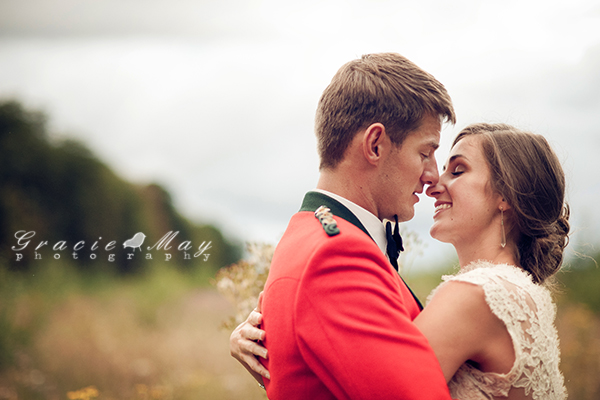
To view my photography, you can visit www.graciemayphotography.com and to visit my blog for photographers, www.elizabethhalford.com. You can connect with me and my growing community on Facebook. My full story can be found here.






Post originally from: Digital Photography Tips.
Check out our more Photography Tips at Photography Tips for Beginners, Portrait Photography Tips and Wedding Photography Tips.
Meet The Photographers Who Write For Digital Photography School ~ Elizabeth Halford

Extreme sports photographer Richard Walch test-drives Canons EOS-1D Mark III camera at the Freestyle.ch event in Zurich, Switzerland. Amsterdam-based creative agency Twofish was commissioned by Canon Europe to produce this video for exhibition at EOS Discovery a pan-European photography roadshow reaching more than 20000 consumers. Twofish.nl
A brief tutorial on how to use Canon DPP to adjust white balance and use noise reduction in your shots.


You must be logged in to post a comment.