RSS
 

Archive for December, 2012

Digital Photography 1 on 1: Episode 65: Green Screen: Adorama Photography TV

18 Dec

Adorama Photography TV presents Digital Photography One on One with Mark Wallace. In this week’s episode Mark shows you how to light for green screen effects and achieve professional results. Learn specific lighting techniques that will ensure accurate processing in post production. To buy related products, view related videos and read articles about Green Screen and Chroma Key, go here: www.adorama.com Products used in this episode: Westcott Illuminator Collapsible Disc Background, 6′ x 7′, Chromakey Green www.adorama.com Matthews Baby Junior Triple Riser Stand with Wheels www.adorama.com Arri Softbank 2 Light Kit www.adorama.com Westcott Illuminator Reflector Panel 30″ Silver/Black www.adorama.com Sekonic L-358 Flash Master www.adorama.com Adobe After Effects CS 5.5 Software for Mac www.adorama.com Nikon D3S Body Only www.adorama.com Nikon 70-200mm f/2.8G AF-S VR II Zoom-Nikkor ED-IF Lens www.adorama.com Manfrotto 055XPROB Black Tripod Legs www.adorama.com Manfrotto Midi Ball Head 498 with RC2 Rapid Connect Plate www.adorama.com


Get our iPhone Photography eBook for $7 [65% Off]

18 Dec

Today is day #4 of our 12 Days of Christmas and it is our biggest discount yet with a whopping 65% discount on our recently launched iPhone Photography eBook.

That means for the next 24 hours you can pick it up for just $ 7!

Our iPhone Photography eBook is a comprehensive guide to shooting, editing and sharing great photos from the phone that many of us take everywhere with us – our iPhones.

The iPhone is currently the most commonly used camera in the world, with millions and millions of snap shots taken everyday, but only a few photographers are using the full creative potential of the camera.

But that’s about to change because this eBook, written by one of the world’s leading mobile photographers Misho Baranovic, is all about giving you complete control over your iPhone and enabling you to take images that your friends won’t believe came from a camera phone.

iPhone Photography is written for anyone with an iPhone 3GS, 4, 4S or with the new iPhone 5 and is broken down into 3 main sections – ‘Shooting‘, ‘Editing‘ and ‘Sharing‘.

In its 106 pages you’ll discover:

  • How the iPhone Camera works and how to use it to take great photos
  • How to take more control of your iPhone using Camera Replacement Apps (with a rundown of the best ones)
  • Advanced shooting techniques with the ProCamera App to gain maximum control over focusing and exposure
  • How to find compelling subjects including; with the family, on the street, in nature, while travelling and at night
  • How to develop your own editing style
  • A rundown of native iPhone editing functions
  • An overview of the best editing apps including one touch apps, filter based editing apps and professional editing apps and techniques
  • How to add text and graphic elements to your photos
  • How to share your images with family and friends through popular photo-sharing apps including Instagram
  • How to get your images ready to print

Beautifully designed and full of inspiring example images, screenshots, exercises and step by step instructions.

This eBook comes as both a PDF and ePUB (you get both) so can be read on any computer or PDF reading device plus with the ePUB you can read it on a variety of devices including iPads, iPhones, (via iBooks), Nook Readers, Sony Readers, Kobo Readers and many more.

Need more information? Get a full rundown of the eBook here or grab your copy at 65% off by clicking the download button below (but don’t wait too long – this lasts just 24 hours).

// < ![CDATA[ function EJEJC_lc(th) { return false; }

// ]]>

Post originally from: Digital Photography Tips.

Check out our more Photography Tips at Photography Tips for Beginners, Portrait Photography Tips and Wedding Photography Tips.

Get our iPhone Photography eBook for $ 7 [65% Off]


Digital Photography School

 
Comments Off on Get our iPhone Photography eBook for $7 [65% Off]

Posted in Photography


5 Simple Secrets To Sharper Photos

18 Dec

Many factors play a part in image sharpness, not the least of which is the lens.  Most of us who ever pick up a camera judge our images, at least in part, on overall sharpness.  Before you go out and plunk down some hard earned cash on that top of the line pro-level lens you’ve been drooling over, think about these steps you can take with the lenses you already own to get sharper images.

  1. Pay attention to the basics.  Hold the camera properly.  Your right hand should grip the camera with your finger ready to press the shutter button. Your left hand should cradle the lens. Tuck your elbows firmly against your side. Press the eye cup of the camera firmly against your head.  This three-point stance stabilizes the camera and holds it steadier than holding the camera out and away from your face, with your arms extended.
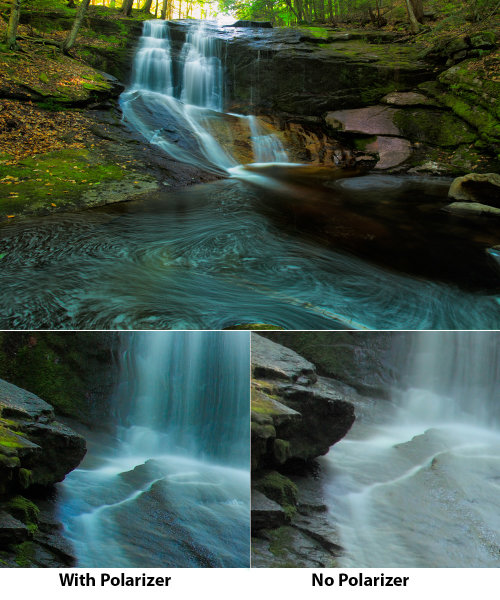
  2. Use a polarizing filter. Polarizers are famous for darkening blue skies on sunny days, but they are just as useful in other situations. In misty or hazy situations, polarizers can help cut through that haze.  Haze has the effect of softening an image, so using a polarizer to eliminate the haze enhances sharpness. So don’t hesitate to put the polarizer on your lens, even when darkening a blue sky isn’t the reason.
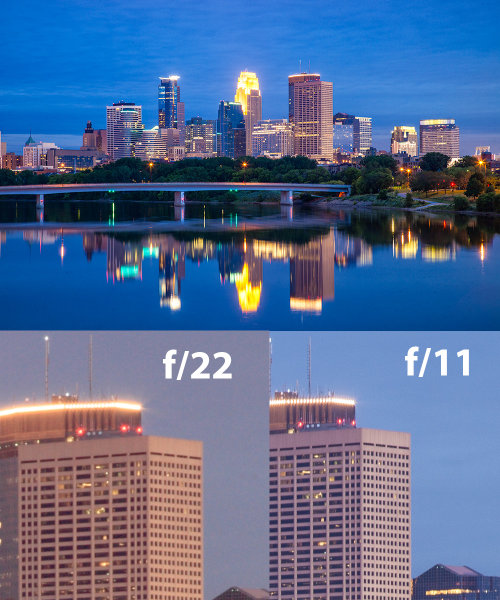
  3. Use the “sweet spot” of your lenses. Most lenses are at their sharpest when stopped down 2 or 3 stops from maximum aperture. However, even if for depth of field reasons it’s not possible to stop down that far, closing the aperture 1/3 to 2/3 of a stop will still increase sharpness.  By the same token, when a lot of depth of field is required, shooting one or two stops open from minimum aperture will provide the best sharpness. This is because at minimum aperture, lenses begin to exhibit diffraction. Diffraction happens when light is forced through a small hole, and begins to disperse. At larger apertures, this light is a small percentage of the total light hitting the sensor.  At smaller apertures, this diffracted light is a much greater percentage of the total light hitting the sensor.  Diffracted light causes images to appear softer.  By shooting at f/16, rather than say, f/22, you can minimize diffraction and thus get sharper images.

    The above finished and edited image was shot at f/11. Beneath are two crops. The crop on the left shows the same scene, shot a few moments later at f/22. The crop on the right is from the same file as the completed image, shot at f/11, but unedited. In the shot at f/22, you can clearly see the effects of diffraction, as the windows on the building are just not as sharp as those shot at f/11.

  4. Select the AF point you want to use, and put it where you want to focus.  Many photographers I talk to like touse the center AF point and use the “Focus and Recompose” method of focusing to create their images.  Unfortunately, while easier in many ways, this method can contribute to less sharp photos.  This is especially apparent when shooting at wider apertures and depth of field is shallower. When you do this, the focal plane shifts, moving it away from where you originally focused. It’s not a big deal when shooting at smaller apertures, but when shooting near wide open, it will be noticable. A better technique is to choose the AF point nearest where you want the sharpest focus.  This reduces focal plane shift, thus keeping the sharpest focus where you want it in your photo.
  5. When using zoom lenses, focus at the focal length you plan to shoot at. In the past, in the manual focus days, lenses were parfocal, meaning that you could zoom the lens and the focus would stay the same. Many of today’s lenses, however, are not parfocal.  So changing the focal length by zooming causes focus drift, and the lens is no longer focused where it was before it was zoomed.  The better bet is to zoom the lens where you want it for your composition, and then focus the lens.

There is obviously much more to getting sharper images, but these five basic tips are a good start to keeping your images sharp.


Post originally from: Digital Photography Tips.

Check out our more Photography Tips at Photography Tips for Beginners, Portrait Photography Tips and Wedding Photography Tips.

5 Simple Secrets To Sharper Photos


Digital Photography School

 
Comments Off on 5 Simple Secrets To Sharper Photos

Posted in Photography


Digital Holster Harness V2.0

18 Dec

The Digital Holster Harness V2.0 is a stand-alone harness that carries a Think Tank Photo Digital Holster V2.0 camera bag in front of the torso. This hands-free carrying solution protects a DSLR, with a lens attached, inside the padded Digital Holster V2.0 camera bag. It also allows photographers full mobility without the hassle of managing a swinging camera or camera bag during active use. Click the following link to see more details on the Digital Holster Harness V2.0: www.thinktankphoto.com
Video Rating: 0 / 5

Flux is joined Exile to speculate on all things Diablo 3 expansion. Class and item makeovers, improved B.net features, new monsters, new game modes, Act Five’s setting, and more. Times and topics are approximate, as the flow of conversation twists and turns. 0:00 — Intro and why it’s more fun to speculate about the future than talk about the present. 3:00 — Improved multiplayer features. More exp/items in MP games? Raid-type content? 8:20 — Better character customization and item system improvements. 14:40 — Level design improvements. More randomness/variety in expansion/act 5? 18:40 — Guest monsters? More monster variety and design? 26:00 — Simplification of features in Diablo III. How does WoW retain more complexity and how can Diablo III add more depth? 36:40 — New class in the expansion. Return of the Necromancer? Paladin? Other? Both? 42:00 — Act five? Where? What? Difference? 46:50 — A new Follower? Sparkle Panda suggestion! 48:30 — New game modes. Tower defense, competitive PvM, bottomless dungeon, etc. 54:00 — When will D3X be released? How did they make D2X with act 5, Druid, Assassin, all the new items and other features in just 12 months? 55:00 — Farewell and thanks to Xanth, and welcome to ZappaFan. Plus new podcast guests wanted. Find Diablo:IncGamers on * Facebook: facebook.com * Twitter: twitter.com


Dystopian Dumpster Living: Trash Bins Turned Tiny Houses

18 Dec

[ By Steph in Architecture & Cities & Urbanism. ]

Giant receptacles for trash have been transformed into the most unexpected things – swimming pools, bars, giant pinhole cameras, and now tiny ‘living containers’ on wheels. German designer Philipp Stingl envisions a future in which the growing elderly population requires cheap and portable housing, and these lockable rolling dumpsters would certainly fit the bill.

The set of ‘housing containers’ includes a larger yellow dumpster with a door, window and a drinking canister; the top opens like a normal dumpster and has a net in the lid for storage. The second unit is smaller, meant to be used as a bath tub.

The designer created these containers for a rather bleak future in which social systems collapse and “from the ashes an aging society will rise, marked by crime, sickness and poverty.”

One can only imagine that Stingl is being satirical when he states, “Essentially, these ‘living containers’ testify to an active and creative lifestyle for the old age without compromises.” It’s hard to ignore the implications of placing the homeless and elderly in trash containers. However, this concept isn’t much different from many other economical ideas for homeless housing, which can also be used as emergency shelters in the event of a disaster.


Want More? Click for Great Related Content on WebUrbanist:

Dumpster Drinking! Skips Turned into Miniature Bars

Dutch designers create miniature ‘trash villages’ in urban locations by transforming dumpsters into bars and restaurants using discarded building materials.
Click Here to Read More »»


Go Big or Home: Living Small in 11 Tiny Houses with Style

Tiny houses are growing in popularity because of increasing environmental consciousness and a desire to reject unnecessary material goods.
3 Comments – Click Here to Read More »»


Share on Facebook


[ By Steph in Architecture & Cities & Urbanism. ]

[ WebUrbanist | Archives | Galleries | Privacy | TOS ]


WebUrbanist

 
Comments Off on Dystopian Dumpster Living: Trash Bins Turned Tiny Houses

Posted in Creativity


Amateur or Professional, Part II

18 Dec

In a recent post on the topic of Amateur or Professional Photography I asked an open ended question that would solicit responses.  While I was not surprised by the polarization, I was disappointed by how personal the comments became.

I will state categorically that any professional who is not willing to share information must be quite insecure in their own abilities. Like any business certain facets have to remain confidential in order to remain competitive in a free market enterprise.  Beyond that, I believe we do owe it to our industry to be honest with each other – no one, regardless of standing, is bigger than the industry itself – and that includes amateurs being honest with professionals.

Are you ready to open shop?

Many readers missed my point entirely in the opening post, that being if you are going to delve into the medium as a means of income then one should play by the rules.  The one rule that professional photographers cannot compete against is the various taxes that they must pay as a result of their vocation and business.  Each country and city has their own tax laws, and in Canada essentially all income has to be declared as taxable income. Should the professional photographer’s neighbour who photographs weddings on Saturday’s only for $ 300, not declare their income several things happen by default:  1. They are automatically at a 30% (the average income tax in Canada) price advantage due to tax evasion, 2. They have potentially broken tax statutes and that affects the economy of the community; and 3. They have devalued the industry as a whole. These are examples of ethics to which I was referring in the original post.

Believe me, your time, your equipment and your experience has value and as each increases so too should the value of your service. That is a basic business premise and has nothing to do with photographers feeling threatened. Should you really be interested in learning the profession, and haven’t had the opportunity to attend school, source a local photographer whose work you respect and ask if you can assist or apprentice with them for free for six months (I don’t agree with this approach personally, but if you are going to shoot jobs for free you would be doing the industry and your eventual clients a far greater service by learning from a well respected and established business person).

Beyond that, it is very much a wild west as far as photography as an industry is concerned.  There are no trade union protections to benefit the photographer, and likewise there are no minimum standards of delivery to protect the client.  Whether there should be is a whole other debate and one best not discussed on the DPS forum.  It is very much a climate of client and providers beware.

Moving forward, let’s take the wedding photographer completely out of the picture and think in the bigger realm.

Let’s also set the record straight: NO, it is not necessary to go to university or college to become a photographer.  NO, it is not necessary to apprentice with an established firm to become a photographer. NO, it is not necessary to become a student of business administration to become a photographer.  However, should you be fortunate enough to have been able to pursue photography as a profession by travelling these paths you will inherently have a huge advantage over the amateur who aspires to turn a love of craft into a successful business venture.

In short, you can be the best photographer in the world but if you do not know how to manage and market your business the chances of success are greatly diminished. The aspiring pro should have no illusions – photography is a tough business and the more you can learn about the industry and appropriate business practises, the better the opportunity of success. The client will decide whether your skill with a camera is commensurate with your fee structure.

Regardless of how you have entered the profession it is possible to earn a successful living with a camera while satisfying an internal desire to be a photographer by following a few well laid out principles.  The first golden rule that must be cemented in your business plan is to, well, have a business plan.  The second golden rule is to learn to pay yourself first; you are, after all, starting a business to earn an income.

If you can’t accept the fact that you need a business plan, you will unquestionably be wandering around aimlessly and without direction. The business plan today must reflect the current market, and, as we all know the photo industry is rapidly adjusting itself without checks and balances. Therefore your business plan will have to be fluid; no longer can we work on a five year plan.  Some would suggest a three year plan is risky and the proprietor should be giving serious consideration to a two year plan.

You are entering a service based industry and for the most part your skill level, locale and client base will dictate what you can charge as a fee. There are several web-based outlets that offer great advice, and are well worth reviewing.  As a poster earlier shared, Mark Wallace (Adorama TV) has a great video on You Tube:

In this video Mark offer a huge bucket full of sage advice; however I would caution that you not plug his “days of work” numbers in your daily costs calculations as it is quite unlikely you will work 250 days on start up.  To clarify, you will probably work more than 250 days, but what are your billable days?  Another resource that makes life easier for calculating the daily cost of business is a calculator from NPPA found here:  https://www.nppa.org/calculator .

From both of these resources there were several topics not itemized in the calculations.  You may decide to work from your home, and there may be tax advantages to doing that. However, there are also going to be increased costs on the home budget that require consideration. Are you even legally permitted to operate a home-based business in your community?  The calculators and Mark’s video –I could stand to be corrected—have not identified capital reserve requirements. You have expensive equipment that will most likely have to be replaced every three years due to technology advances. Should you be channeling funds into a capital reserve to lessen the blow when that day arrives? Are there tax advantages to renting your equipment?

Navigating the labyrinth of roads involved in any business will be a nightmare when starting out. You will be well served by educating yourself on solid business practices.

Spend some money on a lawyer and accountant.  Regardless if you are working as a professional or semi-professional, or even an amateur, you will be exposing yourself and equipment to liability risks that probably will not be covered by any type of home insurance policy you currently have. Your lawyer will also advise whether you are best served by incorporating or working as a sole proprietor.  Don’t forget about learning Intellectual Property laws, and learn who owns the results of your toil and under what circumstances.  It is imperative you have iron-clad contracts so both you and your client completely understands the others position before you even accept the commission.

Good accountants are worth their weight in gold; the better ones will give you sage advice and don’t particularly care about hurting your feelings.  If you really want a good gauge on how good your business plan has been prepared, go visit a local bank and ask for a business start-up loan.  These folks will not lend money if they see any risk in your plan and their judgement should, and can, speak volumes.

If you want to turn that avocation to a vocation, start working on a business plan first.  Make no mistake, it will be tough to succeed with long hard hours of non-paying administrative and business training that will siphon your cash flow quicker than a drop of water evaporating on hot asphalt in the desert sun.

If you are skilled and savvy enough there is always room for good photographers, and there probably always will be. At least I hope so – we all deserve to pursue our dreams providing we respect our neighbours in an honest and ethical way.

Postscript: By now I hope the readers following my posts will have recognized I am targeting two audiences. The first being the amateur who is just starting their journey, and the second being the advanced amateur who believes they are ready to advance into the profession. I would ask that you fire your criticisms toward me and not each other. Thank you in advance for following the posts. –Dale Wilson

Post originally from: Digital Photography Tips.

Check out our more Photography Tips at Photography Tips for Beginners, Portrait Photography Tips and Wedding Photography Tips.

Amateur or Professional, Part II


Digital Photography School

 
Comments Off on Amateur or Professional, Part II

Posted in Photography


17. Dezember 2012

18 Dec

Ein Beitrag von: Jens Franke


kwerfeldein – Fotografie Magazin

 
Comments Off on 17. Dezember 2012

Posted in Equipment


Focus on Rick Sammon, HDR photography and X-Rite ColorMunki

18 Dec

Professional photographer and X-Rite Coloratti Rick Sammon talks about his HDR process, including how he uses the X-Rite ColorMunki

Chris Weeks has been sharing a whole lot of stuff with us, and mainly what he uses for assignments and now, video integration. In this segment, he shows a very simple, but potent street photography bag, and what he takes when capturing the human condition as he finds it. More photo goodness at photoinduced.com


Review of the Delkin Sensorscope System on Weekly Photo Tips

18 Dec

www.WeeklyPhotoTips.com Today we are reviewing the Delkin Sensorscope System. This is a complete sensor cleaning kit that will allow you up to two dozen camera cleanings. The key component of the kit is the Sensorscope, a 5x magnifier with 4 bright LED lights that allow you a clear complete view of your sensor both pre and post cleaning. There is nothing else you need to get as the kit is complete with all the supplies (swabs, fluids, even the batteries) that you will need to do a thorough cleaning. You can read more about the Delkin Sensorscope System along with links and pricing info at Weekly Photo Tips. www.WeeklyPhotoTips.com


Nice Visual Art photos

18 Dec

A few nice visual art images I found:

Oorsprong
visual art
Image by ines saraiva
"OORSPRONG (2007) – HANS VAN KOOLWIJK
Visitors can literally step into a giant flute and experience the turbulent vibrations of the air that is blown in the sound installation from the other side of the instrument. After closing the door, it becomes obvious that “sound is substance”. The effect of the installation is at its strongest at the labium, because that is exactly the spot where the sound
is created: the origin.

Hans Van Koolwijk (NL) is fascinated by sounds that can be heard and felt. He has studied graphic arts an has made a name with his ‘Bambuso Sonoro’, flutes that can be played simultaneously by just one solo performer."
IN: www.musica.be/en/oorsprong-2007-hans-van-koolwijk

~~~

"In Klankenbos (Sound Forest) contemporary artworks produce sounds. Not only are your ears stimulated, you’d better keep your eyes open as well, for the sound installations are fascinating visual artworks which deserve to be looked at. Thus Klankenbos is a special auditory and artistic open air experience, inviting you along a promenade walk at the Provincial Domain Dommelhof in Neerpelt. With its ten stationary and three mobile sound installations Klankenbos is quite unique in Europe."
IN: www.musica.be/en/unique-collection-sound-art-installations

"Awakening Woods
In the context of Manifesta 9 – Parallel Events, Musica is hosting a summer exhibition with three new acquisitions for the permanent Klankenbos collection and two temporary media installations."
IN: www.musica.be/en/awakening-woods-klankenbos-summer-expo

Catalogue:
www.musica.be/en/klankenbos-catalogue

Neerlpelt, Belgium, 08/2012

“Seattle, City of the Seventies,” 1975
visual art
Image by Seattle Municipal Archives
Art at Corner Market paint-in. See our online exhibit for a history of the market. Item 32106, Pike Place Market Visual Images and Audiotapes (Record Series 1628-02), Seattle Municipal Archives.

Oorsprong
visual art
Image by ines saraiva
"OORSPRONG (2007) – HANS VAN KOOLWIJK
Visitors can literally step into a giant flute and experience the turbulent vibrations of the air that is blown in the sound installation from the other side of the instrument. After closing the door, it becomes obvious that “sound is substance”. The effect of the installation is at its strongest at the labium, because that is exactly the spot where the sound
is created: the origin.

Hans Van Koolwijk (NL) is fascinated by sounds that can be heard and felt. He has studied graphic arts an has made a name with his ‘Bambuso Sonoro’, flutes that can be played simultaneously by just one solo performer."
IN: www.musica.be/en/oorsprong-2007-hans-van-koolwijk

~~~

"In Klankenbos (Sound Forest) contemporary artworks produce sounds. Not only are your ears stimulated, you’d better keep your eyes open as well, for the sound installations are fascinating visual artworks which deserve to be looked at. Thus Klankenbos is a special auditory and artistic open air experience, inviting you along a promenade walk at the Provincial Domain Dommelhof in Neerpelt. With its ten stationary and three mobile sound installations Klankenbos is quite unique in Europe."
IN: www.musica.be/en/unique-collection-sound-art-installations

"Awakening Woods
In the context of Manifesta 9 – Parallel Events, Musica is hosting a summer exhibition with three new acquisitions for the permanent Klankenbos collection and two temporary media installations."
IN: www.musica.be/en/awakening-woods-klankenbos-summer-expo

Catalogue:
www.musica.be/en/klankenbos-catalogue

Neerlpelt, Belgium, 08/2012

 
Comments Off on Nice Visual Art photos

Posted in Photographs