Gary Fong gives tips on how to achieve more consistent TTL exposures with your dedicated Canon, Nikon or Sony flash units.
The very first run of my latest project Movie filmed with Nikon D3s and edited with iMovie on a Mac.
Video Rating: 4 / 5
Gary Fong gives tips on how to achieve more consistent TTL exposures with your dedicated Canon, Nikon or Sony flash units.
The very first run of my latest project Movie filmed with Nikon D3s and edited with iMovie on a Mac.
Video Rating: 4 / 5
Blog www.dombowerphoto.blogspot.com In this video i show you how to work a bit more with layers. using 3 photos taken in my livingroom then with a bit of cutting and pasting i then make it look like i am coming or reaching out of the tv. the software used is free GIMP and it is just like adobe photoshop but…. free. hope this helps regards dom bower www.dombower.com
Video Rating: 5 / 5
For her graduation present, George’s daughter McKenzie hits the sun and fun of South Beach, Miami along with Tammy’s daughters, Lindsey and Megan, and Lauri’s daughter, Ashley. Money woes put a damper on the Knickerbocker girls’ good time and a trip to a famous tattoo parlor gets McKenzie in hot water with dad George. Vicki invites Jeana, Colton, Tammy and Frankie to spend the weekend with her and Donn at their Lake Havasu vacation home. The alcohol flows like the river on which they party, but tensions between Vicki and Donn threaten to ruin the trip. Things turn dangerous when Colton takes a shocking death defying jump. Laurie furthers her wedding plans by choosing a photographer and wedding invitations, while newly single Kara contemplates an offer from mother Jeana to take part in a mother/daughter pictorial for Playboy magazine. Tamra throws a big birthday bash for son, Spencer, who just turned seven. The party atmosphere can’t tame the tension between her oldest son, Ryan, and her husband, Simon. Later at a family dinner, jobless Ryan bickers with step dad Simon, putting Tamra in the middle again.
Year 2013 is already at the door, and I still meet people who critique photos as “photoshopped” or “post-processed”, putting the very negative sense in this word. Like, “it’s not art, it’s not real, it’s not your merit”. I don’t know if you have ever thought about it, but every single photo is post-processed. By you in Photoshop, or by Continue Reading
The post 5 Pillars of Post-Processing appeared first on Photodoto.
Help Spread The Word on Twitter,Thank’s : clicktotweet.com Hi folk’s, This is my review on the Incipio NGP case for the iPhone 4. I picked this case up to bring you another review on yet another fantastic case. Any more information about this case can be found on the Incipio Website listed in the link below: www.myincipio.com Thank’s forbeing interested in my content,Enjoy the video,Thank’s for watching,Cheer’s 🙂 Follow me on Facebook – Follow the Badge on my Channel Page. Follow me on Twitter : twitter.com Subscribe to my Channel : www.youtube.com Email Me @ : pimpyouriphone3g@gmail.com If you have any question’s ?, Then please don’t hesitate to get in touch,I will do my best to answer and help in what ever way i can,Cheer’s.
Video Rating: 4 / 5
[ By Steph in Design & Graphics & Branding. ]

Grids of square-shaped dates aren’t the only way to keep track of the passing year. These 15 design-centric wall and desk calendars allow you to pop, unravel, bleed and burn your way through the days of the week, or arrange them into a functional sculpture.

With each day that passes, you pull the thread that dangles from the bottom of Patrick Frey’s Gregor Calendar, and the year literally unravels, leaving nothing more than a ball of yarn by December 31st.

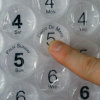
Say goodbye to each day with a satisfying, stress-relieving pop. The Bubble Calendar has the days of each month printed on a sheet of thick paper covered in bubble wrap.

If unraveling or popping each day doesn’t give you enough satisfaction, maybe you’d prefer to see them burn. Ukrainian designer Yurko Gutsulayk offers each date as a tear-off match that can be struck against the surface of the calendar’s stand.

This striking black calendar by designer Martin Oberhämmer ditches the conventional layout of dates, arranging them in a colorful circle instead.

The year ahead is laid out in an unusual graphic checkerboard pattern in tones of magenta and orange in the ‘Year of the Snake’ calendar by Moon in June.


Each month is represented by a pop-up sculpture made of intricately crafted paper in these three-dimensional calendars by Johann Volkmer. Can you pick out the shapes in each one?

Don’t worry about ever throwing away another calendar. Perpetual desktop calendars like this beautiful typographic one from Orange Beautiful make it easy to switch out the date, month and day of the week so you can use them forever.

This perpetual calendar uses a series of rings that can be connected in various ways to create a three-dimensional sculpture. The largest ring represents the month, the middle ring represents the moon’s orbit around the earth, and the smallest represents the seven days of the week.

This fun and interactive puzzle calendar lets you arrange Lego-like blocks any way you like, inserting special blocks for holidays and other events.

Some of the seriousness is taken from the notion of passing time with this calendar, shaped like a rocking chair.

“I made this calendar for a university project, where we had to use creative papers,” says designer Szani Mészáros of her Planet Calendar. “I wanted to use different papers for each month, so I made a special case, that you can open and, as the time goes by, you can always remove the old paper and replace it with the actual month. I used moon calendar to show the date, indicating only some days of a month, from which you can track all the days you need.”

Spiky shapes capture the essence of various seasons in this calendar concept by Oleg Dzogan.

Ink Calendar by Oscar Diaz makes use of the timed pace of ink spreading on the paper to indicate the passage of time. The ink reveals each date slowly throughout the month. The ink colors change on a color temperature scale by month, ranging from dark blue in December to red in the summer.

Get your daily dose of type with the Typodarium calendar, which features 366 typefaces from 252 designers – one for each day of the year, plus the cover. It comes in a box that can be used to collect the torn pages, so you can keep enjoying those typefaces even after their ‘time’ has passed.

“Median Calendar is about balancing your time and energy. Customize you calendar by charting anything in your day and you will see if you are too involved or not involved enough. If you haven’t spent much time on what you are tracking, you will be slacking off but if you spend too much time you may be spreading yourself too thin. This calendar is a visual representation to show how balanced your life is.”
If your days are going by in a blur, it’s time for a change. Give the monthly countdown a little extra character with these 12 cool, creative calendar designs.
8 Comments – Click Here to Read More »»

Web design is 95% typography, and some sites elevate the written word into a form of visual art that’s engaging, informative and memorable.
3 Comments – Click Here to Read More »»


[ By Steph in Design & Graphics & Branding. ]
[ WebUrbanist | Archives | Galleries | Privacy | TOS ]
Follow Me on Twitter: twitter.com Tune Into Technology: www.tekbeattv.com Manufacturer Link www.vanguardworld.com COMMENT, RATE, SUBSCRIBE! Vanguard Up-Rise 48 Backpack for DSLR & Laptop Vanguard Up-Rise 48 Backpack for DSLR & Laptop Vanguard Up-Rise 48 Backpack for DSLR & Laptop
Video Rating: 4 / 5
With the 834mm 35mm equivalent focal length of the canon sx30 would this camera be a worthwhile addition to the bird photographer rather than a dslr, long (aka expensive) telephoto lens and the need for a monopod/tripod. This demo video shows some of the issues with the canon sx30 when used for this purpose. The fz100 can’t match the optical zoom of the canon and even with cropping the image is no where near as good as the canon image. for this purpose of long lens photography the Fz100 has to be dismissed. The only question remaining is the shortfalls I point out within this video. If it’s just stills your after then this might fit your needs and for simple video again the results are pretty good for most users, although you need to be aware of all the issues when deciding. I wish the FZ100 had better zoom as the camera features are excellent with total control in manual mode, maybe an additional teleconvertor may give enough resolution? Filmed at heaton Park in Manchester, edited with canopus edius 5 and rendered as WMV file.
Video Rating: 5 / 5
For more, like fb.com and SUBSCRIBE! Buy the book with 3 HOURS of video: amzn.to .49 eBook or .99 paperback: bit.ly OR, get the video eBook in your Kindle, iBooks, Google Play, or Nook stores. All versions include 3 hours of video, free lifetime updates, and free support. Questions? Add a comment and I’ll reply. My camera gear: * Best beginner camera: amzn.to * Canon 5D Mark II: amzn.to * Canon 5D Mark III: amzn.to * Canon 24-105 f/4 L IS: amzn.to * Canon 70-200 f/2.8 L IS MkII: amzn.to * Canon 500mm f/4 L IS: amzn.to * Sigma 150mm macro: amzn.to * Rokinon fisheye: amzn.to * YongNuo 568EX Flash: amzn.to Book links: * Paperback (Amazon): amzn.to * Paperback (discounted): amzn.to * iPad (recommended): bit.ly (“Tony Northrup” in iBooks) * Windows PCs: amzn.to (install amzn.to * Macs: amzn.to (install amzn.to * iPhone: bit.ly (“Tony Northrup” in iBooks) * iPod: bit.ly (“Tony Northrup” in iBooks) * Kindle: amzn.to * Android: amzn.to (install Kindle app) * Android: goo.gl (using Google Play) * BlackBerry: amzn.to (install Kindle app) * Windows Phone: amzn.to (install Kindle app) * Nook: bit.ly This video was recorded live in Berlin, Germany, and shows how to create High Dynamic Range (HDR) photos in Photomatix Pro and how to stitch photos together into a panorama using Microsoft ICE.
Some cool visual art images:
What Is Photography

Image by an untrained eye
November 2nd, 2009 – New York, United States
I recently attended a number of different exhibitions of 20th century art in London – notably a Pop Art feature at the Tate Modern, and an Ed Ruscha retrospective at the Hayward Gallery – and the stand-out was definitely that dedicated to the work of John Baldessari, also currently at the Tate. I barely knew his work beforehand, but was taken by the playfulness in many of his pieces, and loved the way he played with the often ambivalent relationship between visual art and the written word.
The work that appears in this photograph is called "What Is Painting" – I’ve respected Baldessari’s curious aversion to the question mark – and is on show at the Museum of Modern Art in New York.
I took a number of pictures of visitors interacting (or, for the most part, failing to interact) with this painting, and I hesitated between posting this image or one featuring a woman in a bright pink top visibly agonizing over the precise meaning of every word. But there was something about this girl, who can’t have been more than ten or eleven, that captivated me. Like so many visitors to MoMA, she took photographs of almost every picture she saw – but unlike the vast majority, she examined each work before she photographed it, and spent time considering the most interesting angle from which to shoot it. On more than one occasion I wanted to whisper in her ear "Go, girl, go !!" – to encourage her to continue to engage with Art, to challenge it, to seek new meanings in it. But unfortunately, in this day and age, a fortysomething man cannot be seen to approach a pre-pubescent girl, however honest his intentions.
Please click here to view large.
MIT+150: FAST (Festival of Art + Science + Technology): FAST LIGHT — Boston skyline with Light Drift, Liquid Archive, & LightBridge (west view)

Image by Chris Devers
Quoting from the official pamphlet:
FAST LIGHT • May 7 + 8, 2011, 7 pm – 10 pm
Contemporary pioneers in art, science, and technology have come together at MIT to create one of the most exhilarating and inventive spectacles metro Boston has ever seen. On May 7 and 8, 2011, visitors can interact with 20+ art and architectural installations illuminating the campus and the Charles River along Memorial Drive at MIT.
Installations scattered around campus (we didn’t quite see all of them), again pasting from the official flyer:
• aFloat
MIT Chapel • Saturday, May 7th ONLY
Inspired by water in the Saarinen Chapel’s moat, a touch releases flickers of light before serenity returns as a calm ripple.
By Otto Ng, Ben Regnier, Dena Molnar, and Arseni Zaitsev.
• Inflatables
Lobby 7, Infinite Corridor
A dodecahedron sculpture made of silver nylon resonates with gusts of air, heat from light bulbs, and the motions of passersby.
By Kyle Barker, Juan Jofre, Nick Polansky, Jorge Amaya.
• (now(now(now)))
Building 7, 4th Floor
This installation nests layers of the past into an image of the present, recursively intertwining slices of time.
By Eric Rosenbaum and Charles DeTar.
• Dis(Course)4
Building 3 Stair, Infinite Corridor
A stairwell transformed by a shummering aluminum conduit inspired by the discourse between floors and academic disciplines.
By Craig Boney, Jams Coleman and Andrew Manto.
• Maxwell’s Dream
Building 10 Community Lounge, Infinite Corridor
An interactive mural created by magnetic fields that drive patterns of light, Maxwell’s Dream is a visually expressive cybernetic loop.
By Kaustuv De Biswas and Daniel Rosenberg.
• Mood Meter
Student Center & Building 8, Infinite Corridor
Is the smile a barometer of happiness? Mood Meter playfully assesses and displays the mood of the MIT community onsite and at moodmeter.media.mit.edu
By Javier Hernandez and Ehsan Hoque.
• SOFT Rockers
Killian Court
Repose and charge your electronic devices using green solar powered technology
By Shiela Kennedy, P. Seaton, S. Rockcastle, W. Inam, A. Aolij, J. Nam, K. Bogenshutz, J. Bayless, M. Trimble.
• LightBridge
The Mass. Ave Bridge
A dynamic interactive LED array responds to pedestrians on the bridge, illustrating MIT’s ties to both sides of the river. Thanks to Philips ColorKinetics, CISCO, SparkFun Electronics.
By Sysanne Seitinger.
• Sky Event
Killian Court, Saturday, May 7th ONLY
Immense inflatable stars soar over MIT in celebration of the distinctive symbiosis among artists, scientists and engineers.
By Otto Piene.
• Liquid Archive
Charles River
A floating inflatable screen provides a backdrop for projections that highlight MIT’s history in science, technology, and art.
By Nader Tehrani and Gediminas Urbonas.
• Light Drift
Charles River
Ninety brightly glowing orbs in the river change color as they react to the presence of people along the shore.
By Meejin Yoon.
• Unflat Pavilion
Building 14 Lawn
This freestanding pavilion illuminated with LEDs flexes two dimensions into three. Flat sheets are bent and unfurl into skylights, columns, and windows.
By Nick Gelpi
• Gradated Field
Walker Memorial Lawn
A field of enticing mounts create a landscape that encourages passersby to meander through, or lounge upon the smooth plaster shapes.
By Kyle Coburn, Karina Silvester and Yihyun Lim.
• Bibliodoptera
Building 14, Hayden Library Corridor
Newly emerged from the chrysalis of MIT’s diverse library pages, a cloud of butterflies flutters above, reacting to the movement of passersby.
By Elena Jessop and Peter Torpey.
• Wind Screen
Green Building Facade, Bldg 54
A shimmering curtain of light created by micro-turbines displays a visual register of the replenishable source of wind energy.
By Meejin Yoon.
• String Tunnel
Building 18 Bridge
A diaphonous tunnel creates a sense of entry to and from the Infinite Corridor and frames the surrounding landscape.
By Yuna Kim, Kelly Shaw, and Travis Williams.
• voltaDom
Building 56-66 Connector
A vaulted passageway utilizes an innovative fabrication technique that creates complex double curved vaults through the simple rolling of a sheet of material.
By Skylar Tibbits.
• Night of Numbers
Building 66 Facade & E15 Walkway
A lighting installation enlivens MIT architectre with numbers that hold special or historical significance to the Institute. Can you decode them all?
By Praveen Subramani and Anna Kotova.
• Overliner
Building E-25 Stairwell
Taking cues from a stairwell’s spiraling geometry, Overliner transforms a familiar and busy passageway into a moment of surprise and repose.
By Joel Lamere and Cynthia Gunadi.
• Chroma District
Corner of Ames and Main Streets.
Lanterns react to visitors by passing sound and color from one to another, increasing in intensity along the way and illuminating the path to MIT’s campus.
By Eyal Shahar, Akito van Troyer, and Seung Jin Ham.

DxOMark has introduced a new metric of lens sharpness that it’s calling the ‘Perceptual MegaPixel’. This is designed to give a simple, easily-understandable indication of how a lens impacts on the resolution of the camera with which it’s paired. The measurement is based on standard MTF (Modulation Transfer Function) testing, but also takes into account the sensitivity of the human visual system to detail. The data can be explored over at the DxOMark website.
News: Digital Photography Review (dpreview.com)
You must be logged in to post a comment.