RSS
 

Archive for the ‘Photography’ Category

3 Useful Accessories for Landscape Photography

09 May

With photography being more popular than ever been before, it’s no surprise that there are also a whole bunch of accessories available on the market. Many of these are completely unnecessary items that you’ll most likely never need. In this article, I’ll introduce you to three accessories for landscape photography that you can manage without BUT will probably be used more than anything else. I wouldn’t be surprised if they end up as your favorite accessories that you can’t imagine photographing without.

L-Bracket

I’ve been using an L-Bracket for so long that I don’t even consider it to be an accessory anymore. For me, it’s become part of my equipment and I honestly don’t remember what my camera looks like without one.

An L-Bracket is a plate that is fastened to your camera body and serves as a connector between the tripod and the camera. The L-bracket is used instead of a regular quick release plate as it’s a much more flexible option. A clamp is placed on the tripod’s head to connect it with the camera.

3 Useful Accessories for Landscape Photography

Advantages of an L-Bracket

Now, you might be asking, “Why is that a better option than the regular plate which comes with the tripod?” Simply put, it eases your workflow.

Let’s say that you’re standing in the middle of a river and photographing a waterfall. You’re taking a horizontal image and you’ve got a good composition. After taking some images you realize that a vertical image will work better for that scene. With a regular plate, you’ll need to adjust your tripod head so the camera is tilted vertically. By doing this you most likely have to set up the composition all over again since you’re camera has now moved several inches to another side.

With an L-bracket, however, you avoid this problem. Simply disconnect the camera and clip it back into place vertically. In this case, the tripod hasn’t been moved which means you still have the same composition, just vertically instead.

Manfrotto L-bracket mounting a camera vertically on the tripod.

It wasn’t until I “lost” the clamp (connection between camera and tripod) in Iceland that I realized how valuable this tool has become in my workflow (I did find it again later at the airport – in my backpack…) Being able to seamlessly switch between a vertical and horizontal format has made this my favorite accessory. It does add some extra weight to your equipment but it will also protect the camera if you should be unlucky and drop it (still, I don’t recommend dropping it!)

Spirit Level

While this is a built-in function in many high-end DSLR cameras, a spirit level is an accessory that I strongly recommend one if you own a camera without the virtual horizon function.

Capturing images with a straight horizon can be difficult without a spirit level, especially when you’re photographing a scene that doesn’t have a defined horizon (in which case the grid view will help a lot). The spirit level is a handy little tool that will make this process much easier.

The spirit level is placed on the hot shoe (where you connect a flash to the camera). Many choose to leave it there at all times to avoid accidentally forgetting it at home. It’s not the most popular tool for those who don’t use a tripod since it’s placed on top of the camera. If you’re using a tripod, however, it can be essential.

Pre-Moistened Wipes

The last accessory I recommend is one that I have in my backpack at all times. In fact, I get worried if I only have one left.

Pre-moistened wipes are a landscape photographer’s best friend out in the field. We all know that creating beautiful images of landscapes often involve being outdoors in less than ideal weather. Either it’s windy, rainy or large waves are spraying you, having a couple pre-moistened wipes nearby will help you keep the lens clean at any time.

zeiss lens wipes - 3 Useful Accessories for Landscape Photography

Dust spots or dirt on the lens are constant battles and when it gets really bad it has the potential to ruin an image. (Unless you’re a post-processing ninja who’s willing to spend hours in Photoshop cleaning it up.)

I tend to always have a couple pre-moistened wipes plus a microfiber cloth in my pocket when I’m shooting out in the field. Most of the time, regular microfiber cloths will work great but in the most challenging conditions, you will want to use wet ones. This is especially true when photographing seascapes and the lens gets a thin layer of salt over it.

Zeiss lens cleaning wipes.

What are your faves?

These are some of the accessories I recommend for landscape photography. What are your favorites?

The post 3 Useful Accessories for Landscape Photography by Christian Hoiberg appeared first on Digital Photography School.


Digital Photography School

 
Comments Off on 3 Useful Accessories for Landscape Photography

Posted in Photography


How to Create Abstract Images With a Soft-Focus Look Using Vaseline

09 May

As a rule, sticky substances and photography don’t mix. For a beloved camera, any liquid substance is a cause for concern. So naturally, I was surprised when I stumbled upon a neat trick used by glamor photographers back in the day. Actresses of the 1920s and 30s were photographed in the soft-focus style that photographers like Alfred Stieglitz and Edward Steichen developed.

Arnold Grethe and Victor Georg, photographers of Vanity Fair used hazy focus, diffusion filters, and other techniques to soften the portraits of actors, particularly women. This stylized softness was adopted by American filmmakers who before then had stuck to the sharpest focus possible. Doris Day, queen of romantic glamor portraiture was rumored to have insisted that photographers use diffusion filters to soften the focus of her photographs. And sometimes, in a pinch, photographers applied Vaseline or petroleum jelly to the lenses.

How to Create a Soft-Focus Look With Vaseline

An abstract photograph of yellow flowers, taken with Vaseline or petroleum jelly applied to a clear filter. The waves in the image reflect the density of the petroleum jelly applied to the lens.

How to make a soft-focus look with petroleum jelly

Creating a diffusion filter with petroleum jelly is actually quite simple, and a lot less messy than it sounds. First, raid your bathroom cupboard for some Vaseline. If you don’t already have a supply, you can purchase a tub from your local pharmacy.

Next, you’ll need to apply the jelly to your lens. There are two ways to go about this. One method is to first stretch a layer or two of cling wrap over the front of your lens, forming a barrier between the jelly and the lens. Fix the cling wrap with a rubber band and double check for holes in the plastic before you start applying the jelly. The potential risk of this method is that the plastic might rupture, causing the jelly to ooze all over your lens instead.

How to Create a Soft-Focus Look With Vaseline

Alternatively, if you have a spare clear filter handy, you could smear petroleum jelly all over that instead. This is a little simpler and you can remove the jelly with alcohol wipes later. Either way, DO NOT apply the petroleum jelly directly to your camera lens – it won’t end well.

How to Create a Soft-Focus Look With Vaseline

This abstract photograph of water was taken with only a thin level of petroleum jelly applied to the center of the lens filter.

Method of application

Start off by adding very small amounts of petroleum jelly to your lens or cling-wrap rig. You can apply the petroleum jelly with your finger, a brush, or some additional plastic for varying results. I’ve found that if you use your finger to apply the jelly, it can leave abrupt areas that affect the softness of the resulting image. Even in very small amounts, the softening effect of the petroleum jelly is quite pronounced. The more you add, the more abstracted the resulting photograph will be.

How to Create a Soft-Focus Look With Vaseline

The direction in which you apply the petroleum jelly also has a significant impact on the outcome of your photograph. Swiping the petroleum jelly in one direction could result in a completely different effect to that of jelly applied in the opposite direction. Experiment with different application methods by tracing different shapes into the lens with your finger.

I also pack some alcohol or glass wipes in case I want to remove a portion of the Vaseline for artistic purposes.

How to Create a Soft-Focus Look With Vaseline

How to Create a Soft-Focus Look With Vaseline

The direction that the petroleum jelly is applied impacts how the resulting photograph will look. For this image, I applied streaks of petroleum jelly around the outer edges of the filter. I then used a tissue to clear the center area. This resulted in a clearer view of the subject in the center of the photograph, and streaks of color on the edges.

How to Create a Soft-Focus Look With Vaseline

A balance between abstraction and soft-focus, this effect was achieved with different densities of petroleum jelly distributed over the lens filter.

How to Create a Soft-Focus Look With Vaseline

For this effect I used my finger to draw zig-zag patterns in the layer of petroleum jelly on my filter. The resulting image is clearly shaped by the sharp edges I traced.

How to Create a Soft-Focus Look With Vaseline

An abstracted image of tree branches with diffused light peaking through the leaves.

When finished, carefully remove the cling wrap or filter. You can wipe the filter down with some alcohol wipes before stowing it away for later use.

Try it

Give this fun abstract soft-focus technique a try and share your results in the comments section below.

The post How to Create Abstract Images With a Soft-Focus Look Using Vaseline by Megan Kennedy appeared first on Digital Photography School.


Digital Photography School

 
Comments Off on How to Create Abstract Images With a Soft-Focus Look Using Vaseline

Posted in Photography


Digital Photography – Is it the Death of Prints?

09 May

Fotografía, foto, photograph…all ways of saying the same thing. But what is this thing that we all strive to become better at doing and in turn share with the world? There was a time not so long ago that the idea of producing a photograph involved a good bit of skill, patience, and hard work in darkrooms making prints.

The only way for one’s work to make its way in front of the eyes of someone else was for it to be printed. Today, the capability of communicating our images to others digitally has virtually become boundless. We are accomplishing the same old thing in decidedly new ways.

Digital Photography - Is it the Death of Prints?

So, are we slowly bearing witness to the death of prints entirely? With the advent of digital photography, the world of photo making changed. The medium morphed into something more translucent for the masses. The craft became less organic; less physical. Making photographs, dare I say, became “easy.”

That’s not to imply that there aren’t incredible advancements being made to the photographic art directly as a result of digital photography and sharing. What we’re talking about here is a possible disconnection between craft and craftsman (or craftswoman) which happened slowly.

Digital Photography - Is it the Death of Prints?

Perhaps that disconnection is an inevitable natural step as we evolve as a photographic culture. Have we entered into the stages of some type of weird photogenic altruism? Are we missing something by not printing our work?

To print or not to print?

As it turns out we likely are shorting ourselves by not regularly printing our photographs but not in the way we might think. Why go through the problems of manifesting prints when they are, in the eyes of many, unnecessary for most people who shoot with digital cameras.

Printing costs money whereas digital storage cost nothing or next to nothing. Physical prints can’t be “shared” or “liked” on social media. They aren’t something that we can readily copy and paste somehow. And therein lies their value. Not in a monetary sense even though art prints and portraits are still profitable for some. The worth of seeing your own photographic work printed comes from something else.

Digital Photography - Is it the Death of Prints?

Digital photography is wonderful in terms of production, cost, and convenience. But it very well may be that it also lessens our own perception of the power derived from photography, which causes us to stop short of the full scope of the art.

The finality of a print is something that gives us as photographers total control over the end product of all our hard work. The print represents a cathartic culmination of everything that we know about making an image and we present that image to world confidently. Prints don’t rely on screen resolution, color modes, or other variables that plague the viewing of our work digitally.

Digital Photography - Is it the Death of Prints?

How many times have you viewed a photo on your laptop, your cell phone, or your home computer screen only to notice that in fact, you are viewing three different versions of the same photo? If you’re like me, it causes no small amount of photographic anxiety.

The resurgence of prints?

Lately, there has been somewhat of a possible resurgence in the understanding about the benefits of physical photographic prints. Take the increased popularity of Instamatic cameras which hearken back to Lomography and Polaroid-type cameras. Even Leica and Fuji now manufacture cameras that make singular self-developing prints that are one-of-a-kind expressions. Fuji has taken it one step further by also developing a photo printer which wirelessly prints images from your cell phone onto its Fuji Instax instant film.

Digital Photography - Is it the Death of Prints?

The rise in the popularity of the instant medium could mean that we are yearning to slow down and be more committed to our photography. We have become accustomed to swiping right, scrolling up, and clicking over. Could it now be that we are beginning to favor the exclusivity that comes from possessing a print instead of a digital file? Only time will tell what direction the trend will follow.

Final thoughts….

Digital images and physical prints are the twin manifestations of the same artistic vision. Should you always print your work? Perhaps not always. Not every digital photo you make will always be worth a print…but that’s up to you.

Whether or not the digital camera revolution signaled the end of traditional prints is not the issue here. Instead, digital photography, even with all its outstanding contributions to the photographic arts, has possibly caused us to lose sight of the endgame. Sure, sharing your photos so easily with the world is great. It’s an important part of the art of photography. But at the same time, we shouldn’t stop there.

Digital Photography - Is it the Death of Prints?

Print your work from time to time. If you have an image that speaks to you just a little bit louder than the others, print it; hang it on your wall, sell it, share it with a photo gallery. Do something more meaningful than just looking at it on your screen.

The post Digital Photography – Is it the Death of Prints? by Adam Welch appeared first on Digital Photography School.


Digital Photography School

 
Comments Off on Digital Photography – Is it the Death of Prints?

Posted in Photography


5 Composition Tips for Landscape Photography

09 May

So what exactly is composition in photography and why is it such a big deal? Composition is the way you intentionally arrange or put together the visual elements in an image, in and around your subject. The goal is to catch the viewer’s interest and keep it wandering around your photo. While some people have an innate ability to “see” and compose great images, it is a skill that can be taught.

Once you have identified your subject, here are a few useful precepts you can use when composing your next great image.

5 Composition Tips for Landscape Photography

1. Simplicity

Now that you have your subject in mind, the first question is how do you showcase it so there is no doubt of your intent? Keeping it simple is a good approach, as clutter can distract or even make it difficult to identify your focus. Most times in landscape photography, you have no control over what is around your subject. Here the use of lighting can reduce clutter, as the brighter areas of your photo will draw the eye in. You can also find an angle that helps you remove any

Most times in landscape photography, you have no control over what is around your subject. Here, the use of lighting can reduce clutter, as the brighter areas of your photo will draw the eye to them. You can also find an angle that helps you remove any strong elements that can detract the focus of the object. Thus use only what you consider necessary components. Good composition is as much about what you leave out as it is what you include.

Good composition is as much about what you leave out as it is what you include.

5 Composition Tips for Landscape Photography

2. Lines

You have no doubt heard the term lead-in lines – which are lines that direct the eye where you want it to go. This is a powerful tool in composition and can add a three-dimensional feel to your image. It does this by creating movement and can take away that static/flat feeling.

Lines can be literal (such as roads, streams, power lines, or fences) or implied (those that link different subjects in the frame). While diagonal lines are considered the strongest, you are not limited to it as experimenting with horizontal, vertical and converging lines can also be a source of inspiration.

5 Composition Tips for Landscape Photography

3. Oddities

If you have more than one subject in your image, choose an arrangement with an odd number of subjects (at least three e.g. three rocks or trees). Similarly, you can frame or surround your main subject with two objects to add visual stimulation. Odd numbers within a frame are said to be more pleasing and comforting to the eye.

5 Composition Tips for Landscape Photography

Side Note: In landscape photography, even numbers in the frame can seem less natural and informal, although an even number of subjects can produce symmetry. This is just something to keep in mind if you are breaking the “rule of odds”.

4. Interest

The easiest way to create interest is by having a foreground element in your shot which adds extra depth and dimension. Following on from the point above, you can feature a subject in the foreground, middle, and background, keeping them harmonious or having subjects that complement each other. Complementary subjects are those that have some association (e.g. they are the same color, similar appearance, or add to your story in some way). On the opposite side of this, you can use juxtaposition to create some tension in your image.

Other ways to add interest can be showing the scale of the scene by including an object or person or even by framing your photo in an interesting way.

5. Rules? What Rules?

Most composition articles start with the rule of thirds. This rule divides the image into thirds horizontally and vertically and suggests that you arrange your subject and other important elements near these division lines or at their intersections. The objective is to be more visually pleasing, as placing your subject in center of the frame stops the eye there and takes away from the movement you are trying to create and use to your advantage.

5 Composition Tips for Landscape Photography

It is a classic rule that is widely used with great results, so it is an excellent place to start as a beginner. However, what if you want to create a perfectly symmetrical image, such as a mountain with its perfect reflection in a lake? What if you have just as much interest in the sky as in the ground? An image like that will clearly not follow the rule of thirds, would it?

When you are out in the real world looking at the scene before you, these rules become more like handy suggestions. You need to allow your subject to influence your composition and not force it to conform to the “rules”. Therefore knowing the rules helps you decide when it is okay to break them, this is a skill you will develop over time.

5 Composition Tips for Landscape Photography

5 Composition Tips for Landscape Photography

Conclusion

Composition is important. To get a sense of how important, think about the impact of what you perceive as a really good or bad image. First, analyze the elements and how they work or do not work together. Identify the subject(s) of the photo and break it down into which compositional “rules” are present or broken. Are there lead-in lines? Is there a point of interest in the foreground or odd numbers present? Remember to move around your scenery and try different angles for your composition and in time you will know which rules to apply or ignore.

Please share any images you have created that use one or more of these tips, in the comments below.

The post 5 Composition Tips for Landscape Photography by Nisha Ramroop appeared first on Digital Photography School.


Digital Photography School

 
Comments Off on 5 Composition Tips for Landscape Photography

Posted in Photography


Low-Key Photography – Highlighting Darkness

09 May

Black is the new black. Low-key photography is a style where the main elements are darkness and negative space. It’s an excellent way to create a certain mood or to use contrast to highlight a subject, such as an item, gaze, or outline. These dark images might suggest a dark mood – loneliness or danger – but they don’t have to! Darkness can also be used to create a sense of safety or adventure, for instance.

You can create a low-key photograph in a variety of ways. It can be an underexposed or high-contrast photo; it can be made in the studio, at home, or outdoors; the subject matter can be anything from a landscape to a tiny detail. The main thing is to create something overwhelmingly dark. As darkness is the absence of light and light is the main ingredient of photography, this is a pretty simple recipe.

lo- key photography

Still, low-key photography might be a bit of a challenge for a complete beginner, as you need to know how to manually control the exposure of your pictures. But don’t let that discourage you from trying.

Technically speaking, you should make sure you don’t have a lot of light reaching the sensor, by using shutter speed, aperture, and ISO – the histogram should be heavily left-biased. Most of the time these kinds of photos can be made using a very low ISO, so always start with that if you can – that way, you can make sure your photos are as high-quality as possible.

low-key photography

Let’s use some examples to get an idea of how low-key photographs can be created. When you browse through the pictures, try to pinpoint the mood of each photograph and what role the darkness plays in it. Is it playing a supporting role – for instance, creating an opportunity for something else to be the focus? Or is the darkness the main point of the photograph?

Let’s begin!

Using flash or shooting in the studio

Using a flash might seem like a surprising suggestion for a style which is defined by a lack of light. Yet, it’s perhaps the easiest way to accomplish exactly what you want, since it gives you precise control over the amount of light that’s used (and where it falls). A black background helps, but isn’t required. The important thing is that there’s a large enough difference in light levels between the highlights and the rest of the image.

low-key photography

ISO 100, 1/125th, f/10.

This photo was made in a studio, with a black background, two flashes, and a good friend. Leather or another textured, dark material works really well for this kind of photography.

low-key photography

ISO 100, 1/125th, f/8.

To get this profile image, I used two flashes behind and slightly to the right of the model, one higher up and one lower down. This photo could have worked with most backgrounds, as long as the flashes are strong enough.

low-key photography

ISO 100, 1/125th, f/8.

To light a very specific area of this scene, I used a snoot over my flash.

Using natural light for low-key portraits

To get a low-key portrait in natural light, the most important thing you need to watch out for is that the light source is confined by something, such as a window or a door. You also want the spot where the subject is located to be much darker. The examples below show this in two different ways.

low-key photography

ISO 400, 15 seconds, f/7.1,

Calling this ”natural light” is perhaps a stretch, since it’s coming from inside a house at night. Still, the same applies; it’s a restricted light source shining into a relatively dark space. This time, the space is outdoors and the light source is indoors.

low-key photography

ISO 640, 1/200th, f/2.8.

Here, the subject is sitting in a room with daylight shining through a window with curtains. The background was actually a white wall, but since the light from outside wasn’t shining directly onto it, it was dark enough to turn black in this picture.

Using natural light – textures

Low-key photography is a great way to bring out the feature of a subject that is hard to notice when it’s well lit.

low-key photography

ISO 400, 1/60th, f/2.8.

I found a lot of subtlety in the whites of this wilting flower once I underexposed the shot. The background was very busy, but it became almost completely black once I exposed the shot the way I wanted. I added a slight vignette to darken some lighter spots in the corners of the shot. Another nice thing about this style is that it’s easy to extend a black background if you want more space or to make slightly lighter parts black in post-processing.

low-key photography

ISO 3200, 1/200th, f/5.6.

Sometimes there are also nuances to be found in the blacks. This crow, and its beak, were on a table next to a window (the joys of knowing biologists!) which only got indirect light from outside, so the light levels were very low. Still, it was enough to capture the shades and shapes of the beak.

low-key photography

ISO 4000,1/125th, f/4.

The lighting of these crow feathers was the same as for the above photo. The focus on an all-black scene let all the textures and tones be expressed.

Low-key landscapes

Do you prefer landscape photography? No worries, the low-key photography style works wonderfully for that, too! A night scene usually works very well, but clouds are also very useful. They might make the sky less bright, but they also create interesting light patterns on the ground.
low-key photography

ISO 500, 1/250th, f/8.

An overcast day and an industrial, urban scene provided a great opportunity to capture something dark.

low-key photography

ISO 100, 1/320th, f/8.

The clouds added some nice texture to the sky. But what I was most grateful to them for in this picture was the spotlight effect they created on the landscape.

Conclusion

Experimenting with low-key photography is a great way to get creative – there are so many ways to do it! I hope this basic introduction has whet your appetite to try it out. I’d love to hear from you and see some of your creations in the comments section below!

The post Low-Key Photography – Highlighting Darkness by Hannele Luhtasela-el Showk appeared first on Digital Photography School.


Digital Photography School

 
Comments Off on Low-Key Photography – Highlighting Darkness

Posted in Photography


8 Tips for Mastering Your Portrait Photography

05 May

Becoming a master of portrait photography takes lots of patience and practice. It’s likely there are a few mistakes you are making with your portraits that hold them back from excellence. In this article, I will walk through eight tips to instantly boost your portrait photography game and take it to the next level.

#1 Adapt to the available light

Light is one of the most important elements to keep in mind when taking portraits – specifically how the light looks on your subject’s face. Proper lighting, or lack thereof, can make or break your image. Direct the person you are photographing to turn their head towards the main light source, whether it’s a street lamp or the sun. If you’re having them look towards the sun, tell them to look in a direction that won’t cause them to squint or be unpleasant for them. You don’t want people going blind on your shoot, right?

Portrait photography

While the golden hour is a fabulous time to photograph portraits, you won’t always have the luxury of perfect lighting thanks to the whims of Mother Nature. In these situations, you need to adapt to the available light to maximize your portrait opportunities.

Keep in mind, there is no such thing as bad light. It can all be used to your advantage if you know what you’re doing. Here are some basic tips for different natural lighting scenarios:

  • Harsh sunlight – have your subject stand in the shade to provide even lighting across their face.
  • Golden hour – have your subject face the sun to give a nice glow on their face or put the sun behind them to get some halo lighting.
  • Cloudy day – you will pretty much be good to shoot anywhere since the clouds will naturally diffuse the sun and provide flattering, even light on your subject’s face.
  • Night time/low light – look for a street light or other light source that can provide good lighting on your subject’s face.
Portrait photography Portrait photography

#2 Give directions to your subject

Let’s face it, most people are not confident or even comfortable being in front of the camera. Providing gentle directions to the person you are photographing can help them relax. Keep your directions simple and positive. If you don’t know any poses, focus on one thing to improve each shoot. Perhaps you ask your subject to lift their chin to provide a more flattering view of their face. A little positive direction goes a long way.

#3 Find a clean background that contrasts with the subject

Backgrounds are extremely important in creating pleasing portraits. The key role of the background is to provide context to the environment the person is occupying and make them stand out. Finding a clean background that provides contrast with your subject is crucial.

Some things to be mindful of:

  • Branches, poles or other objects may look like they are growing out of your subject’s head, depending on where they are in the image. Try to frame the shot so that your subject’s head is distanced from distracting elements.
  • Try to find colors or tones that either complement or contrast your subject’s skin tones and clothing.

Portrait photography

#4 Focus on the dominant eye

This is particularly important if you’re shooting with shallow depth of field. Be sure to focus on the dominant eye of your subject, the one that is closest to the lens. If the dominant eye is out of focus, your photo will end up looking slightly off. This can ruin an otherwise good portrait.

#5 Keep your lines straight

Crooked horizon lines can give your portraits a weird look, so make sure to keep those lines straight. The same goes for environmental elements like doors and the edges of buildings. If these types of lines aren’t straight, it can give your portraits a tilted look that isn’t flattering. Of course, you can straighten important lines in post-production, but this will involve cropping, which may ruin the composition. Focus on getting it right in camera.

Portrait photography

#6 Be careful where you crop extremities

Hey, I get it. Sometimes you don’t want to frame up a full body shot of your subject. Maybe you want to pull in closer for an upper body profile or headshot. In these cases you will be cropping a portion of your subject’s body out of the frame, so be very careful where you crop their extremities.

Some tips about cropping:

  • Don’t crop body parts at the joint: Cropping your subject at the elbows, knees, or wrists can make them look like they have lost a limb. Try cropping halfway between joints instead. For instance, if you are cropping out part of the arm crop halfway up the wrist or bicep rather than at the elbow.
  • If your subject’s hands/feet are in the frame make sure they are all the way in: Don’t accidentally lop off fingers or toes at the edge of the frame. This can ruin your portrait.
Portrait photography

Look at the hand here, it appears somewhat cut-off or missing.

Portrait photography

This is better, it includes her while arms and hands.

#7 Pay attention to the edges of the frame

If you’re shooting portraits on the street, get that trash can out of the corner of your frame! Or at the very least, make sure it’s out of focus and blends into the background.

When you’re photographing a person, it’s easy to have all your focus on them to the point where you lose track of the outside of the image. But having distracting elements on the edges of the frame can ruin your portrait. Make the proper adjustments in framing before you press that shutter and keep those edges tidy.

#8 Incorporate something interesting

If you really want to take your portrait photography game to the next level, it’s important to think outside the box and get creative. A lot of portraits can be boring and look the same; properly exposed pictures of people just standing there.

To spice up your portraits, try incorporating some interesting props or environmental elements. Now, you don’t need to grab onto Instagram trends, like wrapping your subject in LED lights, but including props can help your portraits stand out from the crowd. Get creative and start mastering your portrait photography game.

Portrait photography Portrait photography

Conclusion

Follow these eight tips and see how your portrait photography improves. Please share any comments or questions you have in the section below, as well as your images.

The post 8 Tips for Mastering Your Portrait Photography by Dan Bullman appeared first on Digital Photography School.


Digital Photography School

 
Comments Off on 8 Tips for Mastering Your Portrait Photography

Posted in Photography


Let’s Have a Laugh! – Using Humor in Photography

05 May

Go on! You know it is good for you! Let’s have a laugh! This article is about using humor in photography.

Let’s Have a Laugh! - Using Humor in Photography

Clearly, somebody has something to laugh about – even in the rain.

This article is not so much Five Handy Tips, as it is more a case of Three Gentle Nudges. Maybe you are like me and can be a bit too serious about your photography. I am suggesting that you let go a little. Even one photograph which makes you smile has got to be worth letting go, relaxing a little. It may be that it is only you who is caused to smile, but I absolutely think that is worth it on its own. Then again, you might make tens, hundreds, even thousands of others smile. That has got to be a good thing, hasn’t it?

1. It is not that funny

Please notice that above that I said smile, I did not say laugh.

Let’s Have a Laugh! - Using Humor in Photography

You think you’re funny, don’t you?!

I once asked the teenage daughter of a friend of mine why she liked a particular teacher. She said that the teacher was funny. She gave the example that he would lean against the board, put a piece of chalk in his mouth, and pretend to smoke it as if it were a cigarette. Even 20 years ago, this was a bit dodgy, but the thing which really struck me was … it was NOT that funny! Mildly amusing, worth a smile, but not really what you would call funny.

Let’s Have a Laugh! - Using Humor in Photography

Captions for a postcard, please.

That may be the first lesson which we need to learn in respect to seeking humor in photography. It is unlikely that you will ever, in your whole life, take a photograph which is going to cause people to roll on the floor, kick their legs in the air, and clutch their ribs with laughter. You will have done very well, to even cause a mild chuckle.

Much more likely is that you will raise a smile. But, frankly, that is enough. I think you should relax about it and be happy to raise one single smile. Surely, if you manage to make just one other person smile, that is a good thing.

2. The great snapshot!

Though I have admitted above that I can be too serious about photography, I have long been a strong advocate of the snapshot. That is a photograph, taken quickly, with little premeditation, with no great artistic pretensions, with any camera which is at hand.

Let’s Have a Laugh! - Using Humor in Photography

Those girls do!
If you have a daughter, it is very likely that you have an image like one the above. I wonder, though, is that image in your mind, or did you actually take the photo? Whether it is your big “proper” camera, your phone, or pocket camera, I would encourage you to abandon all other thoughts. Just get on with it, and take that snapshot.

Let’s Have a Laugh! - Using Humor in Photography
Pink Cadillac? Taken through a window, with whatever phone I had 10 years ago.

I would have thought that the above meets most peoples’ definition of a snapshot. It certainly lacks any artistic pretentions. But, a pink Lamborghini has got to be something which makes most people smile, even if they have very little interest in cars.

The fact that it is parked in handicapped reserved parking is only funny because the evidence would seem to be that there was, in fact, plenty of parking available. The whole thing is also somewhat of a reflection of the culture of the location in which it was taken.

Listen to Wayne

One of my favorite quotations was born in ice hockey, but very applicable to photography.


I think this is a good thought to have in your mind for any type of photography. It is especially pertinent in respect of these type of snapshot photographs. Just for a moment, abandon your aspirations as a serious photographer, and simply take the shot. There is almost zero chance of any downside, no negative consequences, and you might just manage to create an extra smile or two in the world.

3. No thinking here, please

This is an extension of the above point. It is consistent with saying, “take the shot”. However, can I urge you further in that direction?

Do not question the process of taking the photograph in any way at all, please. Don’t think about it, just point the camera and push the button. I think we are in the territory of sports again, and the Nike slogan “Just do it” applies here. Take the shot. (Is anybody else hearing Judi Dench as M, from a recent James Bond film, or is it just me?).

Let’s Have a Laugh! - Using Humor in Photography

Al-fresco hairdressing.

You should not overthink it. If you see something which pricks your interest even slightly, which even starts to elicit a smile … raise the camera and take the shot. You don’t know why it might be funny, you do not even know for sure that it is funny. Again, my advice to you would be, take the shot.

Let’s Have a Laugh! - Using Humor in Photography

Do as you are told!

Just enjoy it

I took the above photograph a few years ago, in Malaysian Borneo. It is not printed and displayed on my wall, nor is it of great importance to me. But it does pop its little head up now and then, and when it does, it makes me smile. Does it make you smile at all? If so, why does it make you smile?

It makes me smile because of what I assume is the obvious reason, the irony of telling people to walk by means of a notice on a motorbike. That is why I took the shot. Years later, I realized that it is also the declamatory nature of the exclamation mark which makes me smile. You are not being asked, you are being told to walk, by someone from the comfort of sitting on a motorbike.

Yes, of course, in this context, “walk with” has a different meaning, but you should not worry too much about letting the facts get in the way of a bit of humor, should you?

Let’s Have a Laugh! - Using Humor in Photography

Relax!

I did not think about anything like all of the above as I was taking these photographs. As I suggest, if you see something which even makes you think about smiling – photograph it! It is not likely to be that funny anyway, the humor might only fully reveal itself later, so take the shot, it’s only a digital file.

Let’s Have a Laugh! - Using Humor in Photography

Which way are you going?

Further thoughts

I would like to talk about unguarded moments, juxtapositions, discovered photographs, constructed photographs, kids, smiles eliciting smiles, distortions of reality, and the strange things people do. But for now, can you please just take this article as a firm nudge to be open to possibilities.

In summary

  1. Do not worry about trying to be funny. It is unlikely that you will take a photograph which will actually make people literally LOL (Laugh Out Loud, just in case anyone is not sure).
  2. Stop being a serious photographer for a moment. It is a snapshot!
  3. Take the shot! Do not think about it for one millisecond, just do it.
Let’s Have a Laugh! - Using Humor in Photography

Let’s dance! 

Go on! Have a go! I hope you have been nudged in the right direction. I don’t think I am alone in wanting to see something of a humorous nature from you. Please share your humorous images in the comments below.

Editor’s note: keep it clean, please. No nude or partial nude photos, or images which are disparaging, disrespectful, or hurtful to any other person. 

The post Let’s Have a Laugh! – Using Humor in Photography by Richard Messsenger appeared first on Digital Photography School.


Digital Photography School

 
Comments Off on Let’s Have a Laugh! – Using Humor in Photography

Posted in Photography


How to Photograph in the Harsh Midday Sun

05 May

It’s all about the light! The golden hour when the sun is just above the horizon shining its low angle golden rays on the scene; sunrise and sunset when the clouds light up pink, orange, and red; and the blue hour when the sun is below the horizon but it is not yet totally dark. Those are the best times to photograph.

But midday? That’s when tourists make snap-shots, right?

Well, yes, but that doesn’t mean there aren’t options for you too. You just have to know what to do when the sun is high in the sky shining its harshest light on a day with no clouds to soften the rays.

How to Make the Most of Harsh Midday Sun

We don’t always have the option to shoot on the edges of the day when the conditions are best. On a recent trip, I was in between two destinations and had a few spare hours to visit a small village on route. It turned out to be an amazing location, but the light was harsh and the buildings were white. I could barely look at them let alone photograph them. I had to put my harsh light tactics to the test.

Here are some midday photography tips to help you:

1. Look for shade

The first thing I did was look for shady spots under trees and on the opposite side of the bright white buildings I was facing. Shade provides a nice soft, even, light, which is perfect for colorful subjects and ones with interesting shapes. I especially like to photograph flowers under soft light because the delicate nature of the subject lends itself to soft light.

How to Make the Most of Harsh Midday Sun - lotus flower

2. Look for shadows

Subjects with really distinct shapes will also have very distinct shadows in the harsh lighting conditions of midday. So you can make your photograph all about the shadows. Look for patterns in shadows, leading lines made by shadows, and shadows that create interesting shapes in your frame. Remember, you don’t necessarily have to include the object itself, sometimes just the shadow makes your photo a bit more mysterious.

Shadow Patterns - How to Make the Most of Harsh Midday Sun

3. Look for reflections in water

Whenever there is a body of water near a subject that has harsh light on it, you’ll get a bright reflection. This works best when the subject being reflected has a lot of color. Ideally, the subject will be in direct light and the water will be in the shade. Again you don’t have to include the object with the direct light on it. Sometimes photographing just a reflection can make an interesting abstract image.

Half Dome reflects in the Merced River in Yosemite National Park - How to Make the Most of Harsh Midday Sun

4. Use the time for scouting

When all else fails, rather than photographing, you can use the time to scout out locations for the future. Walk around, find a great subject and play with different compositions. Make “sketch” images by trying different compositions and choosing which one has the most impact. Then, when you find it, make a note of the exact location and make an image so you remember your camera angle.

It’s also a good idea to take note of how long it takes you to walk to that location, what the trail or route is like, and anything you may want to make note of should you need to return in the dark, like before sunrise for example. You’ll thank yourself later when you don’t have to guess at a location and composition before you can really see what is in your frame.

Mono Lake Tufa State Natural Reserve, California - How to Make the Most of Harsh Midday Sun

5. Rest up

When you’re on a long trip, sometimes it’s best not to wear yourself out by doing three photo shoots a day. Of course, you’re going to go out for sunrise and sunset. During the day you might want to clean your gear, get out some maps and do some planning, research stuff on the internet, or even take a nap.

Sometimes the best thing you can do for your photography is simply to have a rest so you have lots of energy for your next outing.

Conclusion

What tips to you have for working with the midday sun in your photography? Please share them in the comments below.

The post How to Photograph in the Harsh Midday Sun by Anne McKinnell appeared first on Digital Photography School.


Digital Photography School

 
Comments Off on How to Photograph in the Harsh Midday Sun

Posted in Photography


5 Hacks and Tricks to up your Landscape Photography Game

05 May

Landscape photography is something that most photographers do. You may be a beginner or an advanced landscape photographer, you may have your own style, or you prefer certain subjects, but there’s always room for something more, something different.

This article is meant to show you five ways in which you can experiment with landscape photography. The techniques will force you to think differently about the surrounding landscape and will uncover new potential shots in places or situations where you might not have considered even getting your camera out.

Let’s see what these five landscape photography hacks that will up your game:

#1 – Long exposures in unusual places

When you think about long exposures you may be thinking of water flow, night photography, or everything that is in low light. The thing is, you can do a long exposure on anything that moves or changes over time. If something is still, then there is no point of doing this technique.

Sometimes you’ll need a Neutral Density filter of 6-stop or maybe even 10-stops if you want to do this during the day when the light is bright. In this case, you would need an ND to dim it down. The idea is to seek subjects that are moved by the wind for example; it works better if some elements of are still and some are moving. Maybe leaves or some thinner branches are moving and the thicker tree trunk is still.

5 Hacks and Tricks to up your Landscape Photography Game

5 Hacks and Tricks to up your Landscape Photography Game

Place your camera on the tripod, use the ND filter if necessary, and take the shot. You’ll get a simple, yet powerful image that represents not only a glimpse of time but few seconds. You can also try this with crops blown by the wind.

#2 – Move your camera while shooting

You usually try to stay still when you shoot so that’s why, as a landscape photographer, you use a tripod. But sometimes it’s interesting to bend the rules and see what the unexpected offers. You can try and move the camera while shooting. Move it from up to down or maybe you can rotate it slightly while the shutter is pressed.

This technique will produce more of an impression of what you see and certain movements work better with certain types of subjects; for example, move your camera up and down if you have straight tall trees. It also helps to have an exposure time of about one second.

5 Hacks and Tricks to up your Landscape Photography Game

5 Hacks and Tricks to up your Landscape Photography Game

5 Hacks and Tricks to up your Landscape Photography Game

5 Hacks and Tricks to up your Landscape Photography Game

5 Hacks and Tricks to up your Landscape Photography Game

#3 – Zoom your lens

Another element that usually stays the same while you press the trigger is the focal length. But what would happen if you changed it during the exposure? Of course, it helps a lot if you have longer exposure time so that you’ll have time to actually zoom.

You have two options with this technique. You can just zoom in or out and you get an interesting effect like everything is “running” to the edges of the photo.

5 Hacks and Tricks to up your Landscape Photography Game

Or you can first zoom your lens in all the way and hold the zoom ring. While you press the shutter button keep the zoom ring fixed and rotate the camera so that the lens zooms out. Don’t forget to keep the hand that is holding the zoom ring still; you are actually zooming out by moving the camera. You’ll get a twisted effect that I find it works better on pines or similar trees.

5 Hacks and Tricks to up your Landscape Photography Game

5 Hacks and Tricks to up your Landscape Photography Game

5 Hacks and Tricks to up your Landscape Photography Game

#4 – Use graduated filters in unusual ways

As a landscape photographer, you likely know how to use graduated ND filters to balance the brightness of the sky with the foreground, but you can do so much more with them too.

In the old days, photographers used to dodge and burn certain areas of a photo to lighten or darken those spots. The technique is still used today in post-processing.

But what if you could do this right in the camera using two graduated ND filters to darken the margins of an image. You only need to place the grad ND filters at a 90-degree angle, one facing left and the other facing right. You don’t even need to have the same filters; you can use a 2-stop and a 3-stop, for example. This will create a light beam effect.

5 Hacks and Tricks to up your Landscape Photography Game

#5 – Create Cinemagraphs

Cinemagraphs are the new thing, and they look cool. You may be wondering what is a Cinemagraph? Well, it’s a combination of still photography and video. The result is a video, but because of this combination, I included this idea here. Here’s an example of what they look like:

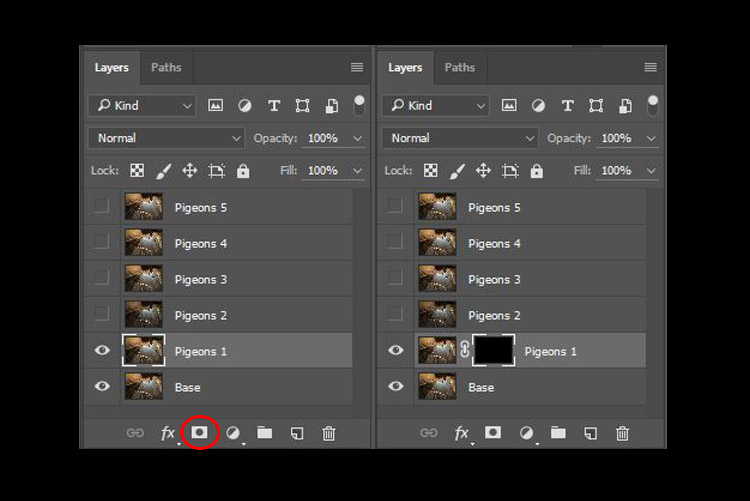
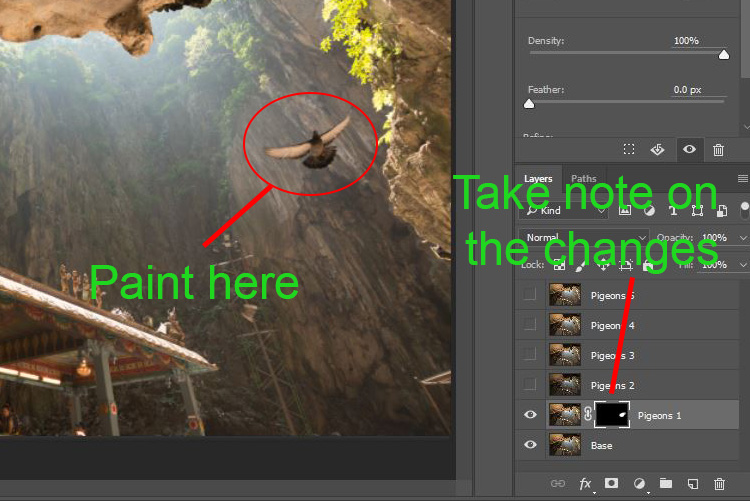
In short, the technique requires you to record a video, preferably with the camera on a tripod, freeze one of the frames and make it a photo, and then creating a mask that reveals only one element that moves. It looks better if you make the video loop-able but that is not absolutely necessary. The effect plays with your mind because everything is still apart from one element that moves.

Conclusion

I hope you’ll find these ideas interesting and you’ll use them to open new horizons and explore new techniques. I think experimenting plays a big part in photography and landscape photography is no exception.

Share your landscape tricks and tips in the comments below.

The post 5 Hacks and Tricks to up your Landscape Photography Game by Toma Bonciu appeared first on Digital Photography School.


Digital Photography School

 
Comments Off on 5 Hacks and Tricks to up your Landscape Photography Game

Posted in Photography


Lighting 103: Use Gels to Tune Your Home’s Lighting

05 May

Abstract: You can use your knowledge of color temperature and gels to improve the quality of light in your home.

So far, everything we have done has centered on gelling a single light to create a single desired color shift. But before we make the jump into using multiple colors and light sources, one quick hack for your home's lighting that will help you to improve the quality of light in compact fluorescent and LED bulbs.

Like the gawdawful green-tinged lamp above, for example. Read more »
Strobist

 
Comments Off on Lighting 103: Use Gels to Tune Your Home’s Lighting

Posted in Photography