RSS
 

Archive for the ‘Creativity’ Category

Transformers: 2 Beijing Houses Packed Full of Space-Maximizing Tricks

08 Dec

[ By SA Rogers in Architecture & Houses & Residential. ]

blue-architecture-studio-narrow-5

Think you’ve seen it all when it comes to ideas for saving space in small houses and apartments? Beijing’s B.L.U.E. Architecture Studio is here to prove you wrong in the most delightful way, with a series of transforming elements and incredibly clever layouts in two tiny ‘hutong’ alley houses. Working with lots as small as 258 square feet that are squashed between existing buildings, the architects managed to produce functional, comfortable, private residences full of natural daylight and enough space for multi-generational families.

blue-architecture-studio-narrow-1

Both homes butt up against other structures, making it impossible to incorporate windows into the design. B.L.U.E. added skylights to both, utilizing open-plan lofted layouts inside to encourage a bright and cheerful atmosphere. The first home is on a narrow L-shaped lot and features a cool glass-filled rear wall that opens all the way up to the courtyard.

blue-architecture-studio-narrow-2

blue-architecture-studio-narrow-4

blue-architecture-studio-narrow-6

Inside, beds and children’s play areas are lofted above a pale wooden built-in full of sliding elements, fold-down tables, transforming stairs, beds that instantly double in size, retractible walls and a modest-sized table that expands to seat six diners.

blue-architecture-studio-narrow-7

blue-architecture-studio-narrow-3

The second house is even smaller, with a nearly-identical arrangement of skylights and cabinet-packed walls revealing an array of unexpected features when opened. Extra countertops and work surfaces pop out of the wall facing the galley kitchen, and storage space stretches from the floor to the ceiling.

blue-architecture-studio-hutong-2

blue-architecture-studio-hutong-3

Beneath the lofted bedrooms for the owners and their kids, a third bedroom area doubles as an extra dining space. Remove the mattress to reveal a pop-up table and cushioned bench seating that you climb into like a retro conversation pit, or lay it back down and pull down the blinds for privacy. A second table folds down from the adjacent wall in seconds, with storage cubes doubling as stools.

blue-architecture-studio-hutong-1

blue-architecture-studio-hutong-4

From the pictures, it looks like there are even more built-in elements that aren’t demonstrated in GIF form, like a mysterious hatch in the dining room floor. The whole setup is clean, modern and uncluttered enough for a minimalist’s sensibilities despite so many people living in such a small space – an inspiration for all the tricks and hacks we’re going to have to come up with to boost housing density in cities with burgeoning populations.

Share on Facebook


[ By SA Rogers in Architecture & Houses & Residential. ]

[ WebUrbanist | Archives | Galleries | Privacy | TOS ]


WebUrbanist

 
Comments Off on Transformers: 2 Beijing Houses Packed Full of Space-Maximizing Tricks

Posted in Creativity


Urban Adventuring Apps: 13 Interactive Ways to Explore Your City

08 Dec

[ By SA Rogers in Travel & Urban Exploration. ]

urbex-app-history-pin-3

Whether you want to get to know your own city on a deeper level or explore secret spots in unfamiliar places, this collection of smartphone apps will take you on adventures you’d otherwise miss. Check out these scavenger hunts, walking tours, history lessons, interactive tasks that take you on random routes, user-submitted local favorites and other ways to interact with urban environments in fun and unexpected ways.

Derivé: Random Tasks Send You on an Adventure

urbex-app-derive

Explore your city – or an unfamiliar city – in a totally new way with the Derivé app, which randomly assigns you a task to do, like “find your favorite building”, “follow a hat,” “sit for two minutes” or “find a tree.” Refreshed every three minutes, the task cards lead you on a single-person scavenger hunt that will encourage you to take routes you’d never take otherwise and experience your environment in a new way.

History Pin: See History in Real Time

urbex-apps-history-pin-1

urbex-app-history-pin-2

urbex-app-history-pin-3

This user-generated history map lets you see what cities used to look like thanks to submitted historical photographs, which are pinned onto their real-life locations. The app uses Google Maps and Street View technology to overlay the historic photos onto the live camera view. Just hold up your phone in the street, and it’ll give you a glimpse of the past.

Spotted by Locals: Get the Inside Scoop

urbex-apps-spotted-by-locals

urbex-apps-spotted-by-locals-2

When you’re traveling, it’s easy enough to wander randomly without the use of a smartphone or simply go by tourist guide recommendations, but finding out what locals love can be more challenging. The Spotted by Locals app tells you what’s popular in any given spot, and it’s constantly updated to keep track of business openings and closings.

Geocaching: Treasure Hunting Challenge

urbex-apps-geocaching

urbex-apps-geocaching-2

The classic treasure-hunting app that has explorers digging for cleverly hidden containers called ‘geocaches’ remains the most popular way to participate in the adventure. The Geocaching app shows you geocaches near your location, allows you to message other players for hints and log the treasures you’ve found.

Geo Street Art Apps for New York City & London

urbex-apps-street-art-2

urbex-apps-street-art

Available for major cities like New York City and London, the Geo Street Art apps feature hundreds of local and international street artists, pointing you to their work so you can see it in person. ‘Street Art London’ and ‘Street Art New York City’ provide a “comprehensive reference point” of the street art scene, including artist biographies. The London version boasts over 600 images from over 90 artists in 270 locations.

Next Page – Click Below to Read More:
Urban Adventuring Apps 13 Interactive Ways To Explore Your City

Share on Facebook


[ By SA Rogers in Travel & Urban Exploration. ]

[ WebUrbanist | Archives | Galleries | Privacy | TOS ]


WebUrbanist

 
Comments Off on Urban Adventuring Apps: 13 Interactive Ways to Explore Your City

Posted in Creativity


US Megaregions: Algorithm Redefines Boundaries of Metropolitan Areas

07 Dec

[ By WebUrbanist in Culture & History & Travel. ]

real-america

A new geographical study of the United States reveals the functional boundaries of megapolises around the country, defining them by usage rather than arbitrary political borders. Unlike gerrymandered districts or state lines, these sprawling areas are rooted in deep data analytics versus historical accident.

america-borders

Historical geographer Garrett Dash Nelson teamed up with urban analyst Alasdair Rae to publish a paper using commuting information and computational algorithms. Studying over 4,000,000 commutes, they traced interconnections between economically connected points and reported the results in An Economic Geography of the United States: From Commutes to Megaregions.

border-edges

Taking it a step further, the authors also devised names for various megaregions extrapolated from the data – while semi-subjective, they start to give a sense of the real shape of metropolitan zones (and reveal areas where few residents and vast distances make it hard to define or confine regions).

connections-raw

Some cities at the heart of various sub-regions are not surprising — San Francisco and Los Angeles were givens — but others may be new to some people, like Fresno, California. Many cities trace influence across state borders, like Minneapolis into Wisconsin or New York City into effectively every adjacent state. Some overlap while others are isolated, especially in the west.

main

In the end, this is not a definitive way to look at geography within the Lower 48, but it does start to push the observer to rethink conventional regions of influence and defined borders. From the abstract: “The emergence in the United States of large-scale ‘megaregions’ centered on major metropolitan areas is a phenomenon often taken for granted in both scholarly studies and popular accounts of contemporary economic geography. We compare a method which uses a visual heuristic for understanding areal aggregation to a method which uses a computational partitioning algorithm, and we reflect upon the strengths and limitations of both. We discuss how choices about input parameters and scale of analysis can lead to different results, and stress the importance of comparing computational results with ‘common sense’ interpretations of geographic coherence.”

Share on Facebook


[ By WebUrbanist in Culture & History & Travel. ]

[ WebUrbanist | Archives | Galleries | Privacy | TOS ]


WebUrbanist

 
Comments Off on US Megaregions: Algorithm Redefines Boundaries of Metropolitan Areas

Posted in Creativity


The ‘90s Are Calling: How to Hack a Payphone into a Boombox

06 Dec

[ By SA Rogers in Gadgets & Geekery & Technology. ]

payphone-boombox-hack-1

When you pick up this bright yellow receiver, you won’t hear a dial tone on the other end – what’s waiting for you instead is some of the worst music the 1990s had to offer. The ‘90s are calling and they want their boomboxes, payphones, ugly neon colors and alt rock radio hits back, but maybe you want to keep them by completing this hack yourself. A ‘digital alchemist’ calling himself Fuzzy Wobble explains how to procure an old payphone and load it up with music so it can be two obsolete objects at once.

payphone-boombox-hack-3

“When I first started this project I suspected payphones would be hard to get, expensive, and a hassle to hack. I was wrong on all three! Online I was able to get city-grade cast-iron/stainless payphone for relatively cheap. And the hack, surprisingly, turned out to be quite elegant!”

payphone-boombox-hack-gif

payphone-boombox-hack-5

Follow along step-by-step on Instructables to learn how to control the keypad, switches and audio on a payphone, whether you actually want to make your own ‘90s boombox or use it for some other audio project. The tutorial will tell you where to find a payphone and how to program the guts using modern electronic components like the Adafruit MP3 Maker Shield and the Arduino Mega, as well as offering the code and laser cuter templates.

“I would so totally just use this to rick roll people,” says one Instructables commenter. Sure. That’s no less relevant to our current world than The Offspring, Semisonic and Coolio.

Share on Facebook


[ By SA Rogers in Gadgets & Geekery & Technology. ]

[ WebUrbanist | Archives | Galleries | Privacy | TOS ]


WebUrbanist

 
Comments Off on The ‘90s Are Calling: How to Hack a Payphone into a Boombox

Posted in Creativity


Evil Architecture: 15 Ominous-Looking Buildings Fit for Scheming Villains

06 Dec

[ By SA Rogers in Architecture & Cities & Urbanism. ]

evil-buildings-murder-hotel-2

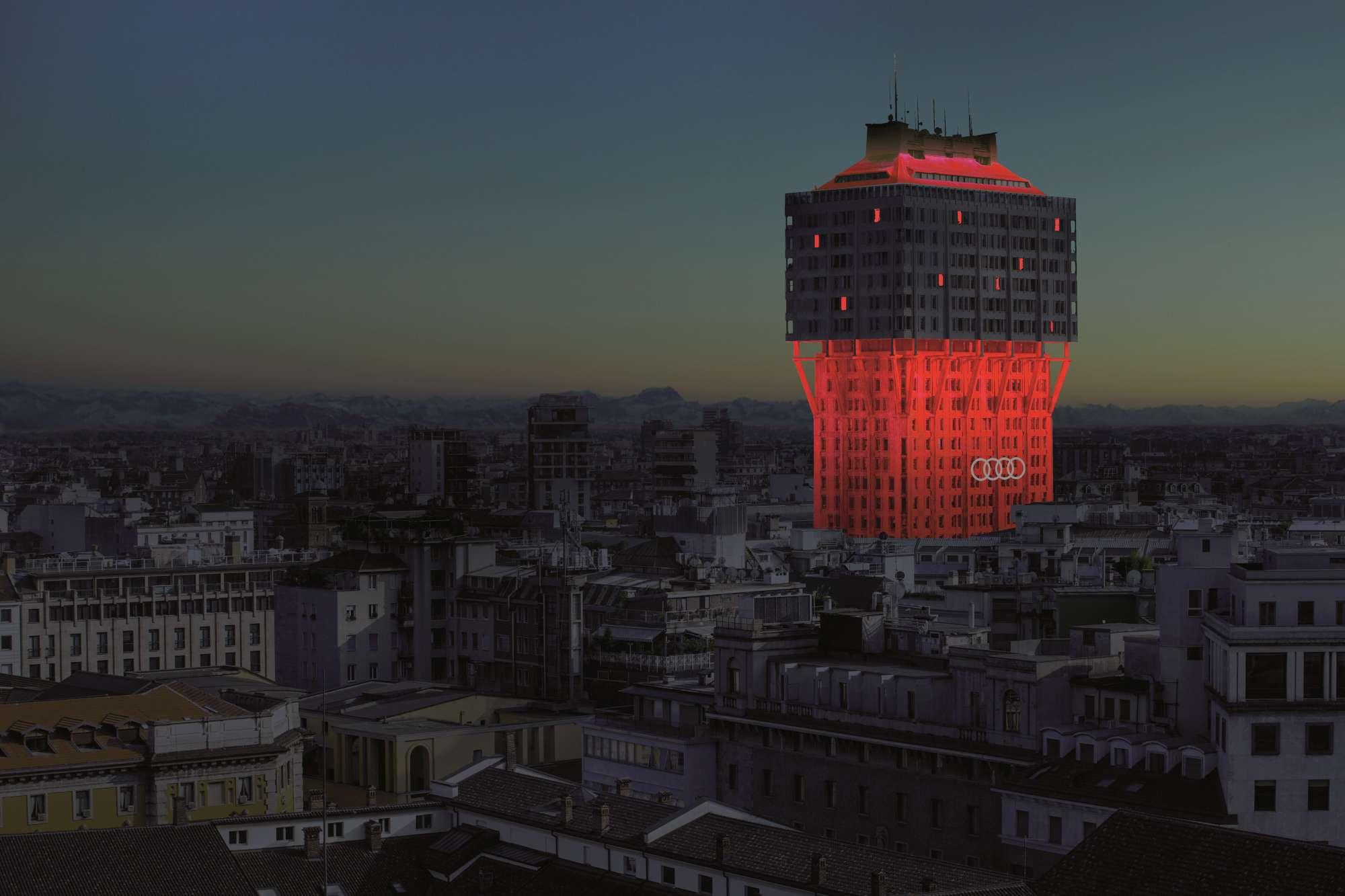
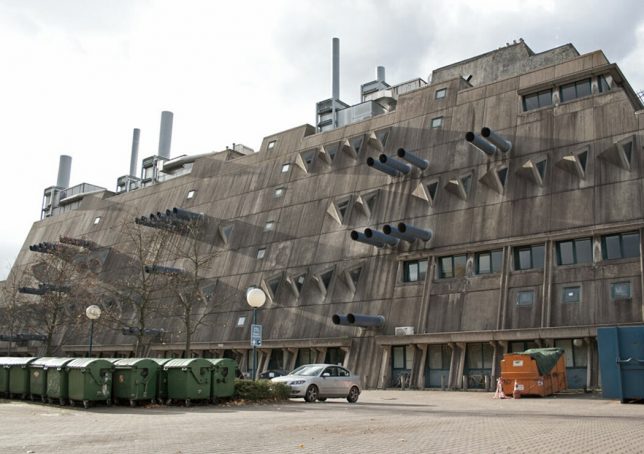
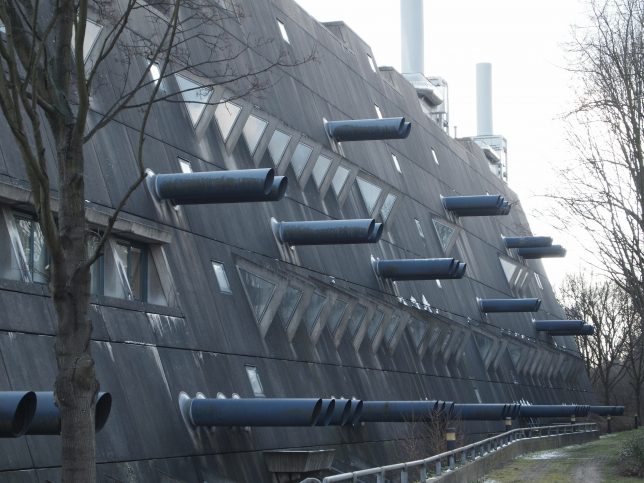
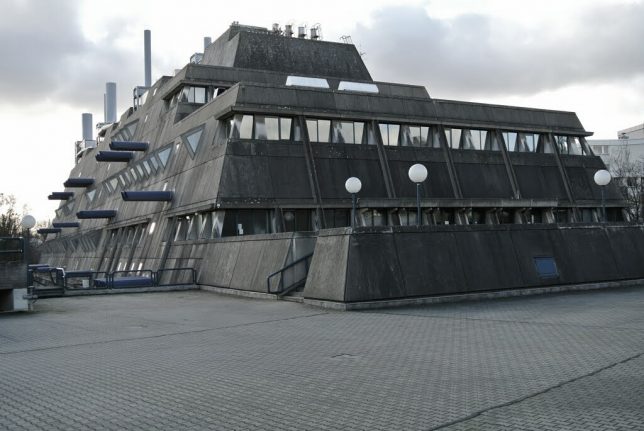
With ominous red lighting, creepy statue adornments, ventilation pipes resembling cannons and spaceship-like silhouettes, these buildings put off some seriously evil vibes. It’s hard to imagine how the architects failed to realize they were designing oversized haunted mansions, battleships, missile launchers, murder hotels and the Eye of Sauron, but as the subreddit r/evilbuildings illustrates, there are a whole lot of villainous-looking buildings in the world. Check out Reddit for dozens more.

Battleship Building: Research Institute for Experimental Medicine, Berlin, Germany

evil-buildings-battleship-1

evil-buildings-battleship-2

evil-buildings-battleship-3

Completed in 1972 to house animal research facilities, Berlin’s Research Institute for Experimental Medicine is a bizarre Brutalist wonder. Its shape coupled with a multitude of ventilation pipes sticking out of the exterior walls makes it look more than a little bit like a battleship – even the globes of the lamps outside could be mistaken for cannonballs in mid-flight.

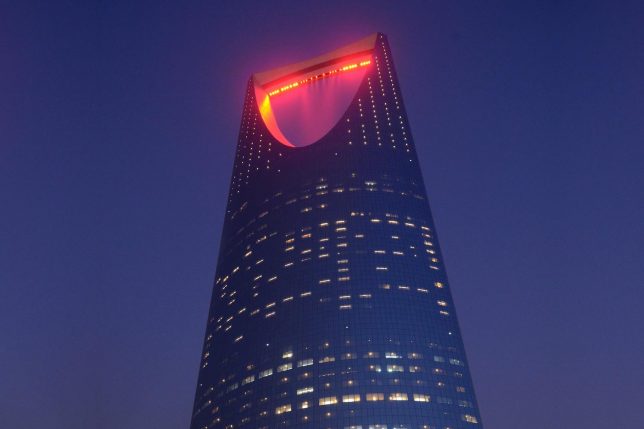
The Kingdom Centre’s Eye of Sauron, Riyadh, Saudi Arabia

evil-buildings-kingdom-centre

One ring to rule them all! By day, the Kingdom Centre tower looks pretty benign. But at night, the skybridge at its pinnacle lights up in various colors, and when this photo was captured, its red glow made it a dead ringer for the Eye of Sauron.

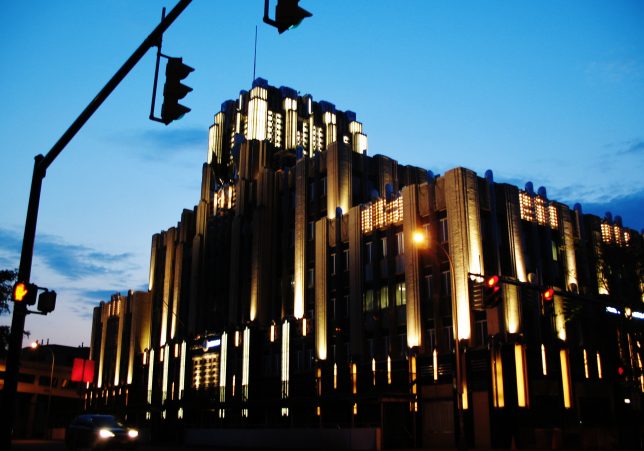
Niagara Mohawk Building, Syracuse, New York

evil-buildings-niagara-mohawk-1

evil-buidings-niagara-mohawk-3

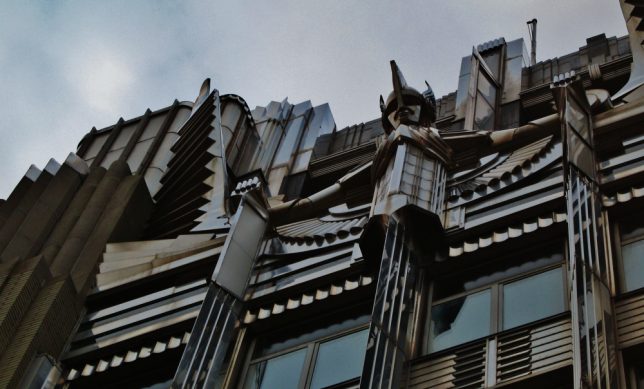
This beautiful Art Deco building in Syracuse, New York cuts a dramatic silhouette when illuminated after dark, and the winged statue on the front – which is meant to symbolize lightning – has a bit of a foreboding feel to it.

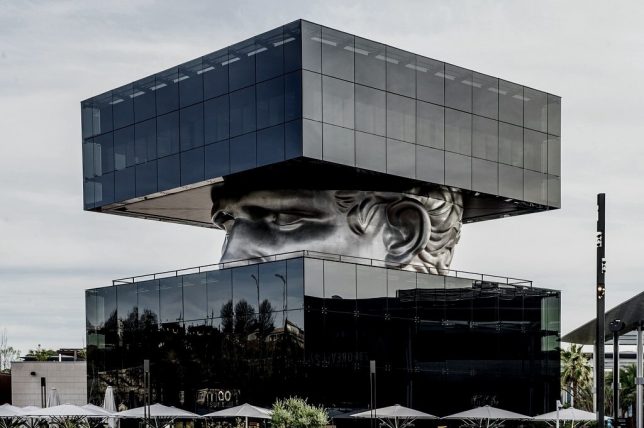
Polygone Riviera Shopping Center, France

evil-buildings-polygon-riviera

Does this building make anyone else think of the muggle-squashing ‘Magic is Might’ monument that appeared in the movie Harry Potter and the Deathly Hallows: Part 1? It doesn’t help that the expression on this colossal man’s face looks anguished as he peers out from between two sections of the building.

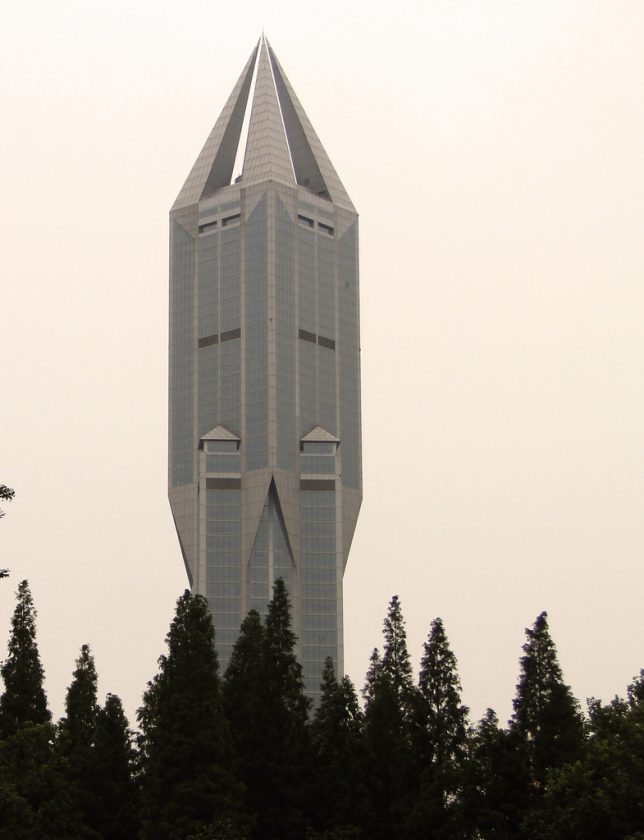
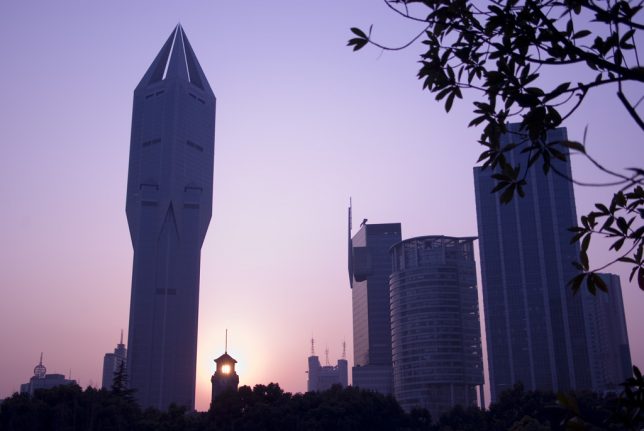
Tomorrow Square Building, Shanghai

evil-buildings-tomorrow-square-2

evil-buildings-tomorrow-square

Many people have rightly pointed out that the tip of the Tomorrow Square Building in Shanghai looks like it’s about to launch a nuclear weapon into the sky any time now.

Next Page – Click Below to Read More:
Evil Architecture 15 Ominous Looking Buildings Fit For Scheming Villains

Share on Facebook


[ By SA Rogers in Architecture & Cities & Urbanism. ]

[ WebUrbanist | Archives | Galleries | Privacy | TOS ]


WebUrbanist

 
Comments Off on Evil Architecture: 15 Ominous-Looking Buildings Fit for Scheming Villains

Posted in Creativity


Capping Chernobyl: Nuclear Disaster Site Covered in Giant Protective Dome

05 Dec

[ By WebUrbanist in Abandoned Places & Architecture. ]

chernobyl-dome

In an unprecedented feat of engineering, the world’s most infamous nuclear disaster site is being covered by a huge prefabricated steel arch designed to shield the world from its fallout. Made to fit over the so-called sarcophagus, a crumbling concrete and lead shelter initially erected at the site, the New Safe Confinement structure spans nearly 1,000 feet horizontally.

The original protective shell over the Chernobyl Nuclear Power Plant’s reactor was a hurried affair and never meant to be permanent — 4,000 people in the region were still killed in the initial catastrophic meltdown but many more were saved thanks to this hasty intervention. In the days, weeks and months following the disaster, hundreds of thousands of evacuees and emergency workers were exposed to dangerous radiation.

construction-dome

At the cost of 1.5 billion dollars the new lid is also not a solution to last forever, but it is designed to last for 100 years. Weighing 36,000 tons and taller than the statue of liberty (354 feet) the monstrous structure is only partially complete — it still needs to be rendered airtight and radiation equipment is yet to be installed. The entire thing has been constructed offsite on nearby land before being moved into place.

Share on Facebook


[ By WebUrbanist in Abandoned Places & Architecture. ]

[ WebUrbanist | Archives | Galleries | Privacy | TOS ]


WebUrbanist

 
Comments Off on Capping Chernobyl: Nuclear Disaster Site Covered in Giant Protective Dome

Posted in Creativity


Santa Claustrophobia: The World’s Creepiest Santa Statues

05 Dec

[ By Steve in Culture & History & Travel. ]

santa-statue-1c

The ho-ho-horror! Much like creepy clowns, these dark and disturbing Santa Claus statues cross the fine line separating awe-inspiring and just plain awful.

santa-statue-1b

One would think the bizarre concept of a “Santa Monroe” would be shot down in flames seconds after multiple shocked gasps echoed ’round the conference table. Against all odds, however, the plan was approved and an inflatable, grimacing, pants-less Santa standing roughly 20-feet-tall took his place outside a shopping center in Dongguan, China. We’d make a “Dong-guan” joke here but you probably already have.

santa-statue-1d

Like Marilyn Monroe’s iconic pose above a subway grate in 1955 film The Seven-Year Itch, Santa’s long red coat appears to be blown upwards by an unseen wind, revealing what should remain unseen to the public at large. We’re figuring the designers took a leap of faith when they gave Ol’ Saint Nick a set of coal-black briefs. To be fair, it’s not as if there was any precedent to guide them. Don’t place all the blame on China though: the idea seems to have been co-opted by someone who embellished the concept further by adding a rather risque garter belt. Nice… and naughty.

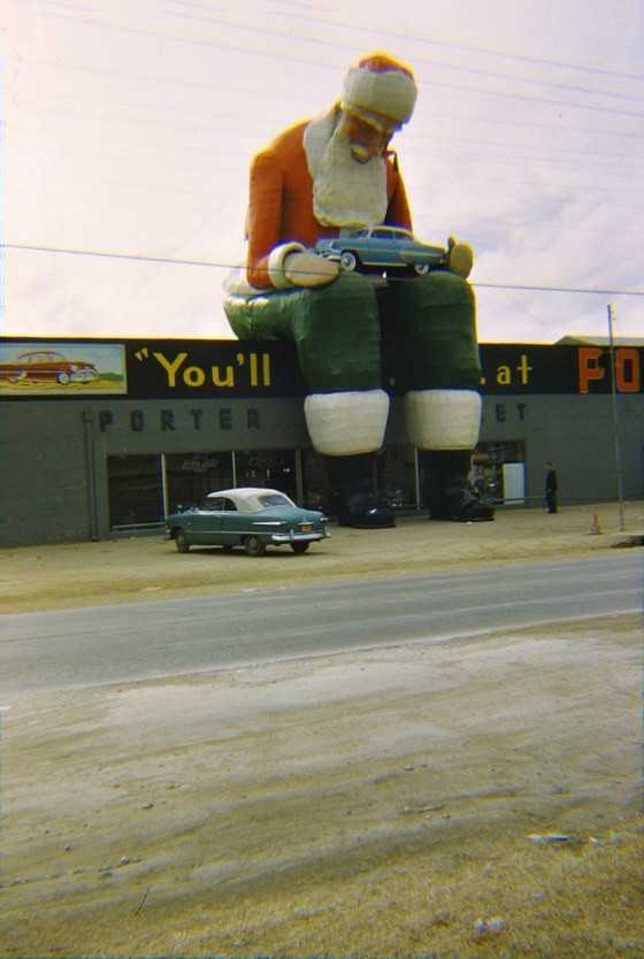
Texas-Sized Santa

santa-statue-2a

In 1953, Jack Bridges, designer of those iconic “Big Tex” statues, was commissioned to create a one-of-kind Santa statue for Dallas auto dealer Porter Chevrolet. The result: an 85-ft-long, 56-ft-tall papier mache Santa that was so large and unwieldy it had to be trucked to the site in pieces. Yes, that’s a real 1954 Chevy Bel-Air Santa’s clutching in his Texas-sized hands. There’s a tragic twist to this tale: area resident Roy Davis, 46, arranged a crane to lift him eye-level with Santa so he could snap a Christmas card photo – a very early selfie, one might say. Like too many modern selfies, Davis’ effort ended badly when he suffered a fatal heart attack and plummeted to the pavement, landing right between Santa’s boots.

Fingered Down Under

santa-statue-4a

santa-statue-4b

Auckland, New Zealand’s seasonal claim to creepy fame comes in the form of a 5-ton, 60-ft-tall semi-animatronic Santa statue who’s been affixed to the corner of the Whitcoull’s book store on Queen Street since 1960. The creepy factor derives from the statue’s only two moving parts: a winking right eye and a beckoning index finger. Brrr!

santa-statue-4c

santa-statue-4d

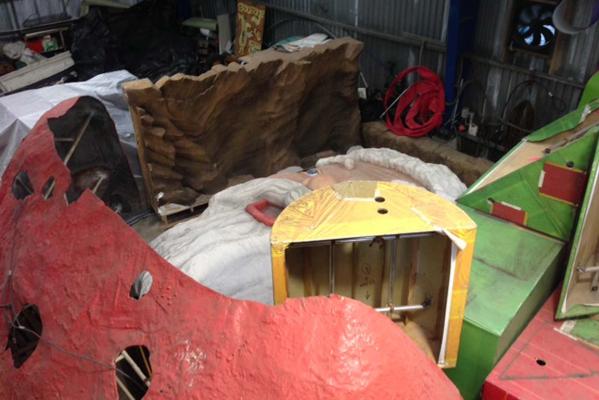
Sadly (for some), in 2014 the $ 180,000 annual expense required to keep Santa creeping folks out was deemed overly exorbitant. Santa’s been lingering – in pieces – in an Auckland warehouse since then. Anyone who misses Kiwi Santa’s slo-mo winking and fingering – you know who you are – can relive the trauma via this video.

Next Page – Click Below to Read More:
Santa Claustrophobia The Worlds Creepiest Santa Statues

Share on Facebook


[ By Steve in Culture & History & Travel. ]

[ WebUrbanist | Archives | Galleries | Privacy | TOS ]


WebUrbanist

 
Comments Off on Santa Claustrophobia: The World’s Creepiest Santa Statues

Posted in Creativity


Sprawl Trilogy Redesign: Fractal City Covers for Classic Gibson Novels

04 Dec

[ By WebUrbanist in Art & Drawing & Digital. ]

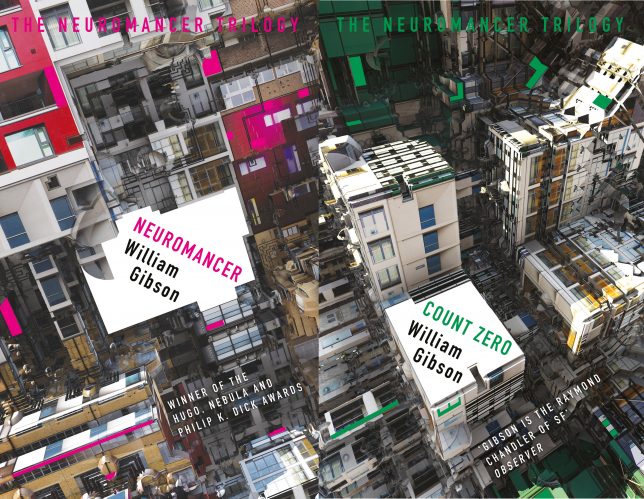
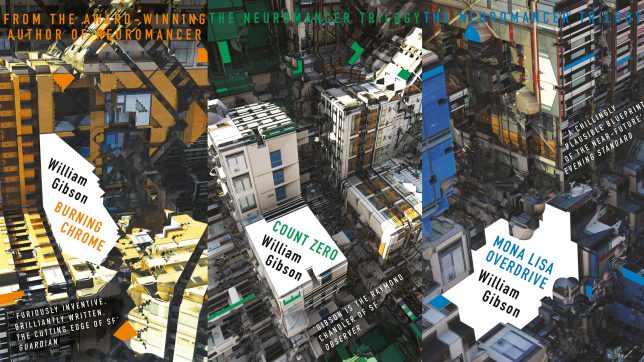
fractal-cover-art

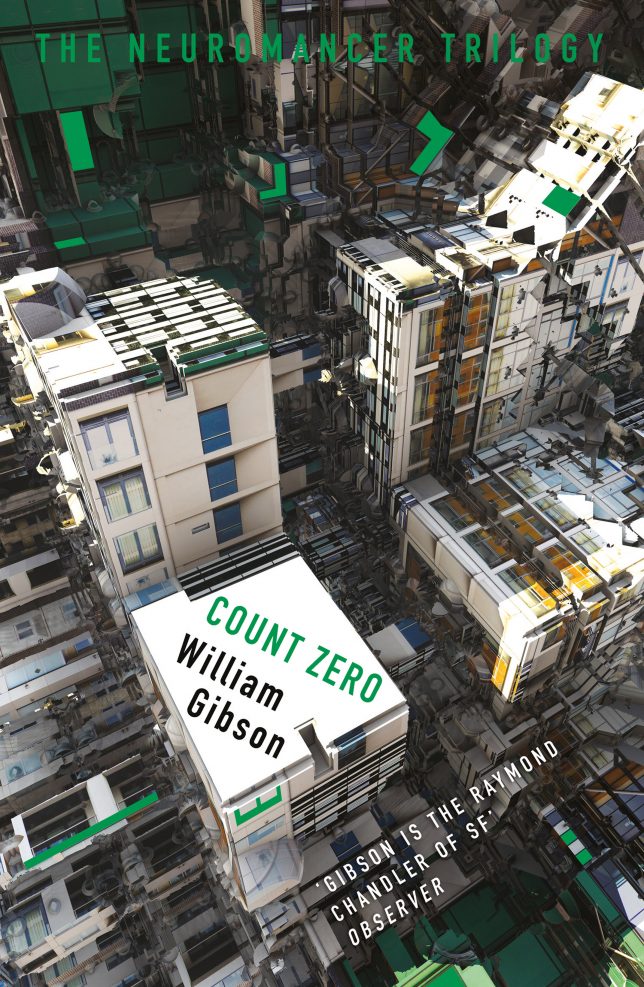
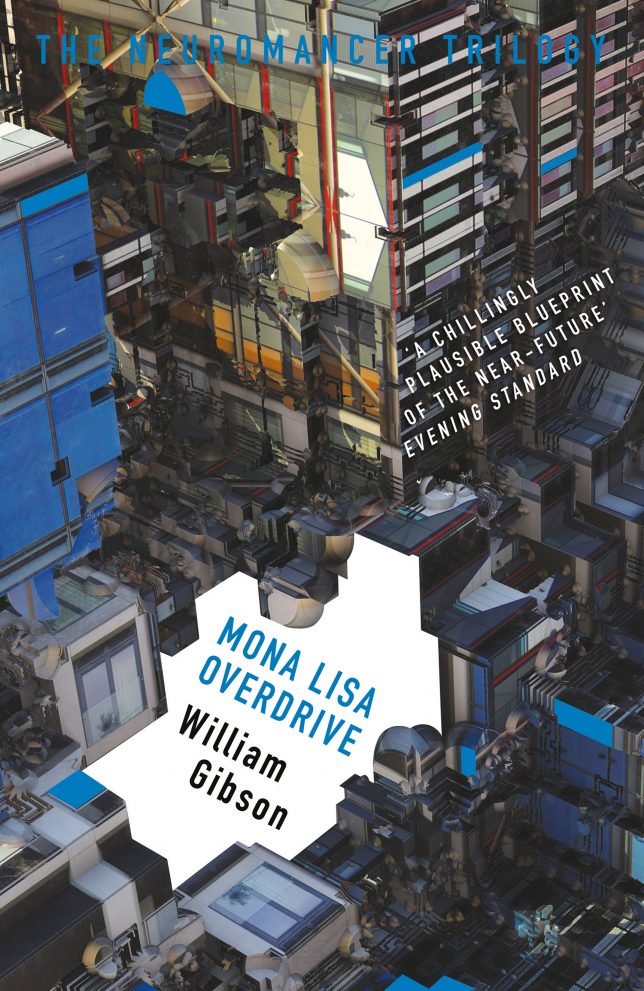
Three classic cyberbunk books and a short story collection, all by William Gibson, are getting an apt makeover in the form of architectural covers featuring beautifully abstracted (if dystopian) urban landscapes.

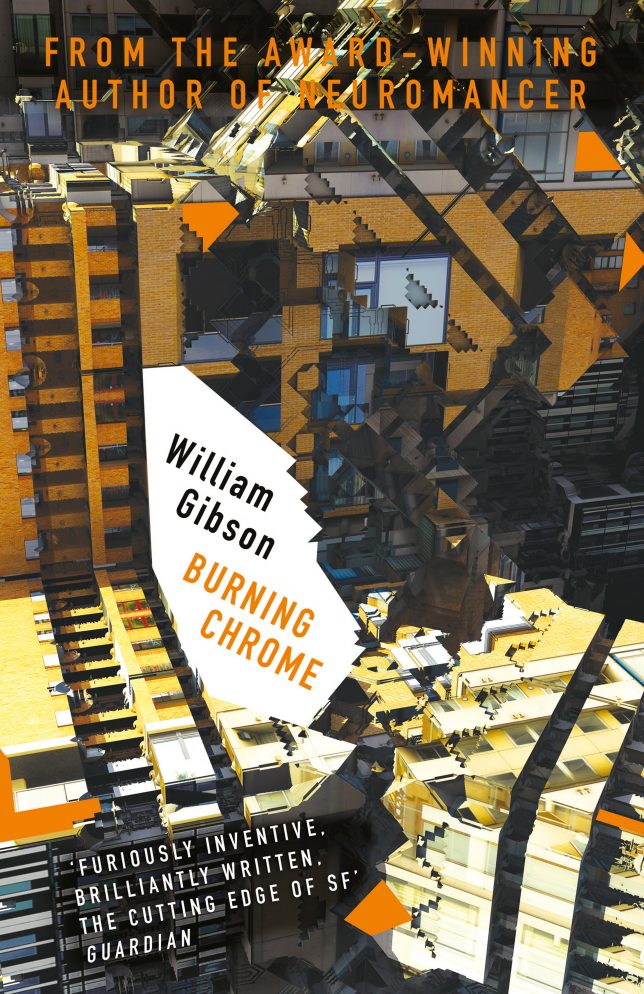
burning-chrome-cover

Anyone familiar with this master of science fiction will make the connection quickly — the strange and seemingly impossible shapes are exactly what come to mind when reading the Sprawl Trilogy (Neuromancer, Count Zero, Mona Lisa Overdrive) as well as shorts from Burning Chrome. In William Gibson’s fiction, the Sprawl is a colloquial name for the Boston-Atlanta Metropolitan Axis (BAMA), an urban sprawl environment on a massive scale, and a fictional extension of the real Northeast megalopolis.

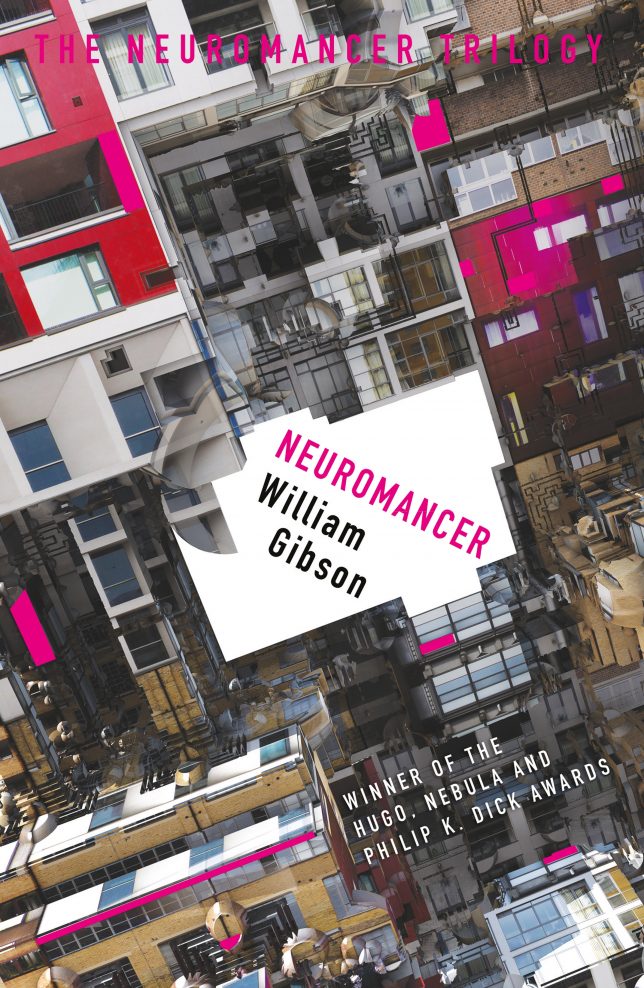
neuromancer-cover

Developed by digital artist, designer and programmer Daniel Brown, the method of these remakes also fits the techno-futuristic narratives in question: fractal mathematics and computer software turned ordinary architectural photographs into these surreal built environments. The covers seem to flow into one another but are distinctly colored, forming unique art separately but a kind of fractal collage when seen together.

count-zero-cover

The images were generated by repeating one shot at different scales to create complex patterns, at once recognizable as architectural but hard to pin down, much like a memory or a visualization based on reading a book. Gibson approached Brown when Gollancz, an imprint of Orion, acquired rights to the publishing of these speculative fiction classics.

mona-lisa-overdrive-cover

The designer says he was personally approached by Gibson to create the cover designs for the books, which have been recently acquired by science-fiction publisher Gollancz, an imprint of Orion. Their meeting was fortuitous as Brown had been looking for a platform to execute his creative ideas.

new-gibson-cover-art

“I had been experimenting with generating architecture via computer code,” says Brown. “As a project it was still in its infancy and without real purpose. Then William Gibson contacted me, and stated it was exactly how he had envisaged The Sprawl. In an uncanny way the code found its own purpose.”

Share on Facebook


[ By WebUrbanist in Art & Drawing & Digital. ]

[ WebUrbanist | Archives | Galleries | Privacy | TOS ]


WebUrbanist

 
Comments Off on Sprawl Trilogy Redesign: Fractal City Covers for Classic Gibson Novels

Posted in Creativity


Hippie Bus for the 21st Century: DIY Solar Volkswagen Camper Van

03 Dec

[ By SA Rogers in Technology & Vehicles & Mods. ]

hippie-camper-van-1

Iconic for its role in the counterculture movement of the 1960s, the Volkswagen Bus has seen many an amateur transformation into campers over the decades since, and now it’s gone solar electric. An Oregon couple decided to put their own spin on the classic DIY project by fusing the original aesthetics of a 1973 VW van with electric vehicle batteries and photovoltaic panels mounted to the roof, creating a modest but highly functional recreational vehicle for their family trips.

hippie-camper-van-5

hippie-camper-van-7

Brett Belen, an engineer who spent years working on solar electric vehicles before taking on the project, wanted a highway-friendly camper with a large roof surface to pack on the largest possible solar array. He mounted four 305-watt LG panels to a pop-up frame that tilts up to 40 degrees, taking in lots of sunlight on the road while flat and then positioned toward the morning sun when open and parked for the night.

camper-van-before-1

camper-van-after-1

hippie-camper-van-2

hippie-camper-van-6

The space beneath the open panel provides extra elbow room inside the van for Brett, his wife Kira and their two children. This works almost exactly like Volkswagen-produced camper vans, with the sides enclosed by waterproof tent material. A rear window allows them to look out onto the scenery of their chosen camping spot, while the inside is equipped with folding tables and storage space for gear.

hippie-camper-van-3

hippie-camper-van-4

The battery bank consists of 12 Trojan T-1275 lead-acid batteries in a custom battery box tucked beneath a bench seat in the back, providing a range of up to 50 miles per charge. While other battery types could provide more power, Brett emphasizes that he wanted to stick to materials that the average person can afford. It’s not top of the line, but the setup is still enough to take the Belens on a 1400-mile trip of the West Coast. Learn more about the specifics at the family’s website.

Share on Facebook


[ By SA Rogers in Technology & Vehicles & Mods. ]

[ WebUrbanist | Archives | Galleries | Privacy | TOS ]


WebUrbanist

 
Comments Off on Hippie Bus for the 21st Century: DIY Solar Volkswagen Camper Van

Posted in Creativity


Drawing Sculptures: 3D Architectural Art Styled After 2D Sketches

01 Dec

[ By WebUrbanist in Art & Sculpture & Craft. ]

stick-frame-drawing-sculpture

This ongoing series of sculptural floating cities and suspended towns could be mistaken for pencil drawings when glanced on a wall or seen in a two-dimensional medium like photography.

wall-drawing-art

white-on-dark

Spanish artist David Moreno sees it that was as well: at attempt to draw sculptures, but using steel rods lashed together with piano wire rather than a pen on a pad. Background depth, shadows and other slight dimensional clues cue viewers into what they are really seeing.

sticks-on-stilts

These stick-figure structures correspondingly look deceptively simple: what would normally be a single stroke is instead a meticulous assembly process, the rods tied together by hand and piano wire wrapped and clipped to support them.

chair-art

chair-sculpture

The Barcelona-based artist has also toyed with 3D-printing extrusion devices to shape similar works in more colorful formats, combining, for instance, a series of stylized chairs into a mass of interconnected hanging sculptures.

wall-art-process

stick-house-detail

In other cases, strings and wires are looped and stretched to form complex shapes or interact with other objects – stories and figures emerging from a combination of materials and forms.

wire-artwork

staircase-wall

While the specifics of his work shifts from one installation to the next, a common theme is clear: taking traditions of line art into the third dimension and seeing what can come of the process (via Colossal).

Share on Facebook


[ By WebUrbanist in Art & Sculpture & Craft. ]

[ WebUrbanist | Archives | Galleries | Privacy | TOS ]


WebUrbanist

 
Comments Off on Drawing Sculptures: 3D Architectural Art Styled After 2D Sketches

Posted in Creativity