RSS
 

Archive for the ‘Creativity’ Category

Bike on the River: Cycle-Powered Gym Boat Glides Through Paris

01 Dec

[ By SA Rogers in Conceptual & Futuristic & Technology. ]

paris-navigating-gym-1

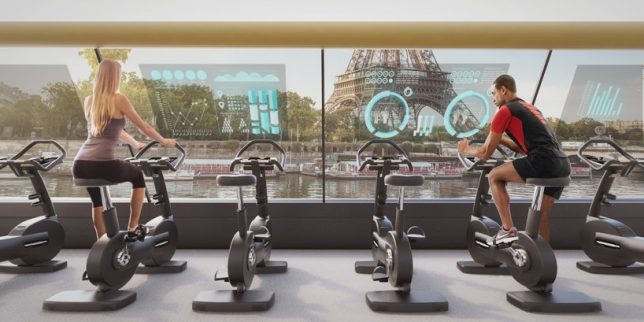
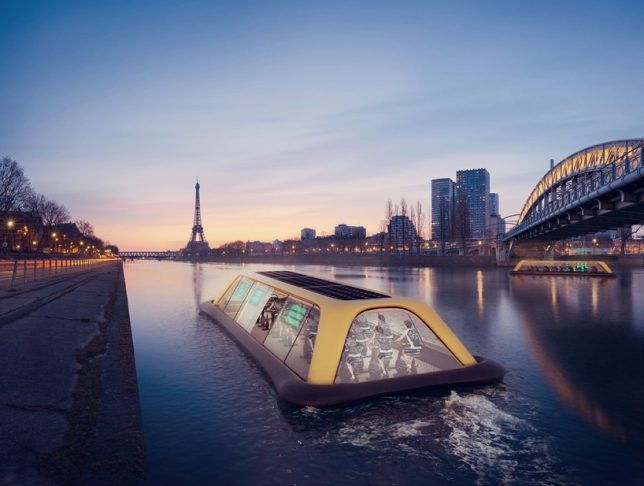
Well, here’s one way to get some exercise and simultaneously enjoy views of a beautiful city without getting rained on or dealing with traffic.  Gliding along the surface of the Seine in Paris, past such landmarks as the Notre Dame Cathedral, ‘The Paris Navigating Gym’ gets most of its power from the humans operating the stationary bicycles inside. Supplemented by rooftop solar panels, the boat is a mobile exercise facility and relaxing tour of the city all at once, separated from the noise and chaos of the streets.

paris-navigating-gym-2

Architect Carlo Ratti collaborated with fitness manufacturing company Technogym, non-profit Terreform ONE and urban generation institute URBEM to develop the project. Director of the MIT Senseable City Lab, which describes itself as ‘urban imagination and social innovation through design & science,’ Ratti aims to explore the potential of power generation through the movement of human bodies.

paris-navigating-gym-3

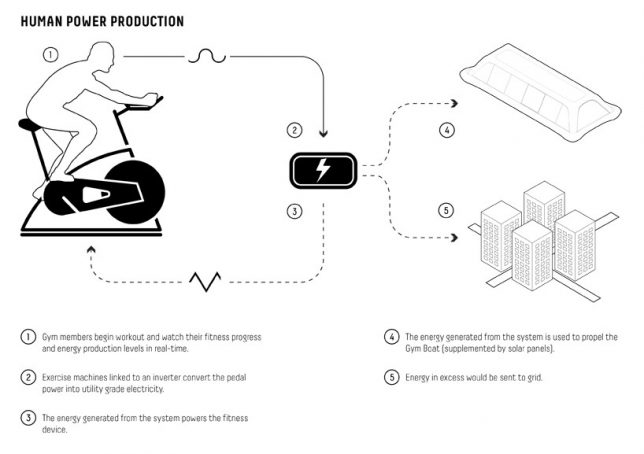
The boat itself is pretty cool, accommodating up to 45 people on the bikes and other fitness equipment made by Technogym. As they work out, they can keep track of how much energy they’re producing as well as their fitness progress. An inverter convert the pedal power into utility grade electricity, powering the electronic elements of the equipment and propelling the boat. Excess energy is fed into the grid.

paris-gym-boat

The design of the boat is based on that of Bateaux Mouches, ferry boats for tourists that have dotted the Seine for nearly a century. The panoramic glass facades looking out onto the water sure beat the views of parking lots and televisions at most local gyms.

Share on Facebook


[ By SA Rogers in Conceptual & Futuristic & Technology. ]

[ WebUrbanist | Archives | Galleries | Privacy | TOS ]


WebUrbanist

 
Comments Off on Bike on the River: Cycle-Powered Gym Boat Glides Through Paris

Posted in Creativity


Occupy Urban Spaces: 10 Guerrilla Modifications to City Infrastructure

30 Nov

[ By SA Rogers in Architecture & Cities & Urbanism. ]

screen-shot-2016-11-29-at-7-17-51-pm

Nobody knows the needs of a city better than the residents who navigate it each day, so who better to edit, adapt and upgrade urban spaces to make them cooler and more useful? Urban ‘hacktivism’ takes underutilized architecture and infrastructure, from street signs to empty subway stations, and subverts it for a new purpose. Whether installed guerrilla-style or with the blessing of city officials, these projects make the city a more fun and comfortable place to hang out.

Arche de la Defense Occupation by Parasitic Guerrilla Architecture

arche-de-la-defense-occupation

arche-de-la-defense-occupation-2

arche-de-la-defense-occupation-3

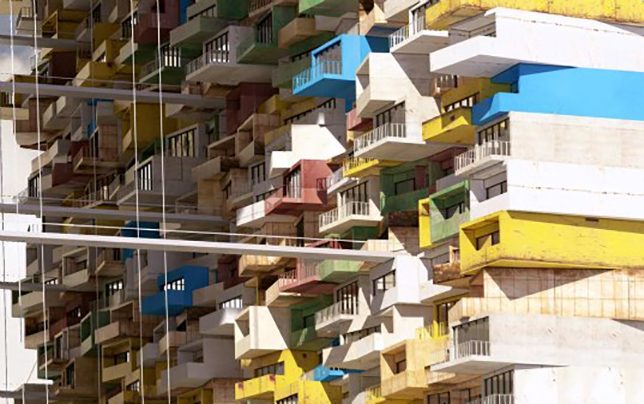
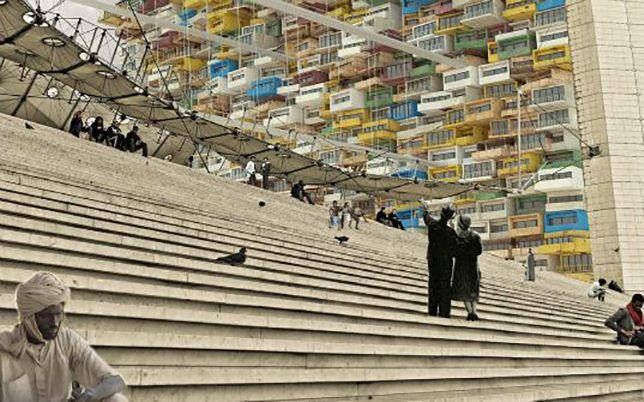
What if citizens took the lack of affordable and accessible housing in cities into their own hands, and simply created their own residences wherever they saw fit? ‘Pocket of Active Resistance’ envisions how this would manifest in Paris, as guerrilla housing takes over monuments like the Arche de la Defense. Architect Stéphane Malka presents a modular housing system stuck right into the interior walls of la Defense, connected by scaffolding and catwalks.

Alleyway Squat Housing by WEAK!

screen-shot-2016-11-29-at-7-15-00-pm

screen-shot-2016-11-29-at-7-15-16-pm

screen-shot-2016-11-29-at-7-15-59-pm

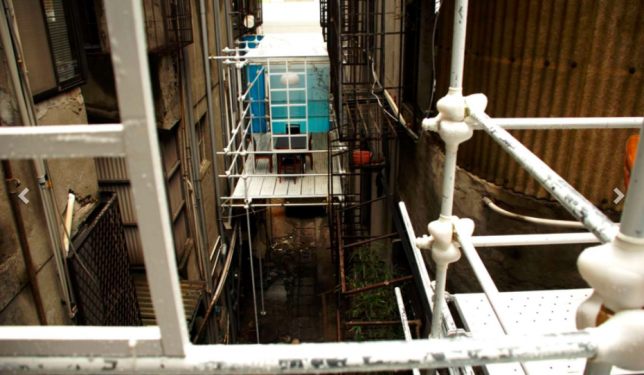
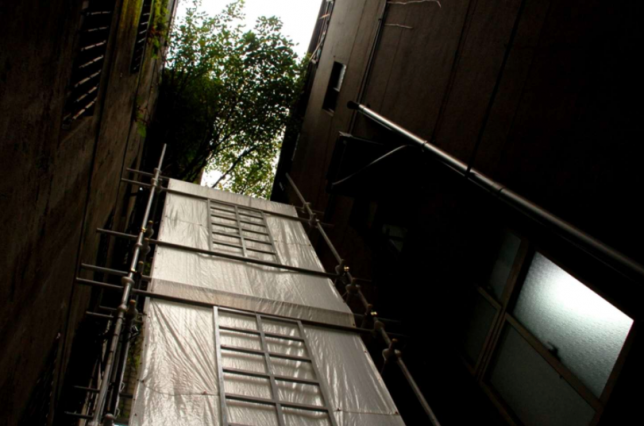
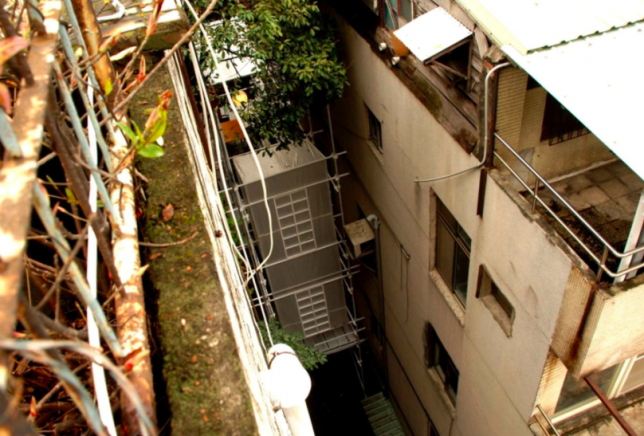
The firm ‘WEAK!’ encourages the organic growth of illegal structures on all sorts of city surfaces, including rooftops, disused fields and abandoned skyscrapers, reflecting “the citizen’s right to express himself through architecture.” Among the projects they’ve brought to life throughout Taiwan is this elevated alleyway dwelling made primarily of scaffolding, which creates a new two-level residence while leaving room on the ground for pedestrians to pass through.

Parasite 2.0 Colony in Venice

screen-shot-2016-11-29-at-7-17-51-pm

screen-shot-2016-11-29-at-7-18-00-pm

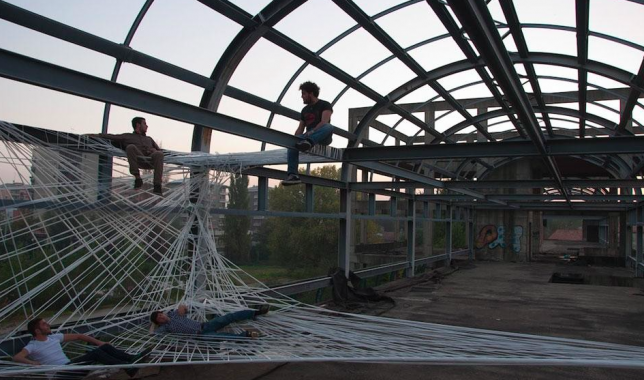
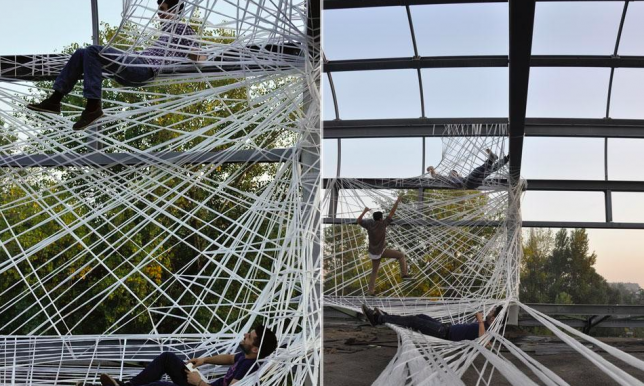
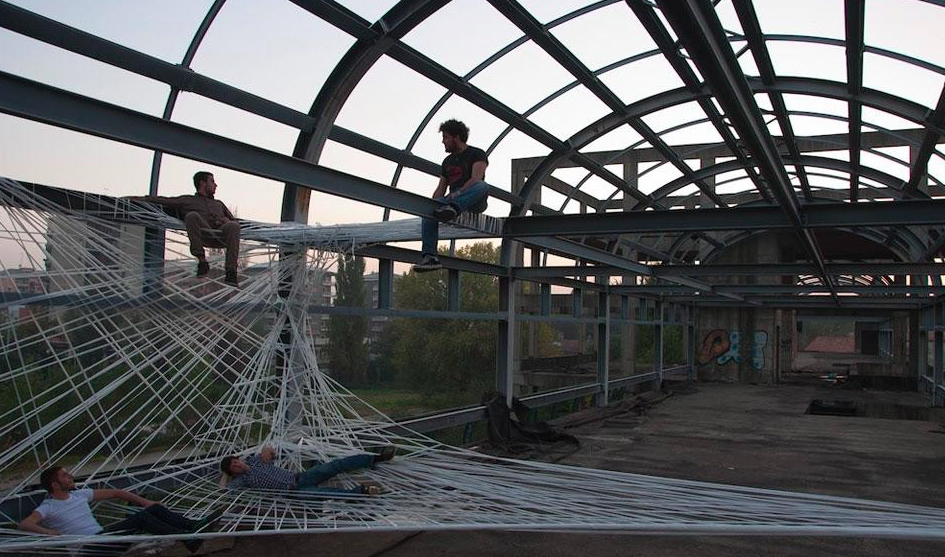
Young Italian collective Parasite 2.0 took over a series of disused spaces throughout Italy as part of a 2013 urban occupation project, including the fort of the Sant’Andrea island in the Venetian lagoon. Stretching polyethylene through the frame of an abandoned building like a web, they created an amorphous series of rooms with built-in hammocks.

Cascade Project by Edge Design Institute

cascade-project-2

cascade-project-1

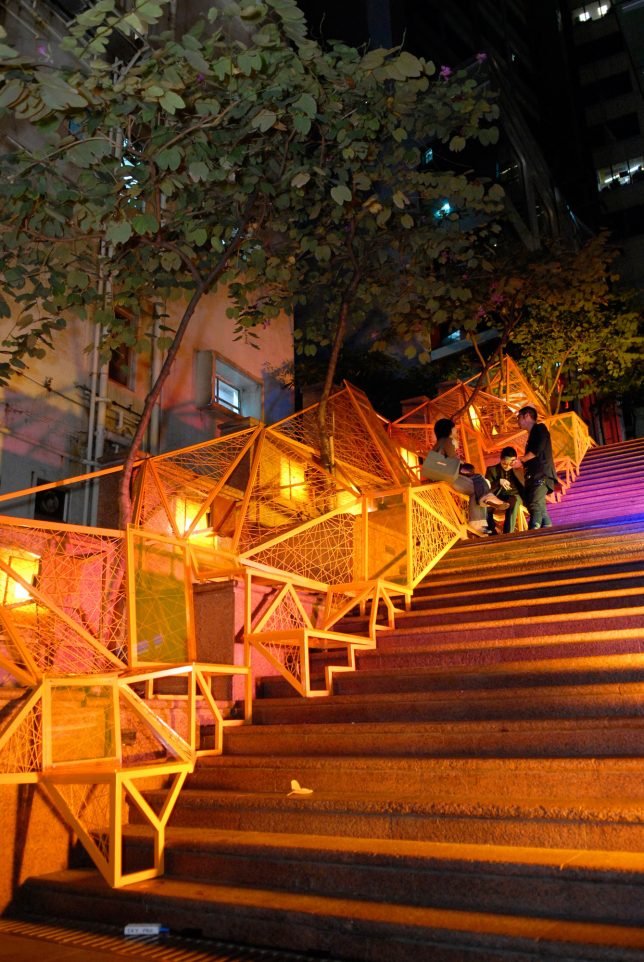
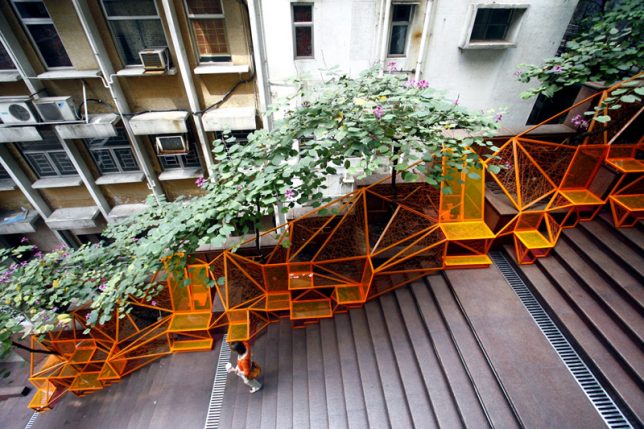
A staircase in Hong Kong that took up lots of space yet saw very little foot traffic temporarily became the setting for a vibrant geometric mesh sculpture with built-in seating and planters, creating a miniature park right in the middle of The Centrium. ‘The Cascade Project’ by Edge Design Institute features a living canopy of Bauhinia trees and other plants, giving the staircase an alternate and ultimately more useful purpose.

Art & Culture Center Beneath a Railway in Japan

railway-center-2

railway-center

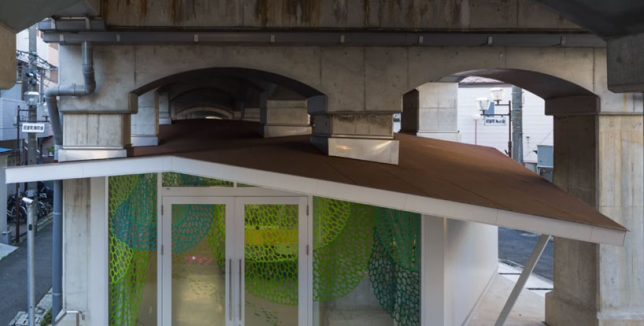
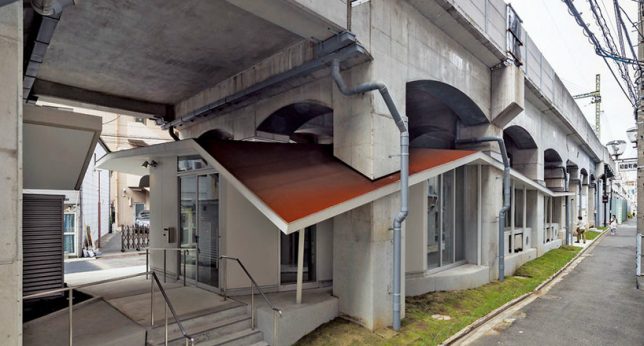
While this project was completed with the blessing of the city of Yokohama, it’s a pretty cool example of how underutilized urban spaces can be taken over and transformed for the benefit of all residents. Situated on a once-obsolete and uneasily quiet street, right beneath a railway track, the new arts center includes a gallery, cafe and studio.

Next Page – Click Below to Read More:
Occupy Urban Spaces 10 Guerrilla Modifications To City Infrastructure

Share on Facebook


[ By SA Rogers in Architecture & Cities & Urbanism. ]

[ WebUrbanist | Archives | Galleries | Privacy | TOS ]


WebUrbanist

 
Comments Off on Occupy Urban Spaces: 10 Guerrilla Modifications to City Infrastructure

Posted in Creativity


Hidden Addition: Stealth NYC Penthouse is Invisible from Streets Below

30 Nov

[ By WebUrbanist in Architecture & Houses & Residential. ]

stealth-roof

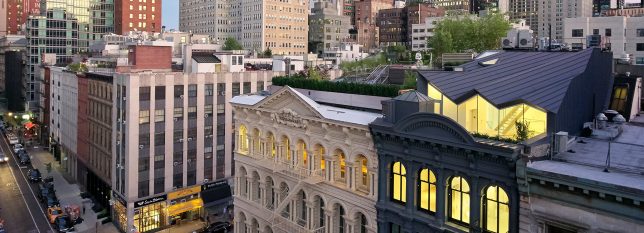
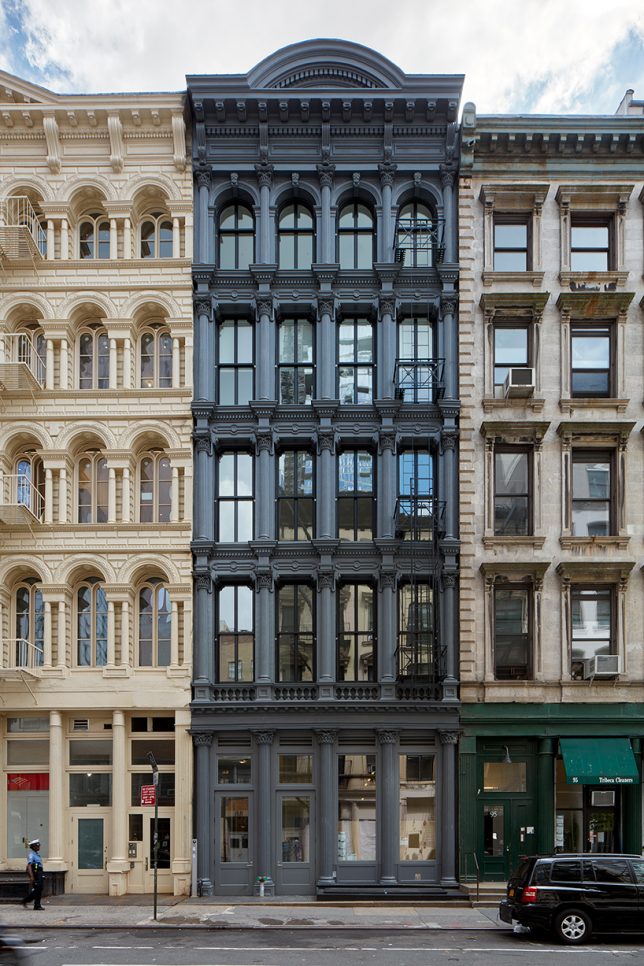
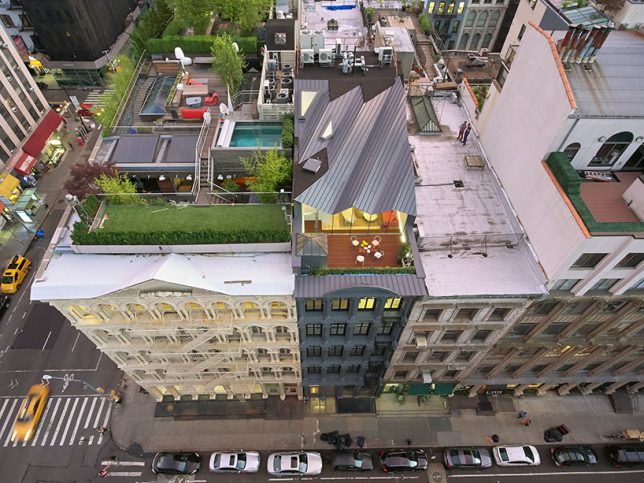
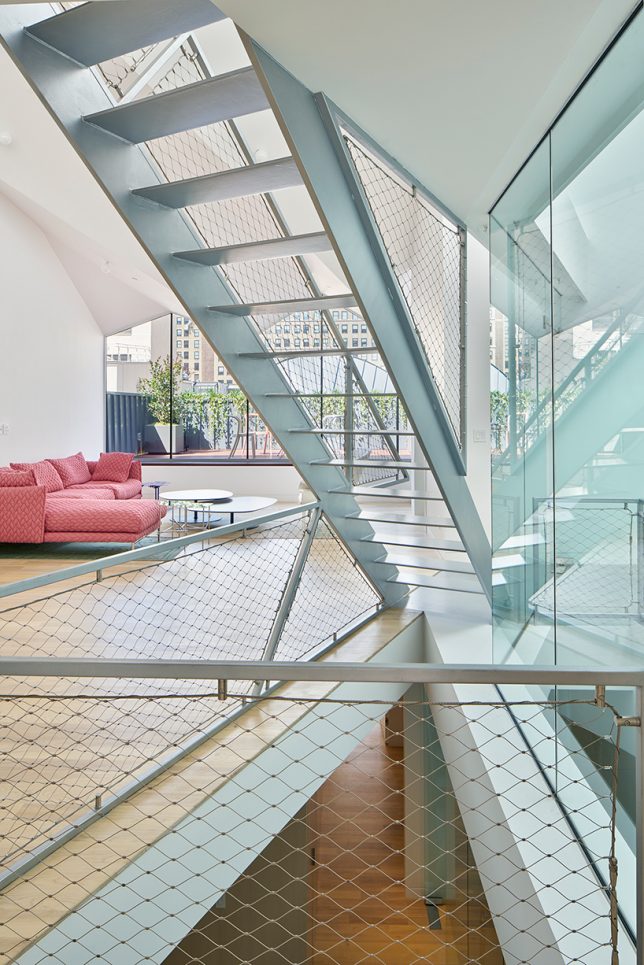
Unseen above the restored cast-iron facade of this 1857 residential structure in Tribeca, a stunning modern loft extends the building’s livable space, its form responding directly to lines of sight.

roofline-view

view-from-below

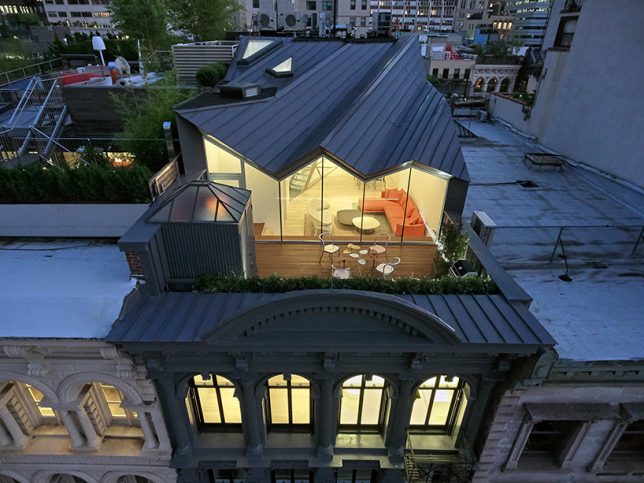
Designed by WORKac and known as the Stealth Building, the addition had to work with the existing facade — to preserve its appearance, rendering it invisible became the obvious approach.

hidden-addition-from-above

roofline-view

roofline-calculation

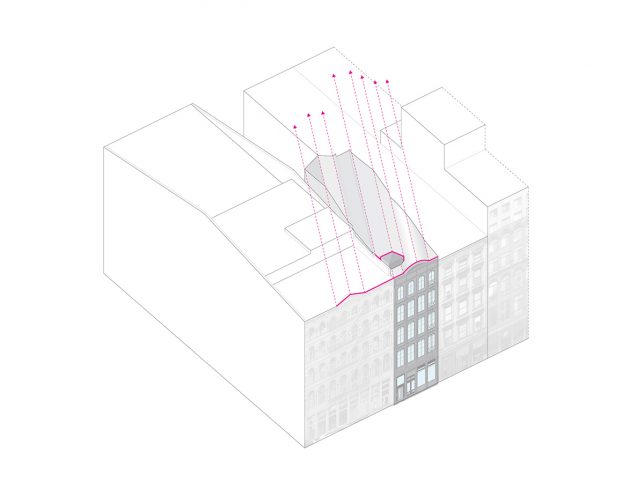
In order to accomplish this clever act of concealment, all angles of view and shadows cast had to be accounted for. In turn, these informed the shape of the angular extension. Tracing lines of visibility across facade features of adjacent buildings, the designers derived a roof line that would work with the project goals.

interior-kitchen-space

roofline-interior

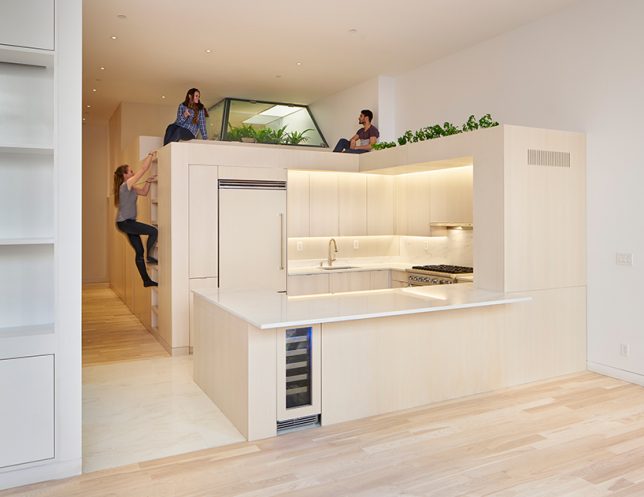
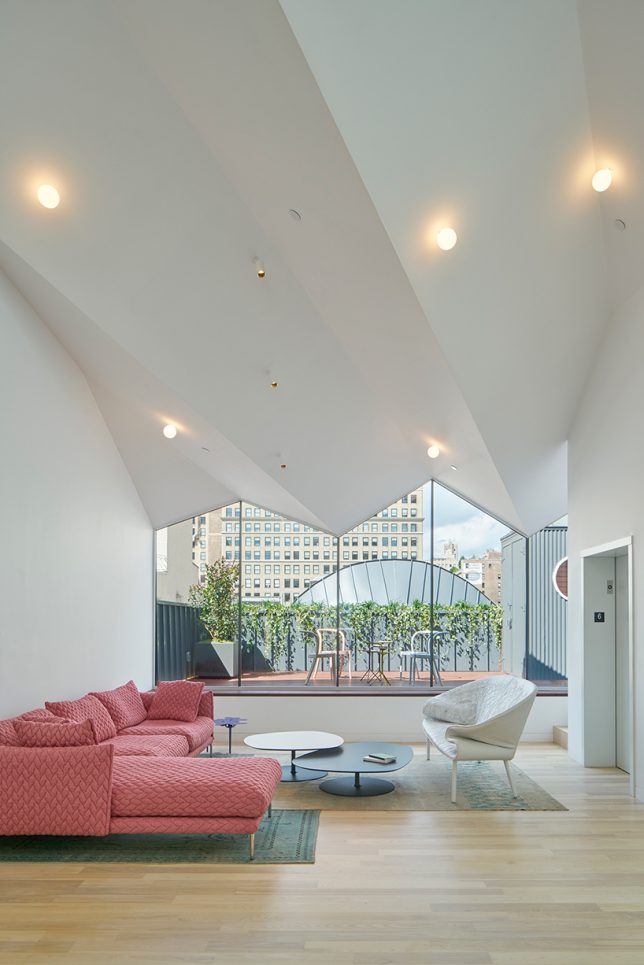
All of this naturally shaped the interior spaces as well, creating dramatic diagonal lines that carry through the various rooms.

loft-addition-space

roof-hot-top-deck

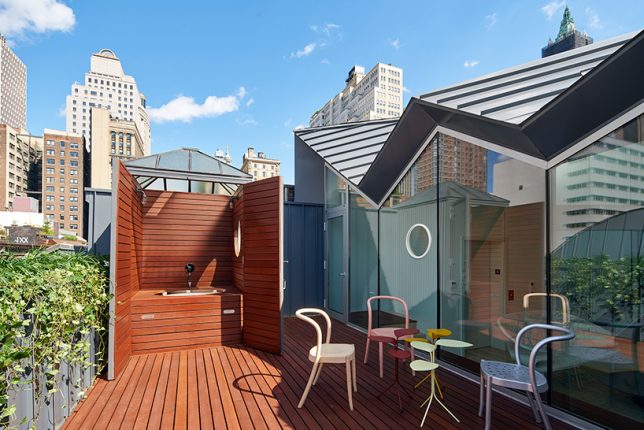
The fifth-floor pop-up features sleeping quarters, entertaining and dining spaces, as well as a secluded terrace tucked behind the pediment to provide privacy for residents. The former elevator bulkhead has been converted to contain a hut tub servicing the deck as well.

Share on Facebook


[ By WebUrbanist in Architecture & Houses & Residential. ]

[ WebUrbanist | Archives | Galleries | Privacy | TOS ]


WebUrbanist

 
Comments Off on Hidden Addition: Stealth NYC Penthouse is Invisible from Streets Below

Posted in Creativity


Fantasy is Now Reality: Twisting Tree-Covered Callebaut Tower Taking Shape

29 Nov

[ By SA Rogers in Architecture & Cities & Urbanism. ]

callebaut-taipei

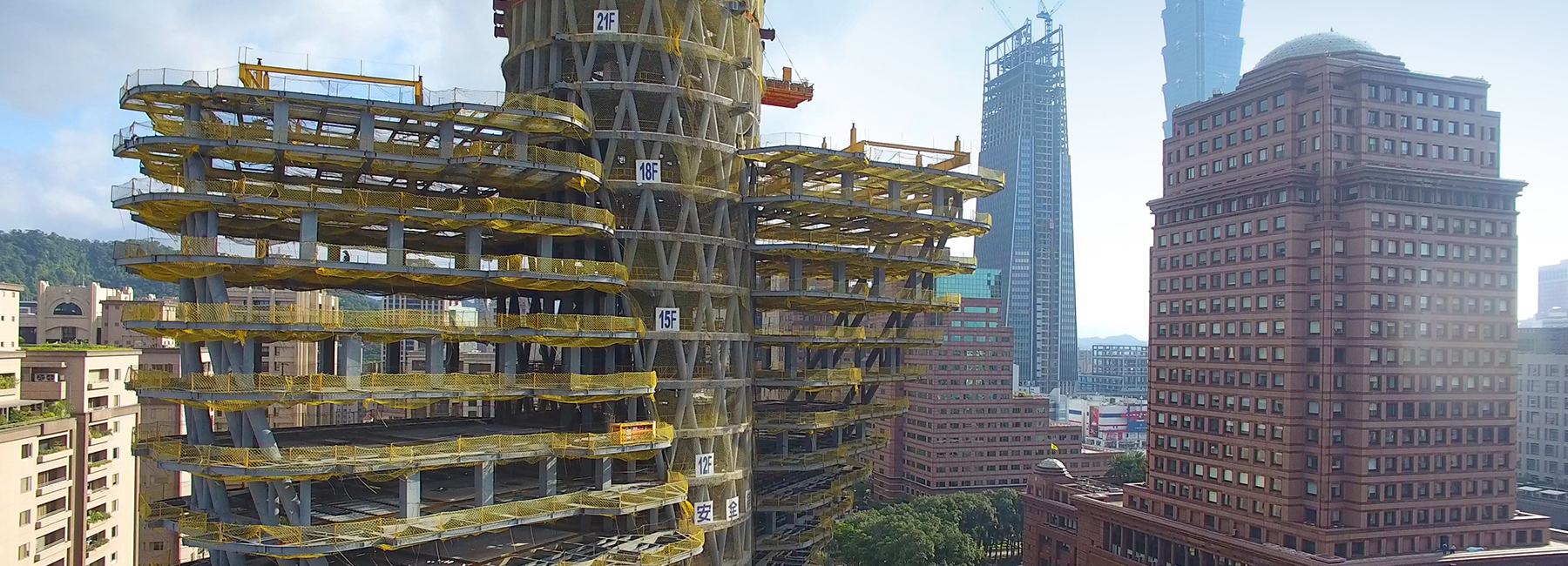
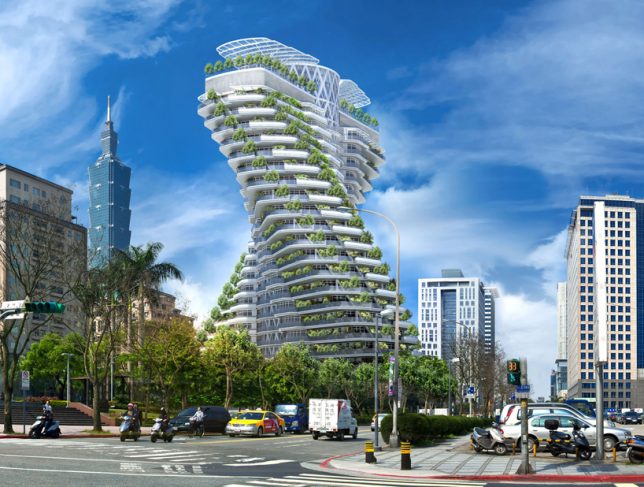
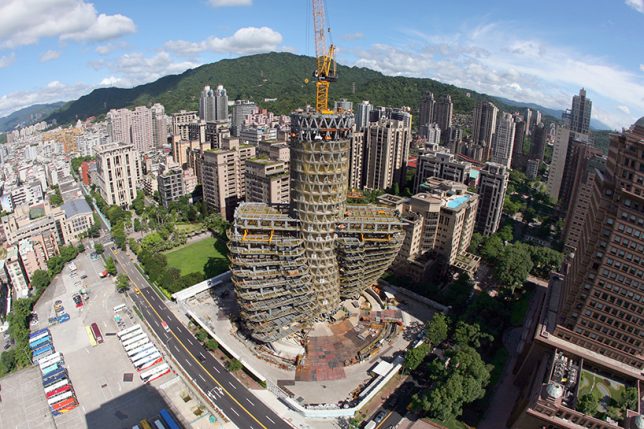
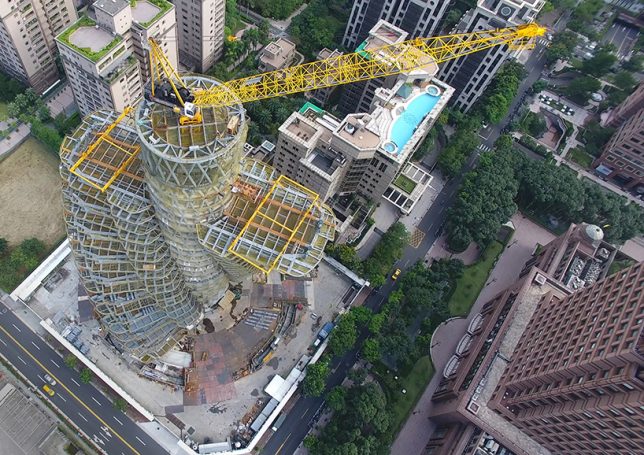
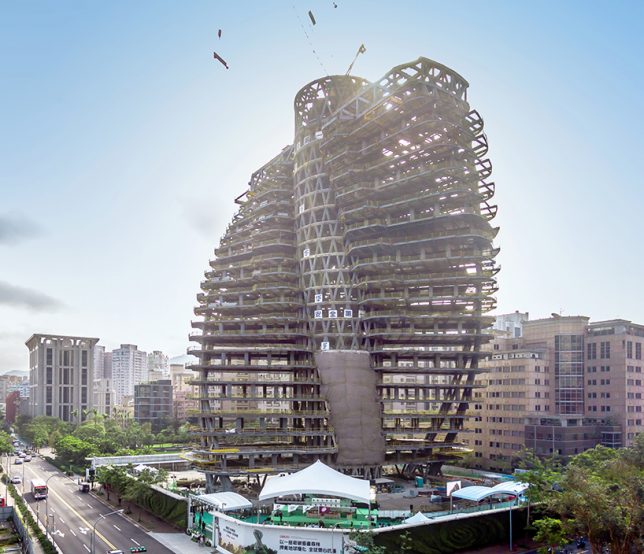
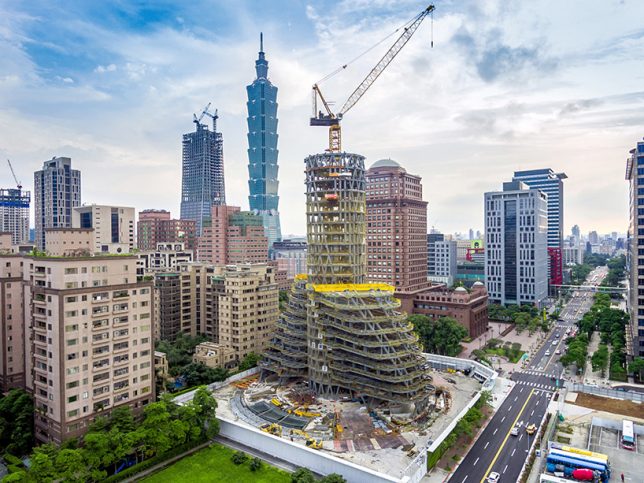
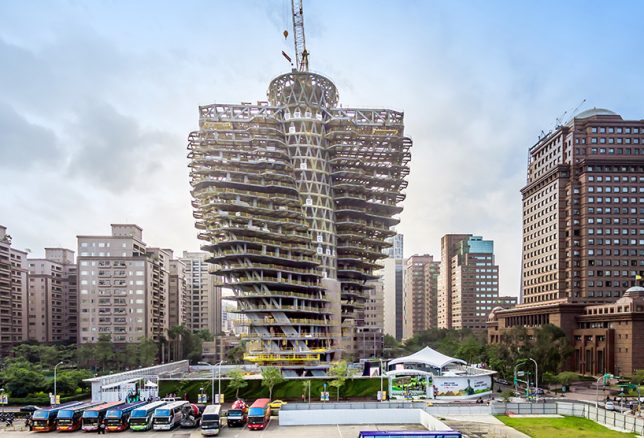
We’ve seen lots of dazzling concepts by Belgian architect Vincent Callebaut, most of which seem far too fanciful to ever actually materialize, but his twisting high-rise tower in Taipei is finally taking shape in three dimensions. ‘Tao Zhu Yin Yuan’ is about halfway complete, pivoting on a central axis for a layout that enables outdoor space brimming with greenery on every floor. Scheduled for completion in September 2017, the residential tower will support 23,000 trees absorbing up to 130 tonnes of carbon dioxide each year.

callebaut-concept

callebaut-taipei-2

The tower is conceived as a ‘inhabited tree,’ set upon a circular footprint with towers extending from the core in a double helix shape. From the north or south, it looks like a pyramid, while east and west views give onlookers a fuller idea of the building’s scale. It will contain 40 luxury apartments and additional facilities, and is set to meet LEED gold status as well as diamond-level Low Carbon Building Alliance certification.

callebaut-taipei-6

callebaut-taipei-5

Callebaut is known for proposals that emphasize sustainability, self-sufficiency, the inclusion of vegetation and eye-popping shapes. Examples include his dragonfly-wing-shaped urban farm, the Lilypad floating city concept, the ‘Asian Cairns’ residential towers and a series of futuristic ‘smart towers’ aiming to reduce pollution and create renewable energy while integrating into existing built environments.

callebaut-taipei-3

Most of these concepts either appear too wild and expensive to developers and investors to inspire confidence for real-world success, or rely on theoretical technology that hasn’t been fully developed or proven. But nobody can accuse Callebaut of limiting his own creativity in the way he envisions the future of architecture, in a world where the choices we make for our cities directly impact our ability to withstand the consequences of climate change.

callebaut-taipei-4

“In 2050, we will be 9 billion of human beings on our blue planet and 80% of the world population will live in megacities,” says Callebaut. “It’s time to invent new eco-responsible lifestyles and to repatriate the nature in our city in order to increase the quality of our life with respect of our environment.”

Share on Facebook


[ By SA Rogers in Architecture & Cities & Urbanism. ]

[ WebUrbanist | Archives | Galleries | Privacy | TOS ]


WebUrbanist

 
Comments Off on Fantasy is Now Reality: Twisting Tree-Covered Callebaut Tower Taking Shape

Posted in Creativity


How to Be Invisible: 15 Anti-Surveillance Gadgets & Wearables

29 Nov

[ By SA Rogers in Gadgets & Geekery & Technology. ]

anti-surveillance-prosthetic-mask-2

We don’t have to wait for a dystopian future in which our faces are scanned as we walk down the sidewalk and our every movement is logged – we willingly carry personally identifiable tracking devices in our pockets everywhere we go, and cameras are everywhere. What’s the average law-abiding citizen concerned with privacy to do, let alone activists and protesters seeking to exercise their constitutional rights? These wearable counter-surveillance designs, including drone-evading cloaks, signal-blocking phone cases and fingerprint spoofers aim to provide us with privacy-preserving tools in the age of Big Brother.

Edward Snowden’s ‘Snitch’ iPhone Case & The Tunnel Case
anti-surveillance-phone-case-edward-snowden

anti-surveillance-phone-case

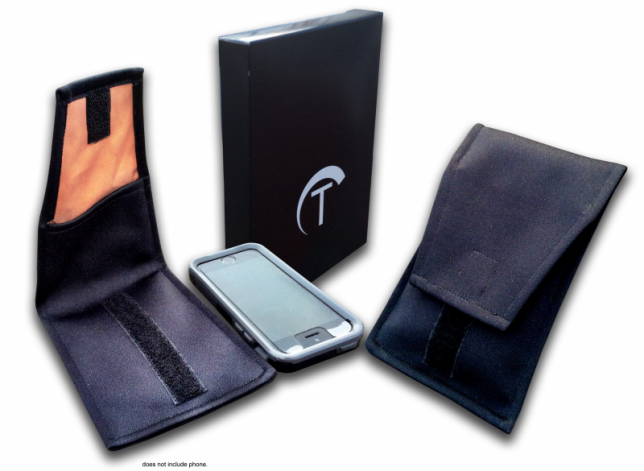
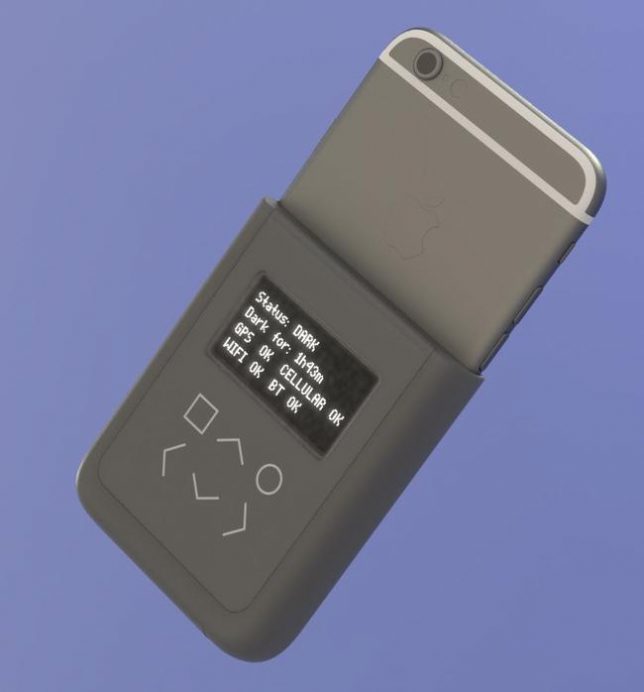
Designed by the infamous whistleblower Edward Snowden himself, who knows a thing or two about the NSA, this modified iPhone 6 case features a screen that monitors when an iPhone is transmitting, covers the rear camera and triggers alerts when the phone is transiting data via radio signals that can make a user detectable.

“If you have a phone in your pocket that’s turned on, a long-lived record of your movements has been created,” Snowden explained while presenting the case at MIT’s Media Lab via video connection from Russia. “As a result of the way the cell network functions your device is constantly shouting into the air by means of radio signals a unique identity that validates you to the phone company. And this unique identity is not only saved by that phone company, but it can also be observed as it travels over the air by independent, even more dangerous third parties.”

A lower tech option with similar albeit less robust features, called the Tunnel case, provides similar benefits and is available now, unlike Snowden’s concept. It’s a signal-jamming copper-lined sleeve that blocks all electromagnetic frequencies within ten seconds, making you untraceable.

URME Anti-Surveillance Prosthetic Mask

anti-surveillance-prosthetic-mask

anti-surveillance-prosthetic-mask-2

There’s no denying that this 3D-printed resin prosthetic mask is creepy looking – especially the way the wearer’s eyes tend not to line up correctly with the eye holes. But wearing another man’s face can help you slip past biometric scanners without revealing your true identity. Artist Leo Selvaggio has lent us all the use of his visage so facial detection software identifies the wearer as him. The mask is also available in a budget-friendly, printable paper version.

“Our world is becoming increasingly surveilled,” reads the URME website offering the mask. “For example, Chicago has over 25,000 cameras networked to a single facial recognition hub. We don’t believe you should be tracked just because you want to walk outside and you shouldn’t have to hide either. Instead, use one of our products to present an alternative identity when in public.”

Fingerprint-Spoofing Strips

anti-surveillance-fingerprint-spoofing

The IDENTITY kit by Mian Wei is a ‘fingerprint substitute’ you apply to the tips of your fingers like band-aids. Since fingerprints are biological identifiers that we can’t change, they can be used against us, and the rise of consumer devices requiring a fingerprint passcode can put this crucial piece of identity verification at risk. The black prosthetics are made of a mixture of conductive silicone and fibers so you can assign ‘false fingerprints’ to your iPhone and other devices, and so your ‘fingerprint’ can’t be molded and used as a key to your life.

Makeup That Thwarts Facial Detection

anti-surveillance-makeup-1

anti-surveillance-makeup-2

anti-surveillance-makeup-3

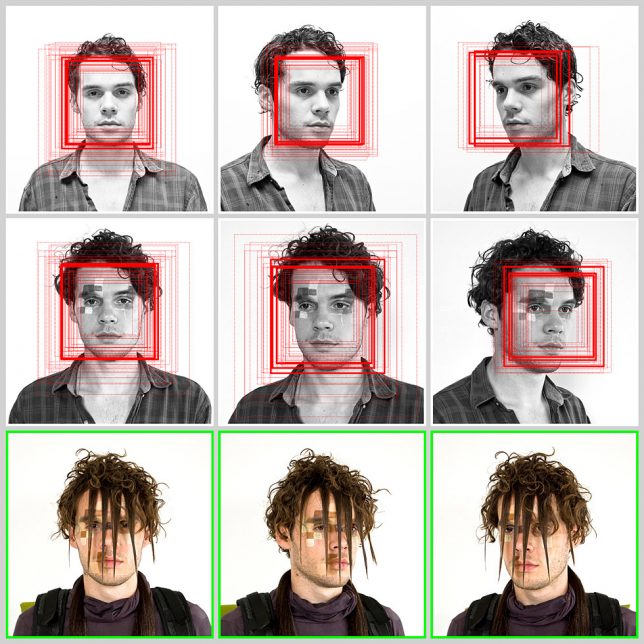
For now, facial detection software still isn’t quite advanced enough to recognize human faces that significantly depart from the usual symmetric arrangement of features. That’s where the ‘anti-face’ comes in, a way of altering your appearance via hairstyles and cosmetics to fool computers into thinking they’re looking at something other than a face. The CVDazzle project explores this idea with a series of six style tips for reclaiming privacy, explaining how to foil detection via makeup, obscuring the nose bridge and eyes as well as the elliptical shape of your face, modifying contrast and avoiding symmetry.

Next Page – Click Below to Read More:
How To Be Invisible 15 Anti Surveillance Designs Installations

Share on Facebook


[ By SA Rogers in Gadgets & Geekery & Technology. ]

[ WebUrbanist | Archives | Galleries | Privacy | TOS ]


WebUrbanist

 
Comments Off on How to Be Invisible: 15 Anti-Surveillance Gadgets & Wearables

Posted in Creativity


Cantilevered Cabin: Dizzying Alpine Shelter Hangs Off the Edge of a Cliff

28 Nov

[ By WebUrbanist in Boutique & Art Hotels & Travel. ]

cantilevered-cabin

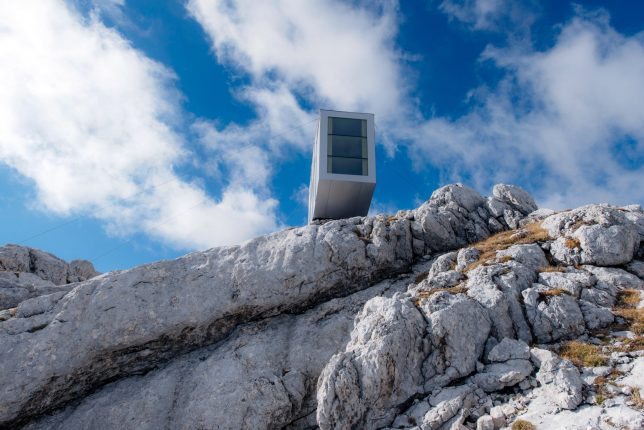
Even someone brave enough to overcome fears of heights and climb a mountain may not have the stomach to spend the night in this suspended shelter on the edge of a vertigo-inducing abyss.

cabin-on-cliff

mountain-cabin-prefab-view

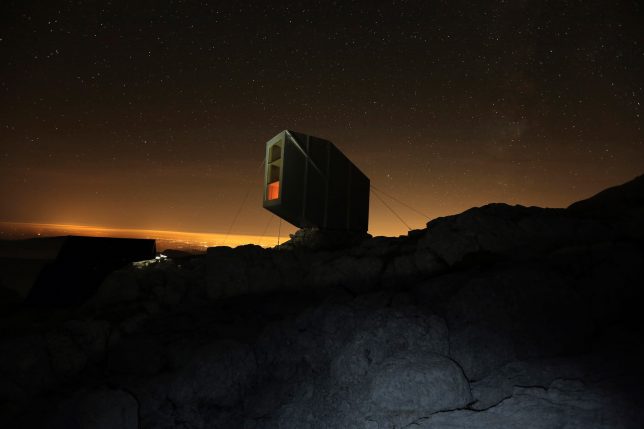
Designed by OFIS Arhitekti (images by Janez Martincic), this precariously-perched space sits on Slovenian-Italian border and boasts 360-degree views over the landscapes of both countries. Inside, a series of resting platforms and a few pieces of minimalist rustic decor are the extent of the amenities provided.

cabin-at-night

Despite its fragile appearance, the cabin was (of course) constructed to deal with the extreme conditions of the location’s altitude and weather exposure on Mount Kanin. Indeed, it took multiple attempts for a helicoptered construction crew to get the prefab structure in place and tether it to the surrounding stone.

sleeping-spaces-wood

cabin-interior

The cozy refuge from wind, snug and landslides (overnight guests may not want to know) is intended in part as a test of the materials, to see how they will stand up over time.

extreme-mountain-cabin

“The challenge is to install real objects remote sites … and study their response to extreme weather, radical temperature shifts, snow and rugged terrain” say the designers. “The harsh conditions of wind, snow, landslides, terrain, and weather require a response of specific architectural forms, structures and concept.” Despite those daunting challenges, the space is intended to “become a destination for hikers, climbers, cavers, mountaineers, nature lovers and romantics.”

Share on Facebook


[ By WebUrbanist in Boutique & Art Hotels & Travel. ]

[ WebUrbanist | Archives | Galleries | Privacy | TOS ]


WebUrbanist
 
Comments Off on Cantilevered Cabin: Dizzying Alpine Shelter Hangs Off the Edge of a Cliff

Posted in Creativity


Kid Stuffed: 10 More Eerie Abandoned Orphanages

28 Nov

[ By Steve in Abandoned Places & Architecture. ]

more-abandoned-orphanages-2a

Little orphans any? Not so much these days thanks to fostering and improved economies, the result being many former orphanages have been left eerily abandoned.

more-abandoned-orphanages-2b

more-abandoned-orphanages-2c

While many orphanages were built from scratch back in the day, others (mainly in the UK) occupied vacant country homes sold by latter-day aristocrats laid low by falling incomes and rising tax rates. Such was the case of the now-abandoned Bramham Children’s Home in West Yorkshire, England.

more-abandoned-orphanages-2e

more-abandoned-orphanages-2d

more-abandoned-orphanages-2f

Dating from 1806, the building was owned by the Ramsden family until 1947 when they sold the rambling pile to the West Riding County Council Children’s Department for the princely sum of £8,000 (roughly $ 10,000 at the time)… about £350,000 ($ 435,000) in today’s money. In its new incarnation as the Bramham Children’s Home, the orphanage only housed 35 children in 1970 cared for by about 16 staff. Not too shabby! By the early 1980s the orphanage had closed yet the building still stands, as photo-documented by Imgur user LeeRielly in August of 2016.

Freinetschool Kasteel De Wip

more-abandoned-orphanages-3b

more-abandoned-orphanages-3a

more-abandoned-orphanages-3c

The Freinetschool Kasteel De Wip, located in Wezemaal, Belgium operated for well over a century: from 1880 through 2008 to be exact. At the time of its closing due to dangerous structural decay, the building housed 54 live-in students divided into 3 preschool classes and 6 primary school classes.

more-abandoned-orphanages-3f

more-abandoned-orphanages-3e

more-abandoned-orphanages-3d

For the past 8-odd years, this exquisite little “castle” has continued to deteriorate with camera-toting explorers such as urbex.nl having to deal with rotten floors, the state of which worsened between visits in 2011 and 2014.

Silverlands

more-abandoned-orphanages-1a

more-abandoned-orphanages-1b

more-abandoned-orphanages-1c

Silverlands, located in Chertsey, Surry, UK can trace its roots back to 1814 when a local brewer invested his prodigious profits in a grand country home. In 1938, The Actor’s Orphanage backed by none other than Noël Coward took over the home but by 1958 the cost of urgent structural repairs had made the orphanage economically non-viable.

more-abandoned-orphanages-1e

more-abandoned-orphanages-1f

more-abandoned-orphanages-1d

In the late 1990s, local governmental authorities floated a proposal to re-establish Silverlands as a live-in clinic for pedophiles. Local residents opposed to the plan mounted a candlelight vigil (presumably they were fresh out of torches and pitchforks) and got the council to change their minds. Photographers Stacey Louise and Tim Barber visited the still-magnificent remains of Silverlands in early 2015, returning with a visual record of its former opulence.

Next Page – Click Below to Read More:
Kid Stuffed 10 More Eerie Abandoned Orphanages

Share on Facebook


[ By Steve in Abandoned Places & Architecture. ]

[ WebUrbanist | Archives | Galleries | Privacy | TOS ]


WebUrbanist
 
Comments Off on Kid Stuffed: 10 More Eerie Abandoned Orphanages

Posted in Creativity


Cut Grass: Sutured Landscape Installation Stitches Open Lawn Back Together

27 Nov

[ By WebUrbanist in Art & Installation & Sound. ]

ground-stitching-art

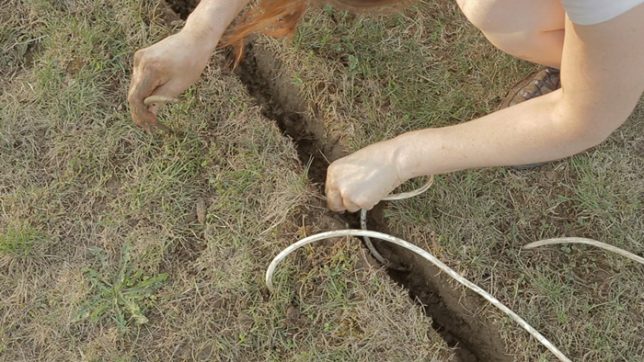
Ground Operation is a conceptually simple earthwork: an incision made in a grassy landscape is pealed back then stitched back together, much like an open wound after an injury or surgery.

earthwork-stitching-ground

French artist Estelle Chrétien sliced open the ground then wrapped electrical cables through it like shoelaces, either in the process of being tied or becoming undone (a mystery left for the observer to unravel, as it were). Her use of cabling is also very intentional, meant to raise questions about what we put into the Earth and how we use it — a surfacing of the secret infrastructure that lurks below.

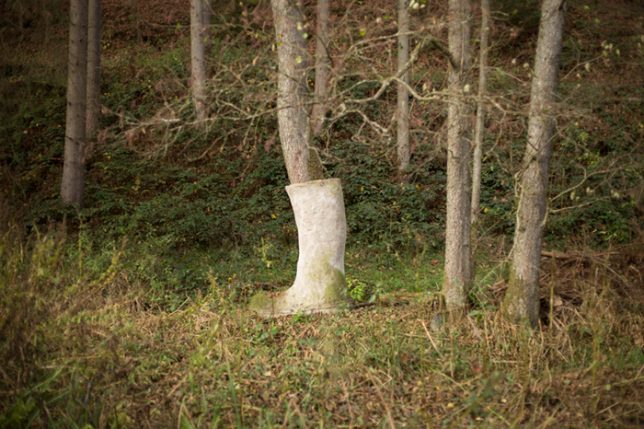
boot-on-tree

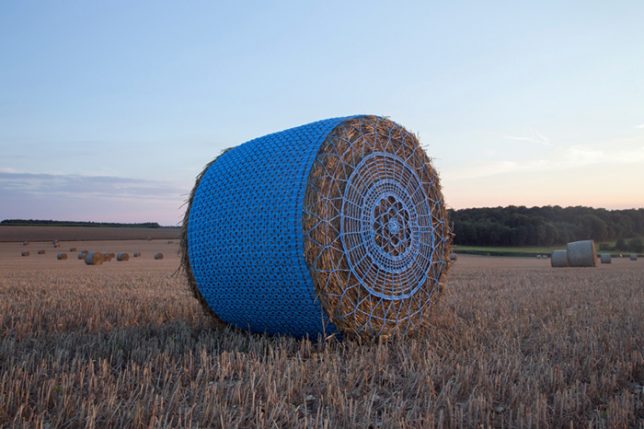
Similar techniques, themes and materials can be found in other works by the same artist, who has wrapped hay bales in crocheted covers and put boots on trees.

crocheted-hay-bale

“While in Portugal, I learned how to crochet, and I had this piece of blue agricultural baler twine in a box and the idea of [making a hay bale wrap] came to me,” she says. “When I went back to France, I made it and put it in a field just before farmers stored their bales. I liked working in the middle of a barley field, but most of the work was made at home, so I decided to work outside with my hands more often after that.”

Share on Facebook


[ By WebUrbanist in Art & Installation & Sound. ]

[ WebUrbanist | Archives | Galleries | Privacy | TOS ]


WebUrbanist
 
Comments Off on Cut Grass: Sutured Landscape Installation Stitches Open Lawn Back Together

Posted in Creativity


The Red Line: Moody Neon Light Installations in Remote Places

26 Nov

[ By SA Rogers in Art & Installation & Sound. ]

La Linea Roja

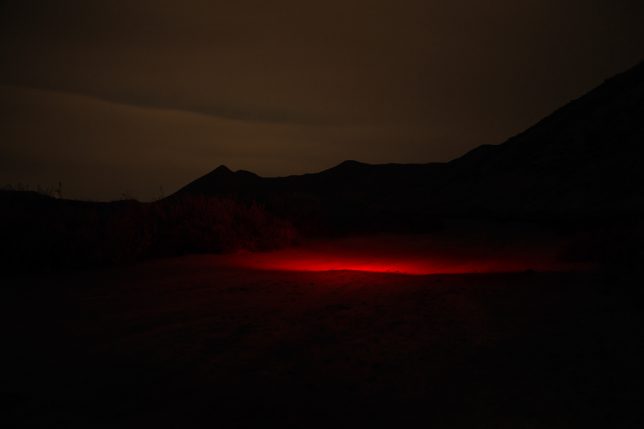
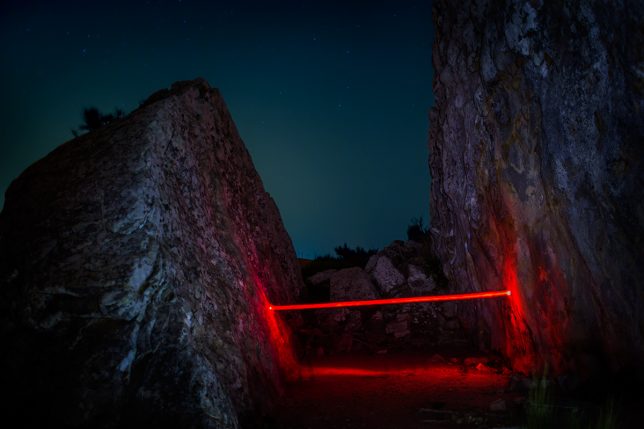
Red neon lights arranged in geometric shapes or casting eerie illumination onto darkened trees almost seem like a natural phenomenon in the vein of the aurora borealis, captured by photographers who manage to be in the right place at the right time. A glow coming from a slit in a snowy landscape or just under the surface of the sea hints at the presence of life forms just out of sight.

red-line-2

red-line-4

red-line-3

‘La Linea Roja’ by photographer Nicolas RIVALS carries on a longstanding tradition of introducing artificial lights to natural spaces for high-impact temporary art installations, but adds a little something extra in the form of a strikingly limited color palette, moody skies, black lines of tree silhouettes and surprisingly natural-looking compositions.

La Linea Roja

red-line-7

La Linea Roja

La Linea Roja

The Paris-based photographer installed the lights in various landscapes while on a trip through Spain, capturing the effect using long-exposure photographs.

La Linea Roja

La Linea Roja

red-line-12

Here’s what RIVALS has to say about the series:

“A red line woven over a journey through Spain, to connect Man with nature. A red line to fix a moment of poetry. Unreal scenes which existed for a night to disappear in the morning. An installation left as a proposition to the natural world. A luminous harmony between will and chance. Between tribute and sacrilege. Between the beautiful and the range. An aesthetic research on shapes engaging in dialogue with an asymmetrical nature.”

Share on Facebook


[ By SA Rogers in Art & Installation & Sound. ]

[ WebUrbanist | Archives | Galleries | Privacy | TOS ]


WebUrbanist
 
Comments Off on The Red Line: Moody Neon Light Installations in Remote Places

Posted in Creativity


Origami Spoon: Flat-Folding Kitchen Tool Adjusts to Measure Multiple Sizes

25 Nov

[ By WebUrbanist in Design & Products & Packaging. ]

four-sizes

A clever domestic design to eliminate ungainly collections of measuring spoons and cups, Polygons is an ingenious cooking multi-tool that measures different amounts on demand and packs flat when not in use.

polygons

kitchenmultitool

The key to the device is its flexibility, and not just in terms of measuring. Its creators claim it can flex up to 100,000 times without breaking thanks to TPR-based hinges.

four-configurations

spreading-stuff

Each tool (a teaspoon and tablespoon variant) has four different measuring configurations and can also be used to spread things in its flat formation.

kitchen-tool-powder

The creators claim it works equally well with runny and viscous liquids as well as powders, then wash easily to avoid stains and smells.

kitchen-measuring-device

If the material science side of the project holds it could have a lot more applications as well for everyday-use objects that need to bend without extraneous hinging mechanisms (which add bulk to a product as well as a point of failure and cracks for dirt and debris).

Share on Facebook


[ By WebUrbanist in Design & Products & Packaging. ]

[ WebUrbanist | Archives | Galleries | Privacy | TOS ]


WebUrbanist

 
Comments Off on Origami Spoon: Flat-Folding Kitchen Tool Adjusts to Measure Multiple Sizes

Posted in Creativity