RSS
 

Posts Tagged ‘zoom’

Hyperloop Hotel: Zoom from City to City in a Luxury Lodging Pod

22 Jun

[ By SA Rogers in Drawing & Digital. ]

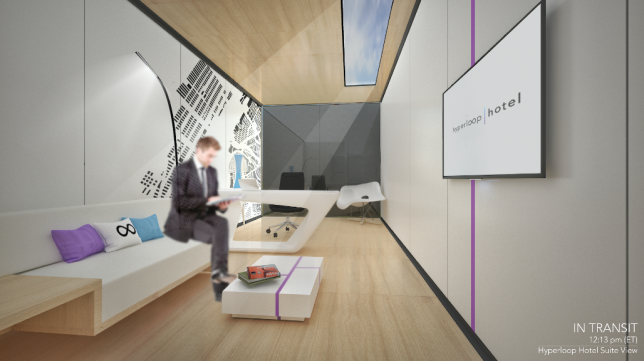
Hyperloop transit is about to make the world a whole lot smaller, and with it could come a system of luxurious private pods outfitted like high-end hotel rooms so you can zoom from one city to the next in unprecedented comfort. While it might seem like there’s little need for such cush train cars when your trip takes less time than ever, the Hyperloop Hotel aims to solve the problem of where you’re going to stay while traveling.

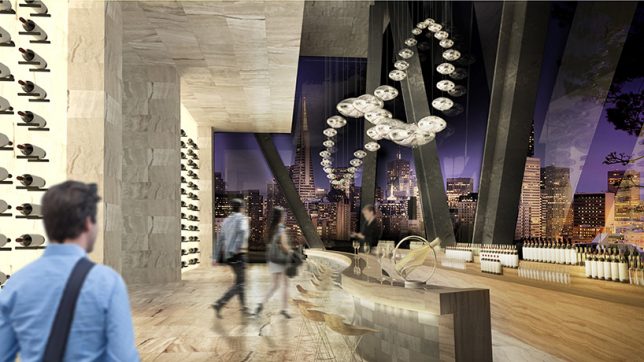
Developed by Radical Innovation Award winner Brendan Siebrecht, the Hyperloop Hotel consists of shipping containers that double as traveling guest suites, able to ‘dock’ themselves at any of 13 different hotel stations in cities like Seattle, Portland, Las Vegas, Los Angeles, Austin and New York City. While the nightly fee hasn’t been set yet, Siebrecht reveals that for a fee of $ 1,200, guests can even visit multiple cities in a single day. That’s right, you could maintain a comfy home base while having breakfast on the East Coast, lunch in the South and dinner on the West Coast.

It might sound too futuristic to be real, but Hyperloop One is already being tested in Las Vegas and could be carrying passengers by the year 2020, so it’s actually not that far away, assuming the technology stays on track (pun intended.) But the hotels definitely wouldn’t come cheap – it would cost about $ 10 million to build each one. The pods themselves feature a bedroom, office, bathroom and living room, with a glazed wall that can be covered while you’re in motion.

“I believe the Hyperloop One is the next big innovation in transportation in the United States and possibly the world,” Siebrecht told Business Insider. “I wanted to explore ways in which this technology could transform the overall travel experience and hospitality.”

Share on Facebook


[ By SA Rogers in Drawing & Digital. ]

[ WebUrbanist | Archives | Galleries | Privacy | TOS ]


WebUrbanist

 
Comments Off on Hyperloop Hotel: Zoom from City to City in a Luxury Lodging Pod

Posted in Creativity


Technique: The ‘Dolly Zoom’ can add new dimension to your video

15 Jun

We all know that a good camera is helpful when it comes to producing high quality video. Just as important, however, is how the camera moves. A good director or cinematographer can utilize camera motion in to set the mood, add emotion, or even to disorient the audience.

One of the most jarring camera moves – but a very effective one when used well – is the dolly zoom. Hitchcock made the move famous in Vertigo, and it has been used in many other films to add tension to a scene.

The dolly zoom works pretty much the way it sounds – you simultaneously zoom in or out on your subject while moving the camera in the opposite direction on a dolly. The result is a subject that appears to stay in place as the perspective of the scene changes noticeably. It takes a bit of practice, but employed correctly it can be very effective.

The video above from YouTube user ‘Now You See It’ does a great job of explaining the dolly zoom and how filmmakers have used it to great effect. It’s not a move to use every day, but it’s worth keeping in your back pocket so that when the opportunity arises you’re prepared to do it.

Articles: Digital Photography Review (dpreview.com)

 
Comments Off on Technique: The ‘Dolly Zoom’ can add new dimension to your video

Posted in Uncategorized


2017 Roundup: Enthusiast Long Zoom Cameras

10 Jun

Last updated: June 9, 2017

While most of new 1″ sensor enthusiast cameras have been on the shorter end of the focal length spectrum, there are now quite a few long zoom models, as well. Whether you want something pocketable or want to shoot for the moon (pun intended), you’ll find it in this group.

There are plenty of other long zoom compacts out there, some offering focal ranges reaching 2000mm though they use much smaller 1/2.3″ sensors. The larger sensors used in the cameras in this roundup completely eclipse those models, especially when it comes to image quality and control over depth-of-field.

The models we’re looking at in this article include:

  • Canon PowerShot G3 X
  • Panasonic Lumix DMC-FZ1000
  • Panasonic Lumix DMC-FZ2500/FZ2000
  • Panasonic Lumix DMC-ZS100/TZ100
  • Sony Cyber-shot DSC-RX10
  • Sony Cyber-shot DSC-RX10 II
  • Sony Cyber-shot DSC-RX10 III

With the exception of the Panasonic ZS100/TZ100, all of these cameras are pretty hefty, so don’t plan on stuffing those into a pocket. Focal ranges are all over the map, ranging from 200mm on the Sony RX10 I/II to 600mm on the Sony RX10 III and Canon G3 X. The vast majority of these cameras shoot 4K video, with some having more controls than others.

To further help you pick the right camera in this class, we’ve created the chart below, which breaks down the equivalent aperture for each camera, as you work your way through the zoom range. Our article here explains the concept of equivalence, but at a high level all you need to know is that the lower the line is on the graph below, the blurrier the backgrounds you’ll be able to get and, typically at least, the better the overall low-light performance.

LensEquivalentApertures([“Equivalent focal length (mm)”,”Panasonic FZ1000″,”Sony RX10 II”,”Canon G3 X”,”Panasonic ZS100″,”Sony RX10 III”,”Panasonic FZ2500″], [[24,null,””,7.6363636363636367,”Sony RX10 II at 24mm: F7.6″,7.6363636363636367,”Canon G3 X at 24mm: F7.6″,null,””,6.5454545454545459,”Sony RX10 III at 24mm: F6.5″,7.6363636363636367,”Panasonic FZ2500 at 24mm: F7.6″],[25,7.6363636363636367,”Panasonic FZ1000 at 25mm: F7.6″,null,””,null,””,7.6363636363636367,”Panasonic ZS100 at 25mm: F7.6″,6.8181818181818183,”Sony RX10 III at 25mm: F6.8″,7.9090909090909092,”Panasonic FZ2500 at 25mm: F7.9″],[26,7.9090909090909092,”Panasonic FZ1000 at 26mm: F7.9″,null,””,null,””,7.9090909090909092,”Panasonic ZS100 at 26mm: F7.9″,null,””,null,””],[27,null,””,null,””,8.7272727272727284,”Canon G3 X at 27mm: F8.7″,8.1818181818181834,”Panasonic ZS100 at 27mm: F8.2″,null,””,null,””],[28,null,””,null,””,null,””,null,””,7.6363636363636367,”Sony RX10 III at 28mm: F7.6″,8.1818181818181834,”Panasonic FZ2500 at 28mm: F8.2″],[30,8.1818181818181834,”Panasonic FZ1000 at 30mm: F8.2″,null,””,null,””,8.7272727272727284,”Panasonic ZS100 at 30mm: F8.7″,null,””,8.454545454545455,”Panasonic FZ2500 at 30mm: F8.5″],[32,null,””,null,””,null,””,9.0,”Panasonic ZS100 at 32mm: F9.0″,null,””,8.7272727272727284,”Panasonic FZ2500 at 32mm: F8.7″],[34,8.454545454545455,”Panasonic FZ1000 at 34mm: F8.5″,null,””,null,””,9.2727272727272734,”Panasonic ZS100 at 34mm: F9.3″,null,””,null,””],[35,null,””,null,””,9.5454545454545467,”Canon G3 X at 35mm: F9.5″,null,””,8.7272727272727284,”Sony RX10 III at 35mm: F8.7″,9.0,”Panasonic FZ2500 at 35mm: F9.0″],[36,null,””,null,””,null,””,9.5454545454545467,”Panasonic ZS100 at 36mm: F9.5″,null,””,null,””],[39,null,””,null,””,null,””,null,””,null,””,9.2727272727272734,”Panasonic FZ2500 at 39mm: F9.3″],[41,8.7272727272727284,”Panasonic FZ1000 at 41mm: F8.7″,null,””,null,””,null,””,null,””,null,””],[43,null,””,null,””,null,””,null,””,null,””,9.5454545454545467,”Panasonic FZ2500 at 43mm: F9.5″],[47,9.0,”Panasonic FZ1000 at 47mm: F9.0″,null,””,10.90909090909091,”Canon G3 X at 47mm: F10.9″,null,””,null,””,null,””],[49,null,””,null,””,null,””,null,””,null,””,9.81818181818182,”Panasonic FZ2500 at 49mm: F9.8″],[51,9.2727272727272734,”Panasonic FZ1000 at 51mm: F9.3″,null,””,null,””,null,””,null,””,null,””],[56,null,””,null,””,null,””,null,””,9.5454545454545467,”Sony RX10 III at 56mm: F9.5″,10.090909090909092,”Panasonic FZ2500 at 56mm: F10.1″],[58,9.5454545454545467,”Panasonic FZ1000 at 58mm: F9.5″,null,””,null,””,null,””,null,””,null,””],[60,null,””,null,””,12.272727272727273,”Canon G3 X at 60mm: F12.3″,null,””,null,””,null,””],[63,9.81818181818182,”Panasonic FZ1000 at 63mm: F9.8″,null,””,null,””,null,””,null,””,null,””],[69,null,””,null,””,null,””,null,””,null,””,10.363636363636363,”Panasonic FZ2500 at 69mm: F10.4″],[70,10.090909090909092,”Panasonic FZ1000 at 70mm: F10.1″,null,””,null,””,null,””,null,””,10.636363636363637,”Panasonic FZ2500 at 70mm: F10.6″],[79,null,””,null,””,null,””,null,””,null,””,10.90909090909091,”Panasonic FZ2500 at 79mm: F10.9″],[81,null,””,null,””,13.636363636363637,”Canon G3 X at 81mm: F13.6″,null,””,null,””,null,””],[84,10.363636363636363,”Panasonic FZ1000 at 84mm: F10.4″,null,””,null,””,null,””,null,””,null,””],[91,null,””,null,””,null,””,null,””,null,””,11.181818181818182,”Panasonic FZ2500 at 91mm: F11.2″],[100,null,””,null,””,null,””,null,””,10.90909090909091,”Sony RX10 III at 100mm: F10.9″,null,””],[102,null,””,null,””,null,””,null,””,null,””,11.454545454545457,”Panasonic FZ2500 at 102mm: F11.5″],[105,10.636363636363637,”Panasonic FZ1000 at 105mm: F10.6″,null,””,null,””,null,””,null,””,null,””],[144,null,””,null,””,null,””,15.818181818181818,”Panasonic ZS100 at 144mm: F15.8″,null,””,null,””],[151,null,””,null,””,null,””,null,””,null,””,11.727272727272728,”Panasonic FZ2500 at 151mm: F11.7″],[157,null,””,null,””,null,””,16.090909090909093,”Panasonic ZS100 at 157mm: F16.1″,null,””,null,””],[163,null,””,null,””,15.272727272727273,”Canon G3 X at 163mm: F15.3″,null,””,null,””,null,””],[170,10.90909090909091,”Panasonic FZ1000 at 170mm: F10.9″,null,””,null,””,null,””,null,””,null,””],[200,null,””,7.6363636363636367,”Sony RX10 II at 200mm: F7.6″,null,””,null,””,null,””,null,””],[208,null,””,null,””,null,””,null,””,null,””,12.000000000000002,”Panasonic FZ2500 at 208mm: F12.0″],[250,null,””,null,””,null,””,16.090909090909093,”Panasonic ZS100 at 250mm: F16.1″,null,””,null,””],[262,null,””,null,””,null,””,null,””,null,””,12.272727272727273,”Panasonic FZ2500 at 262mm: F12.3″],[400,10.90909090909091,”Panasonic FZ1000 at 400mm: F10.9″,null,””,null,””,null,””,null,””,null,””],[480,null,””,null,””,null,””,null,””,null,””,12.272727272727273,”Panasonic FZ2500 at 480mm: F12.3″],[600,null,””,null,””,15.272727272727273,”Canon G3 X at 600mm: F15.3″,null,””,10.90909090909091,”Sony RX10 III at 600mm: F10.9″,null,””]])

With its F2.8 constant aperture lens, the Sony Cyber-shot RX10 I & II capture more total light and offer more control over depth-of-field compared to its peers, by 1 or 2 stops. The trade-off is that its focal length caps out at 200mm equiv. The Canon PowerShot G3 X and Sony RX10 III have the longest lenses, with the latter being about 2/3-stop faster once hitting around 100mm. The Panasonic FZ2500 splits the difference between the G3 X and RX10 III.

And with that out of the way, let’s get right into exploring the enthusiast long zoom cameras!

Articles: Digital Photography Review (dpreview.com)

 
Comments Off on 2017 Roundup: Enthusiast Long Zoom Cameras

Posted in Uncategorized


Full-frame Nikon 8-15mm F3.5-4.5E ED fisheye zoom now available

31 May

$ (document).ready(function() { SampleGalleryV2({“containerId”:”embeddedSampleGallery_3650555962″,”galleryId”:”3650555962″,”isEmbeddedWidget”:true,”standalone”:false,”selectedImageIndex”:0,”startInCommentsView”:false,”isMobile”:false}) });

The Nikon AF-S Fisheye Nikkor 8-15mm F3.5-4.5E ED is a circular fisheye for the company’s full-frame DSLR bodies. At its wide end it has a 180-degree vertical and horizontal angle-of-view, changing to a non-circular 180-degree diagonal AOV at its long end. The lens has three ED and two aspherical elements as well as Nano Crystal and fluorine coatings.

The 8-15mm F3.5-4.5E ED is available immediately for $ 1249.95.

Press Release:

NIKON ANNOUNCES THREE NEW WIDE-ANGLE NIKKOR LENSES

  • AF-P DX NIKKOR 10-20mm f/4.5-5.6G VR – Compact Ultra-Wide-Angle Perspective DX-format Zoom Lens
  • AF-S Fisheye NIKKOR 8-15mm f/3.5-4.5E ED -Circular Fisheye Zoom for the Ultimate in Versatility and a Unique Perspective
  • AF-S NIKKOR 28mm f/1.4E ED – Outstanding Definition and High Resolution Wide-Angle Prime Lens

 MELVILLE, NY (May 31, 2017 at 12:01 A.M. EDT) — Today, Nikon announced three exciting new wide-angle NIKKOR lenses to give a diverse array of users brilliant image quality and maximum versatility whether shooting vast landscapes, architecture, interiors, events and many other wide-angle applications. The new ultra-wide zoom and lightweight DX-format AF-P DX NIKKOR 10-20mm f/4.5-5.6G VR is an excellent value for budding shutterbugs and novice shooters looking to explore a wide-angle point of view, while the new AF-S Fisheye NIKKOR 8-15mm f/3.5-4.5E ED is an FX-format circular fisheye zoom lens for photographers and content creators who desire a truly unique perspective. Lastly, the new AF-S NIKKOR 28mm f/1.4E ED is a superior prime lens that provides professional and advanced photographers the ultimate in wide-angle image quality. Both the AF-S Fisheye NIKKOR 8-15mm f/3.5-4.5E ED and AF-S NIKKOR 28mm f/1.4E ED are the latest additions to the Gold Ring Series of NIKKOR lenses, a mark identifying Nikon’s premium lens offerings.

“Nikon continues to push the limits of optical excellence, while making new perspectives more attainable than ever before with our latest wide-angle NIKKOR offerings,” said Kosuke Kawaura, Director of Marketing and Planning, Nikon Inc. “Whether a photographer is a novice learning the art of landscapes, an enthusiastic video creator or a working professional shooter, Nikon now makes the wide-angle perspective achievable for everyone.”

The AF-P DX NIKKOR 10-20mm f/4.5-5.6G VR – Ultra-Wide Zoom Lens That’s Compact and Portable

The new NIKKOR 10-20mm is an ultra-wide-angle DX-format zoom lens that opens new perspectives and possibilities for those new to photography, and is ideal for shooting travel and scenery, real estate, large group portraits or vlogging. This new lens combines superior image quality and an attainable price to give consumers wide-angle versatility with a lens that’s remarkably compact and lightweight.

Like all NIKKOR lenses, the new AF-P DX NIKKOR 10-20mm f/4.5-5.6G VR provides advanced optical technologies for stellar image quality in any light, whether shooting a sun-drenched coastal vista, tight spaces or the night sky. The lens features the equivalent of 3.5 stops1 of Vibration Reduction (VR) performance, to help capture sharp images while handheld or in challenging light. Additionally, it utilizes Nikon’s Pulse Motor technology for super-fast and whisper quiet AF operation- which is especially useful when recording video. The optical formula contains three aspherical elements for excellent image quality with minimal distortion even at the widest focal length.

This is a versatile lens that not only excels at shooting expansive horizons, but also offers a remarkably close working distance that’s useful for images or showing up-close details when making product-related videos or how-to content. To get closer to capture small objects with big details, the lens has a close minimum focusing distance of only 8.6 inches (0.22 meters), bringing small objects to life in glorious size.

AF-S Fisheye NIKKOR 8-15mm f/3.5-4.5E ED – Circular Fisheye for Photographers and Content Creators

Nikon’s first fisheye zoom gives photographers and filmmakers an FX-format lens with the look and feel of a circular fisheye and the versatility of a full-frame fisheye, all in one lens. The new lens design provides a creative circular 180-degree vertical / horizontal angle of view on full frame cameras, and zooms to a non-circular fisheye view (180-degree diagonal angle of view) on the long end of the focal range. The lens can also be used on DX-format cameras for a distinctive point-of-view and extreme wide-angle applications. When looking to push creative boundaries, the intriguing perspective from a fisheye lens should be considered to provide a distinct look to your photos and videos, such as a dramatic emphasis on a subject or an extremely wide interior point of view. 

The AF-S Fisheye NIKKOR 8-15mm f/3.5-4.5E ED is also the latest in Nikon’s Gold Ring Series of premier lenses and features a next-generation design for high-resolution Nikon DSLR cameras. Made for advanced photographers and creators, this durable lens is constructed of lightweight magnesium alloy, and employs internal focusing (IF) to retain its compact size, even while focusing. It is also Nikon’s latest lens to use an electromagnetic diaphragm for consistent exposure during high speed shooting, or smooth exposure control while capturing video. 

The optical formula of the Fisheye NIKKOR 8-15mm consists of three ED elements to reduce chromatic aberration, while two aspherical lens elements minimize coma even at the widest aperture, and enable a more compact lens size. Additionally, the front lens element is coated with Nikon’s non-stick Fluorine coat to help resist dirt, fingerprints and smudges, while Nikon’s exclusive Nano Crystal Coat helps reduce ghost and flare. 

AF-S NIKKOR 28mm f/1.4E ED – The Latest in The Gold Ring Series of f/1.4 Primes in the NIKKOR Line

The new AF-S NIKKOR 28mm f/1.4E ED is Gold Ring glass that provides maximum versatility for outstanding definition and sharpness regardless of shooting scenario. With a fast f/1.4 maximum aperture and nine blade rounded diaphragm, it affords a shallow depth of field with gorgeous bokeh and stellar low light performance, making it a great choice for shooting low light landscapes, interiors and events. 

The superbly balanced and solid body is composed of lightweight magnesium alloy, and features dust and water drop resistant sealing to withstand the elements, combined with a fluorine coating to resist dirt and smudges. The optical construction of the lens is engineered for the best possible wide-angle image quality. It consists of 14 elements in 11 groups, with three aspherical elements that virtually eliminate coma, aberration and distortion, with two ED glass elements that minimize chromatic aberration. The lens also uses Nikon’s Nano Crystal coat to reduce instances of ghosting and flare. 

The new AF-S NIKKOR 28mm f/1.4E ED is a welcome addition to Nikon’s stable of impressive f/1.4 primes that give professional photographers and creators the highest levels of image quality and performance, which also include; The AF-S 24mm f/1.4G ED, AF-S NIKKOR 35mm f/1.4G, AF-S NIKKOR 58mm f/1.4G, AF-S NIKKOR 85mm f/1.4G and AF-S NIKKOR 105mm f/1.4E ED.

Price and Availability

The Nikon AF-S Fisheye NIKKOR 8-15mm f/3.5-4.5E ED will be available immediately for a suggested retail price (SRP)* of $ 1249.95. The AF-P DX NIKKOR 10-20mm f/4.5-5.6G VR and AF-S NIKKOR 28mm f/1.4E ED will be available in late June for a suggested retail price (SRP)*, $ 309.95 and $ 1999.95, respectively. For more information on these NIKKOR lenses as well as the latest Nikon products, please visit www.nikonusa.com. 

1: Based on CIPA Standard. This value is achieved when DX-format compatible lenses are attached to a DX-format digital SLR camera and zoom lenses are set at the maximum telephoto position. 

*SRP (Suggested Retail Price) listed only as a suggestion. Actual prices are set by dealers and are subject to change at any time.

Nikon AF-S Fisheye Nikkor 8-15mm F3.5-4.5E ED specifications

Principal specifications
Lens type Zoom lens
Max Format size 35mm FF
Focal length 8–15 mm
Image stabilization No
Lens mount Nikon F (FX)
Aperture
Maximum aperture F3.5–29
Minimum aperture F4.5–29
Aperture ring No
Number of diaphragm blades 7
Optics
Elements 15
Groups 13
Special elements / coatings Three ED + two aspherical elements, Nano Crystal and fluorine coatings
Focus
Minimum focus 0.16 m (6.3)
Maximum magnification 0.34×
Autofocus Yes
Motor type Ring-type ultrasonic
Full time manual Yes
Focus method Internal
Distance scale No
DoF scale No
Physical
Weight 485 g (1.07 lb)
Diameter 78 mm (3.07)
Length 83 mm (3.27)
Materials Magnesium alloy
Sealing No
Colour Black
Zoom method Rotary (extending)
Power zoom No
Zoom lock No
Hood supplied Yes
Tripod collar No

Articles: Digital Photography Review (dpreview.com)

 
Comments Off on Full-frame Nikon 8-15mm F3.5-4.5E ED fisheye zoom now available

Posted in Uncategorized


2017 Roundup: Consumer Long Zoom Compacts

26 May

Bridge and travel zoom cameras are two of the very few categories of compact cameras to survive the smartphone. Whether it’s a travel zoom, which puts a 25X-30X zoom into your pocket, or a bridge camera which offers even more zoom, phones just can’t compete.

While there are now enthusiast-level long zoom cameras with 1″-type sensors, such as Sony’s Cyber-shot RX10 series and Panasonic FZ1000/FZ2500, there are still plenty of more budget-friendly models, though their smaller sensors don’t offer the image quality or depth-of-field control of the pricier models.

The following cameras are included in our roundup:

  • Canon PowerShot SX60 HS
  • Canon PowerShot SX730 HS
  • Nikon Coolpix P900
  • Panasonic Lumix DC-FZ80/FZ82
  • Panasonic Lumix DMC-FZ300
  • Panasonic Lumix DC-ZS70
  • Sony Cyber-shot HX90V
  • Sony Cyber-shot HX400V

Of those eight cameras, three are pocket-sized and offer 30X-40X zooms. The other five are bridge (SLR-style) cameras with focal lengths ranging from 600mm to an unbelievable 2000mm (35mm-equivalent).

And with that, let’s take a look at some consumer-level travel zoom cameras!

Articles: Digital Photography Review (dpreview.com)

 
Comments Off on 2017 Roundup: Consumer Long Zoom Compacts

Posted in Uncategorized


Ricoh announces WG-50 rugged compact with 5x zoom, built-in macro lights

25 May

Ricoh has introduced a new rugged compact camera – the WG-50 – which replaces the WG-30. The WG-50 offers a 28-140mm equiv. F3.5-5.5 lens. The WG-50 uses a 16MP BSI-CMOS sensor and is capable of recording Full HD video at 30 fps. It is waterproof for two hours at a depth of 14m/45ft, and can cope with being dropped from a height of 1.6m/5ft, will operate at temperatures as low as -10°C/+14F and can withstand 100kg/220lbs of force.

As with Ricoh’s other recent rugged cameras, the WG-50 has an array of six LEDs around the lens that can be used to assist macro shooting, selfies and when using the 2MP digital microscope mode.

The camera will go on sale at the end of June in a choice of orange or black, and will cost $ 279/£249. For more information see the Ricoh website.

Press release

RICOH COMPANY, LTD and RICOH IMAGING COMPANY, LTD. announced the launch of the RICOH WG-50 digital compact camera.

This new model features a compact, lightweight body design, delivering exceptional waterproof and shockproof performance.

Developed as a standard-class waterproof digital compact camera, the RICOH WG-50 provides dependable performance and outstanding operability in demanding outdoor conditions. The WG-50 is waterproof to a depth of 14 metres, shockproof against falls from a height of 1.6 metres, and freeze-proof to temperatures as low as -10°C. It also provides a range of features to facilitate all types of still-image and movie shooting, including approximately 16.0 effective megapixels and Full HD (1920 x 1080 pixels) movie recording capability. It also comes equipped with an outdoor friendly LCD screen on the brightness can be instantly adjusted to the lighting levels in a particular shooting situation.

The RICOH WG-50 features a range of optional camera-mounting accessories allowing the user to fix the camera securely on a bicycle or watercraft. Using the camera’s creative shooting functions, such as interval shooting and Full HD movie recording, the user can capture unique images seen from a very different angle or viewpoint.

RRP £249.99
Availability: End June 2017
Colours: Orange or Black

Main Features

1. Heavy-duty construction allowing underwater shooting down to 14 metres, for up to two hours of continuous operation (equivalent to IPX 8 or JIS Class 8). The RICOH WG-50 is also shockproof against falls from a height of 1.6 metres,* dustproof (equivalent to IPX 6 or JIS Class 6), freeze-proof to temperatures as low as -10°C, and crushproof against weights up to 100kgf (kilogram force). ** Thanks to this heavy-duty construction, the camera performs superbly and dependably even in difficult and demanding outdoor conditions.
* Measured under RICOH IMAGING-original testing standards — from a height of 1.6 metres, onto a surface of 5cm-thick plywood — conforming to Method 516.5-Shock of the MIL-Standard 810F
** Measured under RICOH IMAGING-original testing standards

2. Exceptional image quality
The WG-50 comes equipped with a back illuminated CMOS image sensor, which delivers excellent high-sensitivity and low-noise characteristics and high-speed readout of image data signals. Coupled with a high-performance imaging engine, this image sensor delivers a top sensitivity of ISO 6400 and super-high-resolution images with approximately 16.0 effective megapixels. This model also provides advanced image processing functions, made possible by the latest super-resolution technology, to assure sharp, clear, high-resolution images. It also offers such innovative features as Hand-held Night Snap mode, which automatically captures several images of the same night-time scene from which it produces a single, blur-free composite image. Some advanced features have also been added to this model to facilitate and upgrade scenic photography. For example, white-balance optimisation in the Landscape shooting mode reproduces brilliant greens of trees.

3. 5X optical zoom lens with a 28mm wide-angle coverage
The WG-50 features a high-performance, five-times optical zoom lens with a focal-length coverage from 5mm to 25mm (equivalent to approx. 28mm to 140mm in the 35mm format) to accommodate a wide range of scenes and subjects, including sweeping landscapes. It also provides other convenient shooting functions, such as a macro mode to capture dramatic close-up images from a minimum focusing distance of a mere one centimetre; an Intelligent Zoom function to extend the zoom range to approximately 36 times (equivalent to 1008mm in the 35mm format) without compromising image quality and ideal for superior telephoto photography; and an interval shooting mode, which comes in handy for fixed-point observation.

4. Underwater shooting mode
Specifically designed for underwater photography, the Underwater and Underwater Movie shooting modes are programmed to optimise colour and contrast, based on the data of images actually captured under the water. These modes deliver sharp, true-to-life images by enhancing shades of red which are lost in underwater photography, while effectively compensating for the loss of contrast caused by the diffusion of light in water. During Underwater mode, the Flash Off + Flash On option, allows the user to consecutively capture two images — with a single shutter release — one without flash and another with flash.

5. Six Macro Lights to assist close-up shooting, and a Self-Portrait Assist mode
Ideally positioned around the circumference of the lens barrel for macro shooting, six LED Macro Lights allow the WG-50 to provide bright, uniform illumination on a subject when the Digital Microscope mode is selected.*** Using these Macro Lights, the user can clearly see a magnified view of the microscopic world on the camera’s LCD screen, normally undetectable by the naked eye, to effortlessly capture eye-catching, close-up images. In order to minimize camera shake and subject shake, the Instant Illumination Enhance function allows for the use of a higher shutter speed by automatically raising the discharge level of the Macro Lights at the moment of shutter release. The Macro Lights also provide other useful functions, such as a Self-Portrait Assist mode, which uses the blink of an LED lamp to check if the subject’s face has been safely captured within the picture frame, and the LED Lighting mode, which uses the Macro Lights as a lighting device in the dark.
*** When this mode is selected, the image size is fixed at 2.0 megapixels (at 16:9 proportions).

6. Full HD movie recording for extended shooting of high-quality movies
The WG-50 provides Full HD movie recording employing the H.264 recording format. Users can capture high-quality, extended movie clips (1920 x 1080 pixels, 16:9 proportions) at a frame rate of 30 frames per second. To add some creative touches to movie recording, it also features a high-speed camera function**** for slow-motion playback of captured movie clips, and an interval movie function. A micro-HDMI terminal (Type D) is also provided on the camera body for simultaneous output of Full HD movie clips and sound to external audio-visual devices.
**** When this function is selected, the recorded size is fixed at 1280 x 720 pixels.

7. Triple anti-shake protection to prevent blurred images in all applications
(1) Pixel Track SR mechanism
When recording still images, this advanced shake-reduction mechanism effectively compensates for camera shake by digitally processing affected images.

(2) Digital SR mode
When the camera detects low-lighting conditions in still-image shooting, this mode automatically raises the sensitivity up to as high as ISO 6400, making it possible to use a higher shutter speed and effectively minimise the adverse effect of camera shake and subject shake when dealing with poor lighting conditions.

(3) Movie SR mode
During movie recording, this mode effectively compensates for the misalignment of images caused by camera shake through the use of exclusive software to produce beautiful, blur-free movie clips.

8. 2.7 inch LCD screen with Outdoor View Setting mode
The WG-50 comes equipped 2.7 inch LCD screen with horizontally extended 16:9 proportions and approximately 230,000 dots. The screen’s AR (Anti-Reflection) coating minimises annoying glare and reflections to deliver a sharp, clear on-screen image even in sunshine during outdoor shooting. It also comes equipped with such convenient features as the Outdoor View Setting mode, which easily sets the optimal screen brightness level for a given lighting situation.

9. Other features

  • A range of WG-series mount accessories (optional) for a range of shooting situations
  • Two remote control receptors (one in front and another in the back) to widen signal coverage
  • Macro stand (included) to maintain a minimum focusing distance of one centimetre to the subject during extended observation and shooting of macro images
  • High-speed Face Detection function to capture as many as 32 faces in focus in approximately 0.03 seconds (minimum); Smile Capture function to automatically release the shutter when the subject’s smile is detected
  • Outdoor friendly Style Watch function to display the time on the LCD monitor, using an extended push of the OK button when the camera’s power is turned off
  • Delay-free, push-button start of the playback mode, using an extended push of the playback button
  • Auto Picture mode to automatically select the most appropriate shooting mode from 16 different scene modes
  • A choice of 12 digital filters
  • Pet detection function to automatically detect the face of a cat or dog

Ricoh WG-50 specifications

Price
MSRP $ 279/£249
Body type
Body type Compact
Body material Composite
Sensor
Max resolution 4608 x 3456
Image ratio w:h 1:1, 4:3, 16:9
Effective pixels 16 megapixels
Sensor photo detectors 17 megapixels
Sensor size 1/2.3" (6.17 x 4.55 mm)
Sensor type BSI-CMOS
Color space sRGB
Color filter array Primary color filter
Image
ISO Auto, 125-6400
White balance presets 6
Custom white balance Yes
Image stabilization Digital only
Uncompressed format No
JPEG quality levels Fine, normal, basic
File format
  • JPEG (Exif v2.3)
Optics & Focus
Focal length (equiv.) 28–140 mm
Optical zoom 5×
Maximum aperture F3.5–5.5
Autofocus
  • Contrast Detect (sensor)
  • Multi-area
  • Center
  • Tracking
  • Single
  • Continuous
  • Face Detection
  • Live View
Autofocus assist lamp Yes
Digital zoom Yes (7.2X)
Manual focus Yes
Normal focus range 50 cm (19.69)
Macro focus range 1 cm (0.39)
Number of focus points 9
Screen / viewfinder
Articulated LCD Fixed
Screen size 2.7
Screen dots 230,000
Touch screen No
Screen type TFT LCD
Live view Yes
Viewfinder type None
Photography features
Minimum shutter speed 4 sec
Maximum shutter speed 1/4000 sec
Exposure modes
  • Auto
  • Program
Scene modes
  • HDR
  • Handheld Night Snap
  • Movie
  • High Speed Movie
  • Digital Microscope
  • Landscape
  • Flower
  • Portrait
  • Underwater
  • Underwater Movie
  • Interval Shot
  • Interval Movie
  • Surf & Snow
  • Kids
  • Pet
  • Sport
  • Night Scene
  • Night Scene Portrait
  • Fireworks
  • Food
  • Digital SR
  • Report
  • Green
Built-in flash Yes
Flash range 5.50 m (at Auto ISO)
External flash No
Flash modes On, off
Drive modes
  • Single
  • Self-timer
  • Continuous
  • Burst
  • Remote control
  • Auto Bracketing
Continuous drive 8.0 fps
Self-timer Yes (2 or 10 secs, remote)
Metering modes
  • Multi
  • Center-weighted
  • Spot
Exposure compensation ±2 (at 1/3 EV steps)
AE Bracketing ±2 (3 frames at 1/3 EV steps)
Videography features
Format MPEG-4, H.264
Modes
  • 1920 x 1080 @ 30p, MOV, H.264, Linear PCM
  • 1280 x 720 @ 120p, MOV, H.264, Linear PCM
  • 1280 x 720 @ 60p, MOV, H.264, Linear PCM
  • 1280 x 720 @ 30p, MOV, H.264, Linear PCM
Microphone Stereo
Speaker Mono
Storage
Storage types SD/SDHC/SDXC card
Connectivity
USB USB 2.0 (480 Mbit/sec)
HDMI Yes (micro-HDMI)
Microphone port No
Headphone port No
Remote control Yes (Wireless)
Physical
Environmentally sealed Yes
Battery Battery Pack
Battery description D-LI92 lithium-ion battery & charger
Battery Life (CIPA) 300
Weight (inc. batteries) 193 g (0.43 lb / 6.81 oz)
Dimensions 123 x 62 x 30 mm (4.84 x 2.44 x 1.18)
Other features
Orientation sensor Yes
Timelapse recording Yes
GPS None

Articles: Digital Photography Review (dpreview.com)

 
Comments Off on Ricoh announces WG-50 rugged compact with 5x zoom, built-in macro lights

Posted in Uncategorized


Throwback Thursday: Olympus C-8080 Wide Zoom

18 May

Announced in 2004, the Olympus C-8080 Wide Zoom wasn’t the first camera with a focal range starting at 28mm, nor was it the highest resolution camera at the time with its 8 megapixel CCD. What made the C-8080 interesting was the amount of work that Olympus put into the lens, claiming that it was designed to be on par with the Zuiko Digital lenses found on its DSLRs.

The lens had an equivalent focal length of 28-140mm and an impressive maximum aperture range of F2.4-3.5. It used three ED glass elements to reduce chromatic aberration, something not normally found on a compact camera. In DPReview’s testing, seeing CA in the real world was a rarity. The lens was threaded and supported both telephoto and wide conversion lenses. One bummer about the lens was that the zoom was electronically controlled, rather than mechanically, a feature found on the Minolta DiMAGE A2 and Sony DSC-F828 at the time.

Those are who are familiar with the Olympus E-10 will definitely notice some similarities with the control layout and LCD/viewfinder placement.

The C-8080WZ wasn’t the smallest camera out there, but there’s a lot of glass plus an EVF and tilting LCD that you’ll see in a moment. It was made of magnesium alloy that Phil Askey said was ‘heavier grade than we’re used to seeing.’ Phil also complimented the well-designed front and rear grips.

Something worth pointing out is that the camera had an external phase detection sensor (to the left of the Olympus logo). Phil’s review praised the fast AF speeds of the camera, though he was less keen about how quickly the lens zoomed and that there were only five ‘stops’ along the way.

The C-8080’s 1.8″ LCD could be pulled away from the body and tilted up or down. The resolution of 134k wasn’t great, but hey, it was 2004 (the user interface from back then is worth a look, as well). There’s also a pretty big electronic viewfinder, which had 240k dots. 

The camera had two memory card slots: one for CompactFlash and the other for – you guessed it – xD Picture Cards. Sadly, despite all of the semi-pro features on the C-8080WZ, it only had one control dial.

So what about photo quality? The C-8080WZ tied for the best resolution among a group of five 8MP cameras, with low noise at high ISOs. The lens had very little barrel distortion but some unexpected pincushion distortion, though Phil noted that it was unlikely that you’d notice this in the real world.

In the end, the C-8080 Wide Zoom earned a coveted ‘highly recommended’ award, due in large part to its lens. The main negatives were the aforementioned zoom speed and number of stops issues as well as camera lockup while Raw images are saved and an aging menu system. 

Do you have fond memories of the C-8080 Wide Zoom? Share them in the comments below. And let us know if you have suggestions for future Throwback Thursday articles!

Olympus C-8080WZ Sample Gallery

$ (document).ready(function() { SampleGalleryStripV2({“galleryId”:”7875368385″}) })

Sample photoSample photoSample photoSample photoSample photo

Articles: Digital Photography Review (dpreview.com)

 
Comments Off on Throwback Thursday: Olympus C-8080 Wide Zoom

Posted in Uncategorized


2017 Roundup: Compact Enthusiast Zoom Cameras

24 Apr

The enthusiast compact market has exploded over the last couple of years, with several manufacturers offering a product with 1″-type sensors. Most of these cameras are small (and sometimes pocketable) and feature fast (but short) lenses. They also vary in terms of design, control points, video specs and whether they have an EVF, so you’ll have some decisions to make. In this roundup, we’ll try to help.

Here are the cameras that we’ll be covering in this article:

  • Canon PowerShot G1 X Mark II
  • Canon PowerShot G5 X
  • Canon PowerShot G7 X Mark II
  • Canon PowerShot G9 X Mark II
  • Panasonic Lumix DMC-LX10
  • Panasonic Lumix DMC-LX100
  • Panasonic Lumix DMC-ZS100/TZ100
  • Sony Cyber-shot RX100
  • Sony Cyber-shot RX100 II
  • Sony Cyber-shot RX100 III
  • Sony Cyber-shot RX100 IV
  • Sony Cyber-shot RX100 V

As mentioned above, the majority of offerings in this category utilize 1″-type sensor, however two cameras offer even larger sensors. The Canon PowerShot G1 X Mark II is built around the largest sensor of the bunch at 1.5″-type, while the Panasonic Lumix DMC-LX100 uses most of the area of a slightly smaller Four Thirds chip.

Sensor size tends to be a major indicator of potential – particularly low light – image quality. Also, cameras with larger sensors will generally allow for much more control over depth of field.

LensEquivalentApertures([“Equivalent focal length (mm)”,”Sony RX100″,”Canon G1 X II”,”Sony RX100 III”,”Panasonic LX100″,”Panasonic ZS100″,”Canon G7 X II”,”Panasonic LX10″,”Canon G9 X II”], [[24,null,””,3.84,”Canon G1 X II at 24mm: F3.8″,4.90909090909091,”Sony RX100 III at 24mm: F4.9″,3.7434,”Panasonic LX100 at 24mm: F3.7″,null,””,4.90909090909091,”Canon G7 X II at 24mm: F4.9″,3.8181818181818183,”Panasonic LX10 at 24mm: F3.8″,null,””],[25,null,””,4.224,”Canon G1 X II at 25mm: F4.2″,5.454545454545455,”Sony RX100 III at 25mm: F5.5″,3.9636,”Panasonic LX100 at 25mm: F4.0″,7.6363636363636367,”Panasonic ZS100 at 25mm: F7.6″,null,””,4.0909090909090917,”Panasonic LX10 at 25mm: F4.1″,null,””],[26,null,””,4.8,”Canon G1 X II at 26mm: F4.8″,6.0000000000000009,”Sony RX100 III at 26mm: F6.0″,4.1838,”Panasonic LX100 at 26mm: F4.2″,7.9090909090909092,”Panasonic ZS100 at 26mm: F7.9″,null,””,4.90909090909091,”Panasonic LX10 at 26mm: F4.9″,null,””],[27,null,””,5.3759999999999994,”Canon G1 X II at 27mm: F5.4″,null,””,4.404,”Panasonic LX100 at 27mm: F4.4″,8.1818181818181834,”Panasonic ZS100 at 27mm: F8.2″,null,””,5.454545454545455,”Panasonic LX10 at 27mm: F5.5″,null,””],[28,4.90909090909091,”Sony RX100 at 28mm: F4.9″,null,””,6.8181818181818183,”Sony RX100 III at 28mm: F6.8″,4.6242,”Panasonic LX100 at 28mm: F4.6″,null,””,null,””,6.0000000000000009,”Panasonic LX10 at 28mm: F6.0″,5.454545454545455,”Canon G9 X II at 28mm: F5.5″],[29,null,””,null,””,null,””,null,””,null,””,null,””,6.8181818181818183,”Panasonic LX10 at 29mm: F6.8″,null,””],[30,null,””,6.144,”Canon G1 X II at 30mm: F6.1″,null,””,4.8444,”Panasonic LX100 at 30mm: F4.8″,8.7272727272727284,”Panasonic ZS100 at 30mm: F8.7″,null,””,null,””,null,””],[31,null,””,null,””,null,””,null,””,null,””,null,””,7.6363636363636367,”Panasonic LX10 at 31mm: F7.6″,6.8181818181818183,”Canon G9 X II at 31mm: F6.8″],[32,null,””,null,””,7.6363636363636367,”Sony RX100 III at 32mm: F7.6″,null,””,9.0,”Panasonic ZS100 at 32mm: F9.0″,6.0000000000000009,”Canon G7 X II at 32mm: F6.0″,null,””,null,””],[33,null,””,null,””,null,””,null,””,null,””,null,””,null,””,7.6363636363636367,”Canon G9 X II at 33mm: F7.6″],[34,7.6363636363636367,”Sony RX100 at 34mm: F7.6″,null,””,null,””,5.0645999999999995,”Panasonic LX100 at 34mm: F5.1″,9.2727272727272734,”Panasonic ZS100 at 34mm: F9.3″,null,””,null,””,null,””],[36,null,””,null,””,null,””,null,””,9.5454545454545467,”Panasonic ZS100 at 36mm: F9.5″,null,””,null,””,null,””],[37,null,””,null,””,null,””,5.2848,”Panasonic LX100 at 37mm: F5.3″,null,””,null,””,null,””,8.7272727272727284,”Canon G9 X II at 37mm: F8.7″],[39,null,””,null,””,null,””,null,””,null,””,6.8181818181818183,”Canon G7 X II at 39mm: F6.8″,null,””,9.5454545454545467,”Canon G9 X II at 39mm: F9.5″],[40,null,””,6.72,”Canon G1 X II at 40mm: F6.7″,null,””,null,””,null,””,null,””,null,””,null,””],[41,null,””,null,””,null,””,5.505,”Panasonic LX100 at 41mm: F5.5″,null,””,null,””,null,””,null,””],[43,8.7272727272727284,”Sony RX100 at 43mm: F8.7″,null,””,null,””,null,””,null,””,null,””,null,””,null,””],[44,null,””,null,””,null,””,5.7252,”Panasonic LX100 at 44mm: F5.7″,null,””,null,””,null,””,null,””],[46,null,””,null,””,null,””,null,””,null,””,null,””,null,””,10.90909090909091,”Canon G9 X II at 46mm: F10.9″],[52,null,””,null,””,null,””,6.1655999999999995,”Panasonic LX100 at 52mm: F6.2″,null,””,null,””,null,””,null,””],[53,9.5454545454545467,”Sony RX100 at 53mm: F9.5″,null,””,null,””,null,””,null,””,null,””,null,””,12.272727272727273,”Canon G9 X II at 53mm: F12.3″],[54,null,””,null,””,null,””,null,””,null,””,7.6363636363636367,”Canon G7 X II at 54mm: F7.6″,null,””,null,””],[65,null,””,null,””,null,””,null,””,null,””,null,””,null,””,13.363636363636365,”Canon G9 X II at 65mm: F13.4″],[66,10.90909090909091,”Sony RX100 at 66mm: F10.9″,null,””,null,””,null,””,null,””,null,””,null,””,null,””],[70,null,””,null,””,7.6363636363636367,”Sony RX100 III at 70mm: F7.6″,null,””,null,””,null,””,null,””,null,””],[72,null,””,null,””,null,””,null,””,null,””,null,””,7.6363636363636367,”Panasonic LX10 at 72mm: F7.6″,null,””],[75,null,””,7.4879999999999995,”Canon G1 X II at 75mm: F7.5″,null,””,6.1655999999999995,”Panasonic LX100 at 75mm: F6.2″,null,””,null,””,null,””,null,””],[81,12.272727272727273,”Sony RX100 at 81mm: F12.3″,null,””,null,””,null,””,null,””,null,””,null,””,null,””],[84,null,””,null,””,null,””,null,””,null,””,null,””,null,””,13.363636363636365,”Canon G9 X II at 84mm: F13.4″],[94,13.363636363636365,”Sony RX100 at 94mm: F13.4″,null,””,null,””,null,””,null,””,null,””,null,””,null,””],[100,13.363636363636365,”Sony RX100 at 100mm: F13.4″,null,””,null,””,null,””,null,””,7.6363636363636367,”Canon G7 X II at 100mm: F7.6″,null,””,null,””],[120,null,””,7.4879999999999995,”Canon G1 X II at 120mm: F7.5″,null,””,null,””,null,””,null,””,null,””,null,””],[144,null,””,null,””,null,””,null,””,15.818181818181818,”Panasonic ZS100 at 144mm: F15.8″,null,””,null,””,null,””],[157,null,””,null,””,null,””,null,””,16.090909090909093,”Panasonic ZS100 at 157mm: F16.1″,null,””,null,””,null,””],[250,null,””,null,””,null,””,null,””,16.090909090909093,”Panasonic ZS100 at 250mm: F16.1″,null,””,null,””,null,””]])

To further help you pick the right camera in this class, we’ve also created the chart below, which breaks down the equivalent aperture for each camera, as you work your way through the zoom range. Our article here explains the concept of equivalence, but at a high level all you need to know is that the lower the line is on the graph below, the blurrier the backgrounds you’ll be able to get and typically, though not always, the better the overall low-light performance.

The camera that stays the ‘fastest’ longest is the Panasonic LX100, due both to its F1.7-2.8 lens and Four Thirds sensor (which it uses a crop of). A number of cameras sit in the middle, including the Canon G1 X II and G7 X II as well as the Sony RX100 I/II. The Panasonic ZS100 is the slowest of the bunch, but it also has the longest reach by a decent margin.

On the following pages, you’ll find what we liked and didn’t like about each camera, links to our test scenes for image quality comparisons, and real-world galleries to give you a sense of how each performs outside the lab. Given that there are five Sony RX100s in this comparison, you might find this article helpful in making a decision between those. 

Articles: Digital Photography Review (dpreview.com)

 
Comments Off on 2017 Roundup: Compact Enthusiast Zoom Cameras

Posted in Uncategorized


Canon’s PowerShot SX730 HS travel zoom offers 40x lens in a very small package

06 Apr

$ (document).ready(function() { SampleGalleryV2({“containerId”:”embeddedSampleGallery_8818688137″,”galleryId”:”8818688137″,”isEmbeddedWidget”:true,”standalone”:false,”selectedImageIndex”:0,”startInCommentsView”:false,”isMobile”:false}) });

Canon has announced its PowerShot SX730 HS, the follow-up to the SX720. The SX730 has a 20.3MP BSI CMOS sensor, stabilized 24-960mm equivalent lens, a 3″ (non-touch) LCD that flips upward 180 degrees, as well as Wi-Fi, NFC and Bluetooth.

The SX730 HS comes in silver and black and will ship in June for $ 399.

Press Release

Capture high-quality memories with the new Canon PowerShot SX730 HS digital camera

Latest PowerShot Digital Camera Provides Impressive Image Quality, Zoom Range and Tilting LCD screen in a Compact Size

MELVILLE, N.Y., April 6, 2017 – Ideal for families on vacation or parents at their kids’ sporting event looking for a convenient, easy-to- carry compact digital camera capable of producing high quality photos and videos at long distances, Canon U.S.A., Inc., a leader in digital imaging solutions, introduced today the new PowerShot SX730 HS digital camera. This new digital camera boasts a 20.3 Megapixel* CMOS imaging sensor and a powerful 40x Optical Zoom lens (equivalent to 24-960mm) in a form factor that easily fits in a pocket, making it an outstanding camera for budding photographers to capture gorgeous imagery no matter where they are.

With new features such as a convenient Self-Portrait and Smooth Skin mode, 3.0-inch LCD screen that rotates up 180 degrees and built-in connectivity capabilities like Wi-Fi®1, NFC2 and Bluetooth®3 technology, it’s now easier and more convenient than ever to use Canon digital cameras to share images and videos on the go, making the PowerShot SX730 HS digital camera a great transitional camera for those looking to use something other or move from a smartphone. 

“We live in a very connected world and want to give people the power to zoom in from far away to capture amazing scenes from a distance, while also being able to share those images in real time,” said Yuichi Ishizuka, president and COO, Canon U.S.A., Inc. “The new Canon PowerShot SX730 HS digital camera will help photographers effortlessly capture memories, even from great distances and conveniently share their fun with friends and family.”

As the successor to Canon’s PowerShot SX720 HS digital compact camera, the PowerShot SX730 HS digital camera also features: 

  • Powerful 40x Optical Zoom with Zoom Framing Assist
  • Sleek, Lightweight and Pocket-size Design
  • Built-in Wi-Fi®1, NFC2 and Bluetooth®3 technology
  • 3 Megapixel* CMOS sensor
  • DIGIC 6 Image Processor
  • 0-inch Tilt-type (180° up) LCD
  • 1080p Full HD Video at 60p
  • Self Portrait Mode
  • Story Highlights
  • Geotag4 & Date Stamp Options

Canon’s PowerShot SX730 HS digital camera is scheduled to be available in June 2017 for an estimated retail price of $ 399.99.

Canon PowerShot SX730 HS specifications

Price
MSRP $ 399
Body type
Body type Ultracompact
Sensor
Max resolution 5184 x 3888
Image ratio w:h 1:1, 4:3, 3:2, 16:9
Effective pixels 21 megapixels
Sensor photo detectors 20 megapixels
Sensor size 1/2.3" (6.17 x 4.55 mm)
Sensor type BSI-CMOS
Processor Digic 6
Color space sRGB
Color filter array Primary color filter
Image
ISO Auto, ISO 80-1600
White balance presets 5
Custom white balance Yes
Image stabilization Optical
Uncompressed format No
JPEG quality levels Super fine, fine
File format
  • JPEG (Exif v2.3)
Optics & Focus
Focal length (equiv.) 24–960 mm
Optical zoom 40×
Maximum aperture F3.3–6.9
Autofocus
  • Contrast Detect (sensor)
  • Multi-area
  • Center
  • Tracking
  • Single
  • Continuous
  • Face Detection
  • Live View
Autofocus assist lamp Yes
Digital zoom Yes
Manual focus Yes
Normal focus range 2 cm (0.79)
Macro focus range 1 cm (0.39)
Screen / viewfinder
Articulated LCD Tilting
Screen size 3
Screen dots 922,000
Touch screen No
Screen type TFT LCD
Live view Yes
Viewfinder type None
Photography features
Minimum shutter speed 15 sec
Maximum shutter speed 1/3200 sec
Exposure modes
  • Program
  • Hybrid Auto
  • Auto
Scene modes
  • Creative Shot
  • Portrait
  • Smile
  • Wink Self-timer
  • Face Self-timer
  • High-speed Burst
  • Handheld Night Scene
  • Low Light
  • Fireworks
  • Long Shutter
Built-in flash Yes
Flash range 4.00 m (with Auto ISO)
External flash No
Flash modes Auto, on, slow synchro, off
Drive modes
  • Single
  • Continuous
Continuous drive 5.9 fps
Self-timer Yes (2 or 10 secs, self-timer)
Metering modes
  • Multi
  • Center-weighted
  • Spot
Exposure compensation ±2 (at 1/3 EV steps)
Videography features
Format MPEG-4, H.264
Modes
  • 1920 x 1080 @ 60p / 35 Mbps, MP4, H.264, AAC
  • 1920 x 1080 @ 30p / 24 Mbps, MP4, H.264, AAC
  • 1280 x 720 @ 30p / 8 Mbps, MP4, H.264, AAC
Microphone Stereo
Speaker Mono
Storage
Storage types SD/SDHC/SDXC card
Connectivity
USB USB 2.0 (480 Mbit/sec)
HDMI Yes (micro HDMI)
Microphone port No
Headphone port No
Wireless Built-In
Wireless notes 802.11b/g/n + NFC + Bluetooth
Remote control Yes (via smartphone)
Physical
Environmentally sealed No
Battery Battery Pack
Battery description NB-13L lithium-ion battery & charger
Battery Life (CIPA) 250
Weight (inc. batteries) 300 g (0.66 lb / 10.58 oz)
Dimensions 110 x 64 x 40 mm (4.33 x 2.52 x 1.57)
Other features
Orientation sensor Yes
GPS None

Articles: Digital Photography Review (dpreview.com)

 
Comments Off on Canon’s PowerShot SX730 HS travel zoom offers 40x lens in a very small package

Posted in Uncategorized


Primes Versus Zoom Lenses: Which Lens to Use and Why?

06 Apr

Which type of lens is better, a prime lens or a zoom lens? This is one of the most debatable topics in photography. Some of you might choose a zoom lens and others may choose a prime lens, it all depends on what and where you are going to shoot.

It is really important to know what each of the two types of lenses are, and which type should be used during a given situation. This article will help you in this area.

Primes versus zoom lenses

What is a Prime Lens?

A lens that has a fixed focal length is known as a prime lens. So if you want to change your view of the frame, you will have to go closer to, or farther away from the spot where you are standing. As the focal length is fixed, there is no zoom ring on the lens.

There is a wide range of prime lenses available on the market, ranging from wide-angle prime lenses (such as 14mm and 24mm lenses) to medium and long range telephoto prime lenses (such as 135mm and 400mm lenses).

Primes versus zooms Sigma 20mm

A Sigma 20mm prime lens.

What is a Zoom Lens?

A lens which has a variable range of focal lengths is known as a zoom. Using such a lens, you do not need to move from your spot, and adjusting the zoom ring allows you to get a wider or narrower angle of view. So by using a zoom lens, you can change the focal length in order to adjust the angle of view.

There is a broad range of zoom lenses available, be it a wide zoom lens (such as the 12-24mm or 16-35mm lenses), the telephoto zoom lens (such as a 70-200mm, 100-400mm, and 150-600mm lenses), or the multi-purpose zoom lens (such as the 18-300mm and 24-105mm lenses).

Primes versus zooms tamron 18 200mm

Tamron 18-200mm zoom lens.

Benefits of Using a Prime Lens

Wide Aperture at a Lower Cost

One of the biggest advantages of using a prime lens is that you get to use a wide aperture (small f-number) such as f/1.8 and f/1.4 at a reasonable cost. For example, the Canon EF 50mm f/1.8 STM Lens (only $ 125) and the Sigma 85mm f/1.4 DG HSM Art Lens ($ 1199 compared to the Nikon version at $ 1599 or the Canon one at $ 1899). Whereas, a zoom lens such as the Canon EF 70-200mm f/2.8L does not allow you to shoot wider than f/2.8, and that will burn a hole in your pocket (close to $ 2000).

Prime lens 1

Shallow Depth of Field

A prime lens allows you to use an aperture value as low as f/1.2 or f/1.4, thus providing a really shallow depth of field. Using such wide aperture opening, you can get more of a bokeh effect which means that your subject would be in focus and the background/foreground is blurry. Comparatively a zoom lens may only allow you to go a wide as f/5.6, f/4 or f/2.8, resulting in a wider depth of field as compared to a prime lens.

Therefore, if you are planning to get shallow depth of field (more bokeh effect) then using a prime lens would fulfill your requirements.

Primes Versus Zoom Lenses

Shot at f/1.4 using the Sigma 20mm f/1.4 DG HSM Art Lens.

Better Low Light Photography

As mentioned above, a prime lens can let you use an aperture value as low as f/1.2-1.8 which lets more light into the camera. While shooting in low light conditions using a prime lens you can use a faster shutter speed as it lets in 3-4 more stops of light (f/1.4 > f/2 > f/2.8 > f/4 > f/5.6 – a 50mm f/1.4 lets in 4-stops more than a standard f/5.6 kit lens) compared to a zoom lens.

So if your zoom lens at f/4 is giving you a shutter speed of 1/20th, using a prime lens at f/1.4 would allow you to use a shutter speed of 1/160th. If you are in a situation where the lighting is low and you do not have a tripod, using a prime lens would have an added benefit as it allows more light into the camera.

Primes Versus Zoom Lenses

Better Sharpness and Image Quality

There are fewer lens elements inside prime lenses, each placed to perform a specific role. This is the reason why a prime lens produces less optical flaws such as chromatic aberration and lens distortion, thus resulting in better image quality.

The number of lens elements in a zoom lens is more because it has to provide variable focal lengths, resulting in decent sharpness. However, even zoom lenses are getting better day by day in terms of image quality and sharpness to closer match the results captured by prime lenses.

Primes Versus Zoom Lenses:

Benefits of Using a Zoom Lens

Versatility

One of the biggest advantages of using a zoom lens is that it allows you to change focal lengths without changing your lens. A zoom lens provides a range of variable focal lengths which can be adjusted using the zoom ring on the lens, the range depends on the lens model. To name a few zoom lenses, you can get 18-55mm, 16-35mm, 24-70mm, 70-200mm, 100-400mm, and 18-300mm lenses. While using a zoom lens you can even go from a wide angle view to a telephoto view without even changing the lens.

So if your shoot requires you to switch between various focal lengths then it is better to use a zoom lens to save time and to avoid missing any important moments. In wedding photography, sports, and while traveling you should be using a zoom lens the most, because if you switch between multiple prime lenses then you might end up missing the moment.

Primes versus zooms - lens Range

This image shows the range of focal lengths the Tamron 18-200mm F/3.5-6.3 Di II VC lens provides.

Portability

A zoom lens such as the Canon EF 70-300mm f/4-5.6 is basically five prime lenses in one as it covers some of the most commonly used focal lengths such as; 85mm, 100mm, 135mm, 200mm, and 300mm. Imagine how easy and light it would be to carry a single lens in comparison to carrying five in your camera bag. Though the zoom lens would not allow you to use a wide aperture or give amazingly sharp images as a prime lens would, but it would surely help you pack light. Now it is all up to you, either choose the advantage of the portability of a zoom lens – or carry the extra weight if you are not willing to compromise on image quality.

If you are a frequent traveler who likes to pack light and can compromise a bit on the image quality and the ability to shoot a wide aperture, then a zoom lens is an ideal choice for you.

Primes versus zooms 2

All in all, a less expensive deal

As stated in an example above, the Canon EF 70-300mm f/4-5.6 IS USM Lens is basically five in one (or even more). So now if you do the math, a $ 449 zoom lens can allow you to use any focal length ranging between 70mm and 300mm. Whereas, if you buy five or more prime lenses then you might end up spending over $ 4000.

A zoom lens would be ideal for you if you have just started in photography and want to explore different genres of photography. First invest in a decent zoom lens such as the 18-55mm, 18-300mm, 55-250mm lens or the 70-300mm lens. Then once you are sure about what genre of photography you want to go ahead with then you can buy your next lens accordingly.

Primes versus zoom lenses

Conclusion: A Prime Lens or a Zoom Lens?

There is no doubt that prime lenses are superior when it comes to sharpness and image quality. However, zoom lenses are improving constantly, but still not close enough perhaps. Though some premium zoom lenses such as the Canon EF 70-200mm f/2.8L and Canon EF 24-70mm f/2.8L II USM produce images with brilliant sharpness and less optical aberration.

If you are looking for that beautiful bokeh effect which can only be achieved at wide aperture then you will have to go for a prime lens. It will allow you to choose aperture values such as f/1.2, f/1.4, or f/1.8. Similarly, to shooting in low light conditions a prime lens will give you the added advantage of using a faster shutter speed, thus resulting in sharp pictures.

Primes versus zooms 3

But if you are a frequent traveler or are not familiar with the location, then using a zoom lens will be a safer option as it is a versatile as well as a portable option. Even at weddings or while covering events you cannot rely on a prime lens as there are limitations of moving around the area, therefore using a zoom lens is a wiser choice.

Please share your thoughts on the prime versus zoom lens discussion below. Which lenses have you opted to use?

The post Primes Versus Zoom Lenses: Which Lens to Use and Why? by Kunal Malhotra appeared first on Digital Photography School.


Digital Photography School

 
Comments Off on Primes Versus Zoom Lenses: Which Lens to Use and Why?

Posted in Photography