RSS
 

Posts Tagged ‘zoom’

Zeiss announces Compact Zoom CZ.2 15-30mm T2.9 lens

28 Mar

Zeiss.jpg

Zeiss will have its new Compact Zoom CZ.2 15-30mm T2.9 lens on display at this year’s National Association of Broadcasters (NAB) show in Las Vegas, April 7-10. The new lens fills the wide-angle gap in Zeiss’ cine-style zoom lineup, complementing the already available CZ.2 28-80mm T2.9 and CZ.2 70-200mm T2.9 lenses. Also at the show will be a new Arri/Zeiss Master Anamorphic MA 135mm T1.9 lens. Learn more

News: Digital Photography Review (dpreview.com)

 
Comments Off on Zeiss announces Compact Zoom CZ.2 15-30mm T2.9 lens

Posted in Uncategorized


Buyers Guide – Prime Lenses vs Zoom Lenses

16 Feb
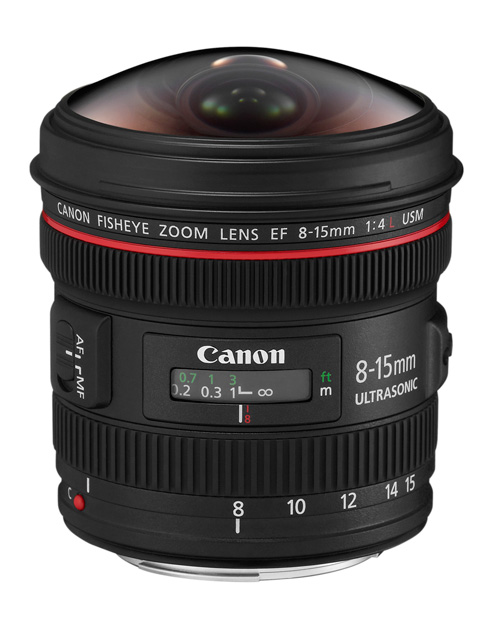
Canon 8-15mm fisheye lens

Canon’s 8-15mm f4L fisheye is an unusual lens, the only fisheye zoom that I know of. Most fisheye lenses are primes.

Following on from my article A Concise Guide to Choosing a New Lens I thought it would be interesting to go a little deeper into the question of whether to buy a prime lens or a zoom.

First, the definitions:

Prime lenses have a fixed focal length. There is no zoom ring and no way to magnify the subject other than moving closer. There are two settings to adjust: aperture (often handled by the camera) and focusing distance.

Zoom lenses have a variable focal length. There are three settings to adjust: aperture, focusing distance and focal length.

Both primes and zooms have benefits. I’m not going to try and persuade you one way or the other. Rather, the goal is to explore the benefits of both to help you decide which is the best for you.

Benefits of prime lenses

Image quality

Generally speaking, prime lenses have better image quality. It is easier to make a lens with good optical performance at a single focal length than it is to make one that performs well through the entire range of a zoom lens. This is especially true with wide-angle lenses where zooms tend to suffer from barrel distortion at the shortest focal lengths. With longer focal lengths (ie. 50mm plus), there is less difference in the performance between zooms and primes.

Barrel distortion

This photo shows the barrel distortion of an 18-135mm zoom lens set to 18mm. The curved lines in the frame should be straight.

Size and weight

Prime lenses tend to be smaller and lighter than zooms covering the same focal length range. This isn’t true all the time, high end primes are bigger because they have wider maximum apertures, which need larger lens elements to let the light in. Anyone who has used Canon’s 85mm f/1.2L prime lens knows what I mean – it’s a monster.

Don’t forget that the size and weight advantage is quickly lost if you end up buying two or more primes to cover the same focal range as a zoom. But if your aim is to use your camera with a single, lightweight lens then primes are the way to go.

An advantage of smaller lenses is that they are less obtrusive for portrait and street photography. It’s interesting how lens size affects the dynamics of a portrait shoot. In my experience models, even experienced ones, are much more relaxed in front of the camera when I use a smaller lens.
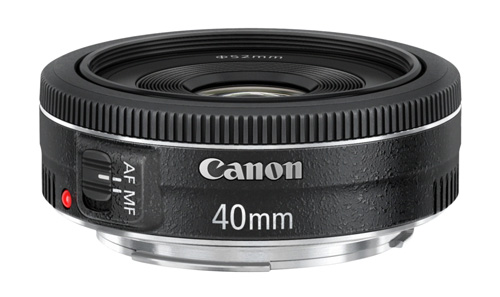
The Canon 40mm f2.8 pancake is about as small and light as you can get. Pancake lenses are the ultimate in unobtrusive lenses.

The Canon 40mm f/2.8 pancake lens is about as small and light as you can get. Pancake lenses are the ultimate in unobtrusive lenses.

Wide maximum apertures

The wider maximum apertures of prime lenses are useful for taking photos in low light or for creating beautiful bokeh. They also let more light into the lens, giving you a brighter image on cameras with optical viewfinders. However, if you have a camera with good high ISO performance you may not be so bothered about the advantages of using primes in low light.

Portrait

You can only take portraits like this one that have very little depth of field with prime lenses. Shot at f/1.8 with an 85mm lens.

Value for money

Prime lenses often give really good value for money, especially at the lower end of the price range. Most manufacturers have inexpensive prime lenses in their range that give superb image quality, much better than you would get from a zoom lens costing the same.

Benefits of zoom lenses

There was a time when the quality of zoom lenses was so poor that most photographers didn’t use them. Thankfully, things have changed and they have become more popular as the quality has improved. These are the main benefits of zoom lenses:

Convenience

The main benefit of zooms is the convenience arising from covering a range of focal lengths in one lens. This can save you time (swapping lenses) and money (being cheaper to buy one zoom than two or more primes). Zooms are useful as walkabout lenses, or if you are working in dusty or damp conditions where you don’t really want to take the lens off the camera.

With so many benefits, are there any disadvantages? Unfortunately the answer is yes. Here are some things to bear in mind:

The trade-offs for convenience are image quality and size. Zooms tend to be bigger than primes, and if you want one that has good image quality throughout the entire focal length range then you will need to spend some money. One tip is to go for lenses that cover a shorter focal length range, such as a 24-70mm rather than 18-200mm.
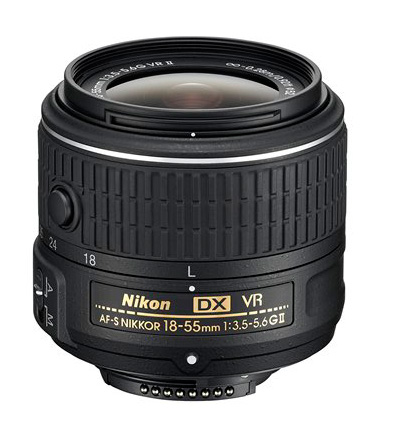
Nikon kit lens

A kit lens with variable maximum aperture. Avoid these types of zooms if you can.

Another thing to watch out for on cheaper zoom lenses is variable aperture. An example: an 18-55mm f/3.5-5.6 kit lens has a maximum aperture of f/3.5 at the 18mm end but only f/5.6 at 55mm. This makes it harder to work in manual mode (what if you have the aperture set to f/4 at 18mm and then zoom in to 55mm?) and is a general hassle all-round. Pay a bit more and get a fixed aperture zoom.

Saves you having to move

While some people will tell you that a benefit of prime lenses is that they make you zoom with your feet (ie. move closer to or further from the subject to change the composition) there are times when this isn’t possible. You may be at a sporting event, and unable to get any closer to the athletes involved. Or you may be standing near the edge of a cliff taking a landscape photo, unable to move further forward because you would fall off. Zoom lenses are invaluable in situations such as these.

Landscape photo

I took this photo standing near the edge of a cliff. I couldn’t move any further forwards, but was able to frame the image precisely using a 17-40mm zoom lens.

Your view

Now it’s your turn. What lenses do you prefer to use – zooms or primes? Have you bought any lenses recently and why did you decide to buy them? I’m looking forward to reading what you have to say.


Understanding Lenses ebook bundle

Understanding Lenses ebooks

My ebooks Understanding Lenses Part I and Understanding Lenses Part II will help Canon EOS owners decide what lenses to buy for their cameras. They are both filled with lots of tips to getting the most out of your Canon lenses. Click the links to learn more.

The post Buyers Guide – Prime Lenses vs Zoom Lenses by Andrew S. Gibson appeared first on Digital Photography School.


Digital Photography School

 
Comments Off on Buyers Guide – Prime Lenses vs Zoom Lenses

Posted in Photography


Sony Cyber-shot DSC-WX350 puts latest tech into travel zoom body

15 Feb

DSC-WX350_Black_Front-1200.png

The Sony Cyber-shot DSC-WX350 features an 18.2 megapixel BSI CMOS sensor and the company’s latest Bionz X processor, and puts it into a slim body with a 20X, 25-500mm equivalent F3.5-6.5 lens. The WX350 also shoots up to ten shots at 10 fps, records 1080/60p video, and has a ‘Motion Shot feature’ for capturing things like golf swings. And, like most of Sony’s midrange cameras, the WX350 also has Wi-Fi with NFC. The camera will ship in March for $ 320.

News: Digital Photography Review (dpreview.com)

 
Comments Off on Sony Cyber-shot DSC-WX350 puts latest tech into travel zoom body

Posted in Uncategorized


Canon unleashes PowerShot SX700 HS travel zoom

14 Feb

HR_SX700HS_RED_3Q_CL-2.png

Canon has introduced its new PowerShot SX700 travel zoom, which features a 25-750mm equivalent F3.2-6.9 lens and the company’s latest DIGIC 6 processor. While you’re zoomed in tight, the camera’s Zoom Framing Assist feature lets you quickly back out, recompose, and return to where you were. The SX700 also features manual exposure control, Wi-Fi with NFC, and 1080/60p video. The camera will be shipping next month in your choice of black or red for $ 349.99.

News: Digital Photography Review (dpreview.com)

 
Comments Off on Canon unleashes PowerShot SX700 HS travel zoom

Posted in Uncategorized


Got zoom? Sony introduces DSC-H400 with enormous 63X zoom

14 Feb

HX400V_right-1200.png

While the megapixel race has shown signs of slowing down, the competition for zoom range is still going strong. Sony’s Cyber-shot DSC-H400’s 63X lens covers an enormous 24.5-1550mm equivalent range. If that’s a bit too much for you, the DSC-H300 has a 35X (25-875mm equiv.) lens and shares the same 20.1MP CCD as the H400. Stepping up, there’s the DSC-HX400V, which has a 20.4MP CMOS sensor, Bionz X processor, 50X (24-1200mm equiv.) zoom, tilting 3″ LCD, Wi-Fi, GPS, and 1080/60p video recording. Prices range from $ 220 to $ 500.

News: Digital Photography Review (dpreview.com)

 
Comments Off on Got zoom? Sony introduces DSC-H400 with enormous 63X zoom

Posted in Uncategorized


Nikon Coolpix P600, P530, S9700 go big on zoom range

07 Feb

P600_RD_frt34r_on_w.png

Nikon introduces its Coolpix P600, P530 and S9700 high zoom cameras with 16MP BSI CMOS sensors. The Coolpix P600 and P530 feature built-in electronic viewfinders and 60x and 42x optical zoom ranges, respectively, while the Coolpix S9700 travel zoom compact has a 30x optical zoom. Both the P600 and S9700 offer built-in Wi-Fi, and all three cameras provide 1080/60i HD video recording.

News: Digital Photography Review (dpreview.com)

 
Comments Off on Nikon Coolpix P600, P530, S9700 go big on zoom range

Posted in Uncategorized


Wieso Zoom? Ich kann doch laufen.

29 Jan

Ein Beitrag von: Peter Breuer

Die Straße ist das mobilste Bühnenbild der Welt. Ein paar Schritte vorwärts und im Sucher der Kamera verschieben sich der Hintergrund und das komplette Mobiliar der Szene gegeneinander – die Laterne, die eben noch das Bild am Rand begrenzte, zerschneidet plötzlich die Szenerie in zwei Hälften. Lässt sich das für die Dramaturgie nicht nutzen oder ist sogar kontraproduktiv? Dann lauf weiter.

Street I © Peter Breuer

Straßenfotografie kann das antizipierende Flanieren eines Henri Cartier-Bresson, Brassaï, Alfred Eisenstaedt oder Robert Doisneau sein, die ihre bildnerischen Zufälle nicht bloß fanden, sondern sie sogar provozierten: Indem sie warteten, bis die Situation, deren Geschehen sie nur vermuteten, sich tatsächlich in dem Bildausschnitt ereignete, den sie als Bühne für ideal hielten.

Oder extremer noch – wie Lee Friedlander – der Schicht um Schicht überlagerte: Spiegelungen von Glas, Himmel und Chrom oder gestaffelte urbane Landschaften, die durch die Personen, die ins Bild traten, zur Erzählung wurden. Kontaktabzüge von Cartier-Bresson belegen, dass vor dem auf den Punkt genauen „decisive moment“, für den er bekannt wurde, auch etliche weniger entscheidende Augenblicke lagen.

Street II © Peter Breuer

Mit dem Erscheinen von Robert Franks Bildband „The Americans“ in 1958 änderte sich der Fokus der Straßenfotografie erstmals – vom genialen Einzelbild zum Denken in filmischen Serien, die sich von der Totalen in die Halbnahe bewegen und auch mit unterstützenden Bildern und Bildpaaren arbeiteten.

Street IV © Peter Breuer

Einer der konzeptionellsten Straßenfotografen der Fotografiegeschichte ist lediglich eine literarische Figur: Der von Paul Auster erdachte Auggie Wren ist der Besitzer eines Tabakladens in Brooklyn. Im von Paul Auster und Wayne Wang inszenierten Film „Smoke“ spielt Harvey Keitel jenen Auggie, der jeden Morgen die gleiche Kreuzung vor seinem Geschäft dokumentiert.

Ohne Rücksicht auf Komposition und Licht lässt er seine Fotografien der Kreuzung Atlantic Avenue und Clinton Street einfach „passieren“ und baut aus der schieren Monumentalität von 4000 Fotografien ein Zeitdokument, in dem Menschen sich auf dem Weg zur Arbeit begegnen, laufen, stolpern und zwangsläufig auch altern.

Street III © Peter Breuer

Was einen Straßenfotografen auszeichnet, ist seine eigene Unsichtbarkeit. In dieser Disziplin ohne Regieanweisungen ist es kein Nachteil, eine unscheinbare Erscheinung zu sein. Auffällig lange Teleobjektive verbieten sich ohnehin von selbst: Ein Straßenfotograf ist weder ein Sniper, noch ein Paparazzo, sondern lediglich ein Passant, der seine Augen durch eine Kamera ersetzt.

Es ist kein Zufall, dass die ideale Brennweite für viele Straßenfotografen zwischen 28 und 50 Millimetern liegt und nicht nur dem Vergrößerungsfaktor des menschlichen Auges, sondern auch dessen Fähigkeit zur Tiefenschärfe ähnelt. Mal ganz abgesehen von den Vorteilen verwacklungsfreier Aufnahme durch kürzere Objektivbauweise und höhere Lichtstärke.

Street V © Peter Breuer

Die gezeigten Fotografien entstanden 1987 mit einer zweiäugigen Rolleiflex auf Tri-X 400 Film von Kodak. Der Vorteil der zweiäugigen Kamera liegt in der Konzentration auf das leuchtende Bild der Fresnel-Mattscheibe, die man vor seinem Oberkörper trägt – die seitenverkehrte Abbildung entkoppelt dieses Bild noch weiter vom Augenblick und lenkt den Blick nur noch auf die Komposition.

Mit dieser Kamera ist es leicht, unsichtbar zu bleiben, ohne zum Voyeur zu werden. Für mich selbst habe ich einen ähnlich diskreten Charme von Technik erst viele Jahre später wieder mit einer Sony RX100 erlebt, die ich als stabiles, sucherloses Teil schätze, das in jede Hosentasche passt. Mit einer Chipgröße, die auch höhere ASA-Zahlen erlaubt.

Dass Bilder nicht nur nicht „gestohlen“ werden, sondern den Abgebildeten auch gezeigt werden können, ist natürlich im Digitalzeitalter ein Vorteil. Kein Fehler, wenn man zwar bei der Aufnahme unsichtbar war, während des Fragens aber so charmant wie möglich ist.


kwerfeldein – Fotografie Magazin

 
Comments Off on Wieso Zoom? Ich kann doch laufen.

Posted in Equipment


Fujifilm FinePix S8600, S9200, S9400W long zoom compacts announced

12 Jan

S9400W_Black_Front_Left_thumb.png

CES 2014: Three new FinePix cameras are unveiled today, each with an emphasis on providing long zoom ranges. The Fujifilm FinePix S9400W and FinePix S9200 superzooms offer a 50x optical zoom lens covering a 24-1200mm equivalent zoom range, both using a 16.2 megapixel CMOS sensor. The two cameras are identical, with the S9400W adding Wi-Fi functionality. The Fujifilm FinePix S8600 has a 36x optical zoom (25-900mm equivalent) and a 16 megapixel CCD sensor. 

News: Digital Photography Review (dpreview.com)

 
Comments Off on Fujifilm FinePix S8600, S9200, S9400W long zoom compacts announced

Posted in Uncategorized


Panasonic Lumix DMC-LZ40 budget superzoom offers 42x optical zoom

12 Jan

LZ40_slant.png

CES 2014: Panasonic has unveiled the Lumix DMC-LZ40, a budget superzoom with an F3.0-6.5 22-924mm equivalent zoom lens. It has a 20 megapixel CCD sensor, fixed 3-inch 460k dot LCD, and can record video at 720/30p. The LZ40 is also equipped with optical image stabilization, 13 filter effect modes, and a lithium-ion battery rated to 320 shots.

News: Digital Photography Review (dpreview.com)

 
Comments Off on Panasonic Lumix DMC-LZ40 budget superzoom offers 42x optical zoom

Posted in Uncategorized


Compact Panasonic Lumix DMC-SZ8 offers 12x zoom and Wi-Fi

11 Jan

SZ8_slant.png

CES 2014: Panasonic keeps the emphasis on zoom and connectivity with the introduction of the Lumix DMC-SZ8, a lower-end alternative to its ZS/TZ travel zooms. It covers a 24-288mm equivalent range and uses a 16 megapixel CCD sensor (a step down from the ZS-series’ CMOS chips) and a top video resolution of 720/30p. Wi-Fi connectivity is included, as is a 3.0-inch 460k-dot LCD.

News: Digital Photography Review (dpreview.com)

 
Comments Off on Compact Panasonic Lumix DMC-SZ8 offers 12x zoom and Wi-Fi

Posted in Uncategorized