RSS
 

Posts Tagged ‘World’

Serious speed: Sony a9 real world samples gallery

27 Apr

The Sony a9 made headlines shortly after its announcement due in no small part to its laundry list of impressive specifications. With 20fps burst shooting, 693 autofocus points and a 3.7m dot electronic OLED viewfinder with no blackout at all in continuous shooting, this camera’s got some serious specs and Sony has made some serious claims about its performance.

During our time in New York for the announcement, we were able to learn the ins-and-outs of the camera while photographing hockey players, figure skaters, and a full-on track meet to see just how the camera fared – and it fared well. But don’t take our word for it, check it out for yourself in our real world samples gallery. The AF system combined with 20 fps allowed us to nail the exact moment, while the excellent JPEG engine retained detail and minimized noise even at ISOs in the thousands.

See the Sony a9 real world samples gallery

But we’ve also been hard at work digging into the Sony a9 as much as we could, given our limited time with it and lack of Raw support. Our shooting experience has been updated with impressions of both JPEG image quality and autofocus performance.

DPR’s updated impressions of the Sony a9

$ (document).ready(function() { SampleGalleryStripV2({“galleryId”:”5484254968″}) })

Sample photoSample photoSample photoSample photoSample photo

Articles: Digital Photography Review (dpreview.com)

 
Comments Off on Serious speed: Sony a9 real world samples gallery

Posted in Uncategorized


Selective Hearing: These Earplugs Let You Turn Down Sounds of the World

22 Apr

[ By SA Rogers in Gadgets & Geekery & Technology. ]

We’ve all had moments where we wished we could tune out a particular person or muffle loud music without losing the ability to hear a friend’s voice, but standard earplugs don’t exactly allow for a lot of fine-tuning. But with a new product called ‘Knops,’ you can literally turn the volume of the world up or down in an instant. Founded by musicians, the Dutch startup aims to help you hear what you want to hear and ignore what you don’t with the twist of a tiny knob.

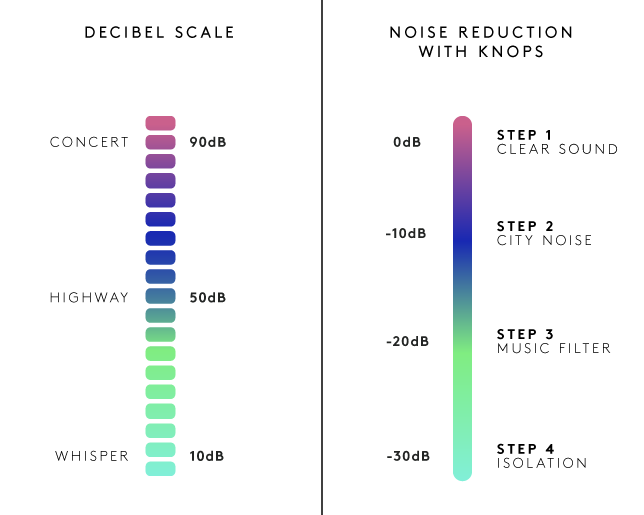
Each pair of knots has four modes you can switch between: the first is clear sound, the second reduces ambient ‘city noise’ by 10 decibels, the third muffles live music by 20 decibels, and the fourth is ‘isolation,’ blocking out 30 decibels. You can easily switch between the four levels whenever you want, eliminating the need to constantly pull out and reinsert your earplugs.

Noting that most earbuds are “downright ugly as hell,” the designers gave Knops a minimalist look available in four different colors and trims. You might imagine that they’d be unnecessarily high-tech, turning a simple product like earplugs into an expensive, high-maintenance gadget that requires syncing to electronic devices or battery charging. Surprisingly, that’s not the case. The creators wanted control over external sounds without the distortion that can come with electronic solutions.

How does it work? According to the creators, “Knops uses no electronics, no apps and no batteries. Instead our earbuds are acoustically engineered. The real sound is filtered using gold old physics. With the help of computer simulations and real-world prototypes tested in acoustic labs, we tuned Knops. We spend a lot of time fine-tuning the sound, so we can provide the best quality sound at every volume level. Working with the natural response of the ear canal.”

You can pre-order a pair by backing the project on Kickstarter for 58 Euros (about $ 62 USD) or more.


Share on Facebook


[ By SA Rogers in Gadgets & Geekery & Technology. ]

[ WebUrbanist | Archives | Galleries | Privacy | TOS ]


WebUrbanist

 
Comments Off on Selective Hearing: These Earplugs Let You Turn Down Sounds of the World

Posted in Creativity


Frederik Buyckx named Sony World Photography Awards 2017 Photographer of the Year

21 Apr

$ (document).ready(function() { SampleGalleryV2({“containerId”:”embeddedSampleGallery_7331693783″,”galleryId”:”7331693783″,”isEmbeddedWidget”:true,”standalone”:false,”selectedImageIndex”:0,”startInCommentsView”:false,”isMobile”:false}) });

Belgian photographer Frederik Buyckx has been named the Sony World Photography Awards 2017 Photographer of the Year. Buyckx is a freelance photographer for the Belgian newspaper De Standaard and will receive the $ 25,000 prize for his winning series of images entitle ‘Whiteout’, which was shot in the Balkans, Scandinavia and Central Asia, all remote areas where people often live in isolation and in close contact with nature.

“There is a peculiar transformation of nature when winter comes, when snow and ice start to dominate the landscape and when humans and animals have to deal with the extreme weather,” Buyckx says. “The series investigates this struggle against disappearance.”

Chosen from the winners of the Awards’ 10 Professional categories, Chair of Judges Zelda Cheatle said of Buyckx’s images: “I have chosen a series of landscapes so that we may return to the essence of looking at photography. Landscape is often overlooked but it is central to our existence. These are beautiful pictures made by a serious photographer, and they are to be enjoyed.”

This year the contest received more 227,000 entries from 183 countries, making it the world’s largest photography competition. An exhibition of all winning and shortlisted images and a selection of rare photographs by British photographer Martin Parr, who is this year’s recipient of the Outstanding Contribution to Photography prize, will run at Somerset House in London from now until 7 May. 

The annual Sony World Photography Awards are free to enter and open to all photographers. The 2018 Sony World Photography Awards open for entries on 1 June 2017. You can find the full list of of this year’s winners below and see a selection of shortlisted and winning images on the World Photography Organisation website. 

Professional  Category Winners and Finalists

An expert panel of international judges were challenged to find the best photography series (between 5-10 images) across the ten Professional categories. The winning and finalist photographers are:

Architecture winner: Dongni, China
2nd – Julien Chatelin, France / 3rd – Diego Mayon, Italy

Conceptual winner – Sabine Cattaneo, Switzerland
2nd – Gao Peng, China / 3rd – Alexander Anufriev, Russian Federation

Contemporary Issues winner – Tasneem Alsultan, Saudi Arabia
2nd – Li Sony, China / 3rd – Lorzenzo Maccotta, Italy

Current Affairs & News winner – Alessio Romenzi, Italy
2nd – Joe Raedle, United States / 3rd – Ivor Prickett, Ireland

Daily Life winner: Sandra Hoyn, Germany
2nd – Christina Simons, Iceland / 3rd – Alice Cannara Malan, Italy

Landscape winner: Frederik Buyckx, Belgium
2nd – Kurt Tong, United Kingdom / 3rd – Peter Franck, Landscape

Natural World winner: Will Burrard-Lucas, United Kingdom
2nd – Ami Vitale, United States / 3rd – Christian Vizl, Mexico

Portraiture winner: George Mayer, Russian Federation
2nd – Romina Ressia, Argentina / 3rd – Ren shi Chen, China

Still Life winner: Henry Agudelo , Columbia
2nd – Shinya Masuda, Japan / 3rd – Christoffer Askman, Denmark

Sport winner: Yuan Peng, China
2nd – Eduard Korniyenko, Russian Federation / 3rd – Jason O’Brien, Australia

OPEN PHOTOGRAPHER OF THE YEAR – Alexander Vinogradov, Russia
YOUTH PHOTOGRAPHER OF THE YEAR – Katelyn Wang, US
STUDENT PHOTOGRAPHER OF THE YEAR – Michelle Daiana Gentile, Argentina

Articles: Digital Photography Review (dpreview.com)

 
Comments Off on Frederik Buyckx named Sony World Photography Awards 2017 Photographer of the Year

Posted in Uncategorized


Sigma sd Quattro H real world samples gallery

09 Apr
ISO 200 | 1/500 sec | F5.6
Photo by Carey Rose

With a large APS-H sized Foveon sensor, Sigma’s sd Quattro H promises a lofty 51MP of equivalent resolution when compared to more traditional Bayer-sensor cameras. The sd Quattro lineup is also the first series of Sigma cameras ever to output Raw files in an accessible DNG format, meaning you can open them with almost any Raw converter, as opposed to being locked into Sigma’s Photo Pro software. Take a look through our gallery of cherry blossoms, cars, cityscapes and studio shots and download a few files to check out the impressively sharp Foveon rendering for yourself.

Check out our Sigma sd Quattro H sample gallery

$ (document).ready(function() { SampleGalleryStripV2({“galleryId”:”4388344015″}) })

Sample photoSample photoSample photoSample photoSample photo

Articles: Digital Photography Review (dpreview.com)

 
Comments Off on Sigma sd Quattro H real world samples gallery

Posted in Uncategorized


Throwback Thursday: Entering the DSLR world with the Canon EOS 10D

06 Apr

A few months ago I wrote a short article about the Canon EOS D30. The D30 was a groundbreaking camera in its day, being the first ‘affordable’ DSLR and the first to feature a large-format CMOS sensor. Yes, its autofocus system was woeful, and the LCD display on the back was about as useful as making a sketch from memory, but back in 2000, everybody wanted one.

I was definitely curious about the D30, but given that in 2000 I was a first-year undergraduate student, such an expensive camera was far beyond my reach. It would be another couple of years before I saved up enough money to buy my first DSLR, and the camera I eventually settled on was the successor to the successor of the EOS D30 – the counterintuitively named Canon EOS 10D1.

The break with Canon’s previous naming convention was appropriate, though. The 10D was a substantially new camera compared to the models that preceded it, and it replaced the D60 with an almost indecent haste (the D60 had been on the market for little more than a year before the 10D came along). Compared to the plastic-bodied D30/D60 it was better built, featured a far superior rear LCD (with a usable magnification feature) offered a more rounded styling, closer in spirit to the EOS-1D series, and was much quicker in operation.

The 10D was a thoroughly modern camera in 2003, and remained on the market for some time. Canon took the basic form factor of the D60 and modernized every aspect of that model’s performance and styling.

The 10D’s DIGIC processor drove a blisteringly fast (ahem…) continuous shooting rate of 3 fps, operation was snappier, including reduced shutter-lag, and the 10D’s 7-point autofocus system was a huge improvement over the 3-point system in the D30 and D60, which seemed prehistoric even back then. Although the 10D’s 6MP CMOS sensor was based on the one previously used in the D60, Canon had refined the manufacturing process in the meantime. Consequently it offered slightly better resolution than its predecessor, superior noise performance and a wider ISO span, topping out at a grainy but usable ISO 3200.

Remarkably, despite all of these improvements, the 10D was also $ 500 cheaper than the D60.

Although it definitely wasn’t in the same ballpark as the EOS-1D in terms of speed or construction, the 10D beat the pants off Canon’s then-current pro sports model in terms of image quality. Significantly, the core specification of the 10D was close enough to the EOS 30 / Elan 7 that film holdouts didn’t have to feel too badly short-changed by the costly jump into digital.

With the EOS 10D’s accessory grip attached, it was almost possible to believe that I was shooting with an EOS-1D.

Almost…

So, to recap – the 10D offered a very usable sensitivity range of ISO 100-3200, 3 fps continuous shooting, 7-point AF system, magnesium-alloy body shell and a substantial price reduction. In 2003, it all added up to a hugely desirable camera.2

Canon EOS 10D Sample images (2004-5)

$ (document).ready(function() { SampleGalleryV2({“containerId”:”embeddedSampleGallery_8248806925″,”galleryId”:”8248806925″,”isEmbeddedWidget”:true,”standalone”:false,”selectedImageIndex”:0,”startInCommentsView”:false,”isMobile”:false}) });

Because it was so popular, the 10D was pretty scarce for several months after its introduction. After saving up my wages for an entire summer (a story told in more detail here), I ended up purchasing mine from a ‘big box’ high-street retailer, because it was out of stock everywhere else – something I later came to regret.

I decided to pull the trigger on a 10D for several reasons. In a rare attack of foresight, I determined that this digital thing probably wasn’t a fad, and with ambitions to become a photographer of some kind, it seemed sensible to dive in as soon as possible. And while previous DSLRs had felt like too much of a compromise, the 10D seemed to meet my most important criteria.

As a budding theatre and live music photographer, I was hitting the limits of what I could do with film, both technically and practically. Technically speaking, high ISO film exposed in marginal light and processed at your average high-street pharmacy simply doesn’t look very good – especially if you’re talking about high-speed color emulsions. From a practical standpoint, development and printing turnaround times were a problem if I wanted to get images to people quickly. And forget about serious commercial work – by 2003, the magazines and websites I was interested in working for were increasingly insisting on digital file delivery.

A typical monochrome conversion of a shot taken in the Assembly Rooms Theatre. The 10D’s highest ISO settings were grainy, but perfectly usable – especially when converted into black and white.

The first quasi ‘commercial’ work I ever did was head-shots and performance images for Durham University’s student theatre. Student productions rotated every few weeks, and every production wanted some prints to display outside the theatre. I can’t remember the first production that I shot digitally (was it Harold Pinter’s ‘The Caretaker’?)3 but compared to film, it was vastly easier. Ironically, I was a sort of caretaker for the theatre at the time, since I lived in a small flat above the lobby. Being able to shoot a dress-rehearsal in the theatre, then head upstairs to make my edit and print the images – sometimes all in the same evening – was a revelation. I can’t remember how much I charged for my services, but I made enough over a couple of years to buy a couple of new lenses.

And for a while it seemed like it was lenses that were the problem. Initially I had two lenses for my 10D. A 50mm F1.8 (of course), and a 24-70mm F2.8L. Later I added a 70-200mm F2.8L and a 17-40mm F4L (all purchased used). The 10D worked perfectly with all of them, except the 24-70mm. For whatever reason, camera and lens did not get on at all. Chronic back-focusing was apparent even through the 10D’s viewfinder, and this was before the days of AF micro-adjustment. The 24-70mm was simply unusable on my 10D, but it focused perfectly on other DSLRs that I borrowed from friends, or rented in an increasingly desperate attempt to figure out what was going on.

A live shot from one of my first proper commissions – a major awards show tour that came through Newcastle in 2005 – not far from where I lived at the time. It looks like I benefited a bit from someone else’s flash, in this shot. Thank you – whoever you were.

The retailer I bought my 10D from wasn’t particularly interested in helping, so I sent it back to Canon at least four times during the first year I owned it, shooting on film during the long intervals when it was away for service. Every time it came back as ‘up to specification,’ but the back-focusing problem remained. Finally, after a lot of back and forth, I send the 10D in with the troublesome 24-70mm, and was rewarded with a ‘fixed’ camera, complete – funnily enough – with a new serial number. Knowing what I know now, I should have sent the camera and lens back together in the first place.

Even this frustrating experience wasn’t enough to dull my excitement at owning and using the 10D. It really was a fantastic camera at the time, and it helped me gain a footing in the not-at-all-lucrative world of performance photography. My first magazine commissions were shot with the 10D. I learned about the benefits of shooting Raw with the 10D (albeit rather belatedly). The first camera I ever had confiscated at a music venue4 was the 10D. It was my main camera for a couple of very formative years, before being relegated as a second body beside to the truly magnificent EOS-1D Mark II (which I’m hoping to write about at a later date).

The 10D couldn’t do everything (it choked up when shooting several Raw files in a sequence, and in low light its off-center AF points were little more than decorative), but it opened up a completely new world for me.

One of my favorite bands of the mid-2000s was ‘Hope of the States’. I probably photographed them more than any other band, for a while. This shot is from another awards show in London in 2005. Despite the off-center composition, most likely I used the central AF point for this image, since the 10D’s off-center points didn’t work very well at all in low light.

And it’s a world I’m still living in. Without the 10D, there is no doubt in my mind that I wouldn’t have become a music photographer, and if I hadn’t become a music photographer, I probably wouldn’t have ended up as a photography journalist. Whether or not that’s a good thing is something I’m happy to leave to the commenters to decide.

Did you own a 10D? Let us know.

Read Phil Askey’s review of the EOS 10D (2003)

Canon EOS 10D Review Samples (2003)

$ (document).ready(function() { SampleGalleryV2({“containerId”:”embeddedSampleGallery_5774422920″,”galleryId”:”5774422920″,”isEmbeddedWidget”:true,”standalone”:false,”selectedImageIndex”:0,”startInCommentsView”:false,”isMobile”:false}) });


1 A note on Canon’s confusing naming convention. The ‘D30’ because it was a digital camera with 3 million pixels. The D60 because it was basically a D30 with a new 6 million pixel sensor. And the switch to 10D because – I assume – Canon and Nikon’s lawyers had a little chat.

2 In fact, just about the only people who weren’t singing Canon’s praises at the time were recent D60 owners.

3 The Assembly Rooms – it’s still there, and this being student theatre, there’s every chance that they’re currently staging a production of Harold Pinter’s ‘The Caretaker’, too.

4 It was all just one big misunderstanding. Specifically around two people’s definitions of the word ‘permission’. 

Articles: Digital Photography Review (dpreview.com)

 
Comments Off on Throwback Thursday: Entering the DSLR world with the Canon EOS 10D

Posted in Uncategorized


Sony World Photography Awards Open categories and National winners announced

29 Mar

$ (document).ready(function() { SampleGalleryV2({“containerId”:”embeddedSampleGallery_9794723210″,”galleryId”:”9794723210″,”isEmbeddedWidget”:true,”standalone”:false,”selectedImageIndex”:0,”startInCommentsView”:false,”isMobile”:false}) });

The winners of the ten Open categories of the Sony World Photography Awards have been announced alongside National Award winners from 66 countries. The Open competition consists of ten themed categories so there are ten winners in total, each receiving a Sony a7 II kit, who will go on to compete for the overall prize of $ 5000 and a trip to the awards ceremony in London next month.

$ (document).ready(function() { SampleGalleryV2({“containerId”:”embeddedSampleGallery_3685180831″,”galleryId”:”3685180831″,”isEmbeddedWidget”:true,”standalone”:false,”selectedImageIndex”:0,”startInCommentsView”:false,”isMobile”:false}) });

Once the 105,000 entries to the Open section had been judged in their themed categories the total entry was re-judged according to nationality so the best images from each of 66 countries could be found. The names of the photographers in the best three from those countries have also been announced today. Winners from these awards will be displayed alongside the Open winners and the winners of the Professional categories at an exhibition to be held in London’s Somerset House from the 21st April to 7th May.

The winners of the Professional categories, and the overall winner of the Open section, will be revealed on April 20th at the awards ceremony. Martin Parr will be presented with the Outstanding Contribution to Photography prize at the event and will be exhibiting a collection of images in the main exhibition.

For more information and to see all the National Awards winners visit the Sony World Photography Awards website.

Press release

The world’s best single photographs revealed by 2017 Sony World Photography Awards 

  • World’s largest photography competition announces winners of its Open categories and National Awards programme
  • Open category winners competing to win trip to London and $ 5,000 (USD) cash prize

28th March, 2017: Ten extraordinary photographs from across the globe are today revealed as the winners of the Open categories of the 2017 Sony World Photography Awards, the world’s largest photography competition.

The winners were selected from more than 105,000 entries to the Awards’ Open competition, with the expert panel of judges looking for the best single photographs across ten categories.

The ten Open category winners are:
* Architecture – Tim Cornbill (UK)
* Culture – Jianguo Gong (China)
* Enhanced – Lise Johansson (Denmark)
* Motion – Camilo Diaz (Colombia)
* Nature – Hiroshi Tanita (Japan)
* Portraits – Alexander Vinogradov (Russia)
* Still Life – Sergey Dibtsev (Russia)
* Street Photography – Constantinos Sofikitis (Greece)
* Travel – Ralph Gräf (Germany)
* Wildlife – Alessandra Meniconzi (Switzerland)

Each of the ten winning photographs display huge photographic talent and creativity, from a stunning wildlife shot of flamingos in Walvis Bay, Namibia (Alessandra Meniconzi) to the ice blue and white of winter (Hiroshi Tanita) and a beautifully simple portrait (Alexander Vinogradov). Scale is used to stunning effect to capture more than 1300 people practicing Tai-Chi in China (Jianguo Gong) and architecture in Berlin (Tim Cornbill) while a crucial goal-scoring moment in an underwater rugby match is photographed by Camilo Diaz. A subtle palette of color is used in both the Enhanced (Lise Johansson) and Travel (Ralph Gräf) category winners while black and white photography is the choice for the Street Photography winner (Constantinos Sofikitis).

Each winning photographer receives a Sony ?7 II with lens kit and will now compete to win the prestigious Sony World Photography Awards’ Open Photographer of the Year title, a trip to the winners’ awards ceremony in London in April and $ 5,000 US dollars in cash prizes. The overall winner will be announced on the 20th April alongside the winners of the Professional competition (judged on a body of work).

Chair of the Open competition, journalist and photographer Damien Demolder, said of the winning Open images: “It has been a pleasure and an inspiration to be exposed to such a volume of great work, and a privilege too that I could share in the personal moments, the joys, tears, life and losses of photographers from all around the globe who recorded their experiences through their pictures.”

National Awards
The winners of the Sony World Photography Awards National Awards, a global program to find the best single photographs taken by local photographers in 66 countries, were also announced today.

Now in its fourth year, the National Awards is unique in both scope and reach and opened up to photographers from Cambodia, Nepal, Pakistan, Qatar, Saudi Arabia, Sri Lanka and the United Arab Emirates for the first time this year.

Winners and runners-ups across all 66 National Awards were announced today, and can be viewed here.

Exhibition
The winners of the Open categories and the National Awards will all be shown at the Sony World Photography Awards & Martin Parr – 2017 Exhibition at Somerset House, London which opens on the 21st April and runs until the 7th May.

The exhibition will include all the winning, shortlisted (top 10) and commended (top 50) photographs drawn from more than 227,000 entries from 183 countries to the 2017 Sony World Photography Awards. It will also feature a special dedication to British photographer Martin Parr, recipient of the Awards’ Outstanding Contribution to Photography prize.

Sony World Photography Awards
Produced by the World Photography Organisation, 2017 sees the 10th anniversary of the Sony World Photography Awards and a decade-long partnership with its headline sponsor, Sony. The Awards recognise and reward the very best contemporary photography captured over the last year, and incorporate four competitions – Professional, Open, Youth and Student Focus. The overall winners of the 2017 Sony World Photography Awards will be announced on the 20th April.

About World Photography Organisation
The World Photography Organisation is a global platform for photography initiatives. Working across up to 180 countries, our aim is to raise the level of conversation around photography by celebrating the best imagery and photographers on the planet. We pride ourselves on building lasting relationships with both individual photographers and our industry-leading partners around the world. We host a year-round portfolio of events including: the Sony World Photography Awards (the world’s largest photography competition, marking its 10th anniversary in 2017), various local meetups/talks throughout the year, and PHOTOFAIRS, International Art Fairs Dedicated to Photography, with destinations in Shanghai and San Francisco.

About Sony Corporation
Sony Corporation is a leading manufacturer of audio, video, imaging, game, communications, key device and information technology products for the consumer and professional markets. With its music, pictures, computer entertainment and online businesses, Sony is uniquely positioned to be the leading electronics and entertainment company in the world. Sony recorded consolidated annual sales of approximately $ 72 billion for the fiscal year ended March 31, 2016. Sony Global Web Site: http://www.sony.net/

Articles: Digital Photography Review (dpreview.com)

 
Comments Off on Sony World Photography Awards Open categories and National winners announced

Posted in Uncategorized


Geotagger World Atlas: Most Scenic City Routes Mapped Using Photo Data

16 Mar

[ By WebUrbanist in Destinations & Sights & Travel. ]

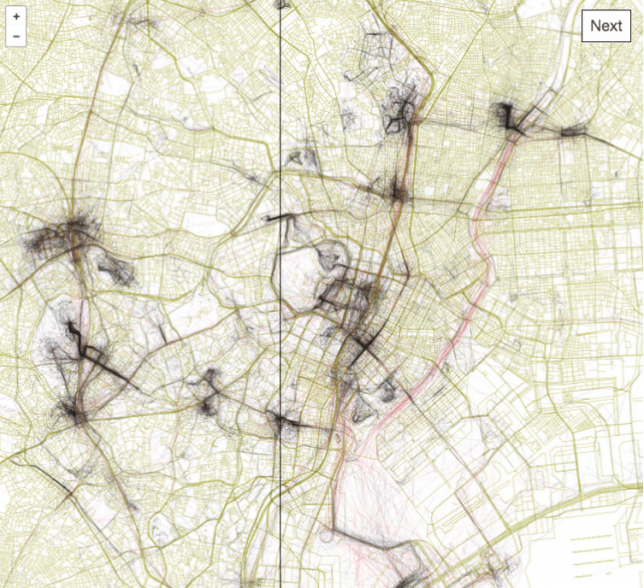
tokyo

Tapping into geo-tagging data and the collective wisdom of photographers, you can use this interactive tool to follow in the footsteps of those who have mapped out the most beautiful routes through cities. Click to pan and zoom through London below:

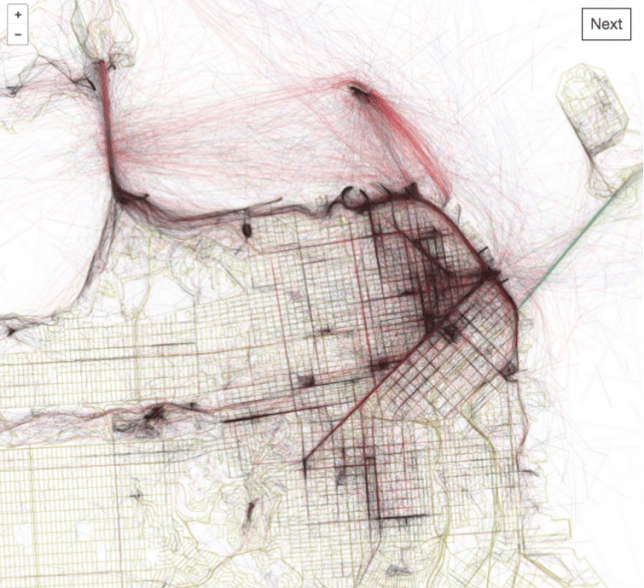
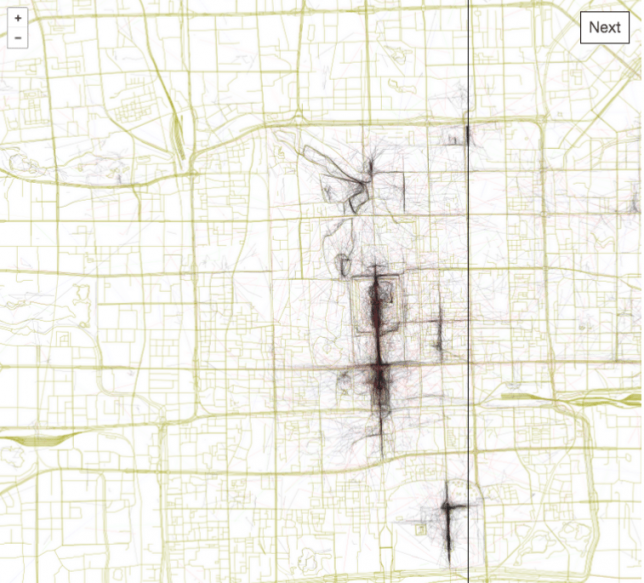
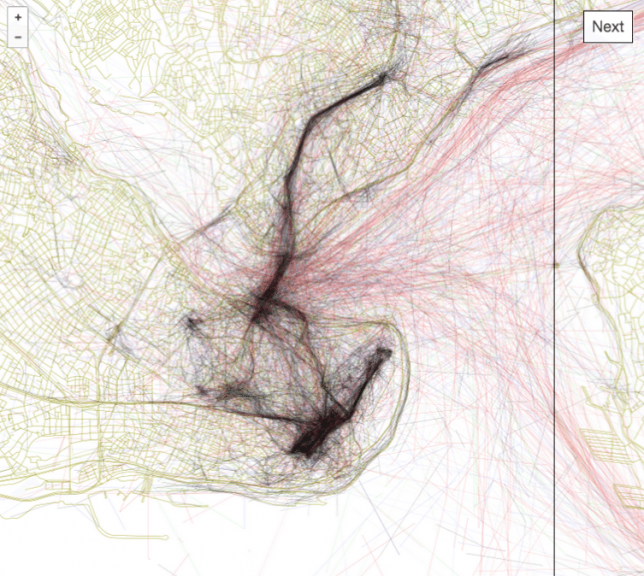
Eric Fisher of Mapbox has spent years compiling data from Flickr users, turning their sequential geo-located uploads into paths through urban environments including San Francisco, Beijing, Istanbul and Tokyo.

san francisco

The result is the Geotaggers’ World Atlas, a data-driven compendium of paths to take through cities. It is more than just a connection of dots — Fisher’s interactive guides specifically highlight trajectories from one image to the next.

beijing

“It signifies that people went there in the first place,” he says, and “saw something worth taking a picture of, and put the extra effort into posting it online for others to appreciate. And a sequence of photos along a route is even more significant, because it indicates that someone sustained their interest over distance and time rather than taking one picture and turning back.”

istanbul

The results are predictable in some cases, tracing lines between major landmarks, but often show side routes off of beaten tourist paths where keen photographers have found fascinating architecture and landscapes worth documenting along their way.

Share on Facebook


[ By WebUrbanist in Destinations & Sights & Travel. ]

[ WebUrbanist | Archives | Galleries | Privacy | TOS ]


WebUrbanist

 
Comments Off on Geotagger World Atlas: Most Scenic City Routes Mapped Using Photo Data

Posted in Creativity


Panasonic Lumix DC-GX850 real world samples

08 Mar

The Panasonic GX850 represents the merging of its ‘beauty-oriented’ GF-series and its ultra-small GM-series. Like the GM5 it replaces, it’s just barely coat pocketable with its collapsible 12-32mm F3.5-5.6 kit lens attached. Small as it is, it’s mighty enough to offer a 16MP Four Thirds sensor capable of 4K/30p video capture and Panasonic’s array of 4K-based stills modes. 

See our Panasonic Lumix GX850
sample gallery

$ (document).ready(function() { SampleGalleryStripV2({“galleryId”:”3702812878″}) })

Sample photoSample photoSample photoSample photoSample photo

Articles: Digital Photography Review (dpreview.com)

 
Comments Off on Panasonic Lumix DC-GX850 real world samples

Posted in Uncategorized


Urban Planet: How the Whole World Would Fit into a Single City or Structure

08 Mar

[ By WebUrbanist in Architecture & Cities & Urbanism. ]

life in one city

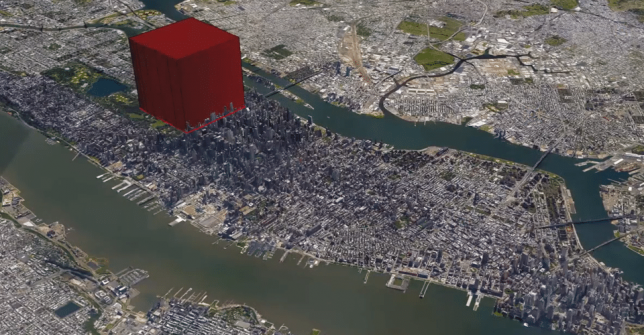
Cities often feel like dense and crowded places, and it is hard to imagine everyone on Earth living in urban environments let alone a single city or even (yes, it’s possible) one gigantic megastructure. In a series of videos, filmmaker Joseph Pisenti asks: what if everyone lived in one city? Then he takes it further with: what if everyone lived in just one building?

It sounds like an absurd proposition, but our planet’s population of billions could, in fact, but contained in a relatively small amount of space if needed (perhaps in case of a worldwide evacuation to space?). Images of single cities in the videos show places that already have populations in a single frame larger than countries like, say, Australia have spread across an entire continent.

A few billion cubic meters in a structure set on, say, Manhattan, could uncomfortably house the human race. It would be twice the height on the world’s largest building, but we would fit if we had to.

As the video series unfolds, its creator gets increasingly realistic with respect to actual needs for people beyond simply space to exist, imagining a world where we all could actually live on a small part of South America. Hopefully, of course, it will never come to this, but as sea levels rise it’s good to know we have options (and fun to engage in these thought experiments, regardless). By the time you finish watching this series, however, you may find you would rather simply escape it all:

Share on Facebook


[ By WebUrbanist in Architecture & Cities & Urbanism. ]

[ WebUrbanist | Archives | Galleries | Privacy | TOS ]


WebUrbanist

 
Comments Off on Urban Planet: How the Whole World Would Fit into a Single City or Structure

Posted in Creativity


The New Imagely NextGEN Lightroom Plugin Will Rock Your WordPress World

01 Mar

The New Imagely NextGEN Lightroom Plugin Will Rock Your WordPress World

It’s a new year and Imagely has released a great new Lightroom gallery plugin to make our lives easier. If you run your own photography website on WordPress, like countless other photographers, then you have probably come across Imagely and NextGEN Gallery.

Imagely provides WordPress themes and hosting, focused specifically on photographers. They have terrific support, and will make your life much easier when it comes to hosting a website. They are a service that I consistently recommend to photographers looking to create new professional websites.

The NextGEN Lightroom Plugin

Even if you already have a theme or WordPress service that you enjoy, like me, Imagely provides a gallery plugin called NextGEN Gallery. This gives you a variety of options to display your photography. After a significant amount of research on the right gallery plugin, NextGEN Gallery won me over. Both the free and paid (NextGEN Pro) versions provide you with a wealth of visual options for your gallery and make the management, proofing, and selling of your work a breeze.

The New Imagely NextGEN Lightroom Plugin Will Rock Your WordPress World

The NextGEN Pro Thumbnail Grid Gallery

But now they have added a new Lightroom plugin, which makes their offering even more enticing. Enter the Imagely NextGEN Lightroom plugin, which syncs your Lightroom catalog directly to your NextGEN Galleries. Suddenly, you can add or remove photographs and alter your albums without leaving Lightroom.

The NextGEN Lightroom plugin allows you to create new galleries or albums directly in the plugin. You can upload images directly to these galleries, edit the filename and file information, which can help with SEO, as well as specify the image size, format, quality, color space, and sharpening. The convenience cannot be overstated. What used to take five steps, exporting the file to your computer, logging into your website, selecting the correct gallery, uploading the new version of the photo, and editing the photo information – now takes only one step.

googletag.cmd.push(function() {
ruleset_slots.push( googletag.defineSlot( “/1005424/_dPSv5topic-rhs(300×250)”, [300, 250], “pb-ad-0” ).addService( googletag.pubads() ) ); } );

The New Imagely NextGEN Lightroom Plugin Will Rock Your WordPress World

The plugin gives you a variety of export options.

Installation

The plugin can be downloaded here and is simple (5 minutes) to install. Here is the full documentation to get it up and running, but after installing it all you need to do are four steps.

Step 1:

Under the Library panel, navigate to Publish Services, then Imagely and select “Set Up”.

The New Imagely NextGEN Lightroom Plugin Will Rock Your WordPress World

Step 2:

Add the description for the website you are uploading to and the WordPress settings (your website address, username, and password).

googletag.cmd.push(function() {
ruleset_slots.push( googletag.defineSlot( “/1005424/_dPSv5topic-rhs(300×250)”, [300, 250], “pb-ad-1” ).addService( googletag.pubads() ) ); } );

The New Imagely NextGEN Lightroom Plugin Will Rock Your WordPress World

Step 3:

Under FTP Settings, navigate to edit under the preset menu, then enter your FTP or SFTP credentials given to you by your hosting company.

Click the Browse button, navigate to your /wp-content/ folder, and save. Click OK to close the module an then click “Fetch from WordPress” under FTP Settings.

Step 4:

As you would regularly export your images using Lightroom, select the correct settings for the images that you would like to upload to the gallery. This includes color space, size and resolution, sharpening, metadata, and the watermark.

The New Imagely NextGEN Lightroom Plugin Will Rock Your WordPress World

Gallery and Album Creation

googletag.cmd.push(function() {
ruleset_slots.push( googletag.defineSlot( “/1005424/_dPSv5topic-rhs(300×250)”, [300, 250], “pb-ad-2” ).addService( googletag.pubads() ) ); } );

Creating galleries and albums through the plugin is a breeze. The first step is to right click on Imagely under Publish Service and select Collection or Collection Set. Collection will create a new NextGen gallery while Collection Set will create a new NextGen album. Collection Sets can hold other Collection Sets and Collections, while Collections can only hold images.

Add images to a Collection and select “Publish” to add the gallery or album and to add the new images into them. Already published photos will be displayed in the “Published Photos” section while new photos will be under the “New Photos to Publish” section. In addition to adding new photos, you can also modify and delete them through the plugin. Clicking publish after you make these changes will sync them with your website.

Conclusion

There is a lot to be said about how advances like this can make our lives easier as photographers. But the ability to see and alter our website galleries directly in Lightroom, where most photographers do most of their work, is an incredible advantage, both in helping us to figure out the correct sequencing of our portfolios as well as to make it as simple and streamlined as possible to edit these galleries.

Have you tried out this plugin? If you have a WP site what’s your workflow? Please share your thoughts in the comments below.

googletag.cmd.push(function() {
ruleset_slots.push( googletag.defineSlot( “/1005424/_dPSv5topic-rhs(300×250)”, [300, 250], “pb-ad-3” ).addService( googletag.pubads() ) ); } );

The post The New Imagely NextGEN Lightroom Plugin Will Rock Your WordPress World by James Maher appeared first on Digital Photography School.


Digital Photography School

 
Comments Off on The New Imagely NextGEN Lightroom Plugin Will Rock Your WordPress World

Posted in Photography