RSS
 

Posts Tagged ‘World’

Urban Dog Tags: Wear City Grids Around Your Neck & The World

07 Nov

[ By WebUrbanist in Design & Products & Packaging. ]

urban dog tag design

Like giant-sized fingerprints, urban grid patterns are unique to each city – this project turns that individuating property into an wearable asset, allowing you to hang you hometown or favorite metropolis around your neck as a point of pride.

city dog tag laser metalk

nyc etched metal necklace

Currently in crowdfunding on Kickstarter, the Urban Gridded Dogtag set is a “collection of unisex accessory so that architects, cartographers, urban planners, urban explorers, nomads, travelers, jet setters” and others can enjoy. New York City, San Francisco, Paris and Tokyo – can you tell which is where? Many more are also shown below.

urban dog tag wearing

urban dog tag concrete

urban dog tag options

The tags come in laser-cut black, gold-plated or stainless steel, with circular variants also available for those who want something without the implicit military reference. Many major cities have already been ‘unlocked’ and further ones will become available depending on how well-funded the campaign becomes before it closes (just one week left!).

urban gridded dog tag

From the creators: “Each piece is carefully designed to capture the cities underlining iconic street network as a lace-like pendant. The information is sourced from gps data by openstreetmap to ensure accurate portraits of the city. With chemical etching technology, the pendants are produced on thick .020″ Stainless Steel with a high level of detail, consistency, and quality. We strive for the component of the dogtags to be locally sourced, made in the USA. Including packaging and mailing supply.”

Share on Facebook


[ By WebUrbanist in Design & Products & Packaging. ]

[ WebUrbanist | Archives | Galleries | Privacy | TOS ]


WebUrbanist

 
Comments Off on Urban Dog Tags: Wear City Grids Around Your Neck & The World

Posted in Creativity


Around the world by bicycle with photographer Nicolas Marino

12 Oct

Nicolas Marino has been to 56 countries in his lifetime and has his sights set on the other 140. He’s traveling around the world with his camera and he’s not taking the easy way, crossing deserts, jungles and everything in between by bicycle. Why? In his words, ‘With a bicycle and a humble attitude you can travel to the heart of a culture.’ See gallery

Articles: Digital Photography Review (dpreview.com)

 
Comments Off on Around the world by bicycle with photographer Nicolas Marino

Posted in Uncategorized


Top of the World: 9 Incredible POV Climbs & Dizzying Selfies

02 Sep

[ By Steph in Travel & Urban Exploration. ]

Skyscraper Selfies Shanghai 3

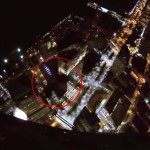
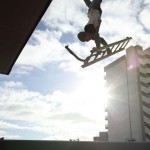
Your stomach will drop just looking at the stunning photos captured by some of the world’s most daring urban explorers, who scale insanely high towers all the way to the top and take casual selfies like it’s no big deal. Whether illegally base-jumping off One World Trade Center in New York or climbing to the apex of a 2300-foot-tall skyscraper in Shanghai, these daredevils clearly have no fear of heights.

Hong Kong Trio Scale Skyscraper, Snack on Bananas

Skyscraper Selfies Hong Kong 1

If this picture alone gives you a little bit of vertigo, wait until you watch the video. A trio of teenage photographers – Danuel Lau, Andrew Tso and A.S. – climbed a 1,135-foot-tall skyscraper in Hong Kong. Casually snacking on bananas, they make the whole task of getting to the top and photographing themselves with a wide-angle camera on a stick seem like it’s no big deal at all.

Dubai Daredevils Climb City’s Towering Buildings

Skyscraper Selfies Dubai 1

Skyscraper Selfies Dubai 2

Skyscraper Selfies Dubai 3

Skyscraper Selfies Dubai 4

19-year-old Alexander Remnev of Russia went on a trip to Dubai with a bunch of friends, and rather than just stick to the typical tourist activities, he decided to go on a little adventure. The daring photographer and his crew climbed many of the city’s tallest and most intimidating buildings and photographed themselves at the top, including the world’s tallest residential building, the 1,350-foot-tall Princess Tower.

Safety-Gear-Free Stunts in Shanghai

Skyscraper Selfies Shanghai 1

Skyscraper Selfies Shanghai 3

Skyscraper Selfies Shanghai 4

Skyscraper Selfies Shanghai 5

Vitaliy Raskalov and Vadim Makhorov got so high into Shanghai’s sky, they were literally above the clouds. The Russian duo sneakily and meticulously planned their stunt to avoid getting busted by China’s notoriously tough law enforcement, waiting until the Chinese New Year day when there would likely be few people around. They spent nearly 18 hours at the top of China’s Shanghai Tower, which reaches an incredible 2,130 feet into the air when you count the extra length of the crane at the top.

Watch Workers Climb to the Top of a 1768-Foot-Tower

Skyscraper Selfies Tower Workers

Have you ever noticed the stairways that are often attached to dizzyingly tall towers, enabling workers to get to the top to perform maintenance? This video gives you somewhat of a perspective on what it’s like to actually climb them to the top.

Rooftopping Photography by Tom Ryaboi

Skyscraper Selfies Ryaboi 1

Skyscraper Selfies Ryaboi 2

Skyscraper Selfies Ryaboi 3

Skyscraper Selfies Ryaboi 4

Skyscraper Selfies Ryaboi 5

Few people get quite the same dramatic city views that Tom Ryaboi is able to take in, daring to climb onto the rooftops of the tallest buildings in any given city to take photos while dangling over the edge. The pioneering Vancouver-based ‘rooftopper’ and photographer told Resource Mag, “Rooftopping is something I do whether I have a camera or not. Being in high places is just something I need to do to keep a balanced head.”

Next Page – Click Below to Read More:
Top Of The World 9 Incredible Pov Climbs Dizzying Selfies

Share on Facebook


[ By Steph in Travel & Urban Exploration. ]

[ WebUrbanist | Archives | Galleries | Privacy | TOS ]


WebUrbanist

 
Comments Off on Top of the World: 9 Incredible POV Climbs & Dizzying Selfies

Posted in Creativity


Typographic Shelter: Most Obvious City Bus Stop in the World

01 Sep

[ By WebUrbanist in Art & Sculpture & Craft. ]

bus stop art baltimore

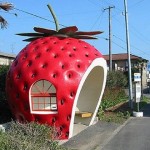
If you cannot spot this giant  bus shelter in Baltimore, you may have bigger problems than missing the bus and getting to work on time.

bus shelter spells design

bus city street stop

Standing 14 feet high, the signage-plus-bus-stop spells out B-U-S in big capital letters, providing spaces to sit (on all three characters) as well as overhead protection from the rain (in the B and S). Each letter is also seven feet wide.

bus stop urban shelter

Created by mmmm, “BUS is a place to enjoy, interact, and meet while waiting for the bus. It is a leisure space in the middle of the rhythm of the city, a fun place for the inevitable waiting at a bus stop. BUS is made with wood and steel, materials that are typically used to build urban furniture.”

bus stop letters shelter

The idea is to work with simple, conventional and durable materials to create something both functional but potentially iconic – a place that anyone will know when you mention it. Like other guerrilla bus stops and functional urban shelters, it certainly stands out, but also seems more straightforward and civic.

bus stop design concept

“The three letters of BUS are big enough to accommodate two to four people each and protect them from rain, sun, wind, and inclement weather. They allow people to assume different postures of sitting or standing while waiting for the bus. The S allows people to lie back while they wait, and the B provides shelter.”

bus stop typographic installation

From their website, this is “a permanent public art project supported by Creative Alliance and Southeast Community Development Corporation in conjunction with the Baltimore Office of Promotion and the Arts, the European Union National Institutes for Culture (EUNIC), and SPAIN arts & culture. It is part of the initiative TRANSIT, Creative Placemaking with Europe in Baltimore.”

Share on Facebook


[ By WebUrbanist in Art & Sculpture & Craft. ]

[ WebUrbanist | Archives | Galleries | Privacy | TOS ]


WebUrbanist

 
Comments Off on Typographic Shelter: Most Obvious City Bus Stop in the World

Posted in Creativity


Casa Futebol: Design to Deploy Housing in World Cup Stadiums

17 Jul

[ By WebUrbanist in Architecture & Houses & Residential. ]

converted football casa design

Imagine converting the circumferential spaces of sports stadiums into a plug-and-play system of modular residential units, leaving their open centers for use as open sports surfaces, green spaces or even mixed-use recreational, commercial and institutional purposes.

converted box office seats

converted stadium fifa cup

Architects Axel de Stampa and Sylvain Macaux, the minds behind this radical design concept, note that the world’s most biggest football competition, set this year in Brazil, has left a series a freshly made and refurbished arenas in its wake.

google

Some of these World Cup creations will continue to be used for sporting and other events but others that may be demolished could be better suited to another purpose, turned into hybrid urban complexes.

converted adaptive reuse concept

From 1Week1Project: “Casa Futebol proposes a reappropriation of the stadiums renovated or built for the World Cup using modules of housing. It is not a question of denying the interest of Brazilians people for the soccer” but of also suggesting an “alternative in the face of a [housing deficit].”

converted exterior facade residences

In effect, the seating and box offices would be joined with domestic functionality, the degree of transformation and adaptation depending on the other usage still anticipated for the existing structures. Residences would face outward to enjoy views of their environments and could take advantage of existing amenities and circulation built into the surrounding structure.

converted residential detail closeup

“It is thus a question of replacing a part of the sets by prefabricated housing and of colonizing the outside facade. Casa Futebol proposes a human scale in these disproportionate constructions.”

Share on Facebook


[ By WebUrbanist in Architecture & Houses & Residential. ]

[ WebUrbanist | Archives | Galleries | Privacy | TOS ]


WebUrbanist

 
Comments Off on Casa Futebol: Design to Deploy Housing in World Cup Stadiums

Posted in Creativity


Surreal World: 14 Reality-Bending Mirror Art Installations

10 Jul

[ By Steph in Art & Installation & Sound. ]

Mirror Art Hurwitz 1

Cabins vanish into the landscape like a mirage, tiny rooms filled with stars somehow go on forever and treetops float in mid-air in these reality-distorting illusions made using mirrors. With these art installations and sculptures, nothing is quite what it seems, requiring the viewer to closely examine where the real world begins and ends.

Infinity Mirrored Rooms by Yayoi Kusama

Mirror Art Infinity Rooms 1

Mirrored Art Infinity Rooms 2

Visitors waited up to three hours for their turn inside Japanese artist Yayoi Kusama‘s exhibit ‘Infinity Mirrored Room – The Souls of Millions of Light Years Away.’ One hundred multicolored LED lights pulsate at various speeds and patterns inside an entirely reflective room to give it the feel of outer space.

Reflective Illusions by Jonty Hurwitz

Mirror Art Hurwitz 1

Mirror Art Hurwitz 2

Mirror Art Hurwitz 3

Strange, abstracted objects appear to have no particular form when you gaze upon them directly, but place them in front of a mirror at just the right angle, and you’ll see what they really are. Artist Jonty Hurwitz scans animals and human body parts, distorts them digitally and fabricates them so that the original object is revealed when they’re placed in front of a cylindrical mirror.

Ghost Figures in the Woods by Rob Mulholland

MIrror Art Rob Mulholland 1

Mirror Art Rob Mulholland 2

Translucent ghostly figures seem to lurk in the Scottish woods in this reflective illusion by artist Rob Mulholland. The fitters are actually silhouettes made of plexiglas, reflecting and distorting their surroundings so that they appear almost extra-dimensional.

Half-Invisible Desert Cabin by Phillip K Smith III

Mirror Art Desert Cabin 1

Mirror Art Desert Cabin 2

A wooden cabin in the desert seems to half-disappear into the sky and sand in this project by Phillip K Smith III. The abandoned structure was modified with mirrored panels that reflect the surroundings for a partial vanishing effect. The framed faux windows slowly light up at night, so the cabin alternately appears to be “like a mirage or a hallucination” depending on the time of day.

Shattered Sunsets: Broken Mirror Photos of Evening Skies

Mirror Art Shattered Sunsets 1

Mirror Art Shattered Sunsets 2

Look at the sunset in an entirely new way, through the shards of a broken mirror. The ‘Broken Mirror/Evening Sky‘ photo series by Bing Wright breaks the sky into fragments, making each image like a puzzle.

Next Page – Click Below to Read More:
Surreal World 14 Reality Bending Mirror Art Installations

Share on Facebook


[ By Steph in Art & Installation & Sound. ]

[ WebUrbanist | Archives | Galleries | Privacy | TOS ]


WebUrbanist

 
Comments Off on Surreal World: 14 Reality-Bending Mirror Art Installations

Posted in Creativity


How To Apply Lighting In The Real World

08 Jul

Image from Alana Tyler Slutsky's Surrealia series featured on Fashion Photography Blog (FashionPhotographyBlog.com)

LIGHT: REAL WORLD APPLICATIONS


Hey FashionPhotographyBlog.com readers! So, you have sucked it up and battled your way through the past two days learning about the science behind lighting as well as the Inverse Square Law and color temperature.  You’re probably sitting there thinking “GREAT. HOW DOES ALL THIS MUMBO JUMBO HELP ME IN THE REAL WORLD?”  I’m glad you asked.

Additive Primaries (RGB)/Subtractive Primaries (CMY)

Knowledge of these actually become very helpful in post-production.  Is your image looking a little red?  Throw in a tiny bit of it’s compliment (cyan) in the areas that are too red and it will balance out the colors, making the image more neutral.

Qualities of Light


Direction & Contrast

Want a very contrasty image? Don’t place the light directly in front of your subject, it will create a “flat” image (low contrast lighting).  Want a more dramatic image?  Try placing the light more to the side, this will create a higher ratio between the light/shadow relationship – aka the image will have more contrast.

Shot With Dramatic Lighting High Contrast
Dramatic Lighting (High Contrast)

Source

Shot With Flat Lighting Low Contrast
Flat Lighting (Low Contrast)

Source

Diffused & Specular

How do you want to light your image? What is the image for? What is your subject? If you’re going to be taking head shots for an actor, you’re going to want to use a more diffused light source to compliment their features. Using a specular light source for a head shot wouldn’t end with a very pretty result. There would be ugly harsh shadows which would distract the viewer.

Inverse Square Law

I know this one is confusing. Know this: the Inverse Square Law has to deal with fall off of light. Need a black background but you only have a white wall? The farther you get from the wall, the more your light source will fall of, creating a darker and darker background as you move your light and your model farther from the wall. Granted, depending on how big/bright your light source is, you may have to move far away from the wall in order to get your background completely black.

Color Temperature

Want your image to have a blue color cast but you’re shooting in daylight? Set your white balance to “Tungsten.” Since tungsten light is orange in color, your camera knows to add more blue to the image to balance the colors. If you’re already shooting with a blue light source (Daylight/Daylight balanced Flash) and set your white balance to “Tungsten,” you camera is going to over compensate and the result will be a cooler, blue image.

Play around with white balances and color temperatures! You can get some cool results.

Shot With Daylight White Balance Setting
Originally shot with white balance set to “Daylight”

Shot With Tungsten White Balance Setting
White balance changed to “Tungsten” to give the image a blue color cast

Made it through? Good! I know it was a bit rough but it’s over now. I promise next post on light will be the information that everyone wants to know – how to shape and modify it! Thanks for sticking it through and hopefully you learned something.

As always, if you have any questions, feel free to shoot over an email! alana@alanatylerslutsky.com

– Alana

IMAGE SOURCE:

Feature image & image 1: photography by Alana Tyler Slutsky from her Surrealia series. To view the rest of the photos from this series visit her website.

Image 2: Adorama

Image 3: DPS

Image 4 & 5: Alana Tyler Slutsky


Fashion Photography Blog

 
Comments Off on How To Apply Lighting In The Real World

Posted in Uncategorized


Bizarre Cities: 7 More Strange Urban Wonders of the World

26 Jun

[ By Steph in 7 Wonders Series & Travel. ]

Strangest Cities

A retirement community for circus freaks, a village of Chinese dwarves and a gated community for people who claim to speak to the dead are among the world’s weirdest settlements. Going beyond mere unlikely locations for human habitation, these towns are intentional communities devoted to the strange and unusual.

Dwarf City: Mountain Home for Little People Only

Strangest Cities Dwarf Village 1
Strangest Cities Dwarf Village 2

Is an amusement park full of little people dressed up to amuse paying visitors exploitative? Maybe. But the nearly 100 people who reside at Dwarf Empire have come from all over China for guaranteed housing and, reportedly, fair wages. They live and work in tiny castles, dress up as fairies and medieval soldiers and put on shows for hundreds of guests each day, and receive dance training and English lessons. The park owners hope that many more little people – who often have difficulty finding work in China, and end up living on the streets – will help the village expand to 800-1,000 residents in the near future.

Lily Dale: Gated Community for Spiritualists

Strangest Cities Lily Dale 1

Strangest Cities Lily Dale 2

A group of spiritual mediums came together at the height of the spiritualist movement in the late 19th century to found their very own village, where only people who can read minds and communicate with spirits (and their families) could reside. Established in 1879 on the shady banks of a New York lake, the town of Lily Dale has been the setting for seances, ‘automatic messages’ that appeared on chalkboards and other such phenomena ever since. Visitors still flock to Lily Dale to talk to dead relatives or marvel at the gated-off ‘Inspiration Stump’ where mediums once called upon spirits to show themselves. Mediums who want to work in the town must pass three 30-minute test readings evaluated by officials of the Lily Dale Assembly.

Retirement Community for Carnies
Strangest Cities Gibsonton 1

Strangest Cities

Where do carnival workers go when they’re not on the road? Many live in ordinary houses in ordinary towns just like anyone else, but in the mid-20th century, some sought a refuge where they could get away from the civilians who gawk at the unusual physical features that drew them to become a part of the carnival life. Gibsonton, Florida was a small town of fishermen and lumber workers before carnival legends like Al “The Giant” Tomiani (who was 7’11″ tall) and his wife Jeanie “The Half-Woman” (2’6″ tall) bought property there. The town ultimately drew many more so-called ‘circus freaks,’ including Grady Stiles Jr., known as Lobster Boy for his claw-like hands, whose infamy was enhanced by the fact that he murdered his daughter’s fiance on the night before their wedding and was subsequently murdered in a hit taken out by his ex-wife and stepson. The town has a museum-like meeting hall with old photos of the carnivals and their stars, and features its own retirement village.

No Laws, No Utilities: Slab City, CA
Strangest Cities Slab 1

Strangest Cities Slab 2

An unforgiving stretch of the Colorado Desert near an active bombing range in southeastern California is the unlikely location for a lawless ‘alternative living community’. Slab City started as Camp Dunlop, a World War II training ground preparing United States Marines for combat duty. The camp was abandoned after the war, but a handful of chemical company workers set up trailers there in the early 1960s, and when Riverside County ordered people to leave a camping area at nearby Painted Canyon, the community grew. Today, it’s half squatter haven, half off-grid experiment, taking up some 600 acres. Home to RVs, trailers, vans, campers and shacks, the “Last Free Place in America” is home to anywhere from several hundred to a few thousand people depending on the time of year (only the hardiest can withstand the summers.) The state of California generally turns a blind eye to the community despite issues with trash and human waste. Slab City’s entrance is marked by ‘Salvation Mountain,’ a colorful hill covered in bible quotes.

Next Page – Click Below to Read More:
Bizarre Cities 7 More Strange Urban Wonders Of The World

Share on Facebook


[ By Steph in 7 Wonders Series & Travel. ]

[ WebUrbanist | Archives | Galleries | Privacy | TOS ]


WebUrbanist

 
Comments Off on Bizarre Cities: 7 More Strange Urban Wonders of the World

Posted in Creativity


Sony World Photography Awards 2015 open for submissions

05 Jun

130458532585410000_SophieGamand.jpg

The Sony World Photography Awards are now accepting entries for 2015. The contest is open to professionals and amateurs alike, from anywhere in the world. Submissions will be accepted until early January 2015 for four different competitions: Open, Professional, Youth and Student Focus with a number of categories in each group. Winners receive cash prizes and Sony gear. Read more

News: Digital Photography Review (dpreview.com)

 
Comments Off on Sony World Photography Awards 2015 open for submissions

Posted in Uncategorized


Out of This World: 13 Extraterrestrial Architecture Concepts

03 Jun

[ By Steph in Conceptual & Futuristic & Technology. ]
Space Architecture Main

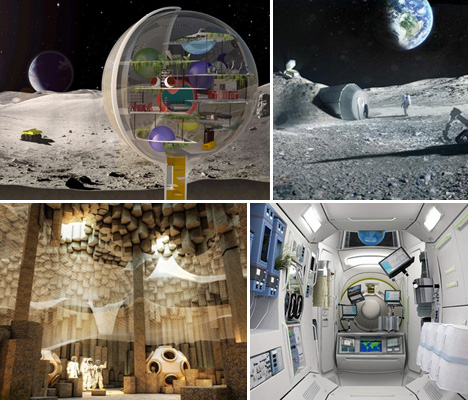
Artificial environments designed for space have thus far remained totally utilitarian, but what if more aesthetic considerations were brought into the mix? These design concepts range from constantly morphing art galleries for the International Space Station to a moon base built using existing 3D printing technology and designed by a renowned architecture firm.

Tate in Space: Cultural Center for the International Space Station
Space Architecture Tate

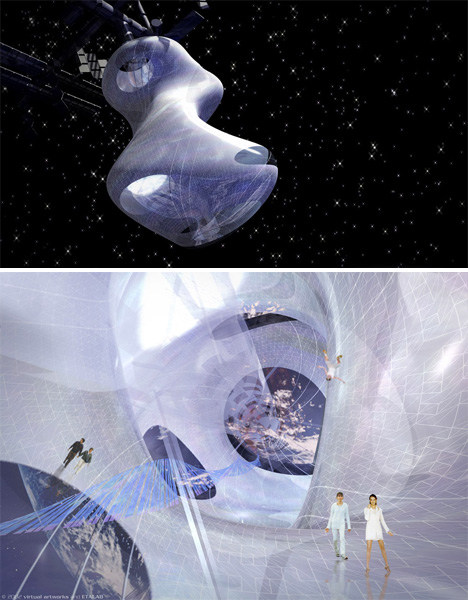
Artists, designers and other creatives haven’t exactly been included in the process of space exploration thus far, but this project by ETALAB aims to change that with an outer space gallery where artists, curators and visitors interact with works of art and architecture in zones of zero and partial gravity. Docked at the International Space Station, ‘Tate in Space’ features a flexible ‘envelope’ made from a smart material based on biomechanics that enables the space to constantly shift in shape.

Olympic Stadium for the Moon
Space Architecture Stadium

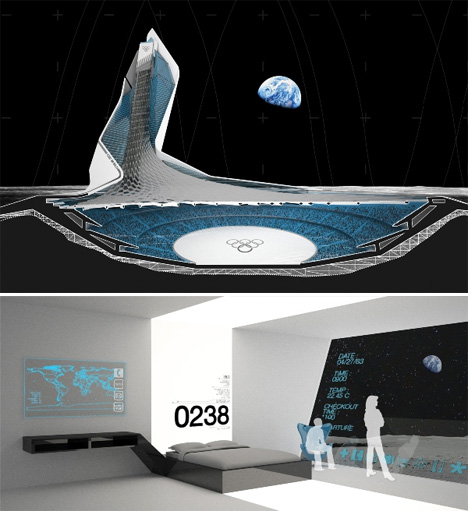
Designed as part of the ‘MARS ONE’ project that aims to start colonizing Mars and other locations in space within a matter of mere years, SILO (Stadium International Lunar Olympics) is a stadium for the moon complete with a hotel, restaurants and a solar electric system as well as seats for 100,000. The designers say, “Within the lunar colonies of the future, recreational activities will arise and evolve to take advantage of the moon’s micro-gravity. The sports we know today will be modified, and brand new sports will be invented. Lunar sports associations will be created, teams will be sponsored, games will be televised, and people from all over the globe will watch as the best of the best compete in an arena in which all the rules have changed.”

Mars Colonization by ZA Architects
Space Architecture Mars Colonization

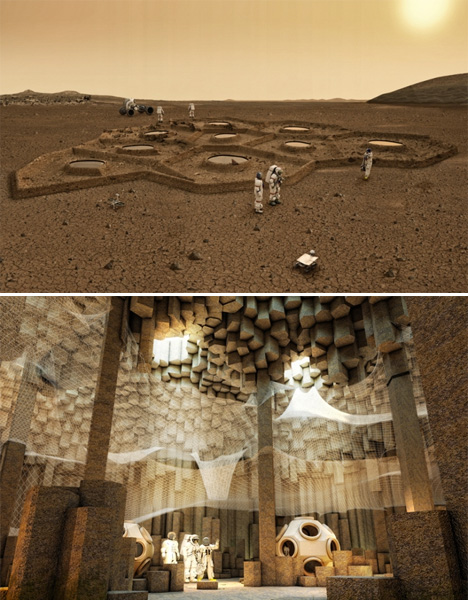
Solar-powered robots could excavate dwellings for humans on Mars before the people ever arrive in this concept by ZA Architects. Choosing areas where the basalt rock has formed into hexagonal columns, which can be easily removed to create cathedral-like spaces, the robots would weave web-like structures from basalt fibers to create floors at various levels within the caves.

Self-Assembling House for the Moon
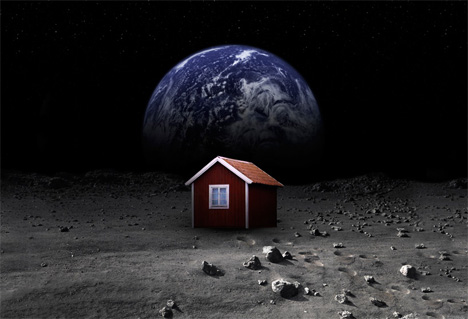
Space Architecture Self Assembling Moon

A crowd-funding initiative will send a self-assembling house to the moon in October 15th on SpaceX’s Falcon 9 spacecraft. The building, designed by American aerospace company Astrobotic, will be made from a thin sheet of specially developed cloth stretched over a carbon frame. Once it’s placed on the lunar surface, it will fill up with gas and stand erect within five to fifteen minutes.

Russian Space Station Hotel
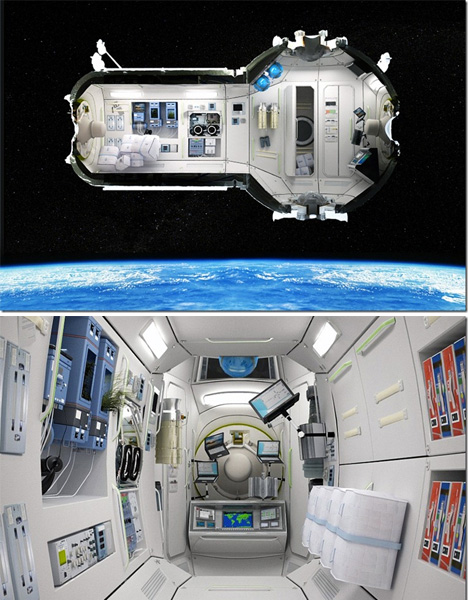
Space Architecture Hotel

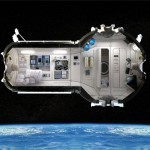
Russia’s plans for a space hotel would house seven guests in four cabins, 217 miles above the surface of the Earth. The hotel would also function as accommodations for scientists on space-related missions, and as an emergency blowhole for astronauts aboard the International Space Station. A five-day stay will set guests back $ 100,000 in addition to the half-million it costs to get to space in the first place.

Mars: Adrift on the Hourglass Sea
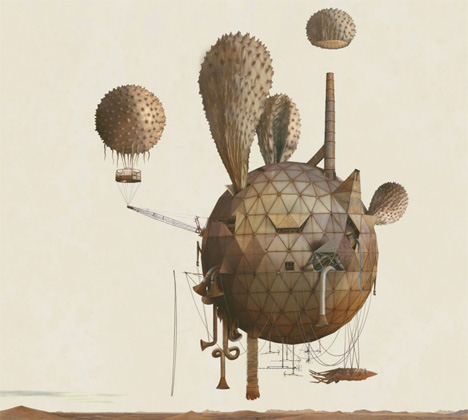
Space Architecture Adrift Mars

Space Architecture Adrift Mars 1

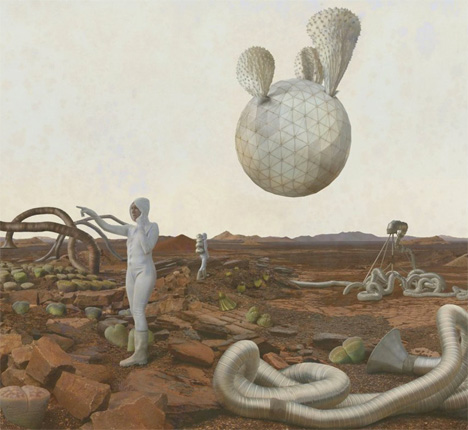
This series of fantastical images doesn’t even try to be technically correct or scientifically possible, but it was commissioned by NASA all the same to represent a vision of existence on Mars. The artists used photo-mosaic panoramas of expeditions by the rovers Spirit and Opportunity as backdrops for surreal scenes.

3D Moon Base by Foster + Partners
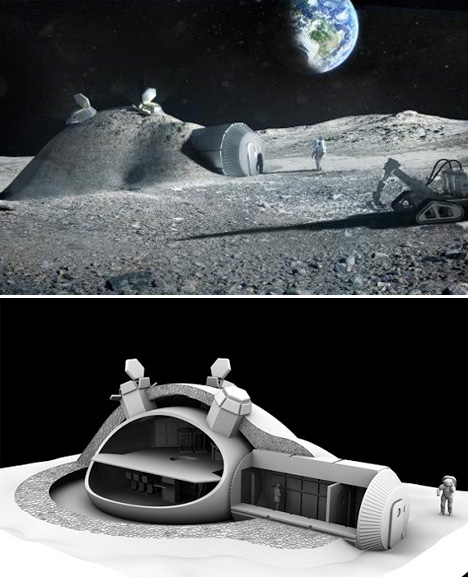
Space Architecture Foster moon

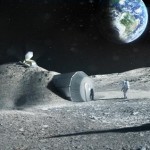
Architecture firm Foster + Partners, responsible for many iconic buildings on Earth, have designed a four-person lunar base that uses 3D printing technology to ‘print’ a protective layer of locally-sourced lunar soil over an inflatable dome. Commissioned by the European Space Agency, the project takes a look at the feasibility of actually building such a structure using currently existing technology.

Moon Dwelling by Royal Haskoning Architects
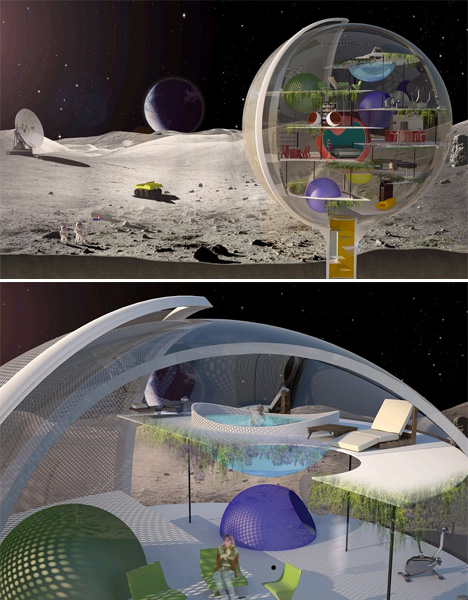
Space Architecture Royal
A transparent sphere houses living spaces for lunar residents in this concept by Royal Haskoning Architects, offering inhabitants unlimited views of the awe-inspiring setting if not a whole lot of privacy. But then again, who needs privacy when you live on the moon? A protective screen rotates around the sphere to protect the inside from the harsh rays of the sun. The sphere is envisioned as a mini-Earth with its own oxygen supply and various levels that inhabitants can simply float between rather than taking the stairs.

Martian Base by Janek Kozicki
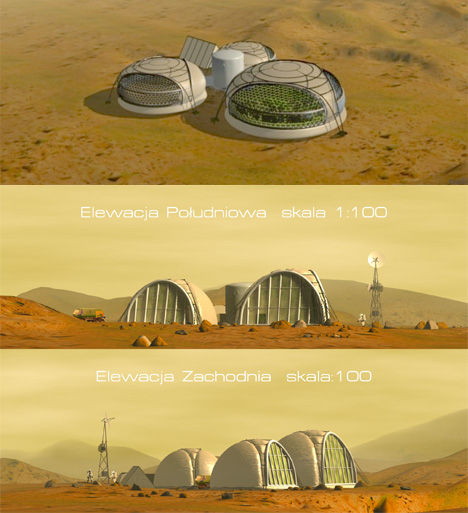
Space Architecture Janek

Husband and wife design team Janek Kozicki and Joanna Kozicka have created a number of concept designs for Martian bases generally powered by either a radio-isotope generator or a small nuclear power plant, along with practical architectural guidelines for building on other planets. The design pictured above, by Kozicki, is a modular setup that would start with a single pod and grow with subsequent trips to and from Earth to ultimately accommodate several dozen people.

Inflatable Pods by Joanna Kozicka
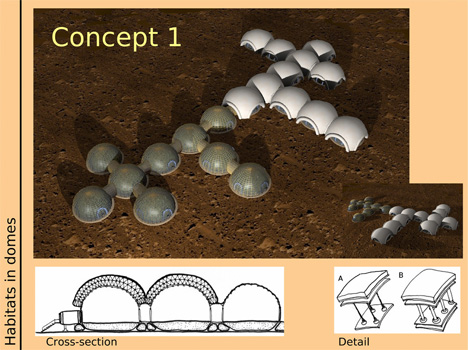
Space Architecture Inflatable Pods

Kozicka’s solutions include inflatable pods that are lightweight, easy to deploy, and ultimately offer a bigger payoff in terms of square footage for the size of the load sent to Mars. The designs address the sociopsychological problems that the couple identified in relation to living on another planet, avoiding isolated and confined environments in favor of large, comfortable spaces that let in sunlight and allow contact with nature.

Shackleton Crater Lunar Outpost
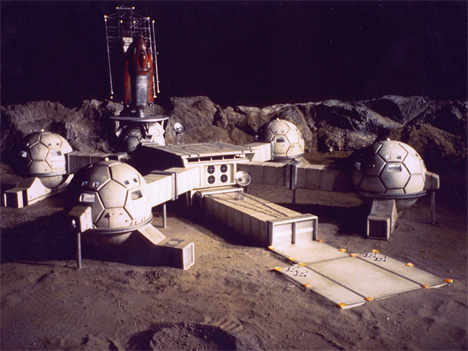
Space Architecture Shackleton Crater

NASA’s Lunar Architecture Team is working on a design for a permanent lunar outpost that could be set up the next time humans land on the moon. Designed for Shackleton Crater, located at the south pole of the moon, the habitat would consist of larger modules sent ahead of time on a cargo lander.

Luna Ring Concept
Space Architecture Luna Ring

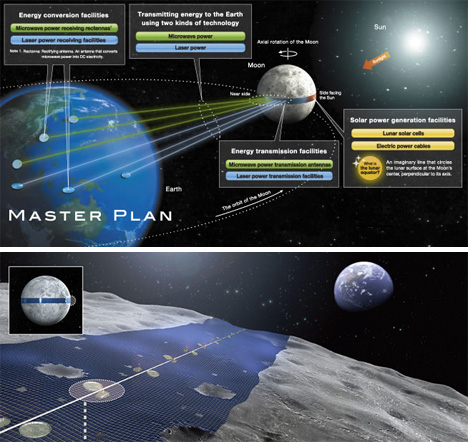
The Luna Ring concept would put permanent solar collectors around the moon’s equator like a belt, with solar cells collecting energy that would then be beamed back to Earth via microwave power transmission antennae. A team of astronauts would supervise the robot construction workers carrying out the installation process.

Fractal Lunar Architecture
Space Architecture Fractal

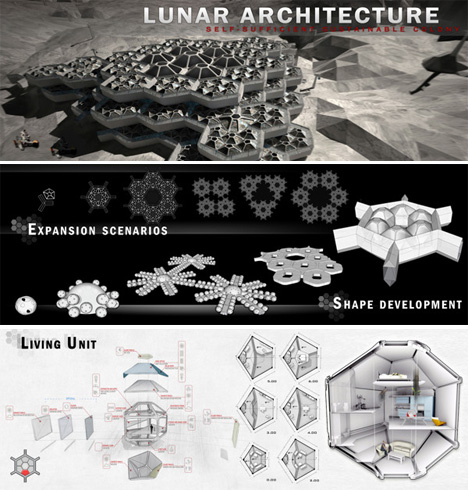
A fractal design for a lunar base by Hatem Al Khafaji of Dubai makes it easy to expand the available space as needed using a system of seven modular components of living pods, air locks, corridors and connectors. Layers of these modules would be placed around a central ‘heart’ and continuously stacked by teams of robots and human workers.

Share on Facebook


[ By Steph in Conceptual & Futuristic & Technology. ]

[ WebUrbanist | Archives | Galleries | Privacy | TOS ]


WebUrbanist

 
Comments Off on Out of This World: 13 Extraterrestrial Architecture Concepts

Posted in Creativity