RSS
 

Posts Tagged ‘work’

Toy Photography Lets Hobbyists Work While They Play

11 Jan

Chris McVeigh didn’t reach paid photography through any of the usual routes. He didn’t study photography, didn’t work as an assistant and he didn’t even have photography as a goal. His background was in writing for technology magazines and providing illustrations and animation for online advertising. It was only when the economic downturn left him with less demand from his regular employers, and more free time for creative experimentation, that he turned towards picture-taking. His images have since become regular additions to Gizmodo, they’re sold on RedBubble and Society6, and Lucasfilms has even put one of his photos on the front page of StarWars.com.

His success has been helped by the fact that Chris skirted around the competition for landscape photographs and wedding shoots. He produces a nearly unique set of pictures that he calls “toy photography.” He creates sets out of Lego figures and uses them to illustrate scenes.

Chris’s interest in Lego started as suddenly as his interest in photography. Like most people, Chris had left playing with plastic bricks in his childhood. Some friends, though, bought him some Star Wars Lego sets for Christmas… which he then ignored for about a year before assembling them.

“When I did finally break open the boxes and put them together, it was like a spark ignited within me,” Chris recalls. “However, it would be another few years and a dozen Star Wars sets before I was really hooked again.”

At the same time, Chris was playing around on Flickr, creating a series of comical self-portraits as part of a daily photo challenge. That series built an audience, won plaudits and gave him the confidence to buy his first DSLR.

breakfast

Photography: Chris McVeigh

Each Set Takes Two to Three Weeks to Build

It wasn’t long before his growing interest in photography met the fun he was then having with Hasbro Star Wars figures. Lego, though, offered a more flexible platform, with parts that were interchangeable, allowing Chris to reuse pieces from any Lego theme from Batman to Harry Potter.

The props might be toys but creating the images isn’t child’s play. Chris usually has plenty of ideas but he starts designing using a Lego CAD app called Lego Digital Designer. That allows him to experiment with the build without spreading all the bricks in front of him. Once he’s happy with the design, he creates a test build in the real world then works to optimize the parts usage.

Some designs, he says, take as little as 24 hours but most require a development of two to three weeks before they’re ready to be photographed.

The shoot is a whole different challenge. Legos’s bricks are highly reflective, especially the darker colors, says Chris, so he has to be very careful about how he uses light and where he positions his panels. It’s no surprise that he typically builds and photographs new models just once a month at the moment, although he might produce a number of models concurrently and photograph them at the same time.

The result is a mixture of whimsy and smart photography. Scenes include a version of American Gothic, a reconstruction of Michael Jackson’s Thriller video (complete with dancing zombies) and a bowl of milk filled with floating stormtrooper heads. Reconstructions of early technology, including a Leica M9-P Hermes and a (sort of) working Polaroid Land Camera are popular too.

Chris’s intention when he began creating and photographing his models was little more than to enjoy some creative experimentation. But when he uploaded them to Flickr, the pictures continued to win attention, including from buyers.

“One of Gizmodo’s editors was a contact of mine on Flickr, and was impressed both with my capacity to design my own models and my ability to present those models with my photography,” Chris said. “So he contacted me through Flickr to see if I’d be interested in contributing to Gizmodo.”

From Lego to Kozik’s Mongers Menthols

The technology website has published dozens of Chris’s pictures using them to illustrate articles about water pressure as well as explanations of the difference between GSM and CDMA. The site made a point of linking to Chris’s Web pages and even mentioned that he was able for commissioned work.

His work for Lucasfilms also came about as a result of his presence on Yahoo’s photo sharing site. Bonnie Burton, formally of the Official Star Wars blog, contacted Chris on Flickr after seeing his Star Wars action figure/chipmunk photography on Digg.

Chris isn’t the only photographer who has managed to make money setting up toys and taking their picture. Ryan Roberts paints with a slightly different canvas, using collectible figures from Japan and China’s urban vinyl toy culture that was popular in the 1990s. They might include the Kozik’s Mongers Menthols series that contained a smoking pile of poop, Domo’s Acid Sweeties, or Pete Fowler’s Monsterism.

“These figures went way beyond my childhood toys with so much color and attitude,” says Ryan on his website. “They were already tiny works of art by giant artists from other genres such as painting, illustration, silk screening, and street art.”

Ryan’s broader choice of figures gives his scenes a greater freedom of expression even if the models themselves are less familiar than the Lego characters used by Chris McVeigh. He sells his prints from his websites, has a DVD of toy-based shorts and markets a calendar of his images that costs $ 45.

What both these photographers have in common is the combination of a passion for a hobby — in this case a particular kind of children’s toy — and a knowledge of photography. Bring those two together and add the kind of photography-loving networking that can still be found on sites like Flickr and while you might not find yourself traveling down the usual route taken by professional photographers, you could well find yourself winning commissions, landing sales making some money doing a photo-based activity you love.


Photopreneur – Make Money Selling Your Photos

 
Comments Off on Toy Photography Lets Hobbyists Work While They Play

Posted in Equipment


Apple rumored to work on 5-inch iPhone with vertical dual-cam

28 Dec

According to the Japanese blog Mac Okatara, Apple might introduce a new smartphone model in 2017 with a 5″ display to slot in between the existing 4.7″ and 5.5″ variants. The report, which originates from a Taiwanese supplier, also says the new mid-size iPhone would use an iPhone 7 Plus-like dual-camera, albeit with a vertical lens alignment rather than a horizontal one.

This rumor is in line with multiple other reports which have stated that in 2017 Apple will launch three rather than two new iPhone models. Alongside updated versions of the current models with 4.7″ and 5.5″ LCD displays, a new premium model with OLED display technology is expected. This device could also feature Apple’s dual-camera technology. 

As always, this kind of rumor is best taken with a pinch of salt but we were quite impressed with the iPhone 7 Plus dual-camera in our full review and would love to see the technology integrated into a smaller form factor. We should know more by September 2017.

Articles: Digital Photography Review (dpreview.com)

 
Comments Off on Apple rumored to work on 5-inch iPhone with vertical dual-cam

Posted in Uncategorized


Handy tool helps you say no to work for ‘exposure’

16 Dec

Graphic designer Jessica Hische has developed a tool to help creatives respond to requests for work. Made with designers in mind, photographers who are frequently asked to work ‘for exposure’ or very little pay might find it appealing too. The choose-your-own-adventure style tool helps you build a letter based on the client and the proposed budget – none, very low or good. It will also help you negotiate other tricky situations like an ambiguous timeline or very quick turnaround. 

Hische’s tool creates a letter that’s polite but firm, and more than just saying ‘no,’ aims to inform the asker why creative professionals must insist on being paid for their work. It also offers terms for taking on no-budget projects for charities and friends. 

Articles: Digital Photography Review (dpreview.com)

 
Comments Off on Handy tool helps you say no to work for ‘exposure’

Posted in Uncategorized


How Shooting Photos Based on a Theme Can Improve Your Work

05 Dec

In this article we’re going to talk about how having a theme before you go out to shoot can improve your images.

I used to go out on the street, in order to find the perfect shot. Months in a row I did that. I knew that I loved this lack of control, but something didn’t match. I wasn’t as excited as I thought and even my images weren’t good enough, I couldn’t understand why.

So, I took a small break from hunting beautiful images and I started to watch how others worked. I looked at many professional photographers, to find what makes them click.

Image 001

That was when I realized my big mistake. My problem was that every time I went out, I had nothing to focus on. My eyes were looking for pictures everywhere, but my mind wasn’t able to sort out all these images. Something was missing, and that was a theme.

Taking pictures based on a theme has a lot of benefits and it can change your shooting approach in a very positive way. That’s why many photographers work like this because it makes their life much more easy and practical.

Elimination is the key

Imagine yourself in a very crowded place, let’s say a musical festival. The possibilities for images and angles are infinite. You may take pictures of the whole crowd, of a couple spending time together, or a detail on someone’s jacket. Or maybe you can take pictures of the musicians only. How can you do all these things and not get tired or confused?

Image 002

You need to remove the things that are not important for your ideas or style of shooting. Therefore, you have to know what you’re looking for before you go out to shoot.

Let’s say you decide that your theme at that music festival should be about ladies dancing. Now, you will focus all your attention only on them, taking pictures of details on their hands, clothes, etc., and mix it up with portraits and action shots. Try different angles and perspectives, because now you have something to focus on. As a result, you eliminate all the things that might get you disorganized, such as big crowds, couples, general landscapes of the festival, etc.

Elimination is the key.

You will save time

Before working on themes in my photography, I spent many hours searching for wonderful movements and scenes to capture with my camera. On an average day, I would walk in the city for eight to nine hours and shoot for only a half hour. Why? Because I didn’t know what I was looking for.

Image 003

By choosing a specific theme or subject before you go out, you will know where to look. For example, if you want to take portraits of dog owners, as a first step you can try going to the park where people walk their dogs and ask them to pose for you. On the next day, you may go at a dog grooming place, and so on.

Working on themes is a very good time-saving habit that can help you remove the gap between finding the perfect shot and actually doing it.

Targeting specific clients

Regarding the topics you may choose, your interest can grow in time. You will start to understand more about what you’re photographing and after few months, you may find yourself with a strong body of work.

Image 004

Image 005

Image 006

For example, if you have a passion for street fashion and you build a portfolio with great images on that theme, you can use that portfolio to find your future clients. You may try fashion magazines, agencies, or even online publications. Also, you can enter those images in a competition to see if they are good enough to grant you some recognition or a prize. But I don’t suggest you take pictures only for getting recognition because then you could end up working on things you may not like that much.

Theme shooting helps style development

We all think about style, it’s an artist’s signature. We want people to recognize our pictures just by looking at them and say, “These are John’s images because they look this specific way.” We want our name out there in the best way possible.

Image 007

Developing a style is a matter of time. You don’t have to fight for it because it will come by itself after years of hard work.

By working on themes and the things you care about, you’ll start to notice what things you like to photograph and how you like to do it. You will begin to understand and see yourself in your work. In this growing process, your style will evolve. It’s not a matter of conscious decision, but of knowing yourself.

If you are in a hurry to stamp your work with your style, then find a theme you are interested in and photograph that. You can’t go wrong.

Conclusion

So if you feel like your work isn’t progressing and you’re stuck, try shooting around a theme for a while. See how it helps you focus, improve your style and in the end become a better photographer.

Please share your thoughts and questions in the comments below.

googletag.cmd.push(function() {
tablet_slots.push( googletag.defineSlot( “/1005424/_dPSv4_tab-all-article-bottom_(300×250)”, [300, 250], “pb-ad-78623” ).addService( googletag.pubads() ) ); } );

googletag.cmd.push(function() {
mobile_slots.push( googletag.defineSlot( “/1005424/_dPSv4_mob-all-article-bottom_(300×250)”, [300, 250], “pb-ad-78158” ).addService( googletag.pubads() ) ); } );

The post How Shooting Photos Based on a Theme Can Improve Your Work by Cosmin Cimil appeared first on Digital Photography School.


Digital Photography School

 
Comments Off on How Shooting Photos Based on a Theme Can Improve Your Work

Posted in Photography


How to Look at Other Photographers’ Images to Improve Your Work

04 Aug

When you’re starting out in photography, it’s quite easy to become obsessed with getting critique and feedback on own work to help you improve. Your peers may suggest a different crop, highlight issues with composition, and help you along your journey with camera settings and post-production techniques. Receiving feedback from your peers also provides a fantastic forum for you yourself to ask questions about specific items that have been brought up in discussion, and clear up any little issues that you may have.

While these are always very helpful methods of improving your photography, they are not the only ways. Another method is to simply look at others photographers’ work and ask yourself questions about it. You can even share websites of other photographers on social media, where you and many of your peers can have fantastic discussions about the work. Here are some tips for learning by reviewing other photographers’ work.

Fig.4

Discussion Points

Some great topics to discuss may be:

How do you think the photograph was made?

For help on this read: 4 Steps on How to Read Images and Learn to Replicate the Results

We all like to discuss camera settings and possible post-production techniques, so this is an important question to ask. Reverse-engineering an image will help you understand how the photograph was made, and give you a better insight. It will help you replicate a particular technique for you to try on your own.

Fig.2

What compositional techniques have been used?

How has the photographer composed the image? Have they used the Rule of Thirds (or as I like to call it, the Guide of Thirds!) or is the subject in the centre of the frame? How has the composition and placement of the subject helped the photograph? From what vantage point have they photographed the subject – straight on, from up above looking down, or down low looking up? How does this vantage point influence the impact of the subject (looking down on someone makes them look more vulnerable, for example).

Fig.6

How does the photo make you feel?

What emotions does the image evoke in you, and why does it make you feel that way? For example, if the image has a blue colour-cast, this could make you feel cold. Or does the image have a lot of vibrant, warm colours which can make you feel warm and happy? How does the composition techniques employed affect how you feel?

For this, if the image has been photographed from above looking down, the viewer will feel more powerful where the subject will look more vulnerable – it is the opposite if the photograph has been taken from down low looking up.
Is the image confronting? Knowing how you feel about and image and why, are very important for you to be able to achieve the same result in your own work.

Fig.1

What elements have been included in the frame?

Has the photographer kept the frame clear of any distractions and gone for a minimalist look, or have they included extra elements in the frame? How do these elements work together with the subject; do they complement it, or do they clutter the frame and distract from the subject?

What is the light like?

Discussing the light will help you see light better in your own work. Is the light hard or soft? To answer this, look for the shadows; the more defined a shadow is the harder the light (sunny day versus overcast day). How much light is there, and in what direction is it coming from? The direction of the light will influence the shape and form of a subject, as well as its colour. For example, if an object is backlit, this can create a silhouette.

Fig.3

Places to Look for Images

Now that you have a list of discussion topics, it’s time to look around for some images to discuss! The internet is full of fantastic websites where you can view the work of other photographers. Websites such as 500px.com, 1x.com and Flickr all have some fantastic images, that span a wide range of genres.

Here is a list of some websites, and photographers, that I often look at: (this list is by no means exhaustive!)

  • Getty Images: fantastic collection of sport, editorial, and entertainment images photographed by some of the world’s best photographers.
  • Time Lightbox: nice collection of images and projects from Time Magazine. The content often changes, so it’s always a good idea to check often.
  • Instagram: I’m not going to give you a list of accounts to follow, but Instagram as some fantastic photographers on it sharing some amazing work. Follow dPS on Instagram here.
  • Adam Pretty: an Australian sports photographer.
  • Trent Parke: an Australian documentary photographer. His style is something that I often like to incorporate in to my own work. He is also a member of Magnum Photos.
  • Clive Brunskill: a UK based sport and commercial photographer and someone I have been luck enough to work with.
  • James Nachtwey: the world’s best documentary and war photographer. He has taken some amazing images across his almost 30-year career!
  • Vladimir Rys: European sports photographer. I really like his style of photographing through objects.
  • Rob Cianflone: Australian based photographer with Getty Images.
  • Quinn Rooney: Australian based photographer with Getty Images.
  • Al Bello: Getty Images Chief Sports Photographer – North America.

Editor’s note: you can also come join the new Digital Photography School Facebook group where we encourage lots of images sharing and commenting. 

Fig.5

Over to You

While feedback on your own work is important, in many ways looking at other photographers’ work will help you more. These are just a few suggestions on what you can discuss about an image, and where to look for images, and they are by no stretch of the imagination exhaustive!

Do you have a favourite place to look at images? It would be great to hear about them in the comments below.

googletag.cmd.push(function() {
tablet_slots.push( googletag.defineSlot( “/1005424/_dPSv4_tab-all-article-bottom_(300×250)”, [300, 250], “pb-ad-78623” ).addService( googletag.pubads() ) ); } );

googletag.cmd.push(function() {
mobile_slots.push( googletag.defineSlot( “/1005424/_dPSv4_mob-all-article-bottom_(300×250)”, [300, 250], “pb-ad-78158” ).addService( googletag.pubads() ) ); } );

The post How to Look at Other Photographers’ Images to Improve Your Work by Daniel Smith appeared first on Digital Photography School.


Digital Photography School

 
Comments Off on How to Look at Other Photographers’ Images to Improve Your Work

Posted in Photography


10 Pro Tips to Design a Killer Mood Board to Present Your Work

28 Jun

When you’re working on a design or photography project for a client, a mood board can be one of the best ways to get your vision across. A mood board is essentially a collage of things that inspired you for this particular project. They can help you really nail down the look and feel of your work, and make sure Continue Reading

The post 10 Pro Tips to Design a Killer Mood Board to Present Your Work appeared first on Photodoto.


Photodoto

 
Comments Off on 10 Pro Tips to Design a Killer Mood Board to Present Your Work

Posted in Photography


10 Pro Tips to Design a Killer Mood Board to Present Your Work

20 Jun

When you’re working on a design or photography project for a client, a mood board can be one of the best ways to get your vision across. A mood board is essentially a collage of things that inspired you for this particular project. They can help you really nail down the look and feel of your work, and make sure Continue Reading

The post 10 Pro Tips to Design a Killer Mood Board to Present Your Work appeared first on Photodoto.


Photodoto

 
Comments Off on 10 Pro Tips to Design a Killer Mood Board to Present Your Work

Posted in Photography


No Place (to Work) Like Home: 15 Extraordinary Office Designs

21 Apr

[ By Steph in Design & Furniture & Decor. ]

shoffice main

Warning – your cramped, cluttered cubicle might seem even more soulless than usual compared to the magnificence of these beautifully appointed home offices, some with all glass walls overlooking the ocean, others set into the backyard for privacy and connection to nature. From prefab pods to brilliant DIY creations, these unusual home office designs make the prospect of working feel downright pleasant.

Office In Flight
home office flight 1

home office flight 2

home office flight 3

A wing of this vacation house in the woods of California lifts up into the air as if it’s about to take off, its glass walls the only thing separating the home office inside from the natural surroundings.

Park-Like Office with Swing Table & Moss Carpet
home office park 1

home office park 2

hoem office park 3

home office park 4

When you can’t actually take your work outside, you can just feel like you’re outdoors with a little creative decorating. Nidolab Arquitectura outfitted this home in Argentina with a hanging table and real moss floor covering in lush green hues, illuminating the whole thing with natural daylight via an oversized skylight.

Lush Ivy-Covered Backyard Office
Home office backyard ivy

home office backyard ivy 2

You can barely even tell there’s a building under all of the ivy that’s been trained to grow up trellises on the outside of this gorgeous backyard office in San Francisco. ‘Parkside Garden’ by Scott Lewis Landscaping Architecture creates a visual link between the main house on the property, and the adjacent public park.

Vintage Ikarus Bus Turned Office Cube
Home office vintage bus

home office vintage bus 2

home office vintage bus 3

The cab of an old Ikarus bus was cut in half and inserted into the corner of a living room to create a tiny enclosed home office in Hungary. The owner spruced up the vintage find and added a corner desk to the interior to make it a cozy place for concentration.

Shingled Spherical Office Pod
hoem office sphere

home office sphere 2

This shingled orb by Archipod looks like it could have fallen right out of a massive tree and into the backyard. Each one of these luxury prefabs comes equipped with porthole windows, top-hinged gull doors, electrical hookups, a semicircular interior desk, lighting and a heater.

Next Page – Click Below to Read More:
No Place To Work Like Home 15 Extraordinary Office Designs

Share on Facebook


[ By Steph in Design & Furniture & Decor. ]

[ WebUrbanist | Archives | Galleries | Privacy | TOS ]


WebUrbanist

 
Comments Off on No Place (to Work) Like Home: 15 Extraordinary Office Designs

Posted in Creativity


Work Perks: These 13 Offices Are Way More Fun Than Yours

01 Dec

[ By Steph in Design & Fixtures & Interiors. ]

fun offices main

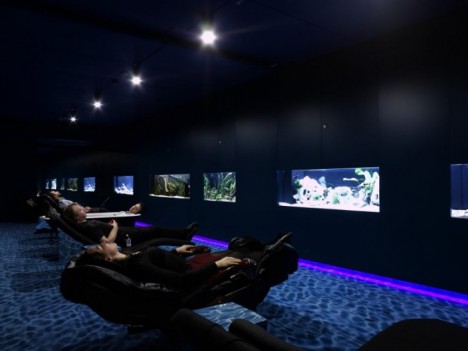
Maybe you wouldn’t grumble about going back to work on Mondays if your office had putting greens and slides, meetings were held in tree houses, and you could work from ski lift pods or ball pits. Some of the perks at the world’s most fun workplaces – mostly made up of tech companies, natch – include three free meals a day, nap areas, fish tank relaxation rooms, full bars, arcades, skate ramps and spiraling slides worthy of theme parks.

Chartboost
fun offices chartboost 2

fun offices chartboost 3

fun offices chartboost 1

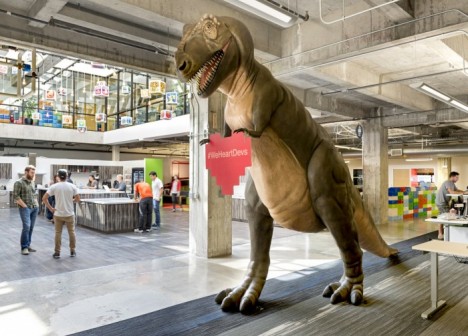
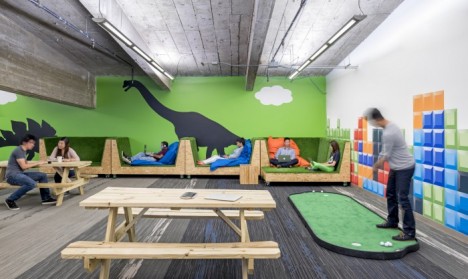
Based in San Francisco, the world’s largest games-only technology platform worked with Blitz Architecture to create a fun, interactive environment for employees and visitors alike. Chartboost’s headquarters include a ‘photo op’ wall with an 11-foot-tall dinosaur, a game room with a ball pit and a giant LEGO wall, and five conference rooms with classic game themes like Donkey Kong, Super Mario and the Legend of Zelda.

Red Bull
fun offices red bull swings

fun offices red bull skate ramp

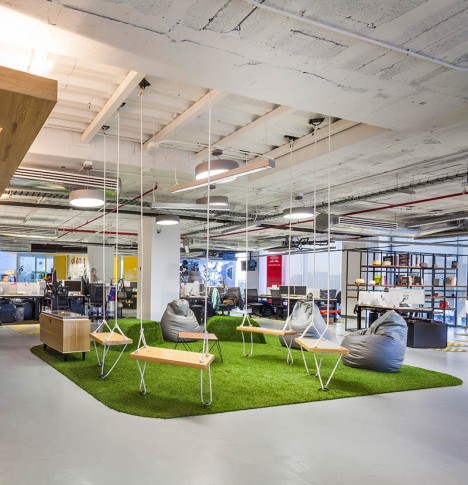
Red Bull’s Mexico City office boasts a grassy hangout spot full of swings for meetings, while the Santa Monica location features an incredible skate ramp that runs through the entire interior.

Missing Link
fun offices missing link 1

fun offices issing link 3

fun office smissing link 2

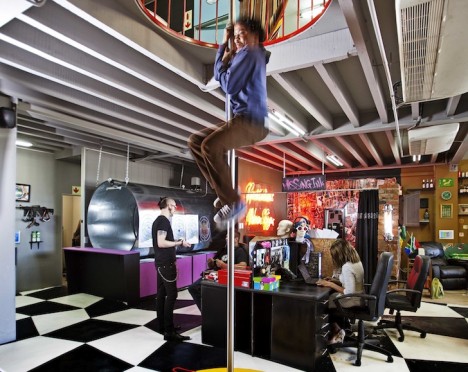
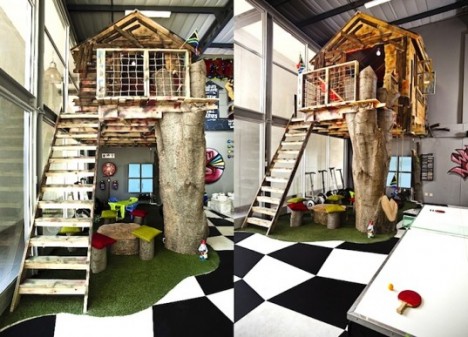
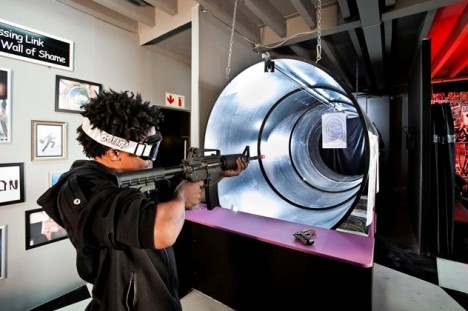
South Africa’s Missing Link, a presentation strategy company, sourced salvage materials to put together a fun and imaginative office in just six weeks. The results include a treehouse, fire pole, playground slide, shooting range and caravan.

YouTube
fun offices youtube 1

fun offices youtube 2

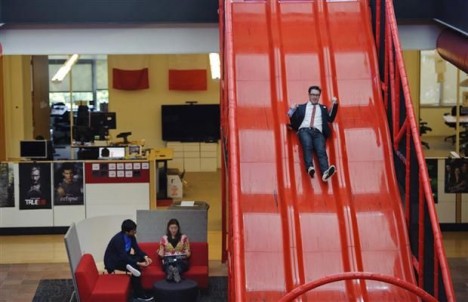
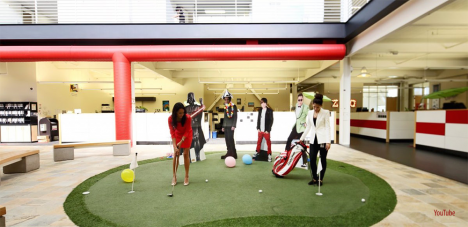
YouTube’s main headquarters in San Bruno, California mixes work and play with a massive red slide, a putting green, an Olympic-sized swimming pool, nap pods and bicycles and scooters to get around the sizable complex.

Google
fun offices google zurich

fun offices google zurich 2

fun offices google zurich 3

fun offices google zurich fish tank

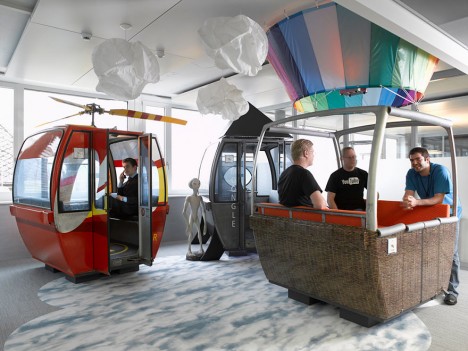
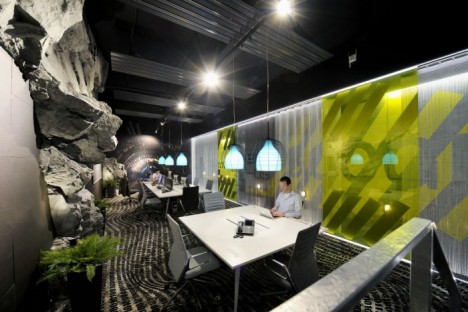
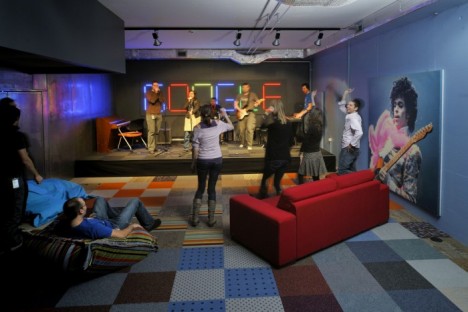
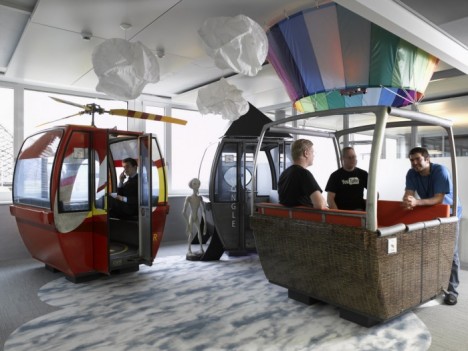
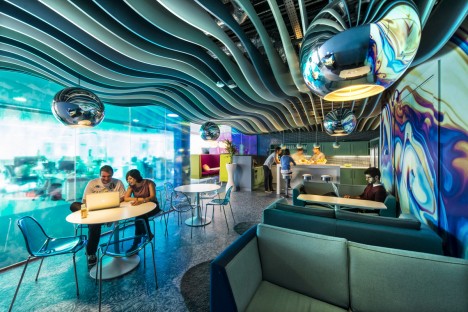
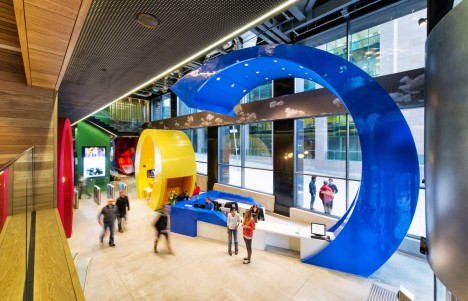
Google is renowned for having not only an enviable range of employee perks, but also some incredibly creative work environments at their offices around the world. The Zurich location is particularly noteworthy with its fish tank relaxation room, ski lift work pods, slides, karaoke room and multiple game rooms.

Next Page – Click Below to Read More:
Work Perks These 13 Offices Are Way More Fun Than Yours

Share on Facebook


[ By Steph in Design & Fixtures & Interiors. ]

[ WebUrbanist | Archives | Galleries | Privacy | TOS ]


WebUrbanist

 
Comments Off on Work Perks: These 13 Offices Are Way More Fun Than Yours

Posted in Creativity


The Beauty of Serious Work

29 Sep

Mensch bei der Arbeit.

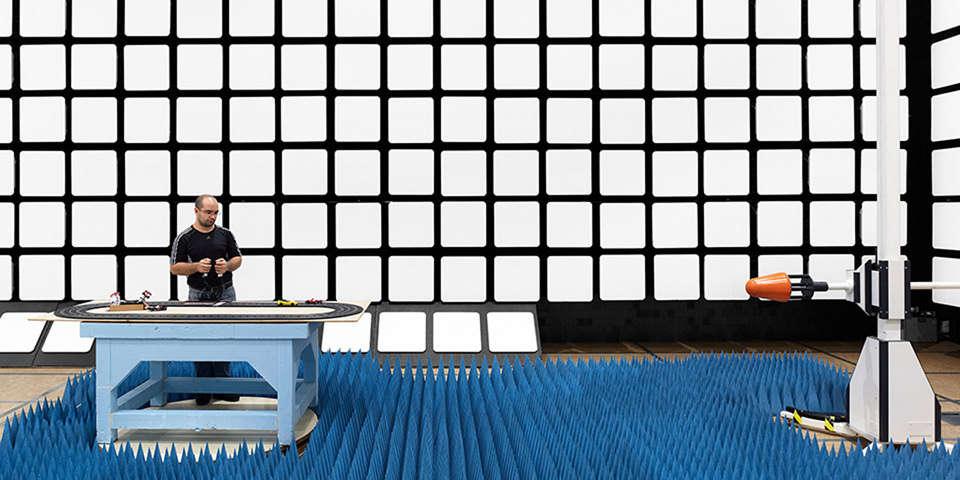
Andreas Meichsner dokumentiert in seiner Serie „The Beauty of Serious Work“ Prüfvorgänge beim deutschen TÜV in Nürnberg. Wir stellen seine Serie vor, die nicht nur über den Charme der Norm informiert, sondern auch die gesellschaftliche Bedeutung von Sicherheit hinterfragt.
kwerfeldein – Fotografie Magazin | Fotocommunity

 
Comments Off on The Beauty of Serious Work

Posted in Equipment