RSS
 

Posts Tagged ‘wonders’

7 Top-Secret Architectural Wonders of the World

15 Apr

[ By Steph in 7 Wonders Series & Global. ]

Secret Architecture Main

Bunkers under luxury hotels, wartime factories hidden beneath fake neighborhoods and vast systems of intricately decorated tunnels just beyond humble houses are among the many incredible architectural wonders just out of sight. Often built for top-secret purposes like manufacturing weapons or housing important officials during attacks, these complex and fascinating facilities went undiscovered for decades.

America’s Top-Secret Atomic Cities

Secret Architecture Oak Ridge 1

Secret Architecture Oak Ridge 2

Secret Architecture Oak Ridge 3

“What you see here, what you do here, what you hear here, when you leave here, let it stay here.” So say posters and billboards that were once posted all over Oak Ridge, Tennessee, one of the United States Government’s three secret cities that toiled away on The Manhattan Project: atomic bombs that would soon devastate two cities in Japan. 75,000 employees lived and worked in Oak Ridge with absolutely no idea what they were actually party to. Their town wasn’t even on the map, and visitors were restricted. They didn’t find out the exact nature of their work until the infamous atomic bombings of Hiroshima and Nagasaki, in the final stages of World War II in 1945.

Oak Ridge joined Los Alamos, New Mexico and Richland, Washington as a major research and development site producing fissionable materials for nuclear weapons. Employees brought in from other areas of the country were screened with lie detector tests. There were so many of them in this small town with a former population of just 3,000, the government had to house them in temporary huts. Hundreds of photos of life inside Oak Ridge were captured by Ed Westcott, the only government-authorized photographer during the Manhattan Project. The American Museum of Science and Energy has published them on Tumblr.

Britain’s Secret Underground City of Burlington

Secret Architecture Burlington 1

Secret Architecture Burlington 2

You’d never guess that below a charming historic market in Wiltshire, England is an entire underground city inside a system of limestone caves. And it’s not dank and primitive. Built in the 1950s to house 4,000 central Government employees during a nuclear strike, the mile-long facility with sixty miles of roadways has kitchens, laundry facilities, its own pub and even a communications hub from which the Prime Minister would have addressed the nation in the event of a real attack.

The Burlington Bunker can withstand bombs, radiation and poison gas, and was designed to sustain its inhabitants for a three-month stretch. In fact, it boasted an underground lake (now drained) to provide fresh water, and a secret rail line from London for the English Royal Family.

No one knew about the existence of Burlington until 2004, when it was decommissioned. See photos, videos and maps at BurlingtonBunker.co.uk.

The Fake Washington City Hiding Boeing’s Wartime Plant

Secret Architecture Boeing Plant 2

Secret Architecture Boeing Plant 2-2

Anticipating the possibility of a direct attack on its most important facilities during World War II, Boeing didn’t want to take its chances with vast factory roofs that would be clear from the air. So at the Seattle facility known as Boeing Plant 2, the company created a surprisingly convincing form of camouflage in the form of a fake neighborhood. Blending in fairly well with its surroundings, the plant was covered in streets, trees and plywood shells of houses. A Hollywood set designer was brought in to make sure the housing development looked as realistic as possible. Boeing Plant 2 helped turn Seattle into a boomtown for technology, and the bombers built there helped win the war.

Luckily, the ploy was never tested. After the camouflage was removed, the factory sat empty and abandoned for decades before it was demolished in late 2010.

Secret Society in the Catacombs of Paris

Secret Architecture Paris Catacombs

The Catacombs of Paris are mysterious enough on their own, an underground ossuary holding the remains of about six million people connecting to a larger system of tunnels throughout the city. But in 2004, they became even more intriguing as police discovered that they were in use as a hidden lair complete with an underground cinema. Using pirated electricity, the 3,000-square-foot space even had a security system mostly made up of recorded barks of guard dogs. What the cops first thought was a bomb later turned out to be a couscous maker. Once their hideout was discovered, those responsible for it came back in the night to claim their equipment, wiring and booze. Parisians wondered what secret society could possibly have ben using the space, with news outlets theorizing “extreme right-wing” connections.

The truth is not quite so dramatic, though no less interesting. An anonymous group of Parisian underground explorers calling themselves LMDP built the cinema and other areas nearby over a period of 18 months starting in 1999, and screened Urbex movies for audiences of twenty to thirty people. The main point was escaping the realities above the surface, holding free events for those in the know. Read the whole story at Gizmodo.

Next Page:
7 Secret Architectural Wonders Of The World

Share on Facebook


[ By Steph in 7 Wonders Series & Global. ]

[ WebUrbanist | Archives | Galleries | Privacy | TOS ]


WebUrbanist

 
Comments Off on 7 Top-Secret Architectural Wonders of the World

Posted in Creativity


7 Destroyed Architectural Wonders of the Modern World

08 Apr

[ By Steph in 7 Wonders Series & Global. ]

Destroyed Architecture Main

We hear so much about the vanished wonders of the ancient architectural world, it’s easy to forget about those of our more recent history, from the 19th century to the present. These train stations, palaces, monuments and skyscrapers may not be as grand and dramatic as the Colossus of Rhodes and the Hanging Gardens of Babylon, but each of them represents the loss of an icon. Whether by fire, war, demolition or terrorist attacks, these 7 destroyed architectural wonders may be gone, but they remain important symbols of our cultural heritage.

Old Penn Station, New York City

Destroyed Architecture Penn Station

Just one of many historic New York City buildings that have vanished, the original Pennsylvania Station was a pink granite structure inspired by Roman and Greek architecture, occupying two city blocks from Seventh Avenue to Eighth Avenue and from 31st to 33rd Streets. It covered an area of 8 acres, and featured a cavernous concourse. Inspired by the Roman Baths of Carcalla, the main waiting room was the largest indoor space in New York City at 150 feet in height, and one of the largest public spaces in the world. It served as a spectacular entrance to the city, with dozens of passenger trains arriving and departing each day for cities like Chicago and St. Louis.

Its grandiosity couldn’t save it from the onward march of progress, however. By the late 1950s, intercity rail travel declined dramatically. Plans for a new Penn Station, which is now the busiest passenger transportation facility in the United States, were announced in 1962; demolition on the old building began in 1963, making way for Madison Square Garden. The cost of maintaining the building had become prohibitive. Three eagles statues from the station were salvaged and remain in the city, including two in front of the Penn Plaza and Madison Square Garden complex.

The Crystal Palace, London

Destroyed Architecture Crystal Palace London 2 Destroyed Architecture Crystal Palace London

Built in Hyde Park, London to house the Great Exhibition of 1851, The Crystal Palace was a cast iron and plate glass building measuring 990,000 square feet. It hosted more than 14,000 exhibitors from around the world, displaying examples of the latest technology. The building was rebuilt even larger when the exhibition was over, in a residential area beside Sydenham Hill, to become a ‘winter park and garden under glass.’ It boasted two towers and a number of fountains with over 11,000 jets, and soon became the world’s first theme park with a rollercoaster, cricket matches and other entertainment. The gardens even had a prehistoric swamp with models of dinosaurs, just thirty years after the existence of these creatures was discovered.

But times were hard, and the owners had difficulty making enough money to keep the Palace running. It fell into financial ruin and underwent a series of misfortunes including wind damage and fires. It was declared bankrupt in 1911. In 1936, another fire broke out, this one catastrophic, and the building could not be saved. The grounds have been used for various purposes since then, and in 2011, it was announced that the Crystal Palace Football Club would build a new stadium and athletic track there.

Königsberg Castle, East Prussia

Destroyed Architecture Konigsberg Castle

With its beginnings in the 13th century and a great expansion in the 1700s, Köningsberg Castle was an important landmark in the East Prussan capital of Königsberg (Kaliningrad) for centuries. What began as a fortress was later designated a castle, home to the Grandmasters of the Teutonic Order and then various Prussian rulers. It featured a gothic tower stretching 328 feet into the air, with 284 steps to the top. It contained an extensive library as well as a palace church. By the 20th century, many rooms were turned into a museum full of art and provincial archives.

The region was plunged into disorder and violence during World War II, and the city was bombed in a series of air raids by the Soviet Air Force, mainly in retaliation for the German bombing of Moscow. More than 90% of the city, including the castle, was destroyed by 1945, and the German population was forced out of the city by the occupying Soviets. Under their rule, the city became Kaliningrad. While the ruins of the castle’s stone walls still stood for decades, they were ultimately blown up in 1968. The site of the castle is now the city’s main square.

Pearl Monument, Bahrain

Destroyed Architecture Pearl Monument

Erected in 1982 in honor of Bahrain’s first time hosting the Gulf Cooperation Council, the Pearl Monument featured six ‘sails’, representing the member nations of the council, supporting a pearl, which symbolized those nations’ shared heritage and Bahrain’s history of pearl cultivation. It was built in the center of Pearl Roundabout, located near the city of Manama’s financial district.

In 2011, the monument became central to the Bahraini uprising. Several thousand demonstrators set up tents  and obstructed traffic in the roundabout to protest the first fatality of the uprising, and police soon cracked down, killing at least four more civilians. Tanks were deployed to disperse the demonstrators, and while the Prince of Bahrain urged the government to allow peaceful protest, the camp was bulldozed and set on fire. The government tore down the Pearl Monument, stating that it had been “desecrated” by the protests and had to be “cleansed.”

Next Page:
7 Destroyed Architectural Wonders Of The Modern World

Share on Facebook


[ By Steph in 7 Wonders Series & Global. ]

[ WebUrbanist | Archives | Galleries | Privacy | TOS ]


WebUrbanist

 
Comments Off on 7 Destroyed Architectural Wonders of the Modern World

Posted in Creativity


7 Monumental Abandoned Wonders of Military Architecture

05 Mar

[ By Steph in Abandoned Places & Architecture. ]

Abandoned Military Main

Rusted sea forts, top-secret submarine bases, sprawling military hospital complexes and entire islands still stand as silent reminders of wars long past, from Ukraine to New York’s Hudson River. These seven monumental wonders of abandoned military architecture are steeped in history, often still littered with decommissioned aircraft and pieces of weaponry.

RAF Stenigot, England

Abandoned Military RAF Britain

Abandoned Military RAF Britain 2

(images via: urban spaceman)

Massive, alien-looking radar dishes litter the landscape at RAF Stenigot, a World War II-era radar station in Lincolnshire, England. Part of the Chain Home radar network, which was intended to provide long range early warning for raids, the site continued to serve for other communication purposes after the war and was decommissioned in 1980. Most of it was demolished by 1996, but four tropospheric scatter dishes still remain, along with a few other structures.

Russian Island Base in the Sea of Japan

Abandoned Military Soviet Base Japan

Abandoned Military Soviet Base Japan 2

(images via: english russia)

A small horseshoe-shaped island in the Sea of Japan that was once the setting of a war over its gold resources, Askold has been abandoned for decades. In 1892, the Headquarters of the Vladivostok Fortress created a permanent observation post there, and it became a point of tension between Russia and Japan. The island is cluttered with the remains of what little was built or left behind – the base of a long-gone pier, derelict lighthouses, rusted artillery, a power station, a command post, barracks and a handful of vehicles.

The island has never been inhabited, and is rarely visited by tourists due to the difficulty of reaching it from the mainland. Unused since World War II, much of the infrastructure has crumbled, and one part of the island is now inaccessible after the collapse of a bridge. Though it was once a place of war, Askold is now remarkably peaceful – and still, incidentally, full of gold.

Beelitz Heilstätten Military Hospital, Berlin

Abandoned Military Beelitz 1


Abandoned MIlitary Beelitz 2

(images via: arcanum, studiospecialplace, 28dayslater)

This beautiful abandoned 19th century sanitarium complex located in Beelitz, just outside Berlin, was used by the Germans as a military hospital through the second World War and then occupied by the Russians for the same purpose until 1995, well after the German reunification. It was abandoned altogether in 2000. Surrounded by pine woods, the hospital complex consists of about 60 buildings including a surgery, psychiatric ward and rifle range. Its most infamous patient is none other than Adolf Hitler, who recuperated there after an injury sustained in World War I in 1916.

Some of the buildings have been painstakingly restored by a German preservation group, but most of them are left to ruin. It’s a popular destination for urban explorers in the area, but of course, not everyone goes there just to enjoy the bittersweet beauty of such an ornate decaying complex. In 2008, a photographer lured a model to the abandoned operating theater for a photo shoot, and murdered her. Its dark history also includes a period before it was abandoned when a serial killer known as The Beast of Beelitz began to terrorize local women connected to the sanatorium, strangling them with pink lingerie.

People who live in or near the restored buildings do so with caution. Local architect Michael Wetzlaugk bought and converted one of the outbuildings to live with his family, but stresses that he and his son are accomplished marshal artists with a collection of exotic weapons.

Share on Facebook


[ By Steph in Abandoned Places & Architecture. ]

[ WebUrbanist | Archives | Galleries | Privacy | TOS ]


WebUrbanist

 
Comments Off on 7 Monumental Abandoned Wonders of Military Architecture

Posted in Creativity


7 Abandoned Wonders of Residential Architecture

19 Feb

[ By Steph in Abandoned Places & Architecture. ]

Abandoned Homes Main

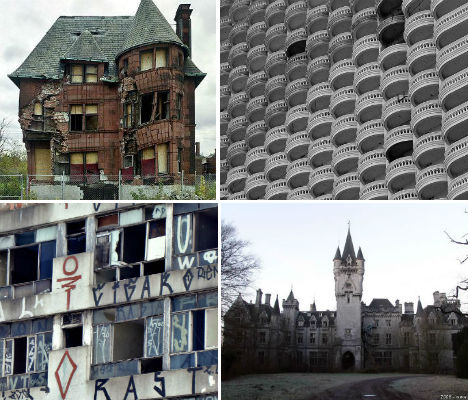
Palatial chateaus, ordinary suburban homes, skyscraper residences and vertical slums alike have been abandoned by their human inhabitants and given over to rot and ruin. Whether they represent once-opulent refuges for the rich or some of the most shocking conditions of abject poverty in the world, these 7 ghostly abandoned wonders of residential architecture are deliciously creepy and strangely beautiful, if a bit sad.

Chateau de Noisy, Belgium

Abandoned Homes Chateau de Noisy 2

Abandoned Homes Chateau de Noisy 1

(images via: polanri)

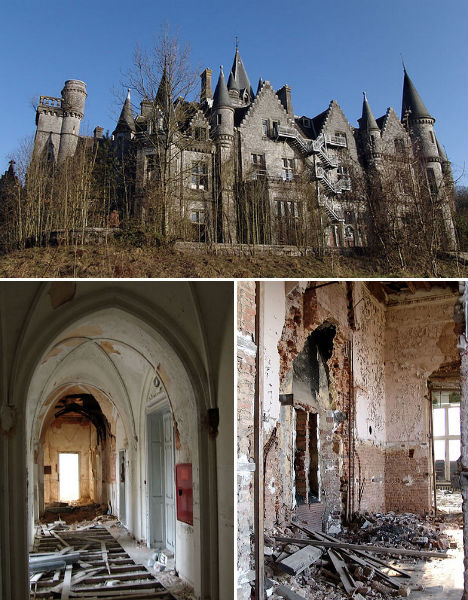
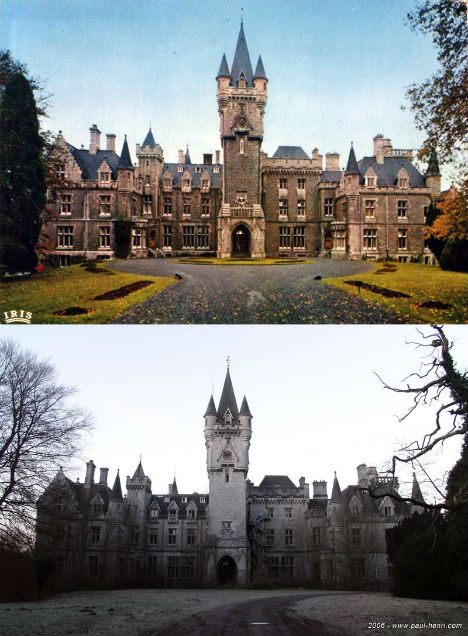
Officially named Chateau Miranda, this neogothic castle was built in 1866 by an English architect who passed away before it was completed. It served as a summer residence for a wealthy family until it was commandeered by Nazis during World War II. For decades afterward, Chateau Miranda operated as a hotel and accommodation for children of Belgian road employees, but in 1991, a fire led to its abandonment. Since then, it has been given over to decay.

Touring the dilapidated chateau is fairly dangerous, as most of the upper floors have decayed and fallen through. It’s a shame to see something that was once so beautiful fall into ruin. Urban explorers give a firsthand account of sneaking in and taking some beautiful photos of the interior at TalkUrbex.com.

Sathorn Unique Skyscraper, Thailand

Abandoned Sathorn Unique Skyscraper 2 Abandoned Sathorn Unique Skyscraper 3 Abandoned Sathorn Unique Skyscraper 1

(images via: abandonedjourney.com, earth-bound misfit)

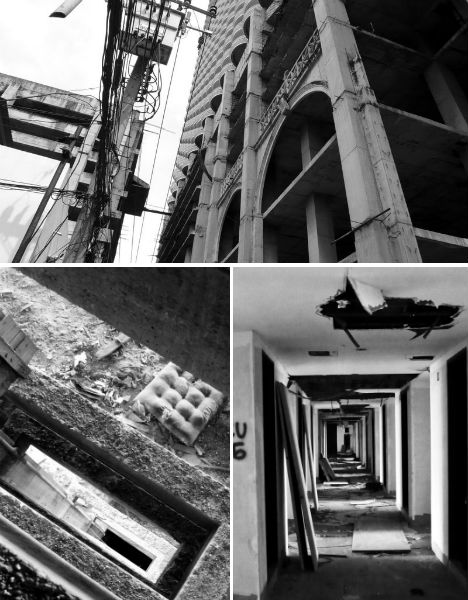
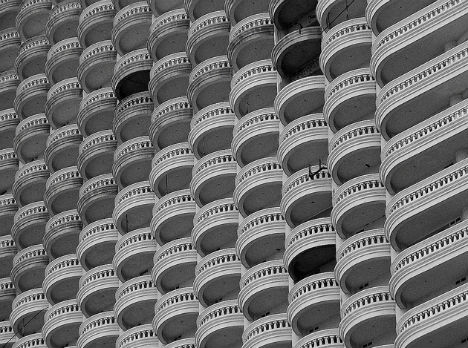
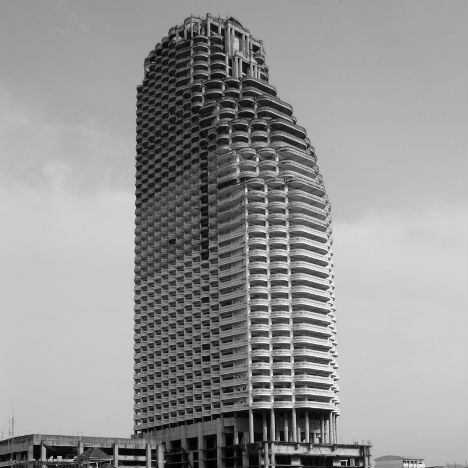
The 47-story Sathorn Unique Tower was supposed to be a well-appointed modern residence for well-to-do citizens of Bangkok, Thailand. Now, it’s a ghost tower, standing eerily empty and silent against the skyline of the city, its concrete surfaces already stained and rusted. Developers built this and many other skyscrapers in Bangkok during an economic boom, but fortunes fell, the developers went bankrupt, and the buildings stand empty. During storms, debris from the structures rain down upon the streets below. Inside, it’s virtually pitch black, and exposed metal pipes and frames should make explorers wonder when they last had a tetanus shot. At the top, however, it’s easy to see why this would have become one of the city’s most prestigious addresses.

Abandoned Prince’s House, Russia

Abandoned Homes Russian Prince 1 Abandoned Homes Russian Prince 2 Abandoned Homes Russian Prince 3

(images via: english russia)

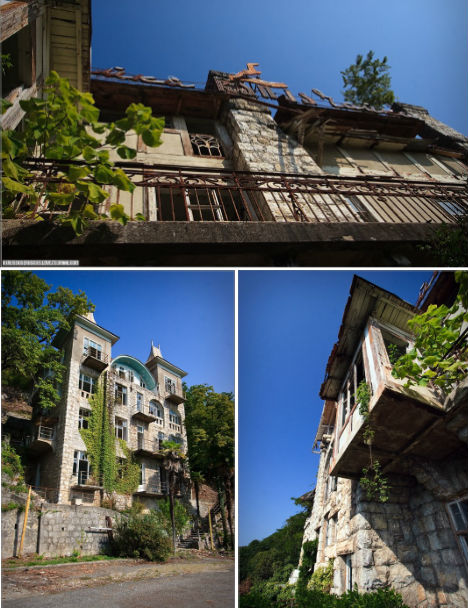
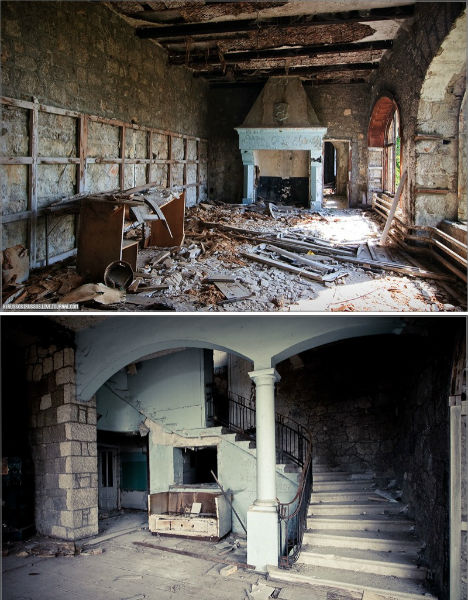
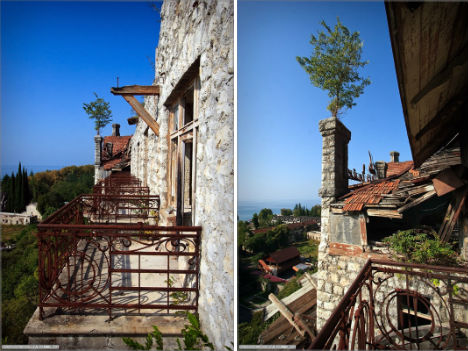
Perhaps abandoned mansions, castles and chateaus are so fascinating because it’s difficult for many of us to understand how something that cost so much money could be allowed to decay. Someone went through the trouble of designing the home, choosing decorative elements and purchasing fine fixtures, only for them to be ruined far before they should have. This Russian prince’s house located on the Black Sea in Abkhazia is one example. Overlooking what was known to upper-class Russians as the ‘Russian Riviera’, the castle is nearly 200 years old.

But, like many things, it lost its grandeur during the Soviet era. It was converted to the Hotel Seagull on Stalin’s orders, a summer residence for male government officials from Moscow. Once the Soviet Union collapsed, it was abandoned; with the nation of Georgia so often at war, restoring it is not exactly a high priority.

Kolmanskop, Namibia

Abandoned Homes Kolmanskop 1 Abandoned Homes Kolmansop 2

(images via: wikimedia commons, geoftheref, coda)

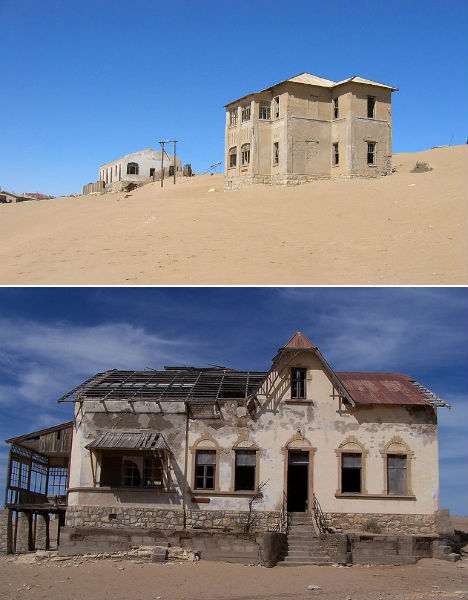
Among the most surreal abandonments is the old diamond mining town of Kolmanskop in Namibia. This ghost town was once a small but very rich village, filled with German miners who were attracted by the potential for quick and easy wealth. It’s built in a German architectural style. The town declined after World War I, and was abandoned altogether in 1954.

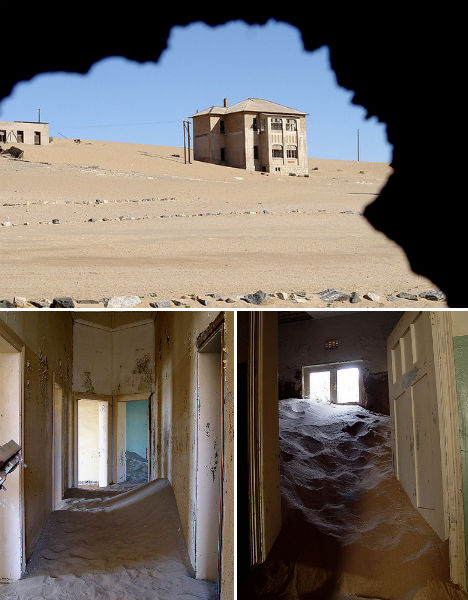
The most interesting thing about Kolmanskop is the fact that its homes, hospital, ballroom, school and other buildings are now filled with sand, making it seem as if they’re sinking. The hot, windy desert climate blows sand in through the windows and doors.

Share on Facebook


[ By Steph in Abandoned Places & Architecture. ]

[ WebUrbanist | Archives | Galleries | Privacy | TOS ]


WebUrbanist

 
Comments Off on 7 Abandoned Wonders of Residential Architecture

Posted in Creativity


7 Abandoned Wonders of Residential Architecture

04 Feb

[ By Steph in Abandoned Places & Architecture. ]

Abandoned Homes Main

Palatial chateaus, ordinary suburban homes, skyscraper residences and vertical slums alike have been abandoned by their human inhabitants and given over to rot and ruin. Whether they represent once-opulent refuges for the rich or some of the most shocking conditions of abject poverty in the world, these 7 ghostly abandoned wonders of residential architecture are deliciously creepy and strangely beautiful, if a bit sad.

Chateau de Noisy, Belgium

Abandoned Homes Chateau de Noisy 2

Abandoned Homes Chateau de Noisy 1

(images via: polanri)

Officially named Chateau Miranda, this neogothic castle was built in 1866 by an English architect who passed away before it was completed. It served as a summer residence for a wealthy family until it was commandeered by Nazis during World War II. For decades afterward, Chateau Miranda operated as a hotel and accommodation for children of Belgian road employees, but in 1991, a fire led to its abandonment. Since then, it has been given over to decay.

Touring the dilapidated chateau is fairly dangerous, as most of the upper floors have decayed and fallen through. It’s a shame to see something that was once so beautiful fall into ruin. Urban explorers give a firsthand account of sneaking in and taking some beautiful photos of the interior at TalkUrbex.com.

Sathorn Unique Skyscraper, Thailand

Abandoned Sathorn Unique Skyscraper 2 Abandoned Sathorn Unique Skyscraper 3 Abandoned Sathorn Unique Skyscraper 1

(images via: abandonedjourney.com, earth-bound misfit)

The 47-story Sathorn Unique Tower was supposed to be a well-appointed modern residence for well-to-do citizens of Bangkok, Thailand. Now, it’s a ghost tower, standing eerily empty and silent against the skyline of the city, its concrete surfaces already stained and rusted. Developers built this and many other skyscrapers in Bangkok during an economic boom, but fortunes fell, the developers went bankrupt, and the buildings stand empty. During storms, debris from the structures rain down upon the streets below. Inside, it’s virtually pitch black, and exposed metal pipes and frames should make explorers wonder when they last had a tetanus shot. At the top, however, it’s easy to see why this would have become one of the city’s most prestigious addresses.

Abandoned Prince’s House, Russia

Abandoned Homes Russian Prince 1 Abandoned Homes Russian Prince 2 Abandoned Homes Russian Prince 3

(images via: english russia)

Perhaps abandoned mansions, castles and chateaus are so fascinating because it’s difficult for many of us to understand how something that cost so much money could be allowed to decay. Someone went through the trouble of designing the home, choosing decorative elements and purchasing fine fixtures, only for them to be ruined far before they should have. This Russian prince’s house located on the Black Sea in Abkhazia is one example. Overlooking what was known to upper-class Russians as the ‘Russian Riviera’, the castle is nearly 200 years old.

But, like many things, it lost its grandeur during the Soviet era. It was converted to the Hotel Seagull on Stalin’s orders, a summer residence for male government officials from Moscow. Once the Soviet Union collapsed, it was abandoned; with the nation of Georgia so often at war, restoring it is not exactly a high priority.

Kolmanskop, Namibia

Abandoned Homes Kolmanskop 1 Abandoned Homes Kolmansop 2

(images via: wikimedia commons, geoftheref, coda)

Among the most surreal abandonments is the old diamond mining town of Kolmanskop in Namibia. This ghost town was once a small but very rich village, filled with German miners who were attracted by the potential for quick and easy wealth. It’s built in a German architectural style. The town declined after World War I, and was abandoned altogether in 1954.

The most interesting thing about Kolmanskop is the fact that its homes, hospital, ballroom, school and other buildings are now filled with sand, making it seem as if they’re sinking. The hot, windy desert climate blows sand in through the windows and doors.

Next Page:
7 Abandoned Wonders Of Residential Architecture

Share on Facebook


[ By Steph in Abandoned Places & Architecture. ]

[ WebUrbanist | Archives | Galleries | Privacy | TOS ]


WebUrbanist

 
Comments Off on 7 Abandoned Wonders of Residential Architecture

Posted in Creativity


7 Abandoned Wonders of Institutional Architecture

14 Jan

[ By Steph in Abandoned Places & Architecture. ]

Abandoned Institutional Buildings Main

Churches, prisons, psychiatric hospitals and courthouses given over to the elements can sometimes taken on a mythic significance, given a haunting, creepy beauty by the passage of time. Removed from their former functions, these institutional buildings become both architectural skeletons and snapshots of human activity, frozen in time. In their emptiness, the echoes of past patients, prisoners and parishioners seem louder than ever.

Carabanchel Prison, Spain

Abandoned Carcel Prison Spain

Abandoned Carcel Prison Spain 2

(images via: alex//berlin_alexander stübner)

One of the biggest prisons in Europe until its closure in 1998, Madrid’s Carabanchel Prison was built by political prisoners after the Spanish Civil War between 1940 and 1944. During the ten years of its abandonment, the prison was inhabited by homeless people and other marginal groups, and covered in elaborate graffiti. Despite its historical significance and the protests of many locals, the prison was demolished in 2008.

It represented one of the most impressive examples of the repressive panopticon design, which allows a watchman to observe all inmates without them knowing when they’re being watched. The panopticon arrangement was initially envisioned not just for prisons, but also for hospitals, sanitariums and daycares.

St. Agnes Church, Detroit

Abandoned St. Agnes Church Detroit 1

Abandoned St. Agnes Church Detroit 2

(images via: memories_by_mike 1 2, erik_mauer)

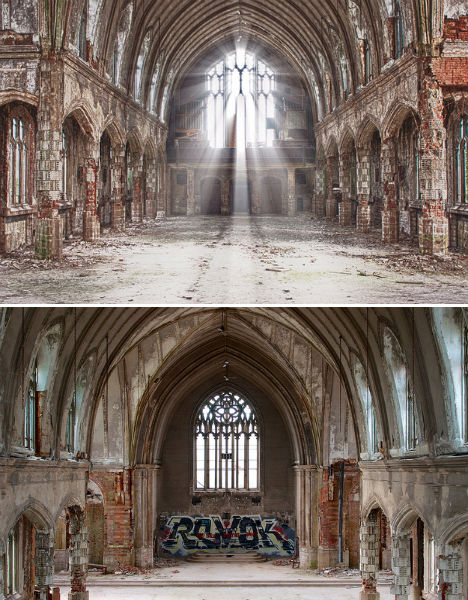
Abandoned in 2006 due to financial troubles, Detroit’s St. Agnes church remained in fairly good condition for three years, though it had been stripped to its bare bones. Even once all of the organ pipes, chandeliers and stained glass windows were gone, the church displayed much of its old grandeur.

But the structure underwent a striking transformation in 2009, when leaks in the roof led to extensive water damage and mold, causing the masonry to crumble. Textural details are revealed in stark contrast by a black grime of dirt and mold. Today, the church looks like much of the rest of Detroit; it has been looted and vandalized to the point of being unrecognizable.

Gartloch Mental Hospital, Scotland

Abandoned Gartloch Hospital Scotland 2

Abandoned Gartloch Hospital Scotland 1

Abandoned Gartloch Hospital Scotland 3

(images via: strike4th, bigcagwell, justified sinner, skin-ubx 1 + 2)

In service for over a century, Gartloch Hospital is a sprawling Victorian complex located just outside the city of Glasgow, Scotland. From the time of its opening in 1889, it served as an asylum for the poor people of the city. Though its primary purpose was as a psychiatric hospital, it temporarily served as an emergency medical facility during World War II. It was the subject of many a Scottish ghost story long before it closed in 1996, and today its dark, empty hallways feel more haunted than ever.

Hellingly Asylum, Sussex

Abandoned Hellingly Asylum 1

Abandoned Hellingly Asylum 2

Abandoned Hellingly Asylum 3

(images via: howzey)

Has any creepy old mental hospital ever been more fittingly named? Hellingly Asylum in Sussex, England opened in 1903 to relieve overcrowding at other institutions during a time in which people could be thrown into hospitals for the rest of their lives for being gay or having a child out of wedlock. Located on 400 acres, the complex included sex-separated wards, a villa for ‘mentally defective’ children, and a small isolation hospital for infectious diseases, which stood in the woods at some distance from the rest of the buildings. The hospital even had its own electric tramway.

Hellingly closed in 1994 and most of its buildings fell into rapid decline. Fires, vandalism and theft took their toll. Medical equipment and furniture could still be seen among the ruins during the years in which the only people who ever entered were urban explorers, graffiti artists, photographers and people with questionable intentions.

Today, only a few buildings remain. Most have been demolished to make way for new housing.

Next – Pripyat Schools, Bronx Borough Courthouse and Gary, Indiana’s City Methodist Church

Next Page:
7 Abandoned Wonders Of Institutional Architecture

Share on Facebook


[ By Steph in Abandoned Places & Architecture. ]

[ WebUrbanist | Archives | Galleries | Privacy | TOS ]


WebUrbanist

 
Comments Off on 7 Abandoned Wonders of Institutional Architecture

Posted in Creativity


7 Abandoned Wonders of Commercial & Industrial Architecture

07 Jan

[ By Steph in Abandoned Places & Architecture. ]

Abandoned Commercial buildings main

These castle-like structures, skeletal high-rises and rusting remains of the golden age of industry are monuments to themselves, still standing despite decades of neglect. Formerly factories, offices, corporate headquarters and industrial facilities, these 7 commercial and industrial sites contain clues to their former purposes among all the rubble, overgrown greenery, peeling paint and other effects of abandonment.

Abandoned High-Rises and Factories of Detroit, Michigan

Abandoned Detroit Factories Skyscrapers Buildings

Abandoned Detroit Mills Factories

Abandoned Detroit Factory

(images via: bob jagendorf, meeshypants, nitram242, davescaglione, joguldi 1 + 2)

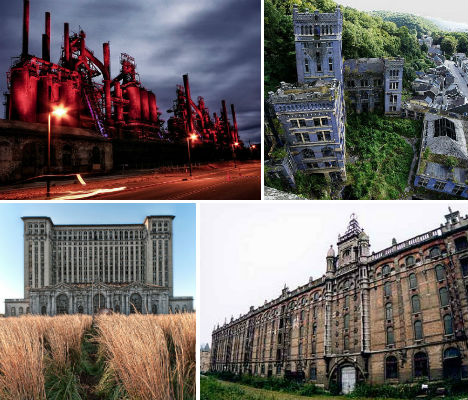
When it comes to Detroit, how can you choose just one standout abandonment? The city is, in and of itself, a jaw-dropping wonder of architectural decay. Once it lost its identity as a manufacturing mecca, Detroit also lost a large number of its residents, leaving block after block abandoned, with few signs of life in between. Once the fourth-largest city in the United States, Detroit is now filled with towering structures that have been left as they were when last used, often full of the ephemera of life. These include a number of high-rises – the most notable being Michigan Grand Terminal, pictured above with an overgrown lawn – and burned-out factories.

In 1950, Detroit had a population of nearly two million; today, while similar cities have grown exponentially, this one is down to less than 900,000. The fact that the city has become something of an urban Wild West doesn’t exactly encourage new residents to purchase decrepit properties and return them to their former glory. The number of abandoned buildings standing in the city currently numbers around 70,000.

Bethlehem Steel Factory, Pennsylvania

Abandoned Bethlehem Factory

Abandoned Places Bethlehem Steel Factory 1

Abandoned Bethlehem Steel Factory 2

(images via: bob jagendorf, a.strakey, dandeluca, the seafarer, dave scaglione)

Once the second-largest steel producer in the United States, Bethlehem Steel began work on a large facility in Bethlehem, Pennsylvania in the 1860s that was at the forefront of manufacturing innovation at the time. Its towering facilities made it a symbol of the industrialized future of America. During World Wars I and II, it was a major supplier of armor plate to the U.S. Armed Forces, making components of weapons like large-caliber guns. But by the 1990s, America’s steel industry began to decline, and companies like this could no longer compete with cheap foreign labor.

When Bethlehem Steel closed its local operations, it laid out a plan for its 163-acre site for cultural, recreational, educational, entertainment and retail development, to reduce economic impacts on a city that had long relied on steel manufacturing for prosperity. However, the company went out of business and the land was sold to a developer that has turned it into a casino. Ironically, the casino had difficulty coming up with the 16,000 tons of steel needed to build its new $ 600 million complex, so it only finished one building. Some of Bethlehem Steel’s old manufacturing structures were demolished, but furnaces and gas blowing engine house still stand.

Hasard Cheratte Abandoned Coal Mine, Belgium

Abandoned Hasard Cheratte Coal Mine 1

Abandoned Hasard Cheratte Coal Mine 2

(images via: wikimedia commons, intermayer 1 + 2)

One of the most popular abandoned sites in Europe among urban explorers, the Hasard Cheratte Coal Mine in Belgium looks a bit like a crumbling castle. The facility dates to the 1860s, and was formerly one of many such mines in the coal basin of Liege. Make your way inside and you’ll find the hulking remains of industrial equipment and heavy mining machinery and lots of long, dark brick-lined passageways. Abandoned since 1977 and now a protected heritage site, the complex still contains such small items as books and work gloves. The largest ‘castle tower’ sits over the deepest mine shaft at the facility, which plunges a mind-boggling 1,574 feet into the ground. See photos of the interior at 28 Days Later.

Abandoned Chemical Factory, Poland

Abandoned Chemical Factory Poland 1

Abandoned Chemical Factory Poland 2

(images via: mlociny)

You probably don’t want to go inside this complex. The abandoned fluorescent light factory in Warsaw, Poland once manufactured mercury lamps; it was in the midst of renovation when astronomic mercury contamination levels put its modernization to a halt. Pools of mercury had collected under the floors, poisoning many workers. The factory was also occupied by the Nazis during World War II and used to produce transceiver equipment for submarines, tanks, and aircraft. During the Warsaw Uprising in 1944, Polish insurgents took it back.

As dangerous as it is, urban explorers have still made their way inside to photograph the peeling paint, rusted fixtures, rotting wood and broken glass. Documents, blueprints and bottles still full of chemicals are still scattered all over the building’s ten floors and basement level. The more valuable items, like toilets and sinks, are long gone.

Szkieletor Tower, Poland

Abandoned Skyscraper Szkieletor

(images via: joannaj, wikimedia commons)

Named after the He-Man villain Skeletor for its skeletal and arguably sort of evil appearance, Szkieletor Tower in Krakow, Poland has stood like a bleak lookout over the city since 1981. Construction began in 1975 on what was supposed to be the regional office of the Main Technical Organization, but halted six years later due to economic constraints, political unrest and the imposition of martial law in Poland. This history combined with its looks give Szkieletor an ominous feel. Though little more than a shell, it remains the tallest building in the city at 24 stories.

This tower was supposed to have a twin, and together they would have acted as a gateway to a skyscraper district in Krakow known as ‘Polish Manhattan.’ The original deadline for the entire project of Polish skyscrapers was 2005, but hopes for its future glory faded in the 1980s. Passing from one owner to the next, the building never seems to get past planning stages for renovation. A 2010 plan to turn it into a hotel has fallen flat. Instead, the building remains covered in massive billboards, a ham-fisted attempt to improve its looks and capitalize on its continued existence.

Warehouse B, Brussels, Belgium

Abandoned Warehouse B Brussels

Abandoned Warehouse B Brussels 2

(images via: abandoned-places.com)

Known locally as ‘The Prison’, Brussels’ Warehouse B is just one part of a sprawling multi-purpose transport center that was built in the early 20th century to house the Customs Administration, a railway station and a number of companies trading goods like tobacco, wine and beer. While some of these buildings are still maintained and occupied, Warehouse B has remained empty despite its beauty and historical worth. Serving as a warehouse for customs, the brick and stone building was used until 1987 for Customs storage, including confiscated goods.

The looks of the interior, including courtyards, metal security grates and many small, dark rooms, made it look a bit like a prison – so perhaps it’s no surprise that it was temporary used for this purpose by the Germans during World War II.

The Domes, Casa Grande, Arizona

Abandoned Domes 1

Abandoned Domes 2

Today, ‘The Domes’ of Casa Grande, Arizona look like the remains of some sort of sci-fi movie set. Any one of these round buildings could suddenly lift off the ground and zoom away into the atmosphere like a UFO. Built for computer manufacturing in the early 1980s for a facility that was never completed, they’ve just sort of been left to rot in the desert. InnerConn planned to build circuit boards here, and spent about $ 150,000 on each of the polyurethane and concrete domes. The idea was that they’d be more insulated in the desert climate, leading to lower maintenance costs.

According to local wisdom, you just shouldn’t go out there – cue obligatory whispers about ghosts and Satanic rituals – but judging by all the graffiti, many people go anyway. Many of the ceilings are falling in, and The Domes were an illegal dump site for years, making them a pretty dangerous site.

Share on Facebook


[ By Steph in Abandoned Places & Architecture. ]

[ WebUrbanist | Archives | Galleries | Privacy | TOS ]

WebUrbanist

 
Comments Off on 7 Abandoned Wonders of Commercial & Industrial Architecture

Posted in Creativity


Manmade wonders of the world Google Earth 3D anaglyph (r/b)

11 Aug

Google Earth 3D anaglyph (red/cyan) best viewed with red/cyan 3d glasses. Nothing special … but enjoy anyway 🙂 TriDef used 4 anaglyph 3d rendering: www.tridef.com Manmade wonders of the world www.googletouring.com Google Earth: earth.google.com Audio: Limp Bizkit – Behind Blue Eyes
Video Rating: 3 / 5

 
5 Comments

Posted in 3D Videos