RSS
 

Posts Tagged ‘wonders’

Desolate Desertions: 7 Abandoned Wonders of Antarctica

31 Jul

[ By Steph in 7 Wonders Series & Global. ]

Abandoned Antarctica Main

At the end of the earth, in some of the most remote places known to man, the remains of ill-advised human exploration and activity can be found in the form of rusting equipment, buildings almost entirely buried in snow, and abandoned ships. Left behind due to inaccessibility, war, failing industries and harsh, inhospitable conditions, these whaling factories, military bases and research facilities make up some of the world’s eeriest ghost towns.

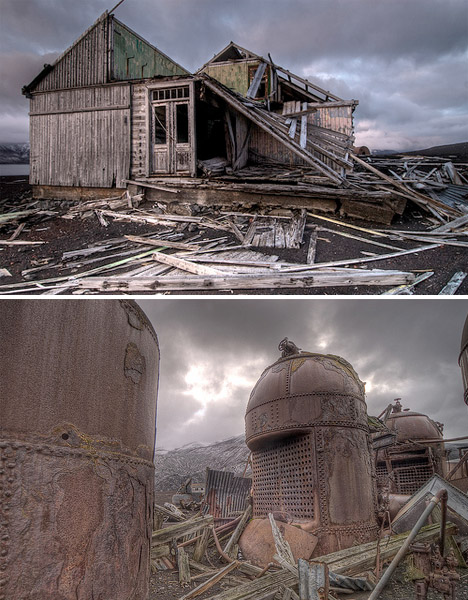
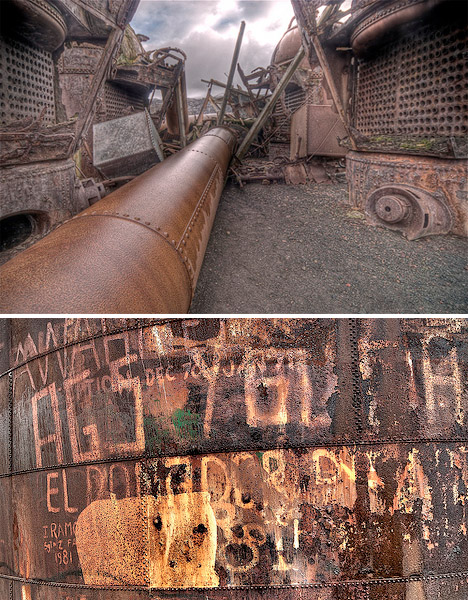
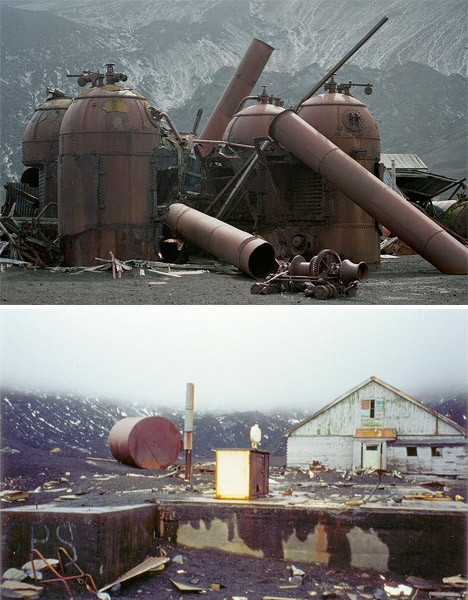
Whaler’s Bay Ghost Town, Deception Island

Abandoned Anatarctica Deception Island Whalers Bay 1

Abandoned Antarctica Deception Island Whalers Bay 2

Abandoned Antarctica Deception Island Whalers Bay 3

(images via: wili_hybrid, wikimedia commons)

Established as a ship base on C-shaped Deception Island by a Norwegian-Chilean whaling company in the early 20th century, Whaler’s Bay was abandoned when oil prices plummeted during the Great Depression. It sat empty until the British reclaimed it as a base in 1944, but a series of volcanic eruptions in the 1960s sent everyone packing again. A mudslide caused by the most recent eruption in 1969 buried many of the structures.

Decades later, it’s totally empty but for the remains of the buildings, equipment and ships. Deception Island is so named because the tiny entrance to its bay is difficult to find; some explorers thought the island was nothing but high, rocky cliffs that are impossible to access. Once inside, however, visitors are greeted by surprisingly warm waters courtesy of the dormant volcanoes, which boil in some spots but offer comfortable bathing in others.

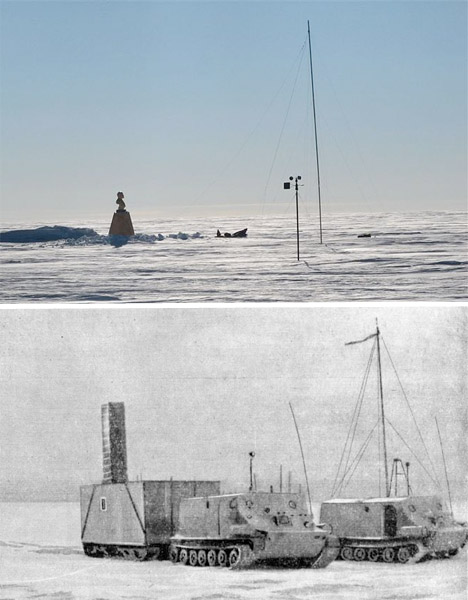
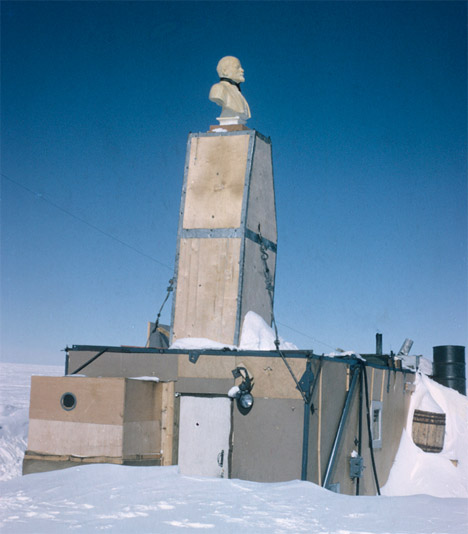
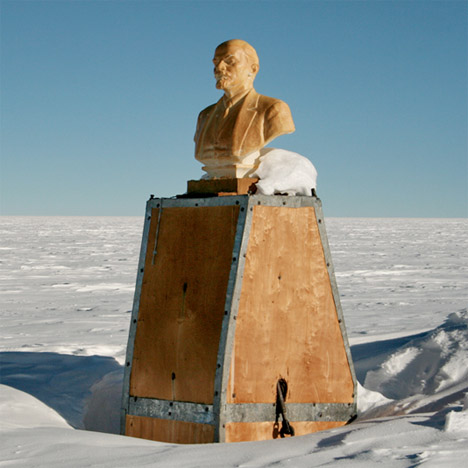
Pole of Inaccessability with Bust of Lenin

Abandoned Antarctica Pole of Inaccessibility

Abandoned Antarctica Pole of Inaccessibility 2

Abanoned Antarctica Pole of Inaccessibility 3

(images via: wikimedia commons, npolar.no)

The southern point of inaccessibility – the point in Antarctica that’s furthest from any ocean – is the location of a now-defunct Soviet research station established in 1958. As difficult to reach as it was, the station was never very robust; it had a hut for four people, a radio shack, and an electrical hut, all of which were pre-fabricated and brought in on tractors. The base was in use for a whopping 12 days before it was suspended indefinitely due to its remote location. All that was left behind was a single building topped with a bust of Vladimir Lenin. Snow drifts have buried most of the building so that the bust is all that can be seen of it today.

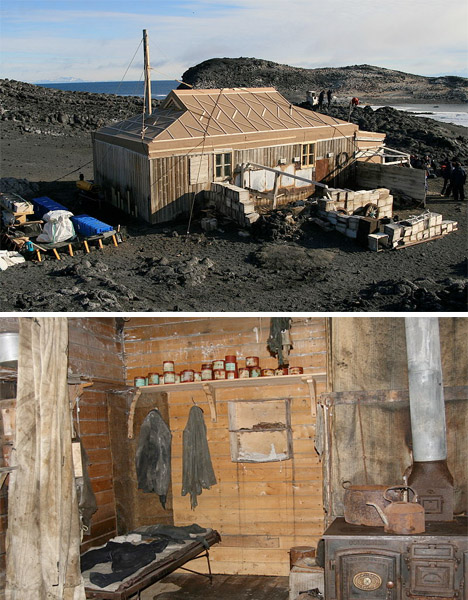
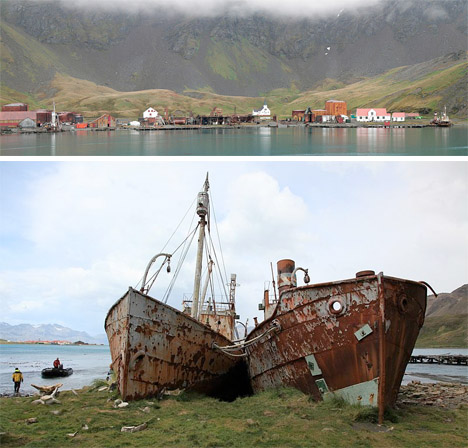
Grytviken Harbour, South Georgia

Abandoned Antarctica Grytviken Shackleton's Hut

Abandoned Antarctica Grytviken Whaling Station

Abandoned Antarctica Grytviken

(images via: wikimedia commons, tripmondo)

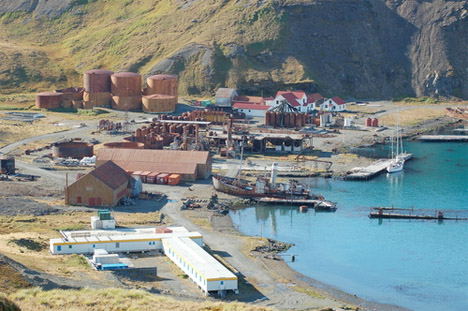
This rusted jumble of equipment was once a large Norwegian whaling base, with about 300 men working to process captured whales, rendering the blubber, meat, bones and viscera into oil. Established in 1904 in the most protected harbor of British-owned South Georgia Island, which offered plenty of flat land for building, it soon became home to an Argentine meteorological station as well. But over the following sixty years, the population of whales in the seas around the island declined dramatically, and by 1966, the station closed. The whaling station site is still littered with whale bones as well as carcasses of industry and architecture. The island of Grytviken is also the gravesite of the explorer Ernest Shackleton, who was buried alongside whalers who died there.

Next Page:
Desolate Desertions 7 Abandoned Wonders Of Antarctica

Share on Facebook


[ By Steph in 7 Wonders Series & Global. ]

[ WebUrbanist | Archives | Galleries | Privacy | TOS ]


WebUrbanist

 
Comments Off on Desolate Desertions: 7 Abandoned Wonders of Antarctica

Posted in Creativity


Mansions to Mines: 7 Abandoned Wonders of Modern Africa

24 Jul

[ By Steph in 7 Wonders Series & Global. ]

Abandoned Places in Africa Ghost Towns

Ranging from eerie, remote desert settlements in the hottest place on earth to perfectly pastel modern ghost towns, Africa’s standout abandonments are as diverse and fascinating as the continent itself. A Star Wars set is slowly swallowed by the sand in Tunisia, skeletons of ships serve as warnings to sailors on the coast of South Africa, and a vast Chinese-built housing development waits for half a million new residents in Angola.

Tattooine: Abandoned Star Wars Set, Tunisia

Abandoned Africa Star Wars Set 1

Abandoned Africa Star Wars Set 2

(images via: fastco)

Left to dry out in the blazing desert sun for over 35 years, the Lars Homestead set from Star Wars Episode IV was recently rediscovered by New York-based photographer Rä di Martino. An area of Tunisia near the oasis city of Tozeur has been used as a dramatic backdrop for many films, including Raiders of the Lost Ark and The English Patient. In addition to Luke Skywalker’s childhood home, di Martino found several other Star Wars sets, documented in a series she calls Every World’s a Stage.

Tunisia was used as a location for scenes in every Star Wars movie except Episode V, including Ben Kenobi’s hut, Grand Dune where R2-D2 and C-3PO crash in Episode IV, the Slave Quarters Row and the canyon where Luke meets Ben. Pictures taken by fans who make pilgrimages to the set have revealed that, in time, it will be swallowed up by the desert sands.

Abandoned Mining Town of Kolmanskop, Namibia

Abandoned Africa Kolmanskop 2

Abandoned Africa Kolmanskop 1Abandoned Africa Kolmanskop 3

Abandoned Africa Kolmanskop 5

(images via: wikimedia commons, geoftheref, coda)

The sands have already claimed one abandoned village in Namibia. Kolmanskop was once a bustling mining village filled with German diamond miners who built mansions in the style of their home country. It had a hospital, ballroom, power station, school, theater, sport hall, casino, the first x-ray station in the Southern Hemisphere and the first tram in Africa. But after World War I, the diamonds were gone, and the miners began to leave. Kolmanskop was abandoned altogether by 1954, and since then, winds have swept knee-high drifts of sand into the open doors and windows of the architecture left behind. Some homes are almost entirely buried. The ghost town is now a popular tourist destination.

Next Page:
Mansions To Mines 7 Abandoned Wonders Of Modern Africa

Share on Facebook


[ By Steph in 7 Wonders Series & Global. ]

[ WebUrbanist | Archives | Galleries | Privacy | TOS ]


WebUrbanist

 
Comments Off on Mansions to Mines: 7 Abandoned Wonders of Modern Africa

Posted in Creativity


7 Abandoned Wonders of the Middle East

17 Jul

[ By Steph in Abandoned Places & Architecture. ]

Abandoned Middle East Main

Eerie ghost towns, villages abandoned after shocking massacres, the palaces of deposed dictators and mansions so well preserved they’re like 1950s time capsules are among the Middle East’s abandoned treasures. The Cradle of Civilization and the areas that lie just outside of it contain some of humanity’s oldest structures, and a great many ruins.

The Abandoned Palaces of Egypt

Abandoned Middle East Egypt Palaces 1

Abandoned Middle East Egypt Palaces 2

(images via: wikimedia commons, dalbera, eusuperfunhappytime)

In 1869, construction of the Suez Canal brought foreign money flooding into Egypt, and ambitious foreign businessmen got to work on ornate castles in Western European style, which stood as stark symbols of colonialism. But when Gamal Abdel Nasser became president in 1956, he put an end to that, kicking out the wealthy foreigners to reclaim the nation for the people. Unfortunately, economic instability hasn’t allowed for the palaces to be redeveloped, so today they range from shuttered time capsules of the 1950s to crumbling ruins.

The Baron Empain Palace  (top), built by Eduoard Louis Joseph of Belgium in the late nineteenth to early 20th centuries, is one such place. Modeled on Hindu and Cambodian temples, the palace sits in a dirt lot in the Cairo suburb of Heliopolis, surrounded by barbed wire. It’s closed to the public, but like many such places, it’s the subject of many rumors of ghost stories and Satanic rituals.

Another is Prince Said Halim’s palace, also known as Champollion House, in Cairo. This palace was converted to a secondary school after its abandonment, but it has been empty since 2004.

Maasser el Chouf, Lebanon

Abandoned Middle East Maasser el Chouf 1

Abandoned Middle East Maasser el Chouf 2

(images via: samer noun)

Located in lush woods just outside the peaceful Al-Shouf Cedar Reserve of Lebanon’s Maasser Cedar Forest, this idyllic village was utterly devastated by the massacre of September 9th, 1983. The houses that remain empty belonged to those who perished or fled to safer places when 63 Catholics were killed by their Druze neighbors in a brutal daytime assault. Years later, in 1990, a son left orphaned by the attack returned and killed five Druze villagers and three soldiers in revenge. Some of the homes are still occupied by those who survived.

Photographer Samer Noun gained access to the abandoned homes in 2011, capturing these eerie images of the architectural remains.

Saddam Hussein’s Abandoned Palaces, Iraq

Abandoned Middle East Iraq Palace 1 Abandoned Middle East Iraq Palace 2 Abandoned Middle East Iraq Palace 3 Abandoned Middle East Iraq Palace 4

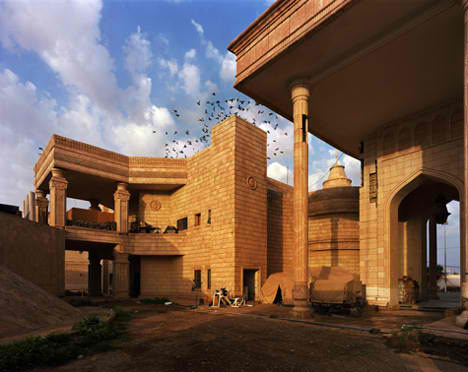
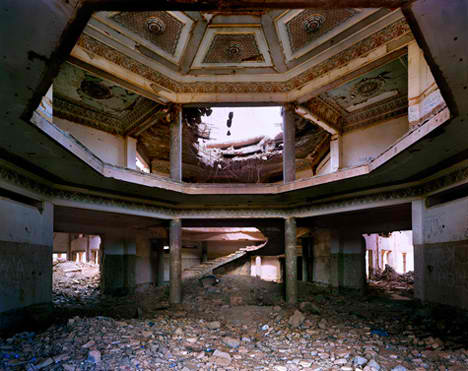
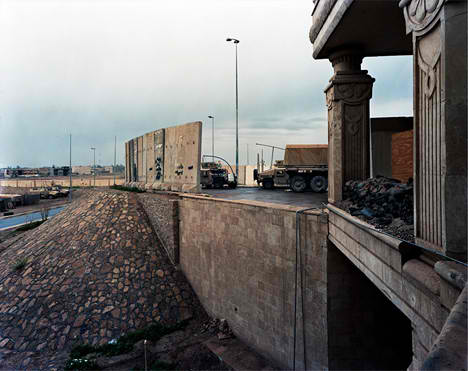
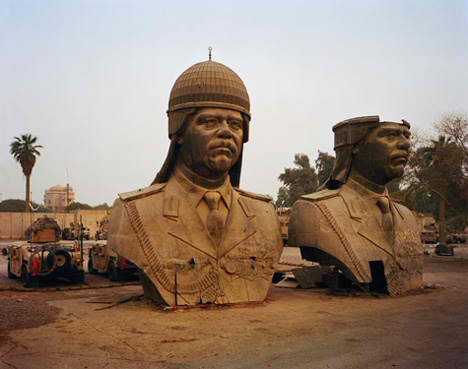
The Babylonian palaces of Saddam Hussein once stood as ostentatious symbols of the Iraqi dictator’s power, hastily constructed all over the country. Once he was forced from power, these ornate palaces full of treasures were either taken over by US Army forces or looted by locals. These photos by Richard Mosse document the period in which American soldiers stalked the marble halls, strung up American flags in what were once exclusive chambers and parked their massive military vehicles right in front of the faux-grand entrances. Many of the palaces are deteriorating, and not just because of war damage; they were so cheaply made that they simply haven’t stood up to the test of time.

Next Page:
Cradle To Graveyard 7 Abandoned Wonders Of The Middle East

Share on Facebook


[ By Steph in Abandoned Places & Architecture. ]

[ WebUrbanist | Archives | Galleries | Privacy | TOS ]


WebUrbanist

 
Comments Off on 7 Abandoned Wonders of the Middle East

Posted in Creativity


Record Breakers: 7 Vehicular Wonders of the World

05 Jun

[ By Steph in Technology & Vehicles & Mods. ]

World Record Breaking Cars

Destroying lesser vehicles in more ways than one, these seven record-smashing cars and trucks are stronger, longer, faster, narrower, more fuel-efficient and way more expensive than the average vehicle. In most cases, you have to be a millionaire to afford one, but if you’ve got the cash, going over 460 miles per hour and crashing through buildings would make the indulgent purchase worth the dent in your bank account. This list includes only vehicles that are produced by civilians or available to the public, eliminating military and construction vehicles.

World’s Most Expensive Car: Bugatti Veyron

World's Most Expensive Car Bugatti Veyron

At a price tag of $ 2.4 million, the Bugatti Veyron SuperSport is the world’s most expensive car – and accordingly, only thirty of them have been produced. The Veyron SuperSport is powered with an 8-liter, W16 quad-turbocharged engine for a total of 1200 horsepower, and it’s made of lightweight materials like carbon fiber and aluminum. The Veyron 16.4 is the last version of this particular model that will ever be made. Is it worth the money? Sure, if achieving insane speeds of up to 267.81mph is important to you; no other car available to the general public and legal on the streets can go this fast.

The Bugatti Veyron held the title of the world’s fastest car for a while, until it was revealed that a speed limiter was switched off during tests. The title was stripped, and no other has been awarded. However, even nearly 270mph doesn’t reach the speeds that the actual world’s fastest car can achieve.

World’s Fastest Land Speed Car: Speed Demon Streamliner

World's Fastest Car Speed Demon
World's Fastest Car Speed Demon 2

This car definitely won’t be appearing on the highways anytime soon; it’s a one-off produced by George Poteet and Ron Main in an attempt to smash speed records, and that it did. The Speed Demon is the world’s fastest wheel-driven, piston-powered car, and it clocked an astonishing 439.562mph in a test at the 2012 Bonneville Speed Week. The shell is part of what makes the steam-powered Speed Demon so fast; it’s incredibly aerodynamic. The car boasts a Kenny Duttwiler 368-cubic-inch twin-turbo V8 engine.

World’s Largest Pick-Up Truck: Modified 1950s Dodge Power Wagon

World's Largest Pickup Truck

Said to be the largest car or truck in the world, this 1950s Dodge Power Wagon was made by oil billionaire Seikh Hamad bin Hamdan Al Nahyan of the United Arab Emirates in the mid 1990s. Looking to be at least five times as large as a standard Dodge Power Wagon, this model is more than just a cab on wheels – it holds four air conditioned bedrooms, a living room and a bathroom, with a motorized tailgate that drops down to become a terrace.

Hamad is a bit of an eccentric, obsessed with collecting oversized vehicles; he also has a giant replica of the Willys WWII Jeep and two jeeps welded together into a double-wide vehicle. He also holds a number of Guinness World Records for things like the biggest graffiti tag on the planet.

World’s Most Fuel-Efficient Vehicle: VW XL1

World's Most Fuel-Efficient Car

The world’s most fuel-efficient car will achieve 261 miles per gallon – beat that with your Prius. The XL1 is a two-seat diesel plug-in hybrid with a driving range of a little over 30 miles; the limited range is part of what makes it such a miserly gas sipper. Small, low to the ground and aerodynamic, the XL1 was built for fuel efficiency, if not for speed; it will take 12.7 seconds for the car to get from zero to 62 miles per hour. The car’s narrow profile means the passenger seat has to be set back slightly from the driver’s seat so each person in the car has a little bit of elbow room. It’s intended to be a production car, but VW says it plans to use “handcrafting-like production methods” to build it at its facility in Germany.

Next Page:
Record Breakers 7 Vehicular Wonders Of The World

Share on Facebook


[ By Steph in Technology & Vehicles & Mods. ]

[ WebUrbanist | Archives | Galleries | Privacy | TOS ]


WebUrbanist

 
Comments Off on Record Breakers: 7 Vehicular Wonders of the World

Posted in Creativity


Futuristic Food: Edible Wonders of the 3D-Printed Revolution

03 Jun

[ By Steph in Gadgets & Geekery & Technology. ]

3D Printed Food Main

In the future, maybe we’ll all be pressing buttons on countertop machines that will squeeze various food pastes into the creative shapes of our choice. The 3D printing revolution isn’t limited to fashion, pretty objects, guns or even architecture – it’s edible, too. A combination of scans, special digital files and machines that extrude materials into complex forms might just make food more of an art form than ever before, if these 14 examples are a preview of what’s to come.

Infinity Bacon

3D Printed Food Infinity bacon

In a possibly Freudian typo, Shapeways describes this Bacon Mobius Strip as “not delicious but also vegan and kosher-friendly.” You can order one of your very own to keep forever as a bizarre conversation piece on the mantel, or recurring breakfast gag.

3D Printed Sculptural Sugar

3D Printed Food Sugar

Amazingly intricate sculptures of sugar are 3D printed by The Sugar Lab, a husband-and-wife team of architectural designers. “With our background in architecture and our penchant for complex geometry, we’re bringing 3D printing technology to the genre of mega-cool cakes. 3D printing represents a paradigm shift for confections, transforming sugar into a dimensional, structural medium.”

Pasta, Cereal and Burgers by Freedom of Creation

3D Printed Food Pasta Cereal

How will 3D printing technology be applied to the home of the future? Designer Janne Kytannen of Freedom of Creation envisions our own little countertop printing machines capable of producing pasta, cereal, burgers and more. Kytannen believes that as the ability to design our own food becomes more accessible, the items we choose to eat will become far more creative and complex.

Eat Your Own Chocolate Face

3D Printed Food Chocolate Face

A 3D printing workshop in Tokyo produced miniature chocolate versions of the creators’ faces. Each person went into a small room to get a full body scan, and a 3D printed mold was made of their heads. Now, they can make chocolates and other confections in the shape of their own faces again and again. Tokyo’s FabCafe sells the molds for $ 65 each.

Escher Cookies Made with 3D Printed Rollers

3D Printed Food Escher Cookies

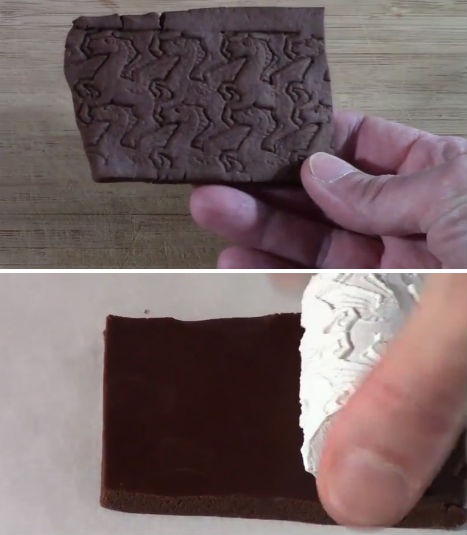
A slab of ordinary cookie dough was made into Escher-inspired cookies using a 3D-printed roller. George W. Hart converts patterns into 3D-printed rollers using a MakerBot; you can download the software and files to make your own at his website.

High-Resolution 3D Printed Chocolates

3D Printed Food Chocolates

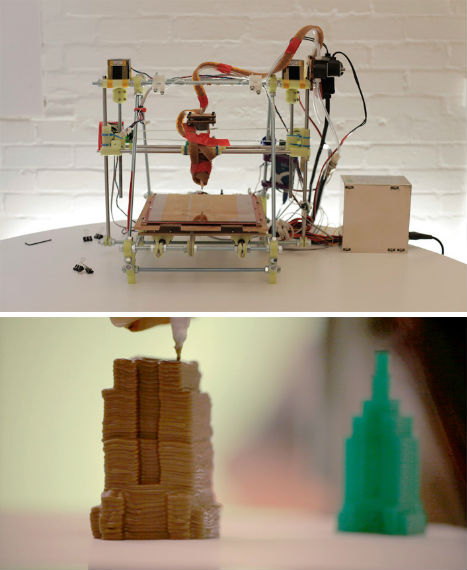
Deemed the world’s highest-resolution 3D-printed chocolates, these sugary confections from Moving Brands started out as a fun project and turned into a learning process about the intricacies of 3D printing with various materials. “We had to think about the physical properties of molten plastic and the structural integrity of layers… We had to become conversant with how the machine was put together and even how it sounded and smelled,” explained the project technical lead, Daniel Soltis.

Shoe Burger

3D Food Shoe Burger

A shoe isn’t typically the most delicious-looking object, but Tristan Bethe managed to make one look pretty good in both burger bun and chocolate form. Tristan 3D-scanned his own shoe, made a food-safe silicone mold and poured in the mix for both items.

Ramen Noodles

3D Printed Food Ramen Noodles

Cornell University’s Fab@Home program has provided designers with 3D printers equipped with syringes that squeeze out pastes of various kinds, including pasta dough. Dave Arnold of Cooking Issues used his to make noodles in cool shapes. “I find that whole idea, which removes ourselves even further from the way our food is made, horrifying. Dinner from a series of homogeneous pastes?” says Arnold; but ultimately, the noodles he created were so delicious he could barely capture them on camera before they disappeared.

Next Page:
Futuristic Food 3d Printed

Share on Facebook


[ By Steph in Gadgets & Geekery & Technology. ]

[ WebUrbanist | Archives | Galleries | Privacy | TOS ]


WebUrbanist

 
Comments Off on Futuristic Food: Edible Wonders of the 3D-Printed Revolution

Posted in Creativity


Future Perfect: 7 Potential Wonders of the World

22 May

[ By Steph in Conceptual & Futuristic & Technology. ]

Future Wonders of Technology Main

One hundred years from now, will we be living on other planets, teleporting from place to place, communicating to each other telepathically, or even becoming immortal by shifting human consciousness from our biological bodies to artificial ones? These predictions for the distant future seem outrageous and virtually impossible to achieve, yet steps are being made toward them at this very moment. The seeds of the potential future wonders of the world have already been planted, and in many cases, it’s not a question of whether they’ll happen, so much as when.

Teleportation

Future Wonders Teleportation 1

Future Wonders Teleportation 2

(images via: physical review focus, ail)

As unlikely as this may sound, teleportation isn’t entirely sci-fi. Physicists have already succeeded in teleporting photons – but right now, it’s not so much about teleporting matter from one location to the next, as it is information. Quantum teleportation is a complex topic involving concepts like ‘entanglement’, the connection that links the quantum states of two particles no matter who far apart they are. Teleporting a single particle is one thing, but what about human beings, Star Trek style?

As PBS’ The Nature of Reality column explains, “Remember that we wouldn’t be moving Kirk’s molecules from one place to another. He would interact with a suite of previously-entangled particles, and when we read the quantum state we would destroy the complex quantum information that makes his molecules into him while instantly providing the information required to recreate his quantum state from other atoms in a distant location. Quantum mechanics doesn’t forbid it. The rules of quantum mechanics still apply whether you’re talking about a system of two particles or human being made of 1027 atoms.”

The verdict? Teleportation is certainly possible, and scientists may soon begin working on attempts to teleport living matter, like viruses. Physicist Michio Kaku believes that the transport of a molecule will happen within the next ten years, followed by DNA, but that teleporting an entire human is probably still centuries away.

Artificial Intelligence Surpassing Human Intelligence

Future Wonders Artificial Intelligence

(images via: mashable)

How long do we have until human-level artificial intelligence is achieved? H+ Magazine surveyed experts, asking when they estimated AI would meet four major milestones: carrying on a conversation well enough to pass as a human, solving problems as well as a third grade student, performing Nobel-quality scientific work, and finally, surpassing human intelligence altogether. Robots can already see, hear, learn, solve problems and respond to questions, and some are even getting senses of smell and taste. The Eccerobot is creepily human in its movements thanks to artificial muscles and bones.

The general consensus was that we’ll have AI at the human level or beyond will happen by the middle of the century, or maybe even sooner – but may not surpass humans for a hundred years, if ever.

Space Settlements

Future Wonders Space Colony

(images via: space.com)

Applications are now open for a one-way ticket to a private space settlement on Mars. The Mars One project intends to land supplies on the red planet in 2016, and get settlers there by 2023; about 78,000 people have already applied. The company responsible, Lansdorp, insists that the technology needed to achieve this lofty goal already exists. And according to a group of astronauts, researchers and space flight firms who met in May 2013 for the first Human to Mars Summit, establishing a permanent, sustainable outpost on another planet might be a matter of saving the human species.

Supplies would be dropped off first, and then a crew of either humans or robots would construct the base. There are a lot of obstacles, not the least of which is the question of transportation between Earth and Mars, and whether Mars inhabitants could maintain their own food source, rather than relying on interplanetary deliveries.

Will it really happen? it’s hard to say. Private companies with an interest in space colonization are working with some of the same companies that have completed commercial cargo missions to the International Space Station. Lansdorp intends to make the technology developed during its mission available for sale, to fund Mars One and help speed up progress for additional colonies.

Body-Embeddable Electronics

Future Wonders Human Body Gadgets

(images via: io9, sync-blog)

In the future, it might be possible to hack other human beings thanks to all manner of body-embeddable gadgets. Many futurists and technology experts believe the trend for future devices isn’t to go smaller, but rather to integrate them into ourselves. Scientists have already developed tiny chips that can translate tiny bodily movements into energy to power gadgets, as well as devices that can be implanted into our bodies. Everyday electronics can already be implanted into human tissue, and medical devices are paving the way for recreational. Ready or not, the bionic human is on the horizon.

Researchers have also developed the first electronic sensor that can be printed directly onto human skin, creating a sort of ‘smart tattoo’ that could theoretically enable people to communicate with each other and our environments with thought commands. The devices, which are thinner than the diameter of a human hair, can detect electrical signals linked with brain waves, communicate wirelessly and receive energy.

Next Page:
Future Perfect 7 Potential Wonders Of The World

Share on Facebook


[ By Steph in Conceptual & Futuristic & Technology. ]

[ WebUrbanist | Archives | Galleries | Privacy | TOS ]


WebUrbanist

 
Comments Off on Future Perfect: 7 Potential Wonders of the World

Posted in Creativity


Future Present: 7 Soon-to-Be Wonders of Technology

15 May

[ By Steph in Conceptual & Futuristic & Technology. ]

Tech Predictions Main

Within five years or less, we could be chatting with the three-dimensional holograms of faraway friends, controlling our computers with mental commands, charging our phones with energy harvested from wasted ambient energy and logging into our bank accounts with facial recognition scans. These are among the technology innovations that computer giant IBM has predicted within the last few years of its annual technology forecast. Here are seven of the most intriguing prospects.

3D Hologram Chat

Tech Predictions Holographic Chat

(image via: Star Wars 20th Century Fox screen capture)

A 3D holographic chat system called “TeleHuman” is the first example of what will likely be a flood of virtual hologram technology that lets us see faraway contacts in three dimensions. TeleHuman creates a life-sized rendering of its subject using six XBox Kinect sensors, a 3D projector and a cylindrical display; the creators say it will be available for $ 5,000 within five years. A similar project called the RGB+D Toolkit is making waves in the indie filmmaking community.

Microsoft is also working on telepresence technology for Skype using holograms to literally bring conference participants to a central table, no matter where in the world they’re located.

Mind-Controlled Devices

Tech Predictions Mind Controlled Gadgets

(image via: forbes)

Wouldn’t it be nice if you didn’t have to type at all? You could simply think a command, an email, or anything else you want to do and it appears on your screen. Maybe we’re not quite there yet, but progress is encouraging. Brain-Computer Interface (BCI) technology is appearing in all kinds of experimental gadgets, from headphones that play music based on your mood to a headband that measures brain activity in real time and displays it on your smartphone or tablet. BCI devices are also being used to allow quadriplegic patients to complete previously impossible tasks.

Of course, there are drawbacks to this inevitably invasive technology. A 2012 study found that connecting minds to machines can allow sensitive private information to ‘leak out’ along with the users’ mental commands. The information revealed included the location of their homes, faces they recognized and even their credit card PINs.

Energy-Scavenging Gadgets That Don’t Need Batteries

Tech Predictions Energy Scavenging Gadgets

(image via: dennis siegel)

Power lines, data centers, televisions and even your coffee maker output waves of ambient energy that typically just dissipate in the air, going to waste. That energy could be used to power all kinds of things, including crucial wireless sensors running on batteries, which keep track of factory machinery or measure environmental pollution. MIT has developed an energy-harvesting microelectromechanical system (MEMs) that translates even tiny vibrations, light and ambient energy into a surprising amount of power, eliminating the need for batteries.

Designer Dennis Siegel shows off some of the possibilities on the consumer side of the spectrum with ‘Energy Parasite,‘ a gadget that gathers energy from home appliances and power plants, stores it in a conventional battery and allows you to use it later for cell phones, mp3 players and other devices.

Multi-Factor Biometrics Eliminate Need for Passwords

Tech Predictions Biometrics Passwords

(image via: siemens)

We’re not far from an era in which passwords are a thing of the past. Fingerprint scanners have been available for a range of devices for quite a while now, but they’re not ideal – burns, cuts, oil and other irregularities can interfere with scanning. In the future, a range of biometrics including voice, retina and face scanners could be used to verify our identities so we can access devices, personal accounts and private data.

Researchers are developing systems that ensure biometric data is secure, like taking a sample of a user’s voice, dividing it into similar samples, and then cryptographically protecting them before performing a comparison on the voice trying to gain access.

Computers That Can Smell, Taste & Replicate Touch Sensations

Tech Predictions Computers Taste Smell Hear

(image via: ntdtv)

IBM predicted that within five years, computers will be able to output and recognize smells and flavors, and even replicate textures, so we can ‘feel’ fabrics before purchasing, for example. Texture data fed into a computer’s drivers can re-create vibrations and temperature on a touch screen, similar to the way some computer game controllers shake to indicate on-screen action. Digitized taste buds breaking down flavors to their molecular components can help compare them, so users can find something that tastes like a favorite food, but is healthier, or get a sense of a recipe before trying it out. Chemical sensors that enable computers to ‘smell’ could guess health problems from changes in your breath or detect environmental toxins.

Changes in the way computers ‘hear’ sound could also lead to some major breakthroughs. Hearing the ‘whole picture’ rather than isolated voices or music could allow computers to learn more about the situations in which the sounds are produced. For example, a computer could analyze the sounds of a baby crying and identify based on past experience whether the cause is need for a diaper change or food, or more serious problem. Japanese researchers are currently integrating smell technology into humanoid robots, as well.

The End of Junk Mail

Tech Predictions No More Junk Mail

(image via: Minority Report 20th Century Fox Screen Capture)

Advances in creepily targeted advertising could mean that junk mail is no longer junk. When the ads that appear in your inbox and physical mailbox are tailored specifically to your tastes and interests, you’re going to be more likely to click on them, which is exactly what marketers want. Information assembled online, through customer loyalty cards and by other means tell advertisers more than ever about your purchasing habits, your household and your income. Of course, we’re trading the annoyance of junk mail for what could be considered a serious invasion of privacy. Many consumers have no idea how much can be learned about their lives from their surfing habits.

Finely tuned junk mail filters will also help combat the constant flood of invitations to buy black market Viagra, enlarge certain body parts and claim inheritances from long-lost relatives in Nigeria.

Harvesting Kinetic Energy

Tech Predictions Kinetic Energy

(image via: pavegen)

Just like all that ambient energy, kinetic energy from movement of all sorts is a potentially rich source of power that currently goes to waste. The movement generated by trains, cars, and our own hands and feet could provide electricity to the venues in which it’s harvested. This technology is already in place at a number of human-powered gyms, dance clubs and subway stations. Treadmills, stationary bikes, roller coasters, sidewalks and handrails absorb the energy from movements and convert it into power for lights and other electrical equipment.

Pavegen floor tiles are one example. These tiles, which capture kinetic energy from footsteps, have been installed at the Westfield Stratford City Shopping Centre in London, and were also used at the 2013 Paris Marathon.

Share on Facebook


[ By Steph in Conceptual & Futuristic & Technology. ]

[ WebUrbanist | Archives | Galleries | Privacy | TOS ]


WebUrbanist

 
Comments Off on Future Present: 7 Soon-to-Be Wonders of Technology

Posted in Creativity


Future Past: 7 Wonders Predicted 100+ Years Ago

08 May

[ By Steph in Technology & Vintage & Retro. ]

Future Past Predictions Main

“These prophecies will seem strange, almost impossible,” reads the intro to a 1900 article printed in the Ladies Home Journal entitled ‘What May Happen in the Next Hundred Years.‘ And over a century later, many of them do. The “wisest and most careful men in our great institutions of science and learning” envisioned that by the year 2001, we humans would have willfully made all wild animals extinct to make room for ourselves, and we’d be eating sterile foods zipped from laboratories to our homes via pneumatic tubes. But some of these ideas are more prescient than others, accurately imagining innovations like factory farming and even the internet.

Wild Animals Don’t Exist Anymore, Except in Zoos

Future Past Predictions Wild Animals

(image via: paleofuture)

“Man’s steadily increasing need for more space will eventually force untamed beasts to pay their way in the scheme of things, or join the species already extinct,” reads a 1926 article in the Galveston Daily News. That attitude was surprisingly common during the early 20th century, despite the fact that the predictions in the Ladies Home Journal article underestimated a century of future population growth by billions. The Ladies Home Journal article predicted that animals wouldn’t exist in the wild anymore at all, and would only be found in zoos, unless they were in use as livestock or service animals.

The article predicts that rats and mice will have been completely exterminated (along with mosquitoes, flies and roaches, which would require filling in all swamplands and chemically treating all still-water streams) and that cows will be so fat, they’ll be as slow as livestock pigs. “Food animals will be bred to expend practically all of their life energy in producing meat, milk, wool and other by-products. Horns, bones, muscles and lungs will have been neglected.” Sounds like modern-day conditions at many of America’s largest factory farms.

Purchases and Pre-Cooked Meals Are Delivered via Pneumatic Tubes

Future Past Predictions Pneumatic Tubes

(image via: machinelake)

In an era when compressed food tablets actually seemed like a great idea, sterile pre-cooked meals made in laboratories rather than kitchens were an appealing concept. The Ladies Home Journal article imagines that ready-cooked meals would zoom from these central labs to private homes via a vast system of pneumatic tubes. Equipped with all manner of electrical gadgets not found in homes, these laboratories would also be able to supply food cheaper than it would cost to cook for yourself, since they’re buying ingredients in such large quantities. You press a button, your food zips to you within minutes, and then you send the packaging and utensils back to be chemically cleaned. Store purchases and mail would be delivered in much the same way.

Furthermore, you’d never have to worry about anyone breathing on your food, or exposing it to the atmosphere of the busy streets. Shopkeepers would be arrested if they dared to store food that wasn’t essentially hermetically sealed, or if they sold “stale or adulterated produce.” The miracle of always-fresh produce would be achieved using liquid-air refrigerators.

The idea of pneumatic delivery hasn’t gone away altogether – some cities use pneumatic tubes to dispose of trash, and a company called the Foodtubes Project aims to reduce greenhouse gas emissions by transferring much of the UK’s deliveries from trucks on the roads to underground tubes.

The Suburb is the Promised Land for Taller, Healthier Americans

Future Past Predictions Broadacre Suburbia

(image via: mediaarchitecture.at)

The suburbs seemed like utopia for people living in clogged, smoggy cities. The predictions of the day envisioned Americans not only living much longer thanks to quiet lives in the peaceful suburbs, but also be one to two inches taller on average thanks to better health “due to vast reforms in medicine, sanitation, food and athletics.” In fact, suburbs would be so amazingly beneficial for mankind, city housing would be practically eliminated, and building in blocks would be illegal.

Americans, and humans in general, are indeed taller than we were in the year 1900, thanks to ample amounts of nutritious foods, though that could very well change with the unhealthy fast-food diets that have become increasingly common over recent decades. The suburban dream hit its peak during the ’50s, however, and is now starting to fizzle, with many young people choosing to live in cities for access to efficient transportation, jobs and culture.

Zero Traffic Noise in Cities as Transit Goes Underground

Future Past Predictions Carless Cities

(image via: wikimedia commons)

The dream of the suburbs would be achieved with quiet, high-speed transportation that was virtually invisible at surface level, with “well-lighted and well-ventilated” underground railways in broad subways or tunnels, as well as monorails and elevated streets. Trains would take passengers from New York to San Francisco in a day and a night (imagine!). It’s easy to see why this seemed so readily achievable in the year 1900; the first underground railway in the world opened in London in 1863 and transportation grew more efficient by the year. People hadn’t yet been seduced by the status and freedom of individual automobiles.

We may have high-speed trains in much of the world (though sadly, still not in most of America), but car-free cities “free from all noises” are far from our current reality. However, at least one city may be able to achieve that ideal: ‘Great City’, a dense carless metropolis being built from scratch in a rural area outside Chengdu, China.

Next Page:
Future Past 7 Wonders Predicted 100 Years Ago

Share on Facebook


[ By Steph in Technology & Vintage & Retro. ]

[ WebUrbanist | Archives | Galleries | Privacy | TOS ]


WebUrbanist

 
Comments Off on Future Past: 7 Wonders Predicted 100+ Years Ago

Posted in Creativity


Odd-Wheel Wonders: 11 Novel Vehicles with 1 or 3 Wheels

07 May

[ By Delana in Technology & Vehicles & Mods. ]

odd wheeled vehicles

We’ve gotten accustomed to the idea of vehicles having two or four wheels. However, not all vehicle designers are so restrained in their ideas. All of these conveyances are unique because of their lack of the conventional wheel count, making do (and even making a scene) with just one or three.

The Leanster Motorcycle

leanster motorcycle

What’s the easiest way to make a motorcycle safer? Add one more wheel, of course. The Leanster from Brudeli Tech is a strange-looking bike that lets users make incredibly tight turns without the danger of falling over. The Leanster is somewhere between a motorcycle and a four-wheeled ATV, but somehow managers to look cooler than both.

UX-3 Commuter Unicycle

ux-3 unicycle

It wasn’t long ago that unicycles were reserved for the likes of circus performers. But this Segway-like motorized unicycle from Honda, called the UX-3, brings the unicycle firmly into the consumer market. It’s driven like a Segway, so all you have to do is sit down and lean slightly to tell it which way to go. It might take a little while to figure out how to ride the UX-3 without tipping over (or feeling like you’re about to), but once you master the trick you’ll never want to walk anywhere again.

Next Page:
Odd Wheel Wonders 11 Novel Vehicles With 1 Or 3 Wheels

Share on Facebook


[ By Delana in Technology & Vehicles & Mods. ]

[ WebUrbanist | Archives | Galleries | Privacy | TOS ]


WebUrbanist

 
Comments Off on Odd-Wheel Wonders: 11 Novel Vehicles with 1 or 3 Wheels

Posted in Creativity


Submerged Cities: 7 Underwater Wonders of the World

22 Apr

[ By Steph in 7 Wonders Series & Global. ]

Submerged Cities Main

Sucked into the sea by earthquakes or intentionally flooded to create dams, ancient and contemporary cities lurk just beneath the surface in bodies of water all over the world. Some, like Alexandria in Egypt, represent some of the most significant archaeological findings in recent history; others are more mysterious in origin. The eerie remains of these 7 submerged cities will reveal their secrets only to those who can swim through their underwater streets in scuba suits.

Cleopatra’s Alexandria, Egypt

Submerged Cities Alexandria

Submerged Cities Alexandria 2

(images via: smithsonian, archdaily)

The Alexandria of ancient Egyptian ruler Cleopatra was lost for 1,600 years, with tales of its existence seeming like no more than legends. But a team of marine archaeologists stumbled across the ruins off the shores of the modern-day Alexandria in 1998, unearthing vast monuments still standing after all this time. The city was likely taken by the sea as a result of earthquakes. Historians have found columns, sphinxes, statues, temples and the foundations of a palace that likely belonged to Cleopatra herself.

Alexandria is considered one of the richest archaeological sites in the world. In addition to these vast stone monuments, coins and everyday objects have been discovered, painting a picture of a city described more than 2,000 years ago by Greek geographers and historians. Recent dives have unearthed some of the major scenes from the lives of Cleopatra and Marc Antony as well as statues of the queen’s son and father.

Pavlopetri, Greece

Submerged Cities Pavlopetri

(images via: university of nottingham)

Believed to have been submerged off the coast of Greece by a series of earthquakes around 1,000 BCE, Pavlopetri is the oldest-known underwater archaeological town site in the world. Unlike other underwater ruins, which are incomplete or difficult to verify as actual man-made structures, Pavlopetri has a complete town plan, including streets, architecture and tombs. It consists of about 15 structures, submerged about 10-13 feet underwater.

Discovered in 1967, the site has been routinely explored by the University of Cambridge and the University of Nottingham, the latter of which has an ongoing excavation project to find and date artifacts found on the ocean floor.

Port Royal, Jamaica

Submerged Cities Port Royal

Submerged Cities Port Royal 2

(images via: wikimedia commons, nautilarch.org)

Tranquil tropical seas have silenced what was once “the most wicked and sinful city in the world,” according to those who traveled there during its heyday as pirates’ favorite party city. Port Royal, Jamaica was famous for its booze, its prostitutes and its raging all-night entertainment. As one of the largest European cities in the New World, it was also home to a number of very wealthy plantation owners. It was devastated by an estimated 7.5-magnitude earthquake in June of 1692, which sucked it into the ground on its unstable sand foundations and killed about 2,000 people. Its ruin was seen by the pious as retribution for all that had occurred there.

Forty feet of water now separate the remains of Port Royal from the surface of the sea; though it was still visible from above until the early 20th century, it has continued to sink and much of it is now covered with sand. It, too, has been an incredible site for archaeological exploration, revealing artifacts in near-perfect condition, like a pocket watch from 1686 stopped at 11:46.

Dwarka, Gulf of Cambay, India

Submerged Cities Dwarka India

(images via: city of dwaraka)

Could the undeniably geometric ruins in India’s Gulf of Cambay be the lost city of Lord Krishna? Many Indians believe so, designating Dwarka as an important site for Hindu pilgrimage. The ruins are located just off the coast of modern-day Dwarka, one of the seven oldest cities in India. The ancient Dwarka was a planned city built on the banks of the Gomati river but was eventually deserted and submerged into the sea, as documented in texts like the Mahabharata and Purana, though some experts maintain that it was mythological.

As the story goes, Lord Krishna had a beautiful and prosperous city built, with 70,000 palaces made of gold, silver and other precious metals. It was his death that supposedly sent Dwarka sinking into the sea.

The ruins, discovered in 2000 and investigated with acoustic techniques, are known as the Gulf of Khambat Cultural Complex. They’re 131 feet beneath the surface. One of the artifacts dredged up by scientists was dated around 7500 BCE, which could support the theories that it is, in fact, the ancient Dwarka.

Next Page:
Submerged Cities 7 Underwater Wonders Of The World

Share on Facebook


[ By Steph in 7 Wonders Series & Global. ]

[ WebUrbanist | Archives | Galleries | Privacy | TOS ]


WebUrbanist

 
Comments Off on Submerged Cities: 7 Underwater Wonders of the World

Posted in Creativity