RSS
 

Posts Tagged ‘Without’

Tips for Shooting in Low Light Without a Full-Sized Tripod – Video Tutorial

07 Oct

Shooting in low light without a full-sized tripod can be tricky to do and get a sharp image. In this short video from Adorama TV, Gavin Hoey goes over several things you can do to help you in this situation.

Low light photography tips

Some of the things he mentions in the video include:

  • Using image stabilization
  • Use a large aperture
  • Choose a higher ISO
  • Making the camera stable
  • Using the self-timer

Editor’s note: Ironically, I was just in London in May and got a pretty similar shot to what Gavin shows in the video. I did, however, use a full-sized tripod. But notice how both his shots and mine are really purple? Interesting, thought it was just the light that night – apparently, London is purple. 

Darlene’s image of London bridge, taken with a tripod.

If you want more tips for shooting in low light check out these dPS articles:

  • How to Shoot in Low Light – 9 Commonly Asked Questions
  • Low Light Photography: How to Shoot Without a Tripod
  • 5 Tips for Better Concert Photography in Low Light Conditions
  • 5 Tips for Photographing Wildlife in Low Light Conditions
  • 6 Tips for Getting Consistent Results Shooting in Low Light

The post Tips for Shooting in Low Light Without a Full-Sized Tripod – Video Tutorial by Darlene Hildebrandt appeared first on Digital Photography School.


Digital Photography School

 
Comments Off on Tips for Shooting in Low Light Without a Full-Sized Tripod – Video Tutorial

Posted in Photography


7 Non-Photography Items Which No Travel Photographer Should Leave Home Without

27 Aug

It’s fair to say that as a travel photographer you can never be 100% prepared for everything. There are so many different scenarios and variables that can affect your photography and your journey that you simply can’t predict. But over time you will begin to learn techniques that will help you be able to tackle the issues you’ll encounter.

Part of this is your list of equipment. While the obvious photographic equipment might seem straightforward, there are also a number of non-photographic items that will begin to make it on your list. As you will discover over time they can also be invaluable. Here are seven of my must-have items that might also help you along the way.

7 Non-Photography Items Which No Travel Photographer Should Leave Home Without

#1 – Plastic Bag and a Rubber Band

It doesn’t matter how well you prepare and how many times you check the weather forecast, at some point every travel photographer will get caught in the rain. Most times you can avoid you and your camera equipment getting wet by trying to wait it out under some shelter. But sometimes you can’t or more importantly, you still want to photograph. After all, rain can provide wonderful reflections on the surface of pavements and roads not to mention people with umbrellas that can really help tell a story.

So to avoid getting your camera wet, simply take an ordinary plastic bag and cut a hole big enough for your lens hood to fit through. You want roughly half of the lens hood sticking out and the hole in the bag should be a tight fit. Put your camera in from the top of the bag (as if you were putting shopping in it) and stick the lens with the hood attached through the hole. Put the elastic band around the bag near the hole to keep it in place and voila you have created a bag to keep the rain off your camera.

When you want to shoot with your camera simply put your hand in the bag and hold the camera inside. Sure you can probably find an expensive version that you can buy, but why waste money when you can make it yourself?

7 Non-Photography Items Which No Travel Photographer Should Leave Home Without

DIY rain cover.

#2 – A Face Towel

If you ask me what is the one non-photographic item that I always carry with me, it’ll be a small face towel. I have lost count of the number of times that I have used a towel in different scenarios. Whether it’s to wipe my camera dry after getting water, mud, or anything else on it, or wiping my face when I’m hot and sweaty (it’s amazing how much better you feel when you can simply wipe your face with a clean towel when you are out and about all day), wiping my finger when I have cut myself, or even just wiping a bench dry after rain so I could sit down while waiting instead of standing up (or getting my trousers wet by sitting on a wet bench). The number of times that a simple towel will come in handy will astound you.

The number of times that a simple towel will come in handy will astound you.

7 Non-Photography Items Which No Travel Photographer Should Leave Home Without

#3 – Smartphone

Okay, so technically speaking a Smartphone isn’t a “non-photographic” item but ignoring the camera element, it has become a must these days for travel photographers. Whether it’s to check sun direction, weather forecast, maps, making notes about potential shoot locations and metadata details, to simply having access to pass the time by reading the news while waiting for sunset, a Smartphone has become an essential tool for every travel photographer.

7 Non-Photography Items Which No Travel Photographer Should Leave Home Without

#4 – Compass

For the majority of photographers, a Smartphone has replaced the trusted compass. But it’s still worth having a small one in your bag just in case your phone runs out of power or you can’t get a signal. Besides being able to bail you out when you get lost, a compass can help you determine sunrise/sunset direction where the light will move, which is essential for any travel photographer.

7 Non-Photography Items Which No Travel Photographer Should Leave Home Without

#5 – Gloves

Travel photography usually means early starts and late finishes as the soft light in and around sunrise and sunset is great for photography. This usually means you’ll be out and about when it’s colder than during the day and trying to work your camera dials with cold hands or even carrying a tripod is not an enjoyable experience.

During the daytime depending on the time of year, it can be pretty cold for your hands and even in the summer months it can get much colder in the evenings and early mornings. So do yourself (and your hands) a favor and keep a pair of gloves in your camera bag.

7 Non-Photography Items Which No Travel Photographer Should Leave Home Without

#6 – Pen and Paper

Sometimes you simply can’t beat pen and paper. It might be to take notes, to jot down ideas for shoots, to sketch a composition that you want to try and create later, or it might simply be to take the email address of the person who’s photo you have just taken so that you can email them a copy. Whatever the reason, a pen and paper is always useful to have in your camera bag.

https://www.amazon.com/LowePro-Photographers-Glove-L/dp/B019GXBYZG/ref=as_li_ss_tl?s=electronics&ie=UTF8&qid=1502657159&sr=1-1&keywords=lowepro+gloves&linkCode=ll1&tag=dpmentor-20&linkId=fb11ba7773e3b22547c80f4862d69570

#7 – Sunscreen and a Hat

It’s easy to forget sunscreen and a hat among all of the other things above, in addition to your photographic equipment, but they are essentials for anyone working outdoors. As a travel photographer, you will be spending most of your days out and about and it’s easy to get distracted and not notice a few hours going by. The last thing you need on a photo trip is to get sun burned.

https://www.amazon.com/LowePro-Photographers-Glove-L/dp/B019GXBYZG/ref=as_li_ss_tl?s=electronics&ie=UTF8&qid=1502657159&sr=1-1&keywords=lowepro+gloves&linkCode=ll1&tag=dpmentor-20&linkId=fb11ba7773e3b22547c80f4862d69570

Conclusion

Over the years, I have found that these small items have become invaluable. I will, of course, adapt this list as I go and add or remove things for certain destinations. For example, if I’m out in the wilderness I would carry a first aid kit, an emergency kit with things like a whistle, blanket, etc., a torch, and the relevant maps of the areas I’m planning to explore. But my basic list of items accompanies me on any trip even a short city break.

Over time you will build up your own set of items. But for the time being, I hope this list is useful for you.

Anything else you can think of? What non-photographic item do you always carry with you and why? Please tell us in the comments below.

The post 7 Non-Photography Items Which No Travel Photographer Should Leave Home Without by Kav Dadfar appeared first on Digital Photography School.


Digital Photography School

 
Comments Off on 7 Non-Photography Items Which No Travel Photographer Should Leave Home Without

Posted in Photography


Top 5 Essential Photography Tips I Can’t Live Without

29 May

These are my big five photography tips which I would take with me to a desert island, the ones I can’t live without. For those who have not had the pleasure, that is a reference to the BBC Radio Four program, Desert Island Discs, which has been running for more than 70 years. The simple premise of the program is that guests choose just eight pieces of music they’d want if they were going to be marooned on a desert island.

Desert island

I think that these lists are much easier to complete if given criteria. This is my Desert Island Big Five. They are chosen on the basis that if you could only apply five ideas to your photography for the rest of your shutter button pushing days, perhaps on a desert island, these would be the ones which I would recommend.

#1 – Follow guidelines not rules

Did you ever see the first Pirates of the Caribbean movie? Captain Barbossa (played with menace by Geoffrey Rush) chastised the main character Jack Sparrow (Johnny Depp), that he could not do something, because “It is not in the Pirate Rule Book”. With great, exaggerated, cheeky charm, and great comic timing, Jack Sparrow replied “I do not think of it as a RULE book … more as GUIDELINES …”

It is my strong belief that all articles and photography tips, such as this one, should be considered in the same way. The first rule is that there are NO rules, there are only guidelines. You should do just as you like. If you enjoy taking the photographs, processing them, and then you enjoy looking at the results, that is enough. Pleasing yourself and no one else is absolutely enough.

If you want to take photographs of people’s feet, go ahead! If you want to take a photograph of … well, what exactly do you think this might be (below)?

What is it? It is actually the bottom of a curtain, with the morning light streaming in. Not a common photographic topic, but it is an image of reasonable interest.

There are no rules, only guidelines, Do what you like! Do whatever turns you on! I could live with that suggestion alone on my desert island.

This next photograph follows the suggestion of having no rules. I think it is unlikely that any rule is going to tell you to photograph the bottom half of someone’s face, right? This photograph also leads on to the next guideline.

#2 – Fill the frame

A good photography tip and guideline to live by is that the subject of the photograph should not be in doubt, it should fill the frame.

This is an unusual school building in Al Ain, in the UAE.

The photograph above shows the scene well enough. However what is interesting in the scene? The subject of the photograph is really the arches. If they are allowed to fill the frame, don’t you think that it becomes a much better photograph (as below)?

Then, I think the framing of the following photograph is quite interesting. There is no need to include the entire opening of the front of the shop, nor much beyond the stretched out arm of the potential customer. The subject of the photograph is the colored lamps and they fill the frame here nicely.

I think I will take this one. The brightly colored lamps are the subject here and there is no need to include any more of the scene to tell the story.

Put another way, look at whatever you are photographing, get close, then get closer yet again.

New Delhi train station.

This very handsome man sitting on the platform of the train station in Delhi caught my eye. It is an okay scene and tells a bit of the story of India. But he is really the subject, so get closer.

Closer

Then get closer again.

Is a star born? Fill the frame with the subject. This potential Bollywood star is the subject, so he should fill the frame.

As I have already mentioned, advice such as this is best taken as a guideline, not a rule. To prove that point, I agree with most people who seem to prefer the middle shot, the second one, in the above series.

You might say there are two photography tips in one here. First, fill the frame; secondly, get closer. However, both usually result in the same thing. There are other considerations, however, such as the engagement with a portrait subject, or the choice of focal length.

You can fill the frame or get closer according to whatever works for you. For Mr. Bollywood, my memory is of zooming in and moving closer to the subject.

#3 – Ignore the subject

So now you have decided on your subject and gotten closer. It may then seem a little contradictory to tell you to ignore the subject for this next tip. But your photograph will be better if you do so.

You have already decided that the subject is interesting. The decision has already been made that the face, that flower, or the landscape is worth photographing. The face, the flower, or the lake are not going to change much, right? So really, you do not have to keep staring at it, you can now let your eye wander away.

I suggest that it is a really good idea to let your eye take at least a quick look around the edge of the frame. As a general guideline, it is best to have tidy edges in your frame.  That means there is nothing sticking in and distracting from the subject.

Distracting things on the edge of the frame take away from the subject, the blue smiley face.

Examples

Here is an example. A small girl in Cebu, in The Philippines.

I am not saying that it becomes a much better photograph once edited. However, with a slightly tighter crop, and a bit of Photoshop to dull of the distraction in the top left corner, the photograph is more concentrated on the subject, and it is a better image.


Please note that recognizable shapes, the triangle over the girl’s left shoulder, and bright colors, as in the top left, tend to be especially distracting.

The image below was taken for a client in Qatar when Doha’s new airport was being built.

Is it just me, or is that portion of a circle at the bottom, in the front of the frame really distracting? It is very much just a small detail, but it is surely attention to such details that is going to move your photography forward. Next time, when you take a similar shot, you might frame a little bit more precisely. I would like to think that I would. I certainly do not like fixing things in Photoshop, but this is better, isn’t it?

Again, you might say that this is two rules, sorry guidelines, in one. However, I think that it is a natural consequence of looking around the edges of the frame that you will also check the background. This is one I did not get quite right. These people are not flattered by the pole growing out of his head.

The well-known bird photographer Scott Bourne once said that he looked around for a good background then waited for a bird to fly past. You would have to ask him, but I do not think he was joking.

For showing off a cheeky little face, plain white works well. I wanted to photograph a number of the children who lived in a house and just plonked them in front of a plain wall. I found a good background, and waited for the children to fly past!

Cheeky!

But that does not mean that you must have a plain background. It is a question of checking out the edges and being aware of the background. Sometimes the background can even become an important part of the photograph.

Stairway from heaven?

Here is a contrasting background using complementary colors.

#4 – Atomic powered

You may well have heard that you should work the scene. I was only ever half sure what that meant. It might help you, as it helped me when I heard the simple advice, “move your feet”.

Then I later heard that idea expanded upon, and an image from my high school science class was revived. The image is of an atom, with the nucleus and electrons (have I got that right?).

By SVG by Indolences.Recoloring and ironing out some glitches done by Rainer Klute. – based off of Image:Stylised Lithium Atom.png by Halfdan., CC BY-SA 3.0, Link


The nucleus, the red and black middle, is the subject. You, the photographer, are the electrons, the blue dots. You are moving over, under, and around the subject. Standing tall, crouching low, walking left, walking right, and working that subject. Looking for the best way to show what you want to show, to tell the story you want to tell.

Created by working the scene and trying different camera angles.

It is not normal to take a photograph of the top of someone’s head. But I hope you agree that this makes an interesting image (above).

Nor is it normal to angle your camera at 45 degrees, tilted over from the horizontal, then point the camera up at an even steeper angle. But this image below seems to tell some of the stories of Singapore’s Clark Quay and the Central Business District. The situation has been worked by moving the camera out of its traditional position in the horizontal and vertical axes.

You must take the shot above, it is mandatory, but it has been taken quite enough times, hasn’t it?

Then, by walking round this very famous building, you can see it in a different way, one that tells a bit more of its glorious tale. The side of the Taj Mahal, as shown below, has its own beauty.

So, the fourth guideline is that you should move around your subject like electrons move around the nucleus of an atom.

There is a bonus to this guideline as well. There is a clear implication that if you have decided that a subject is worth taking one photograph of, you should take ten! If you ever shot with film, you’ll understand that the incremental cost was quite high. When David Bailey shot six rolls of Kodachrome, it probably cost $ 200. Now, in the digital age, the incremental cost is negligible. So do not be shy about taking more photographs.

#5 – Guideline of Thirds

This is the famous, Guideline of Thirds.

Have you heard of it before? Perhaps not, but you may well have heard of the Rule of Thirds. Like many other clichés, it has attained that status because it works! It is so well known but, even then, I have heard people get it wrong. Still, though, I think it is better thought of as the Guideline of Thirds in my opinion.

In your mind, divide the frame by drawing two equally spaced vertical lines, and similar horizontal lines. The image below tells the story easily. This guideline works well with a square frame too, and we would then be able to describe it and use it as a tic-tac-toe board.

You now have a frame divided into nine equal pieces. Three equal horizontal sections, three equal vertical sections, hence the name thirds.

Place your subject on those lines, and the most significant items on the intersections of those lines. Got a tree? Position it on one of the horizontal and vertical lines (where they intersect as seen below).

A river might be placed along one of the horizontal lines.

Place the most significant items, the sun, the human eye, or a cat walking across a street, on the intersections, where the vertical and horizontal lines cross. These are called the power points.

Combining all three, you will have this as your composition.

Very simply, the accepted wisdom is that this arrangement below.

Looks more interesting, more dynamic, than this.

Of course, you cannot move trees and rivers and other stationary objects. However, you can move around and practice the fourth guideline. Often you can find a position where the major elements of the shot are aligned with the thirds, or somewhere close.

If you consciously practice using the rule of thirds it will be a good step in the right direction to creating more interesting photos. Stick with it, practice, and you will soon find that you do not have to really think about it. It soon becomes instinctive. Later you might move on to other guidelines for composition. There are many others, but if I could choose only one to take and use on my desert island this would be it.

I can tell you that this was taken with no conscious application of the Rule of Thirds. I would suggest it has at least some interest. And, lo and behold.

Here is another example.

I know with absolute certainty that The Rule of Thirds was not in consideration when I took this street shot in Jakarta, Indonesia. I wanted one of the drawings to be fully in the frame and as he is the artist, I wanted his hands in the frame too. Again, I am not claiming that this is a great work of art, but I think I can claim that it has some harmony and cohesion. Throw the grid at it and we see . . .

His hands and face, sit pretty much on the intersections of the lines.

A modest realization along the way, with this aspect of my photographic journey, was in respect to the horizontal lines and the placement of the horizon. Still not a rule, only guideline, but it seemed to me that if the sky was interesting, and it was the major subject of the photograph, then you might want to put the horizon on the lower third line. That simply gives more of the frame over to that stormy, wispy cloud-filled, or deep sunset filled sky. Simply, it is consistent with the guideline of fill the frame with the subject.

Boracay sunset, Philippines.

If it is the land which offers the subject for a photo, it usually works if you place the horizon along the upper third.

Beautiful Philippines golf course.

As I have already suggested, there are other compositional guidelines, which you might move on to using at a later date. But the Rule of Thirds, or as you might be better thinking of it, Guidelines of Thirds, is a very good place to start.

In summary

Looking at and understanding light, using a frame, empty space, leading lines, symmetry, contrast, and so on – there are many good guidelines. But these are the five essential photography tips which I would choose to use if I could select no others.

  1. Follow guidelines not rules
  2. Fill the frame with the subject
  3. Check your frame edges and the background
  4. Move yourself
  5. Guideline of Thirds

I would recommend that you could survive very well with the above big five on a metaphorical or, indeed, literal desert island.

The post Top 5 Essential Photography Tips I Can’t Live Without by Richard Messsenger appeared first on Digital Photography School.


Digital Photography School

 
Comments Off on Top 5 Essential Photography Tips I Can’t Live Without

Posted in Photography


How to Photograph People Outdoors Without Using a Reflector

28 Apr
How to Photograph Outdoors Without Using a Reflector

Subject: Kota Wade

You just got booked for a marvelous portrait photo shoot out in a gorgeous natural landscape. You run out the door, with camera gear in tow. Then you arrive at the location, the fresh air filling your nose, the beautiful natural world flourishing all around. You meet with your lovely portrait subject. The sun is beating down on you from above. Then it hits you… you forgot your reflector at home.

Or maybe you don’t have a reflector, maybe you just never felt the need to spend money on one. All of this is totally okay because there are some tips and tricks to take stunning photographs without the use of a reflective disc! Keep reading to learn more.

How to Photograph Outdoors Without Using a Reflector

Subject: Bina Monique

What is a reflector?

A reflector is a simple tool that redirects existing light. A reflector does not illuminate, it merely allows you to manipulate the light that you already have.

Photographers use reflectors to fill shadows, which is why you often see them used in outdoor settings where you cannot control the light. Being at the mercy of the sun, you add a level of control to your situation with the use of a reflector. However, there are ways to take advantage of your situation without one.

How to Photograph Outdoors Without Using a Reflector

Subject: Skylar Roberge

Find even lighting

Essentially, part of the trouble with shooting outdoors comes from the lighting. Clients often see a clear blue sky with the beaming sun and think that is an absolute joy for photographers. But we shooters silently scream in agony at the prospect of overblown highlights, underexposed shadows, and the dreaded contrast.

What’s the best solution for this? Find some even lighting!

Positioning your subject under a tree, in the shadow of a building, or simply positioning yourself so that the sun hides behind a mountain can all make for some nice even lighting. Although the background might be overexposed if you are simply using a small patch of shadow, try to change your perspective to make the most of the situation.

How to Photograph Outdoors Without Using a Reflector

ISO 400 – Shutter Speed: 1/100 – Aperture: f/2.8
Even Lighting: Rooftop overhang

Make even lighting

Are you out in a field or a desert and don’t have access to any form of even lighting? Is the sun too bright to have on your subject’s face? Then it’s time to get creative!

You can make your own even lighting utilizing things you may already have in your car. Use an umbrella and position that over your subject, or to block out the sun in your frame. You can use a vehicle windshield cover or shade to do the same.

How to Photograph Outdoors Without Using a Reflector

ISO 1250 – Shutter Speed: 1/500 – Aperture: f/2.8
Even Lighting: Umbrella

Use the contrast to your advantage

Are neither of the aforementioned tips applicable to your scenario? Well then, this is where we get inventive.

Photography is an art form, and artists are creative, imaginative, and inspired. Instead of fighting against the contrast, why not use it to your advantage? Work your shoot around the contrasting shadows and highlights, and create dramatic photographs. Several well-known clothing designers, such as Prada and Dolce & Gabbana, use contrast in their fashion editorials to stage a theatrical scene and illicit an intense response in the viewer.

How to Photograph Outdoors Without Using a Reflector

ISO 200 – Shutter Speed: 1/1000 – Aperture: f/2.8

Shoot at the right time of day

When a choice presents itself, shooting at the correct hour of the day can ease your lighting woes. The golden hour is infamous for being an excellent time to photograph. Aiming to photograph when the sun is low and producing a more even light removes the need for a reflector.

How to Photograph Outdoors Without Using a Reflector

ISO 1600 – Shutter Speed: 1/640 – Aperture: f/2.8

Fill shadows by finding a natural reflector

Various surfaces can double as reflectors, such as water or windows from a building. Positioning your model just right can garner the same effect as if you had a reflector yourself.

How to Photograph Outdoors Without Using a Reflector

ISO 2000 – Shutter Speed: 1/320 – Aperture: f/2.8
Reflector: Car windshield, parked to his right side

Fill the shadows in post-processing

The computer is your friend, and it is okay to use programs to help you bring your vision to light (no pun intended). Shooting in RAW format (an image file that contains minimally processed data from the image sensor of a camera – Raw files are named so because they are not yet processed) gives you better control over your image when you edit it. RAW files have more shades of colors compared to JPEG files, higher image quality, significantly better control over editing lightness, white balance, hue, saturation, etc., and all of the changes made on a raw image file are non-destructive. You can use any post-production software to lighten the shadows in your image and darken the highlights.

Original image before processing.

How to Photograph Outdoors Without Using a Reflector

After processing.

There you have it, sounds like you have a solution to your no-reflector problem.

The post How to Photograph People Outdoors Without Using a Reflector by Anabel DFlux appeared first on Digital Photography School.


Digital Photography School

 
Comments Off on How to Photograph People Outdoors Without Using a Reflector

Posted in Photography


10 Step Guide to Improving Your Photography Without Buying New Gear

17 Mar

Will buying that new camera or lens or travel to iconic places automatically result in beautiful images?

Landscape photographers often dream about the latest gear or traveling to far away places to capture great images. For example, places like Iceland, Patagonia, Lofoten Norway, or Tuscany. The problem is that we spend too much time in front of our computers seeing all those great images on social media platforms and dreaming about photographing those vistas ourselves.

10 Step Mini-Guide - How to Improve Your Photography Without Buying New Gear - leading lines

We believe that going to iconic places or buying the latest gear will automatically make us better photographers, or that this is the only way of capturing great imagery. As with any craft, you need to practice, practice, and then do some more practice. This way you’ll have the greatest possibility of taking that fantastic photo, either close to home, or once you finally go away on that travel adventure of your dreams.

Here are my 10 tips for how to improve your photography without buying new gear:

1) Learn the basics about your camera and photography

Start by reading your camera’s user manual. Yes, it’s very basic and should be obvious to everyone, but you would be surprised how often people buy a new camera and start using it right away, thinking that the camera is going to do all the work. Many camera stores also offer beginner courses. Ask your local camera store about this option before deciding to buy from them.

Learn about topics like leading lines, the rule of thirds, exposure compensation, and the relation between aperture, shutter speed, and ISO. I will not go into this in more detail as it would merit a whole book, but these topics are available in printed books, e-books and here on dPS.

Read more here:

  • How to Use Leading Lines Effectively in Landscape Photography
  • 5 Simple Techniques for Leading the Viewer’s Eye in Your Images
  • How to Use Exposure Compensation to Take Control of Your Exposure
  • Mastering the Exposure Triangle for Newbies
  • Understand Exposure in Under 10 Minutes
10 Step Mini-Guide - How to Improve Your Photography Without Buying New Gear - leading lines

Using leading lines.

10 Step Mini-Guide - How to Improve Your Photography Without Buying New Gear - rule of thirds

Using the rule of thirds.

2) Do your photography under the right conditions

A word photography literally means drawing with light (from the Greek photós meaning “light”, and graphê meaning “drawing, writing”). I would say that at least 80 % of your most successful images will be taken during the sunrise or sunset when the quality of light is the best. The other 20 % will be taken during cloudy days when the light is much softer than days with direct sunlight.

Many photographers don’t consider this second aspect enough. When starting out, I would often photograph during sunny days with clear blue skies with hard light that produced too much contrast. Today I try to do as much photography when there’s a shift in the weather pattern from high to low pressure or vice versa. The reason is that during this period there’s often a build up of dramatic clouds and the weather shifts between rain and sun creating more drama in your photos.

I suggest that you regularly check the weather forecasts and try to plan your photography for these days.

10 Step Mini-Guide - How to Improve Your Photography Without Buying New Gear

10 Step Mini-Guide - How to Improve Your Photography Without Buying New Gear

10 Step Mini-Guide - How to Improve Your Photography Without Buying New Gear

10 Step Mini-Guide - How to Improve Your Photography Without Buying New Gear

3) Scout for new locations and return multiple times to the same place

The majority of my best photos are from places very close to home. Most of the time they were not taken on my first attempt, but rather I had to come back many times to the same location before the conditions were right.

Google Earth is a great tool for your initial location scouting as are social media platforms like 500px, Instagram, or Google+. Remember that you should use these sites for inspiration, and not try to copy the same images that have already been taken numerous times before.

4) Change your vantage point

Have you ever considered the vantage point of your photos? The majority of photographers always take photos from the exact same position as they are standing – at eye level. This creates boring photos that all look the same. It’s also the same vantage point from which your viewers see the world.

By crouching down low or shooting from a higher position, like a hill or even from the top of a rock, it will drastically improve your photos. The visual appearance of your photo can dramatically change by just placing your camera a couple of meters in another direction. You should “work the scene” by looking for different viewpoints and not be satisfied with your first choice.

10 Step Mini-Guide - How to Improve Your Photography Without Buying New Gear - low viewpoint

Taken from a low vantage or view point.

10 Step Mini-Guide - How to Improve Your Photography Without Buying New Gear

Shot from a low view point.

10 Step Mini-Guide - How to Improve Your Photography Without Buying New Gear

Taken from a high vantage point.

5) Use your lenses creatively

Use your wide-angle lens for creating depth in your image and your telephoto lens to compress the landscape. Both techniques are very effective and create totally different effects. By trying to pre-visualize how your want your photo to look, your choice of lens will be much easier. This takes time and comes more naturally as you gain greater experience.

For landscape photography, you often want to maximize your depth of field by taking photos between f8 and f/16. You could go higher than that but then you risk having softer images as most lenses have a “soft spot” between these parameters.

You could also try to zoom or move your lens during the exposure. This technique is more a trial and error basis and often you need to take many photos before you’re satisfied. Luckily all your frames in digital photography are free.

10 Step Mini-Guide - How to Improve Your Photography Without Buying New Gear

Use of a wide-angle lens.

10 Step Mini-Guide - How to Improve Your Photography Without Buying New Gear

Use of a longer or telephoto lens.

10 Step Mini-Guide - How to Improve Your Photography Without Buying New Gear

Created by intentionally moving the camera or lens during the exposure.

6) Use the elements in your surroundings to your benefit

Is there is a rock, a tree, strong colors, some leading lines, etc., that you can use to create interest in your image and lead the viewer’s eyes throughout your image?

Because we are fed daily with thousands of images, it becomes important to immediately catch the viewer’s attention and make sure that their mind is stimulated. Therefore, the image should have a clear object, this could be a person or a landmark, which the viewer can quickly identify.

If the photo is too busy with too many conflicting elements, the viewer will become confused and move on to the next image. Less is often better than more. Consider excluding elements that do not add to the image. It could be annoying things like tree branches entering the photo from the corner, paper bags and other waste in the photo, etc.

10 Step Mini-Guide - How to Improve Your Photography Without Buying New Gear

10 Step Mini-Guide - How to Improve Your Photography Without Buying New Gear

10 Step Mini-Guide - How to Improve Your Photography Without Buying New Gear

10 Step Mini-Guide - How to Improve Your Photography Without Buying New Gear

10 Step Mini-Guide - How to Improve Your Photography Without Buying New Gear

7) Invest in good quality accessories instead of buying the latest camera or lenses

There are some camera accessories that are more important than the latest camera or lens.

The single most important one is a good quality tripod. You should not waste your money buying a cheap aluminum tripod that will shake every time you put your camera on it, resulting in useless blurry images. In the end, you’ll be forced to buy a more expensive tripod anyway, adding unnecessary extra costs. Instead, spend the extra money on a quality tripod from Manfrotto, Gitzo, 3 Legged Thing, or any of the other top brands. Trust me, in the end, you will end up saving money.

Another very important accessory for us landscape photographers are filters. You definitely need a good polarizing filter to reduce the reflections on water and other shiny surfaces. Polarizing filters work the same way as your sunglasses.

https://www.digitalphotomentor.com/?s=challenge

Cameras are also limited in their ability to handle dynamic range. In short, this means the ability to register the darkest and lightest tones and everything in between. An example of this cis when you’re photographing a landscape and the foreground looks good, but the sky is too bright. This is where the graduated filters come into play. They have a dark and light part with a soft or hard transition in between. Generally, you should use a hard transition filter when photographing seascapes, as there is a clear definition between the sky and the water. A soft transition filter is preferred when photographing landscapes where there are trees, hills or mountains.

I’ve tested many different brands and would highly recommend LEE filters, They are expensive, but in my opinion are worth every penny. Lee also produces two neutral density filters called Little Stopper and Big Stopper. These filters enable you to slow down your shutter speed. When you see those photos with silky smooth water or clouds, most likely the photographer used such a filter.

https://www.digitalphotomentor.com/?s=challenge

https://www.digitalphotomentor.com/?s=challenge

https://www.digitalphotomentor.com/?s=challenge

While these accessories will cost you some money, they will be more of a one-time expense. Taking good care of them means you can use your accessories for many years to come.

8) Photograph in RAW format and learn to use a photo editing program

When photographing in JPG mode you let the camera do all the processing of the image. This means you have less control over the final outcome. It’s better to photograph in RAW format and then use a software like Adobe lightroom to post-process them yourself.

For me, the main reason for shooting in RAW is to have a greater dynamic range so that I’m able to save many images that are otherwise too light or too dark. Of course, it’s important to get the exposure correct from the start, but RAW files definitely give you some room for errors. There is a lot of information about RAW format and post-processing, read;  RAW Versus JPG – Why You Might Want to Shoot in RAW Format and How to Use Adobe Camera Raw and Photoshop to Make Your Landscape Images Pop.

9) Learn to focus manually

This is crucial for landscape photography. As mentioned above, you’ll hopefully be taking most of your photos in low light during the morning or evening. You will also be using a tripod to avoid camera shake.

10 Step Mini-Guide - How to Improve Your Photography Without Buying New Gear

During long exposure photography, it becomes very important to focus manually in order to avoid having the focus move during your exposure as is the risk when using autofocus. You should use a small aperture like f/11 and focus about a third of the way into the scene if you desire to have sharpness throughout the frame. Make sure you use your camera’s Live View mode or focus peaking if you own a mirrorless camera, for manual focus assistance.

10) Think before you shoot and study your photos afterward

Often I see photographers arrive at their location, take out their gear, and do the “machine gun “photography approach, taking dozens of photos from the same location over and over again. It’s important to work the scene, moving around looking for the best viewpoints.

The same applies when you’re done editing your photos at home. Try to study your photos and look for improvements. Compare your work with other established photographers to see how you can do things differently next time. This takes time, but after a while, you’ll certainly notice better quality in your work.

Conclusion

These 10 points are just the very basics to get you started. Make sure you search dPS for more information, study photography books, and feel free to leave a comment below or ask any question you might have. Good luck!

The post 10 Step Guide to Improving Your Photography Without Buying New Gear by Jacek Oleksinski appeared first on Digital Photography School.


Digital Photography School

 
Comments Off on 10 Step Guide to Improving Your Photography Without Buying New Gear

Posted in Photography


How to Take Unique Double Exposures Without Using Photoshop

20 Feb

For over a hundred years, double exposures have captivated photographers and art enthusiasts alike. Discovered by pure chance, a double exposure is a trick where a single frame of film is exposed twice or more in order to achieve multiple images in a single shot. This results in a photograph that comes out as a combination of the two images that were shot, one superimposed on top of the other.

From the technique’s boom in the 1860s, this inspired accident created an avant-garde trend that could only be described as one of the most creative uses of photography. Today, you don’t need to shoot on film to be able to create wonderful double exposures. Digital cameras are all capable of performing this unique trick!

Double Exposures Made Simple

There are five key steps to creating a basic double exposure on a digital camera. Let’s look at them one at a time.

1. Conceptualize

Although spontaneity and experimentation in photography are excellent (and very important learning processes in becoming a good photographer), more difficult techniques require further planning and forethought. It is far easier to produce a successful and satisfying double exposure when you conceptualize the image(s) beforehand, than fumbling around for hours producing work that may leave you feeling frustrated! To begin your plan, ask yourself a few simple questions:

  • What is my subject?
  • What is my background?
  • What is this image’s purpose?
  • What resources do I have available to me?

After you have answered these, you should have a much better idea of what your finished photograph will look like. As such, bringing your vision to life will now be a breeze!.

Double Exposures Made Simple

2. Multiple exposures settings

For film, you would simply shoot on the same frame multiple times by re-rolling (or not advancing it) the film. Since digital is not a roll, you will have to dig into your camera’s settings (check your user manual if need by) and do a couple of tweaks. Most digital cameras, such as Canons and Nikons, have a multiple exposure setting to allow you to generate these distinctive images.

Often found in the menu, the multiple exposure setting will more than likely host an array of options.

One of the main selections presented is choosing how many images you would like to overlay. Most cameras range from two to ten. For the purpose of this simple tutorial, we will only be using two images. At the bottom of this article, I will mention how to use far more than two photographs for advanced techniques.

Another important option will be Multi-Exposure Control (or blend mode). This tells the camera how you want your images composited together. The options are typically Additive, Average, Dark, and Light.

Blend mode options

Additive means that your images will simply be overlaid one over the other without any special considerations (see below).

Double Exposures Made Simple

Average (which is similar to Additive) means that the camera will automatically adjust the exposure in any overlapping areas to prevent overexposure, based on the number of exposures you combine. Any non-overlapping areas will be rendered with a normal exposure.

Double Exposures Made Simple 8

Bright means that exposure priority will be given to bright objects so that they will retain their exposure even when combined with a dark background.

Double Exposures Made Simple 6

Dark means that exposure priority will be given to dark objects so that they will retain their exposure even when combined with a light background.

Double Exposures Made Simple

The final main setting should revolve around the actual physical camera controls. On Canon and Nikon cameras, you will most likely be presented with two options: Func/Ctrl (which allows you to pick your base image before shooting) and ContShtng (which means that you just photograph images one after the other and they will be composited).

Every camera is different, so remember to please reference your user manual for more detailed information.

3. Photograph the silhouette

A silhouette is the shape that will be filled by your background of choice. The key to this is making sure that your silhouette subject is photographed on a plain background. Don’t worry too much about properly exposing the details on your subject, all of that will be covered up by your background. Focus on making sure that the area around your subject is clear of objects.

Double Exposures Made Simple

The first thought that may pop into your head is using a studio, but that isn’t necessary. You don’t have to be in a studio to photograph your subject on a clean background. You can photograph your subject on a plainly colored wall or better yet, you can go outside and use the beautiful open sky above you.

To photograph your subject in front of the sky, shoot from a slightly lower angle to make sure that no additional clutter ends up disrupting your clear sky. Depending on your geographical position, the easiest time of day to photograph your subject is about an hour before sunset. The right exposure will ensure that no flare ends up in your photograph.

4. Photograph the background

This is the texture or image that will fill the silhouette you just captured. Good options for this image are well exposed trees, landscapes, flowers, mountains, or patterns. Make sure that your background is well lit, as to not lose any details. If the background is over or underexposed, the resulting image may be hard to read.

When picking your background, consider color, complementary shapes, and how these factors all correlate with one another to produce a great double exposure. If your silhouette is a soft, female form, think about using flowers with complimentary delicate shapes. If your silhouette is a rugged form, think about using some strong-featured trees to accent the silhouette’s configuration.

Double Exposures Made Simple

5. Watch the images line up

On some cameras, you need to remember the positioning of the two images. On others, you can use the Live View feature to actually see how the images line up before taking the last photograph. In either case, watch the photographs come together, and look in awe at your masterpiece.

The aforementioned steps are just the foundation for creating a simple version of these painterly images. The double exposure technique can be utilized for a variety of purposes, styles, and effects. Instead of just using two photographs, utilize three or more to create entirely new types of imagery. Here are some advanced techniques to really push the limits of double exposures:

Using double exposures for movement

Double exposures are a fantastic way to express artistic movement in an image and have the viewer move their eyes around the frame. Set your number of frames to three or more, and have your subject move differently in each shot. When the images are composited together, you will generate an image that showcases a lot of movement.

Double Exposures Made Simple

Using double exposures for sequences

You can use double exposures to create a step-by-step sequence in a single image. When Continuous Shooting (ContShtng) is selected in the settings, put the camera on a tripod, and fire away at your subject without panning (following the subject with your camera). Make sure that your focus settings are set to AI Servo for Canon or Continuous-Servo AF (AF-C) for Nikon (which means that the camera will lock focus on your subject and hold that focus no matter where the subject moves.

You want to keep the camera as still as possible so that the not-moving parts of your photographs do not have any overlap distortion. Your finished composite will feature every step in the sequence.

Super-imposing without photo editing software

Upon its discovery in the 1800s, a significant use of double exposures was to super-impose without needing to physically combine or paint photographs in the dark room. Today, although we have access to incredible post-processing and retouching programs, editing can be quite time consuming. A good way to combine images without the need of Photoshop is by utilizing this infamous technique.

Instead of silhouetting your subject and picking a background, you will now be placing subjects together. Similar to what was done with sequencing above, put the camera on a tripod to make sure that the frame does not move (as to not have any distortion on still objects.

Using double exposures for sequences

Ghosting

Back when double exposures were first discovered, many photographers of that time loved to create ghostly images. The concept of ghosts were quite prevalent because of the world’s tumultuous history. Photographers and artists alike were captivated with this eerie subject matter, and fascinated with the audience’s response to that kind of image.

To create your own ghostly photograph, set your camera on a tripod. Photograph the background location. Then for the next image, set your shutter speed quite low to create some motion blur. Finally, have someone slowly walk through the frame and take a picture. The composite will feature a ghostly presence.

Now that you’ve finished this guide, go out there and take some phenomenal double exposures. Please share your images and comments below.

googletag.cmd.push(function() {
tablet_slots.push( googletag.defineSlot( “/1005424/_dPSv4_tab-all-article-bottom_(300×250)”, [300, 250], “pb-ad-78623” ).addService( googletag.pubads() ) ); } );

googletag.cmd.push(function() {
mobile_slots.push( googletag.defineSlot( “/1005424/_dPSv4_mob-all-article-bottom_(300×250)”, [300, 250], “pb-ad-78158” ).addService( googletag.pubads() ) ); } );

The post How to Take Unique Double Exposures Without Using Photoshop by Anabel DFlux appeared first on Digital Photography School.


Digital Photography School

 
Comments Off on How to Take Unique Double Exposures Without Using Photoshop

Posted in Photography


Chipotle sued for $2.2b for allegedly using womans photo without permission

10 Jan

Mexican fast-food restaurant chain Chipotle is being sued for $ 2.2 billion by a customer who claims a photo of her has been used in advertising without her consent. According to the lawsuit, photographer Steve Adams took Leah Caldwell’s photo in mid-2006 while she was dining in a Denver area Chipotle restaurant. Caldwell claims she refused to sign Adams’ release form before leaving the restaurant, but that her refusal didn’t stop Chipotle from using the photo in some promotional materials.

Both Adams and Chipotle CEO Steve Ells are named as defendants in the lawsuit. Caldwell states that she became aware of the photo’s usage in Chipotle promotional materials in December 2014 in Orlando, later seeing the photo in multiple California locations in 2015. She also claims the photo was edited to include alcoholic items on the dining table.

Chipotle has declined commenting on the pending litigation, but the lawsuit alleges that Chipotle bought and used the Adams’ photo without confirming whether Caldwell has signed a release. Due to the lengthy span of time that the photo was in circulation, the lawsuit is seeking a massive $ 2,237,633,000, the amount that Chipotle allegedly profited from the photo.

No doubt it’s a reminder to photographers everywhere that getting models to sign a release form is an absolute must. Will Chipotle end up paying over $ 2 billion as a result of the oversight? It seems unlikely. Let us know what you think in the comments.

Source: The Denver Channel

Articles: Digital Photography Review (dpreview.com)

 
Comments Off on Chipotle sued for $2.2b for allegedly using womans photo without permission

Posted in Uncategorized


Desert Farm Grows Food Without Soil, Groundwater, Fuel or Pesticides

28 Oct

[ By WebUrbanist in Architecture & Offices & Commercial. ]

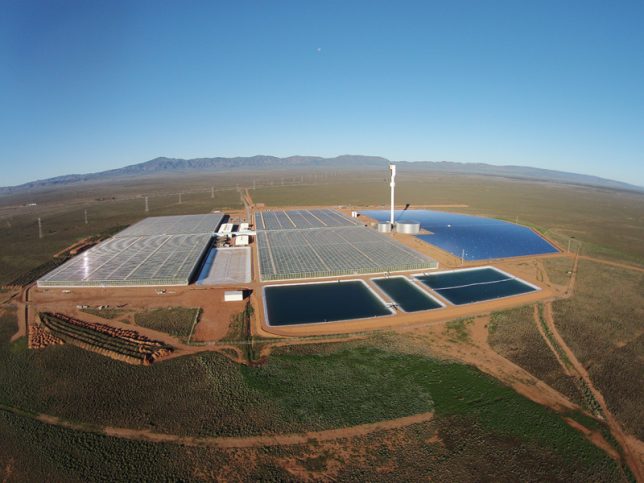
sundrop-farm-aerial-view

Using the sun and the sea, renewable sources of energy and water, a desert farming operation in Australia show how organic food in a fresh new and sustainable way.

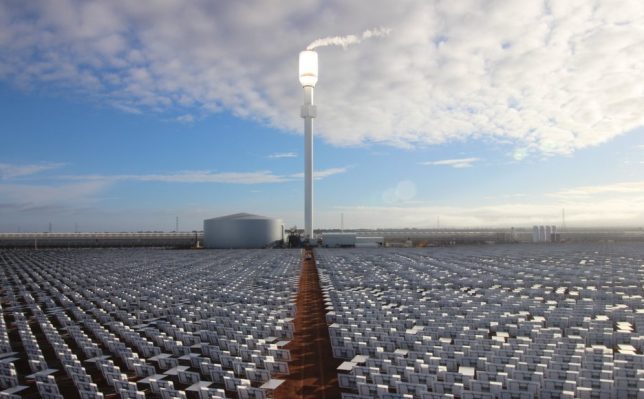
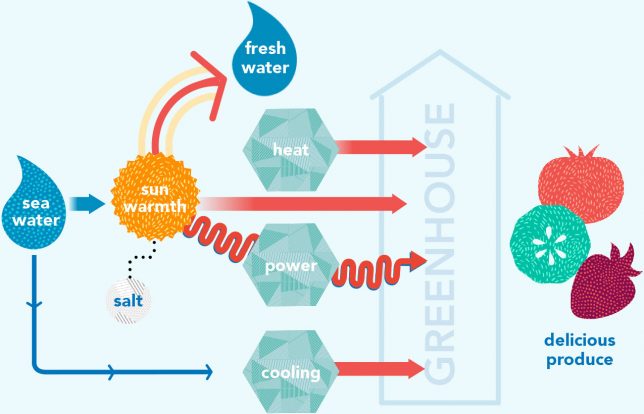
The soil-free hydroponic systems of Sundrop Farms use solar energy to filter brackish water for use on crops, growing 17,000 metric tons of food annually. The sun’s energy also powers, heats and cools the greenhouses as needed, reflected via a series of 23,000 mirrors. In contrast, a “conventional greenhouse uses groundwater for irrigation, gas for heating, and electricity for cooling.”

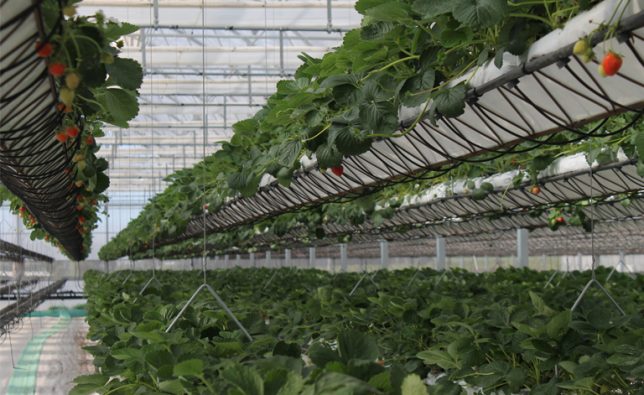
sundrop-farm-tomato-row

The “plants are grown hydroponically, which is the technical way of saying we don’t use soil. Our plants flourish on nutrient-rich coconut husks instead.” Additional climate and irrigation controls allow the farm to maximize outputs with minimized inputs.

sundrop-farm-solar-tower

The desert location as well as natural control strategies allow Sundrop to accomplish their goals without harmful, expensive or polluting inputs as well. “Unlike traditional agriculture we use no fertilizers and no weed killers. We control plant eating bugs with carnivorous ones, just the way nature intended.”

sundrop-farms-hydroponics

Sundrop’s success illustrates the possibilities of working in a world where water, land and energy are all scarce and valuable. Moreover, the farm shows that fruits and vegetables can be produced year-round in any conditions thanks to hydroponics and green energy, from rural wastelands to urban food deserts.

“Because we do everything in a controlled environment, we know what our input costs are, and we’re doing everything on a renewable basis, we can provide real consistency of supply and a higher quality product at a better price year ’round,” said Philipp Saumweber, chairman and CEO of Sundrop Farms.

sundrop-farm-systems

“Existing farming practices are unsustainable,” explains Sundrop. They generally use fossil fuels, excessive groundwater and require appropriate soil and weather conditions. “Yet by 2050 rising populations will see a 50% increase in food demand. Climate change is increasing the number and the severity of catastrophic weather events. And water scarcity is becoming more acute in arid regions. We need to look at alternative ways to create energy and to produce food. That’s no longer a preferred option but a necessity. Fortunately however, things are starting to change.”

Share on Facebook


[ By WebUrbanist in Architecture & Offices & Commercial. ]

[ WebUrbanist | Archives | Galleries | Privacy | TOS ]


WebUrbanist

 
Comments Off on Desert Farm Grows Food Without Soil, Groundwater, Fuel or Pesticides

Posted in Creativity


More Ways to Create Better Images Without Buying More Gear

28 Jul

Jay Maisel has to be one of the most interesting photographers alive today. He is 85 years old and he still makes a point of carrying his camera with him every day, everywhere he goes. I recently watched a few videos where Scott Kelby spent a few days with Jay, just wandering through the streets of New York and later, walking through Paris.

In these two different videos, Jay imparts his photography philosophy, and how he makes his images. The remarkable thing I noticed is that Jay almost never talks about photography equipment. Rather, he speaks about technique, about getting it right in camera, and making sure you spend time getting the best shot possible.

This article is a follow on from an article I did a while ago, which had a similar title to this one – 5 Ways to Create Better Images Without Buying More Gear. I now want to expand on that and add 5 more things you can do to improve your photography without buying more gear.

#1 Show the viewer something different

This is something really important that, but we don’t often think about. There are so many things being photographed every day.

5 more things image 8

Think about this: if you go to Paris, you will no doubt want a photo of the Eiffel Tower. Of course, every photographer does. The challenge is, we have all seen photographs of the Eiffel Tower, so, how will your image be different from anyone else’s? Better still, how will you make the image look like it is taken from a new vantage point or angle.

These are the tough questions, the things that we need to think about as photographers. You could try a few things, go in really close and get some detailed shots of the metal structure, find an area of it that is looking old and grungy, maybe try and shoot it from a very extreme angle, work hard to show your viewer something they haven’t seen before.

Think of the photos you have seen of the Eiffel Tower. If your image looks like any of those shots, then you need to try something different. The goal here is not to be different for the sake of being so, but to try and be unique.

Of course, you should shoot the usual postcard shot, at least you have that, but then play around, walk around, lie on the ground, shoot straight up, put your camera lens against the structure, try anything to get an angle that you have never seen before.

Show me something I have never seen before. – Jay Maisel

Look for something you have not seen before

This is one of Jay Maisel’s key messages, “Show me something I have never seen before”. He is not being flippant, we have all seen a car, a tree, a glass building, and people on the street. What he is looking for is to be shown these everyday subjects in a different way, that’s the key to this principle.

#2 Practice patience

In the video with Jay Maisel, he mentions that he was once out doing street photography with another well known photographer. As a typical New Yorker, he was walking at a pretty quick pace. After some time, the other photographer turned to him and said, “Jay, do you know why you aren’t getting any good shots? You’re walking too quickly”.

That comment caused Jay to slow down. Not only did he slow down his walking pace, but he slowed everything. He would stop in a place for five or 10 minutes. He would find a scene he liked and then, like a theatre stage, he would wait for the actors to appear, the people on the street. So he stands in a particular spot sometimes, for up to 20 minutes, and just waits for something to happen.

Sitting and waiting can result in some great images

Sitting and waiting can result in some great images

Give it a try. Next time you are out photographing in your city, stop for a while. Observe the scene in front of you. Make note of how people are moving through that scene, and start looking for an opportunity to make an image. It may take a while, if you can, sit down and just watch, pretty soon, the right person will enter your “stage” and you will have your image.

#3 Change your composition

We all know about the rule of thirds, very often it is our first introduction to composition. It’s a good starting point for creating good composition, but there are many other ways to make your images look compelling.

Composition is one area of photography that can make a vast difference in your images. Simply changing from landscape to portrait orientation for example. More than that, look a little deeper. There are some great techniques you can use to enhance your composition.

5 more things image 10

One of these is using depth of field. A shallow depth of field will isolate your subject and make the background less distracting. Speaking of backgrounds, make sure that you have looked at the background in your image and that there is nothing distracting that will take the viewer’s eye off the subject.

You could also try and frame your subject using a door frame, a window, or some overarching trees. The frame will point the viewer to the subject and, if done correctly, framing can be a very powerful compositional tool.

Remember to change your viewpoint. Lie on the ground, get as low as you can, or maybe get up as high as possible. If your viewpoint is unusual, your subject will benefit immensely.

Shooting from a different viewpoint can make all the difference

Shooting from a different viewpoint can make all the difference

#4 Go out empty

Another piece of Jay Maisel wisdom is to go out empty, and let your images fill you up. What does that mean?

Very often, you may go out on a shoot and are “hunting” for a particular image. Maybe you are looking for a man with a blue shirt riding a red bicycle, which is pretty specific, and really difficult to find. The challenge is that if you are looking for only that one type of shot, you may miss all the others that are out there.

By going out empty, you are open to whatever comes into your viewfinder. You may get a shot that you never thought of before or have seen before, that’s the point. Sometimes it is good to shoot with constraints, it forces you to be creative.


By going out empty, you may be surprised at what you will see

By going out empty, you may be surprised at what you will see

At other times, go out without any limitations, simply look at what unfolds in front of you and shoot whatever you find interesting. That’s one way to get some great shots. Also, be open to what happens while you are out shooting.

I was photographing in an old area in the East Side of Vancouver. A lady came up to me and asked what I was doing, and I told her I was looking for some great shots of the homes in the area. She asked if I wanted to see inside her home, I am so glad she invited me. Her home was amazing, and it was a great opportunity to see inside a true heritage home.

#5 It’s not about cropping, but about framing

As photographers, we can become a little lazy. We will compose the shot, look at the scene, and realize we need to move a little to the left because there is something distracting in the shot. Many times, we might think, “It’s okay, I can crop that out later”.

5 more things image 9

Yes, that is true, you can crop it out later, but it may change the whole perspective of the shot. I might mean that you lose another important piece of information.

Jay Maisel reminds us that it’s about framing, not cropping. He says that it is the photographer’s responsibility for what is in the frame and, sometimes more importantly, what is NOT in the frame. Instead of assuming you can crop something out later, maybe move around the subject a bit, look at it from different angles, and then decide what needs to be in the frame and what doesn’t.

As Jay says, “The photographer is responsible for everything in the frame”. Make sure that everything that’s in the frame is there for a reason, otherwise, change it.

5 more things image 5

You are responsible for everything in the frame.

Of course there are no rules in photography, there are only guidelines. These ideas are simply suggestions that can help you improve your images, and to see more clearly. Once you begin practicing these things, you won’t have to think about them as much. You will do them instinctively, and that’s when your photography will change and become more mature.

So get out there and give these ideas a try, practice one of these suggestions on each photoshoot or photowalk you do. Keep making the changes and slowly working on your craft, and you may look back in a year and be astounded at how much your work has improved.

googletag.cmd.push(function() {
tablet_slots.push( googletag.defineSlot( “/1005424/_dPSv4_tab-all-article-bottom_(300×250)”, [300, 250], “pb-ad-78623” ).addService( googletag.pubads() ) ); } );

googletag.cmd.push(function() {
mobile_slots.push( googletag.defineSlot( “/1005424/_dPSv4_mob-all-article-bottom_(300×250)”, [300, 250], “pb-ad-78158” ).addService( googletag.pubads() ) ); } );

The post More Ways to Create Better Images Without Buying More Gear by Barry J Brady appeared first on Digital Photography School.


Digital Photography School

 
Comments Off on More Ways to Create Better Images Without Buying More Gear

Posted in Photography


3 Tips for Photographing Children Without Losing Your Mind

27 Apr

photographing-children-9

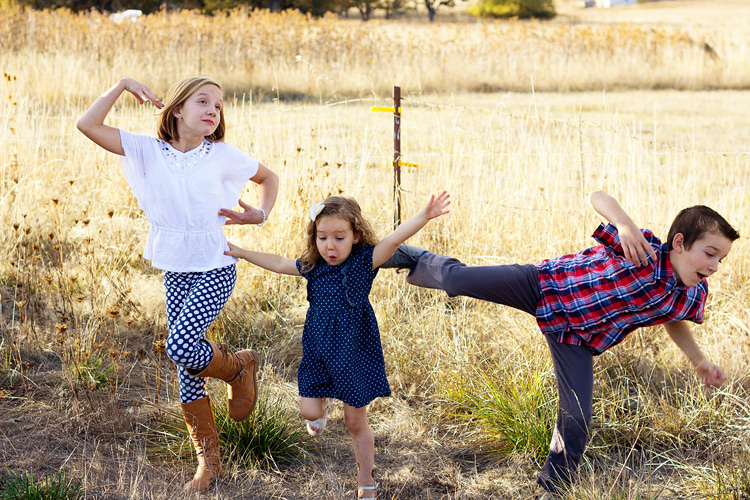
Photographing children is one of my favorite things to do, but at times it can also be one of the most difficult. Sometimes with kiddos, there is a very thin line between capturing memories that will last a lifetime, and capturing tears, tantrums, and meltdowns. After years of photographing nieces, nephews, friends, and my own girls, I’ve made a whole lot of mistakes. But, I’ve also picked up a few tips and tricks that help things go a little more smoothly when it comes to photographing children, that will hopefully make your life a little easier as well.

1. Choose your location thoughtfully

photographing-children-8

When photographing children, heading to a park is a no-brainer, right? Well, maybe. Parks can be really great, free resources for photographers, but it’s important to think about them through the eyes of a child as well. As a photographer, if you take a young child to a park with a playground and then attempt to have them sit still on the grass directly across from the playground for a portrait, chances are that you’re creating an scenario that may not end well. If there’s a playground in view, you’d better be prepared that the kids will want to play on it.

photographing-children-7

Sometimes, letting kids play on the playground is a great way to capture some more candid moments, and other times it is a big distraction. More and more, I find myself scheduling sessions at hiking trail heads, covered bridges, and open fields, which still allow for plenty of room to run and play, but in a location that provides fewer distractions. In addition, I find these sorts of locations to be more aesthetically pleasing for capturing those candid moments, than playgrounds often are.

2. Find ways to make them laugh

photographing-children-6

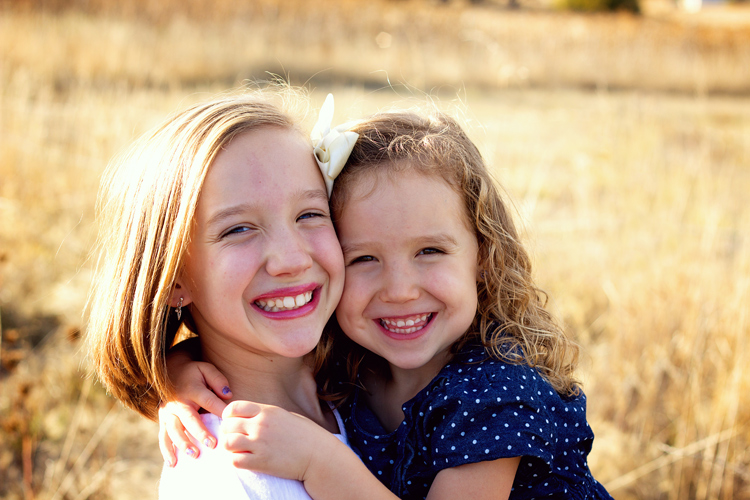
Anyone who has photographed kids knows that most kids have a fake smile, that makes an appearance any time someone asks them to smile. That fake smile is fine, and may be unavoidable to some extent, but it is always better to get a real smile or laugh whenever possible. There are so many ways to do this, but I’ll share just a couple that I’ve found to be effective with lots of different children.

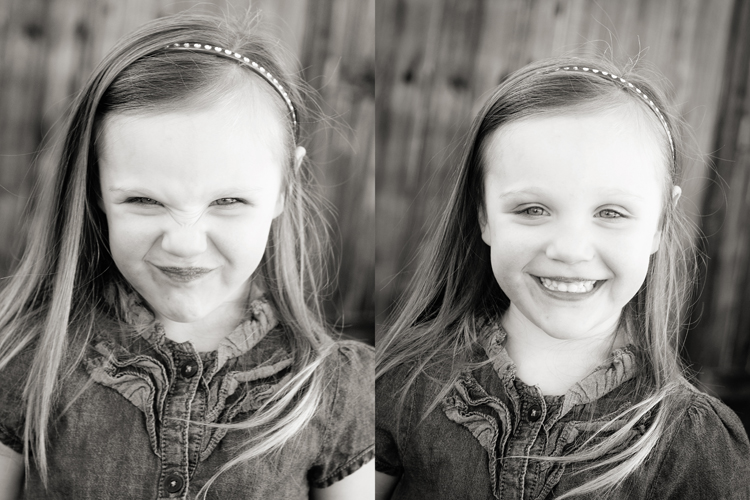
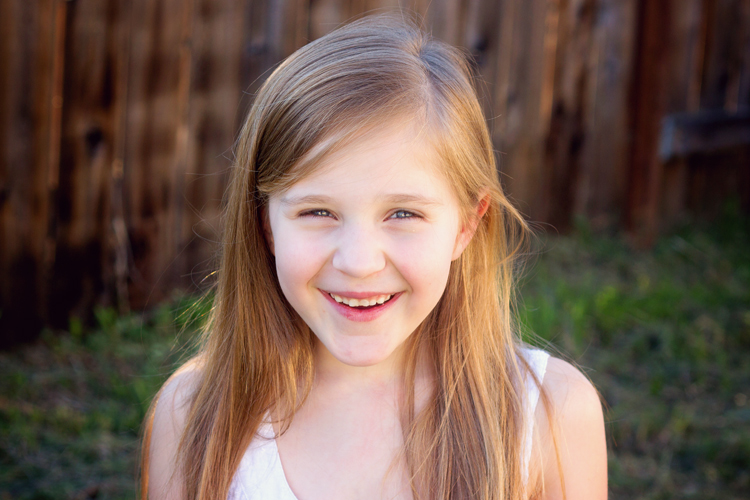
The first is simply to ask them to show you a variety of different faces. It’s fun to capture the silly faces that they make, but the point is really to capture their genuine smiles and laughs at your reaction to their silly faces. In the photo above, I asked my daughter if she would show me her angry face (left), and while I absolutely love that photo, and think it actually captures her slightly mischievous personality very well, my goal was really the more natural smile (right) that came after my laughter and exclamations that her angry face was absolutely terrifying.

In my experience, most kids think it’s hilarious to run through a whole string of different faces: angry, silly, dinosaur face, prince/princess face, hungry face, tired face, surprised face, and happy face all tend to be fun, and often result in lots of genuine smiles and laughs.

photographing-children-3

Another thing that seems to work well for most kids is to simply ask them to give you a funny pose. Be ready, because you may get anything from a stuck out tongue, to much more hysterical shenanigans. I truly never know what to expect, but always be ready to capture whatever it is. I often include a few of the most silly photos in the final images, because even if they aren’t 100% perfect or they don’t fit my normal aesthetic, they just plain make everyone happy, and I think there’s value in that. There’s also a practical value during the session as well, in that once again, being silly results in genuine smiles and laughs. Time and time again, my favorite images in a session are often the ones that come directly after the silliest images.

photographing-children-4

3. Be sensitive, and keep a sense of humor

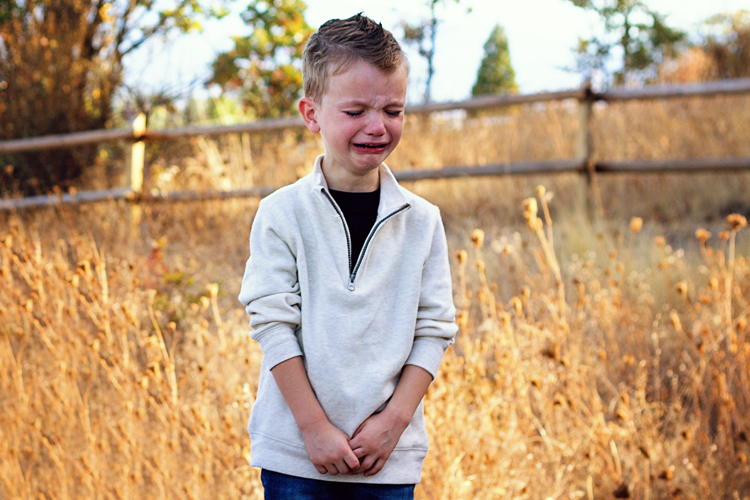
My oldest daughter once cried for a half an hour because I made blackberry cobbler for breakfast, and she wanted toast instead. My youngest daughter laid on the floor, cried real tears, and screamed that I was ruining her whole life because I asked her to put on her shoes this morning. Moments like those are rarely funny at the time, but sometimes an hour or a day later, you find yourself laughing at the absurdity of the situation.

photographing-children-2

When it comes to kids, the reality is that even if you’ve been thoughtful about the timing and location of a session, sometimes meltdowns happen for no identifiable reason, and come from out of nowhere (sometimes they even happen mid-photo, as above). Photo sessions can be kind of stressful, and feel really high pressure for both kids and their parents. Sometimes with a little humor, distraction, or quick change of plans, everyone can get through a tantrum or minor meltdown just fine, and you’ll all laugh about it years later.  Sometimes, it’s more than that, and a child may be having a meltdown because of sensory issues that you are unaware of, or because they’ve been battling a cold or they’re teething and they just don’t feel good.

Regardless of the reason, sometimes it’s clear that the kiddo is genuinely upset, and isn’t going to calm down any time soon. If a child is genuinely upset, don’t force things. If it’s possible, offering to try again on a different day can be a really meaningful good-will gesture. After all, a parent saying, “Stop crying and smile” rarely (if ever) results in those genuine smiles that we so desperately try to achieve as photographers. It’s a fine line to walk sometimes, between being sensitive to the really legitimate feelings that kids may be having, and to also recognize that sometimes kids cry and get hysterical about really silly things, and then get over them equally as fast.  If things go south, just do your best to be sensitive, while also keeping a sense of humor about things. Life is messy sometimes.

photographing-children-5

Do you have any other tips that make photographing children just a little bit easier? Please share in the comments below, and I’d love to see your kid photos too.

People photography week

This week on dPS we’re featuring articles all about different kinds of people photography including portrait, event and travel photography. See all the previous ones below, and watch for more people photography articles over the next few days.

  • How to Take Low Key Head-shots
  • How to Do a One Light Portrait Setup and Use it as Your Back-up Plan
  • Travel People Photography – Tips and Pitfalls
  • 8 Tips for Photographing Men
  • 24 Diverse Images That Showcase People Photography
  • Weekly Photography Challenge – People Photography
  • Tips for Getting Yourself to Relax as a Photographer and Have More Successful Portrait Sessions
  • 5 Good Reasons to Add People into Your Landscape Photography
  • 6 Must-Have People Shots to Capture When Photographing Corporate Events
  • 4 Tips to Help You Get Started Doing Lifestyle Photography

googletag.cmd.push(function() {
tablet_slots.push( googletag.defineSlot( “/1005424/_dPSv4_tab-all-article-bottom_(300×250)”, [300, 250], “pb-ad-78623” ).addService( googletag.pubads() ) ); } );

googletag.cmd.push(function() {
mobile_slots.push( googletag.defineSlot( “/1005424/_dPSv4_mob-all-article-bottom_(300×250)”, [300, 250], “pb-ad-78158” ).addService( googletag.pubads() ) ); } );

The post 3 Tips for Photographing Children Without Losing Your Mind by Meredith Clark appeared first on Digital Photography School.


Digital Photography School

 
Comments Off on 3 Tips for Photographing Children Without Losing Your Mind

Posted in Photography