RSS
 

Posts Tagged ‘Winter’

Winter Wedding Photography Tips: All You Need to Know

12 Jan

Winter weddings bring a lot of photography challenges because of weather, chilly winds and dark skies even in the day time. But still, many couples decide to have a winter wedding to enjoy the special discount on venues, catering and inexpensive honeymoon. The first thing that comes to our mind with winter weddings is bad weather– snowfall, temperatures below zero Continue Reading

The post Winter Wedding Photography Tips: All You Need to Know appeared first on Photodoto.


Photodoto

 
Comments Off on Winter Wedding Photography Tips: All You Need to Know

Posted in Photography


Winter Wonderland: Don Komarechka’s snowflakes

30 Dec

Photographer Don Komarechka likes to explore the world that we cannot see with our own eyes. Every winter he produces an incredibly detailed photo series on snowflakes, using a pair of black mittens as the backdrop and a high quality macro lens to reveal the unique crystalline structures in incredible detail. Read our Q&A and take a look at his photos. See gallery

Articles: Digital Photography Review (dpreview.com)

 
Comments Off on Winter Wonderland: Don Komarechka’s snowflakes

Posted in Uncategorized


Why Manual Exposure is Better for Winter Wildlife Photography?

18 Dec

My winter wildlife photography tours and workshops put us in locations with lots of snow on the ground, which presents a new issue for most people – how to get good exposure without continuously messing around with exposure compensation.

You have to tell the camera to brighten your images by up to two stops of exposure to make whites white, because the meter in your camera wants everything to be a mid-tone gray.

MBP Cranes Exposure Example

For example, here is a photograph of one of our main subjects, the Japanese Red-Crowned Crane (above, left). It’s a predominantly white bird on a snowy white background. For a shot like this if I put the camera in Aperture Priority mode with the aperture set to f/8 for example, the camera would tell me that the shutter speed should be about 1/2000 of a second, which would result in a photo like the under-exposed dark version (above, right).

To avoid under-exposing images like this, one thing you can do is to dial-in +2 stops of exposure compensation in Aperture Priority mode. This would result in a new shutter speed of 1/500 of a second at the same aperture, and a beautifully white image.

There is one fundamental problem with this method though, and this is what most people fail to understand until they’ve missed enough shots for them to take my advice seriously. The moment your subject moves away from their white background, the exposure with +2 stops of exposure compensation is no longer valid.

To prove my point during a recent tour, I switched to Aperture Priority with auto-ISO and photographed this Whooper swan on the snow with +2 stops of exposure compensation dialed in. This gave me a perfectly white bird with perfectly white snow, as we’d expect.

MBP Hokkaido 20140221 0212

Then, just moments later, I photographed a flock of Whooper swans flying into the same location, this time with a darker background, which fooled the camera into increasing my exposure and the result was this totally over-exposed photograph.

MBP Hokkaido 20140221 0217

To avoid this, when photographing wildlife in the snow, the best course of action is to lock your exposure down (using Manual) so that when the opportunity to photograph something with a darker background arises, the exposure doesn’t shift, and the subject and the snow remains perfectly exposed, as in this example.

MBP Hokkaido 20140131 1261

The downside of this method is that you do have to continually check your exposure, especially on a day with patchy cloud for example. Because you’ve locked down your exposure totally, you are responsible for noticing when it gets a bit brighter or darker, and updating your camera settings.

In my experience though, although you sometimes have to tweak the exposure in post-processing, you still return home with many more usable shots, as opposed to the above example with the flock of supernova swans, which is a firm candidate for deletion.

Settings Your Exposure for White

To set my exposure I usually just fill the frame with snow, and adjust the settings in Manual mode, until I see the caret on the camera’s meter indicate that the exposure is now at +2 stops for overcast snow or +1 1/3 stops for brightly lit snow.

MBP Filling the Frame with Snow 640 f8 ISO1001

How you achieve your exposure depends on your subject. Personally, I usually start with the aperture, as that controls depth-of-field, and I want to select that based on how much of the subject or scene I want to be sharp, and how much of it I want to be nice blurry out of focus bokeh.

Then I select the shutter speed, based on my focal length and how much I expect my subject to move. The rule of thumb for the slowest shutter speed you can use without the risk of introducing camera shake, is to use the focal length as the denominator of the fraction in your shutter speed. For example if you are shooting with a 200mm lens, the slowest shutter speed you can safely shoot hand-held is 1/200 of a second.

Of course, image stabilization or vibration reduction in the lens can help you to go slower, but you also have to consider subject movement with wildlife. To freeze a large bird in flight you need at least 1/500 of a second, but ideally 1/1000 or higher if possible.

These are, of course, general guidelines. You may decide to slow down the shutter speed and pan with your subject to use the blur of the wing movement artistically as in this example, but that’s the subject for another article.

MBP Hokkaido 20130207 4320

Once I’ve decided the aperture and shutter speed based on the subject and any artistic decisions I might make, the last setting that I usually change as I lock in on my manual exposure is the ISO. Once the caret reaches +2 on the camera’s meter scale, I make a test shot, and check the histogram.

For a photograph of a field of snow, or a white bird on a white background, most of the data in the histogram should be almost touching the right shoulder of the histogram. This means the image data captured is almost pure white, as it should be. If the data is in the middle of the histogram, the whites will be gray. This is what the camera would do automatically without our help.

MBP White on White Histogram

Also remember to turn on your highlight alert or highlight warnings in your camera’s settings, commonly called “the blinkies”, as these will alert you to any areas of your image that you might be over-exposing. It’s okay to over-expose a few specular highlights, but try not to over-expose large areas of your image, especially on your main subject, or the detail in those areas will be lost, and cannot be recovered on a computer later.

One of the other nice things about photographing birds over snow is that the light from the snow reflects up onto the underside of the birds in flight, as in this example. This means that you really don’t have to worry about where the bird is once you have locked your exposure down in Manual mode.

MBP Hokkaido 20140221 6768

The subject can be on white background, a dark background, or a blue sky, and your exposure will be spot on, leaving you free to concentrate on focusing and composition, instead of frantically trying to adjust your exposure compensation as the action unfolds.

googletag.cmd.push(function() {
tablet_slots.push( googletag.defineSlot( “/1005424/_dPSv4_tab-all-article-bottom_(300×250)”, [300, 250], “pb-ad-78623” ).addService( googletag.pubads() ) ); } );

googletag.cmd.push(function() {
mobile_slots.push( googletag.defineSlot( “/1005424/_dPSv4_mob-all-article-bottom_(300×250)”, [300, 250], “pb-ad-78158” ).addService( googletag.pubads() ) ); } );

The post Why Manual Exposure is Better for Winter Wildlife Photography? by Martin Bailey appeared first on Digital Photography School.


Digital Photography School

 
Comments Off on Why Manual Exposure is Better for Winter Wildlife Photography?

Posted in Photography


Weekly Photography Challenge What Winter Means to You

06 Dec

Earlier I shared a set of frosty images to get you in the wintery mood.

Now it’s the time for the weekly photography challenge, so it’s your turn to get out and shoot winter. Since winter means different things and looks different depending on where in the world you live – this challenge is about winter and what it means to you.

If you’re in the northern hemisphere that might mean:

  • Snow
  • Ice
  • Frost
  • Fog
  • Winter sports
  • Frozen things
  • Cold

Here are some examples:

@Doug88888

By @Doug88888

Sharon Mollerus

By Sharon Mollerus

Mathias Erhart

By Mathias Erhart

Samuel John

By Samuel John

Alexey Kljatov

By Alexey Kljatov

Dorena-wm

By dorena-wm

Dorena-wm

By dorena-wm

If you are in the southern hemisphere or close to the equator (as I am currently writing this from warm and sunny Nicaragua where I’m living and working for two months) that might mean the beach, sand and sun.

Share your winter images here:

Simply upload your shot into the comment field (look for the little camera icon in the Disqus comments section) and they’ll get embedded for us all to see or if you’d prefer upload them to your favourite photo sharing site and leave the link to them. Show me your best images in this week’s challenge.

googletag.cmd.push(function() {
mobile_slots.push( googletag.defineSlot( “/1005424/_dPSv4_mob-all-article-bottom_(300×250)”, [300, 250], “pb-ad-78158” ).addService( googletag.pubads() ) );
} );

The post Weekly Photography Challenge What Winter Means to You by Darlene Hildebrandt appeared first on Digital Photography School.


Digital Photography School

 
Comments Off on Weekly Photography Challenge What Winter Means to You

Posted in Photography


31 Awe Inspiring Majestic Winter Images

05 Dec

If you’ve followed the news recently you may have heard about the crazy snow storm in New York state in the USA. Many feet of snow fell in 24 hours and whole cities were brought to a halt.

But cold weather can make for some great photographic opportunities. Enjoy this series of frosty winter images, but stay warm!

Photograph The Magic of Bled Island by Dan Briski on 500px

The Magic of Bled Island by Dan Briski on 500px

Photograph Ice on Fire by Javier de la Torre on 500px
Ice on Fire by Javier de la Torre on 500px

Photograph Sugar house by Andrey Chabrov on 500px

Sugar house by Andrey Chabrov on 500px

Photograph No End In Sight by Todd Shaffer on 500px
No End In Sight by Todd Shaffer on 500px

Photograph In Hiding by Robert Beideman on 500px

In Hiding by Robert Beideman on 500px

Photograph The Ice Mountain by Hougaard Malan on 500px
The Ice Mountain by Hougaard Malan on 500px

Photograph Broken Bubble by Charles Anderson on 500px

Broken Bubble by Charles Anderson on 500px

Photograph Legs of the ice beast... by Charles Anderson on 500px
Legs of the ice beast… by Charles Anderson on 500px

Photograph Blue Ice by Terence Leezy on 500px

Blue Ice by Terence Leezy on 500px

Photograph The Crystal Grotto by Christian Klepp on 500px
The Crystal Grotto by Christian Klepp on 500px

Photograph Anton «Banderas» Ivanov by Valentin Blokh on 500px

Anton «Banderas» Ivanov by Valentin Blokh on 500px

Photograph chipper chipped out by Scott Thuen on 500px
chipper chipped out by Scott Thuen on 500px

Photograph Frosty window by Petter Langeland on 500px

Frosty window by Petter Langeland on 500px

Photograph Frozen and Forgotten by Imageination on 500px
Frozen and Forgotten by Imageination on 500px

Photograph "Please leave water facets dripping" by Andrew Boen on 500px

“Please leave water facets dripping” by Andrew Boen on 500px

Photograph Angelus glacie by Carlton Belton on 500px
Angelus glacie by Carlton Belton on 500px

Photograph Alone on the Bridge  by Anthony Pitch on 500px

Alone on the Bridge by Anthony Pitch on 500px

Photograph The White Passage by Pyry Luminen on 500px
The White Passage by Pyry Luminen on 500px

Photograph The snow at ?stiklal ! by Mine Ertugrul on 500px

The snow at ?stiklal ! by Mine Ertugrul on 500px

Photograph Under Perfect Conditions by Kent Mearig on 500px
Under Perfect Conditions by Kent Mearig on 500px

Photograph FROZEN by Keenan Bracey on 500px

FROZEN by Keenan Bracey on 500px

Photograph Apostle Islands Ice Cave by Yinan Li on 500px
Apostle Islands Ice Cave by Yinan Li on 500px

Photograph St. Joesph Lighthouse in Winter by Craig Sterken on 500px

St. Joesph Lighthouse in Winter by Craig Sterken on 500px

Photograph Winter Fairytale by Vadim Balakin on 500px
Winter Fairytale by Vadim Balakin on 500px

Photograph Winter is coming by Daniel Metz on 500px

Winter is coming by Daniel Metz on 500px

Photograph Frozen time by Vincent BOURRUT on 500px
Frozen time by Vincent BOURRUT on 500px

Photograph V3 by  Moga on 500px

V3 by Moga on 500px

Photograph Ice King/King Theoden by Claus Jørstad on 500px
Ice King/King Theoden by Claus Jørstad on 500px

Photograph Unexplored Region by Takanobu Nushi on 500px

Unexplored Region by Takanobu Nushi on 500px

Photograph Ice Castle Windows To The Starry Night by Mike Berenson - Colorado Captures on 500px
Ice Castle Windows To The Starry Night by Mike Berenson – Colorado Captures on 500px

Photograph Polar Vortex: Ice Castles by Ron Risman on 500px

Polar Vortex: Ice Castles by Ron Risman on 500px

googletag.cmd.push(function() {
mobile_slots.push( googletag.defineSlot( “/1005424/_dPSv4_mob-all-article-bottom_(300×250)”, [300, 250], “pb-ad-78158” ).addService( googletag.pubads() ) );
} );

The post 31 Awe Inspiring Majestic Winter Images by Darlene Hildebrandt appeared first on Digital Photography School.


Digital Photography School

 
Comments Off on 31 Awe Inspiring Majestic Winter Images

Posted in Photography


5 Tips for Planning a Winter Photography Excursion

04 Dec

If you have seen the recent photos of the record snowfall in Buffalo, NY, you know that for much of the world winter is here and it’s coming fast, whether you like it or not.

While your feet might be cold for the next four months, a reason to get excited is the photographic opportunities that will come from it. I am writing this to convince you to prepare now for photographing that next snowstorm because it will creep up on you, and you want to take full advantage of it.

Tips for planning a winter photography excursion
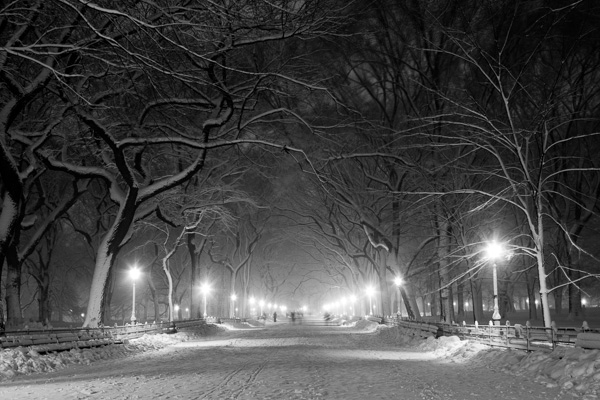
Poets' Walk, Central Park

Poets’ Walk, Central Park, NYC.

1. Plan to go out in the middle of the storm

A lot of photographers choose go out the next morning after the storm has hit, when the weather is clear and the snow is bright and crisp. You should do this as there are some fantastic photographic opportunities, however, in my opinion the best opportunities occur in the middle of the storm, when the weather is fierce and the skies are gray.

If you are going to shoot in the middle of the storm, be careful. Make sure to be safe and that the storm will not have a chance to be severe enough to get you in trouble. Make sure you have a working and fully powered cellphone, the correct clothing, and any supplies that you might need should you get stuck for awhile. It will only be more fun with friends along but always make sure that someone who is not along on your excursion knows exactly where you are going.
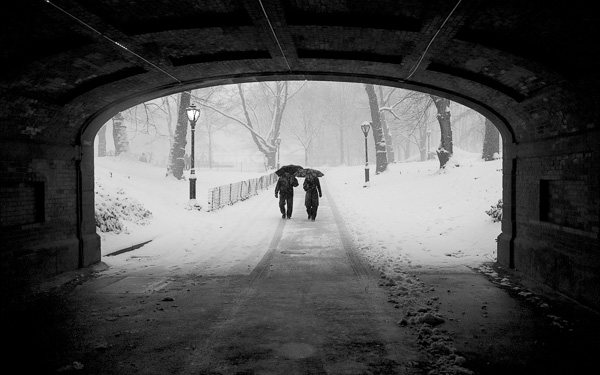
Couple in Snowstorm, Central Park

Couple in Snowstorm, Central Park, NYC.

2. Scout your route

Create your route ahead of time. You can always explore and veer off, but it will help to have a plan of action. The key to photographing snowstorms is that you are not going out to just photograph the snow, you are going out to photograph interesting places in the snow.

Create a route with scenes that you think will look good in the snow. This could be a house, a barn, a lamppost, a main street, a park, or a scenic landscape. In addition, creating this route ahead of time will allow you to share it with someone beforehand should you get stranded.

3. Protect your camera
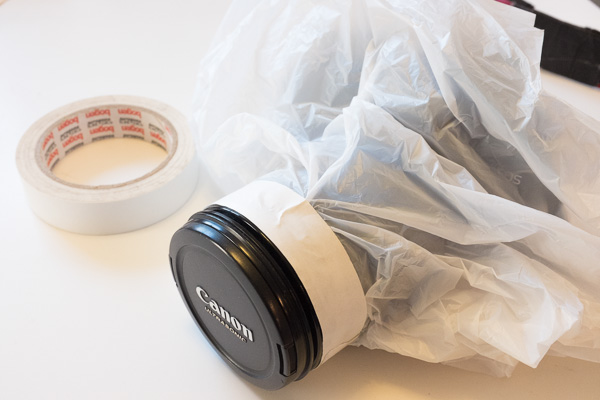
The best camera weather protector, a small plastic bag and some tape.

The best camera weather protection – a small plastic bag and some tape.

Digital cameras are tough, but you still want to treat them carefully. In extremely cold and severe weather conditions you might want to take further precautions, but for most winter situations there are only a few things that you will need to do.

Pick a lens for the day and keep it on your camera. Some people might disagree with this, but in this situation, I personally do not want to risk getting moisture inside the camera, so I will not change the lens. If anything, I will take a second camera with another lens on it, but mostly I will take either my 24-105mm or 70-200mm lens and only use one of them.

I have tried so many rain protection devices for my Canon SLR and I have given up on every single one of them. They have all been too bulky and cumbersome to use with the camera freely in harsh weather. I have yet to find one that works better than a simple plastic bag with a hole in it, and tape to attach it to the lens or lens hood. I use the typical pharmacy plastic bags. Bring multiple bags and the roll of tape because they will have to be replaced a couple times during the day. I use this setup for shooting in the rain as well.
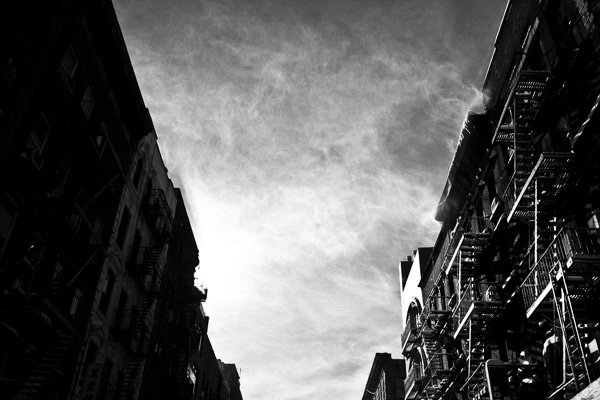
Tenement Rooftops, Lower East Side.

Tenement Rooftops, Lower East Side, NYC. You do not want that getting into your camera while you change lenses.

Bring multiple hand towels and microfiber cloths to dry off the camera, and to keep the front of the lens clear from fog. A lens hood can add further protection. If the snow is light, then I will keep the camera uncovered and will often use a small umbrella, while drying off the camera frequently. When the snow gets stronger then I will use the plastic bag and sometimes I will use it in combination with the umbrella. In between shots I keep the camera covered and I always keep the front of the lens pointed down until I actually take the shot, to keep it clear of snow.

You will also want to bring along extra batteries, since they do not work as well when they are cold.

Finally, be careful about suddenly changing the temperatures on your camera. This is what can really hurt your camera. You do not want to go from shooting in the middle of a snowstorm to putting it by a warm fire right away. Let the camera warm up slowly in your car, garage, or in a cooler area of your house.
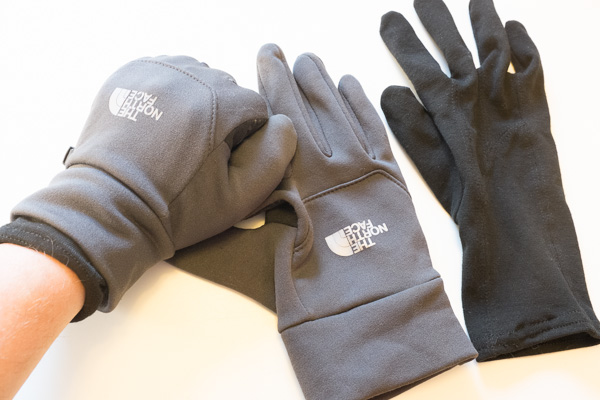
Photography gloves.

North Face touch screen gloves with inner linings. Still not as warm as heavy duty gloves, so not ideal for Arctic exploration, but they are much easier to work with when handling a camera.

4. Prepare your clothing and equipment ahead of time

Sense a theme here? Set up everything ahead of time so that when the storm hits all you have to do is get dressed and walk out the door. It is so easy to procrastinate and ultimately decide to stay in with some hot coffee. Planning and packing everything right before the shoot just adds another layer to stop you from doing it. I know this from experience. If everything is set, then the only thing that is standing between you and the outdoors is you.

You might try to tell yourself that there will be another storm but that is never guaranteed. If the weather is perfect, then you need to take advantage of the opportunity while it is there. It could be a once in a lifetime experience.

Use two layers of thinner gloves. Gloves are a huge problem with photography as the warmest ones are too bulky to adjust the fine controls on the camera, and the thin ones are not warm enough. I use a thin inner layer glove combined with a medium strength pair of North Face gloves. This is still not as warm as a heavy duty pair, but the mobility is a big advantage.
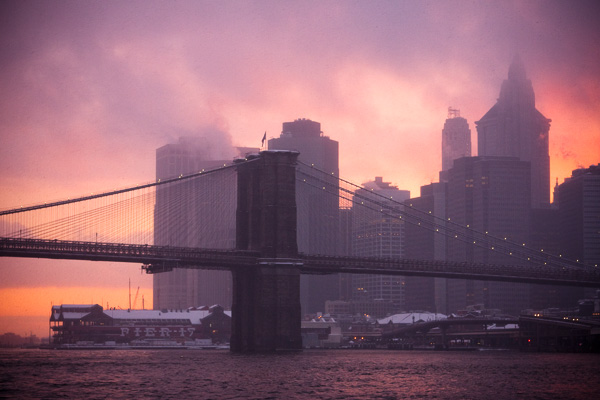
Brooklyn Bridge in Snowstorm, at Sunset

Brooklyn Bridge in Snowstorm, at Sunset, NYC.

5. Plan a sunset into dusk route

The most uncomfortable times to shoot often yield the best results. You may have heard to shoot during the golden hour, or at night, or during a snowstorm, but the real magic happens when all of these come together in one. Plan out exactly where you want to be during the golden hour and after the sun sets. If it is in the middle of a hard storm then the sunset might not shine through the fog, but everything will still get magical as it transitions to night.

Make sure to bring a tripod for dusk. Also a strong flashlight can help for focusing, because it can be tough for the camera to lock onto dark scenes. You can also use manual focusing to select the focus distance that you want.
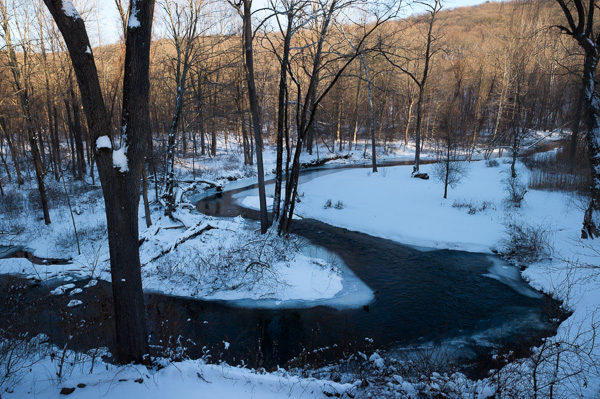
Cold Spring, New York.

Cold Spring, New York. The warm sunset light contrasted with the blue shade adds an interesting aspect of contrasting color.

Bonus: Technical tips

If you are not shooting in full manual, all that white snow is going to trick the camera’s light meter to make the images darker than they need to be. It is common for people to come back from a day shooting in the snow to wonder why the photos all look so gray. Raise your exposure compensation (+/-) to combat this and make the snow whiter, but make sure to not blow out the details completely.

The opposite side of this tip is that a gray snowy scene can be fantastic, so you might not want the snow be very white. You have creative control here and can use the +/- on your camera or manual mode to achieve the exact look that you want. It is better to do this in the camera rather than in post-production.

Also, pay attention to make sure that your focus point is correct and if you are shooting digitally then take a few shots of the same scene. Snowy and harsh conditions can make focusing tough and can make the problem of back-focus even easier to occur. Make sure the focus point is locked onto the area that you want to be the sharpest and not the area behind it.
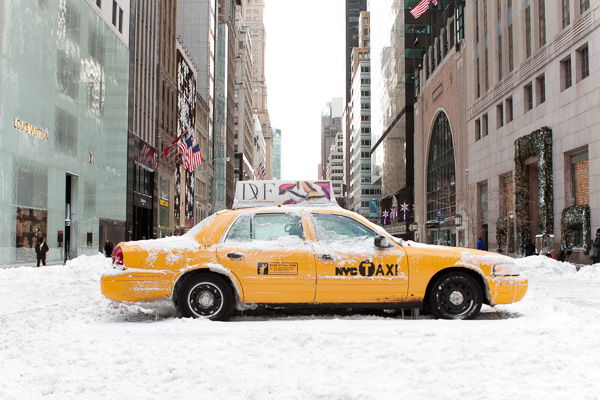
Broken Taxi, 5th Avenue.

Stuck Taxi, 5th Avenue, NYC.

Be adventurous. This is not just about getting that ideal photo, it is about enjoying the process as well. The camera is a wonderful tool to force you out the door to explore gorgeous locations when you might otherwise decide to stay inside in the warmth. A camera is a gift in many ways.

googletag.cmd.push(function() {
mobile_slots.push( googletag.defineSlot( “/1005424/_dPSv4_mob-all-article-bottom_(300×250)”, [300, 250], “pb-ad-78158” ).addService( googletag.pubads() ) );
} );

The post 5 Tips for Planning a Winter Photography Excursion by James Maher appeared first on Digital Photography School.


Digital Photography School

 
Comments Off on 5 Tips for Planning a Winter Photography Excursion

Posted in Photography


25 November, 2014 – Yellowstone In The Winter

26 Nov


In the last week just about all parts of North America received a very early preview of winter.  In Buffalo they received nearly 6 feet of snow.  And that is before Thanksgiving.  So, in honor of a cold winter ahead we present Nigel Turner’s article on Yellowstone In The Winter.  Nigel who shared an article Symphony In Stone takes us deep into Yellowstone during the coldest part of winter.  Enjoy some beautiful photography and remember just because it is cold out doesn’t mean your cameras need to gather dust sitting on the shelf.


The Luminous Landscape – What’s New

 
Comments Off on 25 November, 2014 – Yellowstone In The Winter

Posted in News


Weekly Photography Challenge – Winter Sports

22 Feb

If you guessed by the post earlier today of images of winter sports that the challenge this week would be the same – you’re right!

This week’s photography challenge is – winter sports!

Here’s a few more images of winter sports to get you inspired to get out into that cold and go shoot something. Don’t worry I’ll also give you some links to articles that will help you prepare for shooting outdoors in the cold.

By kmichiels

By der Knut

By Jen Rossey

By Shay Haas

By Sangudo

By Visit Greenland

Share your winter sports images!

Simply upload your shot into the comment field (look for the little camera icon in the Disqus comments section as pictured below) and they’ll get embedded for us all to see or if you’d prefer upload them to your favourite photo sharing site and leave the link to them.

Tips for shooting in inclement weather:

  • Winter Photography Tips | Bendy straws and Ziploc bags?
  • Tips to Protect your Gear in Harsh Weather Conditions
  • How to Protect your Camera in Extreme Conditions

The post Weekly Photography Challenge – Winter Sports by Darlene Hildebrandt appeared first on Digital Photography School.


Digital Photography School

 
Comments Off on Weekly Photography Challenge – Winter Sports

Posted in Photography


38 Amazing Images of Winter Sports

21 Feb

As the 22nd Winter Olympics finish up in Sochi, I thought it fitting to share some images of winter sports. Personally my idea of a winter sport is getting on a plane and sipping a Piña Colada on the beach. However, there are many talented athletes, and photographers who enjoy participating in many winter sports.

I hope you enjoy these images of winter sports:

By Zach Dischner

By gianluca platania

By Jenn Vargas

By Tyler

By GP(MPK)

By Jared Polin

By clyde

By Ville Miettinen

I’m Canadian – we like hockey!

By Juan Carlos Labarca

By jacinta lluch valero

By Bob Bob

By jenny downing

By Johan Røed

By Denis Messié

By Sharat Ganapati

By Justin Kern

By Niels Linneberg

By ZeroOne

By Dustin Gaffke

By G MacRae

By Bruce McKay

By Eric Lanning

By Sugin Ong

Typically Canadian!

These next few images are really typical in Canada. Snow angels, hay rides on a wagon pulled by horses, having a nice beverage after our winter sport, tobogganing (my home city even), curling and driving snowmobiles (people in Saskatchewan call this “sledding”).

By paulmcdee

By Rona Proudfoot

By Gideon Chilton

By Edmonton Economic Development Corporation

The image above is my home city of Edmonton, Alberta, Canada. This is why I go to Cuba and Nicaragua for  photo tours at this time of year! In fact, I’m outta here this weekend, leaving those back home to enjoy – well – that! ;-)

By Benson Kua

By Ken FUNAKOSHI

By New Brunswick Tourism

By Adam Taber

Luge – bizarre sport in and of itself. Get on a small piece of wood and throw yourself down a track made of solid ice, and go as fast as possible. Double man luge – makes even less sense to me. Do all that, but two guys on top of each other. Some sports, you just have to wonder – who was the first to do that, and why did they think it was a good idea? I give full kudos to those that do it, but I can still think it’s just a little bit nuts. Right?

By Scott Robinson

By Ronel Reyes

What’s your favourite winter sport to shoot or participate in? If you live in a place were you don’t get winter like this (usually) do you see these and think as many of my New Zealand and Aussie friends do, “Oh how pretty the snow is!”? My standard answer is – you can come visit any time and I’ll hand you my snow shovel so you can see it up close and personal! ;-)

I would argue that snow shovelling IS winter sport! It takes physical endurance. Raises the heart rate. The faster you do it the better (so you don’t freeze solid). Welcome to my world 5 months of the year!

By D. Sharon Pruitt

By bulldog1

By Shinichi Higashi

By Chris Ford

By Corey Templeton

The post 38 Amazing Images of Winter Sports by Darlene Hildebrandt appeared first on Digital Photography School.


Digital Photography School

 
Comments Off on 38 Amazing Images of Winter Sports

Posted in Photography


Winter Photography Tips | Bendy straws and Ziploc bags?

06 Feb
© Paul Burwell Photography

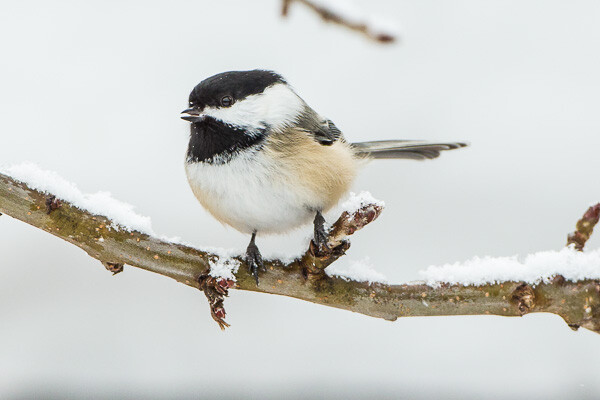
Black-capped Chickadee on a snowy branch

While a lot of photographers find that winter is an excellent time to hibernate, there are really no good excuses for staying indoors and avoiding winter.  But, you do need to take steps to protect your equipment.  Here’s a few ideas to keep things safe.

WINTER PHOTOGRAPHY TIPS

One of the biggest problems for cameras in cold weather is condensation.  Condensation occurs when you bring a camera from the dry cold temperatures outdoors, to the warm and relatively moist conditions in your vehicle or home. When that warm moist air reaches the sensor on your cold camera, condensation occurs which can leave your sensor covered in spots or even damage the electronics.  The solution to this issue is to remove your memory card and battery(s) from your camera and then transfer your gear into a Ziploc type of bag and seal it in there with the cold air while you are still outside.  Now when you bring the camera gear into a warm area, the moisture can’t get to the camera to condense  on the camera’s sensor.  Once everything warms up to room temperature you can remove it from the baggy.asj-222_1z

Another issue for winter photography is battery life.  Cold is the mortal enemy of battery life and unfortunately there just isn’t a lot you can do about that.  But, what you can do is keep a spare battery or two in an inside jacket pocket, next to your body.  The warmth of your body will keep the batteries toasty warm and when the battery in your camera succumbs to the cold, all you need to do is swap it for a warm battery.  The cold battery will slowly warm and you’ll probably find it has renewed energy when called upon.

Bendy StrawAnother bit of winter annoyance comes from having your breath condensate and freeze on your camera’s viewfinder while you’re trying to focus.  The solution for this frustration  may just be the cheapest photography accessory you will ever own. Are you ready for this brilliant invention?  Okay, here it is:

You can use a bendy straw as a type of snorkel to direct your warm moist breath away from your camera’s viewfinder so that you can continue to make those great winter shots. This  tip also provides endless entertainment for anyone who happens to be watching you.  Try it, it works!

Fight back against the winter doldrums and get out there and make some great photographs! Hopefully these tips will make your winter photography sessions more tolerable!

© Paul Burwell Photography

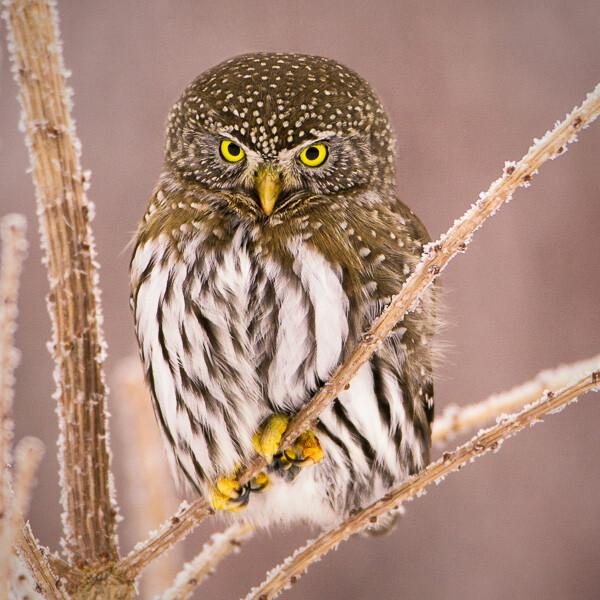
Northern Pygmy Owl on a frosty branch


Further reading on shooting on cold or inclement weather:

  • Tips to Protect your Gear in Harsh Weather Conditions
  • How to Protect your Camera in Extreme Conditions
  • 30 Foul Weather Photos for Inspiration

The post Winter Photography Tips | Bendy straws and Ziploc bags? by Paul Burwell appeared first on Digital Photography School.


Digital Photography School

 
Comments Off on Winter Photography Tips | Bendy straws and Ziploc bags?

Posted in Photography