RSS
 

Posts Tagged ‘wide’

The Canon EF 8-15mm f/4L Fisheye USM, My New Favorite Wide Angle Canon L Series Lens

21 Nov

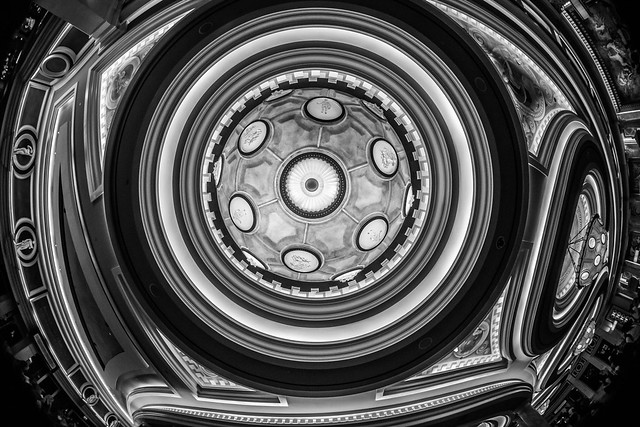
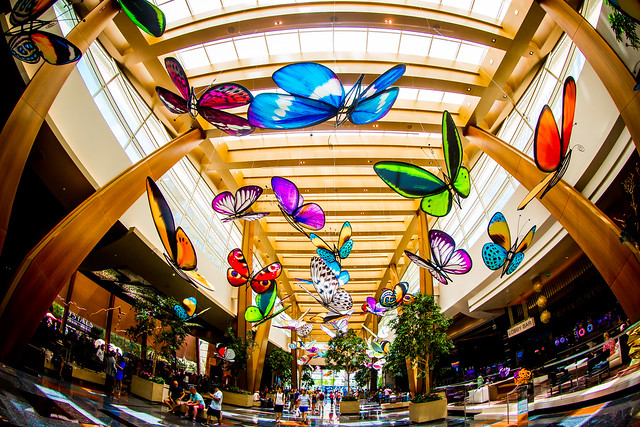
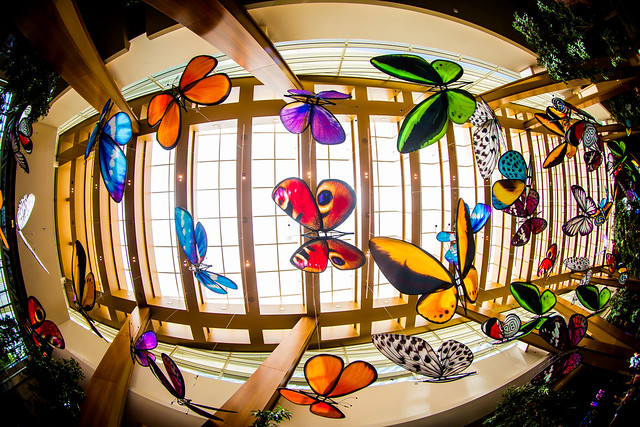
My Friend Chihuly Says Hi

I almost didn’t purchase the Canon EF 8-15mm f/4L Fisheye USM lens. I remember a conversation when I bought it a few years back on Google+ with my good pal Gordon Laing where I was really debating buying it. It was in pre production and I had an order in with B&H but it hadn’t shipped yet. At around $ 1,400 the lens felt expensive for what I worried might be an oddball lens, a lens useful for making a few high impact fisheye shots but not good for much else.

I’m happy to say that I did buy the EF 8-15mm fisheye lens and that I couldn’t be more happy about that decision.

My main dilemma with the EF 8-15mm fisheye was that I already owned the excellent EF 24mm f/1.4 lens and EF 14mm f/2.8 lens, and so I felt like I had the whole wide angle world covered. Now I find that I use this lens at 15mm much more than either my EF 24mm f/1.4 lens and EF 14mm f/2.8 lens and get what feels to me to be a remarkable more normal non fishy looking wide angle shot. Yes, you can tell it came from a fisheye lens at 15mm, but barely and I love the slightest degree of distortion I get there artistically speaking.

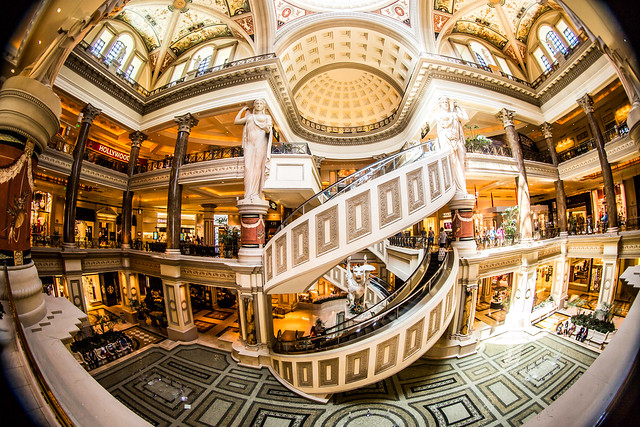
Welcome to Caesars

Of course I have way more fun shooting this lens at 8mm and have found that beyond traditional fisheye subjects, this lens has opened up a whole new world to me when it comes to shooting more abstractly — especially with architecture. I find these days my EF 14mm lens stays in my bag and instead I put on my EF 8-15mm fisheye lens for almost every ceiling photo I take.

I find this lens gets me my highest impact shots. Shots that make you go wow and make people notice.

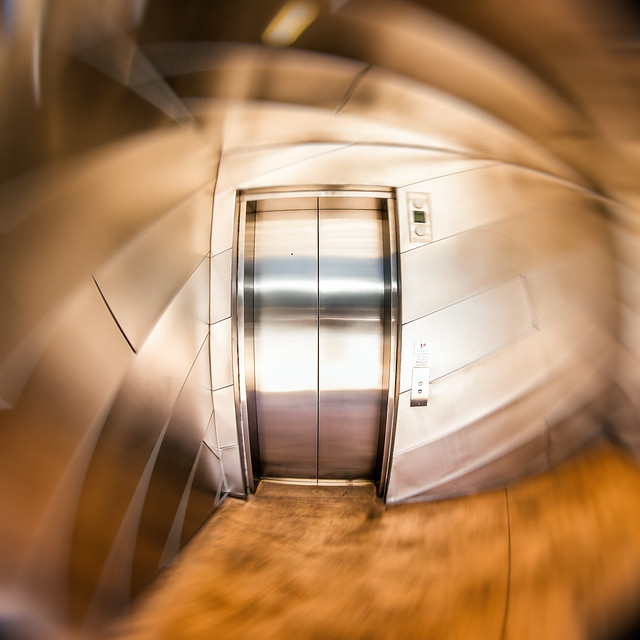
Underground

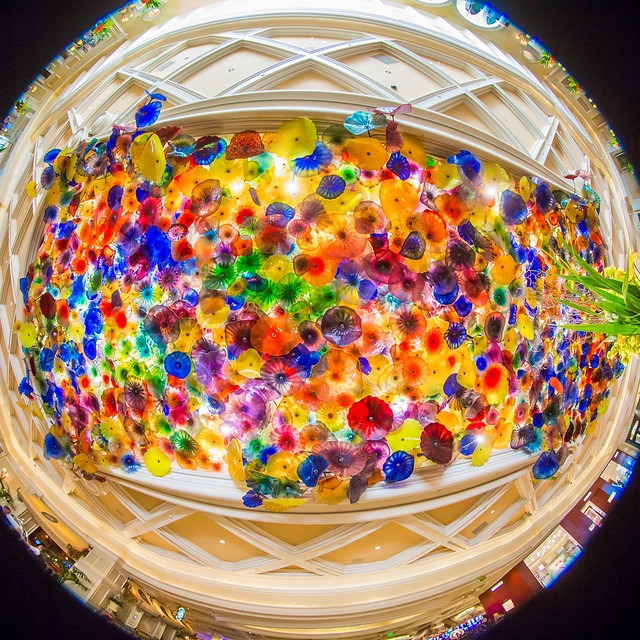
On a full frame lens this lens gives you a perfect circle at 8mm. I love the square crop format and frequently shoot it at 8mm and then crop square afterwards.

The lens is super sharp and great if you want to get the entire ceiling of Chihuly’s amazing sculpture at the Bellagio like in the photo with this post.

While it’s not the best portrait lens, it can be fun to use as well with photographing people in new and creative ways (like this version of the human eye that I used it on).

As a reminder, my analysis of my Canon gear is being done in partnership with Canon and I am receiving compensation for this work with them.

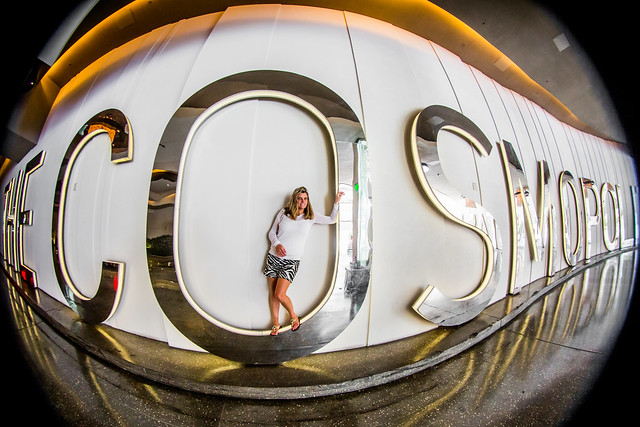
Meet You at the Cosmopolitan

You Give Your Hand to Me

If You Can Find Her

Your Love is My Favorite Color

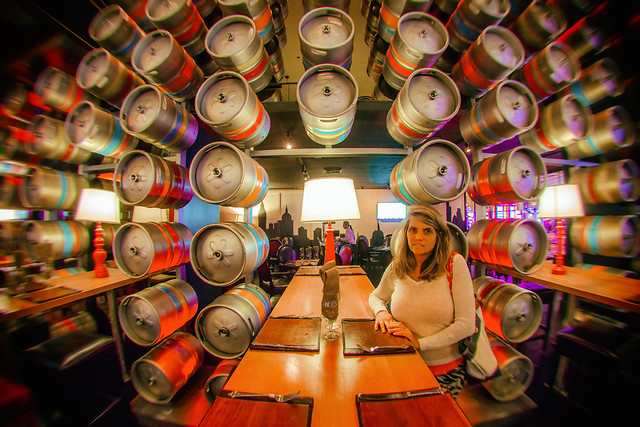
Time for a Beer?

Your Love is My Favorite Color

Penchant


Thomas Hawk Digital Connection

 
Comments Off on The Canon EF 8-15mm f/4L Fisheye USM, My New Favorite Wide Angle Canon L Series Lens

Posted in Photography


The Canon EF 8-15mm f/4L Fisheye USM, My New Favorite Wide Angle Canon L Series Lens

30 Oct

My Friend Chihuly Says Hi

I almost didn’t purchase the Canon EF 8-15mm f/4L Fisheye USM lens. I remember a conversation when I bought it a few years back on Google+ with my good pal Gordon Laing where I was really debating buying it. It was in pre production and I had an order in with B&H but it hadn’t shipped yet. At around $ 1,400 the lens felt expensive for what I worried might be an oddball lens, a lens useful for making a few high impact fisheye shots but not good for much else.

I’m happy to say that I did buy the EF 8-15mm fisheye lens and that I couldn’t be more happy about that decision.

My main dilemma with the EF 8-15mm fisheye was that I already owned the excellent EF 24mm f/1.4 lens and EF 14mm f/2.8 lens, and so I felt like I had the whole wide angle world covered. Now I find that I use this lens at 15mm much more than either my EF 24mm f/1.4 lens and EF 14mm f/2.8 lens and get what feels to me to be a remarkable more normal non fishy looking wide angle shot. Yes, you can tell it came from a fisheye lens at 15mm, but barely and I love the slightest degree of distortion I get there artistically speaking.

Welcome to Caesars

Of course I have way more fun shooting this lens at 8mm and have found that beyond traditional fisheye subjects, this lens has opened up a whole new world to me when it comes to shooting more abstractly — especially with architecture. I find these days my EF 14mm lens stays in my bag and instead I put on my EF 8-15mm fisheye lens for almost every ceiling photo I take.

I find this lens gets me my highest impact shots. Shots that make you go wow and make people notice.

Underground

On a full frame lens this lens gives you a perfect circle at 8mm. I love the square crop format and frequently shoot it at 8mm and then crop square afterwards.

The lens is super sharp and great if you want to get the entire ceiling of Chihuly’s amazing sculpture at the Bellagio like in the photo with this post.

While it’s not the best portrait lens, it can be fun to use as well with photographing people in new and creative ways (like this version of the human eye that I used it on).

As a reminder, my analysis of my Canon gear is being done in partnership with Canon and I am receiving compensation for this work with them.

Meet You at the Cosmopolitan

You Give Your Hand to Me

If You Can Find Her

Your Love is My Favorite Color

Time for a Beer?

Your Love is My Favorite Color

Penchant


Thomas Hawk Digital Connection

 
Comments Off on The Canon EF 8-15mm f/4L Fisheye USM, My New Favorite Wide Angle Canon L Series Lens

Posted in Photography


Going Wide With the Tokina 11-16mm f/2.8

29 Oct

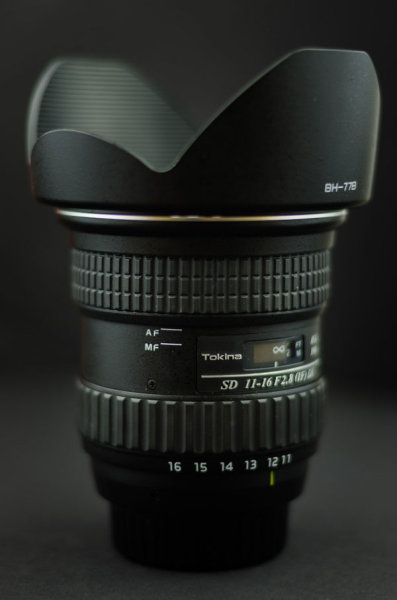
The Tokina 11-16mm f/2.8 APS-C sensor lens is without a doubt my favorite lens in my camera bag and it also has some great reviews throughout the photography community. But is this lens for you? What are its strengths and weaknesses? Ultimately, what kind of photographs can you take with it?

tokinalens

Who is the Tokina 11-16mm f/2.8 for?

On the surface this wide angle crop sensor lens is going to appeal to just about any landscape photographer using an APS-C sensor DSLR and particularly those who are on tighter budgets, as it can be found (at the time of this writing) for around $ 500 making it quite affordable for its quality.

The main strengths

The Tokina 11-16mm has been a popular lens for a few years with good reason. It is sharp throughout its focal range and has limited distortion and artifacts which can be easily corrected inside Lightroom or other post-production software.

The lens is built like a tank and can really take a beating in the wild.

The constant f/2.8 aperture is a great benefit if you plan on photographing in low light situations – for example – taking photos of the night sky.

Its weaknesses?

Of course, with every set of strengths, comes a set of weaknesses and the Tokina 11-16mm has a couple that are worth mentioning here.

The small focal length range does at times feel a bit limiting. You’re always going to be at a wide angle shot, whereas something like the Nikon 10-24 will get you closer to your subject without swapping lenses.

As I mentioned the Tokina is built like a tank, and as such, is quite large (550g) which does make it cumbersome to take with you on longer hikes. Not saying that it’s not doable, just that smaller is better when you’re packing for a trek and it’s worth considering.

Overall I haven’t noticed too many problems with the lens, but the one I have, does get a little finicky when trying to focus in low light situations. It’s not always a problem, and by no means a deal breaker for me, but it is something to be aware of.

So what kind of photographs can you take with this lens?

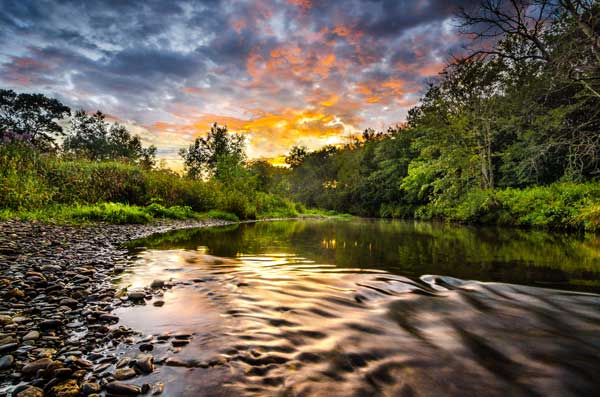
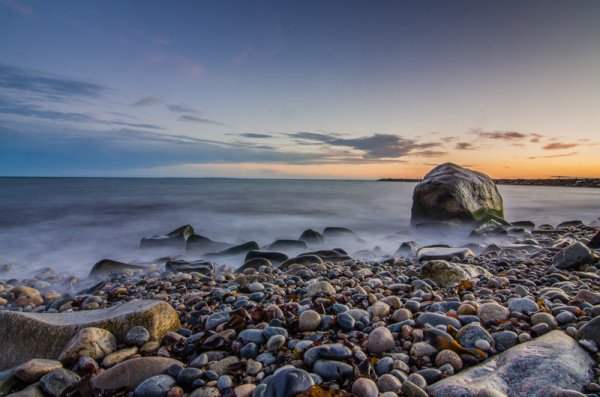
As with any lens the photographs you make are only limited by your creativity when it comes to subject matter. That said, dramatic sunset photographs, or dynamic seascape scenes are the bread and butter for this lens.

lazyphotographer

ISO 100 | f/14 | 11mm | 2.5 seconds

improve-photography-self-critic-5

ISO 100 | f/11 | 11mm | 6 seconds

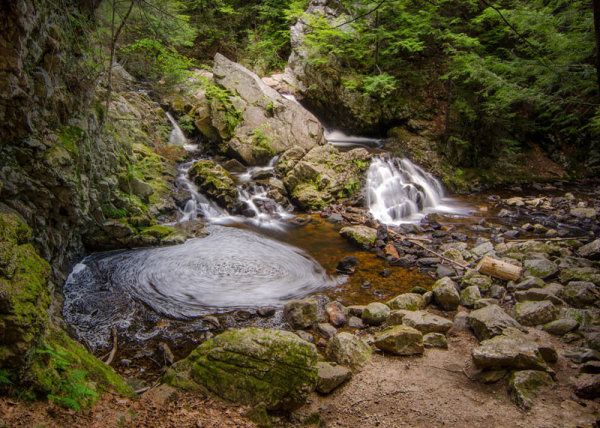
On top of these, if you’ve wanted to capture a silky smooth waterfall photograph, this lens will certainly get it done, and I’ve used it many times photographing the numerous waterfalls of New England.

show and tell-6

ISO 100 | f/14 | 16mm | 3 seconds

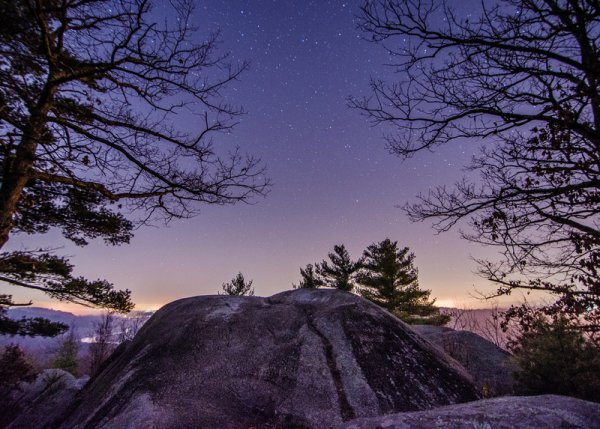
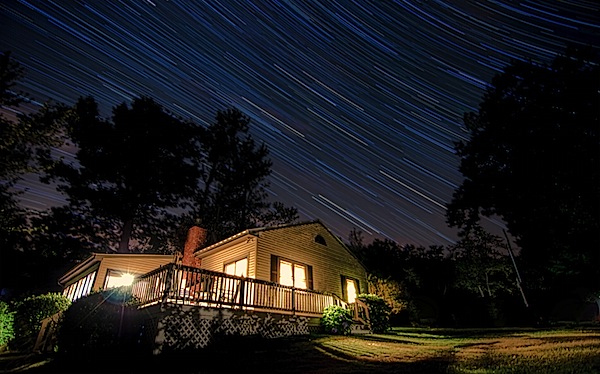
As mentioned above, having that constant f/2.8 aperture gives you the ability to capture great night sky photography. Pair it with a modern DSLR capable of shooting at relatively high ISOs and you’ll be able to capture some great shots of the stars, or create star-trails if that’s more your thing.

p2077635047-4

ISO 800 | f/2.8 | 11mm | 30 seconds

startrailphoto

ISO 800 | f/2.8 | 11mm | 30 seconds (~150 exposures)

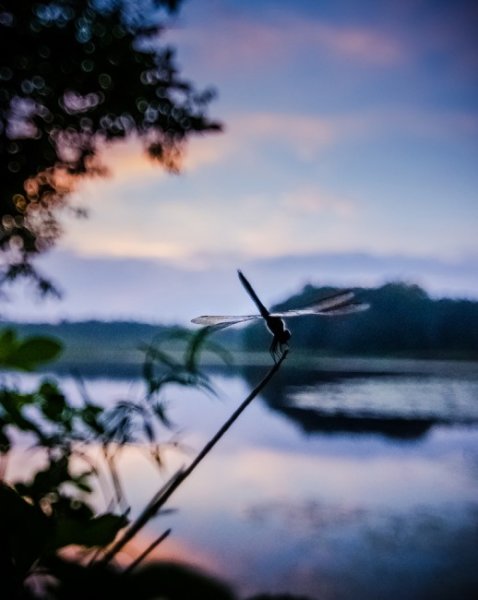
Finally, even though this is a wide angle lens, you don’t have to get caught up in capturing these massive scenes to get something out of it. Sometimes you can make it work for a subject as simple as a dragonfly watching the sunset. So it really is limited only by your creativity.

Dragonfly-Watching-Sunset-518x650

ISO 3200 | f2.8 | 16mm | 1/1250

Do you already own the Tokina 11-16mm f/2.8?

Tell us your own thoughts on the lens and share some of your favorite shots taken with it in the comments below. Do you have a different favorite lens? See what dPS writer Andrew S. Gibson considers his favorite here.

The post Going Wide With the Tokina 11-16mm f/2.8 by John Davenport appeared first on Digital Photography School.


Digital Photography School

 
Comments Off on Going Wide With the Tokina 11-16mm f/2.8

Posted in Photography


Sony rolls out Zeiss FE 16-35mm F4 wide angle zoom and HVL-F32M flash

15 Sep

Sony has announced the Vario-Tessar T* FE 16-35mm F4 ZA OSS for its E-mount interchangeable lens cameras, as well as the HVL-F32M flash and XLR-K2M XLR audio adaptor kit. The 16-35mm is the fifth full-frame zoom for Sony’s Alpha 7 series. Read more

Articles: Digital Photography Review (dpreview.com)

 
Comments Off on Sony rolls out Zeiss FE 16-35mm F4 wide angle zoom and HVL-F32M flash

Posted in Uncategorized


Miniature wide angle lens under development at UCSD

28 Sep

UCSD.jpg

Researchers at UCSD’s Jacobs School of Engineering are working on a miniature wide angle lens, taking advantage of the benefits of spherical lenses. At just a tenth of the size of a traditional wide angle lens, a spherical lens can create wide angle images without chromatic aberration or loss of resolution at corners. The challenge is capturing the lens’ spherical projection on a flat sensor. The team have overcome this by using optical fibers fused to the rear of the lens to relay light to electronic sensors. Click through to read more about the this unique concept.

News: Digital Photography Review (dpreview.com)

 
Comments Off on Miniature wide angle lens under development at UCSD

Posted in Uncategorized


Kenko Tokina enters cine lens market with 16-28mm T3.0 wide zoom

23 Sep

1628cine.png

The ever-increasing video capability of digital SLRs has seen manufacturers such as Canon, Samyang and Zeiss make video-optimised versions of their conventional lenses, and now Kenko Tokina is getting in on the act. The Tokina 16-28mm T3.0 is a manual focus version of the AT-X 16-28mm f/2.8 Pro FX wideangle zoom, with a redesigned barrel that features the usual refinements for video work, including geared focus, zoom and aperture rings, and scales designed to be read from the side of the camera. It’ll be made in Canon EF and Arri PL mounts, with a suggested retail price of ¥580,000 – almost 5 times that of lens it’s based on.

News: Digital Photography Review (dpreview.com)

 
Comments Off on Kenko Tokina enters cine lens market with 16-28mm T3.0 wide zoom

Posted in Uncategorized


Fast and wide: Fujifilm releases XF23mm F1.4 R for X system

05 Sep

Lens_23mm_Black_Front.png

Fujifilm has announced the FUJINON XF23mm F1.4 R, a premium fast wideangle lens for its X system mirrorless cameras. It offers the same moderate wideangle view as the fixed-lens X100S, but with an extra stop of brightness. The overall design approach is similar to the company’s recent XF14mm F2.8 R, with distance and depth of field scales for manual focusing, and fully optical (rather than digital) correction of distortion. The 23mm F1.4 will be available in October 2013 with an SRP of $ 899.95 / £849.99. Click through for the full press release. 

News: Digital Photography Review (dpreview.com)

 
Comments Off on Fast and wide: Fujifilm releases XF23mm F1.4 R for X system

Posted in Uncategorized


20 June, 2013 – Wide Angle Options for Sony NEX

20 Jun

Just published today is our latest report – Wide Angle Options for Sony NEX, by Rich Kattlemann. There are more alternatives than you might think.


The Luminous Landscape – What’s New

 
Comments Off on 20 June, 2013 – Wide Angle Options for Sony NEX

Posted in News


Canon announces EF-M 11-22mm f/4-5.6 IS STM wide zoom

06 Jun

efm-11-22-news.png

Canon has announced the EF-M 11-22mm f/4-5.6 IS STM – an image-stabilized wideangle zoom for its EOS M mirrorless camera. It’s Canon’s first wide zoom with IS, promising three stops of stabilization for stills and ‘Dynamic IS’ for video. A linear stepper motor offers silent autofocus during movie shooting, and a retractable barrel design makes the lens about the same size as the 18-55mm kit zoom. It should be in shops at the end of June, at an MSRP of £379.99 / €399. A firmware update for the EOS M (v.2) will give full compatibility with the 11-22mm, and faster autofocus with all lenses.

News: Digital Photography Review (dpreview.com)

 
Comments Off on Canon announces EF-M 11-22mm f/4-5.6 IS STM wide zoom

Posted in Uncategorized


6 Winning Ways to Work Wide

20 May

Today Joe Decker shares some tips on wide angle photography.

One of the first lens purchases aspiring landscape photographers typically made is a wide or super-wide lens, anything (in full-frame 35mm terms) from 24mm on down, and with good reason, wides offer photographers the ability to capture the sweeping vistas of the natural landscape. But they can also be a challenge to use effectively, it’s all to easy to end up with a wide-angle shot that lacks the power and grandeur we felt when we were shooting. In this article, I’ll explain why that’s so often the case, and provide a few tips for working around those challenges, showing you how to use wide-angle lenses to create dramatic, effective images.
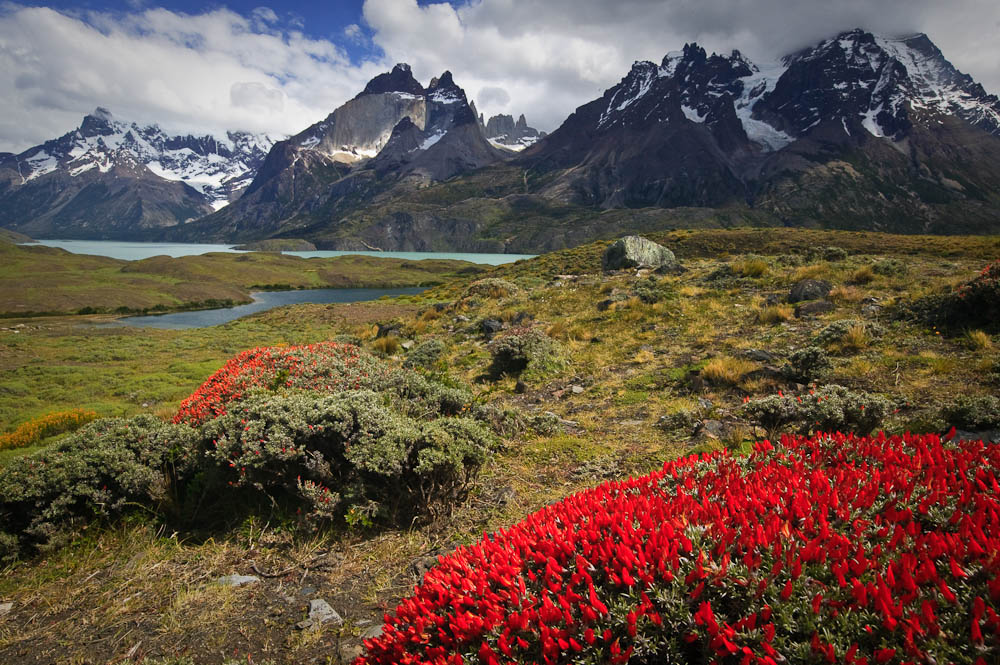
Nordenskjöld Lake, Torres Del Paine National Park, Chile. Image Copyright Joe Decker

Nordenskjöld Lake, Torres Del Paine National Park, Chile. Image Copyright Joe Decker

1. Get Close!

Because wide-angle lenses take in a bigger angle-of-view than other lenses, using a wide-angle lens at the same distance from your subject will render that subject smaller than it would otherwise. To compensate for this, you’ll have to move closer to your subject. Don’t be bashful about getting close, particularly with super-wides&mash;it’s almost impossible to get “too close” to your subject with a 14mm lens. This emphasis in size that wide-angle lenses give nearby objects means that …

2. It’s All about the Foreground

Contrary to what you might expect, this means that the most important element of your wide-angle landscapes is the foreground. While wide-angle lenses do capture the wider landscape, they also (almost inevitably, because of their wide field-of-view) capture quite a bit of foreground as well, and this foreground is emphasized by the wide-angle perspective. As a result, if your foreground isn’t interesting, your photograph won’t be interesting. This leads us naturally to the Josef Muench idea of the near-far composition, an image which uses a wide-angle lens to not only show a broad vista, but also to show one detail of that landscape in an up-close, intimate way. When you’re photographing wide, be sure to spend some time looking for the most interesting foreground available to combine with your grand vista.  (If there isn’t an interesting foreground, you might want to consider using a longer lens to leave out that less interesting foreground.)
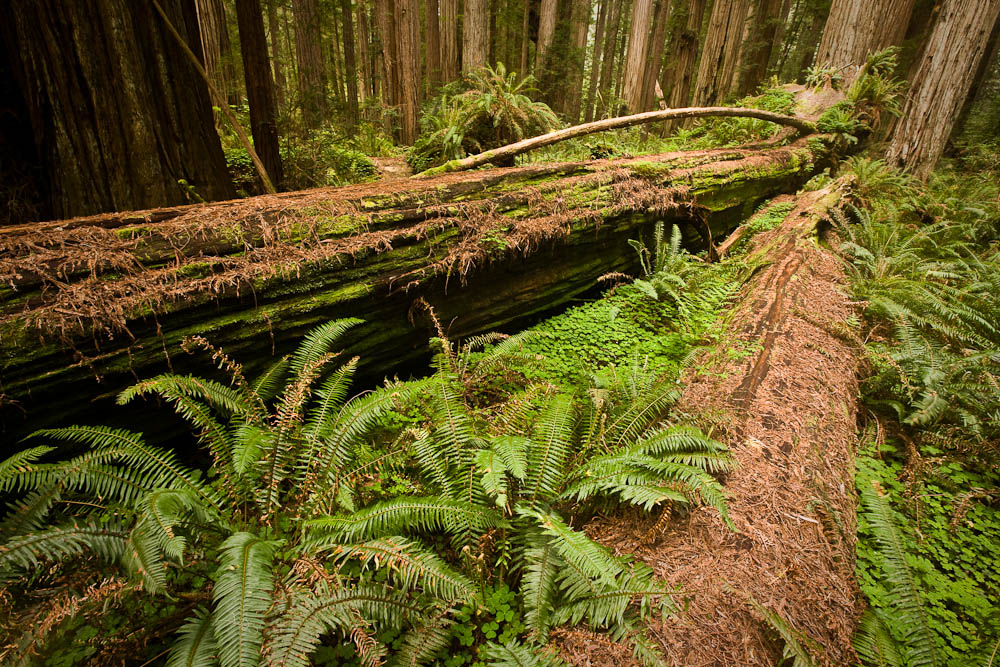
 Fallen Redwoods, Stout Grove, Jedediah Smith State Park, California.  Image Copyright Joe Decker

Fallen Redwoods, Stout Grove, Jedediah Smith State Park, California. Image Copyright Joe Decker

3. Watch those Verticals!

Wide-angle lenses tend to bend and distort verticals, as you can see in the tree trunks near the top of Fallen Redwoods. Now, you might decide you like that effect, or that you hate it, but it’s important to be aware of it and to make a conscious decision about it. For some images it’s fun to embrace, but more often I find myself having to work to avoid it or correct it later.  Avoiding it can be as simple a matter as composing so that there’s only a single obvious vertical (and that that’s vertical), alternatively, using shift movements with a tilt-shift lens can correct some of this distortion in-camera. Post-exposure, Photoshop’s “Lens Distort” filter can also save the day.

4. Leading Lines

Compositionally, lines (such as streams or railway tracks) leading from the bottom corners of an image towards the center often have a particular magic for guiding the viewers eye through the picture, making for strong images, and this is particularly the case for wide-angle images. Hot Stream is a great example of this, the viewers eye tends to wander from the corner  back through the image along the stream. As the stream moves back into the image, the stream gets smaller (in terms of inches on the printed page) quickly due the wide perspective. This quick fade (in width) into the distance creates a real sense of depth in the image.
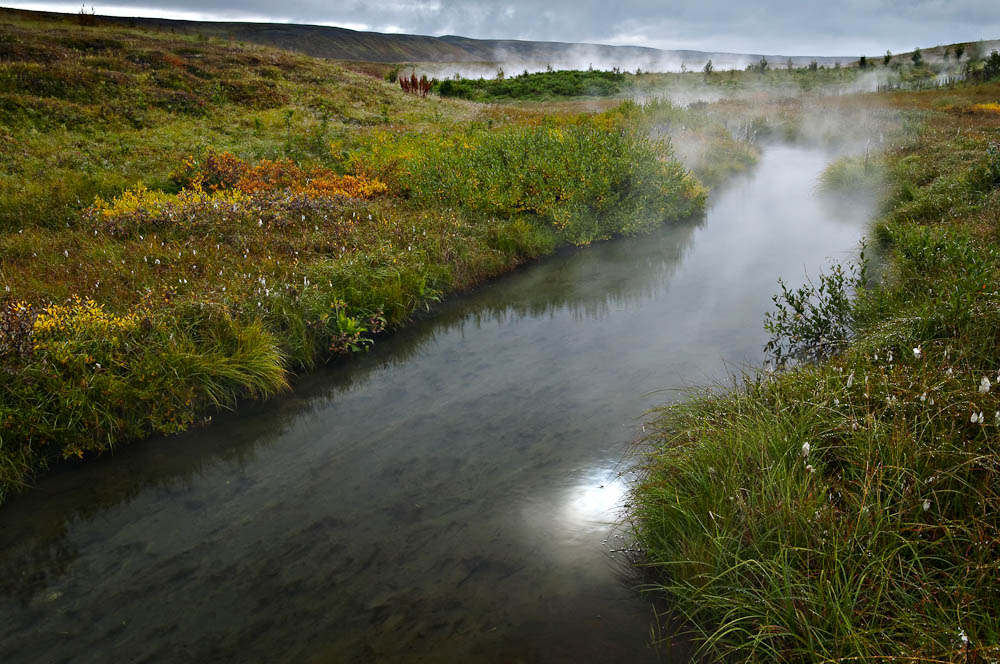
Hot Stream, Húsavík, Iceland.   Image Copyright Joe Decker

Hot Stream, Húsavík, Iceland. Image Copyright Joe Decker

5. Filter Woes

Shooting wide creates two problems for those of us who use filters. Polarizers are a specific problem, the effect of a polarizer on a blue sky varies across the sky so greatly that wide-angle images including the sky are left horribly unnatural, so leave off the polarizer unless you know there’s no blue sky in your scene. Screw-in filters are a separate problem, it’s all too easy for the filter edges, particularly if you’re stacking more than one filter on the same lens. Filter systems, such Cokin’s P-series filters (with the wide-angle filter holder), can help you avoid these problems if you must use filters.
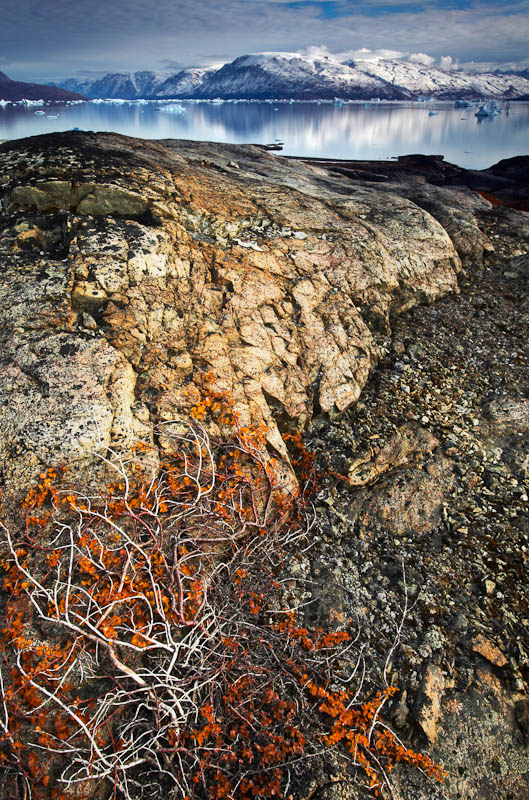
Dwarf Arctic Birch, C. Hofmann Peninusla, Greenland.  Image Copyright Joe Decker

Dwarf Arctic Birch, C. Hofmann Peninusla, Greenland. Image Copyright Joe Decker

6. Focusing

One of the things I enjoy most about working with wide-angle lenses is the ease of focusing them. As you move to wider and wider focal lengths, the depth-of-field at a particular aperture gets deeper and deeper. This allows you to make great use of the concept of hyperfocal distance, that is, the nearest distance you can focus a particular lens at a particular aperture and get “good focus”. At 24mm, by focusing about six feet out from the camera you’ll capture everything from about three feet to infinity in focus—even at f/11. At 17mm, focusing at the right point at f/11 will get you everything from infinity down to 17 inches away. Find (using a web site like this or any of a number of other sites, software tools or printed tables) and write down the hyperfocal distance for a couple of your widest lenses at a couple of your favorite apertures, and you’ll have an easy way of bringing the entire scene of near-far compositions into critical focus.

Using wide-angle lenses can certainly be tricky, but I love them all the same. Used well they can allow the photographer to create images that immerse us in a world with both small, intimate details and bold, dramatic vistas.

Joe Decker is a professional nature photographer and writer for Photocrati’s Photography Blog He also offers nature photography workshops and coaching around the western United States.

Post originally from: Digital Photography Tips.

Check out our more Photography Tips at Photography Tips for Beginners, Portrait Photography Tips and Wedding Photography Tips.

6 Winning Ways to Work Wide


Digital Photography School
 
Comments Off on 6 Winning Ways to Work Wide

Posted in Photography