RSS
 

Posts Tagged ‘wide’

5 Reasons to Consider Concert Photography with a Wide Open Aperture (and the Secret to Perfecting it)

21 Oct

Concert photography is arguably one of the most adrenaline-filled niches you can engage in as an image maker. Musicians, magazines, fans, and record labels alike turn to skilled concert photographers to tell a story for the momentous performance. For most music photographers (due to venue constraints) there is less than ten minutes to capture enough great images to populate a full gallery. Partner this with tumultuous circumstances such as sporadic lighting and an excitable audience and you have effectively created a photographic situation that is unlike any other.

As such, shooting with a very wide open aperture might appear to be too daunting of a task! There are common misunderstandings of how to use and work with a wide open aperture! If your inner aesthete drools over soft, dreamy photographs and creamy bokeh, then you better get ready to play with some low, low, low numbers. We are here to tell you how to photograph concerts at f/1.2, f/1.4, and f/1.8!

Wide aperture concert photography tips

Why Use an Ultra Wide Aperture?

Here are 5 reasons you may want to consider shooting concert photography with a wide open aperture.

1. Aesthetic and Style

To preface, a lot of the quality and final image look is based on the type of lens used. In the past several years, photography fans are gravitating towards the shallow depth of field aesthetic. If you’re in the business of producing commercial music photography (like myself), you’re going to want to keep following the trends and adapting to what is sought after in the industry.

Aesthetic and Style with Wide Aperture Concert Photography

An added bonus is being able to niche yourself a bit in an industry that has a lot of competition, many photographers are wary of shooting fast paced events with a wide aperture due to potential focusing issues. If you can master this art, you have something that will separate you from others.


2. Low Light Capability

Low light concert photography with wide aperture

Unless you’re shooting a big name at an amphitheater, a lot of smaller venues will have very poor lighting. You’ll need to use equipment that will illuminate the frame with whatever limited lighting is available. In these low light scenarios you need a lens with a wide enough aperture to let in more light. Using a lens that goes down to f/1.2, for example, is a great way to let enough light in and make the frame bright. Remember, the aperture is the hole the light passes through in your lens. The wider the aperture, the more light that enters the camera.


3. Shallow Depth of Field

Shoot concert photography with shallow depth of field

The wider the aperture, the shallower the depth of field. Shallow depth of field is great for live concerts because the stage can be rather cluttered compositionally. From instruments to cables, background props, and other band members, there can be a lot going on in the frame at once. Only having one subject in focus with the rest blending into a creamy bokeh makes for a much more visually pleasing and simplified image. With the depth-of-field being so shallow, whatever troubles you about the background can easily melt into a beautiful creamy bokeh.


4. Detail Shots

Capture detail in your concert photography with wide aperture

On the topic of shallow depth of field, if you are photographing for an instrument company, an aperture of f/1.8 will likely become your best friend. This is because photographs taken with a large aperture allow all of the focus to lie on the subject, and the background ceases to remain a distraction. Many instrument companies love to have their products captured in a natural usable setting, such as musicians at a live show.A shallow depth of field will keep the interest solely on your single subject.


5. Sharpness

How to achieve sharpness in your concert photography with wide aperture

Due to technological constraints, lenses that open their aperture below f/2.8 are fixed millimeter lenses (they do not zoom). As a general rule, fixed millimeter lenses tend to be sharper than lenses with a range.


Let’s Talk About the Elephant in the Room: Focusing with a Wide Open Aperture

Right where all of the benefits of an f-stop of 1.2 start to break down is the focusing. The wider the aperture and the shallower the depth of field, the more difficult it can be to focus on what you want. Pair that with a live show in which the lighting is a bit of a mess, and the subjects move spontaneously in various directions, and it sounds like the perfect recipe for a photographer migraine. However, focusing with a wider aperture doesn’t have to be so difficult- it’s just a different thought process.

The Concept of Sharpness

Sharp concert photography through composition

Really, the focus stems from a desire to have an image that is sharp. But what is sharpness? Sharpness is an interesting concept. How sharp a subject appears is a matter of two things: the focus the camera captures and the amount of contrast on your subject. The term “sharpness” is, in fact, an illusion. You see, for an image to be considered sharp, it needs to have contrast. If the there is little contrast in the image, the subject will not look three-dimensional regardless of whether the focus is perfect or not. Biologically, the way that our eyes work, our vision naturally detects edges to register sharpness, and shadows and highlights in order to record the depth in a subject. This is a very important concept to understand when answering the question of how to make images look sharp. When editing your concert photography images, be attentive to the shadows and highlights. And add contrast to define your subject.


Perfect Focus

Sharp concert photography through perfect focus and wide aperture

In terms of getting your image to actually be sharp (from being in perfect focus), here is the basic concept of how focus works in a camera. When you focus your camera on a subject, it establishes a focal plane. To get your subject in focus, it has to be on the focal plane. Focal planes happen on an x (horizontal) and y (vertical) axis. This means anything along either of those axes will be in focus, and anything not on them will be out of focus. The concern with a wide open aperture is that your focal plane is quite small. As you decrease your aperture number and make the opening wider, the invisible area in front and behind the plane of focus will get smaller and smaller, leaving you with much less wiggle-room. As such, distance from the subject plays a key role in your focus.

When shooting wide open, even the smallest diversion from either of the focal plane axes will cause your subject to be out-of-focus. You cannot take a step forward or back without the need to refocus when shooting at a wide aperture. But by keeping this in mind, you can adjust your photography technique to better accommodate the small focal plane.

Single Point Autofocus

Using single point focus and wide aperture in concert photography

A trick to help make sure that what you want in focus is indeed sharp, is to use single point autofocus. By default, your camera will probably select either the object that’s closest to the camera or what’s in the center of the frame. By using single point autofocus, you tell the camera exactly where to focus, which is extremely helpful with low aperture numbers. Refer to your camera model’s manual to find how to change the focus setting!

The Real Secret

The real secret to wide aperture concert photography

Keeping in mind how the focal plane works, this is the big trick to shooting wide open at a concert: The farther away you are from the subject, the easier it is to get the subject in focus. You can get the subject in focus and still maintain and extremely creamy depth of field.

Whether you’re in a photo pit or just in the main venue floor, your position to begin the concert shoot can significantly affect your success for the rest of the shoot. Keeping in mind that for most general photography passes your time is limited, you need to be ready to jump right into the shoot the very second the music hits your ears. My suggestion is to start on the outer edges of the pit or venue and work your way to the middle. Many concert photographers all flock to the center of the shooting zone, and begin shoving to claim their dead center spot. When you start from the edge, while the other photographers are all congregating and fighting for the center, you have much more room to move freely on the outer edge. This is where you will have an advantage to be able to move a bit further away from your subject in order to expand your plane and get that perfect focus.

Shooting concert photography in wide aperture

Now that you’ve been let in to the secret, go out there and capture some awesome concert shots!

The post 5 Reasons to Consider Concert Photography with a Wide Open Aperture (and the Secret to Perfecting it) appeared first on Digital Photography School.


Digital Photography School

 
Comments Off on 5 Reasons to Consider Concert Photography with a Wide Open Aperture (and the Secret to Perfecting it)

Posted in Photography


The LG V40 ThinQ is the first smartphone with wide, standard, and telephoto cameras

04 Oct

We’ve already had a sneak peek at some of the LG V40 ThinQ’s triple-camera specifications but now the device has been officially announced and comes with a total of five cameras.

Three of those can be found on the phone’s back. The 12MP “standard” camera features an equivalent focal length of 27mm, a fast F1.5 aperture and a 1.4?m pixel size. Next to it you’ll find a 16MP super-wide-angle with 16mm equivalent focal length, F1.9 aperture and 1.0?m pixels. The 12MP tele-camera features a 52mm equivalent focal length, a F2.4 aperture and a 1.0?m pixel size.

There’s no tele option at the front but you can choose between a 5MP 21mm equivalent wide-angle (F2.2/1.12?m) and an 8MP 26mm “standard” camera (F1.9/1.12?m)

40 percent larger (compared to the V30) pixels on the main camera and the fast aperture should make for decent low light capabilities and LG says the PDAF system is 50 percent faster than before. An “advanced HDR” feature analyzes the scene in order to maximize dynamic range.

There is also a new AI Composition feature that recommends alternative framing to the shot taken by the user, presumably using a crop. The white balance and exposure systems are also AI-powered and can adjust color temperature across different lighting situations or automatically adjust shutter speeds for fast moving scenes.

Other specifications are in line with current Android flagship devices. The Android OS is powered by a Snapdragon 845 chipset and 6GB of RAM. Users can choose between 64GB or 128GB of internal memory and can also make use of a microSD card slot. Images can be composed, edited and viewed on a 6.4-inch OLED display with HDD+ resolution (3120 x 1440 pixels).

The V40 ThinQ isn’t the first triple-camera phone, but it is the first to offer three different focal length and, at least on paper, looks like a real contender in the high-end bracket of the market. We are hoping to get a test unit into our hands sometime soon. It’s worth mentioning that Samsung’s next flagship phone is expected to come with a similar camera setup but you’ll have to wait until next year to buy one.

Key specifications:

  • Triple camera
  • 16MP Super Wide (F1.9 / 1.0?m / 107°)
  • 12MP Standard (F1.5 / 1.4?m / 78°)
  • 12MP Telephoto (F2.4 / 1.0?m / 45°)
  • Dual front-camera with 8MP Standard (F1.9 / 1.12?m / 80°) and
    5MP Wide (F2.2 / 1.12?m / 90°)
  • Qualcomm Snapdragon 845 chipset
  • 6.4-inch QHD+ OLED display (3120 x 1440 pixels)
  • 6GB RAM / 64GB or 128GB internal memory / microSD slot
  • 3300mAh battery

LG DELIVERS ULTIMATE FIVE CAMERA SMARTPHONE WITH LG V40 THINQ

A Truly All-Encompassing Smartphone Camera Experience to Capture Every Perspective

SEOUL, Oct. 4, 2018 — LG Electronics (LG) today unveiled its newest premium smartphone featuring a total of five cameras to redefine the standard of smartphone photography. The latest iteration of the company’s acclaimed V series, the LG V40 ThinQ is an uncompromising multimedia powerhouse device designed for today’s generation of storytellers that prefer to communicate with visuals and videos, especially on social media.

The LG V40 ThinQ retains the V series design philosophy with an improved 6.4-inch FullVision OLED display and even slimmer bezels than before. Powered by the Qualcomm® Snapdragon™ 845 Mobile Platform paired with 6GB of RAM and 64GB or 128GB of internal storage, the LG V40 ThinQ again delivers the innovations that has made the LG V series a favorite among power users.

Seeing the Light with Five Cameras

In order to deliver a standout smartphone for today’s content-creating social generation, LG designed the LG V40 ThinQ from the ground up to deliver a truly all-encompassing smartphone camera experience. The LG V40 ThinQ features a rear camera module with three different lenses: 16MP super wide-angle, 12MP standard angle and 12MP telephoto. The three lenses allow for shutterbugs to frame different shots without changing position relative to the subject. The 107-degree super wide-angle lens captures subjects with more of the background with ease, while the telephoto with 2x optical zoom (or 3.2x the zoom of the wide-angle lens) takes clear shots from distance without a loss in image quality. The Triple Shot feature stitches together the images captured with each of the three lenses into a short video file for easy sharing.

The front camera module features a 5MP wide-angle lens and 8MP standard angle that work in tandem to create the perfect bokeh effect with an on-screen slider to adjust the amount of background blur. Other features allow selfie lovers to personalize their photos even more with unique lighting and special effects.

The pixel size of the main rear camera sensor has been improved by about 40 percent compared to the LG V30, increasing from 1?m to 1.4?m, while the image sensor is more than 18 percent larger than in the LG V30. In additdion to delivering the sharpest and brightest images of any LG smartphone camera, the F1.5 aperture of the main camera delivers greater depth of field, half the shutter lag and significantly faster burst mode compared to the LG V30.

What’s more, Dual PDAF (Phase Detection Auto Focus) delivers automatic focusing that is 50 percent faster, about twice as fast as the industry average. The advanced HDR feature analyzes and determines the right exposure settings to create perfectly lit shots, eliminating overexposed backgrounds or underexposed subjects. Subjects are always in perfect focus because the camera checks sharpness continuously until the shutter button is depressed.

LG upgraded the camera in the LG V40 ThinQ to be even more powerful and intuitive than ever to deliver the best color, composition, white balance and shutter speed. The AI CAM’s new AI Composition feature taps into the phone’s intelligence to frame, capture and recommend an alternative shot to the one taken by the user. AI Auto White Balance (AI AWB) automatically adjusts the color temperature across different lighting situations while AI Shutter selects the right shutter speed, especially useful when trying to capture fast-moving subjects.

Other new features such as Cine Shot, 3D Light Effect, Makeup Pro, Custom Backdrop, My Avatar and AR Emoji make photography on the LG V40 ThinQ a whole new experience. Cine Shot makes creating cinemagraphs – images with animation – incredibly easy and fun. Simply shoot a short video with any of the phone’s three rear cameras and “paint” the area to be animated with a finger and the result will be sure to amaze. 3D Light Effect changes the tone of a photo with professional-looking lighting, touch up any selfie with different looks using Makeup Pro or entirely change the background of a selfie with Custom Backdrop. For those who love all things augmented reality, create and share personalized emojis with My Avatar and AR Emoji using one’s own face or one of the provided characters.

Immersive Sight and Sound

The LG V40 ThinQ sports a new and improved 6.4-inch QHD+ (3120 x 1440) OLED FullVision display and a bottom bezel that is 1.6mm thinner than its predecessor. The new plastic OLED display is designed to deliver more accurate colors and better luminance consistency. The 4.5 million pixels delivered by the OLED display is the most of any QHD+ smartphone on the market today and allows for the enjoyment of immersive, vivid and vibrant content that only an LG OLED display can deliver.

LG has always prioritized high fidelity audio in its smartphones and the LG V40 ThinQ is no exception, being the first LG phone to carry the Audio Tuned by Meridian label. The 32-bit Hi-Fi Quad DAC produces a balanced sound signature that comes extremely close to the quality of an original recording. And Boombox Speaker, originally introduced on the LG G7 ThinQ, doubles the bass of conventional smartphone speakers by utilizing the internal space of the device as a resonance chamber. When placed on a solid surface or hollow box, the LG V40 ThinQ acts like a woofer to amplify the bass even more.

Minimalist Design Built to Last

The clean lines and sophisticated colors emphasizes the three main design elements of the LG V40 ThinQ: smooth touch, unique color and seamless form. With the objective to create a design that will stand the test of time, the simple yet beautiful exterior is the perfect complement to the wealth of innovative technologies found on the LG V40 ThinQ.

LG’s proprietary Silky BlastTM process etches the tempered glass back with microscopic pits to create a smoother matte finish which feels extremely comfortable in the hand without being slippery. In addition to its more premium appearance, the matte glass is more practical due to its higher resistance to fingerprints and stains. The phone will be available in the charming colors of New Aurora Black, New Platinum Gray, New Moroccan Blue and eye-catching Carmine Red.

The LG V40 ThinQ retains the slim and light design heritage of the V series, weighing only 169g and measuring a svelte 7.7mm in thickness. Like its predecessor, the LG V40 ThinQ meets the U.S. Department of Defense requirements for durability, passing 14 MIL-STD 810G Transit Drop Test categories for suitability in military operations and is IP68 rated.

“The LG V40 ThinQ was designed with the main goal to deliver an uncompromised experience for users to create, consume and share high quality content,” said Hwang Jeong-hwan, president of LG Electronics Mobile Communications Company. “The versatility of the camera and the proven V series platform makes the LG V40 ThinQ a serious option for customers looking for a premium smartphone that does it all.”

Articles: Digital Photography Review (dpreview.com)

 
Comments Off on The LG V40 ThinQ is the first smartphone with wide, standard, and telephoto cameras

Posted in Uncategorized


Weekly Photography Challenge – Open Wide

02 Jun

It’s time to open wide – your aperture that is – for this week’s photography challenge.

It’s that simple. Grab a lens with a big aperture like a 50mm f/1.8 or a zoom that has f/2.8, and choose the widest setting you’ve got available. Choose your subject and focus carefully to put emphasis and attention precisely where you want it.

If you need some tips for composing your narrow depth of field image, here are some ideas:

  • Benefits of Using a Large Aperture and Tips for Shooting Wide Open
  • Fast Glass: Tips for Working With Wide Aperture Lenses
  • How to Make Fake Shallow Depth of Field Using Photoshop
  • How to Use a Neutral Density Filter to Control Depth of Field
  • Seeing in Depth of Field: A Simple Understanding of Aperture
  • Why a 50mm Lens is your new Best Friend
  • 3 Elements of Getting Shallow Depth of Field Images

Bokeh from a 50mm f/1.8 lens.

Shallow depth of field brings focus to the glasses here. Make your subject stand out.

Weekly Photography Challenge – Open Wide

Simply upload your shot into the comment field (look for the little camera icon in the Disqus comments section) and they’ll get embedded for us all to see or if you’d prefer, upload them to your favorite photo-sharing site and leave the link to them. Show me your best images in this week’s challenge. Sometimes it takes a while for an image to appear so be patient and try not to post the same image twice.

Share in the dPS Facebook Group

You can also share your images in the dPS Facebook group as the challenge is posted there each week as well.

The post Weekly Photography Challenge – Open Wide appeared first on Digital Photography School.


Digital Photography School

 
Comments Off on Weekly Photography Challenge – Open Wide

Posted in Photography


Which are the Advantages of Satellite Online Over DSL World wide web?

16 Mar

Considered one of the primary concerns questioned by anybody who is organizing to established up a web relationship in his property or office is this: internet satelit which are the benefits of satellite web more than DSL world-wide-web?

Without a doubt, satellite and DSL companies are classified as the two major ISP platforms encouraged by most people nowadays. They both equally deliver fantastic add and download speed. These are both available. And they are both of those simple to set up.

But just one is naturally improved compared to the other, as well as the distinct winner with this contest is satellite company.

Beneath, I will cite five components which make a satellite service better than the usual DSL world wide web connection.

one. Satellite services is just not tied in which has a mobile phone or cable support. Compared with DSL internet, satellite doesn’t involve you to subscribe to an auxiliary services for example a mobile phone line or maybe a cable Tv set membership. You can purchase a satellite online subscription by by itself, impartial from every other company that a DSL web subscription will require.

two. All factors regarded as, a satellite online subscription is typically additional reasonably priced than a DSL web subscription. While the basic satellite world-wide-web membership is more expensive than the expense of DSL, you will be capable to save lots of much more dollars, from the long run, using this type of kind of internet deal simply because you will not should pay back for that other auxiliary subscriptions that often occur normal which has a DSL internet service.

3. Satellite internet is just not dependent on any “area of protection.” Essentially, on account of the easy setup included having a satellite net subscription (you simply need to connect a satellite modem to the satellite dish, that will transmit and get information to and from the satellite hovering earlier mentioned the earth) it is possible to established up satellite internet access anywhere you wish, even in distant spots which can be not covered by mobile phone and cable organizations. DSL online is proscribed into the provider’s location of coverage. Satellite is just not.

four. Increased bandwidth. For lots of, this is actually the number one remedy for the question “what are classified as the advantages of satellite world wide web more than DSL web?” Satellite provides the highest bandwidth allowance among the current technology of ISP platforms. Exactly what does this imply? More and more people can share a satellite internet relationship without suffering pace reduction. This final results in the a lot more pleasurable on the net encounter. DSL web has minimal bandwidth. Frequently, when much more than 5 consumers share the connection simultaneously, intense velocity reduction is skilled. For companies that need an online relationship for multiple simultaneous users, a satellite membership is the ideal possibility.

5. Fewer susceptible to company outages. As long as the realm involving the satellite dish and the satellite is obvious – which is frequently the situation as there’s commonly only vacant area concerning them – you might appreciate an uninterrupted internet connection, aside from the uncommon cases if the satellite by itself suffers some concerns. This cannot be explained for DSL world-wide-web connections which might be generally susceptible to difficulties such as downed cable towers, damaged lines, and other problems because of mechanical malfunctions or pure gatherings for instance thunderstorms and earthquakes.

When it’s sensible to ask the query, “what are classified as the benefits of satellite above DSL” ahead of subscribing to any unique ISP, the solution, in the majority of locations, will bring on the conclusion that satellite world wide web could be the better selection.

The post Which are the Advantages of Satellite Online Over DSL World wide web? appeared first on Photonovice.

Photonovice

 
Comments Off on Which are the Advantages of Satellite Online Over DSL World wide web?

Posted in Equipment


Review of the Venus Laowa 15mm F/4 Wide Angle Lens for Landscape Photographers

07 Feb

The choice of camera lens always represents a crucial moment for every photographer. But it is not always easy to find the lens that fits our actual needs, as too often we get seduced by features that we don’t really need, and are therefore just useful in raising the price.

Have you chosen a stabilized lens and you always use the camera on a tripod? You exclusively take landscape photos in the daylight but have chosen to rely on a f/2.8 lens. Sound familiar?

Especially if you are at the beginning of your journey through the world of photography, your budget won’t likely be particularly high and you may want to maximize your investment by choosing something that can be really useful to you now.

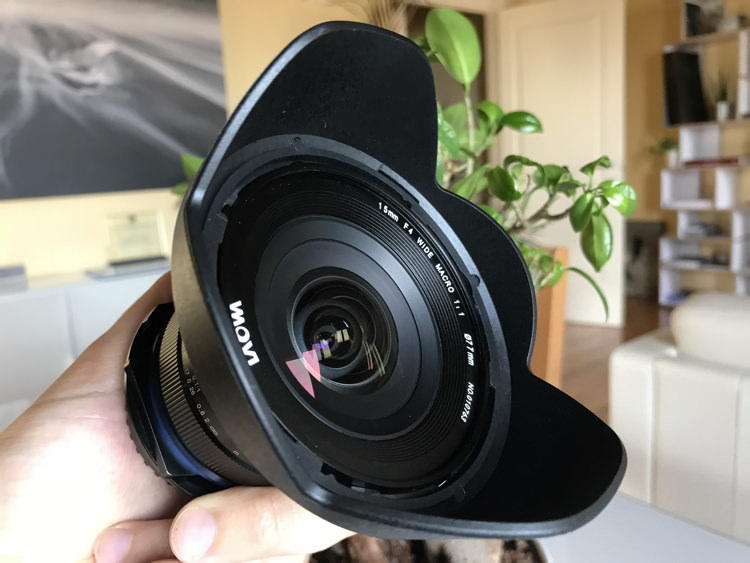
Review of the Venus Laowa 15mm F/4 Wide Angle 1:1 Macro Lens for Landscape Photographers

This is why today I want to tell you about the Venus Laowa 15mm f/4 Lens (with macro), an entry-level lens that every landscape photographer should take into consideration.

Why? Let’s see it together.

Review of the Laowa 15mm F/4 Lens for Landscape Photographers

Construction features

The Venus Laowa 15mm f/4 Macro is a lens that has been on the market since 2015. Although it certainly does not stand out for its cosmetic appearance, it comes with features that really make this a unique lens in the world. So much so that it can simultaneously seduce landscape photographers, lovers of macro photography, and architectural photographers.

Here are its main features, that I’m going to examine with you:

  • Focal length: 15 mm
  • Angle of view: 110.4°
  • Maximum Magnification: 1:1
  • Maximum Aperture: f/4
  • Shift function: +/- 6 mm
  • Minimum Focusing Distance: 12.2 cm
  • Filter Thread: 77 mm
  • Mounts: Canon, Nikon, Sony A, Pentax K, Sony E

Exactly, you’ve read it right. The Venus Laowa 15mm f/4 is a Macro 1:1 lens with an angle of view of 110° and a shift function that allows a translation equal to +/- 6mm.

The optical scheme is composed of 12 elements in 9 groups, including 3 high refractive index elements and one low dispersion element, and on paper that holds great promise for excellent performances in terms of sharpness.

And in case that wasn’t enough, add the fact that this lens is compatible with most of the mounts currently available on the market.

One last point, and it’s absolutely not a negative one, is the price. While I’m writing, the list price of the Venus Laowa 15mm f/4 Wide Angle 1:1 Macro is only $ 499.

Review of the Venus Laowa 15mm F/4 Wide Angle 1:1 Macro Lens for Landscape Photographers

Using this lens for landscape photography

When evaluating a lens, we’re always going to start from the analysis of its MTF charts, and then we carry out an almost infinite series of laboratory tests so as to bench-test it, from a perspective that is more theoretical than practical.

Of course, these tests are absolutely fundamental and I encourage you to look at them. But I also think that you are likely more interested in the real-world behavior of the lens. Knowing that certain optical limits of the lens will be then invisible in the real world, and what you are more concerned about is understanding whether the lens has the features that are really essential to you or not.

Review of the Venus Laowa 15mm F/4 Wide Angle 1:1 Macro Lens for Landscape Photographers

While there are many online reviews available regarding the use of this lens for macro and architectural photography, I haven’t found much regarding its use for landscape photography. So, my purpose here is to examine this lens from the point of view of the landscape photographer, omitting other features that are not fundamental for us hunters of sunrises and sunsets.

So let’s start to analyze the features seen in the previous chapter, now with a more critical eye.

Features

The fact that this is a prime lens and not a zoom gives us great hope with regard to quality, as the optical scheme will be optimized for a single focal length.

Review of the Venus Laowa 15mm F/4 Wide Angle 1:1 Macro Lens for Landscape Photographers

We are not afraid at all of the maximum aperture available, which is f/4. As good landscape photographers, we’ll be normally working around f/11, where sharpness will also be clearly higher.

The lens does not have stabilization or autofocus. While this may make you turn your nose up at first sight, surely you will soon realize that you really don’t care about those things. As you likely use the camera on a tripod you should turn off stabilization anyway, and you may choose to adjust the focus based on hyperfocal distance, making use of the hyperfocal marks available on the lens body.

Review of the Venus Laowa 15mm F/4 Wide Angle 1:1 Macro Lens for Landscape Photographers

So, those are two fewer functions that you don’t need, and their absence has certainly had a positive impact on the market price of the lens.

Using Filters with the Laowa 15mm Lens

With regard to the focal length, this clearly is not the first 15mm lens available on the market. But it is the only one with a feature that has convinced me to test this lens in action – the 77 mm filter thread.

Review of the Venus Laowa 15mm F/4 Wide Angle 1:1 Macro Lens for Landscape Photographers - filter thread 77mm

The 77mm filter size is very handy!

Normally all wide-angle and ultra wide-angle lenses (usually 15mm is considered the boundary between those two worlds) have a front optical element that is particularly curved. They often come with a built-in lens hood that makes it impossible to mount filters, unless we resort to particular solutions. Ultra wide-angle lenses whose front lens is not so curved and without a built-in lens hood, usually come with a large diameter and it’s therefore impossible to find filter threads smaller than 95 mm.

Thanks to the absence of a built-in lens hood (it does have a bayonet one) and to the 77 mm filter thread, the Venus Laowa 15mm f/4 lens opens the door to using a tool that I deem absolutely essential for every landscape photographer – drop-in filters.

Review of the Venus Laowa 15mm F/4 Wide Angle 1:1 Macro Lens for Landscape Photographers

As I was saying above, with a lens that has a built-in lens hood or a 95 mm filter thread it is possible to use systems that can hold 150 mm filters. But with a 77 mm filter thread, you will be able to use the same system that you use on any other lens equipped with a filter thread up to 82 mm. In a word, it is priceless.

Shift Function

The last of the features coming with this multi-purpose lens is the shift function. Thanks to a lever mechanism positioned next to the lens mount, it is possible to shift the lens by +/- 6mm. Even if this function might not seem very interesting for landscape photography at first sight (after all a rock is always a rock), it turns out to be useful in case there are human artifacts, like buildings, within the frame.

Review of the Venus Laowa 15mm F/4 Wide Angle 1:1 Macro Lens for Landscape Photographers

Shift lever.

Review of the Venus Laowa 15mm F/4 Wide Angle 1:1 Macro Lens for Landscape Photographers

The lens in shifted position.

The lens in action

If this lens appears very promising on paper, despite a very moderate price, let’s see its actual real-world behavior.

I have tested the Venus Laowa 15mm f/4 lens with my trusty Nikon D810, a full-frame camera body.

Testing the filter mount

Since this is fundamentally the reason why I decided to try this lens, again thanks to the existing 77 mm filter thread, I quickly mounted my loyal Nisi V5 Filter Holder, which holds 100mm filters. Even if it is possible to mount the holder, the fear of vignetting is too high, considering that we’re talking about a 15mm lens after all.

Review of the Venus Laowa 15mm F/4 lens

Review of the Venus Laowa 15mm F/4 lens


Although the Nisi filter holder is guaranteed to be vignette-free up to a 16mm focal length, once mounted on the Venus Laowa 15mm the result was doubtlessly amazing. Vignetting was practically invisible, as you’re going to see below, and it’s possible to quickly remove it in post-production by activating the lens correction profile.

A little dream of mine was substantially coming true. The dream of using an ultra wide-angle lens, and adding up to three 100mm filters and a polarizer without vignetting!

Review of the Venus Laowa 15mm F/4 lens

Review of the Venus Laowa 15mm F/4 lens

Review of the Venus Laowa 15mm F/4 lens

Review of the Venus Laowa 15mm F/4 lens

The lens barrel

On the lens body (which is sturdy metal, not plastic) you find the focus and aperture rings, whose operations are smooth and precise.

On the aperture ring, I would have preferred a locking system or a snap selection so as to make sure that I never lose the desired aperture. But actually, I haven’t encountered any problems during real-world use of the lens.

The focusing ring is really precise, as well as the existing focusing marks, which allow you to focus using the hyperfocal distance in no time. Just for the sake of being fussy, I would have placed the metric indications of distance upside down, or a vertical line next to each distance, just to be really precise. But you simply have to check the photo you’ve just taken, so as to make sure you have got the desired focus.

Review of the Venus Laowa 15mm F/4 lens

Review of the Venus Laowa 15mm F/4 lens

Although the manufacturer does not formally advertise this lens as weather sealed, most of my tests have been carried out in the rain (just for a change!). I protected the lens using only an umbrella or makeshift means, and no problems were detected.

Results

When I examine the images, the results were really comforting.

Sharpness

Shooting at both f/8 and f/11, the image definition is really excellent in the center of the frame. Obviously, the image becomes softer the closer you get to the edges, but doubtlessly the result is much more than acceptable. If you try to use higher apertures, you can naturally start to see that optical phenomenon called diffraction. But, as good landscape photographers, we know that we can go past f/16 only for situations of extreme necessity.

Definition Center - Review of the Venus Laowa 15mm F/4 lens

Centre image sharpness.

Definition Center Low - Review of the Venus Laowa 15mm F/4 lens

Lower center of the image sharpness.

Definition Corner - Review of the Venus Laowa 15mm F/4 lens

Corner of the image sharpness.

Aberration and vignetting

There are no particular problems with regards to chromatic aberration with this lens. I mean, some chromatic aberration is there, but nothing that can’t easily be solved using the automatic chromatic aberration removal included in any post-production software.

Chromatic Aberration With - Review of the Venus Laowa 15mm F/4 Wide Angle lens

Chromatic aberration showing before correction.

Chromatic Aberration corrected - Review of the Venus Laowa 15mm F/4 Wide Angle lens

After the chromatic aberration has been corrected in post-production.

As for vignetting, as I said above, the problem is almost non-existent when using the 100mm Nisi filter holder. For me personally, this fact alone is worth the purchase price of this lens.

Distortion

It is worthwhile to talk a little about distortion. It is predictable that a 15 mm lens will have barrel distortion. To landscape photographers, this is not a great concern. As I said before, a little distortion on a rock will not invalidate your image, as an irregular rock will always remain an irregular rock. Unfortunately, though, barrel distortion will invalidate the only real line included in your landscape – the horizon.

Review of the Venus Laowa 15mm F/4 lens

The distortion caused by this lens to the horizon is of the “mustache” type, which doubtlessly is the most annoying kind. If when we take a first look at the live view this problem may give us some concern,

If this problem gives you some concern when you first notice it in Live View, as soon as you import the image into any post-production software the correction becomes really easy and immediate.

Unfortunately, at the present time, there is no automatic correction profile for this lens included in Adobe software (Lightroom and Photoshop). But the Venus Laowa technical support is very efficient and within a few hours, they emailed the correction profile that I needed. Once installed, one click was enough to do the job and the image automatically recovered from both distortion (completely removing the mustache horizon) and peripheral shading.

Distortion Original - Review of the Venus Laowa 15mm F/4 lens

Original

Distortion Corrected - Review of the Venus Laowa 15mm F/4 lens

Corrected

Conclusion

The Venus Laowa 15mm f/4 lens has really turned out to be a surprise, exceeding my expectations. Although it comes with a very moderate price, this lens really provides remarkable results in terms of image quality.

Once the lens distortion is corrected, the only thing that still needs attention is edge softness which is absolutely within acceptable values for an entry-level lens.

Construction quality is really remarkable and you can notice that as soon as you take the lens into your hands. Lastly, the possibility of using a 100mm filter holder makes this lens really priceless.

If you are a landscape photographer who is looking for an ultra wide-angle lens with a very advantageous quality to price ratio, then the Venus Laowa 15mm f/4 lens is undoubtedly what you are seeking.

Review of the Venus Laowa 15mm F/4 Wide Angle 1:1 Macro Lens for Landscape Photographers


PROS

  • Price
  • Ability to use a 100mm filter holder
  • Excellent sharpness in the center of the frame
  • Low chromatic aberration when not used at macro distances
  • Lens shift function
  • Lightweight and small

CONS

  • Manual focusing
  • Slight edge softness
  • Barrel distortion (but it can be solved in post-production without any problems)
  • Cosmetic appearance

The post Review of the Venus Laowa 15mm F/4 Wide Angle Lens for Landscape Photographers by Francesco Gola appeared first on Digital Photography School.


Digital Photography School

 
Comments Off on Review of the Venus Laowa 15mm F/4 Wide Angle Lens for Landscape Photographers

Posted in Photography


Irix announces 100mm filter system for wide angle lenses

21 Oct

Lens manufacturer Irix announced earlier today that it plans to release a filter holder and a collection of filters in 100x100mm and 100x150mm sizes—a system designed especially to fit its 15mm F2.4 lens. The holder accepts a special bayonet mount adapter to attach to the front of the 15mm lens, while a range of additional screw thread adapters will allow the holder to be used with other lenses.

The Irix Edge 100 system will consist of a dual slot holder that the company claims is the lightest in its class. The holder is made from ‘aluminium alloy’ and features a rotating joint to allow easy positioning of graduated filters and polarisers.

Irix says that the holder, called the IFH-100, has a profile that’s slim enough to avoid mechanical vignetting even when two filters are held in front of the 15mm lens, and that a layer of black velvet covering the forward surfaces prevents light leak during long exposures.

The filter system includes 2mm-thick filters in the 100x100mm and 100x150mm sizes—to begin with the company will launch mostly NDs, ND grads and a polarizer, but has plans to offer a filter that cuts the effect of pollution. The holder accepts filters from other systems as well, and the company plans to offer adapter rings for lenses with threads of between 67mm and 82mm. Irix already has a series of circular screw-in filters under the Edge brand.

Price and availability have yet to be announced. For more information visit the Irix website.

Press Release

Irix presents its Edge 100 filter system

The TH Swiss company would like to announce the expansion of its range of Irix accessories with the Edge 100 series filter system. Among new products, there will be a versatile holder – the IFH-100 – with dedicated adapters and a wide choice of 100x100mm and 100x150mm filters.

The Irix Edge IFH-100 filter holder

The Irix IFH-100 is a universal filter holder designed for size 100mm filters. Its lightweight compact construction and bayonet adapter are created especially for the Irix 15mm f/2.4 lens, allowing the use of two filters at the same time without any vignetting effect. The construction of the filter holder base on the removable adapters allows for quick and easily attachment to the lens, along with free rotation around the optical axis when using the graduated or polarizing filters.

The ability to use removable adapters with thread diameters from 67mm to 82mm means that the holder can be used with lenses produced by Irix in the future, along with other brands. Each adapter has an additional thread for attaching the cap to the lens.

The filter holder is made of an aluminium alloy, which guarantees the high strength and stiffness of its structure. This has enabled to get an extremely compact size while keeping wide functionality, along with an aesthetic design together with the whole Irix product line. It is worth mentioning that the IFH-100 is the lightest holder of its class. The front surface of the filter holder is covered with a light-absorbing velvet fabric that blocks access to the side light, what is especially important when using high density optical ND filters.

The Irix Edge 100 filters

With the introduction of the IFH-100 filter holder, the Edge 100 series filters will also be available in two formats. The first, size 100×150, will contain gradual filters with a soft and hard transition, and also a reversed gradual filter dedicated to taking pictures of sunrises and sunsets. These rectangular filters will be available in ND4, ND8 and ND16 versions. In the square format, Neutral Density filters with densities ND32, ND128, ND1000, ND1000K will be available for the 100x100mm, along with a polarizing filter. There are future plans by the manufacturer to introduce filters which reduce light pollution.

Edge 100 series filters have a thickness of 2mm and are made from high quality optical glass which is also used in the production of the optical elements in lenses. Filters are coated on both sides with an anti-reflective nano-coating to keep high contrast and natural colours in pictures. The additional water and oil repellent coating also ensures easy cleaning of the surface.

The premiere at Photo Plus Expo 2017

The Edge series will be available at the Irix booth (No.929) during the Photo Plus Expo in New York City on October 26-28, 2017.

The full range of new Irix Edge accessories, along with pricing and availability information, will be published in the near future.

Articles: Digital Photography Review (dpreview.com)

 
Comments Off on Irix announces 100mm filter system for wide angle lenses

Posted in Uncategorized


Sharp and wide: Sony FE 12-24mm F4 G gallery updated

07 Oct

The Sony FE 12-24mm F4 G was released earlier this year alongside the pricier FE 16-35mm F2.8 GM. While it may not be as fast as it’s GM ‘big brother,’ the 12-24mm F4 is smaller, lighter, and wider, offering a rectilinear 12mm field of view. It’s also impressively sharp.

We’ve had some more time, collectively as a staff, to shoot with this ultra wide zoom since initially publishing our sample gallery in the summer. Take a look through and see how it holds up in the hands of several photographers and in a variety of shooting scenarios.

See our updated Sony FE 12-24mm F4 G sample gallery

$ (document).ready(function() { SampleGalleryStripV2({“galleryId”:”9004820076″}) })

Sample photoSample photoSample photoSample photoSample photo

Articles: Digital Photography Review (dpreview.com)

 
Comments Off on Sharp and wide: Sony FE 12-24mm F4 G gallery updated

Posted in Uncategorized


Benefits of Using a Large Aperture and Tips for Shooting Wide Open

04 Oct

Upon first glance of one of my most prized lenses, the Canon 50mm f/1.2L USM, a bewildered remark typically arises from professionals and hobbyists alike. Though absolutely spectacular photographers in the industry love working with a wide open aperture, there are equally as many who wouldn’t touch anything lower than a f/4.0 with a ten foot pole.

I’d never shoot as wide as f/1.2” is a common comment I’ve encountered over the years of working as a professional photographer.

Stylistic choices aside, upon further inquiry as to why the response to a f/1.2, f/1.8, or f/ 2.0 f-stop yielded such results the truth came out. There are common misunderstandings of how to use and work with a wide open aperture! If your artistic aesthetic drools over soft, dreamy photographs and creamy bokeh, then you better get ready to play with some low, low, low numbers.

Tips for Overcoming Common Misunderstanding of Shooting Wide Open

Before we get to the “how”, let’s discuss the “why”. There are several beneficial reasons to shoot with a wide open aperture, aside from simply liking the result.

Benefit #1 – Working with a Difficult Location

Depending on the type of photography that you do, you may not always have the option of utilizing an ideal location. Maybe your client is only able to commute to one place? Maybe the location of a shoot that was booked months prior has changed for the worse upon your arrival on site? Or maybe you just have to get a specific photo done pronto and you aren’t able to find a new spot?

Whatever the reason for your woes, a wide open aperture is here to help! With the depth-of-field being so shallow, whatever troubles you about the background can easily melt into a beautiful creamy bokeh. Utilizing an f-stop of f/2.0 or lower helps you work with a less than immaculate location, as the extremely shallow depth of field allows you to mask the flaws.

Tips for Overcoming Common Misunderstanding of Shooting Wide Open

Benefit #2 – Excellent for Detail Shots

A shallow depth of field can make for very beautiful detail shots. If you look through current wedding photography trends, you may find that several heavy-hitters in the industry are turning to wide open apertures to capture photographs of the bouquets, rings, and table settings. This is because photographs taken with a large aperture allow all of the focus to lie on the subject, and the background ceases to remain a distraction.

With events such as weddings, where the arrangements can appear cluttered if you only want to focus on one little aspect of the set-up, a shallow depth of field will keep the interest solely on your single subject. Music photography adores wide apertures for the same exact reason. If you want to bring out a detail while photographing behind-the-scenes of a recording session, f/1.2 is wonderful.

Tips for Overcoming Common Misunderstanding of Shooting Wide Open

Benefit #3 – Create a Dreamy Photographs without Post-Processing

With all of the technology available for photo editing, almost anything is possible with the right knowledge. However, rather than spending countless hours in the editing room creating a specific look artificially, why not get it right in the camera?

For those who adore dreamy, ethereal, or soft photographs, a wide aperture will quickly become your most trusted friend. Filmmakers consistently utilize wide open apertures in order to create a soft focus with a shallow depth of field to give the viewer the illusion of a dream-like state. When we dream, it is often hard to clearly and sharply recollect some of those thoughts when we wake. So the idea of soft and not perfectly in focus images came to mind.

We can replicate this using an aperture of f/1.2 easily, especially if you have objects in the foreground which are just as out of focus as the objects in the background.

Tips for Overcoming Common Misunderstanding of Shooting Wide Open

Benefit #4 – Makes Low Light Photography a Breeze

Possibly one of the most dreaded phrases in photography is “low light”. Two very short, simple words that cause some of the biggest photographer headaches. This is because there isn’t a lot of available light to play with, and as such, getting the right exposure can be hard.

However, if you want to take a well exposed photo in low light, you need a lens with a wide enough aperture to let in more light. Using a lens that goes down to f/1.8, for example, is a great way to let enough light in and make the frame bright. Remember, the aperture is the hole the light passes through in your lens. The wider the aperture, the more light that enters the camera.

Tips for Overcoming Common Misunderstanding of Shooting Wide Open

Now that we’ve covered some of the “why”, let’s have a nice chat about the “how.” Many of the challenges associated with a wide aperture revolve around the focus and photographing in bright light. From a recent poll I took, here are the primary issues troubling photographers about low f-stops, and some solutions to help you solve them.

Tip #1 – Shooting in Bright Sunlight Without Overexposing

With the aperture being the opening that lets light in through the lens, and a wide aperture which lets in a lot of light, one may think that shooting in the bright sunlight is off-limits. The solution to this dilemma is taking advantage of tinted filters that darken your lens, such as a neutral-density (or ND) filter. The purpose (and benefit) of an ND filter is to reduce the amount of light entering the lens. Doing so allows you to utilize a wide aperture that would otherwise produce overexposed pictures.

Benefits of Using a Large Aperture and Tips for Shooting Wide Open

Tip #2 – Getting Critical Focus

To quickly refresh you of the basics, when you focus your camera on a subject, it establishes a focal plane. To get your subject in focus, it has to be on the focal plane. Focal planes happen on an x (horizontal) and y (vertical) axis. This means anything along either of those axes will be in focus, and anything not on them will be out of focus.

Simple, right? Well, the difficulty with a wide open aperture is that your focal plane is quite small. As you decrease your aperture number and make the opening wider, the invisible area in front and behind the plane of focus will get smaller and smaller, leaving you with much less wiggle-room. As such, distance from the subject plays a key role in your focus.

When shooting wide open, even the smallest diversion from either of the focal plane axes will cause your subject to be out-of-focus photo. You cannot take a step forward or back without the need to refocus when shooting at a wide aperture. But by keeping this in mind, you can adjust your photography technique to better accommodate the small focal plane.

Benefits of Using a Large Aperture and Tips for Shooting Wide Open
A trick to help make sure that what you want in focus is indeed sharp, is to use single point autofocus. By default, your camera will probably select either the object that’s closest to the camera or what’s in the center of the frame. By using single point autofocus, you tell the camera exactly where to focus, which is extremely helpful with low aperture numbers. Refer to your camera model’s manual to find how to change the focus setting!

Benefits of Using a Large Aperture and Tips for Shooting Wide Open

Tip #3 – Getting Multiple Subjects Sharp

Keeping in mind how the focal plane works, there are several things you can do to ensure your multiple subjects are all in focus. First, try to set up all of your subjects on the same axis. Keep everything you want perfectly in focus the same distance from the camera.

Secondly, the farther away you are from the subject, the easier it is to get the subjects all in focus. If you have a large group of subjects you’d like in focus, move further away from them!

Benefits of Using a Large Aperture and Tips for Shooting Wide Open

Tip #4 – Getting Sharp Images Generally

Sharpness is an interesting concept. How sharp a subject appears is a matter of two things: the focus the camera captures and the amount of contrast on your subject. The term “sharpness” is, in fact, an illusion. You see, for an image to be considered sharp, it needs to have contrast. If the there is little contrast in the image, the subject will not look three-dimensional regardless of whether the focus is perfect or not.

Biologically, the way that our eyes work, our vision naturally detects edges to register sharpness, and shadows and highlights in order to record the depth in a subject. This is a very important concept to understand when answering the question of how to make images look sharp.

With this now in your knowledge arsenal, proper lighting aids significantly in making your images look sharp. The other factor in an image being sharp is, of course, the focus. Ensuring that your subject is in focus using the aforementioned techniques, combined with great lighting, will make certain that your images come out sharp.

Benefits of Using a Large Aperture and Tips for Shooting Wide Open

Now that you know how to take advantage of those low numbers and wide openings, go forth, and create!

Benefits of Using a Large Aperture and Tips for Shooting Wide Open

The post Benefits of Using a Large Aperture and Tips for Shooting Wide Open by Anabel DFlux appeared first on Digital Photography School.


Digital Photography School

 
Comments Off on Benefits of Using a Large Aperture and Tips for Shooting Wide Open

Posted in Photography


Going wide on a budget: Nikon AF-P 10-20mm F4.5-5.6 DX sample gallery

04 Jul

Nikon’s AF-P 10-20mm F4.5-5.6 DX is the company’s latest lens specifically designed for its crop-sensor camera bodies. It may have a plastic mount, but with a 35mm-equivalent focal range of 15-30mm, it is a versatile yet affordable lens for those looking for a wider view than the kit lens has to offer without breaking the bank. See how it performs from the inner streets of Seattle to the remote, sandy beaches of Washington’s coast.

See our Nikon AF-P 10-20mm F4.5-5.6
sample gallery

Articles: Digital Photography Review (dpreview.com)

 
Comments Off on Going wide on a budget: Nikon AF-P 10-20mm F4.5-5.6 DX sample gallery

Posted in Uncategorized


Throwback Thursday: Olympus C-8080 Wide Zoom

18 May

Announced in 2004, the Olympus C-8080 Wide Zoom wasn’t the first camera with a focal range starting at 28mm, nor was it the highest resolution camera at the time with its 8 megapixel CCD. What made the C-8080 interesting was the amount of work that Olympus put into the lens, claiming that it was designed to be on par with the Zuiko Digital lenses found on its DSLRs.

The lens had an equivalent focal length of 28-140mm and an impressive maximum aperture range of F2.4-3.5. It used three ED glass elements to reduce chromatic aberration, something not normally found on a compact camera. In DPReview’s testing, seeing CA in the real world was a rarity. The lens was threaded and supported both telephoto and wide conversion lenses. One bummer about the lens was that the zoom was electronically controlled, rather than mechanically, a feature found on the Minolta DiMAGE A2 and Sony DSC-F828 at the time.

Those are who are familiar with the Olympus E-10 will definitely notice some similarities with the control layout and LCD/viewfinder placement.

The C-8080WZ wasn’t the smallest camera out there, but there’s a lot of glass plus an EVF and tilting LCD that you’ll see in a moment. It was made of magnesium alloy that Phil Askey said was ‘heavier grade than we’re used to seeing.’ Phil also complimented the well-designed front and rear grips.

Something worth pointing out is that the camera had an external phase detection sensor (to the left of the Olympus logo). Phil’s review praised the fast AF speeds of the camera, though he was less keen about how quickly the lens zoomed and that there were only five ‘stops’ along the way.

The C-8080’s 1.8″ LCD could be pulled away from the body and tilted up or down. The resolution of 134k wasn’t great, but hey, it was 2004 (the user interface from back then is worth a look, as well). There’s also a pretty big electronic viewfinder, which had 240k dots. 

The camera had two memory card slots: one for CompactFlash and the other for – you guessed it – xD Picture Cards. Sadly, despite all of the semi-pro features on the C-8080WZ, it only had one control dial.

So what about photo quality? The C-8080WZ tied for the best resolution among a group of five 8MP cameras, with low noise at high ISOs. The lens had very little barrel distortion but some unexpected pincushion distortion, though Phil noted that it was unlikely that you’d notice this in the real world.

In the end, the C-8080 Wide Zoom earned a coveted ‘highly recommended’ award, due in large part to its lens. The main negatives were the aforementioned zoom speed and number of stops issues as well as camera lockup while Raw images are saved and an aging menu system. 

Do you have fond memories of the C-8080 Wide Zoom? Share them in the comments below. And let us know if you have suggestions for future Throwback Thursday articles!

Olympus C-8080WZ Sample Gallery

$ (document).ready(function() { SampleGalleryStripV2({“galleryId”:”7875368385″}) })

Sample photoSample photoSample photoSample photoSample photo

Articles: Digital Photography Review (dpreview.com)

 
Comments Off on Throwback Thursday: Olympus C-8080 Wide Zoom

Posted in Uncategorized