RSS
 

Posts Tagged ‘Ways’

5 Ways to Challenge Yourself as a Wildlife Photographer

16 Apr

As a wildlife photographer, often it can seem challenging enough just to find your subjects out in the field, let alone get close enough to take that perfect image. However, to develop as a photographer, constantly challenging yourself is a key ingredient to learning and growing, helping you to tell stories in a more meaningful and creative way through your images.

In this article, I will give you a few ideas to explore when you next head out on a nature photography shoot, to keep you challenged and growing as a photographer.

1 – Take one lens

One lens - wildlife photographer

Restricting yourself is often a great way to encourage creativity. Working with constraints can help you to think outside the box and explore ideas or ways of working that you might have missed in other cases. As photographers, having a boatload of lenses at our disposal means we have options to capture the world in a multitude of ways. Yet still, within this, we often become restricted within our view, choosing to consistently work with convention rather than explore creative options.

For example, if you are going to work with birds you will likely select your long telephoto, whereas, for insects or flowers, the obvious choice is a macro lens. However, if you decide to restrict yourself to a certain lens or focal length you have to use that in order to explore and create a photograph. That means that sometimes you’ll have to work in a new way, choose a different composition, or go for a different type of image than you would normally attempt.

For example, taking a macro lens out for a full day of shooting you might feel restricted. But the 100mm focal length (common for most macro lenses) is actually highly adaptable for working with a variety of subjects from landscapes to tiny insects, or even people and street images. Prime lenses further enhance this restriction, forcing you to zoom with your feet.

However, after a number of days solely focused on each lens in your bag, you’ll have a much greater appreciation for the wide variety of subjects and images it can produce. Thus helping you to be more creative with your choices in the future.

2 – Work wide
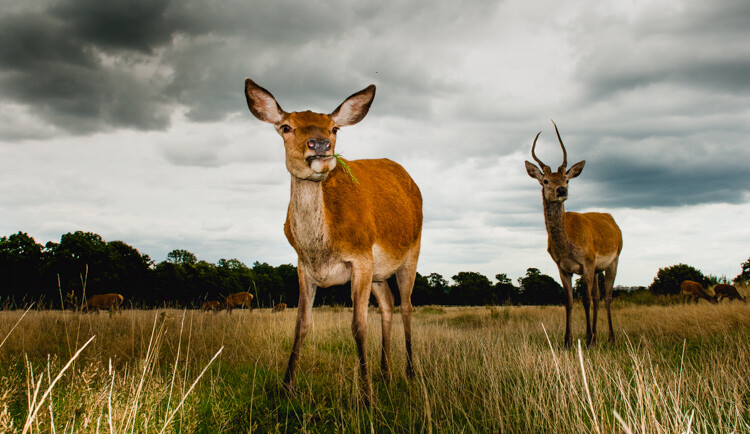
Shooting wide two deer in a field - wildlife photographer

For most wildlife photographers, the long telephoto is our safe haven. We know that when using a 300mm, 500mm or 600mm lens we can frame up our subjects and get wonderful clean portrait images. Allowing us to concentrate on our subjects and not necessarily needing to worry about the other elements in the landscape.

The thing is that, although telephotos are fantastic for filling the frame and showing close details of distant creatures, they don’t give an impression of scale. Images show with a long lens almost seem less immersive than shots taken with shorter focal lengths.

Of course, one of the biggest problems is that shooting wildlife with a wide lens is often a lot harder, (depending on the subject) than your traditional long lens wildlife photography. But this is a great learning curve. Yes, the complexities of predicting animal behavior, working out positioning for remote cameras and triggering them at the perfect time without always being able to look through the viewfinder is difficult. But the struggles will certainly push you to be a better wildlife photographer in the long run.

Try working with a wireless remote in the garden to get started. A simple bird feeder or setup for urban mammals is a great way to hone your skills, to add another string to your photographic bow.

Remote camera triggers - wildlife photographer

Remote camera setup

Remote triggered wideangle

Remote-triggered wide-angle shot.

3 – Add movement

Often, I hear wildlife photographers talking about always getting the image tack sharp. But in reality, how much in nature ever freezes dead still? Adding motion to your images is a great way to explore and develop your shooting style, adding drama to images and also helping the wildlife you’re recording to come alive in your frames.

When working in the field it can be tempting to always have that 1/1000 of a second shutter speed dialed in. Learning how and when to slow your shutter to display movement is a great skill, but it takes practice to get it right.

Often I find that for large moving creatures, such as deer, a shutter speed of 1/15th of a second allows enough movement into the frame to make great panning shots. In contrast, birds with their fast-moving nature mean that often 1/100th or 1/60th easily provides enough movement within the frame for lovely streaking effects.

a deer running - wildlife photographer

Birds in flight - wildlife photographer

Of course, in addition to panning with slow shutter speeds, keeping your camera dead steady and allowing the creatures to move is another effective technique for creating unique and captivating images of nature’s patterns and movements.

4 – Pick a theme and stick to it

Another way to challenge yourself as a nature photographer is to set yourself a theme to work on. This could be a practical theme like birds in flight, animal portraits, or in the landscape images. Another option is exploring a certain location or place with a geographical theme or even delving a little deeper to explore emotions or feelings as a base for a set of images.

The reason for shooting around a theme is to train yourself how to showcase and express your ideas through images more effectively. As a photographer, you are a visual storyteller. So being able to draw from inspirations, ideas, and emotions and express them photographically helps you to tell better and more powerful stories through your images.

Aim to develop a couple of small bodies of work, maybe three sets of three images, each with a different focus as a training exercise. It’s a great way to focus on areas where you’re less confident and give yourself a mini-assignment to develop and shoot to keep you focused on improving your work.

Shooting a set of images (3 images of deer)

5 – Shoot like you have one roll of film

A final way to challenge yourself is to go out on a shoot and pretend that you only have 36 images or a single roll of film. This is to force yourself to be more critical and picky with your images, choosing the perfect moment to get a shot rather than just taking a number to be sure one will be okay.

Shooting with a limit slows you down and makes you consider things more intently, thinking through your exposure, composition, and technique before shooting. The idea is that you only shoot one frame per subject, aiming to get it perfect on every image.

You can do this even more strictly by getting hold of an old school 1gb or 2GB memory card, the modern equivalent of a single roll of film. You can pick them up cheap on eBay and they are great training aids.

Small SD and film

Of course, if you want even more of a challenge why not try shooting an actual roll of film. With each frame literally costing you money, you will soon focus your shooting in order to make sure you nail it out on location. It’s good fun and a really great learning tool!

Conclusion

So there you have it, a quick rundown of five ways to challenge yourself as a nature or wildlife photographer to help develop your photography.

By focusing on specific challenges and setting yourself goals and tasks, you’ll certainly see your photography improve. As well, you will have more confidence going for those creative images when you’re on your next shoot.

The post 5 Ways to Challenge Yourself as a Wildlife Photographer appeared first on Digital Photography School.


Digital Photography School

 
Comments Off on 5 Ways to Challenge Yourself as a Wildlife Photographer

Posted in Photography


Landlords Insurance policy – Ways to Learn the ideal Rates

01 Apr

Should you are classified as the proprietor of any built up house, professional or residential, you have to take measures to guarantee its protection and reduce your financial liability in the event that anything takes place to it. Landlord and commercial assets coverage offered by a variety of non-public and community businesses let you to definitely try this quite simply. All you have got to do will be to establish your needs and after that narrow down on an insurance policy enterprise that will supply you with this assistance. A variety of difficulties including theft, non payments of rent, destruction a result of tenant, fireplace, flooding,water damage from flat above who is liable other natural disasters as well as terrorism is roofed by these policies. If just one coverage doesn’t include all your wants pick out a mixture of procedures which will provide you with utmost protection.

Precisely what is Landlords Coverage?

The landlords insurance policy shields the proprietor of a house from any money liability resulting from injury attributable to fire, explosion, flooding, lightning, earthquake, theft, storm and destructive damages. The objects lined by a policy will vary from a single organization on the other. Accidental destruction, lease warranty insurance policy, legal responsibility insurance policy, terrorism, contents insurance policy and lawful protection are a few on the other challenges that will be included by a landlords insurance. Anyone who has a household or other professional areas within their possession need to acquire commercial home insurance plan so that you can shield it from damage due to the lessee or other external variables.

Ways to Pick out the best Landlords Insurance policies Supplier

Your preference of coverage supplier might be depending on the charges that they give. Think about a minimum of five diverse insurance coverage providers before you narrow down to the one that satisfies your necessities. Regardless of whether the costs usually are not the best, you could decide on to go with a particular organization because of the exceptional services they provide or your past working experience with them. The online market place is actually a very good location to start out your exploration concerning the various coverage providers plus the procedures they supply for industrial property insurance policies. You’ll be able to also seek advice from using your spouse and children and friends who have up to now taken insurance policies guidelines from these companies.

More Guidelines and Altering your Insurance provider

If one plan will not include all of your wants, you can constantly opt for extra policies that happen to be designed for unique issues. Discover regarding their availability prior to you strike a offer along with the insurance coverage business. If for virtually any cause you happen to be dissatisfied using the landlords insurance coverage you at this time have or it does not satisfy several of the threats which you think your assets is beneath, then alter to the distinctive company. Enquire regarding the paperwork involved and how significantly it’s going to charge prior to you are taking action.

The post Landlords Insurance policy – Ways to Learn the ideal Rates appeared first on Photonovice.

Photonovice

 
Comments Off on Landlords Insurance policy – Ways to Learn the ideal Rates

Posted in Equipment


Five Ways to Take Your Macro Photography to the Next Level

30 Mar

Macro photography can be incredibly rewarding. However, it can also be frustrating if you find yourself shooting the same photographs over and over again, struggling to improve. You find yourself uninspired. Trust me, I’ve been there.

Clemantis macro photography

But there are a few simple tips that you can take to improve your macro photography, right now. The tips that follow will help you take your macro photography to the next level, and they won’t bog you down with technical details, either.

1. Move in close (and keep going closer)

You might be tempted to shoot subjects such as flowers the way that you would a headshot – putting space around the subject, so that flowers are fully recognizable as, well, flowers. However, I urge you not to take a step back, but rather to take a step closer. If you can, think not in terms of “flower” and “background,” but in terms of shapes and lines.

If you have a dedicated macro lens, use it. Experiment with high magnifications and see how that opens up whole new worlds for you to shoot. Look for abstract compositions that make use of shapes and color.  Fill the frame completely with your subject.

dahlia macro photography colorful

I used my macro lens to emphasize the lines and colors of this dahlia.

2. Consider the light

Lighting is incredibly important in macro photography. However, you can boil things down to a few simple rules of thumb:

  • Photograph in the morning.
  • Photograph in the evening.
  • Only photograph at any other time of day if it’s cloudy.

Photograph in the morning and evening

When I say “morning,” I’m talking about very early, during what photographers often call the “golden hours“. Essentially, these are the first two hours after sunrise.

The same goes for the evening. If it is sunny, I suggest you wait until two hours before sunset. One hour before is even better.

flower macro photography golden

I took this image in the evening, which ensured some great golden light.

These morning and evening hours are the times when soft, golden light falls on your subject. Not only does this result in a more evenly lit subject and an easier exposure, but the golden cast simply looks beautiful.

If conditions seem a bit too bright, you can also create really interesting images by using the shade. For instance, try working with a subject that is in the shade, while the background is lit by the (hopefully setting) sun.

flower macro sun shade - Five Ways to Take Your Macro Photography to the Next Level

I photographed this flower as the sun was setting, positioning myself so that the background was well lit, but the flower itself remained shaded.

Photograph in cloudy midday light

Midday sunlight tends to be incredibly harsh and results in photographs that are very washed out and contrasty.

Hence: if you’re shooting in the middle of the day, make sure that it’s cloudy. The clouds will serve to diffuse the light, allowing for wonderfully saturated colors.

coneflower macro color - Five Ways to Take Your Macro Photography to the Next Level

I photographed this coneflower on a cloudy day, ensuring that the colors were nicely saturated.

If you find yourself in a situation where you absolutely must take images and you cannot wait until conditions become better, then you can try to offset the harshness of the sun by shooting in the shade, using a reflector, or by using a flash.

daisy background night macro

The artificial lights plus this flower made for a fun photography session.

3. Consider the angle

One of the mistakes that I made most when I was first starting macro photography was not thinking about my angle to the subject. For instance, I would point my camera down at a 45-degree angle, so that I would capture subjects as if I were a few feet in front of me as I walked.

While intuitive, this approach often results in a less appealing image. It causes elements of the subject to become messy, to cross over one another. It also tends to distort the shape of the subject, so that the overall impact is lessened.

Instead, I recommend two main approaches:

First: place the subject at eye level. For instance, if you are photographing a tulip, crouch down so that the tulip is directly before you. If you are photographing an insect, you should be staring directly into its face.

macro flower pink - Five Ways to Take Your Macro Photography to the Next Level

By photographing this flower at eye level, I was able to create an even composition.

Second: place the subject directly below you. That is, you should be looking straight down so that the petals of an open flower are parallel to the camera sensor.

Hibiscus flower macro photography

By composing from directly above this hibiscus, I was able to emphasize its geometry.

Of course, these are just starting points. Pleasing images can be made from many angles, and a lot depends on the subject itself. But these are good places from which to begin.

4. Think about the subject quality

This tip is very simple – before taking an image, look your subject over. Is it at its peak? Or is it on its way out, wilting, or dying?

If the latter is the case, then try to search for a better-looking flower. Unfortunately, such elements can really detract from an otherwise excellent image.

Rose macro close up - Five Ways to Take Your Macro Photography to the Next Level

I found this rose in excellent condition.

Also, look for things like bugs, dirt, and torn petals. These are all indicators that you should search for a better subject.

Though it’s worth noting that sometimes wilting flowers can make for very interesting images. Just be sure that, if you are photographing a subject that’s on its way out, you compose with that in mind.

daisy macro - Five Ways to Take Your Macro Photography to the Next Level

I focused on this wilting daisy in order to create a more somber photograph.

5. Consider the background

One final tip for really enhancing your macro photographs is to think about the background before taking that shot. This is probably the most important of all these tips because careful attention to background can make for incredibly special images.

What should you consider?

First and foremost, look for backgrounds that are simple and uncluttered. A background that doesn’t distract is often enough to ensure a great image. However, it can also pay to be creative, by shifting your position so that colorful elements, such other flowers, or a sunset, sit behind the subject.

You might also use bright spots to your advantage, working so that they frame your subject.

flower macro cosmos - Five Ways to Take Your Macro Photography to the Next Level

The colorful flowers behind this subject made for an interesting background.

In Conclusion

By moving in close, considering the light, angle, subject quality, and the background, you can quickly improve your macro photography. Hopefully, you’ll have a lot of fun doing it as well.

If you have any other tips for people just starting with macro photography, please share them in the comments below.

peony macro flower - Five Ways to Take Your Macro Photography to the Next Level

The post Five Ways to Take Your Macro Photography to the Next Level appeared first on Digital Photography School.


Digital Photography School

 
Comments Off on Five Ways to Take Your Macro Photography to the Next Level

Posted in Photography


Four Ways to Get Frame-Filling Shots in Bird Photography

23 Mar

When all goes well, bird photography can be absolutely exhilarating. Yet birds are small and skittish creatures. Hence, a common problem faced by bird photographers, beginners and experts alike, is simply getting close enough to capture an image.

Even with longer lenses, attempts to photograph a bird often result in tiny specks in the final image, not to mention a very frustrated photographer.

heron with fish portrait - Four Ways to Get Frame-Filling Shots in Bird Photography

However, never fear, there are several simple techniques that you can use in order to capture frame-filling images of birds. Using these approaches, you should be able to radically increase your success when it comes to bird photography. You don’t have to own a huge lens to do it, either!

Also, before I begin, I’d also like to emphasize that the welfare of the subject should be your top priority. These techniques can often get you close enough to birds in a non-threatening, non-invasive way. But if a bird begins to show signs of agitation, such as moving away rapidly, calling, spreading its wings, etc., then give up.

If you are set on capturing the image, try coming back on a different day, with a different technique, one that is less likely to disturb your subject.

Without further ado, here four ways to help you get frame-filling images of birds.

1. The slow, low approach

This technique is simple, and is often suprisingly effective. It goes like this – move slow, and stay low.

spoonbill bird photography - Four Ways to Get Frame-Filling Shots in Bird Photography

I got close to this Roseate Spoonbill by moving slowly through the waters of the Florida coast.

As I said earlier, birds are quite skittish. But if you move slowly enough, oftentimes a bird will eventually accept you as a non-threatening aspect of the environment, rather than as a dangerous intruder.

You spot your subject across the lagoon. You (slowly!) take a few steps forward. Then stop and wait. Take a few more steps. Once you’ve gotten significantly closer, I suggest that you get on your knees (or even your elbows), and shuffle forwards.

oystercatcher bird portrait - Four Ways to Get Frame-Filling Shots in Bird Photography

I crouched low and moved across the beach towards this Oystercatcher, who wasn’t bothered at all.

Every so often, check on the bird; you can do this with the naked eye, or through your camera viewfinder. If it begins to move away from you, then that is a sign that you should slow down.

Go really slow!

I also recommend taking a couple of pictures with your camera every few feet. This will allow the bird to become acclimatized the sound of the shutter clicking, and will prevent it from flying away when you begin to photograph in earnest. Once you’re close enough, start shooting.

Now, I said that you should go “slow,” and when I say “slow,” I mean slow. Oftentimes it takes 10, 20, maybe even 30 minutes to get close enough to get usable images. The key here is to be patient; if you can do that, the rewards will be worth it.

White Morph Reddish Egret bird photography

A slow approach allowed me to get close to this White Morph Reddish Egret as it waded in a lagoon.

2. Position yourself and then wait

This is a favorite of mine, partially because it’s so non-invasive, and partially because it’s so successful.

The key fact to remember here is that many birds follow a general pattern of movement. Shorebirds, for instance, will usually forage while moving in a single direction. If you watch them for long enough, you’ll notice that they’ve shifted a good ways down the beach.

So, from a distance, observe the movement of the bird. Think about where it will be in five or 10 minutes. Then, simply place yourself in a position to photograph the bird when it gets to that spot.

tricolored heron bird photography

I took note of this Tricolored Heron’s movements, and sat in the water until it waded past.

Often, if you stay still enough, the bird won’t mind your presence in the slightest, and you’ll find that it may even stray too close. I’ve had tiny shorebirds get within the minimum focusing distance on my camera, at which point it becomes an amazing experience of a whole new type.

black-bellied plover bird photography

This Black-bellied Plover ventured so close that I couldn’t fit its body in the frame.

3. Using a blind

As hunters will know, a blind is a shelter that you sit inside, and will shield you from the eyes of animals. But blinds aren’t only good for hunting; they can be great for photography as well.

This one may seem out of reach. You might think that you don’t have access to blinds, nor can you afford to have one of your own. However, this often isn’t true.

For one thing, local parks may have blinds that you can use for free, or that you can rent. For another, it is often extremely easy to make a blind, one that you can use in your own backyard.

All that it requires is an old tent of some sort, or even a strong box. Cut a hole in the box or the tent, put it in your backyard, and voila, you have a fully-functioning blind. Let the birds have a few hours to get used to the blind, and they soon won’t even notice it.

I like to use this alongside my backyard feeders in winter. I put out some perches, and I am pretty much guaranteed that several birds will fly by and pose.

northern cardinal portrait - Four Ways to Get Frame-Filling Shots in Bird Photography

I took this image of a Northern Cardinal from a tent-turned-blind in my backyard.

4. Using a car

Your car can work as portable blinds, of sorts – oftentimes, birds hardly notice when cars are going by. Hence, you can approach birds on roadsides very closely without them taking flight. Then you can wind down the window, and begin your photography.

This often works best if you are in the passenger seat of the car while somebody else drives. This allows you to focus on the photography, while they focus on the driving. However, if you’re alone and on a public road, I suggest that you pull off and stop in a safe position (near the bird, of course!), before bringing out your camera.

You can also use a car to approach closely, and once you have stopped, you can slowly open the door and approach from the safe side of the car.

heron portrait - Four Ways to Get Frame-Filling Shots in Bird Photography

5. Take an environmental portrait

Now you’ve gotten four techniques for ensuring that you can get close to birds. But sometimes, it’s best to put away that telephoto lens and take a step back. Do not try to fill the frame. Instead, compose with the environment in mind, aiming to capture not just the bird but the beauty of the surroundings.

This works especially well if the environment complements the bird and thus enhances the overall aesthetic. I like to search for this type of image in areas that are already photographically powerful, where the scenery can carry the image on its own, and the bird simply adds something extra.

Next time you get the opportunity, try it. You may even find that the resulting image is more pleasing than the one you would’ve captured with that long telephoto lens.

Swan Michigan misty lake - Four Ways to Get Frame-Filling Shots in Bird Photography

I used a 100mm lens to photograph these swans on a misty autumn morning.

Conclusion

If you are having trouble getting close enough to capture frame-filling portraits of birds, don’t worry. Using the techniques listed above – approaching slowly, lying in wait, using a blind, and using a car – you can capture excellent images, I guarantee it. So I urge you to get out and get photographing!

Little Blue Heron portrait - Four Ways to Get Frame-Filling Shots in Bird Photography

Have any tips of your own for getting close to birds? I’d love to hear them in the comments section below.

The post Four Ways to Get Frame-Filling Shots in Bird Photography by Jaymes Dempsey appeared first on Digital Photography School.


Digital Photography School

 
Comments Off on Four Ways to Get Frame-Filling Shots in Bird Photography

Posted in Photography


3 Simple Ways to Use Framing and Layering in Portraits

06 Feb

I love using framing in my images with a layering technique. Layering is simply incorporating not just your subject and background, but adding a foreground and other levels if possible as part of the elements you use to frame your overall image. It’s not always the most straightforward setup to do but it excites me because I love an image that invites the viewer in to explore the image through many levels. Your eyes travel around the image because there is so much to see.

3 Simple Ways to Use Framing and Layering in Portraits

This does not mean there are many objects to see but rather there are layers of varying depths of field making the image more compelling. I’ve been shooting for nine years now and I still strive to improve the composition of my images.

As I’ve said, it’s not always the most obvious and quickest thing to do. Sometimes, I choose a location that I know will give me a variety of choices for layering. Or we will do a “walk” during the photoshoot as part of the experience, exploring spots that would give us layering opportunities. I’d like to share with you three simple ways you can use framing in your images with this layering technique.

#1 – Shoot through glass

3 Simple Ways to Use Framing and Layering in Portraits

I love shooting through glass. In fact, when I do engagement sessions, I always suggest we either start or end the session with a planning meeting or a chat in a cafe. Look for a window table and shoot from the outside. This is a good way to get some funky compositions, colors, and patterns on the images as well as a reflection and layering.

Shooting through glass allows you to capture different layers of details and you can play around with these details and where you place your focus to achieve a fresh or unusual image. Pictures through glass also provide that extraordinary look and feel, sometimes ethereal, that we often don’t notice in our day-to-day lives unless we purposely stop to see them.

You may need to move around a bit to get the composition right. Or have to wait until a passerby in a white shirt walks past behind you, for example, and provides that needed white blur in the foreground to get your composition right.

3 Simple Ways to Use Framing and Layering in Portraits

#2 – Shoot through foliage

When shooting at a park, position yourself behind trees, leaves, bushes, etc., to achieve that “observer” feeling. Make sure you provide clear instructions to your couple so they know what is expected of them before you go hide.

For example, as I am shooting from a distance and obscured by foliage, I instruct my subjects to look a little towards my direction so I can see at least a part of their faces. I ask them not to talk to each other but to communicate via looking into each other’s eyes and smiling a lot. If they feel awkward, that’s all the better because then they can laugh it off and that sort of natural expression is what I’m after.

3 Simple Ways to Use Framing and Layering in Portraits

Gently direction them

Tell them not to leave big gaps in between each other. For example, lean their heads towards each other with a very small gap between their faces, or to slightly touch each other’s faces but not squish their cheeks together. Get them to always be in a V position towards you or facing each other directly but never fully turned away with their backs facing you.

The only exception I make for this is when they are on a bench and I shoot from the back for a romantic shot with their heads leaning against each other. Being physically a lot closer than what is normally comfortable can feel unnatural because you are right in each other’s spaces and in reality, you don’t talk to a person with your faces too close to theirs.

But the connection between them is important and sometimes you have to exaggerate things to communicate that connection in photographs well.

3 Simple Ways to Use Framing and Layering in Portraits

You don’t have to be at a park or somewhere green to achieve the look of layering by using foliage to frame your images either. I often just pick some leaves, put them in front of the camera, and shoot through them.

I have also shot with a piece of cellophane wrapped around the side of my lens but not obscuring my lens altogether. That makes the look of shooting through something, thereby creating a foreground, middle ground and background. This makes for a more interesting perspective and composition having more than two layers to look through in your images.

3 Simple Ways to Use Framing and Layering in Portraits

#3 – Shoot through structure

I love hiding behind buildings and walls and using these large solid structures as part of my composition and adding framing. This not only makes me a little more invisible but I feel the distance makes the couple feel more at ease with the camera not being in their face and me, not in their immediate space.

dps-photography-tutorial-tips-layering-framing_0000

When I want to incorporate a geometric element in my image, I often hide behind some large building, columns or any solid structure and use that to frame my couple. This is a really fun way of trying out more abstract compositions, perspectives and lines, patterns and some foreground blurring to accentuate the focus on your couple.

3 Simple Ways to Use Framing and Layering in Portraits

However, sometimes there are no buildings or structures you can easily hide behind. My advice is to make one yourself! For this photo below, I asked the maid of honor to stand just to the left so I could use her silhouette to frame my bride in an interesting composition. This is one of my all-time favorite wedding images.

3 Simple Ways to Use Framing and Layering in Portraits

In the photo below, I used the long veil to create a foreground element giving the impression that I was hiding behind a big boulder and that there was continuity between the foreground and the bride’s veil.

So be creative and find ways to achieve your intended outcome. As the saying goes, “When there’s a will, there’s a way!”

3 Simple Ways to Use Framing and Layering in Portraits

Your turn

Do you have any other tips for framing your images using layering or any other techniques? Do share them here in the comments below!

The post 3 Simple Ways to Use Framing and Layering in Portraits by Lily Sawyer appeared first on Digital Photography School.


Digital Photography School

 
Comments Off on 3 Simple Ways to Use Framing and Layering in Portraits

Posted in Photography


5 Ways to Develop Your Photography Style

02 Feb

Finding your photography style can be a somewhat daunting task especially when you are just starting out. But let me assure you that this also is a problem some of the veterans face from time to time. Do you know why? Because we are human and our likes, dislike, and attitudes do change over time. This is only natural.

While you may think that if you have a good thing going in terms of an established style, why rock the boat? But sometimes not listening to that inner voice can have negative effects in terms of creating work that you are really proud of!

5 Ways to Develop Your Photography Style

This bridal shoot reflects my style, my branding and the visual aesthetics of my business.

So regardless of where you are in your photographic journey, there are a few things you can do to find your style and creative voice – be it in terms of photographing or editing your photos.

One thing to keep in mind as you are going through this process is that less is often more than enough. So don’t feel like you need hundreds of images to create a successful collection of photographs! Here are 5 tips to get you started on finding or defining your photography style.

#1 – Determine your goals (this is your why)

The first thing to understand in defining your style is to ask yourself what are you looking to accomplish with your photography. Are you looking to photograph for leisure or pleasure? Do you want to sell your work in terms of print or stock? Do you want to use your images for your portfolio to attract a certain type of clients?

There are many different genres of photography and there are many different types of clients for each genre. It’s typically best to start the process of defining your style by focusing on one collection of work at a time, so set your goals on what you want to accomplish for each individual series of work.

5 Ways to Develop Your Photography Style

I want to create images that really reflect the personality of my clients – the people they are and not the people I want them to be! My client, the couple in this wedding, is really a fun loving bunch with a great set of friends they share lots of laughs and joy with on a daily basis! So this goofy photo was one of their favorites.

#2 – Seek inspiration

Research, research, research. In other words, look around you to see what everyone else is doing and creating. It is very important to be aware of what other photographers are creating in your industry. I am not telling you this with the intention of you copying or following what everyone else is doing. But with the intention of educating yourself on what all is out there in the market space.

When you are defining a unique style for yourself, you can certainly use their work for inspiration, but do make your images different so they speak to you and your own aesthetic sensibilities. Your photographs are a visual representation of your brand, so try to think of ways to be true to yourself while still adding a unique edge to your work.

You can use visual tools like Pinterest and fill it with images that represent the look and feel you are trying to achieve – not just with the photographic style but also the editing style.

5 Ways to Develop Your Photography Style

This is one of my favorite go-to poses. It was an inspiration from a magazine – it has been used many times over but is still a favorite for both my clients and myself.

#3 – Be your own critic

This may be the most difficult thing to wrap your head and mindset around, but it will definitely help you in the long run. Take a step back and really analyze your work. Pick 10-20 of your favorite images that speak to what you want to focus on (your goals) and really ask yourself what is it about them that you like or dislike. Analyze the images in terms of emotions they convey, tone and mood they set, and even how they look from a distance as well as from up close.

The idea is that you want to bring yourself to a point where you feel you can recognize your style from wherever you look. Look for similarities in subject matter, composition, depth of field, lenses used, tones, colors, and any unique patterns your eye may catch. No matter which genre of photography you are pursuing, you are still the artist behind the camera and you are creating these images.

5 Ways to Develop Your Photography Style

I love photographing on clear bright sunny days as it really helps me photograph with intention and keep my style in mind.

#4 – Define your rules of engagement

This process is important because it will really help you set guidelines for yourself so you can start to be consciously consistent. Note what makes all of the images unique to your brand and your style of photography, and how you are going to make them better. Maybe even print out your favorite images so you can compare and contrast any new work you produce to fit within the framework of your style.

For example, my work is very light, bright and airy because that is how I like my images. I constantly compare new work to see if it fits within that style. In order for me to photograph in that style, I need a few things to be aligned – bright sun, elements that are pastel toned, and scenes that are less busy. This is not to say that I will not photograph dramatic skies or colorful market scenes – it is just not what my eyes naturally gravitate towards. This is just one of the rules I have given myself permission to maintain in order to stay true to my style.

5 Ways to Develop Your Photography Style

I love using Instagram as a visual media to showcase my style and my brand. It is a very curated look at how I photograph, what colors I gravitate towards, and how my images look and feel. Instagram is also a way to attract potential customers so I view this platform as an extension of my portfolio.

#5 – Make mistakes intentionally

After all the hard work you have put into defining your style, I am going to do a complete 360 turn and tell you to go ahead and break some of the rules and make mistakes. Why? Because that is the best way to learn what to do and what not to do.

By experimenting and trying out new things, you might find inspiration for a new genre of work. Like I said earlier in the article, your photographic style does not have to stay consistent for the rest of your life. If something else really motivates you and gets your creative juices flowing in spite of having a set style of photography, go ahead and experiment and see where that leads you, based on your why and your goals.

One accidental shutter click or new editing technique can often spark something new that’ll make your work better, or lead you into an entirely new collection of work.

5 Ways to Develop Your Photography Style

Every once in awhile I find myself walking over to the dark side and I quite like that creative freedom. A photo shoot where the light and shadows were so extreme it opened my eyes to the possibilities of dark and moody images. I love giving myself the freedom to experiment with this style.

Over to you

I hope these simple yet powerful steps help direct you towards finding and experimenting with your own photography style until you find something that is a reflection of you, your mindset, and your brand.

The post 5 Ways to Develop Your Photography Style by Karthika Gupta appeared first on Digital Photography School.


Digital Photography School

 
Comments Off on 5 Ways to Develop Your Photography Style

Posted in Photography


10 Ways to Become a Better Photographer in 2018

25 Jan

Let’s face it, it’s the new year. Your heart is full of hope and your head is bursting with ideas on what you want to do this year, be a better photographer, and how you will go about executing it. You have so much hope in your heart that you will achieve your all your 2018 goals, that you walk around with a goofy smile plastered on your face!

Am I right or am I right? Or have I just described how I have been feeling ever since that clock struck midnight and we ushered in 2018!?

10 tips to become a better photographer

Here is a bouquet of stunning florals to wish you a happy 2018!

It is 2018 and let’s start the year right with a few simple, easy yet powerful things you can do if one of your goals is to become a better photographer in the next 12 months.

1. Rock the gear you currently own without buying more

Do you feel limited by the gear you own? Are you telling yourself you really need to upgrade your camera, lens or both? Great! you are exactly where I need you to be.

Challenge yourself to use your existing gear consistently for a few weeks or months. Try to get creative with what you already have instead of hitting purchase on that gear that is sitting in your cart or Amazon checkout.

10 tips to become a better photographer

I had no telephoto lens on hand to get some close-ups of these birds…so instead, I used negative space and rule of thirds to take a creative approach to this image.

2. Photograph in every possible lighting situation

I really believe there is no such thing as bad light. Light is light – it is just different at different times of the day and night. One of the best ways to understand light is to photograph in different lighting situations and challenge yourself to create something unique and different that you are proud of.

Each lighting situation will demand different things from you and your gear. Harsh midday sun will have you rethinking shadows and light. Early morning light or golden hour will have you thinking of ways to create magical images that highlight that golden light. Blue hour may challenge you to bring out the external flash so you can get creative with colors.

Use this exercise to really understand and make the most out of each scenario.

10 tips to become a better photographer

 3. Treat every subject as a rock star

Not every subject is going to be your ideal client. Until you are in a position to only attract your ideal clients, use every opportunity to work towards building your portfolio for your ideal clients. Each client deserves to be treated like they are rock stars. So it is your duty as a photographer to give them the best experience possible – be it in posing, editing, styling or general customer service.

10 tips to become a better photographer

My morning cup of tea and a simple kitchen towel was my subject matter as I practiced still life photography This image is one of the more popular ones on my social media – people really seem to gravitate to light and clean images at times.

 4. Deliberately limit yourself

Today’s DSLR cameras are quite sophisticated pieces of equipment with multiple shutter clicks per second (continuous) and creative photographic modes (Program, Shutter Priority, Aperture Priority) that do a lot of the work for you.

Instead of using those, I challenge you to limit yourself. Think like a film camera photographer and only use 24 or 36 frames to tell your story. Change to Manual mode and try to figure out how shutter speed, IS, and aperture really work to help you take more control of your photography.

10 tips to become a better photographer

I love photographing with a film camera on vacation. It really helps me maintain a good balance between having a vacation and taking pictures because I only have a limited amount of frames to use.

 5. Take an art class

This has nothing to do with photography, yet at the same time, it has everything to do with it. Sometimes stepping away from the thing that we love the most or obsess about can be a really good thing. I have found art, particularly drawing and painting, to be very therapeutic and relaxing. It also gives me a chance to look at creativity with a new lens. As I analyze shapes, sizes and brush strokes – I look at color, patterns and composition in a new light.

6. Study your camera’s manual

I remember taking a technical writing class in graduate school where we had to create a user manual for a product. It was one of the hardest classes I have ever taken because we really had to think as a layman user to design, craft and write the manual. It made me realize that manuals, if done correctly, are incredibly powerful learning tools because they really break down every aspect of the product individually as well as collectively. So don’t be so quick to throw away the camera manual – it might be just the thing you need to really understand the workings of your camera.

7. Use a traditional film camera

10 tips to become a better photographer

Medium format camera love, one of only 16 frames per roll. I love the way medium format film renders colors and tones.

This ties in to point number four above. A film camera is a great way to learn the manual mode of photography because it really makes you think about light, exposure, ISO, and aperture to produce a good, clean image. Also, there is no chimping at the back of the camera screen so you really have to slow down and think of the photo you are trying to produce and then click the shutter.

You have a limited amount of frames per film role and have the additional cost of developing and scanning your pictures at the end of the day. All these factors make you a more intentional photographer as opposed to a “spray and pray” photographer (one who takes several pictures in automatic mode and hopes that at least one will work in his/her favor).

8. Study the work of other photographers

I am sure you have a lot of photographers that you really look up to for various reasons – how they compose, how they handle difficult lighting situations, how they interact with their subjects or even how they run successful photography businesses. Follow them, study how they do things, figure out what makes them tick and how they succeed, and use those ideas to reflect in your own road to improving your photography.

10 tips to become a better photographer

Last summer in Rome I really practiced using a lot of negative space in my cityscapes. Sometimes just a hint of a popular landmark is needed to give a sense of place.

9. Experiment with new techniques

Contrary to popular belief, I feel that photography is not something that you can study in a limited amount of time and then say you are an expert in this field. The field is constantly evolving and expanding and there is always something new to learn.

Become a student no matter what your level of experience and be open to learning new and exciting things in this art of form. It is sure to bring forth much progress in your craft overall.

10 tips to become a better photographer

Triple frame shot on medium format film during an editorial shoot to showcase busyness!

10. Evaluate your own work with a critical eye

Really think about what the work you are producing. Before asking for critiques, refer back to your work and figure out what you like and don’t like in your own work. Chances are you will find several things to add to that list.

Also don’t be quick to delete photos you may not like right now. Wait for a few days to look back and assess all your images. You are more likely to find some new favorites among photos that you previously thought were not correct or worthwhile.

Conclusion

I hope these 10 tips really helped shift your mindset a little bit towards your photography. Hold on tight to that feeling of being invincible that often comes with the new year and use it to the best of your abilities to better your skill and craft.

Tell us about your photography goals for this year in the comments below.

The post 10 Ways to Become a Better Photographer in 2018 by Karthika Gupta appeared first on Digital Photography School.


Digital Photography School

 
Comments Off on 10 Ways to Become a Better Photographer in 2018

Posted in Photography


5 Ways to Ensure That You Stay Ahead of the Travel Photography “Game”

07 Jan

There’s no doubt about it, the business of travel photography has never been tougher. More competition, an oversaturated market, falling license fees and limited client budgets mean that travel photographers have had to work harder and change their business models. Here are five ways to ensure that you stay ahead of the travel photography “game”.

5 Ways to Ensure That You Stay Ahead of the Travel Photography “Game”

1- Embrace Social Media

It’s hard believe that there was a time before social media. While some of us remember that time and have fond memories, there’s no doubt that social media has become a necessity for any business wanting to market itself. The opportunities to be able to speak to such a huge audience has meant that any brand that hasn’t embraced social media has been left behind.

Like a lot of other people, I was skeptical at first and didn’t really see the point or need for the likes of Instagram and Twitter. But slowly I have come to realize that it really isn’t an option and every photographer needs to embrace social media and maximize its potential.

So if you haven’t already started to do so, begin to learn about how to maximize the different social media channels available. It is integral to the success of your business.

5 Ways to Ensure That You Stay Ahead of the Travel Photography “Game”

2 – Think About ROI

One of the things that I always find interesting when I speak to people wanting to break into travel photography is their expectations of the industry versus the reality. Unfortunately, travel photography is an incredibly oversaturated market. That means there are more photos available than buyers actually need.

This, coupled with a few big stock agencies reducing prices over the years, has meant that the fee paid to photographers for a stock image is lower than it has ever been. The knock-on effect of this has also meant that the majority of clients who previously might have commissioned photographers are now turning to stock photos as it’s cheaper than hiring a photographer.

This means that as a travel photographer, you now have to really evaluate if a destination is worth the investment required. For example, a few years ago I headed to the Orkney Islands off Scotland (somewhere that had been on my bucket list for a while) and captured some great photos. But to this day I have not made enough sales from that trip to cover the cost of it, whereas somewhere like Abu Dhabi has paid for the cost of the trip a few times over. Clearly, a location like Abu Dhabi is a much more popular destination and so it is also more likely to be in demand for photos.

5 Ways to Ensure That You Stay Ahead of the Travel Photography “Game”

Obviously, this doesn’t mean you should never go anywhere like the Orkney Islands. But if you are building your business around those far-flung destinations you may find that you are simply not selling as many photos as you need to cover the cost.

3 – Expand Your Skills

DSLRs changed photography forever. Then smartphones came along and changed the whole industry. The explosion in digital photography has also meant that there is now, even more, an opportunity for unique photographs, but also more competition than ever.

So as a travel photographer, you have to be looking for ways to always expand your skills and repertoire. These days that might be by branching out into video, time lapse, or even drone photography. Whether we like it or not, these new innovations offer a completely new way of looking at the world and if you want to stay ahead of the game you need to try and expand your skills accordingly.

5 Ways to Ensure That You Stay Ahead of the Travel Photography “Game”

4 – Move With The Current Trend

Like most things, photography styles and trends move with the times. While it’s important to always keep your own style if you want to earn a living from photography you also need to ensure that you sell photos.

For example, these days more and more picture editors are looking for travel images that convey an experience or story rather than just a generic tourist type photo. In fact, I recently spoke to one of the stock agencies I work with and they said that their clients are now looking for more lifestyle type of travel shots that almost look like they have been taken with a smartphone rather than in a studio.

The key, as in any other industry, is to stay up to date with the current trends. Sign-up to newsletters, look at magazines and read industry news to ensure you know what is going on and where the trends are going.

5 Ways to Ensure That You Stay Ahead of the Travel Photography “Game”

5 – Re-evaluate Your Business Model

The biggest difference that amateur photographers notice when then move to being a professional is that they have to start treating photography as a business where every dollar is accountable. Like any business, every few years you need to evaluate where you are and where you want the business to go.

That means you might have to change your strategy, your marketing, and even as mentioned above your offering as a business (like video or time-lapse). No business can ever survive forever without changing with the times and photography is no different.

So if you haven’t done so already, think about your business and where it is and where it needs to go to to stay in the game.

5 Ways to Ensure That You Stay Ahead of the Travel Photography “Game”

Photographers are often some of the most creative people in the world. But very few often evaluate and relaunch their business to move with the times. Whether we like it or not, change is constantly happening in every industry and photography is no different. Unless you are willing to ensure your photography business can and will evolve, you might be left behind.

The post 5 Ways to Ensure That You Stay Ahead of the Travel Photography “Game” by Kav Dadfar appeared first on Digital Photography School.


Digital Photography School

 
Comments Off on 5 Ways to Ensure That You Stay Ahead of the Travel Photography “Game”

Posted in Photography


5 Ways to Invest in Your Photography Over the Next 365 Days

02 Jan

Happy 2018! Can you believe it is already 2018? Seems like just a little while ago we were all celebrating ushering in the Y2K era and now to think that 2020 is just two years away seems unreal. I love the new year. It brings forth hope, aspirations, and positivity.

Metaphorically, it is like the slate has been wiped clean and you have a chance to chase some of your most amazing and lofty goals. So why not use this new year to invest in something that you really love as well – your photography. Here are some simple easy ways to invest in bettering your creativity and your craft over the next 365 days.

Sunset golden hour photo - How to Invest in Your Photography Over the Next 365 Days

#1 – Create smart goals for your photography

Let’s drop the myth that only professional photographers who are in business are allowed to have photography goals. I don’t care if you are just beginning to learn photography or have been doing this for years, one of the best ways to improve at anything is to have realistic goals for what you aspire to and want to achieve.

Goals can be things like learning to photograph in manual mode, selling stock images or booking your first wedding client. No matter what your goals are, I encourage you to take it a step further and create SMART goals. A SMART goal is defined as one that is;

  • Specific
  • Measurable
  • Achievable
  • Results-focused
  • Time-sensitive

So for each of your goals, add additional parameters to convert them to SMART goals by figuring out how to measure them, how to achieve and execute them, and what specific timeframe you want them to be completed by.

Jaipur Lake Palace Photo - 5 Ways to Invest in Your Photography Over the Next 365 Days

A SMART goal to travel and explore my home country has lead to some amazing opportunities. All because I really thought through what I wanted to do, how I wanted to execute it, and what outcomes I wanted from those opportunities and really working towards those goals!

#2 – Plan to do at least 4 personal photography projects

I really believe that personal projects are the cornerstone to helping you improve your photography. Once you take the pressures of working with clients out of the equation, you are free to explore, get creative, and challenge yourself. This creative freedom is bound to reflect positively on your work.

Personal projects can be short exercises directed to help you improve in some area of your photography or extended self-assigned projects that really take you completely out of your comfort zone to try something different. You can choose to space out your personal projects throughout the year – perhaps even commit to doing one per quarter.

No matter what you choose, have SMART goals on what, when, and how you are going to execute your personal projects. You can see more details on the importance of personal projects in this previous article.

Ocean views from the caribbean - 5 Ways to Invest in Your Photography Over the Next 365 Days

One of my ongoing personal projects to learn and master film photography because it provides so much more room for learning and improving my photography in general. I even went so far as only taking a 35mm film camera on vacation to the Caribbean.

#3 – Practice photography every day

One of the easiest ways to practice photography every day is by signing up for a 365 series. Quite simply put, a 365 series is a commitment to creating one photo every day for 365 days. You can use a DSLR, a point and shoot camera, or even a smartphone to work on this series.

You can even take this a step further by joining one of the many online groups available. They are created solely for the purpose of encouraging you to photograph and post a single photo every day for 365 days straight. They even provide photo prompts to help you stay on track so you are constantly thinking of what to photograph every day.

Small waterfall photo - 5 Ways to Invest in Your Photography Over the Next 365 Days

A picture a day is literally just that – a photo a day. Get as creative as you want with this exercise. Use it as a way to get out of the house, meet fellow photographers, or just as some quiet time to reflect on who you are as a photographer and what motivates you.

#4 – Share your work online and offline

Join online groups or even local camera clubs to meet and socialize with other photographers. Many clubs have critique nights where members submit photos and comment on each other’s work. This is a great way to not only have your work be seen by others but also to get unbiased feedback on your work, which can be used for improvement and growth.

Many times we are our own worst critic and downplay our talents and skills because we are afraid or maybe lack the confidence in our photography. And you know what’s the best part? Having a group of like-minded people that you can talk photography about with all day long without them tuning you out within the first five minutes of any conversation (Can you tell this is how my family is when I start to talk photography!?).

Photo of the Taj Hotel in Mumbai at sunrise - 5 Ways to Invest in Your Photography Over the Next 365 Days

I have made some amazing friends via online communities – we have collaborated together, referred work to each other and bounced life and business challenges off one another. But most importantly, I have made some incredible friends who I know have my best interests at heart.

#5 – Attend a photography workshop, conference or take an online course

Like most other professions, the photography industry is continually evolving and changing. New products, techniques, and styles are constantly being introduced. So attending a photography workshop or conference is a great idea.

Plus you never know who you might meet there in terms of future friends, potential clients, or even referral opportunities. There are numerous workshops, seminars, and even free online events and tutorials to keep you busy learning new things.

Keeping abreast of the latest in any business is a good thing. It shows your clients, both present, and future, that you value your business and skill, enough to invest in it.

 Mirror reflection of an alpine lake in Oregon - 5 Ways to Invest in Your Photography Over the Next 365 Days

Workshops, and conferences are another great way to expand your professional circle, make industry friends and learn new skills/techniques. Make sure you do your research prior to committing funds to attend an event/workshop or conference.

What will you do with the next 365 days?

I hope these tips were helpful to you as you plan out 2018. Remember, getting your photography to a level that you are proud of takes time and a lot of hard work. Make this your year to shine with your photography.

The post 5 Ways to Invest in Your Photography Over the Next 365 Days by Karthika Gupta appeared first on Digital Photography School.


Digital Photography School

 
Comments Off on 5 Ways to Invest in Your Photography Over the Next 365 Days

Posted in Photography


5 Ways to Take More Meaningful Photos This Christmas

13 Dec

Christmas goes by in the blink of an eye. But taking photos helps us to savour the moments long after the tree is gone and the kids are grown up. When you follow these 5 tips, you’ll have better and more meaningful photos this year.

First - 5 Ways to Take More Meaningful Photos This Christmas

1. Don’t Get Caught Off Guard

The first step to photographing an upcoming event like Christmas is to do a little planning. Start by considering the traditions and moments that you want to look back on in photos. Write an actual list so that you don’t forget what’s on it.

When you’re finished writing out your list, do this exercise to help you figure out what is truly meaningful about those moments. When you do this exercise, you’ll be able to capture deeper themes in your photos.

Take each moment and ask yourself, “What about this moment is important to me?”

For example, you might put “opening presents on Christmas morning” on your list. That’s an obvious one. But ask yourself, “What about the kids opening presents is important to me?” Perhaps the answer is something like, “seeing the look of delight on their faces.”

But don’t stop there; you’ve only gone a little bit below the surface. Now ask yourself, “What about seeing the look of delight on their face is important to me?” Maybe the answer is, “I remember what it was like as a kid and I want to pass that magic and excitement on to my kids.”

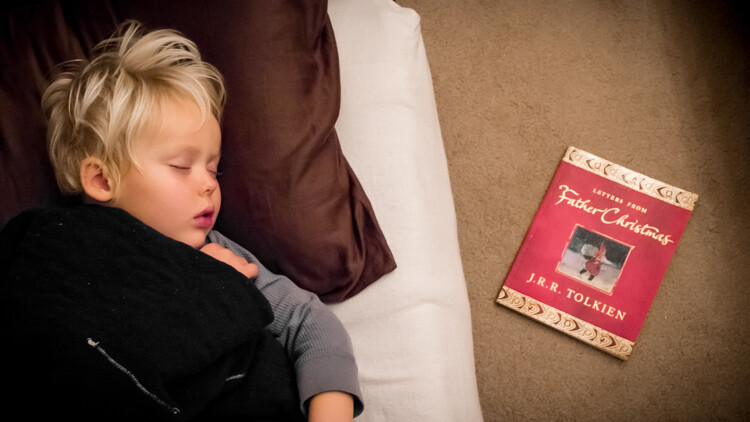
Sleep - 5 Ways to Take More Meaningful Photos This Christmas

Do you remember when you were a kid how hard it was to fall asleep on Christmas Eve? After putting the presents under the tree, I snuck in to take this photo of my son as he lay sleeping. This is the book we were reading for his bedtime story.

Now you’re getting somewhere! But you can still keep asking that question until you get right to the bottom. What about “passing on magic and excitement” to your kids is important to you? “Well, this is such a short time in their life. Soon they’ll be grown up and stressed out like me. I just want to slow that down and make their childhood good.”

You’re finally getting deep, so ask the question one more time. “What about slowing down and making their childhood a good one is important to me?” Maybe the answer is that “these are the most formative years of their life. If their childhood goes well, they’ll likely grow up and become good and strong adults themselves.”

By asking the question, “what about this moment is important to me,” you will discover the deeper themes in your photos. Now you can look for those themes in other moments too. Where else do you find the magic and excitement of growing up?
Get in touch with the things that will shape your children as they grow and the things you care most about.

Instead of a few random snapshots of Christmas morning chaos, you can photograph all sorts of meaningful moments to look back on.

Better Christmas photos 01

This is one of the most meaningful photos I have of Christmas time. Not only do I love the quiet moment and beautiful candlelight, but the photo was taken at my grandma’s church on Christmas Eve. It was my son’s first Christmas Eve church service and it was our first Christmas without my Grandma. The photo reminds me of the traditions and hope that is passed down the generations in our family.

Sick - 5 Ways to Take More Meaningful Photos This Christmas

A tender moment between mom and daughter. Our daughter came down with a fever this Christmas. Giving our kids gifts is an exciting part of parenting, but so is comforting them when they are sick. I knew this was a moment worth capturing.

2. Prepare for the Light

You’ve got your list of moments to photograph and you’ve checked it twice! Now you need to consider the type of light in which you will be photographing. When you’re able to handle the light, your photos will look better.

Go ahead and use the flash on your camera (or phone) if you have to. It’s better to have a photo lit with flash than a dark and blurry photo that isn’t worth looking at.

Better Christmas photos 02

This was our first Christmas together as a family. I had read that you shouldn’t use the flash on your camera, so I didn’t. Unfortunately, the photo is so dark you can’t see us. I wish I had used the flash!

Better Christmas photos 03

I used the popup flash on my camera for this photo. It doesn’t always work out this nice though. If you’re going to use the little built-in flash on your camera, then get as close as you can to your subject. The flash will light them up, but not affect things in the background so much.

If you have a DSLR camera and you’re going to use flash, consider using an external flash called a speedlight. When you use an external flash you can bounce the light and your photos will look far better than the little pop-up flash on your camera.

Better Christmas photos 04

An on-camera speedlight was used to light this photo. It was pointed up toward the ceiling so that the light would become softer as it bounced back down toward my son. The Christmas lights in the background are far enough away that they weren’t affected by the flash.

But whenever possible, use natural light. When you’re taking indoor photos, one of the best sources of natural light during the day is a large window. Many of your holiday events will happen in the living room, and most living rooms have a large window which lets in lots of light.

Place your Christmas tree beside the window instead of in front of it and allow the window to become a large, soft light source, making your photos look beautiful.

Better Christmas photos 05

Here the kids are at Grandma’s house. There is a large window to the right which is lighting them up. The Christmas tree is tucked into a corner away from the window.

Better Christmas photos 06

Again, there is a large window providing light for this photo. The tree is tucked away from the window allowing the lights to keep their glow.

When the sun goes down, and you don’t want to use flash, try using lots of lamplight in your photos. The lower placement of lamps simulates the position that the sun is in during golden hour or sunset. The lampshade diffuses the light making soft sidelight for your photos.

Better Christmas photos 07

This photo was lit with two lamps. The warm, soft light provides ambiance for the moment.

3. How to Make Your Photos Look More Exciting

There is a secret that will instantly make your photos look more exciting. Use a low angle! It sounds simple and it is. Just crouch down a little bit and look up at the person you’re photographing. If it’s an exciting moment then use a low angle to make it look exciting in the photo.

You should take note that low angles are not generally good for formal portraits. A low angle exaggerates a person’s size and adults don’t usually like that. But, if it’s a portrait of an athlete or rock star then a low camera angle is a must.

Better Christmas photos 08

We all remember how fun it was to play with the empty wrapping paper rolls as kids. I wanted to make this moment look epic so I crouched down for a low angle.

Better Christmas photos 09

When my son unwrapped his emergency set he wanted to play with it immediately. I went for a low angle because in real life we always look up to see a helicopter flying. It’s just a photo of a boy with his toy helicopter, but I wanted a more dramatic effect. Notice the burst of backlight coming from the big window in the background.

Better Christmas photos 10

This low angle gives us the fun perspective of the toys looking up at everyone.

4. Tell a Story With Your Photos

As you’re photographing your most important moments, in beautiful light, from interesting angles, be mindful of the fact that you’re photographing a story. Your story is filled with characters (your friends and family), with an emotional plot that takes place in many settings (around the dinner table, the Christmas tree, at church, in front of the fireplace).

Photograph the unique personality of each character. Take more than one photo of each moment and link them together to show the plot-line. Make sure to include the background as part of the setting for your character’s story.

The photos below illustrate a story being told over time.

Better Christmas photos 11

This was the year that my son first learned to print letters and read simple words. Here, he’s writing the tags for Grandma’s presents.

Better Christmas photos 12

The following Christmas he had begun to spell out words on his own.

Better Christmas photos 13

After our family Christmas trip to Grandma’s house was over, both of the kids were really sad. So as they went to bed that night, they drew pictures to mail to Grandma. But my son wrote her a whole letter. He had never done anything like that before.

It’s exciting when we bring our kids into our traditions. Something as simple as filling out a gift tag is a huge step in their growth and part of a bigger story.

5. Practice Before Christmas Day

Christmas isn’t just about what happens on December 25th. For most families, Christmas has a month-long lead up. So work on your list of things to photograph, but remember to start photographing Christmas before it even gets here.

Practice looking for deeper moments in beautiful natural light (or using your external flash). You’ll be far more confident when the big day arrives and you don’t have time to over think the photos you’re taking.

Better Christmas photos 14

This was my first Christmas using a speedlight with my camera. As soon as our tree was up I began experimenting so that when Christmas arrived I would know how to use it. This shows a pretty good balance of ambient light from the tree mixed with the light from my flash.

Listen to Your Heart

When your heart tells you to pick up your camera and snap a photo, do it. Don’t hesitate, just take the photo. It may not turn out to be the perfect moment or the best angle. But at least you’ve got a photo.

Better Christmas photos 15

This is one of the most precious photos I have.

The photo above is my daughter and my grandma. It was just a fun little moment that they were having together. My camera is never out of arm’s reach at Christmas time. I saw this moment and clicked a few photos. I didn’t know then that these would be the last photos I would take of my grandma. My little girl won’t remember this moment, but she will always be able to look back and see the love that her great-grandma had for her.

Your Checklist for Deeper Christmas Photos Than You’ve Ever Taken Before

  1. Make your list of important moments
  2. Look for beautiful light and have your external flash ready
  3. Use low angles to make exciting events actually look exciting in your photos
  4. Tell a story with your photos
  5. Practice before Christmas day

The post 5 Ways to Take More Meaningful Photos This Christmas by Mat Coker appeared first on Digital Photography School.


Digital Photography School

 
Comments Off on 5 Ways to Take More Meaningful Photos This Christmas

Posted in Photography