RSS
 

Posts Tagged ‘Ways’

2 Ways To Change Eye Color, Adobe Photoshop CS3 and CS4

21 Oct

In this video I will go over how to change the eye color of people in Adobe Photoshop CS3 and CS4. Method #1: Pen Tool and Hue Settings Method #2: Simply Painting the Eye the Desired Color. Thanks To: www.YouTube.com and Kari at: www.KariAnnPhotography.com Links: Site: www.VvCompHelpvV.com Blog www.VvCompHelpvV.info Twitter www.Twitter.com Learn How To Make Money Online: www.CashCrate.biz
Video Rating: 4 / 5

 
Comments Off on 2 Ways To Change Eye Color, Adobe Photoshop CS3 and CS4

Posted in Retouching in Photoshop


14 Ways To Significantly Improve Your Photography Today

20 Oct

© James Brandon | All Rights Reserved

As photographers and artists, we all hit creative walls. We work and work to improve our skills, and we learn new things, and then it seems we hit a wall. Maybe our images start looking dull to us, like they are missing something. Sometimes I think we over complicate problems like this, searching for some magical trick out there that will give us the creative perspective we are looking for. If you are like me, you know that usually doesn’t work. Instead, here is a collection of tips you can go out and try today to improve your photography and creative eye. Pay no attention to the order, they are all completely random and spontaneous.

1. Visit an Art Museum | Fall in Love with Art

I can’t stress enough the importance of art appreciation as a photography. If you want to get better at photography, become an admirer and student of the world of art. Visit a museum and spend the day studying the work of great artists. Better yet, take a pen and paper with you. When a painting or work of art grabs your attention, jot down why. Write down everything you love about it, and the reasoning behind it. If you find something you don’t care for, write that down too.

Museums are abundant in most big cities. In fact, in a lot of cases, they are even free. If they aren’t free, there may still be ways to get in for free. For example, if you have a debit or credit card through Bank of America, you can get in free at over 100 museums nationwide.

2. Freshen Your Perspective

Take a day and focus on perspective. Experiment with different camera angles that you may not have tried before. This tip is only limited by how far your willing to get out of your comfort zone. If your shooting a portrait session, bring a ladder with you. If you don’t have a ladder, climb a tree or find a perspective above your subjects head. Not only is this different, looking up is almost always flattering to your subjects features, especially if they are prone to double chins! If you are photographing flowers, consider shooting them from underneath. While this may get you dirty, I promise it will be rewarding. Play with the angle of the sun and capture the translucency of the flower as the sunlight pours through it. A fresh perspective can almost always give you that creative boost your looking for.

3. Take a Trip To Your Local Zoo

Visiting a zoo is one of my favorite things to do as a photographer. Mainly, because I’m doing it simply for me. There is no pressure. I don’t have a client that wants a certain type of image, I don’t feel the need to create a certain look or feel to the photos. It’s just me, my camera and hundreds of exotic animals at my fingertips! Zoos are cheap, and most of them have one day a week where you can even get half off.

Here’s a challenge: When you go, try and conceal the fact that the animals are at the zoo. That means I had to get creative with the way I framed my shots. This can be challenging at times, but it’s very rewarding. If there is a fence, an obviously fake looking rock or object, or if the surroundings just don’t click, don’t take the picture. Or, simply change your perspective until the framing works. This mindset will get your creative juices flowing, and I promise you will have a blast!

4. Minimize Your Possibilities

That’s right, minimize. While being able to shoot thousands of images is nice, it can also dull your creative thought process. With seemingly unlimited images you can just click away, firing off shots left and right all day long. With this mentality, you’re sure to get a few keepers. Right?

Consider this instead; next time you’re out taking pictures (and not for a client!), take the smallest memory card you have. One that will only allow you a very limited number of shots. And don’t take any other cards. Or, if you only have large capacity cards, just set a limit in your head of only taking 50 images the entire day.

All of the sudden, there is a certain and definite brevity in the amount of images you can take. You can’t just walk around snapping pictures at everything you see. This will take you back to the limitations of film, and you will have to carefully consider each shot you take. The flip side of this is that (again) your creative juices will begin to flow, and you will be more alert and keen to what is going to make a good image.

5. Take Your Camera Everywhere

In his book Visual Poetry, Chris Orwig states that, “Even without taking pictures, carrying a camera enhances life.” I couldn’t agree more. Carrying a camera is an instant way to put your senses on high alert. It causes you to look at the world as if your camera was always pressed to your eye. It gives you a reason to slow down, to take everything in, no matter where you are. Commit to carrying your camera with you everywhere, at least for a certain amount of time. Take pictures knowing full well that the world may never see them. Create photographs of everyday things, moments in time that normally wouldn’t require a photograph. The trick will be to see these subtle events in a new way, and to find a way to make them interesting. Even if you just use your camera phone, this tip is a solid way to improve your creative eye.

6. Always Be a Beginner

The moment you adopt the mindset that you’re the best at something (or even the best in your circle), that’s the moment you become unteachable. Great photographers like Douglas Kirkland always keep the mindset of a beginner. I’ve met my share of people who think they know it all. You know the kind. You try and tell them something that you’ve learned, and they shoot you down, saying they already knew that. Or they refuse to except anything new because they aren’t willing to change their ways. I’m telling you, this is a death sentence to your creativity. Set aside your pride and be willing to learn from others, even if you feel you’re at the top of your game. If are at the top, be willing to learn from others who aren’t.

7. Pick a Color, Any Color

Pick a color and create a portfolio around that color. If you have time, do this with several colors. Go out and create images that obviously and predominately focus on a single color. If you choose blue, consider subjects where this color is evident. Focus on pictures by water, or the sky. Go out past sunset and into the realm of “nautical twilight,” when the setting sun casts shades of deep blues across the sky and earth. Find textured walls that are painted in different colors and shades of blue. If you choose yellow, scout out a field of sunflowers. Shoot subjects straight into the sun, bathing the frame in golden sunlight. You can make the color even more obvious in post processing by applying filters of your chosen color over the image.

8. Shadow an Admired Photographer

For the most part photographers are nice, generous, and giving people. Sure, there are plenty out there who won’t give the time of day to a photographer looking for a mentor, but who wants to shadow or even follow the work of someone like that? Find a photographer that inspires you and form a relationship with them. Offer to take them out to lunch. If you’re lucky, you will be able to learn from that person, and maybe even shadow them. Ask to hold lights for them during their photo shoots, or just carry around their gear. You will learn a lot just observing how they interact with their clients. If they shoot landscapes, the same applies. Offer to carry their gear as they scour the places they photograph. Invite them out for a photo walk and offer to buy dinner, or even a drink afterward. Becoming a great photographer is a tough road to take by yourself, having a mentor can make the difference between success and failure.

9. Discover the Golden Ratio

Also known as the Golden Mean, Divine Proportion, the Fibonacci Rule, the Rule of Phi, etc. The Golden Ratio is a common ratio discovered by Leonardo Fibonacci and found throughout nature, architecture, and art. The ratio is believed to make things appealing to the human eye. In nature, it is also believed to be the most energy efficient form of design among living things. There is some debate around it, but it is very interesting. The Golden Ratio is basically the “Rule of Thirds” on steroids. If you have a few minutes, visit YouTube and watch this very interesting (albeit sort of creepy) video of the Golden Ratio. Becoming knowledgeable on topics like the Golden Ratio can drastically increase your chances of creating images that attract viewers attention.

10. Find a setting, stick with it

If there is a setting on your camera you are unfamiliar with, go to your camera and dial over to that setting. Now, commit to yourself that you won’t take your camera off that setting until you are fully comfortable with it. If you are only comfortable with automatic, I wouldn’t suggest going straight to manual. But certainly get out of the automatic settings and into the creative ones. You should view the automatic settings on your cameras as poison to your creativity and photographic skill. These settings take away your say in how the image will look, just short of composing the frame and pressing the shutter. Start out with either Av (Aperture Value) or Tv (Time Value) or P (Program) mode. Dedicate at least an entire day to shooting under just that one setting. If you need help, there is always a wealth of information on this site, but the most readily available resource is your cameras manual. Most photographers don’t realize how much they can learn by simply reading the manuals that came with their cameras. I’ve been known to even read my manual on plane rides. What better time than when you have nothing else to do? Once you get one setting down, move to the next one, and work your way up to the infamous “Manual” setting.

11. Consider the Difference Between Inspiration and Creativity

There are a number of articles on the web similar to this one, giving a list of ways to get better at photography. Almost all of those lists will tell you to go online and troll the work of other photographers for inspiration. While this may be a good idea in moderation, I’m tempted to take the side of staying away from it. How are you going to develop your own style by mimicking the work of others? How are you going to exercise your creative juices when you get all your ideas off the coat tails of other artists? Owen Shifflett of Viget.com wrote an incredibly interesting (and incredibly popular) blog post called “Consumption: How Inspiration Killed, Then Ate, Creativity,” and I think any photographer or artist, new or seasoned, should read this article.

If you’re preparing for a portrait session of a family, avoid hopping online to scavenge other photographers sites for posing ideas and post processing looks. Where is the uniqueness in that? With the age of the internet, any bit of information is available at our finger tips within seconds. When we immerse ourselves in the work of other photographers, we end up ripping off our own creativity. Instead, sit down with a pencil and paper and start brainstorming. It’s going to be tough, it’s going to take some time, but what if out of all that, you came up with something completely unique? Something completely yours? After all, how do you think all these other poses came to be? What about all the filters, actions, and presets in your post processing? Think about it, and act on it.

12. Find something you’re not comfortable shooting, and go after it

Getting better at anything involves getting out of your comfort zone. If all you do is photograph families and seniors, go out and shoot landscapes one weekend. All of the sudden, your images are going to require completely new camera settings. No more people to pose, no more assistants to hold your flash, no more backdrops or props, no more shallow depth of field or fast shutter speed requirements. Now you have to think about your subject in a complete new way. A landscape doesn’t listen to you. You can’t tell it to move the left or right, or use a flash to reveal a bit more light in a certain area. For the most part, landscapes require deep depth of fields, slower shutter speeds, tripods, and a whole new eye for composition and lighting. If you spend time photographing things your not used to, I promise you will come away with new ideas for what you are comfortable shooting. And a deeper understanding of your camera too.

13. Use a Tripod

So far (according to the latest poll here at DPS), somewhere around 70% of readers use a tripod less than 50% of the time. Personally, I know very few photographers who carry a tripod around with them. And you almost never see it with amateurs.

Something interesting happens when you attach your camera to a tripod. Suddenly, everything slows down. There’s no more snapping photos left and right and quickly filling up memory cards. When you use a tripod, you really have to take the time to compose your image. This mainly happens because you can no longer move the camera around freely. You now have to adjust the tripod to be level with the horizon. You have to move it left or right manually to adjust the position of your subject. Just by doing this, you have to actually slow down and really think about your image.

Go out and take 10 images hand held, then immediately take 10 more on a tripod. See which set comes out better. I’m willing to bet it will be the latter.

14. Join a Local Photography Club

One of the best things you can do as a photographer is network with other photographers. Sure, networking online is a great tool and shouldn’t be overlooked, but having face to face interaction with like minded people is so much better! There are plenty of ways to seek out local photographers. You can join the local PPA division in your city, or just google photography clubs in your area. One of the best clubs I ever joined was a local photography group through Meetup.com. This group has a wealth of very talented photographers and they hold around 4-6 events every month! Whether it’s just doing a photo walk around the city, or getting a VIP pass to the local sports stadiums, these groups are a blast to be a part of!

Conclusion

There you have it, 14 ideas you can implement immediately into your photography. Of course you can’t do all of these at once, but any time you feel you need a boost, be sure to check back here. If you have more ideas and/or tips, I’d love to here from you. If these tips have helped you in any way, I’d love to hear from you as well. Be sure to leave a comment below or send me a tweet (@jamesdbrandon) and let me know your thoughts. Be sure to suggest this page to any other photographers you may know. Thanks and happy shooting!

portrait-photograph-tips.jpg

Post originally from: Digital Photography Tips.

Check out our more Photography Tips at Photography Tips for Beginners, Portrait Photography Tips and Wedding Photography Tips.

14 Ways To Significantly Improve Your Photography Today


Digital Photography School

 
Comments Off on 14 Ways To Significantly Improve Your Photography Today

Posted in Photography


YouTube for Photographers: 3 Ways to get Started Using YouTube to Show and Promote your Photography

18 Oct

A Guest Post by Marlene Hielema

Video is all the rage. With virtually all digital cameras now able to capture live video, if you’re not shooting video you’re going to start to feel left out.

But video has a very steep learning curve!

Yes it does, but that doesn’t mean it’s impossible to get going. In this post I’m going to tell you about three ways you can use video to promote your photography, and I’ll start on the shallow end of the learning curve.

Why YouTube and not Vimeo or private hosting?

In a word: Traffic.

The goal of these videos is lead generation and they are used for marketing.

  • Video helps people to know, like, and trust you
  • From the video you can send them to your website where they can learn more about you
  • Then, get them to buy your photos, or to book a photo shoot with you

I’ve talked to photographers who have been scared off of YouTube. I say, “Embrace it and use it for what it’s best at”. Use YouTube for traffic, visibility and lead generation. Use YouTube for your public side, and save Vimeo and private hosting for private client videos.

google-youtube-logo.jpg

Benefits of YouTube

  • YouTube is owned by Google and is the #2 search engine (Google is #1).
  • Like other social media, it’s possible to build community on YouTube by getting comments, likes and subscribers.
  • Unlike other social media, YouTube videos are easy to keyword, and as a result easy to search and find.
  • Random access and always available – YouTube videos don’t disappear down the stream like Facebook and Twitter posts.
  • YouTube videos get better with age. More time online, equals more views. 
  • Your YouTube videos will show up alongside other related videos so that people you don’t even know, will see them. 
  • With other social media – people have to follow you or like you to see your content. Not so with YouTube.
  • Google likes videos, so it’s highly likely your videos will rank higher in search results than your website content.
  • And people are turning to video, and especially YouTube, more than ever to learn things and find out about products and services.
  • You don’t need a full fledged video production setup to start taking advantage of YouTube’s benefits.
  • Read the official YouTube stats here

yt-for-photo.png

Three types of videos you can make for YouTube

1. Portfolio video: Slideshow of still images – simplest way to get a video online

  • Take a gallery of no more than 20 photos – make it very specific not everything you do – for example family portraits
  • Use Lightroom’s Slideshow feature and export to video – Simplest and fastest way to get your photos to video
  • If you don’t have Lightroom, use PowerPoint or Keynote to make a slideshow of your photos 
  • Upload to YouTube
  • Add keywords and phrases in the description and title of your video when you upload it – Example – Calgary family portrait photographer
  • Make several galleries of each type of photography you do
    • weddings – you can also break these topics down further
    • destination weddings
    • second time around weddings
    • maternity
    • babies
    • kids
  • Music: yes or no? It depends on your market, but current trends say “no”
  • 2. Profile: About you – builds trust and rapport

    • Involves you getting in front of the camera and that can be hard, but you’ll just need to get over it. 
    • It’s a great way for people to see if you’re a good fit for their photo shoot.
    • Your profile video can also be done with a voiceover and photos, but I think it’s best to get in front of the camera so you can speak directly to people.

    3. Behind the scenes: Show what happens on one of your photo shoots

    • Maybe you’re a nature photographer and you can show how you approach a landscape or a wildlife shoot. You can do this with still photos and a voiceover similar to your portfolio video.
    • Keep the production simple and use your iPhone.
    • This adds value to your photographs as people see the amount of work that goes into a shoot.
    • Stop motion videos are also fun and easy to make and you can do behind-the-scenes videos this way too.
    • Some family and wedding photographers are using stylized stop motion videos as a bonus to a shoot.

    Video editing options

    Shooting video is relatively simple, especially if you start by using your iPhone. The steep part of the learning curve is the editing and exporting for web use.

    • You can use simple video editing software or screen recording software to produce your videos
    • iMovie – Free for Mac users
    • Camtasia for Mac and PC
    • Adobe Premier Elements – for Mac or PC. An affordable choice for beginners.
  • You can edit a movie right within YouTube as well.
  • START NOW!

    If you’ve never done video before, start with the portfolio video.

    • Review the steps above and remember to:
    • Keep it short 1-2 minutes in length.
    • Add a watermark – your url is best.
    • Add a picture of yourself too – remember this is to build trust. 
  • Embed the video on your website or blog too.
  •  

  • Share it on Twitter, Facebook and G+.
  • Repeat the process with another group of images.
  • Remember it’s better to have more videos of shorter length than to have a large group of photos in a 20 minute video.
  • Before long you’ll have a collection of searchable, randomly accessible videos and you’ll be sending people to your website.
  • In future tutorials I’ll show you how to approach each method in greater detail, and some tools you can use to produce your videos.

    Do this next: Watch the video above to see an example of how I used it to drive traffic to this blog post. I’ve got an invitation and a benefit at the end of the video for you too.

    Are you using video to promote your photography yet? Let us know what technique you use in the comments.

    Marlene Hielema teaches photography and photo editing online, in the classroom, at corporate workshops and one-to-one. She’s also a camera raw evangelist and YouTube video blogger. Find out more about what she can help you with at www.imagemaven.com and look for her weekly video blog post on YouTube.

    YouTube: 

    Post originally from: Digital Photography Tips.

    Check out our more Photography Tips at Photography Tips for Beginners, Portrait Photography Tips and Wedding Photography Tips.

    YouTube for Photographers: 3 Ways to get Started Using YouTube to Show and Promote your Photography


    Digital Photography School

     
    Comments Off on YouTube for Photographers: 3 Ways to get Started Using YouTube to Show and Promote your Photography

    Posted in Photography


    Ways to Redesign Flickr Groups to Make Them More Social, Addictive and Powerful

    16 Oct

    Flickr is currently in the process of redesigning the Groups section of their site. Initial comments by some beta testers have suggested that more emphasis will be placed on photos and less on discussion threads. I’m not a part of this new beta group, but I thought I’d share a list of ways that Flickr could improve Groups anyways. I believe that Groups represent Flickr and Yahoo’s greatest chance at making progress in social — an area increasingly being dominated by Google+, Facebook, Twitter, Instagram, Pinterest and other Yahoo social competitors.

    Although I have not been as active in Groups over the past year, I’ve literally spent thousands of hours in Flickr Groups and feel like I understand how they work and their dynamics very well.

    1. It cannot be overstated. The power of Groups are in the discussion threads. The power of Groups are in the discussion threads. The power of Groups are in the discussion threads. Discussion threads, positioned correctly, can be like crack. They can be terribly addictive. Flickr should be doing everything that they possibly can to push people to the discussion threads in Groups. This is how you turn a casual user into a hardcore top 1% Flickr user. If you can suck someone into the discussion threads you can get 100x the use of Flickr out of them. These are the most valuable members on Flickr. These are the biggest Flickr evangelists. These are the ones who will promote the site more than everyone else. Every design decision around groups should be made with the idea of how can we suck more users into the group discussion threads.

    2. Toxic people are like cancer. Toxic people will drive people away from Flickr. Toxic people are the single biggest impediment for Flickr Groups to overcome today. The answer to protecting Flickr members from toxic people is simple. Create a more robust blocking mechanism which allows users to block each other. Online harassment that turns into real life harassment will drive even the most hardcore Flickr Group addict away from social. The best way to prevent this harassment is to allow users the ability to block each other. This seems so basic. Google got this super right a long time ago with Google+.

    If I choose to block you then you should be made completely and entirely invisible on the site. Poof. Gone. Vanished. It’s not that you still can’t harass, but it makes it harder to harass someone when you are invisible to them in any profile they create that gains momentum on the site. This would encourage people to behave more civilly towards each other if such a tool existed.

    Civility will help social for groups.

    3. The goal for Flickr should be to create a page of discussion threads that are irresistible to me — an entire page of threads that I simply can’t help myself but click and converse. Any thread that is not of interest is a waste of space. Allowing me to mute or hide threads will ensure that I will be more social because I will see more opportunities to be social. There is no reason for me to see a thread about baseball that keeps popping to the top if I don’t care about baseball.

    Muting threads also helps with trolling.

    4. Flickr already has a super powerful tool that they are using in their help forum that they are not using in their Groups. If they’ve already coded it for the help forum it seems like a total non-brainer to simply port it to other Group discussions. This is the button that shows me posts that I’ve posted in. Obviously I care more about the threads that I’ve posted in than the threads that I haven’t.

    5. Flickr needs to allow me to subscribe to threads that I’m particularly interested in and aggregate these threads on a single page sorted by recent activity. If you want people to be active in multiple groups (and you do, trust me) you want them to be able to easily follow the conversations that they care about in multiple groups. This does not happen today. Instead you have to go to group by group by group by group to hunt around for the conversations that you care about. Alternatively you can bookmark them all and go back and check them manually over and over and over again. You quickly tire of bookmarks because you are only interested in a Group conversation if there is new activity. Having a page to view subscribed threads could become the most powerful page for social on the web.

    6. Flickr can’t fight anonymity at this point. It’s too late. Google and Facebook forced this issue early on by requiring users to use names that they are commonly known by. There would be too much of a revolt if Flickr even tried to institute anything like this. However, they can allow verified profiles. By allowing users to opt in to verified profiles they would give these accounts more credibility. Verification could be done similar to how Google used to do it by having users submit a Government ID or simply enter in a credit card number on a credit card. NOTE: I’m suggesting this be made voluntary and OPT IN. If people want to opt in, why not let them? If someone wants to keep their hackerboy6969 anonymous ID this is fine too.

    7. Groups need to be promoted more heavily by Yahoo and Flickr across other sections of the site. Yahoo especially and Yahoo search especially, should be driving traffic to Group discussions. Although Yahoo probably has to talk to the boss (Bing/Microsoft) at this point to try to have any input on the search algorithm, if I were Yahoo I’d try to get multiplier algorithm weightings for public group conversations and general group pages. If someone is searching for information on a new Canon 5D Mark III, by all means, Yahoo should try to route them to a Canon Group on Flickr where they can find discussion about this. It’s relevant and invites them to be more social on a Yahoo property.

    8. Group invitations should be super easy. New blood is vital to ensuring Group success. Flickr should make it as easy as possible both to invite other Flickr members to your Groups and also equally important to invite people outside of Flickr to your Groups. A Group invitation section should be made which will invite Facebook friends, people in your address book, etc. to your Group. A few years back Flickr made it actually harder to invite people to Groups. They probably did this due to criticism about people spamming Group invitations. Instead of making Group inviting harder, they should simply allow users to mute these notifications by category.

    9. Flickr needs to come out with a super easy way to consume and converse in Group discussion threads on both iPhone and Android.

    10. Create a +/@ mentioning system for Groups. If someone +/@ mentions me in a Group (or on a photo page discussion as well), I should receive a notification. This is smart and will invite and encourage me to respond.

    Flickr Group discussion threads represent the future for social at Yahoo not just for the photo community that is Flickr. Group discussion threads represent the future for social ideally for millions of other topics. To this end, Flickr Photo Groups should be considered as much a social lab as anything for Yahoo. Thoughtful consideration should be made as to how to push this Group format out to the rest of the social web, inviting people to create and manage groups about everything from knitting to hang gliding. Yes, photos are important. Every Group should have a photography function, but the discussion threads really are the power.

    By making Groups more about photos and less about discussions Yahoo squanders this important opportunity.

    I also believe that Yahoo should consider hiring some people to live in Groups for a while. They should hire some super smart people who understand psychology and just have them live in Groups. Their entire job should just be to participate in Groups all day long and then thoughtfully consider how to make them more and more social.

    Although Yahoo staffers are in some Groups today, I can’t think of any who are particularly hyperactive there. It’s hard to be social in Flickr Groups when you’re so busy writing code all day, but Yahoo does need some talent to really get in there and understand what they have — because today I don’t think they really do and I’m not sure there’s ever any HOPE that senior management at Yahoo will ever truly understand what they have with social in the form of the seedling that is Flickr Groups.


    Thomas Hawk Digital Connection

     
    Comments Off on Ways to Redesign Flickr Groups to Make Them More Social, Addictive and Powerful

    Posted in Photography


    [MODIFIED] Digital Night Photography – Two Ways to Prevent Camera Shake

    01 Aug

    Your digital photos at nighttime need not be blurry if you use one of these techniques.

    While most digital camera manuals describe the self-timer mode, where the camera takes a picture several seconds after the shutter speed is pressed, as “good for portraits”, the self-timer mode can be very useful for night photos as well.

    Most night photos, especially in situations where you cannot reliably use flash, require a shutter speed of half a second or longer else the subject will be too dark. This is to compensate for the lack of available light. Unfortunately, these situations, especially if you are unable to use a tripod, can result in camera shake….

    Read more at MalekTips.
    New Computer and Technology Help and Tips – MalekTips.Com

     
    Comments Off on [MODIFIED] Digital Night Photography – Two Ways to Prevent Camera Shake

    Posted in Technology


    10 Ways To Improve as a Photographer

    25 Jan

    Recently I was presented the question, “How does one improve as a photographer? This question came from a well seasoned photographer and it got me thinking of the things I’ve done in the past. While the things listed below worked for me they may not work for everyone. Which leads me to wonder what do you do to improve as a photographer when you feel you’ve hit a wall?

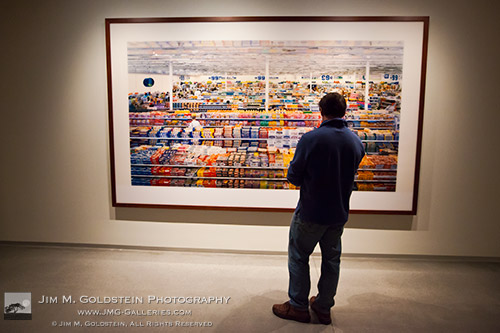
    Viewing 99 Cents by Andreas Gursky

    Viewing "99 Cents" by Andreas Gursky

    10 Ways To Improve as a Photographer

    1. Cut off participation on photo critique forums. Over time many of the submitted photos start to emulate each other converging into a common style versus diverging to original work.
    2. Begin viewing art web sites more frequently to get inspiration from contemporary artists
    3. Begin going to more museums and traveling exhibits to see the work of other artists (not just photographers)
    4. Begin looking at and reading classic and contemporary art books
    5. Force yourself to use different lenses
    6. Intentionally avoided taking the same types of shots by recognizing one’s habits in the field
    7. Identify and start personal art projects that you’ll find fulfilling even if they’re unlikely to resonate with others
    8. Monitor new technologies (hardware, software or even things out of left field that are unrelated) to see if they might be creatively applied to make something new and never before seen.
    9. Take a lot of iPhone photos as a creative white board to see things you might pass over otherwise
    10. Ask yourself “What if…?” a lot and try to formulate something new from your basic curiosity.

    As I see it this desire to continually improve is healthy and a great sign. I see far too many photographers (well known big names) fall into the habit of trying to reproduce work they had success with many years earlier. Photography is moving at such a fast pace that these older styles and techniques are now easily reproduced by lesser experienced photographers. The result is people losing respect for them or just becoming jaded by them. I wrote about this a bit here in The Subtlety of Greatness and Today’s Loss of Appreciation.

    Now more than ever it really takes a lot of skill, self-discipline and motivation to dig deeper and push farther. Great photographers are always pushing the limits and having seen this in my study of photography over the years it has served as a very strong source of motivation.

    Personally I can’t help but think if you’re not looking back at your older work and being dissatisfied you’re not growing as a photographer. This is why I run the Best of Photos 20XX blog project. Every year I look back and think I should trash my old photos. It’s not where I want to be. The day I lose that feeling is the day I know I’m done. There should always be new creative horizons to aim for and explore.

    Copyright Jim M. Goldstein, All Rights Reserved

    10 Ways To Improve as a Photographer

    flattr this!


    JMG-Galleries – Jim M. Goldstein Photography

     
    Comments Off on 10 Ways To Improve as a Photographer

    Posted in Equipment