RSS
 

Posts Tagged ‘Water’

Water in Red Mountain Open Space – Fat Bike Exploration

30 Nov

As a paddler I am always looking for water. Anytime! Anywhere! In November 2017 I made several visits to Red Mountain Open Space north of Fort Collins with my new Salsa Mukluk fat bike. I covered all possible trails. Technically, […]
paddling with a camera

 
Comments Off on Water in Red Mountain Open Space – Fat Bike Exploration

Posted in Photography


This is what happens when a ‘weather sealed’ camera takes a dip in salt water

09 Nov

$ (document).ready(function() { SampleGalleryV2({“containerId”:”embeddedSampleGallery_3338148904″,”galleryId”:”3338148904″,”isEmbeddedWidget”:true,”standalone”:false,”selectedImageIndex”:0,”startInCommentsView”:false,”isMobile”:false}) });

It shouldn’t need saying, but weather resistant, weather sealed and environmentally sealed do not mean waterproof. A cursory glance at your warranty should make this clear: no matter how good a reputation your brand has, if it isn’t covered by the warranty, you’re in ‘at your own risk’ territory.

Roger Cicala’s latest blog post over at Lens Rentals shows the damage that can occur when a nominally weather sealed camera gets wet—both the damage and the detective work made clearer by the fact that this particular camera took a dip in salt water. Cicala follows the path of the corrosion throughout the camera and explains why an encounter with seawater may render your camera not just non-functioning, but completely irreparable.

As is so often the case with Cicala’s ‘big picture’ blog posts, don’t get too hung up on the specific model he’s dissecting. As he points out in the comments, he’s written off some of every brand from salt-water damage.

Check out some of the pictures from this particularly painful teardown at the top, and then click the big blue button below to see the full post on Lens Rentals.

Teardown of a corroded camera

As an aside, this is the main of reasons we can’t test manufacturer claims in this area. Partly, of course, it’s because we have to return all the cameras to the manufacturers; but another aspect is that, like lens copy variation, camera failure is probabilistic: you’d need to test lots of cameras to know whether the model you’re testing is flawed or if you were just unlucky with your sample.

Cicala gets the kind of insight that the rest of us simply can’t get—he gets to see a much larger data set based on what the company rents and what it then has to repair—but even he doesn’t claim to have a solid answer to which brand is best. Just something to bear in mind the next time you’re thinking of sharing that ‘extreme torture test’ video of your brand’s flagship.

Articles: Digital Photography Review (dpreview.com)

 
Comments Off on This is what happens when a ‘weather sealed’ camera takes a dip in salt water

Posted in Uncategorized


Make a Macro Lens with Just a Drop of Water

27 Sep

Warning: preg_replace(): The /e modifier is no longer supported, use preg_replace_callback instead in /home/forge/content.photojojo.com/content.photojojo.com/wordpress/wp-content/plugins/ozh-better-feed/inc/feed.php on line 134


Photojojo

 
Comments Off on Make a Macro Lens with Just a Drop of Water

Posted in Equipment


Photo Experiment: Shooting macro photos of boiling water

21 Sep

Recently I’ve become interested in photographing boiling water in a glass tea kettle. It may sound boring and uninteresting, but with the right lighting you can get some truly interesting images.

It began when I was boiling my tea water one day in January this year, and I happened to have my camera with a macro lens and a speedlight mounted, laying nearby. I decided to try what would happen if I photographed the boiling water in the glass tea kettle and was very surprised by the results! It looked like melted metal, and the shapes were a lot more intricate and detailed than I would have expected.

When experimenting with this, I have gotten the best results when using a macro lens with a long focal length. I used my trusty Sigma 150mm f2.8 macro. You could probably get interesting photos with a non-macro lens, but you would likely have to do some cropping to take away the edges of the teakettle and the background, as you wouldn’t be able to focus as closely.

I set the aperture to around F6 or F7 for the sharpest results, and I focus fairly close, but not all the way to 1:1 magnification. I make sure that the room is as dark as possible, as this gives the photos a calmer background. I use either a normal speedlight mounted on the top of the camera, or, for more interesting results, I use two speedlights with colored gels, placed at different angles towards the teakettle.

In this case, I used two Godox TT 685s: cheap but incredibly well-built wireless speedlights.

Finally, I turn on the teakettle and let the water start boiling, while I press the shutter as many times as possible. Be prepared to take a lot of photographs, and know that most of them will turn out only okay. When I recorded my video about this, I took thousands of shots, and only deemed around 10-20 to be “good.” But when you get a nice composition of bubbles, with perfect sharpness and that metallic, futuristic look, it is worth the effort!

$ (document).ready(function() { SampleGalleryV2({“containerId”:”embeddedSampleGallery_9440977853″,”galleryId”:”9440977853″,”isEmbeddedWidget”:true,”standalone”:false,”selectedImageIndex”:0,”startInCommentsView”:false,”isMobile”:false}) });

The most interesting photos seem to come at two stages: when the water is boiling the most – when it is total chaos inside that teakettle—and when it has stopped boiling and you only see small, flat bubbles rising from the bottom with some distance between them.

Again, this might seem like a silly, boring idea but photographing boiling water is a fun and interesting experiment to try at home on a rainy day!


Micael Widell is a photography enthusiast based in Stockholm, Sweden. He loves photography, and runs a YouTube channel with tutorials, lens reviews and photography inspiration. You can also find him as @mwroll on Instagram and 500px.

Articles: Digital Photography Review (dpreview.com)

 
Comments Off on Photo Experiment: Shooting macro photos of boiling water

Posted in Uncategorized


How to Create Abstract Photos with Oil and Water and a Little Dish Soap

03 Aug

Oil and water are like chalk and cheese. They just aren’t the same are they? But despite their seeming incompatibility, each brings out the qualities of the other. As photographers, we love a good juxtaposition. There’s nothing that creates balance better than imbalance – well, it’s definitely the case here, at least. So in this article we’re going to use that to create some abstract photos.

For this project, we are going to create a body of images that look as if they come straight out of a chemistry class instructional… or a 60s liquid light show. With two philosophically opposed house hold items, several more amicable components, and a camera. The process is simple and the results are abstractedly beautiful and a little trippy too. Intrigued? Check it out below.

How to Create Abstract Photos with Oil and Water and a Little Dish Soap

How to Create Abstract Photos with Oil and Water and a Little Dish Soap

Things you will need to do this:

  • Camera
  • Sheet of glass
  • Two objects to set your glass on (I used milk crates but chairs and even stacked books work too)
  • A macro lens or extension tubes (I used my Kenko extension tubes)
  • Tripod
  • Towel
  • Some colorful materials
  • Oil (it doesn’t really matter what type, I used vegetable oil)
  • Dishwashing liquid soap
  • Water
  • Eyedropper or spoon

Find a background material

First, you’ll need to gather a few materials for the background of your image. You are looking for colored cardboard, magazines, posters, cloth, scraps – anything with a bit of color that won’t be missed if it gets coated in a little oil or dish washing liquid. Duller toned materials like brown or black won’t reflect light as readily, so aim for brighter colors to begin with.

Don’t worry too much about intricate patterns or details as they wont show in the final image. While you are scouting for materials, grab an old towel too, it’ll come in handy later.

How to Create Abstract Photos with Oil and Water and a Little Dish Soap

For my abstract oil project I selected a cardboard gift bag I had around the house and a reflective folder I flattened out. The bright color combinations of the bag will create smooth, vibrant gradients. The reflective sheen of the folder will guide a greater amount of light up through the image, but the holographic flowers can yield surprisingly subtle results.

How to Create Abstract Photos with Oil and Water and a Little Dish Soap

The reflective cardboard I used for this image directs small speckles of light up into the splotches of oil. The overall grey tone of the cardboard contrasts with the flecks of colors to create a surrealistic, rainy atmosphere.

How to Create Abstract Photos with Oil and Water and a Little Dish Soap

This is an image with the Happy Birthday bag as a backdrop. None of the details are discernible, but a soft gradient separates the image into soft hues

Setting up

One you’ve assembled a neat pile of colorful bits and pieces, it’s time to set up. The aim here is to construct a bridge of sorts for your sheet of glass to sit on. To reduce the impact of a potential oil-spill, I set my rig up outside. Wherever you choose to setup just make sure you work on flat, even ground. Grab your milk crates (or chairs, etc.), set them down a little distance apart and set the glass between the two. Now take a few of the colorful materials you’ve selected, and position them on the ground, directly under the sheet of glass.

To set up your camera, I strongly recommend using a tripod. Because macro lenses and extension tubes can reduce the amount of light reaching your camera’s sensor, the tripod will steady the camera for longer exposures. A tripod will also cut down the handling of your camera with oily fingers. Once your camera is locked into the tripod, turn it on, select Live View Mode and focus the camera on an area directly in front of the lens. You’ll need to be able to watch what you are doing on the LCD screen in the next step.

How to Create Abstract Photos with Oil and Water and a Little Dish Soap

Positioning my pane of glass between two milk crates, I then set my cardboard birthday bag in the space underneath. Using a tripod is highly recommended as this project requires a fair bit of hands-on adjusting and fiddling both behind and in front of the camera. The lemon tree is not mandatory

Time to start cooking

Gather your water, dish washing soap, oil, spoon (or eyedropper), and towel and place them within reach. Begin by adding a small spot of oil to the glass. Keeping an eye on your LCD screen will help you position your drops within the camera’s field of view. To build up layers of liquid, add dots of water or dishwasher liquid to the center of the oil. As the liquids span out over the glass, add in new droplets of the different ingredients. Alternating between ingredients takes advantage of their natural resistance to each other, delineating shapes and patterns more readily. If you like, you can use the tip of your spoon or eyedropper to manipulate the shape of the growing bubble.

That’s about it really! The rest is totally up to you. You can’t mess up, so don’t worry if you aren’t getting perfect circular bubbles or patterns. Allow the medium to take shape as you cycle through your three ingredients. Try running a spoon through the middle of the concoction to create smaller clusters of bubbles. Or use a greater ratio of dishwasher liquid to oil to enhance the spiderweb look of the cleaning chemicals. Even spritzing mists of water over the glass can make fascinating reflections.

Experiment with the background and elements

While you are watching the details unfurl beneath the camera lens, don’t forget to experiment with your background too! Add or remove materials, layer new colors, add materials which have a greater or lesser reflective surface. Use a flashlight (torch) to illuminate different areas in the image or shine the light up into the bubbles suspended on the glass.

There are no hard and fast rules – the more you experiment the more you’ll discover. And, once all your liquids have inevitably pooled in a messy, semi-clear river of goo, grab your towel, wipe down the glass and start again! A word of caution, however, this project can become an addition in itself, not only because it looks good, but because each result is so illusive and unpredictable.

Have fun and share your abstract photos made from oil, water and dish soap in the comments below.

This smooth effect was created as the oil and dish washing liquid slowly spread over the surface of the glass

The delicate strands in this image is a result of the dish washing liquid being spread across the glass surface with a spoon


This image was photographed with a single color background. The consistent color illuminates the beads of oil and water in the light

The post How to Create Abstract Photos with Oil and Water and a Little Dish Soap by Megan Kennedy appeared first on Digital Photography School.


Digital Photography School

 
Comments Off on How to Create Abstract Photos with Oil and Water and a Little Dish Soap

Posted in Photography


Pixel, the Water Corgi, 2007-2017

18 Jul

Related posts: – Stand Up Paddling with Pixel, the Water Corgi – Paddling with Pixel, the Water Corgi – Paddling Workout with a Dog – Pixel First Time in Sea Wind Canoe – Dismal River 2009 – Slideshow from Paddling […]
paddling with a camera

 
Comments Off on Pixel, the Water Corgi, 2007-2017

Posted in Photography


Water You Can Eat: Edible Drink Bubbles Aim to Eliminate Plastic Bottle Waste

09 Jul

[ By WebUrbanist in Design & Products & Packaging. ]

So far so good: the creators of these edible water balls have begun deploying them at large-scale festivals, the kinds of places where hundreds of disposable plastic bottles are used and trashed. But while this type of innovation bodes well for the future of biodegradable design, there are still some flaws to be sorted out before it can begin to seriously tackle the big problem: 35 billion plastic water bottles tossed in the garbage every year.

Ooho!’s solution is pretty simple and ingenious: drop frozen balls of water (or other beverages) into a (thankfully) tasteless solution that forms a gelatinous layer around the outside. Once the ice melts, drinkers can pick up and pop a gulp, or if that seems too strange: puncture the membrane (which then biodegrades in weeks) and drink from it. Made of seaweed, the “container” layer can also be colored and flavored.

Between crowdfunders and other backers, they have a lot of funding behind them, and “the team at Skipping Rocks Lab—made up of chemists, engineers, designers and business advisors–are continuing to pioneer the use of seaweed in other packaging uses, with a mission to become the leading global producer of seaweed-based packaging.”

The whole process uses a lot less energy than normal bottles require, but does it serve to replace them? In pop-up settings, like festivals and sporting events, it could — especially if the machinery used to make them can be made mobile. But for ordinary everyday use the problem is trickier — the membranes are delicate and would pop if tossed into bags or pockets.

Still, the science is worth pursuing: the same method could be expanded to make more robust and larger frameworks (better analogs for ordinary bottles). And the technology could be improved to, made to create and dispense water balls on a more mobile and automatic basis in public-event settings (e.g. ball-vending machines). For now, it isn’t the invention to end plastic bottles some might hope, but it is a step in the right direction and — at least in limited contexts — makes for a sustainable drinking alternative.

Share on Facebook


[ By WebUrbanist in Design & Products & Packaging. ]

[ WebUrbanist | Archives | Galleries | Privacy | TOS ]


WebUrbanist

 
Comments Off on Water You Can Eat: Edible Drink Bubbles Aim to Eliminate Plastic Bottle Waste

Posted in Creativity


Getting the shot: macro photos of paint and water that look like CGI

24 Jun

Vibrant colors of acrylic paint billow into clouds inside a water tank. © Photo by Alberto Seveso

Illustrator and photographer Alberto Seveso’s paint photography is out of this world. His images – macro photos of billowing clouds of color – look like they were generated by an animation program. But as he tells DPReview, it’s all very real.

The process itself, says Seveso, is quite easy: just pour varnish or acrylic colors into a water tank and take a burst of photos. Understanding exactly how to do that – what light you need, what works, and just as importantly, what doesn’t work – is the time-consuming part.

‘I spent a lot of time building all the stuff I use to shoot varnish into the water, and it’s still a work in progress,’ Seveso tells DPReview. ‘It’s very important to find the right light and, the hardest part, find the perfect mix between varnish and water and the way to pour this mix into the tank… not too fast not too slow.’

For his pictures, he uses either a Canon EOS 60D or Canon 7D Mark II with a Canon EF-S 60mm F2.8 macro lens attached. The tank is lit by either fluorescent light (personal projects) or higher quality tungsten Fresnel lights (for commercial assignments), two on either side of the tank, placed in front of either a black background or a softbox if he’s shooting on white.

You can see the setup for yourself in the BTS shots below:

$ (document).ready(function() { SampleGalleryV2({“containerId”:”embeddedSampleGallery_9818299609″,”galleryId”:”9818299609″,”isEmbeddedWidget”:true,”standalone”:false,”selectedImageIndex”:0,”startInCommentsView”:false,”isMobile”:false}) });

And here is a video Sony made to show off Seveso’s paint work (and sell some phones and tablets while they’re at it):

Seveso says he was inspired to create this kind of photography in 2009, when he saw ‘something similar but classic,’ probably ink drops in water.

‘I realized there was more to explore, different materials to mix, so I started to experiment with different kinds of liquid like acrylic colors, different types of oils, sparkling water, gels, metallic colors, ice, food coloring, and other things,’ he says. ‘Over the years, I’ve tried to develop a personal approach to this technique, developing the project in a very personal way and trying to focus on the details.’

Translation: macro photography.

These close-up, colorful photographs have become Seveso’s calling card. And what a gorgeous calling card they are.

$ (document).ready(function() { SampleGalleryV2({“containerId”:”embeddedSampleGallery_4295038061″,”galleryId”:”4295038061″,”isEmbeddedWidget”:true,”standalone”:false,”selectedImageIndex”:0,”startInCommentsView”:false,”isMobile”:false}) });

Before we let Alberto go, we asked him one more question. Does he have any advice or tips for people who would like to try this kind of paint photography for themselves?

His answer?

‘Practice,’ he told us emphatically. ‘It takes a lot of practice to understand the exact mix between liquids to get separate colors, details and color filaments – this is perhaps the hardest part.’

To see more of Alberto’s work, visit his website or follow him on Behance, Facebook, and Instagram.

Articles: Digital Photography Review (dpreview.com)

 
Comments Off on Getting the shot: macro photos of paint and water that look like CGI

Posted in Uncategorized


Water Splash Photography Made Easy

22 Jun

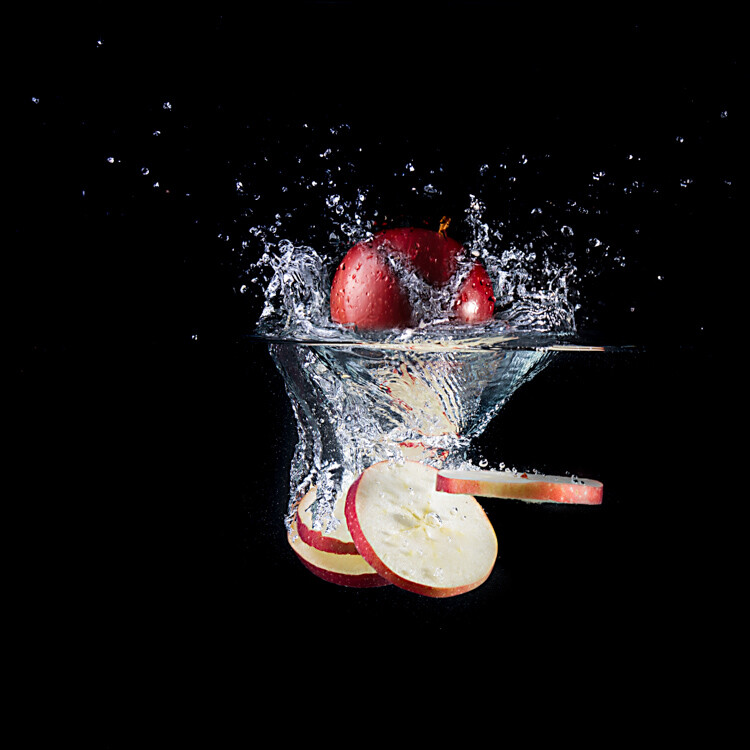
How exciting is it to freeze things in action? High-speed photography and water make the perfect recipe to get stunning images – and creating them is incredibly fun and easy too! Here are some tips for doing your own water splash photography.

Water Splash Photography Made Easy

What will you need to do splash photography?

You will definitely need an assistant. He/she will make your life much easier. It’s true that you can do everything by yourself but it’s way more productive if you have some help, a person who can throw the objects into the water, get them out and then throw them again. And again. And again.

Water Splash Photography Made Easy

  • Next you want a glass aquarium with a minimum size of 24x12x16”, preferably made of transparent glass.
  • Set up a table covered in black fabric.
  • Use a black background (paper or textile) standing at a minimum of six feet away from the aquarium.

Setup

Fill the aquarium with tap water, half or 2/3 full, depending on how deep you prefer the subjects to fall. Please keep in mind that if you fill the tank too high, every splash will probably result in water spilling. Please be careful with both flashes and your camera, when working with water.

Gear

Setup Water Splash Photography Made Easy

Any decent camera will be okay, but to obtain better quality you would probably like to use a crop-sensor or full-frame DSLR – or a mirrorless camera, with a good lens. Shooting from a distance, I used a 70-200mm f/2.8 lens at 200mm in order to obtain as much depth of field as I could.

As subjects you can use anything you like. I personally prefer fruits and vegetables because they vary in size, shape, and color.

Water Splash Photography Made Easy

Always use a tripod for your camera. Set the camera at a position where you have the desired framing of the aquarium, leaving enough space up, down and on both sides to capture most of the splashes. After you have positioned the camera, set the focus manually.

Focusing

For this step, ask your assistant to hold the subject in the water approximately where you want to make the splashes happen. Leave the camera on manual focus (or use back button focus). This way, the camera won’t need to refocus every time you make a picture, and you’ll know that the subject will be in focus every time the object is thrown into the same location.

Freezing the water splash

You have to know that freezing the motion (in this case) is done by the flash and not by the camera. Here’s a little bit of theory to explain this.

You have probably already made pictures where you stopped a human or an animal in motion. You’ve achieved that result by using a really quick shutter speed, somewhere between 1/4000th or 1/8000th of a second. But in the studio, where you use flashes or strobes, things change.

Water Splash Photography Made Easy

Your camera has to be in sync with the flashes (sync speed) and in most cases, this results in a shutter speed of 1/125th – 1/200th which is way too slow to freeze fast action. Luckily, there is this magic word called “flash duration”. This is the short period of time when the flash emits light which, if short enough, gives you the freezing effect you wanted.

You can use hot shoe flashes (speedlights) as they generally have pretty short flash duration, but only at very reduced power settings of 1/32 or 1/64 of full power. That results in low light, but you can compensate for that by increasing the ISO and opening the aperture.

The other option I prefer is using strobes with short flash durations. Most manufacturers make the flash duration of their strobes public information and the power at which you get the shortest flash duration. For the pictures of this article, I used Elinchrom ELC Pro HD 500 strobes, which have the shortest flash duration – 1/4000th of a second – at power 3.1.

Setting up the flash and camera

For your water splash setup, you will need two flashes, one on each side of the aquarium, aimed directly at your subject. I prefer to use light shapers which restrict the light to hit only the subject, so it doesn’t spill all over the scene, thus avoiding unwanted reflections and highlights.

For this shoot, my camera settings were ISO 100, 200mm, f/16, at 1/125th of a second.

Water Splash Photography Made Easy

Taking the pictures

This is the fun part! If you an assistant you’ll have to synchronize your movements. As he drops the objects in the water you’ll need to capture the perfect moments. In practice, this means that you will count to three, after which he’ll drop the object while you press the shutter release and pray to get the moment just right!

I sincerely suggest you repeat these four steps for a few hours. I prefer to set my camera to continuous or burst mode (my flashes recycle very fast) and record three or four pictures per drop. That way I increase the probability of capturing the subject and the splash of the water.

Water Splash Photography Made Easy

Some quick tips:

  • Use subjects with vivid color, this way you will have good separation of the subject from the black background and the white/blueish splash. This makes your pictures really pop.
  • If you photograph small subjects, try to use a minimum of 6-10 pieces at once.
  • Try to combine subjects of different sizes, colors, and shapes.
  • The heavier the subject, the faster it will fall, making it harder to capture at the right moment. So take that into consideration.
  • To get larger splashes, use subjects with a larger surface are, or let them fall from a higher position.
  • Wash the fruits and vegetables well before you use them, this way you can keep the water cleaner for a longer period of time.
  • If the water starts becoming dirty, change it. It’s pretty unpleasant as the tank is heavy and you’ll have to do that a couple of times. But the good news is that by doing so, you’ll have to work less in the post-processing phase, while also getting sharper, more cleaner images.
  • Frequently clean the front glass of the tank to get rid of the water drops that tend to accumulate on it.

Water Splash Photography Made Easy

Post-processing tips

This part is crucial! Despite all the efforts you have made to capture the perfect splash, the raw images you’ll get will definitely still need a little bit of polishing and processing.

Water Splash Photography Made Easy

Raw unprocessed image.

I only use Lightroom and Photoshop for post-processing, but you can achieve the desired effects in any preferred image processing application.

Clean up the water

After you’ve selected the image you want to retouch, you’ll first need to clean the water. I suggest that you use the Adjustments Brush, with Blacks set to -100. Apply this brush everywhere on the image except the subjects (that would make the subject too dark).

Water Splash Photography Made Easy

Adjustment Brush settings to apply to the water.

You can use the brush even on the splash itself, because this will make it cleaner and sharper, but be careful not to over do it because you can lose some details on the splash.

Water Splash Photography Made Easy

After the Adjustment Brush has been applied.

Final touches

Now open the image in Photoshop, create a new empty layer, select the brush color black, and start painting the new layer black. Be careful near the subjects, to avoid painting them also. This way you can achieve a clean black background around the subject. You can even paint away small drops of water that you consider unnecessary. Try to preserve a little bit of the surface of the water though.

If you like the painting you applied, it’s time to add sharpness to the image using the Unsharp mask at the level of your taste. You can also add some contrast or saturation depending on the final look you want to get.

Water Splash Photography Made Easy

Water Splash Photography Made Easy

Water Splash Photography Made Easy

Your turn

Are you ready to give water splash photography a try? Here’s another dPS article that can give you some more splash tips, How to do Creative Water Splash Photography with Off-Camera Flash.

If you have any questions please post them in the comments section below, and also share your images so we can see your results.

Bio

Stefan Mogyorosi is a photographer based in Oradea, Romania. He works mostly on commercial projects for the beauty industry, but also likes to do personal projects photographing still life, macro, fashion, portraits, or glamour. Experimenting with freezing motion and working with liquids are his top priorities right now.

Personal page – http://www.mogyorosistefan.ro
Facebook page – https://www.facebook.com/mogyorosistefanphotography/
Instagram page – https://www.instagram.com/mogyorosistefan/

The post Water Splash Photography Made Easy by Stefan Mogyorosi appeared first on Digital Photography School.


Digital Photography School

 
Comments Off on Water Splash Photography Made Easy

Posted in Photography


How water droplets came to life for a Gatorade ad

13 Jun
Image courtesy UNIT9 and Gatorade

Video production outfit UNIT9 pulled off some neat visual tricks in a recent project for client Gatorade. Using a custom-built ‘rain rig,’ precisely timed water droplets fall to the ground in the shape of a figure. Strobes illuminate the droplets and give the effect of freezing them, and frame-by-frame the water figure appears to run, jump and kick right in front of our eyes.

The figure’s movements were informed by motion-capture, and the rain rig had to be timed to turn water pressure on and off at millisecond intervals. The camera, strobes and rig were all synced to work in concert with each other, and each frame was processed to correct for gravitational acceleration of the drops as they fell.

Photo courtesy UNIT9 and Gatorade

Manipulating falling water to this extent hadn’t been done before, so the rig was custom built. It’s a neat piece of innovation that plays with the most basic principle of video capture: string together a certain number of still images every second in front of a viewer’s eyes and they’ll look like a moving image. For a behind the scenes look, check out the video below and visit UNIT9’s website.

Articles: Digital Photography Review (dpreview.com)

 
Comments Off on How water droplets came to life for a Gatorade ad

Posted in Uncategorized
