RSS
 

Posts Tagged ‘want’

Five Photography Rules You May Want to Ignore

02 Nov

A few years ago when I purchased my first Canon dSLR I took a free 2-hour class on digital photography from a local school. They offered free seminars as a way to market their series of intensive 6-week photography courses. I was new to digital photography at the time, having learned on 35mm film. During the class I scribbled away in the notebook the instructor handed out. I was given several photography rules to follow, but is that the best advice?

My camera-loving orange tabby Carter, shot in low light, requiring a relatively high ISO of 1600 to get a fast enough shutter speed to hand hold.  ISO 1600, 1/125th, F4 @ 105mm.

My camera-loving orange tabby Carter, shot in low light, requiring a relatively high ISO of 1600 to get a fast enough shutter speed to hand-hold. ISO 1600, 1/125th, f/4 @ 105mm.

The thing about photography is that it’s a series of decisions starting with the brand of gear you choose and it funnels down to your favorite subject, your preferred shooting mode, your shutter speed, aperture and ISO. By applying popular advice to all situations, you eliminate too many of the key creative decision about how your images look. Go ahead and disagree with or ignore rule-of-thumb photography advice. The choices you make allow you to create images that feel right to you – and that’s the real sweet spot.

So let’s look at five supposed photography rules and see if you agree or disagree with them.

1. Set the ISO at 400

One of my instructor’s key points was to set the ISO at 400 and forget it.”

Since I didn’t know anything about digital photography, it like pretty good advice, so I tried it. I also made a lot of blurry images. Set at ISO 400, and limited by a wide open aperture of f/3.5 on my kit lens, I often couldn’t gather enough light for a shutter speed fast enough to prevent motion blur. I flipped back to Auto Shooting Mode (Full Auto or Program) and suddenly my images were sharp again.

I dissected the settings on the Auto Mode shots and – you’ve probably guessed this already – the main difference while in Auto Mode was that the ISO was higher, enabling a faster shutter speed and reducing motion blur.
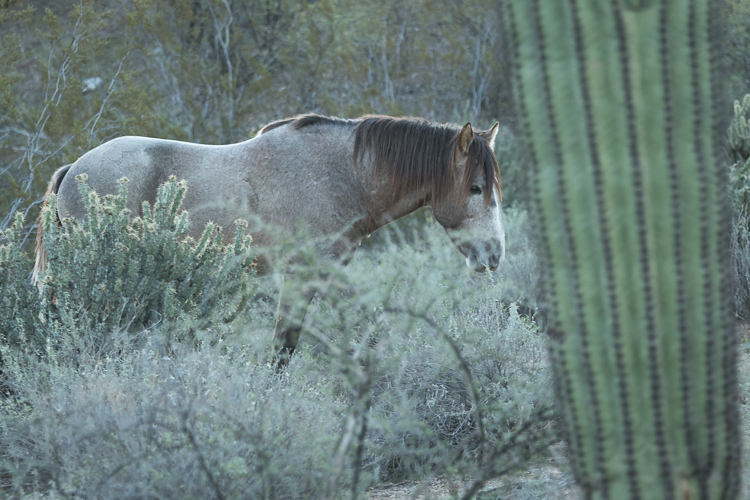
five-photography-tips-to-ignore-n

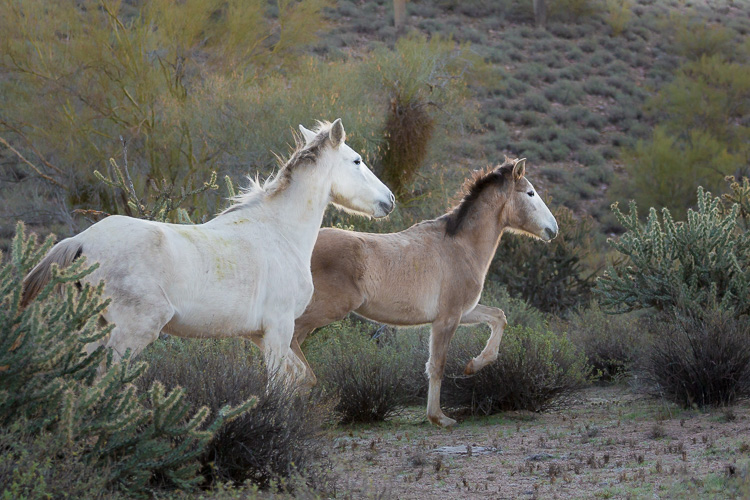
While this image wouldn’t have made the cut because of the awkward composition, the horse is also a bit blurry because my ISO was too low, allowing my shutter speed to lag. It wasn’t fast enough to freeze the motion of the moving horse. ISO 800, 1/160th, f/5.6, 176mm.

Increasing your digital ISO makes your camera’s sensor more sensitive to light, meaning you can shoot at smaller apertures and/or faster shutter speeds in low light conditions. Like film, increasing your ISO can create a grainier, noisier image. But unlike film, digital cameras have extraordinary ISO capacity. High-end cameras like the Canon 1Dx Mark II have an ISO capability of 51,200 expandable to 409,600! Sticking to ISO 400 is like pretending you’re still shooting film and disregarding all the recent digital technology advances.

Earlier this year I was in Mesa, AZ photographing the Salt River Wild horses at dawn. During blue hour, I started with my ISO too low, my shutter speed lagged, and I shot a whole series of blurry images (see image above). Purely by luck, at ISO 800, only this one didn’t have motion blur.
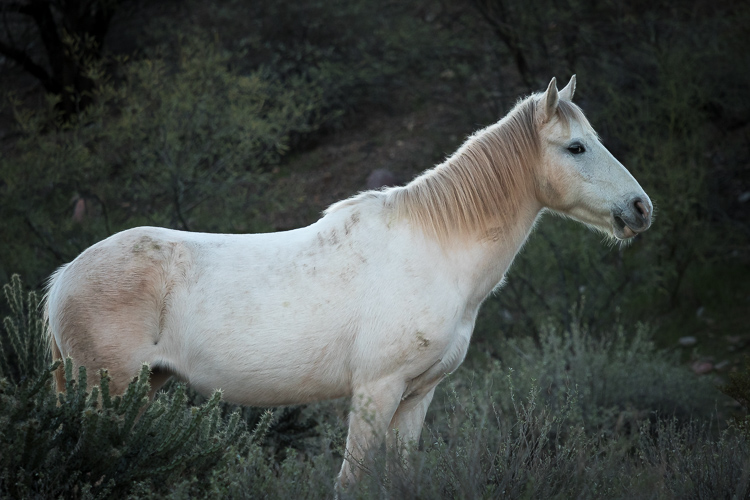
Five Photography Tips to Ignore A

ISO 800

The next day, I started at ISO 12,800 to keep my shutter high enough to prevent motion blur, gradually decreasing my ISO was the sun grew brighter.
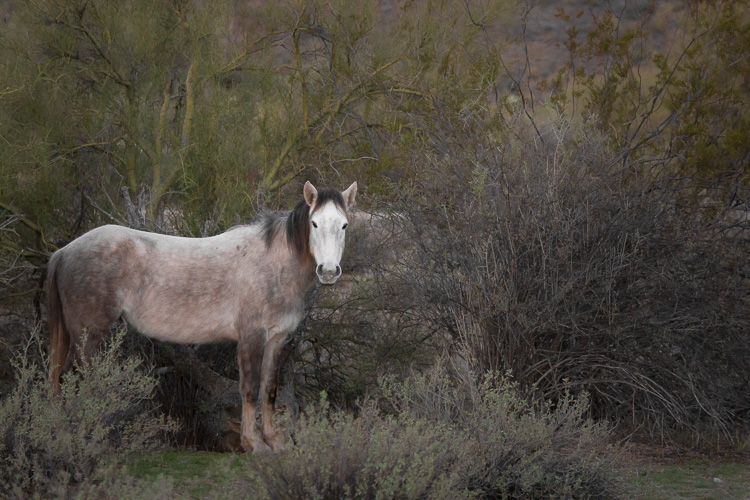
Five Photography Tips to Ignore B

ISO 12,800

Five Photography Tips to Ignore C

ISO 1250

While these images might be noisier than those shot at ISO 400, noise is almost always preferred to motion blur. Digital noise can be managed, while an unintentionally blurry picture can rarely be saved.

Setting your ISO to an unrealistically low value and leaving it there is the sort of advice or rule I’d encourage you to ignore.

2. You never need to shoot faster than 1/500th of a second

There’s a famous teaching photographer (I mentioned him here too) who says that you never need to shoot faster than 1/500th of a second. I ignore his advice too. Here’s why.
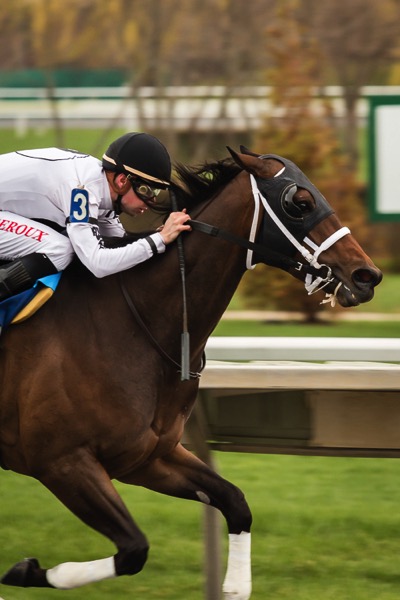
Five Photography Tips to Ignore D

Shutter speed 1/500th

This image, shot at 1/500th of a second, shows motion blur in the horse’s legs. Sometimes you may want to intentionally include motion blur in your images because it shows speed in a dynamic way, and in this case, that’s what I wanted. If I wanted no motion blur, I would need to have chosen a faster shutter speed.
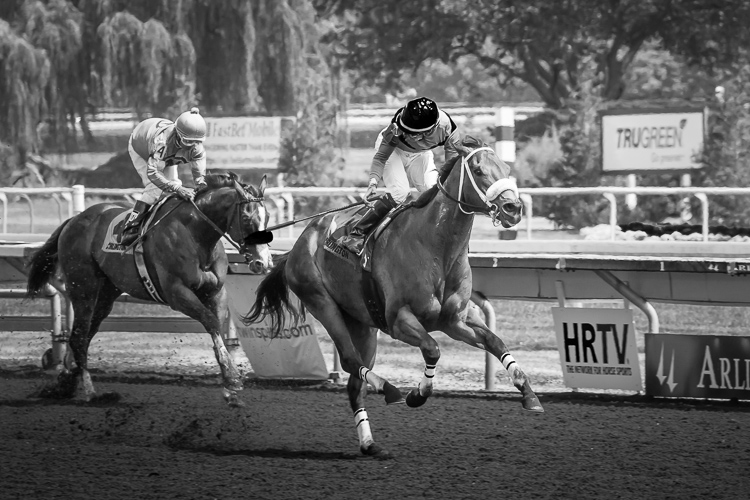
Five Photography Tips to Ignore E

Shutter speed 1/640th

This image, shot at 1/640th of a second, is sharper. It has very minimal motion blur in the legs but again, it still shows motion blur.
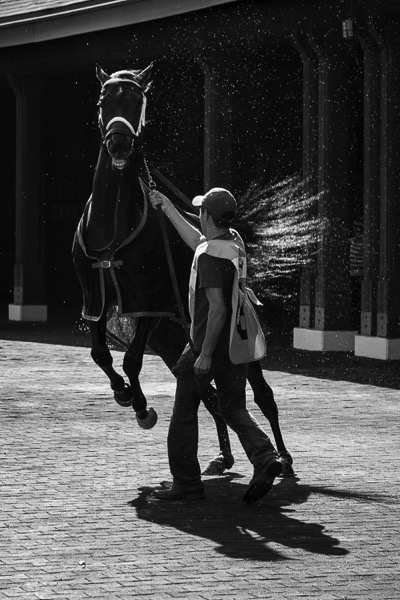
Five Photography Tips to Ignore F

Shutter speed 1/1000th

If you shoot at 1/1000th and above, you can get crisp, blur-free images of fast-moving objects or animals in motion. In this image, even the water droplets are frozen in time.

Depending on your creative goals, you may want to experiment and shoot from 1/100th, all the way up to 1/8000th of a second. That’s the reason to ignore this rule. Adhering to 1/500th of a second as your maximum shutter speed takes too many of your creative choices away from you.

3. Serious photographers always use tripods

Has your instructor or mentor told you that to be serious about making images, you must always use a tripod? That’s another piece of advice you might want to ignore, unless the type of work you make truly requires a tripod. Night photography, for example, typically requires a tripod because of the longer shutter speeds.
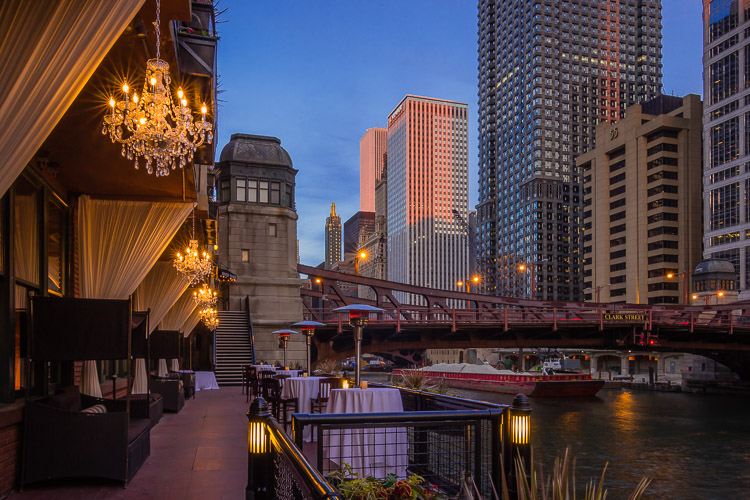
Five Photography Tips to Ignore G

Night photography – with a tripod

Long exposure photography, astrophotography and shooting landscapes at dusk or dawn are all good examples of when to use a tripod in order to make excellent images.

Macro photography often requires a tripod but sometimes doesn’t. This image was made hand-held.
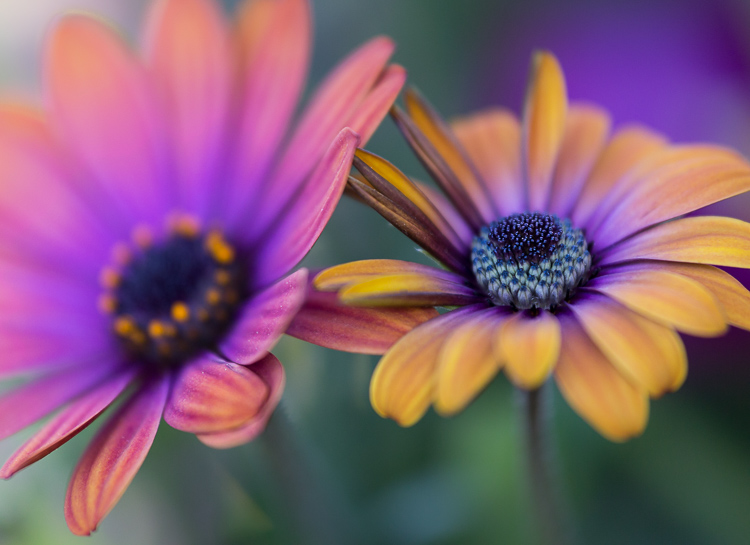
Five Photography Tips to Ignore H

Macro photography – handheld

Street photography never requires a tripod. The most serious street photographers I know use small camera bodies with prime lenses. What makes them serious is that they carry their cameras all the time and are always ready to shoot. For a street photographer, lugging around a tripod actually seems a little ridiculous, doesn’t it?
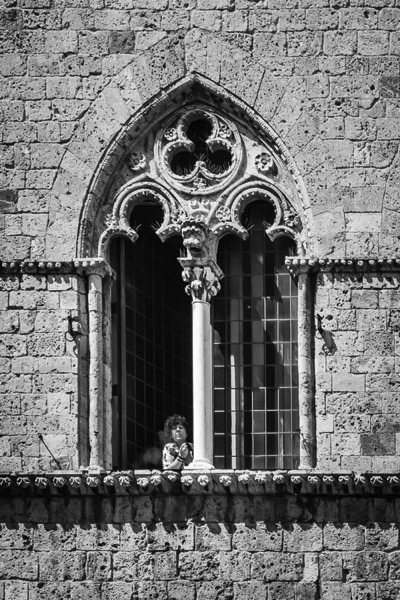
Five Photography Tips to Ignore I

Street photography – handheld

I’m a very serious photographer and I almost never use a tripod. I have two: a Travel Flat Benro tripod and a Gitzo with a Really Right Stuff BH 40 Ball Head. I always have one in the car or in my suitcase, but I rarely use either one anymore.

Does that mean I’m no longer a serious photographer? No, of course not. I travel all over the world to photograph horses and wildlife. I’m very serious about the images I make. The thing is, my images don’t usually require a tripod. Using one is sometimes even counterproductive when photographing fast bursts of action.

When two wild stallions start to fight out in the desert, I begin to shoot while adjusting my body position to look for the best angles for the scene to improve my composition. Sometimes a wild stallion spat can last for mere seconds. If you had to pause to adjust your tripod, you’d likely miss the action.
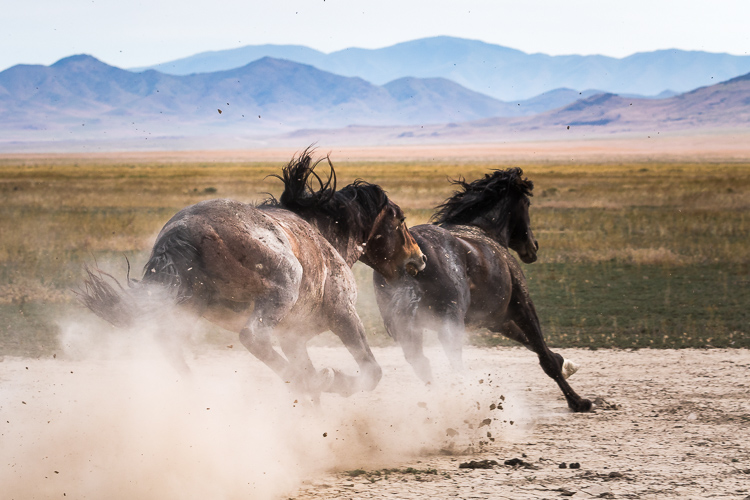
Five Photography Tips to Ignore J

Wild stallions – hand-held. ISO 250, 1/800th, f/8 @ 98mm

Being a serious photographer isn’t about the gear you choose to use or not use. Being serious is about making images with intention. Your intention might be totally different than the photographer using the tripod. If it is, ignore his advice to use one.

4. Only shoot in Manual Mode

Most of the professional, money-making photographers I know actually shoot in Aperture Priority so I think this rule is more the advice of old-fashioned, learned-on-film photographers. These photographers grew up using Manual Mode since that’s the only option that was available. They didn’t have the choice of Auto, Aperture or Shutter Priority Modes.

So that’s the rub. You do have a choice. You also have stellar gear that is going to make the right exposure choice 90% of the time. Why not learn to use all the modes on your camera?

At a cocktail party for your bestie’s 40th? Use Auto Mode to make sure you get the shot. Shooting fast action? Use Shutter Priority. Shooting in quickly shifting light? Use Manual Mode and set your ISO to Auto. Shooting a portrait? Experiment with Aperture Priority and then give your camera’s Portrait Mode a try.
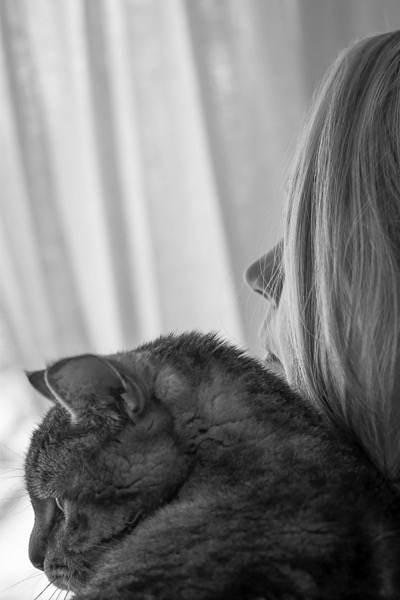
Five Photography Tips to Ignore K

Self-portrait shot in Portrait Program Mode. 100, 1/100th, f/3.5 @ 50mm

Cameras today have amazing functionality. Anyone telling you to exclusively use Manual Mode may have different photography goals than you do. If your goal is to make sure you make the best images possible, ignore their advice and learn all of your camera’s capabilities backwards and forwards.

5. Only shoot in your lens’s sweet spot

If you’re keeping track, by heeding all of this well-intentioned advice, your camera is in Manual Mode and attached to a tripod. Your ISO is set at 400 and you’re using a maximum shutter speed of 1/500th. There has to be a rule about aperture and focal length too, right? There is.

The sweet spot is a combination of the aperture and focal length where your lens functions at its absolute best. If you’ve read reviews about zoom lenses you may have read something along the lines of; “Wide open at f/5.6 at the maximum focal length of 400mm, the corners get soft and there’s a noticeable loss of sharpness throughout.” Photographers write reviews like that so that you can avoid shooting in the so-called soft end of your lens and gravitate towards its sweet spot.

You can evaluate the sweet spot of your lens by making a series of images of the same subject, in the same lighting conditions, using each aperture at every focal length and comparing the results. (Read: How To Find Your Lens’ Sweet Spot: A Beginner’s Guide to Sharper Images for a full description of how to do this.) That sort of evaluation sounds soul-crushing and unnecessary to me. If you buy a zoom lens, you’re buying it because you need that focal length in your bag. Why run a test on your lens that might make you hesitate to use it at its maximum focal length?

Five Photography Tips to Ignore L

The real sweet spot is making images that feel right to you. ISO 2500, 1/80th, f/4.5 @73mm

Instead how about learning the capabilities of your lens by truly using it? Over time, you may gradually learn that the sweet spot is 100mm at f/8, because every image you shoot at that aperture and focal length is amazing. Rather than avoiding the rest of your lens’ focal length range and aperture combinations, you can shoot a second image using the sweet spot. If there isn’t time to shoot a second image, that’s okay. Just be grateful you had a lens capable of capturing the image at all.

Bottom line

The bottom line is that as you progress in your photography journey, you get to make the decisions. What advice and rules will you follow, and which will you toss out?

Be disagreeable with me! What photography rules have you been taught that you ignore now? Please share your experience in the comments below.

googletag.cmd.push(function() {
tablet_slots.push( googletag.defineSlot( “/1005424/_dPSv4_tab-all-article-bottom_(300×250)”, [300, 250], “pb-ad-78623” ).addService( googletag.pubads() ) ); } );

googletag.cmd.push(function() {
mobile_slots.push( googletag.defineSlot( “/1005424/_dPSv4_mob-all-article-bottom_(300×250)”, [300, 250], “pb-ad-78158” ).addService( googletag.pubads() ) ); } );

The post Five Photography Rules You May Want to Ignore by Lara Joy Brynildssen appeared first on Digital Photography School.


Digital Photography School

 
Comments Off on Five Photography Rules You May Want to Ignore

Posted in Photography


In Europe? You Don’t Want to Miss Pop_UP Berlin in Three Weeks

11 Oct

At the end of the month, GPP PopUp is coming to Berlin. If you are in Northern Europe, this city is within reach for you. And for a variety of reasons, it’s almost certainly the last time Pop_UP will be held in Europe.

Here’s why you shouldn’t miss it.

A Compact, Info-Filled Weekend

This will be my third time teaching at Pop_UP. Over the course of one weekend—two days—the instructors there work hard to bring you a learning experience that centers on photography, but hits it from four unique and different perspectives.

That’s important, because no two photographers’ environments are the same. And learning from people who have successfully navigated various waters in different ways can be very valuable.

The sessions are all pretty fast paced. We each have a lot to cover and only a few hours to do it. For that reason, we each tend to step back from the daily cacophony and concentrate on things that might spark you to think about your own situation in a different way.

I wouldn’t expect to learn 500 things. If past Pop_UPs are a guide, I think the more likely experience is that you’ll get a deeper look into a couple dozen new concepts—many of which will be things that you have never really considered before.

People don’t learn sequentially. Accumluated knowledge kind of builds up, then something causes that dam to burst and important concepts come together in a very concentrated way. Which is why there are times when you suddenly realize multiple things at once.

Creating those intersections is the main goal of my session at Pop_UP. But more on that in a minute.

Greg Heisler is a One-Off

Consider Greg Heisler. And yes, I realize there is a Joe and a Zack involved. But they each have their own online venues to talk about their approach to Pop_UP. But Greg really doesn’t.

So let’s talk about him for a minute.

First, Greg is one of the world’s pre-eminent portraitists. You’ve grown up seeing his work. And you think there is this gap, for lack of a better word, that separates his work from yours. And in some ways you are right. The technical gaps are there, because he has a mastery of photography and lighting and color that few can match.

But what I have learned, watching him teach in his very open way, is that the camera-related gaps only partly explain the difference between his work as compared to that of the average “good” photographer.

I have learned that there are other gaps. Important gaps. Probably more important than the photography-related gaps that we can easily identify.

His work ethic, his thought ethic, his approach to dealing with the people in front of his camera, his respect for (and knowledge of) the history that came before us as photographers—all of that is at least as important as his mastery of photography or lighting.

Probably more important, actually.

Spending a half a day seeing that is something that is hard to put a value on. You go in expecting F/stops and you coming out realizing the important stuff had nothing to do with F/stops. If you have read 50 Portraits, you already have some idea of what I am talking about.

(And if you own his book, bring it. Get him to sign it. In 100 years, no one is going to remember me. But Greg Heisler will still be alive and well in the lexicon of photographers.)

Yes, he will almost certainly be shooting at Pop_UP. And it will be a learning experience to watch him work. He might use a Profoto light, or he might use a cheap fluorescent tube from a local hardware store. To Greg, it’s all just light. His versatility and unflappability is a lesson in itself.

Lastly, back to the idea of this being a one-time opportunity. Because for the most part, Greg has been taken off of the market.

Syracuse University in upstate New York has very wisely snapped him up to keep largely for themselves. He loves it there. It’s a wonderful college town with a steady stream of curious (and lucky) young minds for him to mold.

Which means he almost never teaches externally these days. And because of his academic schedule, when he does teach it is generally close to home.

If you are in Europe, this might well be the only chance you have to learn from him.

And I Have to Follow That

I have taught in a lot of places—many cities, many countries. And suffice to say that following Greg Heisler in any kind of teaching environment is its own little nightmare. Not unlike the one where you show up at school without pants.

It stems from a deep-seeded fear of relative inadequacy, something I readily confess as a “lighting guy” in the context of Greg. So you can damn-well be sure I won’t be talking about lighting.

“What an amazing cooking presentation by Julia Child! Please stick around for David Hobby, who is next and will show you how to make toast…”

No.

So my class on Sunday afternoon will be more about the things that surround photography:

• How do you find the areas in photography where you are particularly well-suited?

• How do you identify—and create—areas of extreme competitive advantage?

• How do you create the ecosystems that, in turn, create the positive feedback loops you need?

• Which “outputs” from those systems do you optimize for? (Not just money.)

• Is it a good idea to optimize for money? (Not usually.)

• What balance do you need to create to foster sustainability?

• Where do your best ideas come from?

• Is it possible to engineer a stream of strong incoming ideas? (Yes, definitely.)

I have watched for ten years as my particular field—editorial/photojournalism—has largely collapsed. Many assignment fees today don’t even cover the cost of periodic gear replacement. It’s crazy.

So my last ten years have been spent studying and practicing new ways to approach the “new” world of photo and its related professions. To learn to adapt to a world that has completely shifted under my feet, and to anticipate those changes still yet to come.

This is not something I write about on this site, simply because it is way out of the lighting niche. But it is something that I feel is existentially important for photographers to understand.

That’s the deep dive we’ll be taking on Sunday afternoon.

So That’s One Day

Like I said, I’ll let Joe and Zack speak for themselves. Feel free to ping them on Twitter if you have any Q’s. But for those of you joining us in Berlin, this is what’s on tap for your Sunday.

Pop_UP is not a forever thing. We have been to UK, Asia, US—and this month, EU. If it continues, it would almost certainly be in South America or Africa.

If you are in Europe, and you want to attend one, this is your chance. Come join us.

And if you have photo friends in Europe, please help to spread the word. None of us live there, so we would very much appreciate your help in that way.

Thanks—and see you there,
David

:: GPP Pop_UP Berlin, Oct 29-30 ::
Strobist

 
Comments Off on In Europe? You Don’t Want to Miss Pop_UP Berlin in Three Weeks

Posted in Photography


Are You Obsessed with Shooting Wide Apertures – Here’s Why You Might Want to Hold Back

24 Mar

There’s a scene in the original Jurassic Park movie, that almost perfectly describes one lesson I have learned when documenting the world around me with my camera. In this scene Dr. Ian Malcolm, a brilliant mathematician who is visiting the prehistoric park, expresses severe reservations about the idea of resurrecting long-extinct species during a conversation with John Hammond, the director of the park. Hammond is gleefully explaining the incredible genetic breakthroughs that his scientists have achieved. “Our scientists have done things which nobody’s ever done before.” Incredulous, Malcolm responds with equal fervor and says, “Your scientists were so preoccupied with whether or not they could, they didn’t stop to think if they should.” The same holds true for camera lenses. Just because you can shoot wide open at f/1.4 or f/1.8, doesn’t mean you should.

ultra-wide-apertures-purple-flower

When I first got into serious photography work, I was amazed at the power and light-gathering ability of my 50mm f/1.8 lens. It opened up a whole new world of photographic possibilities, that I continue to explore today, and was capable of producing incredible images, even on my humble little Nikon D200. Unfortunately, like the scientists in Jurassic Park, I did not spend years in the trenches learning my trade and honing my skills in order to learn how to truly utilize the power of such wide apertures, and went through a phase where I shot everything wide open because of things like low light photos, depth of field, and of course bokeh. Always with the bokeh. Now it’s important to note that I don’t regret any of those early lessons but I do want to offer youa few simple things I’ve learned over the years, and a couple reasons why you might want to reign things in a bit and not shoot wide open with that fancy prime or ultrafast zoom lens just yet.

1. Depth of field can be way too shallow

I shoot most of my photos with three prime lenses: a 35mm f/1.8, a 50mm f/1.8, and my favorite, an 85mm f/1.8, that I call my supermodel lens. (Seriously, you could just about point that lens at a moldy old scarecrow, and get a portrait worthy of Vogue magazine.) Each of these lenses has its own set of unique advantages and limitations, but as you can probably already tell, the one thing they all have in common is a super wide maximum aperture. Certainly there are plenty of lenses available with even bigger apertures, like the Nikon 58mm f/1.4 or Canon 85mm f/1.2, but when push comes to shove an f/1.8, or even f/2.8 lens, is no slouch either. Wielding one of these ultra-wide beasts can be a bit like riding a tyrannosaurus rex, in that the sheer amount of power at your disposal is kind of insane. But, one advantage of fast primes like this, an ultra-shallow depth of field, can also be somewhat of a curse if not used properly.

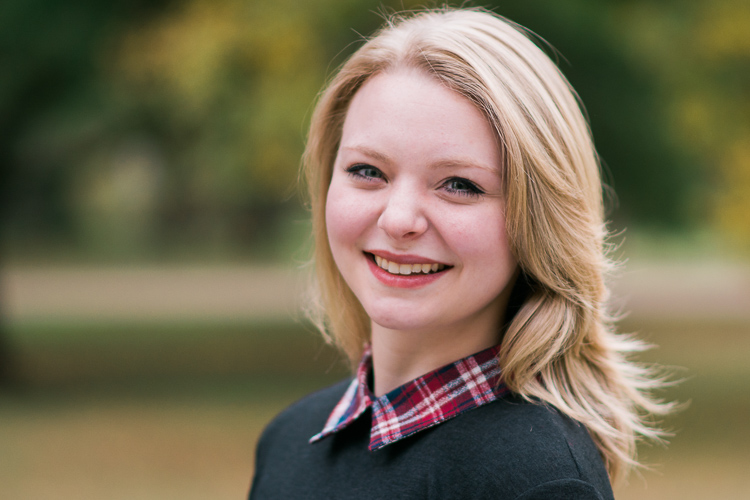
I’m not going to lie, it’s a ton of fun to shoot things with your lens wide open but it took me a while to learn, that just like the scientists of Jurassic Park, maybe I should have held back a bit. This portrait of a college student is yet another time in which I had no good reason to shoot wide open, but did anyway, and the result was a photo that simply could not be used. Due to the wide f/1.8 aperture, and my proximity to the subject, it left me with a depth of field consisting of just a few centimeters. Her left eye (on the right side of the photo) is perfectly in focus while the other side of her face is blurry, and the result is a strange-looking picture that I had to discard. Thankfully, I quickly realized my mistake and got some other perfectly usable images by shooting at f/2.8 and f/4. But, this was one of those situations in which I thought it would be super cool to get the way awesome background blur of an f/1.8 aperture, but did not realize how I nearly destroyed the portrait in the process.

85mm, f/1.8, 1/750 second, ISO 400

85mm, f/1.8, 1/750 second, ISO 400

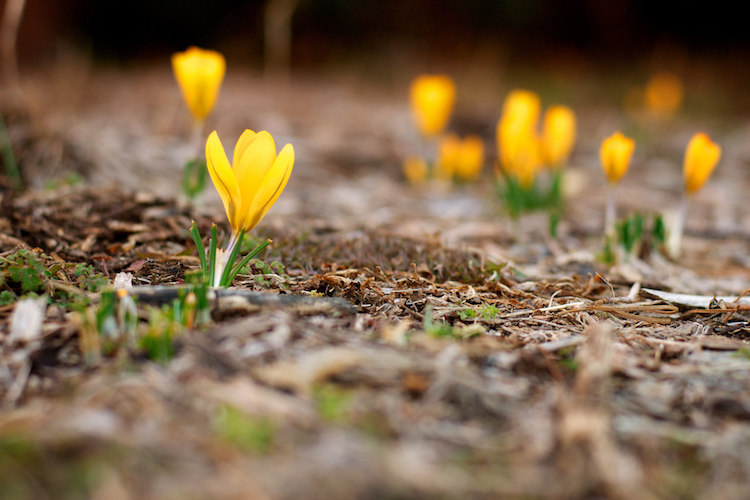
Here’s another example from when I first got my 50mm lens, and thought it was so cool to go around shooting all my pictures at f/1.8 – because my warped sense of logic told me that no depth of field could ever be too thin. As a result this picture of some crocuses contains an ugly streak across the center where one flower and a lot of dead grass is in focus while the rest of the image is a blurry mess. Shooting at a smaller aperture would have given me a smooth transition between in-focus and out-of-focus areas and a much more pleasing image overall.

50mm, f/1.8, 1/500 second, ISO 400

50mm, f/1.8, 1/500 second, ISO 400

2. Bokeh and background blur can get out of hand

This is a bit subjective, and open to interpretation on the part of both the photographer and the viewer, but over the years I have found that shooting at the widest possible aperture in order to get the most possible bokeh, or background blur, things can go from artistic and interesting, to messy and incomprehensible very quickly. Bokeh is nice and can certainly be used to add an artistic flair to an image, but when overused, it can overpower the subject and ruin the picture. The following photo of a purple flower sticking up from a bed of grass shows this phenomenon in action.

ultra-wide-apertures-purple-flowers

The flowers are so removed from the background it’s almost like they are hovering in midair, and the effect is somewhat disconcerting, and borders on upsetting. Blowing out the background so much has removed any sense of place and context for the subject, and what’s left is a green and purple mess, that is neither artistically interesting, nor aesthetically pleasing.

3. Vignetting, chromatic aberration, and other optical oddities

Before I say too much on this subject perhaps I need to add a bit of a preface. Less expensive lenses can behave strangely when you shoot with them wide open, but more expensive glass is usually much better at this sort of thing. With that disclaimer out of the way, it’s important to understand some of the optical abnormalities such as vignetting, chromatic aberration, and softness, that often show up when your lens is opened up as far as it will go.

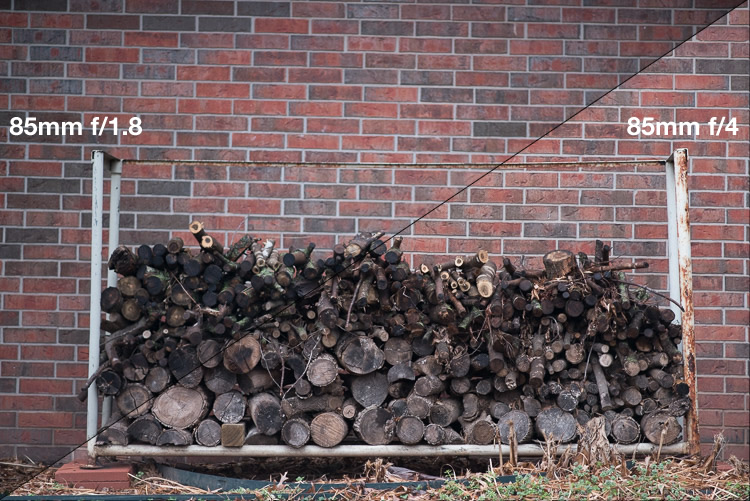
Vignetting is when the edges of your image look a bit darker than the rest of the picture, due to how light is manipulated inside your lens before it hits the image sensor inside your camera. It’s not too big of a problem on cameras with smaller sensors like APS-C or micro four thirds models, but it is certainly there, and even more so on full frame cameras.

Vignetting can be a major issue when shooting wide open. Notice how the centers of both images are equally exposed but the corners are much darker at f/1.8.

Vignetting can be a major issue when shooting wide open. Notice how the centers of both images are equally exposed but the corners are much darker at f/1.8.

If you shoot in RAW, you can use Lightroom, Photoshop, or other such applications to mitigate most of the effects of vignetting if you want. Of course another solution is to use a smaller aperture, which tends to eliminate most vignetting altogether. Vignetting is not always a dealbreaker, and many photographers, myself included, actually prefer the subtle effects of a well-used vignette. You may find that you fall into this camp, in which case go right ahead and shoot at f/1.8 or f/1.4 to your heart’s content.

The other optical abnormality that often rears its ugly head at wide apertures is chromatic aberration, which might be a much bigger problem if you are not ready for it. This usually manifests itself as purple or green outlines or fringes, around places in your pictures with harsh contrast between dark and light. For example the image below was shot at f/1.8, and upon first glance, looks perfectly usable.

50mm, f/1.8, 1/3000 second, ISO 100

50mm, f/1.8, 1/3000 second, ISO 100. It looks Okay on first inspection, but all is not well up close.

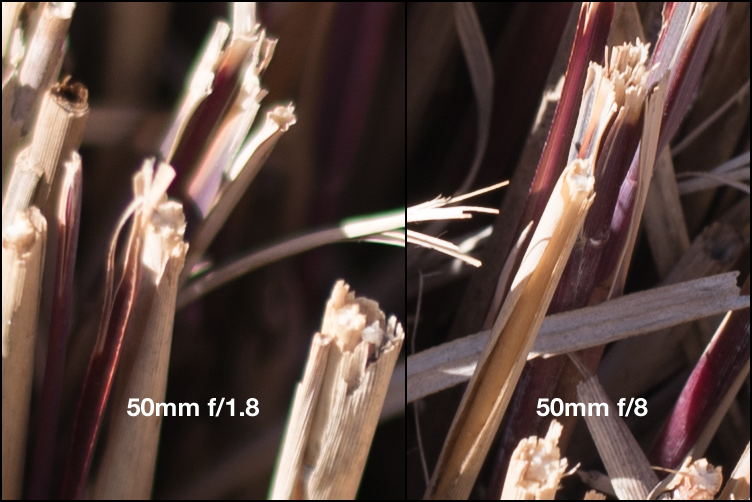
Take a closer look and you will notice a big problem around the edges of most of the dry stalks of grass. Ugly green halos show up all over the place, and this is a direct result of shooting wide open, due to how the incoming light is transformed by the lens on its way to the camera. Here’s a 100% crop of the image next to the exact same picture shot at f/8.

Green outlines abound on the left side while stopping down to f/8 eliminates them entirely.

Green outlines abound on the left side while stopping down to f/8 eliminates them entirely.

This optical imperfection can often be mitigated somewhat in Lightroom, by using its: Remove Chromatic Aberration option in the Develop panel. But even then the results are not ideal, and you will often be left with images that still show some green or purple artifacts, or lose a bit of color from other parts of your picture. Rather than mess around with fixing these issues in post-production, I like to just avoid it from the start and shoot at a slightly smaller aperture. It usually fixes the problem, and still leaves me with the same overall composition I would have had with a wider aperture.

The last weird characteristic of most lenses at their widest apertures might not be that big of a problem unless you are painstaking examining your pictures on a per-pixel basis, but it’s something you should know about nonetheless. Almost all lenses are a bit softer when used at their widest apertures, which can result in pictures that are not quite what you want. The picture below was shot at f/1.8 and looks decent upon first glance, but a closer inspection reveals a very different story.

50mm, f/1.8, 1/125 second, ISO 100

50mm, f/1.8, 1/125 second, ISO 100. Seems decent but once again a closer look reveals a much different story.

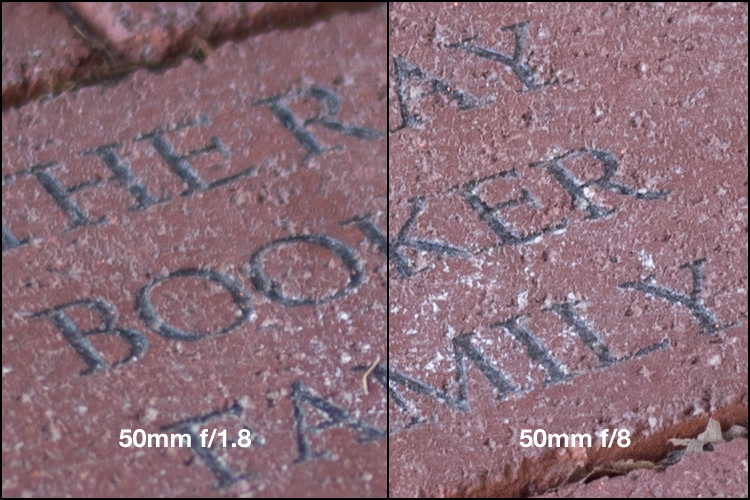
Zooming in on the exact center of the image, the point at which I locked focus, shows two very different pictures when this is put next to the very same picture shot at f/8.

Focus was locked precisely on the letter "K" and yet the image on the left, shot at the widest aperture on my lens, is much less sharp.

Focus was locked precisely on the letter “K” and yet the image on the left, shot at the widest aperture on my lens, is much less sharp.

Once again this sharpness problem can be corrected to some degree in post-production, but my ideal solution is to avoid shooting at f/1.8 unless I specifically need the light-gathering ability, background blur, or other effects that such a wide aperture offers. Photography is all about tradeoffs, and while closing down the aperture on my lens resulted in a picture that was sharper, it also gave me an image that had much wider depth of field, which made the overall composition less pleasing.

4. Use wide apertures sparingly to maximize their impact

The Roman philosopher Marcus Tullius Cicero once said, “Never go to excess, but let moderation be your guide.” This nugget of wisdom is applicable not only to life in general, but also speaks volumes about how to approach photography. I like to treat the widest aperture on my lenses like flooring the gas pedal on my car. It’s fun, but if I went around driving full speed everywhere I went, it would quickly lose its appeal. (Though in my 1998 Toyota sedan I would probably lose a race to a skateboarder, but you get the point.)

Your lenses have wide apertures for a reason and they are meant to be used to get good images, particularly if you are aware of some of the quirks and idiosyncrasies of using them like this. If you like shooting wide open, and don’t mind some of the potential tradeoffs like a bit of vignetting and chromatic aberration, then go for it! However, my own personal rule of thumb is to only use f/1.8 when I really need it, otherwise the creamy backgrounds and bokeh balls start to lose a bit of their luster. When I’m doing a portrait session I keep f/1.8 in my back pocket for when I really need it, otherwise I shoot most pics at f/2.8, f/4, or smaller.

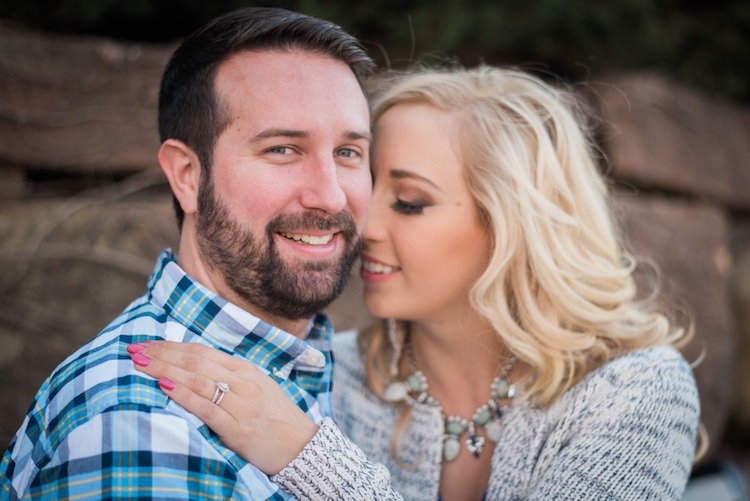
I took most photos of this couple at smaller apertures, which made this one at f/1.8 really stand out.

I took most photos of this couple at smaller apertures, which made this one at f/1.8 stand out among the rest.

After hearing this list of reasons to hold back a bit when shooting wide open, I almost feel like I should write a similar article about the benefits of taking photos at the largest aperture possible. I don’t want to give the impression that you should never use your equipment to the fullest of its capabilities, just that there are a few things to know before you go around taking all your pictures at the widest possible aperture your lenses can use. You might end up with a few problems, just like the ill-fated scientists of Jurassic Park, but hopefully yours won’t be quite as lethal, and along the way you could very well manage to take some incredible photos too.

I’d like to know what your thoughts are on all of this, and if you have any favorite shots taken at not-quite-wide apertures, please post them in the comments below!

googletag.cmd.push(function() {
tablet_slots.push( googletag.defineSlot( “/1005424/_dPSv4_tab-all-article-bottom_(300×250)”, [300, 250], “pb-ad-78623” ).addService( googletag.pubads() ) ); } );

googletag.cmd.push(function() {
mobile_slots.push( googletag.defineSlot( “/1005424/_dPSv4_mob-all-article-bottom_(300×250)”, [300, 250], “pb-ad-78158” ).addService( googletag.pubads() ) ); } );

The post Are You Obsessed with Shooting Wide Apertures – Here’s Why You Might Want to Hold Back by Simon Ringsmuth appeared first on Digital Photography School.

Digital Photography School

 
Comments Off on Are You Obsessed with Shooting Wide Apertures – Here’s Why You Might Want to Hold Back

Posted in Photography


‘We want to make lenses that can be used forever’: Sony engineer discusses G Master lenses

10 Feb

‘We want to make lenses that can be used forever,’ says a senior engineer behind Sony’s new G master lenses. At the launch of the ‘G Master’ range of high end lenses, we spoke to Motoyuki Ohtake, Distinguished Engineer in Sony’s Lens Design Department about the process and the philosophy behind the latest lenses.

The development process series involved re-thinking several parts of the design and manufacturing process, he says.

Motoyuji Ohtake, Distinguished Engineer, Opto Design Department, Core Technology Division, Digital Imaging Business Group at Sony.

To understand how the lenses came about, he explained the usual process of lens development. ‘Sometimes we propose a new lens but often it comes from the product planning department [the marketing department that assesses potential requirements and demands]. We then make a series of rough designs, some are big, with high optical performance, others are more compact but maybe not so optically strong. We discuss which design to proceed with, based on what we think is the optimal balance or cost, performance and size to make the perfect product.’

After deciding which of the initial designs to pursue, there’s a great deal of collaboration between teams, he explains: ‘we work with the mechanical team, the lens motor team, the lens control team, the lens element team and maybe the equipment team who will have to prepare the manufacturing process.’ Each of these team feeds its expertise into the design. ‘Maybe the optical team proposes a new lens design and the motor team tells us which motor is best. Or warn us if the focus will be too slow. They feed back about the mechanical aspects,’ he says.

The G Master series required many of these teams to re-think their parts of the process, from design to manufacture.

Re-thinking basic assumptions

‘For the G Master lenses we decided we would assess the spatial frequency at 50 lines per mm,’ says Ohtake: ‘Usually lens makers, including ourselves, evaluate lenses at 10 and 30 lpmm (or 10, 20 and 40 for Carl Zeiss-branded optics).’

‘At the start of the process we all agreed we should change the spacial frequency [to a more challenging target],’ he says: ’but which is best to get good performance? We could design for 100 lpmm but the lens would become very bulky and long – which might not be a very practical lens. A balance of the size and the optical performance was very important.’

The target of 50 lpmm wasn’t dictated by the company’s 40MP camera or 4K video, he says. ’All our FE lenses were designed for at least 40MP. Because we have an image sensor team within Sony, we get to see the sensor roadmap, so we’ve been designing for this all along with FE. With the G Master we’d like to make lenses that can be used forever.’

A focus on bokeh

But it’s not just the more stringent frequency assessment that was developed for the G Master lenses, Ohtake explains: ‘We had to discuss what good bokeh means. We have some designers from Minolta who understand that the spirit of the ‘G’ lenses was good bokeh in the background but we had no way to evaluate that.

‘We looked at what is considered good bokeh and how it affects not just the background rendering but also the transition from perfectly sharp to out-of-focus regions. We developed a way to evaluate bokeh and were able to make a simulation. This meant we didn’t have to build a lens to see how it performed, we could now computer model it before taking a design too far.’

This is a significant change, Sony says, as it means bokeh can be one of the primary design considerations, rather than being something that can only be adjusted later in the process, once the main aspects of the design have been settled upon.

Another piece of the puzzle – shape and smoothness

This analysis of the factors that affect bokeh showed that both the precision of the lens molding and the smoothness of the lens surface could have an effect.

‘Traditionally it was very hard to achieve both: current technology gives a roughness on the scale of 20-30nm on the aspheric surface. Improving this usually involved polishing, which can then lead to the lens element being slightly unevenly shaped.’

‘We developed a new way of making the lens element and a new molding process, including a new machine. Now we can get roughness down to around 10nm and get a more accurate shape to the aspherical surface.’

AF technologies

Ohtake wouldn’t budge when we asked which his favorite lens was, but immediately reached for the 85mm F1.4 when we took this group shot.

The first three G Master lenses use three different AF motor technologies between them – emphasizing Ohtake’s point that different technologies work better in different contexts.

The 24-70mm F2.8 uses a Direct Drive SSM system (piezoelectric element). This is very fast, very quiet and very precise. We used a linear motor for the 24-70mm F4 but this lens has a heavier focus element, so direct drive was a better choice.

The focus element in the 85mm F1.4 was even heavier, however. ‘For the 85mm we use a ring type focus motor. This is very good for heavy lens elements and our lens software team developed a good algorithm so that it works well with contrast-detection autofocus’ (a traditional weakness for ring-type designs).

Finally, the 70-200mm uses a combination of a linear actuator and a ring-type focus motor. ‘The focus group had become too heavy so we separated the two focusing lenses. One is very heavy, so we used a ring type motor for that one, then used a linear motor for the other. The ring type is used to quickly achieve approximate focus and the linear motor is used for the high precision aspect.’

Still correct to optically correct

Discussing the idea that bokeh and sharpness have previously been in conflict, we asked Ohtake about other trade-offs. We’ve been told that the ability to correct lateral chromatic aberration in software makes lens design easier, since you don’t have to correct it optically, which can quickly complicate the lens design and detract from other parameters.

Not for G Master lenses, he explains. ‘Light doesn’t separate nicely into red, green and blue’ (the color channels that most cameras capture, and which can be adjusted, relative to one another, to correct lateral CA). It’s a continuum with each wavelength being displaced slightly differently. ‘To get the really high contrast we wanted in G Master, we had to suppress it in the lens.’

The future of APS-C

We also asked Ohtake about Sony’s APS-C lenses for E-mount. His team likes designing APS-C lenses, he says: ‘The focus elements are light, so it’s easier to design. We have all these focus motor technologies in-house and we’d like to try them in APS-C lenses if that’s what the Product Planning team says is required.’

Articles: Digital Photography Review (dpreview.com)

 
Comments Off on ‘We want to make lenses that can be used forever’: Sony engineer discusses G Master lenses

Posted in Uncategorized


‘We want to make lenses that can be used forever’: Sony engineer discusses G Master lenses

05 Feb

‘We want to make lenses that can be used forever,’ says a senior engineer behind Sony’s new G master lenses. At the launch of the ‘G Master’ range of high end lenses, we spoke to Motoyuki Ohtake, Distinguished Engineer in Sony’s Lens Design Department about the process and the philosophy behind the latest lenses.

The development process series involved re-thinking several parts of the design and manufacturing process, he says.

Motoyuji Ohtake, Distinguished Engineer, Opto Design Department, Core Technology Division, Digital Imaging Business Group at Sony.

To understand how the lenses came about, he explained the usual process of lens development. ‘Sometimes we propose a new lens but often it comes from the product planning department [the marketing department that assesses potential requirements and demands]. We then make a series of rough designs, some are big, with high optical performance, others are more compact but maybe not so optically strong. We discuss which design to proceed with, based on what we think is the optimal balance or cost, performance and size to make the perfect product.’

After deciding which of the initial designs to pursue, there’s a great deal of collaboration between teams, he explains: ‘we work with the mechanical team, the lens motor team, the lens control team, the lens element team and maybe the equipment team who will have to prepare the manufacturing process.’ Each of these team feeds its expertise into the design. ‘Maybe the optical team proposes a new lens design and the motor team tells us which motor is best. Or warn us if the focus will be too slow. They feed back about the mechanical aspects,’ he says.

The G Master series required many of these teams to re-think their parts of the process, from design to manufacture.

Re-thinking basic assumptions

‘For the G Master lenses we decided we would assess the spatial frequency at 50 lines per mm,’ says Ohtake: ‘Usually lens makers, including ourselves, evaluate lenses at 10 and 30 lpmm (or 10, 20 and 40 for Carl Zeiss-branded optics).’

‘At the start of the process we all agreed we should change the spacial frequency [to a more challenging target],’ he says: ’but which is best to get good performance? We could design for 100 lpmm but the lens would become very bulky and long – which might not be a very practical lens. A balance of the size and the optical performance was very important.’

The target of 50 lpmm wasn’t dictated by the company’s 40MP camera or 4K video, he says. ’All our FE lenses were designed for at least 40MP. Because we have an image sensor team within Sony, we get to see the sensor roadmap, so we’ve been designing for this all along with FE. With the G Master we’d like to make lenses that can be used forever.’

A focus on bokeh

But it’s not just the more stringent frequency assessment that was developed for the G Master lenses, Ohtake explains: ‘We had to discuss what good bokeh means. We have some designers from Minolta who understand that the spirit of the ‘G’ lenses was good bokeh in the background but we had no way to evaluate that.

‘We looked at what is considered good bokeh and how it affects not just the background rendering but also the transition from perfectly sharp to out-of-focus regions. We developed a way to evaluate bokeh and were able to make a simulation. This meant we didn’t have to build a lens to see how it performed, we could now computer model it before taking a design too far.’

This is a significant change, Sony says, as it means bokeh can be one of the primary design considerations, rather than being something that can only be adjusted later in the process, once the main aspects of the design have been settled upon.

Another piece of the puzzle – shape and smoothness

This analysis of the factors that affect bokeh showed that both the precision of the lens molding and the smoothness of the lens surface could have an effect.

‘Traditionally it was very hard to achieve both: current technology gives a roughness on the scale of 20-30nm on the aspheric surface. Improving this usually involved polishing, which can then lead to the lens element being slightly unevenly shaped.’

‘We developed a new way of making the lens element and a new molding process, including a new machine. Now we can get roughness down to around 10nm and get a more accurate shape to the aspherical surface.’

AF technologies

Ohtake wouldn’t budge when we asked which his favorite lens was, but immediately reached for the 85mm F1.4 when we took this group shot.

The first three G Master lenses use three different AF motor technologies between them – emphasizing Ohtake’s point that different technologies work better in different contexts.

The 24-70mm F2.8 uses a Direct Drive SSM system (piezoelectric element). This is very fast, very quiet and very precise. We used a linear motor for the 24-70mm F4 but this lens has a heavier focus element, so direct drive was a better choice.

The focus element in the 85mm F1.4 was even heavier, however. ‘For the 85mm we use a ring type focus motor. This is very good for heavy lens elements and our lens software team developed a good algorithm so that it works well with contrast-detection autofocus’ (a traditional weakness for ring-type designs).

Finally, the 70-200mm uses a combination of a linear actuator and a ring-type focus motor. ‘The focus group had become too heavy so we separated the two focusing lenses. One is very heavy, so we used a ring type motor for that one, then used a linear motor for the other. The ring type is used to quickly achieve approximate focus and the linear motor is used for the high precision aspect.’

Still correct to optically correct

Discussing the idea that bokeh and sharpness have previously been in conflict, we asked Ohtake about other trade-offs. We’ve been told that the ability to correct lateral chromatic aberration in software makes lens design easier, since you don’t have to correct it optically, which can quickly complicate the lens design and detract from other parameters.

Not for G Master lenses, he explains. ‘Light doesn’t separate nicely into red, green and blue’ (the color channels that most cameras capture, and which can be adjusted, relative to one another, to correct lateral CA). It’s a continuum with each wavelength being displaced slightly differently. ‘To get the really high contrast we wanted in G Master, we had to suppress it in the lens.’

The future of APS-C

We also asked Ohtake about Sony’s APS-C lenses for E-mount. His team likes designing APS-C lenses, he says: ‘The focus elements are light, so it’s easier to design. We have all these focus motor technologies in-house and we’d like to try them in APS-C lenses if that’s what the Product Planning team says is required.’

Articles: Digital Photography Review (dpreview.com)

 
Comments Off on ‘We want to make lenses that can be used forever’: Sony engineer discusses G Master lenses

Posted in Uncategorized


4 Good Reasons Why You May Want to Wait to Share Client Photos

14 Dec

A few decades ago the Heinz company ran a series of commercials featuring people patiently waiting for their ketchup to be poured from glass bottles, each ending with the tagline, “The best things come to those who wait.” Even though these ads seem kind of silly now, they do have a lesson for photographers: sometimes it pays to be patient, especially when sharing photos with your clients.

Almost every time I return from a photo shoot, and start going through the pictures on my computer, I get caught up in the excitement and have a nearly unbearable urge to start sending pics, previews, and first-looks to my clients. I often can’t wait to share my work with them so they can see for themselves how things turned out. However, if you take the opposite approach and apply the brakes a bit, you and your clients will have a much more positive experience, and you will be better prepared for the long run and the rewards it brings. If you are the type of person who, like me, wants to send your clients a few sneak peeks or previews before you deliver your finished pictures, here’s a few reasons you might want to reconsider that practice.

wait-to-share-photos-family-kids-park

1 – Put your best foot forward

Recently I spent an hour in the park taking pictures of a family, and as I was going through nearly a thousand images in Lightroom later that evening, I came across a few that I just had to share with the parents. They were so precious, and their little girl looked like she was having the time of her life, so I knew they would be thrilled to get a couple photos right away. I sent them to the mother’s mobile phone and she responded with ecstatic adulations, and a few minutes later the pictures showed up on Facebook where they immediately got dozens of likes and a handful of comments like “Great shot!” and “Lovely family!” So far so good, right? I mean, where’s the harm in sending a few pictures the evening after a photo session if that is the result?

My goal in sending a few initial photos was to give my clients a sneak peek (that’s literally what I said when I texted her: “Here’s a sneak peek from today’s session!”) which would whet her appetite for the rest of the photos, but in doing so I essentially ruined the surprise. It’s like sneaking a peek, to use the expression, beneath the wrapping paper a week before Christmas and getting a glimpse at your presents–it’s fun, but it makes the actual unwrapping a bit anticlimactic, since you already know what to expect.

Another problem with this approach is I found a few other pictures later on that were even better, but by then the surprise had worn off. Yes the clients were still thrilled to get their images, but by the time I had the official gallery all put together, with watermarked proofs for sharing on social media, the excitement had worn off and her friends were not as interested as they were initially. I basically sacrificed quality on the altar of immediacy, and in doing so hurt my brand just a tiny bit in the process.

wait-to-share-photos-family-tree

If I had simply waited until all the photos were finished and given my clients everything when I was truly ready to do so, I would have had much better results overall. Every photo would have been personally selected, properly edited, and appropriately watermarked for sharing on social media. My client’s photos would have looked better and so would my photography operation in general. This same scenario has repeated itself time and time again, and often my wife has to talk me down from the edge. I’m eager to share a few quick photos, but if I just wait a week or two until they are actually ready for sharing, the results are always better for everyone involved.

2 – Initial edits are usually not the final edits

wait-to-share-photos-senior-brick-wallThis second lesson is more practical and less emotional, but it rings true for me every time. My initial edits to my pictures are almost never the same as my final edits, and thus rushing to share images right away inevitably leads me to getting an inferior product into the hands of my customers. My editing workflow in Lightroom looks something like this:

  1. Import all photos
  2. Apply custom portrait presets
  3. Pick out my favorites
  4. More editing
  5. Cut out more photos
  6. Edit again
  7. Cut down again
  8. Edit, tweak, enhance
  9. Export the best of the best for printing and sharing

If I share a preview of the session with my clients, it’s usually after step 4, or worse, step 3. (Which sadly has been known to happen more times than I care to admit.) That means I am giving my client, and everyone with whom they share those sneak peeks, images that are quantitatively inferior to what I am capable of producing. If you were baking a cake that you know needs 30 minutes in the oven, would you serve it after 25 minutes because you can’t wait for your guests to taste it? No way! You would serve it only when it’s done and give your friends the highest quality dessert possible as a result. We should give our photographs, and the people with whom they are shared, no less than the time they need to be the quality they deserve.

wait-to-share-photos-child-red-shirt

3 – People think things that take longer, are higher quality

Think for a moment about something special you have in your life: a physical object, a trinket or knicknack, or something with function or purpose like a bookshelf or cabinet. More likely than not, the things we hold dear, and to which we assign greater value, have one thing in common – they were constructed with care over time. Humans often assign greater significance to things that we know took a long time to create. Spelunkers gaze in awe at natural rock formations and crystals that were formed bit by bit, over millions of years. We pay more for wines that has been aged over time, even though they are often no better than their one-year-old counterparts. Rome itself, so the saying goes, was not built in a day. Why then are we, as photographers, so quick to share photos with our clients, if people expect that quality takes time?

I know how tempting it can be to want to share a few pictures right after you are done with a photo session. It hapens to me almost every time! It might get you some immediate accolades from your clients, but can be somewhat counterproductive in the long run. Early sharing can send the wrong signal to your clients, and their friends, about the quality of your pictures. Think about it from your clients’ perspective – would you feel good about spending $ 500 on a photo session if the photographer finished editing your images in one day, or would you rather know that he or she spent a week or two to get the colors, the cropping, and other edits just right?

wait-to-share-photos-baby-basket

If your clients have to wait a week or two for their pictures they will assign a much greater value to them, because they know it took you longer to arrive at the final product. When I think about giving clients a preview or sneak peek, my wife, ever the voice of reason, usually pulls me back from the edge and reminds me that we’re only helping our business in the short term. That is not creating the type of high-quality perception we want people to have when they think about having us do their pictures.

4 – Sharing photos early cheapens your talent and skill

One of the nice things about the prevalence of smartphones is that everyone has a camera. Of course the downside to this is many people also consider themselves photographers, when they may not have all the training, experience, and skill that most of their professional counterparts possess. While I’m not one to judge, and far be it from me to say whose work has value and whose work does not, I do know that if you want people to spend money on your photography services, you need to give them a reason to do so.

Why should I pay someone $ 1500 to shoot my wedding if my friend says he can do it for half that with his new Canon Rebel and a kit lens? Why should I pay $ 300 for pictures of my kids when my sister can just use her  iPhone with its really nice camera? The reason is because you, as a photographer, are much more than just a person with a camera. People are paying you for your knowledge and skills, your ability to work with people and capture their emotions, and to create beauty and art with the press of a shutter button. You have experience shaped by years of trial and error. Sharing pictures within hours of taking them can send your clients a signal that your work is no different than anyone else with a halfway decent camera.

wait-to-share-photos-birthday-cake

It was so tempting to share this photo with the girl’s mother right away, but after a week I had taken more time to properly edit it to where it was much better than the original.

By carefully culling your photos from a session, taking time to edit them to perfection, and choosing only the best of the best to eventually give to your clients, you are sending a message that you might not be the fastest game in town, but you mean business, and do quality work. To use another food analogy, anyone can stop at a fast food burger joint and get a quick meal. For a quality top-notch hamburger you need a sit-down restaurant where your food takes a decent amount of time to prepare. Even if both establishments get their beef from the same distributor, the public perception of the latter will almost always be greater than the former, partly for the simple reason that you don’t get your food right away. The same holds true for photography – the best things come to those who wait.

wait-to-share-photos-baby-basket-park

Of course one obvious problem here is how long to wait. As a general rule I like to give my clients their images within two weeks, and often a bit sooner. Much more than that and they can get a bit annoyed, as you would also have a problem waiting two hours for a hamburger, no matter how tasty it was. Every photographer is different, and the length of time depends on many different variables, but as long as you set your clients’ expectations upfront you should be fine. You might even benefit from over-estimating the length of time it will take, and then delivering your pictures a bit sooner. This type of under-promising and over-delivering can go a long way towards building goodwill with your clients, and give them an even more positive impression of you and your work.

What about you? Do you like to share your photos online right away or take your time? I’m interested to hear your thoughts in the comments section below.

googletag.cmd.push(function() {
tablet_slots.push( googletag.defineSlot( “/1005424/_dPSv4_tab-all-article-bottom_(300×250)”, [300, 250], “pb-ad-78623” ).addService( googletag.pubads() ) ); } );

googletag.cmd.push(function() {
mobile_slots.push( googletag.defineSlot( “/1005424/_dPSv4_mob-all-article-bottom_(300×250)”, [300, 250], “pb-ad-78158” ).addService( googletag.pubads() ) ); } );

The post 4 Good Reasons Why You May Want to Wait to Share Client Photos by Simon Ringsmuth appeared first on Digital Photography School.


Digital Photography School

 
Comments Off on 4 Good Reasons Why You May Want to Wait to Share Client Photos

Posted in Photography


10 Things Photoshop Beginners Want to Know How to Do

22 Jun

Terry White is an Adobe Photoshop expert and in this video he answers the 10 things that Photoshop (particularly for Photoshop CC) beginners want to know how to do including:

  1. How to touch up a photo; how to make people look better
  2. Layers and adjustment layers; what are they and how to use them
  3. Working with layer masks
  4. How to crop a photo
  5. Adjusting the exposure and using the Adobe Camera Raw filter
  6. Removing something from an image
  7. Move or copy objects in a photo
  8. How to put a person from one photo onto a new background (or putting two photos together)
  9. How to add text
  10. Saving photos and saving formats that are shareable

It’s a bit of a long one but some really good tips in here that I’m sure you’ll find helpful if you’re new to Photoshop.

He also mentioned grabbing a Wacom tablet to use for your editing instead of a mouse. I use one in Lightroom as well and it is much better and more precise and doesn’t leave you with a cramped hand after working on images for hours.

googletag.cmd.push(function() {
tablet_slots.push( googletag.defineSlot( “/1005424/_dPSv4_tab-all-article-bottom_(300×250)”, [300, 250], “pb-ad-78623” ).addService( googletag.pubads() ) ); } );

googletag.cmd.push(function() {
mobile_slots.push( googletag.defineSlot( “/1005424/_dPSv4_mob-all-article-bottom_(300×250)”, [300, 250], “pb-ad-78158” ).addService( googletag.pubads() ) ); } );

The post 10 Things Photoshop Beginners Want to Know How to Do by Darlene Hildebrandt appeared first on Digital Photography School.

Digital Photography School

 
Comments Off on 10 Things Photoshop Beginners Want to Know How to Do

Posted in Photography


Editorial: Why I want a Leica Q (in which I mostly don’t talk about the Leica Q)

11 Jun

The Leica Q offers classic M-series styling in combination with a thoroughly modern feature set including a full-frame 24MP sensor and a 28mm F1.7 lens. After a bruising experience with previous digital Leicas, DPReview’s Editor Barnaby Britton has been very impressed by the Q. Click through to read why

Articles: Digital Photography Review (dpreview.com)

 
Comments Off on Editorial: Why I want a Leica Q (in which I mostly don’t talk about the Leica Q)

Posted in Uncategorized


16 Fun Kids Room Ideas Will Make You Want to Shrink Yourself

17 Mar

[ By Steph in Design & Furniture & Decor. ]

treehouse bedroom

Why don’t rooms for adults come with cool tent-shaped beds, oversized Legos, slides, tree houses and secret compartments? These fun and imaginative kids room ideas include furniture with built-in entertainment, fort kits, fully customized themed rooms complete with murals and even a three-story slide built into the design of the house.

Tent, Playhouse and Camper Beds

kids furniture tent beds

kids furniture playhouse beds

kids furniture caravan bed

Design firm Mathy by Bols has created a series of handmade kids beds shaped like tents, caravans and treehouses. The A-frame Cabin Tent Bed features a closable side panel and a bottom section that pulls out to offer storage or a second mattress, the Camper Bed looks like a mini teardrop trailer with a toy box mounted to one side, and the Treehouse Bunk Bed will definitely have kids fighting over who gets to sleep on top.

Fold-Up Staircase to Slide Converter

kids furniture staircase slide 1

kids furniture staircase slide 2

Any staircase turns into a slide in seconds with the ‘SlideRider,’ an extra-long foam mat with safety bumpers on the sides that stretches over stairs and then folds up neatly when it’s time to put it away.

Imaginative Wooden Kids Beds with Slides

kids furniture wooden beds 1

kids furniture wooden beds 2

kids furniture wooden beds 3

Each design in the Rhapsody collection of kids’ beds from CedarWorks is a fantasy world of its own, with a variety of play areas built in ranging from slides to ‘secret’ rooms. They offer so many opportunities for self-entertainment, you might just get a little bit of extra sleep in the morning while the kids keep themselves busy.

LEGO-Inspired Kids Furniture Collection

kids furniture lego inspired

Kids Furniture LEGO 2

The LEGO Furniture Collection for Kids by Lola Glamour uses the look of these iconic plastic brick toys to make a big visual impact in children’s rooms. The ones mounted to the bed hide drawers and cabinets, while the rest are purely decorative.

Custom Treehouse Bedroom

kids furniture treehouse bedroom

kids furniture treehouse bedroom 2

A swing, a fake tree, climbing ropes and a storage platform that doubles as a stage aren’t even the coolest things about this imaginative kids’ bedroom idea – that honor goes to the awesome miniature treehouse tucked up into the corner of the room next to windows overlooking the yard.

Next Page – Click Below to Read More:
16 Kids Room Designs Thatll Make You Want To Shrink Yourself

Share on Facebook


[ By Steph in Design & Furniture & Decor. ]

[ WebUrbanist | Archives | Galleries | Privacy | TOS ]


WebUrbanist

 
Comments Off on 16 Fun Kids Room Ideas Will Make You Want to Shrink Yourself

Posted in Creativity


7 Things You’ll Want to Know Before Turning Pro

18 Dec

Seven Things You’ll Wish You Knew Before Turning Pro

Babb Photo

Do you remember your first job? Your first, proper, grown up full-time job. You probably walked in on your first day, not really having much of a clue about what was expected from you. Your manager probably sighed to themselves at the thought of moulding your young, inexperienced self into a viable member of the workforce.

It probably took time but with some guidance, a bit of a learning curve, and probably a few mistakes along the way, you made it.

Now replicate that situation, but imagine you don’t have a manager, or any colleges to bounce ideas off of and to ask for advice. Welcome to your first tentative steps into self employment as a full-time photographer.

You might have been running your business alongside a day job for a while before making the leap. You might have found a support network and accountant, and you might have a good idea of your own processes and policies.

You never know what you don’t know though, so I picked the brains of a group of full-time, professional wedding photographers to find out what they wish they’d known when starting out.

Babb Photo 2

1) “It doesn’t matter how good you are at taking photographs if you’re no good at marketing your business.” – www.blincpicsphotography.com

Building a brand, working on your organic search engine reach, getting featured, focussing on word of mouth referrals, and paid advertising can all be great ways of getting your name out there. It can be a little overwhelming to know where to start though!

dPS has some great articles on marketing techniques in its archive here.

2) “Don’t be scared to say no. It’s okay to turn away business if it’s not a good fit for you.”  – Smashing the Glass

We’ve all been there, especially early on in our careers. You accept any job that crosses your path, including those who just need a photographer within their budget, rather than specifically wanting YOU and appreciating your value.

Sometimes you take jobs because they pay you money and you need money. In an ideal world, though, it’s all about creating value and making people see that value, and building your business to attract the clients you want to work with.

Babb Photo 3

3) “Creating a good workflow is essential. You need to establish good habits from day one.” – Tux and Tales Photo

You might not think you need a client management system to start off with, but you do need a way of tracking your client work flow.

You also need to establish procedures, processes, and a routine that helps you get things done. How will you know when to send out a final invoice? How will you gather feedback from customers to improve your service going forwards? How will you manage expectations? You could use PDFs that explain procedures to clients and set expectations, or you could publish information on your blog or website that explains the way you work and your timescales.

Just because you work for yourself doesn’t mean you can let go of good structure and procedures.

Also do your accounts weekly. Trust me.

4) “The most unique selling point you have is you.” – Jordanna Marston

Be true to yourself, trust your gut and don’t worry too much about what you think you should be doing. Be true to yourself and you will attract clients that connect with you.

The most successful wedding photography businesses I know have their owner’s personality stamped all over them. They have created a brand, they create work that they believe in and that’s authentically them.

Babb Photo 4

5) “When photography is your passion and your business, you can end up doing it 24/7.” – My Heart Skipped

Don’t forget to explore, discover, be curious and do other things that fill your heart with joy. That joy and creativity will feed back into your photography.

Of course the opportunity issue can occur too and you might find that you only end up shooting when you’re working, rather than shooting for pleasure. Find a balance. Do personal work and have other interests and sources of inspiration.

Babb Photo 5

6) “You can’t make a silk purse out of a sow’s ear.” – Andy Gaines

It’s tempting to focus on editing and throwing a filter on everything to find your style, but your style will come naturally when you’re making good work.

What makes your image is light, composition, expression and moment. Not the latest trend in post-processing.

Babb Photo 6

7) “Keep work and play time separate, not only for yourself, but for those you love.” – Paula Ohara

If you learn how to fully switch off, you’ll be fully switched on when you need to be.

Work/life balance is so important. A huge tipping point for me was when I designated a separate work space. I have an office in my house now, but there was a time that I worked from the corner of my living room. It’s really good to have that separation, so you can switch off at the end of the day.

Keep at least one day a week free for yourself. Sunday is my day off now and I try to take it easy on a Monday, if my work load allows it. In my first year or so I routinely worked seven days per week, to keep on top of my editing and my day job commitments.

Make balance a priority. Although I haven’t quite mastered it myself yet…

Are you a pro, do you have any other tips you’d add to this list?

googletag.cmd.push(function() {
tablet_slots.push( googletag.defineSlot( “/1005424/_dPSv4_tab-all-article-bottom_(300×250)”, [300, 250], “pb-ad-78623” ).addService( googletag.pubads() ) ); } );

googletag.cmd.push(function() {
mobile_slots.push( googletag.defineSlot( “/1005424/_dPSv4_mob-all-article-bottom_(300×250)”, [300, 250], “pb-ad-78158” ).addService( googletag.pubads() ) ); } );

The post 7 Things You’ll Want to Know Before Turning Pro by Laura Babb appeared first on Digital Photography School.


Digital Photography School

 
Comments Off on 7 Things You’ll Want to Know Before Turning Pro

Posted in Photography