RSS
 

Posts Tagged ‘Virtual’

Crypto-art ‘Forever Rose’ photo sells for $1M, making it the world’s most valuable virtual art

20 Feb

A blockchain crypto-art rose titled “Forever Rose” has been sold to a collective of investors for cryptocurrencies with a value equivalent to $ 1,000,000 USD. The collective is composed of 10 investors, each of whom contributed an equal amount toward the digital rose. The artwork is based on Kevin Abosch’s photograph of a rose and was created by Abosch and GIFTO, a decentralized universal gifting protocol.

Blockchain technology is behind cryptocurrencies like bitcoin and rights management platforms like KODAKOne. The tech can also be used for art, as demonstrated by Abosch with “Forever Rose.” Abosch previously sold an image of a potato titled “Potato #345” in 2016 for more than $ 1 million.

More than 150 buyers expressed interest in the Forever Rose, according to a press release detailing the sale. Ten collectors were ultimately chosen using a ballot—the buyers include ORCA Fund, Chinese crypto-investor Ms. Meng Zu, blockchain advisory firm TLDR Capital, and others. Payments were made in IAMA and GTO-by-GIFTO cryptocurrencies, with each buyer paying the crypto-equivalent of $ 100,000 to get 1/10 of the ROSE, an ERC20 token on the Ethereum blockchain.

Forever Rose is believed to currently be the most valuable virtual artwork in the world. The buyers can choose to hold onto their rose tokens, sell them, or give them away. Abosch and GIFTO will donate the sale proceeds to The CoderDojo Foundation, which provides kids around the world with the opportunity to learn coding skills for free.

Press Release

World’s Most Valuable Crypto-Artwork Sells for US$ 1 million

HONG KONG, Wednesday, February 14, 2018 – IN CELEBRATION of Valentine’s Day, the Forever Rose, a crypto-art project produced by world-renowned visual conceptual artist Kevin Abosch and blockchain universal virtual gifting protocol project GIFTO, sold for US$ 1 million worth of cryptocurrency to a group of 10 collectors.

With the sale, the Forever Rose is now the world’s most valuable piece of virtual artwork ever sold, and marks the historical merging of blockchain technology, fine art, and charitable causes.

Due to an overwhelming response with over 150 potential buyers from around the world indicating their interest, the decision was made to allow 10 buyers to buy the Forever Rose, as a way to show how the crypto community can come together to do their part to benefit the underprivileged.

To select the buyers for the Forever Rose, a ballot was held to determine the 10 collectors who can purchase the Forever Rose on 14 February at 14:00 Hong Kong time. These 10 collectors are some of the leading projects and investors in the crypto community. They are:

  • ORCA Fund, the premier digital asset fund in Asia
  • Future Money and Ink, a leading blockchain investment fund and IP asset exchange
  • Node Capital and Jinse Finance, a leading crypto fund and financial media in Asia
  • TLDR Capital, a leading blockchain advisory firm
  • Project Boosto, power global influencers with their own dApps and tokens
  • Project DAC, a platform for decentralized interactive audio
  • Project Nebulas, a search framework for blockchains
  • Project Caring Chain, a decentralized charitable cause platform
  • Ms. Meng Zu, a leading crypto investor in China
  • 1 collector who wishes to remain anonymous

Charles Thach, Managing Partner of ORCA Fund said: “ORCA is honored to support the Forever Rose project, our philosophy of bridging the best of west and east in blockchain industries fits nicely into the ethos of the Rose, and we will continue to contribute back to society via future charitable endeavors.”

Mori Wang, Founder of Project Caring Chain, said: “I believe blockchain technology has a huge potential to transform the entire charitable world, bringing transparency and accountability to projects worldwide. Project Caring Chain is proud to be a part of this historical milestone, the world’s first crypto charitable artwork.”

The cost of the Forever Rose was paid using two cryptocurrencies – GTO by GIFTO and IAMA by Kevin Abosch, with the 10 buyers splitting the cost of the crypto-artwork evenly, with each buyer paying US$ 100,000 in crypto currencies. The Forever Rose is an ERC20 token called ROSE on the Ethereum blockchain that is based on Mr Abosch’s photograph of a rose. The buyers each receives 1/10 of the ROSE token, as ERC20 tokens are divisible. They can then choose to hold their portion, sell it, or give it as a special gift for Valentine’s Day or any other special occasion.

The exact number of tokens required was determined according to their value on 14 February at 10:00 Hong Kong time. All proceeds from the sale will be donated to The CoderDojo Foundation, whose mission is to ensure that every child around the world should have the opportunity to learn code and to be creative with technology in a safe and social environment.

With the donation, Mr Abosch and the GIFTO team aim to inspire future generations to continuously push the boundaries and tap on technology to create a better world, and also to call on the crypto community to use more of the vast wealth created for charitable causes.

Ms Giustina Mizzoni, Executive Director of the CoderDojo Foundation, said: “A huge thank you to both Kevin and the GIFTO team for choosing the CoderDojo Foundation to benefit from this historic project. Technology is rapidly changing the world we live in. We have a duty to ensure that the next generation can not only seize the opportunities presented by this, but also influence and shape its future. Thousands of volunteers around the world are working to ensure this by creating opportunities for young people to code and create through the global CoderDojo movement.”

The Forever Rose project started as a personal collaboration between Mr. Abosch and Andy Tian, founder of GIFTO, as a way to stimulate a deeper discussion on the state of the crypto and blockchain industry, which has captured the world’s attention over the last few months. The project is symbolic of the current massive global popularity of cryptocurrency, and also aims to drive discussion regarding the entry of blockchain technology into the mainstream economy.

After it is sold, a dedicated website will be available to track the value of the artwork based on movements of GTO and IAMA and giving the public a visual representation of the movements and trends in the current cryptocurrency environment. Mr. Abosch and Mr. Tian hope that The Forever Rose will become a symbol of the blockchain and crypto world, and extend an invitation for everyone to participate in the project by recording and submitting their responses on video. Instructions are on the Forever Rose website.

Mr Abosch is most famous for creating and selling his iconic photographic portrait of a potato – “Potato #345” for more than US$ 1 million in 2016, and is much sought after for his portraits of top global celebrities from the entertainment and technology sectors. He has been pushing the limits of visual and conceptual art for most of his career.

He said: “I’m delighted that the crypto world has come together around The Forever Rose to further demonstrate the elegant power of the blockchain as a technology, but more importantly, as an instrument through which goodwill and humanity can be amplified.”

The GIFTO project, which completed the fastest-ever token sale in Asia in 1 min in Dec 2017, is the world’s first universal gifting protocol. GIFTO was created by the makers of Uplive (http://up.live/), one of the most popular live streaming mobile applications in the world with over 35 million users. IAMA Coin is a crypto-art project that Mr Abosch launched recently (http://www.iamacoin.com/), in which the artist himself explores the value of a crypto coin.

Mr Andy Tian, CEO and founder of GIFTO, said: “We are excited that the community has embraced the Forever Rose Project, and has come together for a great cause. We see a lot of parallels between blockchain technology and art, and hope that the Forever Rose can become a historical point marking blockchain moving from an esoteric technology, into the minds and hearts of every day people.”

Articles: Digital Photography Review (dpreview.com)

 
Comments Off on Crypto-art ‘Forever Rose’ photo sells for $1M, making it the world’s most valuable virtual art

Posted in Uncategorized


Microsoft’s HoloLens may give surgeons virtual help during spinal surgeries

06 May

Scopis, a maker of navigation tools for surgeons, has introduced a new platform that utilizes Microsoft’s HoloLens mixed-reality headset. The benefits are pretty obvious – useful information can be projected in onto a patient, hands-free, and virtual monitors can be displayed within view for quick reference. Take a look at a simulated demo in the video above.

Articles: Digital Photography Review (dpreview.com)

 
Comments Off on Microsoft’s HoloLens may give surgeons virtual help during spinal surgeries

Posted in Uncategorized


Samsung virtual assistant rumored to use camera for object identification

21 Jan

In its upcoming flagship smartphone Galaxy S8 Samsung is expected to implement a Siri or Google Assistant style virtual assistant named Bixby. According to sources of SamMobile, Bixby will include visual search capabilities and be able to analyze a photograph and identify objects within the frame. The system will also perform optical character recognition on visible text. Users will be able to launch the service via the camera app or a dedicated button on the side of the device. 

We have seen apps with similar functionalities before, for example Google Goggles, but Bixby is reportedly aiming to take things to the next level by offering a higher degree of interchange with other applications installed on the phone. For example, users will be able to use detected objects or text to order on shopping apps or perform searches.  

The Bixby technology is likely to have come from Viv Labs, a startup created by former Apple employees and Siri co-founders Dag Kittlaus, Adam Cheyer, and Chris Bringham. Viv Labs was acquired by Samsung last October. It’s not quite clear at this point when the Galaxy S8 will be revealed to the public. It could be at the Mobile World Congress at the end of February or on a dedicated event as late as April. In any case, we’re looking forward to the camera being used in innovative ways on the new Samsung. 

Articles: Digital Photography Review (dpreview.com)

 
Comments Off on Samsung virtual assistant rumored to use camera for object identification

Posted in Uncategorized


Virtual Reality Nature: Helmet Lets Humans See the Forest Like Animals Do

05 Nov

[ By SA Rogers in Conceptual & Futuristic & Technology. ]

virtual-reality-forest-1

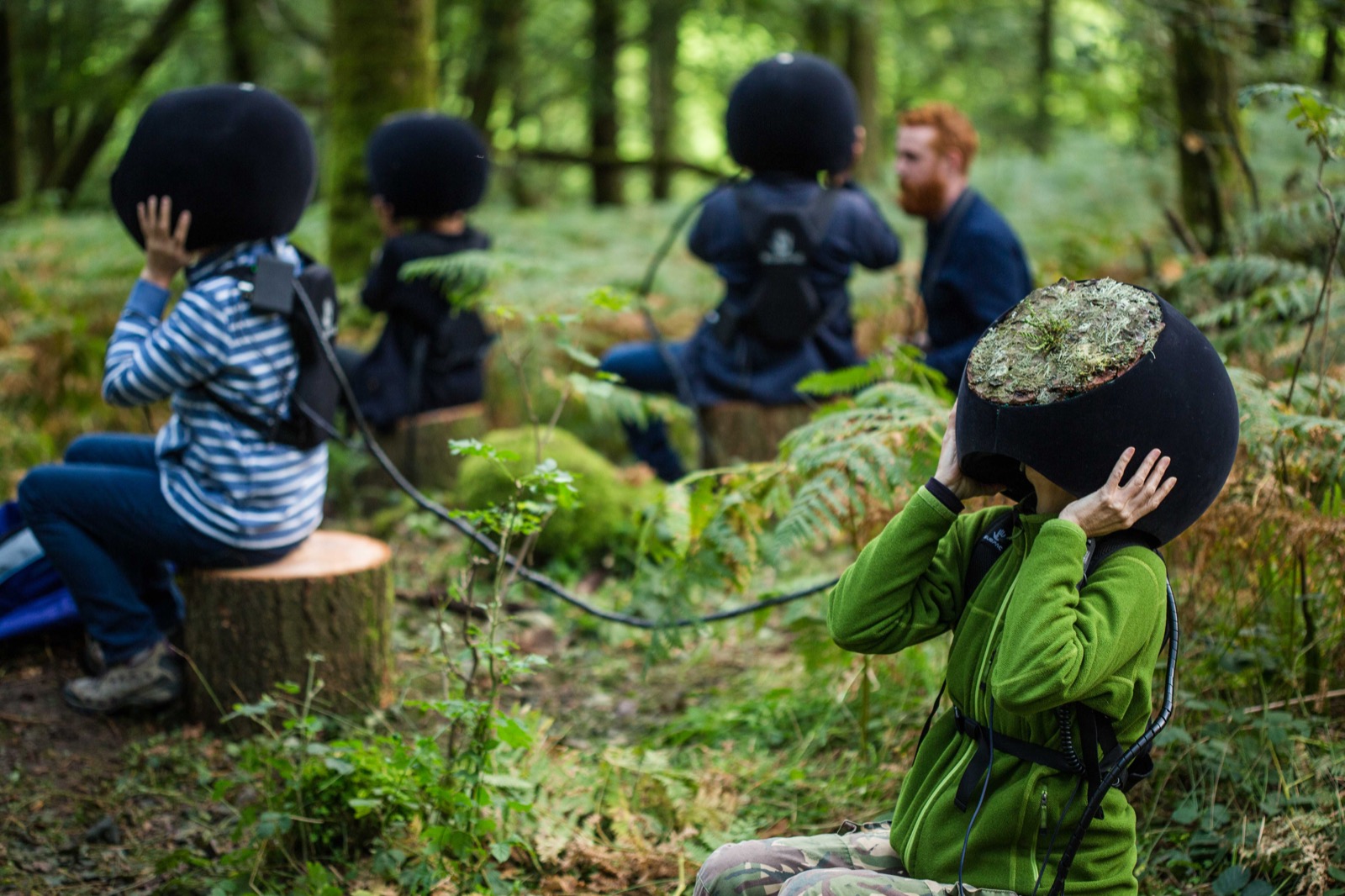
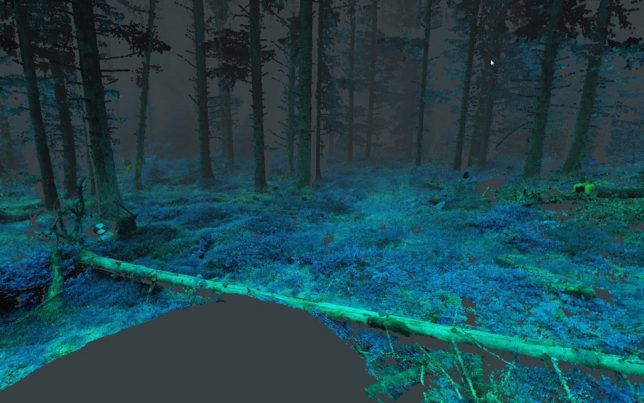
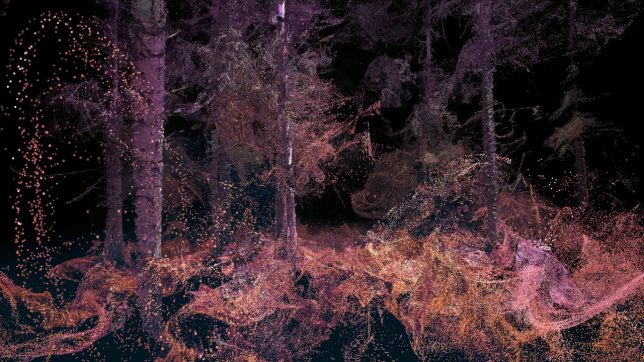
Dragonflies experience their brief lives on this planet 10 times faster than humans, and in 12 color wavelengths as compared to our three, a viewpoint that’s been impossible to comprehend prior to the arrival of virtual reality tech. Thanks to a project called ‘In the Eyes of the Animal’ by the creative studio Marshmallow Laser Feast, we can see the world the way super-sighted creatures do in a feat that’s being called ‘sense hacking.’

virtual-reality-forest-2

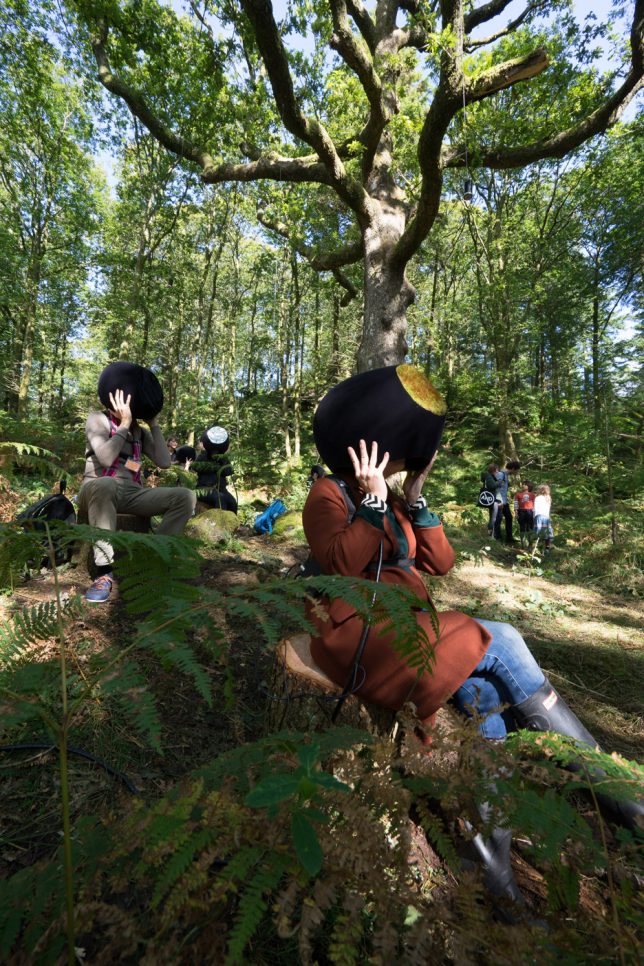
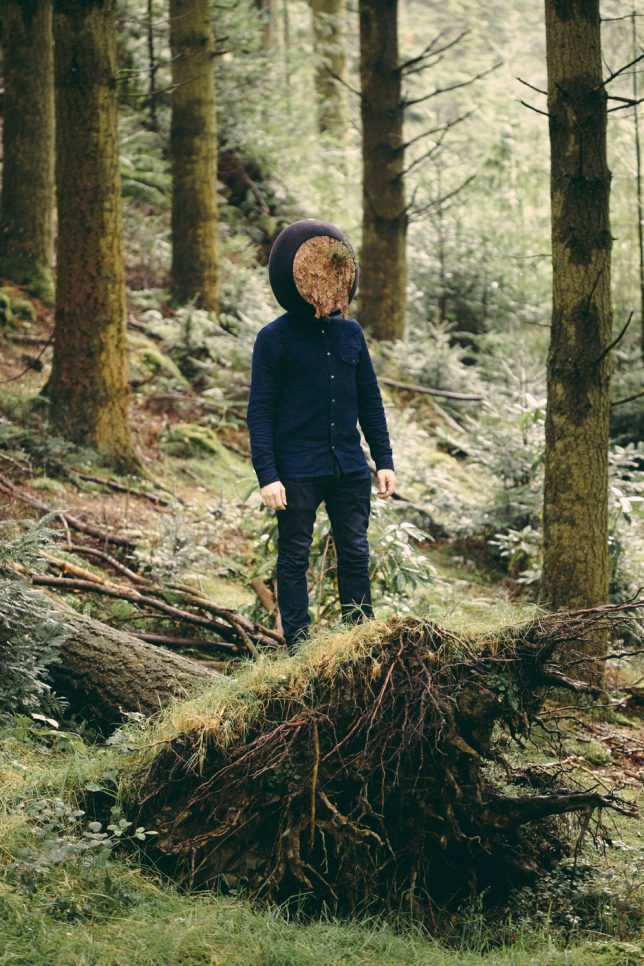
Aerial drone footage, CT scans and LiDAR remote sensing technology taken from the Grizedale forest in the UK gives the team 800 million data points upon which to render a hyper-rich environment in tandem with a real-time visual and audio engine. Visitors to the real, actual forest put on virtual reality headsets obscured with moss to take it all in.

virtual-reality-forest-3

virtual-reality-forest-4

virtual-reality-forest-5

“Visual engine generates and renders whole environment in realtime with certain generative elements which makes each experience unique,” explains Creative Applications Network, . “Visual engine communicates with 3D Audio Engine via OSC [OpenSound Control] to provide positional data as well as head tracking data from the Inertial sensors of the VR headset. The sound uses Binaural audio, a technique mimicking the natural functioning of the ear by creating an illusion of 3D space and movement around the head of a listener as immersive as reality can be.”

virtual-reality-forest-6

virtual-reality-forest-7

The result is an immersive experience at the intersection of science and digital art, and the images of the helmets in use in Grizedale Forest are pretty incredible, like something from a film. If you didn’t get a chance to see it yourself during the installation’s tour of festivals, you can watch the video to see an approximation of what it looks like.

Share on Facebook


[ By SA Rogers in Conceptual & Futuristic & Technology. ]

[ WebUrbanist | Archives | Galleries | Privacy | TOS ]


WebUrbanist

 
Comments Off on Virtual Reality Nature: Helmet Lets Humans See the Forest Like Animals Do

Posted in Creativity


Heavenly Vaults: Virtual Reality Ceiling Installation in a Gothic Cathedral

13 Oct

[ By SA Rogers in Art & Installation & Sound. ]

virtual-reality-sky-1

The ceilings of Paris’ Saint Eustache Church are once again alive and flickering with a surreal display of abstract imagery as artist Miguel Chevalier projects ‘Voûtes Célestes’ onto its vaults, nave and transepts. Installed for the annual Nuit Blanche (All-Nighter) event, the live light show flashes, ripples and glows along to musical improvisations by the church’s organist, envisioning imaginary sky charts created by Chevalier in real time.

virtual-reality-ceiling-2

Blankets of stars and other celestial bodies glimmer in the dark, transected by neon lines in green, red and yellow that crackle light lightning and ripple as if being blown by wind. The lights interact with the architecture of the church, blurring its actual form and creating trompe l’oeil effects. At times, the entire ceiling seems to disappear, putting on display an imaginary sky full of colorful lights.

virtual-reality-ceiling-3

virtual-reality-ceiling-4

virtual-reality-ceiling-5

“These suspended universes accentuate one’s impression of the monument’s loftiness and lightness,” says Chevalier. “Visitors are invited to stroll around, to sit in the pews, and to lift up their eyes toward the heavens. These digital constellation of pixels immerse visitors in an atmosphere bathed in light while opening unto infinity.”

virtual-reality-ceiling-6

virtual-reality-ceiling-7

virtual-reality-ceiling-8

“The installation releases radiant energy into this space of plentitude. Amplified by Saint Eustache’s organ music, the installation induces a spiritual and contemplative feeling of elevation. Light, color and movement create a poetics of matter and elaborate a new aesthetics of virtuality.”

Share on Facebook


[ By SA Rogers in Art & Installation & Sound. ]

[ WebUrbanist | Archives | Galleries | Privacy | TOS ]


WebUrbanist

 
Comments Off on Heavenly Vaults: Virtual Reality Ceiling Installation in a Gothic Cathedral

Posted in Creativity


Getty Images launches ‘Virtual Reality Group’, adds 12,000 360° images

10 Jun

Getty Images has announced the launch of the Getty Images Virtual Reality Group – a new business division ‘dedicated to the creation and global distribution’ of VR content. At launch, the new group offers a library of more than 12,000 360-degree VR images, as well as ultra high-resolution ‘Gigapixel’ imagery from major events. 

Getty Images has announced the creation of a dedicated Virtual Reality Group, which will offer more than 12,000 360-degree and ‘Gigapixel’ images at launch.

According to Dawn Airey, CEO of Getty Images: ‘The technology is still in its infancy – as are the business models addressing how to use it – but […] we are only on the cusp of what will be a tectonic plate shift in VR’.

Although Getty Images started adding VR and Gigapixel imagery to its collection several years ago, the launch of a dedicated business division is the latest sign that the photography industry is taking VR very seriously indeed. What do you think? Let us know. 


Press Release:

The launch of the Getty Images Virtual Reality Group brings high quality VR and 360 content to everyone, satisfying the growing appetite for immersive content

Getty Images, the world leader in visual communication, has today announced the launch of the Getty Images Virtual Reality Group, a new business dedicated to the creation and global distribution of virtual reality (VR) content.

The Getty Images Virtual Reality Group brings the very latest in photographic and video technology together with Getty Images’ 21 years of experience in visual storytelling, to offer exceptional content for existing and future VR platforms. The Group provides a comprehensive offering of over 12,000 premium 360 images with new content added daily, as well as high res gigapixel content from key events and venues. High quality VR production is also being offered through Getty Images Assignments.

Quick to adapt to new image technologies, Getty images began building its collection of 360 and gigapixel imagery four years ago, pioneering the use of these techniques in its role as the Official Photographic Agency for the International Olympic Committee at the 2012 London Olympics. Fast track to today, and every Getty Images photographer at the upcoming Rio Olympic Games, will be equipped with a 360 camera. This is just one example of how Getty Images is utilizing its expertise, its access to over 130,000 annual news, sport and entertainment events and its unique relationships to generate high-end VR content, and feed the growing demand for a more immersive visual experience.

“The technology is still in its infancy – as are the business models addressing how to use it – but we can expect to see VR become a leading tool for visual storytelling. It is anticipated that over 14 million consoles will sell this year alone (TrendForce), and we are only on the cusp of what will be a tectonic plate shift in VR” said Dawn Airey, Chief Executive Officer of Getty Images.

Airey continues: “With the launch of the Getty Images Virtual Reality Group, we are embedding VR content technologies into the core of our business and ensuring that, as use of VR continues to grow, its users are further enhancing their experience with access to the world’s best imagery.”

“The diverse range of 360 degree content that we produce – from the red carpet to the stadiums of the world’s biggest sporting events and the frontline of conflict – allows people to access information and experiences that were previously off limits,” said Hugh Pinney, Vice President of Editorial Content at Getty Images. “Virtual Reality is completely transforming the way we view and experience world events.”

The Group will continue to build on Getty Images existing VR content offering, which includes 360 content captured by its award-winning news, sport and entertainment photographers as well as geo-located, interactive panoramic images from its content partner 360cities.net.

Last month, Getty Images and Google announced their latest partnership, which sees Getty Images supplying hi-res VR content from current events around the world for Google Expeditions. Getty Images partnered with Oculus Rift in June 2015 to make its 360 imagery available for users of the Oculus platform via its 360° View by Getty Images collection.

For more information, visit http://wherewestand.gettyimages.com/virtualrealitygroup.

Articles: Digital Photography Review (dpreview.com)

 
Comments Off on Getty Images launches ‘Virtual Reality Group’, adds 12,000 360° images

Posted in Uncategorized


It was only a matter of time… new app turns your Instagram into virtual art gallery

08 Jun

Have you ever wanted to see your photographs on the wall of an art gallery? Come on – be honest. Your cat pictures deserve a wider audience, and the makers of new app ‘Instamuseum’ agree. 

Instamuseum converts any Instagram account into a 3D virtual reality experience, placing images (up to 90) from the feed on the walls of a computer-generated gallery space. There are four templates available (including ‘Louvre’) and the rendered space can be explored using VR goggles or using a more conventional pan / zoom interface in a desktop browser.

Instamuseum for @dpreview by barney.britton on Sketchfab

Coming in the same week as the actual Louvre gallery in Paris (into which we’ve placed DPReview’s Instagram feed, above) was evacuated due to historic flooding, we can’t help wondering if this is just another sign of the end times. Let us know what you think in the comments. 

Articles: Digital Photography Review (dpreview.com)

 
Comments Off on It was only a matter of time… new app turns your Instagram into virtual art gallery

Posted in Uncategorized


Virtual Reality: It’s not just for gamers anymore

31 May
The Nokia OZO is a state of the art VR camera.

Virtual reality, or VR, has the potential to redefine the way we interact with images, including still images, movies, and other forms of visual storytelling. It’s already being adopted by major news organizations to take you deeper into stories, Hollywood studios that want to generate more immersive entertainment, and content creators who want to share experiences that don’t work as effectively on a flat screen.

VR is still at a stage where it’s mostly of interest to early adopters, but it’s an exciting time to get involved with this new medium. In particular, it’s great time for photographers and filmmakers to start thinking about VR as this technology will likely impact the way we share our work, tell stories, and even remain competitive in business over the next several years.

Timing is everything

My first VR experience came many years ago when a technology incubator next to the molecular biology lab where I worked asked for volunteers to test a new ‘human interface technology.’ I found myself standing in a room full of computers, wearing a large headset with wires hanging out, and with something that looked like a hockey glove on my hand. A nerdy grad student was on hand to guide me through a virtual world.

The graphics in this world consisted of nothing more than rooms full of poorly shaded spheres, cubes, and cylinders. There was no illusion of reality, but I could navigate through doors and wonder around. I later discovered that the grad student was actually from the psychology department and that I was, for all intents and purposes, a lab rat trying to find my cheese in a virtual maze. The grad student never revealed whether I did a better job of navigating the maze than the real rat, but the VR experience stuck in my mind. My gut told me it had potential.

“I was, for all intents and purposes, a lab rat trying to find my cheese in a virtual maze…”

As Mark Banas’ recent article discusses, and as my own ersatz rat experience confirms, VR has been around for a while and has even enjoyed some success, particularly in the gaming world. However, the technology behind VR may finally be sophisticated enough to give it a fighting chance of being useful to a wider audience, particularly photographers and filmmakers. When I discuss VR in this article I’ll be specifically referring to VR in this context – for photographers, filmmakers, and also visual storytellers.

I’m not a hard core computer gamer or a rabid VR enthusiast; it’s likely that some of you reading this article know a lot more about VR than I do. However, I suspect I’m fairly representative of the typical photographer/filmmaker who’s followed VR from afar with a healthy bit of skepticism, waiting for someone to make a convincing argument that VR is relevant to me.

VR has enjoyed some success in the gaming world, but as a visual storyteller I’ve been waiting for someone to demonstrate how VR is relevant to me.

That’s not to say that I haven’t experimented with VR, it’s just that until recently it never seemed terribly compelling to me as a content creator. Almost every VR experience I tried boiled down the same basic formula:

  1. Videographer places a VR camera in an iconic location and captures video from a single spot.
  2. Viewer puts on a headset and watches video until he or she gets bored.

At this point it seems like I’ve (virtually) stood around a lot of places: the pyramids of Egypt, next to the Eiffel Tower, Machu Picchu… you get the idea. But the key words are ‘stood around’. The experience can be interesting at first, but after about 30 seconds you’ve spun in a circle, looked up and down, and pretty much seen all there is to see.

But that’s not what you do when you go to one of these places, in real life. You want to explore, to learn something, to understand the story of the people or the place that you’re visiting.

Viewing an iconic place, such as Machu Picchu, using VR can be interesting. However, unless you show your audience something unique, help them understand the place, or immerse them in a compelling experience, they will quickly lose interest.

Virtual Experiences

For VR to gain any type of traction it needs to go beyond this ‘stand there and look around’ model – and, fortunately, it has. This was particularly noticeable at the NAB trade show in April where VR technology appeared to be everywhere. There was even a Virtual and Augmented Reality Pavilion that served as a hub for numerous VR companies, including makers of capture devices, display systems, and even content creators.

My personal VR epiphany occurred at a technology showcase run by Kaleidoscope VR, a VR studio. In a roped off area dozens of people sat in chairs spread across the floor, each engrossed in some virtual world. What set the experience apart from most other VR demos I’ve seen was that the focus was on putting viewers into immersive stories and experiences.

Visitors trying virtual reality at the Kaleidoscope VR showcase.

‘Content is King’ may be one of the most overused phrases in modern media, but it keeps getting recycled because it’s fundamentally true. Lack of good content is why VR always seemed dull or gimmicky to me in the past, but my experience at the VR Showcase proved that with the right content VR can be incredibly compelling.

The first ‘film’ I selected was a VR experience called ‘Notes on Blindness: Into Darkness.’ Based on the audio diaries of a man named John Hull, who recorded hours of observations about how he learned to ‘see’ the world through sound after losing his sight in 1983, ‘Notes on Blindness’ isn’t, strictly speaking, an actual film. (It is, after all, an effort to help the viewer understand what it’s like to be blind.) Instead, it uses audio and 3D animations that mimic the real world.

Each scene begins mostly in darkness, accompanied by Hull’s narration of where he is and what he’s hearing. As different sounds enter the space, he describes them and indicates directionality, using phrases like “Behind my right shoulder I hear a car starting,” or “To my left I hear somebody running,” in a way that prompts you to move your head around to look. In essence, he’s directing you even if you don’t realize it. After a while you discover that Hull is able to draw a mental picture of what’s around him based on subtle cues such as the different sounds raindrops make when hitting objects, like a window or a teacup. As he speaks, scenes are gradually revealed in a manner reminiscent of The Matrix, but also rely on your imagination to complete the mental image.

I hope I never experience real blindness, however for the first time in my life I feel like I might have a very basic understanding of what it’s like for a blind person to try to ‘see’ the world using their other senses. The experience was more powerful than I anticipated.

The trailer for ‘Notes on Blindness’ (above) will give you a rough idea of what I’m trying to describe here. The VR experience will be available for download on June 30 if you want to try it yourself.

I also viewed ‘Witness 360: 7/7,’ a VR film that follows the experience of Jacqui Putnam, a commuter on the London Tube during the terrorist bombings of July 7, 2005. Shot documentary style, you see the places Jacqui went that day, including riding on the Tube itself, and hear her vivid descriptions of what happened. When she mentions something like “The person sitting next to me,” you turn and, sure enough, there’s a person sitting next to you that roughly matches her description.

The experience was more tense than I expected. I knew what was going to happen, and yet as I stood there on the train next to everybody else – real people who just happened to be on the Tube – I kept thinking to myself ‘These people are about to die.’ The fact that I could look around and feel immersed in the situation, able to see the things Jacqui was describing, generated a visceral reaction that I’m not used to feeling while watching a documentary. It felt personal.

Despite very different subjects and creative approaches, both these VR experiences had one critical thing in common: neither one would have worked as effectively on a flat screen. They depended on a VR environment to achieve their impact. 

By now you’re probably asking how still photography fits into the VR world. Quite nicely, it turns out. Of course, the obvious applications are things like real estate photography, where 360º views can be critically important to attracting eyeballs. The real estate industry has been finding ways of doing this for years already, and new tools will only make the experience better and smoother. But it’s the creative possibilities that are really interesting.

One thing photography has always been good at is closing distance, i.e. taking you to a faraway place you may not be able to visit in person. It’s the reason we know what most of the world looks like despite never having been to most of it. VR has the potential to take this a step further. In the same way that color photography allowed us to see places differently than we could in black and white, VR will allow us to see places in an immersive way that we can’t experience with a two dimensional picture. I’m not suggesting the VR is better than a still photo any more than I would suggest that a color photo is better than a black and white one. My point is that they are different, and each allows us to experience the world in a way the others don’t.

Nice kitty. Imagine using a VR camera to put your viewer right into the middle of a pride of lions.

Photo: Jeff Keller

The key to VR still photography will be figuring out how to leverage the strengths of the medium. For example, most people enjoy a great landscape or wildlife photo. If you show me a beautiful Serengeti landscape with a lion in it I’ll probably love the photo. However, if you show me that same landscape in VR it might not be as compelling since I can’t see it all at once. However, if you let me stand right in the middle of a pride of lions eating a wildebeest you’ll get my attention, because that’s something I haven’t experienced in a normal photo.

What all of these examples highlight is how important it will be for artists to take new and different approaches to capturing, editing, and presenting their work. It’s an open canvas, and one that’s still largely undefined.

VR Requires New Grammar

As Oscar-winning cinematographer Emmanuel Lubezki told us a couple months ago, the grammar and language of VR have yet to be written. This is true in a literal sense. Words like ‘framing’ and ‘panning’ simply don’t apply to VR. New words are needed, and nobody has agreed on what those words are yet. The one thing they do agree on is that VR will require different approaches appropriate to the medium.

This can be seen in the films described above, particularly ‘Witness.’ For example, the conventional documentary formula is to intercut interview footage with b-roll, but that never happens in ‘Witness.’ The convention works in flat films because you can lock the viewer into a rectangular frame and demand their attention. But what happens when the viewer has the freedom to look anywhere they want? Maybe they will get distracted by a picture hanging on the wall, or something happening outside a window. ‘Witness’ solves this by relying entirely on voiceover while featuring a few location shots of Jacqui Putnam throughout the film. This is just one example of where traditional filmmaking techniques don’t translate easily to VR, and there are many others.

It isn’t the first time content creators have faced this challenge. In the early days of television, studios often tried to repackage shows made for radio into TV, such as American soap operas. Daytime soap operas on radio were aimed at homemakers who could listen while working around the house. Studio executives had reservations about whether soap operas would even work on TV since they would require the homemaker to actually watch a screen.

Early soap operas were produced for radio; when TV came along producers had to figure out how to take advantage of the new medium.

By Photo by G. Nelidoff, Chicago, for CBS/Columbia Broadcasting Company. (Library of Congress) [Public domain], via Wikimedia Commons

Some production elements from radio didn’t translate well to TV. For example, producers had to re-think product placement and advertisements in shows – the very reason for the existence of soap operas in the first place – because having an actress pick up a box of laundry detergent and talk about its virtues in the middle of a scene just didn’t seem believable on TV. It took a few years before the industry perfected the formula.

The reason I point this out is because we’re still in the early days of VR. It’s easy to look at VR as it exists now and think of it as a gimmick, a tool for gamers, or a toy for tech nerds. And that’s OK – people thought similar things about TV at one point, but once content creators figured out how to effectively use the medium there was no turning back. I suspect the same will be true of VR: once the language of VR is fully developed, and hardware for consuming content becomes more convenient (it will), there’s a lot of opportunity to do creative things that may not work on a flat screen.

Why VR is not 3D Television

I mentioned above that VR seemed to be everywhere at trade shows like CES and NAB this year. That’s an encouraging sign, but it’s worth noting that ubiquity of a technology at an industry trade show does not equate to commercial success. I need only mention 3D television to make my point, and several people have dismissed VR to me as just ‘the next 3D TV.’

I believe VR is a much more promising technology than 3D television, and will ultimately be more successful, for a couple of important reasons.

One advantage of VR compared to 3D TV is that viewers can at least try it with an inexpensive viewing device, such as Google Cardboard, and a smartphone.

3D television struggled with a classic chicken-and-egg situation. Networks were reluctant to invest in infrastructure to produce 3D content without some assurance that there would be a critical mass of audience; consumers were reluctant to invest in $ 1,000+ devices without some assurance that content would be available. For studios, this was potentially a very expensive experiment that carried a lot of financial risk. Also, many consumers had only recently upgraded to HDTV, and it was a tough sell to convince them to invest in new hardware so soon. By now everyone knows how this ended.

The stakes around VR are different. First, most VR content is being distributed through platforms like YouTube or on mobile devices where production standards are less stringent than for broadcast television. VR also has the advantage that the lowest common denominator for viewing content is the smartphone, meaning that most consumers already have a screen on which to watch content (alone or when combined with an inexpensive viewing device).

The lowest common denominator for viewing VR is the phone most of us already have in our pocket.

Photo: Dale Baskin Photography

On the production side of the equation, low cost capture devices ranging in price from a few hundred to a few thousand dollars are easily accessible to content creators. It’s not an unmanageable risk for someone running a successful YouTube channel, or even an indie filmmaker, to invest a small amount of money to try the technology. Similarly, it’s easy to envision news media such as The New York Times, USA Today, or even your local TV station sending reporters into the field with a $ 1,000 VR camera to bring immersive experiences to their apps and web pages.

In one particularly telling move, last November The New York Times sent free Google Cardboard to all of their print subscribers – over one million of them – to insure that they could use The Times’ new VR app. The Times followed up a few weeks ago by announcing that they would also send free Cardboard to many of their digital subscribers as well. When the barrier to entry is so low that a content producer can afford to give all their subscribers a free device on which to consume their content it’s a great indication of how accessible the technology can be.

In November the New York Times sent Google Cardboard to all their print subscribers, and a few weeks ago announced similar plans for digital subscribers.

Are we there yet?

At this point I probably sound pretty enthusiastic about VR – which I am – but I’ll also provide a reality check and let you know that we’re not quite there yet in terms of the technology.

VR depends on belief; the belief that you’re somewhere you’re not. One of the things you figure out really fast with VR is that in order for it to be believable, every part of the experience must work. This includes image quality, the general viewing experience, audio, and even the space you’re in and how you interact with it. If any part of the experience is incomplete or breaks, then the experience becomes less believable.

As photographers, you’ll notice this immediately when it comes to picture quality. We’ve become spoiled by high resolution, high dynamic range sensors that are almost magic relative to what we had just a decade ago. VR cameras aren’t there yet. Resolution is limited (usually 4K, but spread across the entire 360 degree field of view), highlights may be blown or shadows lost, and the richness of color we’re used to just isn’t there. However, in the same way that early digital photographers managed to create great photos with 2MP and 3MP cameras, VR content creators are finding ways to work within the limits of their tools.

One of the most accessible VR cameras available today is the Ricoh Theta (above) which lists for $ 260. Alternatively, the Nokia OZO (seen at the top of the article) lists for $ 60,000. The one thing they both have in common is that neither captures the same resolution, dynamic range, or richness of color we’re used to with modern ‘2D’ cameras.

Viewing devices will need to improve as well. Not only are they large and unwieldy, but the thing that makes VR so accessible – your mobile phone – is also one of the bottlenecks to the experience. Magnified by VR lenses, video looks pixelated and low resolution by today’s standards, sometimes exhibiting a ‘screen door effect’ similar to looking through a mesh screen. When Sony introduced a smartphone with a 4K display I initially thought of it as marketing overkill. In retrospect, I don’t know if they had VR in mind, but VR is a case where a 4K phone really could provide an improved experience. Suddenly, I like the idea of a 4K smartphone.

Audio is a much bigger challenge. There’s an old adage in filmmaking, which I’ve discussed on the site before, which says that an audience will forgive a bad picture, but they won’t forgive bad sound. That’s actually more true in VR than on a flat screen because having an immersive experience is absolutely dependent on it. Audio for VR is in its infancy, and spatial audio that matches what you see, including directionality of sound as you move around, is critical to creating a believable experience. One studio executive I spoke with at NAB told me the biggest challenge in creating believable sound for VR is that 70% of viewers don’t actually wear headphones when watching VR, but instead rely on the speaker built into their phone, insuring a suboptimal experience.

Immersive audio, including directional audio, is crucial for VR experiences that include sound. One challenge for content creators is that 70% of VR consumers today use only the tiny speaker built into their phone.

Finally, there’s the disconnect between the virtual world and the real world. Its frustrating when you’re immersed in a VR experience at NASA Mission Control and you reach for the control panel only to find empty space, or when you’re standing in an open field but inadvertently bump into a wall. Some of this will be addressed through technology, but it’s also one of the challenges content creators will have to address through creative choices.

The good news is that all of these things are solvable problems, and smart people are working on them.

The Future is Now

As exciting as VR is, I’m not suggesting that it will replace traditional, two dimensional media such as photography or television. There’s plenty of room for both mediums to exist side-by-side.

I recently shared this thought with a friend, who thoughtfully responded “Then what type of stories are best told in VR versus other mediums?” After thinking about it I realized this was probably the wrong question to ask. After all, if you replace the word VR in that sentence with any other form of media, like TV or print, it doesn’t make sense. You can tell a story with any medium, but the challenge is figuring out how to leverage the strengths of each for maximum impact. In that sense, VR is no different.

Also, as much as I’m excited by VR, I really don’t want to have complete control over my viewing experience for everything. I want master filmmakers and photographers to craft a story in their image, or to show me the world as they see it, without necessarily giving me the freedom to mess it up. I can’t imagine how The Godfather would be any better if I had the freedom to look around the scene instead of watching it the way Francis Ford Coppola shot it. On the other hand, I look forward to as-yet-uncreated projects that allow me to participate more freely in the experience.

What’s potentially most exciting are the VR applications that haven’t been invented yet. I can’t wait for the day when NASA puts VR cameras on landers going to Mars or the moons of Saturn, allowing me to stand virtually on the icy surface of Titan, gazing out over a methane sea.

And now if you’ll excuse me, I’m off to make my first VR film.

Articles: Digital Photography Review (dpreview.com)

 
Comments Off on Virtual Reality: It’s not just for gamers anymore

Posted in Uncategorized


Brian May launches smartphone adapter for stereoscopic virtual reality viewer

25 May

Brian May, guitarist with the band Queen and a stereo photography enthusiast, has launched a kit that allows users to view 3D stereo pairs and virtual reality content on a smartphone for just £25 (approx. US $ 37). The OWL VR Smart Phone Kit is an adaptation of a traditional Victorian-style stereo viewer sold by May’s London Stereoscopic Company. Instead of inserting card-mounted stereo pairs, users fix a plate to the viewer’s aperture that holds the smartphone in place. May says that the device provides a much better value alternative to standard VR headsets, and it is more adaptable and of higher quality than low cost models. It’s in much the same vein as Google’s Cardboard VR and other budget-friendly viewers designed for Google’s VR app.

The OWL has a rigid structure but folds flat for storage, is made from ‘high-grade’ polypropylene and features ‘high quality’ lenses with adjustable focus. The adapter allows access to all the phone’s controls while it is in place, including the headphone socket so audio can be enjoyed during 3D movies and VR experiences.

Although not in continuous existence, the London Stereoscopic Company was founded in 1854. Over the years it created and sold stereo equipment and cards showing scenes from all around the world. Its fortunes have undulated along with the popularity of stereo photography, and was dissolved a number of times. It was revived in 2008 to promote and preserve the work of the photographer Thomas Richard Williams. Brian May has been one of the directors of the business since 2008.

The OWL VR Smart Phone kit will be available from June and will ship internationally. For more information visit the London Stereoscopic Company’s website.

Press release:

Virtual Reality from Brian May. It’s real.

Lifelong stereoscopy enthusiast and collector, and, incidentally, world-famous rock guitarist, Brian May this month launches the OWL VR Smart Phone Kit, a Virtual Reality and 3-D stereo image viewer that brings all the excitement of VR within reach of anyone with a smart phone.

Brian’s London Stereoscopic Company has been supplying his unique original patent OWL Stereo Viewer to 3-D enthusiasts since 2009, enabling a whole new audience to view the company’s reproductions of classic Victorian stereo cards, as well as the originals, plus recently released astronomy and Queen-focused 3-D images. The OWL has been recognised and adopted by 3-D organisations world-wide, as a high quality immersive device.

The new OWL VR Smart Phone Kit takes the existing OWL Stereo Viewer and, through use of a simple but ingenious adaptor, enables its use with a smart phone not only to view online 3-D images, but also those taken by the user, and commercially available virtual reality content. Manufactured from high-grade polypropylene, and fully collapsible to a thin flat configuration, the OWL is supplied ready for use in seconds. Its carefully positioned high-quality optical lenses, plus fully adjustable focus, present every user with the ideal optical geometry for perfect viewing of side-by-side 3-D images.

Working with any smart phone, the OWL VR Kit has a significant advantage over most other VR devices, which are usually tied to just one particular make or model of phone. And, in contrast with most of the low cost viewers available, the OWL kit offers full access to the controls on the phone at all times. Access to the headphone socket is also unobstructed. This is particularly useful when using the OWL to watch virtual reality films of concerts, or other content with a soundtrack. It also enables users to connect their smart phone to a home cinema system to generate surround sound to complement the 360° 3-D visuals.

Commenting on the launch, Brian May said, “Virtual Reality has taken the consumer electronics world by storm over recent months and masses of content is now rapidly becoming available. However, until now, users have had the choice of an expensive VR viewer that puts it out of reach of many people or a very low cost alternative that just doesn’t do the format justice.” He continues, “The OWL Smart Phone Kit changes all that; for a very modest outlay, anyone can now enjoy the VR experience, and also gain access to the fascinating world of Stereoscopy. Plus, with the apps that are available for smart phones, it’s now possible to take your own 3-D images and enjoy them instantly using this simple OWL Kit.”

The OWL Smart Phone VR Kit will be available from mid June 2016 for £25, direct from
www.londonstereo.com/lsc_shop.html

Articles: Digital Photography Review (dpreview.com)

 
Comments Off on Brian May launches smartphone adapter for stereoscopic virtual reality viewer

Posted in Uncategorized


IKEA VR: Explore Interior Layouts in New Virtual Reality App

30 Apr

[ By WebUrbanist in Design & Fixtures & Interiors. ]

ikea virtual reality

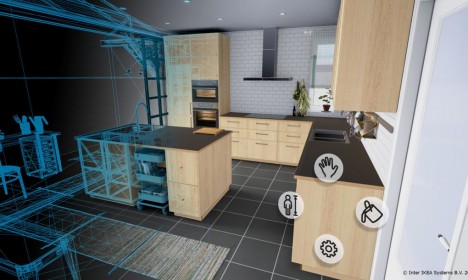
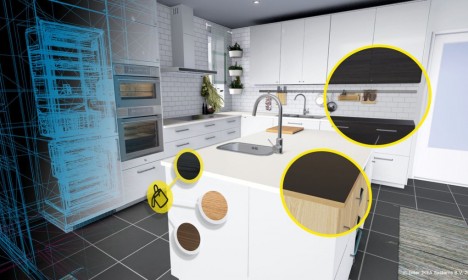
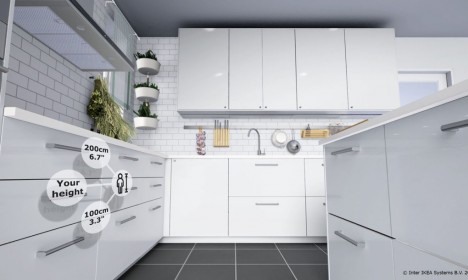
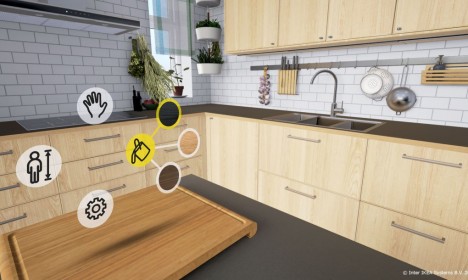
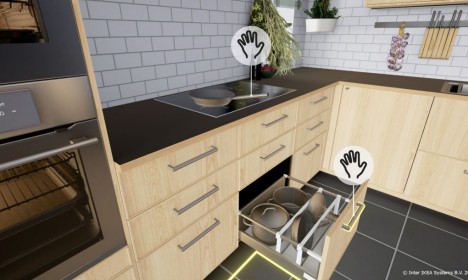
A new virtual reality application from IKEA lets users try out various kitchen configurations in three dimensions. Using an HTC Vive headset, the app lets people see different setups but also change key details in each, such as the colors and materials of drawers and cabinets.

ikea interactive vr

Created in partnership with the French company Allegorithmic and employing the Unreal Engine 4 (from Epic Games), the app lets would-be buyers select from various furnishings and fixtures.

ikea options

“Virtual reality is developing quickly and in five to ten years it will be an integrated part of people’s lives,” says optimist and futurist Jesper Brodin, managing director of IKEA of Sweden. “We see that virtual reality will play a major role in the future of our customers. For instance, someday, it could be used to enable customers to try out a variety of home furnishing solutions before buying them.”

ikea meatspace digital fun

ikea home interior design

For now, the system is a test case, available to those with access to a virtual reality headset. Users are encouraged to try it out and let the company know what they think about the current setup and how it can be improved. The company hopes to enable participants not only to shop smarter but also to become a part of the creative process in developing new design ideas and interior options.

Share on Facebook


[ By WebUrbanist in Design & Fixtures & Interiors. ]

[ WebUrbanist | Archives | Galleries | Privacy | TOS ]


WebUrbanist

 
Comments Off on IKEA VR: Explore Interior Layouts in New Virtual Reality App

Posted in Creativity