RSS
 

Posts Tagged ‘Uses’

EHang uses 1000 GhostDrone 2.0 drones for massive light show in China

25 Feb

Just a few days after Intel wowed audiences with a 300-drone aerial light show at the Super Bowl, Chinese drone company EHang raised the bar with a 1000-drone light show for audiences in China.

EHang performed its ‘Meteor Sky’ show in the city of Guangzhou in celebration of the traditional Chinese Lantern Festival on February 11. To create the spectacle, the company used 1000 of its GhostDrone 2.0 drones configured with color changing lights.

A long exposure captures the drone show near Guangzhou’s Canton Tower.

Putting on a show of this scale requires some impressive logistics. Just arranging the drones prior to flight required an area 290m long by 19m wide, and over 30 EHang engineers and staff put in thousands of hours to develop, choreograph and test the show. The company also developed an advanced communication network and safety system which maintained a minimum 1.5m distance between drones during flight. Despite the complexity, the entire show was controlled by a single computer on the ground.

EHang staff arrange drones in preparation for its ‘Meteor Sky’ light show. The entire staging area was 290m x 19m in size.

EHang notes that the show also served as a trial to see if drones could provide an environmentally friendly alternative to fireworks.

What do you think about drone light shows? Tell us in the comments!

Articles: Digital Photography Review (dpreview.com)

 
Comments Off on EHang uses 1000 GhostDrone 2.0 drones for massive light show in China

Posted in Uncategorized


StyleShoots Live robotic photography studio uses AI to shoot and process photos

24 Feb

A new robotic ‘smart studio’ device aims to increase brands’ photography efficiency and productivity by replacing, to a certain degree, professional human photographers with artificial intelligence and a robotic camera/lighting system. Called StyleShoots Live, this smart studio is equipped with robotic lighting, a Canon 1DX Mark II camera, and machine intelligence for shooting, processing and exporting photos and video automatically.

StyleShoots, the Dutch company behind the smart studio, unveiled the product on Wednesday, saying it is ‘designed to create instantly edited video and stills for fashion lifestyle and eCommerce shoots in minutes.’ This is made possible via a large steel enclosure in which a model is posed. A variety of technologies then make technical decisions, adjusting lighting and camera settings as necessary to shoot content that matches brand-specified customized styles.

The resulting content is automatically processed, including things like cropping images to certain aspect ratios or stitching together multiple videos. The final content can then be reviewed by the human in charge and, if approved, exported for various platforms. A human is given control over the entire process via a built-in iPad Pro with a Live View mode of the model.

Speaking about the smart studio, StyleShoots’ Head of Product Anders Jorgensen said:

‘Fashion brands need to keep their customers engaged with fresh content every day – and video shared on social media is the most powerful form of storytelling. To keep up with the continuous demand, StyleShoots Live creates stills and video ready for publishing on Instagram, Facebook, Snapchat, and websites within minutes – without any manual editing or post production.’

Of course, such a studio raises concerns about technology and its potential ability to replace human photographers with machines. In response to that concern, StyleShoots explained in a long FAQ sheet that it didn’t design its smart studio to be a replacement for humans. ‘To run a fashion shoot,’ the company explained, ‘you need a creative eye to compose the shot, pose the model and style the clothes — a robot can’t do that (yet).’

Source: StyleShoots

Articles: Digital Photography Review (dpreview.com)

 
Comments Off on StyleShoots Live robotic photography studio uses AI to shoot and process photos

Posted in Uncategorized


Heliskiing in British Columbia: Scott Rinckenberger uses the Olympus OM-D E-M1 Mark II

14 Feb

Scott Rinckenberger is a professional adventure and outdoor sports photographer. We lent him the new Olympus OM-D E-M1 Mark II for a few days, to shoot a wintry commission for outdoor clothing brand Eddie Bauer.

The OM-D E-M1 Mark II is Olympus’s flagship mirrorless interchangeable lens camera, and should be ideally suited to use in tough, wet (and cold) conditions. Watch our video to find out how it performed. 

Read our in-depth review of the Olympus OM-D E-M1 II


This is sponsored content, created in partnership with Olympus. What does this mean?

Articles: Digital Photography Review (dpreview.com)

 
Comments Off on Heliskiing in British Columbia: Scott Rinckenberger uses the Olympus OM-D E-M1 Mark II

Posted in Uncategorized


PhotoSpots uses Google Maps to pinpoint photography hotspots

13 Jan

When you’re traveling, it’s always a good idea to scope out shooting locations ahead of time. Here to help is a newly launched online service called PhotoSpots. With PhotoSpots, photographers can find so-called ‘photography hotspots’ highlighted around the globe using Google Maps and the image hosting website 500px. The service was created by photographer Mike Wong, who recently detailed his creation on Reddit.

‘I thought that it would be interesting to see where and when other photographers were taking photos,’ Wong explained in his Reddit post, ‘so I decided to create a small website that shows exactly that.’ The photography hotspots are presented as a heat map, with red areas representing heavily photographed regions. A bar beneath the map shows thumbnails for images taken in a particular region and uploaded to 500px.

Clicking PhotoSpots’ menu icon opens a slider that filters photos by month, while hovering over a specific photo thumbnail reveals the precise location it was taken via the map. “I’m also planning to make a filter for categories (e.g. nature, cities etc.) to make it more personalizable,’ said Wong, though he didn’t provide a timeframe for when that feature will be added.

Via: PetaPixel

Articles: Digital Photography Review (dpreview.com)

 
Comments Off on PhotoSpots uses Google Maps to pinpoint photography hotspots

Posted in Uncategorized


Google RAISR uses machine learning for smarter upsampling

16 Nov
 Top: Original, Bottom: RAISR super-resolved 2x, Image: Google

Upsampling techniques to create larger versions of low-resolution images have been around for a long time – at least as long as TV detectives have been asking computers to ‘enhance’ images. Common linear methods fill in new pixels using simple and fixed combinations of nearby existing pixel values, but fail to increase image detail. The engineers at Google’s research lab have now created a new way of upsampling images that achieves noticeably better results than the previously existing methods.

RAISR (Rapid and Accurate Image Super-Resolution) uses machine learning to train an algorithm using pairs of images, one low-resolution, the other with a high pixel count. RAISR creates filters that can recreate image detail that is comparable to the original, when applied to each pixel of a low-resolution image. Filters are trained according to edge features that are found in specific small areas of images, including edge direction, edge strength and how directional the egde is. The training process with a database of 10000 image pairs takes approximately an hour. 

Once RAISR has been trained it is capable of selecting the most appropriate filter for each pixel in a given low-resolution image to fill in new pixels in order to create a higher-resolution version. RAISR can also remove aliasing artifacts, such as moiré patterns or jagged lines in the low-resolution images when creating the larger version, something that linear methods are not capable of doing.

Eventually, Google may be able to use the technology to upsample images that are sent at mobile bandwidth-friendly resolutions. More information on RAISR is available on the Google Research Blog.

 Left: Original, Right: RAISR super-resolved 3x, Image. Google

Articles: Digital Photography Review (dpreview.com)

 
Comments Off on Google RAISR uses machine learning for smarter upsampling

Posted in Uncategorized


No dual-cam? No problem: Patch app for iOS uses neural networks to create fake bokeh images

11 Nov

Most dual-cam equipped smartphones offer a ‘fake bokeh’ feature. Thanks to the slightly offset position of their two lenses, cameras in devices like the Apple iPhone 7 Plus, Huawei P9 or LG G5, can distinguish between objects in the foreground and background of an image. By applying digital blur to the latter they can simulate effects of shallow depth-of-field you would typically achieve with a DSLR and fast lens.

If your phone just has one camera, there are still a few pure software solutions out there to achieve the same effect. The Patch app for iOS is the latest and uses neural networking to identify the foreground subject in an image and isolate it from the background. If the scene is too complex for the algorithms to work automatically, there is also a manual selection tool that can be used to optimize the results. You can paint in areas that should be sharp, and remove areas that should be blurred. A zooming function allows for greater precision in this task. 

Once the selection is finalized users can choose from 5 different blur strengths to generate the desired effect. Patch does not have any particular camera hardware requirements and therefore works with most iOS devices. If you want to try the app you can download a free version that will leave a watermark on your images from the Apple App Store. A $ 1 in-app purchase will get you an upgrade to the watermark-free version.

Articles: Digital Photography Review (dpreview.com)

 
Comments Off on No dual-cam? No problem: Patch app for iOS uses neural networks to create fake bokeh images

Posted in Uncategorized


Google uses neural networks to improve image compression

27 Aug

A research team at Google has developed a way to use neural networks to compress image files in a more efficient way than current methods, such as the JPEG standard. The team built an artificial intelligence system using Google’s open source TensorFlow machine learning system, and then used 6 million random reference photos from the internet that had been compressed using conventional methods to train it.

The images were split into small pieces measuring 32 x 32 pixels each. The system then analyzed the 100 pieces with the least efficient compression; the idea being that it could learn from looking at the most complex areas of an image, making compression of less complex sections much easier.

After the initial training process the AI system is then able to predict how the image would look like after compression and then generates that image. What makes this method really stand out from others is that the network can intelligently decide which is the best way to compress individual areas of a given photo for the best overall result. The method still needs some work, as final results can sometimes look unpleasant to the human eye and the system are not yet capable of testing for this. Nevertheless, the project looks like an important step into the right direction and if the algorithms can be further refined you might soon be able to save even more images on your memory card or built-in device storage.

Articles: Digital Photography Review (dpreview.com)

 
Comments Off on Google uses neural networks to improve image compression

Posted in Uncategorized


Samsung uses brain-inspired processors to create digital camera ‘vision’

17 Aug

Samsung has used IBM’s neuromorphic computer processors, built under the latter company’s TrueNorth project, to create digital ‘eyes’ that see in real time. The IBM TrueNorth processors are composed of 4096 small cores that simulate brain neurons, the primary advantage being faster data processing with lower comparative energy usage. Combined with Samsung’s Dynamic Vision Sensor, the technology functions somewhat like a digital eye, perceiving the world by changing each pixel independently of the others to record movement.

Samsung Advanced Institute of Technology’s VP of Research Eric Ryu detailed the technology at an IBM Research event in San Jose last week. Unlike ordinary cameras, this DVS-based camera only changes pixels when necessary to record the movement of specific objects while other pixels remain unchanged. Because of the unique pixel technology, this camera can process video at 2000 fps while using only about 300mW of energy. 

The combination of super high frame rates and exceptionally low energy consumption makes the technology useful for other types of technology, including self-driving cars, robots, gesture-recognizing gadgets, and more. Samsung envisions projects that utilize many of these chips stacked together; a 16-chip stack would be akin to utilizing nearly 86 billion brain neurons.

Via: CNET, Inilabs

Articles: Digital Photography Review (dpreview.com)

 
Comments Off on Samsung uses brain-inspired processors to create digital camera ‘vision’

Posted in Uncategorized


Google Art Camera uses robotic system to take gigapixel photos of museum paintings

19 May

The Google Cultural Institute, an online virtual museum with high-quality digitizations of artifacts from across the globe, recently added more than 1,000 ultra-high-resolution images of classic paintings and other artwork by Monet, Van Gogh and many others. A new robotic camera system Google has developed called ‘Art Camera’ has made it possible for the organization to add digitizations faster than ever before.

Previously, Google’s collection included only about 200 digitizations, accumulated over approximately five years. Art Camera, after being calibrated to the edges of a painting or document by its operator, automatically takes close-up photos of paintings one section at a time, using a laser and sonar to precisely adjust the focus. This process results in hundreds of images that are then sent to Google, where they’re stitched together to produce a single gigapixel-resolution photo.

Instead of taking the better part of a day to photograph an item, as the old technology did, Art Camera can complete the process in less than an hour; speaking to The Verge, Cultural Institute’s Marzia Niccolai said a 1m x 1m painting can be processed in half an hour. Google has built 20 Art Cameras and is shipping them to museums around the world for free, enabling the organizations to digitize their artwork and documents. The resulting gigapixel images can be viewed here.

Via: Google Official Blog
 

Articles: Digital Photography Review (dpreview.com)

 
Comments Off on Google Art Camera uses robotic system to take gigapixel photos of museum paintings

Posted in Uncategorized


Living with the Dead: 12 Cemeteries with Surprising Alternate Uses

10 May

[ By Steph in Culture & History & Travel. ]
multipurpose cemeteries manila 4

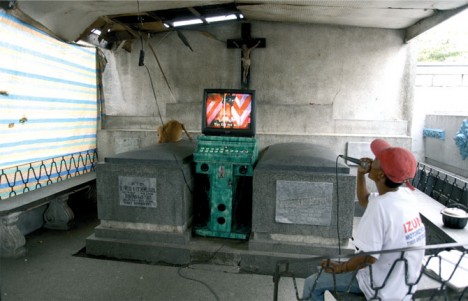
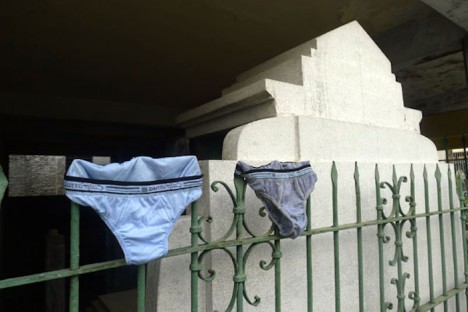
The living play karaoke among headstones, hang their laundry from mausoleums, put on plays in crypts and golf right on top of graves in multipurpose cemeteries around the world, where the dead are integrated into modern life instead of remaining in solemn roped-off spaces. In some cases, it’s happening due to sprawl, like the family graveyard in a Walmart parking lot in Georgia, but in others, it’s more deliberate. As we grapple with population growth and urbanization, alternate ideas for the burial of our dead are coming into focus, all seemingly sending the same message: life goes on.

Habitable Cemeteries: Living with the Dead in the Philippines

multipurpose cemeteries manila 2

multipurpose cemeteries manila 5

Screen Shot 2016-05-09 at 9.10.38 AM

Screen Shot 2016-05-09 at 9.11.14 AM

Within the walls of Manila’s largest cemetery, 6,000 living residents thrive, going about their lives right on top of gravestone after gravestone, sometimes living in mausoleums alongside the tombs of their dead. The residents of North Cemetery are typically extremely poor, creating makeshift domiciles and living surprisingly normal lives. Within their cemetery city, they’ve created systems of public transit and schools.

multipurpose cemeteries manila 1

multipurpose cemeteries manila 4

multipurpose cemeteries manila 3

beverly hills of the dead

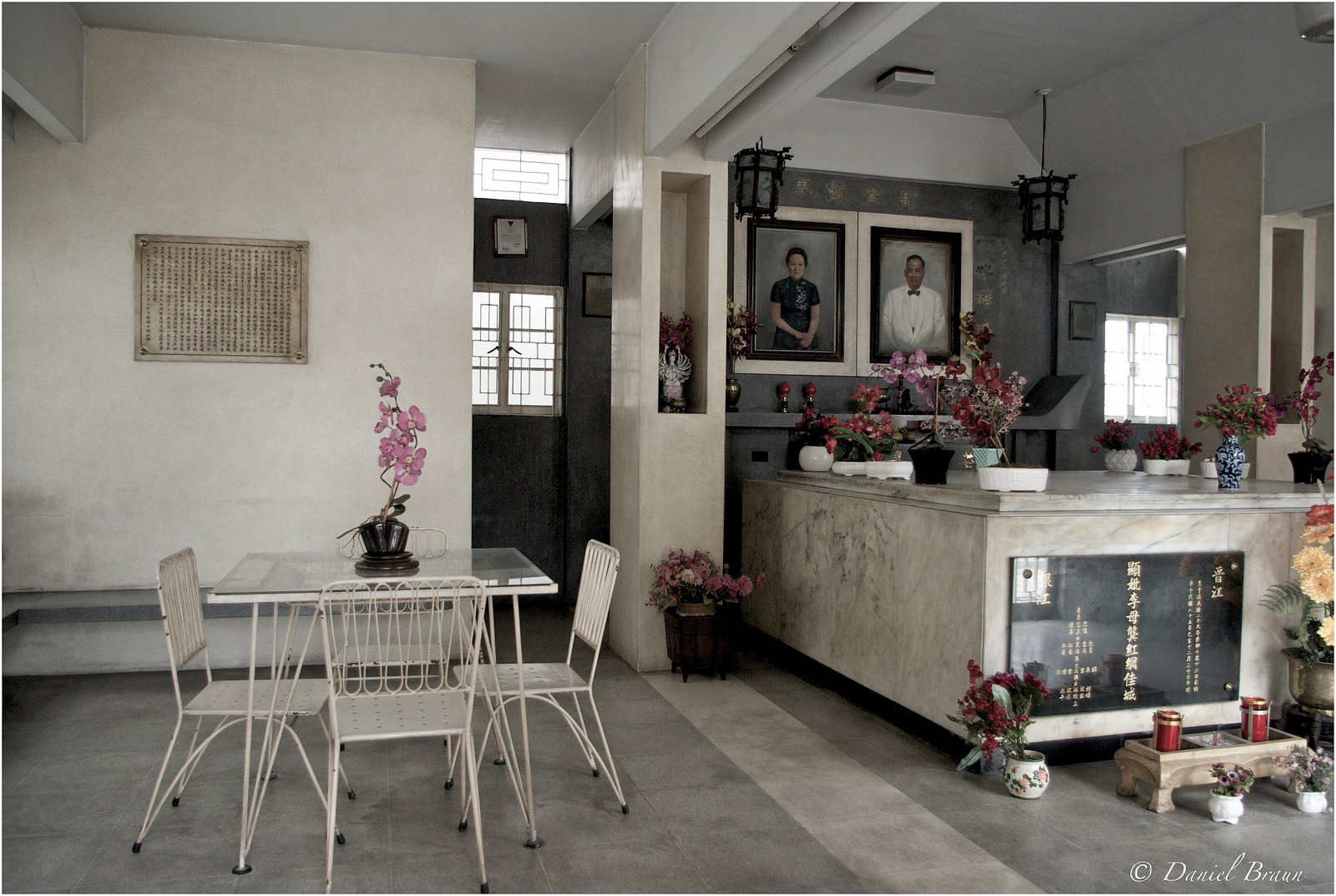
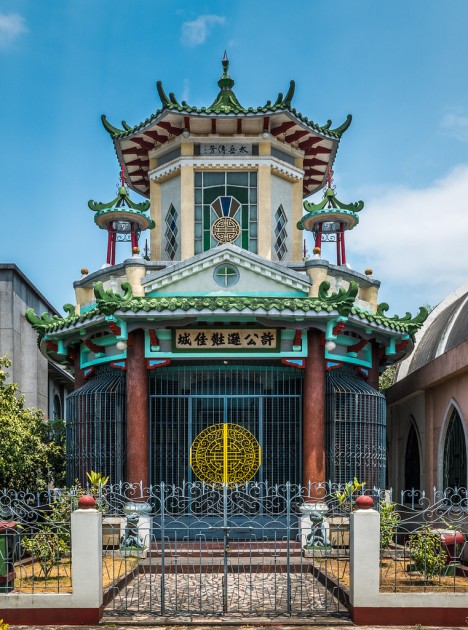
A second cemetery in the Philippines, the Chinese Cemetery, is nicknamed the ‘Beverly Hills of the Dead’ for the spacious, luxurious tombs that are fancier and more comfortable than most homes of the living. These houses of the dead have fully-functioning kitchens, bathrooms and bedrooms where relatives can sleep alongside their deceased loved ones, and sometimes live there full-time.

New Lucky Graveside Restaurant, India
multipurpose cemeteries new lucky 1

multipurpose cemeteries new lucky 2

multipurpose cemeteries new lucky 3

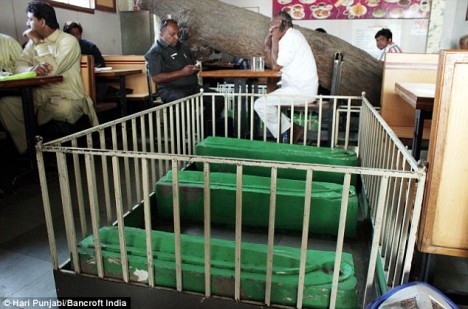
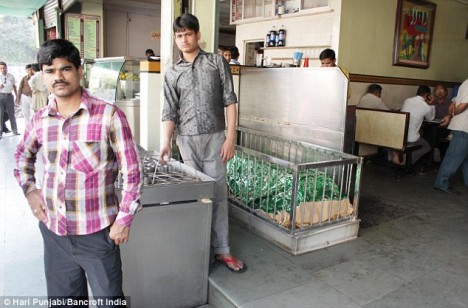
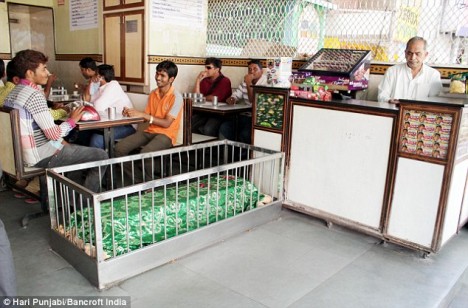
The patrons of New Lucky Restaurant in Ahmadabad, India don’t seem to mind dining right next to coffins from an old Muslim cemetery, which may belong to the followers of a 16th century Sufi saint. The owner decided to leave the coffins in place when building his establishment, and says the proximity to death hasn’t put a dent in business, which is brisk. In fact, he believes that it brings good luck, hence the restaurant’s name. Each morning, the servers pay their respects to the graves, wiping them, covering them with cloth and decorating them with fresh flowers.

Solar Power in Santa Coloma de Gramanet, Spain

multipurpose cemeteries solar power spain
With so much of the rest of the land too hilly and shaded to be of use, the town of Santa Coloma de Gramanet outside Barcelona found the one location that would be viable for its solar energy program. It just happens to be a cemetery. The densely-built town packs 124,000 residents into 1.5 square miles, so they have to make creative use of every inch. Now, 462 solar panels provide enough energy to power 60 homes each year. The panels are perched above ground level, so there’s no notable change to the feel of the sacred spaces below. “The best tribute we can pay to our ancestors, whatever your religion may be, is to generate clean energy for new generations, says the director of Const-Live Energy, which runs the cemetery.

Next Page – Click Below to Read More:
Living With The Dead 12 Cemeteries With Surprising Alternate Uses

Share on Facebook


[ By Steph in Culture & History & Travel. ]

[ WebUrbanist | Archives | Galleries | Privacy | TOS ]


WebUrbanist

 
Comments Off on Living with the Dead: 12 Cemeteries with Surprising Alternate Uses

Posted in Creativity