RSS
 

Posts Tagged ‘Uses’

Flexible Tenikle ‘tripod’ uses suction cups to stick almost anywhere

28 Sep

A new ‘tripod’ like device called the Tenikle has just launched on Kickstarter, and it looks kind of like a Joby GorillaPod with a creative twist. As with the GorillaPod, Tenikle features three flexible arms that can be bent and reshaped for a variety of surfaces; unlike GorillaPod, Tenikle can stick to those same surfaces using the three powerful suction cups found on each arm.

Tenikle can be used by either directly attaching a small action camera (or smartphone) to a suction cup, screwing a camera mount into the device’s 1/4-20″ port, or attaching a camera directly to its 1/4-20″ screw adapter. The tripod is flexible enough to be rolled into a ball for heightened portability and strong enough to hold 8lbs / 3.6kg per suction cup.

When used dry, the creators claim that each cup is able to maintain strong suction for two or more weeks, while wet cups will maintain strong suction for four or more weeks. Both Stingray Gray and Coral colors are available, but Lagoon Blue and a special Kickstarter color will be added if the crowdfunding campaign hits stretch goals.

The team behind Tenikle plan to retail the tripod for $ 30, but is currently offering it to backers who pledge $ 25 or more. The campaign also includes pledge options such as a bundle with an adapter (and more) for $ 35 on up.

To find out more about the Tenikle or put down a pledge of your own, head over to the Kickstarter campaign by clicking here. This creative little tripod has already destroyed its initial funding goal, so it’s very likely this one will become a reality (although that’s never a guarantee…)

Articles: Digital Photography Review (dpreview.com)
 
Comments Off on Flexible Tenikle ‘tripod’ uses suction cups to stick almost anywhere

Posted in Uncategorized


Revitalizing the L.A. River: 7 Architects Envision Fresh Uses for Old Waterway

26 Jul

[ By WebUrbanist in Architecture & Cities & Urbanism. ]

The Los Angeles river changes dramatically as it snakes into and through the city, and these different design proposals carry that legacy forward while envisioning new, user-friendly, flexible and sustainable nodes of activity. The L.A. River Downtown Design Dialogue celebrates ten years of working to revitalized areas and create connections along the river’s route.

Currently, this often-dry river, encased in concrete, feels about as much like a river as Silver Lake feels like a lake, or anything can feel natural when so artificially contained. Seven architecture firms were given one-mile strips to work with and created a wonderful array of designs featuring lush green parks, bike paths, kayaking zones, climbing walls and more.

Gruen Associates tackled a section near Chinatown, created a series of elevated paths and natural meadows all tied into an existing railroad yard.

WSP placed walkways and terraces along the sides of the river while also offering stepping stones for people wanting to walk across.

CH2M took its zone near the Arts District and added bicycle paths and other amenities around a winding and widened section of river made to look and feel more like a local creek.

AChee Salette took over old railway tracks to create a series of gardens spilling down from the road grade above to the level of the river below.

Curving and wrapping paths and walls create an organic wrapper for the section designed by Mia Lehrer + Associates, creating a space to canoe and kayak.

AECOM’s  playfully integrated climbing walls, basketball courts and other sporting amenities, while adding light and color through mosaics and murals spanning their area.

Tetra Tech designed a new bridge to cross the river as well as a river walk, all taking advantage of the existing sloped sides, reflecting the river’s historic form.

Together, these schemes reflect a rich diversity of design strategies as well as usage possibilities — given how prominent and central the path of the river is, it makes a lot of sense to make it a more accessible and vibrant resource for the city and its citizens.

Share on Facebook


[ By WebUrbanist in Architecture & Cities & Urbanism. ]

[ WebUrbanist | Archives | Galleries | Privacy | TOS ]


WebUrbanist

 
Comments Off on Revitalizing the L.A. River: 7 Architects Envision Fresh Uses for Old Waterway

Posted in Creativity


Pulitzer-winning photographer uses Volvo SUV’s built-in camera to shoot photo exhibit

13 Jul

Consumer vehicles are increasingly built with integrated cameras as part of safety systems, and the Volvo XC60 is no exception. The only difference? Volvo is using their car cam to capture a unique brand of photography.

Volvo recently tapped Pulitzer Prize-winning photographer Barbara Davidson and Swedish agency Forsman & Bodenfors to create a first-of-its-kind photography exhibit called ‘Moments’ that features images taken by Davidson using the SUV’s built-in camera. “Through art we’re connecting [viewers] with really important technology that saves lives,” Davidson explains in a video from Volvo Cars, “and I think we’re bringing the technical world and the artistic world together.”

Pulling photos out of the car’s video feed, Davidson managed to create a unique set of photographs using the Volvo.

Davidson staged the shots, a process highlighted in Volvo’s video. Talking about this, Davidson explained, “I’m really using the car as a camera, and I’m framing it as I would frame with my 35mm camera. So it’s very similar to how I would work as a photojournalist.”

Volvo premiered the ‘Moments’ project on July 4th in London, and will be showcasing it in various parts of the world throughout 2017.

Articles: Digital Photography Review (dpreview.com)

 
Comments Off on Pulitzer-winning photographer uses Volvo SUV’s built-in camera to shoot photo exhibit

Posted in Uncategorized


OnePlus 5 2x tele camera uses 1.6x optical in combination with digital zoom

24 Jun

When we shot our sample images with the brand new OnePlus 5 we noticed that the dual-camera’s 2x tele-module did not quite deliver the pixel-level image quality you would expect from the 20MP Sony IMX350 sensor. Images showed low levels of fine detail and looked as if they had been upscaled which would point towards some form of digital zoom implementation.

This has now been confirmed by OnePlus co-founder Carl Pei in a tweet. He clarified that the second lens on the back uses a 1.6x optical zoom and that digital zoom is used to reach the claimed 2x zoom factor. The cropped image is then upscaled to achieve the specified 20MP image size.

The company says it is using its SmartCapture multi-frame technology to make the zoom “lossless” but arguably not everybody would agree with this term. Exif viewers show the focal length of the wide-angle and tele lenses to be 24mm and 36mm equivalent respectively which would mean a 1.5x zoom factor. However, there is a chance Exif isn’t taking the SmartCapture portion of the zoom into account.

Some other dual-cam implementations we have seen, for example on the iPhone 7 Plus are using a 2x optical zoom with a smaller sensor than the main camera. It appears OnePlus opted for the same 1/2.8″ sensor size in both cameras. An optical 2x lens would probably have required a thicker body or noticeable camera bump.

Articles: Digital Photography Review (dpreview.com)

 
Comments Off on OnePlus 5 2x tele camera uses 1.6x optical in combination with digital zoom

Posted in Uncategorized


Photographer uses ‘antique’ photo technique to illustrate struggles of Native Americans

17 Jun

$ (document).ready(function() { SampleGalleryV2({“containerId”:”embeddedSampleGallery_4545210807″,”galleryId”:”4545210807″,”isEmbeddedWidget”:true,”standalone”:false,”selectedImageIndex”:0,”startInCommentsView”:false,”isMobile”:false}) });

During the Dakota War of 1862, the United States government hung 38 members of the Dakota Indian Tribe in Mankato, Minnesota – the largest single-day mass execution in US history. A day after Shane Balkowitsch learned about this event – something most Americans have never heard of – he made the plate ‘Death by Oil’ (pictured above) using an antique photo process called wet plate collodion, which was first developed (no pun intended) in 1848.

The oil in the photo links the struggles of Native Americans in 1862 to the present time, in which they are again standing up to the US Government to protect their homeland. In this case, it is from the proposed Dakota Access Pipeline.

Wet plate photography requires subjects to sit still for long exposures, sometimes as long as 30 seconds. It involves applying a collodion emulsion onto a glass plate and sensitizing the plate for 3 minutes in a bath of silver nitrate, then taking the photo while the plate is still wet (which requires a portable darkroom). According to Balkowitsch, while the photos come out black and white, ‘they capture real life more beautifully and romantically’ and they will last for hundreds of years, unlike more traditional modern photographic prints. Balkowitsch is one of a very small group of photographers still using the collodion wet plate process and has made over 2300 plates since 2012.

Balkowitsch’s full collection of wet plate photos is available for viewing online.

Articles: Digital Photography Review (dpreview.com)

 
Comments Off on Photographer uses ‘antique’ photo technique to illustrate struggles of Native Americans

Posted in Uncategorized


This 12K rig uses six Panasonic Lumix GX80s for 360-degree video

03 May

UK-based filmmaker Nick Driftwood has been busy, making a 360-degree video rig using six Panasonic Lumix GX80 (GX85 in the US) bodies, each fitted with a 3.25mm lens, covering a field of view of 243-degrees. With each camera shooting 4K video, 2880 X 2880px X 6 equals 12K footage. He showed it off to our friends at Photo Gear News last week at the NAB show in Las Vegas.

The super-wide lenses come from Hong Kong 360 company iZugar, and the camera takes advantage of the 1:1 video capability that Panasonic offers in its 4K Photo mode.

Even if you’re not interested in 360-degree video, it’s worth watching just for the guy in the background at 0:53.

A sample of the output from Nick’s 12K rig can be found below.

Articles: Digital Photography Review (dpreview.com)

 
Comments Off on This 12K rig uses six Panasonic Lumix GX80s for 360-degree video

Posted in Uncategorized


EXIF.co uses smart watermarks and more to protect photographers’ images

29 Apr

EXIF.co is a new service offering photographers paid photo hosting that automatically applies smart watermarks and other protections to images uploaded to the platform. It aims to allow photographers freedom to embed and share their images on the web while limiting the risk of someone re-using their work without attribution – or flat-out stealing it.

EXIF.co enables customers to share their photos using an embed feature or to share it with others directly via a sharing tool. Anyone who tries to download the photo will be blocked, presented with copyright information, and/or a watermark will be automatically applied to the saved photo, depending on the photographer’s preferences.

Users can opt to apply ‘smart watermarks’ that appear when someone tries to download or screenshot an image, add photo credits, block embeds on websites, enable sharing with websites and track the number of online views each photo receives. The service appears simple to use, requiring customers to first upload their images, then add details to them such as credits. The user sets the permissions they want for each image, then saves it to their account.

You can see it in action below:


The service is free to sign up for, and it is priced on a per-thousand views basis. The rate for 10,000 to 99k views is $ 0.30 per 1,000 views, the 100k to 499k rate is $ 0.25 per 1,000 views, the 500K to 999K is $ 0.20 and the 1m or greater rate is $ 0.15. For example, EXIF.co says 10,000 views of a photograph will cost the subscriber $ 3. Individuals who sign up for the beta service will receive 1,000 credits for free.

The company acknowledged in a blog post yesterday that it’s service certainly isn’t foolproof. It stresses that its goal is to ‘add some friction’ to protect against casual theft. Would you find a service like this valuable? Let us know in the comments.

Via: PetaPixel

Articles: Digital Photography Review (dpreview.com)

 
Comments Off on EXIF.co uses smart watermarks and more to protect photographers’ images

Posted in Uncategorized


Everypixel Aesthetics uses neural networks to judge your photographs

08 Apr

Designers and image editors often have to browse through large numbers of low-quality photographs before they find the stock image that is most suitable for their purposes. Now, a new algorithm has been created to filter images based on their aesthetic value and get rid of the junk before it clogs up your search results. 

Everypixel uses neural networks for ranking stock images and for this purpose has trained the algorithms to judge the aesthetic value of a stock image in the same way as a human would do.

Everypixel’s CEO Dmitry Shironosov said: “Designers, editors and experienced stock photographers helped us generate a training dataset with 946,894 positive and negative patterns. We wanted to create a technology that can measure not only aesthetics of stock images, but their commercial potential as well. This is the main difference between our smart filter and other solutions that exist today.”

The neural network is capable of estimating the visual quality of an image and applies a score to every file which, if working properly, could save many man hours of human image curation. The algorithm is currently in beta stage but you can already test it with your own images on Everypixel. We’re not so sure about the scoring, but the system already looks pretty good at assigning correct keywords. How did your images do? Let us know in the comments.

Articles: Digital Photography Review (dpreview.com)

 
Comments Off on Everypixel Aesthetics uses neural networks to judge your photographs

Posted in Uncategorized


Autonomous Trap: Artist Uses Ritual Magic to Capture Driverless Cars

28 Mar

[ By WebUrbanist in Art & Installation & Sound. ]

car trap

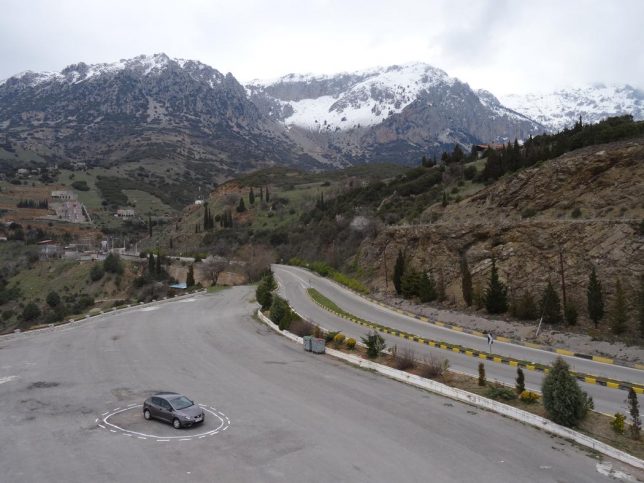
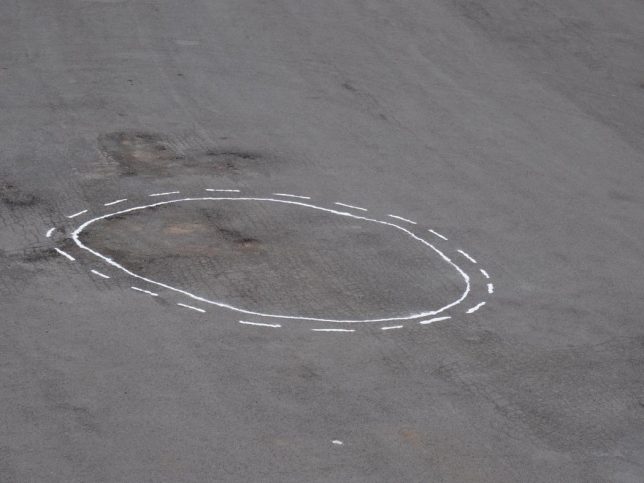
Somewhere between pagan magic, modern science and quirky satire, this installation project uses salt circles but also the logic of traffic lines to lure in and ensnare unsuspecting autonomous vehicles.

salt trap car

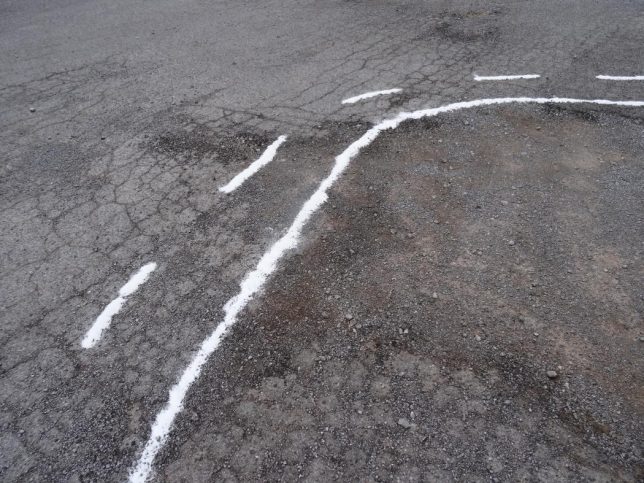
James Bridle‘s Autonomous Trap 001 employs familiar street markings found on divided highways – per the rules of the road, cars can cross over the dotted line but not back over the solid line. It sounds a bit absurd, but consider: driverless cars with various degrees of autonomy are already hitting the streets, and these do rely on external signals to determine their course. As these technologies gain traction, it is entirely likely that serious attempts will be made to spoof and deceive their machine vision algorithms.

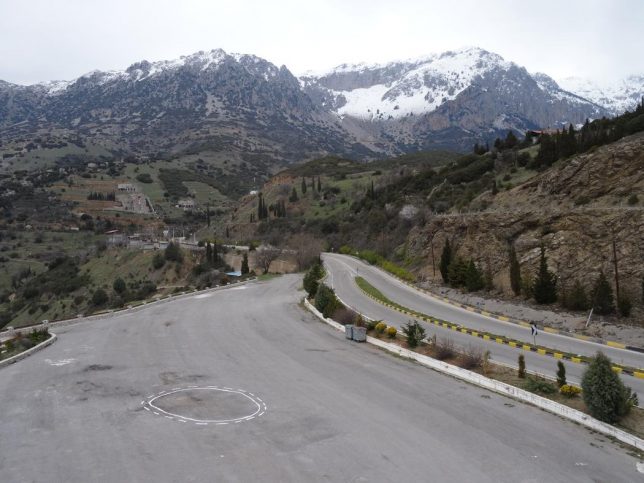
“What you’re looking at is a salt circle, a traditional form of protection—from within or without—in magical practice,” explains Bridle. “In this case it’s being used to arrest an autonomous vehicle—a self-driving car, which relies on machine vision and processing to guide it. By quickly deploying the expected form of road markings—in this case, a No Entry glyph—we can confuse the car’s vision system into believing it’s surrounded by no entry points, and entrap it.”

autonomous vehicle trap magic

“The scene evokes a world of narratives involving the much-hyped technology of self-driving cars,” writes Beckett Mufson of Vice. “It could be mischievous hackers disrupting a friend’s self-driving ride home; the police seizing a dissident’s getaway vehicle; highway robbers trapping their prey; witches exorcizing a demon from their hatchback.” It has elements of cultural commentary that stem from acute awareness of real conditions, bordering on the absurd but also quite sobering.

mountain pass

In fact, Bridle made his trap while training his own DIY self-driving car software near Mount Parnassus in Central Greece. “Parnassus feels like an appropriate location,” he says, because “as well as [having] quite spectacular scenery and [being] wonderful to drive and hike around, it’s the home of the Muses in mythology, as well as the site of the Delphic Oracle. The ascent of Mount Parnassus is, in esoteric terms, the journey towards knowledge and art.” Meanwhile, Bridle continues to work on other pieces related to contemporary technology, tackling subjects from machine vision and artificial intelligence to militarized tech and big data.

Share on Facebook


[ By WebUrbanist in Art & Installation & Sound. ]

[ WebUrbanist | Archives | Galleries | Privacy | TOS ]


WebUrbanist

 
Comments Off on Autonomous Trap: Artist Uses Ritual Magic to Capture Driverless Cars

Posted in Creativity


Better Than Before: 10 Unwanted Structures Transformed for New Uses

02 Mar

[ By SA Rogers in Architecture & Houses & Residential. ]

time capsule factory

Creative conversion projects transform old disused structures like factories, churches, grain silos, cisterns and slaughterhouses for new purposes, helping them avoid demolition. Often abandoned yet still bearing historic, aesthetic and functional value, these buildings become the basis for unusual homes, offices, spas and museums.

La Fabrica: Cement Factory Turned Private Residence, Barcelona, Spain

time capsule factory 2

time capsule factory 3

time capsule factory 4

time capsule factory 5

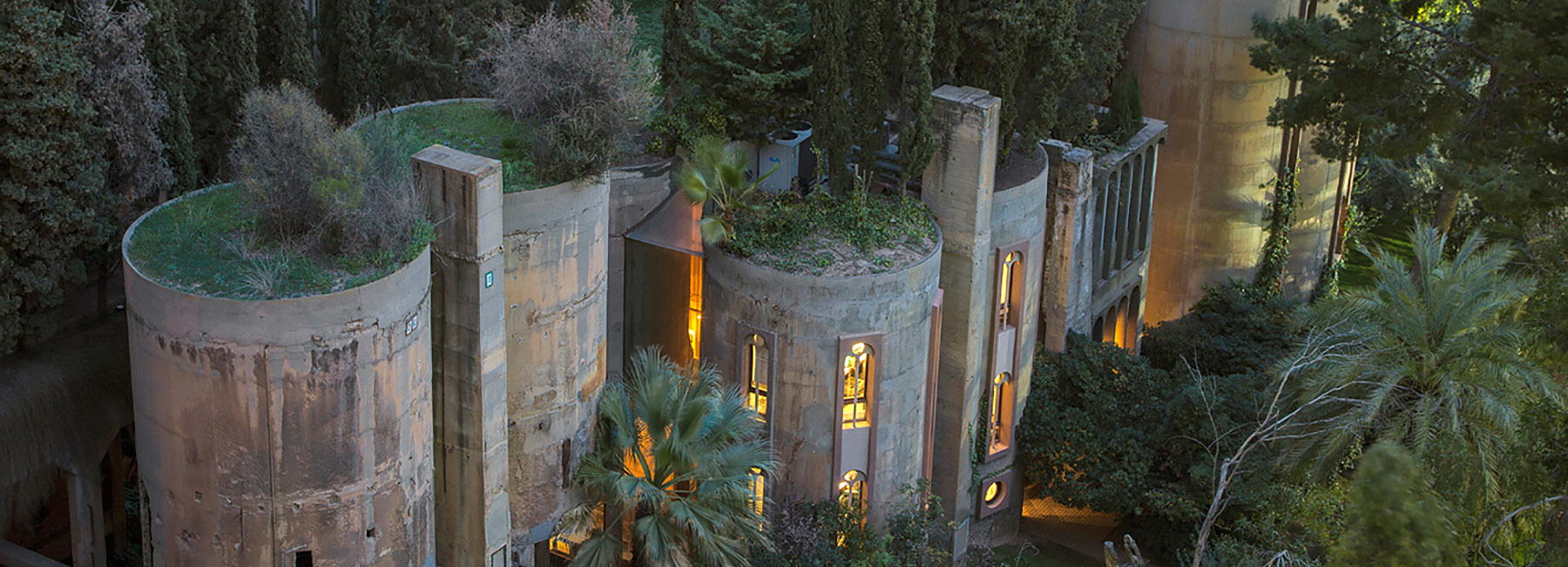
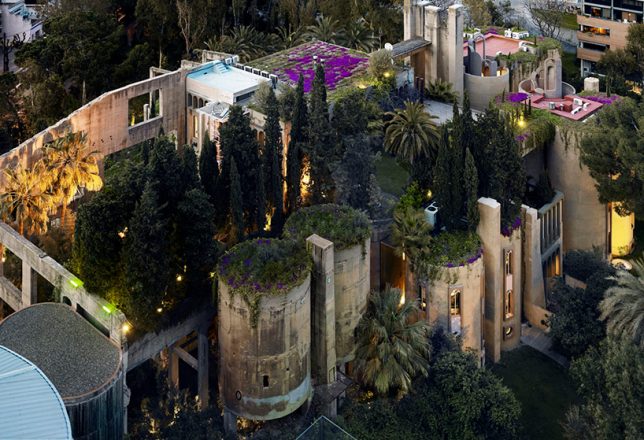
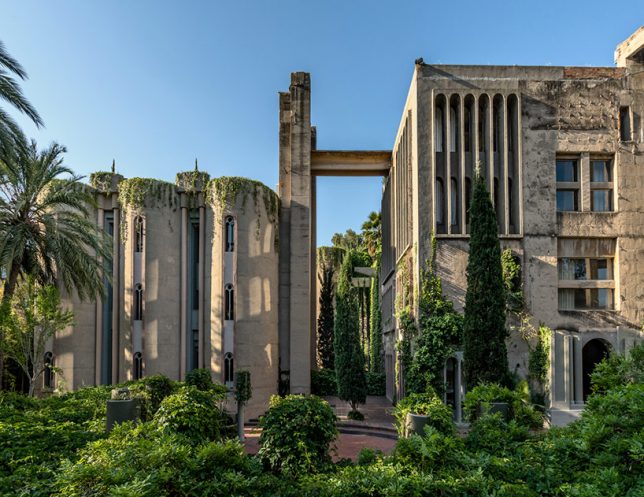
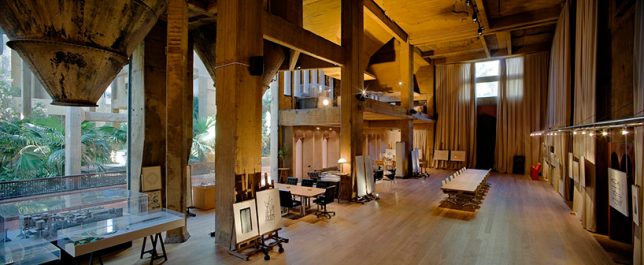
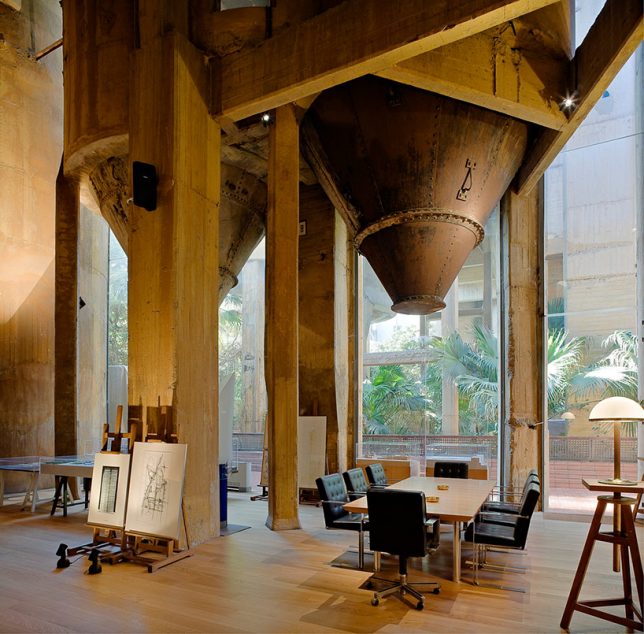
A sprawling cement factory in Barcelona, built in the post-World War I era and containing structures in all sorts of interesting shapes, has become architect Ricardo Bofill’s home and studio. Bofill transformed the complex by demolishing strategic areas to create voids for open-plan spaces interspersed with gardens. Years after he began, the home is covered in greenery in a way that seems chaotic at first, as if nature is taking the formerly abandoned space over whether it was converted or not. But a closer look reveals planned rooftop gardens atop cylindrical silos, palm trees and lush ivy. Many elements of the original structures were preserved as interesting architectural details.

Military Bunker Turned Wine Museum, China

china bunker to wine museum

bunker to wine museum 2

bunker to wine museum 3

bunker to wine museum 4

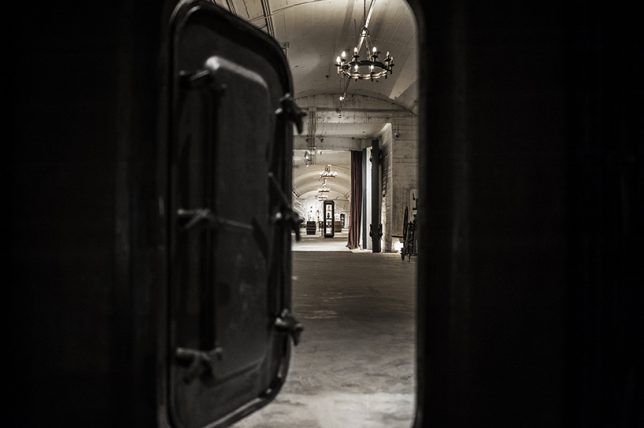
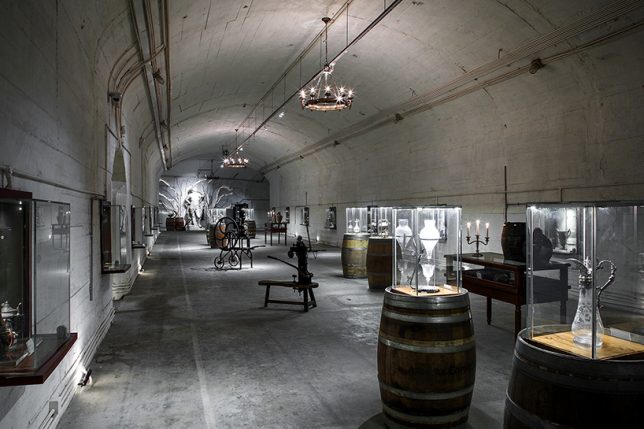
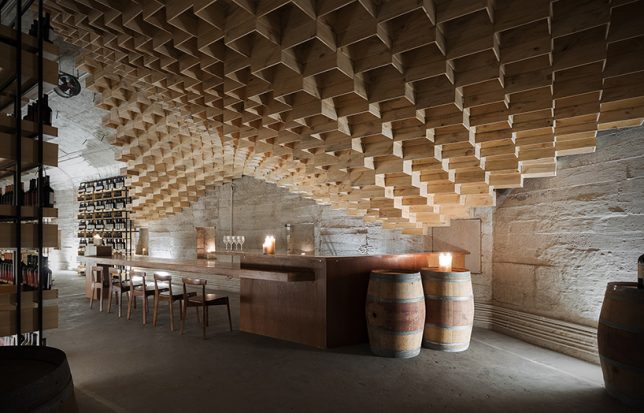
An old military bunker 1.5 hours outside Shanghai is now an unusual industrial-style winery, transformed by China-based wine lifestyle and consulting firm Shanghai Godolphin. Built inside a Chenshan Mountain cave over 80 years ago, the structure was once used to store artillery and anti-aircraft machine guns. Today, organic installations of wooden wine boxes almost seem to have populated the space naturally, like bees building their honeycomb in an abandoned vehicle.

Underground Crypt to Spa, France

crypt to spa 2

crypt to spa 3

crypt to spa

crypt to spa 4

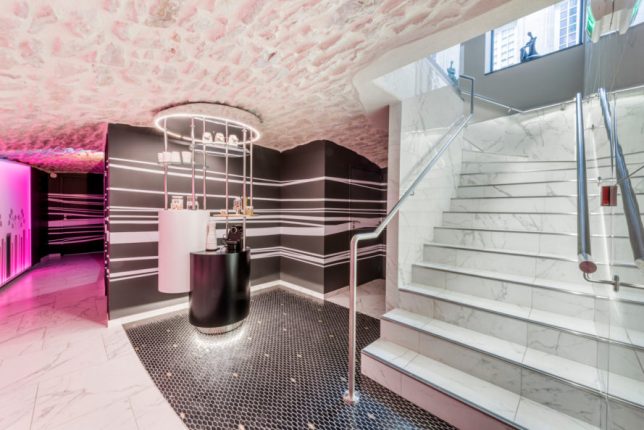
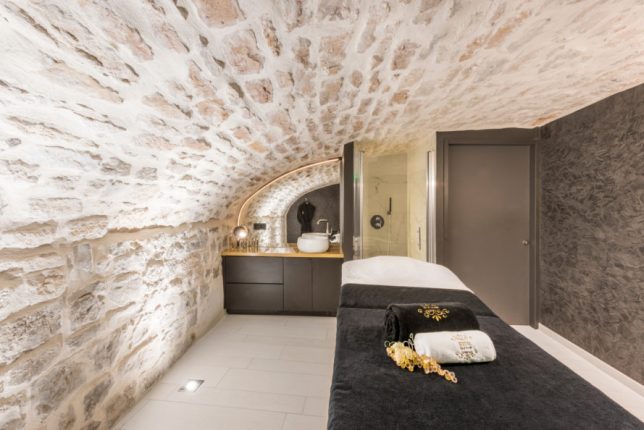
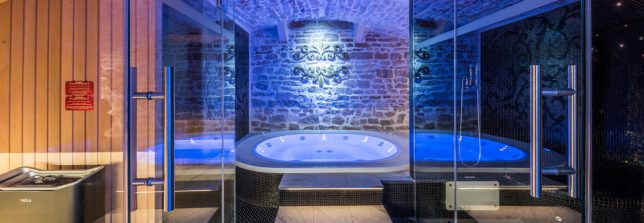
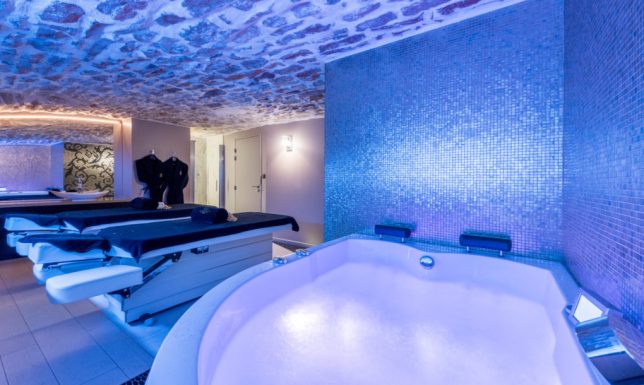
Hundreds of years ago, this subterranean space near Saint Pierre’s Church in eastern France was likely used as a crypt. Now, the underground facility serves as the luxurious Atrium Spa & Beauté, transformed by Italian designer Alberto Apostoli into a series of soothing rooms full of tubs and massage tables.

Abandoned 1920s Bank to Co-Working Space, Montreal

bank to coworking space

bank to coworking space 2

bank to coworking space 3

bank to coworking space 4

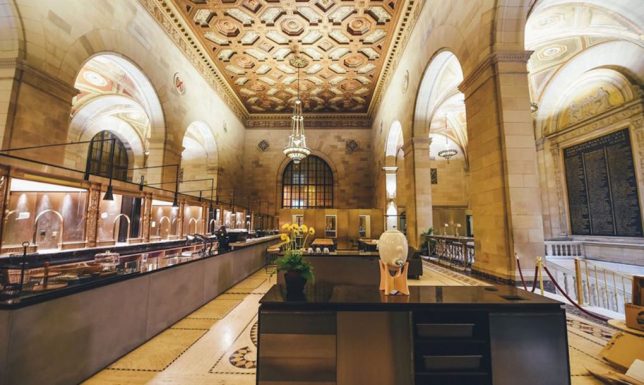
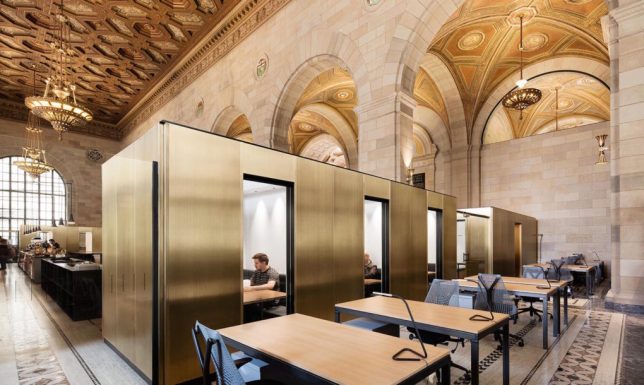
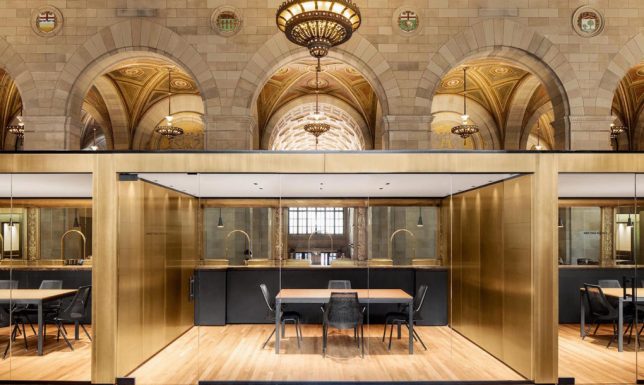
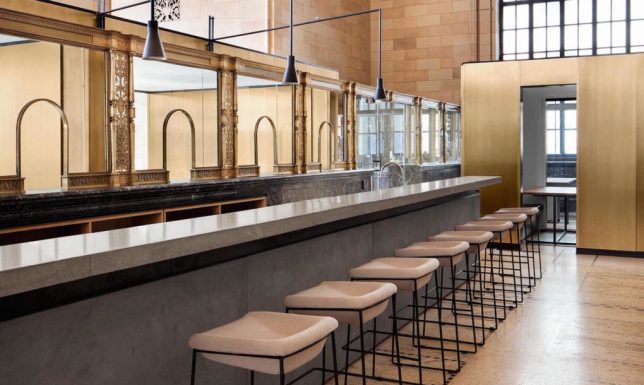
How would you like to go do your daily work or write your novel in a gorgeous historic space instead of your local Starbucks? Architect Henri Cleinge oversaw the conversion of an opulent former 1920s bank into co-working space ‘Crew,’ inserting plenty of tables and private pods beneath the dramatic vaulted ceilings of the 12,000-square-meter space.

Water Cistern to Private Home, Madrid

water cistern home

water cistern home 2

water cistern home 3

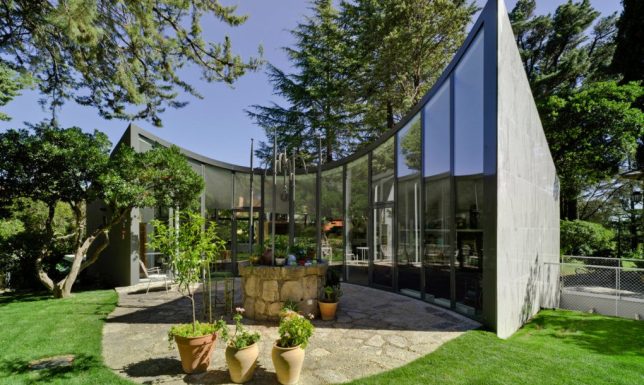
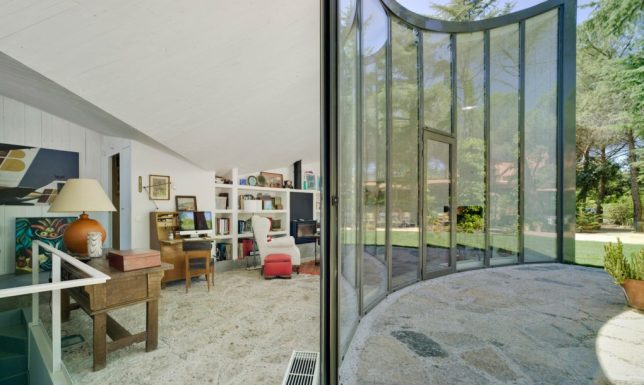
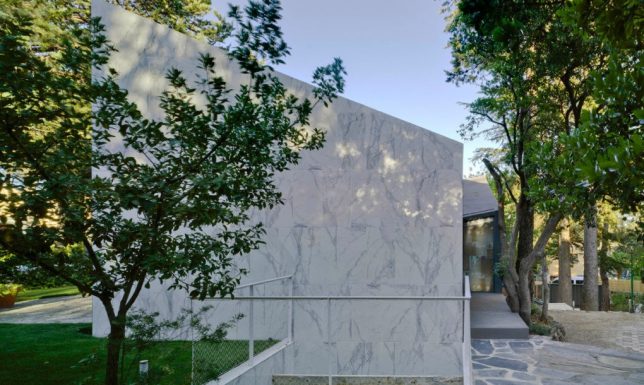
A two-level water cistern site near Madrid is now a stunning sculptural home after an adaptive renovation by Valdivieso Arquitectos. This is one example of a conversion that uses the original structures as a guide, but mostly leaves them behind, the final product showing few signs of what the home used to be. Yet the shapes of that cistern determined the unusual curves of the residence, including the glazed wall looking onto a courtyard.

Next Page – Click Below to Read More:
Better Than Before 10 Unwanted Structures Transformed For New Uses

Share on Facebook


[ By SA Rogers in Architecture & Houses & Residential. ]

[ WebUrbanist | Archives | Galleries | Privacy | TOS ]


WebUrbanist

 
Comments Off on Better Than Before: 10 Unwanted Structures Transformed for New Uses

Posted in Creativity