RSS
 

Posts Tagged ‘turns’

The PolarPro Katana Mavic Tray turns your DJI Mavic Pro into a handheld stabilizer

23 Apr

The DJI Mavic Pro camera drone has been designed with portability in mind. The PolarPro Katana Mavic Tray is a new accessory that increases the Mavic Pro’s versatility even further by turning it into a stabilized handheld shooting platform while on the ground. 

This allows Mavic Pro users to use their drone for shooting smooth, cinematic video on the ground that complements the drone’s aerial footage perfectly. The PolarPro Katana Mavic Tray is made from glass-filled nylon and features two grips on either side of the clamping mount that holds the Mavic Pro securely in position. An integrated smartphone mount at the top of the tray lets you use the drone’s companion app for framing and camera controls.

The PolarPro Katana Mavic Tray will be officially launched at the NAB trade show later this week and carry an anticipated MSRP of $ 49.99. More information is available on the PolarPro website.

Articles: Digital Photography Review (dpreview.com)

 
Comments Off on The PolarPro Katana Mavic Tray turns your DJI Mavic Pro into a handheld stabilizer

Posted in Uncategorized


Insta360 Air turns Android phones into 360-degree VR Cameras, now available in US and Europe

09 Mar

The Insta360 Air camera, which attaches to an Android smartphone via a microUSB or USB Type-C port, turns your phone into a 360-degree VR camera. It’s now available in the US and Europe. The Insta 360 Air uses, via a dedicated app, the smartphone display as a viewfinder and captures 360-degree stills and videos with its dual fisheye lenses.

The camera offers real-time image stitching and comes with integrated live-streaming to YouTube and other platforms. Content can be shared directly from the app to Facebook, Twitter, WhatsApp and other social media platforms. The app allows for viewing content on-screen or through a VR headset. 

The Insta360 Air can also be used as a 360-degree webcam on Skype and other video-chat applications after connecting to a PC’s USB 2.0 or 3.0 port. 360-degree webcam support for Mac should be provided soon via a software update. The Insta360 Air weighs only 26.5 grams and can capture 3K photos (3008 x 1504 pixels) and 2.5 K video (2560 x 1289 pixels) at 30 frames per second. The company also says real-time image stabilization will be introduced via a firmware update ‘in the coming weeks.’

The Insta360 Air is now available for $ 129 at retailers in the US. The device can also be purchased in the UK, Canada, Spain, Germany, Italy, France and Japan through Amazon. We are currently working on a review of the device, so watch this space. 

Press Release:

Insta360 Air Arrives in US and Europe, Turns Android Phones into 360° VR Cameras

Real-Time Image Stabilization on the Way
SHENZHEN, Mar. 7, 2017 – The Insta360 Air, a smartphone add-on that instantly turns Android phones into 360-degree cameras, is now on sale across the United States and Europe. 

“The Air is what we’re all about — cutting-edge technology that empowers people to capture and share experiences just the way they live them,” said J.K. Liu, CEO and co-founder of Insta360. “We can’t wait to see what the world’s Android users create.” 

Android and iOS account for more than 90 percent of the world’s smartphone users, and the release of the Air means all of them can now enjoy seamless 360-degree photography and live-streaming. The Insta360 Nano, launched last year, offers a plug-and-play 360 experience to iPhone users. 

The Insta360 Air’s simple, intuitive design makes capturing and sharing 360-degree content easier than ever. After connecting via USB Type-C or Micro-USB port, the Air uses a smartphone’s display as its viewfinder, allowing users to capture 360-degree stills and videos with the Air’s dual fisheye lenses and camera-interface app. 

With real-time image stitching and integrated live-streaming support for YouTube and other platforms, users can broadcast immersive experiences to the world or share 360-degree content to friends on a host of popular social media — including Facebook, Twitter, WhatsApp and Messenger — directly from the app interface. Users can explore content on a screen or through a VR headset for an even more immersive experience. 

The Insta360 Air experience isn’t limited to mobile. The Air also serves as a 360-degree webcam on Skype and other video-chat applications after connecting to a PC’s USB 2.0 or 3.0 port. 360-degree webcam support for Macs will also be introduced in a future update.

The Insta360 Air captures 3K photos (3008 X 1504 pixels) and 2.5 K video (2560 X 1289 pixels) at 30 frames per second. Weighing only 26.5 grams and with a diameter smaller than a ping-pong ball, the Air is also the most portable consumer 360-degree camera on the market. 

Real-time image stabilization coming soon 

Insta360 is committed to providing ongoing support to both devices and users well after purchase. Air users can expect regular updates to the Insta360 Air app and camera firmware. Among the most-exciting updates on the horizon for the Air is the planned addition of an all-new feature, real-time image stabilization. 

The advanced image-stabilization technology corrects unwanted vibrations and sudden directional changes as they happen, letting users capture smooth and steady live streams and video. 

The technology will mean a vastly improved experience for viewers using an immersive VR headset. And by reducing the variation between adjacent frames of a live-stream or video, it also offers big bandwidth savings. Real-time image stabilization is set to be released via app update in the coming weeks, and Insta360 Nano users can expect the feature as well. 

Priced at $ 129 USD, the Insta360 Air is now available via Amazon in the U.S., U.K., Canada, Spain, Germany, Italy, France and Japan. U.S. consumers can buy the Insta360 Air offline at B&H and Fry’s Electronics, with other regions also offering offline sales at select retailers.

Watch the Insta360 Blog for more updates.

Articles: Digital Photography Review (dpreview.com)

 
Comments Off on Insta360 Air turns Android phones into 360-degree VR Cameras, now available in US and Europe

Posted in Uncategorized


Pixlplay turns a smartphone into a big, durable ‘camera’ for kids

11 Feb

A new Kickstarter project aims to make digital photography easily accessible to children, with a product that is relatively inexpensive and durable. Called Pixlplay, the device is essentially a smartphone case shaped like a classic 35mm film camera, and it includes moveable dials and knobs, as well as a functional shutter button.

The Pixlplay case features a pair of rubber handgrips, adjustable clamps for accommodating phones of various sizes, and a 3.5mm cable that plugs into the phone’s audio jack to power the case’s shutter button. Photos can be snapped through the phone’s built-in camera app using the shutter button, or by touching the phone’s screen (a touch-sensitive screen protector is built into the case). Camera settings can also be adjusted by touching the screen.

Pixlplay features child-resistant dual latches to help prevent children from removing the smartphone, which is offered some protection from drops and dirt while inside the case. Included activity sheets, meanwhile, teach kids the basics about photography, while a dedicated iOS photo editing app allows kids to add frames and silly stickers to their photos. There doesn’t seem to be an Android app, however the case itself can be used with Android and Windows phones.

The case’s maximum phone dimensions are 5.59 x 2.95 x 0.374 in / 142 x 75 x 9.5mm, making it suitable for the iPhone 7 and older models, as well as most Android smartphones. The product’s maker, Pixl Toys, is currently seeking funding for Pixlplay on Kickstarter, where it has raised about $ 13,000 of its $ 25,000 goal. A single Pixlplay camera is being offered to backers who pledge at least $ 25, with shipping estimated to start in June.

Via: VentureBeat

Articles: Digital Photography Review (dpreview.com)

 
Comments Off on Pixlplay turns a smartphone into a big, durable ‘camera’ for kids

Posted in Uncategorized


CloudFisher: Low-Tech Net Turns Fog into Drinking Water for Morocco

04 Feb

[ By SA Rogers in Conceptual & Futuristic & Technology. ]

cloudfisher-main

In a semi-arid region of Morocco, where tap water is a luxury but fog is plentiful, a fog-harvesting net based on the structure of a spider’s web naturally collects moisture from the air. Engineer Peter Trautwein of the German Water Foundation volunteered his time to develop CloudFisher, a structure that looks like no more than a fence from afar. Get closer, and you’ll see a metal framework supporting the stretched nets, with gutters and tubing directing the collected droplets to tanks.

The nets are placed along the area around Mount Boutmezguida, which is known for being one of the driest parts of Morocco, but also the foggiest. When the wind blows, it pushes moisture into the complex woven netting, effectively trapping it. Rubber expanders holding the nets to the frames reduce the impact of wind pressure on the net to keep them from breaking.

cloudfisher-2

cloudfisher-3

CloudFisher is the result of many years of study, as Trautwein experimented with various structures of net to see which ones yielded the most water. Ultimately, monofilaments were the most effective. The netting’s tiny triangular openings fill with water, which then trickles down to the collector at the base.

cloudfisher-4

cloudfisher-5

The CloudFisher system was installed with the help of NGO Dar si Hmed and won the United Nations Framework Convention on Climate Change (UNFCCC) Momentum for Change Award. It’s capable of harvesting between four and fourteen liters of water per square meter of net, ultimately producing up to 36,000 liters (9,510 gallons) of water a day for the area’s 800 residents.

Share on Facebook


[ By SA Rogers in Conceptual & Futuristic & Technology. ]

[ WebUrbanist | Archives | Galleries | Privacy | TOS ]


WebUrbanist

 
Comments Off on CloudFisher: Low-Tech Net Turns Fog into Drinking Water for Morocco

Posted in Creativity


Mobile Remix: Cement Mixer Disco Ball Turns Streets into Night Clubs

16 Dec

[ By WebUrbanist in Art & Installation & Sound. ]

cementitious

Cladding a cement mixer in pixelated mirror squares, a French artist has created a giant glittering disco ball on wheels able to turn vacant lots and construction sites into instant party zones.

disco-party-ball

Benedetto Bufalino often adds fun to the mix when working with interactive and installation pieces (unusual sports courts and strange phone booth conversions), for instance, but rarely in quite such a dramatic way.

Parked for a time next to a building site in Lyon and given its own spotlight, the artist’s remixed mixer spins up and casts light in all directions. The idea driving the project is simple: bring together locals and passing pedestrians to mix and meet in the resulting rays.

cement-mixer

cement-mixed

Of course, it doesn’t hurt that the entire setup is mobile — for guerrilla party throwers, the mixer can set up shop then move if complaints mount or authorities arrive. Or it can simply cruise slowly down the street, making for a truly and permanently portable party.

mixer-under-construction

mixer-in-garage

mixer-by-day

Meanwhile, when not at work hosting parties, the vehicle can carry and pour concrete as usual — like many urban residents, it is a worker by day but a partier by night.

Share on Facebook


[ By WebUrbanist in Art & Installation & Sound. ]

[ WebUrbanist | Archives | Galleries | Privacy | TOS ]


WebUrbanist

 
Comments Off on Mobile Remix: Cement Mixer Disco Ball Turns Streets into Night Clubs

Posted in Creativity


Scan to CAD: Software Turns Volumetric Snapshots into Usable 3D Models

17 Nov

[ By WebUrbanist in Gaming & Computing & Technology. ]

scan

Bringing a critical gap between 3D scanning technology and functional outputs for architects, designers and homeowners, Canvas can scan a room in minutes then generate useful CAD software files.

Raw scans of spaces can be helpful in terms of generating rough measurements and usable as a baseline for a more rigorous three-dimensional model, but it takes time and energy to translate between the two. So while they are great for point-to-point measurements and as-built drawings, such scans are limited in terms of letting someone rework or envision changes to a structure.

3d-sensor-technology

Occipital, the startup behind Structure Sensor, wants to make that transition smooth, painless and effectively automatic. After a users scans a room (or a whole house) with their iPad, they can send away for CAD files that will be returned in two business days. They can then plug those files into software of choice, like Sketchup, and begin remodeling their space.

3d-design-capture

The company calls their vision “augmented home” and pictures their software and hardware getting increasingly refined over time to the point where on-the-spot shots can be immediately transformed into precise and full-color 3D files.

3d-space-model

“I think we’ll probably look back at today as a time, just like the 1830s, when we just started to have photographs,” says Adam Rodnitzky, the company’s VP of marketing. “We’re now entering the era when we’re going to start having a 3D record of the world around us.”

Share on Facebook


[ By WebUrbanist in Gaming & Computing & Technology. ]

[ WebUrbanist | Archives | Galleries | Privacy | TOS ]


WebUrbanist

 
Comments Off on Scan to CAD: Software Turns Volumetric Snapshots into Usable 3D Models

Posted in Creativity


Rebuilding Blocks: Mobile Factory Turns Disaster Debris into Modular Bricks

26 Sep

[ By WebUrbanist in Architecture & Houses & Residential. ]

mobile-factory-homes-copy

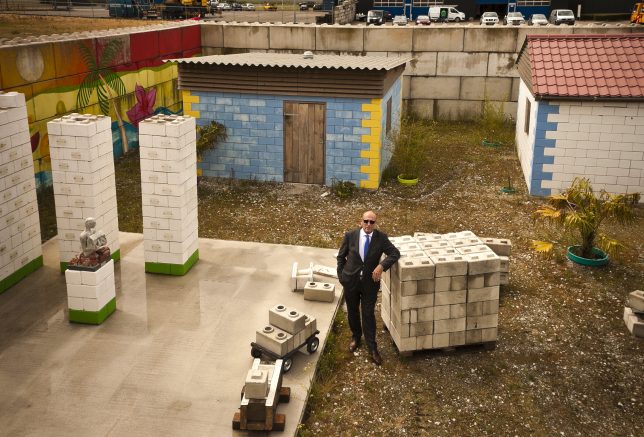
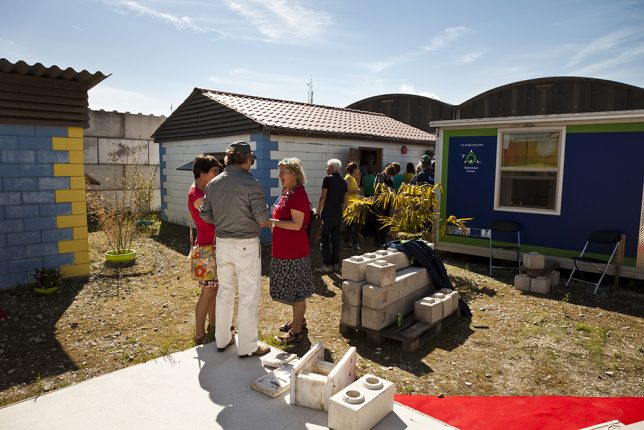
In the wake of intentional demolition or unexpected disasters, the Mobile Factory system can be shipped inside just two cargo containers and begin to turn rubble from ruins into building blocks for reconstruction.

Developed in The Netherlands, the technology filters concrete from other rubble, which is then cast into interlocking blocks (like LEGO bricks) that require no joinery to form stable walls. These units can be stacked without specialized training or equipment, making it possible for communities to rebuild efficiently and cheaply.

The resulting structures are earthquake-resistant, held together in part by bamboo rods threaded through voids in a certain subset of the wall blocks (which can also be used to thread in utilities, including plumbing and electrical lines).

mobile-factory-walls

Since the system fits into a pair of shipping containers, it can easily be transported from site to site, building blocks close to where they will be used and reducing transit time and costs. The reversibility of this construction approach also means that temporary buildings can be erected quickly in the wake of a disaster. In turn, these can be disassembled or adapted easily in the weeks, months and years following an emergency situation.

Consider the 2010 earthquake in Haiti that left hundreds of thousands dead and millions homeless. Over five years later and the country is still littered with 25 million tons of construction debris, which technologies like this can help turn into affordable housing. Indeed, the Mobile Factory organization is looking into expanding their work in Haiti, Peru and other countries in need of this tech.

mobile-blocks

“In disasters, you have piles and piles of rubble and the rubble is waste. If you are rich, you buy more bricks and rebuild your home,” said one of the organization’s founders. “But what happens if you are poor? In disasters it is the poorest people who live in the weakest houses and they lose their homes first. I thought, what if you recycled the rubble to build back better homes for poor people?”

Beyond wars and tsunamis in nations further afield, there are potential urban applications in densely-built places like the Europe and the United States: cities like Baltimore and Detroit spend vast amounts of money demolishing buildings (and in some cases: entire blocks), then clear the rubble and put it in landfills. This technology suggests an alternative: reusing on or close to the demolition site, reducing material and energy waste as well post-demolition transportation costs.

Share on Facebook


[ By WebUrbanist in Architecture & Houses & Residential. ]

[ WebUrbanist | Archives | Galleries | Privacy | TOS ]


WebUrbanist

 
Comments Off on Rebuilding Blocks: Mobile Factory Turns Disaster Debris into Modular Bricks

Posted in Creativity


Trippy mirrored timelapse turns Hong Kong upside down

19 Jul

Skill, dedication, vision: a good timelapse requires all of these things. A really cool subject helps too. ‘The Allegory of the Cave,’ a new timelapse from Visual Suspect, checks all of those boxes. By mirroring Hong Kong’s vibrant cityscapes, its creators aim to play with themes of ‘perception and knowledge as reflection of our reality.’ 

Familiar images of skyscrapers in clouds or boats in a harbor become abstract shapes – where does one image stop and its reflection begin? Is anything real?

See? We told you it was trippy. 

Articles: Digital Photography Review (dpreview.com)

 
Comments Off on Trippy mirrored timelapse turns Hong Kong upside down

Posted in Uncategorized


It was only a matter of time… new app turns your Instagram into virtual art gallery

08 Jun

Have you ever wanted to see your photographs on the wall of an art gallery? Come on – be honest. Your cat pictures deserve a wider audience, and the makers of new app ‘Instamuseum’ agree. 

Instamuseum converts any Instagram account into a 3D virtual reality experience, placing images (up to 90) from the feed on the walls of a computer-generated gallery space. There are four templates available (including ‘Louvre’) and the rendered space can be explored using VR goggles or using a more conventional pan / zoom interface in a desktop browser.

Instamuseum for @dpreview by barney.britton on Sketchfab

Coming in the same week as the actual Louvre gallery in Paris (into which we’ve placed DPReview’s Instagram feed, above) was evacuated due to historic flooding, we can’t help wondering if this is just another sign of the end times. Let us know what you think in the comments. 

Articles: Digital Photography Review (dpreview.com)

 
Comments Off on It was only a matter of time… new app turns your Instagram into virtual art gallery

Posted in Uncategorized


Diverging Diamond: Novel Highway Design Eliminates Hazardous Left Turns

02 Jun

[ By WebUrbanist in Architecture & Cities & Urbanism. ]

diverging diamond interchange design

The diverging diamond interchange has been heralded as the new cloverleaf and condemned as pedestrian unfriendly, but it does do at least one thing remarkably well: it eliminates dangerous left-hand turns that tend to cause the worst kinds of accidents.

As confusing as they look, studies so far suggest they reduce crashes by up to a third and fatal crashes by more than half. At first look, these interchanges appear incredibly complex to navigate, but, on the ground, drivers find it easy to follow their directions.

diamond interchange diagram

Drivers never have to turn to get left, which is the most dangerous part of a typical interchange, merging their way into position instead. To accomplish this the roads cross and uncross gradually.

no left turn interchange

While these diamonds date back decades in France, they were only recently imported to the United States. A graduate student named Gilbert Chlewicki thought he had designed the system, only to discover it existed in Europe. There are now dozens of diverging diamonds in over 20 states across the US.

All of their benefits aside, diverging diamonds still have critics. Charles Marohn, an engineer and writer about bad road designs, maintains these interchanges are terrible for bikers and pedestrians. Of course, so are classic clover leafs.

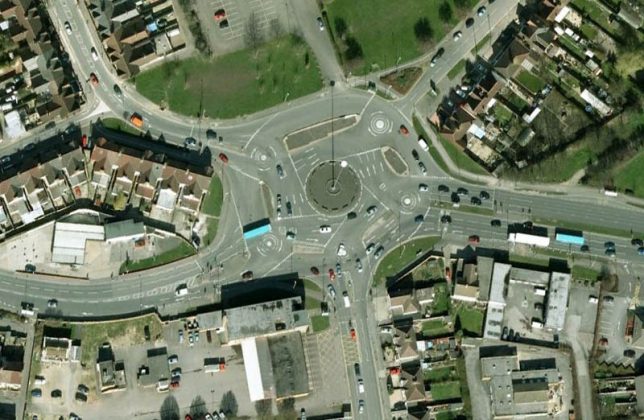
swindon roundabout

Like the infamous Magic Roundabout in England (with five smaller roundabouts circling a larger one), it may just take time for people to get used to the idea, too.

Share on Facebook


[ By WebUrbanist in Architecture & Cities & Urbanism. ]

[ WebUrbanist | Archives | Galleries | Privacy | TOS ]


WebUrbanist

 
Comments Off on Diverging Diamond: Novel Highway Design Eliminates Hazardous Left Turns

Posted in Creativity