RSS
 

Posts Tagged ‘turns’

Metabones’ Devil’s Speed Booster turns Pentax Q cameras into ‘monster low-light machines’

10 Oct

Metabones—the company known for its lens adapters and focal reducing Speed Boosters—has released a new Speed Booster that ought to have Pentax Q users salivating a bit. It’s called the Q666 0.5x ‘Devils Speed Booster’, because it allows Pentax Q owners to mount Nikon F and G lenses and produce a working aperture of f/0.666 when a lens with an f/1.2 aperture is used wide open.

The booster has a magnification of 0.5x and produces a 2.8x crop factor when used with the Q and Q10, and a 2.3x factor with the Q7 and Q-S1.

Metabones has used six elements in four groups inside this new Speed Booster, and has incorporated what it calls a ‘long-throw clickless aperture ring’ for G lenses that has eight marked positions. The adapter is compatible with all Nikkor and Nikon-mount lenses except the Nikkor 2.1cm f/4 and the 20mm f/2.8 AI-S.

The idea for the adapter was launched in August, but this is the first version to emerge. Metabones promises one in a Pentax K mount as well.

The Metabones Nikon G to Pentax Q Speed Booster Q666 0.50x costs $ 490. For more information, visit the Metabones website.

Press Release

Metabones Devil’s Speed Booster Q666 0.50x

Caldwell Photographic Inc. and Metabones® is pleased to announce the Speed Booster Q666, a.k.a. “The Devil’s Speed Booster”, exclusively for Pentax Q series cameras. With its 0.5x magnification and world-record f/0.666 maximum speed it is crazy wicked fast. So make a deal with the devil today and turn your Pentax Q with its back-illuminated sensor into a monster low-light machine unlike anything ever seen in photography. Attach an f/1.2 lens and stop down a little to see how Stanley Kubrick made do with f/0.7 for filming those famous candle-lit scenes in “Barry Lyndon”. Or open up all the way to f/0.666 and probe the darkness in a way that no photographer has ever been able to do until now.

With an advanced 6-element optical design, the Q666 packs lots of optical horsepower in a small package. Sharpness is excellent even at f/0.666, and is downright superb if you stop down to f/1.0. Distortion is very low, with a maximum value of, naturally, 0.666%. And thanks to the back-illuminated sensor used in Pentax Q cameras, the full f/0.666 maximum aperture can be utilized with minimal pixel vignetting effects commonly seen in other cameras used with high-speed lenses.

Figures 2 through 4 below show MTF at 10, 20, and 40 lp/mm as a function of image height for output apertures of f/0.666, f/1.0, and f/2.01. At f/0.666 (i.e., with an f/1.2 master lens) the MTF is high near the axis, and only falls off gradually toward the corners. As the aperture is reduced to f/1.0 and then f/2.0 the MTF becomes very high and more even across the field. Figure 5 shows that there is less than 1 stop of corner illumination falloff even at f/0.666. And guess what – there is no vignetting at all after the output aperture reaches f/1.82. Figure 6 shows that rectilinear distortion added by the Speed Booster Q666 is negligible at less than 0.666%.

Like all Metabones Speed Boosters, the Speed Booster Q666 is optimized to fully account for the camera’s filter stack located near the sensor surface. This is especially critical at the record-setting f/0.666 aperture now possible with the Q666. As a result, an enormous range of optics, from vintage film lenses to the latest digital designs, will function flawlessly when adapted to any Pentax Q camera. Planned lens mounts for the Speed Booster Q666 include a Pentax-K version and a Nikon F/G version with the most advanced Nikon G aperture adjustment mechanism in the industry.

The Speed Booster Q666 will be available starting in Aug 2017 from the Metabones website (http://www.metabones.com/products/details/MB_SPNFG-Q-BM1) and its worldwide dealer network for US $ 489.00, plus shipping and applicable taxes and duties.
Articles: Digital Photography Review (dpreview.com)

 
Comments Off on Metabones’ Devil’s Speed Booster turns Pentax Q cameras into ‘monster low-light machines’

Posted in Uncategorized


MAD Architects Redesign Turns Ugly Paris Tower into Giant City-Scale Mirror

03 Oct

[ By WebUrbanist in Architecture & Offices & Commercial. ]

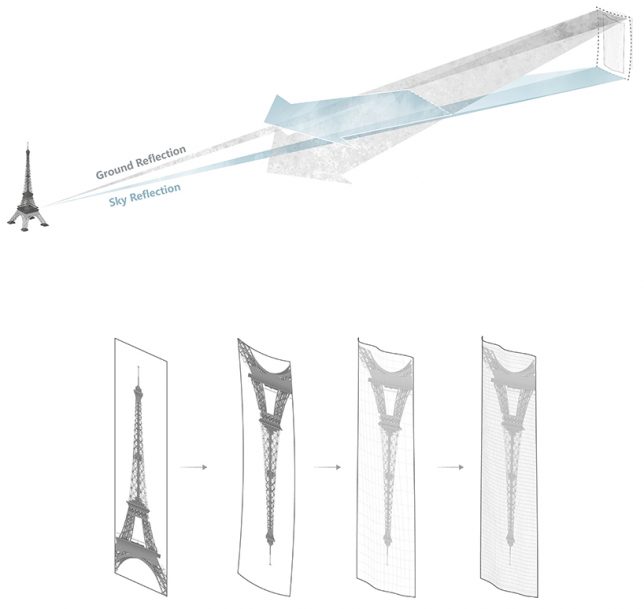
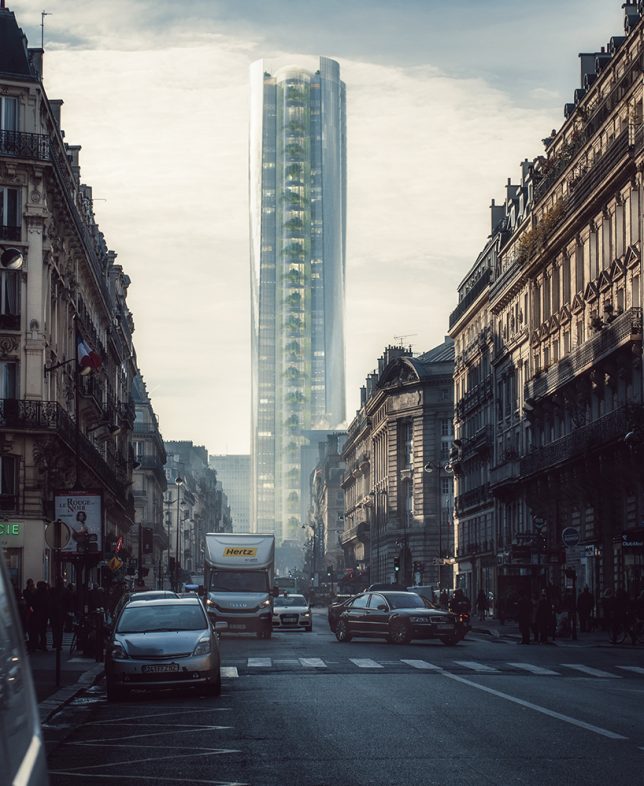
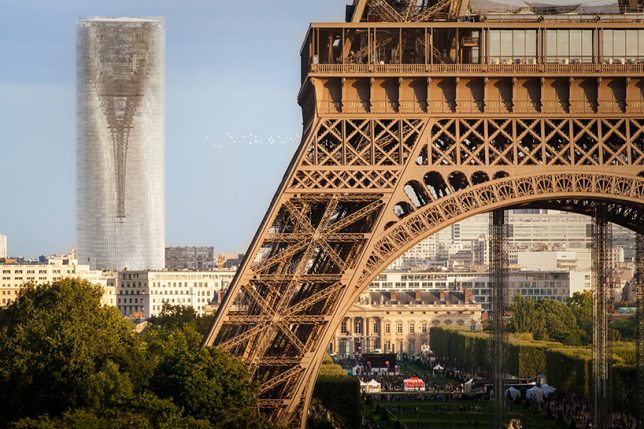
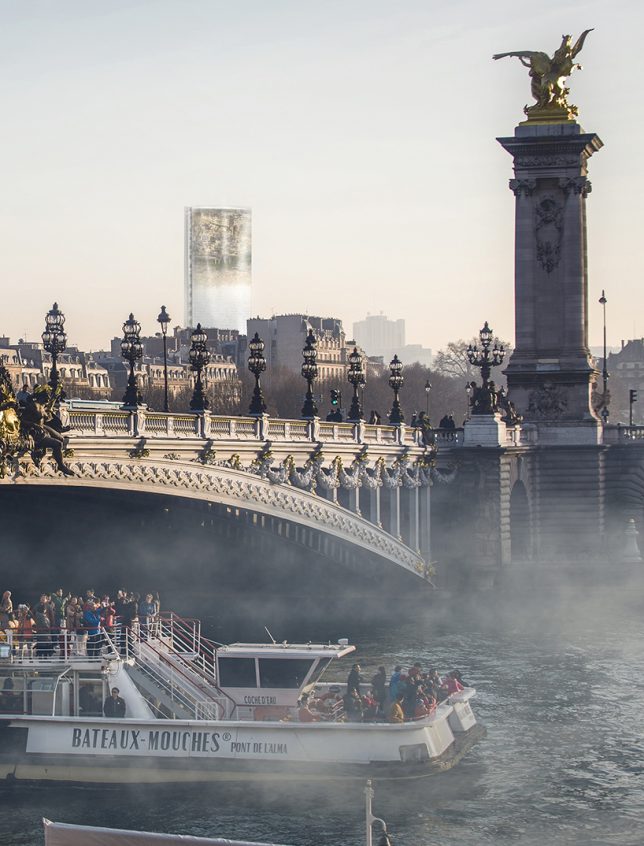
Tall, dark and brooding, the infamous Maine-Montparnasse Tower is an unexciting skyscraper, especially by Parisian standards, but that could all change if MAD Architects converts it into a city-scale mirror. Their renovation proposal employs clever optical tricks to reflect and invert the surrounding cityscape.

When it was built, Montparnasse was the tallest building in France and heralded as a technological achievement. But unlike the Eiffel Tower, which was controversial at first but became a symbol of the city, this skyscraper never gained iconic status — in fact, it led urban building heights to be capped at seven stories. Some quip it has the most beautiful views in the city, in part because those views don’t include the building.
MAD Architects aims to change perceptions of the tower and its role in the city using concave glass panels tilted at an angle to create reflections of the surrounding built environment.

Viewers would be able to see surrounding streets, roofs and buildings in its mirrored facade. In a way, the resulting design both blends into the environment while also highlighting the beauty of the French capital and showing it from generally unseen angles.
“Today, we cannot really demolish this building and the historical regrets it stands for,” explains one of the architects behind the proposal, “but we can establish a new perspective to re-examine and think about how humanity can co-exist and interact with the tower and its environment, to bring meaning to our hearts.”

Perhaps unfortunately, while the firm was shortlisted in a redesign competition, another team was chosen to renovate the structure before the upcoming Olympic Games. Still, the design idea is out there, and another city might have its own ugly tower in need of transformation.
Share on Facebook


[ By WebUrbanist in Architecture & Offices & Commercial. ]

[ WebUrbanist | Archives | Galleries | Privacy | TOS ]


WebUrbanist

 
Comments Off on MAD Architects Redesign Turns Ugly Paris Tower into Giant City-Scale Mirror

Posted in Creativity


LukiLink turns your smartphone into an external HDMI display for a DSLR

25 Aug

A new device called the LukiLink just popped up on Kickstarter, and it promises to transform your smartphone into an external HDMI displays for your DSLR.

LukiLink is very simple to use: just connect it to a DSLR camera via an HDMI cable on one side, and a smartphone/tablet via a USB cable on the other. Live video from the camera is then output to the smartphone via the LukiLink mobile app (Android and iOS). The system supports a maximum input/output resolution of 1080/60p.

The team behind the LukiLink, which resembles a simple dongle, explains that the system can be used to view live video from the camera with the smartphone serving as an ordinary external monitor. The system can also be used to livestream footage from the camera on platforms like YouTube, and to transform the smartphone (or tablet) into an external recorder.

LukiLink promises support for NTSC, PAL, and PAL-60 video format inputs, bitrates ranging from 3Mbps to “about 18Mbps,” as well as a maximum recording resolution of 1080/30p. Latency, meanwhile, is said to “usually” fall between 200ms and 300ms, though the exact rate will depend on the smartphone used.

The team behind the product is currently seeking funding on Kickstarter, where they have raised a little over $ 40k of their approximate $ 106k goal. Interested buyers can claim a unit by pledging at least €90 (~$ 105 USD), which is a €40 discount over the anticipated retail price. Assuming the LukiLink is funded, global shipments are scheduled to begin this upcoming October.

Articles: Digital Photography Review (dpreview.com)

 
Comments Off on LukiLink turns your smartphone into an external HDMI display for a DSLR

Posted in Uncategorized


Luna Display turns the iPad into a second screen, adds touch control to the Mac

24 Aug

The makers of the Astropad, an iOS app that turns your iPad into a graphics tablet for the Mac, have announced Luna Display, the first and currently only hardware solution that turns an iPad into a wireless second display for your Mac computer.

Luna is available for USB-C or Mini DisplayPort and works with your existing WiFi. The device allows you to use your Mac directly from the iPad with full support using external keyboards, Apple Pencil and Apple touch interactions including pinching, panning and tapping.

Its makers say that Luna, unlike software-based solutions, can tap into the processing power of your Mac’s GPU, allowing for a virtually lag-free user experience and images without glitching, artifacting or blurriness.

The team behind Luna is funding the project on Kickstarter where you can pre-order the device for $ 69. Delivery is expected for May 2018. The crowdfunding project has already reached its goal multiple times over, so production and shipping should go ahead as planned.

Articles: Digital Photography Review (dpreview.com)

 
Comments Off on Luna Display turns the iPad into a second screen, adds touch control to the Mac

Posted in Uncategorized


NYC Transformed: Graffiti Artist Turns Urban Objects into 3D Cartoons

29 Jul

[ By SA Rogers in Art & Street Art & Graffiti. ]

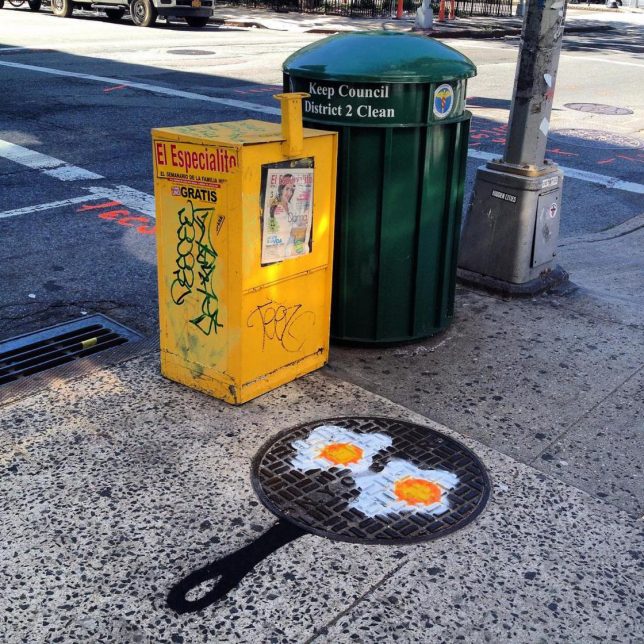
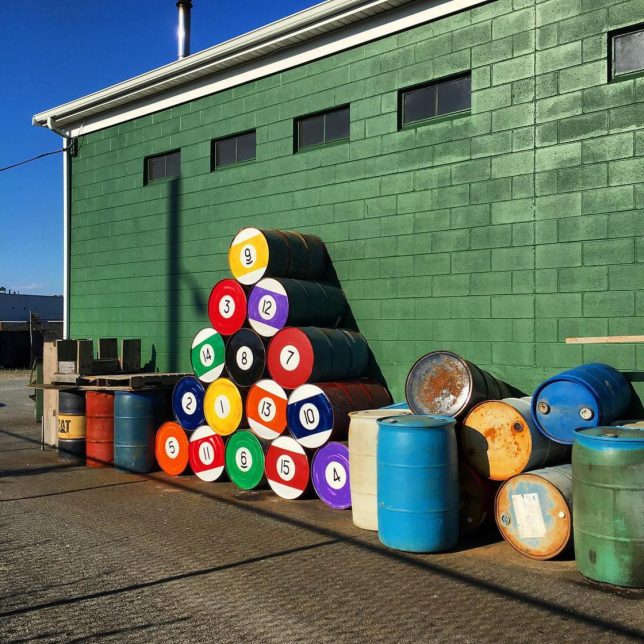
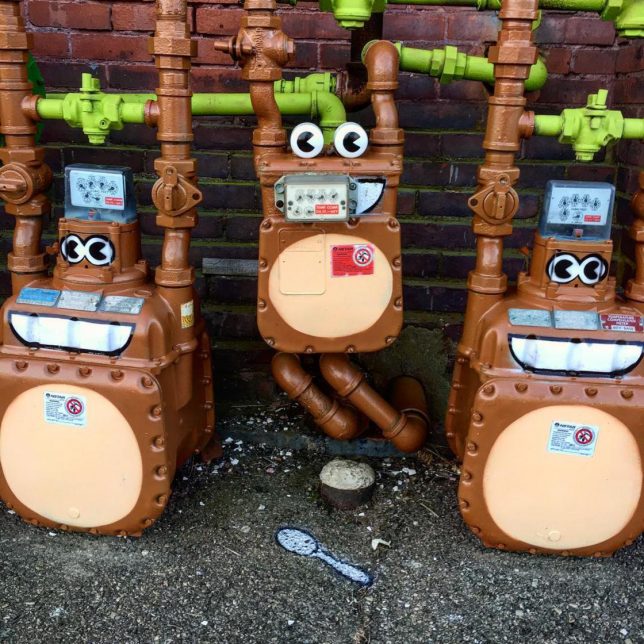
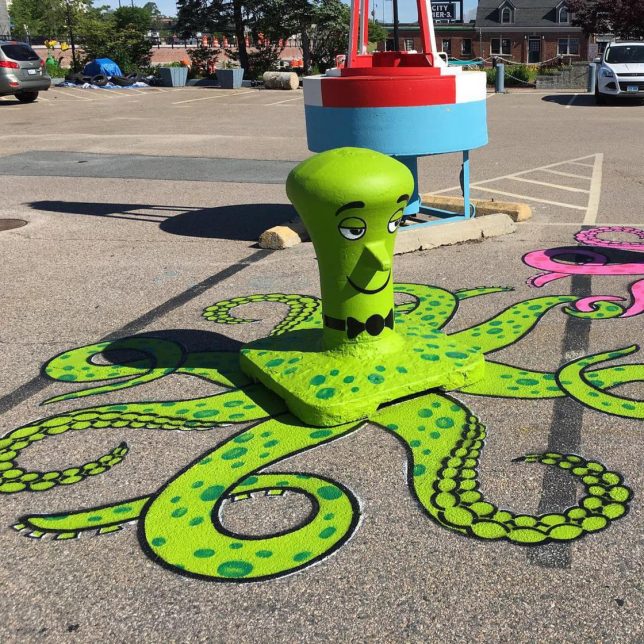
No street grate, pipe, manhole cover, stack of barrels or concrete blob on the beach is too random and irregular to be transformed into a lighthearted cartoon. Street artist Tom Bob looks for the potential in every alleyway, every sidewalk – seeing all sorts of creatures and scenes and bringing them to life in his signature vivid, playful style. You’ll never see street debris the same way.

BEFORE & AFTER ? Found this street sign end post as is. #bartsimpson #after #streetart #cartoonface #bart #simpson #tombobnyc #stencilart #thesimpsons #? #beforeandafter #tombob

A post shared by Tom Bob (@tombobnyc) on

JUMP ROPE GIRL #??#bikerack #jumpropegirl #sillouette #streetart #newbedford #massachusetts #brockavenue #nbma #southend #tombobnyc #publicart #tombob #jumprope

A post shared by Tom Bob (@tombobnyc) on

FLOAT LIKE A BUTTERFLY, STING LIKE A BEE!! ? RIP #muhammadali #thegreatest #boxer #champion #ali #cassiusclay ? #floatlikeabutterfly ? #stinglikeabee ? #streetart #saltspreader #tombobnyc #bumblebee #bee #?

A post shared by Tom Bob (@tombobnyc) on

The artist posts many of his creations on Instagram, sometimes showing before-and-after shots that give us an idea of just how mundane the scenes looked before he arrived with his cans of paint. Abandoned construction equipment becomes giant insects, a squashed traffic cone is roadkill, utility boxes turn into monkeys or crabs. The pieces seem to send a message that fun is wherever you want to find it.

ROAD KILL!! #splat #trafficcone #streetart #tombobnyc #stencil #tombob #stencilart #roadkill

A post shared by Tom Bob (@tombobnyc) on

Quiney #enjoying her @oreo #cookie @buttonwoodpark #nbma #? #oreocookie #manholecover #oreo #manholecover #streeart #stencil #manholecoverart #tombob @hmimoso4 @dlupe #oreocookies

A post shared by Tom Bob (@tombobnyc) on

? If you are in #newyorkcity tonight, come check out this piece I have in a group show @theskinnybar 174 #orchardstreet #les 7-4am curated by @djpumpkin #menatwork #warning #streetsign #roadsign #catching #gator #? #alligator #croc #sewer #sewergator #streetart #tombobnyc

A post shared by Tom Bob (@tombobnyc) on

With everything going on in the world, it’s good to have some levity to balance out the bad. The artist – whose real name is Thomas Bobrowiecki – was born in Massachusetts and earned a Bachelor of Arts degree in Design at Southeastern Massachusetts University.

Share on Facebook


[ By SA Rogers in Art & Street Art & Graffiti. ]

[ WebUrbanist | Archives | Galleries | Privacy | TOS ]


WebUrbanist

 
Comments Off on NYC Transformed: Graffiti Artist Turns Urban Objects into 3D Cartoons

Posted in Creativity


The Gudak app turns your iPhone into a disposable camera

16 Jul

Before there were smartphones, disposable cameras used to be the go-anywhere cameras of choice for many casual photographers. If you are the nostalgic type, you can now get a simulated disposable camera experience on your iPhone, thanks to the new Gudak app by Korean startup Screw Bar.

Like a real disposable camera, the app offers a “film roll” of 24 shots and a small viewfinder.

Shoot through that roll and, once you’ve finished, it is sent to the app’s “lab” where it’s kept for three days of processing. You also have to wait twelve hours until you can “insert” a new roll of film, which means you probably want to be pretty careful with your shot selection.

Processed images show the typical color casts and occasional light leaks that should be familiar to anyone who has ever used a real disposable camera. If that sounds appealing (if a bit nostalgic and silly) to you, you can download the app now on the Apple App Store for $ 0.99. No word yet on an Android version.

Articles: Digital Photography Review (dpreview.com)

 
Comments Off on The Gudak app turns your iPhone into a disposable camera

Posted in Uncategorized


Mattest & Flattest: Blackest Paint You Can Buy Turns Solids into Voids

13 Jul

[ By WebUrbanist in Art & Drawing & Digital. ]

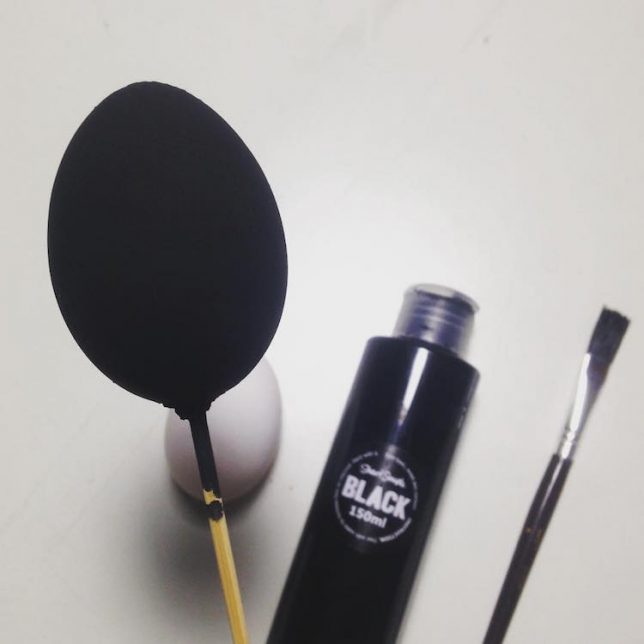
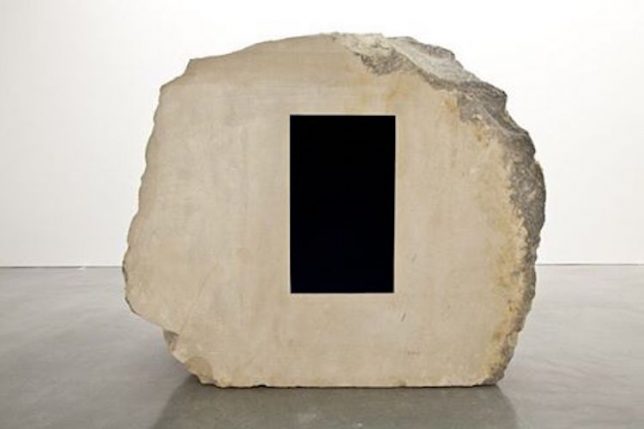
In a weird ongoing war over the blackest black and pinkest pink in the world, a new contender has hit the market — and unlike Vantablack, anyone can purchase some to make really dark artwork (great for black holes!).

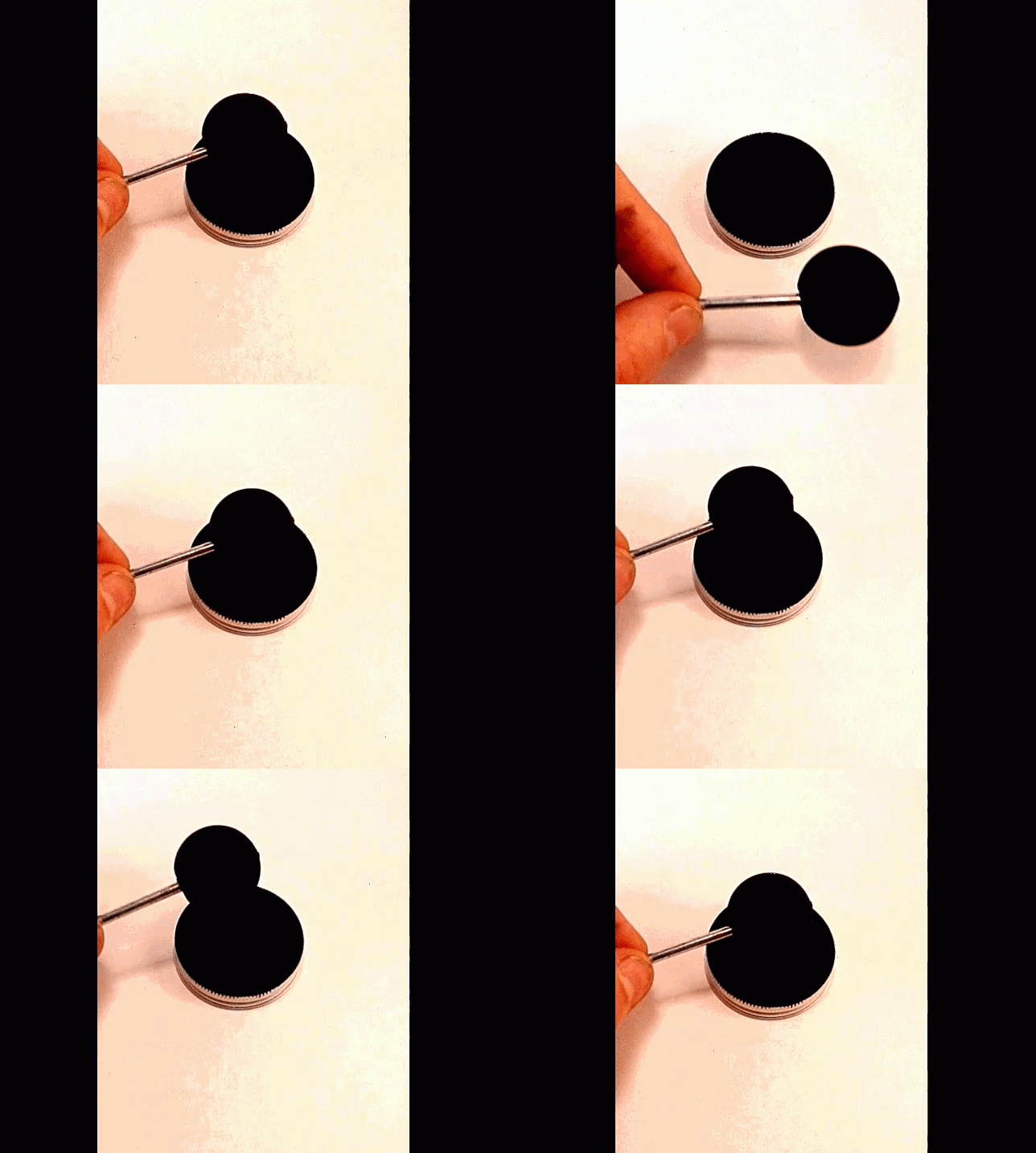
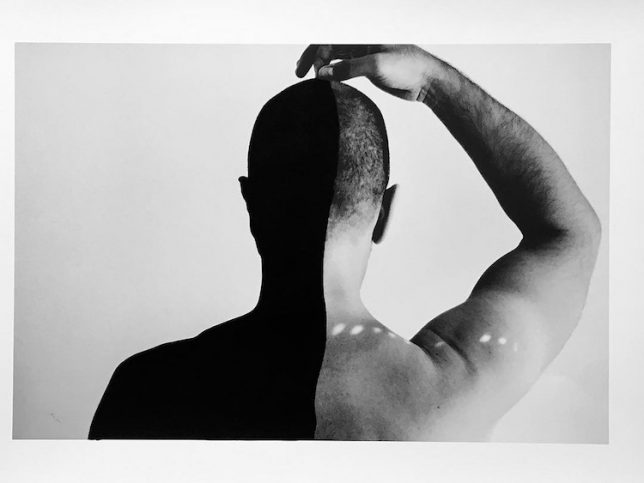
Stuart Semple’s blackest salvo to date in this pigment war is Black 2.0, which can create mesmerizing effects in real life that also translate to images and videos. In them, painted objects appear flat, or like voids rather than solids.

According to its creators, “its the most pigmented, flattest, mattest, black acrylic paint in the world,” a claim backed up by a lot of black-coated objects juxtaposed with lighter and brighter surroundings.

This pigment “was created in close collaboration with color chemists, specialists from the cosmetics industry and architectural coatings experts. It’s foundation is Stuart’s ‘Super-Base’ which enables this paint to hold more pigment than any other whilst drying to an anti-reflective, super flat finish.”

An implicit stab at the Vantablack exclusivity arrangement: “It has been developed in close collaboration with thousands of artists from all over the world. Their amazing insight, support and inspiration has formed this unique super-black paint for the benefit of all artists.”

Semple admits it’s not truly the blackest paint when compared to Vantablack, clarifying that it is just the blackest acrylic and blackest paint available to all artists, not just one who secured exclusive rights — note: this black is available to everyone but that artist (via MyModernMet).

Share on Facebook


[ By WebUrbanist in Art & Drawing & Digital. ]

[ WebUrbanist | Archives | Galleries | Privacy | TOS ]


WebUrbanist

 
Comments Off on Mattest & Flattest: Blackest Paint You Can Buy Turns Solids into Voids

Posted in Creativity


Underground Illusions: Anamorphic Parking Lot Turns Flat Paint into Sculpture

06 Jul

[ By SA Rogers in Art & Installation & Sound. ]

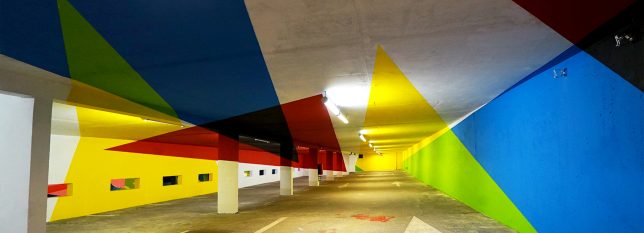
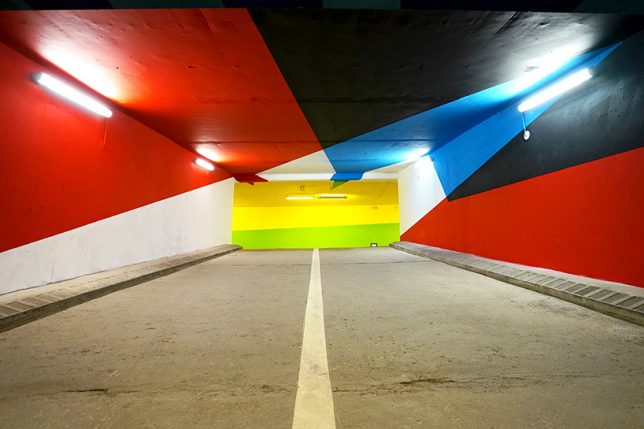
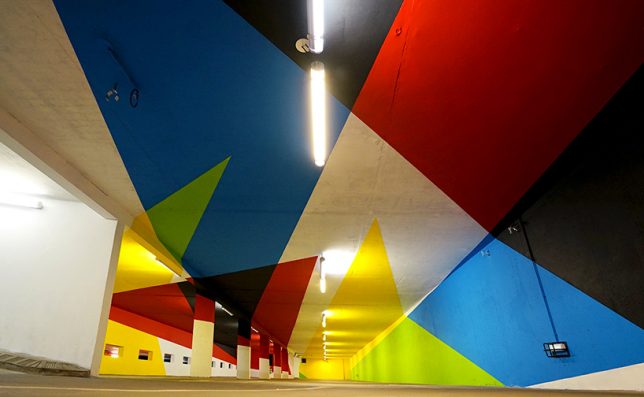
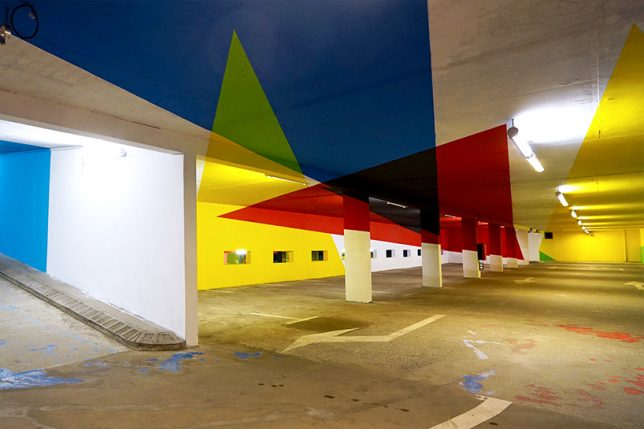
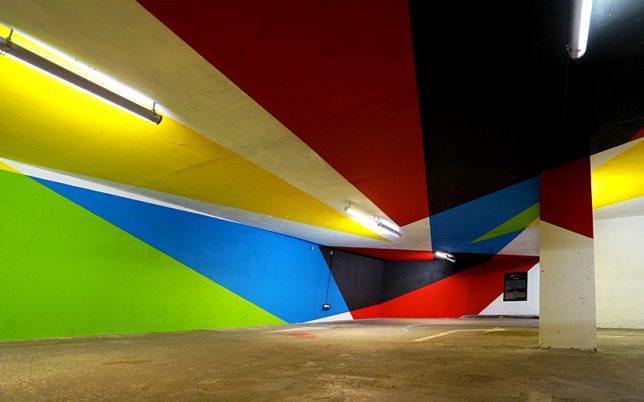
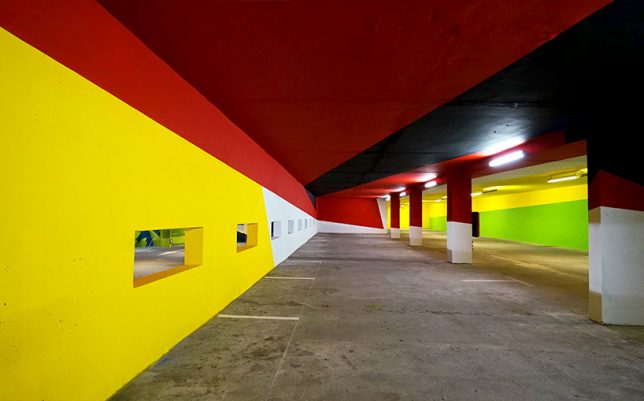
You’re driving through an underground parking garage when suddenly, the colorful geometric shapes splashed all over every surface pop out into three dimensions. Try not to crash your car! When optical illusions line up right, they can be really disorienting, and it’s always cool to see them carried out on a large scale. Argentinian artist Elian Chali got to take over an entire parking lot in the Saint-Gervais Mont Blanc region of France, transforming it into a trompe l’oeil canvas.

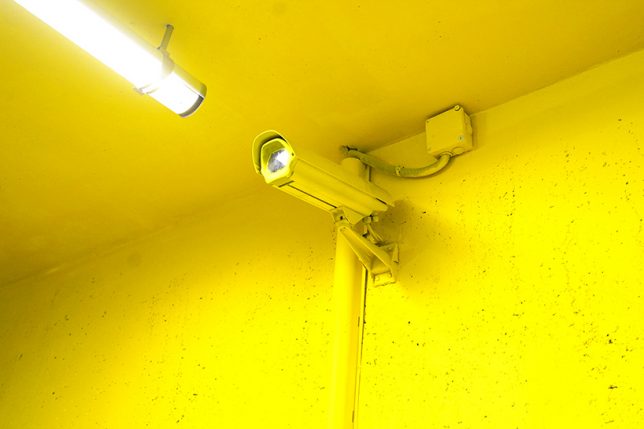
“This artwork, which uses basic geometry and primary colors, makes use of the architectural factors where it inhabits,” says Chile. “Each element adopts a new function and the space becomes a huge sculpture. The relationship with the environment is not easy to achieve, therefore not only the walls will be intervene, but the painting will invade everything that you find in your way in order to offer to the users of the parking, the possibility of breathing inside a work of art.”


It’s a pretty cool effect, with some triangles stretching dozens of feet and crossing ceilings, support pillars and walls to end on the floor. Presented by 2KM3 Contemporary Art Platform and curated by Hugues Chevallier and Zoer, the piece comes together as an optical illusion when you hit just the right spot while driving through.

Chali is known for applying his signature vivid style to buildings around the world in the form of massive murals, often taking up entire multi-story facades. Each one takes its respective environment into account in its composition, paying homage to the history of the building and its setting, the materials it’s made of, and the ways in which it has aged or weathered. Keep up with his work on Instagram.

Share on Facebook


[ By SA Rogers in Art & Installation & Sound. ]

[ WebUrbanist | Archives | Galleries | Privacy | TOS ]


WebUrbanist

 
Comments Off on Underground Illusions: Anamorphic Parking Lot Turns Flat Paint into Sculpture

Posted in Creativity


The iPhone turns 10 years old today: What has it meant to you?

03 Jul
10 years later, photography is a much bigger part of the iPhone’s DNA than anyone could have predicted.

Ten years ago today, Steve Jobs stood up on stage and delivered what might be the most consequential keynote of his career: he introduced the world to the iPhone. Today, we want you to tell us how it has revolutionized, reorganized, and restructured the world of digital photography.

As Jobs put it on stage, repeating the line over and over again to a crowd of excitable tech journalists, the iPhone was three things: “an iPod, a phone, and an internet communicator.” But if Jobs could somehow come back to life and re-do that moment today, he would probably add ‘camera’ to that list.

Sure, that original 1st generation iPhone only boasted a measly 2MP camera that was laughable even by 2007 standards. But the impact that this camera—and the one after that… and the one after that… and the 6 after that—had on our industry is hard to fathom.

The point and shoot camera has all but gone extinct, camera giants are struggling to appeal to a new crop of ‘photographers’ who value convenience and connectivity above all else, and each day the line between ‘professional photography’ and ‘smartphone photography’ gets a bit blurrier—if it hasn’t already disappeared entirely.

The 1st generation iPhone looked a lot different than today’s iPhone 7

But we’re not interested in the big picture stuff—there are tens, hundreds, maybe thousands of articles about how the iPhone changed photography for better and for worse. We want a more personal perspective. We want to hear from you.

From a photography perspective, how has the iPhone impacted your life? Do you use your main camera less often, or not at all? Is the ability to connect your camera to your phone and post pictures instantly a must-have? Do you even remember the last point-and-shoot camera you owned, and when you last turned it on?

On a day marked by hundreds of tech op-eds, quirky origin stories, and enough ‘looking back’ videos to keep you busy for days, we want to compile a more personal picture of the iPhone and how it has impacted the world of digital photography. Share your story with the community in the comments, or drop us a line directly at dpreview.com/feedback.

And in the meantime, we’ll content ourselves with wishing the iPhone a happy 10th birthday… and we’re only being, like, 21% passive aggressive when we say that.

Articles: Digital Photography Review (dpreview.com)

 
Comments Off on The iPhone turns 10 years old today: What has it meant to you?

Posted in Uncategorized


Mathematician turns Juno images into stunning Jupiter flyby video

04 Jun

Since NASA’s Juno probe entered Jupiter’s orbit a year ago, it’s been sending back high-resolution images of the solar system’s biggest planet.

When NASA released the latest batch of images, last month, German mathematician Gerald Eichstaedt got to work, turning them into into a video. Using software that he wrote, Eichstaedt used Juno’s trajectory data to determine the probe’s exact position when it captured an image, and then placed that image on a spherical model of the planet. The resulting video combines 36 images from the probe to simulate a Jovian flyby.

London-based filmmaker Seán Doran saw the video when Eichstaedt uploaded it to unmannedspaceflight.com and spent another 12 hours smoothing the thousands of frames, before adding a soundtrack.

It’s almost like being there. Almost…

Watch Gerald Eichstaedt’s original video

Read more about NASA’s Juno mission

Articles: Digital Photography Review (dpreview.com)

 
Comments Off on Mathematician turns Juno images into stunning Jupiter flyby video

Posted in Uncategorized