RSS
 

Posts Tagged ‘Turn’

Turn Old Family PicsInto Big Ol’ Engineer Prints

21 Jun

Dads are great. So great, in fact, that they deserve a really big present this Father’s Day.

Are you thinking what we’re thinking? Let’s say it together now:

Engineer Prints!

These hugenormous prints are perfect gifts, especially if you make ‘em out of old family pictures.

So we’re gonna 1) show you how to digitize old prints and 2) give you some fun ideas for making your Engineer Prints unique and wonderful, just like your fave guy.

Engineer Prints Say Happy Father’s Day!

(…)
Read the rest of Turn Old Family Pics
Into Big Ol’
Engineer Prints (895 words)


© Taylor for Photojojo, 2015. |
Permalink |
No comment |
Add to
Into Big Ol’
Engineer Prints”>del.icio.us

Post tags:


Photojojo

 
Comments Off on Turn Old Family PicsInto Big Ol’ Engineer Prints

Posted in Equipment


Turn Old Family PicsInto Big Ol’ Engineer Prints

11 Jun

Dads are great. So great, in fact, that they deserve a really big present this Father’s Day.

Are you thinking what we’re thinking? Let’s say it together now:

Engineer Prints!

These hugenormous prints are perfect gifts, especially if you make ‘em out of old family pictures.

So we’re gonna 1) show you how to digitize old prints and 2) give you some fun ideas for making your Engineer Prints unique and wonderful, just like your fave guy.

Engineer Prints Say Happy Father’s Day!

(…)
Read the rest of Turn Old Family Pics
Into Big Ol’
Engineer Prints (895 words)


© Taylor for Photojojo, 2015. |
Permalink |
No comment |
Add to
Into Big Ol’
Engineer Prints”>del.icio.us

Post tags:


Photojojo

 
Comments Off on Turn Old Family PicsInto Big Ol’ Engineer Prints

Posted in Equipment


Oh Snap: Clamping Steel Legs Turn Found Objects into Furniture

29 May

[ By WebUrbanist in Design & Furniture & Decor. ]

snap adjustable modular supports

Converting almost anything you find into a household furnishing, from discarded doors and shelf boxes to dart boards, these clip-on supports can be added or removed in seconds.

snap steel clamp furniture

snap mechanism gif

snap furniture addition

Initially experimenting with cards, clips and coat hangers, a pair of Spanish design students in Barcelona, Maria Roca and Erika Biarnes (together: Be-Elastic), developed this system to be elegant, efficient, strong and flexible, combining slim steel supports with straightforward usability.

snap dart board table

snap plywood table above

The real challenge was to make something robust that could also be easily converted on demand. While other clamp-based furniture systems exist, this solution represents a more versatile and expressive aesthetic and a much faster method of assembly and disassembly.

snap simple coffee table

snap side table design

A set of four legs can support a few hundred pounds, making surface selection a more likely weight limitation than the capacity of the supports. As few as two units, however, can create a working piece of furniture, like a side or television table leaning against the wall. The units come in 16 color combinations (4 colors of cable and 4 colors of steel).

snap table design exhibit

The clamps can be attached to essentially anything less than a few inches thick, including recycled objects of various shapes and sizes: “SNAP is designed to fit all shapes and sizes: triangular, rectangular or irregular boards. You can also place the SNAPs wherever you like in corners, on the sides in a disorderly way, or wherever you’d like! It’s up to you.”

Share on Facebook


[ By WebUrbanist in Design & Furniture & Decor. ]

[ WebUrbanist | Archives | Galleries | Privacy | TOS ]


WebUrbanist

 
Comments Off on Oh Snap: Clamping Steel Legs Turn Found Objects into Furniture

Posted in Creativity


Turn your DSLR Camera into a Wildlife Camera Trap

02 Mar

If you have an old DSLR camera lying around, you could be putting it to work as a camera trap for photographing wildlife.

What is a camera trap?

A camera trap is simply a camera that fires automatically when an animal is detected. All you need in order to turn your DSLR into a camera trap is a sensor that can detect animals, then trigger your camera. Once set up, a camera trap can be left for days or even weeks at a time. The longer you leave it, the greater your chances of capturing a shot of an elusive animal.
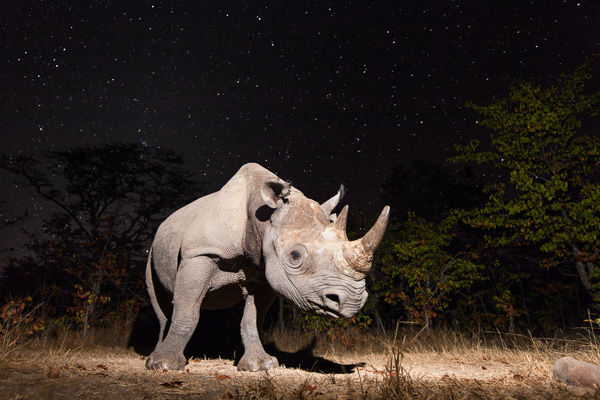
Camera trap 1

Black rhino at night in Zambia. A 30 second exposure time captured the stars. The rhino was illuminated by a flash at the start. I left my camera in the clearing for a week to capture this shot.

One of the main advantages of a camera trap is that you can take your time setting up off-camera flashes in order to achieve dramatically lit shots of nocturnal creatures. If you try to do this any other way, then the creature is likely to disappear well before you have finished setting up your lights!

As a result of these benefits, camera traps have become a key tool for wildlife photographers aiming to photograph shy and nocturnal animals.

So how do you set up a camera trap?

First, dig out that old DSLR that you don’t use any more. I mostly use a Canon EOS 1Ds Mark III. Camera traps can get much closer to animals than a human holding a camera, so you can use a wide-angle lens. My preferred lens is a 17-40mm f/4 lens.

Next, you need a way of detecting the animal and triggering your camera. If you are a handy, DIYer then you can do this by modifying a security device (I provide more information about how to do this on my website). The two most commonly used types of detector are beam-break and motion detectors.

My preferred method of detecting animals is to use a Passive Infrared (PIR) motion sensor. This is similar to the sensor used on automatic patio security lights. I like these because they don’t consume much power, so they can remain on standby for a long period of time. They are also very easy to set up – you just point them at the trigger zone and wait for the animal to show up.
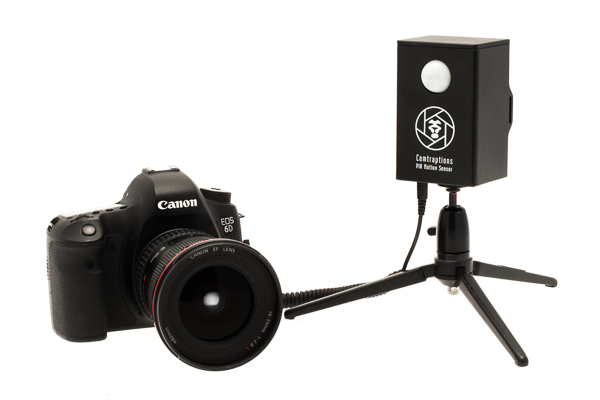
Camera trap 2

A PIR Motion Sensor plugs in to your camera’s shutter release socket

Now you have the camera and the trigger sorted, the next thing you need is a speedlight (flash), or two, so that you can capture nocturnal subjects.

I recommend setting up one or more off-camera flashes, connected to your camera with a TTL flash cord. It is important to get the flashes away from the camera itself because this will reduce redeye and make the shadows look more natural.
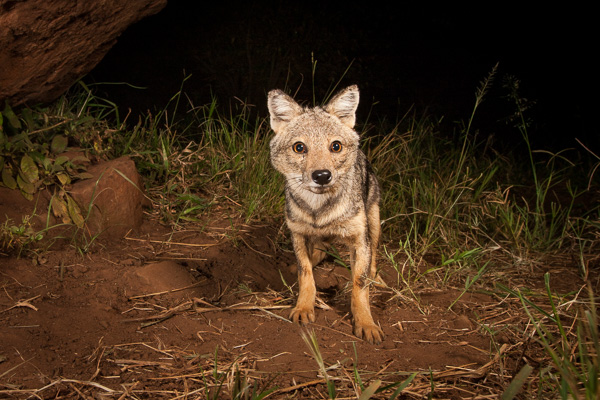
Camera trap 3

Side-striped Jackal, Kidepo Valley, Uganda. This is an example of a dual flash setup, with a primary light source on the right and a fill flash on the left.

I often just use one flash because I quite like dramatic shadows. However, sometimes, it is preferable to use a second flash to fill-in the shadows on the subject. If you want to get even fancier, you can also add more speedlights to illuminate the background.

Camera settings

The challenge with camera traps is that you don’t know when the animal will pass and therefore the camera and flashes need to be programmed so that the scene is attractively exposed in any lighting condition. Here are some general settings that I find work well in most situations.

Use manual focus and either low speed burst or single shot mode. Set the camera to aperture priority mode with a reasonably small aperture to provide a large depth of field. This means, if the animal isn’t quite in the right position, you should still get a sharp shot.
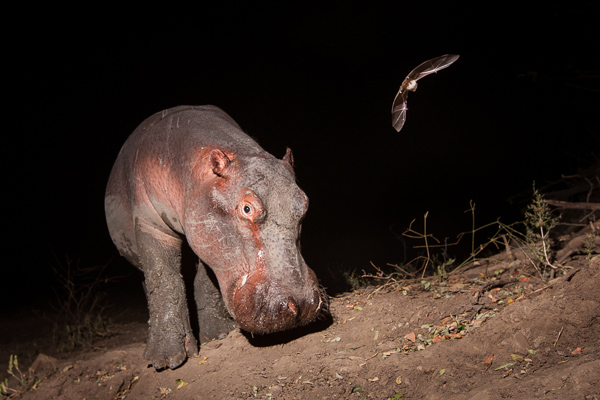
Camera trap 4

A hippo and a bat in Zambia. This was a lucky shot where the bat happened to be flying around the hippo. A small aperture ensured both animals were in focus.

Selecting aperture priority means that in darkness, the camera will select a long shutter speed. This means it will capture details in the background such as twilight colours in the sky, or even stars. However, if there is too much ambient light, then you may get ghosting when the animal moves. If ghosting is a problem for you then, limiting the shutter speed to one second or faster can help.

If I am using a single flash then I will leave it in TTL mode so the camera automatically determines the flash output based on its metering. For a multiple flash setup, it is usually easier to set the flash outputs manually. With manual flash output and your camera in Av mode, you may need to under-expose your camera (using exposure compensation) by a stop so that daylight images don’t blow-out.

Power considerations

If you plan to leave you camera trap set up for more than a night, then battery life will be an issue. Make sure your camera is set to power off and that it can be woken by the sensor. I also recommend turning off the image preview to conserve battery. Your camera should now be able to last for many days, assuming it isn’t firing the whole time.

Keeping your flashes powered is more challenging. Speedlights have a capacitor inside them which needs to be charged for the flash to fire. However, capacitors drain over time so flashes needs to constantly keep them topped up. If your flash isn’t set to sleep, then the batteries are likely to drain over the course of a single night. If your flashes are set to sleep then when you need them to fire, the capacitor may not have enough charge and so the flashes won’t be ready to fire immediately.

There are three ways to deal with these issues:

  1. Disable your flash’s sleep function – your flash will always be ready to fire but you will probably have to change the batteries every day, or power them with an external power supply.
  2. Use a flash that holds its charge well, even when sleeping. The best I know of is the Nikon SB-28, which can sleep for many days and still have enough charge in the capacitor to fire instantly.
  3. Set your camera to continuous drive mode and let your flashes sleep. The first and second shots may be black, but eventually your flashes will charge and fire.

If you are letting your flashes sleep, then you will need to connect them to your camera via a TTL cable. This allows your camera to wake the flashes. You will need long cords and a TTL splitter hub if you want to fire multiple speedlights.

Positioning your camera trap

Next you will need to find somewhere to set up your camera trap. The most productive places I have found are animal trails, particularly ones that cut through a difficult obstacle such as thick bush or a steep bank. I set my sensor up so that it covers a small section of the trail and then position the camera off to one side (so that it doesn’t block the animal’s path).
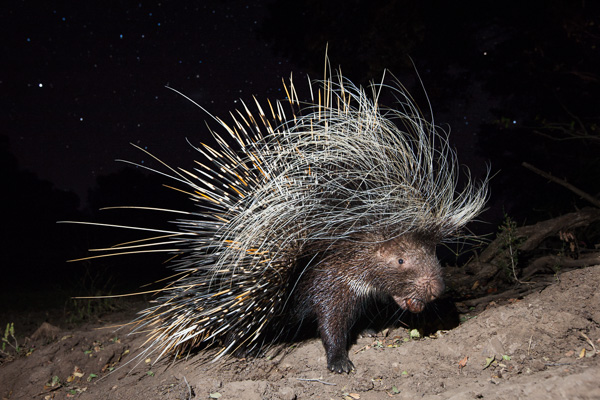
Camera trap 5

A porcupine photographed in Zambia. My camera was positioned next to an animal trail that lead up a steep bank. It captured many creatures including this porcupine.

The last thing to do is to camouflage, waterproof, and protect your equipment. Rain covers can be made from plastic sheeting. If you need protection from animals such as hyenas and lions then you will need to buy or build your own protective housing.

Once everything is set up, I recommend leaving your camera trap as long as possible in order to maximize the chances of getting results. You may just need to visit it from time to time to change batteries and check your settings.

I have created a series of videos that help illustrate the process of setting up a camera trap. You can watch the first video in this series below.

If you want more wildlife related tips and articles try these:

  • Writer’s Favorite Wildlife Lens – Tamron 150-600mm
  • Why Manual Exposure is Better for Winter Wildlife Photography
  • Nature and Wildlife Photography Tips for Beginners
  • Top 5 Tips for Wildlife Photography
  • Guide to Attracting Critters to Your Garden for Backyard Wildlife Photography

googletag.cmd.push(function() {
tablet_slots.push( googletag.defineSlot( “/1005424/_dPSv4_tab-all-article-bottom_(300×250)”, [300, 250], “pb-ad-78623” ).addService( googletag.pubads() ) ); } );

googletag.cmd.push(function() {
mobile_slots.push( googletag.defineSlot( “/1005424/_dPSv4_mob-all-article-bottom_(300×250)”, [300, 250], “pb-ad-78158” ).addService( googletag.pubads() ) ); } );

The post Turn your DSLR Camera into a Wildlife Camera Trap by William Burrard-Lucas appeared first on Digital Photography School.


Digital Photography School

 
Comments Off on Turn your DSLR Camera into a Wildlife Camera Trap

Posted in Photography


Turn Your Phone into a Pro Grade Cam with 30x Zoom

13 Oct

You have a fondness for mash-ups: Girl Talk, golden doodles, waffle tacos!

Bring the best of two worlds together again with the new QX30 from Sony, a lens that’ll shoot DSLR quality pics and connect to your phone to give you the instant shareability of … well, your phone!

The newest of Sony’s QX family, the QX30 gives you 30x optical zoom (way better than your phone’s pixelly digital zoom) and is an entire camera on its own with a flash, memory card and video capabilities.

Use your phone as a viewfinder whether the lens is clipped onto the phone or detached for more uniquely angled shots.

The lens snaps pics and sends ‘em directly to your phone for instant editing and sharing of all your mashup experiments: roller blade tennis anyone?

Snap Up the QX30 or Its Big Brother QX100


© Britta for Photojojo, 2014. |
Permalink |
No comment |
Add to
del.icio.us

Post tags:


Photojojo

 
Comments Off on Turn Your Phone into a Pro Grade Cam with 30x Zoom

Posted in Equipment


Turn Your Photos IntoIncredibly Large Black & White Prints

27 May

Extra photos for bloggers: 1, 2, 3

Engineer Prints are big big big (big) photo prints made on large format printers normally used for architecture and engineering plans.

The unique, lo-fi characteristics of the Engineer printing process has made it a favorite amongst the creative community, and us!

Streaked, striated and wacky black and gray tones combine to create a super unique look that’s no ordinary photo print.

Our Engineer Prints are inked on 4-feet wide (!) 20lb bond paper that’s so light it’s easy to pin or tape anywhere, no frames or nails!

We’ve made it a cinch for you to have one of your very own. No printer proofs, resolution wrangling or printer research required!

Make Your Own Engineer Print
$ 25 flat w/ free shipping, at the Photojojo Shop


© laurel for Photojojo, 2014. |
Permalink |
No comment |
Add to
Incredibly Large Black & White Prints”>del.icio.us

Post tags:


Photojojo

 
Comments Off on Turn Your Photos IntoIncredibly Large Black & White Prints

Posted in Equipment


Pop-Up Parks: Brackets Turn Scaffolding into Furniture

25 Feb

[ By Steph in Design & Furniture & Decor. ]

Softwalks Pop Up Scaffolding Park 1

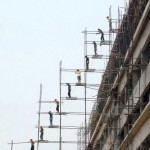
Scaffolding is ugly, and steals valuable sidewalk space from city residents – but with a simple kit of parts that fit onto the frame with brackets, it transforms into an instant pop-up park. The Kit of Parts by Softwalks includes fold-up chairs, planters, counters, light reflectors and decorative screens that snap right onto scaffolding to create impromptu public spaces that encourage congregation and conversation.

Softwalks Pop Up Scaffolding Park 3

Softwalks Pop Up Scaffolding Park 2

Inspired by the interaction with urban environments that’s fostered by sidewalk cafes and by the sturdiness and ubiquity of scaffolding (or ‘sidewalk sheds’), the designers came up with a few essential components that make for a comfortable resting place. Leaving scaffolding up for long periods of time can have a negative effect on businesses, communities and sidewalk culture, and Softwalks saw an opportunity to change that.

Softwalks Pop Up Scaffolding Park 4

The pop-up park kit can’t be ordered by just anyone, and there’s a reason for that: the designers don’t want people potentially interfering with active construction sites in a dangerous way. But lots of scaffolding is ‘passive.’ The Softwalks team found that in New York City, when businesses fail the mandatory 5-year facade inspection, they sometimes leave scaffolding up for a long time to avoid having to do expensive repairs. In one case, scaffolding remained in place for 12 years.

Softwalks Pop Up Scaffolding Park 5

The design team identified an ideal site to install the parts for the pilot project, ensuring that there was plenty of room for pedestrians, and plan to make the kit available to cities for use at special events, street festivals and for temporary installations.


Share on Facebook


[ By Steph in Design & Furniture & Decor. ]

[ WebUrbanist | Archives | Galleries | Privacy | TOS ]


WebUrbanist

 
Comments Off on Pop-Up Parks: Brackets Turn Scaffolding into Furniture

Posted in Creativity


Day 3 Deals – Turn your Dreams of Going Pro into Reality

15 Dec

Day 3 of the 12 Days of Christmas sale is all about inspiring and equipping people keen to turn pro. Secretly wish you could be a full-time photographer?  Not sure where to start? No problem – Digital Photography Santa has all the answers in these mega-special Day 3 deals.

Deal 1: Save 60% Off our popular eBook – Going Pro

Day3Single

Learn first-hand from experienced magazine photo editor Kelly Kingman about selling your images the way YOU want. Going Pro covers everything from choosing the right business model to teaching you the practicalities of building a successful business.

For just $ 20, it’s guaranteed to pay for itself many times over!

You can read about what’s included in Going Pro here.

Deal 2: Total Training in Commercial Photography – Online Course by Charlie Borland for only $ 124 ($ 499RRP) Massive 75% off!

Day3Bundle

Download this fantastic deal now and save 75% off!

Commercial photography is one of highest paid areas in the industry. It’s true; rates can run $ 1000, $ 2000, and even $ 5000 per day plus expenses.

After watching 125 lectures by veteran commercial photographer Charlie Borland; you’ll be fired up, totally prepared and ready to compete in the lucrative commercial photography market.

Start 2014 with a real plan to start living your dreams.

But don’t hesitate… both these incredible deals are only available for the next 24 hours.

The post Day 3 Deals – Turn your Dreams of Going Pro into Reality by Darren Rowse appeared first on Digital Photography School.


Digital Photography School

 
Comments Off on Day 3 Deals – Turn your Dreams of Going Pro into Reality

Posted in Photography


A Turn of the Head – Creating More Compelling Bird Portraits

09 Dec

The last time I counted, there were about seventy two quadrillion photos of birds on the internet. Therefore, if you’re dedicating your time to try to stand out as a bird photographer, there is a ton of competition out there. However, there is one thing that you can try to incorporate in your photos that will at least have them stand out a little bit.

Creating More Compelling Bird Portraits

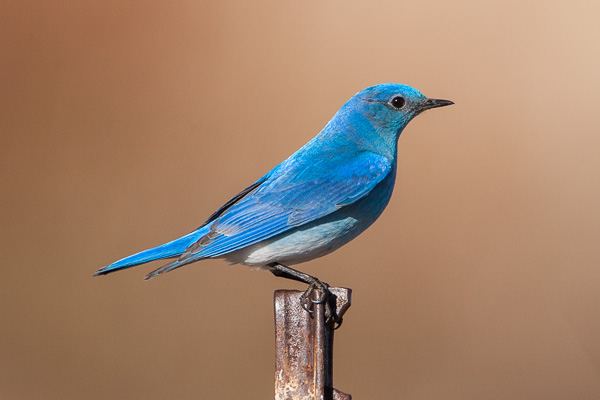
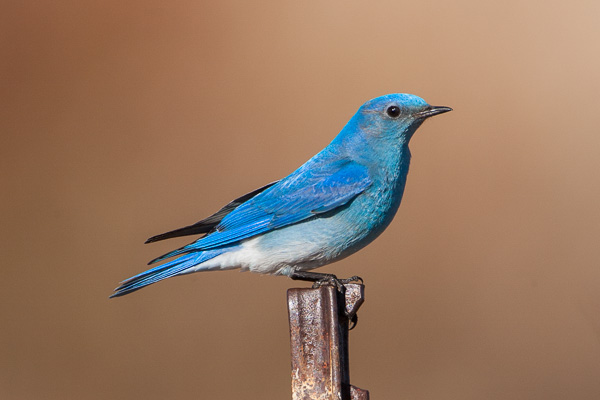
Wait for the turn of the head. Sounds pretty simple doesn’t it? It sounds simple, but achieving it is often a bit trickier. Many bird species have their eyes placed on opposite sides of their heads. When photographing birds without their heads slightly angled towards the viewer, the images tend to lack a bit of intimacy. Consider the following two images of a Mountain Bluebird. In the first image, the bird’s head is angled away from the viewer, while the second image features the bird’s head angled just slightly towards the viewer.

Mountain Bluebird looking away from the viewer

Mountain Bluebird looking away from the viewer

Mountain Bluebird looking toward the viewer

Mountain Bluebird looking toward the viewer

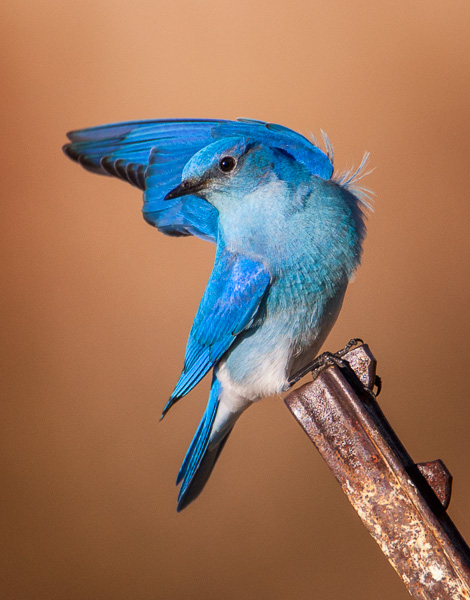
I’ll bet that for most of you, the second image is more compelling just because of that eye contact. Sure the perch is somewhat ugly (it’s the post used to mount the bird box above the ground), but even with an ugly perch, the second image is more compelling. Then if you’re patient, even with an ugly perch, you can still get a compelling image out of it, slight head turn included.

Mountain Bluebird posing pretty

Mountain Bluebird posing pretty

What to look for – subtle differences are huge

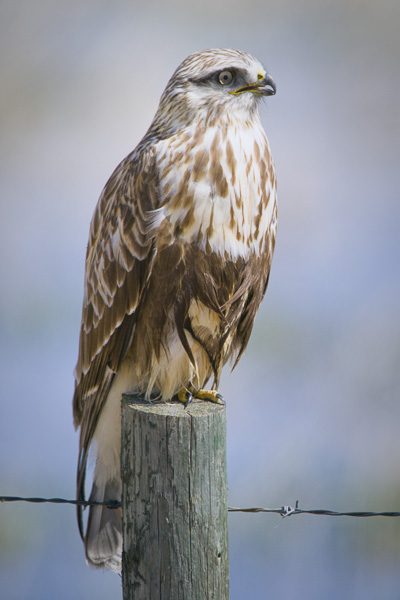
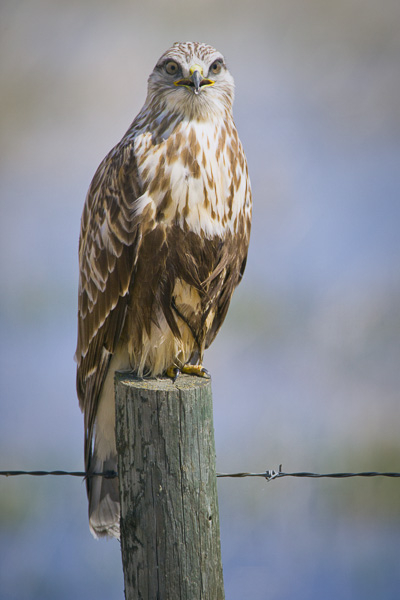
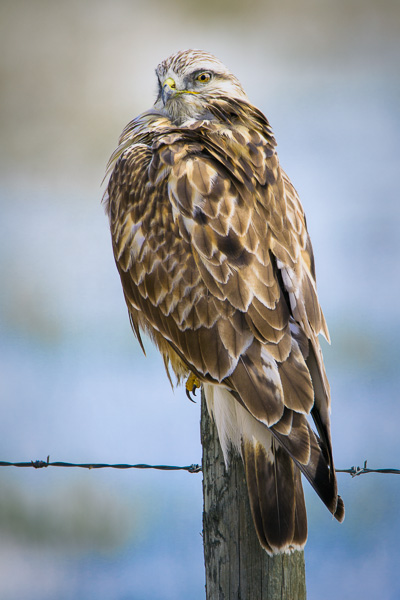
Consider the following three photos of a Rough-legged Hawk.

Rough-legged Hawk looking away from the viewer

Rough-legged Hawk looking away from the viewer

© Paul Burwell Photography - Rough-legged Hawk looking directly at the viewer

Rough-legged Hawk looking directly at the viewer

© Paul Burwell Photography - Rough-legged Hawk with the sexy over the shoulder look towards the viewer

Rough-legged Hawk with the sexy over the shoulder look towards the viewer

In the first image, the bird is looking away from the viewer. In the second, he is looking straight on to the viewer, while the third image has my preferred head-turn. In my opinion, in terms of a compelling image, it isn’t even a close comparison. The perch still isn’t ideal (although this is the typical place we find these birds where I live), but the third pose with the head-turn makes that image into a keeper for me.

Patience or initiative gets the head turn

So, is it just a matter of patience and waiting for the preferred head-turn? Sometimes that is true. Other times I try to “encourage” my subject to look my way. How do I accomplish this? I imitate the squeak of a mouse. I purse my lips together and suck in air through my teeth to produce an irritating squeaking sound. Sometimes, not always, but some times, the bird is curious enough to look my direction.

I know of some photographers who prefer to use the “machine gun” approach where they just hammer-down on the shutter button, essentially shooting a slow frame-rate movie.  Occasionally they’ll catch the bird with its head in the preferred position.  I personally don’t favour that approach, but would rather just wait for the appropriate moment and cut down on my post-processing work once I get home.

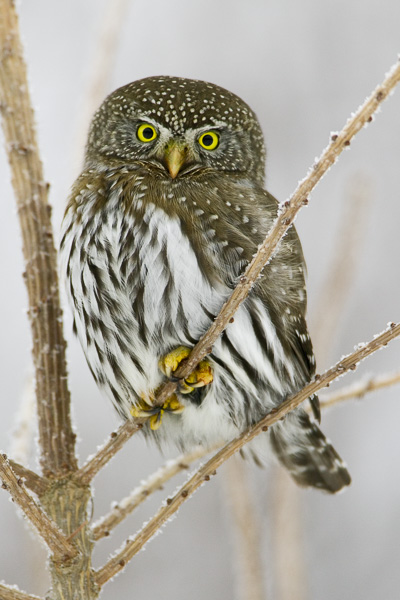
In terms of the bird looking head-on into the camera, that can occasionally work, but for most birds it just isn’t their best angle. There are definitely exceptions to that and owls are the first bird that springs to mind. Consider this image of the tiny Northern Pygmy Owl for example.

© Paul Burwell Photography - Northern-Pygmy Owl looking frosty

Northern-Pygmy Owl looking frosty

Here are a couple more images to consider:

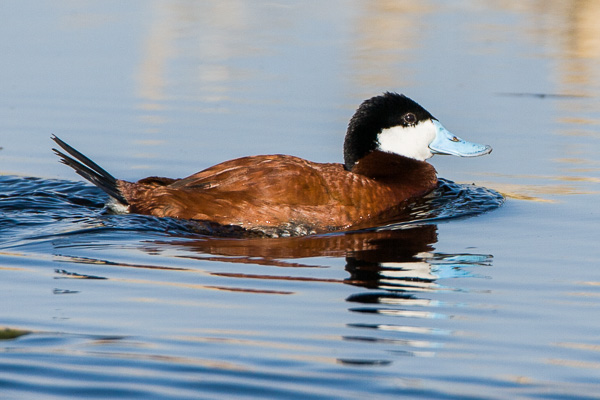
© Paul Burwell Photography - www.bsop.ca

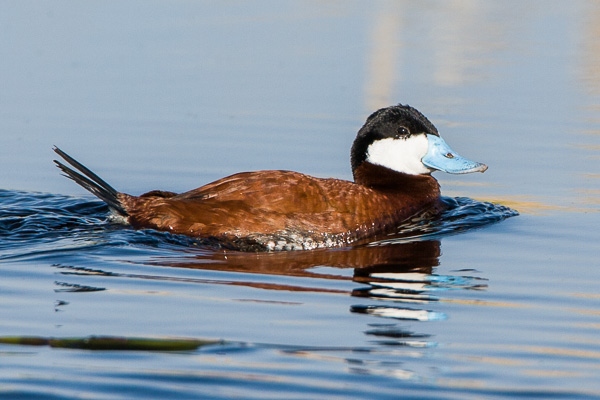
Ruddy Duck Drake looking towards the viewer

© Paul Burwell Photography - www.bsop.ca

Ruddy Duck Drake looking away from the viewer

I made these two images of the Ruddy Duck just seconds apart. In the first image, the bird looked my way due to my incredible squeaking ability, while in the second, his patience expired and he was off to find his girl friend.

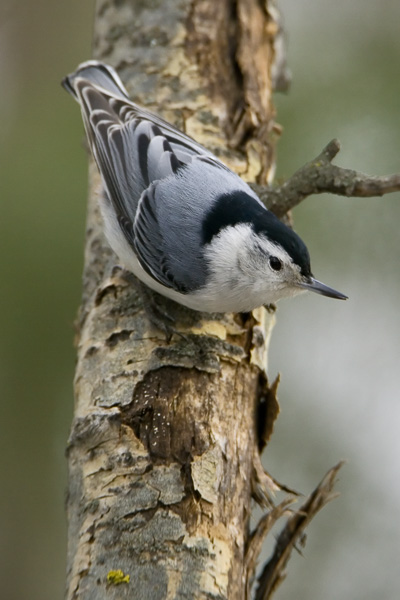
The following two images of a White Breasted Nuthatch also illustrate the point. In both images, the birds are in their traditional upside-down pose on the side of a tree. The difference between the images is that in the first the bird is looking slightly away from the viewer while in the second exhibits that classic slight head-turn towards the viewer that I strongly favour.

© Paul Burwell Photography - www.bsop.ca

White-breasted Nuthatch looking away from the viewer

© Paul Burwell Photography - www.bsop.ca

White-breasted Nuthatch looking towards the viewer

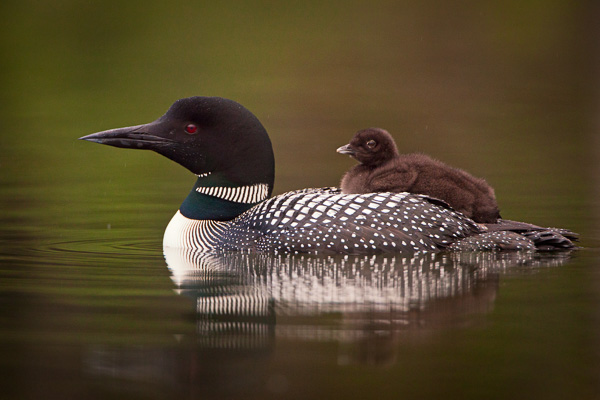
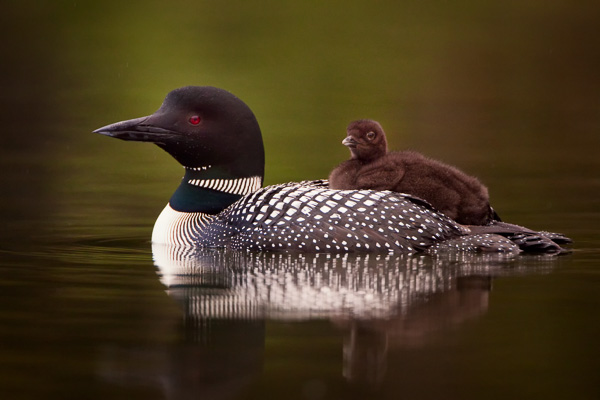
The last two images I present for your consideration are these two images of a Common Loon carrying a chick on its back.

© Paul Burwell Photography - www.bsop.ca

Common Loon carrying a chick on its back with both birds looking away from the viewer

© Paul Burwell Photography - www.bsop.ca

Common Loon carrying a chick on its back with both birds looking towards the viewer

In the first image, both adult and baby are looking away from the viewer. It’s a nice image but lacks a bit of intimacy.  Whereas the second image features both birds looking towards the viewer. The second image is a result of the large goofy photographer, with his lens perilously positioned inches above the water, from an unstable boat squeaking his heart out. For me, there is no comparison between the two images; the second wins easily.

Therefore, the next time you’re out in pursuit of some bird images that might rank in the top thirty-six quadrillion instead of the bottom, look for the opportunity to capture those birds with their heads slightly turned towards you. Whether you achieve it through patience or “the squeak”, I’ll bet you’ll find your images a bit more compelling.

Post originally from: Digital Photography Tips.

Check out our more Photography Tips at Photography Tips for Beginners, Portrait Photography Tips and Wedding Photography Tips.

A Turn of the Head – Creating More Compelling Bird Portraits

The post A Turn of the Head – Creating More Compelling Bird Portraits by Paul Burwell appeared first on Digital Photography School.


Digital Photography School

 
Comments Off on A Turn of the Head – Creating More Compelling Bird Portraits

Posted in Photography


Turn Back the Dial: 13 Retro Historical TV Set Designs

13 Nov

[ By Steph in Technology & Vintage & Retro. ]

Retro Television Main

Early television sets ranged from tiny screens housed in laughably oversized cabinets to stylish midcentury modern designs. Some, like a Russian TV from 1932, don’t even look remotely like the televisions we’re familiar with today. Here are 13 historical TV set designs dating from 1928 through 1991.

Massive Luxury Kuba Komet, 1957-1962

Retro TV sets Kuba Komet

Retro TV Sets Kuba Komet 2

How cool is this midcentury modern TV console? Shaped like a sailboat, it features an upper section that rotates like a sail on a mast so you can tilt the 23-inch screen in the desired direction. The lower cabinet holds additional multi-media features with a pull-out, 4-speed phonograph, a TV tuner and a multi-band radio receiver.
First Publicly Available Russian TV, 1932

Retro Television Russian 1

The first television set that was available to the public in Russia looks exactly like you would expect – basically, as if it were a piece of military equipment.

GE Performance Television, 1978

Retro Television GE Performance

Once upon a time, having a gigantic ugly faux-wood-covered box in your living room was considered a sign of prestige. The GE Performance Television is about as ridiculous as it gets, especially since the picture was terrible owing to the fact that it was essentially just a regular TV tube flipped and back-projected onto that giant screen. GE marketed it as “a super-size TV with a picture three times as big as a 25-inch diagonal console and the ‘chairside convenience’ of random access remote control.”

Zenith CBS Mechanical Color Wheel, 1948

Retro Television Zenith Color Wheel

Before ‘real’ color TVs were available, CBS labs came up with this contraption – essentially a black-and-white television equipped with a spinning mechanical wheel of red, blue and green filters that added color to the picture seen on the screen. CBS was all ready to start selling these things when RCA protested that an all-electronic color system (which they were researching, but had not yet developed) would make more sense. Ultimately, the Zenith design was briefly used as a teaching tool for surgery, but never sold to the public.
Phillips Discoverer Space Helmet TV, 1991

Retro Television Phillips Discoverer Space Helmet

This novelty television didn’t really do anything special – it just  looks cool, modeled after a space helmet with a closing lid. They can still be found on eBay for under $ 100.
Next Page – Click Below to Read More:
Turn Back The Dial 13 Retro Historical Tv Set Designs

Share on Facebook


[ By Steph in Technology & Vintage & Retro. ]

[ WebUrbanist | Archives | Galleries | Privacy | TOS ]


WebUrbanist

 
Comments Off on Turn Back the Dial: 13 Retro Historical TV Set Designs

Posted in Creativity