RSS
 

Posts Tagged ‘travel’

A Travel Tripod that can Also Act as a Light Stand

01 Sep

by Sarah Hipwell.

The above shot at 1/20sec at f22

The above shot at 1/20sec at f22

I brought two cameras on a recent vacation to France. My trusty DSLR and my new fab Sony RX100.

I don’t normally bring a tripod on holidays but this time I wanted to get some decent video footage. I also wanted to experiment with a variety of (still) exposures for HDR work and to get a nice sunset (low light shot).

With such an array of tripods on offer, how do you decide which one to buy?

I narrowed my search to 5 key features:

  1. Low cost
  2. Size – folded & extended
  3. Portability
  4. Lightweight
  5. Sturdy enough to hold a DSLR with a 18-200mm lens

The cost of a tripod varies enormously and with so many brands, it can take a bit of time to find which model suits your requirements. Cost was a main issue for me for two reasons:

  1. I had to pack my tripod in one of the luggage bags that was going into the plane’s hold! See NOTE & TIP 1 below.
  2. As I wasn’t taking the tripod in my carry-on bag, I didn’t need to buy an expensive one and run the risk of it getting lost or damaged in transit.

This ruled out purchasing a carbon fibre model as they are quite costly and it wasn’t justifiable for my means (I don’t travel extensively). So I decided on an aluminium tripod.

The more compact the tripod the better when travelling. But I need the height when it is extended (I’m 5’ 9”).

Portability is a prerequisite for any travel tripod.

Last but not least, the tripod had to be able to hold my D300 plus a 18-200mm lens, which both have a combined weight of 1.463kg or 3.23lbs. See TIP 2 below.

After a considerable research online between brands and so forth, I was beginning to think my criteria was a tall order. Then I hit jackpot. I found a Manfrotto Compact MKC3-H01 on offer for 49 euros! This particular tripod isn’t their current model but it seemed to tick all my boxes. Plus, I have a Manfrotto 055XB so I’m already familiar with the brand.
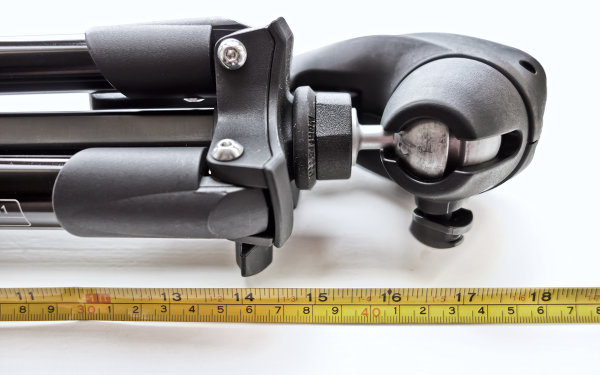
Tripod when closed measures 18”(46cm) and when it is extended, can reach 64”(163cm) with centre column fully extended

Tripod when closed measures 18”(46cm) and when it is extended, can reach 64”(163cm) with centre column fully extended

This tripod comes with a pistol type grip head which has two settings for photo(still) and video on the side. I found it is easy to use and a pleasant change from my usual ball-head socket type. My only gripe is that when I had it in the video position and tried to pan, it was quite jerky. I just loosened the locking wheel to make it more fluid, this wasn’t perfect but it worked.
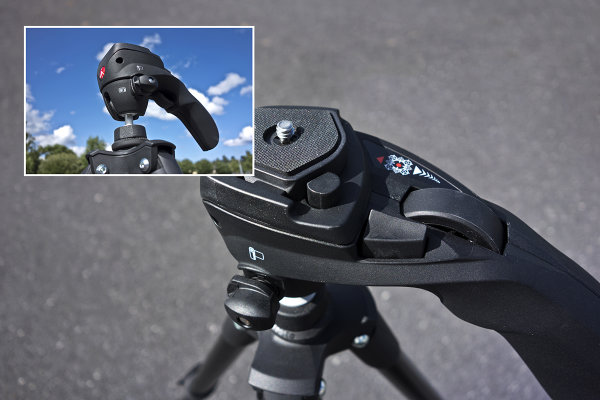
Pistol type movie/photo head showing the locking wheel

Pistol type movie/photo head showing the locking wheel

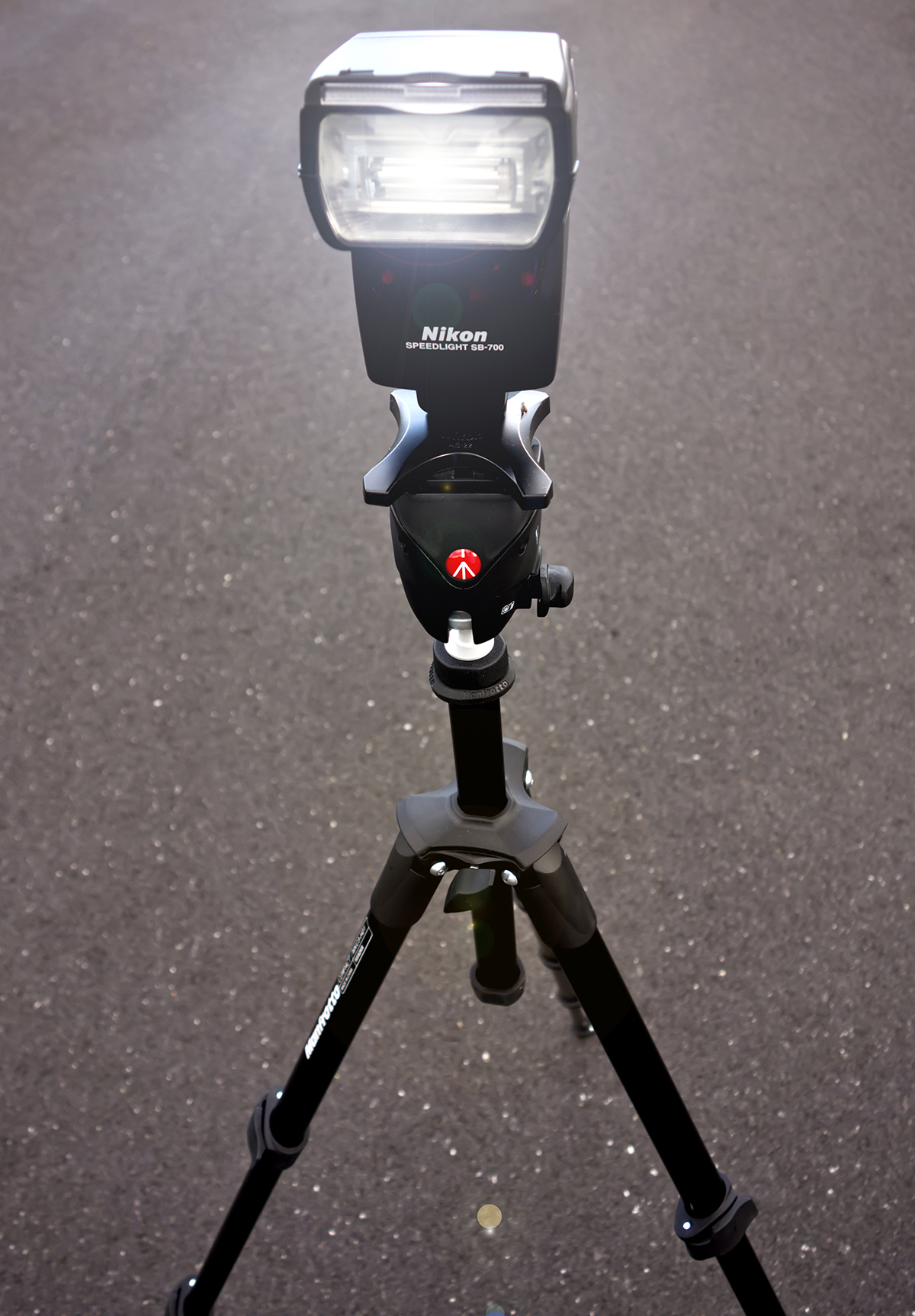
To sum up, the cost of this tripod was only 49 euros. Therefore, it wasn’t a big deal putting it into the plane hold. When folded, it measures a mere 18” and can extend to 60”. It is very lightweight, compact and easy to set up. The actual weight of this tripod is 1.15kg. An added bonus for me is this travel tripod can be used as a light stand! I can pop on my SB700 speedlight and shoot remotely. I had a wonderful two weeks with my family, I swam, read books (oh such a treat) and took over 32gb worth of images with the support of my new neat travel tripod.

NOTE

Check with each airline company in each country that you are flying to and from. Last year, I flew to Bordeaux from Dublin. I had a Manfrotto 5001B Nano Black Light Stand in my carry-on bag. However, en route home from Bordeaux the custom officials would not allow me to take on board the light stand as they deemed it a lethal weapon! I was quite fortunate, that a lovely desk clerk retrieved my already checked-in bag, so that I could put in my light stand without incurring any extra charges. She’s was a star!

TIP 1

When I was packing my travel tripod into one of the luggage bags, I thought of wrapping it in bubble wrap to protect it. I used a beach towel instead which I needed to bring with me. The towel provided adequate protection.
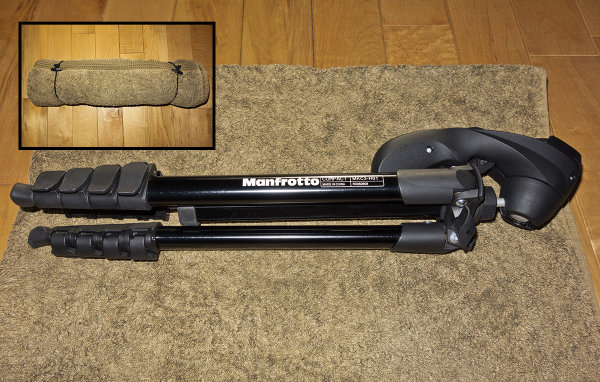
Using a large or beach towel to wrap around the tripod for added protection in luggage bag

Using a large or beach towel to wrap around the tripod for added protection in luggage bag

TIP 2

The maximum weight that this tripod holds is 1.5kg (3.3lbs). I was thrilled when I weighed my DSLR camera plus the lens which has a combined weight of 1.463kg (3.23lbs). However, this is pushing it to the max. Fortunately, I didn’t experience any inclement weather while on holidays, i.e. wind/gusts. Otherwise, I would have been nervous using my DSLR body and lens on the tripod for fear of toppling over. For added stability in this case, I recommend adding a sandbag(s). Sandbags are not practical to bring away with you on vacation. Here’s my tip, there is a rubber end at the bottom of the centre column. Ease this off and you will see two holes. Place a cable tie through the holes to create a plastic ring. With another cable tie, secure this to a Ziploc bag filled with dried beans, rice or soup mix (Cable ties & Ziploc bags should be in your camera bag). Dried beans/rice can be purchased at the local supermarket very cheaply. See below.
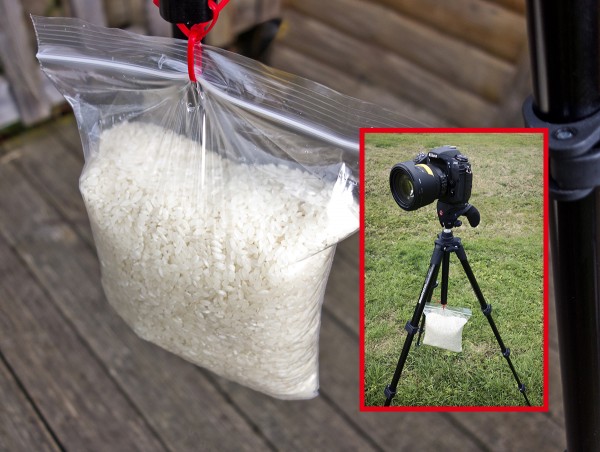
A Ziploc bag filled with 1kg of rice suspended from tripod using cable ties
A Ziploc bag filled with 1kg of rice suspended from tripod using cable ties

My SB700 speedlight on the Manfrotto Compact MKC3-H01

My SB700 speedlight on the Manfrotto Compact MKC3-H01

Check out more of Sarah’s work at her website – SarahHipwell.com.

Post originally from: Digital Photography Tips.

Check out our more Photography Tips at Photography Tips for Beginners, Portrait Photography Tips and Wedding Photography Tips.

A Travel Tripod that can Also Act as a Light Stand


Digital Photography School

 
Comments Off on A Travel Tripod that can Also Act as a Light Stand

Posted in Photography


Artist Rolf Sachs’ photo series inspired by train travel, embraces blur

21 Aug

sachs_3.jpg

Anyone who’s traveled by train has seen the landscape outside of their car moving by in a blur. While most of us turn our attention back to our reading material and mobile devices, artist Rolf Sachs’ finds inspiration. His photo series, called ‘Camera in Motion,’ aims to capture the effect of the blurred landscapes outside of his train traveling between Switzerland and Italy. The resulting images walk a line between landscape photography and surrealist art. Click through to see some of his work.

News: Digital Photography Review (dpreview.com)

 
Comments Off on Artist Rolf Sachs’ photo series inspired by train travel, embraces blur

Posted in Uncategorized


Second Skin: Kevlar Backpack for Life & Travel in War Zones

21 Aug

[ By WebUrbanist in Design & Products & Packaging. ]

emergency war zone backpack

For many of the world’s citizens (and travelers), the threat of bodily harm from war or terror attacks is a daily fact of life. Constructed of bulletproof material, this backpack is designed to reduce the risk of personal injury in unstable regions.

emergency disaster survival backpack

Dubbed Rhino Skin (part of Second-Chance Gear) and designed by Hadassah College graduate Hila Raam, the pack’s back and side straps pull forward and wrap around the wearer to form bulletproof vest.

emergency backpack bomb shelter

On top, a likewise projectile-and-debris-resistant hood can be deployed when one hits the proverbial deck upon hearing an air raid siren, helping shield the wearer, if warned, from additional shrapnel injuries.

emergency hooded attack protection

While it will not do much in some  extreme, close-proximity situations (where nothing short of full body armor would help), it does cover the head and torso, protecting vital organs and reducing damage potential from rocket, mortar or bomb strikes.

emergency bullet proof pack

From the designer: the Rhino Skin is “a modular backpack combining kevlar used as a civilian personal protection system in
countries or areas that are under daily attacks, protecting against debris and impact created from missile and rocket attacks.This unique bag pack protects the essential life or death body areas … the head, neck, back and the sides of the body. Most important the brain, heart, liver and kidneys are fully protected.”

Share on Facebook


[ By WebUrbanist in Design & Products & Packaging. ]

[ WebUrbanist | Archives | Galleries | Privacy | TOS ]


WebUrbanist

 
Comments Off on Second Skin: Kevlar Backpack for Life & Travel in War Zones

Posted in Creativity


The Kickstarter Travel Photography Campaign You Just Have to See to Believe

15 Aug

Throughout my photography career, one of the most challenging aspects has been learning how to get the travel shots I really want. Faced with a limited window of time, unfamiliar areas, and unpredictable weather, getting the shot you envisioned can be difficult. However, by planning ahead, being flexible and making any conditions work to your advantage, the end result of Continue Reading

The post The Kickstarter Travel Photography Campaign You Just Have to See to Believe appeared first on Photodoto.


Photodoto

 
Comments Off on The Kickstarter Travel Photography Campaign You Just Have to See to Believe

Posted in Photography


10 Travel Photography Tips to Help Avoid Regrets When You Get Home

03 Jul

By Hélio Dias.

I have lost count of how many times I’ve came home and regretted not having done something to get better pictures when I was traveling.

Luckily, each time that happened I learned from my mistakes. Now I want to share them with you so you don’t need to learn the worst way.

The tips apply for professional jobs and for your vacation pictures.

1. Make a List

Search on the internet – Google, Flickr, 500px, etc. – for images of the places you are going to visit and have a first look on them. Pay attention to the light, the colors, the possibilities to explore in the field and find out the best locations to take your photos.

On Flickr, for instance, it’s even possible to check the time in which the picture was taken, so you can know how the light is in that particular site at that time. A little geeky, but really helpful for me.

The possibilities of the research on the web are pretty amazing and endless. For food photography, for example, you don’t need to find a restaurant with pictures on the menu, or spend some time inspecting what people around you are eating before ordering your meal. You can find information and pictures of local food in advance and choose the best looking dishes, so when you go to a restaurant you know exactly what to order to take photos of.

Don’t run the risk of finding out later about a great place you missed when you where there.

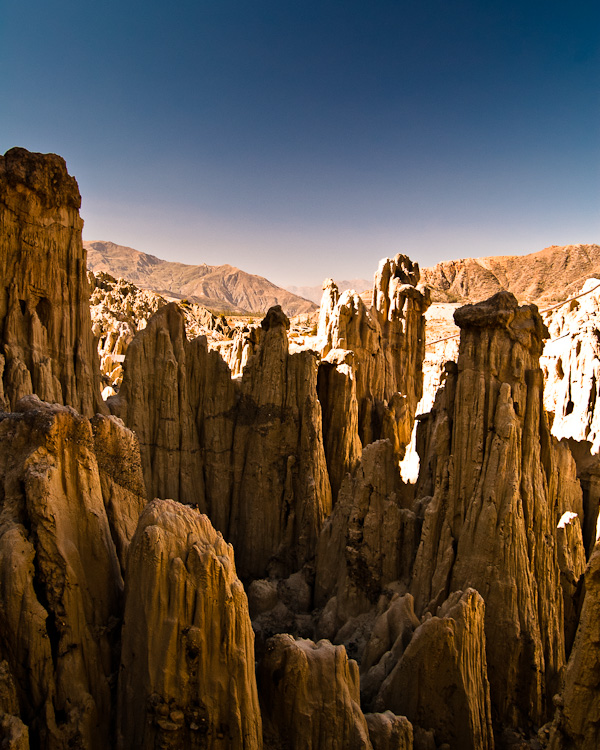
Moon Valley, a beautiful place I missed in my first visit to La Paz, Bolivia.

Moon Valley, a beautiful place I missed in my first visit to La Paz, Bolivia.

2. Take your Time

Definitely not something you haven’t heard yet, but sure the most important photography advice I’ve ever got: work the scene.

Spend some time trying to make the best possible photo from something you see potential on. Always remember: it’s not about getting 200 nice snapshots. It’s about 5 to 10 great photos. Invest your time and effort on these few ones.

Don’t rush. Never get satisfied with your first shot. There is a 99,9% chance you will get a better one if you study the scene more carefully.

Try different perspectives and angles. Walk around, get closer, get further. Try other lenses. Pay attention to details – they might be the center of interest you are looking for. Find the best background.

Drain your possibilities to the last drop. Then move on to the next shot.

There’s nothing more disappointing than looking at your photos when you are home and wish you had shot that particular picture from a different perspective.

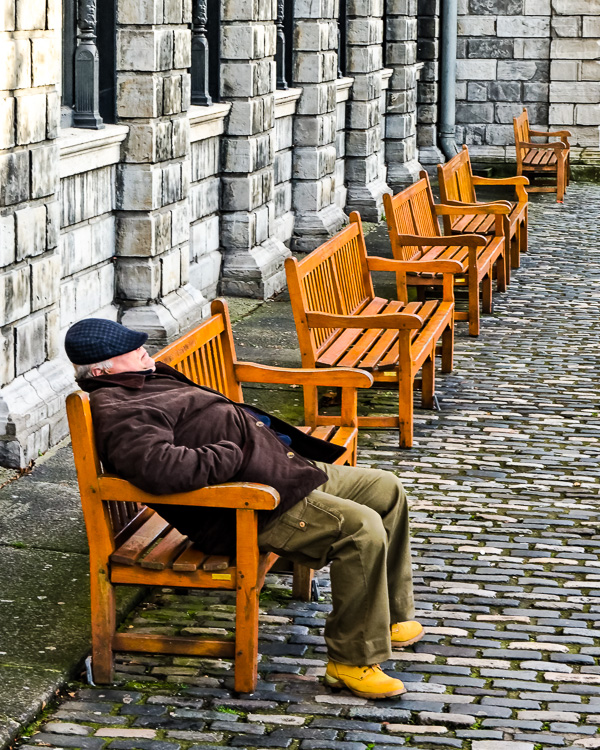
Dublin, Ireland. This one was about my 15th try. Totally worth the time and the shots.

Dublin, Ireland. This one was about my 15th try. Totally worth the time and the shots.

3. Wait for It

Kind of the same advice as the previous one. Just this time I want to point out the time you spend in a certain location after finding your best angle. You worked the scene, you found your composition. Now it’s time to add a little sugar to it.

There are 2 situations in which you may wait some time to get the best shot.

1) The scene is great, but you think it would be perfect with some random person walking by. Or a dog. Or a bird flying. Or a crowd passing by. Or a woman dressed in red. Wait for it until you get it.

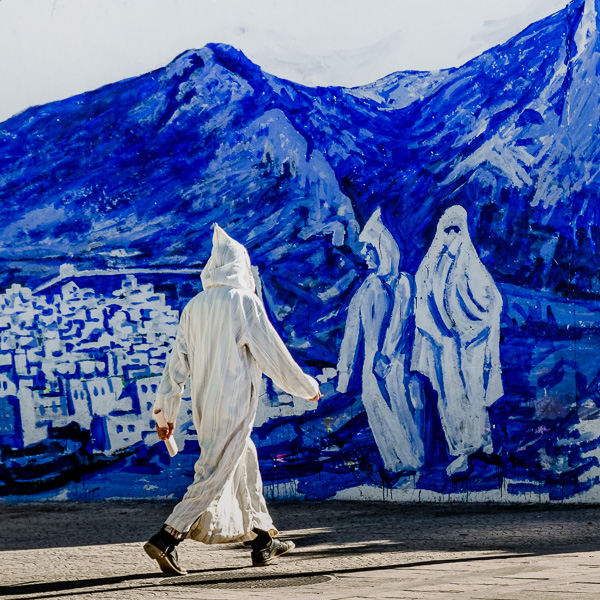
Chefchaouen, Morocco. I wanted to portray someone wearing the same outfit as the people in the painting, so I waited until the perfect subject passed by.

Chefchaouen, Morocco. I wanted to portray someone wearing the same outfit as the people in the painting, so I waited until the perfect subject passed by.

2) Many times you will have to wait for the best light. If that’s the case and it is too soon, take a picture, memorize your position and come back later.

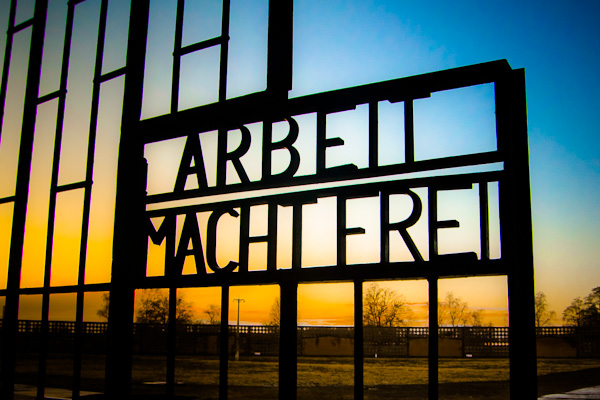
Sachsenhausen Concentration Camp - Oranienburg, Germany. I noticed the potential for a good picture when I arrived there earlier. So I calmly visited the site and, by the time I finished, the light was already perfect.

Sachsenhausen Concentration Camp – Oranienburg, Germany. I noticed the potential for a good picture when I arrived there earlier. So I calmly visited the site and, by the time I finished, the light was already perfect.

In both cases, you will need even more patience than when you were looking for the best framing. Now you just wait there, as long as it takes.

It’s really hard to keep the concentration while you are waiting there. But it’s really easy to regret not having waited when you are home sorting your photos later.

4. Don’t be Lazy

Wake up early and take advantage of the early morning light.

It will sound like the worst possible idea when your alarm clock beep at 5 AM, but you will be pleased with the awesome pictures you will take – a lot better than the ones you’d take around noon.

By shooting in the morning and in the afternoon on both golden hours, you raise 100% your photography time with good light. Plus: Other tourists may take pictures at the same sites, but as most of them won’t wake up early and because the sun in the morning lights up everything from the opposite side, your pictures will look different from theirs. Also, you can take advantage of the fact that it’s usually quieter in the morning than it is in the afternoon.

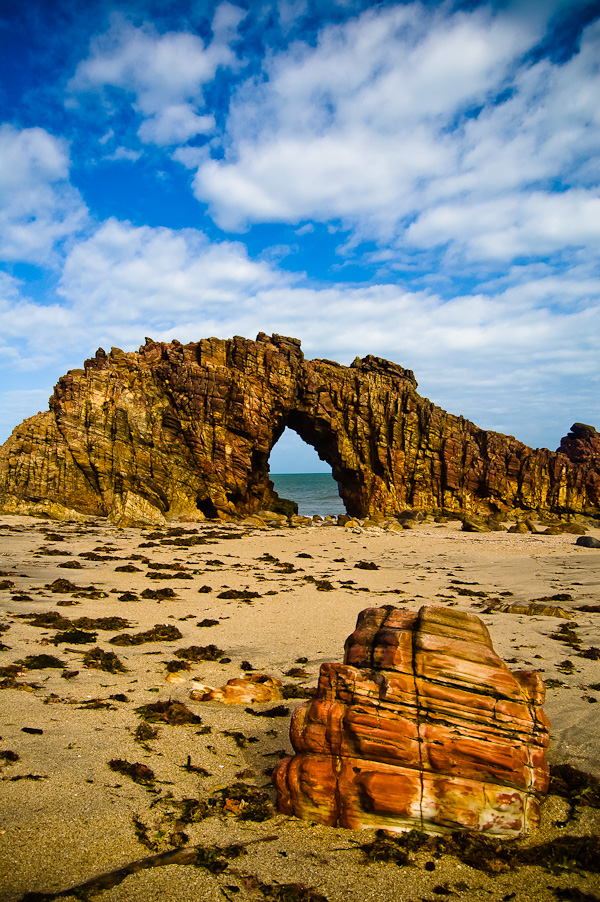
"Bored Stone" - Jericoacoara, Brazil. Many friends question me why this place looked so different when they visited and why their pictures look so dull. The "big" secret is to go there in the morning.

“Bored Stone” – Jericoacoara, Brazil. Many friends question me why this place looked so different when they visited and why their pictures look so dull. The “big” secret is to go there in the morning.

You will never regret having woken up so early when you get home and see the beautiful pictures you brought.

5. Have Options
It’s always good to explore some possibilities and to have more options when you are sorting and cropping your pictures.

For example, even after composing carefully and finding the best image, shoot a horizontal and a vertical photo of the same scene.

If you are using a random person to help composing a shot, do it with a man, a woman, a kid, a couple, etc.

Don’t shoot too tight. It’s better to have a wider picture and crop afterwards if needed – to adequate the picture to the available format in a magazine, for example. Give your editor (and yourself) room to edit.

Choose the best option later, when you can look carefully at each image, or let your editor choose if it’s a paid job.

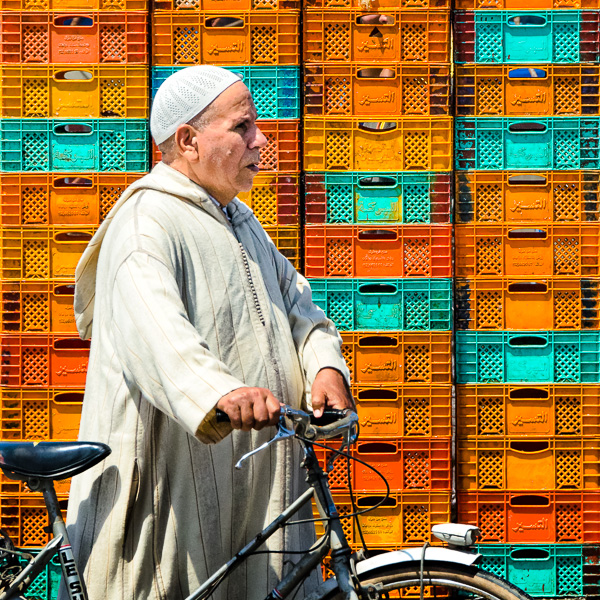
Essaouira, Morocco. I waited many minutes in front of this colored plastic boxes wall and took the same picture with other men, women, couples and kids. In the end, the guy in a white dress with a bicycle seemed like the best choice.

Essaouira, Morocco. I waited many minutes in front of this colored plastic boxes wall and took the same picture with other men, women, couples and kids. In the end, the guy in a white dress with a bicycle seemed like the best choice.

6. Ask Strangers to take their Portrait

How many times I have regretted not having asked someone to take his picture!

It’s a big think to step up and go ask a stranger to take his photo. I’ve lost count of the many thousands of great portraits I’ve lost in the past because I was too shy to ask permission.

But what has to be done has to be done. At one point you stop being silly and go ask the first stranger.

The second one will be almost as difficult as the first one. And the third just a little less. But by the 100th time you do it, it will be as easy as 1, 2, 3. The first no’s are very disappointing, but at some point you get used to it. Trust me.

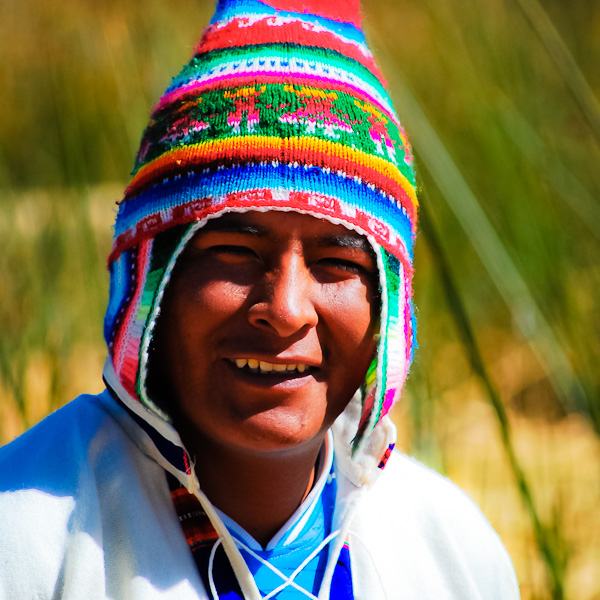
Peruvian man. "Can I take your picture?". "It's my pleasure!".

Peruvian man. “Can I take your picture?”. “It’s my pleasure!”.

7. Check it out Before Moving On

When you finally make that great picture, check carefully on your LCD screen if it’s not shaky or out of focus.

Also check the histogram and observe if the picture isn’t under or over exposed (don’t trust the image on the LCD to check this, especially in a bright day).

8. Always Keep your Gear Clean

Sometimes you’ll only find out how dirty your camera’s sensor or lenses’ glass were when you tweak the contrast of your photos while editing and see the dark spots pop out.

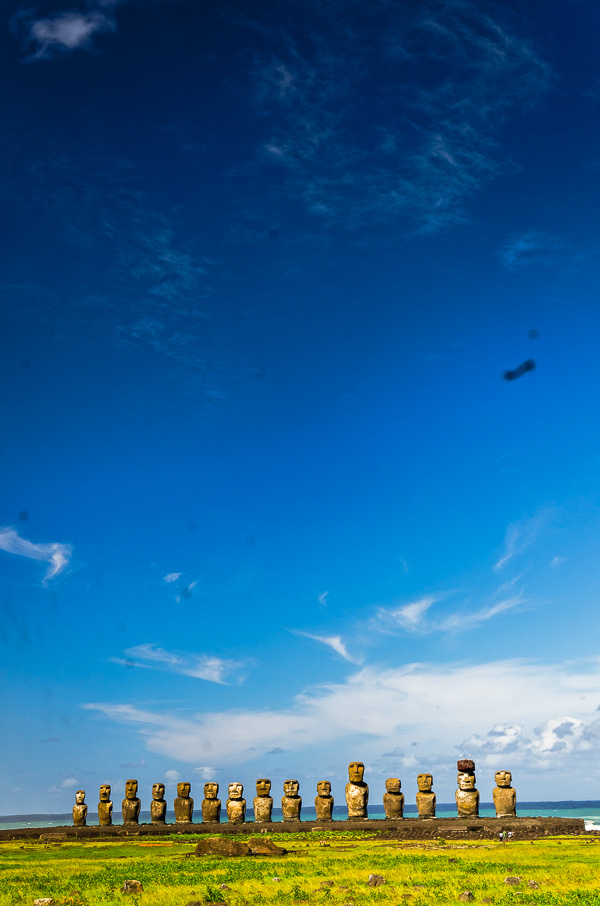
Ahu Tongariki, Easter Island. It's been a while, but I'm still cleaning out all the dirty spots on many pictures from that trip.

Ahu Tongariki, Easter Island. It’s been a while, but I’m still cleaning out all the dirty spots on many pictures from that trip.

Use a bulb blower, a brush or proper cleaning fluid to clean your camera’s sensor, and a clean cloth to clean your lenses’ glass and filters.

You could clean those spots later on Photoshop, but it’s really annoying and will take some time. Better to avoid the extra work.

9. Take Notes

When you get to the PC to sort and organize your travel photos you will want to know the names of the places and landmarks you photographed, especially when you find yourself uploading a picture and need a caption for it.

Take notes or, if it’s possible, take a picture of a sign or plaque related to the subject.

Sometimes you can find the information you need later on the internet, but even then it’s more time consuming than just writing it down in a small notebook.

10. Take Care

Be safe. Watch your stuff.

You can buy new equipment, but the pictures on your stolen memory card are lost forever.
Reduce the risks. Be prudent.

The best picture I've ever taken, from my trip to Colombia. Lost by carelessness. Put the memory card in my pocket, and when I looked for it, it was gone.

The best picture I’ve ever taken, from my trip to Colombia. Lost by carelessness. Put the memory card in my pocket, and when I looked for it, it was gone.

What about you? What have you already regretted?

Hélio Dias is a Brazilian photographer and travel writer. Visit his website and follow him on Facebook and on Twitter at @diashelio.

Post originally from: Digital Photography Tips.

Check out our more Photography Tips at Photography Tips for Beginners, Portrait Photography Tips and Wedding Photography Tips.

10 Travel Photography Tips to Help Avoid Regrets When You Get Home


Digital Photography School

 
Comments Off on 10 Travel Photography Tips to Help Avoid Regrets When You Get Home

Posted in Photography


20 Photography Tips Every Travel Photographer Must Know

17 May

1

1. Get up Early

The best light to capture most kinds of subjects is in the golden hours- one hour after sunrise and one hour before sunset (depend off course on where you are on the glove). So get up early to get that amazing photo opportunities, while all the other tourists are still asleep.

2. Do your research

Don’t leave it to chance and learn as much as you can about the place you are about to travel. The more you know, the more “intelligent” your images will be.

2

3. Learn your Craft

Don’t waste your expensive traveling time on learning how to operate that new camera, lens or flash. Do your homework at home.

4. Choice the Right Lodging

Staying on the center of town, or having a room with wonderful views can create a lot of great photo opportunities.

3

5. Say Hello

Learn how to say “Hello” in the local Language, and greet the locals when taking their photo.

6. Get Inspired

Watch the portfolio of other photographers in order to get new ideas and get inspiration. You can read the interview I did with Steve McCurry, the photographer of the “Afghan girl”, to get few great tips for a true master.Also, If you perceive yourself as an artist, you must acknowledge the work of other artists. Do not underestimate inspiration: visit art galleries, attend some photography lectures, listen to classical music, read good books.

4

7. Feel the Place

Photography is not only about visual inspiration. Try the local food, smell local markets and hear local music, this will help you to better understand the story of the place.
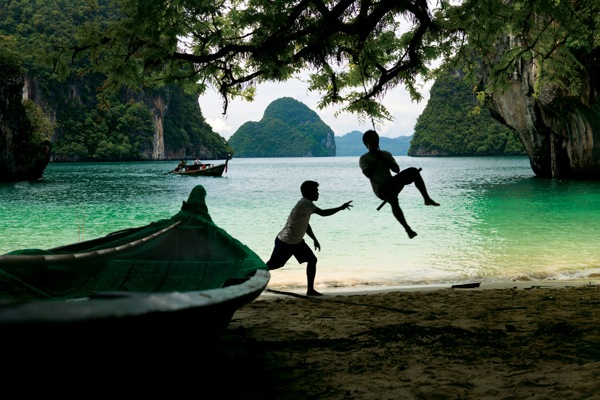
8. Find a Fixer

Talk to locals and seek their advice on great photo opportunities in their own country.
5

9. Travel Light

Don’t take your entire house with you. When I travel I take with me only two lenses: One zoom and one prime lens. This is extremely important tip if you plan to do some hiking or trekking.
10. Get off the Beaten Path

Yes I know that in Cuba they smoke cigars and that in Thailand they have monks. Tell your viewers something fresh and new. Share your own point of view of the place. You will be able to do so, only after following tip number 2 and 6.
6

11. Don’t try to get it all in once

Don’t try to see everything on your limited time. It is much smarter to get a better understanding about each place you visit on your journey. Slow things down, and your images will get better.

12. Travel Slow

If time allows you, always choice to travel by train or bus over flying. As it will allow you to have better Interactions with the locals.

7

13. Leave the Camera Behind Sometimes

Don’t spend your entire trip looking through the lens. Enjoy your time just traveling and enjoying the ride.

14. Keep it Natural

One of the most important and influential photographers of all time, Henri Cartier Bresson- Never ever used flash in his photography. A practice he saw as “impolite…like going to a concert with a pistol in your hand.” Try to learn how to use and enjoy the benefits of natural light before you buy that expensive flash or reflector.

15. Get Higher

Every good travel photo series must have at list is one bird’s eye view of the place (Being referred sometimes as the “establish shot”). Find yourself a vintage point overlooking the entire city or town.

8

16. Stop with the Excuses

“Well, if I had an expensive camera and lenses like you have” or “If someone would pay me to travel”, or “but, you have so much time on each destination”.

All of those, are excuses I often hear from my travel photography students. Excuses they tell themselves to answer the question of “Why cant I get Strong images?”
So, A. My first newspaper published cover image, was taken using a pocket camera.
yes, equipment is important and it certainly makes life easier. But don’t forget the camera is just an instrument. A “pipe” which captures your vision and thoughts. Do not cry over the equipment you don’t own. spend the time and money to learn photography, reading books about it and travel as much as you can.

And B. For my first 8 journeys, no one paid me anything. I worked very-very hard at my day job for a whole year, and then I spend my money on traveling. I slept in some shitty places got bus rides from hell. This lifestyle requires commitment. And today, even as I get paid for traveling somtimes. The lengths are usually one to two weeks per assignment. Two weeks to come back with an amazing results. Not excuses like “but it was raining and I was sick” are accepted.

So, stop the excuses, and get back to work.

17. Find Yourself a Master

: the best way to learn (anything) is by watching a master working on his craft. Try to find a photographer which you can accompany as his assistant. It is true that most travel photographers like to travel alone. But it doesn’t have to be a travel photographer. Most of my knowledge about using light, I learned from a great fashion photographer, which I served him as an assistant for a while.

18. Stop Using Excuses

“Well, if I had the time \ money to travel the world or if I had the money to buy that new camera \ new lens … I’d probably be an excellent photographer”. Excuses are just our way to explain ourselves why our photography doesn’t get any better. No matter where you live in the world: New York, the Middle East or a small village in France. Try to see the beauty of the place you live in. if you will find the beauty of that place and bring within your images, people will follow.

9

19. Don’t stop Traveling

A good travel photographer must keep is portfolio alive. Keep on traveling, and as the last tip mentioned: you don’t have to travel to far and exotic places to do so. As it is very easy to travel to India and get “good” travel photography. Try to bring the beauty of your own local town. Travel to the nearest market or attend the next festival as a way to keep your craft improving.

20. Be Human

Treat your subject as well as you can. Don’t shoot people for a far distance, don’t shot people who don’t want to get snapped. If you promise to send their photos, please do so. This will ensure that the photographer that will come after you will be received with a smile. And don’t forget, sometimes it is best to just leave the camera behind and enjoy the ride.

Oded Wagenstein is a Travel photographer and writer. He is a regular contributor to the National Geographic Traveler magazine (Israeli Edition) and his images have appeared in many national and international publications and websites.
He is known for his intimate culture portraits. In his works he put the emphasis on understanding the culture and achieving good relationship with the person being photographed pre-shooting.

You can join his Travel photography group on Travel photography group on Facebook and continue to discuss on travel and people photography.

Post originally from: Digital Photography Tips.

Check out our more Photography Tips at Photography Tips for Beginners, Portrait Photography Tips and Wedding Photography Tips.

20 Photography Tips Every Travel Photographer Must Know


Digital Photography School

 
Comments Off on 20 Photography Tips Every Travel Photographer Must Know

Posted in Photography


Travel Photography ~ Think Outside The Postcard When Photographing Famous Landmarks

21 Apr

How many of you have found yourselves in front of an iconic landmark and felt discouraged because every possible shot had already been made by thousands of tourists before you? You are on the trip of a lifetime. Your goal is certainly not to bring back pictures that look like the postcards at the souvenir shop.

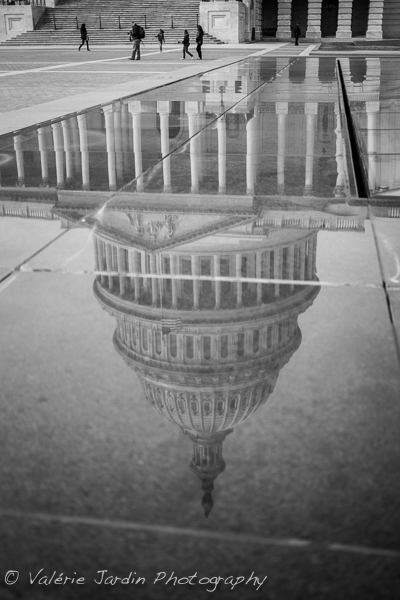
Photographing a reflection of a famous landmark such as the US Capitol in DC was a good way to avoid the cliché shot that every other tourist snaps daily. Adding the human element adds a sense of scale.

Photographing a reflection of a famous landmark such as the US Capitol in DC was a good way to avoid the cliché shot that every other tourist snaps daily. Adding the human element adds a sense of scale.

Here are a few tips to ‘think outside the postcard’ when you photograph a famous landmark:

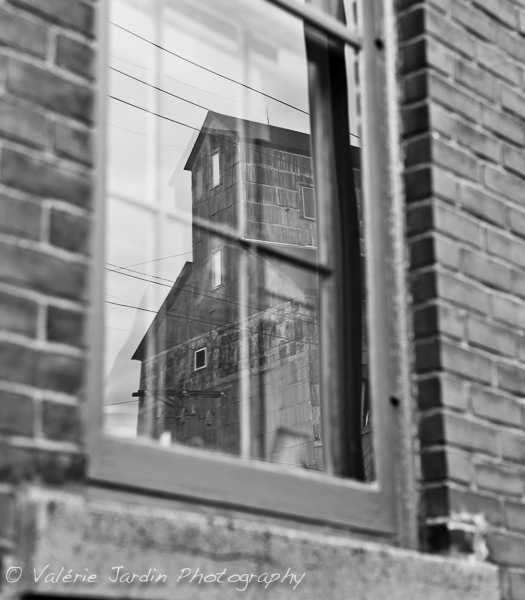
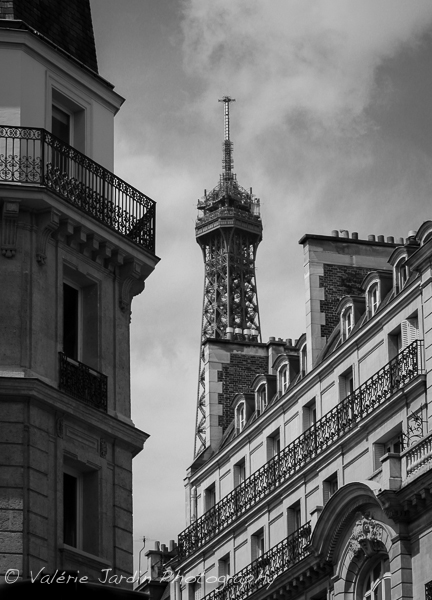
Get the cliché shot out of the way. You won’t feel right unless you do. So go ahead and photograph the Eiffel Tower the way you see it in your head when you close your eyes. Got the shot? Okay, now think of different ways you could photograph it and create your OWN iconic images of the same subject. Frame it with trees, look for its reflection in a window or a puddle, include it with the local architecture, shoot it as a silhouette, etc. The sky is the limit, you just have to train yourself to look for those unconventional frames.

Afraid that you are going to miss other opportunities while you are looking for different ways to see? Practice at home! Every town has its own iconic landmark, even yours. It may not be a grandiose building, but it doesn’t matter. Whether it is the local historic grain elevator, or the statue of a famous local politician, go out with your camera and see it for the first time again. Work your scene and find a creative way to frame it.

Don’t forget to include people in your frame. They add interest, life and movement to your images. They also add a sense of scale which works well when photographing massive buildings.

This simple exercise will change the way you see photographically. The more you practice, the quicker you will spot those interesting shots when you visit a new place. Your pictures will never be boring again!

Practice at home!  This historic grain elevator may not be grand but it is one of the landmarks in a small river town near my home.

Practice at home! This historic grain elevator may not be grand but it is one of the landmarks in a small river town near my home.

Think of a different way to photograph a famous landmark by including local architecture in the foreground for example.

Think of a different way to photograph a famous landmark by including local architecture in the foreground for example.

Post originally from: Digital Photography Tips.

Check out our more Photography Tips at Photography Tips for Beginners, Portrait Photography Tips and Wedding Photography Tips.

Travel Photography ~ Think Outside The Postcard When Photographing Famous Landmarks


Digital Photography School

 
Comments Off on Travel Photography ~ Think Outside The Postcard When Photographing Famous Landmarks

Posted in Photography


The Rocket Travel Slider

07 Apr

Long time no chat! Hello! I’ve been digging about for products that are currently on my radar that I wanted to tell you about!

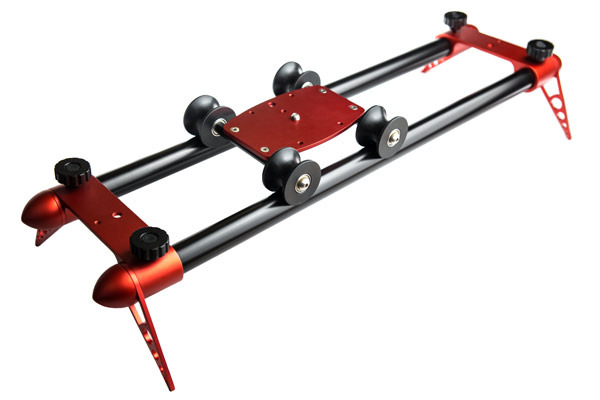
I’ve posted previously about Kickstarter stuff, the last time was another product from the same group of folk out of Bend, Oregon. Nice Industries are skipping along a sweet looking trail of products for the dSLR video producer, or even the 4/3rds / mirror-less video producer. The last product, the one I wrote about previously, was called “Aviator Travel Jib” So, this time I wanted to tell you about a complimentary product called “The Rocket – Travel Slider” You might hear people talk about a “Dolly shot” that’s the nice smooth slide shot – left to right, back and forward… It really does add an extra “something” to your film making that you can’t typically get when handheld or on a static tripod.

Have a look at the THE ROCKET – These guys are doing something right – the Kickstarter was already funded less than 24 hours after launch!

If you’re going to the 2013 NAB Show you can see The Rocket Slider in action at booth 12141, and Zeke may even make you a nice cup of tea!

So I have my very own Aviator Travel Jib now and i’ll be working on an article / review for you all [When I get better at film making!] it is a great little product that has added SO much ‘dynamics’ to my current film making. As well as the Canon 5D MK3, I’ve started using the Olympus OM-D (which I’ve fallen in love with!) and the two together are fantastic! – more on that later… Much more! I’m very much looking forward to getting The Rocket and finishing my film project!

The_Rocker_Travel_Slider_Dolly

The simplicity is what makes it that little bit more epic… You take the bar ends, the rocket sled and stick them in any old bag, your pipe goes wherever and you’re away! I’ve just priced up some extra light galvanised steel pipe here in Melbourne, it’s $ 38 for a 6.5M length – that’s with 2mm walls, so you’re going to be able to get a great dolly shot by cutting that in half and using the center support. Pretty excited about where dSLR cameras are taking independent film making right now, much more accessibility for the regular person (me!) to try this and that with the gear a lot of us already have.


The_Rocket_Travel_Slider

Enjoy!

–Sime

Post originally from: Digital Photography Tips.

Check out our more Photography Tips at Photography Tips for Beginners, Portrait Photography Tips and Wedding Photography Tips.

The Rocket Travel Slider


Digital Photography School

 
Comments Off on The Rocket Travel Slider

Posted in Photography


Tentsile: Extreme Travel Tree Tents Hang Like Hammocks

15 Mar

[ By WebUrbanist in Global & Travel & Places. ]

tentsile hanging hammock tent

Hikers and campers have long been used to hanging food packs out of reach of bears and scavengers, but these tensile treehouse shelters take things a few steps further, allowing you to loft your entire portable residence amid any forest.

tentsile three legged tent

No more worrying about the weather or extreme landscapes like muddy swamps and desert sands. “Due to the unique design, the tent provides a level trampoline style floor in any terrain or inclination. It’s elevated position does away with the need to clear the site of foliage and provides separation from flood, sand storms, earth tremors, cold and lumpy ground as well as offering increased protection from wildlife, including insects, snakes and other predators.”

tentsile deployment models options

In theory, you could suspend these off the sides of cliffs or hover them above lands and streams since (setup, entry and exit excepted) the ground conditions are irrelevant. Tentsile describes their product line as being “the world’s most versatile tents. Whether you are looking for an all terrain camping solution, a safari safe house, a mountain or beach retreat, or a portable treehouse that avoids all planning restrictions, with Tentsile the sky really is the only limit.”

tentsile night setup detail

The various models have side and bottom entries in various configurations, with sleeping sections along the spokes and a central communal area familiar from many typical tents. Like a three-legged stool, the frame is held in tension from three points and is thus essentially self-balancing within the right tolerances. “The structure comprises a collapsible frame of webbing straps with fire retardant, UV PU and water resistant polyester fabric infill panels.” 

Share on Facebook


[ By WebUrbanist in Global & Travel & Places. ]

[ WebUrbanist | Archives | Galleries | Privacy | TOS ]


WebUrbanist

 
Comments Off on Tentsile: Extreme Travel Tree Tents Hang Like Hammocks

Posted in Creativity


Travel with Speedlights and a Smartphone? Get One of These.

09 Mar

I very rarely review gadgets on this site. But this is something that may be new to many of you.

When I travel I try to take as little gear as humanly possible. But the Tekkeon MP1580, seen above at bottom right, is on my must-take short list every time I fly with a camera.

Here's why. Read more »
Strobist

 
Comments Off on Travel with Speedlights and a Smartphone? Get One of These.

Posted in Photography