RSS
 

Posts Tagged ‘travel’

The Fuji XF 18-135mm – a Versatile Travel Lens

10 Feb

From one article comes another – One plus of being a Fuji X Photographer is that Fuji will lend you gear to try. When I did an overview of the 18-55 Kit lens, a commenter asked about the difference between it and the Fuji XT 18-135mm. I don’t own that lens, but through my Fuji connection, I was able to borrow one for a short while and give it a go. So thank you to the commenter that allowed me to find out I could borrow stuff to test!
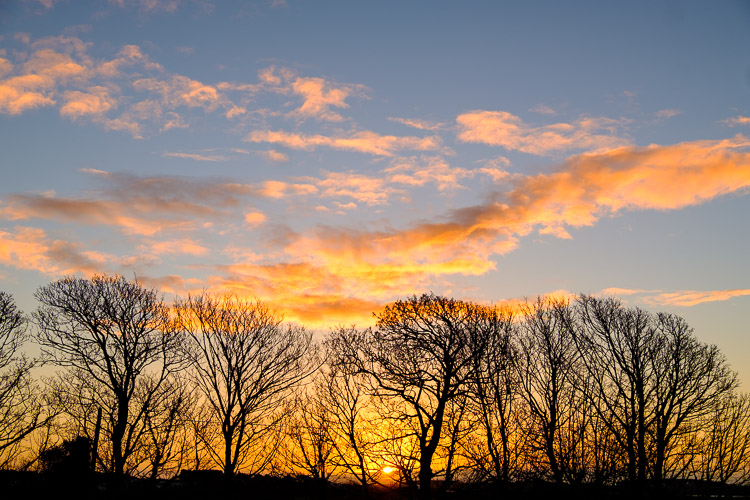
Fuji XF 18-135mm sunrise

The sunrise on New Years Day. I had no hesitation using the lens, over lenses I own already, to capture this image.

First thoughts on the Fuji XF 18-135mm lens

Straight up, I think this is a great travel lens, despite the issues with the lens that are common to most kit lenses. But, these issues are outweighed by the usefulness of this lens. The weight and size were fine in general use, and I never felt that I was being let down by the lens. When I got the lens, I did a walkabout locally where I familiarized myself with it.
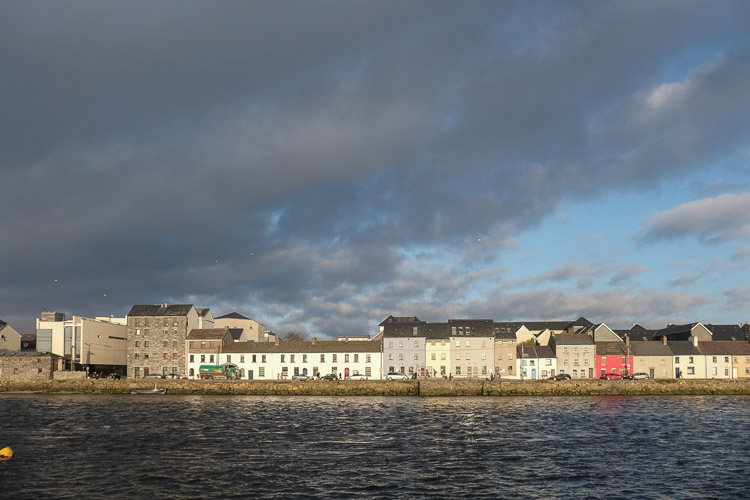
Fuji XF 18-135mm

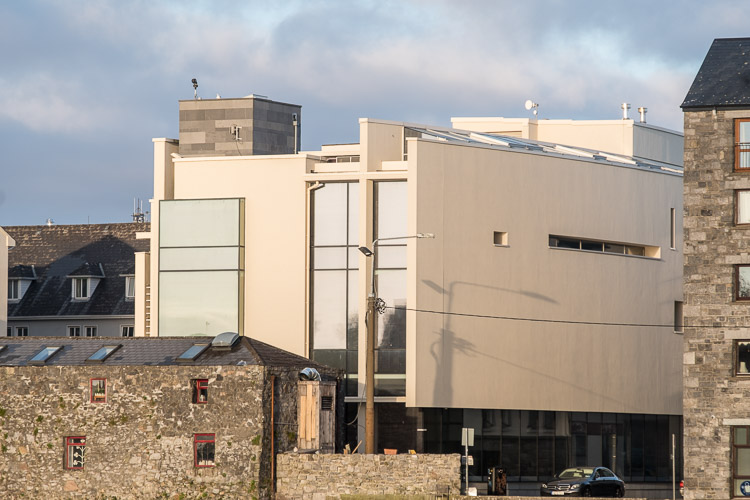
A wide shot of Long Walk in Galway. The Museum is on the left of the shot.
Fuji XF 18-135mm

Here’s the Museum from the same position at 135mm.
Fuji XF 18-135mm

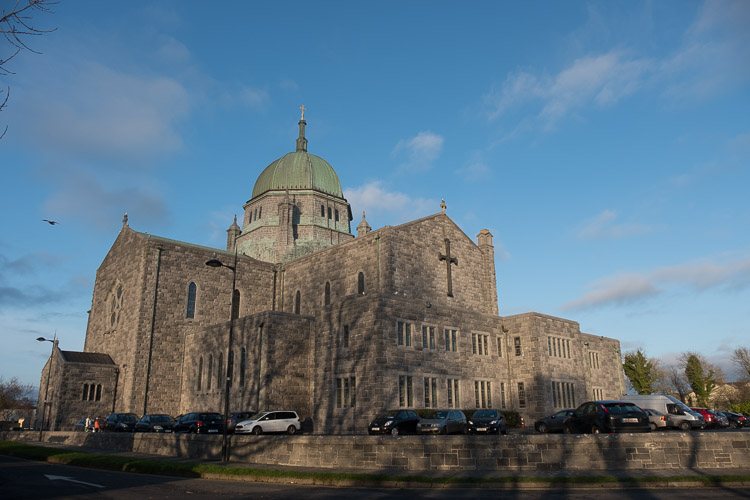
Galway Cathedral at 18mm.

Fuji XF 18-135mm

A detail shot of the roof to the left of the some at 135mm.
Fuji XF 18-135mm

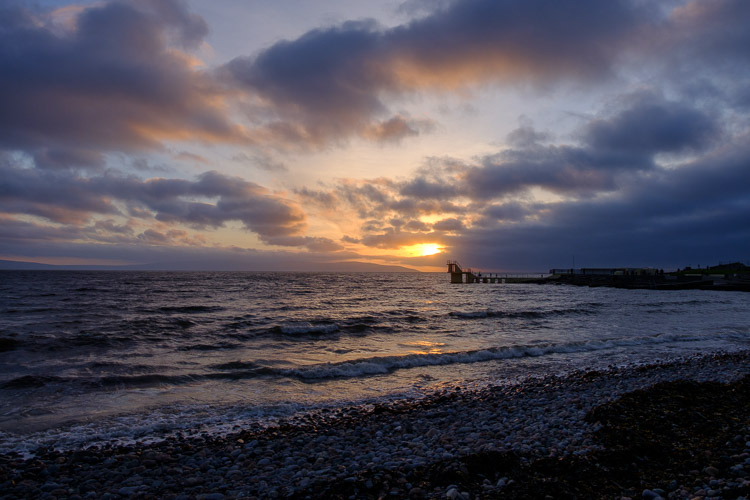
Salthill with the sun setting near Blackrock Diving Tower.
Fuji XF 18-135mm

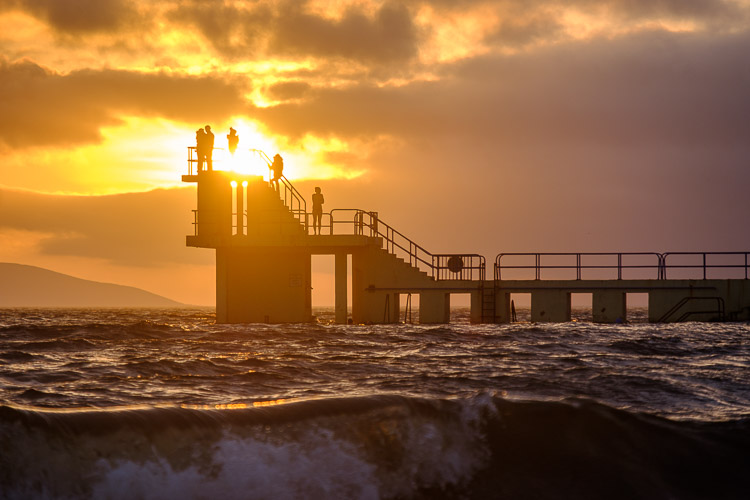
I moved slightly to frame the sun in the tower, but still roughly the same distance away, zoomed in to 135mm.
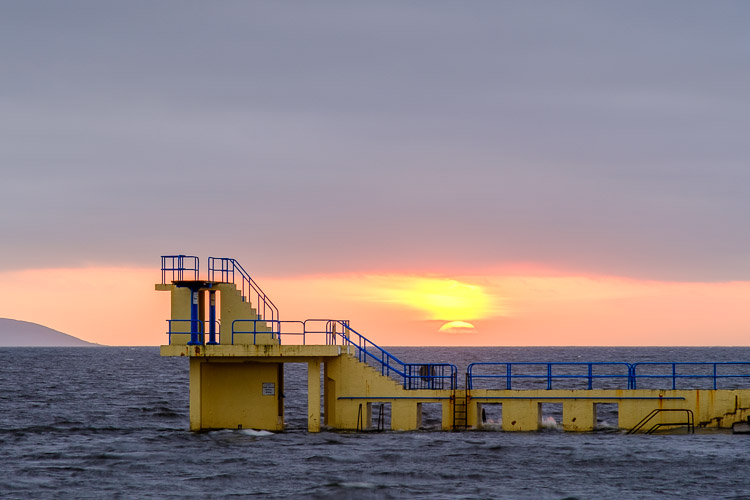
Fuji XF 18-135mm

The sunset didn’t quite pan out, but I used the 135mm end of the lens to frame it with the diving tower.

Specs of the Fuji XF 18-135mm lens

The Fuji XF 18-135mm weighs 409 grams (just shy of one pound). It’s not lightweight, but it’s not heavy compared to similar lenses in this class. Aperture runs from f/3.5 at 18mm to f/5.6 at the 135mm end. The full frame equivalent is 27-200mm. I owned the Canon 28-200mm for a while and sold it because of the softness. This Fuji 18-135mm, while not as sharp as the XF 18-55mm, is not as soft as the Canon version.

The lens extends in length as you zoom it. The lens barrel doesn’t rotate, so attached filters remain in the same relative position. It comes with a plastic lens hood, and the filter ring is 67mm. As with the 18-55mm, the lens has OIS to reduce camera shake. Fuji claims that this offers up to an impressive 5-stops of camera shake reduction. It’s in the WR (Weather Resistant) range of lenses also, meaning you can use it out in the rain, something I did when visiting London.
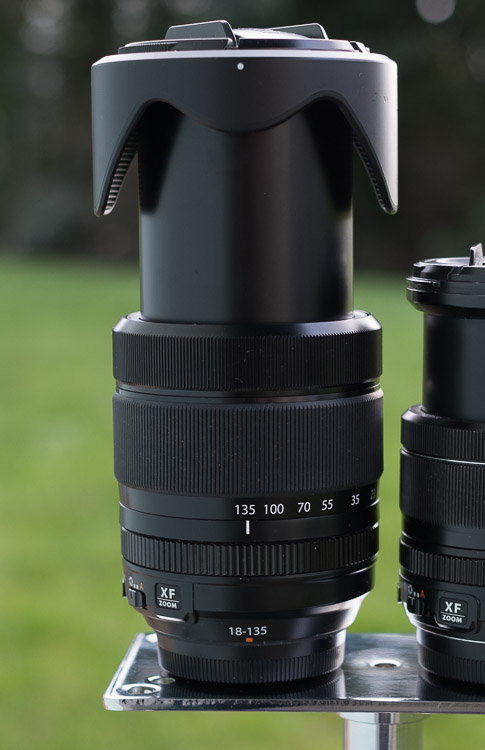
Fuji XF 18-135mm

Travel and the Fuji 18-135mm lens

Super zooms, by and large, make for great travel lenses. The width is usually good enough for any situation. If you need more, it’s easy to shoot two overlapping shots and create a panorama later. The longer focal length means you can easily capture street portraits or zoom in to get details. Wide shots often have to include other tourists, especially when handheld. Detail shots can give a better flavor of an attraction, and give you something not everyone else thinks to shoot. The best part? Not having to change your lens to get both shots.

The weight of the lens isn’t a cause for concern, even carrying around all day. With a small messenger bag like the Think Tank Retrospective 10, you can use the lens mounted on a Fuji X-T2, while carrying a bottle of water and all your accessories. When traveling I had this combo, a 35mm f/1.4, a flash and trigger set, along with a small shoot-through umbrella. Also in the bag were an iPad mini, a power bank, and a foldable bluetooth keyboard. I never felt like I was weighed down and was quite productive with this setup. Whenever a shot presented itself, I simply grabbed the camera and was ready to go.

London

During the time I had the lens, I was at The Societies convention in London. It was a perfect chance to use the lens as a tourist. Some of the attendees organized a night shoot down by the river Thames. We walked along South Bank to the Millennium Bridge, shooting along the way.
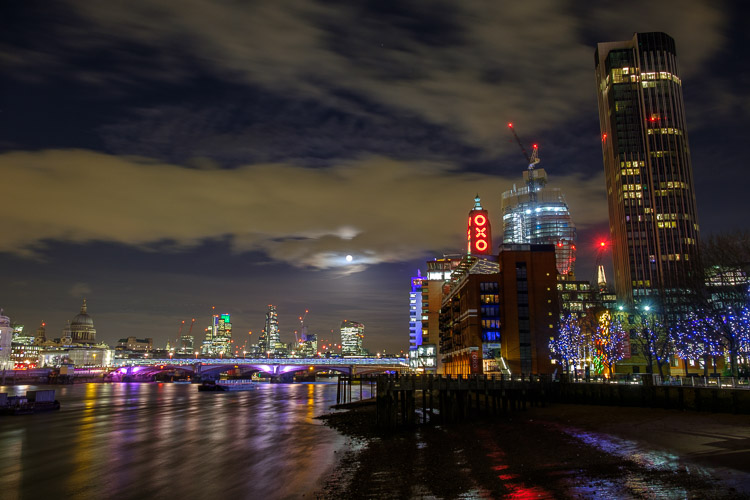
Fuji XF 18-135mm

A shot of the London night skyline showing the OXO tower and St Pauls’ Cathedral.
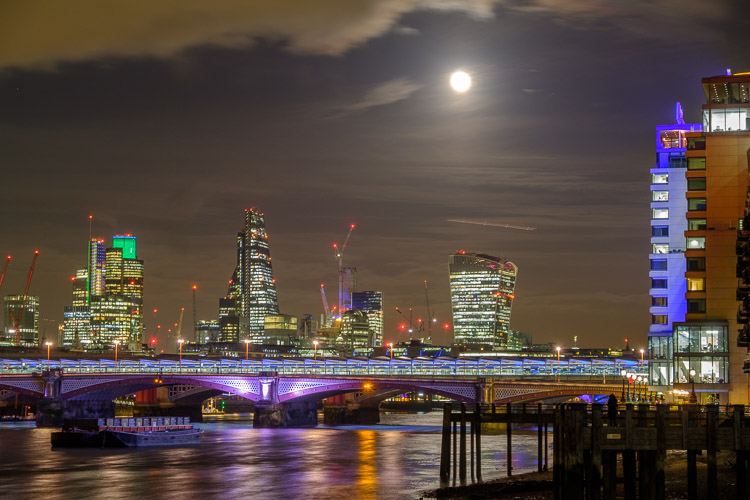
Fuji XF 18-135mm

The same view at 53mm

Fuji XF 18-135mm

And again at 70mm, longer than the 18-55mm could do.
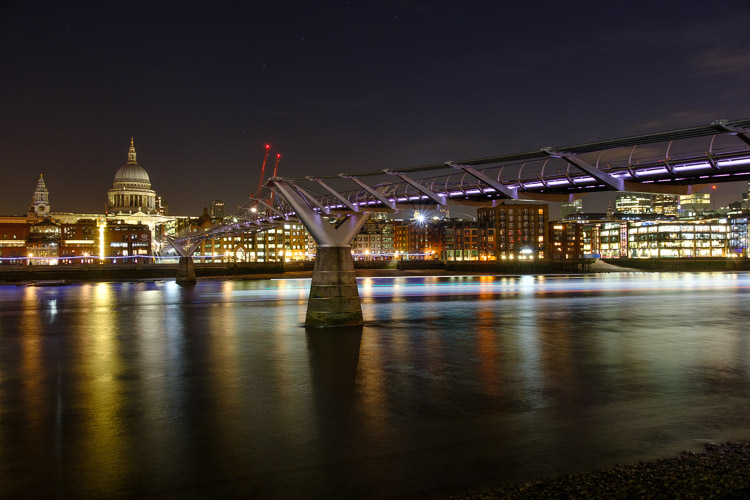
Fuji XF 18-135mm

The Millenium Bridge and St Pauls.

Fuji XF 18-135mm

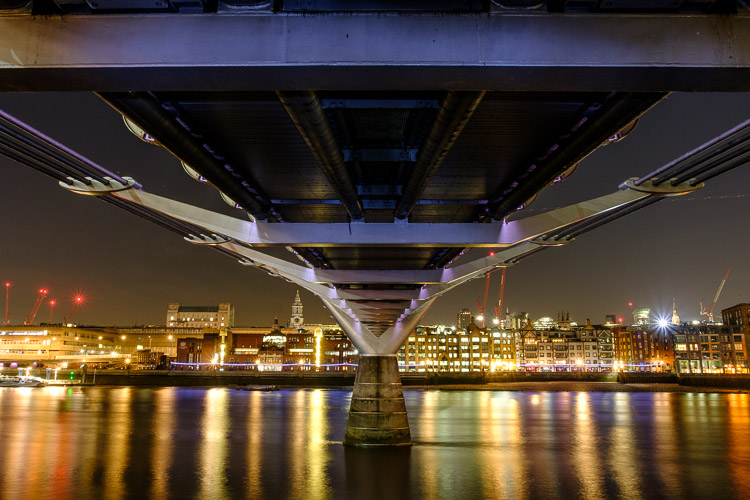
Under the Millenium Bridge I light painted the beams with a torch (flashlight) to get a little more detail into them.
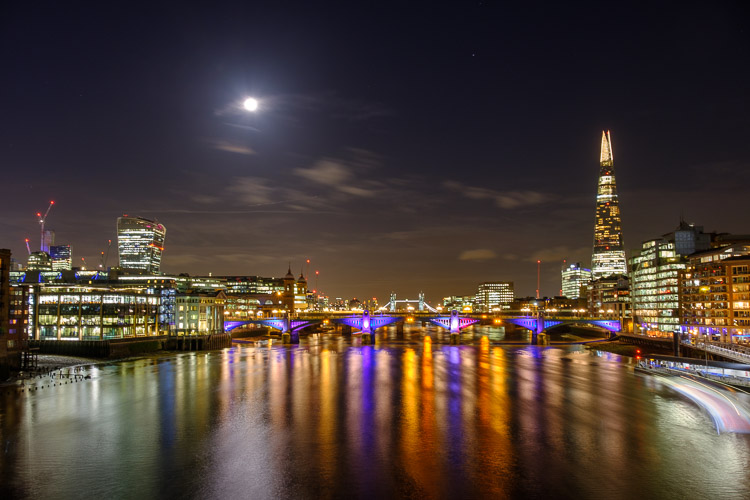
Fuji XF 18-135mm

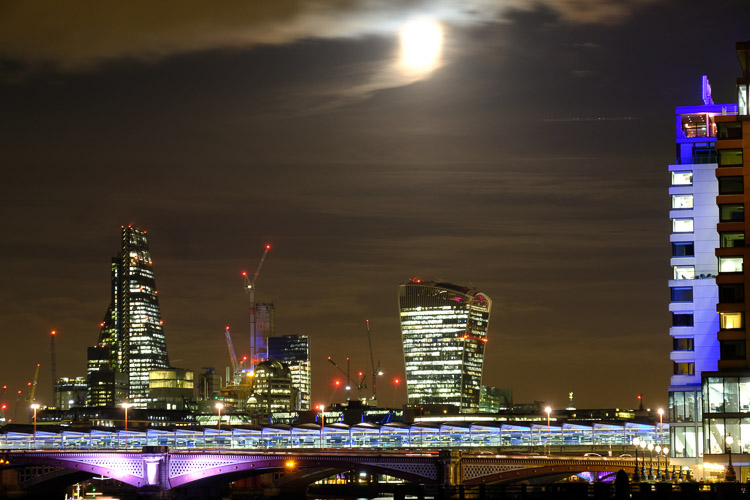
A wide view of the river showing the Moon and the Shard
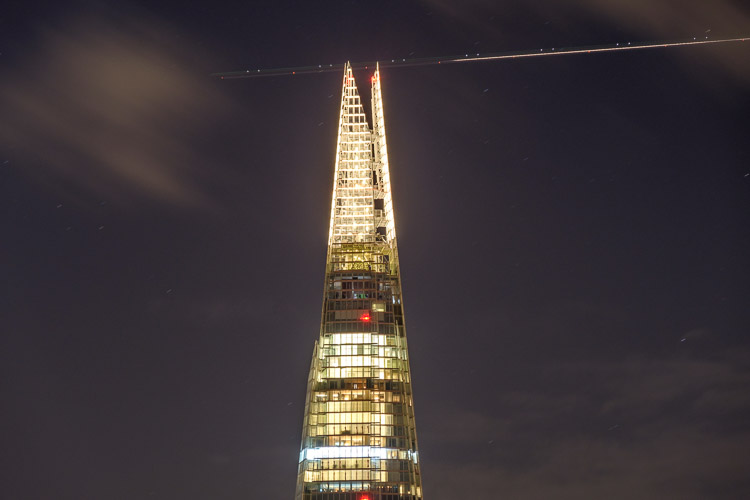
Fuji XF 18-135mm

A 135mm zoomed-in view of the Shard with a plane flying past.

I also did a little walkabout the morning I was leaving. It was raining, but I kept the lens in the bag when not in use and it performed perfectly. Knowing it was weather sealed also made me more inclined to shoot in these conditions.
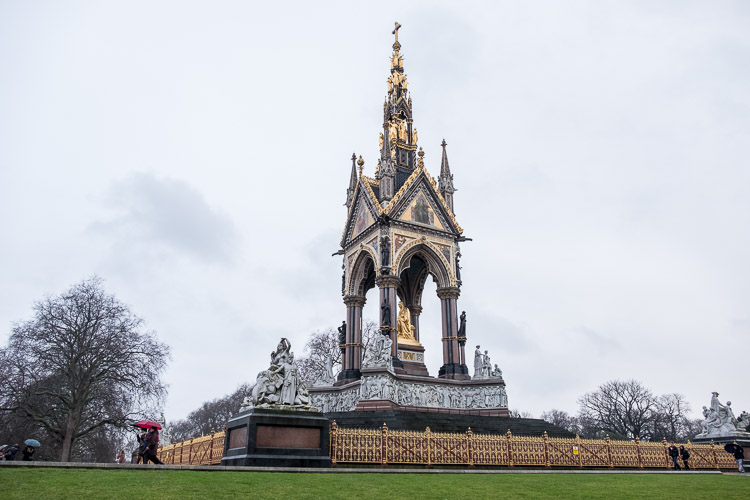
Fuji XF 18-135mm

The Albert Memorial, complete with tourists.
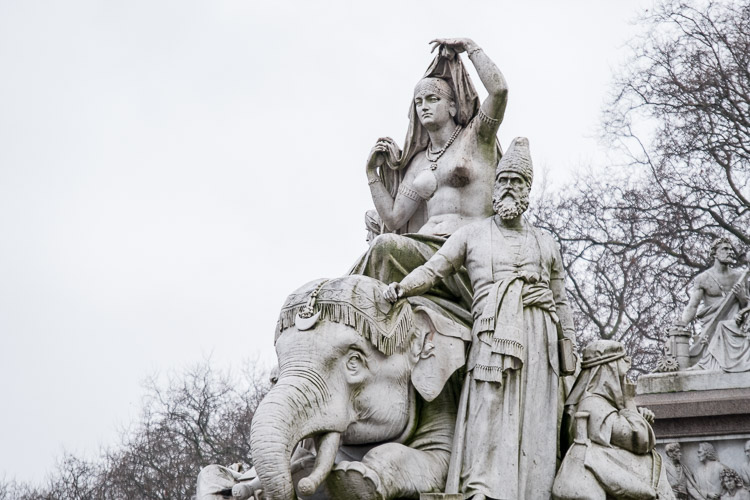
Fuji XF 18-135mm

The Asia Group visible in the bottom left of the previous image at 135mm.
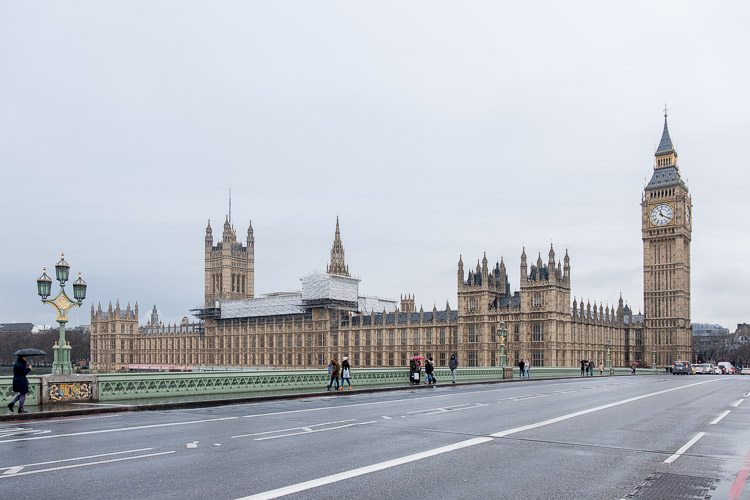
Fuji XF 18-135mm

The Houses of Parliament from Westminster Bridge. Technically the bell is called Big Ben, not the clock tower.
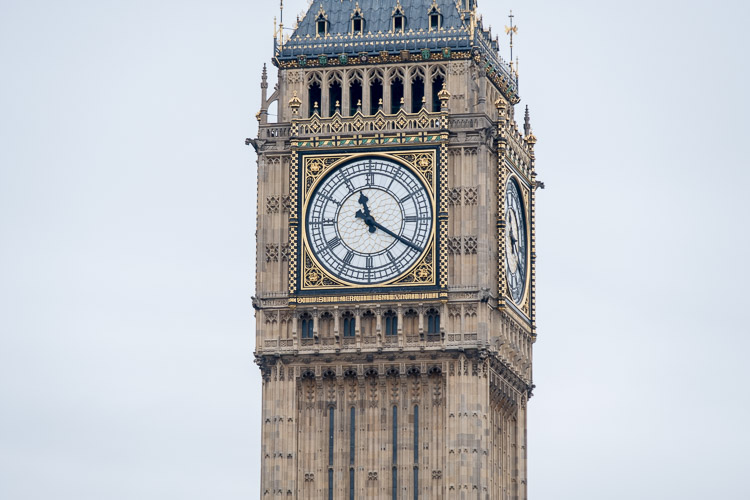
Fuji XF 18-135mm

The clock tower that houses Big Ben.

People

I also made use of the lens in the studio, where it performed equally well. Shooting in studio tends to be around f/8-f/11, which is the sweet spot of most lenses. The Fuji XF 18-135mm lens didn’t disappoint.

Fuji XF 18-135mm

A model shot taken in the studio.

Issues

The main problem with the lens is that shots are a little soft. It’s simply a function of producing the zoom range to a price point. This isn’t really a problem, as the files can be sharpened in Lightroom or another raw converter as a batch process.

Versus the Fuji 18-55mm lens

As both the 18-55mm and the 18-135mm are offered as kit lenses, you may wonder which is better for you. The 18-135mm is larger, heavier, and slower than the 18-55mm. It’s also not as sharp. If a smaller size and faster aperture are important to you, go for the 18-55mm. If you want more reach and don’t want to bring two lenses while traveling get the 18-135mm. Here’s what the two lenses look like side by side.
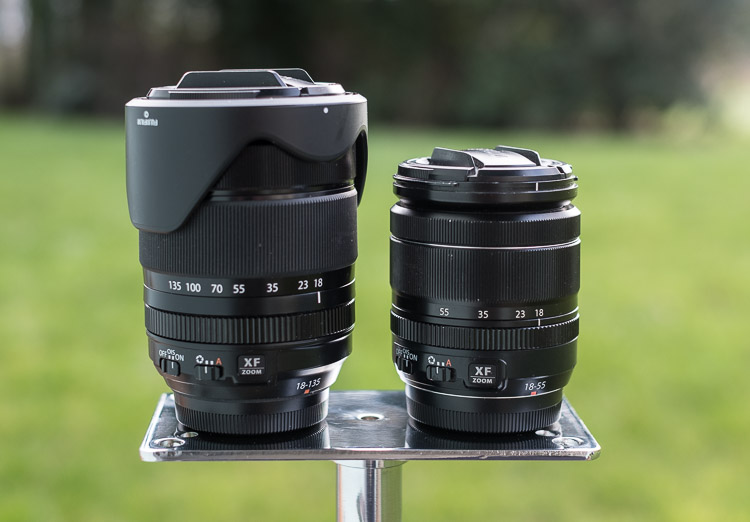
Fuji XF 18-135mm

The Fuji XF 18-135mm lens with the XF 18-55mm.

Here’s the full extension on both lenses. I had to tape the back of the 18-55mm to stop it from slipping (zoom creep) for this shot. The 18-135mm was solid the whole time.
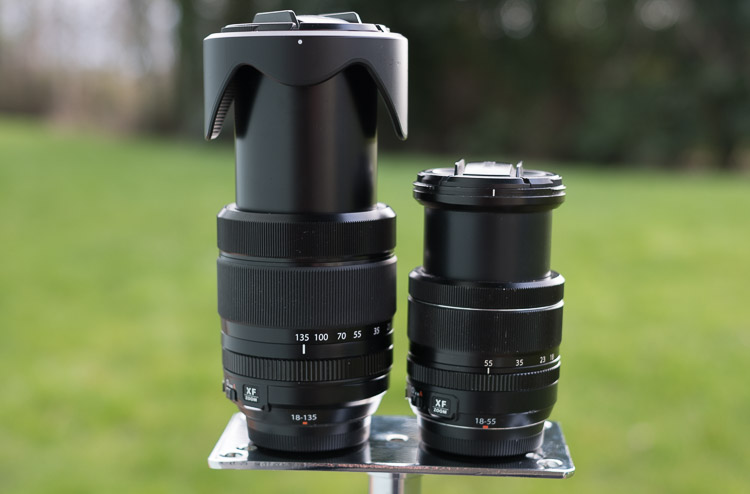
TheFuji XF 18-135mm lens with the XF 18-55mm, both at full extension.

Verdict on the Fuji XF 18-135mm lens

This is a great travel lens that needs a little post-processing to bring out its best. Despite already owing the 18-55mm, I would consider getting this lens specifically for travel

Pros

  • Great reach (zoom or focal length range).
  • You only need one lens for travel making it really convenient.
  • It’s still compact compared to full frame equivalents, like the Canon 28-200mm or 28-135mm IS.
  • The built-in OIS (stabilization) is great for handheld shots.
  • It’s Weather Resistant.

Cons

  • It’s still heavier than the 18-55mm lens.
  • This lens is a  little softer than other Fuji lenses, especially at 135mm.
  • The edges of the frame are a little softer than the centre.

Shop for this lens on Amazon.com or on B&H Photo’s website.

googletag.cmd.push(function() {
tablet_slots.push( googletag.defineSlot( “/1005424/_dPSv4_tab-all-article-bottom_(300×250)”, [300, 250], “pb-ad-78623” ).addService( googletag.pubads() ) ); } );

googletag.cmd.push(function() {
mobile_slots.push( googletag.defineSlot( “/1005424/_dPSv4_mob-all-article-bottom_(300×250)”, [300, 250], “pb-ad-78158” ).addService( googletag.pubads() ) ); } );

The post The Fuji XF 18-135mm – a Versatile Travel Lens by Sean McCormack appeared first on Digital Photography School.
Digital Photography School

 
Comments Off on The Fuji XF 18-135mm – a Versatile Travel Lens

Posted in Photography


The Fuji XF 18-135mm – a Versatile Travel Lens

08 Feb

From one article comes another – One plus of being a Fuji X Photographer is that Fuji will lend you gear to try. When I did an overview of the 18-55 Kit lens, a commenter asked about the difference between it and the Fuji XT 18-135mm. I don’t own that lens, but through my Fuji connection, I was able to borrow one for a short while and give it a go. So thank you to the commenter that allowed me to find out I could borrow stuff to test!

Fuji XF 18-135mm sunrise

The sunrise on New Years Day. I had no hesitation using the lens, over lenses I own already, to capture this image.

First thoughts on the Fuji XF 18-135mm lens

Straight up, I think this is a great travel lens, despite the issues with the lens that are common to most kit lenses. But, these issues are outweighed by the usefulness of this lens. The weight and size were fine in general use, and I never felt that I was being let down by the lens. When I got the lens, I did a walkabout locally where I familiarized myself with it.

Fuji XF 18-135mm

A wide shot of Long Walk in Galway. The Museum is on the left of the shot.

Fuji XF 18-135mm

Here’s the Museum from the same position at 135mm.

Fuji XF 18-135mm

Galway Cathedral at 18mm.

Fuji XF 18-135mm

A detail shot of the roof to the left of the some at 135mm.

Fuji XF 18-135mm

Salthill with the sun setting near Blackrock Diving Tower.

Fuji XF 18-135mm

I moved slightly to frame the sun in the tower, but still roughly the same distance away, zoomed in to 135mm.

Fuji XF 18-135mm

The sunset didn’t quite pan out, but I used the 135mm end of the lens to frame it with the diving tower.

Specs of the Fuji XF 18-135mm lens

The Fuji XF 18-135mm weighs 409 grams (just shy of one pound). It’s not lightweight, but it’s not heavy compared to similar lenses in this class. Aperture runs from f/3.5 at 18mm to f/5.6 at the 135mm end. The full frame equivalent is 27-200mm. I owned the Canon 28-200mm for a while and sold it because of the softness. This Fuji 18-135mm, while not as sharp as the XF 18-55mm, is not as soft as the Canon version.

The lens extends in length as you zoom it. The lens barrel doesn’t rotate, so attached filters remain in the same relative position. It comes with a plastic lens hood, and the filter ring is 67mm. As with the 18-55mm, the lens has OIS to reduce camera shake. Fuji claims that this offers up to an impressive 5-stops of camera shake reduction. It’s in the WR (Weather Resistant) range of lenses also, meaning you can use it out in the rain, something I did when visiting London.

Fuji XF 18-135mm

Travel and the Fuji 18-135mm lens

Super zooms, by and large, make for great travel lenses. The width is usually good enough for any situation. If you need more, it’s easy to shoot two overlapping shots and create a panorama later. The longer focal length means you can easily capture street portraits or zoom in to get details. Wide shots often have to include other tourists, especially when handheld. Detail shots can give a better flavor of an attraction, and give you something not everyone else thinks to shoot. The best part? Not having to change your lens to get both shots.

The weight of the lens isn’t a cause for concern, even carrying around all day. With a small messenger bag like the Think Tank Retrospective 10, you can use the lens mounted on a Fuji X-T2, while carrying a bottle of water and all your accessories. When traveling I had this combo, a 35mm f/1.4, a flash and trigger set, along with a small shoot-through umbrella. Also in the bag were an iPad mini, a power bank, and a foldable bluetooth keyboard. I never felt like I was weighed down and was quite productive with this setup. Whenever a shot presented itself, I simply grabbed the camera and was ready to go.

London

During the time I had the lens, I was at The Societies convention in London. It was a perfect chance to use the lens as a tourist. Some of the attendees organized a night shoot down by the river Thames. We walked along South Bank to the Millennium Bridge, shooting along the way.

Fuji XF 18-135mm

A shot of the London night skyline showing the OXO tower and St Pauls’ Cathedral.

Fuji XF 18-135mm

The same view at 53mm

Fuji XF 18-135mm

And again at 70mm, longer than the 18-55mm could do.

Fuji XF 18-135mm

The Millenium Bridge and St Pauls.

Fuji XF 18-135mm

Under the Millenium Bridge I light painted the beams with a torch (flashlight) to get a little more detail into them.

Fuji XF 18-135mm

A wide view of the river showing the Moon and the Shard

Fuji XF 18-135mm

A 135mm zoomed-in view of the Shard with a plane flying past.

I also did a little walkabout the morning I was leaving. It was raining, but I kept the lens in the bag when not in use and it performed perfectly. Knowing it was weather sealed also made me more inclined to shoot in these conditions.

Fuji XF 18-135mm

The Albert Memorial, complete with tourists.

Fuji XF 18-135mm

The Asia Group visible in the bottom left of the previous image at 135mm.

Fuji XF 18-135mm

The Houses of Parliament from Westminster Bridge. Technically the bell is called Big Ben, not the clock tower.

Fuji XF 18-135mm

The clock tower that houses Big Ben.

People

I also made use of the lens in the studio, where it performed equally well. Shooting in studio tends to be around f/8-f/11, which is the sweet spot of most lenses. The Fuji XF 18-135mm lens didn’t disappoint.

Fuji XF 18-135mm

A model shot taken in the studio.

Issues

The main problem with the lens is that shots are a little soft. It’s simply a function of producing the zoom range to a price point. This isn’t really a problem, as the files can be sharpened in Lightroom or another raw converter as a batch process.

Versus the Fuji 18-55mm lens

As both the 18-55mm and the 18-135mm are offered as kit lenses, you may wonder which is better for you. The 18-135mm is larger, heavier, and slower than the 18-55mm. It’s also not as sharp. If a smaller size and faster aperture are important to you, go for the 18-55mm. If you want more reach and don’t want to bring two lenses while traveling get the 18-135mm. Here’s what the two lenses look like side by side.

Fuji XF 18-135mm

The Fuji XF 18-135mm lens with the XF 18-55mm.

Here’s the full extension on both lenses. I had to tape the back of the 18-55mm to stop it from slipping (zoom creep) for this shot. The 18-135mm was solid the whole time.

TheFuji XF 18-135mm lens with the XF 18-55mm, both at full extension.

Verdict on the Fuji XF 18-135mm lens

This is a great travel lens that needs a little post-processing to bring out its best. Despite already owing the 18-55mm, I would consider getting this lens specifically for travel

Pros

  • Great reach (zoom or focal length range).
  • You only need one lens for travel making it really convenient.
  • It’s still compact compared to full frame equivalents, like the Canon 28-200mm or 28-135mm IS.
  • The built-in OIS (stabilization) is great for handheld shots.
  • It’s Weather Resistant.

Cons

  • It’s still heavier than the 18-55mm lens.
  • This lens is a  little softer than other Fuji lenses, especially at 135mm.
  • The edges of the frame are a little softer than the centre.

Shop for this lens on Amazon.com or on B&H Photo’s website.

googletag.cmd.push(function() {
tablet_slots.push( googletag.defineSlot( “/1005424/_dPSv4_tab-all-article-bottom_(300×250)”, [300, 250], “pb-ad-78623” ).addService( googletag.pubads() ) ); } );

googletag.cmd.push(function() {
mobile_slots.push( googletag.defineSlot( “/1005424/_dPSv4_mob-all-article-bottom_(300×250)”, [300, 250], “pb-ad-78158” ).addService( googletag.pubads() ) ); } );

The post The Fuji XF 18-135mm – a Versatile Travel Lens by Sean McCormack appeared first on Digital Photography School.

Digital Photography School

 
Comments Off on The Fuji XF 18-135mm – a Versatile Travel Lens

Posted in Photography


Ultimate travel kit – Thailand with Olympus’ E-M1 II & 25mm prime lens

26 Jan

Introduction

ISO 200, 1/4000 sec, F2.

When I travel, I always bring a dedicated camera with me. My preferred form of ‘travel photography,’ at least when taking pictures for myself, is to document my experiences and create a visual diary. I like to travel as light as I can while still being able to come back with results of decent quality (though a personal trip to Iceland with a D810 was a notable exception to the notion of traveling light).

So, what would I bring for a planned personal trip to Thailand? My D700’s are solid but a bit bulky, and I’m not entirely sure how my original X100 would stand up to high humidity, beaches and possibly a rain shower or two (understatement of the year, as I’ll get to in a bit). I considered the Nikon D500 or the Pentax K-3 II, but both are also fairly bulky, though I was still hoping to end up with a camera that had a larger sensor than the waterproof Nikon AW1.

My constant companion, based on a combination of size, speed and durability.

Luckily, Olympus has been kind enough to allow us an extended loan on our OM-D E-M1 Mark II for continued testing, particularly in anticipation of future firmware updates. I also decided on just a single lens for the whole trip; the Olympus 25mm F1.2 Pro.

It was settled, then. An informal travel experience with a Micro Four Thirds camera and a fixed, 50mm-equivalent lens to document the trip of a lifetime. What could possibly go wrong?

Full disclosure: This was a personal trip paid for entirely by myself. The choice to bring along an Olympus E-M1 II and lens was mine alone. I do wish to express gratitude to Olympus for allowing DPReview to hold on to our E-M1 II review sample, as well as my fellow staffers at DPReview for allowing me to borrow it for this trip.

All images processed and cropped to taste in a beta version of Adobe Camera Raw unless otherwise noted.

Living with your choices

When I told photo-nerd friends that I was going to Thailand with only an E-M1 II, they thought that was awesome. When I told them that I was going with only a 50mm equivalent lens, a sort of shade passed over their faces; a mixture of interest, bemusement and pity.

Wat Pho is also known as the Temple of the Reclining Buddha, which measures 15 meters high and 46 meters long and resides in a confined space. This made using my 50mm equivalent lens…challenging. Straight out of camera JPEG cropped slightly to taste. ISO 400, 1/125 sec, F1.2.

Despite being primarily a prime-lens shooter, I do not shoot the 50mm focal length very often. Yes, it was the de-facto ‘kit lens’ for entry level film SLRs of yore, but after discovering how much I preferred prime lenses to zooms, I gravitated toward the 35mm focal length years ago and haven’t wavered much since.

As anyone who shoots mostly prime lenses knows, familiarity with a focal length often allows you to ‘see’ pictures that will work before the camera is even to your eye. Given my unfamiliarity with the 50mm focal length, I found myself working a lot harder on my compositions than I anticipated.

I found that for general photography in Thailand, including landscapes and basic ‘I was here’ images, 50mm was difficult to adjust to. ISO 200, 1/1250 sec, F4.

What worked and what didn’t

To state the exceedingly obvious, there are times to experiment with new gear and times to stick with what’s familiar. It wasn’t long into our time in Bangkok that I began to second-guess my decision to bring this single lens.

Sometimes, the 50mm field of view was an asset, allowing me some more working distance than I was used to. Other times, it was constricting. ISO 200, 1/200 sec, F2.8.

Bangkok is a busy, bustling metropolis with a sea of activity surrounding you at all times, whether you are in the back alley of a flower market or anxiously waiting for a seat at Thip Samai for some of the best pad thai you’ll ever eat. In this sense, the camera and lens combination was perfect. The E-M1 II is one of the most responsive mirrorless cameras out there, and the autofocus on the 25mm F1.2 lens is swift and accurate – all of this ensuring that the camera was ready to capture a moment when I was.

Spongebob says, ‘Buy me. You know you want to.’ ISO 200, 1/200 sec, F2.8.

The problem was in developing my ability to ‘see’ an image with the 50mm focal length, as I would often swing the camera around, only to realize that I really needed to take a few steps back. I was finding it difficult to capture single images with both a strong subject as well as a sense of context, which I generally find much easier with the 35mm focal length. 

But as we made our way from Bangkok to the Krabi province in southern Thailand, I had other things to worry about than my framing and compositions.

Until next time, Bangkok. ISO 200, 1/2500 sec, F5.6.

The rain

Shortly into our time in the Krabi province, southern Thailand was ravaged by unseasonably strong rain and winds (the rainy season is supposed to end in November). The result was large-scale flooding affecting around 700,000 people and resulting in dozens of lives lost.

The beginning of the storms roll in to Koh Phi Phi. 1/100 sec, ISO 6400, F4.

The worst of the weather was to the east of us, as we experienced stormy conditions but largely less severe flooding. It wasn’t until much of the rain had subsided that we had realized the gravity and impact of the situation; we had simply been attempting to make the best of our trip, as did the countless tourists that surrounded us.

Rain begins to fall on tourists and locals on Koh Phi Phi. ISO 640, 1/125 sec, F1.2.

I bring this up so as to make clear that as I go on with this piece, it is with respect and acknowledgment of the scale of the human impact we were lucky enough to have avoided the worst of.

Though the rains did their part to keep me from taking as many photographs as I would have otherwise, the E-M1 II’s purportedly extreme weather sealing meant that I was comfortable having the camera with me much of the time. So while I was taking fewer photographs, the point is that I was still taking them.

Flooding continued in the town of Krabi even after rains had ceased, forced multiple reroutings of traffic on and off Route 4 to the airport. ISO 1250, 1/125 sec, F1.2.

Growth and challenges

The final region we visited in Thailand was Chiang Mai, in which we planned a visit to the Elephant Nature Park. Here, all elephants in residence are rescues and not subject to rides, tricks or shows. Instead, visitors are able to experience an elephant’s life in a more natural, simple and tranquil setting.

As far as the relative simplicity of shooting with only a 50mm equivalent lens throughout my trip, it ended up being a positive experience despite my earlier hesitations. While my images weren’t exactly how I had envisioned them, I found that wasn’t a bad thing. Most importantly, I struggled a bit and found some enjoyment in the challenge of shooting different subject matter with a different selection of gear than I’m accustomed to. It might sound strange to challenge one’s self on a ‘vacation,’ but I guess I’m a bit weird like that.

Forcing myself to work with the 50mm focal length was a challenge that often forced me to see scenes in front of me a little differently than I would with a wider lens. ISO 200, 1/1000 sec, F2.

To be sure, there are other solutions out there I could have chosen for this journey, but I was more than pleased with the Olympus E-M1 II. It offered an good balance of size, ergonomics, speed, weather resistance and image quality. It would have been nice in some dimmer scenes to have a larger sensor with lower noise levels, and I didn’t particularly have a use for the ultra-high burst rates the Olympus is capable of. But as a travel camera for this particular journey, the camera performed admirably. Maybe next time I’ll even take a zoom lens.

ISO 200, F8, 1/3200 sec.

Samples Gallery

All images were shot in Raw + JPEG with a 3:2 crop as personal preference. Many of the edited Raws were differently cropped, and were produced using a beta version of Adobe Camera Raw. Please do not reproduce any of these images on a website or any newsletter / magazine without prior permission (see our copyright page).

We make the originals available for private users to download to their own machines for personal examination or printing (in conjunction with this review), we do so in good faith, please don’t abuse it. Unless otherwise noted images taken with no particular settings at full resolution.

$ (document).ready(function() { SampleGalleryV2({“containerId”:”embeddedSampleGallery_4976169775″,”galleryId”:”4976169775″,”isEmbeddedWidget”:true,”standalone”:false,”selectedImageIndex”:0,”startInCommentsView”:false,”isMobile”:false}) });
Articles: Digital Photography Review (dpreview.com)

 
Comments Off on Ultimate travel kit – Thailand with Olympus’ E-M1 II & 25mm prime lens

Posted in Uncategorized


Croatia in 4K: travel photographer Max Lowe on location with Canon EOS 5D IV

24 Jan

The Canon EOS 5D Mark IV is Canon’s latest full-frame DSLR, aimed at enthusiast and professional photographers. As well as 30MP stills, the 5D IV can also capture HD and 4K video, at up to 60p. 

Late last year, we joined travel photographer Max Lowe on location in Croatia. Over the course of several days, Max documented the people and beautiful scenery of the Dalmatian Coast, while we filmed the experience entirely using the EOS 5D Mark IV.

Read our in-depth review of the Canon EOS 5D Mark IV


This is sponsored content, created in partnership with Canon. What does this mean?

Articles: Digital Photography Review (dpreview.com)

 
Comments Off on Croatia in 4K: travel photographer Max Lowe on location with Canon EOS 5D IV

Posted in Uncategorized


The Pros and Cons of Black and White Versus Color for Street and Travel Photography

10 Jan

The question of whether to shoot street and travel photos in black or white or color is an eternal one that isn’t going to go away. But one of the interesting things about digital photography is that it lets you decide whether to process a photo in black and white or color after the photo has been taken. Unlike film photography, there’s no need to commit to one or the other until you open the photo in Lightroom.

The Pros and Cons of Black & White Versus Color for Street and Travel PhotographyBut is that a mistake? I think it is because black and white photography and color photography are two different mediums. If you are working in color, then you need to pay attention to the colors in the scene and how to use them to create an interesting composition. But in black and white, you need to pay more attention to textures, contrasts, and shapes in order to create a strong composition.


That’s on top of the task of capturing the expressive moments that the best street and travel photos reveal.

There’s a lot to think about, and as black and white and color photography require different mindsets, it’s a good idea to make the decision about which you are going to shoot before you press the shutter button.

Having said that, it is also helpful to think about the following factors when you are processing photos. It may be that you were working in color, but realize afterward that a particular image would work very well in black and white. The same considerations apply, except that you have more time to think about it.

3 Reasons for working in black and white

1. To capture character

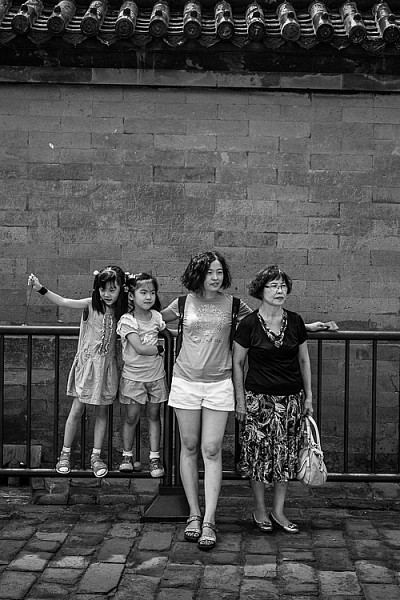
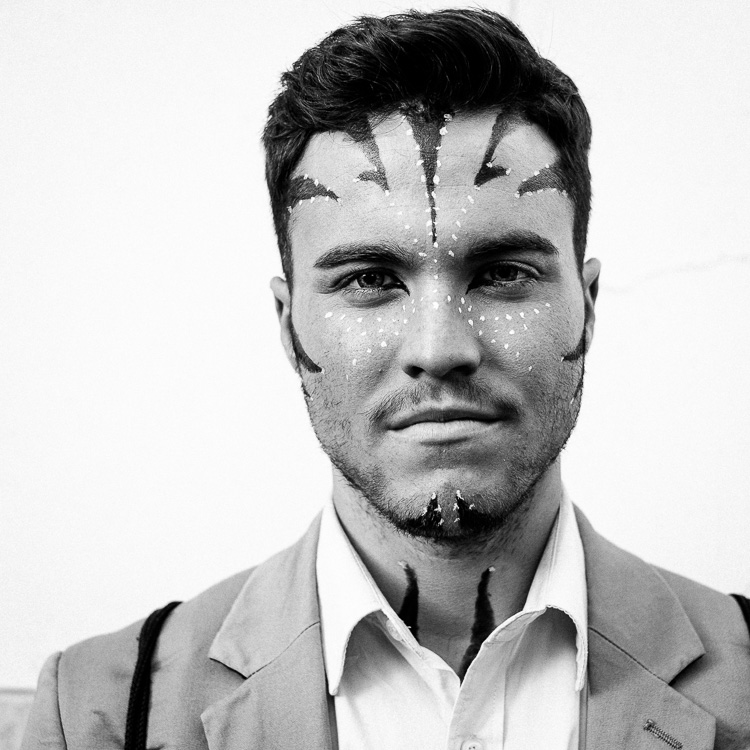
Many street and travel photographers, street photographers especially, chose to work in black and white. If your aim is to make a candid portrait that captures something of the person’s character or soul, then black and white is an excellent choice. There is something timeless about black and white that helps reveal character.

That’s why I shot the following photo in black and white.

The Pros and Cons of Black & White Versus Color for Street and Travel Photography

2. To simplify the composition

Black and white is a form of simplification. Skilled street photographers learn to create images that are uncluttered and that contain as few distractions as possible. Color can be extremely distracting, and sometimes it’s easier to ignore color completely and work in black and white.

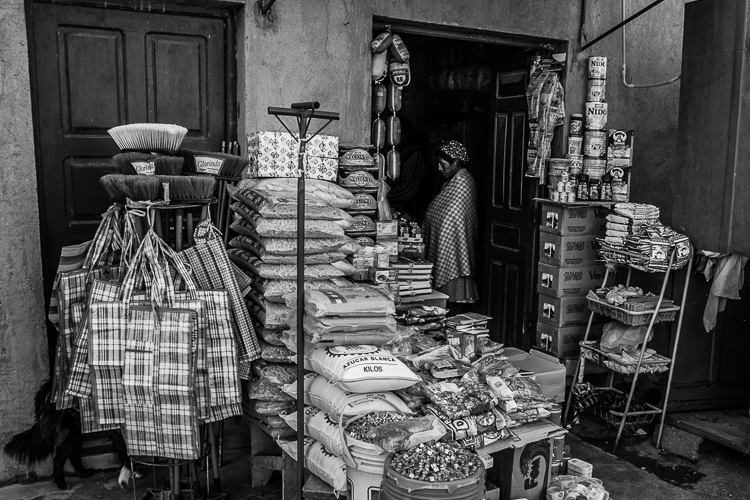
For example, let’s say you make a portrait of somebody on the street, but there is a red poster on a wall behind them. In a color photo, that’s likely to be very distracting. But convert it to black and white and the distraction goes away. The viewer’s attention goes back to the person, where it belongs.

If you are working in an area with lots of potentially distracting colors, working in black and white may be the way to go. For example, this scene in Bolivia was quite colorful, and I felt that black and white removed the distractions of those colors.

The Pros and Cons of Black & White Versus Color for Street and Travel Photography

3. To evoke atmosphere

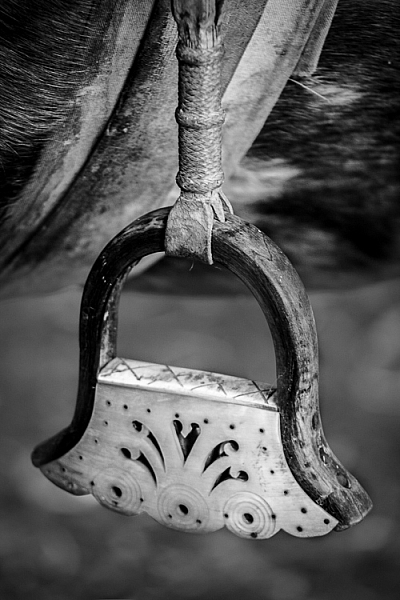
Color photos can be tremendously evocative, but so can black and white ones. I think it’s because a black and white image leaves something for the imagination, or perhaps because we associate it with photos taken in the past. So, if you are working somewhere with lots of old buildings, then black and white photos can be a tremendously moody way of capturing the atmosphere of that place.

I chose black and white for this photo, taken in the Argentina, because the stirrup is handmade, and looks ancient, as if it were made many years ago.

The Pros and Cons of Black & White Versus Color for Street and Travel Photography

3 Reasons for working in color

Color is very powerful and used wisely it can elevate your images to another level. Yet, if it is not used thoughtfully, it can take away from the impact of your photos.

1. The colors of the location are part of its character

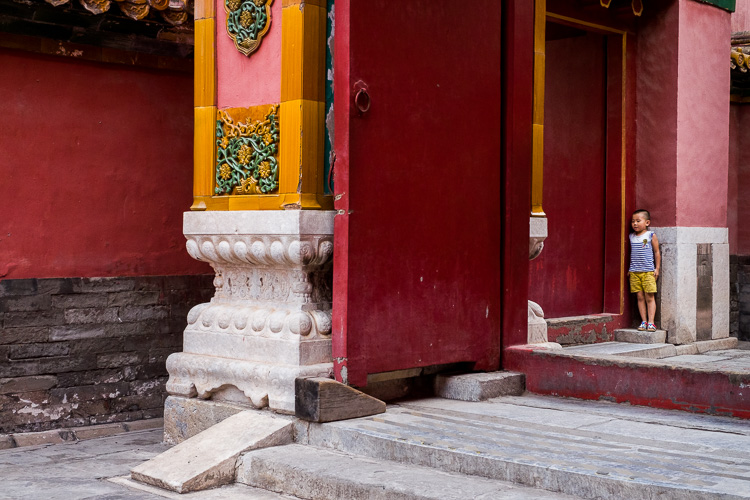
For example, last year I visited Beijing and noticed that red is a very common color in that city. It denotes power and wealth and has an important part in Chinese culture. I realized that it is possible to create a series of interesting photos with red as the dominant color.

For example, this photo (below), taken in the Forbidden City in Beijing, makes use of the striking contrast between the red walls and the yellow tiles (matched by the boy’s shorts).

The Pros and Cons of Black & White Versus Color for Street and Travel Photography

2. The light is beautiful

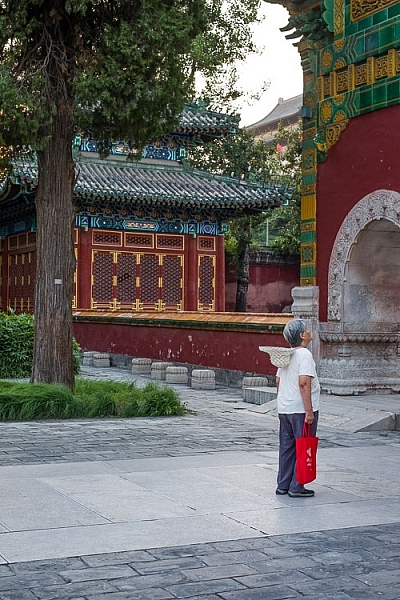
Color photos are at their strongest when the light is beautiful. This is usually during the golden hour close to sunset, or early morning just after sunrise. The light at these times is warm and golden, and tremendously evocative. This could be a good time to work in color.

I took this photo close to sunset. The light was soft and its warmth helped lift the scene.

The Pros and Cons of Black & White Versus Color for Street and Travel Photography

3. You are shooting at dusk

Dusk and early evening are good times to work in color as it gives you the opportunity to work with the natural color contrast between the orange light cast by tungsten light bulbs and the natural blue color of the ambient light.

This photo below was taken in the early evening. The hat and t-shirt of the man in the foreground are colored blue by the ambient light outside, while the rest of the scene is lit by artificial light. I retained the orange color in post-processing to keep the atmosphere.

Color vs black and white in street and travel photography

Commit

The process of deciding to shoot in black and white or color involves assessing the scene and the situation, and deciding which one to use, taking into account the reasons listed in this article and your personal preferences. The key is then to commit to the process. Work the subject and do your best to create the most powerful images possible.

If you’re working in color, think about the colors present in the scene and how you can use them effectively. Your mind will engage and start looking more deeply at the colors around you.

If you’re working in black and white, look for interesting textures, tonal contrast, and shapes. Again, once you commit your mind will start looking for compositions that work well in monochrome.

Your turn

What do you think? Do you prefer to make street and travel photos in black and white or color? Let us know in the comments.


If you enjoyed this article and would like to learn more about street and travel photography then please check out my ebook The Candid Portrait.

googletag.cmd.push(function() {
tablet_slots.push( googletag.defineSlot( “/1005424/_dPSv4_tab-all-article-bottom_(300×250)”, [300, 250], “pb-ad-78623” ).addService( googletag.pubads() ) ); } );

googletag.cmd.push(function() {
mobile_slots.push( googletag.defineSlot( “/1005424/_dPSv4_mob-all-article-bottom_(300×250)”, [300, 250], “pb-ad-78158” ).addService( googletag.pubads() ) ); } );

The post The Pros and Cons of Black and White Versus Color for Street and Travel Photography by Andrew S. Gibson appeared first on Digital Photography School.

Digital Photography School

 
Comments Off on The Pros and Cons of Black and White Versus Color for Street and Travel Photography

Posted in Photography


Meet two nomadic photographers who travel full-time

10 Jan

Plenty of photographers have the words ‘travel more’ at the top of their list of New Year’s resolutions. In fact, when we asked our readers what their photo-related resolutions were, more than a quarter responded that travel was a priority. 

So Elia and Naomi Locardi’s desire to travel as much as possible is a familiar one for a lot of photographers, but they’ve taken an unusual approach: they sold most of their possessions and live on the road as full-time travelers. You can learn more about their ‘location independent’ lifestyle in the SmugMug Films feature above. See a sample of the Locardis’ photography below.

$ (document).ready(function() { SampleGalleryV2({“containerId”:”embeddedSampleGallery_7988223662″,”galleryId”:”7988223662″,”isEmbeddedWidget”:true,”standalone”:false,”selectedImageIndex”:0,”startInCommentsView”:false,”isMobile”:false}) });

What do you think – would you be able to embrace a permanent-address-free lifestyle? Let us know in the comments.

Articles: Digital Photography Review (dpreview.com)

 
Comments Off on Meet two nomadic photographers who travel full-time

Posted in Uncategorized


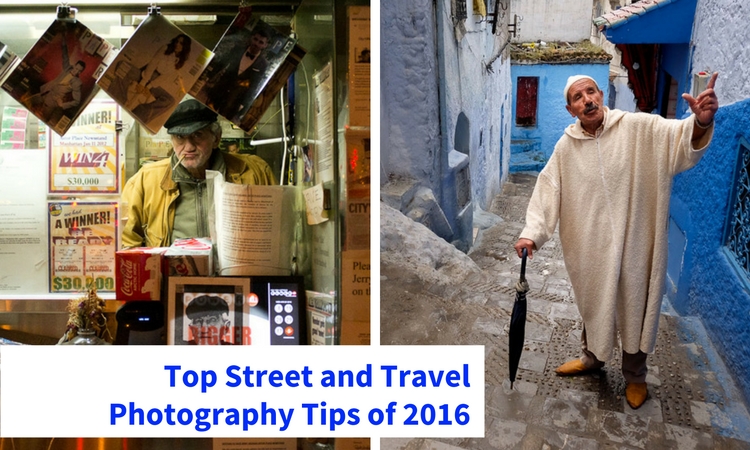
Top Street and Travel Photography Tips of 2016

04 Jan

This week we have shared some other popular articles from 2016. Check those out here:

  • Top Gear Related Articles of 2016
  • 15 of the Most Popular Landscape Photography Articles of 2016
  • 18 of the Most Popular Portrait Articles on dPS in 2016
  • Some of the Best Beginner Photography Tips of 2016
  • Most-Read Post-Processing Articles of 2016

In this last annual round-up, I have gathered some of the top street, and travel photography articles of the year for you, and as a bonus some other miscellaneous topics as well. We will be back to our normal schedule of two articles per day tomorrow.

top-street-and-travel-photography-tips-of-2016

Street photography

  •  23 Quick Tips for Street Photography or Your Next Photo Walk
  • The Uncomfortable Truth About Street Photography
  • 13 Steps for Editing Street Photography in Lightroom from Start to Finish
  • An Introduction to Street Photography for New Photographers
  • How to Choose the Best Lens for Travel and Street Photography
  • 7 Common Mistakes That Newbie Street Photographers Make
  • How the Square Format Can Enhance Your Street Photography
  • 8 Advanced Street Photography Tips to Get You to the Next Level
  • Pros and Cons of a Telephoto Lens for Street Photography?
  • 9 Tips for Creating Great Street Portraitsultimate-street-photo-guide

Ultimate Guide to Street Photography – free PDF download

Remember you can also get the dPS The Ultimate Guide to Street Photography here. Download it as a free PDF to keep with you as a reference when you go out shooting.

Travel photography

  • 7 Travel Photography Mistakes to Avoid
  • Travel Photography Simplified: 4 Changes that Made me a Better Photographer
  • 7 Common Mistakes That Could be Ruining Your Travel Photos
  • How to Use a Travel Photography Shot List to Come Home with Better Photos
  • My Favourite Travel Lens; The Tamron 28-300mm
  • 10 Tips To Help You Capture Sellable Travel Stock Photos
  • Travel People Photography – Tips and Pitfalls
  • 10 Tips For Food Photography When Travelling
  • 6 Tips for How to be a Culturally Sensitive Travel Photographer
  • 7 Reasons Why a Tripod is a Travel Photographer’s Best Friend
  • How to Travel Safely with Your Camera Gear
  • 5 Lessons Learned While Using a Kit Lens for Travel Photography
snapntravel-1-1.jpg

Also available is our SnapnTravel ebook. Get it here.

Other topics

  • Behind the Scenes of Marvellous Macro Insect Imagery
  • Quick Overview of How to do Macro Photography
  • Macro Photography on a Budget: An introduction to Close-up Filters
  • How to Get Stunning Macro Photos with Your Mobile Phone
  • Tips for Abstract Macro Photography; Using Texture and Light
  • 5 Must-Have Lenses for Wedding Photographers and Why
  • 4 Easy and Unique Ways to Light and Photograph Wedding Rings
  • Wedding Photography; Just How Specialized is it?
  • 10 Fundamental Tips for Newbies in the Wedding Photography Business
  • 10 Tips for Photographing Great Headshots
  • How to Edit Corporate Headshots in Lightroom
  • The Secret to Finding the Hero Angle in Food Photography
  • 5 Tips for More Professional-Looking Food Photography
  • 8 Tips for Food Photography Newbies
  • How to Take Cool Food Photos in Your Refrigerator
  • 10 Ideas to Instantly Improve Your Photography Composition
  • 6 Advanced Composition Techniques to Improve Your Photos
  • 4 Steps to Creating Images With More Meaningful Composition

leannecole-exhibiting-your-artwork-31

googletag.cmd.push(function() {
tablet_slots.push( googletag.defineSlot( “/1005424/_dPSv4_tab-all-article-bottom_(300×250)”, [300, 250], “pb-ad-78623” ).addService( googletag.pubads() ) ); } );

googletag.cmd.push(function() {
mobile_slots.push( googletag.defineSlot( “/1005424/_dPSv4_mob-all-article-bottom_(300×250)”, [300, 250], “pb-ad-78158” ).addService( googletag.pubads() ) ); } );

The post Top Street and Travel Photography Tips of 2016 by Darlene Hildebrandt appeared first on Digital Photography School.

Digital Photography School

 
Comments Off on Top Street and Travel Photography Tips of 2016

Posted in Photography


Cargotecture Travel: Shipping Container Hostel Opens in Vietnam

29 Dec

[ By SA Rogers in Boutique & Art Hotels & Destinations & Sights & Travel. ]

ccasa-shipping-container-hostel-5

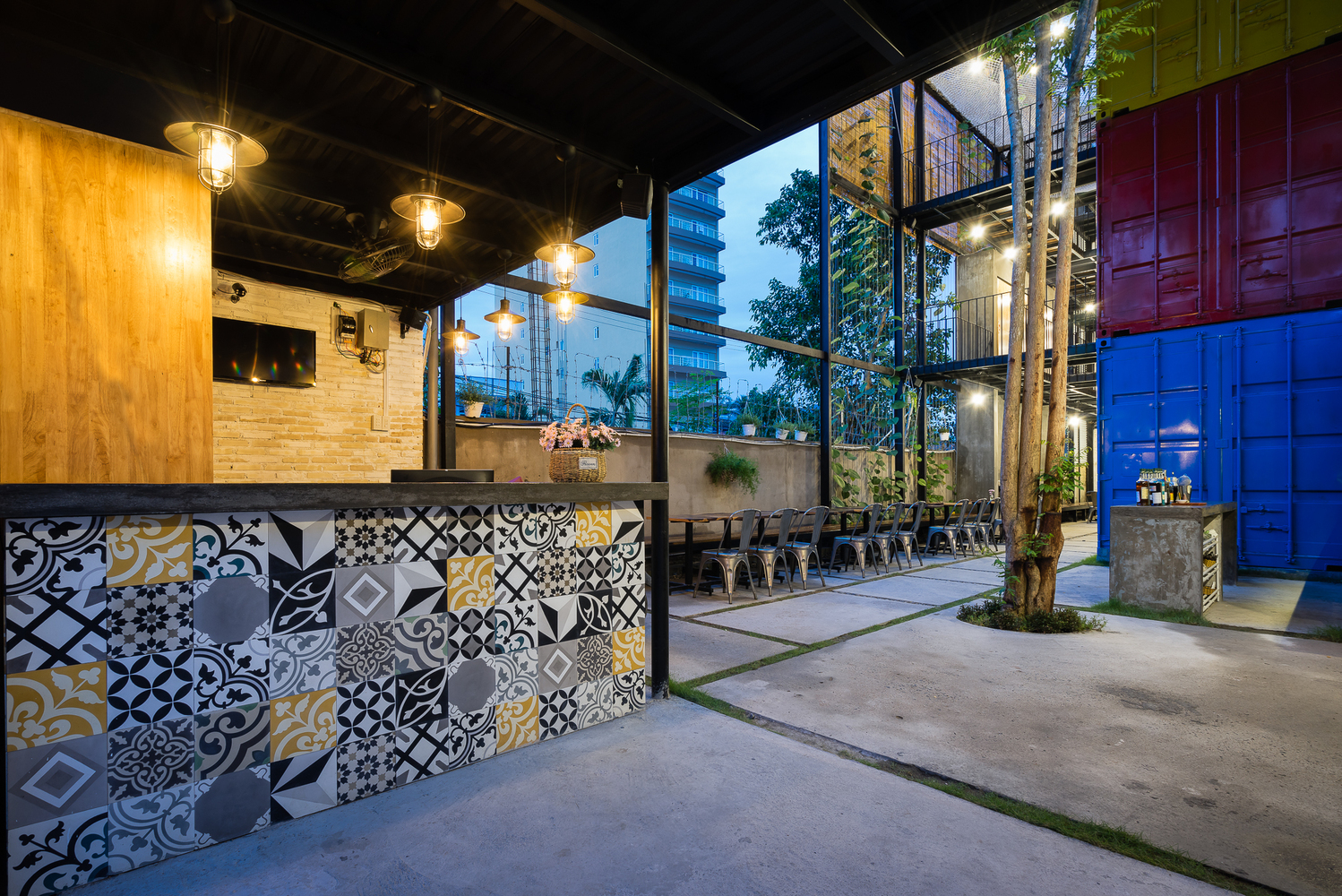
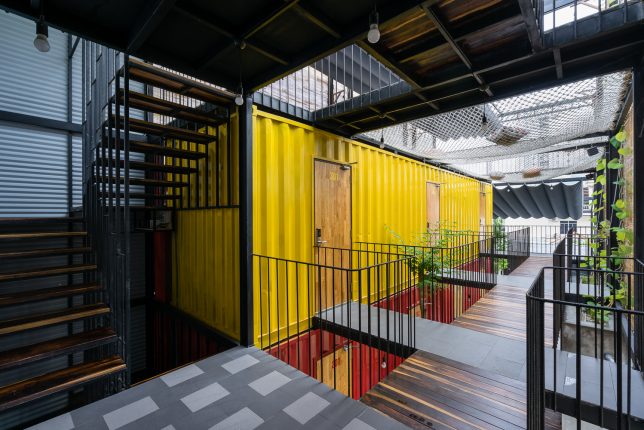
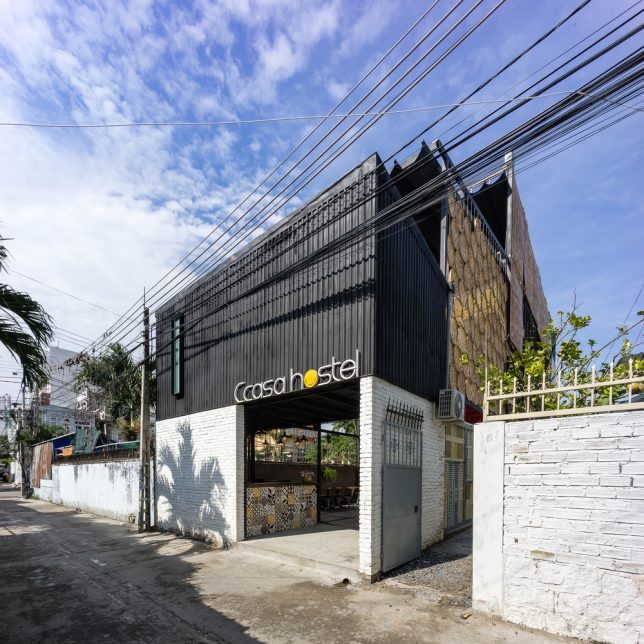
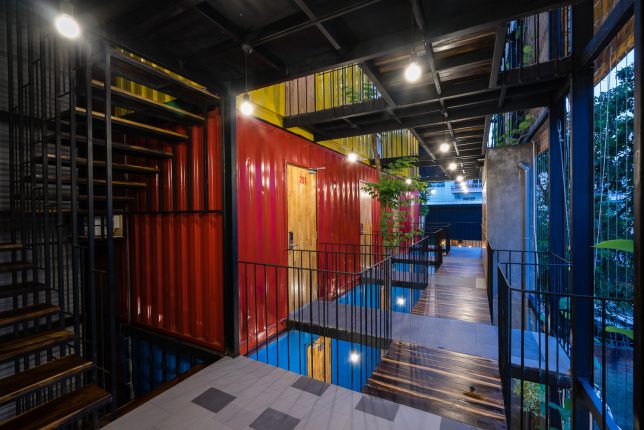
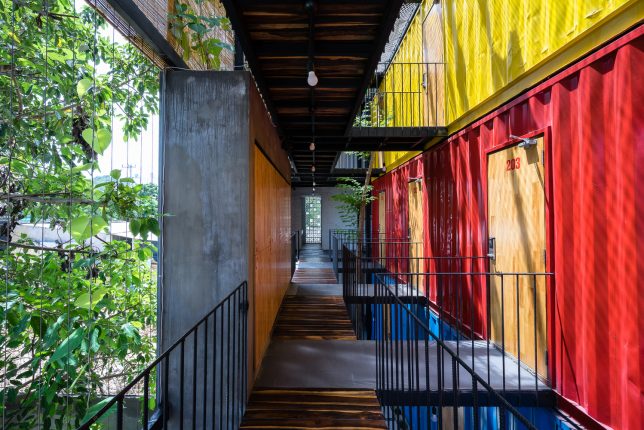
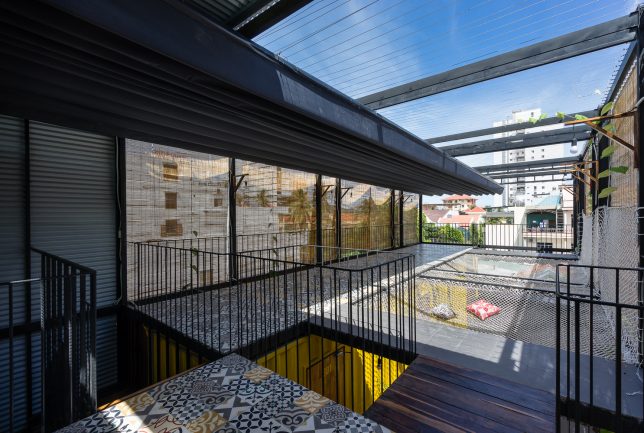
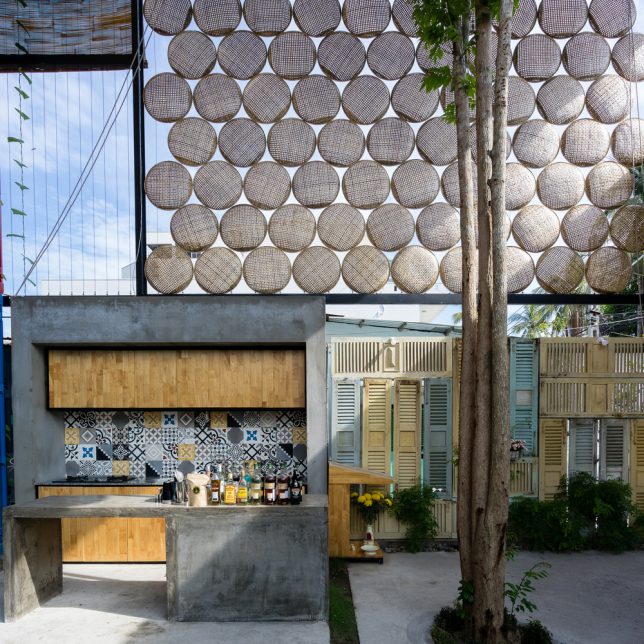
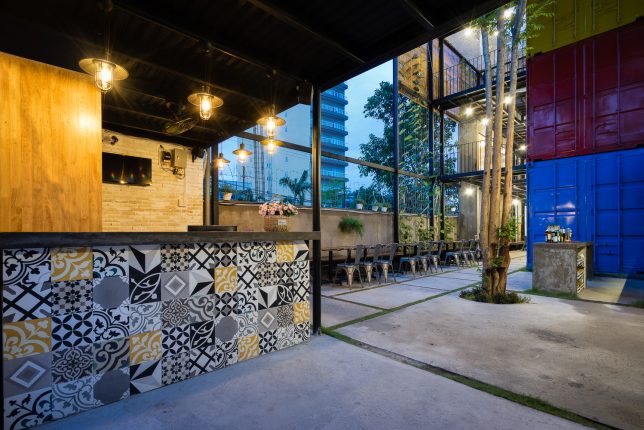
You might not want to live in a shipping container permanently, but now you can test-drive one for a night or two at the affordable, streamlined and modern Ccasa Hostel in Vietnam. Colorful cargo containers are stacked on top of each other to create a tower of rentable rooms, set within an open air framework that takes advantage of the tropical local climate. Located in Nha Trang just a three-minute walk from the beach, it’s intended for backpackers who flock to the area to enjoy local mineral spring resorts and temples.

ccasa-shipping-container-hostel-1

ccasa-shipping-container-hostel

ccasa-shipping-container-hostel-2

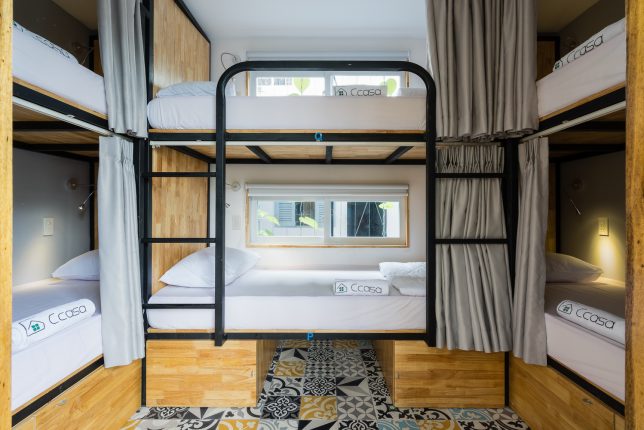
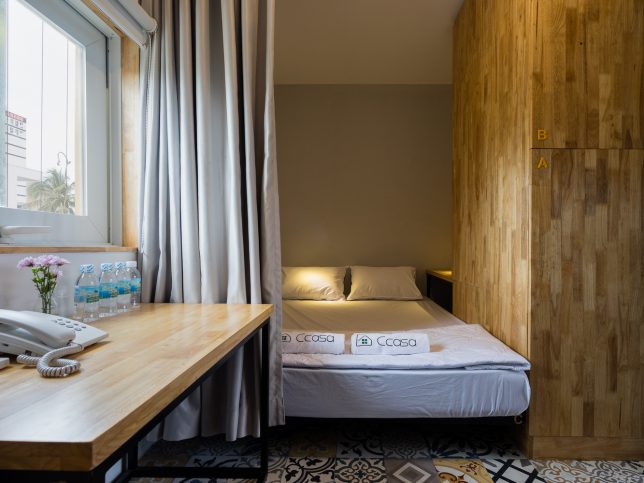
The design of the hostel is based on that of a family home, with lots of beds sharing bathroom, kitchen and living room facilities. Some of the converted shipping containers offer private bedrooms, while others are packed full of bunks in traditional hostel fashion. The containers are seen as just a place to sleep or rest in between adventures or socializing in the common areas.

ccasa-shipping-container-hostel-8

ccasa-shipping-container-hostel-9

ccasa-shipping-container-hostel-10

ccasa-shipping-container-hostel-11

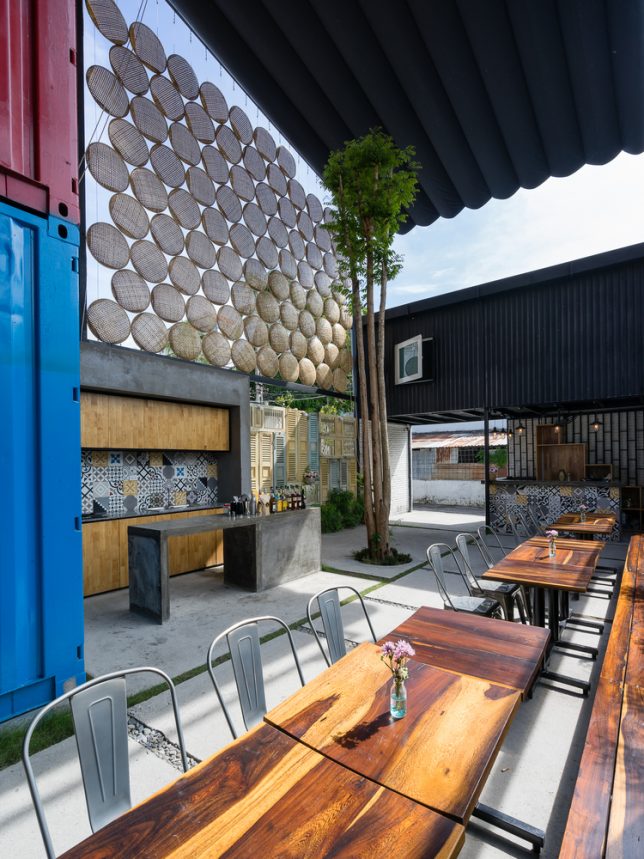
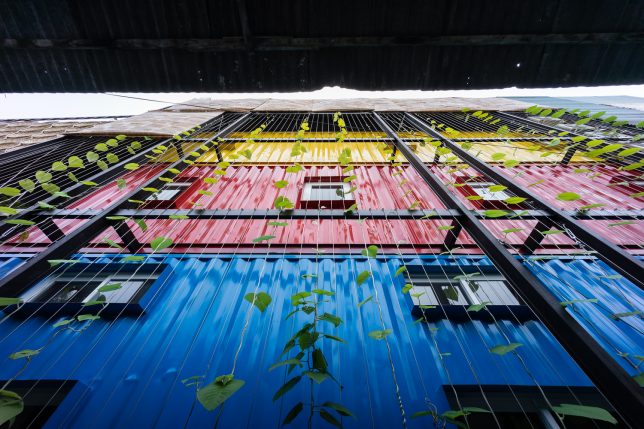
Ccasa Hostel contains three functional blocks: the sleeping block, the washing block and the serving block. The serving block is made of steel frames and black painted metal sheets, and the washing block mimics typical Vietnamese architecture with white-painted bricks and concrete. The three colors of the shipping containers denote different kinds of bedrooms.

ccasa-shipping-container-hostel-7

ccasa-shipping-container-hostel-4

ccasa-shipping-container-hostel-5

ccasa-shipping-container-hostel-12

Instead of the dank, dark corridors you’d usually find in a cheap hostel, there are breezy open-air walkways looking down onto the courtyard below, which is filled with trees. A system of ropes and steel framing encourages climbing vines to obscure the shipping containers on the rear of the building, and as it grows, it’ll create a living screen that filters air, light and noise.

Share on Facebook


[ By SA Rogers in Boutique & Art Hotels & Destinations & Sights & Travel. ]

[ WebUrbanist | Archives | Galleries | Privacy | TOS ]


WebUrbanist

 
Comments Off on Cargotecture Travel: Shipping Container Hostel Opens in Vietnam

Posted in Creativity


Shots from a drone help photographer take first place in Travel Photographer of the Year awards

18 Dec

2016 Travel Photographer of the Year

Joel Santos, Portugal Winner, Travel Photographer of the Year 2016/www.tpoty.com

Salt Desert, Danakil Depression, Afar, Ethiopia. This unique aerial photo shows the salt miners guiding a dromedary and donkey caravan through this desert’s unique salt patterns.

A photographer from Portugal has won the £4000 top prize in 2016’s Travel Photographer of the Year competition with a pair of portfolios of volcanic landscapes and, in contrast, a document of the life of fishermen in Ghana. Joel Santos is the first Portuguese winner of the competition, as well as the first to win with a set of images shot from a drone.

Winners of other categories in the competition went away with cash and accessories, while the best portfolios in the ‘Mankind’, ‘Land, Sea, Sky’ and ‘Journeys & Adventures’ sections won a Fujifilm X camera and lens. The Young Travel Photographer of the Year was Darpan Basak, a 14-year-old from India, while an 18-year-old from the USA, Courtney Moore, won the 15-18-year old category, and Ankit Kumar from India won the 14 and Under section.

The competition attracted entries from 123 countries, and a selection of the winning images will be exhibited in Hull, UK, between 18th May and 30th June, and again at the University of Greenwich, London, during August.

For more information and to see the winners in all categories visit the Travel Photographer of the Year website.

Press Release

ON TOP OF THE WORLD

Travel Photographer of the Year 2016 winners are revealed

From fiery lava flows to a magical, snow-swirled New York street scene that echoes an impressionist painting and from the imperious gaze of an elusive, endangered Iberian lynx to wonderfully minimalist images of West Kirby, England, the winning images in the 2016 international Travel Photographer of the Year awards (TPOTY) have been revealed, and they are stunning.

Photographers from 20 countries have won awards, and the winning images will go on show at TPOTY exhibitions at the UK City of Culture celebrations in Hull from 18th May to 30th June 2017 and at 10 Stockwell Street, Greenwich at the University of Greenwich, London from 4th August to 3rd September 2017.

Joel Santos becomes the first-ever Portuguese overall winner in the award’s 14-year history, beating photographers from 123 countries to take the title of Travel Photographer of the Year 2016. His winning entry features a delicate and intimate portfolio depicting traditional fishing in Ghana and – in another first for TPOTY – an aerial portfolio captured using a drone, giving a bird’s eye view of one of the hottest places in the world, Ethiopia’s Danakil Depression.

The Young Travel Photographer of the Year 2016 is 14-year old Darpan Basak from India, 18-year old Courtney Moore (USA) won Young TPOTY 15-18 and Ankit Kumar (India) won Young TPOTY 14 and Under.

In the portfolio categories, former overall TPOTY winner Craig Easton won ‘Land, Sea, Sky’, with two German photographers – Sandra Bartocha and Stephan Fürnrohr
– each being awarded ‘Best Single Image’ in the category. China’s Ruiyuan Chen took first place in ‘Mankind’, with Jeremy Woodhouse (UK) winning the award for Best Single Image, and Beniamino Pisati (Italy) won ‘Journeys & Adventures’, with Lluís Salvadó (Spain) winning Best Single Image.

In the single image categories, ‘Shaped by Light’ was won by Chinese photographer Biran Zhao, Michele Palazzo (Italy) won ‘Cities – Architecture & Spaces’ and Luke Massey (UK) won ‘Wildlife & Nature’.

Briton Alison Cahill came first in the New Talent award, and fellow Brit Rufus Blackwell won the HD video category Travel Shorts. Finally, Italy’s Marina Spironetti took first prize in Smart Shot, the category for images taken on a mobile phone or tablet.

Travel Photographer of the Year is judged by an international panel of judges that includes Deputy Editor in Chief, Fotomagazin, Germany, Manfred Zollner, champion jockey turned travel photographer Richard Dunwoody and Jerry Tavin (co-president of Glasshouse Images and founder of Young Photographers’ Alliance).

Awards and prizes
In addition to the significant international exposure that comes with winning TPOTY, Joel Santos receives £4,000, a selection of StaaG luxury leather travel goods and sterling silver accessories (worth over £1250), £500 to spend on the Páramo clothing of his choice, and a Plastic Sandwich personalized leather portfolio case.

For their success in Journeys & Adventures; Land, Sea, Sky, and Mankind, Beniamino Pisati, Craig Easton and Ruiyuan Chen each receive a Fujifilm X-Series camera and lens of their choice. The winner of the Best Single Image award in each portfolio category receives a giclée fine art print from Genesis Imaging.

Biran Zhao, Luke Massey and Michele Palazzo, the winners of Shaped by Light; Wildlife & Nature, and Cities – Architecture and Spaces will each enjoy a five or six- day winter or summer voyage for two people along Norway’s stunning coastline with Hurtigruten, and receive a Torres Insulator Jacket from Páramo.

Alison Cahill receives a set of luxury leather travel goods from StaaG, a personalized leather portfolio case from Plastic Sandwich, Photo Iconic tuition and a Páramo Halcon Traveller jacket for winning New Talent, while Marina Spironetti and Rufus Blackwell each win £500, a Páramo Halcon Traveller jacket and a Plastic Sandwich portfolio case, for winning ‘Smart Shot’ and the HD Video category respectively.

Young TPOTY winner Darpan Basak receives £500, Photo Iconic photography tuition and a Plastic Sandwich leather portfolio case. Each Young TPOTY age group winner receives £250 plus Photo Iconic photography tuition. The awarded photographers in Young TPOTY also receive destination guides from SNAPP Guides, as do certain awarded photographers in a number of other categories

To see all the winning images across all categories, visit the 2016 Winners’ Gallery at www.tpoty.com.

2016 Travel Photographer of the Year

Joel Santos, Portugal Winner, Travel Photographer of the Year 2016/www.tpoty.com

Lake Bosumtwi, Ashanti, Ghana. The Ashanti people fish from the traditional wooden padua.

2016 Travel Photographer of the Year

Courtney Moore, USA (age 18) Winner, Young TPOTY 15-18/www.tpoty.com

Island Beach State Park, New Jersey, USA. On a particularly windy day, this fox was sitting only a few yards away from the ocean as sand pelted against his fur.

2016 Travel Photographer of the Year

Ankit Kumar, India (age 13) Winner, Young TPOTY 14 and Under/www.tpoty.com

Lake Natron Tanzania. A flock of Lesser flamingos take flight above Tanzania’s salt and soda Lake Natron.

2016 Travel Photographer of the Year

Beniamino Pisati, Italy Winner, Journeys & Adventures portfolio/www.tpoty.com

Bayankhongor, Mongolia. Horses are present in all aspects of life in Mongolia. A popular saying is: “A Mongol without a horse is like a bird without wings”.

2016 Travel Photographer of the Year

Alison Cahill, UK Winner, New Talent, Eye to Eye/www.tpoty.com

Son & Dad Barbers, George Town, Penang, Malaysia. Portrait of Elyas the head barber and owner of Son & Dad.

2016 Travel Photographer of the Year

Craig Easton, UK Winner, Land, Sea, Sky portfolio/www.tpoty.com

West Kirby, Wirral, UK. A lone Buddhist monk walks around the boundary wall of the West Kirby Marine Lake.

2016 Travel Photographer of the Year

Ruiyuan Chen, China Winner, Mankind portfolio/www.tpoty.com

Daliang Mountains, Sichaun province, China. Portraits of the ethnic Yi people, who live in great poverty.

2016 Travel Photographer of the Year

Biran Zhao, China Winner, Shaped by Light/www.tpoty.com

Baiyu County, Ganzi, Sichuan Province, China. Every morning, the nuns walk around the mountain as practice lesson. Regardless of the season, they walk year after year, day in and day out.

2016 Travel Photographer of the Year

Luke Massey, UK Winner, Wildlife & Nature/www.tpoty.com

Sierra de Andújar National Park, Andalucia, Spain. In 2001 there were less than 100 Iberian lynx left in the wild. Fifteen years later there are now more than 400, but it is still, unfortunately, the rarest cat in the world.

2016 Travel Photographer of the Year

Rudi Sebastian, Germany Joint Runner-up Wildlife & Nature/www.tpoty.com

Berlin, Germany. In a small pond at the rural border of Berlin, male moor frogs in their bright blue mating colour try to mate with a common toad, which almost drowned. It took about 30 minutes before she managed to free herself and reach dry ground.

2016 Travel Photographer of the Year

Michele Palazzo, Italy Winner, Cities: Architecture & Spaces/www.tpoty.com

Flatiron Building, Manhattan, New York, USA. While walking through the Jonas snowstorm that swept across the East Coast, I captured this shot of the Flatiron Building against a backdrop of swirling snow.

Articles: Digital Photography Review (dpreview.com)

 
Comments Off on Shots from a drone help photographer take first place in Travel Photographer of the Year awards

Posted in Uncategorized


Product Review: Polaroid Carbon-Fiber Travel Tripod and Varipod

02 Dec

First a little background: I’m a wilderness photographer. I spend time, a lot of time, every year on multi-day river, backpacking, and winter trips in Alaska. This past summer, between June and mid-September, I spent more than 60 days in the backcountry. On every one of these trips, to one degree or another, weight was an issue, and I’m always on the lookout for good, light equipment that might suit my travels. With that in mind, on to the review of two new support products from Polaroid, the Polaroid Pro Series Carbon Fiber Travel Tripod, and the Varipod.

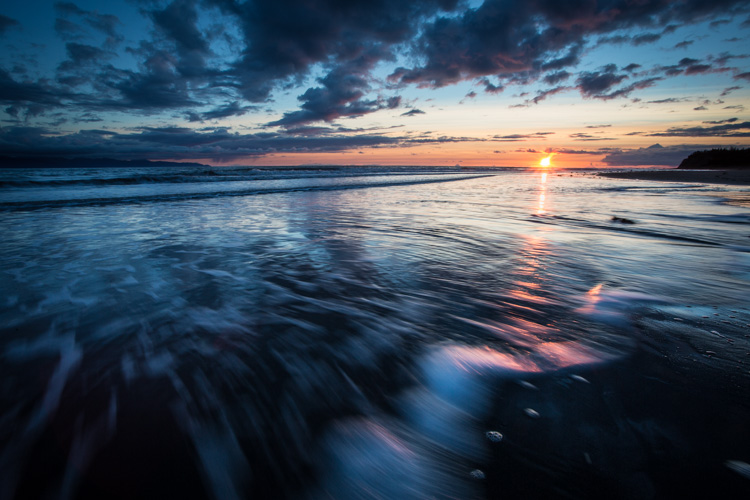
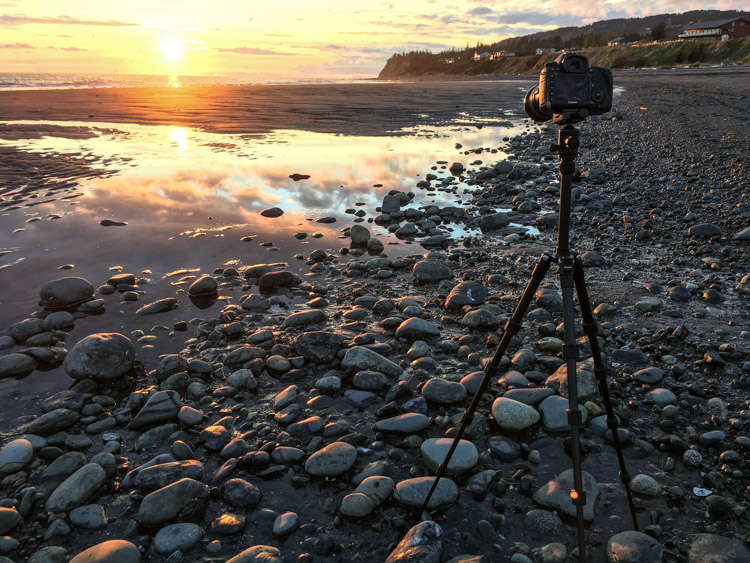
ak-homer-109256-sunset-48

Image made using the Polaroid Pro Series Carbon Fiber Travel Tripod (ISO100, 1/5th sec @ f22)

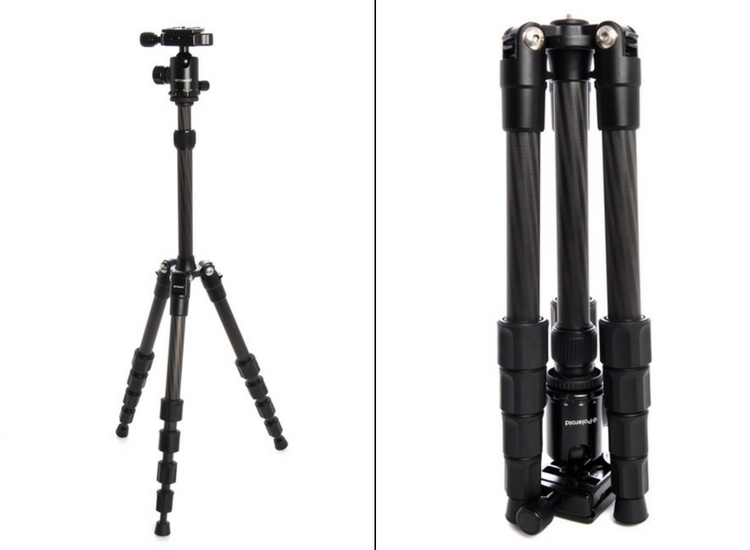
Polaroid Pro Series 55″ Carbon Fiber Travel Tripod With Removable Ball head

polaroid-tripod-review

I was excited to open up the box containing Polaroid’s new carbon travel tripod. Upon first inspection, I was impressed. There are five leg segments, each about eight inches in length making the tripod very compact. Additionally, it is designed so the legs fold back over the center post and included ball head, making the fully collapsed tripod very small indeed.

Build

The leg segments are of the twist-lock variety, ergonomic, and very effectively hold the sections in or out with a simple, quick twist. The numerous legs section means that the lowest sections are thin, giving the impression of flimsiness. However, after several days of use, they did not strike me as fragile.

img_3264

The legs of the tripod, even when fully extended are not very long. Polaroid has made up for this shortcoming by having a fixed center post that extends up another foot or so from the top of the tripod, adding substantially to the height. The post itself is expandable, allowing the very compact tripod to stretch almost to my eye level (I’m six foot). Though using this extendable system reduces stability.

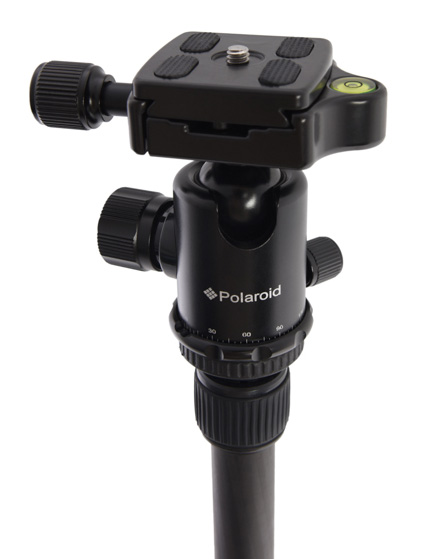
polaroid-tripod-review-01

The included ball head is the highlight of this tripod. Made of machined aluminum, it’s designed much like the large Kirk Industries head on my full-size tripod. Polaroid’s version uses three knobs, one to lock the quick release (similar to Arca-style plates), one to control the rotation, and one to lock and unlock the ball itself. One side cut allows for vertical compositions. Simply, it’s a great little ball head that held my big Canon SLR easily. In fact, it was so good, I wish I could purchase it separately to replace the flimsy head atop my current compact tripod. As the head is the point where many light and entry-level tripods fall short, I was impressed and surprised by this one.
img_3248

Usability of the tripod

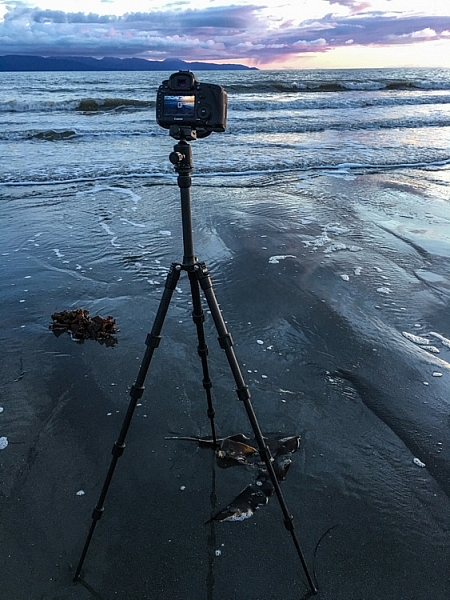
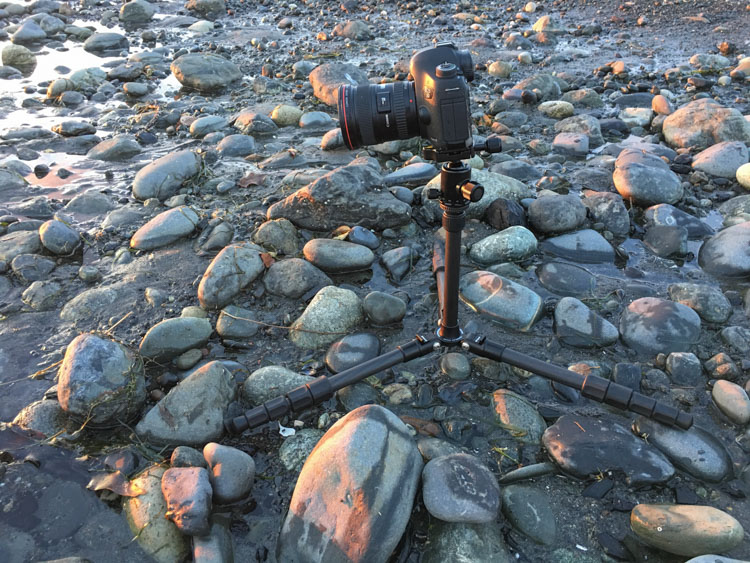
I put this tripod to use a number of times over a couple of weeks, including a couple of sunset photo shoots on a beach, and two evenings photographing the aurora borealis. In bright conditions and relatively fast shutter speeds, the tripod worked well. The height adjusts easily and quickly, though the center post system does limit how low the camera can go. (At its lowest, the camera is still 12-15 inches off the ground, see photo below.)

img_3255

During my sunset photo shoots, the system worked fine at a variety of heights, and I was able to use shutter speeds down to about 1/5th of a second, and still maintain sharp images (see top image in this article).

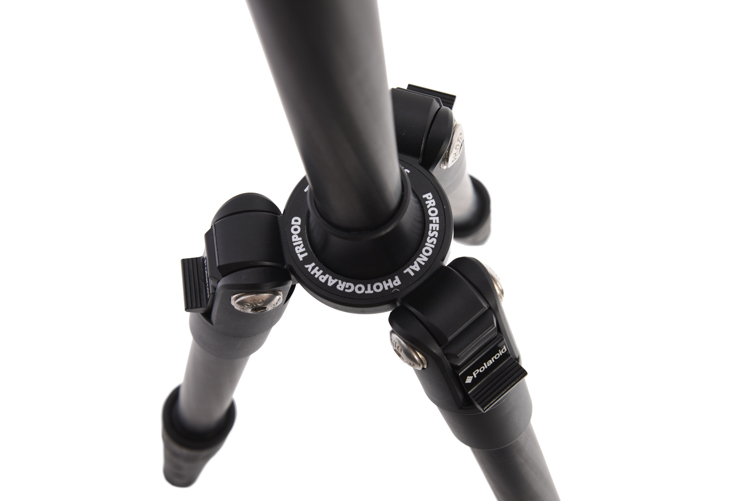
pltric-90-final

Image showing the design of the non-retractable center post on the Polaroid Carbon Travel Tripod.

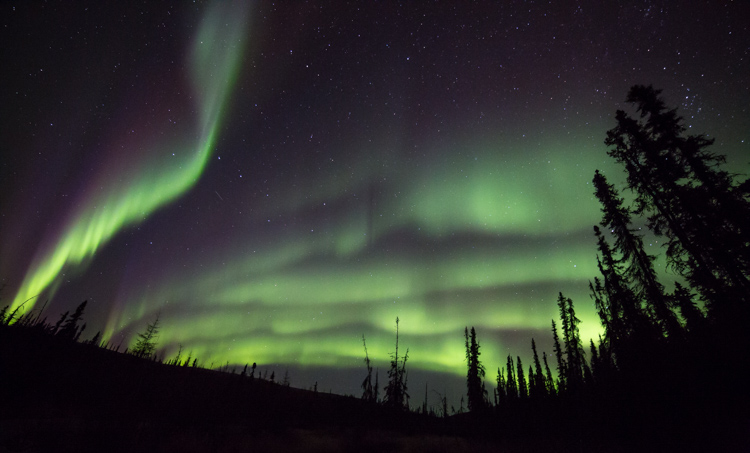
It was when I tried to shoot the northern lights that the tripod showed its one flaw – instability with a heavy camera. The non-retractable, non-removable center post, make the tripod a bit jiggly when used with a full-size DSLR. A point and shoot, or mirrorless system would not likely have the same trouble. However, even with the heavy camera, I was able to attain sharp images when I used a remote shutter release and the mirror lock-up function of the camera.

To maintain sharpness, I was forced to use the camera's timer and mirror lock-up functions.

To maintain sharpness at extended shutter speeds, I used the camera’s timer and mirror lock-up functions.

Conclusion

If it weren’t for that wobbly center post, I would give this small, light tripod, with an awesome ball-head, a glowing review. I’d like to see Polaroid include a system to retract the center post to add stability when I drag the shutter. If the next version of this tripod includes such a feature, I’ll strongly consider adding it to my quiver. In the mean time, I can easily recommend this tripod to anyone shooting with a light-weight camera system. If you are working with a point and shoot, or mirrorless, the simplicity, flexibility, and the particularly impressive ball head make the Polaroid Pro Series Carbon Fiber Travel Tripod a contender.

Rating 3.5 out of 5 stars.

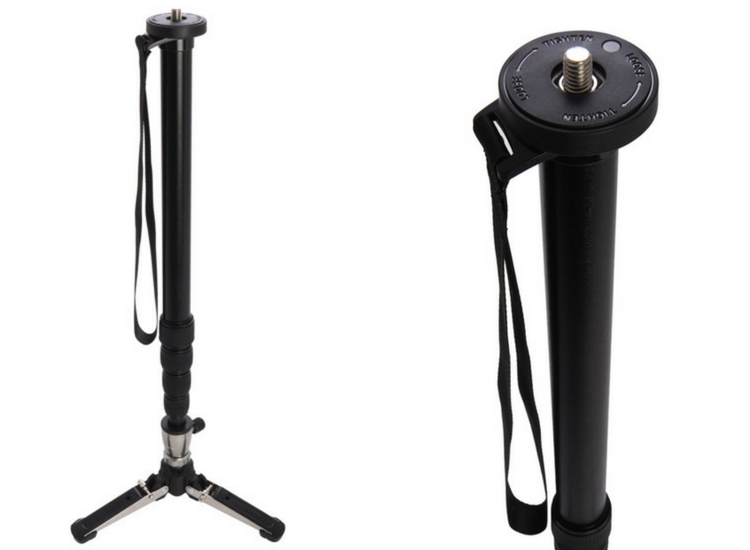
Polaroid 65″ VariPod

2-in-1 Telescoping Camera Monopod with Removable Tripod Balance Stand Base

varipod-polaroid

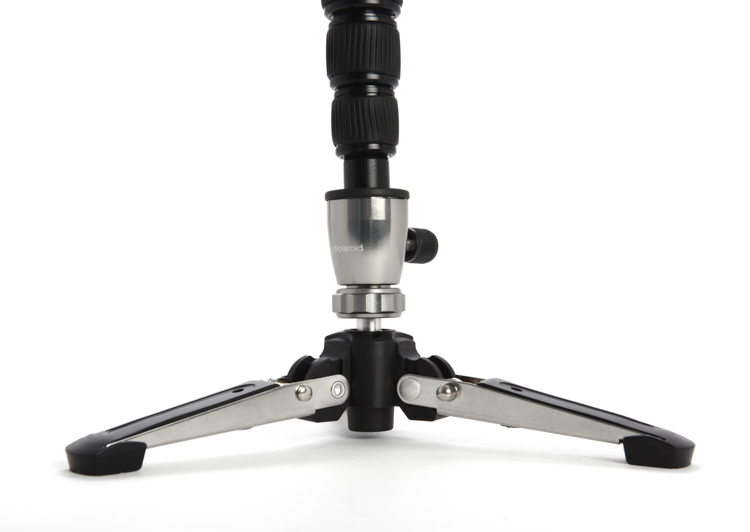
Out of the box, Polaroid’s rendition of this classic long-lens tool, the monopod, looked more or less like a standard version of the product, with one exception. The foot of the monopod incorporates a removable, articulated, three-legged base. At first, I didn’t understand the purpose of this feature, but later, as I used the Varipod outdoors, I figured it out (more on that in a moment). The expandable leg, like the tripod reviewed above, uses a twist-lock system that holds the aluminum tubes firmly extended. I had no issues with segments collapsing, even with a heavy lens and SLR.

In the field, the monopod worked well. The removable foot is articulated so it doesn’t interfere when you tip the monopod forward or back. Though at first confused by this seemingly unnecessary add-on, as I shot with a 500mm f/4 on a sandy beach, the usefulness of the stand was obvious; the monopod foot didn’t sink into the muck. This could be useful to anyone shooting in soft terrain, whether the sidelines of a sports field or a muddy wetland.plmonstand-66-final

The foot system did seem overly complex. It is made of aluminum with various hinges and springs. Though effective at providing support in soft terrain, it also got dirty and was very difficult to clean. The foot had to be blown out, rinsed, and shaken before I eventually managed to remove all the grains of sand.

The support provided by the monopod allowed me to achieve sharp images with my 500mm f/4 at shutter speeds as low as 1/30th, opening up creative composition possibilities with moving subjects. The monopod is also far lighter and maneuverable, though of course less stable, than a full-size tripod.

Conclusion

The Polaroid Varipod works. The articulated foot provides support in soft terrain, and the legs are sturdy and easy to adjust. My main complaint is the complexity of the foot and difficulty in cleaning. I’d like to see this made simpler, with fewer parts that can jam with sand and dirt. Otherwise, it’s a solid contribution to the market.

Rating 4.5 out of 5 stars.

googletag.cmd.push(function() {
tablet_slots.push( googletag.defineSlot( “/1005424/_dPSv4_tab-all-article-bottom_(300×250)”, [300, 250], “pb-ad-78623” ).addService( googletag.pubads() ) ); } );

googletag.cmd.push(function() {
mobile_slots.push( googletag.defineSlot( “/1005424/_dPSv4_mob-all-article-bottom_(300×250)”, [300, 250], “pb-ad-78158” ).addService( googletag.pubads() ) ); } );

The post Product Review: Polaroid Carbon-Fiber Travel Tripod and Varipod by David Shaw appeared first on Digital Photography School.

Digital Photography School

 
Comments Off on Product Review: Polaroid Carbon-Fiber Travel Tripod and Varipod

Posted in Photography