RSS
 

Posts Tagged ‘Tips’

7 Tips to Help You Capture the Perfect Landscape Photo

08 Mar

Landscape photography is one of the most popular genres of photography and it’s easy to understand why. After all, every single person at some point in their life has probably looked at a landscape photograph of an epic scene with dramatic clouds and beautiful light and just thought, “Wow!” But as easy as it may seem, capturing stunning landscape images isn’t straightforward. Here are seven tips to help you capture the perfect landscape photo.

How to Capture the Perfect Landscape Photo

1. Find Your Perfect Spot

The starting point for any great landscape photo is your location. This, of course, means you have to start planning a shoot in advance to ensure you don’t waste time looking for it once you are on location. The first thing you need to do is decide what you are actually going to photograph. Is it a beautiful valley from lookout point? Or is it a historic castle perched on top of a cliff?

This might come from your research into the area you are visiting or it might be a place someone has told you about. It could even be somewhere that you have already been to, but now want to photograph.

Once you have an idea of where and what you are looking to photograph, you then need to look at the relevant maps to make sure that what you are planning to photograph is accessible. Then you need to delve in deeper and ensure that your view of that beautiful valley isn’t going to be obstructed by a big hill in front of you – this means using maps that show elevations. On top of all of this you also need to factor in the direction of the light and how that will affect your view.

Ideally you want to end up with an exact spot of where you would like to photograph and which direction you are intending to look. The good news is that in today’s digital world there are tons of options to help you find out this information from the likes of Google maps, and apps like Photographer’s Ephemeris or PhotoPills.

How to Capture the Perfect Landscape Photo

2. Light is Everything

Any sort of outdoor photography relies heavily on the light that is available. For landscape photography, light is even more vital. The most amazing scene in front of you will look uninspiring and mundane under a blanket of white cloud. If you want to capture the perfect landscape photo, then you need to ensure that you are working with the best light possible.

It’s no secret that most landscape photographers would recommend photographing in the early morning and late afternoon/evening. This is when you will get a low golden soft light from the sun that produces long shadows but that doesn’t mean you can’t photograph at any other time.

You just need to ensure that you understand and have planned for the light you intend to use. For example, it may be that you want to capture a particular side of a cliff. It may be that the only time it is lit by the sun at that time of year is late morning. The most important thing is understanding and trying to organize your shoot for the best time that you possibly can.

How to Capture the Perfect Landscape Photo

3. Compose Your Shot Perfectly

One of the best things about landscape photography is that you often have plenty of time to prepare and compose your shot. That big mountain in front of you isn’t suddenly going to move like an animal does in wildlife photography. As long as you have planned your shoot well and have arrived at your location early, you should have enough time to really fine-tune your composition.

The first thing I always do whenever I get to a location for a landscape shot is just to sit down and look around for 10-15 minutes, I recommend you try it. Not only does this help you evaluate the scene and think about the best composition, but it also helps you lower your heart rate (if you have had a long walk). It allows you to get over that initial awe that you often feel when you see an amazing landscape before you.

When you feel you are ready, compose the shot and take a few test photos while you wait for the perfect light. Think about the scene in front of you. Should you show more of the foreground? If so, is there a point of interest to capture the viewer’s eyes? Or are there interesting mountains or sky, in which case you need to show more of the background? As I said earlier, keep taking test photos and recomposing your shot until you feel that you have the perfect composition and then wait for the perfect light.

Clearly, on the odd occasion, you might have to work fast. For example, if you have a small break in a storm that allows the rays of the sun to get through, but the majority of the time if you have planned your shoot well, you should not be in a hurry.

How to Capture the Perfect Landscape Photo

4. Use a Tripod

For landscape photography a tripod is essential. If you want to capture the best possible photo, in the best possible light, you will have to use a tripod. The alternative usually means having to raise your ISO, which in turn means excessive noise in your photos that can affect the overall image sharpness.

But the other advantage of using a tripod is that it can give you more options for your photography. For example, you can use slower shutter speeds to capture movements of clouds or water or give you a more elevated or lower point of view.

Yes, they are a hassle to carry (you may want to invest in a good camera bag that you can strap your tripod to), but they are simply essential for landscape shots.

How to Capture the Perfect Landscape Photo

5. Use Graduated ND filter

Often the other most widely used accessory for landscape photography is graduated filters. One of the big challenges of landscape photography, especially in low light conditions is the difference in the light areas (the sky) and your dark areas (the foreground). For example, as it gets nearer to sunset, the sun drops lower on the horizon. This might mean that mountains obstruct it.

You then have a situation where your sky is really bright as obviously it is still being lit by the sun, but your foreground is dark because the light from the sun is obstructed by the mountains. So, if you expose for the sky (light areas or highlights) then your foreground will be too dark and if you expose for the dark areas (shadows) your sky will be blown out ( completely white with no detail).

To compensate for this difference in exposure settings needed, you can either use a technique called “exposure stacking”. That means taking multiple shots at different exposure levels and then merging them into one photo in post-processing (using layer blending or HDR techniques).

Or, most landscape photographers prefer to capture photos as correctly as possible at the time of taking the photo. In this situation, the only way to do this is by using a graduated neutral density filter, which balances out the difference in the brightness between the top and bottom of the photo.

How to Capture the Perfect Landscape Photo

6. Experiment With Shutter Speed

As mentioned earlier, one of the great things about landscape photography is that you often have time to take a few different shots. Even during the short time when it’s sunset or sunrise, you will have plenty of time to experiment with different settings and even a few different compositions. So don’t be afraid to really push your settings to extremes.

For example, set a really slow shutter speed of 30 seconds and if there is some wind you will see some amazing cloud movement streaks in the sky. Or if you are by the coast set a fast shutter speed to capture the waves crashing into the rocks. Play around with the settings until you have something that looks amazing and captures the scene perfectly.

How to Capture the Perfect Landscape Photo

7. Post-Production

Usually, the final step in any good landscape photo is some post-processing. This always seems to be a contentious issue as some photographers prefer to keep post-processing to a minimum and some like to really boost the image. Whatever your preference and way of working are, it comes down to personal opinion. But there are a few things that you should look at as a minimum.

For example, making sure your images are straight, clear of dust spots, and correcting the white balance should be a must. You may also want to tweak the crop of the photo if it needs it. Beyond that, ensuring a good contrast and boosting the saturation will help your landscape image jump out.

Generally speaking, every photo will benefit from some level of post-production. Some will need more and some less.

How to Capture the Perfect Landscape Photo

Conclusion

Landscape photography is an incredibly rewarding genre of photography. A great landscape shot often has the power to really capture the viewer’s attention which is why it’s no surprise that it’s also one of the most popular branches of photography.

The post 7 Tips to Help You Capture the Perfect Landscape Photo by Kav Dadfar appeared first on Digital Photography School.


Digital Photography School

 
Comments Off on 7 Tips to Help You Capture the Perfect Landscape Photo

Posted in Photography


Senior Treatment – 4 Tips for Retrofitting The home

05 Mar

Getting old set up would be the time period utilized for retrofitting present homes to meet the shifting wants of senior citizens. It can help the elderly by giving the required safeguards and conveniences which allow these people to stay within their properties,Home Care in columbus hold their independence and defend their dignity. 4 basic adjustments will make the residences of our seniors safer and simpler for them and any caregivers who assist them.

The 4 uncomplicated retrofits most often instructed by senior care experts are:

1. Brighter lights

Special lighting on stairways, techniques and hallways conserve the elderly from falls. Senior care industry experts will make an in depth analysis of your household and recommend more lights or brighter mild bulbs exactly where needed.

2. Rest room

Including seize bars over the rest room or in the shower improve consolation and security for your personal liked one and presents peace of mind for spouse and children.

3. Actions / Stairs

Ramps as an alternative of stairs or simply a lift chair for a flight of stairs are suggestions commonly created by senior treatment gurus. They permit the mobility impaired the freedom to use their household fully without problems about falls.

4. Rearrangement

The well-trained, expert staff of a community senior care service provider can assist people with rearranging cabinets, closets and rooms to accommodate present-day abilities and wishes. A few easy improvements deliver independence and also the particular pleasure of being able to perform it by themselves.

Owners acquire observe: test your local setting up codes just before you start a retrofitting challenge that entails stairs and ramps. Depending upon the county and city through which you live, setting up codes may possibly change in addition to a permit may very well be wanted ahead of you begin. This provides on the cost but is properly definitely worth the comfort you can get realizing your venture is lawful and harmless.

Almost all of the retrofits prompt right here are not high priced. Property treatment and residential well being care suppliers can be quite valuable to you for those who are thinking about a retrofit for just a liked one particular. They may be familiar with other ways of carrying out things and just how every single sort of movement restriction impacts men and women aging set up. This information enables these gurus to satisfy the altering desires of seniors. Numerous of these businesses will offer you a free of charge consultation on retrofitting a house. Moreover, their treatment solutions can be found over a short-term or full-time basis, from a couple of hrs per month to around-the-clock treatment. They can be accurate experts devoted to preserving a senior’s dignity, providing guidance and bringing peace of mind to all anxious.

The post Senior Treatment – 4 Tips for Retrofitting The home appeared first on Photonovice.

Photonovice

 
Comments Off on Senior Treatment – 4 Tips for Retrofitting The home

Posted in Equipment


5 Fun Tips for Photographing Water

02 Mar

Here’s a quick video of five fun ideas and tips for photographing water from the team over at COOPH.

?

Let’s have a look at them one by one:

  1. Frame your subject in ice – we’ve covered that topic in more detail here: How to do Frozen Object Photography at Home.
  2. Fire on water (please be careful if you try this at home).
  3. Long exposures – we have quite a few good articles on this topic here on dPS.
  4. Create a water portal – use a mirror to get creative.
  5. High-speed photography – see more on that topic here: 8 Amazing Photography Tricks You Can Do With a High-Speed Camera Trigger

Over to you

Can you think of any other neat projects or ideas you can do with water? Want to create an image of oil and water like the one above? You can – learn how here.

Here are some other ideas:

  • Beginner’s Guide to Water Droplet Photography
  • Water Splash Photography Made Easy
  • Tips for Doing Macro Underwater Photography
  • Using Rain Puddles to Create Unique Reflection Photos

Please share them and your images in the comments below.

The post 5 Fun Tips for Photographing Water by Darlene Hildebrandt appeared first on Digital Photography School.


Digital Photography School

 
Comments Off on 5 Fun Tips for Photographing Water

Posted in Photography


7 Tips for Creating Natural-Looking HDR Landscapes Using Aurora HDR

27 Feb

Aurora HDR is one of the best and easiest photo editing programs available for quickly creating HDR images. With that said, it has a wide range of tools and filters to help you achieve your HDR goals. To help you sort through them all, this article will highlight seven tips for creating natural-looking HDR landscapes in Aurora HDR 2018.

1. Keep HDR editing of sunsets and sunrises to a minimum

Everyone knows that sunrise and sunset provide optimal landscape photography opportunities. Golden hour bathes everything in a beautiful, often colorful natural light. As a result, it’s best to take a more subdued editing approach to keep the scene as natural looking as possible, especially when dealing with HDR. Otherwise, you risk over-processing your image.

7 Tips for Creating Natural-Looking HDR Landscapes Using Aurora HDR

Original starting image (the middle exposure of a 5-image bracketed set). Image courtesy dPS Managing Editor, Darlene Hildebrandt.

NOTE: On that note, many of the tips below will include editing tools and sliders that have been pushed to their extremes. This is meant as a demonstration to show what you could do by using these tools at their maximum, but it’s not suggesting you should do this.

2. Intelligently bump contrast and color with HDR Enhance

7 Tips for Creating Natural-Looking HDR Landscapes Using Aurora HDR

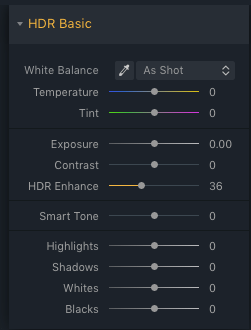
One of the first tools you should utilize is called HDR Enhance. Found in the HDR Basic panel, it’s a newer feature available in Aurora HDR 2018 and it serves as a replacement for the clarity slider. When activated, HDR Enhance brings out the details and textures in your image while minimizing any residual artifacts such as image noise that might be introduced in the process.

In the example below, the HDR Enhance slider has been pulled to the extreme for demonstration purposes. Notice how the contrast in the foreground and the distant rocks have increased significantly, and the color in the sky really pops.

7 Tips for Creating Natural-Looking HDR Landscapes Using Aurora HDR

HDR Enhance at 100.

7 Tips for Creating Natural-Looking HDR Landscapes Using Aurora HDR

But adding too much HDR Enhance is like adding too much clarity. The rocks and sand in the foreground have so much contrast and clarity that they look unreal, and the rocks and hills in the background now have a halo effect (generally considered undesirable).

To reduce these effects and thus make your landscape appear more realistic, tone down HDR Enhance significantly (or use the masking brush to apply or erase the effect wherever you choose). By having the slider at 36 as opposed to 100, there’s still a nice pop of details and color.

7 Tips for Creating Natural-Looking HDR Landscapes Using Aurora HDR

HDR Enhance scaled back to 36.

3. Bump up the contrast

To make your image appear less flat, bump up the contrast. Going to extremes results in lots of shadows, reducing details in any dark areas. It also saturates color in the sky and in the reflection on the water.

7 Tips for Creating Natural-Looking HDR Landscapes Using Aurora HDR

Contrast at 100.

By lessening contrast to about 20, shadows are still enhanced, but the details are better preserved. Note that the trees on the hill are still visible.

7 Tips for Creating Natural-Looking HDR Landscapes Using Aurora HDR

Contrast scaled back to 20.

4. Use Smart Tone to brighten up an image

7 Tips for Creating Natural-Looking HDR Landscapes Using Aurora HDR

Since increasing the contrast introduced more shadows to the image, brighten it up again by using the Smart Tone filter. Dragging the slider to the right brings more light to areas of the image that are dark, without dramatically affecting parts of your image that are already bright.

Below, you can see an extreme version of the Smart Tone slider in action. Notice how the shadowed areas are brightened, revealing lots of detail, particularly in the hill on the right. This is what you can do with Smart Tone, but it’s not necessarily what you should do since the image now appears very flat without any shadows or contrast, and the dreaded halo has appeared again.

7 Tips for Creating Natural-Looking HDR Landscapes Using Aurora HDR

Smart Tone at 100.

To appear more realistic, pull back Smart Tone to about 22. This gives a hint of detail to the trees in the right, similar to what a reflection on the water might cause. It also brightens that patch of sand to the right.

7 Tips for Creating Natural-Looking HDR Landscapes Using Aurora HDR

7 Tips for Creating Natural-Looking HDR Landscapes Using Aurora HDR

Smart Tone dialed back to 22.

5. Enhance Saturation, Vibrance, and Color Contrast

At this point, let’s turn our attention to the colors. Play with the Temperature slider in the HDR Basics panel to add some warmth to images like this sunset. Then scroll down to the Color panel and tweak the Saturation and the Vibrance sliders.

7 Tips for Creating Natural-Looking HDR Landscapes Using Aurora HDR

Depending on your image, you may need to bump these either up or down. Just avoid taking them to their extremes; generally, somewhere between 5-20 will be a good range. You can also bump up the Color Contrast slider, which controls the contrast between primary and secondary colors.

7 Tips for Creating Natural-Looking HDR Landscapes Using Aurora HDR

Saturation, Vibrance and Color Contrast boosted.

6. Use Image Radiance for an ethereal effect

7 Tips for Creating Natural-Looking HDR Landscapes Using Aurora HDR

Now we’re looking at a few finishing touches that you can add to your HDR landscape shots, and one option is Image Radiance. This adds a soft, dreamy glow to your photo, and it is best used on sunset or sunrise images. In this particular scenario, Image Radiance seems particularly important since it can contribute a soft, hazy effect typical of ocean shots.

Increase the Image Radiance slider to about 37. Doing this will introduce some shadows to your image, but that can easily be fixed with the Brightness and Shadows slider in the same panel. You can also adjust Vividness and Warmth here too if you see fit.

7 Tips for Creating Natural-Looking HDR Landscapes Using Aurora HDR

7. Add a subtle Vignette

7 Tips for Creating Natural-Looking HDR Landscapes Using Aurora HDR

The final edit that you might do to an HDR landscape image is to add a vignette. In the case of a sunrise or sunset, a vignette can be particularly helpful to add a subtle frame around the subject, drawing more attention to the focal part of the scene, the setting sun.

Within Aurora HDR, the Vignette panel is at the very bottom. You can control not only the size, amount, roundness, and feathering of the vignette, but also the inner brightness. As well you can adjust the placement of the vignette, meaning you can easily create a vignette that is not centered on the image – very handy if your subject is following the rule of thirds and is off-center.

When adding a vignette, note that the amount is a negative number for a dark (black) vignette and a positive number for a bright (white) one.

7 Tips for Creating Natural-Looking HDR Landscapes Using Aurora HDR

Final image with the vignette added.

Bonus tips

In addition, Aurora HDR also has tools for correcting Chromatic Aberration and Lens Distortion. It also comes loaded with several “Realistic HDR” presets that you can use to get started, and then just tweak the settings to your liking.

Over to you

There you have it, seven tips for processing landscape HDR photos in Skylum’s Aurora HDR. If you were inspired to create your own HDR landscapes, please share them in the comments below along with your post-processing tips and tricks.

Disclaimer: Skylum (formerly Macphun) is a dPS advertising partner.

The post 7 Tips for Creating Natural-Looking HDR Landscapes Using Aurora HDR by Suzi Pratt appeared first on Digital Photography School.


Digital Photography School

 
Comments Off on 7 Tips for Creating Natural-Looking HDR Landscapes Using Aurora HDR

Posted in Photography


4 Tips for Nature Photography Beginners

27 Feb

4 Tips for Nature Photography Beginners - bear

Nature photography encompasses a range of outdoor photography genres. This includes, but is not limited to, landscapes, weather phenomena, astrophotography, birds, and wildlife. Each of these categories has their respective specialized skills and can be expanded further.

If you are just starting your quest as a nature photographer, here are a few things to consider:

4 Tips for Nature Photography Beginners - seascape

1) What do you want to capture?

Since nature photography is so vast, you can spend a lot of time in each sub-genre. So an important question to ask yourself is what do you want to capture? Do you want to photograph close-ups of plants and insects? Is your love that of the micro natural world or are you more enthralled by magnificent mountain ranges and lakes?

4 Tips for Nature Photography Beginners - birds

Maybe birds and larger animals are more interesting to you than sunsets and sunrises. Knowing what you like and what you want to capture is a great first step.

2) What equipment do you need?

When you know what you want to capture, this feeds into the decision of what gear you require. If you are shooting landscapes, you will go for wider lenses as opposed to wildlife and birds, which need more “zoom” or telephoto lenses.

4 Tips for Nature Photography Beginners - fox sleeping
A tripod is great for landscapes and astrophotography, but if you are trying to get a bird in flight or an animal in motion, knowing how to use your camera is your best asset.

3) Location and planning

What you want to capture drives your choice of location and time of day and season of the year. Scout your landscapes beforehand to see the direction of the sun, any potential safety issues, or terrain considerations. Then return to shoot during a more flattering time of day.

4 Tips for Nature Photography Beginners - fall trees

If you are shooting flowers, note the time of year they bloom. With birds, you need to understand a bit about their habitat and the times of day that they are active. If you want to shoot more dangerous wildlife, it is best to go with someone experienced.

4 Tips for Nature Photography Beginners

A National Park is a great location for both landscapes and wildlife. Make note that you may need to apply for special permits for some parks and that they also have seasonal or time restrictions in some areas. This will impact your planning if those restrictions include your anticipated shooting times.

4) Reading the light

As in the previous tip, the direction of the light can be determined by scouting your location prior. You can also do online research on the area or decipher it from other photos taken there.

4 Tips for Nature Photography Beginners

If you are shooting landscapes, arrive about an hour prior to your sunrise/sunset and position yourself. This way you can focus on your composition and maybe even do some test shots. Play around with your white balance, exposures, and different camera angles.

4 Tips for Nature Photography Beginners - sunset

If you are waiting for wildlife to show up, use the time to work out what settings you need. When the animal shows up, you will find yourself photographing almost continuously trying to nail that perfect moment.

Closer shots and flowers give you more time to experiment, but you don’t want your light to be flat. Walk with a reflector or try to find angles that give you shadow, shape, and form.

4 Tips for Nature Photography Beginners - white flower

Conclusion

Nature photography is not only vast but filled with interesting sub-genres and subjects to shoot. As a beginner, most times research precedes shooting. As you learn more about your intended subject and how to capture it, you will become better with time.

With wildlife, patience is a great asset as you spend more time waiting for a sighting. If you love the outdoors, it’s a great way to explore and preserve those fleeting moments. Determine what you want to capture. Take the gear you need when you scout. Research, plan and try to find the best light. Most of all have fun!

The post 4 Tips for Nature Photography Beginners by Nisha Ramroop appeared first on Digital Photography School.

Digital Photography School

 
Comments Off on 4 Tips for Nature Photography Beginners

Posted in Photography


Video Tutorials – Portrait Posing Tips

23 Feb

Taking portraits is a challenging genre of photography, but add in posing and it can seem insurmountable if you’re just starting out in photography. Here are three videos I found to help you with some portrait posing tips. Practice with a friend and see tell us how it goes.

How to pose a single portrait

In this video excerpt from a Lynda.com class, you’ll see how the photographer works with a single model. She helps him get comfortable in front of the camera and create poses that are flattering to him.
?

How to pose (direct) couples

In this video from Mango Street, you will see how to gently direct a couple in how to pose. Giving them a few suggestions and tips and letting them fall into their own comfortable pose makes the images look more natural.

?

How to pose people to get rid of a double chin

Finally, in this last video, photographer Joe Edelman shows several tips for posing to flatter your subject and get rid of or minimize a double chin. Where you position the camera is also important, taking a higher position can be helpful for posing.

?

The post Video Tutorials – Portrait Posing Tips by Darlene Hildebrandt appeared first on Digital Photography School.


Digital Photography School

 
Comments Off on Video Tutorials – Portrait Posing Tips

Posted in Photography


Tips for Getting Sharper Real Estate Interior Photographs

23 Feb

Photography is a key part of advertising a property for real estate sales. But just as stunning images show the property looking its best, the opposite is also true. Poor photography, with blurred, sloping rooms, and out of focus images does little to inspire viewings.

Here are some basic, but important, steps to help you improve the quality of your interior photos. You’ll see what causes photographs to turn out blurry, and get some handy tips on equipment and techniques to avoid falling into these traps.

Preparing for the shoot

The best techniques for getting sharp photographs can be let down by poorly working equipment, or badly chosen or untidy scenes. So it’s important to start your session with good preparation and follow your check-list. Here are a few things that should be on your list.

1. Check your equipment

Make sure your equipment is okay, batteries are charged, extra lights working, tripod joints tight and in good condition, and that the lens is completely clean. Loose tripod joints, broken lights, and dirty lenses make problems for you later, so good preparation is worthwhile.

2. Make sure everything is clean and tidy

Dirty windows still look dirty in photographs, so take a household cleaning cloth and some glass cleaner. Cleaning everything is always easier than removing debris in post-production.

3. Set the scene

Tidy and set the scene, removing unwanted items from window sills, adjusting furniture positions and cleaning the windows. Don’t forget to look through the window too – a washing line of underwear probably isn’t what your client wants to see!

Think about the final image and what you want, then keep that in your mind throughout the photography session.

Using a tripod

Three common issues ruin a real estate photograph: blur, poor focus, and sloping rooms.

Blur and bad focus often come from camera movement during the long exposures you need when photographing interiors. Rooms appear sloping when the camera is not level.

You can resolve all three problems by securely mounting the camera on a sturdy tripod, which is why a tripod is highly recommended when photographing interiors.

Here are some pro tips for using a tripod:

  • Hang your camera bag from the center of the tripod (if it has a hook, as seen above) to increase stability.
  • Set the tripod exactly where you’ve decided to take the photographs, and extend the thicker sections of the legs first as they provide most stability. Avoid extending the center column as this is the least stable section and will reduce the stability of the tripod.
  • Give the tripod a gentle prod to make sure it won’t slip on the floor or wobble.
  • Mount the camera on the tripod, ensuring that the base plate and mounting are tight and cannot move around.
  • Adjust the tripod head until the camera is perfectly level and the image doesn’t slope to the left or the right. By getting the camera level, you ensure the room won’t look as if it slopes sideways.

For more on getting sharp images with a tripod, read: 5 Tips to Get Sharp Photos While Using a Tripod.

Eliminating sources of camera shake

There are also other sources of blurriness in photos. One of these is called mirror shake.

DSLR cameras have a mirror which sits in front of the camera sensor and helps you see the view through the lens by reflecting the image up to the eyepiece (through a prism). The mirror snaps up and out of the way when you take the photo, creating vibrations that can cause blurring.

You can eliminate this problem by setting it in the up position before taking any photographs. Look in your camera menu for the Mirror LockUp setting.

Left: The mirror is down in this image. Right: the mirror is up here exposing the camera’s sensor.

Conclusion

With good preparation and technique, and the right equipment, you can consistently get sharp, crisp interior photographs. When you set out to capture that image, remember:

  • Set the scene by making the room look neat and clean.
  • Make good use of a tripod.
  • Choose an appropriate lens.
  • Keep your camera stable and free from vibration.

The video tutorial expands on some of these tips, as well as showing other helpful hints for getting sharp photographs like choosing an appropriate lens and focusing correctly.

Watch the video to learn more about tripods, lenses, focusing, and keeping the camera steady.

Please share any other tips you have for taking sharper interior photographs of real estate in the comments area below.

Disclaimer: HDRsoft is a paid partner of dPS

The post Tips for Getting Sharper Real Estate Interior Photographs by David Robinson appeared first on Digital Photography School.


Digital Photography School

 
Comments Off on Tips for Getting Sharper Real Estate Interior Photographs

Posted in Photography


5 Tips for Doing Photography in National Parks

22 Feb

I am a national parks buff – I mean I am really crazy about traveling to national parks all over the world. As a family, we have been known to pack our bags at the drop of a hat, load up the car and head out for a visit to our fabulous national parks. National parks provide some of the best landscapes and vistas you can find.

Because much of the land and natural resources are protected, you really get to see nature at its very best. There is so much to see, do, explore, and of course, photograph. Photography in national parks offers incredible opportunities to create some amazing photos and memories!

Photography in National Parks -1

Additionally, there are a huge number of photographers who make a living photographing landscapes, animals, and vistas in these national parks – talk about it being a dream job.

But photography in the national parks is not an easy slam-dunk. There is a lot of preparing to do before and during a photography trip to a national park. Here are a few things to keep in mind when planning a trip to photograph your favorite national park.

#1 Preparation for a national park photography trip

Let’s just start from the very basics on how to prepare for a trip to photograph national parks. First and foremost, the National Park Service in the United States has a certain set of rules and guidelines for photography in the national parks. Before you plan a trip specifically for photography, make sure you have familiarized yourself with the latest rules and regulations.

This article in Backpacker Magazine is quite informative, but if you are confused on what is allowed and not allowed, feel free to call the park services directly. The rangers in almost all the parks we have visited have been very well informed and are very helpful with rules around photography. In a nutshell:

  • Drones essentially are banned from National Parks and if caught, you can be fined.
  • Permits are not needed if you are using basic tools (tripod, camera, and a lens) to photograph vistas that are accessible to the public.
  • Permits are needed for commercial filming (still and video) and sets that involve props and/or models.
  • You will likely need a permit to enter an area not accessible to the public.
  • Backcountry rules may differ from front country rules, so definitely call the park to confirm.

Keep in mind that these rules are applicable for parks here in the US. If you are traveling outside the US, check with the local park authorities and/or check in other travel forums. Being prepared is an added bonus that will really pay off in the long run. The last thing you want is to get to your location only to find out that you don’t have the right paperwork and/or permit.

Photographing National Parks -2

Parks in India don’t have much of a hiking concept – most people prefer to go on safari to see the wildlife.

For example, parks and historic monuments in India that require an entrance fee have specific fees for Indians versus foreign tourists and an additional fee per camera (still and video). Some places don’t even allow camera bags and tripods – you have to check your camera bag pack into a locker prior to entry to the park.

#2 Rules and Regulations – Dos and Don’ts

Along the lines of rules and regulations, there are some basic dos and don’ts when it comes to visiting and photographing inside national parks. Most parks are very good about letting you know what is allowed and what is not allowed. Signs, posters, and even handouts are available in plain sight. Playing ignorance is not an option and isn’t going to let you off the hook.

Stay away from wildlife and help them remain wild

My friend works for the Yellowstone National park and every spring she puts up this message on her Facebook page, “Welcome to the season of the crazies. May this season be shorter than the last!”

While it might be amusing and make you smile, this is quite serious to the men and women who work at Yellowstone. People (a.k.a visitors and some photographers) seem to want to go to any lengths to get a selfie or award-winning photograph with bison, bears, and the hot thermal features that Yellowstone is so famous for.

People have lost their lives trying to get the perfect shot! Nothing is worth losing your life over and endangering the lives of innocent animals whose habitats we are encroaching upon. (Note: if an animal attacks you, it may get put down, so by not following the rules you’re endangering their lives as well as your own.)

 Photographing National Parks -7

It is amazing how many people think that just because bison are herbivorous it is safe to get close to them! The people in the car did something right by just stopping the car to let the bison go and taking photos from inside the vehicle!

Never feed wildlife just for the sake of a photo

I have seen this happen time and time again. One time, my daughter was so angry to see a group of people who were feeding a bunch of squirrels lettuce and nuts, that she went up and chastised them and reported them to a ranger! Any activity that alters the natural behavior of animals is unacceptable no matter what the reason.

Never jump the fence and get off the trail

Getting off trail affects the land, the soil, and the environment. Trail markings are there to keep visitors safe and out of harm’s way. Every season rangers and outdoor crew hike the trails to ensure they are safe and can handle visitor foot traffic.

Yet people seem to ignore the signs to stay away so that they can get the epic shot – standing on the edge of a rock, diving into a pond at the base of a waterfall, or climbing the face of a mountain and take a selfie.

Photographing National Parks - 11

This is pretty much the scene at most of the waterfall/bridges in Yosemite National Park – but what you don’t see here is that there is an even bigger crowd on the other side of the bridge climbing on slippery rocks with the most illogical footwear!

#3 Playing fair and playing well with others

I really love reiterating this one time and time again. Over Christmas break, we traveled as a family to Zion National Park. If you have been to Zion you know that capturing the sunset against the Watchmen tower formations are iconic and almost every photographer (amateur or professional) is looking to capture that epic sunset.

Crowds start to gather almost an hour or more before sunset and getting a prime spot can get competitive and sometimes ruthless! There is also a path that leads down from the bridge to the water’s edge for tourists and anyone looking to hike along the river. One evening we were waiting for the sun to set, cameras ready to fire, when a few families decided to walk down to the river essentially getting into the frame of each and every photographer waiting on the bridge above.

Suddenly someone in the group decided to shout at the visitors – essentially asking them to leave the area. I was so mortified and embarrassed about being on that bridge that day with all those people. The National Parks and all its beauty is for everyone to enjoy – being a photographer does not take precedence over being a visitor taking in all of Mother Nature’s beauty. Thankfully a few others felt the same way and spoke up to let the photographer know we didn’t agree with his sentiments.

Long story short, be respectful and aware of your surroundings. These special areas are for all to enjoy – you don’t have special privileges just because you have a camera (however big or small). Most people are well aware of photographers and if they see you all set up, will try and avoid getting into your shot or quickly move away. If this doesn’t happen, just move or patiently wait it out. I never ask people to move just because they are in my shot, especially in national parks.

Article Photographing National Parks -10

A typical scene in Yosemite waiting to photograph Half Dome right at sunset.

Photographing National Parks -12

Those people right by the water – they have the right idea – getting out and enjoying their National Parks. It is we photographers that sometimes don’t quite know how to have fun.

#4 Making the most out of the trip

Before heading out, do some research on what the areas are famous for. Is it the epic vistas? Is it the magical sunset and sunrise glows? Or maybe it’s the wildlife? What are some of the famous monuments and landscapes to photograph and what are some of the lesser known areas?

Just because an area is not on the “must photograph list” does not mean it is not spectacular in its own right. Once you know what all YOU want to photograph, plan your time wisely. Look for road closures and construction notices. If possible stay in the park. This eliminates the need to travel into and out of the park daily – some of the popular parks have major clogs at the entrances especially during popular times. This can cause a lot of traffic delays and you might just miss that epic sunset (and I speak from experience!).

#5 Getting the shot

Now that you have planned your trip, figured out what and where you want to photograph, you understand the rules and know what to do and what not to do, here are some ways you can actually get those epic photographs.

Get out before sunrise and stay out after sunset

Get out when it is still dark outside and experience a different side of the park. Chances are the only other people out at this time of the day are photographers and people who really want to enjoy some quiet and solitude. This is a time when the park is quiet and animals tend to be out and about.

Morning mist, if present, adds so much interest and drama to a photo. In addition, the wind is usually calm at this time of day, making for easy reflection shots. The same holds true for sunset shots. The average person will spend a few minutes admiring the sunset and get back inside. Stay out past sunset and you have some incredible lighting all to yourself!

Photographing National Parks -3

Yellowstone in the winter after the sun sets is the place to really enjoy all the wildlife. Coyotes enjoy a bison kill.

Find your primary subject and then try something new

When you find an interesting subject, try to look at it from different angles. This not only will change your perspective, but also allow you to see how the light affects and changes the image. Try it with the sun on the side, at the back, and in front by simply moving your feet.

Photographing National Parks -8

I am not an equestrian photographer by any means, but when we came across the wild horses in Roosevelt National Park, I just had a mental picture of photographing them galloping across the road. Sure enough, while we pulled over to admire them, a few folks just drove on by and the horses got spooked and took off! So I got the shot I wanted!

Enjoy your surroundings beyond your viewfinder

I am very very particular about this! There have been numerous occasions where I have not looked past the viewfinder and come home feeling frustrated and irritated. Travel and the outdoors mean the world to me, photography is just icing on the cake. If I don’t get to enjoy my cake, just filling up on the icing, it is a moot point, don’t you agree?

So during the day when the light is not that great, I try to put the camera in my backpack and enjoy time with my family hiking the park. Plus this gives me a chance to scout locations to visit later in the trip, specifically for photography.

Hike into the backcountry – away from the crowds

I find that most people in the parks stay in or near their cars when taking pictures. To get a different picture (literally) find a trail and head out. You may find that you can leave the crowds behind, have a better experience, and make better pictures.

Be sure to plan ahead by checking out the park’s map for safety tips and any route closures. And of course, follow all safety rules of hiking in the trails and in the backcountry.

Photographing National Parks -6

As a family, we really love to camp and backcountry really gives us the opportunity to get away from it all and enjoy the outdoors together. Gear is obviously not a priority here – so this was shot using a small 35mm film camera – a perfect companion for a 5-day camping trip.

Conclusion

I hope these tips were helpful. One of the most important events in history was the establishment of the world’s first national park on March 1st, 1872. Since then, thousands of national parks, national monuments, and preservation areas have been set aside for the enjoyment and pleasure of the common person.

So get out there and enjoy nature while creating some amazing photos and share your images of national parks near you in the comments section below.

The post 5 Tips for Doing Photography in National Parks by Karthika Gupta appeared first on Digital Photography School.


Digital Photography School

 
Comments Off on 5 Tips for Doing Photography in National Parks

Posted in Photography


6 Tips for How to Photograph Waterfalls

22 Feb

Waterfalls are some of the most beautiful natural features you will ever get the chance to photograph and are a very popular subject for landscape photographers. Photographing waterfalls provides a great way to get outdoors and explore nature.

 Tips for How to Photograph Waterfalls

There is something magical about the patterns and sounds of flowing water that really heighten your senses and make you feel at one with nature. Although waterfalls look great, you may be wondering well how do I photograph them? Here are six tips to help you on your way.

1 – Get the right equipment

You will be better equipped to photograph waterfalls if you have the right equipment. A wide-angle lens is essential to broaden the angle of view and ensure you are able to photograph the whole waterfall. You will also be able to get up close to the falls rather than photographing them from a distance.

Once you have found a great waterfall and have the right equipment to capture it, you are ready to take some photographs.

6 Tips for How to Photograph Waterfalls

2 – Experiment with different shutter speeds

So now that you have the gear, how do you take photos that capture the authenticity and beauty of the scene?

When photographing waterfalls, finding the ideal shutter speed involves a lot of experimenting. This step is all about trial and error, which is part of the fun. Try taking shots with different shutter speeds and check out the results to see the differences.


I would recommend taking pictures with both fast and slow shutter speeds ranging from between 1/500th of a second to a few seconds and see which style of image you prefer.

3 – Freeze motion

How you shoot waterfalls effectively depends on the look and feel of the image you are trying to achieve. If you want to capture the water in a static way, you will need to choose a fast shutter speed to freeze the motion of the water. This isolates the water in motion and gives a very different result to using an extended shutter speed.

See the difference between the three images below and how the change in shutter speed affects the water. (Images courtesy of dPS Managing Editor, Darlene Hildebrandt)

ISO 100, f/4, no ND filter, 1/640th of a second.

ISO 100, F/22, o.3 sec with ND filter

ISO 100, F/22, 1.3 sec with ND filter

4 – Blur motion

Using a slow shutter speed will help you to capture the water’s movement. You will find that the longer the shutter is open, the smoother the water will be. Be careful not to use a shutter speed that is too slow if the water is very fast flowing as the water may become one large white mass without any definition.

6 Tips for How to Photograph Waterfalls

Generally, you will obtain better results by using an extremely slow shutter speed of over a second. However, this will not be possible if you are hand holding the camera due to excessive camera shake, which brings us to the next tip.

5 – Use a tripod

Investing in a tripod will help to keep the camera more stable and enhance your chances of getting good images. The main advantage of using a tripod is that you are more likely to capture images of waterfalls that are sharper as the camera is less prone to movement during slower exposures.

Using a tripod will allow you to use slower shutter speeds to give you a smoother look and feel to your waterfall images. Images captured using long shutter speeds tend to look more dramatic and the silky water looks more appealing and pleasing to the eye.

If you do not have a tripod, you could set your camera on a stone or some other object to capture part or all of the waterfall.

6 Tips for How to Photograph Waterfalls

6 – Use a polarizing filter

One of the best ways to add some color to your images is to use a polarizing filter. This is a great way to deepen colors by increasing their saturation. But be aware that the polarizer also cuts the amount of light entering the camera, and thus increases your exposure by up to two stops of light.

6 Tips for How to Photograph Waterfalls

Polarizers also help to eliminate glare and reflections from the surface of the water and can be used to increase contrast. This is especially true when shooting during the day in bright conditions.

When adding a polarizer, the water you capture should become blurred, depending on how fast it is flowing. The advantage to using a polarizer is that you can increase the exposure time and slow the shutter speed, as the amount of light going through the lens is decreased. This allows you to create images with motion and silky-smooth water action.

Your turn

With these practical tips, it’s time for you to get out there and start photographing your next waterfall!

The post 6 Tips for How to Photograph Waterfalls by Jeremy Flint appeared first on Digital Photography School.


Digital Photography School

 
Comments Off on 6 Tips for How to Photograph Waterfalls

Posted in Photography


Tips for Shooting Landscape Photography Towards the Sun

21 Feb

Avoid photographing towards the sun is one of the most common tips you’ll hear for landscape photography. In fact, it’s a tip that I’ve shared previously myself.

While it’s not without a reason that’s it’s a well-known tip, it might not be as relevant today as it was several years ago. Today’s sensors and post-processing opportunities are much more forgiving and what once was a bad idea can now be an opportunity.

In this article, I’ll show you how including the sun in the frame can enhance the atmosphere and add an extra dimension to your images as well as sharing my best tips for doing so.

Why you should include the sun in your images

I’m sure that many of you are ready to jump straight into the comment section right now and tell me how much of a bad idea it is to shoot towards the sun. But give me a minute to explain a few reasons why it’s something you might want to consider doing with your landscape photography.

Tips for Shooting Landscape Photography Towards the Sun

The greatest benefit of adding the sun in the frame is that it adds depth to the image. Take the image above as an example. Remove the sun and the image becomes flat and much less interesting. With the sun included, the image comes to life and drags you into it.

Tips for Shooting Landscape Photography Towards the Sun

Compositionally it can also be beneficial. Of course, this depends on where you place the sun. In the example above, the bright sun serves as a focal point. Naturally, the viewer’s eye is guided along the cliffs and up towards the bright area.

Keep in mind that our eyes are naturally attracted to the brighter parts of the image.

Another benefit of shooting towards the sun is that you often get beautiful shadows striking towards you. This serves as additional leading lines and benefits the composition.

Tips for including the sun in your images

Now, there’s one thing I need to make clear; including the sun in an image won’t always be beneficial. There are certain conditions or methods you should take advantage of for this to work. Here are some tips.

The time of day matters

While there are exceptions, the best images come when the sun is low on the horizon. The sun then creates a soft glow and gives a nicely balanced light.

Tips for Shooting Landscape Photography Towards the Sun

During midday when the sun is positioned higher in the sky, the light is harsh and less pleasing to the eyes. Generally, this is something you want to avoid.

Consider the sun’s placement within the frame

I’ll start by saying this, there’s no one single correct spot to place the sun within your image. Sometimes it’s beneficial to place it in the center, while other times it’s better to place it on the side.

This is where trial and error, and experience come into play.

Tips for Shooting Landscape Photography Towards the Sun

In the image above, I chose to place the sun at the very edge of the frame. Partly obscured by the clouds, it doesn’t take too much attention but instead, you’re drawn to the beautiful light hitting the landscape.

If you are familiar with semi-advanced post-processing techniques, you might be aware of a processing style called light bleed. This is a technique that involves heavy dodging and enhancing/creating a light source that strikes through the image. However, this is an effect you’re able to get in-camera as well by placing the sun at the corner or edge of your frame.

Tips for Shooting Landscape Photography Towards the Sun

Other times, you want to place the sun in the center of the image. In the image above, placing the sun in the center adds a light source that your eyes naturally go toward. Had I instead placed the sun to the side, this image would be less balanced.

Obscure the sun

In my opinion, one of the most efficient ways of including the sun in your image is by partly obscuring it. Combining that with a narrow aperture, you get a nice sun-star or sunburst.

Tips for Shooting Landscape Photography Towards the Sun

Use a Graduated ND Filter

Since the sun is so much brighter than the surrounding landscape, it can be hard to capture a well-exposed image when including it in the frame. By using a Graduated ND Filter you’re able to darken the sky in your image – meaning that you can capture a well-balanced image even with the sun in the frame.

Unfortunately, a Graduated ND Filter is not always ideal. Since the transition between darkened and transparent parts of the filter is a straight line, it can create some unwanted effects if you’re photographing a scene where something is projecting above the horizon.

Graduated ND Filters are better to use when the horizon is flat, such as the image below:

Tips for Shooting Landscape Photography Towards the Sun

… Or bracket multiple exposures

Another more flexible method of capturing well-balanced images with the sun included is to bracket multiple exposures and blend them in a photo editor. This is the better choice when the sun is at the highest position in the sky, as the contrast is even greater.

For the image below, I captured three images; one exposed for the landscape, one exposed for the sky and one even darker to balance out the brightest parts.

Tips for Shooting Landscape Photography Towards the Sun

Your turn

Hopefully, I’ve been able to convince you that shooting towards the sun isn’t a complete no-no anymore. Have you captured any images that are shot towards the sun for your landscape photography? I would love to see them in a comment below!

The post Tips for Shooting Landscape Photography Towards the Sun by Christian Hoiberg appeared first on Digital Photography School.


Digital Photography School

 
Comments Off on Tips for Shooting Landscape Photography Towards the Sun

Posted in Photography