RSS
 

Posts Tagged ‘Tips’

Post-Processing Workflow Tips for Landscape Photography

27 Mar

Post-Processing Workflow Tips for Landscape Photography

While your in-camera technique is most important, the ability to post-process your landscape images also plays a role in your final product. Each photographer approaches the digital darkroom in their own way. Here are some post-processing workflow tips for your landscape photography.

You don’t need to apply each step. It serves simply as a guide to help you get started.

1. Check your White Balance  or Color Temperature

If you shot your images in RAW, you retain the ability to change the White Balance after the fact. You can adjust the color temperature of your scene to make it either warmer (more yellow) or cooler (more blues).

Post-Processing Workflow Tips for Landscape Photography

Shot with Auto White Balance (AWB temperature 5800K).

Sunsets are often enhanced more to the warmer side, while winter scenes can benefit from both warm and cool tones, depending on what you are trying to depict. The temperature sliders can also be used to remove or correct any color casts captured in your original frame.

Post-Processing Workflow Tips for Landscape Photography

The same image with the temperature adjusted to 6700K to enhance the warmth of the sunset.

2. Expose it!

Check your exposure and fix it if it is too bright or too dark. Most people eyeball this process, but the histogram is a very useful tool for achieving your best exposure. The left side of the histogram represents the blacks or shadow areas of your image. The right side represents the brighter areas or highlights.

If you forget these basics, push your sliders to either extreme and look at how the image and corresponding histogram responds to these changes.

3. Chop Chop

With landscape photography, a good composition is key. Thus getting it right in camera is the best way to maximize your scene. You can apply rule of thirds/golden spiral, leading lines and a foreground interest optimally at this point.

Post-Processing Workflow Tips for Landscape Photography

Original Image

Some photographers shoot with a specific crop in mind, so many times there is a “picture in picture”. If your end result is a square crop, then compose and shoot for your final vision. This is also applicable if you need to print your final image to a different ratio.

Applying your crop early on in the post-processing workflow can alter the next steps you apply. So work out your composition and then continue processing.

4. Clarify This

Clarity is an adjustment available in Adobe Camera Raw and Lightroom. When you adjust the Clarity, you are working with the contrasts (edge contrast) in the mid-tones of your image.

Post-Processing Workflow for Landscape Photography

Image prior to clarity adjustment.

This change makes your image look sharper, so you do not want it overdone.

Post-Processing Workflow for Landscape Photography

The subtle changes of Clarity adjusts the mid-tones and apparent sharpness.

5. Shadow Me

Adjusting the shadows can either deepen the darker areas or lift them to retrieve some details. If you are recovering details, be aware of the appearance of noise in the shadows. You need to stop before reaching this point.

6. The Highlights

When you are shooting, an important concern is to retain details in the brightest parts (highlights) of your image. If you have heard the terms “blown out” or “clipped” highlights, they refer to those bright areas that have no detail.

If you are working with a RAW image, you can recover much of your overexposed highlights using the highlight slider. Of note, while recovering these highlights, pay attention to the overall look of the rest of the image.

Post-Processing Workflow for Landscape Photography

Beach image unedited.

Post-Processing Workflow for Landscape Photography

Beach image edited to adjust the Clarity, Shadows, and Highlights.

7. Whites/Blacks

In the simplest terms, the Whites slider adjusts image pixels that are white or have a partial highlight. The Blacks slider adjusts image pixels that are black. The Shadow slider, mentioned previously, covers a smaller range of dark pixels than the Blacks. Similarly, when comparing Highlights to Whites, the White adjustment (like the Black) is more global.

A reason to adjust the Whites/Blacks after the Highlights/Shadows sliders is because of the way they (whites/blacks) affect the overall tone of the image.

8. Saturation/Vibrance

Most people get confused with saturation versus vibrance. Saturation affects all your pixels, making them all either more colorful (saturated) or less colorful (desaturated).

Post-Processing Workflow for Landscape Photography

Saturation adjusts all the colors in the image.

Vibrance, on the other hand, makes adjustments to the pixels that are not as saturated. This means it makes dull colors more vibrant and leaves already vibrant colors unaffected.

Post-Processing Workflow for Landscape Photography

Vibrance adjusts less saturated colors only.

Bonus Tip: The Vibrance slider is used a lot to adjust images with people because it does not affect flesh tone colors!

9. Sharpen Up!

Sharpening increases the contrast between your bright and dark areas. In most post-processing workflows, it is done at or close to the end. This is because many other processes in your workflow, alter the “sharpness” of your image. Thus sharpening may be optional (or selective) when following those steps.

Read this for more on sharpening images: How to Make Your Photos Shine Using Clarity, Sharpening, and Dehaze in Lightroom

10. Vignette

A vignette is when there is light fall-off towards the edge of your image. This is often seen in images shot with wide open apertures or with wide angle lenses. They can also be caused or strengthened by the use of camera additions such as filter holders, lens hoods, or filters. These cause less light to reach the edges of the image than the center.

If you do not get vignettes when shooting, you can add them during your post-processing stage. It is not a necessity, but works well when you want to draw the viewer’s eyes away from distractions in the corners and more towards the middle of the frame.

Post-Processing Workflow for Landscape Photography

Vignette added to draw attention to the sunset and keep your eyes away from highlights at the top of the frame.

In landscape photography, you can either remove natural vignettes, so the viewer’s eyes move around the image or you can add a vignette to draw them in. It all depends on your final objective.

Post-Processing Workflow for Landscape Photography

Conclusion

Developing a post-processing workflow for your images is a great step towards your final output. Keep in mind that less is more and that subtle changes can go a long way to enhance your already beautiful capture.

You do not need to edit every image the same way; take a minute and review each one and determine what it needs to take it to the next level.

The post Post-Processing Workflow Tips for Landscape Photography appeared first on Digital Photography School.


Digital Photography School

 
Comments Off on Post-Processing Workflow Tips for Landscape Photography

Posted in Photography


Tips for Client Photo Sessions – What it’s NOT All About

26 Mar

There are a host of things which are important when doing photo sessions for clients. But if you’re not careful you could end up falling into the trap of assuming that photo sessions are about something that they really are not. The list of things to keep in mind covers topics such as lighting, exposure, location, posing, and even practical elements like what to charge and what to recommend they wear.

I’ve personally made some mistakes in my development as a photographer when I got caught in the trap of focusing on the wrong things. An understanding of what client sessions are not about can be just as impactful as knowing what they are all about.

With that, here are a few things to keep in mind the next time you set out to take pictures for people.

Tips for Client Photo Sessions - What it's NOT All About - family portrait

It’s not about your gear

I know how fun and exciting it is to get new photography equipment. While I don’t have an entire room full of cameras and lenses, I do have enough to fill a pretty large backpack, and I once chased down a UPS driver just to get my new 70-200mm f/2.8 lens one day early. I always enjoy showing my latest camera purchase to friends and family. While none of this is necessarily a bad thing, an obsession with photo gear can actually become a hindrance when working with clients.

I can remember some photo sessions from a few years ago that I’m almost embarrassed to recall because of the way I showed up and starting flaunting my cameras, lenses, and accessories for my clients. There were times when I would make it a point to explain that my lenses had super wide apertures which meant that they were so much better than a kit lens.

Or when visiting with potential clients I would make sure to point out that I was shooting with the latest, greatest, and costliest full-frame camera on the market. Shamefully, I have even gone so far as to literally pull out speedlights, tripods, and other accessories that I had no intention of using just so the clients could see that I had them.

mom and baby photo - Tips for Client Photo Sessions - What it's NOT All About

Clients want results and to feel important

In hindsight, not a single client I have ever worked with was impressed with my camera gear. They wanted results, not grandstanding, and it was the pictures that mattered to them rather than the gear I used to make the images. For all my clients care, I might as well be using an old Canon Rebel T3 and the on-camera flash! (Truth be told I know some photographers who do great work with a basic setup like that.)

If you try to dazzle your clients with how cool your camera stuff is, it could actually make things worse by setting unrealistic expectations in their mind of what you can actually do. Or worse yet, you could come across seeming like an arrogant show-off even if that’s not your intention at all.

When you work with clients I recommend leaving gear out of the equation entirely. Don’t talk about your cameras, your lenses, your super cool equipment bag with dozens of folding pockets, or the camera you don’t have but hope to buy someday.

Discuss your goals for the photo session, explain your plan for getting the kids to smile, or take a few minutes and just get to know your clients on a personal level. Don’t make the session about your expensive fancy camera stuff. Instead, make it about your clients and let them be impressed with your pictures, not your camera.

Tips for Client Photo Sessions - What it's NOT All About - photo of a little girl

It’s not about your last gig

Have you ever been to a holiday gathering and had the unfortunate luck of sitting by a particular relative who just wouldn’t stop talking about all the things he or she has done, the places they have visited, or the new stuff in their house?

Every time you bring up something from your own life, they counter with a swift rebuttal, “Oh you went to the Grand Canyon for a day? That’s nice. But it’s nothing compared to the week I spent backpacking in the Swiss Alps!” 

All you want is to share some of your life experiences, but all this unfortunate friend or family member wants to do is play an endless game of one-upmanship until you finally excuse yourself to go get some pie. And you don’t even like pie.

Tips for Client Photo Sessions - What it's NOT All About - family photo

Think about those uncomfortable situations the next time you are at a photo session with clients and you feel tempted to regale the people with tales of fun, excitement, and adventure from previous sessions. You might have some fun stories to share of how you barely got the shot before a thunderstorm rolled in, or you might want to pull out your phone and show off some amazing images of that time you photographed a destination wedding at a national park.

Focus on the people in front of you right now

The best course of action in those situations is to say nothing at all and keep the focus squarely on your clients and the job you are currently doing. You know, the one you are getting paid for.

Regaling clients with tales of your previous sessions can make them feel inadequate by comparison, and often sends them messages that you don’t intend. It can make your clients feel inferior, outclassed, or even jealous when pitted against the fantastic tales being spun of your other work.

Save your stories for your friends and instead talk with your clients about how great they look, how much fun you are having, and how you plan to address the questions and concerns they might have.

Tips for Client Photo Sessions - What it's NOT All About - family photo siblings

Rest assured your clients already have a high opinion of you and your work based on what they saw on your website or heard from others. Otherwise, they would not have asked you to take their pictures. So put away the stories of past gigs you’ve had and make the session about the only people who matter at the moment – the ones in front of your camera.

It’s not about how awesome you are

Look, I get it. As a photographer, you’ve done some pretty cool things, seen some great places, made some incredible images, burned the midnight oil into the wee hours of the morning to make sure your RAW files were edited to absolute metaphysical perfection.

You’ve got some stories to tell and you might have even earned an award or two along the way. Perhaps one of your pictures ended up in a print publication, or you teach photography classes at your local vocational/technical school. As Ron Burgundy might say, you’re kind of a big deal.

Tips for Client Photo Sessions - What it's NOT All About

All this may sound harsh, but I bring it up because I’m ashamed to admit it used to be my attitude. There were times when visiting with clients that I would make it a point to describe, in painful detail, how hard I worked on other sessions. Or I’d brag about the number of images on my memory card the last time I did a similar shoot. And I would talk about this as if it had any bearing at all on the quality of my work when all it did was alienate people and send them the wrong message about me as a photographer.

The most important people in the room

Your clients don’t care about the stories you might want to tell them demonstrating how great you are. What they care about is the job you are doing for them and the pictures they are paying you for, not your stories, your adventures, or your portfolio.

They hired you for a reason, and they are probably already familiar with your work after seeing samples on your website or talking with friends, family, or other client referrals. They already think highly of you or they wouldn’t have hired you, so you don’t need to keep reminding them of your greatness.

Tips for Client Photo Sessions - What it's NOT All About

Conclusion

When it’s time to do the photo session just show up, do the work, and rest easy in the confidence of knowing you are an awesome photographer. You consistently produce great results, and people like your work enough to pay you for it! Let your work speak for itself, pay attention to your clients and their needs, and you’ll get some phenomenal photos that will keep your clients returning and sending others your way as well.

What about you? Do you have any lessons you have learned from doing client photo sessions over the years, or mistakes you feel comfortable sharing with others so they can avoid the same pitfalls? Please leave your thoughts in the comments below.

The post Tips for Client Photo Sessions – What it’s NOT All About appeared first on Digital Photography School.


Digital Photography School

 
Comments Off on Tips for Client Photo Sessions – What it’s NOT All About

Posted in Photography


Tips for Posing People in Outdoor Portraits

25 Mar

Whether you’re photographing an individual or group, having sessions on location can add a lot of variety to your images. Most locations offer natural or built-in elements that are great for posing people without having to move too much.

Almost all outdoor locations have natural or built-in elements that can give you options for where to place your client and add more variety to the session. These can include rocks, walls, trees, benches, bridges, cars, lamp posts, columns, archways, fences, fountains, and staircases. Walls also make for great poses. All of these elements are terrific posing props that make your photos interesting. Use them as much as you can.


Start with a good foundation

After you have chosen the elements with which you want to pose your client, begin your session with a simple foundation pose. This could simply be your client standing still, arms at the hips. From there, you can build upon that pose and make subtle changes to add variety.


Another foundation pose might be having your client stand in the middle of a city walkway, as they would if they were alone. From there you can ask them to bring one arm up to fix their hair while standing still. Then, have them fix their hair while walking toward you. Next, have your client do the same with their arm as they walk, but now looking toward the street. Finally, have them do the same, but this time take two steps, freeze their pose and look at you, as you get close for a portrait shot.

You now have five different poses all in the same location built on the same foundation pose.


Good foundation poses will also help with the dreaded question a lot of photographers get, “What do I do with my hands?” By building from simple poses and keeping your client moving with subtle changes, it helps them to use their hands more naturally.

Keep them moving

Many great poses involve having your clients moving. Have your client’s walk, run, jump, sit, stand, turn around, or spin. When you keep them moving you are allowing for lots of different types of shots all while letting your client walk off the nerves.

You don’t even need to move from the spot you’ve chosen. You could have them walk toward you, walk away from you, sit down, crouch down, lie down, or jump all within 15 feet of where you are standing. Have them use their hands while they move around for more dynamic photos.


Tips for Posing People in Outdoor Portraits

Open spaces without posing elements

If you find yourself at a location, perhaps a beach, where there are no elements to use for posing, it can be difficult to pose hands or keep your client moving.

One way to pose hands in open spaces outdoors is to have your client use them. By this, I mean, have your client play with their hair, adjust their clothing, put on and take off their jacket, glasses, watch, etc. Keeping the hands busy relaxes your client and you’re able to make more natural looking photos without having the pose look too rigid.

Tips for Posing People in Outdoor Portraits


Use the light

Shooting on location can offer lots of changes in light since you are outdoors. Use this to your advantage! Experiment with full sunlight, shadows, found pockets of interesting light shapes.

If you shoot your subject in full sunlight, for example, one pose you can try is to have them look up with their eyes closed, arms folded on their head. Another great pose you could try in full sunlight is to use shadows to create an interesting patter either on your client or behind. Have your client looking down or straight at your camera.

Using the different changes in light around you can give you new ideas on where to put the hands, legs, and other elements of your client to create a more compelling or dynamic photo.

Tips for Posing People in Outdoor Portraits


The same can be applied to the basic compositional rules in photography. Using lines, shapes, patterns, and colors in your background to frame and pose your client as part or to stand out may result in a really interesting photo.

Tips for Posing People in Outdoor Portraits

Conclusion

I feel that posing a client on location is much easier than posing in the studio because you have many elements available to use as props. And remember, shooting many different poses also increases your chances of getting the great shots that will build your amazing portfolio.

The post Tips for Posing People in Outdoor Portraits by Jackie Lamas appeared first on Digital Photography School.


Digital Photography School

 
Comments Off on Tips for Posing People in Outdoor Portraits

Posted in Photography


6 Tips for Aiming Low and Going Unnoticed in Street Photography

21 Mar

One of the biggest hurdles to overcome in street photography is inhibition. Taking candid photos of strangers is not for everyone. Your demeanor should be cool, calm, and confident, even if that’s not how you feel inside.

Looking sheepish or, worse, creepy, is the last thing you want. The way you dress might have an effect. Rightly or wrongly, people will assess you based on their first impression. Think about ways you can blend in.

6 Tips for Aiming Low and Going Unnoticed in Street Photography

If confidence eludes you when photographing strangers, there are other ways of approaching street photography—ways that are passive and non-confrontational.

#1 Pick a background

Before discussing the main topic, let’s look at backgrounds. One way of taking street photos is to find interesting backgrounds and wait for suitable subjects to move into view. This works especially well if you can establish a link between the person entering the shot and your chosen backdrop.

Perhaps you want someone dressed in a particular way or with a specific pattern or color of clothing. Often, style or elegance is enough. When you arrive at the scene before your subject, the feeling of invading his or her space reduces.

6 Tips for Aiming Low and Going Unnoticed in Street Photography

The problem you’re most likely to face with this method is people stopping to let you take the photo, not realizing that they are the vital element. It helps if you’re ready to take the shot in advance rather than lifting the camera abruptly as someone draws near.

Working distance also plays a part: the closer you are the more noticeable you become. Master the art of loitering, and look relaxed while you’re doing it.

6 Tips for Aiming Low and Going Unnoticed in Street Photography

#2 Aim low

Pointing your camera downwards is an easy way to take street photos. As in other areas of life, your presence will be better tolerated if you’re not in anyone’s face. People with a keen sense of personal space are less likely to care about a lens aimed at their feet.

Even if you’re a confident street photographer and have no qualms about taking photos of strangers, some great photos exist at ground level. This is not purely a technique for the shy or meek.

6 Tips for Aiming Low and Going Unnoticed in Street Photography

One famous exponent of low-level pictures is Elliott Erwitt, who is especially known for photos of dogs and their owners’ ankles. You can emphasize the character of a pet by getting down to its level when taking a photo. In effect, Erwitt was humanizing the animal and making the human subordinate.

6 Tips for Aiming Low and Going Unnoticed in Street Photography

#3 Pick a background and aim low at the same time

By combining both the techniques we’ve discussed, the process of taking street photos becomes simpler still. That’s not to say that good results are any easier, but you might feel more comfortable with what you’re doing. The only trait you’ll need is patience.

Choose an interesting low-level background and imagine the type of subject you want to walk across it. Then, wait.

6 Tips for Aiming Low and Going Unnoticed in Street Photography

In a city, you’ll become almost invisible by standing casually around and pretending to fiddle with your camera settings. In fact, the more baffled you look by your own camera, the more innocent you seem.

This is the opposite of the “confident photographer act”. When you look distracted, nobody cares what you’re doing and they’re unlikely to realize that they’re the prop you’ve been waiting for.

#4 Cameras and Camera Settings

You can use any camera for street photography, but some degree of discretion is an advantage. A bulky DSLR with a big lens is likely to get you seen. A smaller rangefinder or compact camera is ideal.

The extra depth of field you’ll get from a compact camera is also useful for this subject matter. You can also configure an SLR to be more of a point-and-shoot camera (high ISO, small aperture).

Taking good street photos is so hard that you need to sort out the technical settings beforehand. There’s usually little time for fine-tuning once you’ve seen the picture.

6 Tips for Aiming Low and Going Unnoticed in Street Photography

#5 Capturing movement

To capture movement in your subject, a camera or lens with image stabilization (IS) is useful. It will help keep the background sharp while enabling movement in your subject.

For this, you could shoot in twilight hours or even after dark. Or else, you’ll need to manually set a slow shutter speed of about 1/8th to 1/30th second and let the image stabilization take care of the background. Compact cameras typically allow low handheld speeds with good results, especially with a wide-angle focal length.

6 Tips for Aiming Low and Going Unnoticed in Street Photography

#6 Background ideas

Photographing people’s lower extremities is easier if you’re on a slightly different level. To that end, slopes, steps, and escalators are ideal. If you don’t want your motives and character being questioned, be wary of your camera position in relation to the subject and don’t take photos that look remotely voyeuristic.

Ground-level backgrounds might include cobbles, grating, wooden boards, road markings, or street art. Above the ground, you could be looking for anything to complement the subject. It might be a wall, shop window, or an advertising hoarding.

The background is as important as the subject – you’re trying to find an interesting juxtaposition.

6 Tips for Aiming Low and Going Unnoticed in Street Photography

Generally speaking, a “fussy” background (one with lots of small detail) is likely to clash with a fussy main subject. The main elements of the picture should not rival each other.

Finally

Aiming low with your photography doesn’t sound like encouragement, but good pictures await you at ground level. Perhaps above all else: learn how to loiter. Stay relaxed, move slowly, lean on stuff, and wait.

Until the moment you release the shutter, you’re only an observer. Try to anticipate, so you don’t have to lift your camera at the final moment. Keep an eye on who’s coming your way. Casually point your camera down and wait for the actor to enter the stage.

The post 6 Tips for Aiming Low and Going Unnoticed in Street Photography by Glenn Harper appeared first on Digital Photography School.


Digital Photography School

 
Comments Off on 6 Tips for Aiming Low and Going Unnoticed in Street Photography

Posted in Photography


Tips for Creative Plant Photography

20 Mar

In this article, we’ll discuss the whys and hows of photographing plants. Don’t worry if you’re not a nature nerd, if your fingers are distinctly non-green or if you find plants generally dull. Plants can offer great photographic opportunities to any photographer. Give plants a chance!

01 plant photography tips

If you start thinking about plants and the role they play in our history and our lives, you might find it hard to stop. After all, they produce most of the oxygen we breathe, they provide us with nutrition, we make clothing and build shelter out of them, just to mention a few things; we even print our photos on them!

More relevant to this article, though, they also inspire us with their alien beauty and comforting stillness to create art.

02 plant photography tips

Why photograph plants?

First of all, plants are really convenient subjects. They’re found more or less everywhere, and they don’t run or fly off when you approach them. That makes things so much easier!

But being common doesn’t make them boring – there are so many different varieties to choose from, they change their appearance with the seasons, and the longer you look, the more detail you will find. It would be hard to find a more patient (living) subject!

03 plant photography tips

Plants have inspired artists for thousands of years: they’re in the art of the ancient Egyptians, and the Chinese. Plants are also a central part of a wide variety of more modern art, such as arabesque, still life paintings, Mapplethorpe’s photography – the list goes on and on.

Some of the most aesthetically pleasing shapes and forms in the world are found in plants.

04 plant photography tips

Photographing plants is a rewarding activity for any photographer. If you’re a beginner, you can use plants to learn more about photography: check out some tips for beginners and use these really friendly subjects for your early experiments.

And if you’re a professional wedding photographer, you can always practice your bouquet and decoration photography!


How to do plant photography

Plant photography is perhaps the easiest kind of photography. All you need is a camera and a plant, and you can start your exploration. Yes, it really is that easy!

But sure, there are some tips that can make your experience more fun and your photographs more unique. The most important thing is for you to open your mind, explore the things you find interesting, and have fun.

06 plant photography tips

Some ideas on what to look for in a plant

Flowers may seem like the obvious thing to photograph when it comes to plants, but these living beings offer so much more than just their reproductive structures. They sure are fine-looking, though!

07 plant photography tips

To get the most out of plants, you should also remember to check out the other visible parts such as the leaves, fruit, and bark. Taking group photos also works with plants.

Play with light, focus, and composition – use all of the tricks in your photographic toolbox.


09 plant photography tips

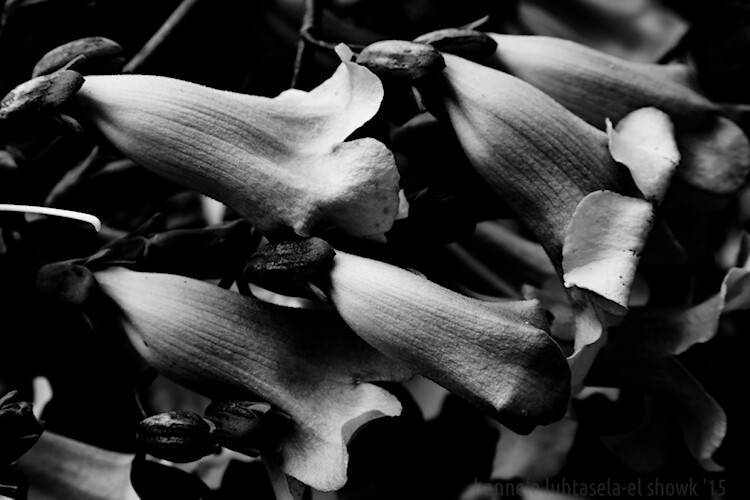
For me, the best plant photos arise when I move beyond just looking at specific parts, and start focusing instead on shapes, textures, and symmetries. Look for interesting patterns in light or texture, experiment with black and white, zoom in and zoom out, find the abstract.

10 plant photography tips


And, as always, try to evoke a feeling and create a story.


Conclusion

Do you enjoy photographing plants? What are your best tips? Do you have any favorite photos to share? I’d love to hear your thoughts and see your art in the comments below.

The post Tips for Creative Plant Photography by Hannele Luhtasela-el Showk appeared first on Digital Photography School.


Digital Photography School

 
Comments Off on Tips for Creative Plant Photography

Posted in Photography


Tips for Making Your Travel Photography Packing List for International Trips

19 Mar

Packing for any trip abroad can be a chore. Then add in the task of making sure you have all of the photography bits and pieces you need, and it’s enough to send your head spinning. Thankfully there is a cure for this craziness: The Travel Photography Packing List.

Tips for Making Your Travel Photography Packing List for International Trips

The Packing List is my go-to resource for ensuring I have all the gear I need in order to bring back the best photos. No one wants to deal with dead batteries or a lack of memory cards while they are exploring the world at large. That’s why I use the list below to sooth my packing-frazzled mind and to get on with creating amazing photos.

Camera

I know it seems obvious but the camera is the first thing on my packing list. Why? Because I take time to check it and give it a good cleaning, inside and out, before packing it away. I often carry a spare camera these days, which doesn’t get a lot of action until it is desperately needed.

Packing time is a good opportunity to make sure all cameras are in working order. You might also want to adjust the clock (set it to the time zone you’ll be traveling to) on your camera(s) so you can hit the ground running.

Tips for Making Your Travel Photography Packing List for International Trips - camera in a tripod

Lenses

Lens choice is a dilemma for most of us. Bring them all and suffer the back strain of having to lug them around, or bring just a few and worry about missing the shot? As individual as this choice can be, I suggest thinking about what you will shoot the most if you want to limit the number of lenses you take along. Also, ask other photographers who have traveled where you are going or your tour operator for suggestions.

On my own tours, where our focus is on people, nature, and wildlife photography, I suggest a 24-105mm lens for walking around and city photos. These lenses are great for a variety of situations from close to medium distance.

Then for the landscape shots, a wide-angle or wide zoom, like a 16-35mm lens or 10-22mm on a crop sensor camera, can work wonders.

Tips for Making Your Travel Photography Packing List for International Trips - guy taking a photo on a safari

All-in-one lenses

My go-to lens for travel is the venerable Canon 28-300mm L-series Lens. It covers a huge range and with some panorama stitching, I can get mildly wide-angle shots without switching lenses. It’s a heavy lens indeed, but I’ve grown used to it. I will then bring a 10-22mm wide-angle for the monumental landscape shots I love to capture.

Optionally, a long lens may be needed in certain situations, but they can be cumbersome. For instance, I would not have gone to Panama and Costa Rica, lands rich in birds and wildlife, without a Sigma 150-600mm Sport lens. Yet, that same lens will not follow me to the Himalayas, where weight is certainly a factor and the chance for birds is lessened.

A Flash or Speedlight

For all my travels in the past decade, I have rarely found myself wanting to have a strobe along for the ride, especially due to the added weight involved. Yet I still tend to bring just one flash and I have been happy every time I did.

Tips for Making Your Travel Photography Packing List for International Trips - people shooting the Taj Mahal

What I have found valuable when bringing a strobe is to make sure it is one that I can use off-camera. A flash that can be remotely triggered either with a tether or a smaller unit on the camera (either the built-in flash or a unit that attaches to the hotshoe). This has allowed me the greatest flexibility to add well-directed light to my travel photos.

Tripod

A good travel tripod is a thing of beauty. These units, built for packability and lightweight, have been following me on more and more trips abroad.

My main issue with packing a full-size tripod, even if it is carbon fiber, is the need to take larger luggage. The legs of a super sturdy tripod are often longer, even when broken down, than the luggage I wish to take.

Tips for Making Your Travel Photography Packing List for International Trips - canyon in Utah

It’s a balancing act and it matters what you intend to shoot. If you have space, bring the monster tripod, especially if you are accustomed to hauling it around with you near home. If you have limited space, but still want stability in your landscape or astrophotography shots, consider something along the lines of the MeFOTO Globetrotter. It packs small, can double as a monopod and has a fully functional ball head.

Power Strip

Power strips are great for travel and there are a variety of options. I prefer a brand where the cord is easy to store and the strip comes with two USB ports. The two outlets in the power strip are meant for a variety of international plugs so it’s easy to share when you find the outlet at the airport overloaded. I’ve done this more than once and was able to get a charge when I couldn’t have without a power strip.

Girl in flowers taking a photo - Tips for Making Your Travel Photography Packing List for International Trips

WARNING: See the next section about converters because it’s important to make sure the power strip is set up for universal power. I once had a strip with USB ports go, “Pop!” and puff smoke arose when I didn’t realize it was only set for US power and I was using it in India. Know before you go!

Chargers, Adapters, and Converters

Almost any charger from a major manufacturer these days will work on what’s known as “Universal Power”. They have an input range that straddles 110V-240V and 50Mhz-60Mhz. This fits almost any AC power around the world. If your charger is not set up for Universal Power (check the charger itself for those phrases above printed somewhere on its label), then you need a converter.

A converter will change the power coming out of the wall in your hotel to the power your charger needs. This stops things from literally catching fire.

Photographer and sunset - Tips for Making Your Travel Photography Packing List for International Trips

Different than a converter is an adapter. All it does is makes the plug on your charger fit the wall socket in your hotel. There is a handy guide on the Internet that lists the types of plugs in use around the world, by country, so you can see if your plug will fit.

If not, I’d suggest picking up either a small adapter specific to your host country or a universal adapter that will serve you for almost any country around the world for decades to come.

Memory cards

How many memory cards should you bring? Oh boy, that’s the big question. I’m sure if we ran a poll we’d have a huge range of answers. To help in planning, I take a per diem method and figure out what my average has been on previous trips, per day. I then multiply that by the number of days I’ll be gone to get a total number of photos I estimate that I’ll take over the duration of the trip.

Next, take the total (let’s say 4000 photos) and multiply it by the average size of a photo from your camera. Mine is about 24MB, so for 4000 images, I’d need 96,000MB or roughly 96GB. I then throw in an extra card, just in case. In this example, I will bring four 36GB cards and call it good. Especially if I am going to a country where I know it will be easy to buy more.

If you shoot a lot of videos, you should do the same calculations for video and add the two together.

Snowy mountains - Tips for Making Your Travel Photography Packing List for International Trips

Lens Cleaning Kit

You can’t get a clear shot with a dirty lens and a proper cleaning is vital. We cover the basics of a simple and portable kit in our article, How Should I Clean My DSLR’s Lens?, and I’d also include a sensor brush if you are comfortable with in-field sensor cleaning.

Filters

Most of us own and carry a circular polarizing filter and they certainly have earned a solid reputation. So throw one in your bag if you are familiar with them.

girl taking a photo of a lake - Tips for Making Your Travel Photography Packing List for International Trips

Next, include a graduated neutral density (GND) filter unless you are proficient at bracketing your shots and merging them artfully in your computer later. A GND helps in situations where there is a large difference between the lighting in a scene. They will slightly darken a sky so it won’t blow out when compared to a darker foreground.

Lastly, I’d suggest a quality neutral density filter, maybe a three or 6-stop.

Shot List

We’ve released shots lists on DPS before and they can be helpful to keep you on track when every single thing you see is new and photo-worthy. A shot list is by no means a dogmatic requirement, but I have found it helpful to bring back a nice variety of shots.

Otherwise, we all tend to slide back into what we like (landscape, food, astrophotography, etc.) and miss out on all the other subjects that make our trip so memorable.

Notebook

For me, a notebook is invaluable for remembering the little things that go with those photos. Maybe you have a mind like a steel trap, in which case you’re blessed, but for the rest of us, by the time day-three rolls around, we can’t really remember little things that happened on day one.

Tips for Making Your Travel Photography Packing List for International Trips - sunset

Sure, your photos will help you remember, but they don’t always capture the emotions and conversations you might have had. They are also great for sharing information with strangers, such as writing down the name of a restaurant or attraction you shouldn’t miss.

I fill a couple of pages before my trip with ideas of what I want to see or shoot. It’s then an easy reference later when I’m feeling rudderless and need some direction.

Your List

I hope this gives you a good start the next time you make a packing list for a trip. It’s not meant to be exhaustive so I would love to hear what else you have on your list. Leave a comment below so others can benefit from your experience with travel photography.

The post Tips for Making Your Travel Photography Packing List for International Trips by Peter West Carey appeared first on Digital Photography School.


Digital Photography School

 
Comments Off on Tips for Making Your Travel Photography Packing List for International Trips

Posted in Photography


Tips for Doing Nature Photography at Your Local Parks

18 Mar

For myself and many other photographers, probably you included, one of the more difficult parts of the hobby is figuring out where to shoot things like nature photography.

If you have a big trip or a vacation planned, whether it be an exotic location or somewhere not so far away, then that question is answered for you. But for evening shoots after work, spontaneous sessions or weekend outings, a bit of planning is necessary. Enter the wonders of your local parks!

Tips for Doing Nature Photography at Your Local Parks

A park can take many forms and can exist in any location, and almost any country. It is generally defined as a “large public green area, used for recreation”. They come in all sizes, and each features their own unique variety of plants, animals, and landscapes.

Parks can be as small as a local city or county park, a larger state park, all the way up to a massive national park. Their common thread is that they have been well-defined and set aside for public use, and are perfect areas to practice nature photography.

Why shoot at a park?

Parks are unique and useful to us photographers because they can be a testing ground for new equipment, a safe practice area for new techniques, or a fully-realized background for your real work.

Parks are attractive because they are a (usually) safe, well-defined area, a miniature representation of the local environment. They give you a small, diverse biosphere of flora and fauna, all wrapped up in one package.

Tips for Doing Nature Photography at Your Local Parks

Parks are also numerous, and you have a lot to choose from, regardless of size or classification. Even national parks, with the fewest number of all the types, are plentiful. Over 100 countries worldwide have lands designated as national parks, including 59 in the United States alone. This doesn’t even count other sites in the national registry, such as forests, seashores, and historic sites.

The bottom line is you’ll never have a lack of subject matter when visiting one of these areas.

Preparing for the shoot

Preparing for a photo shoot in a park isn’t really any different than most other outdoor environments. You’ll want to pack and check all of your normal gear, including:

  • Camera body – If you’re hiking to a location, you’ll probably want to keep the number of bodies down to one; otherwise, maybe bring a film or instant camera as well for backup.
  • Lenses – Again, you don’t want to weigh yourself down too much, but always bring lenses to cover most of the situations you’ll find yourself in. If you’re shooting landscapes, bring a wide-angle prime lens, or at least a zoom that covers focal lengths down to 18 to 24 mm.
  • Tripod – Some camera bags and backpacks have holders for your tripod. Otherwise, take this into consideration as tripods are often not heavy, but bulky and unwieldy to carry while tromping through the park with your other gear.

Tips for Doing Nature Photography at Your Local Parks - use a tripod

  • Filters and other accessories – Don’t forget the little things such as UV filters, neutral density filters, remote shutter releases, and microfiber cloths to keep lens glass clean.

Since you’re shooting outside, you also need to be prepared for events and conditions outside your control, such as the weather. Depending on the size of the park, there may be hiking and long walking involved. So, you’ll also need to plan ahead and consider items such as:

  • Appropriate clothing – Long sleeves and long pants for mosquito-prone environments, hats, extra dry socks for long hikes.
  • Items to protect against the sun – Sunscreen and sunglasses.
  • Defensive items to keep yourself safe – A knife, or bear spray, if you’re traveling into areas where bears are known to live.
  • Location tools – To help identify where you are and where you’re going, such as a GPS receiver, paper maps (absolutely the best idea), and a compass.

Safety

As with any outdoor excursions, you’ll need to plan ahead a little, both physically and mentally, when venturing out into a park, especially a state or national park or forest.

First, just make sure you know what you’re getting into. If you’re going to a large, sprawling national park and have never been to the area before, then it’s pretty tough to physically scout the location before your shoot. The best you can do in that situation is to do as much research as you can online, or talk to friends or co-workers that have been to the area before.

For a smaller park, or one that’s close by, the best idea is to scout the location first. What hazards are present? Native animals? Plants?

Here in Florida, we have a tree (uncommon, but it exists in the wild) called a Manchineel. Everything about it from the leaves to the wood itself is extremely toxic. Even brushing up against it can end badly. These are the kinds of things you want to research well before you explore a park, especially the larger ones that may take you into more remote areas.

photo of a lake - Tips for Doing Nature Photography at Your Local Parks

Wildlife dangers

On the fauna side of possible dangers, you have the local wildlife. Here in Florida, it’s primarily alligators and snakes, although some areas of our state are habitats for small populations of bears and panthers. First aid and snakebite kits are a smart idea for almost any wilderness area around the world. Other areas of the United States and around the world have larger animals that can pose a serious threat to explorers and photographers, such as bears.

Black bears alone exist in approximately 40 of the 50 states in the U.S., and they, along with the other species, need to be respected and avoided. Many photographers and tourists have been making headlines in recent years by getting too close to bears, without thinking of the possible outcomes to themselves or the bear.

While unprovoked attacks aren’t very common, it is very easy to surprise or startle a bear, and it’s always recommended to carry bear spray in the wild when in bear territory.

What to Shoot

The possibilities of subjects in an outdoor park are almost endless. Some of us will go just to shoot a sunrise or sunset, while others want to take home photos of local wildlife.

Landscape photographers can focus on grabbing a shot of that sunset, or other features of the environment, such as lakes, mountains, and rivers. Open, panoramic scenes captured with wide-angle lenses are a favorite, as are forests, trees and the changes in the color of leaves. Flowing water such as waterfalls or fast moving rivers are good candidates for a long exposure photo, and even plains and prairies can be framed into beautiful minimalist compositions.

Tips for Doing Nature Photography at Your Local Parks

There is a never-ending variety of flora and fauna that can be photographed, such as flowers, trees, plants, and animals such as small mammals, reptiles, and an endless variety of birds. Many parks have some species that are concentrated in that area and offer opportunities for us photographers that we can’t get anywhere else.

Here on the west Florida coast, my nearest state park is home to the Florida Scrub Jay, endemic to this area, and concentrated higher in this one park than anywhere else. It’s almost a rite of passage to photograph one. Many parks around the world are home to their own species as well.

Tips for Doing Nature Photography at Your Local Parks - bird

Environmental Awareness

Finally, we need to address an overall importance when discussing capturing images of our beautiful environment; we as photographers need to be nature’s greatest champions.

I would suspect that most of us who love to be outdoors, already have a desire to be careful when enjoying our parks. But as we’ve seen recently in the news, not all of us take that into consideration. The commonly heard phrase, “leave nothing but footprints” may sound cliche, but it really is a best-case scenario of what we should strive for as we enjoy the great outdoors.

Tips for Doing Nature Photography at Your Local Parks - bird photo

The plants and animals that make their home in these areas were likely there long before we visited. It is our responsibility to leave the areas as we found them, without adding or taking away anything from the environment. This will ensure that future generations of photographers and explorers will be able to enjoy those areas too.

What was your best experience visiting and photographing a park for nature photography? Where do you want to go that you haven’t been yet? And what tips would you give others who are ready to visit and document the great outdoors? Please comment and let’s discuss below.

The post Tips for Doing Nature Photography at Your Local Parks by Tim Gilbreath appeared first on Digital Photography School.


Digital Photography School

 
Comments Off on Tips for Doing Nature Photography at Your Local Parks

Posted in Photography


Tips for How to Enhance the Mood in Your Foggy Photos

17 Mar

I love photographs of foggy scenes. It can be a view of a busy street, a sprawling city skyline or a secluded mountain valley. Mist and fog are transformative and can give a well-known location a completely different feeling, filled with mystery and depth.

How to Control Mood in Your Foggy Photos

There are so many things you can do with your foggy images to give them the kind of mood and feel you want.

In this article, I’m going to choose an image that features fog and edit it a few different ways. I’ll show you a few simple factors that you can put to use to help you learn to completely control the mood of your misty and foggy images.

The Photo

This is the photograph that was kind enough to lend itself to be a guinea pig for our little experiments.

foggy image of a tree - How to Control Mood in Your Foggy Photos

It’s an image I made early one morning in the mountains of Virginia and of course, it is a RAW file…for now. Below we’re going to look at how some easy changes can literally transform this photo.

Contrast

We all know about contrast to some extent. At its core, contrast is simply the difference between light and dark in an image. When there’s a big difference and the lights are bright and the shadows are dark the photo is said to be high contrast. The opposite is true with low contrast photos where there is a very little gradient between the lights and darks.

The reason I’m refreshing you with a little Photography 101 is that fog inherently makes most images low contrast. You can choose to further reduce the contrast or bump things up as I’ve done in our first example.

Here’s our test photo with a large amount of increased contrast (using the Contrast and Blacks sliders) applied.

How to Control Mood in Your Foggy Photos - higher contrast tree image

A relatively large amount of contrast in a misty scene instantly changes the tone of the photo by adding a sense of brooding. The light areas become brighter and the shadows deepen. High contrast images, in general, have more impact but that’s more of a preference than a rule.

Alternatively, you can choose to embrace the softness of foggy images and decrease the contrast even more. Now I’ve lessened the contrast using the Tone Curve to fade out the tree.

How to Control Mood in Your Foggy Photos - lower contrast tree image

Low contrast can make your image extremely delicate which imparts an artsy, nearly abstract vibe. Oddly enough, low contrast foggy photos can be surprisingly workable in black and white as well.

How to Control Mood in Your Foggy Photos - b/w tree

Color Temperature

Believe it or not, color temperature has one of the most perceivable impacts on photos of fog and mist. Perhaps even more so than anything the feel of the photograph and how it conveys mood is determined by the temperature of the color tones.

Now I’m going to take that high contrast version of the photo from the last example and change nothing but the color temperature. The version is nice and soothing cooled down. I adjusted the White Balance from 6150K to 4350K.

How to Control Mood in Your Foggy Photos - cool image of a tree

Next, let’s warm the color temperature back up considerably from the base 6150K to 7350K

How to Control Mood in Your Foggy Photos - warmer image of a tree

See what a difference that makes? Misty and foggy images with a cooler color temperature are more ethereal and give the viewer a more ominous, darker experience. On the flip side of the temperature coin, warmer toned images are generally viewed as more upbeat and comforting.

It’s funny how changing the color temperature can have such a drastic effect on identical scenes.

Brightness

The overall all brightness of a photo is very subjective but when it comes to foggy photos there’s a very particular change you can make to your photo to take it from mundane to wow. “Wowdane” maybe? You know what I mean.

You accomplish this by making use of your old friend in Lightroom, the Graduated Filter. I’m going to use the cool toned image from the last example but the only change I’ll make is to add some increased exposure in the top portion of the photo.

How to Control Mood in Your Foggy Photos - darker

By brightening up the fog in the tree top the entire photo becomes more impactful and punchy. The fog seems to “glow” and becomes more like something out of the pages of a storybook.

Experiment with your photo by moving the Graduated Filter around to add directional lighting or even opting for the Radial Filter to localize the effect even more. I use a Graduated or Radial Filters (or both) in virtually all of my landscape and nature photos and it becomes especially useful in those which feature fog or mist.

Embracing the Haze

Some final thoughts on working with images of mist and fog include using the suggestions above, but I also encourage you to revisit the same image more than once while editing. Look for ways to change the mood and tone of the photo by changing the color temperatures. Don’t be afraid to go to extremes with contrast.

The great thing about working with these types of scenes is that they offer incredible creative opportunities for both you and the viewer.

The post Tips for How to Enhance the Mood in Your Foggy Photos by Adam Welch appeared first on Digital Photography School.


Digital Photography School

 
Comments Off on Tips for How to Enhance the Mood in Your Foggy Photos

Posted in Photography


5 Quick Portrait Posing Tips to Flatter Your Subject

15 Mar

Being in front of the camera is daunting, to say the least, not to mention staring at a big black lens in front of you. I understand how my subjects feel because I totally hate being photographed. In this article, I’ll give you five portrait posing tips to help flatter your subjects.

1. Relaxed posture

5 Quick Portrait Posing Tips to Flatter Your Subject

Getting your subject into a relaxed posture is easier said than done! But relaxing for portraits is definitely not synonymous to slouching. I tell my subject to close their eyes and take some deep breaths, give their arms and hands a good shake, breathe out, and then open their eyes.

It’s easier for men. I tell them to relax into their normal stance and give them instructions from there. For men, it is generally a slouching issue. I tell them to straighten their spine and not to slouch. This makes them look taller and leaner and gives them square shoulders rather than droopy. However, this posture can look a bit stiff too so I ask them to gently breathe out as this releases the tension on the shoulders.

Relaxing for women is a little bit trickier but the above is a good start. Sometimes it helps them to imagine that a string is attached to their spine and I am pulling it gently upwards. The key word here is gently!

2. Weigh distribution

5 Quick Portrait Posing Tips to Flatter Your Subject

I get women to stand with one leg slightly behind the other and to put their weight on the back leg. With the weight distributed more on the back hip and leg, I get them to lean their upper body forward toward me to balance the weight distribution and slightly twist their body to either the left or right.

It’s a very subtle chest-forward-booty-back pose and you really want it to be subtle. It is important to make sure that you are not looking up at your subjects but that your camera is ever so slightly looking down at them. This pose and your camera angle combined gives your subject a more flattering and leaner look. Don’t overdo the looking down angle, a slight camera tilt will do. This is not the bird’s eye view pose.

Men don’t need to redistribute their weight backward and forwards like women. I find that an even central distribution of weight works better for them. Getting them to put their thumbs in their pockets helps achieve this. If I feel they need to slightly loosen up, I just tell them to gently breathe out.

3. Leaning

5 Quick Portrait Posing Tips to Flatter Your Subject

With their spines straight, find a wall or structure your subjects can lean on. I usually start with having them lean with their backs flat against the structure and I instruct them to pull away from one side until I feel the right angle is achieved.

Sometimes, this pose ends up as just one shoulder leaning. The important thing is that the resulting image does not look like your subject is missing a limb or shoulder as can happen sometimes if you are not careful with the angles.

4. Chin forward

5 Quick Portrait Posing Tips to Flatter Your Subject

Women are extremely conscious about double chins and their faces not looking as lean as they’d like in their images. A bad habit that many women do instinctively when they are photographed is to tilt their chins upwards thinking this removes any double chins.

This looks very unnatural and awkward and gives them a longer neck and a shorter face. When you speak to people, you don’t stick your chin up at them, do you? Instead of chinning up, I get them to push their chins forward and down a touch. This gives them a slight stretchy pain on the back of the neck and feels unnatural, but looks really flattering.

The forward action eliminates the double chin and tipping the chin slightly downwards makes the face look leaner.

You can modify this pose slightly by asking them to point their chins towards one shoulder and if the shoulder is droopy, they can lift the shoulder bone up a touch. This not only gives them a taller and leaner posture but adds angles as well to improve the composition of the image.

5 Quick Portrait Posing Tips to Flatter Your Subject - chin out

5. Connection

On any of the above and at any point during the session, breathing out helps your subject be more at ease so just remind them to do so. You also want them to always have a connection, just like the direction of the chin connecting to the direction of the shoulder for some angles.

Their gaze also needs to connect to either their body or their environment. You don’t want your images to look like the subject is in a vacuum. Looking straight at the camera connect them to the viewer. If you are shooting outdoors, you could instruct your subject to look at the horizon in the far distance or a tree nearby.

If they are holding something like flowers or a coffee mug, you could ask them to look down at what they have in their hands. Check that they don’t look asleep though so adjust your position and take a few images.

5 Quick Portrait Posing Tips to Flatter Your Subject

Conclusion

I hope these 5 quick portrait posing tips are helpful for you when you do your next photo session. If you have any other posing tips please share them in the comments below.

The post 5 Quick Portrait Posing Tips to Flatter Your Subject by Lily Sawyer appeared first on Digital Photography School.


Digital Photography School

 
Comments Off on 5 Quick Portrait Posing Tips to Flatter Your Subject

Posted in Photography


5 Tips for Using a Tripod in Landscape Photography

14 Mar

Over the years I’ve learned some hard lessons when it comes to landscape photography and the obligatory use of a tripod. Love them or loath them, tripods are an essential piece of kit for landscape photography. With these 5 simple tips I hope to help you love your tripod and improve your photography experience.

1 – How to shoot vertical with your tripod

When you need to shoot a vertical image you’ll find it much more comfortable to tilt your camera to the left (counter clockwise) when using a ball head. If you tilt it to the right (counter clockwise) you’ll discover that things get really cramped, especially if you want to get your camera low to the ground and you can’t physically fit your arm in the space you’ve got left.

How to go vertical on your tripod - 5 Tips for Using a Tripod in Landscape Photography

Tilt the tripod head to the left!

Most cameras also have the battery compartment under the hand grip on the right side so when you need to change batteries you’ll find it much easier if your camera is tilted to the left (counter clockwise). If you look at the image above you’ll notice all of the camera controls are easily accessible on the top of the camera.

2 – Don’t force it

Don't force tha camera on the tripod - 5 Tips for Using a Tripod in Landscape Photography

An example of the camera being forcibly adjusted. Instead of stressing the clip, simply adjust the ball head.

I often see my beginner students trying to use brute strength to reposition the camera on their ball head tripod. The result will eventually be a broken ball head, and on one extreme occasion I actually watched the camera pop out of the clip and plummet to its untimely death.

So if you need to reposition your camera simply loosen one of the locking mechanisms on the ball head, reposition it, and then tighten the locking mechanism. You’ve paid for all of that engineering, you might as well use it.

3 – Let go of the tripod

Hands off your tripod - 5 Tips for Using a Tripod in Landscape Photography

Unless you’re worried it’ll blow away, let go of your tripod!

Sounds obvious right? I’ve been shooting professionally for a few years and yet I still occasionally do this. It makes sense to hold on to your tripod when shooting in gale force winds. But in most circumstances you won’t need to do that and you’ll capture much sharper images without the vibration of your hands touching the tripod.

The purpose of a tripod is to keep your camera perfectly still so that you capture a beautifully sharp image. Touching it defeats the purpose – so hands off!

4 – Make sure everything is locked down tight

Tighten Up Your Tripod - 5 Tips for Using a Tripod in Landscape Photography

A common problem with tripods is that the screw which attaches the clip mount to the ball head can often work itself loose. Be sure to always carry the correct hex key for those rare but vitally important moments when you’ll need it.

I also recommend that you make sure that all of the other locking mechanisms on your tripod are firmly locked down. If there’s even the slightest amount of play in any of these you’ll have problems later during post-processing if your images don’t line up and you planned on blending multiple exposures.

Check that the legs lock securely as well – the screws may need to be tightened from time to time. Sometimes the legs work themselves loose and can slowly close in on themselves causing movement during your exposure, or worse – the entire tripod to collapse.

5 – Empty the water out of the tripod legs

If you do a lot of shooting in rivers, lakes, and oceans, you’ll discover that your telescopic tripod legs magically suck in and store water. To avoid a surprise drowning of your camera, be sure to remove the camera before you pick up the tripod and tip it upside down as water from the legs will pour out of the top of the tripod – all over your precious camera.

It’s also a good idea to do this before putting the tripod back in your car, tent, or camera bag. The last thing you want is a soggy tent.

Want more tripod tips?

I’ve got more tips where these came from so please let me know if you’d like to see more. If you’ve got your own tips to add please post a comment and let me know what tripod lessons you’ve learned the hard way.

The post 5 Tips for Using a Tripod in Landscape Photography by Gavin Hardcastle appeared first on Digital Photography School.


Digital Photography School

 
Comments Off on 5 Tips for Using a Tripod in Landscape Photography

Posted in Photography