RSS
 

Posts Tagged ‘Tips’

7 Tips for How to Fix Bad Lighting

14 Jun

Golden hour is a great time to create stunning photos. The light is soft and warm, shadows are longer and more gentle. But it only happens twice a day, sometimes not at all, and it doesn’t always last an hour. But what do you do when the light is not right? How can you create interesting, meaningful photographs when there is bad lighting?

Balloons over Bagan Myanmar - 7 Tips for How to Fix Bad Lighting

Photography means; writing or drawing with light. When you want to produce a gentle portrait outdoors at noon in the sun it is like having to sign your name on a get well soon card with a piece of charcoal.

Full sun, strong backlighting, or just plain, flat, dull light can be challenging to work with. Managing to light your photos well, whatever the available light is like, is an invaluable skill to learn.

Here are seven tips to help you overcome bad lighting situations.

1. Fill Flash

Adding an external light source can bring a photo to life when the light is flat and dull. It can also help eradicate harsh shadows when the light is strong and contrast is high.

Off-camera fill flash of a boy at the Poi Sang Long festival in Mae Hong Son, Thailand. - 7 Tips for How to Fix Bad Lighting

The pre-sunrise light was very flat and dull, but the action was already happening. I held my flash off camera and balanced the output with the available light.

Aiming to balance the output of your flash with the available light will produce a more natural looking result. If your flash emits too much light you run the risk of it creating hard shadows.

The TTL function on most flashes is very useful. Sometimes the TTL output calculation is wrong and too much or too little light falls on your subject. In these situations switch to manual control. Take a few photos and review them on your camera’s LCD screen. Adjust the level of your flash output and experiment until you have the setting how you like it.

Bounce your flash off a light colored surface. A wall, ceiling, or reflector, etc. This will soften and spread the light. A modifying cone or softbox will also help the flash output look more natural.

fill flash used to create more depth in a portrait - 7 Tips for How to Fix Bad Lighting

Using fill flash with a small softbox, I have balanced the available light to create more even lighting and add dynamic to this portrait.

2. Use Reflected Light

Having a portable reflector with you, (and someone to hold it) can be of great assistance when the light is bad. For portraits, if your subject is backlit, reflecting some light into their face will provide a softness and add catchlights in their eyes.

Using a reflector well can also return good results in direct sun. Bouncing light back into your subject can help soften and reduce dark shadows.

Reflected light softens the dark shadows on a young Thai woman. 7 Tips for How to Fix Bad Lighting

We wanted to have the model stand in front of these old wood doors, but the light was so bright and the shadows dark. Using a reflector I have softened the shadows.

If you don’t have a reflector and assistant, look for locations where light is reflecting naturally. Light may be bouncing off a wall or fence, a light colored car, water, a window or the ground. Once you start looking for the direction from which the light is reflecting on sunny days you may be surprised at how you can use it.

On sunny days I often place a person just inside the shade of a building or tree. This way they are right at the edge of the sunshine, but it is not falling on them. The light bouncing up at them from the ground produces a soft, gentle glow.

3. Move Your Subject

Buddhist nun portrait - 7 Tips for How to Fix Bad Lighting

This lovely nun in the temple was happy to move closer to the window where the light was reflecting off the light colored tiles outside.

If you are photographing a subject that can move to a spot where the light is more favorable, do it. Lighting is so vital to good photographs and bad lighting can ruin a picture. If you have a wonderful subject to photograph but the lighting is bad, your results will be lacking.

Take time to choose a better location where the light is going to provide the mood and feel for the photo you want to create. Take your time, don’t rush the process. Look around you and consider other locations for improved light.

4. Compose Creatively

Creative composition to remedy bad lighting can at times produce very pleasing results.

Zooming or moving closer to your subject can help omit parts of your composition where the lighting is problematic. Try a vertical framing rather than horizontal. Or hold your camera at an unconventional angle if it helps hide troublesome lighting.

Iced tea in a glass - 7 Tips for How to Fix Bad Lighting

The bright backlighting did not work as well as I had hoped for the glasses of iced tea.

Creative composition of Thai iced tea. 7 Tips for How to Fix Bad Lighting

To avoid the bad lighting in the background I moved closer and changed the camera angle to a higher viewpoint.

This technique is most helpful in avoiding bright lights which are behind your main subject. Changing your point of view, even slightly, can hide a distracting bright light or window.

Think about ways you could crop the photo later also. Thinking of a composition as a very wide image (a panoramic) cropped top and bottom can help with difficult light in the sky.

5. Think Black and White

When the light is strong or very flat these conditions can be conducive to creating black and white photographs.

Black and white photography of a Kayaw girl - 7 Tips for How to Fix Bad Lighting

In this portrait of a young Kayaw girl black and white works well. Because of the strong contrast mood is added to the picture.

Use dull lighting to create images with a full, rich tonal range. Work with full sunshine to expose for the highlights and have the shadow regions turn black. Manipulate your exposures to bring mood and atmosphere to life in black and white.

Photographing in color can be far more restrictive if the light is difficult. By thinking in black and white and choosing to expose alternatively you may find that you get much more interesting results.

6. Filter

Filter the light. Attaching a filter to your lens can alter bad lighting conditions considerably. Polarizers and neutral graduated filters are two of the more popular filters.

A polarizer will reduce glare. When light is harsh and you are experiencing unsightly glare, it’s time to attach a polarizing filter. This filter can also darken the sky and minimize reflections.

Polarizing filter used to make the sky look a deeper blue behind the golden chedi - 7 Tips for How to Fix Bad Lighting

Looking up at the blue sky and using a polarizing filter helps enhance the color.

A graduated neutral filter will help with very bright skies, a reflection of snow or water in the foreground, and in many other situations.

7. Post-Process

Finally, I will suggest post-processing. Fixing bad lighting in a photo with your computer can be incredibly effective.

I started learning photography when post-processing was not possible unless you had a darkroom. I prefer to get as much right in the camera as I can rather than fixing in post-production. However, I do enjoy enhancing an image that’s lacking as a result of bad lighting.

Black and white post-processed portrait of a gold leaf worker in Mandalay - 7 Tips for How to Fix Bad Lighting

For this portrait, I had no option to use a different background. It was too light so I have burned it in to make it darker which helps my subject stand out more.

So much can be done if your exposure is good and you are working with a high-resolution RAW file. You can use sliders to alter highlights, shadows, contrast, and more. Filters and actions are abundantly available and can be used to great effect.

Having knowledge of how you can manipulate an image in post-production will help you when you are taking photos. It is particularly useful when the light is bad and you know you will have to tweak the photo later.

Experiment

When the light is less than ideal, experiment more. Tweak your exposures beyond what your camera is telling you is correct. Move around and find alternative points of view to photograph your subject.

Use your flash and/or a reflector. Consider converting to black and white. You may produce a far more appealing series of photos in monochrome when the light is difficult for color.

Reflected light enhances a photo of a Thai woman being kissed by an elephant. 7 Tips for How to Fix Bad Lighting

Light reflecting off the ground beside my wife adds more life to a fun photo as the elephant kisses her.

So much of photography depends on your state of mind. You are the creative component, your camera is just a tool. Use it to achieve what you want. Think positively.

When the light is difficult, pick up the challenge to dig deeper into your creative self and produce some more beautiful photographs.

The post 7 Tips for How to Fix Bad Lighting appeared first on Digital Photography School.


Digital Photography School

 
Comments Off on 7 Tips for How to Fix Bad Lighting

Posted in Photography


6 Quick Tips for Doing Summer Photography

13 Jun

For many of us in the Northern Hemisphere, it is finally here – sunshine – the time of year most synonymous with new beginnings, transition and growth all thanks to the powerful rays of the sun. After months of dark dreary weather and perhaps a mood that matches staying indoors, we are finally ready to shed those winter blues and head outside with our gear. So in the spirit of getting you out of the house and into the outdoors, here are a few tips to help you do summer photography and revel in all its glory!

6 Quick Tips for Doing Summer Photography - purple flowers

#1 No more excuses period!

Shake off that hibernation mentality and get yourself out the door. Often times, some of the first signs of spring can be spotted right outside your front door so you maybe don’t need to go far. Or better yet, take a walk around your neighborhood and start noticing the transition as spring works its way into summer.

It is amazing how leaves, color, and budding florals can make an old place feel like new again.

white flowers - 6 Quick Tips for Doing Summer Photography

#2 Seasons and change can be a good thing

I know the whole time change thing that happens here in the US is debatable to many. But personally, I wait for spring forward. Yes, I lose an extra hour of sleep but it also means that the days start getting longer and that magical golden light at the end of the day is more within my reach.

With each and every day that passes, we are given more daylight, which provides greater opportunity to grab that camera and capture the golden hues. So head to a nearby park or even an open prairie and take in the whole scene. Use your wide angle lens to capture the big picture in your summer photography.

Karthika Gupta Photography - Memorable Jaunts DPS Article 6 ways to photograph spring-7
Karthika Gupta Photography - Memorable Jaunts DPS Article 6 ways to photograph spring-3


patio - 6 Quick Tips for Doing Summer Photography

#3 Embrace pattern play

As you’re taking in your surroundings, notice unique patterns and textures that are created by plants, water, and trees. Summer has this amazing ability to make everything colorful, so go ahead and use all that color to add a little punch to your photos.

Color, patterns, and textures add so much more interest in photos so use that to your advantage.

plants on shelves - 6 Quick Tips for Doing Summer Photography

flower in the garden - 6 Quick Tips for Doing Summer Photography

#4 The light and shadow dance

Mother nature really is a wonder. As winter changed into spring, the whole world seems to get lighter and transition into a new phase. You can almost sense that change in the air again.

The quality of light also changes and with that the play of light and shadows is quite spectacular.  Use this time as an opportunity to experiment with light and shadows and use these elements to create drama and interest using different subjects.

peony - 6 Quick Tips for Doing Summer Photography

#5 Capture those blooms

When the flowers and trees start blooming all around us it really feels like a breath of fresh air. Capture those blooms and see how vibrant they make everything else appear. Look for a neutral background like white siding or pastel walls to bring highlight to the florals.

Karthika Gupta Photography - Memorable Jaunts DPS Article-8

#6 Work around the weather

Rain showers and sunshine seem to go hand-in-hand with summer. I suggest you embrace all of Mother Nature’s tantrums and photograph around it. Use that rain cover to step out into the rain to photograph the scene. If you don’t have a rain cover for your gear, maybe stay indoors and photograph the outside from your window. Or even get in the car, go for a drive and photograph from the comfort of your car!

Notice how rain changes the light completely and embrace that softness for a very different look to a normally sunny scene.

I hope these tips help get you in the mood to pick up that camera more often and get back into the swing of photography if you have been suffering from the winter blues.

The post 6 Quick Tips for Doing Summer Photography appeared first on Digital Photography School.


Digital Photography School

 
Comments Off on 6 Quick Tips for Doing Summer Photography

Posted in Photography


Video Tips: How to Photograph Lightning

08 Jun

Storms and bad weather doesn’t mean you have to stop shooting and go indoors. In fact, sometimes you can get more dramatic images in bad weather. So in this article, we’ve found two video tips to help you learn how to photograph lightning.

Adorama TV – Shooting Lightning

In this video, Mark Wallace gives you the 8 steps he uses to photograph lightning.

?

Here are the 8 steps Mark recommends:

  1. Set your camera to Manual Mode.
  2. Set your shutter speed to 30 seconds.
  3. Select an aperture of f/10.
  4. Set the ISO to 100.
  5. Shoot in RAW format.
  6. Set your focus on manual mode, and focus just shy of infinity.
  7. Use a wide-angle lens.
  8. Put your camera on a tripod.
  9. BONUS: Use a remote shutter release to trigger the camera.

Lightning Photography Tutorial

Next, photographer Pecos Hank has a great tutorial on photographing lightning.

?

He covers some of the same tips as the first video, and a few others as well such as the opportunity to also make a time-lapse of your lightning photos.

For other storm photography or chasing tips read:

  •  7 Things I’ve Learned from Photographing Storms
  • 5 Incredible Storm Photographers and Their Best Images

So get out there and photograph some lightning, but stay safe!

The post Video Tips: How to Photograph Lightning appeared first on Digital Photography School.


Digital Photography School

 
Comments Off on Video Tips: How to Photograph Lightning

Posted in Photography


5 Tips How to Set Up a Home Studio for Dramatic Portraits

07 Jun

Having a brick and mortar studio when you are a photographer is such a huge and daunting step. There are so many overhead costs to consider such as rent, electricity, insurance and various other bills. It’s a worry to cover all these before you pay staff and yourself and still make enough profit to make a living. This thought can make one feel that having a studio is an impossible dream or is too of a big a step to take. But you can always start somewhere, so let’s look at some tips for how to setup a home studio.

portrait of 2 girls - 5 Tips How to Set Up a Home Studio for Dramatic Portraits

How to set up a home studio

If you have a spare room in your home or a basement, that is a good place to consider as a home studio. You may be surprised at just how much space is needed to start a portrait studio. Not that much at all! In this article, I will show you how I have set up my little home studio which I have recently revamped to make into a dedicated portrait studio.

I live in London in a narrow Victorian house. These houses have a typical 2-up 2-down rectangular layout, short side across and long side from front to back, with a narrow corridor that runs on one side of the house all the way to the back. My house has two reception rooms (living rooms) and a dining room and kitchen at the back. I decided to make the first reception room (the front room of the house) into my studio. It has a bay window at the front which juts out of the house and provides nice ample natural light.

At first, I set up my backdrop on the opposite side of the window so it was facing the window directly. The reason for this was so that I could get a much wider area for shooting. However, this is not great for dramatic lighting with natural light flooding from the window, with the camera right in between the backdrop and the window. This lends itself to flat lighting instead which isn’t what I wanted for my studio.

In order to achieve a more versatile directional lighting and avoid flat lighting from the window, I use strobes at 45-degree angles to the backdrop to get the lighting setup that I like.

Recently, I have moved things around so that I can use dramatic natural light if I want without the need for strobes, although I still have the flexibility to add strobes and artificial light if needed. This is how I’ve done it.

#1 Make sure your backdrop is at 90-degrees to the window

lighting diagram 5 Tips How to Set Up a Home Studio for Dramatic Portraits

This angle gives you a lighting that is more dramatic as it is only coming from one side. If you position your subject so that the far side of the face is unlit, you could achieve lighting similar to the Rembrandt style or low-key portraits.

#2 It is ideal to have an L-shaped corner connecting your window light to your backdrop or wall

lighting diagram corner - 5 Tips How to Set Up a Home Studio for Dramatic Portraits

Having this little dark, unlit corner between your backdrop and the window gives you a 45-degree angle lighting setup which is one of my favorite set-ups. The corner minimizes the light for you to be able to create a moodier image with only the front left of the face illuminated rather than full light flooding from the side.

In terms of artificial light, this is similar to controlling the amount of light hitting your subject either by the use of grids, a strip light or a snoot. You don’t want your subject awash with light as that would make for a rather flat lighting.

My personal preference is for having both light and shadows in my images so I can sculpt my subjects using directional light. If you don’t have such a corner, you can use a V-flat (two black pieces of mountboard taped together to form a V) positioned in the corner as shown in the diagram above.

#3 Paint your wall dark or use a dark backdrop

portrait of a happy girl on a dark background - 5 Tips How to Set Up a Home Studio for Dramatic Portraits

You will be astonished at the difference a dark backdrop makes! It brings focus to the subject far more than a light backdrop can. It also lends itself to more artistic photos.

#4 Diffuse your window light

portrait of a girl in black - 5 Tips How to Set Up a Home Studio for Dramatic Portraits

Window light, albeit coming from an angle, can still be a bit harsh. You can further soften this light by diffusing it with some white sheer curtains or voile or any fabric that can diffuse the light. The bottom half of my windows are frosted which means they are already perfectly diffused. I cover the top half with pieces of diffusion fabric to cut out the light.

#5 Use a reflector or light opposite the window

lighting diagram with reflector - 5 Tips How to Set Up a Home Studio for Dramatic Portraits

Much like in a painted portrait, reflected light is a pleasing detail found at the edge of the unlit side of the face. A silver reflector can achieve this very well with a stronger reflective light result as compared to a white reflector. I find that the gold reflectors can make the skin too warm so I stick with the silver and warm up the overall image in post-production.

The reflector does have to be positioned really close to the subject to make it more effective. If you don’t have an assistant who can hold it in place for you, get a free-standing reflector arm that you clip the reflector into thus making it easy for you to position it as needed.

two different portraits of girls - 5 Tips How to Set Up a Home Studio for Dramatic Portraits

dps-portrait-home-studio-tips_0000

Using strobes

If you want to use or add artificial light such as strobes or continuous lighting, consider a portable studio kit that you can fold and hide away when not in use. Here you can find suggestions of equipment to use for your portable studio kit.

There are many possibilities and things that you can do with this type of setup. Even with just one flash (like this tutorial), you can create dramatic home studio lighting. Another fun thing you can do with flash is creating double exposures.

These images below were taken in exactly the same spot as those above. But this time a gridded softbox was placed on the right as the main light instead of using the natural light coming from the window on the left.

dps-portrait-home-studio-tips_0000

I hope you found this article helpful. Please share images taken in your home studio, and if you have one or more tips on how to create portraits in a small studio space please share those too.

The post 5 Tips How to Set Up a Home Studio for Dramatic Portraits appeared first on Digital Photography School.


Digital Photography School

 
Comments Off on 5 Tips How to Set Up a Home Studio for Dramatic Portraits

Posted in Photography


Tips for Shooting Landscapes With a Telephoto Lens

05 Jun

Landscape photography is the realm of the wide-angle lens. Right? Isn’t it? I’m sure I read that somewhere. “When photographing the landscape, use a wide0angle lens.” I know I’ve heard that. We probably all have. But it’s just not true. So in this article, I’ll give you some tips for shooting landscapes with a telephoto or long lens.

Tips for Shooting Landscapes With a Telephoto Lens - sunset over the mountains

At 100mm, I was able to bring in the details of Denali, and the nearby Alaska Range as seen from Talkeetna, Alaska.

Think beyond the wide view

Sure, wide-angle lenses are great for the landscape, I use them frequently. But they shouldn’t be the only tool in your box when you are photographing the landscape. In fact, as I was browsing through my image catalog looking for images for this article, I found that many of my favorite landscape shots were made with a lens other than a wide-angle. Many were in the 70-200mm range, and a few were even made with super telephotos at 500mm or 600mm.

If you spend much time photographing landscapes, then you’ll know that there are situations where a wide-angle falls short. Here are some thoughts, and examples of when to apply telephoto lenses of different lengths to your landscape photography.

black and white landscape scene - Tips for Shooting Landscapes With a Telephoto Lens

An otherwise non-descript mountain becomes an interesting subject when the dappled sunlight plays over the tundra.

50-100mm Short Telephoto

Just a step above the “normal” lens lies the short telephoto. Many frequently used zooms, such as the popular 24-70mm and 24-105mm lengths fall into this category. Since images made in this range are not much above a standard lens, they share many of the same characteristics.

A substantial depth of field remains, even at fairly wide apertures, and the field of view is wide enough to include large features of the landscape, such as entire mountains, or broad bends of a river.

mountains in warm light - Tips for Shooting Landscapes With a Telephoto Lens

While holding on to some of the advantages of a wide-angle or standard lens, short telephotos also retain some of the challenges. This range is not for landscape details alone, rather, substantial elements of sky or foreground are often included, reminiscent of classic landscape composition.

As in a wide-angle landscape, you must consider the many different layers of an image (foreground, mid-ground, background, subject, etc.). Unlike a wide shot, however, depth of field is compressed, so when possible, use a high f-stop (like f/11 or f/16).

man on a hilltop - Tips for Shooting Landscapes With a Telephoto Lens

Think of this range (50-100mm) as a tool to simplify your composition, but that doesn’t mean it’s easy to make an image work.

100-200mm Range

storm on the horizon and mountains - Tips for Shooting Landscapes With a Telephoto Lens

The storm described below rolls over the Kelly River in the Noatak National Preserve of Northwest Alaska.

As I was paging through my Lightroom catalog looking for images, I was surprised to find that this range of focal lengths (100-200mm) is actually one of my most-used. I expected to find a lot of portraits and action shots but was surprised to see how many landscapes appeared.

A couple of years ago, I was hiking with a group of clients on a remote mountainside in far northwestern Alaska. It was late autumn, my last trip of the season. The tundra below was a mosaic of red, yellow, and orange. We’d summited a small peak and were on our way down when ominous clouds appeared on the far side of the valley. From the way the precipitation blew, I could tell that those clouds held not rain, but snow, and a lot of it.

My mind went two directions at once. The guide in me, safety oriented and risk-averse, told me I needed to get down the mountain with my clients, and fast. We still had a couple thousand feet of descending, plus three or four miles to walk to reach the safety of camp.

The photographer in me, however, wanted to drop my pack, pull out the camera and go to work. I compromised, pausing regularly to shoot as we made our way down carefully. I relied heavily on a mid-range telephoto, reaching out with my lens to find the patterns in the tundra, the rolling storm, and the sweep of the river.

hillside in red and orange - Tips for Shooting Landscapes With a Telephoto Lens

Telephoto lenses allow you to play with patterns. Here I worked with a creek flowing through the autumn tundra in Denali National Park, Alaska.

As that focal length was too long to show a broad field of view, I isolated the components that told the story. I ignored the foreground, cropping it (in the camera) completely out of the composition. From my perch high above the river, everything in the frame was far away, maximizing depth of field and relieving any necessity to choose a focal point. A

That is where this range of telephotos thrive: distant landscape elements can be shown in context, sharp from front to back.

200-400mm Long Telephoto

sunrise reflection - Tips for Shooting Landscapes With a Telephoto Lens

At 300mm, a detail can become a subject, or something entirely abstract, like these distant mountains reflected at dawn in the Salar de Uyuni, Bolivia.

High in the Himalayas of Bhutan, I rose before daybreak and walked a quarter mile to a mid-valley hillock. At 15,000 feet even that small exertion winded me. I recovered, gasping, and watched a dense bank of fog roll past in the gray light.

As morning dawned, the fog began to break, alternately revealing and hiding narrow views of the surrounding peaks. The rocks and glaciers of the mountains high above the fog layer were lit by the bright morning sun, while I shivered in damp mist.

Through the 24mm lens on my camera, I saw little but gray. Frustrated, I pulled the lens off and replaced it with a long telephoto zoom. When a window opened in the fog, I followed it with my camera waiting for something to appear. Letting the clouds do my composition for me, I snapped images: a glacier, a jagged ridge, a spear-headed peak.

sunlight on part of a rocky mountain cliff - Tips for Shooting Landscapes With a Telephoto Lens

A flank of Jhomolhari, a Himalayan peak, appears through a hole in the clouds. With a wide-angle, this would have been a small sliver of a gray image.

When the circumstances are right, a long telephoto can be a trip-salvaging tool for a landscape photographer. The morning described above was the one chance I had to make images from that camp high in the mountains. Without a long lens, that sweet light touching the mountains above would have appeared as a tiny speck in a sea of gray.

Rarely is there much depth in images made in this focal range. The depth of field is shallow at most apertures, and it can be difficult or impossible to retain focus in all of the image’s layers. So select your focal point carefully, and then compose your image to suit the story you want to tell. The focal length may cut the landscape down to smaller parts, but that doesn’t make your composition any less important.

400mm and Above Super-Telephotos

There aren’t many photographers who spend thousands of dollars on a 500mm or 600mm f/4 lens to shoot the scenery. And yet super-telephotos are capable of capturing surprising and unique landscapes.

I’ll be honest. My big glass stays at home unless I expect to see wildlife. In the backcountry, where I shoot a lot, my 500mm f/4 is just too big to lug around. However, on a number of occasions, it’s proved useful for making some atypical images of the landscape.

A 600mm equivalent allowed me to bring in a ridge of Denali in Denali National Park, Alaska, and show close detail.

Several years ago I was leading some bird photographers on a trip to the coastal plain of the Arctic National Wildlife Refuge. We were camped near the coast, on a river delta just spitting distance from the Arctic Ocean. We had been happily exploring the tundra, photographing the abundant birds and rarely paying attention to the landscape.

But one evening (late-night really), the never-setting sun was at its lowest and shed golden light across the expanse of tundra between us and the mountains. It was crystal clear, every detail visible in the distant peaks. The tripod-mounted 500mm leaning atop my bruised shoulder was the perfect tool.

The great distance to the mountains allowed large swaths of the coastal plain and foothills to maintain focus. Everything was compressed, making elements that were miles apart appear close to one another. I played with the light on the mountains, exploring the Brooks Range with my camera from 50 miles away.

caribou on the tundra - Tips for Shooting Landscapes With a Telephoto Lens

The distant Brooks Range loom over the Coastal Plain of the Arctic National Wildlife Refuge, a place, where for now at least, caribou still roam wild.

The next morning, it was still clear when a herd of caribou (above) some ten thousand strong, passed by a few hundred yards from our camp. The long glass combined with the animals were the perfect combination for showing what a dramatic and wild place is the Arctic Refuge. The compressed field made the distant mountains loom close providing more context for the caribou in the foreground.

Super telephotos are all about compression and isolation. The landscape through long glass looks nothing like it does to the human eye. Distant elements grow close, and unless your focal point is in the distance, depth of field is compressed to a few feet. These lenses are a tool for isolating patterns, compressing distances, and exaggerating sizes.

Conclusion

At 500mm lens with a 1.4x teleconverter allowed me to provide a close-up image of the full moon rising over the Andes of Bolivia, just as the last alpenglow touched the volcano.

Long lenses allow you to play with details. Here, sun falling through the clouds in Southeast Alaska makes a simple composition.

When it comes to landscape photography, telephoto lenses are often forgotten. They slip to the bottom of packs or are simply left at home.

Your bag or closet are bad places for telephoto lenses. They should be accessible, ready to help you see your landscape in a new, and creativity-inspiring way. So pull your long lens out, click it onto your camera, and explore the way the lens changes your perspective of the landscape.

The post Tips for Shooting Landscapes With a Telephoto Lens appeared first on Digital Photography School.


Digital Photography School

 
Comments Off on Tips for Shooting Landscapes With a Telephoto Lens

Posted in Photography


Tips for Choosing Between RAW Versus JPEG File Format

28 May

Perhaps one of the most commonly asked questions in digital photography is around which file type to use when shooting – JPEG or RAW file format. Don’t worry if you don’t know much about these two formats or whether your camera supports them. My goal, by the end of this article, is to help you understand what these two types are and help you pick the one that is right for you.

sunset image - RAW Versus JPEG File Format

RAW Versus JPEG File Format

At the very basic level, both JPEG and RAW are types of files that the camera produces as its output. Most of the newer cameras today have both these options along with a few others like M-RAW, S-RAW, Large format JPEG, Small format JPEG, etc. – all of which determines the size of the final output file.

The easiest way to see which file formats are supported by your camera is to review your camera user manual – look for a section on file formats. Or you can go through the menu options of your camera and select Quality (for Nikon) or Image Quality (Canon) to select the file format.

Each file format has its advantages and disadvantages so choose the right option that works best for you. JPEGs are, in reality, RAW files that are processed in camera and compressed into that format. Some of the decisions the camera makes in processing the image may be difficult to change later, but the JPEG file sizes tend to be much smaller. 

Let’s look at the advantages and disadvantages of both these file formats in greater detail.

Advantages of shooting RAW files

  • It is easier to correct exposure mistakes with RAW files than with JPEGs and overexposed highlights can sometimes be rescued. For people like me who tend to always photograph at least 1/2 stop to 1 stop overexposed (based on my style of photography), this is really beneficial in saving many great images in post-production.
  • The higher dynamic range means better ability to preserve both highlights and shadow details in a high contrast scene when the image is being recorded.
  • White Balance corrections are easier to make.
  • Decisions about sharpening, contrast, and saturation can be deferred until the image is processed on the computer.
  • All the original image data is preserved. In fact, when RAW files are opened in post-production software like Lightroom, a virtual copy is made and used. Edits are made in a non-destructive format so the original RAW file is always available for changes at a later stage. This is very useful when you want to edit images in different ways at different times in your photographic career.
RAW Versus JPEG File Format - before and after with a raw file

Left is the RAW file straight out of the camera. On the right is the finished edited image from the same file.

The image on the left (above) was completely blown out because I was in the car and did not have any of my settings correct. But because I photographed in RAW I was able to salvage so much detail in the image. This would not have been possible with a JPG file.

RAW Versus JPEG File Format - underexposed image

An image that was not properly exposed but photographed in RAW.

RAW Versus JPEG File Format - corrected version of the dark file

The edited image that was corrected in post-processing for exposure issues.

Disadvantages of RAW files

  • RAW files tend to be much larger in size compared to JPEGs thereby requiring more storage, not just in camera but also on external storage devices or your computer hard drives.
  • RAW images take longer to write to your memory card which means shorter bursts of continuous shooting. For example, my Canon 5D MIII can write about 12 RAW files continuously and about 30+ JPEG files in the continuous (burst) shooting mode. Check your camera manual for specifics around your own camera’s burst mode (a.k.a continuous photography mode).
  • Not all programs can read RAW files. This used to be an issue, but now there are lots of great programs that can work directly with Raw files such as Adobe Lightroom, Canon’s Camera RAW, Luminar, On1 Raw, ACDSee Photo Studio Ultimate, and other such programs.

Advantages of shooting JPEGs

  • JPEG files are much smaller in size compared to RAW files and hence need less storage space – both in camera memory and on your computer hard drives.
  • JPEG images write to disk more quickly which means longer bursts of continuous shooting opportunities especially during wildlife photography, fast action sports, or even dealing with little kids that are always on the move.
  • These JPEG files can be instantly viewed with many programs including common web browsers, powerpoint, and other such common applications.

Disadvantages of JPEG files

  • It is harder to fix exposure mistakes in post-production with JPEG files.
  • JPEG files tend to have a smaller dynamic range of information that is stored and this often means less ability to preserve both highlights and shadow details in the image.
  • White Balance corrections are more difficult with JPEG files.
  • Decisions about sharpness, contrast, and saturation are set in the camera itself and in most cases, these are difficult to change later in post-production without destroying the image quality.
  • Since a JPEG image is essentially a RAW image compressed in-camera, the camera’s computer makes decisions on what data to retain and which to toss out when compressing the file.
RAW Versus JPEG File Format - jpg edited file

The same image when edited as a JPEG for exposure issues becomes a lot grainier than an underexposed RAW image. You cannot pull them as far as a RAW file.

Another old-school way to think about these two file types is as slides and negatives. JPEGs are like slides or transparencies and RAW files are like negatives. With JPEGs, most of the decisions about how the image will look are made before the shutter is pressed and there are fewer options for changes later. But RAW files almost always require further processing and adjustments – just like negatives.

Which format to choose?

Now that you understand the difference between RAW and JPEG images, deciding which one to use is dependent on a few different factors.

  • Do you want to spend time in post-processing your images to your taste and photography style?
  • Are there any issues with limited space on your camera’s memory card and/or computer hard drives?
  • Do you have software and/or editing programs that will read RAW files easily?
  • Do you intend to print your images or even share images online in a professional capacity?

Some photographers are intimidated by RAW images. I was as well when I had just gotten started in photography because I did not know the true power of a RAW image. However, once I started photographing in RAW there was no going back.

Even everyday snapshots are shot in RAW now because of the great flexibility I have in correcting any mistakes that I make. One of the most common mistakes that many photographers make is around image exposure and that is relatively easy to fix with RAW files. 

RAW Versus JPEG File Format - overexposed sun or sky

I accidentally overexposed the setting sun and lost some of that golden warmth hitting the tree.

Karthika Gupta Photography - Memorable Jaunts DPS Article-Raw verses JPEG file formats -07

One of my favorite San Francisco cityscapes at sunset. I accidentally overexposed and lost the sun flare but was able to edit it and bring back that sunset warmth in post-production because it is a RAW file.

It’s getting easier to use RAW files

Traditionally the two main issues with RAW files seem to be fading every day:

  1. The cost of memory to store or backup these RAW files is getting cheaper and cheaper by the day.
  2. Software that can read RAW files is more readily available. In fact, there is even inexpensive and free software that can read these RAW files now.

There is still the issue of write speed for your camera. If you focus on fast-moving subjects like wildlife or sports photography then perhaps write speed is a key factor in deciding whether to photograph in RAW versus JPEG. So for fast moving objects and/or wildlife and birding photos, JPEG may be a better choice.

Another thing to note is that most of the newer cameras have the ability to capture both JPEG and RAW images at the same time. But this takes up even more storage space and might not be the best use of memory. You are better off just picking one option and sticking with that.

RAW Versus JPEG File Format - photo of a stream and moving water

Waterfall images using a slow shutter speed tend to blow out the background but editing a RAW image in Lightroom helps bring back some of the highlights.

Conclusion

I hope this was helpful in not only understanding the differences between RAW versus JPEG file formats but also in helping you decide which one to choose and why. So tell me, do you belong to the RAW or the JPEG camp?!

The post Tips for Choosing Between RAW Versus JPEG File Format appeared first on Digital Photography School.


Digital Photography School

 
Comments Off on Tips for Choosing Between RAW Versus JPEG File Format

Posted in Photography


Tips for Using On-Camera Flash for Beginners

26 May

Flash is a challenging subject and can be confusing if you’ve never used it. These two videos will give you an overview of some flash basics you need to know, and how to take the next step when using flash – bouncing it for better lighting.

On-Camera Flash Basics

In this video, Chris from The Camera Store gives you a crash course in some on-camera flash basics. He covers what you need to know to get your flash photos looking better and more natural so you don’t have subjects with deer in the headlights looks or black cavernous backgrounds with no light.

?

Flash for new users

?

Next, this video from Mark Goodin of RealWorld will walk you through understanding some of the settings on your flash and how to use it to make better light on your subject. He even gives a couple tips for diffusing your on-camera flash (the built-in one that pops up) so it isn’t so harsh.

Want more?

If you want more flash photography tips, try these dPS articles:

  • A Quick Guide to Using Bounce Flash for More Natural-Looking Photos
  • How to use Off-Camera Flash to Create Dramatic Images with Cross Lighting
  • What is a Flash Bracket and Why Do You Need One?
  • How to Understand the Difference Between TTL Versus Manual Flash Modes
  • Flash Shopping Guide – 5 Things to Consider When Buying a Speedlight
  • Tips for Using Speedlights to Create the Right Lighting for Outdoor Portraits

The post Tips for Using On-Camera Flash for Beginners appeared first on Digital Photography School.


Digital Photography School

 
Comments Off on Tips for Using On-Camera Flash for Beginners

Posted in Photography


Real Estate Photography Tips For Beginners

25 May

Some amateurs think that photographing real estate is as easy as walking into a room and taking a photo. Unfortunately, that’s not how it works. It’s a skill you must practice so you can master it. That is if you want to succeed in this competitive field.  In real estate photography, one of the questions asked by amateurs is the Continue Reading

The post Real Estate Photography Tips For Beginners appeared first on Photodoto.


Photodoto

 
Comments Off on Real Estate Photography Tips For Beginners

Posted in Photography


7 Quick Tips To Help You Capture Better Portraits

24 May

Taking great portraits is a great genre of photography to master. Some of the most famous photographs in the world and even paintings are simple head and shoulder portraits. They can tell us so much about the person being photographed. Think of arguably the most famous painting of all time and most people would probably say the Mona Lisa. But taking portraits also seems to be a difficult thing for newbie photographers to do. Fear not, here are 7 quick tips to help you capture better portraits.

7 Quick Tips To Help You Capture better Portraits - portrait of a chef

1. Start with a conversation

It might seem daunting taking someone’s portrait, even in a studio. But it will get so much easier if you build a rapport with the person first. Whether it’s in the studio or in the street, start the shoot with a conversation and get to know who they are. Find out what they do, what they like, and even what their personality is like.

If you can, make them laugh with a joke. Not only will all of this help build a picture of who they are which can influence the photo, but it will also mean that they are much more comfortable working with you.

This, in turn, will mean that they will be more relaxed and also more be accommodating to you taking their photo. Clearly, sometimes that will be difficult in travel photography, for example, when you might not speak the same language. But even then it’s amazing what a few hand gestures, a few local phrases, and a smile can achieve.

portrait of a lady smiling - 7 Quick Tips To Help You Capture better Portraits

2. Frame carefully

While it might seem obvious, it’s amazing how often I’ve seen a portrait taken where it hasn’t been framed properly. When you are taking an environmental portrait, you need to capture some of the person’s surroundings to be able to tell a story. But when you’re doing a normal head and shoulders portrait, the sole focus should be the person standing in front of you. Their face is where the focus should be, so if there are distracting elements near them or in the background try to crop those out.

Often the reason that photographers end up with too many distractions in the photo is that they are too far away from their subject. So, if you find that you are not able to focus primarily on the subject’s face when taking a portrait, get closer.

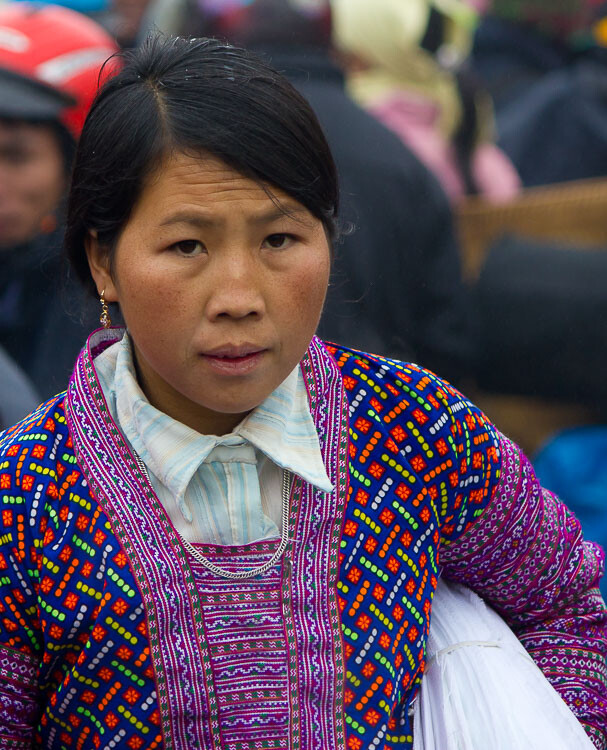
portrait of an Asia lady - 7 Quick Tips To Help You Capture better Portraits

3. Think about the background

Another key element of framing your portrait properly is to ensure that the background isn’t too overpowering. Ideally, a muted or plain surface such as a wall works best as the viewer isn’t distracted by anything else. They can focus solely on the person’s face. If you find that your subject is standing somewhere that doesn’t work best for the portrait, ask them if you can move them and position them somewhere better. Even if you don’t speak their language, usually pointing to where you want them to go does the trick.

If you find that you have to take the photo with too much stuff happening in the background, set a wide aperture so that you will get the background blurred. This will help make your subject stand out from the busy background and not get lost in the photo.

portrait of a person in costume in Italy - 7 Quick Tips To Help You Capture better Portraits

4. Experiment

Most of the time the advice that you are given is to try and light your portrait using natural light, photograph your model from the front, and get close enough to eliminate any distractions. Sound familiar? For example, being outside on an overcast day is ideal for taking portraits as the soft even light means you don’t get harsh shadows on the person’s face.

But while these are great bits of advice that you should follow, it is also worth sometimes pushing the boundaries. So experiment with harsh lighting or even a more creative shots such as in the example below. I took a step back to let people pass and was immediately struck with the dynamism that having someone walk across the image brought to it. It’s still a portrait, but it’s a little more interesting than if there was no one else in the shot.

The key is to not be afraid to go against convention and try something different, you might be surprised by the results.

7 Quick Tips To Help You Capture better Portraits - portrait of person in costume in Venice

The passer-by added a sense of mystery to this portrait.

5. Keep the eyes sharp

If there is just one rule that you need to follow when it comes to taking better portraits, it is to ensure that the subject’s eyes are sharp and in focus. If the eyes are not in sharp focus, the whole image looks soft and unappealing. So, take extra care that you are focusing correctly and that you are keeping the eyes sharp.

When taking portraits outside, the majority of the time you can get away with using a fairly wide aperture. So as long as there is decent light your shutter speed should remain fast enough to avoid camera shake. If you are unable to keep a fast enough shutter speed, raise your ISO accordingly.

portrait of a young Asian child crying - 7 Quick Tips To Help You Capture better Portraits

6. Take multiple shots

You often have a relatively short window when taking portraits as your subject will usually want to get on with their day. But that should still give you plenty of time to take multiple photos. Try taking photos in burst mode so that you can capture the exact moment when your model has their eyes open or has an expression on their face that works for the photo.

You can also try a few different compositions and even angles to give your photos variety. The great thing about digital photography is that it won’t cost you anything to take multiple photos as long as you have enough memory space.

man taking a photo in Venice -7 Quick Tips To Help You Capture better portraits

7. Just relax

Sometimes the real key to taking any great photo is just relaxing and letting it happen naturally. So rather than rushing around and clicking away frantically, just slow down and take your time.

Start talking to people without the burden of knowing that you want to photograph them and if the situation lends itself to a photo just enjoy the process and have fun. Show the person the photos you’ve taken, keep everything casual and you will find that your photos become much better and more intimate.

young girl's portrait - 7 Quick Tips To Help You Capture Fantastic Portraits

Taking a great portrait takes great skill, but when done well it can have incredible results. You will find that not only will you have amazing photos that will look great anywhere, but also memories that you will cherish. Just follow these 7 quick tips to help you capture better portraits and you’ll be on your way to capturing great photos of people.

Please show us your portraits and share your tips advice below.

The post 7 Quick Tips To Help You Capture Better Portraits appeared first on Digital Photography School.


Digital Photography School

 
Comments Off on 7 Quick Tips To Help You Capture Better Portraits

Posted in Photography


9 Tips On How To Photograph Winter Sports

24 May

If you’re planning a winter holiday in a picturesque location, you’re probably wondering how to capture the perfect shot in the snow. Here are 9 tips to help you photograph the dynamic winter sports with beautiful snowy landscapes in the background. Pick the right lens and use protection   Even if you prefer a sharp, high performance prime lens to Continue Reading

The post 9 Tips On How To Photograph Winter Sports appeared first on Photodoto.


Photodoto

 
Comments Off on 9 Tips On How To Photograph Winter Sports

Posted in Photography