RSS
 

Posts Tagged ‘Tips’

9 Tips for Aspiring Young Photographers

20 Jul

Photography is an amazing way to express yourself and see the world around you. It’s therefore not surprising that photography is a favorite pass time for young people. Recently I was asked to give my tips for aspiring young photographers (and those of any age!).

It’s such a great subject that sharing it with the dPS community seemed like a great idea. Even if you’re an old hand at photography, it’s always worth remembering the path you took to becoming a great photographer. We were all young and aspiring once!

Let’s look at some tips that will help you succeed whether you’re new to photography or not.

couple's portrait with flash - 9 Tips for Aspiring Young Photographers

Learning to use off-camera flash is a key lesson for aspiring young photographers who want to take portraits.

1 – Be patient

In today’s world, we all want everything at once. To quote the lyrics from a song “How soon is now?”

As with anything that’s new to you, you’ll need to show patience. Learning a new vocation is a marathon, not a sprint. While it’s true some people will have a natural eye for photography, they also won’t succeed without patience and application.

You also need to figure out what success means to you. There are many who will see that as a large following through social media. While it’s a measure of success to have a large following, it’s certainly not the only measure. In fact, the approval of a huge number of likes through social media can stunt your development, as it may well blind you to some of the mistakes you make when taking photos.

So take your time, accept the fact that you’ll make some mistakes along the way, and allow your photography to grow organically.

musicians in a reflection - 9 Tips for Aspiring Young Photographers

Photographing with friends is a great way to gain experience. This is of a local music band.

2 – Look for places to get feedback

Feedback is an important part of your development. You can’t always see your blind spots, that’s why seeking out advice from others is a good idea. The type of feedback aspiring young photographers look for is important, it can have a big impact on your growth.

  • Thick skin – You’ll need thick skin, or the ability to accept constructive feedback. Then you need to be able to apply it to your future work which will allow you to grow.
  • Seek feedback – The choice of the word feedback over critique is important here. Critique is a negative word, where feedback is neutral. In addition to being given advice on areas a photo needs improving, the feedback giver should also be telling you the things you have done right. All too often people see the word critique and will then only look for the faults in a photo.
  • Stay true – As a photographer, you will develop your own style, so you need to remain true to this style. Feedback should be fixing technical faults, not seeking to change a photographers style. Photography, after all, a creative pursuit, and the wrong feedback has the potential to stunt the growth of aspiring young photographers.
9 Tips for Aspiring Young Photographers

It’s always a good idea to get feedback on your work but choose your sources carefully. 

3 – Choose a niche to master

Photography is a broad area, and there are so many different types or genres of photography. The old saying about being a “jack of all trades, and master of none” rings true here.

Every photographer will eventually gravitate to a particular type of photography. Of course, it’s great to try out new genres from time to time, and in the early day’s it’s worth trying out different techniques to see which is the one for you. But sooner or later though you’ll need to decide whether you’re a portrait, landscape or food photographer.

Each of those photography types has many skills you’ll need to master before your photos really stand out from the crowd. There again you may wish to be a travel photographer, in which case, you’ll need to be good at just about everything.

9 Tips for Aspiring Young Photographers - crystal ball photo

Crystal ball photography is one niche, will you choose this or something different?

4 – Identify a mentor

Every field of photography will have its masters. In most cases, there will be more than one person you can approach as a mentor. Once you have decided on the genre of photography you wish to become good at, find someone who is already good at that, and approach them to be your mentor.

In today’s digital world it’s much easier to do this online. Remember the photographer you approach will be a busy working professional, and you may need to pay a fee for their time. Of course, if you pay a fee you will expect results, so set some clear parameters and goals for your sessions with them.

9 Tips for Aspiring Young Photographers - pixelstick lighting effect

Your mentor will teach you the ways of The Force. Well okay, the ways of the camera.

5 – Join a photography group

One of the best things aspiring young photographers can do is join a photography group. This can either be online or in person. The majority of photography groups or clubs have a mixture of levels and abilities, and it may well be you’ll find your mentor by joining such a group.

There are so many benefits to hanging out with other photographers. The ability to bounce ideas off others, gain feedback on your work, and grow as a photographer within the group are all positives to joining a group.

9 Tips for Aspiring Young Photographers - group of photographers and a red building

Joining a group is a great way to learn about photography and make new friends.

6 – Learn your craft in your locality

Now hopefully you’ve joined a photography group, and you know which style of photography you want to pursue. It’s time to really put the time into learning everything there is to know about it.

Now, of course, you might happen to live in an amazing location like New York, or you have easy access to Angkor Wat because you live in Siem Reap. Those living in less glamorous places nevertheless need to learn the techniques and tricks needed to make the best photos they can, and in turn, put the glamour in their local area. Everywhere has its point of interest, and training your photographer’s eye to see that will help you become a better photographer.

  • Landscape photographers – A great technique to learn is digital blending. You can learn how to do this in your local area, and then when you visit one of the world’s iconic landmarks you’ll be ready to make the best photos you can.
  • Portrait photographers – Learning how to use off-camera flash will really lift your game, you can do this with friends and family as your models. Then when the chance for that big photography gig comes along, you’ll be ready.
blue hour coastal photo - 9 Tips for Aspiring Young Photographers

Practicing your photography skills close to home is a good idea.

7 – Visit locations that will help your photography shine

Having built your knowledge in photography, and picked out a style, it’s now time to pick out a location where your photography will really shine. This will involve some form of investment in you traveling to a specific place that best suits your photography.

This is obviously not something you want to rush into, the key to success here is good planning. As an aspiring young photographer looking to establish yourself, getting some amazing portfolio photos is important. These are some of the steps needed:

  • Location research – Use websites like 500px as a resource to find the locations you’d like to photograph yourself. Time spent on these sites will also give you inspiration for new ideas and directions you could take your photography.
  • Equipment – You’ll need the right equipment to get the best photos, so consider carefully what you’ll purchase.
  • Logistics – Think about the logistics. How much will your trip cost? Are you going at the best time of year for the light and weather? Is where you’re staying going to give you easy access to places you want to photograph?
Petronas tower Kuala Lumpur - 9 Tips for Aspiring Young Photographers

This photo is of the Petronas Towers in Kuala Lumpur is iconic. Earlier photos were taken to practice the techniques needed for this photo, such as digital blending.

8 – Invest time learning post-processing

Photography is a two-step process. First, you’ll need to take the photo, but then you’ll need to process it on a computer or perhaps even in a darkroom. There are lots of things that can add to your photography with post-processing, below are just a few areas that you should focus on for landscape or portrait photography.

  • Landscape – Learning how to use digital blending, sharpen your image, and how to remove unwanted elements from your photo.
  • Portraits – Learn how to soften the face, but sharpen the eyes. Learn about compositing your photos, so you can blend studio portraits with other backgrounds.

9 – Set limits

A great way to push yourself, and learn more about photography is to set limits. In the days of film photography, you’d be limited to 24 or 36 photos per roll of film, though you could, of course, carry additional rolls with you.

The point is you were limited to a finite number of photos, so you’d have to consider your shot selection carefully. This is an example of a limit or parameter that can make you grow as a photographer. The following are a few others which you could try:

  • Focal length – Take photos from only one focal length.
  • Aperture – Choose only one aperture for the whole day.
  • One color – Take photos of only one color for the whole day.

What tips do you have for aspiring young photographers?

Are you an aspiring young photographer? Which of these tips will you follow, and have you learned anything new that you can take into your photography?

Have you ever mentored someone else who was new to photography? What was your experience with that? As always we love to hear from the dPS community, so please leave your replies in the comments section below.

The post 9 Tips for Aspiring Young Photographers appeared first on Digital Photography School.


Digital Photography School

 
Comments Off on 9 Tips for Aspiring Young Photographers

Posted in Photography


5 Tips for Doing Lifestyle Photo Sessions with Families

17 Jul

Even though I focus on weddings, I still do family sessions. Most of these are clients from when I started as a family photographer and I have built a relationship with over the years as well friends that they send my way. I find it a great privilege to see their children grow up and capture moments with them year after year.

family's legs - 5 Tips for Doing Lifestyle Photo Sessions

But let’s face it, this doesn’t happen every month or every six months even. I am not there often enough to capture milestones or fleeting moments. Most of these are annual sessions where the family wants to document a point in their lives once a year. For this reason, I love and encourage lifestyle photo sessions so it feels like a series of snapshots of their daily lives are captured in a relaxed vibe.

What is a lifestyle photo session?

When I first mentioned this to my husband, he said he didn’t have a clue about what that even meant. A lifestyle photo session is one that is relaxed and focused on capturing moments and expressions, day-to-day activities and normal life scenarios, and nothing is too posed. Relaxed, candid shots, fun shots. Think less looking (at the camera) and more doing (action).

5 Tips for Doing Lifestyle Photo Sessions - parents and kids

However, it is done with a lot of planning and intentionality for it to look as such. In this article, I will share with you five tips in my process of photographing family lifestyle photo sessions.

I am very much a planner and I like lists. I generally visualize things in my head first, go through it stage by stage, put this plan and an equipment list on paper and then I feel I’m nearly done. Then it’s just the shoot to get through but half the battle is already won.

#1 Plan in advance

toys and dinosaurs - 5 Tips for Doing Lifestyle Photo Sessions

Communicate your plan with the parents and instruct them on specific preparations in advance of the shoot. Agree on the most suitable time for them especially if the kids are really young. Advise them of outfits. Give them an indication of timings. For example, “We’ll spend an hour in your home and afterward go to a park or a nearby outdoor area for some fun action shots for half an hour”.

Ask them to prepare props that might be needed, snacks, and an activity. For example, if you are coming around at breakfast time, for them to get breakfast organized. This could also work for lunchtime (pizza-making, baking), bath times, play time (kite-flying in the park), etc.

#2 Have a formula

kids hands and snacks in a bowl - 5 Tips for Doing Lifestyle Photo Sessions

When you arrive, you should already have an idea of what to expect. Set up your equipment, line up your lenses where they are safe and have a mental (or physical) list of the following:

  • Wide location shots
  • Close-up detail shots of special things in the house
  • Candid images
  • Action shots
  • Creative/artistic photos
  • Portraits

kids toes - 5 Tips for Doing Lifestyle Photo Sessions

#3 Get to know the family

Spend the first few minutes getting to know the entire family just as they are, not just the children. Join in whatever they’re doing upon your arrival and don’t change the setup straight away.

The children will feel comfortable and safe if they see you interacting with their parents and that they trust you. The kids will warm up to you faster that way than if you would just go straight up to them.

photos of kids - 5 Tips for Doing Lifestyle Photo Sessions

family reading in their home - 5 Tips for Doing Lifestyle Photo Sessions

If you feel the kids need a break from you so that it stays all laid back and relaxed, ask to shoot the details in the house first.

You may need to move things around to style items or the parents may already have prepared these beforehand. Or if there are views outside the house, then take wide photos of them as well as a view into the house. These are part of their day-to-day story.

house details - 5 Tips for Doing Lifestyle Photo Sessions

#4 Focus on natural moments

This is easier said than done because when there is a stranger in the house, it’s very difficult to be completely natural like nobody else is there.

My best tip is to do this using an activity. When the family is focused on what they are doing, try to be invisible and hide behind posts, kitchen cabinets, doors, etc., and capture the moment like you are not there.

b/w candid of a child pointing - 5 Tips for Doing Lifestyle Photo Sessions

kids fingers on a ledge - 5 Tips for Doing Lifestyle Photo Sessions

You need to instruct the parents to initiate the activity, for example, reading books to the kids, playing with their favorite toys, watching their favorite program, etc. If you don’t get the shot you want the first time, you can always ask the parents to repeat the activity and have another go. Tell them not to look at the camera at all unless you ask them to!

This is also a great time to be intentionally creative with your compositions. You can put silhouettes, negative space and layering to great use and enhance your images.

kids and parents - 5 Tips for Doing Lifestyle Photo Sessions

playing peek a boo - 5 Tips for Doing Lifestyle Photo Sessions

hide and seek - 5 Tips for Doing Lifestyle Photo Sessions

#5 Don’t forget to capture portraits looking at the camera as well

This is really important not to overlook because grandparents always like shots of the kids looking at the camera! Try not to spend much time doing this, though.

Often I have to stage this, but try to do it really quickly. You can vary your angles too like asking the little kids to look up at you as shown below.

face portraits - 5 Tips for Doing Lifestyle Photo Sessions

more face photos of kids - 5 Tips for Doing Lifestyle Photo Sessions

Lastly, always remember to take a photo of just the parents without the kids! They always consider it a treat and will treasure their portrait together.

parents and kids photos - 5 Tips for Doing Lifestyle Photo Sessions

Conclusion

Within that five-step plan, I can usually capture a great variety of shots from one or two planned activities. Although they are planned, they look natural and have a fleeting-moment-feel to them. This laid-back process works really well with really young children.

The older the kids get, the more amenable to instructions they become. Older kids may also have their own ideas of how they want you to capture them, and which props or toys they want to be incorporated into their images. So be open to their ideas too.

kids props - 5 Tips for Doing Lifestyle Photo Sessions

I hope you find these tips helpful. Do you have tips to add? Do share them in the comments area below.

The post 5 Tips for Doing Lifestyle Photo Sessions with Families appeared first on Digital Photography School.


Digital Photography School

 
Comments Off on 5 Tips for Doing Lifestyle Photo Sessions with Families

Posted in Photography


Tips on How to Capture Affection in Your Photographs

17 Jul

All you need is love – and the know-how to capture affection in your photos.

Weddings overflow with affection. - Tips on How to Capture Affection in Your Photographs

One of the big challenges in portrait photography is capturing the elusive aspects of life: feelings, smells, and experiences. It’s difficult because a photograph is limited to two dimensions and a single point in time. It only captures what we can see, but we often want it to do more than that.

To make a good photograph, we want to be able to share a sensation or an experience. Fortunately for us, it’s not completely impossible.

One of the great things about humans is that we have a pretty amazing imagination. We can feel the texture of fur just by seeing a photo of it, we can almost smell the sea when we see an evocative picture of it. The challenge is to take a photograph that’s good enough to make the viewer feel what you want them to.

Affectionate friends. Tips on How to Capture Affection in Your Photographs

In this article, I want to share some tips that can help you capture one of those elusive things – affection. I hope you enjoy the ride!

What is affection?

If done right, affection is easier to explain with a picture than in writing – a picture is worth a thousand words and all that. Let me give it a try, though.

Affection is an expression of love and trust, a kind of comfortable tenderness, a warm and confident gaze that doesn’t need to be returned. It’s strength in selflessness and is a very private experience.

Affection between humans and pets. Tips on How to Capture Affection in Your Photographs

Like most other feelings, but perhaps even more so, affection is really hard to fake. It’s often found in the small gestures and mannerisms that have been built over time.

And that’s why it’s so challenging to capture, especially in people you don’t know well.

Sisterly love. Tips on How to Capture Affection in Your Photographs

Why try to capture affection?

So you may be thinking, if it’s so difficult, why bother? What’s the point of struggling to capture something that exists in so many more dimensions than a photograph and that is such an intimate feeling?

First of all, the challenge is a good way to develop as a photographer and a human. It gives you the chance to try to capture something essential, positive, that which will one day be the greatest of memories.

A mother's love. Tips on How to Capture Affection in Your Photographs

Knowing how to photograph affection is a great way to offer family and friends, as well as customers, amazing images that show something real and beautiful.

How to capture affection

Capturing affection may be a bit difficult, but it’s definitely not impossible. If you’re a professional photographer, one of the challenges is that your models may not know you well enough to be comfortable around you.

Nervousness and discomfort don’t go well with displaying affection. Since you won’t have the time to get to know everyone you’re hired to photograph, you need to find other ways to inspire confidence in your models.

The look between newlyweds. Tips on How to Capture Affection in Your Photographs

Even knowing someone well doesn’t mean that it’s easy to capture affection. Shyness or awkwardness may sometimes make it even harder to photograph the affection among your friends and family.

One way to get what you want is to catch a special moment without being noticed. This works well at a wedding shoot, a family gathering, or even when doing street photography. The important thing to think about here is consent and whether it’s a situation where it’s okay to take such a photograph.

Parents and children. Tips on How to Capture Affection in Your Photographs

Proper preparation

If you’ve been asked to photograph a couple, or a parent and a child, preparation is important. With just a little bit of effort put into creating a connection and making your models feel comfortable you can go a long way.

Sometimes moving to a place with fewer distractions might help. Other times being surrounded by others is the right thing. You have to read the situation and make the best of it.

Affection in times of sorrow. Tips on How to Capture Affection in Your Photographs

Part of preparation is building trust. You can start way before the shoot by getting in touch with your customers and making them confident that you know what you’re doing.

Show them that you can be trusted to capture beautiful memories for them and that you’re there to support them in the quite unusual situation that a photo shoot presents.

Love between siblings. Tips on How to Capture Affection in Your Photographs

And as always, practice makes perfect. You can learn to find and capture special moments by looking in places where you wouldn’t expect to find them. Photography is so much more than just pushing a button. It’s learning to see the world in a different way, learning to understand what you see, and learning to capture it.

Affectionate behaviour. Tips on How to Capture Affection in Your Photographs

Conclusion

How do you make sure you capture genuine feelings in your photos? Do you have any tips on how to capture affection or a photo that you’d like to share?

I’d love to get your suggestions and see your photos in the comments below!

The post Tips on How to Capture Affection in Your Photographs appeared first on Digital Photography School.


Digital Photography School

 
Comments Off on Tips on How to Capture Affection in Your Photographs

Posted in Photography


5 Tips to Help You Do Better Nighttime Photography

15 Jul

Nighttime photography offers the opportunity to observe and photograph some great astronomical subjects including the moon (as a whole or during different phases), stars, the Milky Way and even celestial events such as the Northern Lights. If you are new to night photography or want to improve your shots, here are 5 tips to help you on your way:

1. Decide on a subject

Nighttime photography 01 - northern lights over mountains and a lake

Capturing beautiful images at night is not as easy as you might think and camera techniques and settings differ greatly to photographing during the day. Turning up to a location in darkness and hoping to shoot as you would in the daytime can lead to disappointment. You won’t be able to see much by nightfall and finding a scene to shoot will be extremely challenging.

Whether your dream night shoot is to photograph the stars, the moon, meteors or the Milky Way, for example, decide on a subject first and then where you would like to shoot it.

It may seem obvious, but if you want to photograph the moon, there are different phases of the moon to consider.

Nighttime photography 02 - full moon landscape at night

You also need to be aware of the changes in light that can occur with a full moon or a new moon. Photographing under a full moon will make the sky and landscapes brighter. This means that you won’t be able to photograph as many stars as you would with a new moon but you will see a beautifully lit landscape with fewer dark shadows.

Neither of the phases is more photogenic than the other, they simply offer different opportunities and variations in lighting. Research the moon’s phase and plan where you would like it to appear in your image by using an app like PhotoPills or The Photographer’s Ephemeris.

Nighttime photography - stars and tree at night

2. Choose your shooting location during the day

Exposing yourself to a location and its surroundings during the day will help you decide what you want to shoot later at night.

Find a location before dark to avoid the frustration of seeing blind at night and a likely lack of decent images from the shoot. Give yourself time to find your spot and come up with a composition during the day to help you capture better images by nightfall.

Nighttime photography - star trails over a mountain valley

3. Include other elements

Once you have chosen a subject and found a decent location to shoot, your next task is to find a composition you like and that will work well combined with a beautiful night sky. Look for other interesting elements to add to your shots. Other subjects you can include with the moon and stars might include architecture, trees, the landscape or an interesting water source.

Nighttime photography - northern lights over mountains and waterfalls

4. Use a tripod

To stabilize the camera and capture sharper images, always use a tripod. You will need to operate your camera in near darkness and allow for longer shutter speeds in order to record a brighter image than the blackness you will initially see with your naked eye.

A tripod will help you to get the best image quality and a sharper shot. If you don’t have a tripod with you, you could improvise by finding a spot to put the camera down such as on a wall or ledge to keep it from moving when taking the photo.

Any image blur and camera movement can ruin nighttime photography. Even if your hands are as steady as a surgeon’s in the operating theatre, you will move the camera slightly while pressing the shutter button. So in addition to using a tripod, a remote trigger to fire the camera is another good idea.

Nighttime photography - crescent moon and clouds

5. Raise the ISO

You will find that if you want to shoot striking photos after dusk, you may need to use slow shutter speeds (long exposures). In order to maintain the quality of a photo that you can capture during the day when using a low rating of say ISO 100-200, this is necessary.

Sometimes a long exposure may not suit the subject you are photographing so to help you shoot faster (in other words, use a faster shutter speed) during low light, you will need to increase the ISO setting to accommodate.

Nighttime photography - stars and waterfall

The advantages of increasing the ISO to 3200 or 6400 include more detail in the image and a brighter exposure with a shorter shutter speed. However, this comes at a price as the higher the ISO you choose, the more noise will be evident in your image, impacting the overall quality.

I would recommend going for a balance between a slightly slower shutter speed from 1 to 30 seconds and a medium ISO setting of around 1000 or 3200 to get the best image possible without compromising too much on quality. Note: This will depend on your subject though as star trails or the Milky Way may require it higher.

Nighttime photography 08

Conclusion

Once you have experimented with these tips you will soon discover that photographing in the dark can be just as enjoyable and easy as shooting during the day. So what’s stopping you from getting out there and capturing your best ever night shots?

Do you have any nighttime photography tips you would like to share?

The post 5 Tips to Help You Do Better Nighttime Photography appeared first on Digital Photography School.


Digital Photography School

 
Comments Off on 5 Tips to Help You Do Better Nighttime Photography

Posted in Photography


4 Tips to Help You Overcome the Fear of Photographing People

13 Jul

Are you someone who shies away from photographing people?

I this article, I want to share with you some of my journey and four tips to help you become more confident photographing people. I went from being fearful of photographing people to absolutely loving it.

Portrait of an Asian woman with a Nikkormat FTN film camera - 4 Tips to Help You Overcome the Fear of Photographing People

She’s holding the same camera and lens I used to take the next photo in this article.

The fear is real

Many photographers who join our workshops tell us they find it a real challenge to photograph people. Whether it’s people they know or complete strangers, so many people struggle to photograph others. I think this my be one reason selfies have become so popular.

When I bought my first camera I was 19 years old and very shy. I had a small group of friends and a few places I enjoyed socializing. But beyond that, I preferred not to interact with others. I loved taking photos – landscapes, flowers, still life, but not people. I could not bring myself to do it.

My sister encouraged me. She said she loved my photos, but they would be better if there were people in them. So I started photographing her.

girl on the beach in the morning - 4 Tips to Help You Overcome the Fear of Photographing People

One of my favorite photographs of my sister when we were on a camping trip in 1986. Shot with the Nikkormat camera above.

Build your courage and confidence

She was a reluctant subject, which gave me more of a challenge. We used to hang out a lot together with a few other friends, and I started photographing them as well. Slowly my confidence built.

Sometimes I would sneak candid photos of strangers. I had bought a zoom lens which made this easier. Being separated by the distance the long lens gave me, I was not as uncomfortable.

After a while I packed my camera and bag and headed off. When I traveled overseas I found it easier. Somehow being a tourist changed things. I became more confident. Even so, there were many people I connected with along the way that I did not photograph and now regret that I was not bold enough.

Asian woman with a camera - 4 Tips to Help You Overcome the Fear of Photographing People

The story continues

I returned to New Zealand after only six months. My sister had died suddenly so I went back. Thankfully, I have a number of lovely portraits of her.

Not long after I landed a job at a daily newspaper in the Illustrations Department. No, I wasn’t doing drawings, this was where the editorial photographers worked. The task of an editorial photographer is to illustrate the story. Hence the department name.

man holding a photo of himself - 4 Tips to Help You Overcome the Fear of Photographing People

There I learned many things very quickly. The most challenging thing I learned was that most photos published in newspaper stories include at least one person in the image. If I was going to make the most of this lucky break I needed to overcome my fear, quickly. I knew I would not keep my job long if I returned from an assignment with no photos of people and an excuse that I was too shy.

It has not been easy and it has taken a long time to really be confident photographing people, most of the time. But not all the time. Sometimes I can’t do it, as I am still essentially a shy person.

Young Thai woman in traditional costume - 4 Tips to Help You Overcome the Fear of Photographing People

4 Tips for Overcoming the Fear of Photographing People

1. Find someone who will let you photograph them.

This might be a spouse or sibling, or maybe a good friend. If you can find someone who enjoys being photographed then you have already overcome the biggest hurdle.

Photograph them whenever you can. Build a photographer/model relationship. Be aware of times you and your model have the most fun and replicate the circumstances again in future.

If things work out well, invite some other people to join you. Sharing your photos with them and asking them to post to their social media accounts will help boost your confidence.

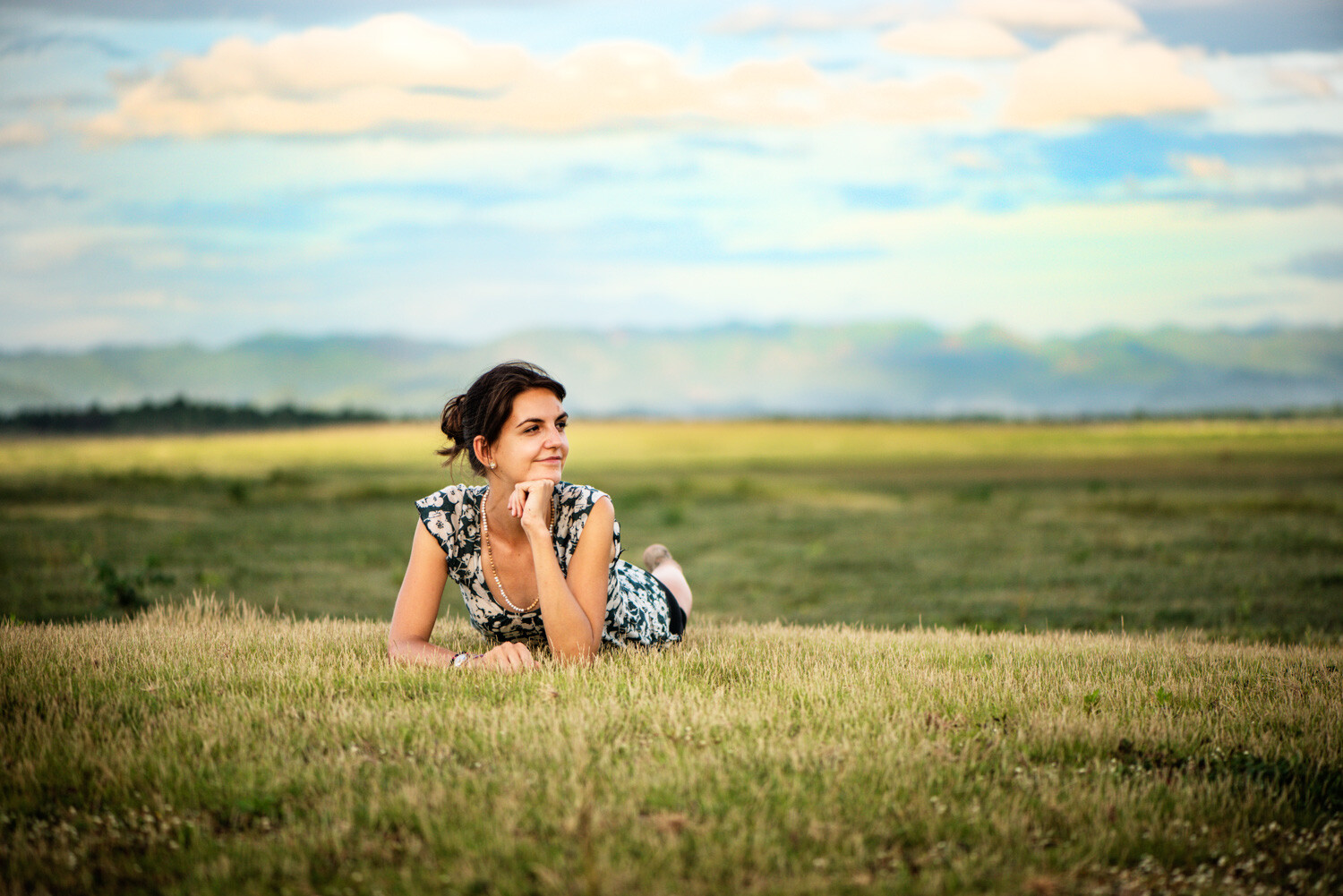
young woman lying on the grass - 4 Tips to Help You Overcome the Fear of Photographing People

2. Join a club or group and volunteer to be their photographer.

Maybe you are already a member of an organization you could offer your services to. You might be the official photographer for your church picnic. Or perhaps you could start making a series of portraits of gardeners in their element for the local gardening club.

Think of other ways you can offer your services which will give you a valid reason to take people’s photographs. I found this a great confidence boost when I started at the newspaper.

Studio portrait of a mud covered woman holding clay - 4 Tips to Help You Overcome the Fear of Photographing People

3. Offer to cover events for your local newspaper or community website.

Put yourself on the spot. Commit yourself to a task. Make a reason that you have to come up with pictures. You can’t offer to cover an event and then only supply photos with no people in them.

Woman being kissed by an elephant - 4 Tips to Help You Overcome the Fear of Photographing People

4. Practice being bold enough without appearing to be rude or pushy.

Practice this without being self-effacing. Having your camera in your hand will help.

People will respond to you very differently if you display confidence when you ask them to take their photo. If you come across apprehensive they may doubt your ability as a photographer and respond with reluctance.

So much of creating a good portrait is in how you present yourself. If your subject is comfortable when they are being photographed you will get better pictures of them. They are also more likely to appreciate the portrait you have made.

Portrait of a rice vendor at Muang Mai Market - 4 Tips to Help You Overcome the Fear of Photographing People

Start Today

If you have been wanting to start photographing people and have not – today is the day to start. You never know how much you might truly bless someone by taking their photo.

Here’s a video story of how I was able to share a special portrait I had initially been reluctant to make.

?

The post 4 Tips to Help You Overcome the Fear of Photographing People appeared first on Digital Photography School.


Digital Photography School

 
Comments Off on 4 Tips to Help You Overcome the Fear of Photographing People

Posted in Photography


Editing Gently: 3 Tips for Processing Realistic Landscape Photos

11 Jul

A well-processed photograph should be just like a good haircut. That’s one of my favorite analogies when it comes to explaining my approach to editing my own photographs. Not only does it confuse people and make them think I’m weird but it is also incredibly accurate when it comes to processing realistic landscape photographs.

What I mean is that when an image is well-processed the viewer will know something has been changed while not being overly apparent and in the end, they like what they see. Just like a good haircut.

sand dunes - Editing Gently: 3 Tips for Processing Realistic Landscape Photos

Before we get further into this, I want to go on record and say that in my opinion there is no “correct” way to process any photograph. So the tips you’re about to learn here come from my own creative tastes and style for landscapes which lean towards an “enhanced” realism but solidly anchored in reality nonetheless.

Now, let’s talk about some ways you can give your landscapes a good haircut and push your processing right up to the boundaries of realism without tipping over the edge.

#1 – Directional Light

Photography is all about light and in landscape photography, 99% of the time the only light source in your compositions will be the sun, or in some cases the moon, which is just reflected sunlight (science).

Sunlight comes from that big ball of fire in the sky and that makes it very directional by nature. Meaning, your main light source for your photographs comes from one spot. When you process your landscape images it’s very important to pay attention to the direction from which the natural light is falling in the image.

The reason for this is because there’s nothing more telling that a photo has been blatantly over-processed than sunlight appearing to miraculously illuminate the frame from different directions. This is especially true when the sunlight is close to the horizon in the early morning or late afternoon. Have a look at the photo below.

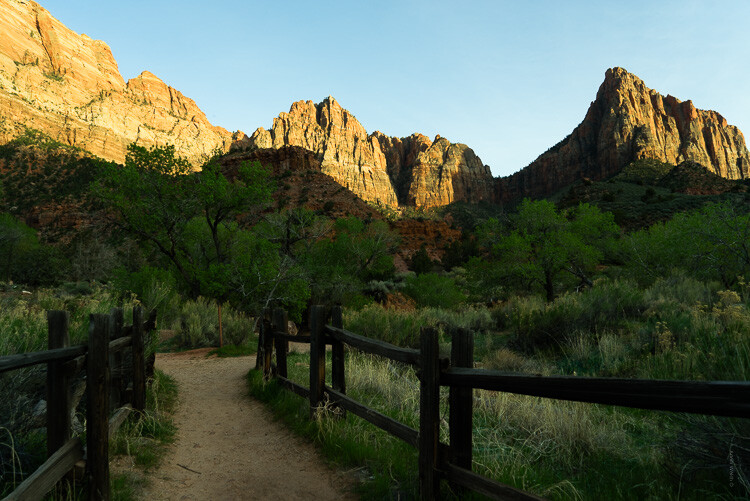
zion canyon - Editing Gently: 3 Tips for Processing Realistic Landscape Photos

Notice how the light comes in from the right of the frame and illuminates the tops of mountains? Yet the foreground is in shadow and so are the areas where the sun is blocked by the cliffs.

When processing a photo with such stark lighting as this be mindful that you don’t create overly artificial light where it shouldn’t be. Sure, bring up those dark areas but don’t go too far as I have with this example (below).

zion bad edit - Editing Gently: 3 Tips for Processing Realistic Landscape Photos

See how “off” the lighting is now? Sure, it’s not terrible but there is bright illumination in areas that should be in shadow on the right. There is no longer a natural feeling gradient to the light as it falls on the foreground.

Let’s look at a more harmonious example of the same photo that has been processed to work with the direction of the available light.

zion good edit - Editing Gently: 3 Tips for Processing Realistic Landscape Photos

In this example, the entire photo feels much more comfortable without having bright spots, uneven shadows, or that odd appearance in the first version.

Most of the editing you’ll do to selectively adjust the luminance of landscapes will be done with local adjustment tools like the gradient filters and adjustment brush. We’ll get into using local adjustments in a moment but first, let’s talk about another aspect of landscape processing that can truly ruin any great photo if you’re not careful.

#2 – Match Color Tones in Reflections

Walking hand in hand alongside working with directional light is how you manage reflections in your landscapes. More specifically, matching reflections in water is a little detail that can make or break a convincing landscape photo.

So often I see reflections in water which are either too bright or too dark or perhaps more noticeable, reflections which do not match (or reasonably approximate) the color tone of the light which it is literally reflecting. Have a look at this. I’ve warmed the sky in this image somewhat from its original blue hour cool tone.

yosemite sky - Editing Gently: 3 Tips for Processing Realistic Landscape Photos

Notice how the light reflecting from the river also carries a hint of the orange color from the sky? Not too much but just enough to add some realism. This is because I intentionally warmed the color of the water a wee bit in order to be more harmonious with the warmed sky. If I had not, we would have something of a tonal mutant on our hands…

yosemite cool water - Editing Gently: 3 Tips for Processing Realistic Landscape Photos

Notice how the color tones in the water don’t match the sky and overall scene here?

When it comes to working with your reflections the name of the game is remembering that the light reflecting in the water comes from the sky…usually. So it should also carry some of the same attributes of that light in terms of luminance and color.

Of course, the type of water plays a role in skewing this a bit but just use good judgment and keep in mind that the reflection should almost always carry a hint of whatever color the ambient light brings to the scene.

#3 – Make Realistic Local Adjustments

I’ve talked about how much I love using local adjustments in other dPS articles. I’m admittedly a radial filter junky and the majority of my photos carry some use of either the gradient or radial filter and adjustment brush edits, often times all three. When it comes to making edits using any of these tools it’s important to know how NOT to use them.

My old friend the gradient filter comes into play quite a bit when processing realistic landscape photos to even out bright skies and for illuminating dark foregrounds. What’s more, used with the radial filter and local adjustment brush, it can work wonders.

good adjustments filters yosemite - Editing Gently: 3 Tips for Processing Realistic Landscape Photos

Good adjustments using the filters in Lightroom.

Or it can look absolutely horrifying when used poorly.

Yosemite - Editing Gently: 3 Tips for Processing Realistic Landscape Photos

Bad use of a graduated filter in editing.

The same is true for its circular counterpart, the radial filter. This little gem works beautifully for applying custom vignettes and brightening (or darkening) areas or for adding in a host of other great adjustments to your photos. However, much like the gradient filter, it can be easily blundered.

saguaro cactus bad edit - Editing Gently: 3 Tips for Processing Realistic Landscape Photos

Bad edit with a radial filter in Lightroom.

The local adjustment brush also carries the same caveats. Few things make a picture look worse than the application of a “finger-paint” local adjustment brush. Actually, it gives finger-painting a bad name.

death valley - Editing Gently: 3 Tips for Processing Realistic Landscape Photos

The key to making effective and realistic local adjustments in any photograph comes down to remembering a few important guidelines:

  • Less is usually more. Local adjustments are just that, local. So when applying them remember that they will become more and more apparent when you use them to make drastic edits.
  • Feathering is your friend. Whether it’s the radial or gradient filters or event the adjustment brush, most times you will want to apply your adjustments gradually with very soft borders which blend well with the surrounding pixels. Set your feathering all the way to 100 and then if you need a harder edge for more defined work back it off from there.
  • Don’t be afraid to stack adjustments. When done judiciously, many local adjustments can be applied one over the other. For example, you might use three graduated filters each with a varying color temperature to give the sky a creamy color tone or multiple radial filters to layer out an exposure adjustment.

Final Thoughts

Landscape photography is a long-loved standby in the photography world. It is also one of the most ethereal and easily mismanaged types of photography when post-processing is done unconvincingly.

There are so many aspects of processing realistic landscape photos and most go beyond simply moving a few adjustment sliders around. In fact, I think of my landscapes as more of an exercise in digital painting than as simply editing a picture.

Whatever your persuasion may be in terms of how much you choose to make edit, having a solid basis in reality is a great jumping off point for making a dynamite landscape.

zion - Editing Gently: 3 Tips for Processing Realistic Landscape Photos

Remember, pay close attention to the direction of the light in your frame and make sure that the rest of your edits stay somewhat true to the natural lighting already present.

The same goes for reflections. Make sure the light reflecting from surfaces like water looks like it came from the ambient light source even if that light source has been changed by you. And lastly, don’t mess up the endgame but applying freakishly obvious local adjustments.

Always remember, there are no rules for processing a landscape photograph but there are ways you can make sure your photos stay true not only to your visualized outcome but also to the natural splendor from whence they were born. Yes, I used “whence” in a sentence.

Happy editing!

The post Editing Gently: 3 Tips for Processing Realistic Landscape Photos appeared first on Digital Photography School.


Digital Photography School

 
Comments Off on Editing Gently: 3 Tips for Processing Realistic Landscape Photos

Posted in Photography


Tips for Great Lighting for Pet Photography

09 Jul

Pet photography is both challenging and extremely rewarding. You may really enjoy taking pictures of your own pets but if you apply some of the general rules that apply to all pet photography with studio lighting, you can really help you up your game.

The key to all pet photography is to get what appears to be an emotional connection with the animal being photographed. If you don’t do that, all the photographs will look more like snapshots and less like portraits.

Tips for Great Lighting for Pet Photography

Upping your game.

The Setup

You do not need to be huge space but you do need some room to work. Ideally, a studio setup includes:

  • Lighting
  • A backdrop
  • Flooring
  • Elevated furniture or a platform
  • Remote triggers

You will need enough space to get in front of the dog or cat such that the backdrop fills the background. You also need to consider that animals move and will not stay still in a very small confined area. Ideally, you need at least about 10 feet wide by about 25 feet depth. You will also need some space between your subject and the backdrop.

This arrangement will accommodate most pets except larger dogs. Large dogs need a lot more space. The larger they are, the more space you need. You also need to think about what they will be stepping on and if their paws are clean. Seamless paper is a great backdrop but is it not a great material for animals to step on as they leave footprints.

Tips for Great Lighting for Pet Photography

Setups for pet photography can be just this simple.

Be Prepared for Accidents

With any pet photography, you have to anticipate accidents. Appropriate cleaning supplies are a must. Be prepared for both #1 (urine) and #2 (feces) accidents. Dogs are much worse than cats. Older dogs tend to have fewer accidents than younger dogs, while puppies frequently have accidents.

If you are dealing with multiple animals (at different times), you need to also consider cross-contamination control measures. Good antiseptic cleaners with some bleach will work well. You will need cleaners with enzymes to break down pet urine for the occasional territory markers. Harder surfaces are easier to clean than soft surfaces.

Backdrops

Backdrops are useful and you can get creative with what you use. Seamless paper is a great option but you will go through it relatively fast and animals that walk on seamless paper will often scare themselves with the noise from the paper moving.

You also need to consider what the animals will stand or sit on. Melamine surfaces are great for flooring options but some animals don’t like being on melamine and the seams may need to be edited out in post-production if they are too visible.

Toys and treats for cats and dogs.

Equip your space with lots of animal-specific toys and treats available and ready to reach. Cats and dogs are not interested in the same types of toys or treats. Always ask if an animal has allergies before giving them any treats or better yet, ask the owner to bring some treats that their pet likes.

Camera Equipment

Most modern digital camera equipment will work for pet photography but you need to think about a few things.

Ideally, your camera needs to focus fast, preferably with a reliable continuous autofocus ability. If you are using strobes, you will be focusing under lower lighting conditions than the eventual shot. Slow focusing or inability to shoot quickly will mean you miss the shot or have lots of images out of focus.

You have limited time, so you need to be cognizant of your animal. In general, you will need a wider lens (you should probably start with a fast zoom lens), particularly if you are using a smaller space but wider lenses can mean your image is wider than your backdrop. Long lenses will compress features but unless you have an assistant to help wrangle the animal, you will likely need to be close enough to reach the animal to do it yourself.

gear for pet photography - Tips for Great Lighting for Pet Photography

Basic camera gear for pet photography – camera, flash, and triggers.

Lighting is key and unless you are looking at using continuous (LED) lighting, you will also need a reliable way to trigger your lights. In your space, you should be able to control your lighting to get the desired effect. If you are using strobes or speedlights, you need a way to trigger the flashes.

Radio controls (most expensive option) are significantly easier to use than either optical slaves (speedlights) or cables (tripping hazard). Make sure you are familiar with your equipment before the animal to be photographed shows up.

Basic Rules for All Pet Photography

There are a few basic rules for pet photography that apply to all types not just in the studio, but become more important when you have pets in your space. You generally have more control over your environment in the studio. Because you are in your own space, you can plan to address each item for the animal before they arrive and adapt your environment for the particular requirements of each animal.

Be Calm

white dog - Tips for Great Lighting for Pet Photography

Calm person = calm dog.

Relax, pets feel your energy. If you are nervous or talk too much, they will feel it and become nervous as well. If you are calm, they will be calmer (NOTE: I did not say they would be calm).

Never assume a dog or cat will be calm, but you don’t want to make it more difficult for you for the pet. They can often be scared or anxious about new surroundings or that machine you keep putting up to your face between you and the animal.

Whatever you do, don’t yell or strike at the animals. They don’t speak languages you easily understand. Make sure you understand the warning signs from animals when they are nervous. With dogs, yawning is often a sign of anxiety and can be a warning just as it is with low growling. With cats, ears back is usually a sign of a cat feeling quite threatened.

dog with red bandana - Tips for Great Lighting for Pet Photography

Older animals tend to be calmer.

Get to Their Level

It is really important for all pets, no matter what size and shape, that you get down to their level. You can take a few different approaches to this but in the end, you need to find a way to be at the eye level (not below) of the pet you are photographing.

Many beginning photographers take pictures of their pets from a standing position and after looking at their results, they can’t figure out why they are unsatisfied with their images. Getting to eye level is a relatively universal requirement for all animal photographs, not just for pets.

grey cat - Tips for Great Lighting for Pet Photography

Get down to their level.

Getting to their level can either mean you go down to their eye height or they get up higher, closer to your height. The best thing to do is to get down and dirty at their level, particularly with larger animals.

But with smaller animals, you can also bring them up to a higher level with ottomans, tables, and chairs. With higher surfaces, you then need to worry about wrangling the animal so they don’t fall or jump off the table or chair. Puppies and kittens will often fall off tables.

Get Their Attention and Their Eyes

In order to connect with an animal, you need to be able to see their eyes and in particular the catchlights in their eyes. No eye contact means no connection, but you don’t only need the animal staring at you.

Animal eyes are shaped differently than human eyes so the catchlights will have a slightly different appearance than those in people’s eyes. There are two schools of thought regarding pet eye catchlights (i.e. one versus two catchlights). In human portraiture, typically it is taboo to have two catchlights in the eyes, but some pet photography works well with two catchlights because of the different eyeball shape.

Tips for Great Lighting for Pet Photography - black and white kitten

Having two catchlights in some pets eyes, like this little kitty, is okay.

Some pets may watch you when you photograph them but most don’t. Eye contact can be aggressive to them. In addition, as soon as you put the machine (camera) up to your face, you will no longer be visible to them. As soon as your face disappears, usually so does the animal’s attention. Getting an animal’s attention is usually a function of the type of animal.

For cats, laser pointers, toys, and strings can help focus their attention, treats less so. Some cats also will be focused on treats but this usually shouldn’t be your first choice. For dogs, squeakers, toys, and treats are always a good approach, so is making strange noises. But don’t give them the toy unless you want it in every shot. Again use treats as the last resort but they work well with many, but not all, dogs.

Different animals are motivated by different attention-getting devices. Treats will get them to move and often makes for interesting action shots, although I find treats work better for dogs than for cats. Remember to check for allergies before giving treats. Always use very small sized treats otherwise the animal will fill up on your treats and you will lose their attention.

Editor’s note: An even better idea is to get the owner to bring some treats that their pet likes, and which they approve of giving to their animal.

Tips for Great Lighting for Pet Photography

Move Quickly

All pets have a limited attention span, typically 15 minutes is the maximum time you’ll get from start to finish. It is best to move quickly and try to get your best photographs early in the shoot because as time passes, the attention-getting-object, toy, or treat will wear thin and they will become disinterested.

Planning is the best way to set up and get the shot the way you want. So plan your shoots and think about how to best highlight the animal. Props sometimes work, like baskets for cats (above) or feather boas for dogs (below).

Tips for Great Lighting for Pet Photography

Keep the Speed Up

You need to set your shutter speed to something relatively quick. If you are using strobes or speedlights, you will need to use the best speed that works with your equipment.

With speedlights, you won’t be able to shoot in bursts because of the recharge or recycle time. Even with strobes, you need to ensure your strobes can take multiple shots in quick succession. Typically for studio work and strobes, a shutter speed of 1/160th or slightly faster is the limit of your camera (flash sync speeds vary, check your camera user manual).

Even if you are using continuous lighting you will need to get your shutter speed up just to freeze the image because animals can move quickly.

grey and white cat - Tips for Great Lighting for Pet Photography

A fast shutter speed will freeze movement of the animal.

Use Continuous Tracking Focus

Pets move quickly, so focusing is tough, really tough. Single shot focusing regardless of how quick your camera focuses will likely mean that most of your shots will miss. Often after getting a focus lock, pets will move away from your focused location by the time you take the image.

Many modern cameras are now capable of tracking objects and focusing on moving targets. Continuous tracking allows for adjustments as the pets move. If your camera has continuous tracking focus you need to use it. Otherwise, most of your images will be out of focus.

Shoot in Short Quick Bursts


Spray and pray is generally a terrible way to take photographs. It usually implies a photographer didn’t take the time to set up a shot, but in the case of pet photography, it is usually the opposite.

dog in a basket - Tips for Great Lighting for Pet Photography

As you are watching for the decisive moment, you take a short burst of images (provided your lighting can keep up) because you will likely have several images in a sequence that are good. However, with pet photography, judicious use of rapid-fire bursts can lead to stunning images. The secret is to anticipate the moment and get a good focus lock. I personally use back button focus specifically to hold the continuous focus independent from the image taking.

Tips and Tails

With pets, if you are taking an image of the entire body, you need to include the tips and tails of that animal. You want the entire animal within the frame. You can intentionally crop for a close up of their face, but you lose something if you are missing the tips of their ears or the end of their tail.

Missing body parts make for incomplete looking images. The best way to approach the images is to remember the catchphrase, “Tips and Tails”. Always try to get the tips of their ears and the end of their tail within the frame. In addition, the same basic rules for human portraiture also apply to pets, specifically for tighter shots where you should never crop an image on the subject’s joints.

German Shepard puppy - Tips for Great Lighting for Pet Photography

Tips and Tails – I just got the end of this puppy’s tail in the shot. Cropping off part of it gives the tail an amputated look you want to avoid.

Also, unlike humans, most pets have longer noses, so it is generally better if you get their entire face in focus. Wider apertures will end up with the nose out of focus which is much more noticeable with pet photography as opposed to human portraits.

Get the whole face sharp. This image doesn’t work because of the cropped of paw and out of focus nose. 

Studio Lighting

Lighting in a studio means controlled lighting. Before you start using strobes, you will need to find out if the animal is sensitive to flashes. While strobes are the brightest lights available, that brightness can be a problem if the animals are sensitive and hate them or get easily startled.

The easiest way to see if they react negatively to the strobes is to manually fire the strobe while setting up before the animal is in place. It will be really obvious if the animal reacts to it. You’ll need a backup plan if they are scared of the flash.

Tips for Great Lighting for Pet Photography - grey kitty

Strobes are best.

Shooting in the studio allows you to control the light but you need to assess the best kind of lighting for your needs. There are generally three options, speedlights (the portable ones that go on the hot shoe on your camera), strobes (dedicate studio flashes that usually plug into an outlet), or continuous lights.

Strobes provide the most powerful lighting for the lowest cost but some animals are really sensitive to the flashes from strobes or speedlights. Continuous lighting has been really advancing lately but in order to be able to use them for pets, you need a fair bit of light to keep the shutter speed up. Continuous lights that are really bright are very expensive.

Lighting Setup

Lighting a pet in the studio is different than lighting people. Often you can light a person and get a decent image with only one light. You can create drama with shadows using long and short lighting techniques.

With pets, you are better off lighting them with a key and fill light in reasonably even proportions to one another with a much smaller difference in the intensity of the two lights (light ratio). Pet photography benefits from the super sharpness of being able to see all the details in a pet’s fur. Deep shadows tend to hide those details. Portraiture techniques such as butterfly lighting and Rembrandt lighting just don’t really work for pets.

Tips for Great Lighting for Pet Photography

Basic pet lighting setup.

A great lighting setup uses three medium softboxes: a key light and main light at 45-degrees on either side of the pet, and a hair light coming from above and behind the animal (see lighting diagram above).

Why? This set up works well because you can light the animal relatively evenly. Remember you are lighting an animal that is much shorter than you. Using this setup gives you room to get between the key and the fill light that are quite low to the ground. Generally the key and fill lights are centered about 4-5 feet off the ground.

The hair light provides some separation from the background and is generally not set at a high power. Separation is important, particularly if the animal has a dark coat and you have a dark background. I often use the key light at about 25% more light than the fill light, but the setup works even if the lights are close to the same power.

Using Strobes Usually Means Manual Mode


While there are TTL strobes available, they are quite pricey. Manually triggered strobes are readily available and can often be purchased used for very reasonable costs. In general, for pet photography, you can shoot entirely in manual mode with manually triggered strobes and get great results.

Because pet photography tends to use a simpler lighting setup, by using manually triggered strobes, once your lighting is set up you can simply focus on wrangling the animal and getting the best shots. The rule of flash or strobe photography is that shutter speed controls the background exposure and aperture controls the flash. In manual mode, you can set the power of the strobes and shoot.

Color cast

When you are shooting with strobes, depending upon how expensive your strobes are, there can be a fair bit of range for color temperature from your lights. You want to ensure the only source of light is your strobes because other lights, including tungsten and fluorescent lights, will create a color cast and your image that is difficult to remove.

It is best to set up and do a gray card test before you start shooting to get your white balance right. You can either use a customized white balance for your camera or if you are shooting in RAW, you can manually adjust the images later in your RAW processing software.

Often letting your camera choose by using Automatic White Balance, with strobes means that the color will vary from image to image. Setting it ahead of time with a custom white balance or a gray card calibration means that you can focus on the image rather than changing white balance in your images. It means less processing work to do later as well.

Tips for Great Lighting for Pet Photography - black dog with a red collar

Be aware of color casts.

Background Color Versus Animal Color

When you take pictures of animals it is always good to consider the dominant color of the animal’s coat relative to the background. It is best not to have the same color for both, although it can work out.

What this means is don’t use seamless white paper as a background for a white dog or a black background for a black cat. You need to be able to adapt on the fly and sometimes you can’t avoid it with animals that are mixed in the color of their coat (e.g. a black and white cat).

It is also good to ensure the color of the material that the animal is sitting on during the session works with the color of their coat and that of the background.

Tips for Great Lighting for Pet Photography

Make sure you have contrast between the color of the animal and that of the background.

Furniture

The last tip is a simple one but one that isn’t too obvious. When animals are stressed out they tend to shed. Animals get stressed when you photograph them. This means that there will be fur coming off them, sometimes in large amounts.

If you are using furniture to elevate an animal, just expect that their fur will get everywhere. Try to keep the furniture clean before you start and you may even want to touch it up as you go because removing the contrasting hairs from the furniture can be a tedious process in post-processing.

Conclusion

Studio shots of pet look awesome. With a bit of preparation, you can get high-quality images that show great drama and connection with the animal. The approach is the same as with any other animal photography but in the studio, you can control the light and the background much more allowing for better results.

If you have any questions for comments, feel free to drop me a comment below. Happy shooting!

The post Tips for Great Lighting for Pet Photography appeared first on Digital Photography School.


Digital Photography School

 
Comments Off on Tips for Great Lighting for Pet Photography

Posted in Photography


6 Tips to Capture Wildlife Photography with Impact

05 Jul

Wildlife photography has become even more popular since the advent of digital cameras. Capturing wildlife can be a challenging undertaking whether your photographing animals for the first time or are well practiced. If you’re new to the subject and want to learn how to photograph animals, here are some tips to help you get started:

1. Use a telephoto lens

6 Tips to Capture Wildlife Photography with Impact - zebra

One of the most frequent questions I get asked about wildlife photography is, “Which lens should I use?” You may want to photograph birds in your garden, animals at the zoo, or even polar bears in the Arctic. Whichever is your preferred subject, I find that while a wide-angle lens is great for capturing the bigger picture, to really capture an animal from afar, you will need a telephoto lens.

A telephoto lens is the ideal solution to draw you nearer to the action where anything from 70-400mm will facilitate the ability to zoom in to photograph wildlife.

You will find photographing from a distance an advantage as getting too near to the creature could scare them away, particularly wild animals that are timid such as foxes. Animals living in urban environments are more likely to be used to people so you may be able to snap them from a closer vantage point.

6 Tips to Capture Wildlife Photography with Impact - hyena

2. Use a fast shutter speed to capture the action

Camera shake will be more apparent when using a telephoto lens rather than a standard lens due to its size and weight. The longer the lens, the more susceptible you are to camera shake. A shutter speed of at least a 1/100th of a second will help to photograph moving animals and minimize movement.

Clicking the shutter at faster speeds will enable you to freeze the action whether your subject is moving or motionless and will help you to capture sharper images. In addition, many modern lenses now have the option of image stabilization which can also be used to reduce vibration.

6 Tips to Capture Wildlife Photography with Impact - eagle in flight

3. Focus on the details

Sometimes filling the frame with an animal’s features can make a wildlife photograph more appealing. The intent stare of a lion or the face of a monkey, for example, can be a captivating subject and even more interesting than the animal as a whole.

As you begin to photograph wildlife more, you will notice the details about an animal that could make an interesting picture. Be sure to photograph different features that you find compelling.

6 Tips to Capture Wildlife Photography with Impact - lioness

4. Make sure your battery is charged and your memory card has space

This may seem obvious, but it’s surprising how many times I have heard people say they have run out of battery power or that they don’t have enough space left on their camera card to take any more pictures. If you ensure your battery is fully charged and your memory card is empty, you will be prepared for any potential wildlife sighting.

During a wildlife safari drive or whilst out walking in the countryside, you never know when an animal encounter will happen. You could see wildlife at any given moment. With your camera charged and cards empty you will be ready for any photo opportunity as and when it arises.

6 Tips to Capture Wildlife Photography with Impact - colorful bird

5. Create pictures with interest

Many newbie photographers that capture images of wildlife tend to place the animal right in the center of the frame. This can work well with the right composition. Try to photograph the animal off center too, by positioning it to one side of the frame to make the image more interesting.

Placing your subject on a third of the frame can create impact.

6 Tips to Capture Wildlife Photography with Impact - water buffalo

You could include part of the animal’s habitat in the frame such as a bird in its nest. Woodlands and rivers are great natural havens for wildlife and can make for an appealing setting to frame your subject within.

6. Wait a while

As animals are difficult to predict and they often move, you will find it challenging to capture a good shot with the first image you take. Be prepared to wait a while and you may get to see and capture a more rewarding image.

6 Tips to Capture Wildlife Photography with Impact

For example, when I came across this serval cat during a game drive in Tanzania, I spotted the cat looking for prey in the long grass. After pulling the car over and waiting a few minutes, the serval cat turned for a split second after being alerted by the noise of the engine and I captured the moment.

Conclusion

Next time you are out with your camera to do wildlife photography, whether you’re out walking, observing in your garden, or watching wildlife from afar, remember these tips. Hang around for a while and be amazed at what you might discover.

What wildlife photographs have you taken that you would like to share?

Wildlife photo tips 08

The post 6 Tips to Capture Wildlife Photography with Impact appeared first on Digital Photography School.


Digital Photography School

 
Comments Off on 6 Tips to Capture Wildlife Photography with Impact

Posted in Photography


Tips for Using Color in Your Photography

22 Jun

Tips for Using Color in Your Photography - boats in a row on the shore

Color is one of those things that you easily take for granted because it is everywhere. Even though you see it every day, not much thought is given to how (or why) it affects your perception or mood. While it is a common part of your life, you can still pay attention to how it affects your images.

Since color or the absence thereof plays an important part in your final product (others include light, shape, form, and texture), give it some more thought. Are you conscious of how you are using color in your photos?

salt and pepper close up shot - Tips for Using Color in Your Photography

1. The Basics

There are three primary colors – red, blue and yellow. Secondary colors are produced when you combine these: green (combination of blue and yellow), purple (red and blue) and orange (red and yellow). If you further combine, you get the next level/tertiary colors.

color wheel - Tips for Using Color in Your Photography

By The original uploader was Sakurambo at English Wikipedia. [GFDL or CC-BY-SA-3.0], via Wikimedia Commons

The color wheel is a diagram that shows how different colors relate to each other. They exist along a continuum with each color transitioning into the one next to it. So why are these basics important?

Color Harmony

Color harmonies are combinations that are visually appealing to the human eye. A color harmony is when you have two or more different colors that complement each other. This is a key tool used by both artists and photographers to communicate with their viewers, as it is used to evoke a mood or emotion. There are a few types of color harmonies that you can use.

red boat on the shore and one bird - Tips for Using Color in Your Photography

Monochromatic versus Analogous

While these two color harmonies are similar, analogous offers subtle differences that set it apart. A monochromatic color scheme or harmony uses variation in the lightness and saturation of a single color. An analogous color harmony is composed of colors that are adjacent to each other on the color wheel. There is still one dominant color, but the second color enhances the overall look.

anise seeds - Tips for Using Color in Your Photography

Example of using color in a monochromatic way.

Both of these color harmonies are easy to create and are very easy on the eyes. Monochromatic color schemes are sometimes used to establish a mood because of their visual appeal and balance.

Tips for Using Color in Your Photography - mountain scenic photo

Example of an analogous color scheme with blue and green being next to each other on the wheel.

Analogous colors flow into each other, creating a more soothing look in your image. When you are outdoors, you are exposed to all the various color harmonies including these two. Think about a lush forest with its varying shades of green or the variances of oranges and red in an autumn scene. These tones are likely appealing to you, now you have a little idea as to why.

Complementary Colors

Complementary colors are directly opposite each other on the color wheel. Thus the color complement of a primary color is a secondary color (as shown on the color wheel) e.g., red and green complementary colors work well together since they are highly contrasting. They can be quite dramatic when used at full saturation, as each color makes the other appear more active.

Tips for Using Color in Your Photography - sunset on the water

Orange and blue are complementary colors, which makes sunsets and other scenes with these colors so appealing to us visually.

2. The Key or Dominant Color

The key color is the main color in an image. Often, the key color in an image is that which is the most dominant. Allowing one color to dominate can lead to a powerful image. This is stronger when a primary color (red, blue or yellow) is the dominant color.

Colors with greater intensity will draw (and hold) your viewer’s attention. Keep that in mind, in relation to how it affects your subject.

Tips for Using Color in Your Photography - red tomato in a red bowl

Red is the dominant color in this image, clearly.

3. Advancing or Receding Colors

Advancing colors are the gamut of colors on the warmer end of the spectrum. These include red, red-violet, yellow, yellow-orange and orange. When advancing colors are dominant, they appear as though those objects are closer to the eye, as if coming towards you. Red is one of those colors that dominates and jumps right at you. Think about a scene that has only a hint of red (e.g., a red mailbox) and yet the red dominates.

Tips for Using Color in Your Photography - sunset photo

Advancing colors can work well in an image or on the other hand, can disrupt your scene by taking away the attention from your subject.

Receding colors are the opposite and take on a more background characteristic. Think about what blues and greens (the cooler colors) add to a landscape. They fall into the distance, add a feeling of depth, and help balance the stronger colors.

cool colors of blue hour - Tips for Using Color in Your Photography

4. Feelings and Color

Color provokes various emotional responses in people. So much so, that we use color to describe different emotions, for example: feeling blue, seeing red, tickled pink, or green with envy.

We connect to the warm colors of a sunset differently than we do to a cool blue morning. Color in everyday life is used as a powerful psychological tool, the same applies when using color in your photographic compositions.

Tips for Using Color in Your Photography - statue and the sky

Remember that color is subjective – the same color can make one person happy but irritate another. Also of note, one color can evoke different emotions, if you change its hue and saturation or change the color you combine it with. Orange for example, can create excitement when it leans towards red and be more calming when it is more on the yellow side.

Conclusion

It is fun to learn how colors work with each other and how we react to different combinations. When creating an image, organize color in a way that is easy and pleasing to the eye. Use strong, bold colors to create impact or generate an emotional response. Do you want to grab your viewer’s attention immediately or prefer if their eyes wander around your image?

buffalo in a yellow field - Tips for Using Color in Your Photography

While people see the world in their own way, experiment with color and try to understand what reaches your audience. When creating images with impact, you can use color and make them feel what you want. Share your colorful world with us in the comment area below.

The post Tips for Using Color in Your Photography appeared first on Digital Photography School.


Digital Photography School

 
Comments Off on Tips for Using Color in Your Photography

Posted in Photography


21 Tips to Help You Create Better Panoramas

18 Jun

Panoramas are a great way to approach photographing landscapes. By allowing you to capture a larger amount of the scene in front of you, it is easier to portray what you actually saw with your eyes in your photographs. Software has made it stupidly easy to stitch your photos into panoramas; however, there are still some considerations you can take to get the most out of your landscapes and make better panoramas.

panorama of mountains and a lake - 21 Tips to Help You Create Better Panoramas

This article presumes you already know how the basics of capturing a sequence of images and to how to stitch them together as panoramas in Lightroom or another dedicated software package.

Part 1 – Gear

Such a specialized technique may seem like it requires a lot of specialist gear to get right, but that’s not the case. Of the three items listed below, only two are absolutely necessary and as someone interested in landscapes, you probably already have the most important one.

1) Tripod

21 Tips to Help You Create Better Panoramas - camera on a tripod

A tripod is an absolute necessity if you want to create better panoramas.

This first one is probably obvious, but it’s the most important when it comes to creating better panoramas. All of the images in your sequence need to line up perfectly and the only way to ensure that is with a good, sturdy tripod. The tiniest of movements between your photographs can cause Lightroom to fail when stitching your photos together.

failed panorama - 21 Tips to Help You Create Better Panoramas

You never know when an image might not get through the stitching software. Do your best to get it absolutely right in camera to avoid situations like this one (notice the disconnected railing).

Disheartened may be the feeling you get when you see the words “Unable to merge the photos. Please cancel and review the selection.” So, please, for your own sanity, use a tripod when shooting panoramas.

2) Panoramic tripod head

21 Tips to Help You Create Better Panoramas - tripod head detail

If you have a tripod head that can turn in measured increments like this one, attach your lens to the tripod if you can (using a tripod collar), rather than your camera body.

This is an optional piece of kit, but I promise you, if you plan on doing panoramas often, make sure you have a panoramic head on your tripod. These heads rotate on the center axis of your camera and help minimize distortion in your final image.

Panoramic heads are also marked with numbers from 0 to 360 degrees so you can make your camera movements with absolute accuracy. There are a lot of good panoramic tripod heads available and you will be able to find one in the same price range as other styles of heads.

Now, to be absolutely clear, I’m talking about the cheap kind that you can find in a normal price range. There are panoramic heads with motorized components made for the explicit purpose of stitching together photos. I’m not talking about those. If you can afford one, by all means, go for it, but unless you specialize in panoramas, it’s unlikely that you would ever need to even consider one.

3) Spirit level

spirit level - 21 Tips to Help You Create Better Panoramas

Spirit levels will help you guarantee that all of your shots line up in the stitching software.

While you can still achieve good results without one, using a spirit level will help you make sure that your panoramic sequence stitches together with a minimal amount of distortion. This is important when you have compositional elements at the edges of your frame. If those elements get distorted too much, they will wind up (either partially or fully) outside of your crop.

You may already have one or more built into your tripod, but if not, you can buy one that fits your cameras hotshoe for a reasonable price.

Part 2 – Capture

Camera craft is easily the most important aspect of capturing better panoramic images. From getting a correctly aligned sequence of images, to focus and exposure, there are a lot of elements that you need to get right in camera to ensure that your images come out well.

4) Practice your movements

To be fast, you should be able to operate your camera and your tripod without thinking about them. In fact, these movements should be ingrained as muscle memory. How do you do this? Practice, lots of practice.

21 Tips to Help You Create Better Panoramas - panorama of a scene outside

Practice your camera and tripod movements when it doesn’t count. For example, I had an hour of down time in a hotel, so I took a few sequences through the window.

One of the best ways to go about getting that practice is to make some time to set up in a low-value environment. So when your practice images are (inevitably) bad, you won’t have missed any images that were worth taking. It can be as simple as going into your backyard and setting up there for an hour.

Once you’re set up, go through the motions of taking a panorama in slow, deliberate steps. Make sure that every action from focussing through to the actual camera movements is perfectly executed. Go through the motions a few times and when you are sure that you have it down, speed up a little. Again, repeat this until you’re satisfied that you have it down. Then speed up again.

Keep practicing like this until you’re performing all the actions without even thinking about them. Doing this for just an hour will reduce your chances of a mistake when you are standing at the edge of a lake in that once in a lifetime perfect light.

If you really want to hammer it down, don’t just practice like this once. If you have some downtime, try using that time to reinforce these skills instead of, say, scrolling through your phone.

5) Take notes

21 Tips to Help You Create Better Panoramas - notes on paper

Notes don’t have to be complicated, they just need to be clear enough that you understand them without much effort.

Taking notes will ensure that you are an organizational genius. It doesn’t matter how you take your notes, whether it be on a notepad, your phone, or in voice recording app such as Evernote. As long as you can annotate the file numbers where each of your panoramas starts and stops, you’re on to a winner.

Editor’s tip: You can also take a shot of your hand in front of the lens before and after your pano shots so you can mark the beginning and end of the series that way as well. 

6) Longer lenses

Instead of using your wide-angle lenses, use longer focal lengths when making panoramas. 35mm, 50mm and 85mm are all good choices depending on the scene in front of you. The longer focal lengths allow a different perspective by bringing everything forward in the frame, unlike wide-angle lenses that push everything back.

Because you are both shooting in portrait orientation and stitching together multiple images, you will still get a wide view of your scene with the sky and foreground intact.

Create Better Panoramas - using a longer focal length

Long lenses are great for panormas. The images for this panorama were shot at 200mm. However, 50mm, 85mm and any focal length above that, will help to bring your subject forward in the frame.

7) Manual exposure

For the best results, set your camera to Manual mode for the duration of your sequence. If your exposures don’t match from frame to frame, then the software may not be able to merge your panorama.

If your scene is simple and has relatively few elements in it, you may get away with Aperture Priority mode. However, if one half of your image has a mountain or a building and the other half a clear sky, the difference in exposures will result in unusable images for the panorama merge.

8) Small aperture to help with stitching

Another way to make sure the stitching software performs well is to use a small aperture to keep everything in the frame as sharp as possible. Using apertures like f/11 and f/16 will go a long way in helping you to get sharp panoramas.

You can use larger apertures if you’d prefer, but just be aware that it might result in the software being unable to merge your panorama.

9) Focus somewhere inside your frame

Create Better Panoramas - wide shot of a path in the forest

In this image, I focused two-thirds of the way down the path, set the lens to manual focus, and then reframed the camera to start at the left.

When focusing, it seems easy enough to set your focus somewhere in the first frame of your sequence. If you’re focusing to infinity, that’s fine, but if you’re focusing on a point closer to you, your focal point may not wind up in your final crop.

It takes longer and requires you to be careful not to jar the camera, but consider setting the focus on your main focal point of the image. Then switch to manual focus and recompose the camera to your starting position.

This does create an extra chance for things to go wrong. However, you have to ask yourself whether it’s better to have an out of focus image because of a mistake or an out of focus image because you didn’t bother to take the necessary steps in the first place?

10) Portrait orientation

camera on a tripod shooting vertically - Create Better Panoramas

When shooting panoramas, you have access to all the information in the horizontal aspects of a scene. Maximize your information in the verticals by shooting in portrait orientation.

Because you will be creating one big image out of many smaller images, it’s a good idea to maximize the amount of real estate you have to create the final photo. Instead of keeping your camera in landscape (horizontal) orientation, put it into portrait (vertical) orientation so that you get as much information as possible on the vertical axis of your scene.

As far as the horizontal, you can always take more photos at either end of the sequence to make sure you get the most information, but this isn’t the case with the vertical.

11) Excessive overlap

example of image overlap - Create Better Panoramas

In this sequence of three images, you can see just how much overlap there is. With the left and right images lined up, the middle image is barely visible. Overkill? Maybe, but it’s worth it for peace of mind.

When you are taking the images that you will stitch together, be overly generous with the amount you leave as overlap from one image to the next. Yes, this will result in you needing more frames for a complete sequence and it will require more processing power as well. But it also gives you more leeway in the stitching process and it will result in better final images.

12) Overshoot

Create Better Panoramas - panoramic scene

Taking more images than you need for your final panoramas will provide you with a wealth of options for composition once you’re back at the computer.

When creating panoramas, there’s only one hard and fast rule (apart from the tripod) that I adhere to. That is to take more images in a sequence than I think I need. For example, if you’re trying to create an image of a church and you get all the images you think you need in five frames, shoot five more.

If you allow yourself excess on either edge frame, you will have far more compositional choices later. On top of that, you will also negate any potential distortion that may cause your focal point to be cropped during merging. Trust me, the wiggle room this provides is well worth the tiny bit of extra time and space on your memory card.

13) Be fast

Because you are taking multiple images for each panorama, there is a chance that elements in your scene may be moving. Water and clouds can prove to be a huge headache in the stitching process. You can alleviate this to a degree by being fast. Once your first shot is created, your hands should be already moving to change the camera to its next position.

14) Bracket for HDR

HDR pano shot - Create Better Panoramas

Merging to HDR and stitching panoramas in Lightroom works really well. Merge each individual frame to HDR first, then stitch them together as a panorama.

Should you find yourself in a high contrast scenario, feel free to bracket your exposures for HDR blending. I have had good results in Lightroom with blending each frame (from a bracketed set of exposures) into HDR individually and then merging them all together as a panorama.

If you try this, make sure you don’t use the Auto Tone function in Lightroom’s Merge to HDR dialogue box. It will treat each image as an individual and will make it next to impossible to stitch your images together as a panorama. Instead, wait until your panorama is merged and then make your adjustments manually.

15) Use your GND filters

Create Better Panoramas - pano of a mountain scene

When creating panoramas, use your GND filters to your heart’s content.

Likewise, you can use graduated neutral density filters to your heart’s content. If you have a tricky horizon line, such as a mountain range, just move your filter into the appropriate place between taking the images. As long as you are careful to not move your camera, this will work just fine.

Part three – Post processing

Because you are stitching together your images in software, the post-production stage of creating panoramas cannot be ignored.

16) Create a system to differentiate sequences in Lightroom

After a heavy session of shooting images for panoramas, you may find yourself inside Lightroom utterly confused. Triple that confusion if you were shooting HDRs and panoramas together. With so many similar images, it can difficult to figure out what starts and stops where.

An easy way to deal with this at the time of shooting is to devise a way for you to know when a sequence starts and when it ends.

All I do is wave my hand in front of the lens for the first image, then I take the first frame again having removed my hand. At the end, if I’m starting another panoramic sequence, I do it again. Inside Lightroom, all you have to do is look for the images that fall between the shots of your hands.

thumbnails of pano shots in Lightroom - Create Better Panoramas

It doesn’t matter how you differentiate your sequences, but you definitely need to do something. It will save you hours of frustration and confusion.

I also use the color label system in Lightroom. After identifying a panoramic sequence, I select them all and right click and select “Set Color Label > Blue” from the menu.

Other options include taking a photo with the lens cap on or holding a piece of paper in front of the lens. You could do anything for this as long as it helps you figure out where things begin and end.

If you combine this with taking notes, then you should never find yourself in a state of confusion.

17) Do Lens Corrections and Chromatic Aberration removal first

Create Better Panoramas - lens correction panel in LR

An important step to take before you start the stitching process is to apply any Lens Corrections and removal of Chromatic Aberrations before you stitch the images together. Any vignetting or distortion caused by your lens can have drastic effects on your panoramas and it’s best to deal with them before they have a chance to become a problem.

18) Use boundary warp

merge to panorama in LR - Create Better Panoramas

Using boundary warp in LR Merge to Panorama can help ensure that you get everything you intended in your frame.

The Auto Crop function often works well to get rid of the white space around a stitched panorama, but sometimes elements in your scene (foreground elements most of the time) can wind up cropped out of the composition. You can use the boundary warp slider in the Merge to Panorama dialogue box to adjust how your image is cropped.

It doesn’t always work, but if you are unhappy with how things appear, remember to try the boundary slider as it may fix your problem.

19) Crop

If you’re at all like me, then cropping is a bit of a dirty word. You know, get it right in camera and don’t sacrifice the resolution and all that jazz. In terms of panoramas, throw that out of the window. Not only should you crop to your heart’s content, but you should revel in it.

If you have overshot a scene, you probably have a really wide image. The thing is, those really wide panoramas often aren’t very pleasing. Go in with the crop tool, and find a strong composition inside of your stitched frame.

Try to think about it like this – your image, straight out of the stitching software is what you saw at the scene. Instead of composing your image while behind your camera, you’re now composing it with the crop tool. Because you (hopefully) took more images than you needed and you have far too much information to best present your subject. Just get rid of the excess and leave only what needs to be there.

20) Consider standard crop ratios

Create Better Panoramas - ultra wide panorama shot

Here is the original panorama straight out of the stitching software. While cool, the format is a bit wide for most uses.

As mentioned, ultra-wide panoramas are a hard sell. They are cool from a technical standpoint, but in terms of composition, they tend to fall short. Instead, consider using crop ratios already associated with panoramic images. These include 16:9, 16:10, 1:3, 6:17, 1:2.

The first two of these are already crop presets in Lightroom. The last three are all aspect ratios native to dedicated panoramic cameras. In order, they are the Hasselblad Xpan, the Fuji GX617, and the Lomography BelAir.

16:9 Ratio

16:10 Ratio

1:3 Ratio

6:17 Ratio

1:2 Ratio

As you can see, there are plenty of options for established crop ratios.

Bonus round

21) Shoot panoramas of normal scenes for bigger files

Not every scene needs to be shot as a panorama. In fact, there is more than enough for you to accomplish as a photographer if you never so much as touch the technique.

However, panoramic stitching offers you another tool that may not be as obvious.

Create Better Panoramas

Shot normally, the resulting PSD file is about 35mb.

If you approach a normal scene (let’s say in a 2:3 ratio) and shoot it in a panoramic sequence, the extra information you capture in the vertical means that your final image size will be quite a bit larger than just a straight shot from your camera.

If, for example, you suspect that you will want to make a huge print of a particular image, this technique will give you some extra resolution to work with.

Cropping in from the panoramic sequence gave me a PSD file of 55mb, nearly twice the size of the original.

Conclusion

That’s a long list, but it’s not exhaustive. If you’ve stuck with me this long, you’re probably pretty serious about getting the most out of your panoramas.

If you’re just starting out with this technique, remember not to be too hard on yourself if you forget to use every one of these tips. Take it slow and before you know it, you’ll find that all of this becomes second nature with only a little bit of effort and practice.

The post 21 Tips to Help You Create Better Panoramas appeared first on Digital Photography School.


Digital Photography School

 
Comments Off on 21 Tips to Help You Create Better Panoramas

Posted in Photography