RSS
 

Posts Tagged ‘TIMEs’

The New York Times opens up free applications for its 7th annual portfolio review

14 Nov

Tomas Roggero

The New York Times has opened up applications for its 7th annual New York Portfolio Review on March 30 and 31 in New York City, New York.

The applications, which are free to submit, are now open on The New York Times’ website for the review, which is put on by The New York Times Lens column, the Craig Newmark Graduate School of Journalism at the City University of New York and United Photo Industries.

So long as the applicant is over 18 years old, they’re free to apply. The New York Times says “all types of photography will be considered.” The deadline for applications is December 10, 2018 at 11:59 p.m. Eastern Time.

“The first session, on Saturday, March 30, will be for photographers 21 and older,” reads The New York Times announcement post. “Each participant will receive six private critiques. The second session, on Sunday, March 31, will be solely for photographers 18 to 27 and will consist of at least four private critiques for each participant, as well as free workshops on how to best present, promote and publish photographs. We will screen all applicants and choose 100 participants for Saturday and 60 for Sunday.”

The New York Times specifically mentions anyone who attended last year’s review is ineligible to apply. Also, if someone has attended more than twice in the seven years the portfolio review has been going on, they too are ineligible.

When a photographer is chosen for a portfolio review, they will be able to requiem their top choices for who is to review their work. The New York Times has provided a partial list of the reviewers on the bottom of its announcement page.

To enter, head over to The New York Times’ application page and fill out the required form. In addition to personal details, such as first name, last name, age, contact information, and a short biography, applicants can upload up to 20 photos from one or two projects. The images must be JPEGs and no more than 1,200 pixels across at 72 DPI.

Applicants who have been selected will be notified by January 12, 2019. The New York Times warns “Be sure to triple-check the email address you submit, because in past years some people were accepted into the review, but couldn’t be contacted with the good news because of a typo in their address. Don’t be that person.”

Articles: Digital Photography Review (dpreview.com)

 
Comments Off on The New York Times opens up free applications for its 7th annual portfolio review

Posted in Uncategorized


The New York Times’ massive photo archive is being digitized with Google’s help

13 Nov

The New York Times has millions of printed photographs stored in an underground archive nicknamed “the morgue,” and it has begun the arduous task of digitizing this collection. Google is part of the project, according to a post on one of the company’s blogs, where it explains that its machine learning and cloud technologies will help The New York Times store, process, and search its archive.

The morgue houses between 5 and 7 million photographs dating back to the late 19th century, all of them stored in folders within file cabinets. Many of the photos haven’t been viewed in decades and all of them are at risk of damage. In 2015, for example, the morgue experienced minor damage after water leaked in from a broken pipe.

The New York Times‘ CTO Nick Rockwell said in a statement to Google:

The morgue is a treasure trove of perishable documents that are a priceless chronicle of not just The Times’s history, but of nearly more than a century of global events that have shaped our modern world … Staff members across the photo department and on the business side have been exploring possible avenues for digitizing the morgue’s photos for years. But as recently as last year, the idea of a digitized archive still seemed out of reach.

To help preserve this visual history, Google has stepped in to provide The New York Times with its cloud storage product for storing high-resolution digital copies of the photographs. The New York Times has developed a processing pipeline for the digitization project that includes resizing images using Google Kubernetes Engine and storing metadata using PostgreSQL, in addition to the open source command-line software ExifTool and ImageMagick.

Google’s machine learning technology augments the system to offer insights into the digitized content. The company’s Cloud Vision API is used to detect text, logos, objects, and more within photographs, while the Cloud Natural Language API uses the detected text to categorize the images. This data makes it possible to search the digitized collection for specific images that would otherwise be lost in the vast archive.

Articles: Digital Photography Review (dpreview.com)

 
Comments Off on The New York Times’ massive photo archive is being digitized with Google’s help

Posted in Uncategorized


Canon teases CMOS sensor nearly 40 times larger than a 35mm full-frame sensor

19 Jun

In 2010, Canon revealed that it was developing the world’s largest CMOS sensor, one measuring about 40 times larger than a full-frame CMOS sensor. The company has now added more details about the project to its website, including a discussion of a real-world application.

Whereas a 35mm full-frame sensor measures 36 x 24mm, Canon’s massive chip measures about 200 x 200mm. Canon gives a little detail about some of the challenges presented by such a large sensor and how it overcame them, saying in part:

Increasing the size of CMOS sensors entails overcoming such problems as distortion and transmission delays for the electrical signals converted from light. To resolve these issues, Canon not only made use of a parallel processing circuit, but also exercised ingenuity with the transfer method itself.

Overcoming this problem allowed comparatively fast readout of the sensor’s huge pixels, allowing it to capture video at 60fps in conditions as dark as 0.3 lux, which is about as bright as a night scene illuminated by the moon.

The company says the sensor has already been used by Japan’s Kiso Observatory to capture the first ever video of meteors that otherwise would have been too faint to record. This allowed analysis of the meteor frequency, providing supporting evidence for a theoretical model of meteor behavior.

Canon also suggests the ultrahigh-sensitivity sensor could be used for various other applications requiring video in extreme low-light conditions, such as studying the behavior of nocturnal animals or shooting video of aurora.

Via: Canon

Articles: Digital Photography Review (dpreview.com)

 
Comments Off on Canon teases CMOS sensor nearly 40 times larger than a 35mm full-frame sensor

Posted in Uncategorized


The New York Times is looking to hire a Photo Director

17 Mar
The New York Times Building by wsifrancis | CC BY-NC-ND 2.0

The New York Times has posted a job opening for the position of Photo Director. If you’re looking for a high-profile job in the world of photojournalism, and you live in (or don’t mind moving to) New York City, you could do a lot worse than working for The Gray Lady.

The opening was listed seven days ago, and it goes to great lengths to emphasize the importance of photography to the Times’ mission. “Photography is a central part of our identity,” reads the posting. “It’s how we bear witness to events that matter, and our Photo department is one of the treasures of our newsroom.”

As for the job of Photo Director itself, the posting reads:

Now we’re looking for someone to lead this talented and diverse team and to become part of the visual leadership of the organization. We want to continue integrating photography and other forms of visual journalism into the fabric of our report — as closely as our words.

This role is one of the most important and high-profile jobs in visual journalism, and we’re seeking candidates with a rare combination of journalistic experience, organizational expertise and extraordinary visual talent.

Some of the listed qualifications include:

  • Daily leadership of a large staff of photo editors and photographers who work across the globe, covering all subjects.

  • Candidates should be able to maintain high journalistic standards and sustain a level of excellence that makes photography a core component of The Times’s identity.

  • Sophisticated news judgment and a compelling vision for how The Times can produce world-class journalism and innovative storytelling. We’re looking for a strong digital sensibility, including the ability to recognize emerging techniques and platforms and a clear understanding of how to define a modern photo desk.

  • Strong grasp of feature and portrait photography and the ability to improvise visual solutions for news coverage that may not be obviously visual.

  • Sharp eye for talent and ability to recruit a diverse, first-rate team of photo editors and photographers.

If you think you have what it takes to be the new Photo Director at the New York Times, click here to read the full job opening and apply.

Articles: Digital Photography Review (dpreview.com)

 
Comments Off on The New York Times is looking to hire a Photo Director

Posted in Uncategorized


Photographer sues New York Times over age discrimination and ‘full-time freelancer’ status

21 Oct
Photo by Haxorjoe

The New York Times and its photography director Michele McNally have been hit with a lawsuit by former Times’ photographer Robert Stolarik. The lawsuit claims that Stolarik, age 48, was discriminated against due to his age, and was also misclassified as a ‘full-time freelancer’ for nearly a decade.

According to the complaint—which was filed on July 6th in New York and covered at that time by Bloomberg BNA—Stolarik began working for the Times as a photographer in Colombia in 2000, followed by additional work in Venezuela until 2002. Stolarik then resumed working for the Times in 2004, the legal document explains, ultimately resulting in nearly a decade of full-time work.

However, despite working full-time, the lawsuit claims that Stolarik was paid under a 1099-MISC form as a freelancer—a classification that deprived Stolarik of the benefits that would have come with full-time employment, including health insurance.

The complaint alleges that editors managed Stolarik in the same manner as employees, including giving specific start times for his assignments which regularly comprised 8-hour shifts. Stolarik claims that he was denied overtime pay for extended shifts and that he was not compensated for the time he was required to spend editing photos outside of his assignment hours.

The allegations continue from there, claiming that Stolarik ‘regularly sought’ a staff photographer position with the NYT, making his desires known both in writing and orally. Age discrimination allegedly prevented him from getting a full-time role with the company, though. The complaint states that “Stolarik was told on numerous occasions by various editors that he was too old” to get the staff position he sought.

One Times editor is accused of having asked Stolarik if he was under 30 years old, abandoning an effort to get him a staff position after learning that he was, at the time, 37. Another editor reportedly told Stolarik that he should be ‘concerned about’ his age in regards to his desire for a staff position, telling him on multiple occasions that he was too old to be an employee.

During his years spent freelancing for the Times, the lawsuit states that Stolarik’s requests for a staff role were ignored in favor of hiring photographers who were under the age of 30. The lawsuit also claims that the Times regularly gave assignments to its freelancers under the age of 30 versus its freelancers over the age of 30.

Furthermore, the lawsuit claims that the Times denied Stolarik assignments due to a wrongful arrest he suffered in the Bronx while on assignment for the company. Per the complaint, an NYPD officer had ordered Stolarik to stop taking photographs. The altercation resulted in Stolarik’s ‘violent arrest,’ which snowballed into the Times’ alleged decision to decrease the photographer’s assignments with the company.

Finally, the lawsuit also states that Stolarik’s lawyer sent a letter to the Times’ general counsel claiming that he had been discriminated against due to the arrest he suffered while on assignment, as well as his age. This complaint allegedly resulted in McNally ordering Times editors to stop giving Stolarik assignments altogether.

Among other things, the lawsuit seeks back pay, unpaid wages, overtime pay, and unpaid benefits in actual damages totaling at least $ 500,000, as well as compensatory damages, interest, costs and disbursements.

As Ramin Talaie points out on Medium, this lawsuit serves to highlight growing issues with the so-called ‘gig economy,’ which classifies workers as independent contractors despite work arrangements that may mirror that of employees. The classification gives companies a way to save money, but saddles the worker with self-employment tax while eliminating the protections and benefits that come from employee classification.

The full complaint can be read here.

Articles: Digital Photography Review (dpreview.com)

 
Comments Off on Photographer sues New York Times over age discrimination and ‘full-time freelancer’ status

Posted in Uncategorized


3 Times it’s Okay to Consider Offering Free Sessions

20 Oct

If you’ve made the transition from a hobbyist photographer to a part-time or full-time professional photographer, chances are that you’ve spent a lot of time thinking about your pricing. You’ve likely looked over your cost of doing business and the cost of goods sold. You’ve probably had to have some difficult conversations with friends and family members establishing that you can’t work for free.

These are all really important parts of starting (and maintaining) a photography business. However, it’s also just as important to sit down and identify some instances in which you would consider donating your services. In this article, we’ll talk about three times you might consider offering free sessions or options at a reduced rate.

3 Times it's Okay to Consider Offering Free Sessions

1. New Technique or Gear

If you’ve always wanted to try newborn photography, it might make sense to offer reduced rate or free sessions. This will help you build your portfolio while perfecting your technique at the same time. Let’s be clear–offering free sessions shouldn’t replace classes and workshops designed to teach you proper technique and safety. Instead, you should consider offering free or discounted sessions after taking a class or workshop in order to implement the new techniques you’ve learned.

Learning Newborn Photography - 3 Times it's Okay to Consider Offering Free Sessions

Similarly, if you want to break into wedding photography, it might make sense to offer to assist a local wedding photographer for free. You’ll learn a lot by watching the primary photographer manage the flow of the day and seeing how they interact with the bride, groom, and guests. Additionally, depending on your contract, you may even end up with images that you can use as part of your own portfolio.

3 Times it's Okay to Consider Offering Free Sessions

Likewise, if you’ve just upgraded from a crop sensor to a full frame camera, you’ll probably want to take that equipment for a test drive before using it with a paying client. It may very well be that you can get your bearings photographing your kids in your own backyard. However, depending on the genre of photography you specialize in, it might make more sense to put out a model call on social media and offer a mini session that will allow you to put your new gear to the test in a low stakes environment.

Learning Newborn Photography - 3 Times it's Okay to Consider Offering Free Sessions

2. For a Creative Photography Project

I spend most of my time photographing newborns, children, and families. As a young mom myself, I really love that genre of photography and feel passionate about helping families preserve their memories.

That said, because I spend so much time photographing people, I make a concerted effort to take on a creative photography project that doesn’t involve people at least once a year. Sometimes, that may mean begging a winery to let me come photograph their grapes after hours in exchange for allowing them to use the images on social media.

3 Times it's Okay to Consider Offering Free Sessions

Other times, it has meant asking a local photographer for half an hour to pick his brain about astrophotography in exchange for snapping a photo of his family for their annual Christmas card. For me, the point isn’t to actually become an astrophotographer. Lord knows this image isn’t winning any astrophotography awards anytime soon, and it feels really uncomfortable to share something publicly that isn’t perfect.

But the point isn’t to be perfect with a creative project. The point is to stretch yourself in ways that you normally don’t, realizing that sometimes the journey is more important than the final destination.

3 Times it's Okay to Consider Offering Free Sessions

Ideas for your project

Perhaps you are already an award-winning astrophotographer, and you’d really like to stretch yourself by doing some child or family photography. Consider asking a friend if they’ll meet you at a park to try photographing them and their children. Try snapping a few images at your nephew’s next soccer game. Ask a friend that loves to bake if you could photograph the next cheesecake he or she makes. The point is that you’ll never grow as a photographer if you don’t take risks. Similarly, it can feel easier to take risks and do something new if you’re not being paid–there’s really nothing to lose.

The point is that you’ll never grow as a photographer if you don’t take risks. Similarly, it can feel easier to take risks and do something new if you’re not being paid–there’s really nothing to lose.

3 Times it's Okay to Consider Offering Free Sessions

3. Partner With a Non-profit You Care About

You’ve probably already been asked to donate a photo session to a non-profit’s fundraiser or auction. This is a great way to give back to the community, and it’s not my intention to discourage you from doing so. However, more and more frequently I’m finding that donating my services directly to the non-profits that I care about is an even more rewarding way to stretch my creative ability and become involved in my community at the same time. Perhaps, instead of donating a session gift certificate, offer to come photograph the office staff, an event the non-profit is holding, or the population that the non-profit serves.

Perhaps, instead of donating a session gift certificate, offer to come photograph the office staff, an event the non-profit is holding, or the population that the organization serves.

3 Times it's Okay to Consider Offering Free Sessions

In doing so, you will likely learn more about the organization itself, their mission, and the community as a whole. Your local humane society would probably love images of the animals in their care. A nearby NICU may be completely blown away by the offer to come photograph the families and babies they serve. Your child’s school may love abstract photography of kids that they could hang on their walls or use as reminder postcards. If you’re religious, your church would probably love photos of their upcoming baptisms or other special religious ceremonies.

Serve your community

This sort of partnership isn’t about parlaying the non-profit organizations into future clients. Rather, it is about using your time and talent to bless others in your community. There are opportunities to use your gifts and talents to make the world better–use them.

Sometimes the things that a non-profit may ask for may be completely outside of your normal wheelhouse. You may have to tell them that you don’t think you’d be the best person for the job they have in mind. Other times, you may feel comfortable telling them that though their idea is outside your normal wheelhouse, you’d be happy to give it a try. Both responses are absolutely okay, but I’ve never regretted trying an unusual request that a non-profit has given me!

3 Times it's Okay to Consider Offering Free Sessions

Conclusion

Have you identified instances in which you will consider offering reduced rate or free sessions? Do you partner with any local non-profits in order to give back? Chime in below and tell us about your experiences.

The post 3 Times it’s Okay to Consider Offering Free Sessions by Meredith Clark appeared first on Digital Photography School.


Digital Photography School

 
Comments Off on 3 Times it’s Okay to Consider Offering Free Sessions

Posted in Photography


Ten Times a Backup Power Bank Will Really Save the Day

16 Oct

Warning: preg_replace(): The /e modifier is no longer supported, use preg_replace_callback instead in /home/forge/content.photojojo.com/content.photojojo.com/wordpress/wp-content/plugins/ozh-better-feed/inc/feed.php on line 134


Photojojo

 
Comments Off on Ten Times a Backup Power Bank Will Really Save the Day

Posted in Equipment


Robot Fails: 12 Times Supposedly Intelligent Machines Screwed Up

26 Jul

[ By SA Rogers in Gadgets & Geekery & Technology. ]

If you’re down about the oncoming dystopia in which robots take all of our jobs before we’ve structurally reorganized society to support ourselves, enjoy a few moments of smug comfort in these videos of supposedly advanced machines falling, spilling coffee, arguing with each other like old couples and committing suicide in fountains. They’ll give you a brief sense of satisfaction before you read yet another article about how automation is about to destroy your industry.

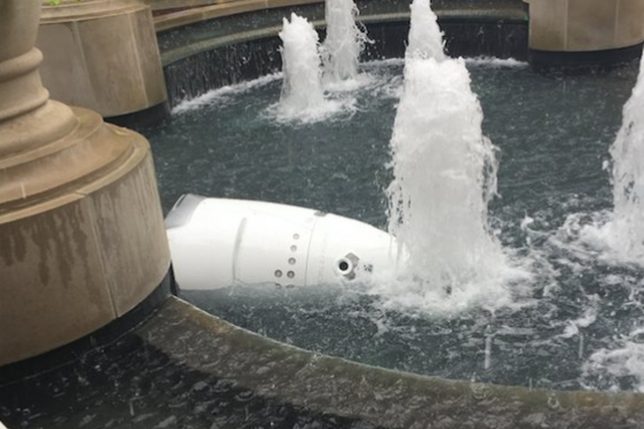
Security Robot Drowns Itself

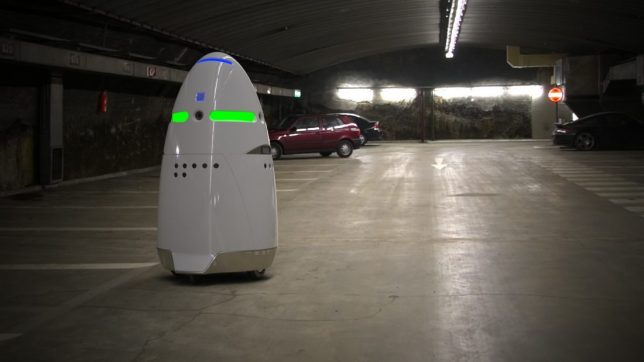
Police and security robots equipped with cameras, sensors and alarms (but thankfully not weapons, yet) – what could go wrong? So far, in the case of the 300-pound, cone-shaped Knightscope robots used to patrol shopping centers and parking lots, problems have mostly involved running over the feet of toddlers. But then, as documented by @bilalforooqui on Twitter, one of them let us know he was very depressed by drowning himself in the fountain of a Washington D.C. office building. “We were promised flying cars, instead we got suicidal robots,” says Farooqui.

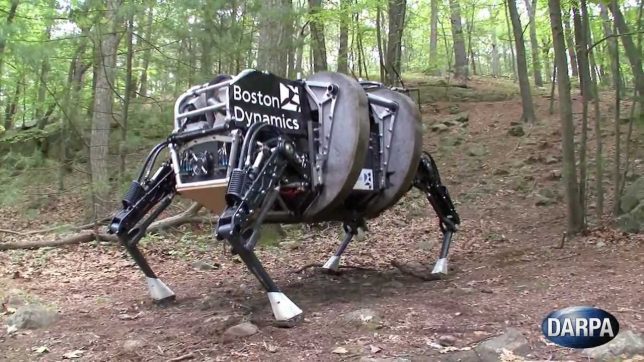
Robots Falling at the DARPA Robotics Challenge

Most DARPA creations, funded by the US Defense Advanced Research Projects Agency, are intended to someday replace humans in dangerous scenarios like wars and disasters, but that doesn’t stop them from being utterly terrifying, especially the ones that look like massive dogs and cheetahs. But if this compilation of robots falling down at the DARPA Robotics Challenge is any indication, it’s going to be a while before we should feel too much concern.

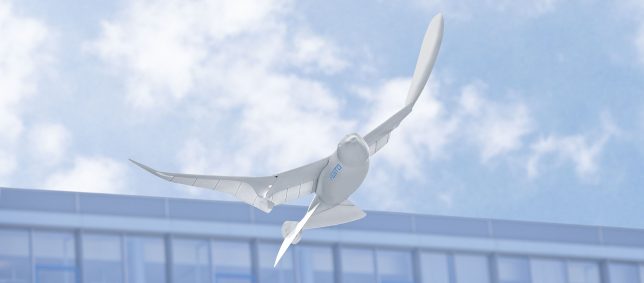
Flying Robot Dive-Bomb

Sure, these robots look and behave just like animals, all right – like angry mother birds eager to attack humans who have wandered too close to their nest. Featured in this video is the Festo SmartBird, an ultralight flying robot that’s usually pretty impressive, developed to help research groups studying animals.

Coffee Robot Makes a Mess

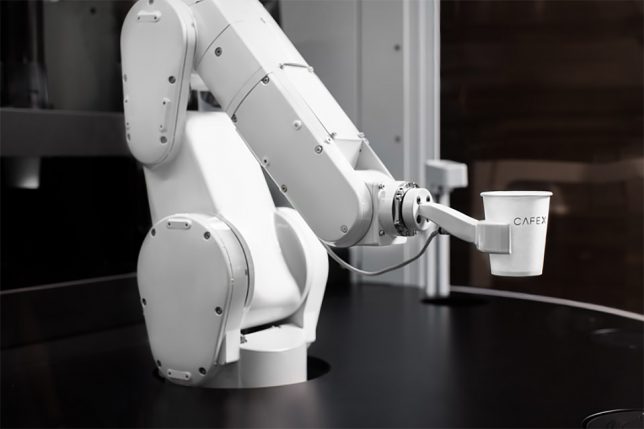
Cafe X in San Francisco aims to be an example of why we no longer need human baristas. Built in partnership with WMF, an automatic coffee company, the Cafe X Coffee Robot is supposed to deliver perfect consistent drinks after you order using a touchscreen or app. But as you can see in this video, things don’t always go according to plan.

Next Page – Click Below to Read More:
Robot Fails 12 Times Supposedly Intelligent Machines Screwed Up

Share on Facebook


[ By SA Rogers in Gadgets & Geekery & Technology. ]

[ WebUrbanist | Archives | Galleries | Privacy | TOS ]


WebUrbanist

 
Comments Off on Robot Fails: 12 Times Supposedly Intelligent Machines Screwed Up

Posted in Creativity


4 times when a Hail Mary might be the right move

10 Jun

4 times when a Hail Mary might be the right move

A bee hops between blackberry flowers on a sunny day in North Tacoma. By holding the stem of the flower in one hand and camera (with a full-frame fisheye) in the other, I could adjust the composition quickly and blast frames whenever the bee appeared close. My slow noggin just couldn’t keep up. July 2014. Photo and caption by Peter Haley.

More often than not, the ‘decisive moment’ doesn’t happen exactly where you want it. Sometimes the best angle is one that’s impossible to achieve with the camera to your eye – players huddling on a field, a crowd on a dance floor. For such occasions, there’s what’s known as a Hail Mary.

The Hail Mary takes its name from a long shot pass in American football, a low-percentage shot when there are no other options. It’s a last ditch effort, but you don’t have much to lose by trying. In photography, the Hail Mary is most often thought of as holding your DSLR far above your head and pointing it down toward your subject, but the term can apply to any shot you take with the camera away from your body, pressing the shutter button and hoping for the best.

Sure, cameras with tilting LCDs can give you an advantage nailing the shot, but especially when time is of the essence, sometimes the best you can do is point your lens in the right direction and pray.

Photojournalist Peter Haley has found himself in more than one situation that called for a shot from a tricky angle. Whether it’s for an unexpected angle of a familiar subject, or an effort to keep your distance, here are a few occasions that call for a long shot.

1. When body language would tip-off the subject

I had seen her umbrella blow backward once, and thought it might happen again. I didn’t want her to see that I was focusing on her, so I walked in front of her, glancing over my shoulder, with the camera held down at my side and already pointed back toward her. When the umbrella blew, my camera was shooting even before I finished turning my own body around. January 2007. Photo and caption by Peter Haley.

Says Haley, ‘If you don’t want a subject to notice that you’re taking photos, not pulling your camera up to your eye is helpful.’

1. When body language would tip-off the subject

The photojournalism didn’t stop even during a break in a cramped bathroom at the King County Fair. July 1989. Photo and caption by Peter Haley

2. When your body would be in the way

A largemouth bass is tossed back. For an interesting composition the camera needed to be against the stomach of the fisherman. No room for my body there. May 2008. Photo and caption by Peter Haley.

‘A good angle is often from the point-of-view of the subject, so sometimes I hold the camera against the person’s chest where there’s no room for my body. Or the camera needs to move farther back, but I’m up against a wall, so I hold the camera flat against the wall.’

2. When your body would be in the way

The Washington DOT avalanche crew at Snoqualmie Pass fires a 105mm recoilless rifle. Everyone must huddle close to the center of the length of the barrel to minimize the concussion. But the camera needed to be farther away, so I held it up in classic ‘Hail Mary’ position. February 1999. Photo and caption by Peter Haley.

3. When you need to get lower, closer, or farther away

The camera needed to be forward of the gun, but my own body didn’t. I suppose my hand took a slight risk. Note the usefulness of the dimly-lit pistol range and a slow shutter speed. January 2013. Photo and caption by Peter Haley.

‘I don’t like to lay down on a wet beach if I don’t have to. I prefer to keep my body away from snarling dogs, even if the camera needs to be close with a wide angle lens. Or I don’t want to put my whole body close to the line of fire, so I’ll risk only a hand.’

3. When you need to get lower, closer, or farther away

The teeth look better from close up with a wide angle, but I didn’t want to risk getting cut. So I held the camera at arm’s length. April 2010. Photo and caption by Peter Haley.

4. When you need to move quickly

I was standing below a cornice, off of which I expected some young skiers to jump, but I didn’t know exactly where. I was sure that it would be very close to where I was, so I was able to use a very wide lens. I needed all my peripheral vision in order to see as soon as possible where they were going to pop into view. I had only a fraction of a second to point the camera that way– not enough time to acquire sight through a viewfinder. November 2012. Photo and caption by Peter Haley.

‘Sometimes the camera needs to bob, weave and dip quickly to stay close to a moving subject. Keeping my eye attached to the viewfinder – which would necessitate my whole upper body to move with it – slows the camera’s movements too much, so I just move the camera at the end of my arm.’


Peter Haley grew up in Tacoma, studied science at UC Berkeley, but forged his career from a passion for photography. He’s shot for The News Tribune (Tacoma) since 1986.

Like all photographers, he’s won plenty of awards (photographers love contests), and his work has appeared in coffee-table photo books (A Day in the Life of…, etc). He has been embedded with the army in Iraq three times and Afghanistan once.

His favorite things to shoot: Live events. People doing ordinary things. No posed photos! Outside of family, his passions include skiing, and… well… more skiing.

Articles: Digital Photography Review (dpreview.com)

 
Comments Off on 4 times when a Hail Mary might be the right move

Posted in Uncategorized


Beautiful photos from 1942 show the making of the New York Times

11 May

$ (document).ready(function() { SampleGalleryV2({“containerId”:”embeddedSampleGallery_4390151446″,”galleryId”:”4390151446″,”isEmbeddedWidget”:true,”standalone”:false,”selectedImageIndex”:0,”startInCommentsView”:false,”isMobile”:false}) });

Publishing has come a long way since the mid twentieth century. What was once a herculean task putting together each individual page of a newspaper has largely been replaced by click-and-save web publishing.

So when we came across a curated set of images on Mashable, pulled from the Library of Congress, we were instantly mesmerized by the beauty and complexity of a daily paper’s production. These images were all shot during the course of one night of production in the New York Times’ Manhattan office in the Fall of 1942. The photographer, Marjory Collins, worked for the War Information office.

What’s particularly interesting about these images, aside from the daunting physical labor required to publish, is the stories of the day. September 1942 was smack in the middle of World War II and news in that day’s paper focused on fighting in both Europe and the Pacific.

See all the full gallery of images here.

Articles: Digital Photography Review (dpreview.com)

 
Comments Off on Beautiful photos from 1942 show the making of the New York Times

Posted in Uncategorized