RSS
 

Posts Tagged ‘Time’

5 Tips for a Powerful Picture Every Time

02 May

Play-At-First.jpgYou see plenty of landscape, portrait and commercial photographs every day on the web and in magazines. You can tell by the lighting, staging and seemingly overall perfection of everything in those pictures that days, maybe even weeks of planning were needed to pull of such amazing photographs.

With that much planning, all that is left to do when it is time to take the picture is press the shutter. The photographer behind the lens probably even knew exactly what time she was going to press the shutter. In short, the photographer did everything necessary to prepare for the picture.

But what about the other side of photography?

You have also seen equally powerful pictures that captured something spectacular in the spur of the moment. These are the kind of photographs that you may think you could never plan for because they present themselves with no prior notice or warning.

Van Wreck

Have you ever heard the saying that “luck favors the prepared”? No truer statement could ever be said about photographers and photography.

It’s true that luck can find anyone at any given time, but if you want to be able to pull off amazing photos with just a moment’s notice you need to be as prepared as a studio or commercial. But this approach to photography takes a completely different type of preparation.

Here are five photography tips for a powerful picture every time. These tips will help prepare you to perfectly capture once in a lifetime pictures time and time again.

1. Always have a camera

A prepared photographer needs to have a camera close by at all times. It sounds elementary, but any good top five list is going to start off with the basics first. If you don’t have a camera with you, you will not be able to capture that picture of a bald eagle in your backyard. Without your camera, you are left only with your story of a bald eagle. Odds are you have already have a camera on you or near you right now. Your phone! The first tip in photography preparation; always have your camera (any camera) close by.

Eagle

2. Study light

Photography is all about light (and having a camera). Without light there is no photography. But there is so much more to light than just having it. As a photographer you must become a student of light. What color is the light? How strong is the light? Where is the light coming from? How long until the light changes? Where can you find more light right now?

Cowboy Lights Up

As you move through your day (camera at your side), take the time to notice the light sources around you. If you are in a meeting, look around the conference room. Is there light coming through the window? What kind of lights are in the ceiling? Are there desk lamps? What about the light coming from everyone’s computer screens? Could you open the curtains to let in more light?

By reminding yourself throughout the day to recognize and understand your lighting situation you are learning how to master light rather than have it master you. Then you are on your way to taking better pictures at a moment’s notice.

3. Visualize

While you are studying the light around you take a moment and pretend that you are taking a picture. While in that same theoretical meeting, look across the table at your colleagues. Imagine taking a picture of them. Which side of their face has more lighting? Are they backlit? How would you overcome that? Would your picture be better if you moved across the room? Is there a ray of sunlight that, if you could, you would ask your boss to step into because it would highlight her hair color so well?

By taking the time to play pictures out in your mind you are actually training your mind to think like a photographer. You are preparing your mind to be ready. It’s called visualization and athletes do it all the time. Ever wonder why a golfer takes so long to hit the ball? It’s because he is envisioning his swing, and the ball going where he wants it to go before he hits it.

Photographers and photography are no different. Train your mind by constantly imagining that you are taking a picture.

4. Think ahead

This tip goes hand in glove with tip number 3. You should always be thinking ahead, be it five seconds, five minutes or five hours. To be ready to take a photo at the drop of a hat you have to put yourself in a situation that has yet to happen.

Fire Chief On Truck

It’s like the pre-flight safety instructions you hear before a plane takes off. It does no one any good to get that information when the plane is in distress. Knowing where the exit doors are ahead of time saves lives. Knowing what ISO setting you will need if your kids break out in a song and dance routine for the grandparents can save Christmas.

Always be thinking ahead and absorbing your surroundings to better anticipate action that hasn’t yet taken place. Sports photographers may do this better than anyone. The better they understand how the sport is played the more likely they will be to capture the key moments in a game. A photographer covering a baseball game recognizes that there will be a play at first base and he will instinctively put his focus on the first base bag and wait for the play to get to him.
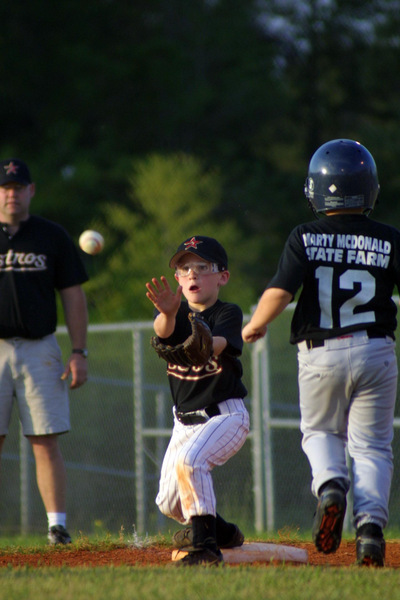
Play At First

To always be ready to capture a picture at the drop of a hat you have to be a student of life, and a student of movement and moments. Learn to anticipate and not just react.

5. Practice

The final tip is one that combines the other four and that is to practice being ready at all times. It may sound silly, but why do you think golfers, baseball players and airplane pilots practice? So that when it comes time to hit the ball, catch the ball or avoid a crash they have already placed themselves in that situation and performed the needed mind and body movements over and over again. Come game time (or in an emergency) instincts take over.

Luck favors the prepared and trust me, if my plane loses an engine I want a pilot who has already thought through what needs to be done to prevent the plane from crashing. I don’t want him fumbling over buttons and dials trying to figure out how to keep the plane in the air. I want him to instinctively know what must be done to save the plane.

As a practical matter, have a friend change your camera settings so that you have no idea how your aperture, ISO and shutter speed are set. Have your friend point at something (it doesn’t matter what because this is practice).Then quickly grab your camera and adjust your settings to best capture that object. Then, do it again with another object or person or passing car. Take your camera on walks with you and have your friends constantly test your skills. Make a game out of it until you instinctively know what to do.
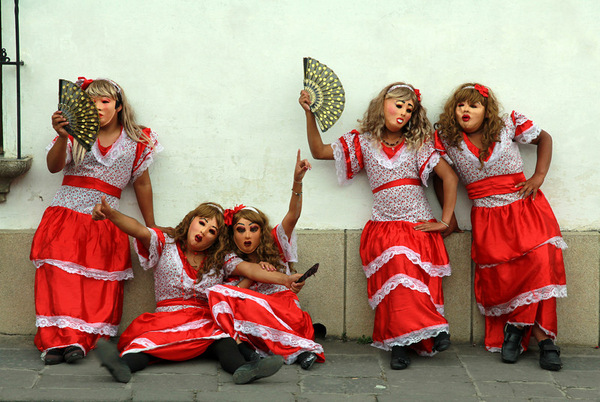
Men In Dresses

To be ready to take a powerful picture at any moment you literally have to be ready to take a picture at any moment. Keep a camera near you at all times. Be aware of your light because it is always changing. Constantly visualize taking pictures. Always be aware of your surroundings to better anticipate action, and to perfect all of this, practice.

Remember, luck favors the prepared. Luck is not a strategy. Do you have any other tips you’d like to share? Please do so on the comments below.

The post 5 Tips for a Powerful Picture Every Time by Scott Umstattd appeared first on Digital Photography School.


Digital Photography School

 
Comments Off on 5 Tips for a Powerful Picture Every Time

Posted in Photography


Suntory Time: Crazy CNC-Milled Ice Cubes for Whisky Brand

01 May

[ By Steph in Art & Sculpture & Craft. ]

CNC Milled Ice Suntory 1

It’s Suntory time – on the incredibly intricate, CNC-milled, pagoda-shaped rocks.  The Japanese whisky brand famously touted by Bill Murray in the film ‘Lost in Translation’ has enlisted the services of a 5-axis CNC mill to craft miniature works of art in ice, including replicas of the Statue of Liberty and Michelangelo’s David.

CNC Milled Ice Suntory 4

The centerpiece of Suntory’s “3D Rocks” campaign is a teeny-tiny, amazingly detailed version of Kyoto’s Kinkaku-ji temple. Watch it in progress in the video above.

CNC Milled Ice Suntory 2

Suntory customers were asked to submit their own designs, and the winners were whisked to a secret location in Tokyo where they received a drink featuring their own creation in ice once it was complete.

CNC Milled Ice Suntory 3

The CNC router was kept chilled to a temperature of -7 degrees Celsius to keep the ice from melting while the machine was running.

CNC Milled Ice Suntory 5

It’s almost a shame to see the whisky splashing over these ephemeral works of art, knowing that they’re inevitably about to melt away.

Share on Facebook


[ By Steph in Art & Sculpture & Craft. ]

[ WebUrbanist | Archives | Galleries | Privacy | TOS ]


WebUrbanist

 
Comments Off on Suntory Time: Crazy CNC-Milled Ice Cubes for Whisky Brand

Posted in Creativity


Windows 8 – Make Two More Time Zones a Mouse Hover Away

25 Apr

Communicate with people across time zones? Make two additional clocks available with a mouse hover over the Windows 8.1 Taskbar clock.

Do you often need to communicate with co-workers, extended family, or friends that live across the country or world? Stop waking them up at odd hours of the night or sending them an electronic mail or Skype request by not knowing their local time zone.

Two additional time zones can be added to the Windows 8.1 Desktop Taskbar, accessible by hovering over the clock. Clicking on the clock can display larger clocks of each configured time zone….

Read more at MalekTips.
New Computer and Technology Help and Tips – MalekTips.Com

 
Comments Off on Windows 8 – Make Two More Time Zones a Mouse Hover Away

Posted in Technology


Finding the Time to do Photography Part 1- Business Trip to Las Vegas

23 Apr
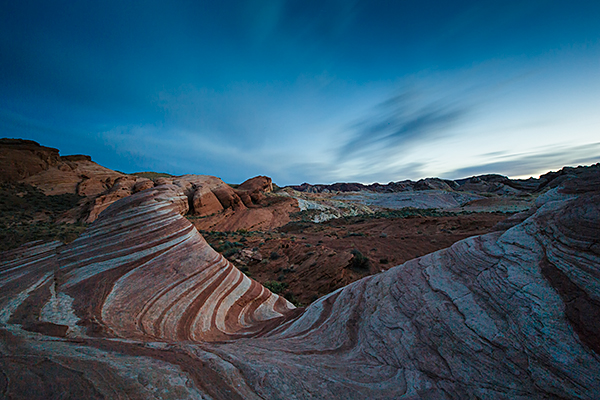
The Fire Wave at Valley of Fire State Park. 4 minutes, f/16, ISO 160. EOS 5D Mark III with EF 16-35 f/2.8L II.

The Fire Wave at Valley of Fire State Park.Exposure: ISO 160, 4 minutes, at f/16. EOS 5D Mark III with EF 16-35 f/2.8L II.

About a month ago, a question was posed on the DPS Facebook Page, “What is the number one obstacle to you taking better photos?” While some answered that they were unsure how to set exposure in Manual mode, and others thought their gear might be limiting them, the overwhelming number one answer was TIME.  In this day and age of being always on, always connected, and always on the go, it can be difficult to find time to do photography.  Like many, my day job, which isn’t as a full time photographer, keeps me busy and eats up much of my time. On weekends, I can occasionally make time but often life and family get in the way.

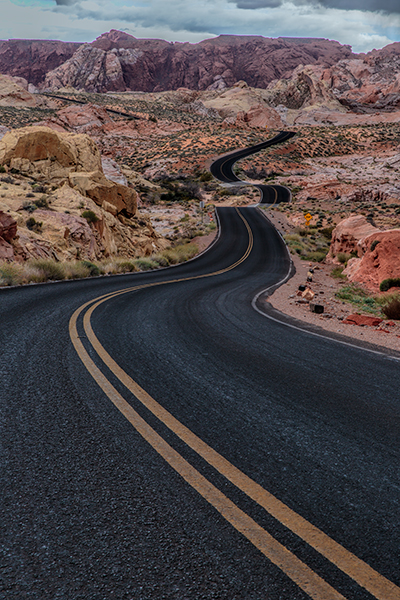
Scenic Drive in Valley of Fire. 1/10, f/16, ISO 100. EOS 5D Mark III with EF 24-70 f/2.8L II.

Scenic Drive in Valley of Fire. 1/10, f/16, ISO 100. EOS 5D Mark III with EF 24-70 f/2.8L II.

So what to do when you need a fix?  There are several things you can do. What I do is to take advantage of my job when I can. I do occasionally travel for work, and when I do, I bring my camera with me.  While I may not have an entire day, often I can find an hour at the end of the day, or I can even go shoot at night.  This was true when I went to Las Vegas recently for a trade show.  I had two days of training seminars, two days of trade show setup and four full days of trade show to work. Was I tired at the end of the day? Yes, but photography is how I relax, so it seemed only natural to eschew the neon glow of the restaurants and casinos and go grab my camera.

First of all, the day I arrived, my flight got in earlier in the afternoon.  I rented a car and headed out to Valley of Fire State Park, about 45 minutes northeast of Las Vegas. I got a mixed afternoon of clouds, which parted for a nice sunset. I then hung around for darkness and got a few night shots just to finish things off.

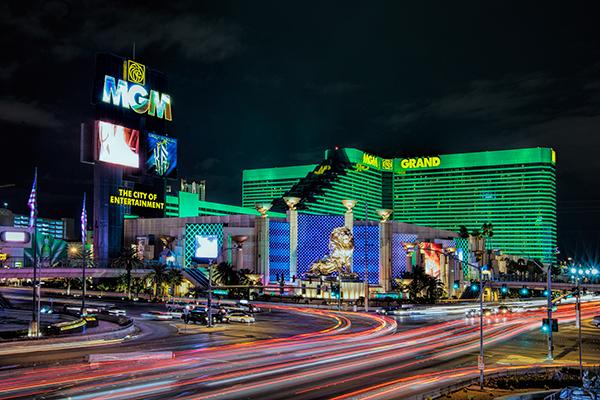
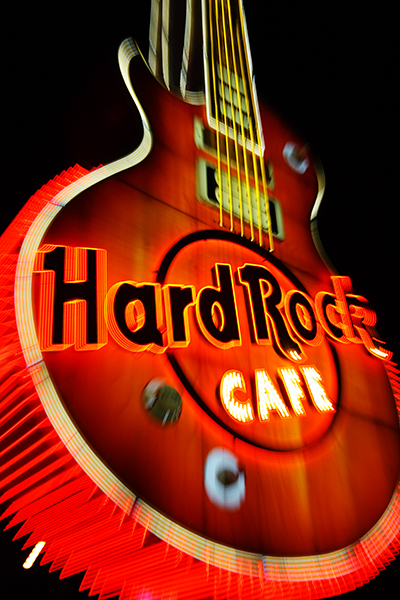
The next day, the work began, but after my work day ended, I headed out to the strip to shoot some of the neon.  The Vegas strip is an awesome place to shoot no matter what you like to shoot. Cityscapes, architecture, or people, it’s all there and it’s there every night. You need only spend an hour and you’ll get more than your fill. The beauty of it all is, Las Vegas makes its own light, so you can shoot 24-7 there.

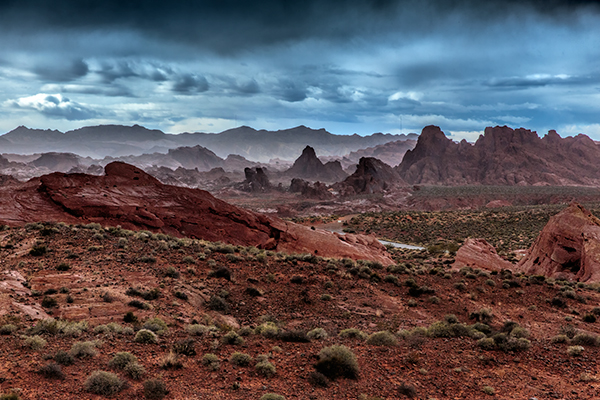
Valley of Fire Storm. 1/1000, f/8, ISO 1600. EOS 5D Mark III with EF 24-70 f/2.8L II. I managed to catch the Valley of Fire on one of the few days it rained all year.

Valley of Fire Storm. 1/1000, f/8, ISO 1600. EOS 5D Mark III with EF 24-70 f/2.8L II. I managed to catch the Valley of Fire on one of the few days it rained all year.

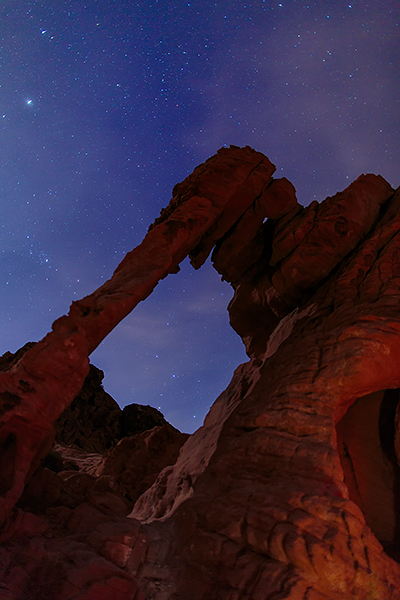
Elephant Rock, in Valley of Fire, at night. 15 seconds, f1.4, ISO 800. EF 24mm f/1.4L II.

Elephant Rock, in Valley of Fire, at night. 15 seconds, f1.4, ISO 800. EF 24mm f/1.4L II.

Get over your objections

I know what your objections will be:

  • I can’t carry everything I need.
  • I don’t have room in my luggage.
  • I’m tired after a day of work.

I’ve said all of those myself, and at times, this attitude won out. But if you have a passion for taking pictures, you’ll find a way.  I carry a small travel tripod- a Gitzo 1541T.  It fits right in my luggage.  I realize that one’s a bit pricey, but there are many other options. Try a Gorillapod. They are small, lightweight, and come in a variety of sizes to fit almost any camera. Perfect for traveling light.

Don’t want to carry a DSLR?  Get yourself a smaller setup you won’t mind carrying.  I own a Canon G16 for when I don’t want to bring my full kit. I can still shoot RAW, have full manual control, but it’ll fit on my belt.  And if you do want a DSLR? Consider minimizing your kit for travel. Pick one or two lenses that can cover most of the standard range. I always have a hard time minimizing, but when I do, I usually carry my EOS 5D Mark III with EF 16-35 f/2.8L II and EF 24-70 f/2.8L II. This is the kit used for the shot of Fire Wave, and of Scenic Drive.  I added the EF 24mm f/1.4 for night shooting. If you’re using a DSLR with an APS-C sensor, an 18-135 is an excellent choice for a do-it-all lens.

I’m not saying finding the time is easy.  Sometimes it will require sacrifice. But I have never regretted spending even a minute with my camera, even when I was tired, or pulled in many directions.  If photography is a passion for you, you make time.  I’m not saying every day.  But I do make it a point to make time to indulge my passion.  You should too. Even if it’s just a minute.  In part two, I’ll discuss ways to make time when you’re at home.

EOS 5D Mark III with EF 16-35mm f/2.8L II. 5 seconds, f/11, ISO 200.

EOS 5D Mark III with EF 16-35mm f/2.8L II. 5 seconds, f/11, ISO 200.

EOS 5D Mark III with EF 16-35mm f/2.8L II.  1/25, f/8, ISO 640.

EOS 5D Mark III with EF 16-35mm f/2.8L II. 1/25, f/8, ISO 640.

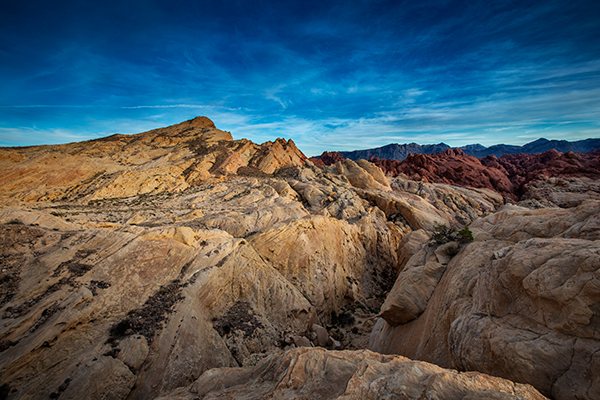
Fire Canyon. EOS 5D Mark III with EF 16-35mm f/2.8L II. 1/5, f/16, ISO 100.

Fire Canyon. EOS 5D Mark III with EF 16-35mm f/2.8L II. 1/5, f/16, ISO 100.

The post Finding the Time to do Photography Part 1- Business Trip to Las Vegas by Rick Berk appeared first on Digital Photography School.


Digital Photography School

 
Comments Off on Finding the Time to do Photography Part 1- Business Trip to Las Vegas

Posted in Photography


Helping children one print at a time

18 Apr

National-Geometric-620x350.png

National Geometric is a social enterprise that brings a personal touch to charitable giving. Through the sales of single-edition, 10×15 prints of a person with a specific need, National Geometric helps provide food, water, medical care, tuition for school, and other basic necessities. The cost of each photograph reflects the amount needed to help the person in the photograph. Learn more

News: Digital Photography Review (dpreview.com)

 
Comments Off on Helping children one print at a time

Posted in Uncategorized


Photographing bubbles, one bubble at a time

29 Mar

16.Bubble_Landscapes.jpg

British photographer Richard Heeks has made a project of taking something ordinary – soap bubbles – and making them extraordinary. Some of his images capture the exact moment when a bubble bursts, while others reflect the environment around with interesting color. One of his bubbles even looks like the ‘Death Star’ from the Star Wars trilogy. To get the photos, he took thousands of shots, gradually learning how light, weather, aperture and shutter speeds affect the final image. See gallery

News: Digital Photography Review (dpreview.com)

 
Comments Off on Photographing bubbles, one bubble at a time

Posted in Uncategorized


Understanding and Working With Natural Light to Get Stellar Pictures Every Time

24 Mar

Understanding the different forms of light is one of the keys to achieving good photographs, as photography is all about light. For most photographers, the most available light, the one that is free, is natural light. To learn how to get the most of natural light requires a lot of observing and practicing, but once you understand how to work Continue Reading

The post Understanding and Working With Natural Light to Get Stellar Pictures Every Time appeared first on Photodoto.


Photodoto

 
Comments Off on Understanding and Working With Natural Light to Get Stellar Pictures Every Time

Posted in Photography


Olympus patent hints at selective exposure in ‘Live Time’ mode

15 Mar

2014_39116_fig05.png

Earlier this week, Japanese patent blog Egami reported that Olympus has patented a technology that would allow the photographer to selectively adjust exposure of different scene areas during an exposure. This might allow for a more balanced exposure of scenes where cameras might normally struggle. Click through for an explanation of what we think the patent might mean for photographers. 

News: Digital Photography Review (dpreview.com)

 
Comments Off on Olympus patent hints at selective exposure in ‘Live Time’ mode

Posted in Uncategorized


Time Stands Still: Sublime Slow-Motion Subway Panoramas

11 Feb

[ By WebUrbanist in Art & Photography & Video. ]

slow mo foto

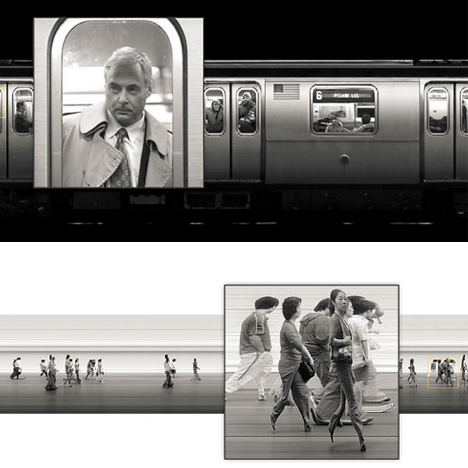
A subway speeds by the platform, leaving most passengers with a fleeting impression and fast-fading memories of people glimpsed only for a moment, but not this crafty slow-motion documentarian. If you watch no other video today, this week or this year, make the time for at least one of those below.

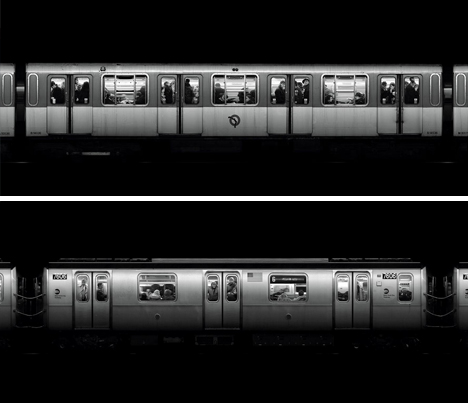
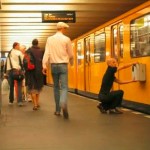
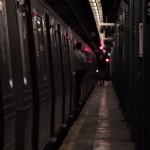
In the above video excerpt, Adam Magyar captures frozen bystanders in fast succession (50 frames per second) at a Tokyo, Berlin and New York (Grand Central) train stations. His custom technology captures everything, and limited post-processing generates a kind of three-dimensional panoramic portrait of everyone in view. These finished products come both in the form of prints and videos, but the latter in particular are must-watch wonders.

“In Stainless, I scan rushing subway trains arriving to stations. The images record a number of tiny details of this moment. We see people staring towards their destinations standing at the doors framed by the sliding door windows. They are scrutinizing the uncertain future. Similarly to all my images, their main motivation is arrival. The darkness of the tunnels deep below the city turns these chemically clean mock-ups into fossils of our time. “

time subway black white

Magyar uses slit-scan and other technologies and techniques to, as writer Joshua Hammer describes, “bend conventional representations of time and space, stretching milliseconds into minutes, freezing moments with a resolution that the naked eye could never have perceived. His art evokes such variegated sources as Albert Einstein, Zen Buddhism, even the 1960s TV series The Twilight Zone.”

The extended film from Tokyo is shown above. It is truly mesmerizing to watch the most mundane behaviors caught in mid-act, be it a wet dog in mid-shake, creamer hanging over coffee mid-pour or a woman seen in mid-sneeze. It took Magyar years to perfect his craft – the worthy projects that led up to it (shown below) are essential to understanding how he achieved his current mastery.

1-uyFMTPB431muvczp1PH1uQ

time people linear rows

time square people aligned

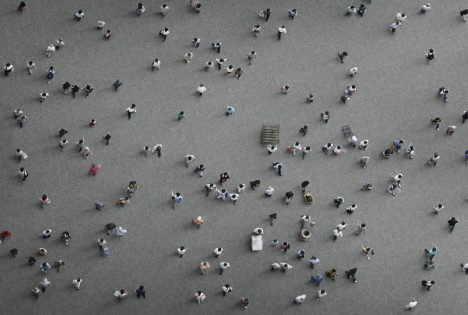
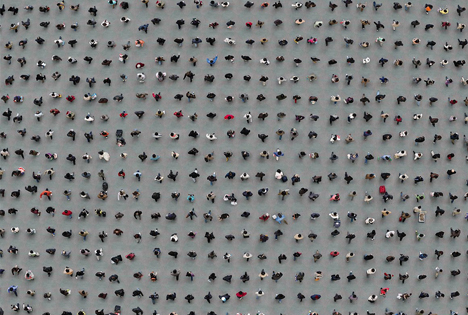
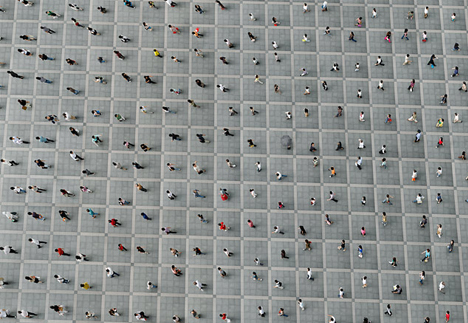
If the process behind this uncanny effect seems impossibly complex: his signature un-moving montages came with a great deal of time and technological experimentation. This Stainless series is indeed just the latest in a long line of  experimental photo projects, starting with Squares (shown above) which features collections of people taken out of time and selected to force a grid-like order on passersby.

Next Page – Click Below to Read More:
Time Stands Still Sublime Slow Motion Subway Panoramas

Share on Facebook


[ By WebUrbanist in Art & Photography & Video. ]

[ WebUrbanist | Archives | Galleries | Privacy | TOS ]


WebUrbanist

 
Comments Off on Time Stands Still: Sublime Slow-Motion Subway Panoramas

Posted in Creativity


Lucky Rainbow: Time Lapse Pics of Traffic Light Piercing Fog

17 Jan

[ By WebUrbanist in Art & Photography & Video. ]

time lapse light

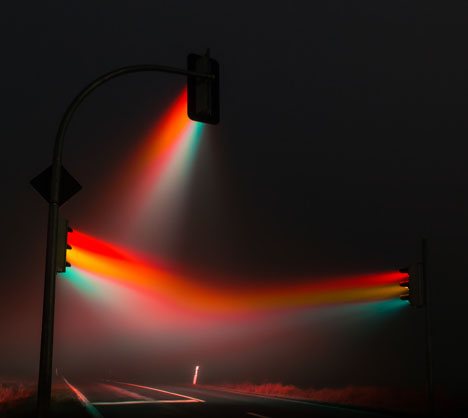
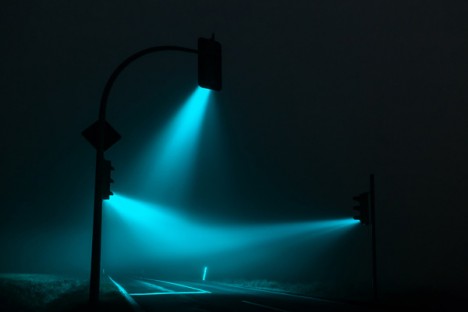
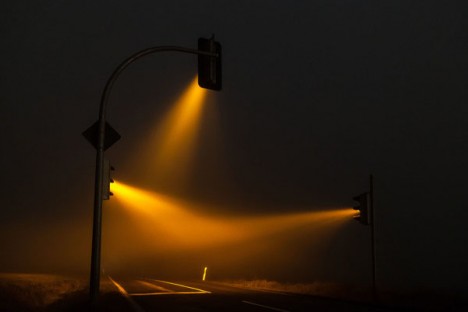
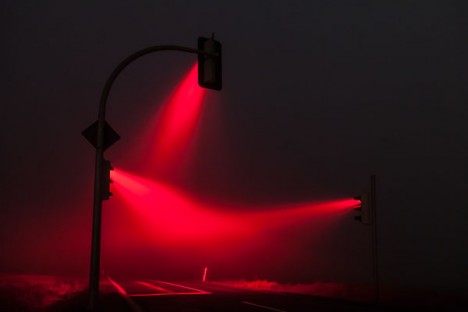
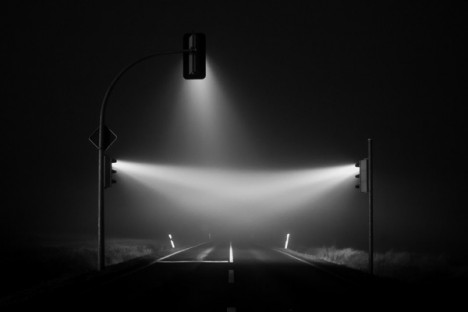
The right place, proper timing and a keen eye conspired to help a photographer capture this eerie nighttime phenomena at a crossroads outside of Weimar, Germany.

rainbow night light green

rainbow night light yellow

rainbow night light red

German photographer Lucas Zimmermann found and shot this intersection at each stage of the its cyclical change, capturing green, yellow and red.

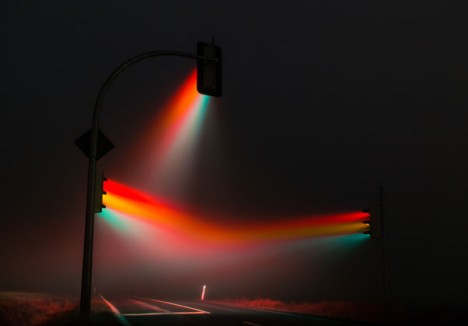
rainbow light full spectrume

He also went a step beyond the sequential with one particularly impressive shot spanning the entire cycle, creating a rainbow in the mist.

rainbow light black white

His other work spans from the rural United States to the streets of Beijing, but usually focuses on people over places – this set, however, proved a worthy exception.

Share on Facebook


[ By WebUrbanist in Art & Photography & Video. ]

[ WebUrbanist | Archives | Galleries | Privacy | TOS ]


WebUrbanist

 
Comments Off on Lucky Rainbow: Time Lapse Pics of Traffic Light Piercing Fog

Posted in Creativity