RSS
 

Posts Tagged ‘through’

How to Make Stronger Photographs Through the Process of Visual Design

18 Jun

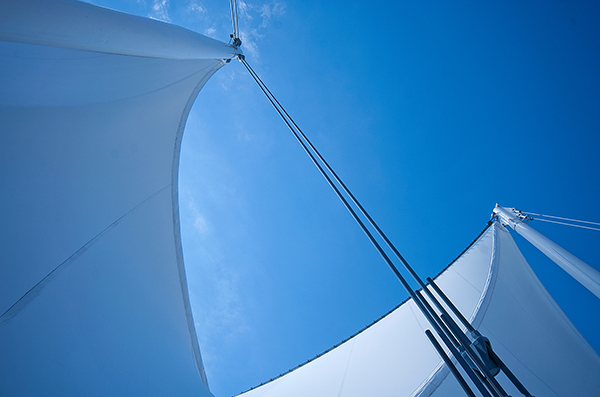
Sails 600

Photography is an art that relies on light. It also relies heavily on the visual message. You have no way of communicating anything to your viewer except through the visual language you use. If you use strong visual elements, your images will be effective and people will stop and look. If you want to convey a message, use the most powerful visual imagery you can: color to enhance your scene, light to punctuate it, and use shapes and texture to fill in the details. Doing this will not only be more satisfying for you as a photographer, but will make your visual language stronger and your message more compelling.

It is right to assume that photography is about being able to see a scene, and then photograph it. I am going to challenge that assumption, and say that there is something vastly more important that comes after you “see” the scene, and before you photograph it. Most often, the next step is called composition.

Loosely defined, composition speaks about how the image is put together, what the components are in the scene, and how they work together. Very often, the first thing that we think of when we hear composition is, you guessed it, the Rule of Thirds. I truly believe that the Rule of Thirds is a good place to start, but it is by no means the only compositional tool. In fact, some of the most iconic images of our time have broken this very rule. So, the next step after you have decided on a scene is not to just snap away. Put some serious thought into how you will visually design your image, and then capture that scene photographically. After that, grab the camera!
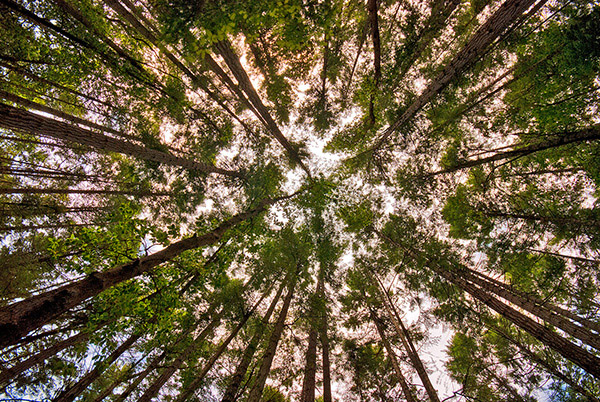
Forest-Canopy-600b

What is visual design?

Visual design sounds like a fancy word for composition, but in reality it takes composition to the next level. It is not simply about making sure everything is aligned on a grid à la the Rule of Thirds. Rather, it is about working with the flow and dynamic elements in your scene. In this article I will discuss the nuances and tools you can use to improve your composition to get the most out of any scene.

There have been many times when I have looked at a photograph and I could almost feel the wind in the scene or smell the salty sea air. The photographer captured the image in such a way that when I looked at the scene, it evoked my memory of similar scenes I had witnessed in real life. At a very high level, people relate to images in a few different ways.
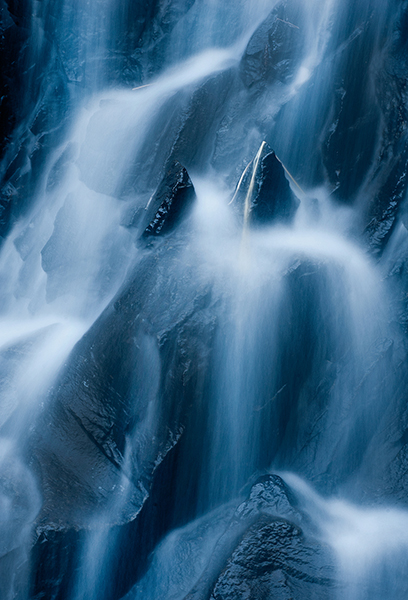
Waterfall 600Photographs evoke emotions, memories or feelings based on what the person sees in the image. In many ways, the viewer’s perception is their reality. So, if the image is of a loved one, the person looking at the photograph will immediately be transported to a memory of that person, good or bad. That memory could cause them to be quite emotional. The reaction to the image could be utterly visceral depending on what emotion is recalled. The same is true in a landscape scene or a seascape scene. The goal of every photographer should be to visually translate the scene in such a way that the viewer can either relate to the scene or would like to be in that scene.

The goal here is to change your perception on composition, to help you break out of the mental constraints of the Rule of Thirds, and open up new pathways to explore in photographic visual design. Don’t get me wrong, I am not suggesting that the Rule of Thirds is bad; it is still a very relevant and useful tool. All I am saying is that it should not be your only tool.

What do we have to work with?

Light, color, and shape all play an integral role in visual design. Using these tools is a good start; however, now we will discuss some details about making more powerful visual design choices. The idea here is to move your images from good to spectacular. The new elements we will be talking about are:

  • Form
  • Color and color relationships
  • Texture
  • Unity
  • Coherence
  • Balance and rhythm
  • Space (positive and negative)

Form and texture

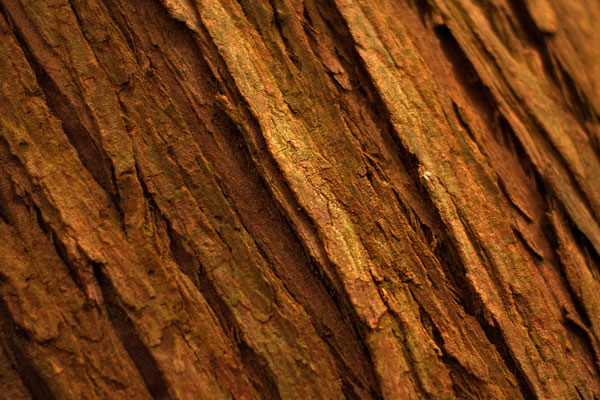
Form is similar to shape, but in this context I am referring to form in a more three-dimensional sense. Form is enhanced when there is side light to emphasize the shape of the object in the image. When the sun lights a rounded, polished rock from one side, the rounded form of the rock is emphasized. This gives the viewer some critical information about the object. Side light also emphasizes texture and that too is a key piece of information. With side lighting, you can emphasize the object’s shape and form to the point that the viewer can almost “feel” the three-dimensional aspects of the image. This is a really strong way to communicate visually.
009

At a higher level, when you want to communicate form and texture, side lighting is your best friend; soft side lighting is even better. The important idea to remember here is that side lighting adds dimensionality to your image. Try this on your next photo shoot: take a look where the sun is and take a photo of the subject with the sun over your shoulder. Then move to the side of the subject and take another shot. The difference will astound you. If you do this in the soft glow of sunrise or sunset, your results will be that much better.

Using color in your design

We all know how important color is. Think of your favourite image in color, then strip that color out and somehow it is not necessarily as impactful. That’s not to diminish the fact that black and white photography can be equally impressive – it absolutely is, however, to keep this article in context, we’ll leave black and white for a future article.
004

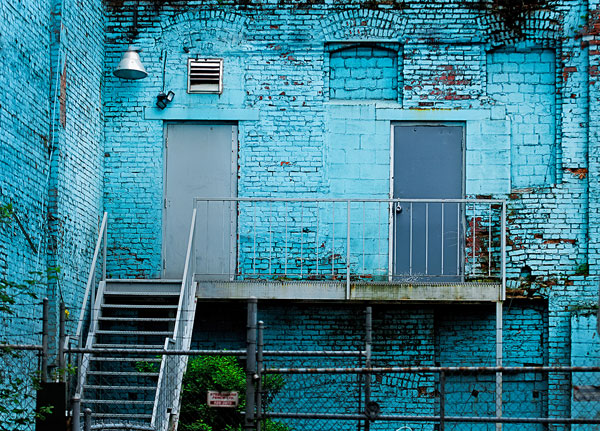
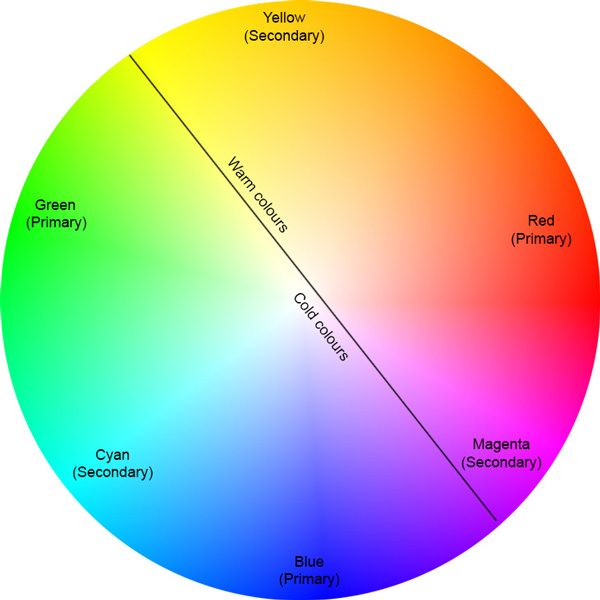
color gives the viewer crucial information about the scene. The warm colors of a fiery sunset or the cold blues of a glacier convey critical information about the scene. The overall color in your scene can determine how the viewer interprets it, so be purposeful with your use of color. If you want to convey warmth, choose reds, oranges, and yellows for your scene. If you want to convey cold, use blues, grays, and greens in your scene. You can see which colors are warm and which colors are cold if you look at the visual color wheel.
Colour Wheel

Certain colors draw the viewers’ eyes into the scene. Reds and yellows in particular cause the viewer to look at those colors (it’s not arbitrary that emergency vehicles are painted red and yellow warm colours,as they demand your attention). Be careful when you see anything that is red or yellow in your scene. It can either add value to the scene, if it is the subject of your image, or it could be distracting if it is not the subject of your image (in the background).
Rgb cmy

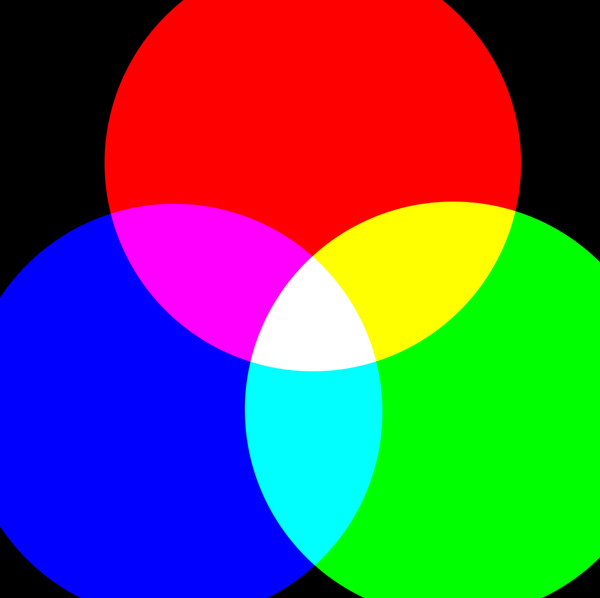
Let’s talk about color theory briefly. This is by no means an exhaustive guide to color theory, rather a quick introduction into it. Your camera can “see” three colors: Red, Green and Blue (RGB). These three colors are the primary colors in the visual color wheel (different to the color wheel used when painting). There are secondary colors too, namely, Cyan, Magenta and Yellow. These six colors and their combinations make up the visual color wheel. The hue (color) and saturation (richness or intensity) of all of these colors give us multitudes of combinations of colors. Understanding this aspect color theory will help you make better choices about color when photographing.

Using primary and secondary colors together makes your images compelling. So, looking at the color wheel, images that have red and yellow in the scene make very interesting photographs. Images with red and green in the scene work well too. The next time you look at a scene to photograph, try and look at what predominant colors are in the scene and try to photograph those colors only. This alone can make your images much more striking and visually interesting.

Take some time to practice intentionally composing your images using these techniques.
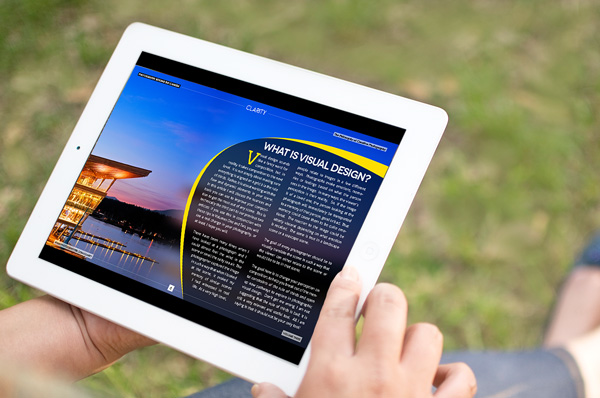
Ipad 005


The preceding article is a full-length excerpt from the CLARITY eBook series. Join other dPS readers today and dramatically improve your photography by learning the step-by-step process of visual storytelling and techniques for making stronger photographs. Get your CLARITY photography eBooks today!

The post How to Make Stronger Photographs Through the Process of Visual Design by Barry J Brady appeared first on Digital Photography School.


Digital Photography School

 
Comments Off on How to Make Stronger Photographs Through the Process of Visual Design

Posted in Photography


Travel Through Trees: Root-Like Wooden Tunnel Installation

17 Jun

[ By Steph in Art & Installation & Sound. ]

Tree Root Tunnel Installation 1

You may have to crouch a little to take a journey through this system of tunnels, but it’s worth it to feel as if you’re traveling through the roots of an enormous tree. Artist Henrique Oliveira has transformed a bare white gallery space at the Museu de Arte Contemporânea da Universidade in São Paulo with a cavernous installation that looks as if nature has taken over.

Tree Root Tunnel Installation 2

‘Transarquitetônica‘ fuses real tree branches with tunnels made from reclaimed scrap wood to create an interconnected organic mass that visitors can actually walk through. The wood is an inexpensive temporary siding , known as tapumes, which is often used to obscure construction sites and then discarded.

Tree Root Tunnel Installation 3

Tree Root Tunnel Installation 4

Tree Root Tunnel Installation 5

“It’s wood that has been taken from nature, has been cut down into geometric structures, and they have been used by society and discharged,” says Oliveira. “And I take it back and I rebuild the forms there again, creating true nature forms. It’s bringing back the tree aspects to the material. It’s not just an object, it’s an experience.”

Tree Root Tunnel Installation 6

Tree Root Tunnel Installation 7

Tree Root Tunnel Installation 8

Oliveira’s largest installation to date, ‘Transarquitetônica’ grew from the artist’s original vision because the space provided by the gallery was so vast. The installation will be on display through the end of November.

Share on Facebook


[ By Steph in Art & Installation & Sound. ]

[ WebUrbanist | Archives | Galleries | Privacy | TOS ]


WebUrbanist

 
Comments Off on Travel Through Trees: Root-Like Wooden Tunnel Installation

Posted in Creativity


Paddling Canoe through a Magic Forest

20 May
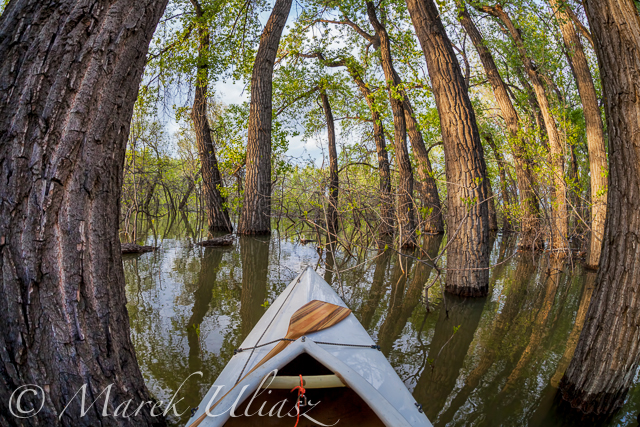
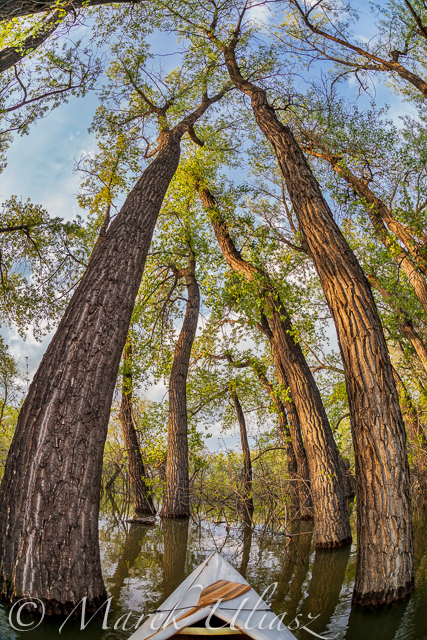
canoe paddling in fisheye lens perspective

Fish eye lens perspective when paddling through a submerged forest

I love to paddle the Lonetree Reservoir southwest of Loveland during springtime. You can always enjoy a nice view of Rocky Mountains Front Range. It is a great spot to shoot sunsets over mountains. When water is high I like to paddle through submerged trees and bushes. Please keep in mind that the heron rookery is a restricted area during the nesting season, but there are other places where you can paddle into a forest.

Picture featuring Sea Wind canoe in cottonwood forest was shot on May 15m 2014 with Canon 5D Mark II camera and Sigma 15 mm Fisheye lens. I confess … I spent a longer while gliding in a canoe between cottonwood tress and playing with that lens. I was shooting in both landscape and portrait formats.

Which version do you prefer? Horizontal or vertical?

canoe paddling in fisheye lens prespective

Let’s look at this scene in a vertical format.

Related posts:
– Canoe paddling in fisheye perspective – royalty free pictures.
– Paddling through Forest and Irrigation Ditches
– Fisheye Lens Perspective for Paddling?
– Horizontal or/and Vertical Format in Kayak Photography


paddling with a camera

 
Comments Off on Paddling Canoe through a Magic Forest

Posted in Photography


Paddling Canoe through a Magic Forest

18 May
canoe paddling in fisheye lens prespective

Fish eye lens perspective when paddling through a submerged forest

I love to paddle the Lonetree Reservoir southwest of Loveland during springtime. You can always enjoy a nice view of Rocky Mountains Front Range. It is a great spot to shoot sunsets over mountains. When water is high I like to paddle through submerged trees and bushes. Please keep in mind that the heron rookery is a restricted area during the nesting season, but there are other places where you can paddle into a forest.

Picture featuring Sea Wind canoe in cottonwood forest was shot on May 15m 2014 with Canon 5D Mark II camera and Sigma 15 mm Fisheye lens. I confess … I spent a longer while gliding in a canoe between cottonwood tress and playing with that lens. I was shooting in both landscape and portrait formats.

Which version do you prefer? Horizontal or vertical?

canoe paddling in fisheye lens prespective

Let’s look at this scene in a vertical format.

Related posts:
– Paddling through Forest and Irrigation Ditches
– Fisheye Lens Perspective for Paddling?
– Horizontal or/and Vertical Format in Kayak Photography


paddling with a camera

 
Comments Off on Paddling Canoe through a Magic Forest

Posted in Photography


Paddling through a Magic Forest

17 May
fish eye canoe

Fish eye lens perspective when paddling through a submerged forest

I love to paddle the Lonetree Reservoir southwest of Loveland during springtime. You can always enjoy a nice view of Rocky Mountains Front Range. It is a great spot to shoot sunsets over mountains. When water is high I enjoy to paddle through submerged trees and bushes. Please keep in mind that the heron rookery is a restricted area during the nesting season, but there are other places where you can paddle into a forest.

The above picture featuring Sea Wind canoe in cottonwood forest was shot on May 15m 2014 with Canon 5D Mark II camera and Sigma 15 mm Fisheye lens. I confess: I spent a longer while playing with that lens and shooting in both horizontal and vertical.

Related posts:
– Paddling through Forest and Irrigation Ditches
– Fisheye Lens Perspective for Paddling?


paddling with a camera

 
Comments Off on Paddling through a Magic Forest

Posted in Photography


Live Google+ Hangout at 10AM PST This Morning About How to Maximize Your Photos Through Social Media

11 May

Daniel Krieger
The Smoothest Dude Alive, Daniel Krieger.

My good friend Daniel Krieger (aka smoothdude), along with MacPhun’s Laurie Rubin, and I will host a live G+ hangout this morning talking about ways to promote your photography through social media. We’ll record the episode to my youtube account as well in case you can’t make it live and want to watch later.

Come join the show here if you can make it.


Thomas Hawk Digital Connection

 
Comments Off on Live Google+ Hangout at 10AM PST This Morning About How to Maximize Your Photos Through Social Media

Posted in Photography


Famatic connects generations through digital picture frame

26 Apr

Screen_Shot_2014-04-23_at_3.41.10_PM.png

A new Kickstarter project is aiming to make digital images more accessible to those without social media accounts. Famatic is a digital picture frame that connects to Facebook and Instagram – or you can email pictures as well. The idea is to place Famatic on your parents’ or grandparents’ mantelpiece and send them images of their grandkids and family events straight to the frame. Learn more

News: Digital Photography Review (dpreview.com)

 
Comments Off on Famatic connects generations through digital picture frame

Posted in Uncategorized


Apartment Arcade: Passersby Play Game Through Window

30 Jan

[ By Steph in Gaming & Computing & Technology. ]

Apartment Arcade 1

A large storefront window in a Belgian designer’s work/live space invites passersby to pause and play an arcade game with a fun interactive installation. Where others living in such a busy urban location might want to prevent strangers from peering into their private spaces, Kris Temmerman asks them to stop and stay a while.

Apartment Arcade 2

Tennerman designed and created the entire thing himself, including the console that’s currently attached to the exterior windowsill and the LED screen. The game is run on an Arduino without an external computer, just to make the process a little more challenging.

Apartment Arcade 3

The game is also his own creation, and he even had a friend record the music. “I needed something that would appeal to a large audience (the people in my street) and something was fun to play. So I took the good old gaming cliché, where the world gets invaded by aliens and you have to fight your way to the end boss, save the world and the human race . With my minimal resolution of 16*90 pixels, I didn’t have much other choice than making it pixel-art style.”

Apartment Arcade 4

The entire process, including diagrams of the wiring, can be found in detail at Tennerman’s website.

Share on Facebook


[ By Steph in Gaming & Computing & Technology. ]

[ WebUrbanist | Archives | Galleries | Privacy | TOS ]


WebUrbanist

 
Comments Off on Apartment Arcade: Passersby Play Game Through Window

Posted in Creativity


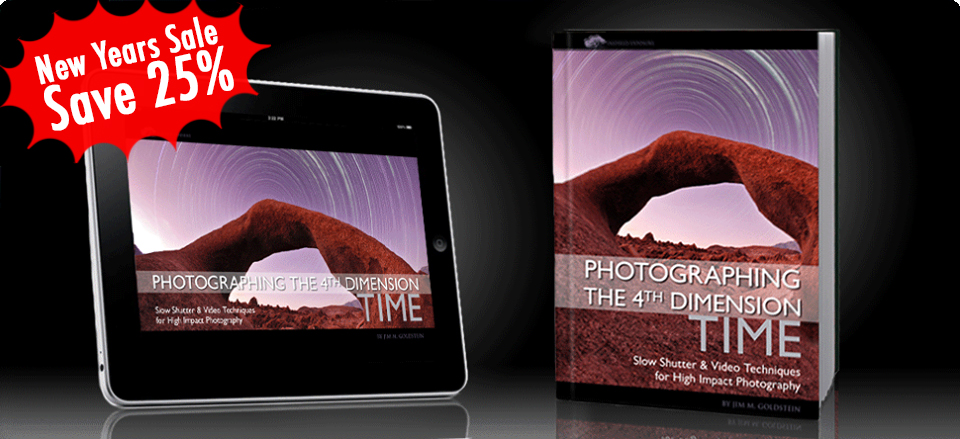
Save 25% on my eBook and Star Trail Webinar Now Through January 2nd, 2014

01 Jan

New Years Sale

Now through January 2nd at midnight PST you can save 25% on my eBook Photographing the 4th Dimension – Time and my Star Trail Photography webinar. To save 25% instantly use the code SAVE25NY14 when you check out.

———

BEST DEAL: Mastering Star Trail Photography – Video Course – BUY THE VIDEO

This video course is for photographers of all skill levels interested in expanding their photography and post-production knowledge to make great astronomy landscapes. The course includes 6 hours of instruction and professional tips covering every aspect of star trail photography including gear selection, camera technique, post-processing and more.

Bonus: Receive a FREE copy of the eBookPhotographing the 4th Dimension — Time with your webinar recording purchase.

Learn More

———

GREAT SAVINGS: Photographing the 4th Dimension – Time eBook – BUY THE PDF

No matter your skill level Photographing the 4th Dimension – Time will help you improve your photography and heighten the impact of your photographs by introducing you to numerous slow shutter and video techniques.

  • Learn to create amazing photos using Light Painting & Star Trails techniques
  • Discover how to easily make Time-lapse Videos
  • Transform your photography with motion as Cinemagraphs
  • Avoid time-wasting mistakes and learn insider tips
  • Keep it all with you in the included Field Checklist

Learn More  and Read the Reviews

Copyright Jim M. Goldstein, All Rights Reserved

Save 25% on my eBook and Star Trail Webinar Now Through January 2nd, 2014

The post Save 25% on my eBook and Star Trail Webinar Now Through January 2nd, 2014 appeared first on JMG-Galleries – Landscape, Nature & Travel Photography.


Related Stories

  • Save 25% on my eBook and Star Trail Webinar Now Through January 2nd, 2014 – Enclosure
  • 7 Years of Data: How Social Media Has Impacted JMG-Galleries Web Traffic
  • 7 Years of Data: How Social Media Has Impacted JMG-Galleries Web Traffic – Enclosure


JMG-Galleries

 
Comments Off on Save 25% on my eBook and Star Trail Webinar Now Through January 2nd, 2014

Posted in Equipment


Magical Photo Project by Gianluca Giannone: The Ships That Sail Through The Clouds

30 Dec

Have you ever seen a boat floating in the air like birds in a movie, drawing or dream? There is a place on Earth where you can witness these floating ships with your own eyes. It’s the small studio of Luigi Prina. There are tons of ships right next to each other sailing in the air. Luigi Prina had been Continue Reading

The post Magical Photo Project by Gianluca Giannone: The Ships That Sail Through The Clouds appeared first on Photodoto.


Photodoto

 
Comments Off on Magical Photo Project by Gianluca Giannone: The Ships That Sail Through The Clouds

Posted in Photography