
RSS
 

Posts Tagged ‘this..’

DÉTENTE – This is Not Freedom

19 Jan

DÉTENTE legendary Thrash Band from California featuring original members: Dennis Butler – drums, Caleb Quinn – guitar, Steve Hochheiser – bass and the fantastic vocalist Tiina Teal !!! DÉTENTE This Is Not Freedom this is not freedom this is not freedom this is not freedom … this is not free blind, so blind you cut our eyes out every day and I will not be tamed and I will not be your slave this is not freedom this is not freedom this is not freedom this is not free I’m not here to line your pockets with my blood and you poison it all with your ego and your lies with your death sacrifice with your chains around our minds with your violence take up our power take it and rise you divide us all so we’re easy to control we won’t be tamed and we will not be your slaves this is not freedom this is not freedom this is not freedom this is not free www.facebook.com This Pix-Clip “This is Not Freedom” has been made with my Nikon D300 and is assembled with Vegas Pro 8.0 (Sony). The photo’s have been made in The Little Devil – Tilburg – Netherlands 29-04-2010 by “Helly Lemmy” alias Snake
Video Rating: 4 / 5

We hit the bars in the snow yesterday (it was still there by the time we got the camera out, this time LOL). The bar was too icy for any big moves so we spent most the session doing abs. The roads were too bad to drive; we used the park that’s right next to our house and it’s not the best bar in the world, but I like it. Shout to who every built that igloo!!!
Video Rating: 4 / 5


How Does a Blind Person Use Instagram? This Blind Instagrammer Demos

03 Jan

What if your camera could talk to you? That’s exactly what Tommy Edison’s can do.

Tommy has been blind since birth, but he uses Instagram on the regular. In fact, he has over a thousand followers!

It’s all thanks to the Accessibility setting on his iPhone, a setting that dictates to him what’s on his screen. With it, he can shoot, pick filters, add a caption, and read comments.

You might be wondering why a blind person would use Instagram if they’re not able to see their photos. It’s pretty much the same reason those of us with vision do!

Through it, Tommy’s able to document and share his daily life with friends and fans. In a way, he even gets to “see” his photos through the feedback he gets.

Pretty amazing, right?

MORE: Check out our feature on Pete Eckert a blind art photographer and Amy Hildebrand a photographer born legally blind from albinism.

How Blind Photographers Use Instagram [Thanks, Darby!]

p.s. Our friends at New York Institute of Photography wanna help you become better photographers this year. You can take their classes on your time from just about anywhere!

No related posts.


© lisbeth for Photojojo, 2013. |
Permalink |
No comment |
Add to
del.icio.us

Post tags:


Photojojo

 
Comments Off on How Does a Blind Person Use Instagram? This Blind Instagrammer Demos

Posted in Equipment


This Week in Music – Tim and Asha have a new set! Plus they talk Axl & Slash, The Gorillaz, Gucci Mane, and more.

30 Dec

This week hosts Asha K and Tim Bader have a new set with a live chat feed! They talk hot music news like Trent Reznor’s Golden Globe, Taylor Swift’s record sales, Axl and Slash’s love affair, Gucci Mane’s ice cream tattoo, and the Gorillaz new member! They bring back the website highlight with international-hiphop.com. Plus they look at videos for Rev Theory, Grouplove, and Ricky Martin. For more information, show notes, and schedules visit www.thisweekin.com.
Video Rating: 4 / 5

Listen on Spotify: open.spotify.com Download on iTunes: itunes.apple.com Follow Ane on Facebook: www.facebook.com Music video by Ane Brun performing Do You Remember. Follow Ane Brun, buy the single on Itunes, and more anebrun.com (C) 2011 Balloon Ranger Recordings AB. Though “Do You Remember” is the first chapter released from a short film based to music from Ane’s forthcoming album “It all starts with One”, it is the third chapter in the film that houses no fewer than four orchestrated songs to be premiered in autumn 2011. The Director for the whole project Magnus Renfors, says of the venture: “Ane’s music is like a great ocean housed under the roof of a great old theater, where pictures are hung from the threads of the music shooting out, so it really does the job itself. That said, the images require a certain height and a substantively dramatic level, otherwise the music, sometimes so sublime and skin tingling, can rush over the head of the visual aspects. Ane and I have done stuff together since 2003 and already on the last album we talked about doing something bigger, more coherent, and this time it was really the one. ” “ONE”, as the film is called, is a poetic tapestry incorporating various threads interwoven on several levels, integrating and complimenting Ane’s delicately composed branches between hope, rage and grief. A heavy period of post-production is now rolling with the other chapters before the film is fully released in the fall. The film is produced by
Video Rating: 4 / 5


This Is Not Your Father’s Hostage Situation

29 Dec

A former child star takes Lucy and the magazine staff hostage.
Video Rating: 0 / 5

Agniputhri 12-07-12
Video Rating: 1 / 5

 
Comments Off on This Is Not Your Father’s Hostage Situation

Posted in Photography Videos


I’m a ‘Typical Photographer’ and This Is How Much I Post Process

23 Dec

OK, I’m going to come right out and say it … there are a lot of lies in photography! It’s out there now and I suggest we all take some time to let it sink in before we do anything rash.

Of course we all know this but it’s not a subject that a lot of people openly talk about.  Before I say any more let me be completely straight.  I’m not saying that there are a whole load of photographers out there actively seeking to deceive you, more that most of us (me included) tell ‘little white lies’ about our images. Of all the subjects open for favorable interpretation is the amount photographers post process their pictures.

No Biggie?

I’m not saying for one minute that anyone is looking to be intentionally deceptive, most of the time all we are really talking about is the omission of a few minor finishing touches.  So what’s the big deal? Well there isn’t really any big problem as such, however I remember as a beginner how frustrating it was trying to work out how much of a great image was due to gear, processing or falling that the skill of the photographer.   Becoming a great photographer takes time, patience and practice and its understandable why more experienced photographers might want to protect their trade secrets.

Post Processing in Modern Photography

A common view is that post processing is a phenomenon that has only come about with the age of digital photography.  To a certain extent this is true however we need to be careful not to lump all forms of image manipulation into the same category.  In the age of film it was still possible to alter not only the basics such as aperture, shutter speed but also things like ISO, white balance and the overall aesthetic of the final image.   It’s true to say that these adjustments were less convenient than they are today (you had to physically swap out your film etc) but we shouldn’t confuse the convenience of modern technology with any form of deception.  It has always been necessary to ‘adjust’ the final image to achieve something more like reality and despite the capability of todays cameras and equipment this remains the case.  The reality is that even the best photographers make at least minor adjustments to their images.

So How Much?

So as a beginner what you really want to know is how much processing do most people and how do you know if you are doing too much?  When I started to get serious about photography this was a question that took up far too much of my time. To give you a sense of a typical photographers workflow here is a quick summary of my typical post processing routine and a few examples of how my images typically look before and after.

My Basic Workflow

My basic advice is this; only do as much post processing as necessary to achieve the look you want.  If your goal is to achieve an image that is realistic to real life then assuming you have a decent initial image you should be able to do this fairly quickly.  If however you want to achieve a more artistic result then you may need to take a bit longer.

The majority of my images are either travel or portraiture and therefore my basic post processing workflow is relatively simple.  Pretty much every image I take goes through the following five-step process, although for specific effects I will often do more.  Just so you know, I shoot all of my images in RAW with Lightroom being my editing software of choice.

  • Crop & Straighten – To clean up and correct any issues with composition.
  • White Balance – To correct any colour casts and ensure the image colour is as accurate as possible.
  • Exposure – To improve the overall tonality and dynamic range of the image.
  • Contrast & Clarity – To bring back any missing punch and bring out emphasis and detail.
  • Sharpening – Where necessary the last step is to apply selective sharpening to bring out any key details.

To give you an idea as to what this really looks like in the real world, here are a few examples of images I have taken and how they looked like before and after processing.

Example 1 – Travel Landscapes

Typical post processing for landscapes will include straightening and cropping to improve composition, followed by basic exposure and contrast adjustments. Finally I add some saturation and vibrance for impact.

Example 2 – Street Portrait
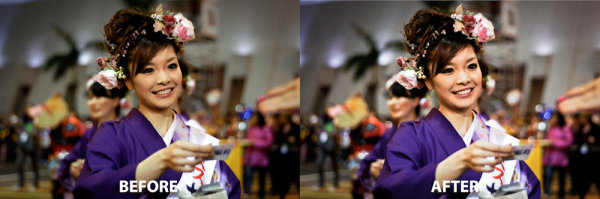
For travel portraits, its all about the white balance to ensure that the subject skin tones are spot on. After that I add contrast and boost detail with sharpening.

Example 3 – Studio Work

For studio portraits, white balance is again key followed by basic exposure and composition adjustments. In this case I may also spend more time working on more artistic effects and specialised image touch ups.

The Two Minute Rule

Obviously when you are starting out its important to spend time developing your processing skills, however as you start to get a handle on this its also very important to get efficient.  Not only will doing so stop you from wasting hours in front of your computer screen, but its also the best way limit the potential for over processing.  The ‘Two Minute Rule’ is the probably the best ‘pro tip’ I have ever heard and is something which has fundamentally changed my approach to photography.  The basic idea is to limit the time you spend processing any image to no more than two minutes.  Imagine that, just two minutes to do everything you need to get an image to look exactly as you want it to?  Basically you should be asking yourself if an images needs more than two minutes of work in post, is it worth the effort?  I’m not going to try and convince you that I follow this rule religiously but it is a really powerful way to focus your post processing efforts and I would certainly encourage you to consider building this into your own routine.  Limiting the time you spend in post will stop you from trying to rescue dud images and also give you a rough guide as to when you may have gone too far.

The ‘So What?’ for Beginners

If you are a beginner or someone getting started in post processing, what am I really telling you?  Simply it is this, most of this images you see will be post processed.  Whether this is to overcome the limitations of our equipment, correct mistakes or achieve a specific ‘look’ most photographers will process their photos. The important thing is not to worry about what others are doing, rather on if you are doing the right things to create the images you are looking for.  Focus on learning the techniques which will help deliver the photograph you want and use this as a way to hone your individual style and workflow to become an even better photographer.  If you get this right, then it won’t be long before you can start fibbing about your photographs too!

Post originally from: Digital Photography Tips.

Check out our more Photography Tips at Photography Tips for Beginners, Portrait Photography Tips and Wedding Photography Tips.

I’m a ‘Typical Photographer’ and This Is How Much I Post Process


Digital Photography School

 
Comments Off on I’m a ‘Typical Photographer’ and This Is How Much I Post Process

Posted in Photography


Edit this RAW File – Portrait Photography

17 Dec

froknowsphoto.com This weeks RAW edit brings us this well composed and exposed portrait that just has one issue which is unfortunate. How would you correct the problem in this photo, try your hand at editing the RAW file. froknowsphoto.com click to edit the RAW file
Video Rating: 4 / 5


This Week in Focus – Episode 3 – Small HD

16 Dec

This Week in Focus – Episode 3 – Small HD … take your DSLR video shooting to the next level with the high resolution DP-6 field monitor. Useful Links Supplied by www.smallhd.com My 2nd Channel www.youtube.com Website www.geekanoids.co.uk Twitter www.twitter.com Facebook www.facebook.com
Video Rating: 4 / 5


3rd time hitting this team in multi

16 Dec

I just got on so I wasn’t there for the other 2 hits. Lol, sorry I haven’t been making regular videos, I haven’t been pking at all. Subscribe. #wolf-pack heart.issy


This Week in Focus – Episode 1 – Panasonic & Olympus

15 Dec

This Week in Focus – Episode 1 … in this first episode I check out the Olympus SZ-14 digital camera and the latest Panasonic HC-X900M 3MOS Camcorder. Useful Links Supplied by www.olympus.co.uk Supplied by www.panasonic.co.uk My 2nd Channel www.youtube.com Website www.geekanoids.co.uk Twitter www.twitter.com Google+ gplus.to Facebook www.facebook.com

This Week in Focus – Episode 2 – Easing DSLR Video … taking a look at the D-Focus system for your DSLR video shooting. Useful Links Supplied by dfocussystem.com My 2nd Channel www.youtube.com Website www.geekanoids.co.uk Twitter www.twitter.com Google+ gplus.to Facebook www.facebook.com
Video Rating: 4 / 5


Nikon 35mm f2 AF-D Review: Why Zach Arias and Myself Like This Lens

09 Dec

www.artoftheimage.com – Reviewing the Nikon 35mm f2.0 AF-D. Why Zach Arias and myself like this lens. Check out Zach’s site at http

 
Comments Off on Nikon 35mm f2 AF-D Review: Why Zach Arias and Myself Like This Lens

Posted in Nikon Videos