RSS
 

Posts Tagged ‘Things’

3 things that will bug photographers about the Polaroid movie trailer

01 Jul

If you want more proof that the youth are taking an interest in film photography, you’ll have to travel no farther than your local multiplex this summer. ‘Polaroid’ the film – but not that kind of film – arrives in US theaters this August, and promises plenty of ‘Ring’-style scares and thrills. In fact, it’s produced by the same minds that brought us ‘The Ring’ and ‘The Grudge,’ so you can pretty much guess how things go when a high school student stumbles across an antique Polaroid camera and starts photographing her friends.

On the surface it looks like your average popcorn-friendly flick, but photographers may have a hard time looking past a few bothersome details we spotted in the trailer. Here they are in no particular order.

The flash is comically bright and doesn’t do anything

Is the flash on this camera powered directly by the sun? How has anyone who’s been photographed by this camera retained their eyesight? It’s unbelievably bright. On top of that, it doesn’t even seem to have any effect on the image – the first subject we see photographed looks to be lit only by the tungsten bulb next to her despite a blinding flash that lit up the whole room.

The screeching flash capacitor

Not only is it needlessly bright, the flash makes a piercing noise as the capacitor supposedly charges it. An entire studio of professional strobes all re-charging at once wouldn’t make that much noise. It’s way too loud for a small on-camera flash, and should be an obvious clue that demons inhabit this camera.

The pristine instant film that comes with an antique camera

This camera came out of a dusty old box with a bunch of film in mint condition? Okay, sure. Maybe possessed Polaroids have a much longer shelf life than the garden-variety stuff. If that’s the case, somebody let the Impossible Project know.

Be sure to watch the full trailer (if you’ve got the stomach for it) and let us know in the comments if we missed anything.

Articles: Digital Photography Review (dpreview.com)

 
Comments Off on 3 things that will bug photographers about the Polaroid movie trailer

Posted in Uncategorized


25 Things I Learned as a Photography Newbie

30 May

It seems photography should be easy, buy a camera and take photos, right? Except it’s not just a camera you need, there are other accessories and things you need to know as a photography newbie. Which lens do you buy and why? What do you shoot? How do you set the camera up correctly? What is the best way to process RAW files?

25 Things I Learned as a Photography Newbie

Walk into a good camera shop and there are walls covered in bags, cabinets full of lenses, banks of accessories, and tripods arranged in an artistic installation on the floor somewhere. It can be hard to know what extra things you really need versus what the salesperson tells you to buy. The internet offers lots of options for research in advance, but sometimes you just have to find things out the hard way.

Plus the salesperson can’t help you once you walk out the door, get your camera home, and you try to make sense of the camera’s user manual for the first time. Suddenly you are on your own with so much possibility and opportunity in front of you, but not really sure how to tackle it.

25 Things I Learned as a Photography Newbie

These are the top 25 things I learned as a photography newbie

Gear related things

  1. Buy at least one spare battery and memory card, two if you can afford it. Remember to keep those spares charged!
  2. Check your camera gear and settings before you leave the house – preferably the day before (so you can charge batteries). Realizing you left your memory card plugged into your computer, and your battery on the charger an hour into your trip is less than ideal.
  3. The perfect camera bag is like the Holy Grail. You will go through several bags trying to find the best compromise for your requirements.
  4. New gear doesn’t make you a better photographer. Many people are under the impression that buying a fancy expensive DSLR body somehow guarantees their images will be amazing. A new lens might enable you to shoot subjects in a better way (e.g. a macro lens lets you get close to small things, a long zoom makes it easier to photograph birds or animals) but these things are a tool that you, the photographer, has to make work.
  5. Buy a good tripod and get comfortable using it.

A tripod is an absolute necessity for shooting in the dark, especially when it’s a long exposure as well

Gear isn’t just about cameras and lenses

  1. Going out in the dark? Get a headlamp or torch, preferably one on a swivel mount so you can point it at the ground while walking in the dark. This is vital for not slipping and breaking an ankle on rocks or broken ground, and finding things in your bag.
  2. Invest in good footwear. Take a hat, sunscreen, water and insect repellent. Also, carry an extra layer of clothing just in case.
  3. Have proper cold weather gear. Nothing is worse than being outside with cold wet feet and numb fingers. If you live in areas that get properly cold, have good footwear suitable for the kind of terrain you will be out in. Clothing technology has advanced a lot in recent years, there are many options for the base, middle and shell layers, gloves, hats, and socks that are thin, light and easy to wear. Good quality gear can be expensive, but it usually lasts and is worth the investment.
  4. Get proper camera insurance. Camera gear is expensive and is often a target for thieves (don’t leave it in your car overnight). Accidents happen, a sudden large ocean wave can wipe you and your tripod out without warning. Tripod heads can fail and cause your camera and lens fall five feet straight onto a concrete floor. All sorts of mishaps can happen, so protect your investment with insurance, it is a lot cheaper than having to replace the gear yourself.

Making better images

I saw this scene in my rear view mirror, a quick handheld capture that was well worth the extra stop.

  1. Look behind you, above, and side to side. Sometimes the best view isn’t the obvious one directly in front of you. This applies especially if you are shooting a well-known and frequently photographed location. Put some effort into making your image something different. Exert yourself to break away from the crowd.
  2. It takes some time to get past the beginner stages of photography and to show improvement. It takes even longer to develop proficiency and “get good at it”.
  3. Composition is critical and will make or break any image. This is the one subject I personally recommend people invest time in researching and learning. There are loads of articles about composition online, take the time to read them and then practice, trying to see different composition options when shooting. Many people stand and shoot as their only option. Getting down at ground level or eye level can make for an entirely different image. Setting the camera in portrait or landscape mode can make a real difference. Learning composition is one of the most powerful tools you have as a photographer.
  4. The best sunrise or sunset is the one you stayed at home for. You can go out every morning for months and get nothing good, that one day you stay home and sleep in? Guaranteed to be a stunner.

My second sunset was well worth getting out of bed for.

  1. It’s all about the light that you have right at that very moment.  Sometimes you have the option to walk away and come back, sometimes you don’t. So it’s important to learn how to see the light you have and know your options for capturing the best image possible with the available light.
  2. Take your camera out as often as you can and practice as much as you can. However, there are times when you might prefer to be in the moment, enjoying the action (a concert or party or event) and that is okay too.
  3. Check the edges of your frame before you shoot. Run your eye around the edge of the image in the viewfinder. Are there any branches, grass or trees poking out in awkward ways? Does your portrait subject have a lamp post coming out of the top of their head? Is everyone fully within the frame – there are no chopped off hands or feet or tops of heads?

White clover shot with 100mm macro lens.

Camera settings

  1. Muscle memory – learn what the buttons on your camera do, and where they are. Learn it so well you can find them by feel, in the dark. When responding to changing situations, it’s important that you can adapt quickly and without thinking too long about it.
  2. Manual mode is just another setting on your camera. There are no rules that say you have to use it all the time, although there are plenty of opinions on the subject. If shooting in manual makes your heart sing, then good for you. If the thought makes you really nervous and uncertain, that is okay, there are other options available.
  3. Back Button Focus is the preferred option for many wildlife and bird photographers. It is faster to use once you get used to the change.

This guy stuck his head into the frame as I was composing, had to react quickly to get the shot, and it is not 100% sharp as a result. Knowing your camera inside and out will help you get shots when time is of the essence.

Workflow and image processing

  1. Develop your own process and workflow. There is no right or wrong way to do things and there might be more efficient or different ways to achieve an outcome. Find one that works for you.
  2. Printing your work is surprisingly complicated. There’s calibration of the monitor, color profiles of the printer and paper, soft proofing, and so many different paper options and finishes. Even getting the professionals to do it for you can be challenging. Be prepared to spend a bit of money experimenting and finding out a way that gets you quality prints.
  3. Data storage and backup are a priority. If you are not particularly interested in computer technology, this can be a bit challenging. If you shoot in RAW format which outputs large image files, eventually you will have to address the requirement to store your data. Usually, at the point your first hard drive fails, backing up your data also becomes a consideration.
  4. Learn to crop and don’t be afraid to use it. Creative use of a crop can be a powerful composition tool, either improving the shot or fixing it (maybe you chopped people’s feet off). Be aware that cropping your image removes pixels and data from the file size, and that can limit how big final prints can be.

The weather was dreadful, a friend stood over me with an umbrella while shooting this, but converted to BW makes all the difference. Shoot with the light you have and know what you can do with it.

Still life studio with reflector, lenses, still life props and a cat asleep in his favorite spot.

Advancing your work

  1. Share your work and invite discussion. Places like Facebook, Instagram, Twitter and various gallery sites online are easy avenues for sharing images. Start a blog and share your learning journey, the blogging community can be very supportive and friendly. Join your local camera club for some face-to-face interaction. Getting critiques can be valuable, but a thick skin is also necessary, as not everyone will be a fan. Some people will be nice and some people will not be and that can be difficult to hear.
  2. Push your boundaries. Some styles of photography will be easy for you, more enjoyable and fun. It’s good to spend time in that space and improve your craft. However, trying new styles can be a powerful learning tool as well. Don’t be afraid to try something new, remember it can take a while to get the hang of it, so don’t expect instant success.

Flat out on my stomach in the dirt was the only way to get this intimate composition.

The sky was heavily overcast and the light was dull, but the cygnets were adorable.

Sleeping ducklings, so fuzzy and cute. Taken flat out on my stomach with a long lens to keep my distance and not disturb them.

Summary

Like every new hobby, once you get started and scratch the surface, there is lots more to learn than you expected. Some lessons can only be learned the hard way, via personal experience.  Making mistakes is a powerful learning experience provided you and your camera gear survive the experience.

Since starting photography in 2007 there have been many mistakes made, and hopefully, lessons learned along the way. I offer up my experiences so you can hopefully save yourself some time, money and hardship and not do some of the silly things that were the reasons for the above list.

Good luck and happy shooting. Be safe and have fun.

The post 25 Things I Learned as a Photography Newbie by Stacey Hill appeared first on Digital Photography School.


Digital Photography School

 
Comments Off on 25 Things I Learned as a Photography Newbie

Posted in Photography


Some Annoying Things About Photography and Cameras

26 May

Photography gave me a creative outlet in life, and I owe so much to it. It’s my form of escape and a way to relax. It pushes me to explore new places and it gets me out the door. I love it dearly.

That being said, there’s a lot about photography that annoys the heck out me, and here’s a list of everything I can’t stand. As a side note, I hope you don’t mind that I illustrate this article with some zen photography instead of pictures of the things that annoy me. That would just get my heart rate up too high.

Disclaimer: This article is meant to be tongue-in-cheek and have some fun. Don’t take it at all seriously, please!

Everything that annoys me about photography and cameras

Buttons

Have you seen a Nikon camera these days?? Most people will never need half of those buttons in their lifetime. Can’t they invent a camera that only needs a few buttons? Where is Apple when you need them?

But seriously, I wish more camera companies put extra time into thinking about ergonomics, design, and making everyday use more pleasant rather than trying to pack each camera with new unneeded features just to lure people into an upgrade.

Everything that annoys me about photography and cameras

Lens dust

Last time I changed lenses, I was literally in a vacuum chamber and still a piece of dust got stuck smack in the middle of the sensor. And is there anyone who can clean it easily near me? Nope, because Nikon stopped making repair parts available in order to shut down third party repair companies. So not only do I have to send my Canon camera to the factory for small repairs because my local shops couldn’t stay in business without the Nikon business, but I can’t even find someone locally to quickly clean my sensor.

Yes, I know I can do it myself, but I’d rather have someone trained so that I don’t screw something up.

Everything that annoys me about photography and cameras

Filters

Remember that time when you thought you needed all these expensive filters to be a good photographer? While you do need a few filters, everyone goes overboard at some point and now has a filter graveyard drawer.

Everything that annoys me about photography and cameras

Megapixels

We don’t need more megapixels Sony! Our computers and external hard drives can barely keep up. Instead, give us better ergonomics, better ISO, faster focusing, and better dynamic range. Which brings me to the next point.

Everything that annoys me about photography and cameras

Small cameras with big lenses

What’s the point in a tiny mirrorless camera with a massive 20-pound lens? Is it impossible to make that 24-70mm lens that everyone uses just a little bit smaller? Please take the money from the megapixel blitzkrieg department and put it into the making lenses smaller department.

Everything that annoys me about photography and cameras

Tripods

Why are all $ 300 tripods designed to fail after a year of use? I can’t imagine how much money the Planned Obsolescence Manager at Crap Tripod Inc. makes. We all learn this the hard way. We suffer until we get fed up and spend way too much money on a Gitzo that lasts us the rest of our lives and makes us really happy.

Everything that annoys me about photography and cameras

People walking in the way of your shot to get a closer shot

You’re pretending you don’t see me. I’ve been here for an hour. I’m a peaceful man, but I will strangle you with my remote shutter cord and break this tripod over your skull (not really, I’m just kidding!). Oh wait, it’s a Gitzo. This Gitzo will break your skull and then continue to work perfectly fine.

Everything that annoys me about photography and cameras

Neck pain

Please don’t carry your tripod over your neck. Use a backpack sometimes instead of a shoulder bag. Pick one lens before you go out the door instead of five. Stretch. Your body will thank you in 20 years when you’re not walking around like the Hunchback of Notre Dame.

Everything that annoys me about photography and cameras

Taking an iPhone photo of some sweaty person at a party with overhead lighting and them thinking it’s going to be amazing because I’m a photographer

I’m not Saint Theresa – I can’t perform miracles. Now stop trying to look like a duck.

Everything that annoys me about photography and cameras

People saying, “Isn’t everyone a photographer these days?”

You know, photography is a way for all types of people in all walks of life to find a creative outlet, and there’s a vibrant community of so many fun and interesting people that are drawn to it. But whether you meant it or not, that statement has a demeaning and devaluing undercurrent to it. All of us are completely different as photographers, just as anyone with a pen will write in a completely different way. Just because this amazing community is growing, does not mean that photography should be devalued.

Everything that annoys me about photography and cameras

When we’re traveling and I can’t skip out on all the fun stuff to take photos

You mean I have to go to a nice dinner at a fun looking place on the water with someone that I love dearly? What the heck – I want to go walk down this dirty alleyway for the next hour to take some moody photographs!

Everything that annoys me about photography and cameras

Conclusion

What things annoy or make you angry about photography or your gear? Please share in the comments below.

The post Some Annoying Things About Photography and Cameras by James Maher appeared first on Digital Photography School.


Digital Photography School

 
Comments Off on Some Annoying Things About Photography and Cameras

Posted in Photography


Round and Round – 19 Images of Circular Things

23 May

The earth is round and travels in an elliptical orbit around the sun which is also round. There are many natural objects that take on a round or circular shape. Let’s see how these 21 photographers captured a few of them.

By Travis Wise

By Bradford Evans

By Colin

By mazaletel

By Brian Ralphs

By Jessica C

By Susanne Nilsson

By Wolfgang Staudt

By Ruth Hartnup

By Richard Walker

By Gorgeous Eyes

By Christian Yves Ocampo

By Phil Romans

By Jonas Tana

By Guglielmo D’Arezzo

By Frank Behrens

By Sean O’Neill

By Pat O’Malley

By Nick Harris

The post Round and Round – 19 Images of Circular Things by Darlene Hildebrandt appeared first on Digital Photography School.


Digital Photography School

 
Comments Off on Round and Round – 19 Images of Circular Things

Posted in Photography


5 Things Every Newbie Photographer Must Learn and Practice

21 May

There are certain things as a photographer you should know regardless of if you are an expert or a novice. These simple yet powerful lessons not only differentiate you but also help you grow in your art and your photographic career. For every newbie photographer, these are essential lessons to learn and practice.

Note: For the purposes of this article, all the images used here are SOOC (Straight out of camera). This is done to demonstrate key concepts highlighted here. My camera of choice is Canon 5D MKIII with a few common Canon L-series lenses like the 50mm and 85mm.

#1 – Know your gear inside out

This almost seems like a no brainer but I am surprised by the number of people who say that they have a really fancy (and expensive) DSLR camera but still shoot in auto mode 100% of the time. Now before you get all upset and say that there is nothing wrong with shooting in auto, I will raise my hand and say that yes, I also shot in auto when I got my first DSLR camera. But very quickly I realized that my camera (a Canon 5D MKII at that time) was a fantastic and sophisticated piece of equipment that was capable of some incredible shots if I only knew how to operate it.

So take the time and really know the ins and outs of your gear. The user manual is a great place to start to not only familiarize yourself with what all the buttons do but also where they are located on the camera. You should be able to adjust settings without removing your eye from the eyepiece/viewfinder when you are composing your frame. Think about it this way, would you like to own a convertible and always drive with the top up (i.e. closed), even on the most gorgeous of summer days?

Here are some ways to learn the ins and outs of your gear.

ISO – Play around with various ISO settings to understand how it affects exposure and what is an acceptable ISO grain (for you). This will help you make photography decisions in low light situations. Some of these ISO decisions may be limited to the kind of camera you have. Regardless, you should know the upper limits of your gear.

5 Things Every Newbie Photographer Must Learn and Practice

The quality of light at the stables where my kids ride is terrible. Even though they have lots and lots of flood lights, there isn’t enough light just because of the sheer size of the barn. These images were shot handheld at ISO 3200 – the one on the left was at 1/60th shutter speed whereas the one on the right was at 1/400th. That was because of the natural light coming in closer to the wall that illuminated my son and gave me a higher shutter speed to capture the motion of the horse.

Sweet spot – Find the sweet spot for your lens. Every lens has an aperture setting where the image is sharper overall than others. This will help you analyze what is the widest aperture (smallest f-stop) you can shoot in and still have the image in focus. This is different than the depth of field (which is how much of the scene is in focus) in that the actual resolution of the image is sharper at the sweet spot.

Minimum shutter speed – Find out what is the lowest shutter speed you can handhold your camera and get a sharp image. This will also help in low light situations as well as in creative motion blur type shots when you don’t have a tripod handy. The general rule of thumb is to shoot at one over the focal length of your lens.

5 Things Every Newbie Photographer Must Learn and Practice

Here I was shooting in a dark canyon with dark stone walls. I was using a 35mm lens at f/1.4 (completely wide open aperture) because I wanted a very low ISO (100) to eliminate any noise. My shutter speed dropped to 1/30th – which I clearly could not hold steady…the image is completely blurry and out of focus!

Weight – Find out what is the maximum weight you can comfortably carry without hurting yourself or almost passing out because of discomfort from carrying excess weight (true story!)

#2 – Know and understand light

There are some photographers who only shoot in natural light while others only shoot using some form of artificial light. Then there are photographers who shoot in any type of light and do a fantastic job at that. There is no right or wrong answer here in terms of preference but it is important to know how to shoot in any form of light. That might be the only thing that stands between you and the shot of your dreams.

Knowing how to read, analyze, and play with light is one of the most basic and important skills every newbie photographer should know, in my opinion. Keep in mind that not all light is equal from a purely technical standpoint (tungsten versus fluorescent versus white-balanced light). Certain types of light are good and others are not so good. Experiment with many different kinds of light so you know how to read light, then learn how to shoot in each.

These three images were all shot within the hour just before sunrise.

Here my settings are as follows ISO1250, f/2.8, 1/60th shutter speed. I LOVE the blue in the sky falling on the snow covered Pike’s peak in Colorado.

5 Things Every Newbie Photographer Must Learn and Practice

The warm sunrise cast such a magical glow on the mountain and surrounding areas. My settings here were ISO 320, f/5.0, and 1/500th. The sky filled with so much light that I had to stop down my aperture to be perfectly exposed.

5 Things Every Newbie Photographer Must Learn and Practice

The overcast sky with little spots of blue took my breath away. My settings here were ISO 320, f/5.0, and 1/800th to get a perfectly exposed photo.

5 Things Every Newbie Photographer Must Learn and Practice

I do not like indoor yellow tungsten light…everything become so orange! (A custom white balance or correction in processing is necessary)

5 Things Every Newbie Photographer Must Learn and Practice

But neutral natural light is so much easier to work with and to get even natural-looking skin tones.

3 – Practice good ethics

Be respectful of the people, places, and things you photograph. I cannot tell you how much it pains me when I see photographers (both amateurs and professionals) disrespect their surroundings. Be it climbing where they are not supposed to, keeping heavy equipment on delicate surfaces, overcrowding and overstaying their welcome in public places and not giving other general tourists the opportunity to enjoy the scenery.

Pay special notice to other photographers. These are folks in your industry even if they are beginners. They are all in it for the same reasons you are – love for the art! Leave that sense of entitlement behind, just because you have more expensive gear does not make you a better photographer or a creative artist. Take the extra effort to find out what the photography rules are in the places that you intend to photograph and stick to them.

5 Things Every Newbie Photographer Must Learn and Practice

I belong to several groups of photographers and we regularly meet to shoot the breeze, photograph together and just generally geek out about all things photography. There is no pressure, no tension and everyone plays nice! Community over competition!

4 – Safety

Be safe when you are out and about. Always be aware of your surrounding especially if you are a female photographer who tends to travel alone. Check out this article  Safety Tips for Travel Photographers (Particularly Women) that addresses this issue. Remember safety always comes first, art next.

5 – Be your true self and be patient

Whether you choose to be in business or not, be true to your art. Get inspiration not just from other photographers but also from daily life. There are many amazing things around us at any given point in time. Just because no-one else photographs it does not make it boring. Similarly think outside the box, just because everyone photographs something a certain way does not mean you have to follow the pack.

When you are starting out, don’t obsess over clients, getting work, and making money. Yes, they are absolutely important, I will not disagree, but take the time to perfect your art (to the point where you are confident charging money for your photography) and then the money and fame will follow.

Also give out as much as you can, be helpful and uplift others who are on this journey with you. The more you put out there the more you will receive from the universe! I truly believe in that mantra across all walks of life.

5 Things Every Photographer Must Learn and Practice

I am always coming up with shoot concepts and ideas to keep experimenting. Some work and some fail miserably but that’s okay. I take everything as a learning experience and try to stay positive in my game. An editorial shoot with my daughter captured on film was a complete disaster as I got all the setting wrong and ended up with grainy, grudge frames! – but I learned a whole lot about film and light and how different it is to digital!

5 Things Every Photographer Must Learn and Practice

Leftover florals from Valentine’s day gave me a chance to practice some styling as well as a more moody, contrasty way of editing – which I sort of like and dislike at the same time! But no money was lost and I only used 10 digital frames and spent 30 minutes in editing experimentation.

Conclusion

Are there any other life lessons that photography has taught you? In the spirit of building this community of creatives, feel free to share it with others.

The post 5 Things Every Newbie Photographer Must Learn and Practice by Karthika Gupta appeared first on Digital Photography School.


Digital Photography School

 
Comments Off on 5 Things Every Newbie Photographer Must Learn and Practice

Posted in Photography


10 Things to Photograph Indoors When There’s Bad Weather Outside

07 Apr

No matter where in the world you live, there are some seasons that are more conducive to outdoor photography than others. That said, bad weather is no excuse to stop learning about photography! Here are 10 beginning photography exercises to try the next time you’re cooped up indoors due to bad weather. Each exercise includes a subject theme, discussion about the type of skills you’ll practice with that particular subject, as well as some questions and/or ideas to walk through in order for you to really take your understanding to the next level.

1. Flowers

bad weather

Pick up an inexpensive bouquet of flowers the next time you’re at the grocery store and bring it home. Pop the flowers in a vase, and start shooting!

If you choose a bouquet with a range of colors (including white flowers if possible), you’ll be able to practice properly exposing your images across the dynamic range. Photographing flowers is also a great opportunity to play around with different apertures. If you’re currently shooting in Auto, pop your camera over into Aperture Priority mode, and give things a try. How does changing from f/2.0 to f/5.6 affect the image? Which look do you prefer?

2. Candles and/or a Fireplace
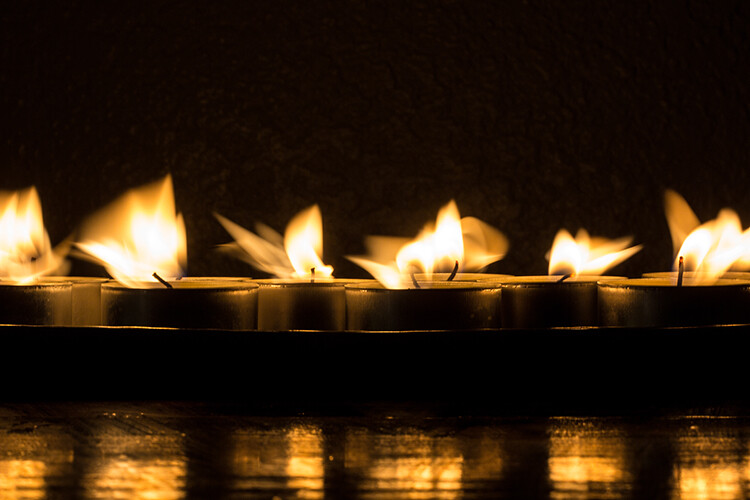
bad weather

There are a few different benefits to spending some time photographing a flame. Whether you’re photographing a collection of candles or a fireplace, try experimenting with different exposure lengths in Shutter Priority mode. Try both long and short exposure times, and also be sure to note how the shutter speed affects the overall exposure of your image. Does a longer shutter time translate to a lighter or a darker overall image? How could you balance out a longer shutter opening without overexposing the entire image?

Another benefit to photographing flames is that it also makes you consider composition in a way that many subjects do not, especially in terms of reflections. Try putting a mirror or other shiny surface underneath a candle and photographing it. How does the reflection of the flame affect the overall image? Do you want to include the reflection in your image, or do you prefer to crop it out?

3. Oil and Water

This simple project packs a big punch!
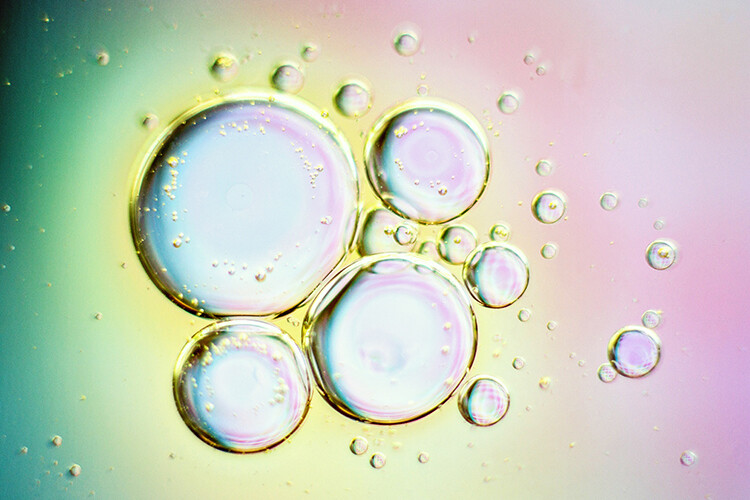
bad weather

Equipment and supplies

A macro lens will help you out tremendously here, but if you don’t have one, extension tubes are also a great option. This image was taken with a $ 15 set of extension tubes and a 50mm lens. Basically, all you need is a clear glass dish, two cups, colorful paper, water, and olive oil.

Setup

First, take your colorful paper, and set it on a table or counter. Then take your two cups and set them on top of the paper, several inches away from each other. Next, take your glass dish and set it on top of the cups, so that it’s elevated off of the colorful paper. Add a little water, then a little olive oil, and be ready to photograph the bubbles that appear. You may want to spend some time experimenting with photographing the glass dish at differing heights above the paper underneath. Experiment with different types of colorful paper; scrapbook paper is a great resource for this. Try differing amounts of oil and water, and see how those small changes affect your image.

This is a great opportunity to experiment with macro-like photography in a way that has a pretty big impact. If you are using extension tubes rather than a macro lens, keep in mind that your extension tubes may or may not work with your camera’s autofocus. If you’re having trouble getting the bubbles to come into focus, you may need to focus manually (try the LiveView focus technique).

4. Food

bad weather

Photographing food is a great opportunity to play around with styling, as well as post-processing. It’s my humble opinion that much of your direction in terms of styling and processing will come from the food itself. In this case, I had a rustic loaf of bread that was covered in different seeds. It reminded me of rustic, communal dinners, and so I wrapped it in a tea-towel and stuck it directly on my table (something that happens with fair frequency to loaves that have just come out of the oven around here). I also knew from the get-go that I’d apply a more matte post-processing technique than I usually use in portraits in order to echo the rustic feel of the bread.

On the other hand, what approach would you take to styling and photographing a sleek cheesecake? Or a classic fruit salad? This short little exercise allows you to push yourself in terms of styling and post-processing, trying out skills and techniques that you may not typically use, as well as spending some time thinking about what types of styling and post-processing would best represent the subject.

5. Window Silhouettes

bad weather

I don’t know about where you live, but around here it can often be rainy and sunny at the same time. If you find yourself faced with similar weather, it’s a great opportunity to try doing a window silhouette.

Window silhouettes are a great exercise if you are learning photography because it will help you understand how your camera sees light. If your camera is on auto, and you focus directly on your subject, what does your camera try to do? If you move your focal point off of your subject, what does your camera “see” then? Does it affect the focus of your image? What happens if you try out the different metering modes? Does one seem to be more effective than the others in creating a silhouette?

6. Food Coloring and Water

bad weather

Grab a tall glass or vase, fill it with water, and then drop a couple of drops of food coloring into it.

This is a simple and colorful way to examine both shutter speed and light. Try using a short shutter speed. What does the image look like? Try using a long shutter speed. How is that image different?

In addition, try shooting with all different types of light. The transparency of the water is a great opportunity to practice capturing backlit images.

7. Interiors

bad weather

You don’t need to have perfectly clean or perfectly decorated rooms in order to gain valuable experience and knowledge from photographing them. Just a pick a room and go for it.

Experiment with light sources. How does the final image look when you use only natural light? What happens when you use only overhead and/or floor lights with the curtains closed? How does the image look when you use a combination of natural light and accent lighting? Think both in terms of exposure, and also the color balance of the image. Which look do you personally prefer?

8. Books

bad weather

I’m a huge bookworm, so it’s no surprise that I really enjoy photographing books in all sorts of scenarios. I love the texture of the pages, I love the different colored spines. I love basically everything about books!

Photographing books is also a great way to learn about aperture. Pick any book, and crack it open. Look for a short passage that you enjoy. Set your camera to Aperture Priority mode, and start with the lowest number you’re able to select (f/4 or f/2.8 for example). Set your focal point to your desired passage, and shoot. How much of the image is in focus?

Now set your aperture to one or two numbers higher than your first setting. How much of the image is in focus this time? Continue shooting up and down your available aperture range, noticing how the image changes as you do so. When might you want to use an image with only a sentence or two in focus? When might you want an image that included more of the book in focus?

9. Pets
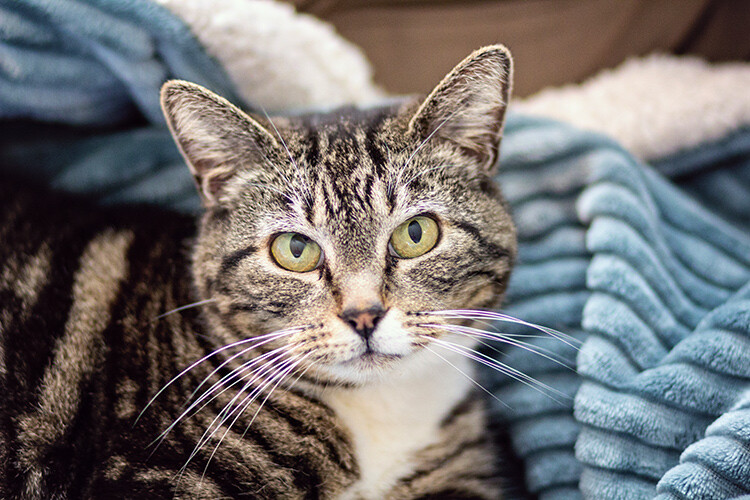
bad weather pets

Photographing a pet can often present many of the same challenges that you might experience when photographing children. Certainly, this will depend greatly on the type of animal you have as well as their temperament, but it holds true for our cat.

She moves quickly and is often not super interested or cooperative when I’m attempting to photograph her. So, trying to photograph our cat is a good opportunity to practice shooting candidly, as well as waiting patiently for just the right moment. Our cat is obviously never going to walk right in front of me, sit, and smile for a photo. Instead, it’s my responsibility to sit on the couch with my camera, waiting patiently. When she decides to come over and investigate, I’ll be waiting and ready. (Read: 9 Tips for Taking Better Photos of Cats) 

10. Craft Supplies

bad weather

Craft supplies are a great tool for photographic exercises because they’re usually a good source of color. Play around with color and group items randomly. Then group similar colors together.

Next, pick one single item or color to focus on. Photograph it alone, as well as grouped with the others. Is the image stronger with only one color or with many? Do you prefer the colors to be randomized, or grouped together?

Conclusion

Have you tried any of these approaches? What other ideas do you have for bad weather, indoor photography exercises that would help beginners understand an element of photography better?

The post 10 Things to Photograph Indoors When There’s Bad Weather Outside by Meredith Clark appeared first on Digital Photography School.


Digital Photography School

 
Comments Off on 10 Things to Photograph Indoors When There’s Bad Weather Outside

Posted in Photography


5 Things I Wish I Knew When I First Started Wildlife Photography

31 Mar

I first started photography almost 10 years ago, and I sometimes wonder where I would be if I knew what I know now, back at the start. I feel like I’ve learned the most important things about wildlife photography in the last 4-5 years, with the time prior to that being spent juggling schoolwork alongside my hobby.

The hardest part about getting really good at something is at the start. It can feel impossible to take a decent image when you’re comparing yourself to the stunning work you see online all the time. Maybe you’re even taking lessons, but feel like there’s some kind of barrier that you can’t bust through to photographic greatness above.

While we’re all still learning, whatever stage we’re at, I hope that some of these tips will help you fast track your photography. Hopefully, you can avoid some of the mistakes I made early on when I first started doing wildlife photography.

#1 Single-point focus is a must

There are few situations, other than perhaps birds in flight, where you would want to use anything but the single-point focus mode on your camera. If you allow the camera to select the best focus point itself, you’ll easily have an image of an animal with its body sharp but eyes out of focus. This kills the shot – instantly.

5 Things I Wish I Knew When I First Started Wildlife Photography

When you’ve switched to single-point focus, you can dictate exactly where the camera will look to focus. Point that little black square at the eyes of your subject and the rest will start to fall into place. Just be extra sure that you aren’t focusing on the nose, or beak, of an animal rather than the eyes. It’s an easy mistake to make in a small viewfinder. After that, no longer will you need to trash that super cute shot of a squirrel just because the eyes are not sharp.

#2 Semi-automatic modes are your friends

I want to address a common misconception I hear again and again. This is that anything other than full manual mode is cheating and not proper photography. While I insist that everyone should learn how to use their camera in full manual, there is no reason to add extra obstacles in your way to a great photo.

With wildlife photography, everything is moving so quickly and the light is constantly changing. Most of the time when shooting in full manual, you’re just introducing a load of unnecessary wheels to spin and adjust to account for the tiniest change in light.

5 Things I Wish I Knew When I First Started Wildlife Photography

Photo: Mario Calvo / Unsplash.com

But, that’s also not to say that photographers using semi-automatic modes aren’t capable of shooting in full manual. Having to continuously adjust settings in a fraction of a second will most definitely make you miss opportunities. Plus, when you really understand how full manual works, it takes only a little thought to adjust and perfect the exposure. It just adds time to the process.

Semi-automatic modes take away this chore, meaning you can focus more on composition and other, arguably more important, ingredients that make up a great photo. You can still have control over your exposure, fine-tuning it using exposure compensation. I have lost count of the number of shots I missed when I insisted on solely using full manual mode at the start of my photographic journey.

The shooting modes I’m referring to are Shutter Priority, Aperture Priority, and full Manual with Auto-ISO. Take a look at this article I’ve written about which of these is best for certain situations: Why Semi-automatic Mode is the Best Choice for Wildlife Photography

#3 Organization is key

By alborzshawn

My biggest regret is never properly organizing my photos. I only started to do this vigorously back in 2015, which I am quite ashamed to say! I use Adobe Lightroom, and it just makes life so much easier. Creating a catalog of my images, I can keyword and easily find them all. Collections allow me to sort through specific shoots quickly, and the delete button is never too far away either with a tap of the X key on my keyboard.

Deleting images is something that we all need to do, but it’s never easy. But be brave, and if a shot isn’t up to scratch then make sure to haul it out of your catalog and into the trash. If you don’t, you’ll end up with hard drives full of thousands of pictures and you’ll never be able to find the good ones hidden within them.

It’s good practice to make sure you dig through all the photos from a shoot fairly quickly. Remove the blurred and rubbish frames so that you don’t procrastinate and find down the line that you still have to prune the images from a shoot a few years ago. Whoops!

#4 You don’t need to fill the frame

I always thought that a good wildlife photo filled the frame with the subject. If it was too far away, then there was no shot to be had. How wrong I was! The style of minimalist wildlife photography, having the subject small in the frame, is becoming increasingly popular nowadays. Perhaps styles and tastes have changed in the field since I first started out, but either way, it is something I wish I had experimented with more when I was younger.

5 Things I Wish I Knew When I First Started Wildlife Photography

This is great news for those of you who don’t have access to large telephoto lenses, too. It means you don’t need to go and shell out thousands for a 500mm prime lens when you can get shots that are just as good with a shorter telephoto (or even a wide lens).

Keep the subject small and introduce the environment around it into the scene. You might need to adjust your aperture to increase the depth of field, depending on what you’re trying to achieve. Since the surroundings will become a larger part of the shot, perhaps you want them to be more in focus than usual.

#5 You don’t need to stick to a normal aspect ratio

One thing that I’ve only started to do within the last year or so, is to play with the aspect ratio of my photos. You don’t need to stick to the standard that pops out of your camera. Try cropping into a square, or even creating a panoramic shot, to make long photos that capture a wider view than normal.

5 Things I Wish I Knew When I First Started Wildlife Photography

A colony of guillemots on the Farne Islands, Northumberland. One individual is attempting to land and squeeze into the group.

Experimenting with the aspect ratio of your photo makes them stand out too. Immediately people notice that the photo doesn’t fall into normal ratios, and pay attention to the shot. I really like these long, snaky frames. I feel they tend to work well with scenes that have a large number of focal points within them. For example, this image of the guillemots has so many different birds that you can look at in detail. The long frame creates a sense of a large colony of birds, and works well to get rid of the unnecessary sky above that would be there with a standard ratio.

In Conclusion

We can’t all be experts from the word go, I still have loads to learn about wildlife photography. But hopefully, some of these tips will help you to buck the trend and let you benefit from some of the things I wish I knew when I first started clicking wildlife photography.

The post 5 Things I Wish I Knew When I First Started Wildlife Photography by Will Nicholls appeared first on Digital Photography School.


Digital Photography School

 
Comments Off on 5 Things I Wish I Knew When I First Started Wildlife Photography

Posted in Photography


21 Images That Sing – Photos of all Things Musical

22 Mar

Music fills the soul – it also makes for a great subject for photographers.

Singers, concerts, musicians, bands, instruments, and more. See if you can hear the music in thees images!

By John Finn

By Ronald Rugenbrink

By Brian Tomlinson

googletag.cmd.push(function() {var gpt_slot = googletag.defineSlot( “/1005424/_dPSv5in-post-mobile(300×250)”, [300, 250], “pb-ruleset-mobile-ad-0” ).addService( googletag.pubads() );ruleset_mobile_slots.push( gpt_slot );});

googletag.cmd.push(function() {var gpt_slot = googletag.defineSlot( “/1005424/_dPSv5in-post-mobile(300×250)”, [300, 250], “pb-ruleset-desktop-ad-4” ).addService( googletag.pubads() );ruleset_desktop_slots.push( gpt_slot );});

By Mike Morbeck

By Bill Couch

By David

By dion gillard

By Eleonora Albasi

By Nate

By Mats Edenius

googletag.cmd.push(function() {var gpt_slot = googletag.defineSlot( “/1005424/_dPSv5in-post-mobile(300×250)”, [300, 250], “pb-ruleset-mobile-ad-1” ).addService( googletag.pubads() );ruleset_mobile_slots.push( gpt_slot );});

googletag.cmd.push(function() {var gpt_slot = googletag.defineSlot( “/1005424/_dPSv5in-post-mobile(300×250)”, [300, 250], “pb-ruleset-desktop-ad-5” ).addService( googletag.pubads() );ruleset_desktop_slots.push( gpt_slot );});

By Micha? Koralewski

By Sam Cox

By Arnold Manillier

By Marco Evangelisti Crespo

By Flavio~

By Brandon Giesbrecht

By Susanne Nilsson

googletag.cmd.push(function() {var gpt_slot = googletag.defineSlot( “/1005424/_dPSv5in-post-mobile(300×250)”, [300, 250], “pb-ruleset-mobile-ad-2” ).addService( googletag.pubads() );ruleset_mobile_slots.push( gpt_slot );});

googletag.cmd.push(function() {var gpt_slot = googletag.defineSlot( “/1005424/_dPSv5in-post-mobile(300×250)”, [300, 250], “pb-ruleset-desktop-ad-6” ).addService( googletag.pubads() );ruleset_desktop_slots.push( gpt_slot );});

By Machrouh Med Sami

By Grodenaue

By Alex de Haas

By ericzim

googletag.cmd.push(function() {var gpt_slot = googletag.defineSlot( “/1005424/_dPSv5in-post-mobile(300×250)”, [300, 250], “pb-ruleset-mobile-ad-3” ).addService( googletag.pubads() );ruleset_mobile_slots.push( gpt_slot );});

googletag.cmd.push(function() {var gpt_slot = googletag.defineSlot( “/1005424/_dPSv5in-post-mobile(300×250)”, [300, 250], “pb-ruleset-desktop-ad-7” ).addService( googletag.pubads() );ruleset_desktop_slots.push( gpt_slot );});

The post 21 Images That Sing – Photos of all Things Musical by Darlene Hildebrandt appeared first on Digital Photography School.


Digital Photography School

 
Comments Off on 21 Images That Sing – Photos of all Things Musical

Posted in Photography


5 Things That Will Instantly Improve Your Photography

09 Mar

On now until March 21st (AUS time) get Anthony Epes’ Online Light Monkeys Photo Group – Yearly Membership – 55% OFF at Snapndeals. 

Having run photo workshops for several years now, I have noticed some familiar traits that many people share with their photography. So I’ve put together some tips that I feel will help you improve your photography – straight away. These little ideas have the potential to make a huge impact on your image creation.

5 Things That Will Instantly Improve Your Photography

1. Have patience

“Genius is patience. – Isaac Newton

Patience is a skill I think many amateur photographers sorely lack. This matters because photography is often a waiting game – waiting for the subject to get into position, for the light to change, or working the elements of your photo into a perfect composition. If you are not prepared to be patient, you’re not going to get many shots you like.

Many amateur photographers are so driven by the desire to have a full memory card at the end of the day that they don’t take the time to set up or wait for a great shot.

5 Things That Will Instantly Improve Your Photography

This could involve recognizing that the light isn’t great now, but it might change in an hour. Or it might be setting up a great composition and then waiting until the right person stands in a precise spot. It could be shooting a person or a scene over and over until you get an expression or angle that reveals something unique and interesting and creates a more impactful photo.

“You get more by waiting than you do by moving. You wait for the light to come and it will change the world in front of you.” – Peter Fiore

I believe a lot of it comes down to people’s expectations. For me, getting one amazing shot in a day’s shooting is a good result. Sometimes I go out and get nothing, sometimes I get a half a dozen, sometimes I just get one.

5 Things That Will Instantly Improve Your Photography
You need to be patient and take the time to work your scene and build a fantastic composition. Forget the next spot and the next subject. If you find something that really inspires you then stop, be patient, and work the scene until you’ve made the best photo possible. Take 10, 20, even 50 photos if you need to!

“Patience is not passive; on the contrary, it is active; it is concentrated strength.”– Edward G. Bulwer-Lytton

2. Free yourself from fear

“Everything you want is on the other side of fear.” – Jack Canfield

5 Things That Will Instantly Improve Your Photography

When you are involved in a creative act, you will at some point be faced with one of the greatest forces known to man – fear. It is pervasive in our lives, and it can create havoc with your photography.

For example, most of the photographers I teach have a fear of photographing strangers; this is very common. Now, you can either give into that fear and not photograph the subjects you really yearn to – or you can deal with.

I still get fearful sometimes after twenty-odd years in the business. Sometimes I go to new places and feel self-conscious, or get intimidated to shoot someone whose look I like. It doesn’t really matter what it is, fear is always fear and it can stop you from taking action if you don’t face it.

5-things-improve-your-photos-31

I deal with fear by just recognizing that it’s there. That fear has decided to show its face, and I just let it be there, knowing that eventually, it will drift off. I don’t let it stop me, that’s the key. After all, I love photography. I love the whole process of taking photos. Although this was said by an athlete, it is so relevant to photographers, and it’s worth reminding yourself that:

“You miss 100% of the shots you don’t take.” – Wayne Gretzky

Remember – on the other side of fear is possibly an amazing image.

3. Think geometrically

5 Things That Will Instantly Improve Your Photography

“The only joy in photography is geometry. All the rest is sentiment.” – Henri Cartier-Bresson

I read recently that Henri Cartier-Bresson would choose which images to print by examining his contact sheets and work out which have the best geometric composition. By looking at them when they were printed small, he could see the shape and form of the photo, rather than the subject. He would then choose his photos based on which of them had the best geometric composition.

Of course, the subject is important, their expression, the light, etc., but I like this idea of concentrating on the geometric elements of the photo. The reason being that all elements of the photo count, and having a strong organization of the shapes and forms, which is essentially the geometric elements of the photo, will create a strong composition.

“I like form and shape and strength in pictures.” – Herb Ritts

4. Stop fixating on your subject

5 Things That Will Instantly Improve Your Photography

I have noticed that many people learning photography become totally fixated on a subject that they love, but forget to compose the other elements of their photo.

For example, you see someone you think is awesome-looking. You start photographing them, without consideration for rest of the frame. You don’t look all the way into the corners of the composition, you overlap your subject with telephones or trees coming out of their head, nor do you notice lines running randomly out of the photo drawing the eye away from the subject.

Even though the frame may feel pretty small, often people don’t look at every part of the composition to see if the whole is working together. It is always about the whole image, not just what is currently fascinating you! It takes practice and concentration folks – all of the elements in your frame need to be relevant and work well with the subject.

5 Things That Will Instantly Improve Your Photography

5. Learn to become an observer

“To me, photography is an art of observation. It’s about finding something interesting in an ordinary place… I’ve found it has little to do with the things you see and everything to do with the way you see them.” – Elliott Erwitt

This tip is important. The best state of mind in which to take photographs is one of complete creative freedom, in the creative flow, where you are undistracted by your life outside of that very moment. Where you have forgotten about your to-do list and the thousands of emails you need to answer. You are just standing in the moment, looking around, noticing everything, and empty of thoughts about what else is going on in your life.

That’s easy right?

5 Things That Will Instantly Improve Your Photography

No, not always. For many, it’s super hard because what you do in your work and rest of your life requires skills which are exactly the opposite. Holding tons of small pieces of information, remembering, doing and rushing around with the business of life.

Much as we may like to think that photography is all about technique and kit, it is actually an inner game. I don’t really much care what gear you have, even though I love a new camera as much as the next person. The best photographers I’ve come across are completely in tune with their environment. They study the world around them and don’t constantly try to be in it doing, but instead, they look and observe.

This might be something you need to cultivate – and it’s totally possible to attain, even if it doesn’t come naturally. Something in you has been drawn to photography, to the visual world and to express yourself visually. So you already have potential inside of you to become a great observer.

5 Things That Will Instantly Improve Your Photography

Conclusion

Hopefully, these ideas have helped point you in the direction of deepening, developing and improving your photography. It’s so rewarding to work on simple ideas that have a great impact on your photos.

I’d love to know what you think of these tips, please comment below.

On now until March 21st (AUS time) get Anthony Epes’ Online Light Monkeys Photo Group – Yearly Membership – 55% OFF at Snapndeals. 

The post 5 Things That Will Instantly Improve Your Photography by Anthony Epes appeared first on Digital Photography School.


Digital Photography School

 
Comments Off on 5 Things That Will Instantly Improve Your Photography

Posted in Photography


Things we found at CP+ 2017 which had been cut in half

26 Feb

Things we found at CP+ 2017 which had been cut in half

We’ll be honest – the past year has been pretty rough. It’s hard to find much good news out there, and it seems like the world is more divided than ever. With so much uncertainty in so many areas of our lives, it’s important to hold on firmly to the important things. Friends, family, lifebelts, and amusing-looking 19th century cameras (snigger snigger) but most of all, traditions

Here at DPReview we take tradition seriously. Every new years eve, Rishi drinks a pint of beer*. Every Easter, Carey gets a haircut. And every February, at CP+, we post a gallery of things we found at the show which have been cut in half.

So dim the lights, put on some Enya and settle in, because it’s that time again.

* Most of a pint of beer.

Things we found at CP+ 2017 which had been cut in half

First up is the recently announced Pentax KP, a weather-sealed 24MP APS-C DSLR which features a lot of the same technology as the full-frame K-1. We know what you’re thinking – this KP might have its innards exposed for all the world to see, but it hasn’t been cut in half! How am I supposed to trust DPReview? It hasn’t been the same since Phil left! Where is the Leica M9 review???

Things we found at CP+ 2017 which had been cut in half

Not so fast. Don’t worry – we know what you came here to see, and we would never disappoint you (unless you really are still waiting for the M9 review, in which case we’re definitely going to disappoint you). 

Here’s a KP without any weather sealing at all, because it’s been cut in half. It’s positively begging for dust and moisture incursion.

Things we found at CP+ 2017 which had been cut in half

Also distinctly vulnerable to the elements is this Canon EF Canon EF 200-400mm f/4L IS USM. A regular on the ‘things that have been cut in half’, trade show circuit, Canon seems to really enjoy taking these 200-400mm lenses apart and showing off their insides.

We’re starting to worry, to be honest.

Things we found at CP+ 2017 which had been cut in half

It’s just gratuitous, at this point.

Things we found at CP+ 2017 which had been cut in half

We have to admit though, when it comes to showing off lens components, Canon does a good job. These are aspherical lenses, from (L-R) the company’s 14mm F2.8 II, 85mm F1.2 II, 17-40mm F4, 16-35mm F2.8 II (last generation) and EF-S 15-55mm F2.8, respectively.

We were hoping to see the new 16-35mm F2.8 III represented in this display, but no such luck. If you really want to see an impressive aspherical element though, check out the 10-24mm F4, on display at CP+ 2015.

Things we found at CP+ 2017 which had been cut in half

The 16-35mm F2.8 III might have been missing from Canon’s aspherical mushroom farm, but Canon didn’t let us down – here it is, in another display case, with all of its many elements on show. This latest version of the 16-35mm is favorite of landscape photographers and a stellar performer, outperforming its predecessors in every respect.

Good luck getting nice-looking sunstars out of this one, though. It’s been cut in half.

Things we found at CP+ 2017 which had been cut in half

Tamron’s new 70-200mm F2.8 ‘G2’ has been completely redesigned, with a new optical design consisting of 23 elements in 17 groups. These include extra low dispersion and low dispersion elements to reduce chromatic aberrations. Stabilization has been improved too, and now offers up to five stops of compensation.

This lens is 50% lighter than shipping samples, so in theory, it should be even more hand-holdable.

Things we found at CP+ 2017 which had been cut in half

Not to be outdone, Nikon is showing off a another high-tech, multi-element 70-200mm of its own – the new, and very nice 70-200mm F2.8E.

We’ve been impressed by the performance of this new telezoom, both optically and in terms of image stabilization, but we won’t be getting on the waiting list for this 100th anniversary special addition. It looks like Nikon got a bit carried away with the weight-saving.

Things we found at CP+ 2017 which had been cut in half

Speaking of lightweight, Panasonic’s DC GH5 is a modestly-sized powerhouse, combining an advanced video feature set with impressive speed, resolution and autofocus performance for stills photography. We’re currently working on an in-depth review but we’re glad that Panasonic didn’t send us this one. It seems to have exploded.

Things we found at CP+ 2017 which had been cut in half

Voigtlander really outdid itself this year, when it came to things that had been cut in half. Here’s the Nokton F1.1 for Leica M mount. Normally a useful lens for extreme low light imaging on film and digital rangefinders, we’d recommend passing on this one if you see it on Ebay.

It’s decentered.

Things we found at CP+ 2017 which had been cut in half

Another Voigtlander – the 10mm F5.6 Heliar Ultra-Wide. The second native E-Mount lens made by Voigtlander and at the time of its release, the widest rectilinear lens ever produced, this one has been put together using even more aspherical elements than normal.

Things we found at CP+ 2017 which had been cut in half

Another 15mm, this is the LAOWA 15mm F4 Wide Angle 1:1 Macro – an impressive, inexpensive but undeniably niche optic, we’d describe this lens’s internal construction as ‘industrial’. Or ‘industrial accident’, in the case of this example, which has been partly – but not entirely – cut in half.

Things we found at CP+ 2017 which had been cut in half

Sony can always be relied upon for some high-quality tradeshow bisection, and this year was no different. It’s easy to forget that despite its size and form-factor, the SLT-A99 II does not contain a pentaprism, and seeing it cut in half (here with a 24-70mm F2.8 attached) reveals a surprising amount of empty space above the fixed mirror.

Admittedly, this one has 50% as much empty space inside it as a regular A99 II, because as you can see, it has been cut in half.

Things we found at CP+ 2017 which had been cut in half

That’s it for another year – thanks for reading, and we hope you’ve enjoyed our show content from CP+. It’s time for lunch. Or breakfast. Quite honestly we’re still a bit confused about what timezone we’re in.

Until next time – keep it demi. 

Articles: Digital Photography Review (dpreview.com)

 
Comments Off on Things we found at CP+ 2017 which had been cut in half

Posted in Uncategorized