RSS
 

Posts Tagged ‘Tell’

New dPS Reader Survey – Tell Us More About You

02 May

At dPS we value you, our readers, above all else. We want to help you take better pictures.

By doing this survey you will be helping dPS serve you better. By knowing what kinds of things are you struggling with, and the types of articles you want to see we can work toward providing more of what you need to move your photography forward.

We value your time, and you, as our regular reader and always strive to improve – you will help us by completing this form, for which we will be especially grateful.

Click on this link, or the image below to start the survey.

FEAT JOHN SMITH CREATIVE DIRECTOR

Thank you for your continued support and being a dPS reader. We wish you all the success on your photography journey.

The dPS Management Team

googletag.cmd.push(function() {
tablet_slots.push( googletag.defineSlot( “/1005424/_dPSv4_tab-all-article-bottom_(300×250)”, [300, 250], “pb-ad-78623” ).addService( googletag.pubads() ) ); } );

googletag.cmd.push(function() {
mobile_slots.push( googletag.defineSlot( “/1005424/_dPSv4_mob-all-article-bottom_(300×250)”, [300, 250], “pb-ad-78158” ).addService( googletag.pubads() ) ); } );

The post New dPS Reader Survey – Tell Us More About You by Darlene Hildebrandt appeared first on Digital Photography School.


Digital Photography School

 
Comments Off on New dPS Reader Survey – Tell Us More About You

Posted in Photography


How to Tell Better Visual Stories with Travel Photography

18 Feb

Take a look at your favorite travel magazine, and you will notice a pattern in the images.

Establishing 12

Understanding how to turn a bunch of images into a story – creating series is crucial to any travel photographer.
In this article, we will get familiar with two kinds of very important visual concepts in the travel photography world: the establishing shot (above) and the detail shot (below).

Detail 1

It doesn’t matter if you wish to do travel photography professionally, or if you just want to come back home with better pictures from your next trip. Understanding these visual concepts will help you.

Establishing shot

The establishing shot is arguably the most important shot in a travel photography series. In a print magazine, this image will usually cover the two first pages of the article (the spread). In a digital-based platform (your website or Facebook page), this will be the album’s opening image. However, you can find the establishing shot later in the series.

Establishing 10

The establishing shot’s purposes are to:

  • Give a general idea about the story and the “what” and “where” of this series.
  • Be visually interesting enough so that the viewer wants to read the article or go through the digital album.

Establishing 8

From the technical point of view:

There are no clear rules. But in most cases, the image is a horizontal one (sometimes you will see two vertical images side by side).

Most important:

This image is the grand entrance to your story. Make it impressive and epic. It is usually recommended to leave room for text on this image. So take it into account when you create your composition.

Establishing 9

The detail shot

While the establishing shot is all about being big and epic, the detail shot is about putting a spotlight on something small and making it the image’s hero.

The detail shot’s purposes are to:

  • Give attention to different aspects in your story that might get lost in the bigger picture.
  • The detail shot is like sorbet ice cream in a gourmet dinner — it gives balance to the other, bigger images.

Detail 4

From the technical point of view:

It is all about making small things bigger, so a macro lens is useful (but not obligatory) here.

Most important:

While in the field, be on the lookout for interesting details of things that relate to your story. If you are doing a series on a city a funny street sign, graffiti, or food in a local market can be your detail shot. If you are doing a story about a specific person, his hands or his work tools can be the hero of the shot.

Detail 3

Putting it all together

Of course, I’m not saying that there are certain rules that you must apply in order to create a well-built travel photography series. But by thinking in terms of visual concepts, such as the establishing and detail shots, it will help you be more focused in the field.

Examples include taking the extra effort to reach a high vantage point, or getting an “off limits to the general public” pass to an interesting location in order to get that jaw-dropping establishing shot. Or, taking an hour just to “hunt” for interesting subjects to snag the detail shot. From my experience, having a framework to work within allows you to know what you are looking for, and increases the chances you will find it!

Establishing 14

Want to get more tips and hints about travel photography in a snap? Check out Oded’s ebook, about travel photography, by dPS and our sister brand – Snapn Guides.

Note: the author would like to thank Nicholas Orloff for his help in writing this article.

googletag.cmd.push(function() {
tablet_slots.push( googletag.defineSlot( “/1005424/_dPSv4_tab-all-article-bottom_(300×250)”, [300, 250], “pb-ad-78623” ).addService( googletag.pubads() ) ); } );

googletag.cmd.push(function() {
mobile_slots.push( googletag.defineSlot( “/1005424/_dPSv4_mob-all-article-bottom_(300×250)”, [300, 250], “pb-ad-78158” ).addService( googletag.pubads() ) ); } );

The post How to Tell Better Visual Stories with Travel Photography by Oded Wagenstein appeared first on Digital Photography School.


Digital Photography School

 
Comments Off on How to Tell Better Visual Stories with Travel Photography

Posted in Photography


Post-Photokina polls – Tell us what you think

04 Oct

We’re planning some post-Photokina content and wanted to understand what you’re thinking. We’ve created two polls, both looking for your take on the products and trends of Photokina. Let your voice be heard. Cast your vote

Articles: Digital Photography Review (dpreview.com)

 
Comments Off on Post-Photokina polls – Tell us what you think

Posted in Uncategorized


Shooting Details to Tell a Visual Story

19 Aug
Cross

The bride’s most prized possession for the wedding day

A visual story, although no longer used as frequently in magazines or media, is a powerful way to give your viewer a taste of a

situation without having to be there. It’s also a great way to challenge yourself to produce a coherent body of work. A collection of images, or picture story, can be engrossing and tell a story far beyond what a single image could do.

Think back to a recent trip you took, a night out with your significant other, a favourite book or film. Try to describe it to an audience using only overarching themes. Thailand is hot and the people friendly. We went to see a movie. Lord of the Rings is about good and evil. These give your audience an idea of the content, but no clear idea of the details. The power of a story does not lie only in the bigger themes, or the “include-all” wide shot. In order to clearly convey your message, you often need small details that give your audience a glimpse into the building blocks of your story. The devil is in the details, as they say.

If your pictures aren’t good enough, you’re not close enough. – Robert Capa

Capa meant this in a couple of different ways: physically of course, but also emotionally. Both of these will help you shoot clear details to aid your viewer’s understanding.

Go Wide

In order to get closer, you don’t always need to zoom in. This will cut out distractions, but also give your viewer a sense that you’re not really close to your subject. Longer focal lengths necessitate being further from your subject. There is an intimacy that comes about by using wide-angle lenses and physically moving in very close. Just be careful of distortion.

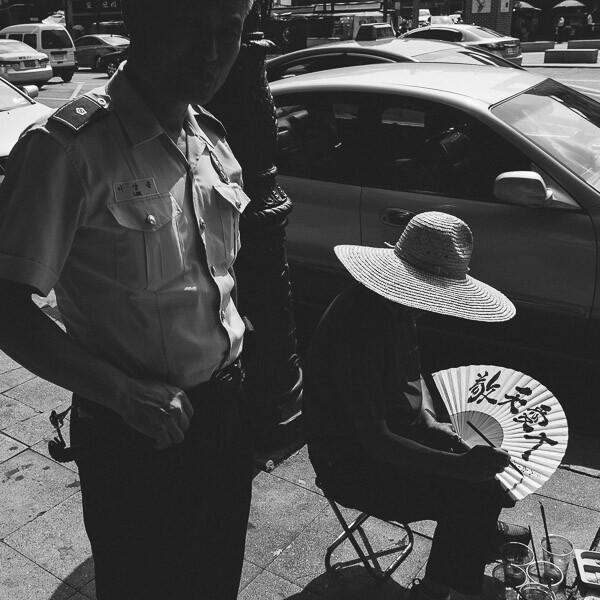
The street surrounding this man was littered with his creations, but by getting in close with a wide lens, I was able to just show his current work.

Street Calligrapher in Seoul

Street Calligrapher in Seoul

Feel

Being emotionally close can help you not only with being able to get physically close, but also give you a deeper understanding of your subject, and thus photograph details that are meaningful. If you are working with people, it will also help you gain trust. In the photograph below, it was important to gain the monk’s trust before asking him to take time out of his schedule to pose for a while. By watching and understanding him, the decision for which detail to shoot was obvious.

Prayerbeads

A Buddhist Monk with prayer beads

John Loengard, the picture editor at Life Magazine, always used to tell me, “If you want something to look interesting, don’t light all of it.” – Joe McNally

Loengard’s quote, by way of Joe McNally, gives us a very important concept that essentially tells us to shoot details. If, by not showing all of something we are making it more interesting, then details by their very nature are a strong starting point for interesting photographs.

Light

Light is a wonderful tool for showing only the details you want your viewer to see. Although our eyes are able to see a wide range of tones from light to dark, our cameras do not have that luxury, so you have to make creative decisions.

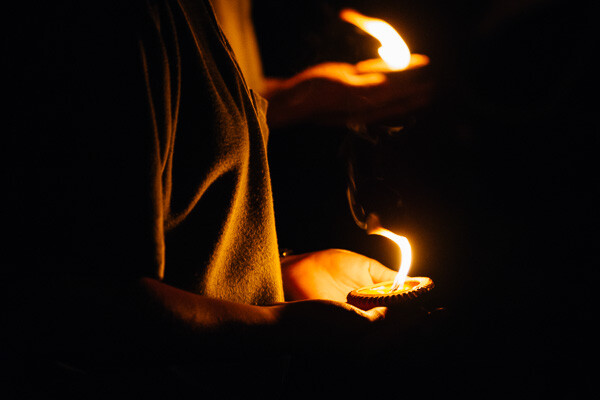
In the scene below there were multiple interpretations that could have been made. The exposure could have been based on the faces of the candle bearers, blowing out (photographically speaking) the candles to pure white. But the story I chose to tell was about the prayer-candles themselves, and knowing that the scene would fade to black very quickly around the candles made for a great detail shot of a very chaotic scene.

Candles

Choosing to expose for the brightest parts of the scene to show only the necessary details

This applies to lighting, and also to composition. The strongest stories we read are the ones that leave us with guess-work and hints to pique our interest. The same goes for photographs. If you show the entire subject, or the entire scene, you are giving your viewer the answers. If you want them to linger on your photo, fill it with hints, but not complete answers.

Focus

Depth of Field, or selective focus, is a great way to shoot important details. Your eyes are drawn to areas of sharp contrast (which could be light, or focus) before areas of low contrast. This means that you can use depth of field to very effectively direct your viewer’s eye to what you want them to look at.

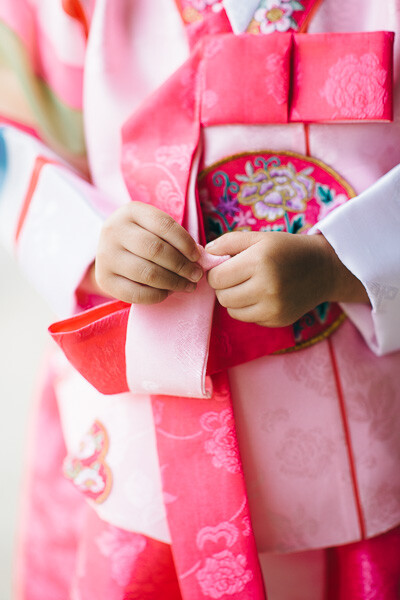
While shooting this portrait of a young girl, I noticed that she was playing with her ribbon quite intently. This details speaks volumes about her that her mother will remember forever. Her hands will never be that small again, and that is an important reason to highlight them with a detail shot.

Hanbok

A young child’s hands holding the ribbon on her Hanbok

You can use light, subject distance, lens choice, emotion, depth of field, and so many other technical aspects to show details and give extra depth to a story, or at the very least provide you with another interesting way to look at your subject.

Set aside a few hours over the next couple of weeks to practice this. Choose a subject. That could be a person, a craft, a street in your town, a time of day, or whatever else you choose. The task here is to explore that subject. Shoot it from as many angles, and in as many ways as you can, with each and every frame trying to tell the story of your subject. Be sure to shoot as many details as you can using the techniques above. When you finish, take the time to look over these images and make a selection based on the ones that speak the most about your subject. The details will shine here, giving another dimension to the collection of images you have shot.

Tools

Tools at a Thai umbrella factory

Do you have any other tips for capturing details to tell a story? Please share in the comments below.

The post Shooting Details to Tell a Visual Story by Dylan Goldby appeared first on Digital Photography School.


Digital Photography School

 
Comments Off on Shooting Details to Tell a Visual Story

Posted in Photography


DPR reader loses camera in fall, sustains injury and lives to tell the tale

16 Aug

Let’s get the important thing out of the way first – Greg Theulings is fine. His Fujifilm X-T1, on the other hand, is not. Keen landscape photographer and DPR forum member, Theulings was on a trip to to Luxembourg and the German Eifel photographing the some rapids when he slipped on a rock, fell into the water and dislocated his shoulder. His camera and lens were destroyed, but his memory card survived. See his photos and read his story – and maybe take a little extra care on those rocks when you’re out on your last photo trip of the summer.

Articles: Digital Photography Review (dpreview.com)

 
Comments Off on DPR reader loses camera in fall, sustains injury and lives to tell the tale

Posted in Uncategorized


Half Abandoned: Twin Townhouses Tell Two-Sided Stories

21 Dec

[ By WebUrbanist in Abandoned Places & Architecture. ]

half deserted townhouse

Physically conjoined but separately sold upon construction, the lives of paired buildings (ones that share a common wall) can diverge dramatically as this photo series poignantly illustrates. In various cases, one half is occupied by squatters, filled with trash, burned out by a fire, boarded up, simply deserted or even entirely demolished.

half abandoned home

Camilo José Vergara was born in Chile, resides in New York and is famous for documenting urban decay and city slums through text and images, but his Paired Houses set from Camden, New Jersey, tells a particularly powerful tale of times past and present.

half burnt out home

half deserted boarded up

This approach epitomizes a theme common to his work, which frequently focuses on showing change over time. Like twins separated at birth, these dual buildings (once mirror images of each other) are uniquely illustrative of change. They are found particularly often in Camden, a place with a long history of struggling against decline.

half deserted half occupied

half abandoned house

The common theme: buildings that share a party wall. For the unfamiliar, ‘party walls’ are not as festive as they may first sound. These are simply the shared partitions between buildings that are structurally contiguous – a common phenomena in densely-built areas. This joint element ties homes and other structures almost inextricably together – some of these share stairs, porch roofs and other architectural elements as well, all hard untangle.

half homes urban decay

half townhouse disrepair repainted

Once abandoned, things tend only to get worse for the half still occupied. The other side may be used for anything from sleeping to drug use and dealing. Infestations of vermin on one side can cross back over as well. In many instances, the best-case scenario is to tear down the decaying half, like separating one conjoined twin to save the other.

Share on Facebook


[ By WebUrbanist in Abandoned Places & Architecture. ]

[ WebUrbanist | Archives | Galleries | Privacy | TOS ]


WebUrbanist

 
Comments Off on Half Abandoned: Twin Townhouses Tell Two-Sided Stories

Posted in Creativity


Half Abandoned: Twin Townhouses Tell Two-Sided Stories

14 Dec

[ By WebUrbanist in Abandoned Places & Architecture. ]

half deserted townhouse

Physically conjoined by separately sold upon construction, the lives of paired buildings (ones that share a common wall) can diverge dramatically as this photo series poignantly illustrates. In various cases, one half is occupied by squatters, filled with trash, burned out by a fire, boarded up, simply deserted or even entirely demolished.

half abandoned home

Camilo José Vergara was born in Chile, resides in New York and is famous for documenting urban decay and city slums through text and images, but his Paired Houses set from Camden, New Jersey, tells a particularly powerful tale of times past and present.

half burnt out home

half deserted boarded up

This approach epitomizes a theme common to his work, which frequently focuses on showing change over time. Like twins separated at birth, these dual buildings (once mirror images of each other) are uniquely illustrative of change. They are found particularly often in Camden, a place with a long history of struggling against decline.

half deserted half occupied

half abandoned house

The common theme: buildings that share a party wall. For the unfamiliar, ‘party walls’ are not as festive as they may first sound. These are simply the shared partitions between buildings that are structurally contiguous – a common phenomena in densely-built areas. This joint element ties homes and other structures almost inextricably together – some of these share stairs, porch roofs and other architectural elements as well, all hard untangle.

half homes urban decay

half townhouse disrepair repainted

Once abandoned, things tend only to get worse for the half still occupied. The other side may be used for anything from sleeping to drug use and dealing. Infestations of vermin on one side can cross back over as well. In many instances, the best-case scenario is to tear down the decaying half, like separating one conjoined twin to save the other.

Share on Facebook


[ By WebUrbanist in Abandoned Places & Architecture. ]

[ WebUrbanist | Archives | Galleries | Privacy | TOS ]


WebUrbanist

 
Comments Off on Half Abandoned: Twin Townhouses Tell Two-Sided Stories

Posted in Creativity


Tell Us What You Want Out of a dPS Redesign

13 May

It has been a couple of years since we did a complete overhaul of the design of dPS so over the coming months we’ve commissioned a team of designers and developers to give our site a once over – and we’d LOVE your feedback!

So now is your chance to tell us what features and design elements you’d love to see on the newly designed dPS.

Is there something missing that you’d like to see added? Is there a feature on another site that you’d love to see here?

You’re welcome to give feedback upon the blog area, the forum area or even our social media accounts (Facebook, Twitter, Pinterest etc).

Feel free to tell us what you honestly think (as long as you’re constructive that is) – we’ll keep this post open for comment for a day or two before closing it off to pass onto our team.

Thanks – ultimately dPS is nothing without you as readers so we can’t wait to hear what you’d like to see to make it even better than it is.

It’ll be a couple of months before you notice too many changes but rest assured we’re listening to your feedback today!

Post originally from: Digital Photography Tips.

Check out our more Photography Tips at Photography Tips for Beginners, Portrait Photography Tips and Wedding Photography Tips.

Tell Us What You Want Out of a dPS Redesign


Digital Photography School

 
Comments Off on Tell Us What You Want Out of a dPS Redesign

Posted in Photography


Clothing for Portraits – How to Tell your Subjects What to Wear

12 Apr

portrait-clothing-featured

The clothes your clients or portrait subjects are wearing in their photo can be a touchy subject to discuss with them, especially if you are just doing a portrait for them as “a friend with a good camera”. Even as pros we have a hard time getting people to listen and they show up in clothes that make us cringe and even hurt our eyes.

This article will help you understand what to suggest your subjects wear for their portrait. You’ll also learn how to help them understand why your suggestions really are in their best interest so they actually listen to get it right.

Clothes make the portrait

What the subjects are wearing in a portrait is just as important as all the other details such as: lighting, location, and posing. Poorly selected clothing can really take away from an otherwise really great portrait.   The goals in helping your portrait subjects or clients select clothing are:

  •  to make the people the main subjects
  • to flatter the subjects and help make them look their best
  • to disappear and be a non-issue

Poorly chosen clothing, or having no discussion about it at all, can result in just the opposite of all those things.  NOT what you want to have happen!

  • clothing that stands out so much you hardly even notice the people
  • arms, legs or tummies that look less than flattered and people that are unhappy with the end results
  • clothing that takes so much attention and draws your eye around that it becomes more about the clothes and a fashion photo that it does a portrait of the people in them

So what IS the best thing for people to wear?

I get asked for tips on this a lot in my portraiture classes. People “hear” funny things about what they should or shouldn’t wear for their portraits and show up in the damnedest things that sometimes make you shake your head and say “what were they thinking?” But they don’t know what is right, or what is better unless you tell them and help them understand why.

This is what I recommend for what to wear to a portrait session

  • wear solid coloured clothing
  • choose muted tones that are a bit subdued
  • choose similar tones for your top and bottom (both dark or both light)
  • choose 1-3 colours for your group portrait, ones with similar tones that go nicely together and have everyone work within that colour palette. For example: dark green, navy, and burgundy – all dark jewel tones.  OR tan, a lighter olive green, and denims – all lighter, softer tones.
  • choose a top with sleeves at least to the elbow
  • choose long pants for men/ladies or a skirt below the knee for ladies
  • choose dark socks and footwear (unless it’s a barefoot photo on the beach)
  • keep jewellery simple and minimalistic
  • do your hair the way you’d normally do it while wearing these clothes (I’ll explain more later)
  • if getting a haircut or new hairdo, make your appointment at least 2 weeks prior to your portrait session

Okay so I added a few bonus pointers on hair and make-up but they go right along with the clothing.

Notice I consciously did NOT use the word “don’t” anywhere in the list above?  There’s a reason for that. People’s brains actually don’t register the words: don’t, not, or no. So when you say them the brain just disregards and registers what comes after.  For example, if I say, “do NOT think of a lemon” what did you just do?  Of course, thought of a lemon. So when you are explaining clothing (or anything for that matter) and giving suggestions on what to wear, take great care to always say what you DO want.

If you tell people, “okay don’t wear stripes, flowers or bright colours.”  What will they remember?  “I think my photographer said something about stripes and bright colours,  so that’s what I’ll wear.”

And they probably heard somewhere that for photography you need to put your make-up on extra dark and heavy, so even ladies that normally wear none or very little can show up with black eye liner and raccoon eyes. I know, because it’s happened to me when I didn’t discuss it. She will HATE her photos because it doesn’t look like her.  She likely won’t say anything, she just won’t pick any and you’ll think she didn’t like your work.

It is YOUR job as the photographer, even if you are just doing it for fun and for friends, to help people look their best in the portrait you take.  So let’s look at the points above and how you explain it to them so they get on board!

I actually had a hard time coming up with “bad” examples of what not to wear. I’ve been doing this for so long I don’t have any portraits that don’t come fully prepared.  So I’ve found a couple group images just so you can see the difference the clothing makes.

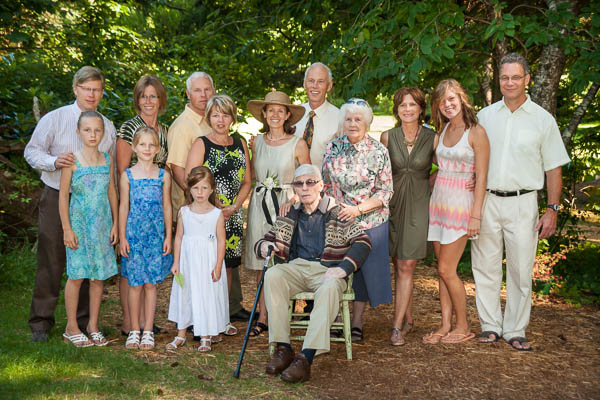
The image below is from a wedding so they weren’t all planning on having this group portrait done. But it shows what happens when the clothes have not been planned.  There’s multiple colours, some dark and some light. We have a few bright patterns and a short skirt. We have a lot of short sleeves (it was a hot day) and some white shoes.  Can you see how all those things make an impact?  Overall it’s actually not that bad, I’ve seen a lot worse but let’s see what a little refinement can do to help.
portrait-clothing-001

Group portrait from a wedding, not planned so they were wearing what they were wearing.
portrait-clothing-002

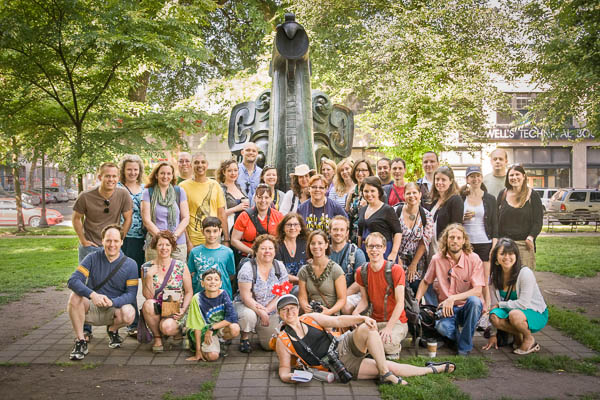
Another “bad” example, again a group portrait from a photo walk this time. Notice how all the colours and patterns draw attention?

Examples of clothing that is working

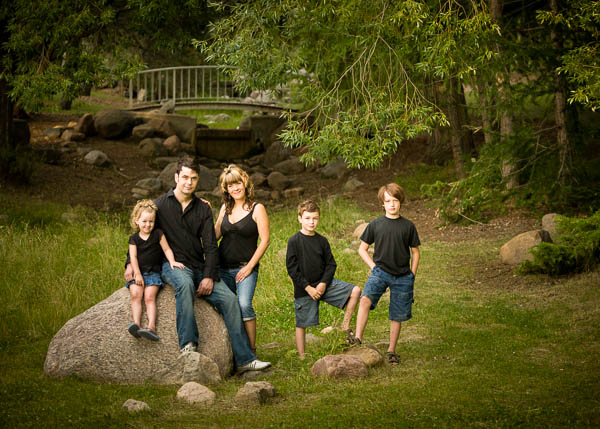
This family chose all black and denim and for the most part it is working really well. Only thing I suggest as a change would be Mom in longer sleeves.  Notice how much attention her arms get?  For her that’s fine, but for someone self conscious about their arms or their weight, this will make their arms look larger.
portrait-clothing-004

In the image below everyone is in black except the baby. Babies are always tough because finding plain colours or black for a baby is almost impossible. Notice two things here.  #1 the baby stands out the most, and in this case that’s fine because she’s the smallest and you want to see her.  #2 if that had been an adult in the light outfit do you think it would work as well?  Doubt it, the result will be that person will stand out and look larger. No one likes to look bigger!  Trust me.
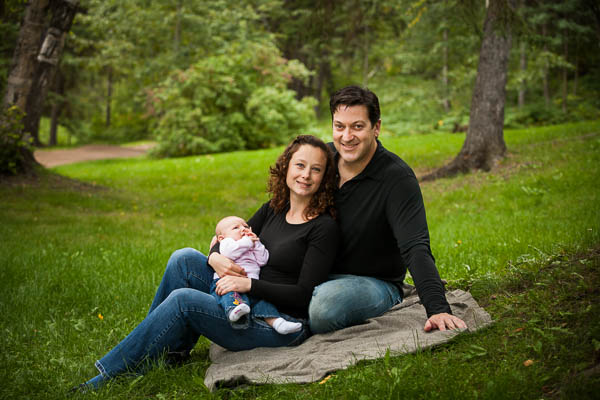
portrait-clothing-005

This is my sister’s family so they’ve been well trained on what to wear (I even got in this phone). Once again dark tones have been selected: greys, deep purple, and navy. Those all work well with jeans. Can you see the difference between me wearing long sleeves (left) and my sister wearing short sleeves (upper right)?  What does it do to the bare arms? How do they look compared to mine?
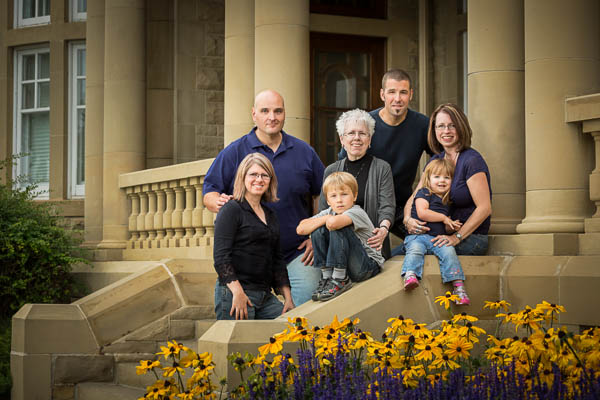
portrait-clothing-007

How to get them to agree and follow your suggestions

The key to explaining all this and getting people to agree and go along with your suggestions is in HOW you tell them. If you just list off all this stuff it can seem a bit pushy and like you’re telling them what to do. Most assume they know how to dress themselves and giving them a list could make them feel a tad insulted so they get defensive rather than listen to your suggestions.

Photography is part technical stuff, part artistic stuff and part psychology!

Let’s look at my recommended list again but this time adding in the WHY. By stressing the benefit to the subjects, or why they would want to do this, they will “get” it in a big way. Like I said, I have very few portraits that I’ve done in the last ten years that show up in poor clothing because I’ve prepped them so well and they know that if they want to look their best they will follow these guidelines.

  • wear solid coloured clothing so that we see all of your faces and no one person stands out. If you wear stripes or flowers, you will stand out from the rest of your group.
  • choose muted tones that are a bit subdued so that you are the subject not your clothes and you don’t stand out from the group. Bright colours project (especially reds, oranges, and yellows), which also makes you look larger.
  • choose similar tones for your top and bottom (both dark or both light) so that one doesn’t look bigger than the other.  White top, dark pants will make your top look bigger.  White pants, dark top will make your butt look bigger.
  • choose 1-3 colours for your group portrait, ones with similar tones that go nicely together and have everyone work within that colour palette. For example: dark green, navy, and burgundy – all dark jewel tones.  OR tan, a lighter olive green, and denims – all lighter, softer tones.  So that we see the people first and your portrait looks stunning. Wedding group photos look so good because they’re all wearing the same colours and the people stand out!
  • choose a top with sleeves at least to the elbow  because your arms take up more skin area than your face and will draw attention and it may also make your arms look larger
  • choose long pants for men/ladies or a skirt below the knee for ladies so that your legs don’t take attention from your faces, and you will be able to sit and bend without showing too much leg
  • choose dark socks and footwear (unless it’s a barefoot photo on the beach) because white just sticks out like a sore thumb and that’s all you’ll notice in your portrait
  • keep jewellery simple and minimalistic because too much draws attention from your face
  • do your hair the way you’d normally do it while wearing these clothes – no fancy up dos with jeans, no pony tails with evening gowns, etc. This is common sense, or so you’d think, but I’ve had ladies go to the hair salon and get fancy up dos then show up in jeans and a t-shirt.  It just simply doesn’t make sense cause you wouldn’t normally do that to put on jeans and go to the park for a BBQ or something. So tell them “it is because your portrait will be more timeless and represent more closely who you are, not just what you look like.”
  • if getting a haircut or new hairdo, make your appointment at least 2 weeks prior to your portrait session – again this seems like a no brainer but you’d be surprised! Fresh hair cuts rarely look their best the same or next day. Ladies need time to practice working it, men need it to grow out just a little. Allow some time to live with your new look before your portrait session.

See a common thread in my notes above?  Most people have the same fears about being photographed – yes fears!  Being photographed is right up there on the fear list next to public speaking and going to the dentist, I kid you not!  Their fears are about looking stupid, not knowing how to stand or pose, and looking fat or old. So if you can help them see that these clothing tips will allow them to eliminate at least one of their fears before you even start, then you just have to deal with all the rest later!  Most of clothing suggestions has to do with helping them look slimmer and not stand out. How to stand and pose to minimize weight issues is another article, stay tuned!

Putting it all together

You may notice most of the “good” examples here are wearing dark colours. That’s pretty common as most people have heard that dark or black makes you look slimmer. To some degree that’s true. But light colors can work too if everyone in the group does similar, then the one person in dark clothes would stand out. Little kids in denim and white tops with bare feet is super cute, as is little girls in white sun dresses. Don’t be afraid of other colours or tones, just keep them similar. Some of my largest extended family groups over the years that have done the best even went as far as to put each family unit in their own colour scheme (one in browns, one in greens, etc) and mom and dad in another – all with dark jeans.  I’ve also had some ladies go as far as to buy everyone a matching shirt.

The thing is once you get them on board and understanding the logic behind it – the WHY – they will go to great lengths to make it work because they know it’s for their benefit!
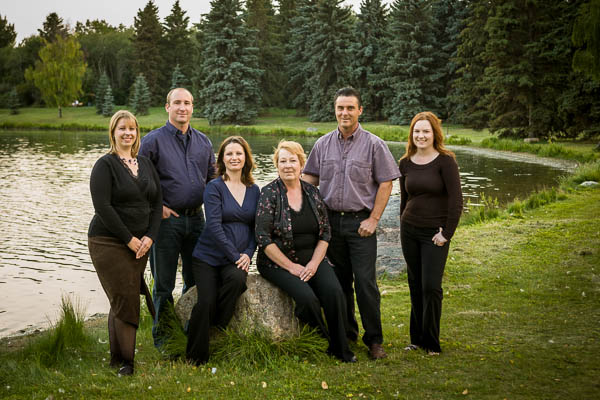
portrait-clothing-006

Action Plan

If this all sounds like a lot and is overwhelming, feel free to copy my list and make a little sheet to hand out to people.  Just make sure you add the benefits, like in my second list.

Show me your successes or ones that didn’t work out so good. I’m happy to give suggestions on how to improve it for next time.

Post originally from: Digital Photography Tips.

Check out our more Photography Tips at Photography Tips for Beginners, Portrait Photography Tips and Wedding Photography Tips.

Clothing for Portraits – How to Tell your Subjects What to Wear


Digital Photography School

 
Comments Off on Clothing for Portraits – How to Tell your Subjects What to Wear

Posted in Photography


Tell a Story with a Diptych: Weekly Photography Challenge [With 15 Examples]

23 Feb

UntitledEarlier in the week we published a post on how to use Diptych’s to tell a story. Today we’re issuing the challenge to go out and shoot and edit one up to share with us!

Come on – we dare you! No… we double dare you (it’s a Double Diptych Dare).

Read Jason’s article on Diptychs, grab your camera and head out to shoot.

You can tell any kind of story you want – shoot on the street, photograph an event, set up a little story in your home – it’s totally up to you as there are so many possible approaches to take (we’ll include a few ideas below).

Once you’ve created your DIPTYCH upload it to your favourite photo sharing site and either share a link to it or – embed it in the comments using the our new tool to do so.

If you tag your photos on Flickr, Instagram, Twitter or other sites with Tagging tag them as #DPSDIPTYCH to help others find them. Linking back to this page might also help others know what you’re doing so that they can share in the fun.

Also – don’t forget to check out some of the great shots posted in our last challenge – Cute challenge where there were some beautiful shots submitted.

Looking for some Inspiration?

Check out these examples. Click the images to be taken to the photographers page on Flickr.

What a difference a day makes

half full or half empty

Justin Diptych

lavender

att blunda och se allting

Goodbye snow

sisters.

the journey as the destination for now

let's go chase the sunset, bring me the horizon

Day 60: Watch Out for Bogeys.

Mike - Stranger 37/100

First

Translation.

Sotsugyô, Japanese graduation ceremony

Post originally from: Digital Photography Tips.

Check out our more Photography Tips at Photography Tips for Beginners, Portrait Photography Tips and Wedding Photography Tips.

Tell a Story with a Diptych: Weekly Photography Challenge [With 15 Examples]


Digital Photography School
 
Comments Off on Tell a Story with a Diptych: Weekly Photography Challenge [With 15 Examples]

Posted in Photography