RSS
 

Posts Tagged ‘Tell’

How to Tell a Story With Your Street Photography

26 Jun

Street photographs on the surface may seem like they are independent of one another and can only go so far at telling a story, unlike say photojournalism. In some cases, this can be true, but there actually is a lot of crossover between documentary and street photography. Your street photographs can certainly tell a story.

How to Tell a Story With Your Street Photography

If you look at the individual books or even the entire bodies of work of photographers like Martin Parr, Trent Parke, Garry Winogrand, or Josef Koudelka, you can see that these photographers had a point of view. They were able to tell real stories with their photography.

How do you tell stories with street photography?

But how do you do this? If you are just starting out with street photography, you’re most likely focused on taking good shots and not on overarching themes. You never have to start trying to show comprehensive themes in your work, many great photographers don’t. But if you want to, plan on developing this over time.

The reality is that there is nothing more important than consistent time spent shooting. But while you are developing, here are some tips to help you get there.

*The photos used in this article are all part of a series called Luxury for Lease, which is about the disconnection, hyper-gentrification, conformity, and consumerism that has noticeably increased in New York since 9/11.

1. Create collections in Lightroom and group your images based on ideas and themes

How to Tell a Story With Your Street Photography

When you’re out shooting you want a clear head. Be open to whatever happens, so you give yourself the best chance to get lucky. Sometimes, if you’re too focused on one thing, you will miss everything else around you.

But during the editing phase is when you can really start to figure out what you are shooting. This is where you can develop your voice. Look through your photos, choose your favorites, and start to put them together. Pick out your images that seem to have some similarities in content, tone, or look.

They don’t have to perfectly relate, just in some way. Brainstorm, try a lot of things, and just have fun with it.

How to Tell a Story With Your Street Photography

I use Collections in Lightroom to do this. Collections allow you to put images into a folder without moving them physically on your hard drive. It is a great way to build portfolios of your work and to build and change around stories and ideas.

Over time, these stories will develop. Sometimes they will turn into nothing and you will scrap them, but other times they will morph. Sometimes the seed will develop into a fully formed idea over years of shooting, and the end result will be something that you couldn’t have imagined at the beginning.

That’s the fun part, and it will help you to think critically while you are out shooting. It will add a new layer to your abilities as you are photographing since you will begin to notice things that will fit into your projects.

2. Study the work of other photographers

How to Tell a Story With Your Street Photography

I can’t state the importance of this enough. It is hard to truly fathom the power of this type of photography unless you look at the work of photographers who have lived it for decades. Sometimes seeing what others have been able to do, particularly when looking at how diverse the ideas and styles are, will help you to form your own ideas. You may pick a characteristic from one photographer and a different attribute from another photographer and blend them both into your style.

Some photographers that I recommend you look up for street photography are; Robert Frank, Martin Parr, Trent Parke, Garry Winogrand, Josef Koudelka, William Eggleston, Todd Hido, and Daido Moriyama. Although, there are so many others that I could have mentioned here.

3. Go to the same areas consistently to shoot

How to Tell a Story With Your Street Photography

I like to think about style as consistency in what you shoot versus just how those photographs look. Yes, there is a large element of how your photos look that go into your style, but it’s more than that. It’s about the feeling behind the images.

By repeatedly shooting in the same areas, you will allow this consistency to rise to the surface. You will begin to understand the place better and give yourself more time to come across the right images. Most likely you will know the area well since you can only really photograph consistently in places that are close to where you live – so you will have a nuanced understanding of the place already.

Try to show a feeling for what the area is like under the surface. Capture the feeling of being there. Is it happy or sad, are there fun aspects or stressful characteristics? What makes the area interesting (or not interesting)? There is so much you can do with this.

4. Capture emotions and gestures

How to Tell a Story With Your Street Photography

This is street photography 101, but you can portray so many ideas and feelings based on the expressions on people’s faces or the gestures in their bodies. When putting together a cohesive body of work, this will be a way to add some powerful emotion to push a story forward. Try to understand what people are feeling and attempt to capture them as they show those feelings.

5. Look for images with something going on beneath the surface

How to Tell a Story With Your Street Photography

This is a tip that is hard to explain exactly how to do. Look for images where there is something going on beneath the surface. What that is you don’t exactly have to answer – it could be left for the viewer to decide.

These images will begin to show themselves more often as you start following the other tips in this article. In addition, the more you photograph in the same place and start to understand the place, the more these images will begin to pop out.

6. Think about yourself

How to Tell a Story With Your Street Photography

There are some photographers who show something about themselves in their images. This feeling makes their work that much more powerful. Happy photographers often take happy images, depressed photographers often take depressed images. Some photographers who seem happy on the surface, use their photography to express emotions that they are holding inside. Think about what emotions you are feeling and use them. The more you know yourself, the more you can let that shine through.

Josef Koudelka is one example – he grew up behind a wall so to speak during the Soviet invasion of Prague in 1968. He eventually got out, became a stateless person, wandering and traveling, and he spent much of his life photographing travelers. He has also been working on an ongoing project on the Israeli-Palestinian Walls and on the bleak landscapes that have been influenced by contemporary man. He grew up behind a wall and he was drawn to photographing walls. You can see in his images, even in random places and at random times, that the subjects he was drawn to were the ones that showed his inner feelings.

Putting it all together

This may all seem difficult to do, particularly if photography is your hobby. Don’t get me wrong, it is hard. But if you photograph frequently enough and think about all of this, you can really see your work transform in just a few years. The more you are in tune with it, the faster it should come, and it is very enjoyable to see.

So go out and keep shooting!


If you’d like to learn more about Street Photography, then please check out my ebook The Essentials of Street Photography.

The post How to Tell a Story With Your Street Photography by James Maher appeared first on Digital Photography School.


Digital Photography School

 
Comments Off on How to Tell a Story With Your Street Photography

Posted in Photography


Hidden Stories: 3D-Printed, Architect-Designed Rings Tell Looping Tales

26 May

[ By WebUrbanist in Design & Products & Packaging. ]

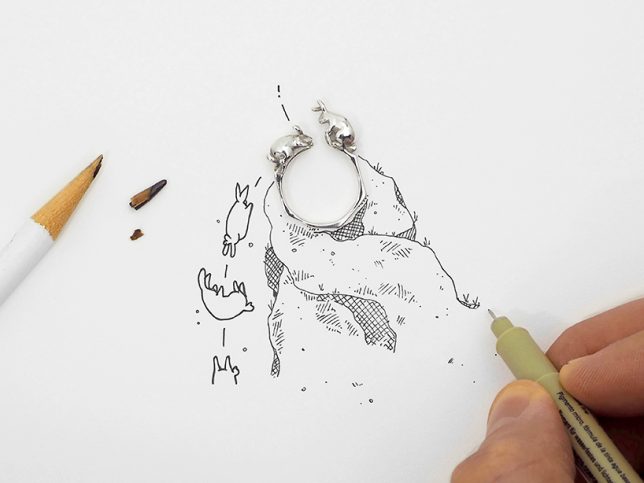
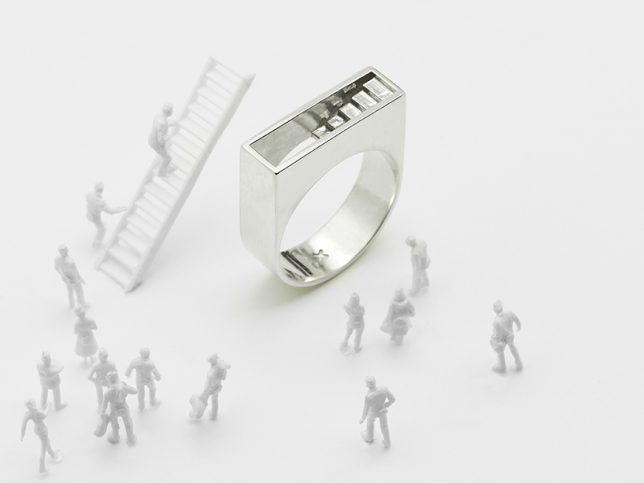
Most jewelry tells some kind of a story (about its origin if nothing else) but these pieces are a bit more explicit, featuring tales of structures, characters and actions in miniature built environments.

Architectural designer Artur Dabrowsk produces rings, cuffs, necklaces and bracelets that revolve “around the concept of ‘depth’ in terms of formal language (shadow lines, composition, depth of field) as well as in meaning (details, storytelling).”

Whether he is crafting mysterious staircases to nowhere or endlessly looped brick arches, each piece involves careful attention architectural detail (including theoretical structural load calculations) and is available in brass, bronze or silver.

The brick ring specifically goes back to his days in architecture school — “there is something very tactile and nostalgic that give [bricks] both timeless function and meaning,” says the designer.

“I was raised in a brick clad apartment building in Brooklyn,” he explains, “so I associated the brick wall as a shelter for my introverted childhood. The arch became a metaphoric portal through which I could turn the corner, open up, and express myself while still proud of my introverted self.”

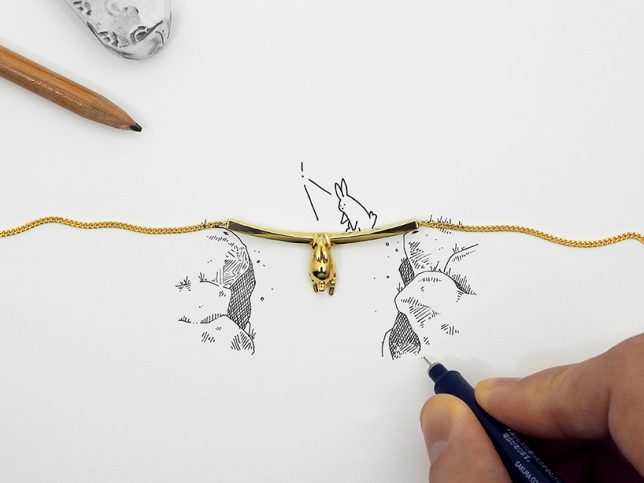
Dabrowsk also has a thing for rabbits, which are something he has sketched idly for a long time and has since started to include as characters in his tiny built environments. “I started drawing them in the margins of my notebooks during grade school and personify them to express thoughts, situations or feelings I was having.”

“I think the imagery of it being personified is playful — the rabbit is cute, hops around, eats, multiplies… and lives naively in this world.” Even here, though, he is conscious of real-life conditions – the suspended rabbit above hands from what would, in reality, be the bare minimum load-support beam across an abyss.

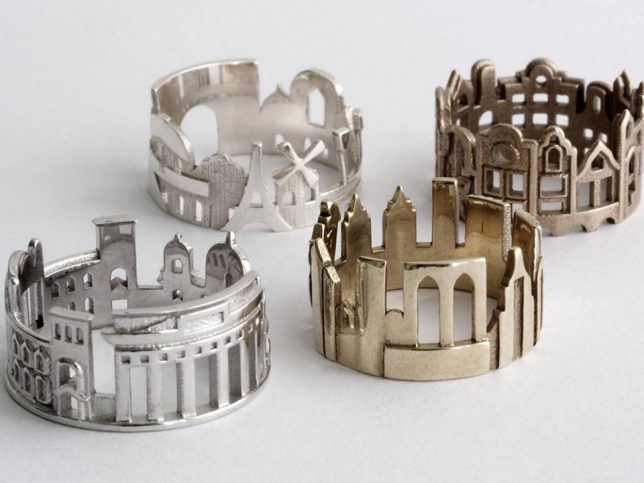
Fans of architectural jewelry should also take a peak at this series of wearable skylines, featuring famous scenes and settings (though in a more two-dimensional format) from around the world.

Share on Facebook


[ By WebUrbanist in Design & Products & Packaging. ]

[ WebUrbanist | Archives | Galleries | Privacy | TOS ]


WebUrbanist

 
Comments Off on Hidden Stories: 3D-Printed, Architect-Designed Rings Tell Looping Tales

Posted in Creativity


Architectural Fairy Tales: Unreal Structures Tell Strange Sci-Fi Tales

11 Feb

[ By SA Rogers in Art & Drawing & Digital. ]

last day 2

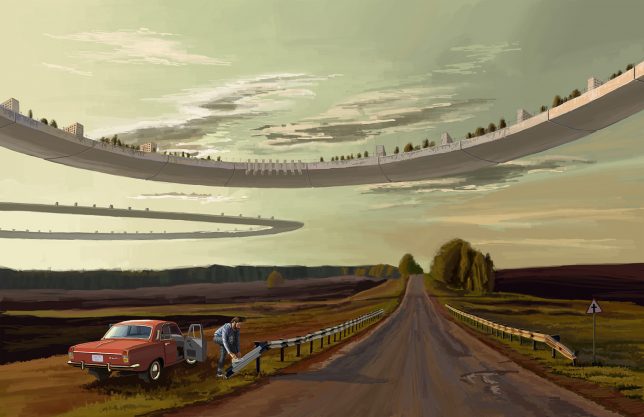
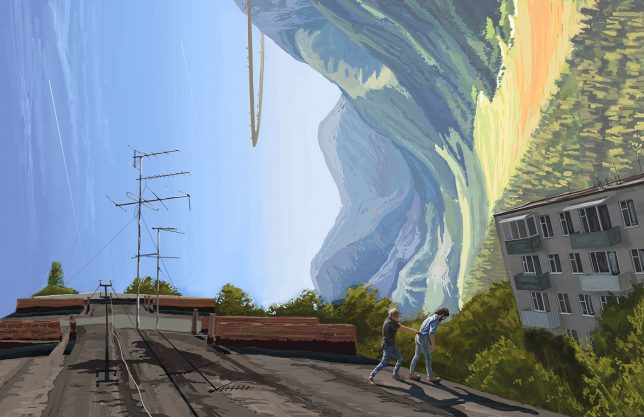
These fictional structures seem to be ripped right out of the concept art for a sci-fi film, envisioning a world of architecture that’s totally out of scale with humans but fittingly grand for the environments in which they’re placed. ’Last Day’ by Ukrainian architect Mykhallo Ponomarkenko is the first prize-winning entry at this year’s Fairy Tales concept architecture competition, using classical painting techniques to tell stories of a huge artificial platform that uses anti-gravity engines to escape the laws of physics.

last day 1

“Landscapes have always inspired me to put something weird, unreal and out of human scale into them,” says Ponomarkenko. “Something not feasible and not practical that contrasts with the natural surroundings, but also exists at the same scale. These satirical interventions lead to new ideas and feelings about nature – they make the viewer more aware about the environment and our harmful impact on it.”

“We are flat surface creatures. Sometimes I feel that we crave it so much that the planet is going to be turned into pavement so cars can go anywhere, and our industries could continue expanding. The ‘Saturn Rings’ in my proposal represent these flat surface desires but in a more poetic, optimistic, and friendly manner.”

last day 4

Organized by Blank Space, an online architecture platform, the fourth annual Fairy Tales competition announced three winners selected from over 60 project submissions. Winners are awarded prizes of $ 2,500, $ 1,500 and $ 1,000, respectively, and select projects will be featured in the fourth print edition of Fairy Tales: When Architecture Tells a Story. Read the story that goes along with ‘Last Day’ and see the rest of the entries over at Blank Space.

last day 3

“The proposals put forth in the Fairy Tales competition create entire worlds of the imagination – they build their immersive stories as much by what they don’t say, as by what they do,” says Blank Space. “The winning entries in this year’s competition include oblique references to current events, mundane daily activities and human emotions that we all easily relate to – they make visible how we shape space, and in turn, how space shapes us.”

“The images and narratives are so wildly outlandish, and yet, so grounded that it seems like we could mistakenly stumble into any of them. They are personal and powerful – a testament to the power of architecture as a world-builder.”

Share on Facebook


[ By SA Rogers in Art & Drawing & Digital. ]

[ WebUrbanist | Archives | Galleries | Privacy | TOS ]


WebUrbanist

 
Comments Off on Architectural Fairy Tales: Unreal Structures Tell Strange Sci-Fi Tales

Posted in Creativity


New 2016 Annual dPS Reader Survey – Tell Us More About You

16 Nov

At dPS we value you, our readers, above all else. We want to help you take better pictures.

By doing this survey you will be helping dPS serve you better. By knowing what kinds of things are you struggling with, and the types of articles you want to see we can work toward providing more of what you need to move your photography forward.

We value your time, and you, as our regular reader and always strive to improve – you will help us by completing this form, for which we will be especially grateful.

Click on this link, or the image below to start the survey.

FEAT.-JOHN-SMITH.-CREATIVE-DIRECTOR..png


Thank you for your continued support and being a dPS reader. We wish you all the success on your photography journey.

The dPS Management Team

googletag.cmd.push(function() {
tablet_slots.push( googletag.defineSlot( “/1005424/_dPSv4_tab-all-article-bottom_(300×250)”, [300, 250], “pb-ad-78623” ).addService( googletag.pubads() ) ); } );

googletag.cmd.push(function() {
mobile_slots.push( googletag.defineSlot( “/1005424/_dPSv4_mob-all-article-bottom_(300×250)”, [300, 250], “pb-ad-78158” ).addService( googletag.pubads() ) ); } );

The post New 2016 Annual dPS Reader Survey – Tell Us More About You by Darlene Hildebrandt appeared first on Digital Photography School.


Digital Photography School

 
Comments Off on New 2016 Annual dPS Reader Survey – Tell Us More About You

Posted in Photography


How to Cull Your Images to Tell a Stronger Story in Your Blog or Social Media Posts

13 Sep

I have this photographer friend. This person is wildly talented, with impeccable images and an amazing eye. I love seeing what she is going to create next until she puts up a blog post. So let’s talk about how and why to cull your images.

These posts are usually a long, meandering wander through her shoots, with no thought to tell a story. Images that you swear are repeats – until you look closely and realize the model’s left pinky finger has maybe moved ever so slightly. Blurry shots that should have been culled in the first round. It boggles my dang mind to look at these posts because we as photographers should know better.

Cull-Images-top


You are better served to share your images in a way that compels viewers to keep coming back for more. While I may not be a pro-level blogger, I still think it’s an excellent way to share your images, and there are a few tricks that I always try to keep in mind as I’m putting together a blog post.

Step 1: Be Brutal

Think about this from the viewer’s perspective. They weren’t at the shoot. So how can you tell them the story in a concise way that shows off your best work? To do this, you have to be brutal. Cull like a maniac, and then cull some more.

Does it hurt to eliminate images that you love from the narrative of your post? Yep, it’s like choosing your favorite child, but you gotta shrink down the number of images you share. You must. Beyond the obvious culling— things like strange facial expressions, awkward hands, etc., there are so many photographers who feel they need to share each and every image that they love. Unfortunately, this is a good way to head straight to Boring Postville.

Do not share the same scene, and the same pose five times in a row! The viewer’s eye will get bored and start to skip over. Your goal is for each new image to draw the eye, and surprise the viewer in some way. If the images start blurring together, the surprise element is gone and you’ve lost their interest. Be brutal in editing: your posts will thank you.

culling (2 of 2)

culling (1 of 2)

Lovely people, lovely images, but they’re so much alike and it’s killing me softly. These do not both need to be in a post together.

Step 2: Change Your Perspective

If you were an invisible spy at the photo shoot, how would you absorb all the information of the day? You’d start far away and move in closer. Too many posts start with the super-tight ring shot, or the close up of the hand on the face, and the viewer is left wondering subconsciously, “How did we get here?”

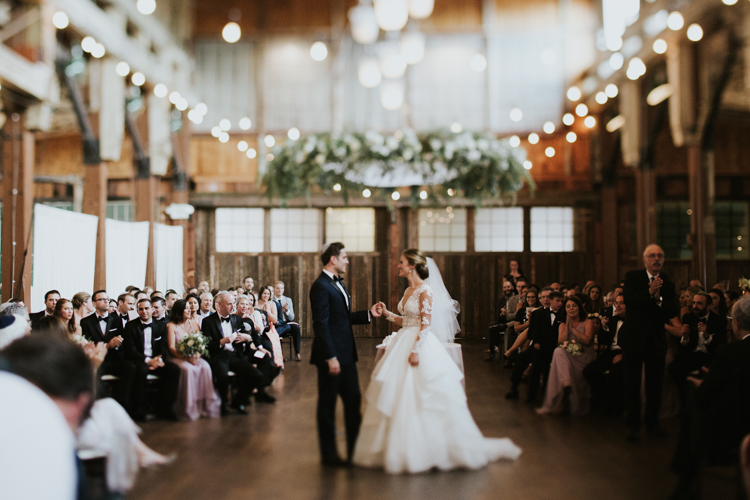
So aim to tell your story from the perspective of someone who was peeking over your shoulder. A great example is a wedding day. You don’t start a wedding day with the big dramatic first kiss, right? Set your scene. Show the viewer your location. Introduce them to the setup, then move in close to get the detail shots. It’s a much closer proximation to the reality of the day, and it helps our brains understand what’s going on when we’re viewing it on a computer after the fact.

Start broad.

Start broad.

Then move in for more detail...

Then move in for more detail…

... and then even more detail.

… and then, even more detail.

From there, remember to include varying visual perspectives. If you’ve already shared a couple’s full-body portraits, don’t overdo it with the same angle. Move into a closeup of their faces, or a detail of their outfits. Or share a different detail from the day altogether. But for the love of Richard Avedon, please don’t share a dozen nearly-identical photos! Find a new perspective, and make it memorable.

culling (4 of 1)

Far away!

culling (3 of 1)

Close up! And it’s unique enough of a perspective, that including this shot rounds out the story of the previous one.

Step 3: Tell the Truth – Kind of

My favorite Emily Dickenson line is, “tell all the truth but tell it slant.” This is advice straight from a poet to a photographer, so use it wisely. Friends, there is no grand blog court that has ruled that you must share every image, from every scene, in every shoot. YOU are the artist, and YOU get to decide how you’re going to tell the truth! Let’s not squander that freedom! You’re an artist, and you can unfold a story in the most artistic way you deem worthy. Here’s what you do NOT have to do:

  • Share images in the precise order you shot them.
  • Share images from the scenes or poses that you wanted to try but didn’t quite work (and hey, good job trying new stuff!).
  • Share images the client asked you to take that don’t totally represent your vision or your brand.
  • Share images that don’t progress the story you want to tell.

The science of photography is that you always get to tell the truth. The art of photography is that you can tell it slant. Play that line because you can.

culling (5 of 1)

Step 4: Stay in the Flow

So, now that you’ve culled only the very best of your images, laid them out in a compelling story, shared your artistic skill with the world, and put together a bomb post, make sure the little details aren’t subtly throwing shade onto your creation.

Step away from your computer, go for a walk, have a glass of wine, do you… and then come back to review what you’ve written, shared, and how it all comes together. Try to have fresh eyes.

Is anything too repetitive? Do your shots flow together? Do your black and white images land in places throughout the post that make sense? If you include captions, do they add or detract from the overall effect of your story? These little details can take a post from good to truly excellent, so make sure you give your post another look before you click “Publish.”

culling (6 of 1)

What are your tips for culling photos for a great social media or blog post? What are your big no noes? I’d love to hear them.

googletag.cmd.push(function() {
tablet_slots.push( googletag.defineSlot( “/1005424/_dPSv4_tab-all-article-bottom_(300×250)”, [300, 250], “pb-ad-78623” ).addService( googletag.pubads() ) ); } );

googletag.cmd.push(function() {
mobile_slots.push( googletag.defineSlot( “/1005424/_dPSv4_mob-all-article-bottom_(300×250)”, [300, 250], “pb-ad-78158” ).addService( googletag.pubads() ) ); } );

The post How to Cull Your Images to Tell a Stronger Story in Your Blog or Social Media Posts by Laura Sullivan appeared first on Digital Photography School.


Digital Photography School

 
Comments Off on How to Cull Your Images to Tell a Stronger Story in Your Blog or Social Media Posts

Posted in Photography


How to Tell a Story with Portraits by Using Creative Composition

21 Aug

In this article, we will explore new ways of using composition and creative framing to tell a story in your portraits. We’ll do so by understanding the marvellous ways our brain (as viewers) construct a sense of story.

The common principle of the techniques I will describe here, is that they are all based on our mind’s ability to fill in missing gaps of information. A skill that helps us survive in a world of uncertainty.

F11A2018

Two things to note about creativity before we start

Skill, is not just a talent: Just like working on the flexibility of a muscle, I believe we can work on our creativity, with the “muscle” being our vision.

Being creative for the purpose of being creative: Creative compositions should be a vehicle for a purpose – an emotion or a story you want to evoke in the image. If you choose to add creativity to your images, just to be more creative, it will be an empty gimmick.

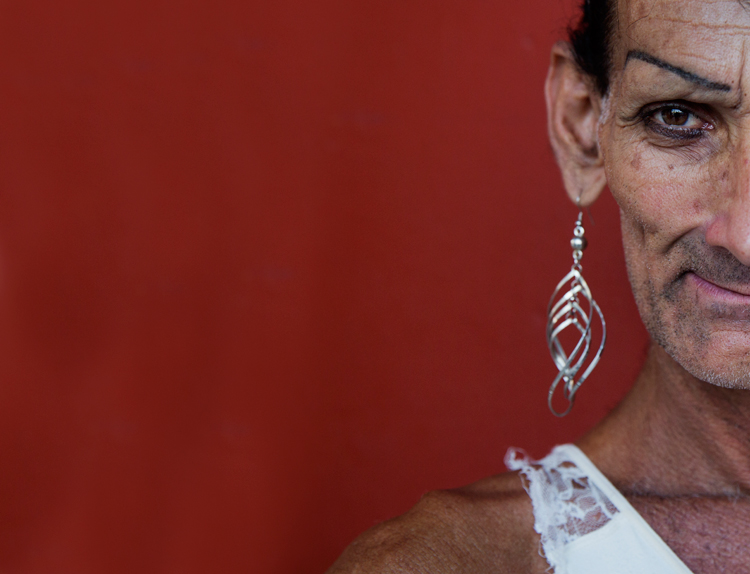
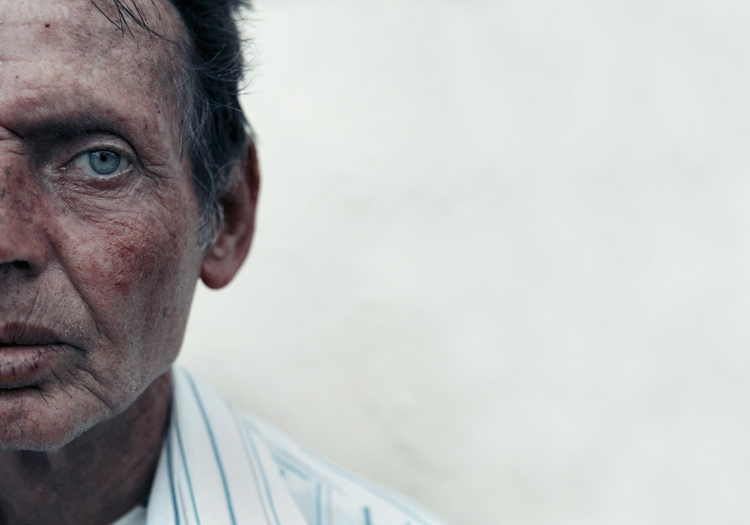
Half close up portrait – a full story

By showing only half of a close-up portrait, you stimulate the viewer’s mind and almost force it to delve into the image. We do so by activating their mind’s need to fill in gaps of missing information. This ability is rooted in us since ancient times, from which we evolved to understand that the two blurry spots between the trees, could be the hidden face of a tiger.

F11A6628

Good to know:

For best results, you can practice framing this kind of composition by using the crop tool in your editing software. Once you become comfortable with this technique (and framing); it will be easier to achieve a “half close-up portrait” in the field, without the need to crop it in the post-processing stage.

This kind of framing is like an exclamation mark, which one cannot ignore. Therefore, use it only on the most interesting faces, and not on every portrait.

F11A8534

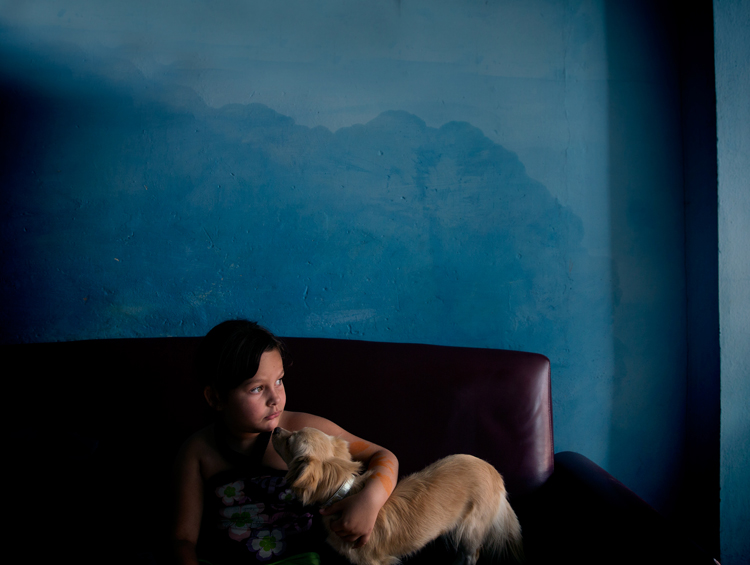
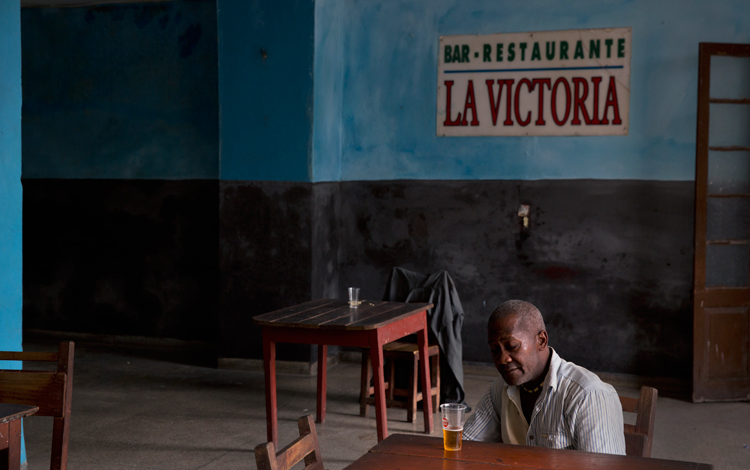
Environmental portrait – a person in context

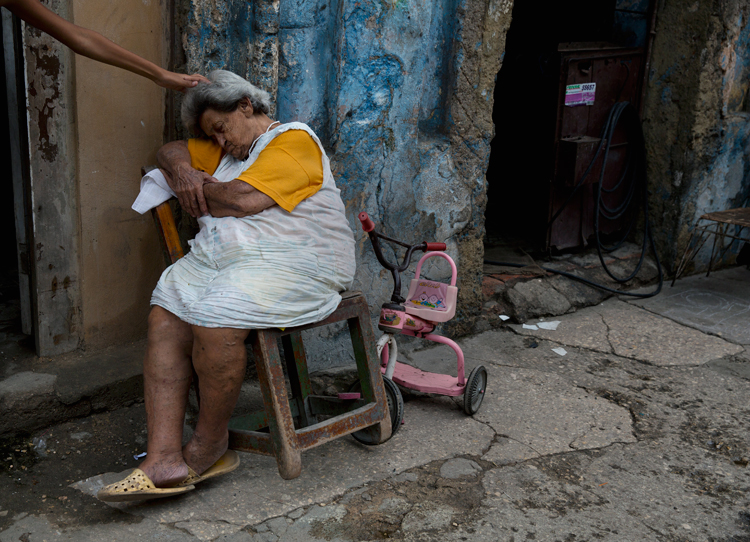
For me, this the most challenging and rewarding portrait framing style, the environmental portrait. This shows not only the person, which is the hero of your image, but also his or her environment: home, work place, country, etc. By doing so, you use the mind’s ability to conclude and understand a situation by connecting pieces of information.

14 the sleep

Good to know:

The biggest challenge in this type of composition is the balance between the main figure (hero) and environment. Keep in mind that the main figure must be dominant, and not overtaken by the background. Use light, color, and sharpness to make your subject significant.

Using a wide lens (below 50mm) is recommended for the environmental portrait framing, as it will allow you to capture the environment of your hero, even in small spaces.

F11A4931

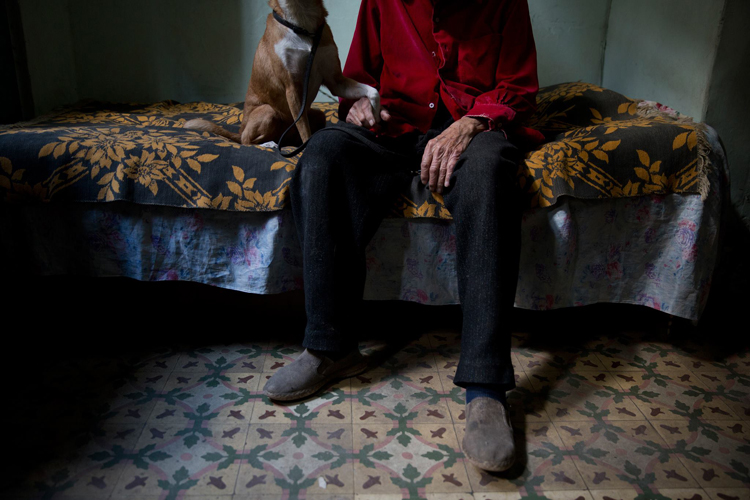
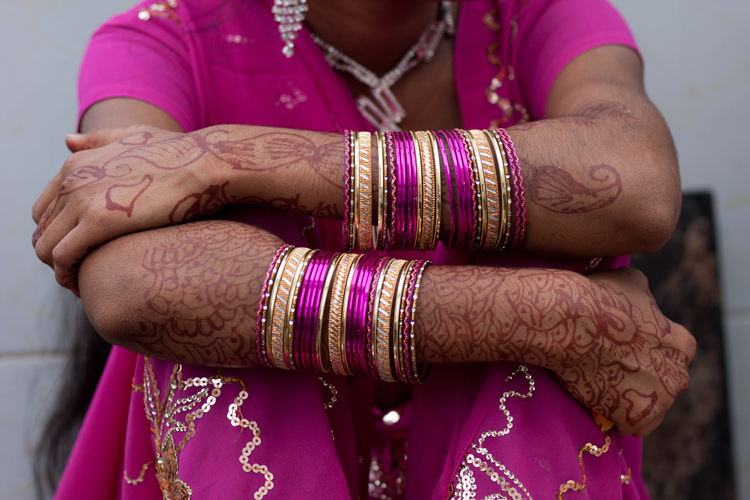
Detail portrait – telling the story with small details

Like with the half portrait technique, in the detail framing we use the brain’s ability to fill in the gaps, by showing only a small fraction of the entire story. For a good detail shot, choose some with a connection to your subject. It can be a connection of similarity or difference. For example: take a close-up shot of his or her hands, shoes, the reading books on the shelf, the subject’s regular chair or smoking pipe, you name it! As long as this object, represent something which is bigger than the object itself.

12970960 1147522381976706 3379301587067512747 o

Good to know:

A good place to start is by examining your subject from head To toe. Looking for anything that other people might miss in that person. Did you spot anything special? Like a unique piece jewelry, a tattoo, or just a hole in their shoe.

Some of my best ideas came from my subjects. Ask your subject to show you an object to which he or she feel a strong connection. You do not even need to have any human presence in the detail shot, as long as the object represents or tell us something about its owner.

IMG 4005

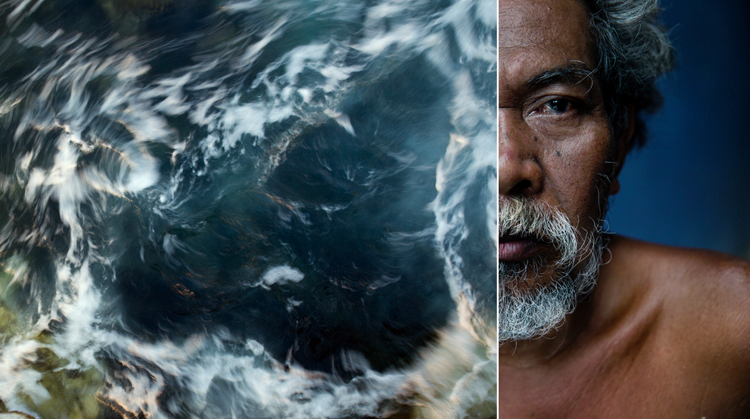
Kuleshov effect – creating a meaning by interaction

In this technique, based on the groundbreaking experiment by the Soviet filmmaker Lev Kuleshov, we will use the brain’s ability to derive meaning from the interaction. Kuleshov demonstrated that the audience constructs the story not only by the content, but also by the order in which the images appear, and the connection between them.

In the experiment, Kuleshov used two different shots, which he put in sequence one after the other. The first shot, a close-up shot of the face of silent film actor Ivan Ilyich Mozzhukhin, remained the same throughout the experiment, while the second shot was replaced with every round of projection; a plate of soup, a dead young girl, a woman on a divan (sofa).

The audience praised the actor’s ability to express different feelings such as sadness and even hunger, using only his facial expressions, without knowing that they watched the same shot over and over, and the only thing that was changed was the second image.

Page 18

To use this effect in your work, just place two images side by side and try to evoke a connection between them. In the example, I combined between the portrait of Net, which I did with the half close-up composition, with an image of a swirling sea. Where does it take you?

Good to know:

You will be amazed by the power of creative composition. Challenge your audience. Don’t be afraid to create a connection which is too complicated to understand.

A good creative exercise which you can do is by collaborating with a different photographer. You will provide the first image, he or she will provide the second. In there you will have a connection, not only between the two side-by-side images but by two different points of view.

The author would like to thank Nicholas Orloff for his assistant in writing this article.

googletag.cmd.push(function() {
tablet_slots.push( googletag.defineSlot( “/1005424/_dPSv4_tab-all-article-bottom_(300×250)”, [300, 250], “pb-ad-78623” ).addService( googletag.pubads() ) ); } );

googletag.cmd.push(function() {
mobile_slots.push( googletag.defineSlot( “/1005424/_dPSv4_mob-all-article-bottom_(300×250)”, [300, 250], “pb-ad-78158” ).addService( googletag.pubads() ) ); } );

The post How to Tell a Story with Portraits by Using Creative Composition by Oded Wagenstein appeared first on Digital Photography School.


Digital Photography School

 
Comments Off on How to Tell a Story with Portraits by Using Creative Composition

Posted in Photography


Colorful 24-Hour & 365-Day Clocks Tell Time in Hues & Seasons

08 Jun

[ By WebUrbanist in Design & Furniture & Decor. ]

present time clock day night

A revolutionary desk and wall clock design overlays a time-telling dial on a gradient of colors balancing dawn, noon, dusk and midnight to show you the time passing as a function of 24 rather than simply 12 hours.

present wall clock device

present time seasons

This new clock, dubbed Today, is a followup project to The Present, another wall-mounted timepiece that traces the course of the year across all four seasons, likely tied to a color spectrum.

time perpsective

day at a glance

Creator Scott Thrift explains his design inspiration: “The creative adventure of producing, distributing, and giving talks about The Present gradually opened my mind to seeing time as a spectrum. Think of it this way: on one end of the ‘spectrum of time’ you have the standard clock that reveals every second of every minute of every hour at a glance.”

balancing timepieces

“On the opposite end of the spectrum we find The Present. As a balancing corrective between these two points on the “spectrum of time” is Today, a timepiece that reveals the entire day at a glance.”

wall mounted time piece

clever time piece

Of course, there is no limit to pushing boundaries when it comes to time tracking. Perhaps a clock that measures years of a life or a speedy timepiece that spins with every heartbeat will be next on the list for Thrift.

Share on Facebook


[ By WebUrbanist in Design & Furniture & Decor. ]

[ WebUrbanist | Archives | Galleries | Privacy | TOS ]


WebUrbanist

 
Comments Off on Colorful 24-Hour & 365-Day Clocks Tell Time in Hues & Seasons

Posted in Creativity


80,000 Tiles Tell Story of Amsterdam’s Growth in New Bike Tunnel

22 Mar

[ By Steph in Art & Street Art & Graffiti. ]

bike path tiles

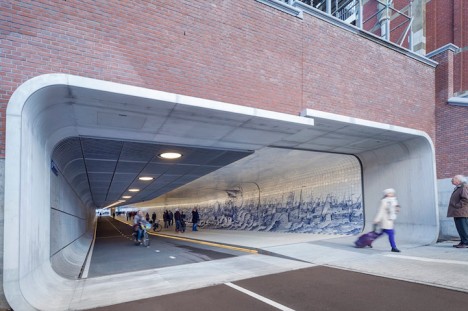
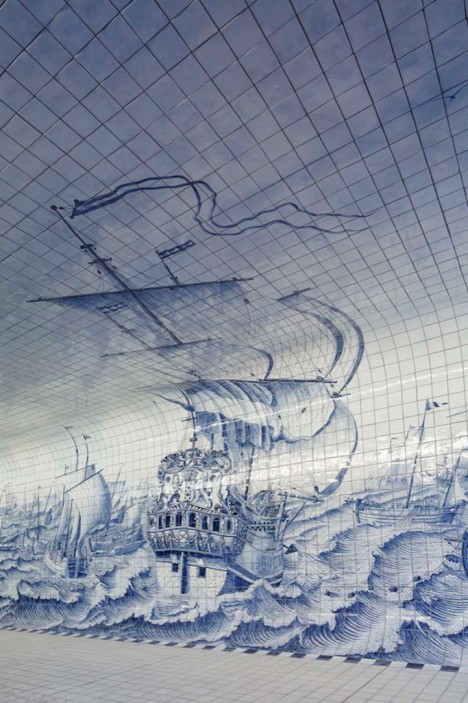
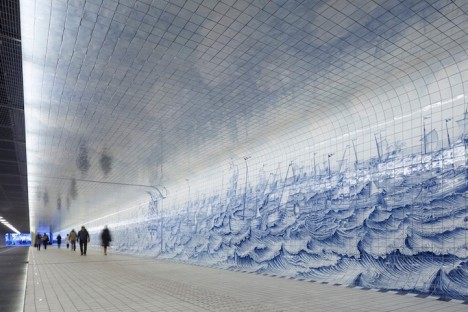
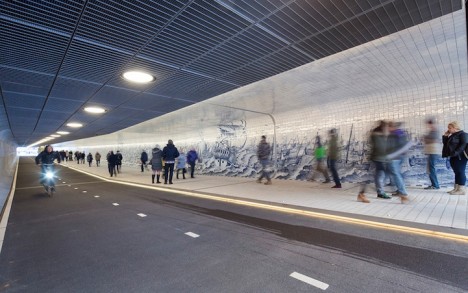
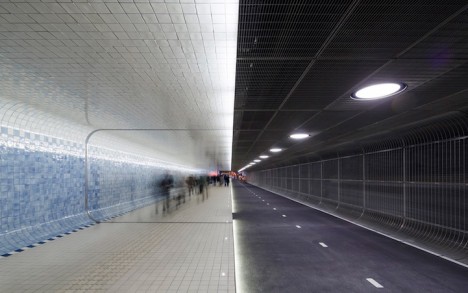
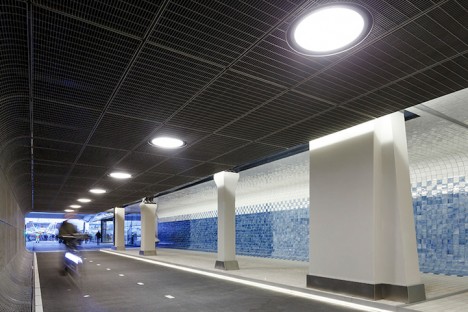
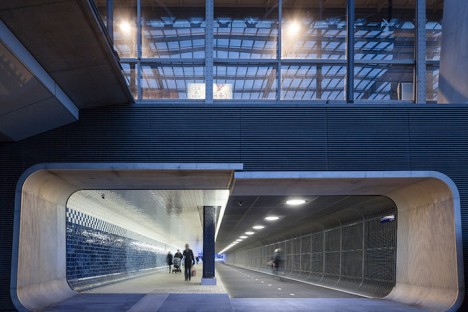
A 361-foot tunnel connecting the historic city center of Amsterdam to its revitalized industrial waterfront district symbolically links past and present with a stunning mural made up of 80,000 tiles. Design firm Benthem Crouwell used iconic Delft blue tiles to paint a picture of a fleet of ships on treacherous seas, taking inspiration from 18th century Rotterdam tile painter Cornelis Boumeester.

bike path tiles 2

bike apth tiles 3

bike path tiles 4

Stretching the entire length of the Cuyperspassage tunnel, which is open only to pedestrians and cyclists, the mural bears a striking resemblance to Boumeester’s depiction of the Warship Rotterdam and Herring Fleet, completed in 1725.

bike path tiles 5

bike path thiles 6

This traditional view of the Netherlands starts to shift and change the further you walk or bike into the tunnel. The illustrative style starts to get pixelated about halfway through, growing more and more abstract until it’s simply an arrangement of blue-hued tiles.

bike path tiles 7

bike path tiles 8

It’s a beautiful way to symbolize the growth and change the city has experienced over the past few centuries, with the potential to become as large a part of the nation’s cultural and artistic identity as the work that inspired it.

Share on Facebook


[ By Steph in Art & Street Art & Graffiti. ]

[ WebUrbanist | Archives | Galleries | Privacy | TOS ]


WebUrbanist

 
Comments Off on 80,000 Tiles Tell Story of Amsterdam’s Growth in New Bike Tunnel

Posted in Creativity


The Art of Photojournalism: Tell a Story with Your Image

15 Jul

Many people don’t think of photojournalism as being an artistic pursuit. In many ways, it isn’t. Documentary photography is often utilitarian in nature; the photographer’s job is to tell a story plainly, honestly and efficiently. A person might argue that approaching this job with other intentions, such as producing great art, could potentially sully the images. That is, if the Continue Reading

The post The Art of Photojournalism: Tell a Story with Your Image appeared first on Photodoto.


Photodoto

 
Comments Off on The Art of Photojournalism: Tell a Story with Your Image

Posted in Photography


7 Travel Photography Tips Your Tour Guide Won’t Tell You

14 May

This article is sponsored by the New York Institute of Photography. NYIP offers high-quality online photography courses that are affordable, convenient, and accredited.

Beauty is hiding in plain sight, but only for those who learn to see beyond the obvious. To capture the heart of a region through your lens, you must connect with a place on a deeper level. This often involves slowing down and immersing yourself in the culture of those who call it home. By doing so, you become more than just a tourist with a camera, but a participant searching for truth and understanding. Every corner of this earth has its own unique characteristics, and the successful travel photographer exposes these differences in a way that others can relate to.

chris_corradino_travel_1

1) Search for Simplicity

It seems counterintuitive, but in searching for clean, simple compositions, your photos will benefit from a new level of sophistication. As Paulo Coelho said,

“Elegance is achieved when all that is superfluous has been discarded and the human being discovers simplicity and concentration: the simpler and more sober the posture, the more beautiful it will be.”

When visiting new places, sensory overload can overwhelm even the most deliberate photographers. This is where a slow, methodical pace will have a big impact on your work. Large bus tours with heavy agendas don’t typically allow the necessary time to capture the look and feel of a place. Instead, try a self guided tour, or a small group that caters to photographers.

chris_corradino_travel_2

2) Include a Human Element

Many photographers struggle with the idea of adding people to their compositions. After all, it can be unnerving to include a stranger in your composition. Yet, by working a human element into your travel work, your photography will become more visually engaging. Not only does it create a sense of scale, but they become more salable for stock photography. You’ll just need to secure a model release in order to do this. With a number of smart phone and tablet apps for releases, this no longer needs to be an awkward exchange of actual paper documents. For the participant’s cooperation, you can offer to send a high resolution copy of the image.

chris_corradino_travel_3

3) Think Small

We all love to shoot scenic vistas bathed in the golden light of magic hour. While these dramatic landscapes can certainly round out a portfolio, it’s what you do with the remainder of the day that sets your collection apart. As you explore a location through your lens, think of yourself as a visual detective. No detail is too small. It’s the little things that ultimately add up to form the bigger picture.

chris_corradino_travel_4

4) No Rest for the Weary

Anyone who says you should pack your camera away midday is doing you a disservice. Contrary to what many suggest, the light is good all day, even at high noon. The trick is to best match the various qualities of light to your subject matter. A rolling green landscape can appear lush and vibrant with the simple twist of a circular polarizing filter. Why limit your photography to the hours around sunrise and sunset?

chris_corradino_travel7

5) Plan on Getting Lost

Researching potential shooting locations on the web is an essential part of any pre-trip preparation. With tools like the Photographer’s Ephemeris, you can study the precise time and locations of sunrise and sunset, along with with the moon phase. While this is helpful to create a basic shot list, remember to leave some time for unexpected adventure. Recognize that things will not always work out as planned. Getting lost is sometimes the only way to find what you’re looking for.

chris_corradino_travel5

6) X Does Not Always Mark the Spot

It seems that even the most remote destinations have been photographed from nearly every perspective. This doesn’t mean you shouldn’t shoot them however. Instead, consider it a personal challenge to go one step further and create something unique. How can you take what’s already been done, and make it yours? It’s this vision that separates your work from the masses.

chris_corradino_travel_6

7) Explore Beyond Your Zoom’s Range

Zoom lenses give you the ability to change your focal length with a flick of the wrist. This is indeed convenient for many types of photography including travel work. Yet, if you limit your perspective to what the lens provides, you’ll miss out on a number of great opportunities. Travel photography calls for us to explore beyond the end of our zoom range. Let curiosity guide your compositions and the nature of a place will reveal itself.

chris_corradino_travel 8

This article is sponsored by the New York Institute of Photography. NYIP offers high-quality online photography courses that are affordable, convenient, and accredited. Chris Corradino is a paid instructor with NYIP. 

googletag.cmd.push(function() {
tablet_slots.push( googletag.defineSlot( “/1005424/_dPSv4_tab-all-article-bottom_(300×250)”, [300, 250], “pb-ad-78623” ).addService( googletag.pubads() ) ); } );

googletag.cmd.push(function() {
mobile_slots.push( googletag.defineSlot( “/1005424/_dPSv4_mob-all-article-bottom_(300×250)”, [300, 250], “pb-ad-78158” ).addService( googletag.pubads() ) ); } );

The post 7 Travel Photography Tips Your Tour Guide Won’t Tell You by Chris Corradino appeared first on Digital Photography School.


Digital Photography School

 
Comments Off on 7 Travel Photography Tips Your Tour Guide Won’t Tell You

Posted in Photography