RSS
 

Posts Tagged ‘Tamron’

Tamron makes 18-200mm F/3.5-6.3 Di III VC for Canon EOS M

20 Jun

Tamron18-200.png

Tamron has revealed that it will be making its 18-200mm F/3.5-6.3 Di III VC superzoom in Canon EF-M mount. In a week of unparalleled excitement for EOS M owners, it becomes the fifth autofocus lens for the two year old system, and the first from a third-party manufacturer. With a 29-320mm equivalent range, it features a stepping motor for silent autofocus, and optical image stabilization. Sales will start in the USA on June 26, at $ 499.

News: Digital Photography Review (dpreview.com)

 
Comments Off on Tamron makes 18-200mm F/3.5-6.3 Di III VC for Canon EOS M

Posted in Uncategorized


Tamron officially launches 28-300mm F3.5-6.3 full frame superzoom

20 Jun

28-300-520news2.png

Tamron has officially launched its 28-300mm F/3.5-6.3 Di VC PZD superzoom lens (Model A010) for full frame SLRs. A near-twin of the 16-300mm F3.5-6.3 for APS-C, it’s distinguished from the previous model by featuring an ultrasonic-type ‘Piezo Drive’ autofocus motor, splashproof construction and more-compact design with a 67mm filter thread. It’ll be available in Canon and Nikon mounts on June 26th for $ 849.

News: Digital Photography Review (dpreview.com)

 
Comments Off on Tamron officially launches 28-300mm F3.5-6.3 full frame superzoom

Posted in Uncategorized


Tamron announces 14-150mm superzoom for Micro Four Thirds

19 Jun

14150-black-small-crop.png

Tamron has announced the 14-150mm F/3.5-5.8 Di III (model C001), a superzoom lens for Micro Four Thirds cameras which offers a 28-300mm equivalent range. It uses a stepper motor for silent autofocus (including during video recording), but doesn’t include image stabilisation. This means that it’s rather less suited to Panasonic cameras than it is to Olympus models. It will be available on June 26th for $ 589.

News: Digital Photography Review (dpreview.com)

 
Comments Off on Tamron announces 14-150mm superzoom for Micro Four Thirds

Posted in Uncategorized


Lens Review Tamron 24-70 mm f/2.8 Di VC USD

08 Jun
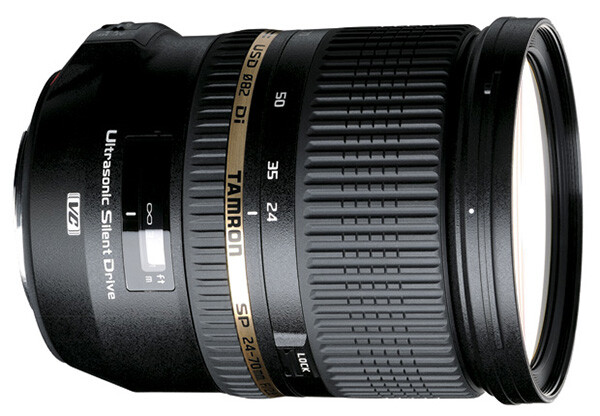
The Tamron 24-70mm f/2.8 Di VC USD is a great lens choice for both professionals and enthusiasts.

The Tamron 24-70mm f/2.8 Di VC USD is a great lens choice for both professionals and enthusiasts.

I won’t make you wait until the end of the review for the verdict– this lens absolutely rocks. Plain and simple. Despite what I consider to be a huge and unfortunate misconception among many professional photographers, there are some truly amazing, high-quality lenses being designed and produced by companies other than Nikon and Canon. Dismissing them as being somehow inferior simply because their logos don’t match up with those on the camera would be a big mistake. The Tamron SP 24-70mm f/2.8 Di VC USD is just such a lens. I recently had the opportunity to put it through its paces, and this is where the test drive took me.

The Specs

Let me start with deciphering the alphabet soup. Designed for digital (Di), this lens includes Tamron’s proprietary Vibration Compensation (VC) for less camera shake and smoother image stabilization, as well as its Ultra Silent Drive (USD) motor, ensuring fast, virtually silent auto focusing. This Super Performance series (SP) lens includes 17 elements in 12 groups, which vastly reduces chromatic aberration.

  • Focal Length:  24-70mm
  • Maximum Aperture:  f/2.8
  • Lens Construction:  17 elements in 12 groups
  • Minimum Focal Distance:  0.38m (15.0 inches)
  • Maximum Magnification Ratio:  1.5 on APS-C sensor cameras
  • Filter Size:  ø82mm (3.2 inches)
  • Length:  108.5mm (4.3 inches)
  • Extended Length:    116.9mm (4.6 inches)
  • Diameter:  ø88.2mm (3.5 inches)
  • Weight:  825g (29.1 oz)
  • Diaphragm Blades:  9 (rounded diaphragm)
  • Standard Accessories:  Lens Hood
  • Cost:  $ 1,224 (USD), compared with $ 1,887 (Nikon) and $ 2,299 (Canon L Series)
  • Compatible Mounts:    Nikon, Canon, Sony (NOTE: The Sony version of this lens does not include the vibration compensation feature, since Sony DSLR bodies already have this functionality).

First Impressions

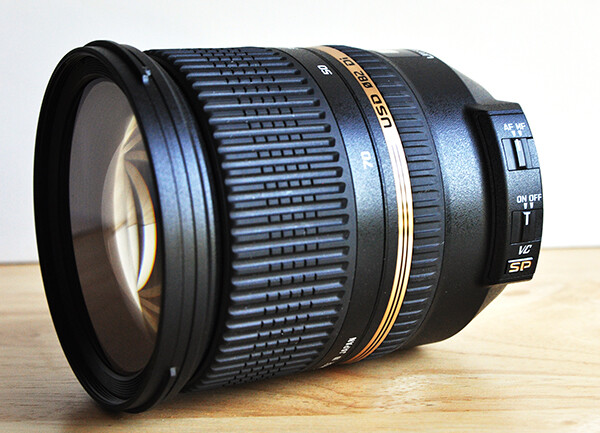
In some ways, I was sold on this lens before I even put it on a camera. Taking it out of the box for the first time, I was immediately impressed with the feel of it. It’s obvious that this lens was both designed and constructed with high-quality materials and great attention to detail. A common complaint among photographers about “off-brand lenses” (a term I hate, by the way), is that they just don’t have the same feel or build quality as lenses coming from Nikon or Canon. I’ve used several Tamron lenses over the years (the 28-75mm f/2.8 being among my favorites), and I can tell you that you’d be hard-pressed to find any flaws in the construction and build of this lens. As a matter of fact, this is Tamron’s first lens to include extra seals for moisture-resistant construction.
tamron-lens-review-digital-photography-school-002

Lens Creep

Lens creep is a fairly common problem with zoom lenses of lower quality. If you have ever zoomed a lens all the way out, only to have it slowly slide back down on you when trying to shoot at a sharp, upward angle, you know what I’m talking about. The opposite can also happen, where a poorly crafted zoom can start sliding out all on its own when pointed at a downward angle. While lens creep usually manifests itself more readily with longer, heavier zooms, it can be an issue on shorter lenses also. I experienced no lens creep at all on this lens, regardless of where I was along the zoom range.

Focus

As noted in the specs above, this lens is equipped with Tamron’s Ultra Silent Drive (USD) motor, which is supposed to help ensure fast, virtually silent autofocus. This is particularly useful for wedding and event photographers who are trying to be as unobtrusive as possible. One of the things that helps me hide in plain sight is quiet autofocus. One word of caution is worth mentioning. While the USD is virtually silent on the outside of the camera, it is possible that additional noise might be picked up when shooting video.

Autofocus was fast, accurate, and, as mentioned, quiet. There might have been a slight bit of focus lag in extremely low light situations, but I would expect that from just about any lens in dark conditions. My only complaint regarding the manual focus on this lens is the size of the rubber focus ring. I think it’s a little too small, even for average hands. Add my big Chewbacca hands into the mix, and manual focus ends up taking a little more concentration that it should actually need. As far as the actual manual focus mechanics, however, I have no complaints at all. There was no lag whatsoever on the ring, making it smooth, accurate and responsive.
tamron-lens-review-digital-photography-school-009

Chromatic Aberration

Forgive me for a minute or two while I geek out on the science end of things. Chromatic aberration is a type of distortion in which the lens fails to focus on all colors to the same convergence point. It is also a type of distortion which appears more frequently in lower quality lenses. It occurs because different lenses have different refractive indices for different wavelengths of light. Before your eyes glass over too much, let me just say that chromatic aberration becomes visible as fringes of color along boundaries separating light and dark parts of the image (i.e., contrast). As a general rule, chromatic aberration is mainly an issue at the combination of a lens’ shortest focal length and its widest aperture. This particular lens was designed specifically to minimize chromatic aberration and those efforts appear to be successful. While the laws of physics make it practically impossible to completely eliminate chromatic aberration, this lens exhibited it so slightly that I actually had trouble finding it. To that end, I’d say that any chromatic aberration actually created by this lens is inconsequential.

As long as we’re on the subject, let me offer one additional point regarding chromatic aberration that has nothing to do with this review. Colored fringes (often purple) around image highlights can be due to lens flare and have nothing at all to do with chromatic aberration.

Sharpness, Vignetting and Distortion

I found this lens to be very sharp in the center at all focal lengths and apertures. While stopping down a lens (moving to a smaller aperture) can sometimes result in an increase in sharpness and resolution, there was virtually no change in this lens between 24mm and 35mm. It wasn’t until I got between 50mm and 70mm that I think I might have noticed a very slight improvement by stopping down, but it was too slight to be of any real concern to me.

On a full frame Nikon D800, the corners are slightly less sharp than the center–a fairly common issue in lenses of this focal length. Having said that, however, corner image quality improves at all focal lengths as the lens is stopped down. I found the optimum aperture for the corners to be around f/8. Taking both center and corner sharpness into account, I’d put the “sweet spot” for this lens to be around f/5.6, but don’t let this keep you from capturing great “wide open” shots at f/2.8. The big surprise for me came when I compared corner sharpness on the Tamron with a Nikkor 24-70 f/2.8 and found corner sharpness on the Tamron to be better than the Nikkor.

While there is some visible distortion at the wider end of the lens, it does drop off quite quickly as you zoom in from 24mm. This is of most concern when shooting portraits. Making sure that faces are not distorted is an obviously valid concern, and is easily addressed by zooming the lens all the way in to 70mm.

Putting it to the Real Test

It’s easy to get passionate about lenses, regardless of brand name. It’s also easy, however, to get lost in the details. Look hard enough and you’ll find issues relating to chromatic aberration, sharpness, vignetting, and distortion in any, and every, lens you try. As pointed out earlier, we’re dealing with the laws of physics. That’s why the ultimate test of any lens has to be how it performs in everyday shooting conditions.

The first thing I want to know about any lens is what it’s going to do for me. Like many photographers, I make a living capturing a wide variety of subject matter. Since most of us don’t have unlimited gear budgets, the best purchases are those that are going to fill more than just one function. This is one of those lenses that does a great job, regardless of whether I am shooting portraits, food, or architecture. The fact that it does a great job as an all-around, everyday lens for personal photography is a bonus for the professional and a necessity for the enthusiast.

First came outdoor portraits. This first image was taken in the shade with no direct sunlight. There was a single off-camera strobe in a softbox to the left of the camera, approximately three feet from the subject. I was impressed with the speed of the autofocus, as well as how this lens captured the fine details. As noted, the wrong focal length can sometimes distort a subject. Zooming a 24-70mm all the way in to 70mm, like I did here can prevent that.

tamron-lens-review-digital-photography-school-003

1/125, f/8, ISO 200, 70mm, off-camera flash.

I was in the middle of a cookbook shoot when this lens arrived, and I was curious to see how it would do in an all natural light scenario. When we shoot food in the studio, we generally use a single natural light source (big window) to backlight or sidelight the dish, along with a bounce card for fill. Shooting from the shadow side of the food can sometimes pose a challenge for auto-focus, but this lens had no problems at all, even when I selected a focus point in the darkest part of the frame.

tamron-lens-review-digital-photography-school-004

1/80, f/5.6, ISO 400, 70mm, natural light.

But let’s take low light a step further. Really low light. In the images below, the photo on the right was taken with only ambient light in order to show how the autofocus performs in very low light situations. For purposes of the test, I placed my focal point on the subject’s left eye- the one in shadow. The photo on the left was taken at the same settings, with a single speedlight in a softbox to the left of the camera. The autofocus obviously had to work a little harder than it might have in broad daylight, but not so much that it became a problem on the shoot.

tamron-lens-review-digital-photography-school-006

1/60, f/5.6, ISO 640, 70mm, off-camera flash.

If you read my article on How to Shoot Flowers, you know I spend a lot of time capturing flowers and their delicate details. Obviously,  I was excited to see how the lens would perform with flowers. Other than the crop, this image is straight out of the camera. The edges and textures are all very sharp. While not specifically a macro lens, it’s nice to know it can still capture fine details with precision.

1/500, f/2.8, iSO 100, ambient light.

1/500, f/2.8, iSO 100, ambient light.

While attending Photoshop World in Atlanta last month, I stopped by the Westcott expo booth, where models and lights were set up for the Westcott Shootout Contest. Since studio lights were already set for optimal conditions, it seemed like a great opportunity to test the lens for indoor portraits. Other than the black and white conversion, this image is straight out of the camera. The lens performed really well while trying to capture the glam look of 1940s Hollywood.

tamron-lens-review-digital-photography-school-005

1/200, f/5.6, ISO 1600, 70mm, constant LED studio lighting.

The lens had performed extremely well with portraits, food, and flowers, so I decided to see how it would do on an architectural interior shoot before I had to box it up and send it back. I was thrilled with how it captured the color and contrast.

1/160, f/10, 28mm, ISO 200, ambient light.

1/160, f/10, 28mm, ISO 200, ambient light.

Wrap-Up and Recommendations

Like I said at the very beginning — this lens rocks. It performed flawlessly in a variety of lighting and shooting situations. While I didn’t have time to take it out on a landscape shoot, there was absolutely nothing about my experience with this lens to indicate that nature and landscape results would have been any different. An excellent lens for either full-frame or APS-C sensor cameras, if you’re looking for a really great lens that can handle just about any assignment, the Tamron 24-70 f/2.8 should be at or near the top of your list of choices. The only down side to this lens was returning it to Tamron when I was done.

The post Lens Review Tamron 24-70 mm f/2.8 Di VC USD by Jeff Guyer appeared first on Digital Photography School.


Digital Photography School

 
Comments Off on Lens Review Tamron 24-70 mm f/2.8 Di VC USD

Posted in Photography


The Contest Winners of the Tamron Lenses Are…

29 May
SP 17 50MM F

Tamron SP-17-50MM F/2.8 Di II VC

18270VCPZD

Tamron 18-270 Di II VC PZD

70300VC

Tamron SP 70-300 Di VC USD

A HUGE Thank You to everyone who entered our recent competition to win one of three lenses from our friends at Tamron.

The response was absolutely AMAZING with over 1,300 entries! In fact, it was so great that we here at Digital Photography School decided to add a new category of winners – Honorable Mentions – and provide each Honoree with a dPS eBook of their choice. But now, on to the winners.

Here are the 3 winners of the competition:

  • Caleb Ward wins the Tamron SP-17-50MM F/2.8 Di II VC
  • EthanKPhotography wins the Tamron 18-270 Di II VC PZD
  • Patrick Kulwicki wins the Tamron SP 70-300 Di VC USD

A note to each of our winners:

Caleb, we value your service and do hope that you can and will change the lives of those in need.

Ethan, keep up the great work, and we also hope that you will become a professional photographer.

Patrick, hopefully, this is the beginning of much good luck.

Honorable Mentions:
Bartosz Szkatula, Juli Vz, Igor Danajlovski, Dylan Balagtas, Todd Carpenter, Joseph MacDonald, Randi Willett, Aniqe, Henry Greyner, Jennie Hallock, Bram Smits, Ioan Stoev, Aly Wonderland, Michelle F and Dana.

On a side note: Alison Hopkins, we hope you’ll take this little mention as a sign and follow your dreams.

Tamron Lenses for Post Graphic  Cropped

We were all thrilled with the entries – you tugged at our heartstring, made us laugh, made us smile, but most importantly, you made us keep wanting to do more of what we are doing; providing you quality information and guidance to become a better photographer. We were so pleased to see that you came from every part of the world, young adults to grandparents, and everyone in between. Thank you all for your entries.

Now, for those of you that didn’t win, Tamron has invited ALL dPS readers to download their new eBook series! You can find those HERE.

For all of you residing in the USA, when you do purchase your next select Tamron Lens, please make sure to take advantage of the Tamron Rebate. Find additional information HERE.

*Current offers end June 30, 2014. US RESIDENTS ONLY.

Winners will be emailed with details of how to collect their prize. Please make sure to look for our email. Thanks you again for all the wonderful submissions and to Tamron for sponsoring this competition.

Tamron logo

The post The Contest Winners of the Tamron Lenses Are… by Darlene Hildebrandt appeared first on Digital Photography School.


Digital Photography School

 
Comments Off on The Contest Winners of the Tamron Lenses Are…

Posted in Photography


Win One of Three Lenses From Tamron!

04 May

Over the last few years here at dPS, we’ve run very some very popular competitions with our partners to give away, to lucky dPS readers, some of their great photographic products.

We are lucky enough to be able to do it again this week!

Tamron Lenses for Post Graphic - Cropped

For this competition, Tamron is giving away THREE prizes!

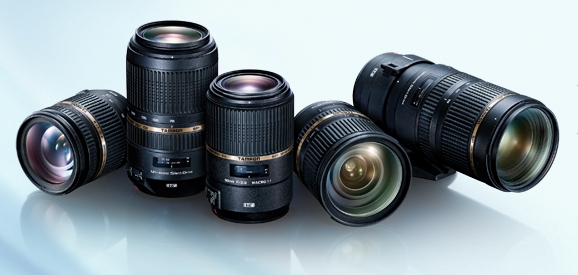
These three unique prizes are designed to help every level of photographer create BETTER pictures. Tamron is the world’s most awarded photographic lens line. Each will be won by a different dPS reader. Here’s what you could win:

  • Tamron SP 17-50 f/2.8 Di II VC – worth $ 599
  • Tamron 18-270 f/3.5-6.3 Di II VC PZD – worth $ 449
  • Tamron SP 70-300 f/4-5.6 Di VC USD – Worth $ 449
SP 17 50MM FTamron SP-17-50MM f/2.8 Di II VC 18270VCPZDTamron 18-270 f/3.5-6.3 Di II VC PZD 70300VCTamron SP 70-300 f/4-5.6 Di VC USD

Learn a little more about Tamron here.

How to Win

To win this competition you’ll need to:

  • Visit the above lens information pages and learn more about each lens and its core use
  • Leave a comment below and tell us why you’d like to win and HOW you would you utilize each lens. Please note: there is a limit of 1 entry per person
  • Do this in the next 14 days and on May 19, 2014, the team at Tamron will choose the best 3 answers and we will announce the winners in the following days

Deadline to enter is May 17, 2014, Midnight PDT (PST). Comments left after deadline will not be considered.

Tamron Pic  Blow

By ‘best’ – we’re looking for people who have an understanding of the lenses and how they will best suit your needs. So you’ll need to check out the product pages to put yourself in the best position to win.

There’s no need to write essay length comments to win – but we’re looking to hear what you like about the lens and how it would help your development as a photographer.

This competition is open to everyone around the world no matter where you live – but there is only one entry per person. To enter – simply leave your comment below.

Tamron logo

About Tamron

Disclaimer: Tamron is a paid partner of dPS.

The post Win One of Three Lenses From Tamron! by Darlene Hildebrandt appeared first on Digital Photography School.


Digital Photography School

 
Comments Off on Win One of Three Lenses From Tamron!

Posted in Photography


Lens Review Tamron SP 150-600mm f/5-6.3 Di VC USD

30 Apr


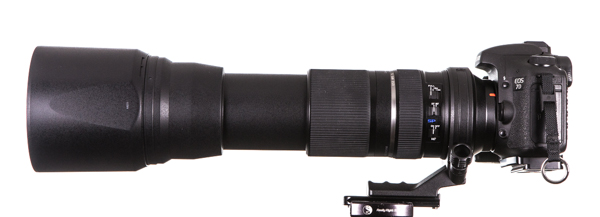
Tamron SP 150-600mm

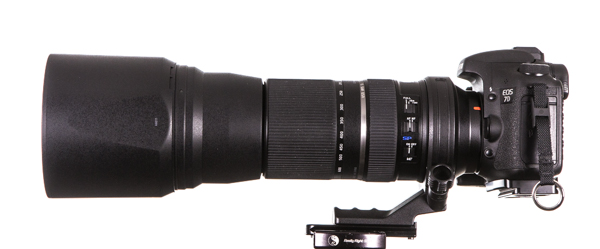
Tamron SP 150-600mm f/5-6.3 Di VC USD was tested in April 2014.  The version of the lens tested is for the Canon DSLR mounts and it is compatible with both crop and full frame sensor bodies. The lens is also compatible with Nikon and Sony bodies.

On a Canon crop factor camera body the lens provides a field of view equivalence of 240-960mm. The lens has fast, silent focusing, Vibration Compensation and eBAND (Extended Bandwidth and Angular-Dependency) lens coating in addition to the conventional BBAR (Broad-Band Anti-Reflection) coating. These coatings are designed to reduce flare and ghosting, and to increase contrast. The lens has a moisture-sealed construction, and has 20 lens elements in 13 groups including three low dispersion (LD) elements and an iris diaphragm with nine rounded aperture blades.

What is in the box

The lens, a large lens hood, a removable tripod mount collar and a large fold out guide  or manual.

Specifications of the lens tested

  • Focal Length (full frame): 150-600mm
  • Aperture Maximum: f/5.0-6.3 Minimum: f/32.0-40.0
  • Camera Mount Type: Canon EF Format
  • Compatibility: 35mm Film / Full-Frame Digital Sensor, Canon (APS-C), Canon (APS-H)
  • Angle of view: 16° 25′ – 4° 8′
  • Minimum focus distance 8.86 ft (2.7 m)
  • Maximum reproduction ratio: 1:5
  • Lens elements/groups 20/13
  • Diaphragm blades: 9
  • Filter thread front: 95 mm
  • Dimensions (DxL): 4.16 x 10.15 in (105.6 x 257.8 mm)
  • Weight: 4.30 lb. (1.95 kg)

Handling and Features

This is a fairly large lens compared to the Canon 100-400 f/4-5.6 push-pull L series lens, and weighs 4.3 pounds as compared to the Canon 100-400 at 3.2 pounds. Tamron have used high quality plastics for the lens barrel in order to keep the weight down. Had this lens been made as an all metal construction, it would be much heavier and would not be as well balanced.

Tamron SP 150-600mm extend to 600 mm

The lens extend to 600 mm

The lens was tested using a Canon 5D Mk III and a Canon 7D. I found the lens reasonably well balanced while hand holding. It does get to be a bit of a strain during extended shooting so a tripod with a smaller gimbal style tripod head is advisable.

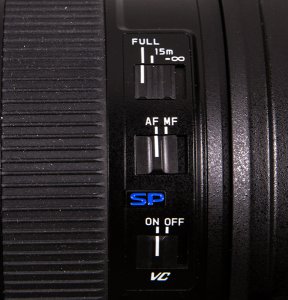
Switches on the Lens Barrel

Switches on the Lens Barrel

The lens is equipped with tripod mount, footed lens collar. An Arca Swiss style long lens plate was mounted for all tripod based testing.

The lens has three switches; each is a two position switch which is flush mounted on the lens barrel. The switches have a positive click and an audible feedback when operated. The switches are for: Autofocus/Manual focus, Vibration Compensation on or off, and focus limit. A lens lock at 150mm is also provided.

Lens Zoom Creep

The lens barrel tends to zoom creep over an extended period of time when positioned at an acute angle downward .  There is also some zoom creep when pointed directly upward.  The greater the angle the greater the creep. Extending an index finger to grip the lens barrel just beyond the zoom ring prevents any creep when the lens is handheld. Tamron has provided a lens barrel lock that will keep the lens locked in the 150 mm focal length position.  This is good during transport but Tamron should have considered making the lens lockable at all the major focal length positions.

Focusing

The autofocus is fast and fairly accurate. The lens uses a USD (Ultrasonic Silent Drive) focusing motor. The lens barrel has a two-stage focus limiter switch with a full and a 15 meter (49.2 feet) to infinity limited range. This is a very nice feature that prevents the lens from hunting through the whole focus range particularly when the subject is beyond 15 meters.

Manual focusing is reasonable as the focus ring is damped and very smooth. The position of the manual focusing ring could be improved as the lens collar comes in the way. For hand held operation it is preferable to rotate the collar 180 degrees or remove it entirely. Manual focus adjustments can be made in Auto or Manual focus modes as Full Time Manual is fully supported. The minimum focus distance is 8.9 feet/2.7 meters provides a magnification of 1:5. A focus window provides distances in meters and feet from the minimum focusing distance to infinity.

The front filter tread is 95mm and the front element does not rotate while focusing. This is a welcome feature, particularly for polarizing and split/graduated ND filter use.

TESTS

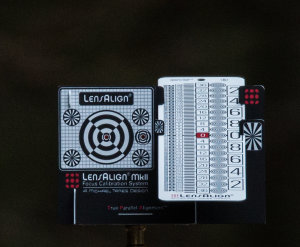
Micro Focus Calibration Tool

Micro Focus Calibration Tool

I set up the lens to test auto focus accuracy. Using a LensAlign Mk II micro focus adjustments were made at 150mm and 600mm. At 150mm no adjustment was needed while at 600mm a -5 was needed to correct for some back focusing.

The Ultrasonic Silent Drive (USM) motor in the lens is very quiet when focusing and the speed is comparable to the Canon 100-400mm f/4.05.6 IS L lens. At 600mm the lens first retracts to the closest focus distance before extending to the focus on the distant subject. Overall it does not affect the focus speed, as this phenomenon is controlled by the camera body. This issue was prevalent using both camera bodies.

Manual Focus

As mentioned earlier the manual focus ring is in an awkward position for my liking. The total rotation is 120 degrees and very manageable at shorter focal lengths but is not as well tuned at focal lengths greater than 450mm, and focus appears to have a slight lateral shift.

Once focus is established on a subject, varying the focal length does not maintain focus. Refocusing is required for any change in focal length.

Autofocus

The lens was tested using the most accurate center focus point on the Canon 5D MarkIII as well as the focus assist group.

With both bodies the “One Shot” (AF-S on Nikon) and “AI Servo” (AF-A on Nikon) focus methods performed well from focal lengths of 150mm to 400mm. At 500mm through 600mm the lens did not track well in AI Servo mode due to the high magnification, but was fine in One Shot (AF-S) mode. The lens was erratic, and if it dropped focus lock on the subject it rarely recovered to lock on again. Re-focusing was the only way to track a moving subject again. The loss of tracking is more apparent for subjects that are approaching the lens and less problematic for subjects moving left to right, or vice versa.

Vibration Compensation

Overall performance of image stabilization was very good. At focal lengths of 150 through 500 the lens maintains stability 2 to 3 stops below the hand held shutter speed guideline of 1/focal length as the minimum shutter speed. Hand holding at ISO 200 while looking through the viewfinder, one notices an image shift when the VC (IS) motors kick in.

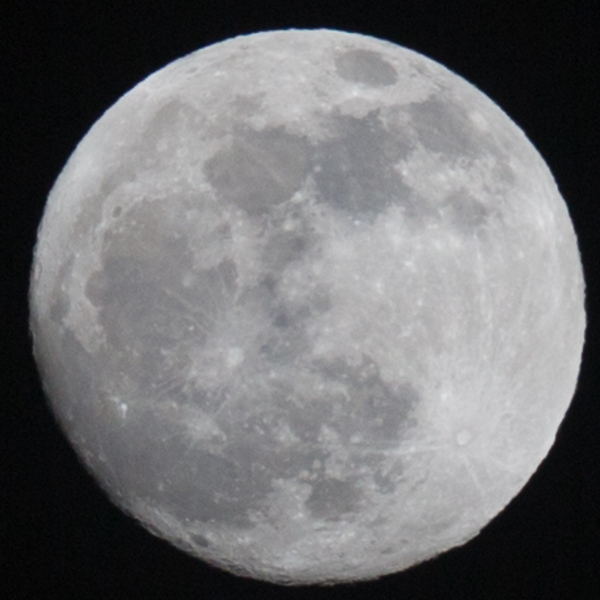
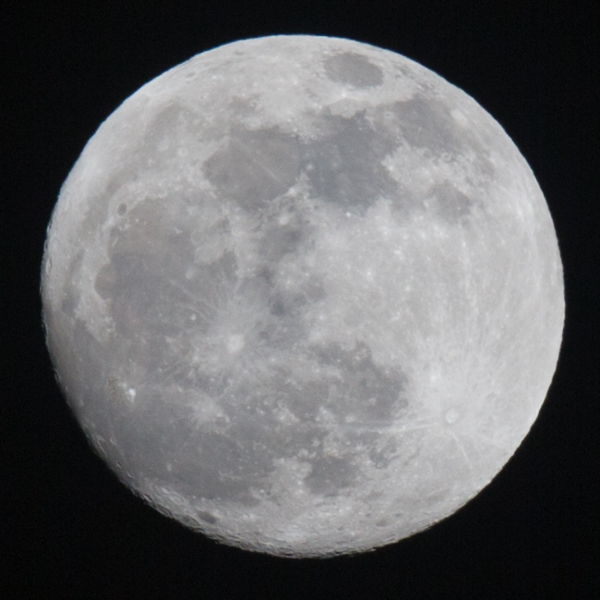
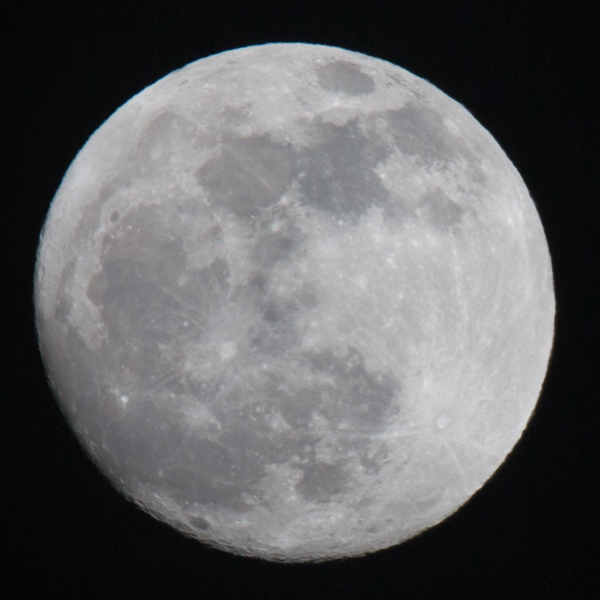
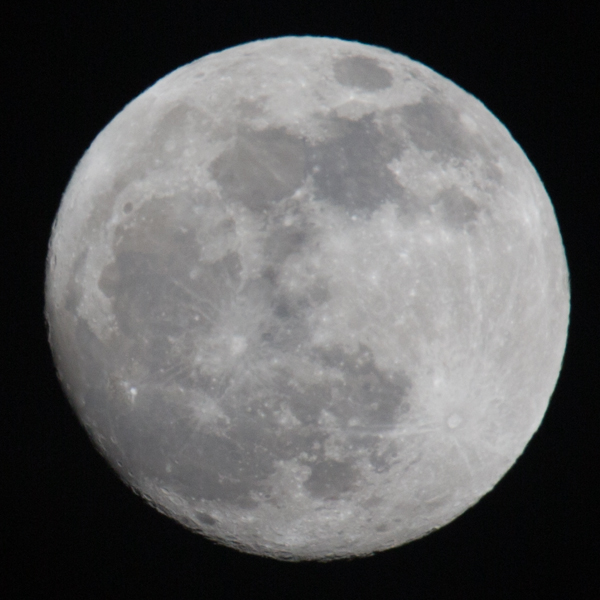
Here are some images of the full moon (cropped and sized to the same frame size) Settings used were: ISO 250, f/6.3, at 1/400th of a second, at focal lengths of 600mm, 500mm, 400mm and 300mm. The VC (IS) functions very well and is a pleasure to use.

Focal length 300 mm

Focal length 300mm

Focal length 400 mm

Focal length 400mm

Focal length 500 mm - some chromatic aberration is visible

Focal length 500mm – some chromatic aberration is visible

Focal length 600 mm - some chromatic aberration is visible

Focal length 600mm – some chromatic aberration is visible and there is a slight drop in sharpness

Test Results

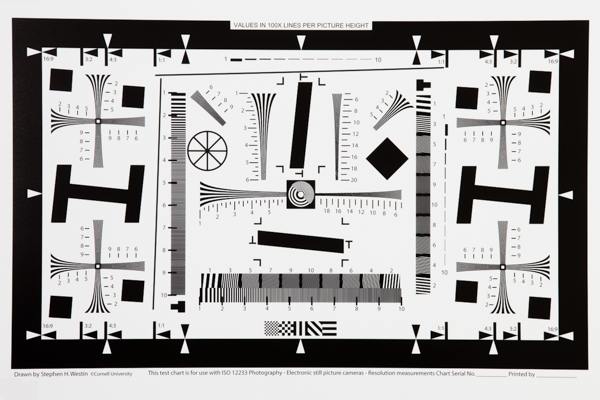
All controlled environment testing was done in the studio with constant lights and and a test chart as shown below.

lens sharpness chart

The Sweet Spots

f/8.0 from 150-250mm:  at 300mm there is a loss of sharpness both in the center, as well as on the edges. At 400-600mm the center is sharp with some fall off toward the edges.

During tests, f/11 was found as a good aperture from 300-600mm. At 600 mm the edge fall off is pronounced, but that is also a factor of chromatic aberration. At the widest aperture in the 150-300mm range the lens has better overall sharpness from 200-300mm than at 150-200mm.

Aperture settings of f/8 through f/11 provide the best performance across the frame on a full frame sensor. f/5.6 through f/6.3 are good in the center. On a crop factor camera like the 7D the edge sharpness is acceptable in the f/6.3 to f/8.0 range at focal lengths of 300mm and higher while f/5.6 to f/6.3 is acceptable at focal lengths 300mm and below.

Pincushion Distortion

There is a slight amount of pincushion distortion through the entire focal length range of this lens. This distortion however, is minimal and very easily corrected using lens correction in Adobe Camera Raw or in Lightroom.

Edge Exposure Fall Off

Only visual testing was conducted for this test. The lens handles light fall off very well. It is most noticeable at f/22 but does not pose a problem at f/20. On the 7D body the frames captured at f/22 were acceptable with no cropping applied. f/20 is a very safe aperture for maximum “Depth of Field” and minimum edge fall off.

Chromatic Aberration

There is fringing at apertures of f/16 through f/22 at focal lengths of 400-600mm. Progressively getting pronounced as the focal length increases, it should be noted that though there is chromatic aberration it is not bad compared to other lenses in this class and could be considered low.

Chromatic aberration at 300 mm

Chromatic aberration at 300mm

Chromatic aberration at 400 mm

Chromatic aberration at 400mm

Chromatic aberration at 500 mm

Chromatic aberration at 500mm

Chromatic aberration at 400 mm

Chromatic aberration at 600mm

Pros and Cons

Pros

  • Great value for the price point
  • Very good build quality
  • Well damped focusing
  • Center sharpness throughout the range
  • Very quiet operation
  • Very good Vibration Compensation (Image Stabilization)
  • Low distortion and chromatic aberration

Cons

  • Position and rotational direction of focusing ring
  • Image shifting when VC (IS) engages
  • Edge sharpness fall-off at 600mm on a full frame body
  • Focus speed decreased at longer focal lengths

Conclusion

You might conclude from this list of cons, and some of the criticism, that the Tamron 150-600mm is not exceptional, but that would be very wrong. There are very few perfect lenses and the issues should be taken under consideration based on their significance for type of photographer who will use this lens, and the type of photography they do with it. This lens is a great performer, and the price point just can’t be beat. Used properly, and keeping its small limitations in mind, this lens will deliver excellent images and is a highly recommendable lens. It is an ideal hand holdable lens for nature and sports photographers.

Sample Images

Canon 7D, Tripod, ISO 250, f/9, 1/640 sec. As shot.

Canon 7D on tripod, at 600mm, ISO 250, f/9, 1/640th. As shot.

Image as above cropped to fill frame.

Image above, cropped to fill the frame.

Same image cropped to show head detail - crop size 280 x 187 pixels then zoomed to 600 pixels (Greater than 2X magnification)

Same image cropped to show head detail – crop size 280 x 187 pixels then zoomed to 600 pixels (Greater than 200% magnification)

_MG_8911-5

Canon 7D, at 500mm, hand held, ISO 2000, f/6.3, 1/125th

_MG_8801-2

Canon 7D, at 450mm, hand held, ISO 250, f/6.3, 1/1000th

_MG_8808-3

Canon 7D, at 600mm, on tripod, ISO 250, f/6.3, 1/200th

Image as above cropped to fill frame.

Image above, cropped to fill the frame.

Canon 7D, at 600 mm, hand held, ISO 250, f/6.3, 1/800 sec.

Canon 7D, at 600mm, hand held, ISO 250, f/6.3, 1/800th

A recent press release from Tamron announced  – TAMRON WINS TIPA AWARD 2014 FOR SP 150-600MM F/5-6.3 DI VC USD (MODEL A011) “BEST EXPERT DSLR LENS” These awards are presented each year by the Technical Image Press Association (TIPA) to top photo and imaging products.

The post Lens Review Tamron SP 150-600mm f/5-6.3 Di VC USD by Shiv Verma appeared first on Digital Photography School.


Digital Photography School

 
Comments Off on Lens Review Tamron SP 150-600mm f/5-6.3 Di VC USD

Posted in Photography


Tamron gives pricing and availability for 16-300mm F3.5-6.3 superzoom

12 Apr

16-300_news520.png

Tamron has announced pricing and availability for its 16-300mm F3.5-6.3 Di II VC PZD Macro 18.8x superzoom for APS-C SLRs. The lens, which was announced in February, will go on sale in mid-May at a street price of $ 629. The 16-300mm F3.5-6.3 Di II VC PZD Macro will offer an unusually wide angle view for its class (24-450mm equivalent), while also allowing close-up shooting with 0.34x magnification. It has an ultrasonic-type autofocus motor, splashproof construction and optical image stabilization. Learn more

News: Digital Photography Review (dpreview.com)

 
Comments Off on Tamron gives pricing and availability for 16-300mm F3.5-6.3 superzoom

Posted in Uncategorized


Tamron to make new 28-300mm F3.5-6.3 superzoom for full frame SLRs

07 Feb

28-300_news520.png

Tamron has announced that it’s developing a new 28-300mm F/3.5-6.3 Di VC PZD superzoom lens for full frame SLRs. A near-twin of the co-announced 16-300mm F3.5-6.3 for APS-C, it’s distinguished from the current model by featuring an ultrasonic-type ‘Piezo Drive’ autofocus motor, splashproof construction and more-compact design with a 67mm filter thread. It’ll be made in Canon, Nikon and Sony mounts; pricing and availability are to be confirmed. Learn more

News: Digital Photography Review (dpreview.com)

 
Comments Off on Tamron to make new 28-300mm F3.5-6.3 superzoom for full frame SLRs

Posted in Uncategorized


Tamron develops 16-300mm F3.5-6.3 superzoom for APS-C SLRs

06 Feb

16-300_news520.png

Tamron has announced the development of an all-in-one ‘superzoom’ lens for APS-C SLRs with a huge 18.8x range. The 16-300mm F/3.5-6.3 Di II VC PZD Macro will offer an unusually wide angle view for its class (24-450mm equivalent), while also allowing close-up shooting with 0.34x magnification. It has an ultrasonic-type autofocus motor, splashproof construction and optical image stabilization. Pricing and availability are still to be announced. Learn more

News: Digital Photography Review (dpreview.com)

 
Comments Off on Tamron develops 16-300mm F3.5-6.3 superzoom for APS-C SLRs

Posted in Uncategorized