RSS
 

Posts Tagged ‘Tamron’

24. Türchen: Tamron

24 Dec

Tamron SP150-600mm_Di_VC_USD

24. Türchen

Etwas wehmütig öffnen wir unser letztes Türchen, das Tamron mit diesem unglaublichen Objektiv gefüllt hat. Das SP 150-600mm F/5-6.3 Di VC USD eignet sich besonders für Aufnahmen der Tierwelt, Reisefotos und spannende Sport- und Actionszenen.

Damit Ihr besonders scharfe Aufnahmen macht, haben Tamron-Objektive einige technische Besonderheiten wie „Vibration Compensation“ und „Ultrasonic Silent Drive“, wodurch sich gestochen scharfe Bilder von schnellen und weit entfernten Motiven aus der Hand fotografieren lassen. Die neue eBAND-Beschichtung minimiert Streulicht und andere Bildfehler und sorgt damit für klare, lebendige Bilder.

Tamron

Zudem hat das Ultra-Tele einen Spritzwasserschutz. Insgesamt also ein tolles Objektiv, um sich in Abenteuer zu stürzen. Es ist mit Anschlüssen für Canon, Nikon und Sony erhältlich. Ob es an Eure Kamera passt, findet Ihr auf der Produktseite heraus.

Um das Objektiv zu gewinnen, schreibe einen Kommentar mit Deinem Wunschanschluss unter bürgerlichem Namen und gültiger E-Mail-Adresse bis heute um 24 Uhr. Danach verlosen wir es per Zufallsgenerator unter allen Kommentatoren. Die genauen Gewinnspielregeln findest Du hier. Viel Glück!


kwerfeldein – Fotografie Magazin | Fotocommunity

 
Comments Off on 24. Türchen: Tamron

Posted in Equipment


Win One of Three Lenses from Tamron!

11 Dec

Over the last few years here at dPS, we’ve run very some very popular competitions with our partners to give away to lucky dPS readers some of their great photographic products.

We are lucky enough to be able to do it again this week!

For this competition, Tamron is giving away THREE prizes!

These three unique prizes are designed to help every level of photographer create BETTER pictures. Tamron is the world’s most awarded photographic lens line. Each will be won by a different dPS reader. Here’s what you could win:

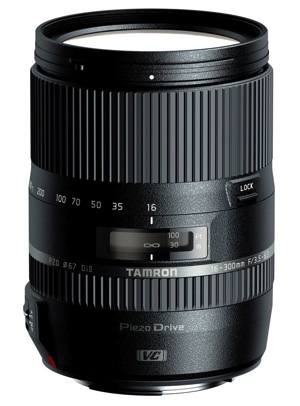
  • Tamron 16-300mm Di II VC PZD Macro – Value $ 629
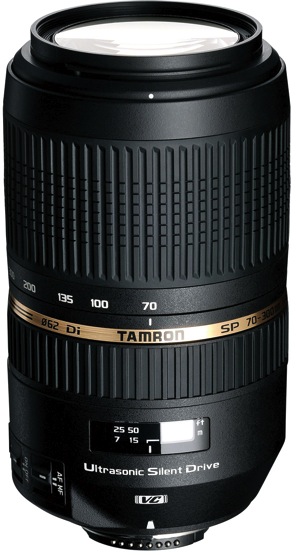
  • TWO – Tamron SP 70-300mm Di VC USD – Value $ 449
Tamron 16 300mm Di II VC PZD Macro 600Tamron 16-300mm Di II VC PZD Macro 70 300VC USD model A005 600Tamron SP 70-300mm Di VC USD

Learn a little more about Tamron here: Tamron.com

How to Win

To win this competition you’ll need to:

  • Visit the above lens information pages and learn more about each lens and its core use.
  • Leave a comment below and tell us why you’d like to win and HOW you would you utilize each lens. Please note: there is a limit of 1 entry per person.

Do this in the next 14 days and on December 26, 2014, the sales team at dPS will choose what it considers the best three answers and we will announce the winners in the following days.

Deadline Is December 23, 2014 at Midnight PDT (UTC-8). Comments left after deadline will not be considered.

16300VC 3 Ian Plant Photo

Photo by Ian Plant

By best – we’re looking for people who have an understanding of the lenses and how they will best suit your needs. So you’ll need to check out the product pages to put yourself in the best position to win.

There’s no need to write essay length comments to win – but we’re looking to hear what you like about the lenses and how it would help your development as a photographer, professionally, personally, or both.

This competition is open to everyone, no matter where you live – but there is only one entry per person. To enter – simply leave your comment below.

Tamron logo

About Tamron

Disclaimer: Tamron is a paid partner of dPS.

googletag.cmd.push(function() {
tablet_slots.push( googletag.defineSlot( “/1005424/_dPSv4_tab-all-article-bottom_(300×250)”, [300, 250], “pb-ad-78623” ).addService( googletag.pubads() ) );
} );

googletag.cmd.push(function() {
mobile_slots.push( googletag.defineSlot( “/1005424/_dPSv4_mob-all-article-bottom_(300×250)”, [300, 250], “pb-ad-78158” ).addService( googletag.pubads() ) );
} );

The post Win One of Three Lenses from Tamron! by Darlene Hildebrandt appeared first on Digital Photography School.


Digital Photography School

 
Comments Off on Win One of Three Lenses from Tamron!

Posted in Photography


Tamron 16-300mm Di II VC PZD real-world samples

08 Dec

The Tamron 16-300mm Di II VC PZD is a general purpose ‘carry everywhere’ zoom for users of APS-C format DSLRs. Covering an equivalent focal length range of 24-450mm, this lens should be a perfect camera for travel and day-to-day use, allowing you to frame a huge variety of different subjects without changing lenses. We’ve been using one for a while and we’ve prepared a gallery of samples. Click through to take a look

Articles: Digital Photography Review (dpreview.com)

 
Comments Off on Tamron 16-300mm Di II VC PZD real-world samples

Posted in Uncategorized


Writer’s Favorite Lens – the Tamron 18-270mm

09 Nov

Darren recently suggested that the dPS writers to contribute to a semi-regular series featuring our favorite lenses, and I knew, hands down, which lens I wanted to feature: my daily workhorse, the Tamron 18-270mm lens. All photographs in this article, with the exception of the lens itself were taken with the Tamron 18-270mm.

church, fall, autumn, architecture, framing, fall leaves, Tamron18-270mm

Introducing the Tamron 18-270mm

The full name of this lens is the Tamron 18-270mm f/3.5-6.3 Di II VC PZD lens. It is a great all-in-one zoom lens and covers a wide-range of photography situations. Vibration control (VC) allows you to handhold at slower shutter speeds, and the proprietary piezodrive autofocus is quiet and fairly fast. Tamron makes versions of this lens compatible with Canon, Nikon, and Sony camera bodies. While some may argue that this lens is a “jack-of-all-trades but master of none,” I would contend that the Tamron is a perfect fit for the photographer looking to get a lot of use out of a single lens.

camera lens, tamron, tamron18-270, all-in-one zoom, zoom lens, photography

Ideal Uses for the Tamron 18-270mm

The Tamron 18-270mm is a perfect lens for travel photography and for the photographer-on-the-go who does not want to spend time constantly switching lenses or hauling large amounts of gear. In a single lens, you have the capability of shooting everything from wide angle, to 50mm, to a pretty substantial zoom.

When I made the decision to upgrade and replace my two kit lenses (the Canon 18-55mm and 55-250mm), I knew that I wanted a lens or lenses that would cover a similar range of photography situations and offer an improvement in image quality. I was also preparing for some extensive traveling (including backpacking) and did not have an endless budget, so both weight and cost were important considerations.

hiking, backpacking, Badlands, tent, camping, travel photography, Tamron18-270mm

At 450 g (0.99 lbs) this is not a light lens, but it compares favorably to other long zoom lenses, such as the Canon 55-250mm I was replacing (390 g or 0.86 lbs), the Canon 24-105mm (525 g or 1.16 lbs), or the Canon 70-300mm (630 g or 1.39 lbs). After a long day of hiking and photographing, you will know that you have been carrying your camera around, but you would be hard-pressed to find another lens for a DSLR that will give you this range and flexibility that is any lighter.

Price-wise, the Tamron is a steal. This lens retails today for around $ 450 USD, and its newly-released upgrade, the Tamron 16-300 f/3.5-6.3 Di II VC PZD Macro currently retails for $ 599 USD, after rebate. This is a great value for a quality lens for those who lack unlimited funds to spend on multi-thousand dollar lenses.

Advantages of All-in-One Zooms

The main advantage of an all-in-one zoom lens, like the Tamron, is the flexibility. You can go from shooting a wide-open landscape shot to a close-up zoom of an individual bird in the flick of a wrist. These two photographs at Mammoth Hot Springs were taken just moments apart, at the two extremes of the Tamron’s range. If look carefully in the middle left of the wide view, you can just make out the bird. You will no longer have the excuse of “not having the right lens” if you miss a prime photographic opportunity.

Yellowstone, Mammoth Hot Springs, landscape, photography, National Park, wide angle, Tamron18-270mm

Yellowstone, Mammoth Hot Springs, landscape, photography, National Park, zoom lens, Tamron18-270mm, bird, wildlife

Never having to change lenses also keeps my camera and sensor cleaner, my reaction speed faster, and my backpack and purse emptier. I rarely travel around with a full camera bag, since I can slip an extra battery or a few filters into a pocket or my purse. In fact, I can easily stow the entire camera, with the Tamron lens attached, in my fairly-small purse without incident (though I usually use a neoprene wrap around it).

Tamron18-270mm

The Tamron 18-270mm lens is a great lens for you if you do not want to specialize or you want to shoot a wide range of subjects and situations. You can go from shooting close-ups in the mornings, to architecture at midday, to your child’s soccer game in the afternoon, and still have the same lens on for shooting a few shots of the moon before bed.

closeup, macro, bee, bumblebee, Tamron18-270mm

architecture, theater, blackandwhite, Tamron18-270mm

moon, full moon, eclipse, night photography, astrophotography, Tamron18-270mm

The main downside to an all-in-one zoom is that you have a range of aperture values across the different focal lengths. With the Tamron 18-270mm, I can shoot as wide as f/3.5 at 18mm but only have f/6.3 at 270mm. Prime lenses offer much wider aperture values. As a workaround, backing up and using the longer focal lengths still allow you to capture decent blur and bokeh.

If you want a zoom or all-in-one zoom lens with a wider aperture value across the whole range, you need to be prepared to shell out significantly more money (say, a cool $ 2199 USD for the Canon EF 70-200mm f/2.8L IS II USM or $ 1450 for the version without image stabilization).

Why I Love the Tamron 18-270mm

In the end, your favorite lens comes down to what you want to shoot and how much you can afford. For me, the Tamron 18-270mm was an excellent choice to satisfy my wide-ranging photographic interests on a limited budget. The majority of photographs that I take, including those for my articles here on dPS, have been shot using my trusty Tamron 18-270mm lens. With this single lens, I am ready for nearly any photographic opportunity that comes my way.

6 month old, newborn photography, infant, baby, mother and child, mom, Tamron18-270mm, portrait

What will you shoot? What’s your favorite lens?

The post Writer’s Favorite Lens – the Tamron 18-270mm by Katie McEnaney appeared first on Digital Photography School.


Digital Photography School

 
Comments Off on Writer’s Favorite Lens – the Tamron 18-270mm

Posted in Photography


Review of the Tamron 16-300mm F/3.5-6.3 Macro Lens

14 Oct

Tamron1All test images are presented with no alteration in color, sharpness, contrast, or clarity except where indicated. Only small adjustments in exposure were made to test images. Gear used for this review and tests – Canon 7D and a Manfrotto 190 tripod.

There is no denying that any lens capable of shooting in a wide range of conditions will always be in high demand and very popular. So called “all-in-one lenses” are most definitely a great way to be flexible in more situations without lugging around a lot of gear.
Tamron2

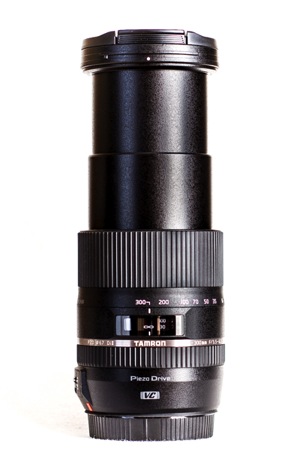
One of Tamron’s latest additions to this category is the 16-300mm F/3.5-6.3 Di II VC PZD Macro. Don’t worry, all of those letters will meet with explanations shortly. It is a lens that is marketed as a go-to option for shooting wide angle scenes, as well as zooming in very tight for those dramatic close-ups. It is intended for those who want to pack as little gear as possible, but still keep consistent quality through a huge range of focal lengths.

Lens Specifications

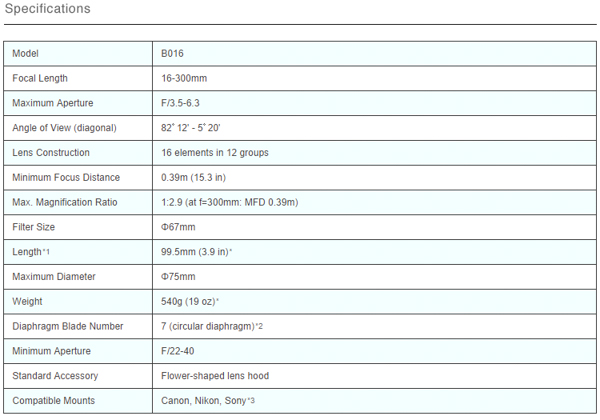
Here is the nitty gritty for this lens. The specifications are taken directly from the Tamron USA website. Please note that the lens I worked with was a Canon mount and these specifications are for Nikon mounts, but the numbers should be very similar.
Specs

Let’s talk about all those letters on the side of the lens that were mentioned earlier and go over their meanings. The “Di-II” designation simply means that the lens is intended for use with digital SLR cameras. The “VC” means that the lens is equipped with a vibration compensation (image stabilizer) feature and the “PZD” indicates the lens has Tamron’s proprietary Piezo Drive autofocus mechanism.

Fit and Finish

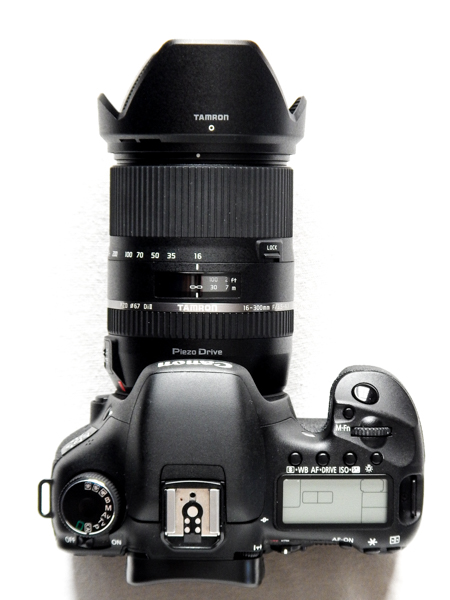
The lens shipped from Tamron USA, included a nice hood, and of course front and end caps. Taking the lens in hand, you really get a feel for the weight. My first impression was that it felt somewhat heavy but after further handling I prefer to call the weight of the lens substantial rather than heavy. Tamron lists the lens as weighing 19 ounces (540g) which is actually lighter than some other lenses of similar zoom range and aperture.

Tamron4

Tamron8

Tamron9

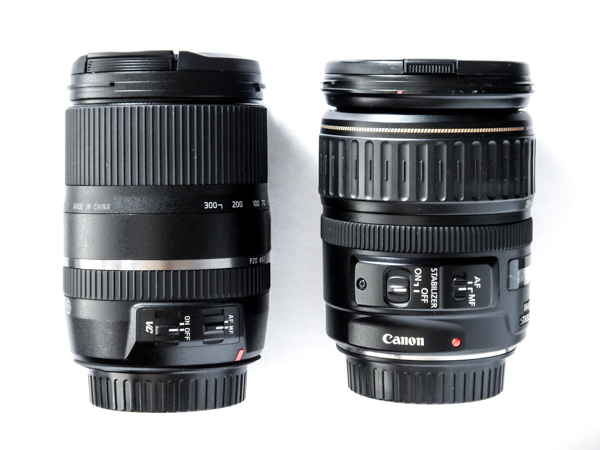
For the amount of zoom power that has been packed inside, I was very surprised at the shear compactness of this lens. Tamron’s 16-300mm is just under four inches in length at 3.9 inches (9.9cm). Here is a side-by-side comparison with my trusty Canon 28-135mm.
Sidebyside

The lens feels very solid in hand and fits securely to the camera with no rattles or gaps. All of the on-lens controls are very crisp in their function and are well placed for easy no-look operation.
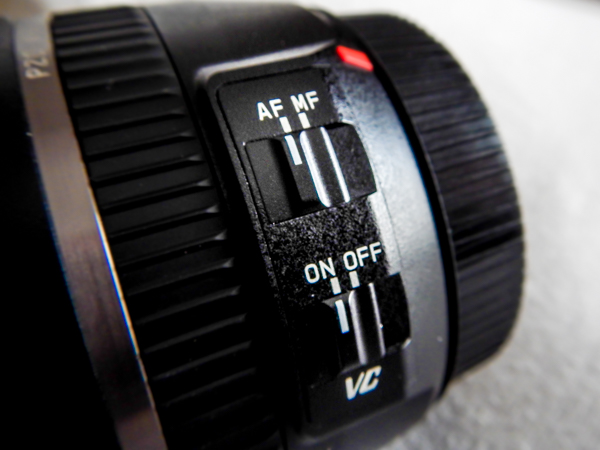
Lensswitches

The rubber used for the zoom and focusing ring has just enough bite to securely adjust the lens, without the overly rubberized and sticky feel of some manufacturer’s lenses. Straight out of the box I did notice the the zoom was very tight – and I do mean tight. However, over the course of using the lens for a few weeks the tightness quickly lessened, and the zoom remained very responsive and firm for the duration of use.

Balance and Weight

The balance on the lens is acceptable even when fully extended to 300mm. I attribute this to the relatively slender profile that keeps most of the weight close to the camera and makes this lens very nimble. That being said, you will still definitely know it is attached to your camera. Always practice good camera holding mechanics when using this and other larger lenses in the field for long periods of time.
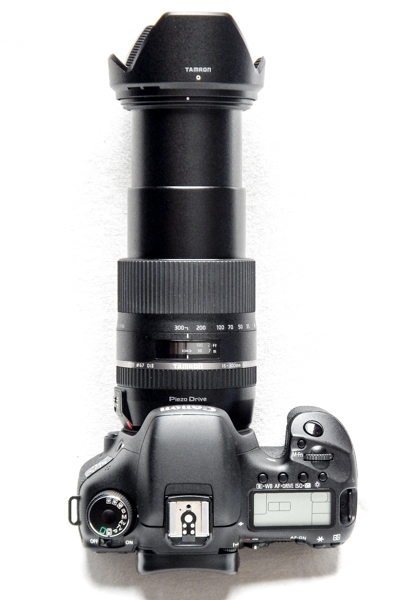
Tamron6

Performance and Image Quality

Now, on to the good stuff. I was quite impressed with the overall image performance of the Tamron 16-300mm lens. The sharpness was much better than I had expected for such a wide range variable zoom lens, even when shooting at the maximum f/3.5. Color reproduction was very good bordering on superb, and the bokeh was surprisingly creamy.


Grass

Pond

This roll of tape was shot wide at 16mm and then again at 300mm.

Tapewide

Tapezoom

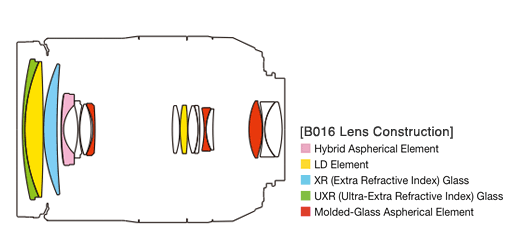
There was very little vignetting around the edges of photos and little discernible chromatic aberration. The lack of this aberration is possibly due to the choice by Tamron to include three aspherical lens elements within the internal glass array. Though debated, aspherical lenses are known to produce less optical distortion and aberrations than conventional round lens elements. Still, at the widest angle of 16mm, there is some small but noticeable barrel distortion and edge darkening of images taken at or near the minimum focusing distance of 15.3 inches (38.9cm).

Bricks

Also, at wider apertures, again there is a small but still discernible edge softening of images. Here are five images shot over varying apertures. Notice the increasing edge softness as the size of the aperture increases.

Printf44

f/44

Printf22

f/22

Printf16

f/16

Printf10

f/10

Printf6 3

f/6.3

The proprietary Piezo Drive autofocus seems to live up to the manufacturer’s acclaim. Autofocus is very fast and accurate. The focusing mechanism itself is very quiet but there is a somewhat audible clicking sound that is present when operating in AF-Servo (continuous AF) mode but it is not loud enough to cause panic for wildlife and nature photographers.

Tamron has possibly hit a home run with the image stabilization system on this lens. Referred to as Vibration Control by Tamron, the image stabilization on this lens is outstanding.
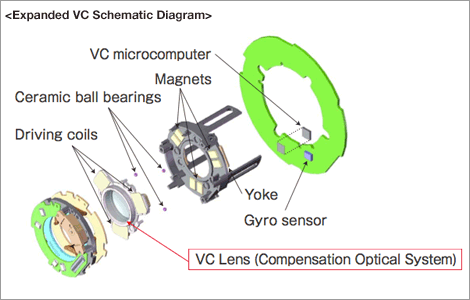
VC Diagram

When looking through the viewfinder while engaging and disengaging the VC, you can truly see an immediate and substantial smoothing out of camera shake. Though definitely not a replacement for a good tripod and steady hands, the VC made a noticeable difference in the sharpness of images taken at slower shutter speeds in low light.

Small Details

As with most gear, people place varying degrees of importance on minute details. Here are a few small points that impressed me about the Tamron 16-300mm.

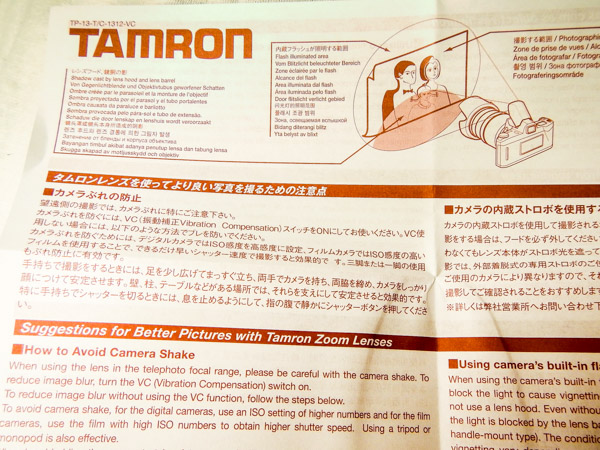
  • Tips for better shooting included – Tamron has chosen to include tips for better shooting with the paperwork that ships with the lens. Although these tips are very basic I found it be a positive gesture from the company to educate the people who purchase their product. Shootingtips
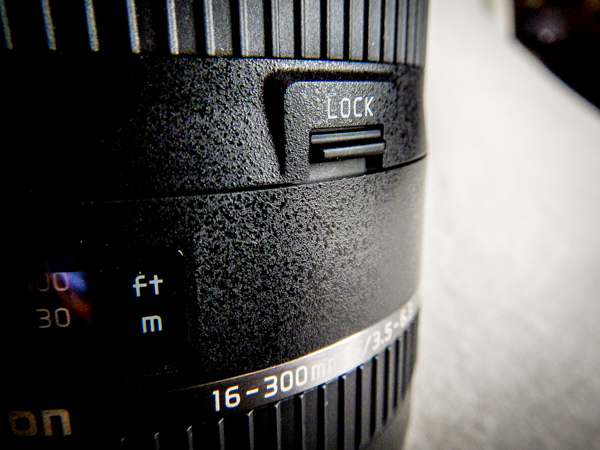
  • Zoom-lock function – A lockable zoom is very useful when you find yourself hiking or walking with a larger lens fixed to your camera. Gravity and vibration will slowly extend a downward pointing lens. The lock eliminates the constant pulling in of the lens barrel. I do, however, wish the lock could be used throughout the entire zoom range and not only at 16mm. Lenslock
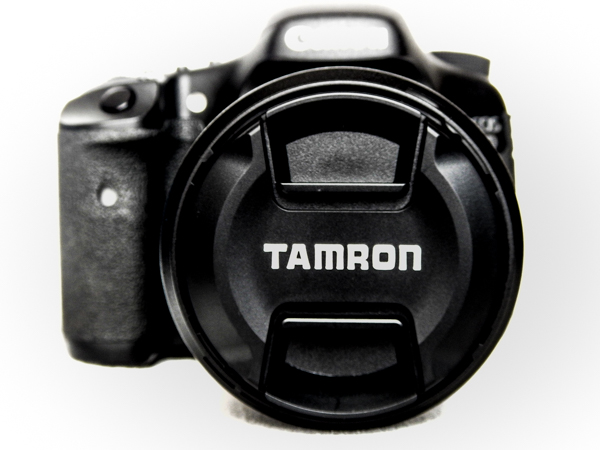
  • Deeper finger grips on the lens cap – I know, this is an extremely small and neurotic detail. In any case, it seems that Tamron has improved their lens caps with more pinchable clips making them easier to attach and remove from the lens. This feature also reduces the chance of fumbling a cap removal.
  • Aspherical lens elements – The pros and cons of aspherical lenses is delightfully arguable among photographers. Still, the aspherical lens elements in the Tamron 16-300mm do seem to reduce some distortions. Lensstack
  • Manual override autofocus – This is a handy feature. It allows you to micro adjust focus manually while still in autofocus mode. This saves you a little time and also makes it easier to maintain your mental focus while composing.
Tamron7

Bottom Line

All in one lenses are loved, hated, and everything in between. Regardless of your inclination, the Tamron 16-300mm F/3.5-6.3 Di II VC PZD Macro seems to be a strong candidate for those looking to have one lens to cover most everything they will be shooting. It is a well constructed, reasonably compact, zoom lens that can shoot landscapes and high zoom with good image sharpness and color. Wildlife and street photographers will find this lens to be outstanding for long range subjects where camera shake can make or break a photograph. Overall, this is a lens that I would be happy to have in my bag.

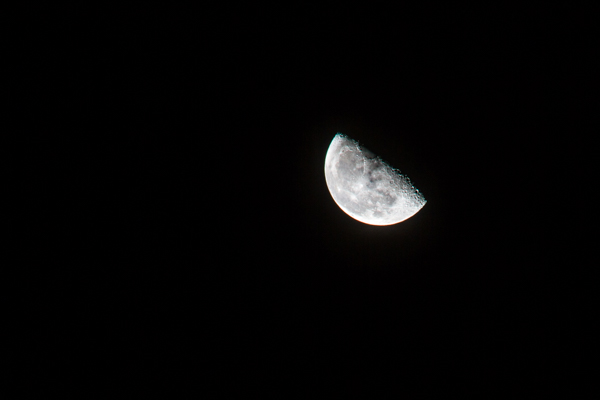
These are some sample images taken with the Tamron 16-300mm F/3.5-6.3 Di II VC PZD Macro and processed in Adobe Lightroom 5.

Leaves

Moon

Jamie

Colordrops

The post Review of the Tamron 16-300mm F/3.5-6.3 Macro Lens by Adam Welch appeared first on Digital Photography School.


Digital Photography School

 
Comments Off on Review of the Tamron 16-300mm F/3.5-6.3 Macro Lens

Posted in Photography


Photokina 2014: Hands on with new Tamron lenses – including 15-30mm F2.8

19 Sep

We caught up with Tamron at Photokina 2014 to get a peek at the new 15-30mm F2.8 ultra-wide angle zoom. It’s designed to cover a full frame sensor and was shown to us in a late prototype form, though its official launch date is unconfirmed. We also got some hands-on time with the manufacturer’s latest all-in-one zoom lenses as well as the always-impressively-huge 150-600mm F5-6.3. Read more

Articles: Digital Photography Review (dpreview.com)

 
Comments Off on Photokina 2014: Hands on with new Tamron lenses – including 15-30mm F2.8

Posted in Uncategorized


Tamron develops full-frame 15-30 f/2.8 ultra-wide zoom with vibration correction

12 Sep

Tamron has announced the development of its new SP 15-30mm f/2.8 DI VC USD ultra-wide zoom lens. This full-frame lens is the first in its class to offer image stabilization according to Tamron. The lens has an ultrasonic focusing motor, ‘eBAND’ and fluorine coatings, and a 9-blade diaphragm. The lens will be available for Canon, Nikon, and Sony mounts and will be displayed at Photokina next week. 

Articles: Digital Photography Review (dpreview.com)

 
Comments Off on Tamron develops full-frame 15-30 f/2.8 ultra-wide zoom with vibration correction

Posted in Uncategorized


Tamron SP 150-600mm F/5-6.3 Di VC USD lab test report

29 Jun

The Tamron SP 150-600mm F/5-6.3 Di VC USD is one of a select group of supertelephoto zooms for full frame SLRs that reaches or exceeds 400mm focal length, while still being reasonably portable. Its trump card over its closest competition lies in its longer focal length – at 600mm full zoom, it’ll let you get your subjects that bit larger in the frame. But does this result in an unacceptable compromise in optical quality? See the lens test data and our analysis

related news: Digital Photography Review (dpreview.com)

 
Comments Off on Tamron SP 150-600mm F/5-6.3 Di VC USD lab test report

Posted in Uncategorized


Tamron lens profiles added to Adobe Camera Raw

27 Jun

Tamron has announced the addition of profiles for two of its lenses to Adobe Camera Raw. The Tamron SP 150-600mm F/5-6.3 Di VC USD for Nikon mount and the 16-300mm F/3.5-6.3 Di II VC PZD Macro for both Canon and Nikon mount have been profiled for use with Adobe’s tools for lens aberration correction for users of Adobe Photoshop CC, Adobe Photoshop CS6, Adobe Camera Raw and Lightroom 5.

related news: Digital Photography Review (dpreview.com)

 
Comments Off on Tamron lens profiles added to Adobe Camera Raw

Posted in Uncategorized


Tamron SP 150-600mm F/5-6.3 Di VC USD lab test report

26 Jun

lensreview-thingsmall1.png

The Tamron SP 150-600mm F/5-6.3 Di VC USD is one of a select group of supertelephoto zooms for full frame SLRs that reaches or exceeds 400mm focal length, while still being reasonably portable. Its trump card over its closest competition lies in its longer focal length – at 600mm full zoom, it’ll let you get your subjects that bit larger in the frame. But does this result in an unacceptable compromise in optical quality? See the lens test data and our analysis

News: Digital Photography Review (dpreview.com)

 
Comments Off on Tamron SP 150-600mm F/5-6.3 Di VC USD lab test report

Posted in Uncategorized