RSS
 

Posts Tagged ‘Taking’

Sunset, golf and a fake nuclear missile: How I spent four days taking pictures in Hawaii

27 Jan
Sony a6500 | 18-135mm F3.5-5.6 OSS @ 95mm | ISO 100 | F6.3

Being a child of the Midwest a hike, in my mind, is more or less walking across land that is mostly flat. There are trees, usually a dirt path, and maybe the occasional hill. A hike in Hawaii, I came to learn recently, can mean something vastly different.

I was in Hawaii on a Sony-sponsored trip along with a handful of other photography journalists, on Oahu for two vastly different shooting experiences: shooting pro golf with the a9, and trying out a new 18-135mm F3.5-5.6 zoom for the a6000-series. I was armed with a TSA-approved 3.4 ounces of sunscreen, a handful of memory cards and a pair of running shoes that prove to be woefully outmatched by the “hike” we’re about to embark on.

My first clue should have been when one member of our party put some spiky, chainmail-type overshoes on top of her street shoes. We walked across a parking lot toward the “trailhead,” a rocky slope where a faint suggestion of a path disappeared into some trees. What followed was 30 minutes of scrambling up a steep incline, grabbing at roots, tree branches and rocks for support. Oh, and did I mention I have a slightly weird thing about heights?

Suddenly, I was quite grateful for the a6500 and the lens’ small size. The whole kit fit easily into a low profile backpack and didn’t provide an extra physical challenge to overcome. Along the way we found a couple of points to stop off, breathe, and take a few photos. Every time we stopped I considered chickening out on the rest of the climb. Nobody would judge me, and I’d get perfectly nice photos from halfway up.

Sony a6500 | 18-135mm F3.5-5.6 OSS @ 18mm | ISO 100 | F4.5

Maybe the morning’s events made me feel bolder (more on that later). Maybe being the only lady journalist on the trip made me hungrier to prove my grit. Maybe it was just the beer I had at lunch giving me some extra courage. I kept going whatever the reason, and I’m pretty darn glad that I did.

Insert your favorite inspirational quote / rap lyric about making it to the top here.

Sony a6500 | 18-135mm F3.5-5.6 OSS @ 18mm | ISO 200 | F5.6

I wouldn’t have wanted to carry a lens/camera combo much bigger than the a6500 and 18-135mm on that hike. For its size, it proved to be a pretty versatile kit. The lens was wide enough for a sweeping view of sunset in the valley, but long enough for a quick shot of a helicopter in the distance when it swooped by unexpectedly. Your standard kit zoom wouldn’t have provided quite as many options.

Did you instinctively start humming the Jurassic Park theme when you saw this image? No? You’re a liar.

Sony a6500 | 18-135mm F3.5-5.6 OSS @ 90mm | ISO 100 | F5.6

I tend to gravitate toward wide lenses and like the convenience of carrying lightweight primes, but I was very happy to have the variety that the telezoom offered. When you’re standing on one 3′ x 3′ rock scared to move left or right for fear of falling to your death, you don’t have too many composition options with a 24mm prime.

As it turns out, that hike wasn’t the only time I contemplated my own mortality that day. Let me tell you about the events of that morning.

We all know now what happened, but when you’re woken up by your phone buzzing with this message (special attention to the part that says THIS IS NOT A DRILL) it makes for a very strange start to the day. The short version of my story is that I spent about 15 minutes in a semi-panic, and having only the tornado drills of my youth to call on for guidance, huddled in my hotel bathroom with a single bottle of water. Not exactly your best shot at surviving a nuclear attack.

I wish I could say I had some kind of profound experience when I found out it was all a mistake. In reality, I just put on some shoes and went downstairs for coffee and a yogurt, and more or less just went about my day. I made time to get into the ocean. That was nice.

A couple of days before the threat of nuclear warfare appeared on my phone, I found myself in a very different state of mind as I tried to photograph professional golf.

Sony a9 | FE 100-400mm F4.5-5.6 GM OSS @ 121mm | ISO 100 | F5.6

Golf is a mysterious game. As opposed to the tennis tournaments and baseball games I’m familiar with, the action happens all around you. I’ve thought of it as a game with a leisurely pace, but trying to photograph it for the first time, I’m amazed at how quickly the action unfolds. You have to get into position, pray that a caddy doesn’t step into your way at the last moment, and you only have a few seconds to get your shot before it’s all over. Oh, and you have to keep in mind the direction of the sun, ugly things like trash cans creeping into your backgrounds, and woe betide you if you make even a peep as a golfer prepares to swing a club – you’ll be swiftly escorted off the grounds.

“Game changer” has become sort of a joke around the office since it’s a phrase that’s been used to death and rarely lives up to its meaning. But if you’re a golf photographer, you really could consider the a9 to be a game changer. Plenty of resolution, 20 fps and silent shutter – particularly that last bit – is huge for a sport where silence isn’t just golden, it’s mandatory. Jeannette Moses noted this revelation when she photographed the Presidents Cup last year with the a9. I’ve seen it firsthand too, and it really is strange to be so close to a professional golfer raising his club to strike the ball while firing away at 20 fps.

Sony a9 | FE 100-400mm F4.5-5.6 GM OSS @ 100mm | ISO 100 | F5.6

Sony’s making a clear appeal to pro sports photographers with the a9, and before we set foot on the golf course we got a primer on the company’s efforts to bolster its offerings with Pro Support. If you aren’t familiar, this is a program for working photographers that aims to put Sony on even footing with Canon and Nikon.

Sony Pro Support members pay a $ 100 annual fee that entitles them to 24/7 phone and email support and access to service centers in Los Angeles and New York. If you need to send a product in for a fix, Sony claims a three-day turnaround with free loaner gear to cover repairs that take longer. To qualify, photographers must own at least two full-frame Sony bodies, three lenses and must be actively earning income from their photography.

For comparison, Nikon uses a point system and requires at least two camera bodies and two lenses. The system is tiered, but all levels include priority repairs, repair loans and discounts on repairs. Canon also uses a point-based tiered system, but doesn’t require a certain number of lenses or bodies.

I’m by no means a pro, and shooting golf proves to be a much more challenging experience than I was anticipating. An afternoon carrying two camera bodies, one of them with a sizable 100-400mm lens attached, was a fairly taxing endeavor. I also put my finger on the shutter too gingerly a few times, and with 20 fps silent shutter it’s easy to end up with hundreds of photos you didn’t mean to take. From over 3000 (!) images, I managed to scrape together a handful I feel comfortable putting my name next to. Not exactly a stellar hit rate.

Sony Open gallery

$ (document).ready(function() { SampleGalleryV2({“containerId”:”embeddedSampleGallery_8041997224″,”galleryId”:”8041997224″,”isEmbeddedWidget”:true,”selectedImageIndex”:0,”isMobile”:false}) });

I have a renewed appreciation for the tough job pro sports photographers have, and a respect for Hawaii’s lovely-yet-dizzying hiking trails. I also jump out of my seat now when my phone buzzes too loudly and I’m finally getting serious about putting together an earthquake preparedness kit. But my feeling of having stretched myself as a photographer, and I suppose as a hiker, outweighs my sense of distress over the whole thing. And if you’re going to survive a fake nuclear missile attack, there are worse places to experience it than Hawaii.

Sony 18-135mm F3.5-5.6 OSS sample gallery

$ (document).ready(function() { SampleGalleryV2({“containerId”:”embeddedSampleGallery_3207546459″,”galleryId”:”3207546459″,”isEmbeddedWidget”:true,”selectedImageIndex”:0,”isMobile”:false}) });
Articles: Digital Photography Review (dpreview.com)

 
Comments Off on Sunset, golf and a fake nuclear missile: How I spent four days taking pictures in Hawaii

Posted in Uncategorized


Selfitis, the obsessive taking of selfies, may be a real mental disorder

30 Dec

A viral article published in 2014 claimed that the American Psychiatric Association had established a new mental disorder called “selfitis” — that is, the obsessive taking of selfies. That article, though fake, inspired a real exploratory study to determine whether a condition like the one described in the article could exist…and, the research shows, it very well may.

Of note, the fake viral article had claimed that selfitis existed across three levels of severity: borderline, acute, and chronic. To determine whether that could be true, researchers Mark D. Griffiths and Janarthanan Balakrishnan conducted interviews with a focus group of 225 Indian university students to attempt to create what they called the Selfitis Behavior Scale (SBS) based on those three severities.

Having created the SBS, and as explained in the recently published study, the researchers then attempted to validate it using exploratory factor analysis (EFA). For this, they recruited 734 total students, and identified 400 students as belonging to one of the three severity categories they’d outlined — the breakdown being 34% borderline, 40.5% acute, and 25.5% chronic. The most severely affected age group was 16- to 20-years-old at 56%, while 21 to 25 was the next highest age group at 34%. As well, men represented 57.5% of the categories, while women represented 42.5%.

As a result of the EFA, the two researchers were also able to identify half a dozen factors referred to in the study as “selfitis motivations” — they include social competition, seeking attention, modifying mood, boosting self-confidence, conformity, and enhancing one’s environment.

The researchers note that the study has some limitations, including that the data was self-reported and “subject to many well-known biases.” However, it indicates that a mental disorder like “selfitis” could possibly exist and that it is worth further investigation. “As with internet addiction,” the study states, “the concepts of “selfitis” and “selfie addiction” started as a hoax, but recent research including the present paper has begun to empirically validate its existence.”

Via: PetaPixel

Articles: Digital Photography Review (dpreview.com)

 
Comments Off on Selfitis, the obsessive taking of selfies, may be a real mental disorder

Posted in Uncategorized


Tips for Taking Documentary Style Travel Photos

14 Oct

Documentary style photography has long been of great fascination to me. The sheer act of photographing people and places to document spontaneous moments and the imperfections associated with it gives such photography, and the photographer, a sense of being authentic, real, and free to exercise his/her creative freedom.

Officially, documentary style photography has many technical definitions. As per Wikipedia, documentary style of photography is used to chronicle events and environments in a naturally occurring state very much like photojournalism. I like to think of a documentary style of photography as the letting go of my inhibitions and preconceived notions of perfection. That I’m documenting people and places in their natural environment – being or doing what they do on any given day.

Tips for Taking Documentary Style Travel Photos

This scene literally happened right in front of me in Jaipur, India – the classic story of the billy goats!

I find that by approaching travel photography in a documentary fashion, I am able to have a richer travel experience. Because I can relieve my mind of the pressures of photographing just like everyone else and also walk away with some unique frames that speak to my own experiences.

To that end, here are a few tips to keep in mind for a documentary style approach towards your travel photography.

#1 – Be present in the moment

Being present in every moment of every day is a life lesson we all can benefit from. It doesn’t just apply to travel photography. Great moments happen every day around us that are worth documenting not just for our clients but also for ourselves so that we can live a richer, fuller life.

Tips for Taking Documentary Style Travel Photos

People watching is a great exercise in training your eye to really catch that which is unusual and unique to a place – these boys in the market in Jaipur were observing me just as much as I was observing them!

By training your mind to really live life in the moment and not worry about all the other distractions will also help you really “see” what is around you. More often than not, you likely travel with a very tight agenda and timeline. No sooner than you get to your destination, you are already mentally prepared to move on to the next stop. Instead, try and plan a single excursion for a day and really focus on learning and experiencing that place or activity before moving on.

#2 – Be observant of your surroundings

Life is happening all around you all the time. People interacting with each other, people interacting with nature, nature putting on a grand show during sunrise, sunset, or even during a thunderstorm. But don’t wait for some preconceived notion of the perfect moment to take your camera out and take a photo.

At the same time, don’t see the world simply through your viewfinder. Observe the scene, anticipate the shot that you really want to get and be ready to take the shot. Don’t just fire away at every situation only to get home to realize that you completed missed the moment and hence missed the shot as well.

Tips for Taking Documentary Style Travel Photos

I once found myself in the middle of a village festival/ritual when I was traveling in India. I had no idea what was going on but knew I had to document this. Luckily a female photographer was somewhat of a rarity in this village and I was given a special seat in the middle of all the action (without a word spoken amongst me and these women)! It was fascinating to see and experience.

Tips for Taking Documentary Style Travel Photos

I later found out that these women were taking one of the female members of their family to each house to get blessings as she was supposed to be possessed by a female deity and have god-like powers…certainly an experience I will never forget!

#3 – Be real about your travel photography goals

A very famous travel quote says, “We travel not to escape life, but so that life does not escape us” really hits the nail on the head for me. Be real about why you travel and what you want to gain out of each travel experience. If you are traveling to a marketplace and want to get a true sense of local lifestyles and customs, then look for naturally occurring scenes. Don’t look for people that you can pose or stage to get your shot.

Tips for Taking Documentary Style Travel Photos

This is by no means a perfect shot but I love the fact that this angle shows just how crazy transportation choices can be in smaller villages and towns in some countries!

#4 – Be aware of your gear choices

Packing for any sort of travel is an art in itself, especially if you are going away for an extended period of time. Documentary style travel photography requires a slightly different mindset in terms of gear than say perhaps wildlife or portrait photography.

I find that for documentary style travel photography a zoom lens like the ultra-wide angle focal length like the Canon 16-35mm f/4 or one like the Canon 24-70mm f/2.8 works well for me. While a fast lens is ideal, I don’t usually find myself photographing at an aperture lower than f/4 or f/5.6. More often than not, I have more than one subject in the scene and also want to capture some of the background in order to provide content to the shot.

Tips for Taking Documentary Style Travel Photos

I was in Rome for three days this past summer but couldn’t get the famous Spanish Steps without people no matter what time of the day I tried. So instead, I chose to embrace the crowds and showcase this famous monument as the tourist attraction it really is!

#5 – Be confident in your skills

Documentary style photography is generally quite fast paced. You are trying to capture a scene as it is playing out in front of you. You don’t really have the time or the opportunity to re-compose the shot and then click the shutter. However, this does not mean

However, this does not mean that you have to just fire away at the maximum fps (frames per second) that your camera can handle, then pick the best of the lot in post-processing. Instead, use your technical as well as artistic skills to read the scene, analyze the light, assess the right camera settings, imagine the outcome, anticipate the shot and then take the picture. Oh, by the way, bear in mind that you will not likely get a redo.

Portland Mountains from the flight - Tips for Taking Documentary Style Travel Photos

I had almost no time to really plan this shot out…I knew I wanted to try and get all three of the famous peaks of the Pacific Northwest in one frame while at about 35,000 feet in the air.

Conclusion

I hope these tips convey my love for documentary style photography and do not scare you away from it. This style of photography has its own charm. Even though it may appear to be highly unplanned and random, it is also a good mix of carefully anticipated planning and authenticity. Give it a try the next time you travel and let me know how it goes.

The post Tips for Taking Documentary Style Travel Photos by Karthika Gupta appeared first on Digital Photography School.


Digital Photography School

 
Comments Off on Tips for Taking Documentary Style Travel Photos

Posted in Photography


Taking the Canon 28mm F2.8 IS USM to Big Sur, California

08 Oct

Big Sur, little lens

Standing alongside the Bixby Creek Bridge in Big Sur, California. Processed to taste from Raw.
ISO 125 | 1/160 sec | F11

By virtue of a considerable quantity of dumb luck, we had timed it perfectly.

Our belongings shifted gently to and fro in our rented cherry-red Hyundai Sonata as we zig-zagged freely along Highway 1 in California’s Big Sur region, a stretch of road that has been described as the ‘longest and most scenic stretch of undeveloped coastline in the contiguous United States.’*

We were visiting Big Sur just into the off-season, with Highway 1 subdivided by a massive landslide to the south and a bridge closure to the north. As a result, the road was remarkably unoccupied, devoid of the typically ubiquitous caravans of gawking tourists.

Although the extensive closures tacked on about six hours of additional driving onto our trip, the journey along the famous Nacimiento-Fergusson Road – the only way in and out of the region cut-off by the closures – was unforgettable. Unfortunately, thanks to the rampant switchbacks, it was also literally nauseating. Can’t have it all, I guess.

It was into this scenario that I brought Canon’s diminutive 28mm F2.8 IS USM lens attached to an EOS 5D Mark IV; my only photographic tools for the duration of our time in central California.

Fitting into the lineup

Photograph courtesy Jordan Stead

The Canon 28mm F2.8 IS USM is not a new lens by any means. So why write about it now? Well, for starters, we didn’t yet have a gallery on it here at DPReview. It also happens to be among the smallest and lightest full-frame Canon lenses around, and so a great way to (attempt to) minimize the bulk of bringing a full-frame DSLR on my vacation.

Announced back in early 2012 alongside its 24mm cousin, the 28mm IS is very straightforward. You get a rubberized focus ring with a fairly long throw, an AF/MF switch and a stabilizer on/off switch. And that’s about it.

Alongside Canon’s EF 40mm F2.8 Pancake and two ‘nifty fifties,’ it’s among the the lightest full-frame lenses that the company currently offers, though it is by far the most expensive of this group with a current MSRP of $ 499. Despite its price, the 28mm IS does not come with any claims of weather-sealing, which is a disappointment.

I’m happy to report that, despite the lack of weather sealing, the EF 28mm F2.8 IS USM survived a few drops of salt water. Processed to taste in Adobe Camera Raw.
ISO 100 | 1/200 sec | F8

Regardless, the build seems very good. The outer barrel is polycarbonate, and the mount is metal. Due to the stabilizer, there’s a very slight rattle if the camera is jostled while the power is off, but the 28mm has an overall dense feel of quality to it.

For use on 30MP (and even higher pixel count) cameras, the 28mm is good, if not mind-blowing in terms of sharpness. There are also noticeable amounts of green and purple fringing if you leave those corrections off, but both the camera’s JPEG engine and Adobe Camera Raw tame those handily, so it’s rarely an issue.

Corrections off Corrections on
I actually quite like some vignetting, and in certain situations, I think it can add to a certain ‘mood.’ It certainly won’t be everyone’s cup of tea, though.

The biggest issue you’re likely to run into comes in terms of vignetting, which is readily noticeable with this lens. In particular, if you have the corrections turned on within Adobe Camera Raw, the corner exposure will be lifted enough as to perhaps introduce unwanted noise, especially if your image was already taken at a higher ISO value.

Recommendations

I’ll freely admit that I haven’t been much of a 28mm guy until this past year and half. That changed after I was tasked with reviewing the Leica Q, and subsequently purchased a secondhand Nikon Coolpix A as a casual carry-everywhere camera.

Without a super fast aperture or a telephoto lens to fully isolate subjects and blur backgrounds into oblivion, the 28mm F2.8 IS USM made me slow down and focus on my compositions more. Processed to taste in Adobe Camera Raw.
ISO 160 | 1/125 sec | F4

What I find most intriguing about the 28mm focal length this Canon offers is that it forces me to think more holistically about the images I’m making. Without telephoto compression or a faster aperture to more easily isolate my subject, the context becomes nearly as important as the subject itself.

When I pick up a 35mm, 50mm or 85mm lens, I know that I’m likely going to get a faster aperture, and more background compression, making the scene look a little more ‘interpreted.’ When I pick up a 24mm-and-wider lens, I’m often doing my very best to exaggerate the perspective between objects that are both near to me and far away for a more interesting look.

But with 28mm, I feel almost as though I’m simply documenting what’s happening in front of me without letting the optics of wider or more telephoto focal lengths influence the look of the scene.

Processed to taste in Adobe Camera Raw.
ISO 100 | 1/250 sec | F8

In other words, it’s a fun challenge if you’re used to those other options. As with many photographers, I’ll admit I sometimes find myself relying on fancy gear as a crutch to make a photograph more ‘interesting.’ On the other hand, this 28mm lens just got out of the way and recorded what I put in front of the camera; it was up to me to make the most of my subjects and compositions.

If you haven’t given 28mm a try, I’d certainly recommend it, and if you happen to be a Canon shooter, the EF 28mm F2.8 IS USM represents a solid, lightweight and affordable option.

Samples

Please do not reproduce any of these images on a website or any newsletter / magazine without prior permission (see our copyright page). We make the originals available for private users to download to their own machines for personal examination or printing (in conjunction with this review), we do so in good faith, please don’t abuse it.

Unless otherwise noted images taken with no particular settings at full resolution. Because our review images are now hosted on the ‘galleries’ section of dpreview.com, you can enjoy all of the new galleries functionality when browsing these samples.

$ (document).ready(function() { SampleGalleryV2({“containerId”:”embeddedSampleGallery_6264240715″,”galleryId”:”6264240715″,”isEmbeddedWidget”:true,”standalone”:false,”selectedImageIndex”:0,”startInCommentsView”:false,”isMobile”:false}) });

* Per Wikipedia: Marvinney, Craig A. (1984). “Land Use Policy Along the Big Sur Coast of California; What Role for the Federal Government?”. UCLA Journal of Environmental Law & Policy. Regents of the University of California. Accessed 22 August 2016.

Articles: Digital Photography Review (dpreview.com)

 
Comments Off on Taking the Canon 28mm F2.8 IS USM to Big Sur, California

Posted in Uncategorized


5 Tips for Taking and Caring for Your Camera Equipment in Far Away Places

06 Oct

If the thought of being away from all your camera equipment stresses you out, this article is exactly what you need! I can safely say that being on the road for over two and a half months teaches you a thing or two about need and necessity versus wants.

Road trip

For the longest time, one of my dreams has been to live away from home and travel with my family for an extended period of time. I used to dream about all the places I could travel to, and how much fun I would have living a nomadic life. Of course, then I would wake up and the realities of my responsibilities would take over.

However, earlier this year after suffering a big life setback with the loss of my mom to cancer, I decided that my life was too short to not make my dreams come true. After several months of discussion and planning, my husband and I decided that our little family would spend our summer in India – traveling and visiting family. Somewhere along the way a trip to Ladakh, London, Zurich and Rome got added to my roster and pretty soon I was in charge of planning and packing for a life on the road for two and a half months living out of just four suitcases – one for each one of us. Being a photographer, I knew that somewhere in there I had to pack my camera equipment along with my essentials.

Taking and Caring for Your Camera Equipment in Far Away Places

Sunsets along Lake Zurich were magical – one of my favorite cities that I have ever visited!

Here are a few things that really helped me make the most of my time away from home. It is very likely that I have missed some key photographic opportunities but overall I am very happy with my time away, the opportunities that my family has experienced, and the images that I have created. And as an added bonus, all the camera equipment I did take made it back without any major mishaps along the way.

#1 – Gear Choices

Let’s face the reality of life as a photographer – we all love and want all the gear that we think we need wherever we go. When I was packing I realized that as a photographer I had so many things I wanted to bring, but as a mom, the need for gear was quickly overruled by the need for practical things like clothes, shoes, books, toys, etc. I had to make some very hard choices on the camera equipment that I could take, versus the gear I wanted to take. I narrowed down my list based on where my travels would take me and what gear I could realistically carry and transport safely without any damage.

So, in the end, I settled for this kit:

  • A wide zoom lens – Canon EF 24-70mm f/2.8.
  • A simple point and shoot camera (yes, this was my backup as weight was a concern when flying to and from Asia with layovers on the way there and back).
  • One telephoto lens – Canon 70-200mm f/2.8L.
  • One camera body – Canon 5D MK III.
  • Four camera batteries.
  • One battery charger.
  • A small travel tripod – just a generic brand – mine fits in my carry-on bag.
  • A remote trigger.
  • Five camera CF cards ranging from 8GB to 32GB.
  • Two 2TB External Hard drives ( primary photo storage and a backup photo storage).
  • Two generic lens and camera cleaner kits.

All of these things comfortably fit into my REI brand hiking backpack. I use this bag for everything and store my gear in individual soft-cover bags inside the pack. This is what I have done since day one and something that has worked well for me.

The one thing I wish I had taken with me was a rain cover for my camera. My backpack had its own rain cover which I used numerous times during the trip because we got caught in sudden downpours in the mountains. But without a separate rain over my camera, I was not able to use my gear in the rain.

#2 – Be Prepared and Organized

For me, being prepared and organized included having a rough idea of where I was going and the kind of environment I was going to expose myself and my gear to. Before I left, I jotted down all the serial numbers, make, and brand for my camera equipment and stored them in a document on my cloud-based Dropbox account. All my external hard drives were stored off-site at a friend’s place as well as the remainder of my gear.

Now, obviously, this is a friend I trust. But another option would be to lock it in off-site storage facility. As part of your research, another good thing to keep in your back pocket is the name, address, and contact information of authorized service dealers for your gear in the country you are visiting. Sometimes things just go wrong no matter how prepared you are. Being prepared with this information about services centers and authorized dealers for your gear is a time saver especially when you are traveling in areas where the internet connection is not very reliable.

Taking and Caring for Your Camera Equipment in Far Away Places

An hour’s hike from our campsite in the Himalayas got us to this beautiful alpine lake. But by the time I could get the camera and tripod out, the fog set it…and it was magical!

During my travels, my gear choices on the road would depend on the activities that were planned for the day and the fact that this was a family travel trip, not just a photography expedition. In Rome and Zurich we traveled everywhere either on foot or used public transportation. So I just carried my camera body and the 24-70mm lens among other daily necessities in my backpack. The rest of my camera equipment was either packed away in the hotel room safe or locked away in my suitcase.

When we hiked and camped in the Himalayas, my camera along with both my lenses were always on my person, and the tripod was handed off to the porters that were carrying our camping gear. For my camping trip, I just carried all my CF cards and ditched the charger and external hard drive at the house where we were staying because it was highly unlikely I’d find a charging port on that journey.

All these choices were possible because of the research I had done ahead of time.

Taking and Caring for Your Camera Equipment in Far Away Places

Much of Ladakh is dry and barren and upwards of 10,000 feet above sea level. Altitude sickness is very real and sometimes your gear also acts up. Of course, these dramatic views almost make up for any hardships.

Additionally, a good mindset to have when you travel to far-off exotic locations is one of acceptance of physical and mental limitations – both for yourself and your camera gear. I experienced some altitude sickness in Ladakh as we were traveling on roads at almost 17,000 feet above sea level. I also found my gear did not function as efficiently at that altitude. My batteries did not last as long and the camera also did not shoot as fast. The first few times it happened I freaked out. But then I just accepted it as something beyond my control and gave myself some extra time to be patient in getting the shot that I wanted.

#3 – Know Your Gear

This one is too basic to include here but it is amazing how many of us don’t follow this simple tip. We are so enamored with the latest and greatest gear available, but yet don’t quite know how to use the stuff that we do own.

The best way to get over this is to really limit yourself to a few key pieces of camera equipment for an extended period of time. One of my goals for this trip was to try and capture star trails and The Milky Way when I traveled to Ladakh. After all, I was going to be in a remote part of the country at an altitude of almost 15,000-17,000 feet above sea level. Barring any bad weather, I should be able to get relatively clear shots of The Milky Way and star trails.

Now astrophotography is not my thing. I always limited myself from trying it out because I don’t usually travel with a tripod, nor do I own an intervalometer. So this time I actually downloaded the camera manual on my phone and studied it before I left. With that information, I was able to comfortably and confidently use the B (a.k.a Bulb mode) on my camera to capture star trails in Ladahk. It was quite a thrilling experience for my maiden attempt.

Taking and Caring for Your Camera Equipment in Far Away Places

A 26-minute exposure while sleeping in the car near Jisp along the drive to Leh was one of the highlights of my trip. This is one of my first star trails shot and now I find myself looking out for stars every night! This would have been impossible without a tripod and proper remote trigger.

Another good thing to practice before you head out is gear maintenance. I had to routinely clean my lens and camera throughout this trip. I made the decision to carry two camera cleaning kits just because I knew my gear would get a lot of use. Before every major outing, I spent the time to clean out the dirt and dust from the camera and the lens. The dust pen was kept in my camera bag just in case I needed it while I was out and about photographing.

#4 – Be Local and Think Like a Local

I have to include this one in any travel photography related article because it does relate indirectly to taking care of yourself and your gear. Often times I find photographers I meet along my journeys have a fake sense of entitlement. When you are a guest in someone’s house, are you not on your best behavior? Why is it that when you are a guest in another country, common sense and basic manners seem to fly out the window.

Locals are still people who deserve the same amount of respect and courtesy as anyone. Put yourself in their shoes and try to imagine what they experience when someone shoves a camera in their face without so much as a hello or a smile.

While in Ladhak, we visited a lot of beautiful monasteries. Most of them are still in use and we saw many temples where the monks were in prayer. Even if there is no sign discouraging photography, please use common sense to not invade their private space especially when they are chanting. I cannot tell you how many times I came across tourists that almost jumped over each other or hanging out of moving cars just to take pictures of them chanting and praying. Seeing this rude behavior almost made me embarrassed to take my camera out.

Taking and Caring for Your Camera Equipment in Far Away Places

The infamous cable cars in Lucern, Switzerland…the clouds adds a certain mystery and aura to these engineering marvels!

Additionally flashing your fancy gear around is almost begging for the wrong kind of attention. I remember this one evening in Rome, I was out with my kids taking photos around some of the beautiful horse-drawn carriages. We lost track of time and soon found ourselves in a fairly deserted alley. I quickly put my gear away in my backpack, stuffed it with our jackets, grabbed my kids, and sprinted towards a more crowded piazza.

#5 – Make Friends with Local Photographers

The internet is an amazing tool for almost anything. It is such a great resource to find and connect with other photographers, especially if you are traveling to areas that are new and foreign to you. I was able to connect with some photographers in India as well as in Rome this summer. We chatted on the phone, met for dinner and just became friends.

They even gave me advice on some of the local, non-touristy spots to photograph as well as offered to lend me gear if I needed it. We tried to plan a shoot in India but the timing was not right, I know that the next time around we are going to create some magic, though.

Taking and Caring for Your Camera Equipment in Far Away Places

I met up with another photographer and we attempted to do night photography in Mumbai. But the moisture in the air because of the monsoons was causing some weird light trails against all the lights. So we went for ice cream instead! But it was a cool experience none the less.

Conclusion

I hope these tips are helpful as you plan your next vacation in a far-off destination. If you have other tips and tricks that worked for you, please share them with the community so we may all learn new ways to have an exciting and creatively satisfying vacation.

The post 5 Tips for Taking and Caring for Your Camera Equipment in Far Away Places by Karthika Gupta appeared first on Digital Photography School.


Digital Photography School

 
Comments Off on 5 Tips for Taking and Caring for Your Camera Equipment in Far Away Places

Posted in Photography


From Mundane to Magical: Tips on Taking Your Photos to the Next Level

05 Oct

You may be at a point with your photography where you are comfortable operating your camera and are capable of taking a good picture. You can work with exposure, you understand composition, and can even enhance your photos in post-processing. You should be pleased with this, as this puts you ahead of the vast majority of other photographers. But at the same time, perhaps you are not seeing the elevation in your results that you expect. You are beginning to wonder why you aren’t getting more stunning pictures. Are you doing something wrong? Is there some part of this you’re not getting?

From Mundane to Magical: Tips on Taking Your Photos to the Next Level

We all go through a phase where we feel like we know what we’re doing but are frustrated by a lack of great results. In fact, for some of us, it always feels like this. You’ll never go through a time where you’re hitting magical shot after magical shot. It just doesn’t work like that. You are after something extraordinary, and by definition that is rare.

How do you maximize your chances of finding these great shots? The short version is, “through a lot of effort,” and – while true – that isn’t very helpful. So here are some areas where I focus my efforts and perhaps they will help you too.

1. It Starts with Location

We all seem to want to take our cameras down to the local park or take a stroll around a nearby lake and then come home with stunning pictures. For the most part, it just doesn’t work like that. You typically need a great location in order to end up with a great picture.

You have likely heard that “you can take a great picture anywhere” – and that is true. But just because it is possible doesn’t mean it is probable. Magical lighting or sheer genius may allow some to get great shots in ordinary places, but it is extremely unlikely. To put the odds in your favor, you need to start with an extraordinary location.

How to Scout Your Photography Locations

From Mundane to Magical: Tips on Taking Your Photos to the Next Level

Everyone from tourists to photographers, to the producers of the Game of Thrones use this location as the background for their shots. Dark Hedges, County Antrim, Northern Ireland.

How do you find such a location? There are lots of ways. If you are going to a well-traveled place such as a large city or a national park, some enterprising photographer has likely done the work for you. They will have written a book on how to photograph that particular place. These guides are invaluable and often all you will ever need. Beyond that, there are a plethora of online resources. I personally start with the 500px World Map and look at where great shots have been taken. I also like to check out the work of photographers who specialize in whatever I am going.

These resources will help you pick out good places to go. But they will also help you pinpoint specific spots to head to once you are in the area. None of this is to say you should slavishly copy any of these people, but rather that you should let their work inspire you and give you an idea of great locations that might serve as a backdrop for your upcoming stunning picture.

2. Getting that Magical Lighting

A great location alone will not result in a stunning picture. I’ve been to countless areas of great natural beauty or stunning urban environments only to walk away empty-handed. To create the stunning picture you are after, you are also going to need great lighting.

Some of you will create your own lighting through the use of flash. In that case, you’ll be able to create your own stunning lighting – and the whole thing is up to you. But that doesn’t work for me since I am always out and about photographing scenes, which aren’t as conducive to using flash.

Assuming you are like me and are relying on natural lighting, you just cannot guarantee great lighting. We all have to deal with bad weather and occasionally things don’t work out. That said, you can put the odds more in your favor.

Photograph at Sunrise and Sunset

From Mundane to Magical: Tips on Taking Your Photos to the Next Level

When you are photographing the outdoors, the sky is often a big part of the picture. A great sunrise or sunset, therefore, goes a long way toward helping you create a great picture.

The first thing to do is make sure you are photographing around sunrise or sunset. I cannot tell you the number of times people have asked me how to elevate their photography and when I look at their pictures I find that they were all taken in the middle of the day. Usually, that’s just not going to work.

Photographing at sunrise or sunset has a myriad of advantages. The sky will often be very colorful. You will also not have to deal with the extreme contrast created by bright light and dark shadows. The diffuse rays of the sun are more pleasing as well. Think about it this way: there is a reason people sit outside and watch the sun come up or go down. Take advantage of that.

Don’t Overlook Bad Weather

Keep in mind that bad weather can often lead to the best shot. It is very much a risk/reward situation. Most of the time, cloudy hazy conditions result in failure. Sometimes, however, the sun might peek through or do something interesting such that you get magical rays in your photo. Typically, nice weather will result in nice pictures. Dramatic weather can result in dramatic pictures, and that is what you are going for.

From Mundane to Magical: Tips on Taking Your Photos to the Next Level

Even an average marina can become a great shot when there is a storm approaching.

3. Creating the Composition

A great scene does not necessarily make a great photo. You’re probably familiar with rules of composition such as the rule of thirds. That is great, but this alone won’t result in the stunning photos you are after. To get there, you need something more. Here are some ideas to think about.

Start with a Center of Interest

The first thing you need is a subject or center of interest. Again, simply capturing a scene in front of you might create a nice picture, but not the shot that will cause people to say “wow” that you are after. You need something to hold the picture together. I cannot tell you exactly what that is since there are so many different things to use in this world, just be on the lookout for that.

Lead the Viewer’s Eye

Another thing that will help you is if you think about leading the viewer’s eye. You might immediately leap to the concept of leading lines, but it goes further than that. Think about where you want the viewer’s eye to start in your picture and then the route you want them to travel around it. Many times this is done in the post-processing phase. Remember that the eye is attracted to areas of brightness and sharpness. You might darken areas where you don’t want the viewer to concentrate while sharpening areas where you do want their eyes to go.

From Mundane to Magical: Tips on Taking Your Photos to the Next Level

A nice view made more interesting by the path leading the viewer’s eye into the picture.

Concentrate on the Foreground

While you’re setting up your picture, be sure to think hard about the foreground. Think of your pictures as consisting of a background, subject, and foreground. The background is already largely set by your choice of location and lighting. The subject might be the thing that caused you to raise your camera to your eye in the first place (or in any event, you will already have thought about it). That leaves the foreground as the final variable. Don’t give it short shrift. Very often, getting low to the ground gives a sense that the viewer can walk into the picture and really enhances the image.

Add Mood and Emotion

Finally, be sure to think about the mood of your picture. A great picture stirs some emotion in your viewer. Therefore you’ll need to think about the emotion or mood as you are creating it. In the field, you might underexpose a bit to add some drama to your shot. Later, when you are on your computer, you will have time to consider this further and tweak your photo with an eye towards setting this mood.

4. Enhancing the Shot with Post Processing

There are photographers who shun the use of post-processing and devote all their time and energy to getting the shot right in the field. I’m not one of them. I have never taken a shot that I didn’t think could be improved with the use of post-processing.

From Mundane to Magical: Tips on Taking Your Photos to the Next Level

Of course, there are a million things you can do to enhance your photos in post-processing. It is not my intent to walk through them all here. Rather, I just want to stress the importance of taking your time and thinking about what you want to accomplish with your picture when you sit down with it at your computer. When you are sitting down in front of your computer, you have time to think it through and work on it. In the field, you may have been rushed – dealing with a moving subject or fleeting light. Now you have as much time as you want.

Think about what your picture is about. If a part of your image does not support that idea, crop it out. Use some selective sharpening and brightening/darkening to lead the viewer’s eye. Set the mood of your picture using brightness values.

The point is not to take a mundane picture and try to post-process it into some masterpiece. Rather, selectively take a few shots and enhance them with an eye towards both (a) what you were trying to accomplish and (b) what you want the viewer to think/feel when they are looking at your photo.

From Mundane to Magical: Tips on Taking Your Photos to the Next Level

5.  Have Realistic Expectations

Finally, it is important to have realistic expectations. You aren’t going to go out and come home with a stunning picture every time. I fail all the time, and to avoid getting frustrated about it, I think about the words of Ansel Adams. He once said that he got about one great picture a month. Only one a month! If this master of photography was forced to settle for that kind of hit rate, then who am I to think I can do better? I ought to be happy with one shot a year.

From Mundane to Magical: Tips on Taking Your Photos to the Next Level

Creating the Magic

This all takes time and effort. In a lot of ways, it is like waiting for the stars to come together. There is no magic formula for going out and getting a stunning picture every time. If there were, we would all do it. Again, the whole idea is that you are looking for the extraordinary – and that doesn’t happen all the time.

Of course, these factors all work together somewhat. You can have magical lighting at a mundane location and end up with a stunning picture. Or the right post-processing can take a B+ picture and turn it into a winner.  The point is not to get you to wait around for perfect conditions. Rather just to keep moving forward with the mindset that it isn’t always going to work, but when it does it is magic.

These are the things I look for in trying to create a great photo. But that’s not to say there aren’t other – even better – ways to go about it. What do you look for in trying to elevate your photos from the mundane into something magical? Please let us know in the comments below.

The post From Mundane to Magical: Tips on Taking Your Photos to the Next Level by Jim Hamel appeared first on Digital Photography School.


Digital Photography School

 
Comments Off on From Mundane to Magical: Tips on Taking Your Photos to the Next Level

Posted in Photography


Taking Competition to New Heights: This Skyscraper Dangles from an Asteroid

30 Mar

[ By SA Rogers in Conceptual & Futuristic & Technology. ]

dangling skyscraper 1

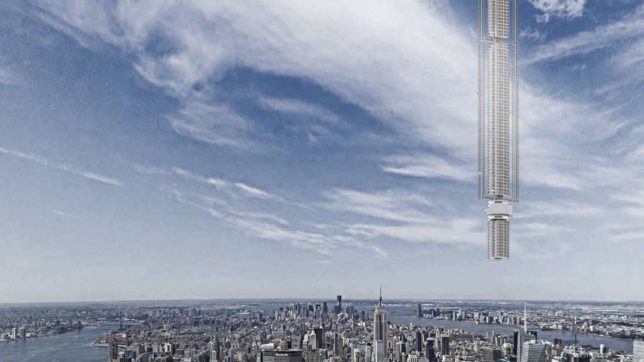
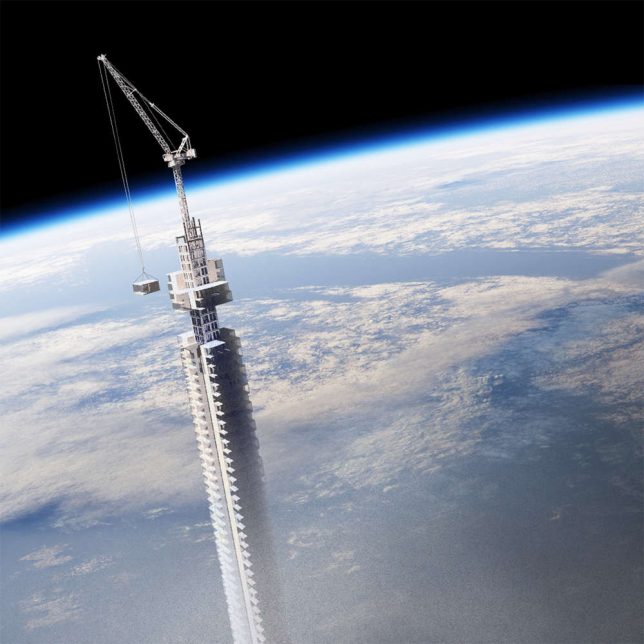
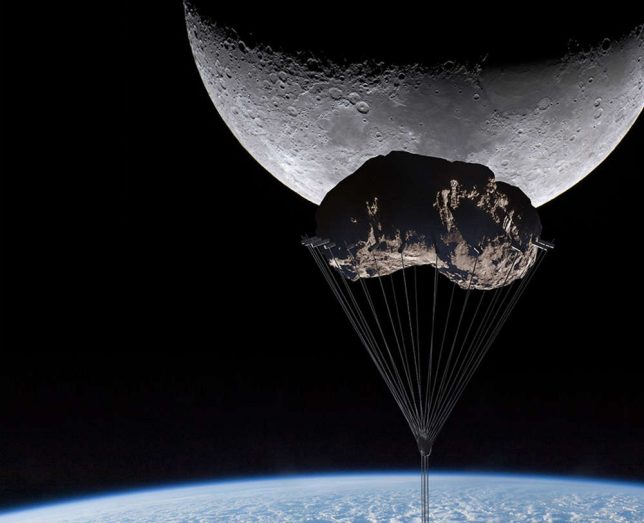
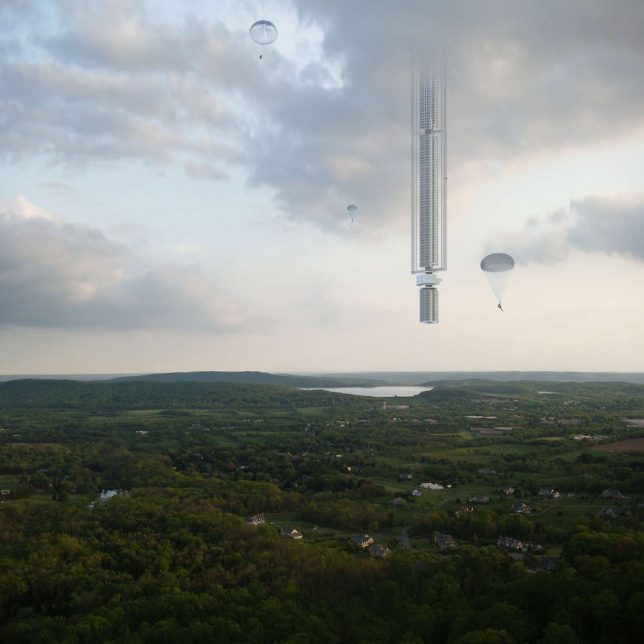
That tongue-in-cheek ‘world’s longest skyscraper’ design we highlighted last week seems totally reasonable compared to a new proposal taking the competition for the world’s tallest structure to absurd heights: The Analemma Tower literally dangles a skyscraper from an asteroid. An actual asteroid, orbiting the Earth. The design is firmly in sci-fi territory, with the renderings resembling matte paintings made for ‘70s and ‘80s movies set in space, but the architects offer details as to how this could actually work.

dangling skyscraper 2

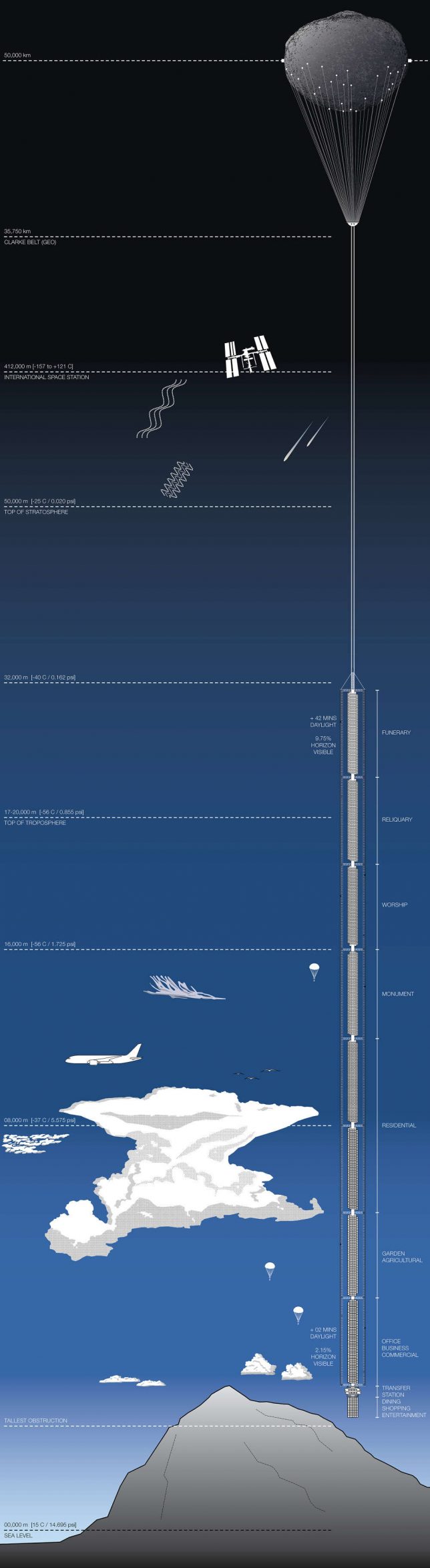
Clouds architecture Office envisions a space-based supporting foundation, noting that NASA has planned a 2021 mission to capture and redirect an asteroid. Of course, NASA’s budget is up in the air right now, and who knows what’ll happen to the United States’ space-related endeavors by then. The asteroid would be located about 31,000 miles above the Earth’s surface, with the tower using what the firm calls the Universal Orbital Support System (UOSS) to hang the multi-use tower via super-strong cables.

dangling skyscraper 4

The portion of the tower that sticks up above the Earth’s atmosphere will host an extraterrestrial cemetery, with the three sections below it designated for ‘devotional activities.’ The architects say these portions of the tower wouldn’t be attractive to live in due to “extreme conditions,” though they’d benefit from an extra 45 minutes of daylight each day. The residential area is fairly small in comparison, set just above the garden and agricultural section, an area for offices and business activities, and a transfer station with dining, shopping and entertainment options.

dangling skyscraper 5

Analemma would get its power from space-based solar panels, with water filtered and recycled in a semi-closed loop system and replenished with condensation captured from clouds and rain. It could be placed in an orbit allowing it to travel between the northern and southern hemispheres on a daily loop, with its slowest trajectory occurring over New York City so people can get on and off. They go into some detail on these technicalities on their website.

dangling skyscraper 3

“Manipulating asteroids is no longer relegated to science fiction. In 2015 the European Space Agency sparked a new round of investment in asteroid mining concerns by proving with its Rosetta mission that it’s possible to rendezvous and land on a spinning comet. NASA has scheduled an asteroid retrieval mission for 2021 which aims to prove the feasability of capturing and relocating an asteroid…”

“Analemma Tower is a proposal for the world’s tallest building ever. Harnessing the power of planetary design thinking, it taps into the desire for extreme height, seclusion and constant mobility. If the recent boom in residential towers proves that sales price per square foot rises with floor elevation, then Analemma Tower will command record prices, justifying its high cost of construction.”

Share on Facebook


[ By SA Rogers in Conceptual & Futuristic & Technology. ]

[ WebUrbanist | Archives | Galleries | Privacy | TOS ]


WebUrbanist

 
Comments Off on Taking Competition to New Heights: This Skyscraper Dangles from an Asteroid

Posted in Creativity


9 Tips for Taking Better Photos of Cats

10 Feb

For many of us, pets are such a vital part of our lives that we love them like our own flesh and blood, sometimes more! It’s only natural that we should want to capture them on camera and hold their memory close to our hearts. The problem is that taking great pet photos can be tricky, especially when the animal is a single-minded cat.

If you’re reading this, chances are you have a cat or two of your own, or maybe a whole pride of them (wrong cat, maybe). You might just be someone who enjoys photographing cats around your neighborhood. Whatever your story, I’m going to help you take great feline shots with these tips for getting better photos of cats.

Tips photos cats 01

1 – Patience is key

First things first; when photographing cats, you should expect a high failure rate. The more discerning you become as a photographer, the more this is the case. Cats are not an ideal subject for impatient types since they don’t strike obliging poses for long. Just as you’ve framed the shot, they’re likely to walk up to you and sniff the lens. If not that, they’ll turn their heads at the precise moment you release the shutter. Guessing what they’ll do next is part of the fun.
Have your camera ready.

Cats tend to strike random funny poses, especially when they’re lolling about half asleep. To capture these comical moments, it’s best to always have a camera handy, even if it’s a phone. If you need to go dig out your camera before taking a shot, the cat will most likely hear you and move. Likewise, if you’re outside with your cat, have your camera ready for some outdoor action shots. You’ll miss great pictures if you first need to fetch your gear from inside a bag.

Tips photos cats 04

2 – Attention seeking

By now, you’ll know how much your cat likes to thwart you at every turn and foil your photo attempts. However, there are tactics you can use to get the pictures you want. When working alone, learn to use your camera one-handed, even though it’s not textbook technique. Set everything up on Auto so you don’t have to fiddle around before taking the shot. With the other hand, you’ll be attracting your cat’s attention. Clicking the fingers usually works for a time, until the cat wises up to it.

Cats are intrigued by rustling noises too, so you can crunch a paper bag to make the cat look towards you. Use a cat toy if you want a livelier picture, but the success rate will be lower. You’ll make life easier if there’s a window behind or beside you, so plenty of natural light falls on your cat’s face.

Tips photos cats 09

3 – Getting down to your cat’s level

One common mistake made by budding pet photographers is that they photograph their cat or dog from a human height. This rarely works well. Photos of animals taken on their own level tend to have more impact and show the animal’s personality better, from the perspective of an equal.

If you want to capture a cat in hunting mode, getting down to ground level gives the feeling of being the cat’s prey and adds drama to the photo. If it’s hard to adopt these low positions, you’ll achieve the same thing using a digital camera with a swivel screen. Since cats like to climb, you won’t always have to stoop to be at eye level.

Tips photos cats 08

4 – Frame your subject

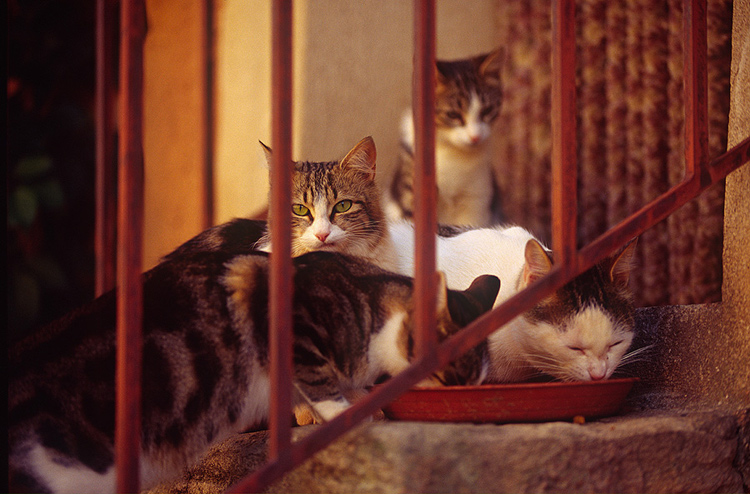
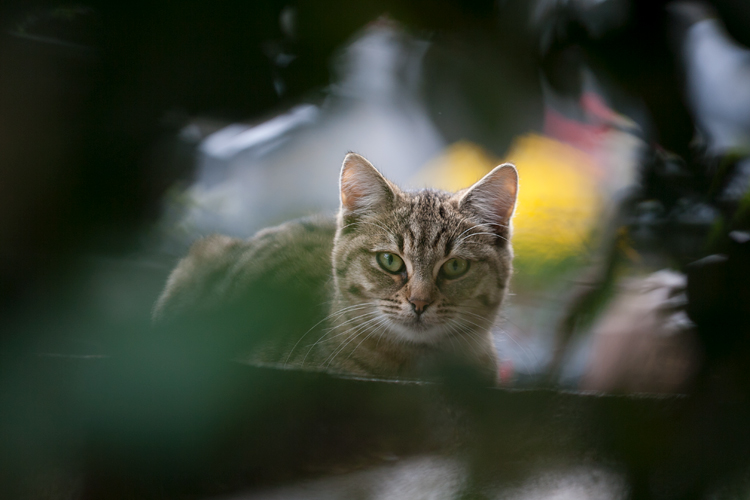
Framing your cat in the shot with surroundings like long grass, shrubs, or tree foliage gives the photo added depth. It also creates the feeling of peeking into the cat’s own natural habitat, or his world. It’s a technique you’ll often see in wildlife photography. Indoors, you can frame your cat by including any cubby holes or hiding places that cats generally like. Comfy towel cupboards are a frequent favorite.

Tips photos cats 02

5 – Focus on the eyes

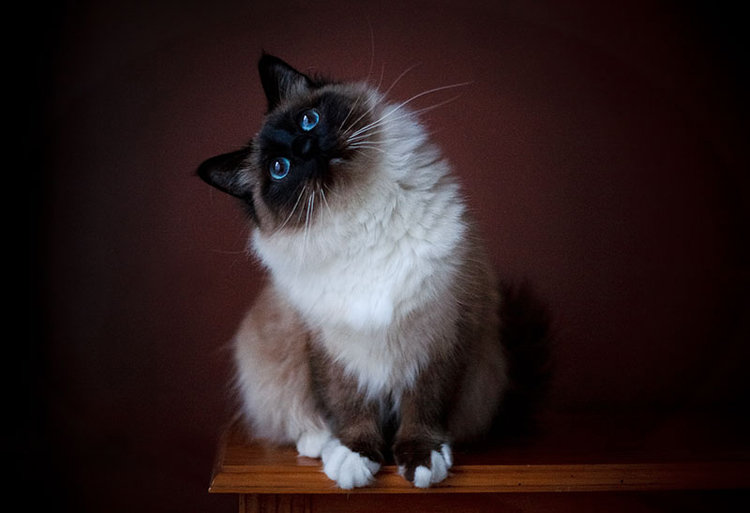
If you’re taking a close-up portrait of your cat, it’s important to make sure the eyes are in focus. This is surprisingly easy to get wrong in animals since it takes only slight carelessness to focus on the nose instead. The camera you use and its sensor size will affect how easy this is. A phone camera will typically give you loads of depth of field, so it’s difficult to get the eyes out of focus, whereas an SLR with a larger sensor gives a shallower depth of field and demands more control over technique.

If you’re taking the portrait from an angle, try to have the nearest eye in focus, as it looks unnatural to have only the far eye sharp. These same principles are generally applied to human portraits, too. They are only guidelines, however, so you can ignore them if you’re going for a specific effect.

Tips photos cats 10

6 – Lighting for cats

You’ve probably seen photos of people taken at night that exhibit the dreaded red-eye effect. This is the result of using a flash, either built into the camera or directly mounted onto it. Blood vessels in the back of human eyes create a red reflection. Cats and other animals have a special reflective layer in the back of their eyes that enhances night vision. This causes a variety of colors to be bounced back when a flash is aimed at them, but typically it will be blue in a kitten and green in an adult cat. These colors are more attractive than red, but still undesirable in your photo.

By mounting or holding a flashgun away from the camera, you can take night photos of your cat without this demonic eye effect. Covering the flash with a softbox will help avoid harsh shadows. High-quality flash photography requires a further investment in gear and is not strictly necessary when window light provides an easy and effective alternative. As well, digital cameras have greatly improved in high ISO performance in recent years, so you can grab photos in relatively low household light and avoid excessive noise in the picture. The only downside with that is you’ll be often forced to correct the color cast created by electric light bulbs.

Tips photos cats 06

Try photographing your cat outside when the sun is low in the sky. You’ll achieve some very attractive photos if the sunlight catches the cat’s fur, which requires that you shoot towards the sun. In this situation, you can sometimes get away with using a flash directly on your camera for a little “fill-flash”. The harsh green-eye effect that happens at night doesn’t occur if the flash is diluted by enough daylight. This avoids the cat itself being underexposed, which is a possibility when shooting into direct sunlight.

7 – Lens choice

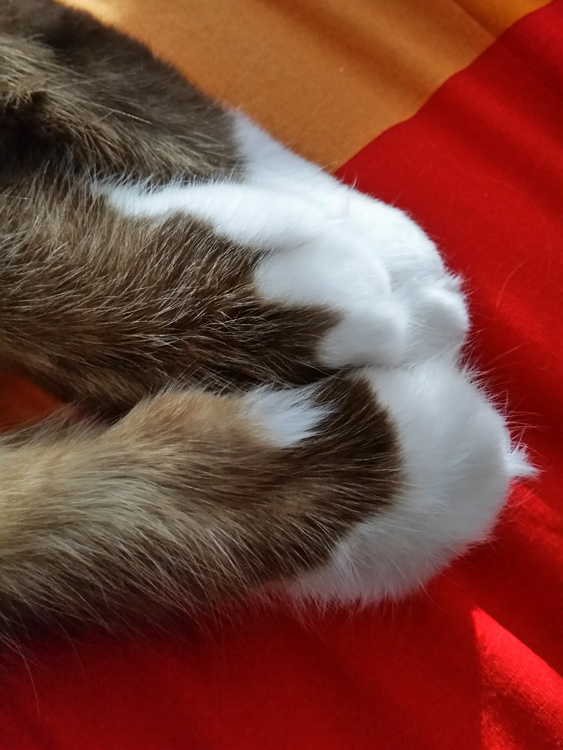
A portrait lens around 85-130mm (or equivalent) works well with cats, giving just enough working distance that they don’t instantly make a beeline towards you. If it’s also a macro lens, like the classic Tamron 90mm 1:1 macro, you’ll have the option of moving in for some ultra-close photos of eyes or even paws.

Tips photos cats 12

Wider reportage type lenses around 35mm are good for grabbing full-body photos of your cat. At the other end of the scale, a long telephoto lens allows a greater working distance and lets you be more selective about the background, as it will have a narrower field of view. You’ll probably go for a shorter lens indoors since you won’t need as much light to keep the photo sharp.

Tips photos cats 07

Compact cameras or a mobile phone will normally let you move in so close to your cat that you’re almost touching him or her, but be aware that this closeness distorts perspective and your cat’s features. Despite this drawback, the resulting photos are often pleasing enough.

8 – Camera settings

Manual Mode + Auto ISO

If you have a solely automatic camera, you can ignore this section, but it’s a neat trick for anyone with access to Manual mode and an Auto ISO feature. A lot of experienced pros and amateur photographers routinely set their cameras to Aperture Priority mode (Av/A) and have their ISO set to a low value for minimum image noise. The camera is then left to automatically adjust shutter speed for the correct exposure. This is fine, but it reduces the chances of taking sharp action photos in low light, as the shutter speed will often end up too slow. For cat photography, that’s a potential problem.

Tips photos cats 03

By setting the camera to Manual Mode in combination with Auto ISO, you always have control over the aperture and shutter speed settings, while the ISO is sorted out by the camera. In fact, the “manual” setting in this instance is no less automatic than aperture priority (Av/A) or shutter priority (Tv/S) modes but gives more creative control over the photo. This technique is more viable nowadays than it was a few years ago since modern digital cameras produce high ISO images with very little noise. That said, if you try this technique in poor indoor light you’ll be pushing your camera’s limits and may well be dissatisfied by the results. Given a reasonable amount of light, it’s a versatile way of working.

Camera settings – Continuous Drive mode

Capturing pictures of your cat chasing a toy, leaping or running around a garden or scurrying up a tree is not going to be easy if you leave your camera in single shot mode. That is true unless you literally have lightning reflexes or get lucky with the timing. Therefore, if you know you’re going to be attempting action shots, switch your camera to its continuous drive or burst mode. You’ll need to set a fast shutter speed too if you want to freeze the action (I’d suggest a minimum of 1/500th of a second).

While this may be less skillful than snatching single photos with ninja-style dexterity, there is no shame in stacking the odds in your favor. Remember that your audience won’t usually care about how you took the photo but will admire great results.

Tips photos cats 05

9 – Black cats, white cats

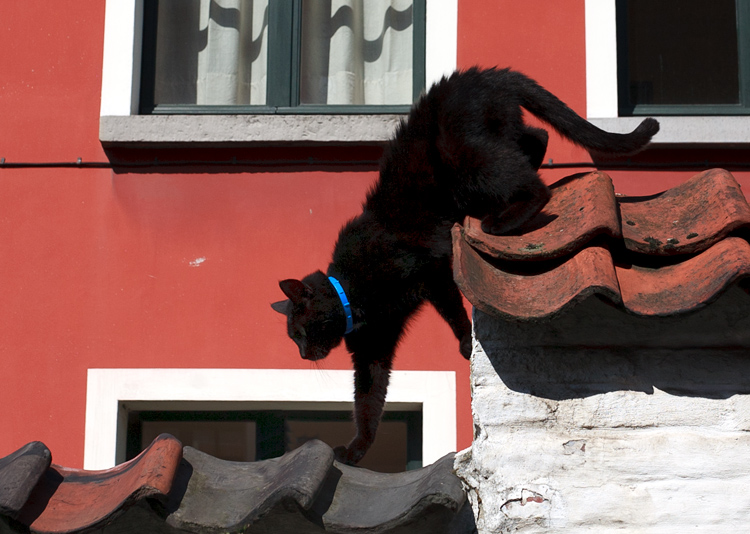
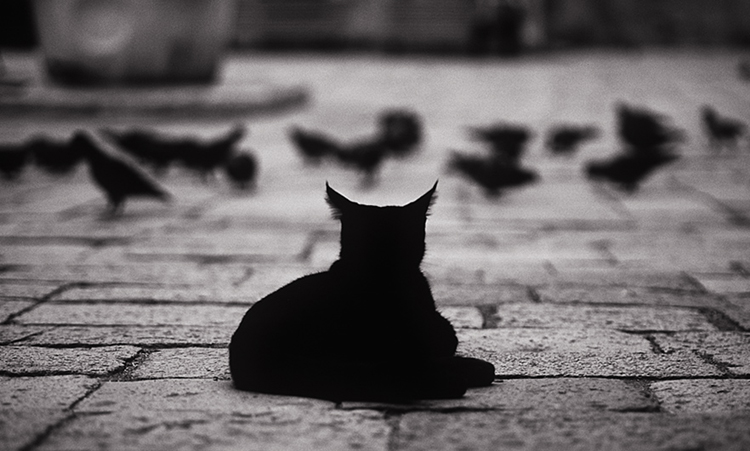
Left to its own devices, your camera’s exposure meter will often underexpose a white cat and overexpose a black cat, particularly if they take up a large portion of the photo or are set against a similarly toned background. The white cat will look murky gray and the black will lose the deep luster of its fur and appear grayish, too. You can remedy this by using your camera’s exposure compensation feature and dialing in one or two stops of overexposure for a white cat or underexposure for black. While it’s generally better to do this in-camera, with digital you can usually fix it later when editing. Being aware of the issue is the main thing.

Tips photos cats 11

Lastly, take plenty of photos

If you keep pets through much of your life, sooner or later they’ll break your heart. Don’t be caught when it’s too late without any good photos of your beloved cat. Think about his or her personality and try to record their various traits on camera. Take lots of photos to enjoy during and after your pet’s lifespan, including selfies of you both together. Cherish your cat and celebrate living!

For more info check out: Your Essential Guide to Photographing Cats and Dogs: Snap’n Paws

Did I miss anything? Please share your cat photos and tips below as well.

googletag.cmd.push(function() {
tablet_slots.push( googletag.defineSlot( “/1005424/_dPSv4_tab-all-article-bottom_(300×250)”, [300, 250], “pb-ad-78623” ).addService( googletag.pubads() ) ); } );

googletag.cmd.push(function() {
mobile_slots.push( googletag.defineSlot( “/1005424/_dPSv4_mob-all-article-bottom_(300×250)”, [300, 250], “pb-ad-78158” ).addService( googletag.pubads() ) ); } );

The post 9 Tips for Taking Better Photos of Cats by Glenn Harper appeared first on Digital Photography School.


Digital Photography School

 
Comments Off on 9 Tips for Taking Better Photos of Cats

Posted in Photography


Introduction to Taking 360 Degree Photos

14 Dec

The rise of Virtual Reality has brought about an unexpected innovation in the world of photography, the 360° photo. You may have come across a 360-degree photo or video on Facebook, which began accepting the new type of photo early this year. 360-degree photos allow the viewer to interact with the image and explore the entire environment around the camera that captured it.

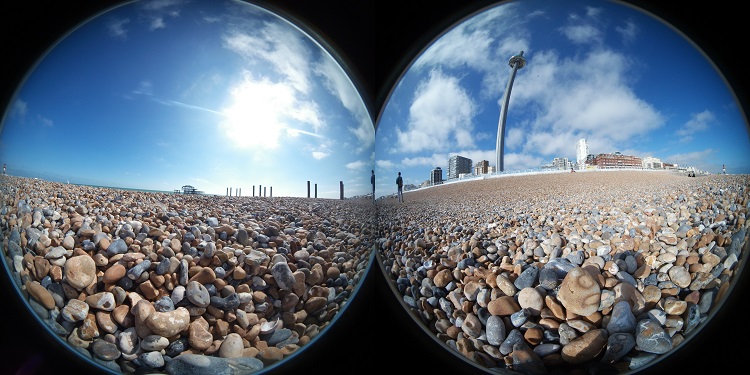
Anyone can create 360 photos and share them on social media, but to do so you’ll need to invest in a purpose built 360° camera. These cameras have two or three lenses each facing a differing direction; the 360 photos are created by stitching the images captured by each individual lens to create a full 360° image.

This is what a 360° photo looks like before it is stitched together:

360 degree photo unstitched

Using automatic software, a 360-degree camera can stitch each side of the image together to create a full 360° image that will look like this:

Why would you use 360° photos?

So what is the point of 360-degree photos? Is it just a fad or is the medium here to stay? 360-degree photos present an opportunity for people to capture entire rooms, landscapes, and scenes in a single shot. Imagine the difference between photographing a beach using a normal camera compared to photographing the same beach with a 360-degree camera. A normal camera is limited to capturing the space where you point viewfinder, roughly 90° or so. The 360 camera will capture the whole scene, allow you to look up at the sky, behind at the sand dunes and forward towards the ocean, all in one seamless image.

You’ve probably used google street view to explore different places around the world, a 360 photo can be viewed exactly the same way. In fact, businesses have used 360 photography to create internal immersive tours of their properties for years. If you want you can even upload your 360 photos to google where other people can view them on street view.

So it seems like 360-degree photos are here to stay, with large companies like Facebook, YouTube, and Flickr all adapting their photo sharing services to accept 360 images. New cameras being released all the time, and this new type of photography is at last accessible to the casual photographer.

360° Cameras

You may be wondering if 360 photos require advanced equipment and years of training to produce. A few years ago this may have been the case, but the relentless advance of technology means that taking a 360 photo is just as easy as shooting with a compact camera.

This year has seen the release of several consumer 360 cameras aimed at everyday people who want to take immersive 360 photos. These cameras are user-friendly, priced competitively, and only require a few minutes to learn how to use effectively. Some brand names you might like to note down include the Samsung Gear 360, the LG 360 Cam and the Ricoh Theta S; these are all 360 cameras that have proven popular and they are relatively inexpensive.

In almost all cases you’ll need a smartphone to make the best use of your 360-degree camera, as each one has an accompanying app that allows you to preview the image and control camera settings. The camera and app connect wirelessly and then you simply use your phone screen as you would a normal camera screen.

Tips and tricks for shooting 360 photos

One of the exciting things about 360-degree photos is that they require a new set of skills to shoot successfully. For a start, you need to remember that the camera will capture everything surrounding it, so if you don’t want to be seen you will need to hide out of view and make use of the timer feature.

When setting up a 360 photo, consider the fact that the viewer will be able to explore the whole image, so try and find a location with plenty of interesting features.

A must have accessory, that should be used with every 360-degree camera is a good tripod. It is essential that the camera is stable and still when shooting in 360 degrees, otherwise, the image may become distorted. I recommend using a tripod that has little in the way of gears and levers at the top, or they may be visible in the 360 image. I have found that a studio light stand is very well designed to be a tripod for a 360 camera.

When shooting a 360 photo try and ensure that there are no objects too close to the lens, this makes it much more difficult for the camera to stitch the images together accurately.

Your turn

These basic tips will get you started, but the only way to become a proficient 360-degree photographer is to get out and start shooting yourself. The reward is the opportunity to create truly unique images.

Have you tried this kind of photography before? Please your thoughts, questions and images below.

googletag.cmd.push(function() {
tablet_slots.push( googletag.defineSlot( “/1005424/_dPSv4_tab-all-article-bottom_(300×250)”, [300, 250], “pb-ad-78623” ).addService( googletag.pubads() ) ); } );

googletag.cmd.push(function() {
mobile_slots.push( googletag.defineSlot( “/1005424/_dPSv4_mob-all-article-bottom_(300×250)”, [300, 250], “pb-ad-78158” ).addService( googletag.pubads() ) ); } );

The post Introduction to Taking 360 Degree Photos by Daniel Pharaoh appeared first on Digital Photography School.


Digital Photography School

 
Comments Off on Introduction to Taking 360 Degree Photos

Posted in Photography


Fantasy is Now Reality: Twisting Tree-Covered Callebaut Tower Taking Shape

29 Nov

[ By SA Rogers in Architecture & Cities & Urbanism. ]

callebaut-taipei

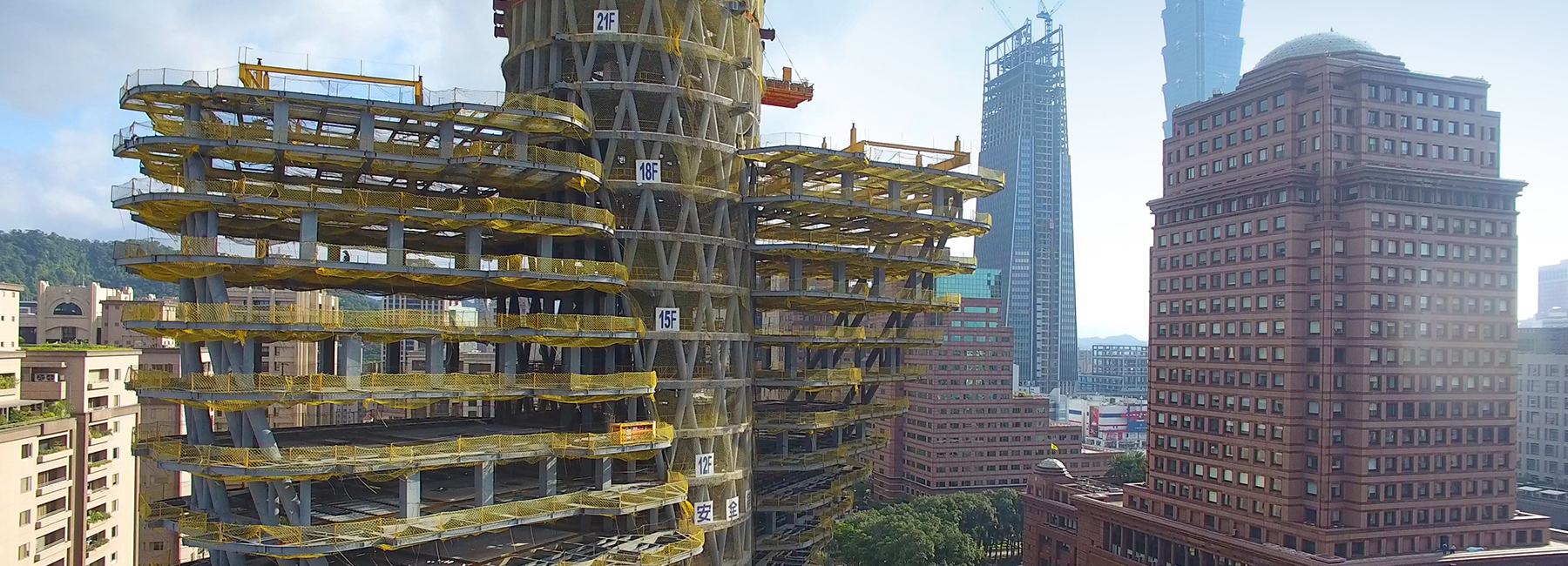
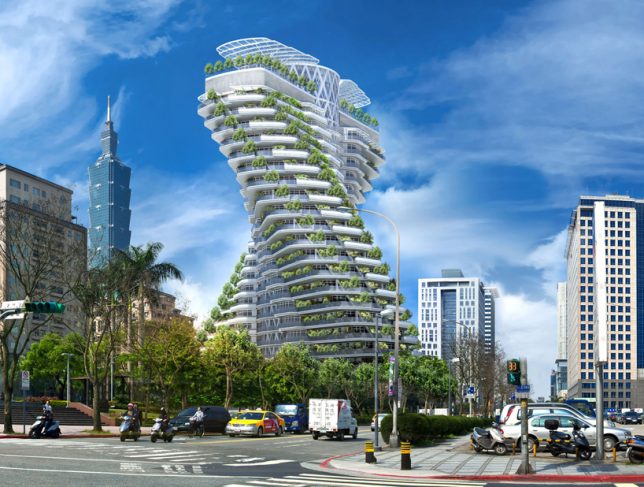
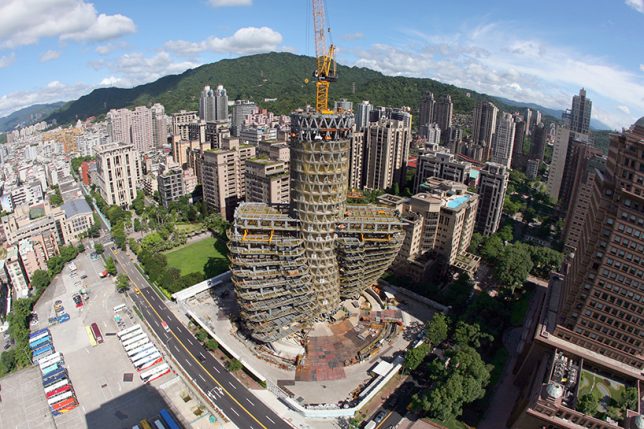
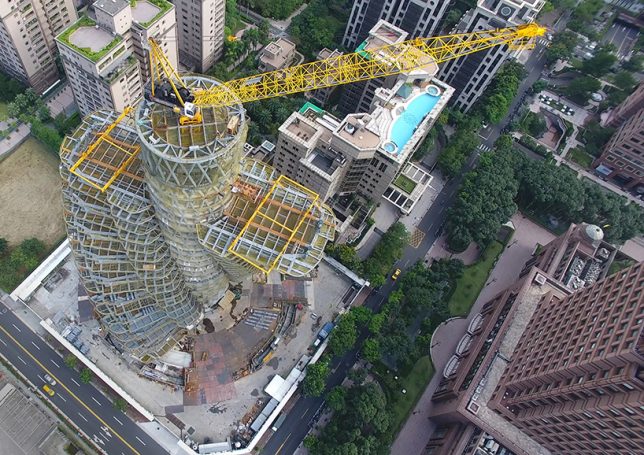
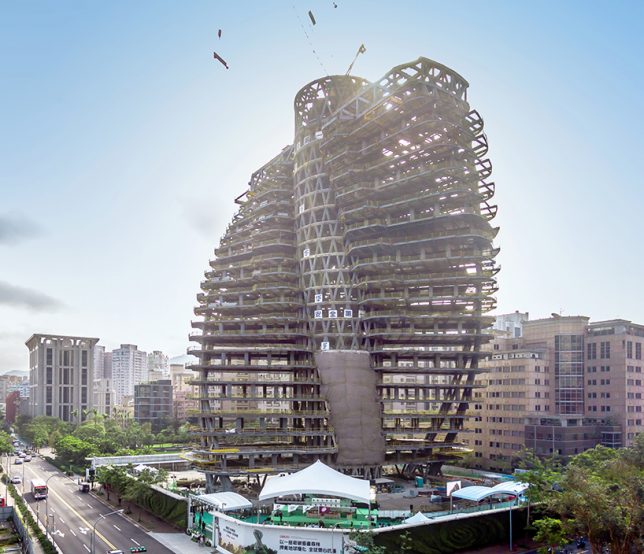
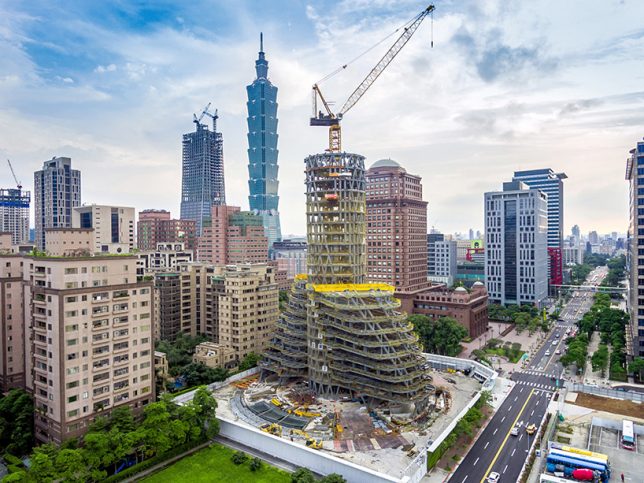
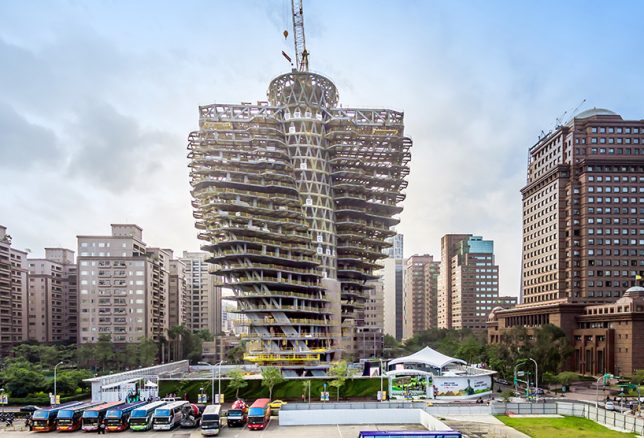
We’ve seen lots of dazzling concepts by Belgian architect Vincent Callebaut, most of which seem far too fanciful to ever actually materialize, but his twisting high-rise tower in Taipei is finally taking shape in three dimensions. ‘Tao Zhu Yin Yuan’ is about halfway complete, pivoting on a central axis for a layout that enables outdoor space brimming with greenery on every floor. Scheduled for completion in September 2017, the residential tower will support 23,000 trees absorbing up to 130 tonnes of carbon dioxide each year.

callebaut-concept

callebaut-taipei-2

The tower is conceived as a ‘inhabited tree,’ set upon a circular footprint with towers extending from the core in a double helix shape. From the north or south, it looks like a pyramid, while east and west views give onlookers a fuller idea of the building’s scale. It will contain 40 luxury apartments and additional facilities, and is set to meet LEED gold status as well as diamond-level Low Carbon Building Alliance certification.

callebaut-taipei-6

callebaut-taipei-5

Callebaut is known for proposals that emphasize sustainability, self-sufficiency, the inclusion of vegetation and eye-popping shapes. Examples include his dragonfly-wing-shaped urban farm, the Lilypad floating city concept, the ‘Asian Cairns’ residential towers and a series of futuristic ‘smart towers’ aiming to reduce pollution and create renewable energy while integrating into existing built environments.

callebaut-taipei-3

Most of these concepts either appear too wild and expensive to developers and investors to inspire confidence for real-world success, or rely on theoretical technology that hasn’t been fully developed or proven. But nobody can accuse Callebaut of limiting his own creativity in the way he envisions the future of architecture, in a world where the choices we make for our cities directly impact our ability to withstand the consequences of climate change.

callebaut-taipei-4

“In 2050, we will be 9 billion of human beings on our blue planet and 80% of the world population will live in megacities,” says Callebaut. “It’s time to invent new eco-responsible lifestyles and to repatriate the nature in our city in order to increase the quality of our life with respect of our environment.”

Share on Facebook


[ By SA Rogers in Architecture & Cities & Urbanism. ]

[ WebUrbanist | Archives | Galleries | Privacy | TOS ]


WebUrbanist

 
Comments Off on Fantasy is Now Reality: Twisting Tree-Covered Callebaut Tower Taking Shape

Posted in Creativity