RSS
 

Posts Tagged ‘Street’

In the Dark: 10 Tips for Street Night Photography

21 Jan
1/80th at F2.8, ISO 1600.

1/80th at f/2.8, ISO 1600

Much is spoken about photographing during the twilight hour, but what about after that?

Night is my favorite time for street photography. Cityscapes are lit with a myriad of interesting and colorful light sources, such as lampposts, neon signs, store windows, car lights, and bare bulbs. People dress in their favorite outfits to go out. Bland scenes by day can suddenly turn ominous and fascinating at night.

Here are 10 tips for night photography to get you thinking about starting your next street photography session at twilight, rather than ending it.

1. Ideal camera settings for sharpness at night

To freeze motion during the day, I prefer to use a shutter speed of 1/320th, with 1/160th as my lower threshold.

At night, this changes. In the brightest areas, you will be able to photograph at 1/250th, but most of the time it will be best to use a shutter speed somewhere between 1/160th and 1/60th. You need to have: steady hands; a wide-angle focal length; and to stop your own motion completely to be able to photograph handheld at speeds around 1/60th, but with some practice it can be done.
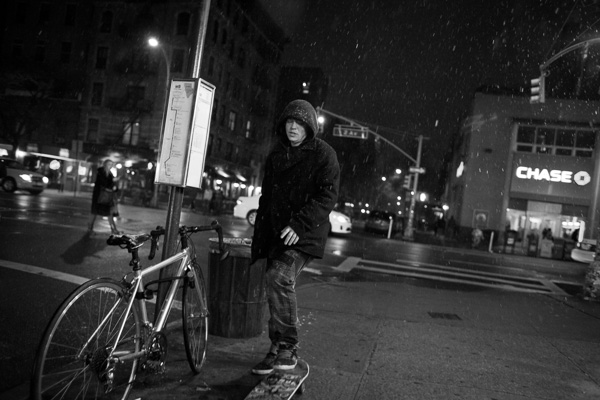
1/125th at F2.5, ISO 6400.

1/125th at f/2.5, ISO 6400

A wide-angle lens is necessary for this type of photography because the longer the focal length, the faster the shutter speed needed to keep an image sharp. With a 28mm or 35mm lens (up to 50mm) it becomes much easier to handhold the camera at slower shutter speeds.

It will also help to use a fast, prime lens, such as a 35mm f/2. It is possible to shoot at f/4 in brighter areas, but being able to shoot at f/2.8, f/2, or even 1.8 will greatly expand your opportunities.

Finally, you will need to raise your ISO significantly. With modern digital cameras you can photograph anywhere from ISO 1600 to 6400 with decent or good quality. It’s just not possible to photograph handheld at night otherwise. I prefer to shoot at ISO 3200 and sometimes at ISO 6400 if needed.

To learn more about photographing with a high ISO, you can read about it here: Reasons to Shoot High ISO Images.

2. Seek out the light sources first
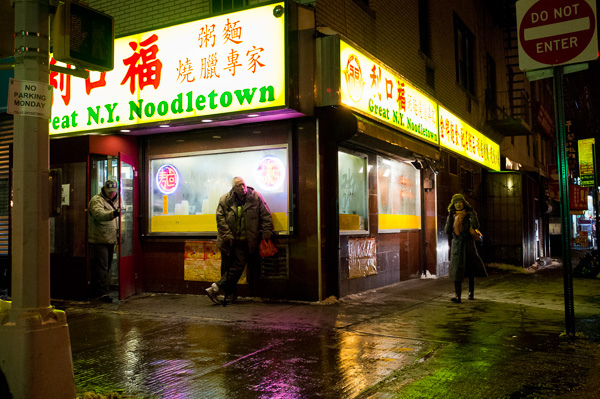
1/60th at F2.8, ISO 3200.

You should always pay attention to the main light sources in a scene, no matter where or when you are photographing, but at night this becomes even more important. Start by finding a beautiful light source, or an area with good lighting, and wait around for something to happen.

Focus on how these light sources hit your subjects. If you are leaning against a shop with a lit sign behind you, like the man in the photograph above, then as subjects pass you they will be lit with a strong light that has a gorgeous color to it. If your lens aperture doesn’t go wider than f/4, this is a fantastic way to get around that limitation.

On the other hand, if you stand in the street and aim the camera at the light source, as I did in the above photo, then the light will be less pronounced on the subjects, however, you will get the beautiful sign in the scene.  Notice the difference between the light on the left and right side of the man’s face in the photo.

3. Photograph nightlife
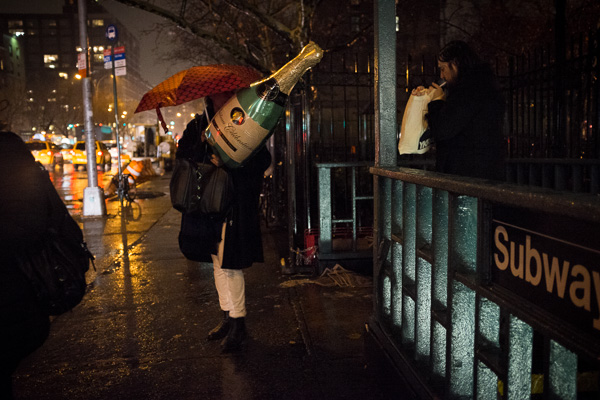
1/125th at F2, ISO 6400.

1/125th at f/2, ISO 6400

Some of the most interesting night street photographs occur where the most people are, and that is often where the nightlife is. A fantastic project to look at for inspiration is Maciej Dakowicz’s Cardiff After Dark.

4. Alternate between getting close and stepping back

I’m a proponent of the Robert Capa advice that, “if your photos aren’t good enough, you’re not close enough.” However, at night I often alter this strategy.

I try to get close to many of my subjects, but I will also try to create scenes where the subjects are small aspects of the overall scene. At night, backgrounds can be much more beautiful than during the day, so it often works to have people become the secondary element to the scene, rather than the primary focus.

The technical advantage to this is that you do not need to use as fast a shutter speed to capture the motion of subjects when you are further away. You can freeze a moving subject at 1/60th of a second from further away, whereas you will need to use at least 1/125th when close.

5. Tripod and crowd blur
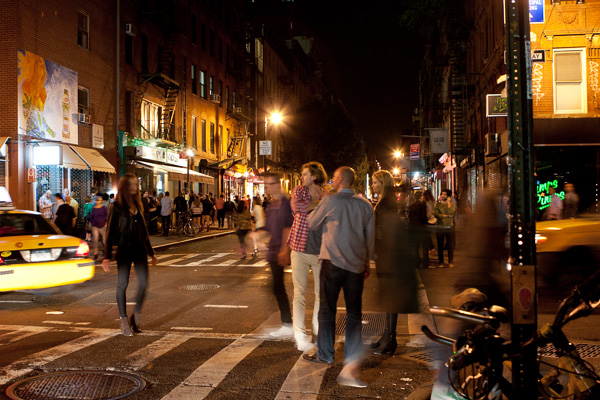
1/8th at F4, ISO 800 (Tripod).

1/8th at f/4, ISO 800 (with tripod)

For street photography, it’s usually best to go handheld since you never know what interesting thing is going to happen, and where it’s going to happen. However, one of the times to use a tripod is when you want to capture a busy scene, with lots of people and motion.

Experiment with slower shutter speeds, such as 1/8th of a second and take a lot of images.  It took me a long time to capture the image above because I wanted the people spread out evenly throughout the entire scene and I also wanted something interesting within the foreground, which is the pose of the woman in the street and the man looking at her. It took some time, and a lot of captures for this to happen.

6. Use a flash

Whether you want to try flash on the street is up to you, but keep in mind that it can easily lead to some confrontations.  I prefer to work with the constraints of the natural light on the street and I also get uncomfortable flashing strangers in the face in dark settings, but many prefer to photograph this way. It creates a fantastic look when done well.

Using a flash means that you are freed from a lot of the constraints of photographing at night. You can use a faster shutter speed and include more depth of field in the photo and less grain (noise).

You can either have the flash do all of the work lighting the scene, where the foreground area within reach of the flash is lit and everything else is dark, or you can set the camera to expose for the scene, similar to what you would do without the flash, and then use the flash to add some fill light to your main subjects in the foreground.

7. Noise and the dreaded underexposed image
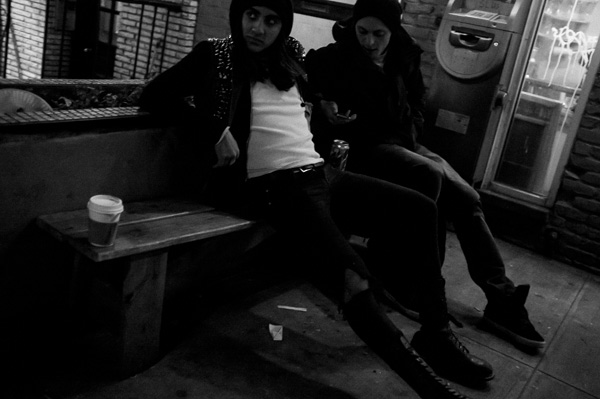
1/250th at F2, ISO 3200.

1/250th at f/2, ISO 3200

Always expose correctly when photographing with a high ISO.

That being said, even with the best settings, some of your images will be taken in areas that are too dark to be exposed correctly. It’s impossible to photograph this way and expose every image perfectly within the camera. For the occasional shots with excellent content that you want to save, you will have no choice but to raise the exposure when editing.

For these photos, I will first ignore the noise and get the exposure and look correct in Lightroom. After I do this, if I’ve had to raise the exposure setting a significant amount, the grain will look terrible. Luckily, there are some keys to saving an image like this as long as you are photographing in RAW.

What I do is to first remove the grain and then I add it back. I want the image to look grainy, but I want the grain to look pleasing.  There are many noise reduction programs, such as PhotoNinja, Topaz DeNoise, and DxO. I like Lightroom’s built in Noise Reduction. If the noise is still bad after noise reduction I will sometimes bring it into Photoshop and add a very slight Gaussian blur.

Then I will use Lightroom’s grain settings to add grain back into the photo. This grain looks much more pleasing to the eye than brightened, extreme digital noise and it can further hide some of the technical deficiencies in underexposed images. The result will not be a perfectly sharp image, but it will still be pleasing and beautiful.

8. Blur and imperfection

On this note, aim to get your photos as sharp as possible when you want sharpness, but know that a photo can still look fantastic even if it’s not tack sharp.

You don’t need to freeze motion perfectly when photographing at night for the image to still look great. I hold my day images to a higher standard than my night images when it comes to sharpness.  They need to be interesting and look good and that’s what counts.

Also, at shutter speeds around 1/60th to 1/30th, you can experiment handheld with slight blur, where your subjects are somewhat sharp but have a little motion to them. It’s a great way to add an energetic feeling of movement into an image.

9. Night images should be dark
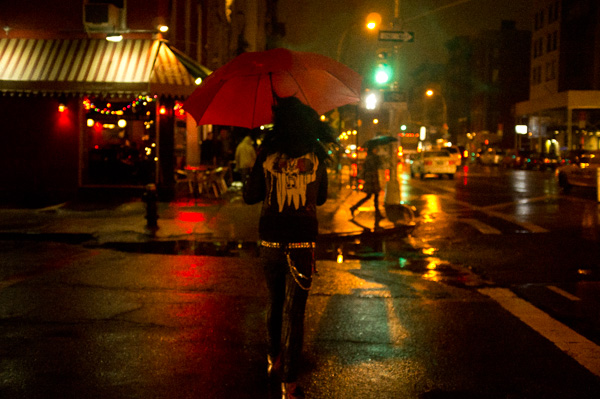
1/250th at F2, ISO 3200.

1/250th at f/2, ISO 3200

This is an overly general statement, so feel free to disagree, but I want to make a point here.

I believe that night shots should look like they were taken at night.  They should be dark, with deep shadows and areas that are hard to see and make out.  When you look at the histogram of a night image it should be further towards the dark end (left) than a day image.

When you expose a night shot, especially on automatic settings, the camera will often misread the scene and overexpose the image.  It will be bright and you will be able to see everything as you would during the day, but it will not feel like a realistic night scene.  In these cases, you will want to lower the exposure compensation on your camera slightly (-).

There are many situations where bright night images are a good thing, but don’t be afraid to make your night images dark and realistic.

10. Be careful

Depending on where you live, going out at night with a camera is not always the safest idea. Travel light with equipment and be careful about where you go. Use your best judgment on who to photograph and think about bringing a friend along. You don’t want to suddenly find yourself in a bad situation.

Do you have any addition tips you’d like to add? Please do so in the comments below.

For more reading on night photography in general check out these:

  • Tips for Photographing Star Trails
  • Nightscapes: Photographing the City at Night
  • How it was Done – Zooming the Exposure
  • Painting with Light in the Landscape
  • 5 Tips for Creating fun Campfire Photos

The post In the Dark: 10 Tips for Street Night Photography by James Maher appeared first on Digital Photography School.
Digital Photography School

 
Comments Off on In the Dark: 10 Tips for Street Night Photography

Posted in Photography


50 Things I Try to Avoid in Street Photography

15 Jan

street-photography-tips-03

I am a huge proponent of negative learning, that you can learn more by taking on the opposite approach. Philosopher Nassim Taleb calls this “via negativa”. It is the idea that the best way to gain “happiness” in life isn’t chasing what makes us happy, but by vehemently avoiding what makes us unhappy (a long commute to work, a horrible micro-managing boss, poisonous and negative “friends”, and an expensive house mortgage).

I also believe strongly that one should never listen to “rules” of anything in life (especially street photography). However, below is a list of things (which has personally helped me) I avoid in street photography . Pick and choose what resonates with you, and leave the rest:

50 Things I Try to Avoid in Street Photography

  1. “Chimping” (checking the LCD screen) after taking photos on the streets
  2. Using more than one lens for street photography (I prefer a 35mm)
  3. Not mixing my digital and film photos in a project
  4. Letting the number of “favorites” or “likes” dictate whether a photo is good or not
  5. Letting criticism affect me negatively. Rather, I try to use it to empower me to find weaknesses in my work.
  6. Uploading a photo online publicly without having at least 3 people critique it in-person first
  7. Spending a lot of time looking at photos online ; rather I spend more time looking at photo books
  8. Leaving the house without a camera
  9. Hesitating before taking a street photograph
  10. Cluttered backgrounds
  11. Showing my bad photos (I have tons of them)
  12. Shooting more than one type of film at a time (Kodak Portra 400 for color, Kodak Tri-X for black and white)
  13. Going a full day without taking a photographstreet-photography-tips-01
  14. Involving myself in online debates about the definition of “street photography”
  15. Meeting my photography friends without some new work to show them and get critique on
  16. Charging money for my photos
  17. Taking a photo of someone on the streets without saying “thank you” by smiling at them
  18. Not to focus on single images. Rather, I try to focus on projects
  19. Looking at gear review sites (when I’m bored) unless I’m serious about buying a new camera
  20. I don’t own more than one lens for my camera (only a 35mm)
  21. I don’t care about sharpness
  22. I don’t like bokeh in street photography
  23. Forgetting how lucky I am to be able to go out and take photos
  24. Taking boring photos
  25. Taking check-in luggage when I travelstreet-photography-tips-02
  26. Comparing myself to other photographers
  27. Developing my film for at least 3 months after I shoot it
  28. Uploading photos online until letting it “marinate” for at least 6 months to a year
  29. Not to falling into the trap that buying a new camera will make me suddenly become more “creative” and “inspired” in my photography
  30. I don’t mind asking for permission to take someone’s photo in the street
  31. I don’t check comments on my photos more than once a week
  32. Spending more time on social media, and less time out shooting on the streets
  33. Leaving comments or critiques on other people’s photos that are shorter than 4 sentences long
  34. Only taking photos of people
  35. I rarely take photos of homeless people
  36. Taking photos of street performers
  37. Deleting photos (unless they are really nice or the photo is boring)
  38. Taking the film out of my camera when someone asks me tostreet-photography-tips-04
  39. Shooting to please my critics
  40. I ultimately don’t shoot for anybody else but myself
  41. Making excuses when a photo doesn’t work
  42. I don’t like photos without emotion
  43. Recommending zoom lenses in street photography
  44. Recommending lenses longer than 50mm for street photography
  45. Shooting wide open on the streets (generally at f/8-f/16)
  46. Recommending selective color or HDR for post-processing street photographs
  47. I don’t mind “killing my babies” (photos that I think are good but really aren’t)
  48. Shooting in bad light without a flash
  49. Sharing more than one photo a week on social media
  50. I don’t think you should listen to everything in this list. Rather, make your own! :)

Editor’s note: what things do you try and avoid when you’re doing photography of any kind? Share your list with us in the comment section below!

The post 50 Things I Try to Avoid in Street Photography by Eric Kim appeared first on Digital Photography School.

Digital Photography School

 
Comments Off on 50 Things I Try to Avoid in Street Photography

Posted in Photography


Deserted Elevator Shaft Hides Single-Room Street Museum

15 Jan

[ By WebUrbanist in Architecture & Public & Institutional. ]

pop up micro museum

Like so many secret spaces of New York City, this one-room exhibit space (hidden inside an abandoned elevator) is not exactly on the beaten path.

nyc museum peep holes

This pop-up project is naturally camouflaged, set behind a pair of rusted metal doors along an inconspicuous alley between a pair of dull gray block walls. Only a few small rectangular punched openings suggest that something might lurk beyond the black steel.

nyc one room exhibit

Behind its unmarked entry lies a surprisingly pristine white room lined with red-padded shelves. These in turn support an array of contents, many of which city dwellers may find strangely familiar.

nyc everyday object museum

The Elevator Museum‘s collection sports a sampling of everyday urban objects, from discarded coffee cups and potato chip bags to tip jars, found dollar bills and losing lottery tickets.

nyc worlds smallest museum

The exhibits rotate, however, between temporary pieces and a permanent collection featuring some seriously unique and one-off objects. The latter includes the shoe infamously thrown at President George W. Bush during a televised 2008 press conference.

nyc elevator shaft museum

The museum founders Alex Kalman, and brothers Benny and Josh Safdie “want [the] museum to relay the intimate stories behind strange, colloquial items, finding beauty in absurdity.” To construct their secret museum, ”the team gutted the shaftway [at the ground floor] and renovated it to include lighting and shelving.”

nyc elevator museum gift shop

It has operating hours, but like most things in NYC, it is worth dropping by any time of the day or night: “Glass peepholes at the door allow passersby to marvel at the collectibles 24/7, and for those visitors who miss the museum’s opening hours, a toll free hotline has been developed that relays information about each exhibited artifact via phone. The 60 square-foot, free museum also accommodates a cafe and shop. It is a fitting microcosm of the essence of New York City, an unusual myriad of characters, quirks, and curiosities congregating in extremely small spaces.”

Share on Facebook


[ By WebUrbanist in Architecture & Public & Institutional. ]

[ WebUrbanist | Archives | Galleries | Privacy | TOS ]


WebUrbanist

 
Comments Off on Deserted Elevator Shaft Hides Single-Room Street Museum

Posted in Creativity


Giants in Living Color: Massive Street Murals by Etam Cru

07 Jan

[ By Steph in Art & Street Art & Graffiti. ]

Etam Cru Street Murals 1

Polish duo Sainer and Bezt, collectively known as Etam Cru, paint massive-scale murals of people and animals on blank building faces around the world. Their unexpected visuals liven up dreary urban surfaces, often stretching dozens of feet into the air. Some of the tallest, in fact, cover ten-story facades.

Etam Cru Street Murals 2

Etam Cru Street Murals 3

Recent collaborative works include a blue-haired girl bathing in a jar of strawberry jam entitled ‘Moonshine’, painted as part of the Richmond Mural Project in Virginia, and ‘Madamme Chicken’ in their native Lodz, Poland.

Etam Cru Street Murals 4

Etam Cru Street Murals 5

Each painter also works solo, as well. Sainer’s work is reminiscent of graphic novels, while Bezt works in brighter colors and a somewhat more realistic style. Check out more at their blog and on Facebook.

Share on Facebook


[ By Steph in Art & Street Art & Graffiti. ]

[ WebUrbanist | Archives | Galleries | Privacy | TOS ]


WebUrbanist

 
Comments Off on Giants in Living Color: Massive Street Murals by Etam Cru

Posted in Creativity


Street Smart: Intelligent Motion-Activated Outdoor Lighting

05 Jan

[ By WebUrbanist in Gadgets & Geekery & Technology. ]

motion activated urban lights

While we are all familiar with motion-detection technology in controlled indoor environments, the technology problem is much more complex when you add stray animals, wind-blown trees, weather-strewn debris and other dynamic variables into the mix.

motion outdoor light sensors

This high-tech solution designed and developed by Tvilight involves eight sensors and includes recognition software that can distinguish people and cars from other environmental factors that would trigger normal detectors.

Recognition information is relayed between the various independent light posts to account for the trajectory and velocity of pedestrians and automobiles, allowing both reaction and anticipation. Fine-tuned control options allow off-hours intersections to have the lights turned down by 30%, and mostly-empty areas like parking lots to be dimmed up to 70%.

motion illumination public space

motion sensing street lamps

The statistics are staggering – cities, states and countries could save up to 50% on maintenance costs and 80% on energy by illuminating streets on an as-needed basis rather than continuously. In Europe, 40% of government energy spending is on street lighting, so cutting down the cost and pollution of lights can have an incredible impact.

motion pedestrian street experience

Engineer and entrepreneur Chintan Shah’s company developed this dynamic system such that it can be applied to street lamps of all kinds, both new and old, in various places – sensors can be added to existing lights with traditional or LED bulbs. Already active in Holland and Ireland, Tvilight is looking to expand into the German, Canada and the United States.

Share on Facebook


[ By WebUrbanist in Gadgets & Geekery & Technology. ]

[ WebUrbanist | Archives | Galleries | Privacy | TOS ]


WebUrbanist

 
Comments Off on Street Smart: Intelligent Motion-Activated Outdoor Lighting

Posted in Creativity


2 January, 2014 – NEW Svalbard Workshop, Street Photography And Italian Law

03 Jan
Happy New Year from the Luminous-Landscape team. Thank you for visiting and supporting us. We wish you the best for the New Year.

We are predicting another great year for photography. This is a Photokina year and this usually means it will be a year of new and interesting innovations and developments in cameras, lenses, software and printers. We’ll make sure we keep you up to date on the latest news of some of the more interesting products as they come along. Here at LuLa we have a lot of projects in the works. We are leaving for our 2014 Antarctica workshop in just three short weeks. We also are launching today a NEW workshop for this July in the northern polar regions (see below for more details). Look for other workshop announcements in the coming weeks. And, for you video subscribers we have some ambitious projects in that area too with what we feel will be some great informative and instructional videos. By the way we still have a few berths available for the second 2015 Antractica workshop.

This past summer I was able to travel for the first time to the Arctic Circle on a photographic workshop offered by some friends of mine. After having been to Antarctica on numerous occasions I was not sure the Arctic could match up. Well, I was wrong and the trip was one of the best I have been on. The landscapes were amazing and the Polar Bear encounters were incredible. Luminous-Landscape is happy to announce two Svalbard Workshops this July. This is a small boat trip with 11 participants per trip.  Check it out HERE…

I stumbled upon a fun website and thought I’d share it with you. This site is known as Sightsmap and shows a world map of where the most Panoramio images were taken. You’ll understand more when you visit the site. What’s fun is to zoom into street level in a city like New York.  Based on the map it looks like Europe has embraced Panoramio more than other areas of the world.

We kick off the New Year with a short article and link to a blog by Andrea Monti. Andrea’s story Street Photography And Italian Law . . . deals with the legal aspects of photographing people and things in public. Practical information for all of us.


The Luminous Landscape – What’s New

 
Comments Off on 2 January, 2014 – NEW Svalbard Workshop, Street Photography And Italian Law

Posted in News


Make your own Google Street View virtual tours

11 Dec

google.png

Google is reaching out to photographers to help capture and record the planet’s most hard-to-reach places using Android’s Photo Sphere feature. A new tool lets users upload and connect their 360-degree photo spheres to create virtual tours that can be shared in Google’s Street View. Learn more on connect.dpreview.com.

News: Digital Photography Review (dpreview.com)

 
Comments Off on Make your own Google Street View virtual tours

Posted in Uncategorized


30 Street Photography Images to Inspire You

07 Dec

Street Photography – that subject that makes many an experienced photographer run and hide. Done well, it documents daily life, society as we know it today.

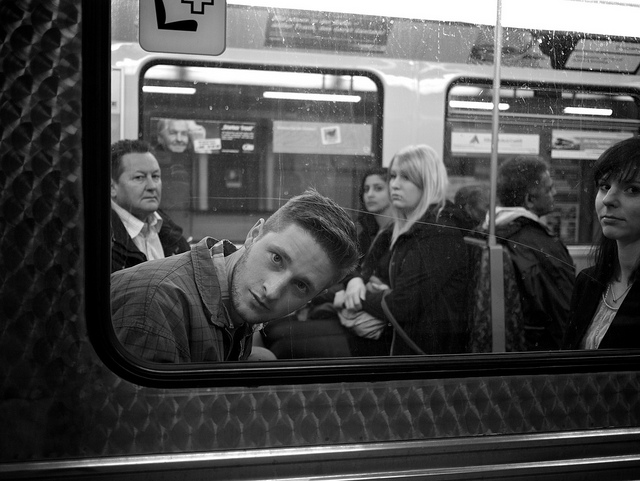
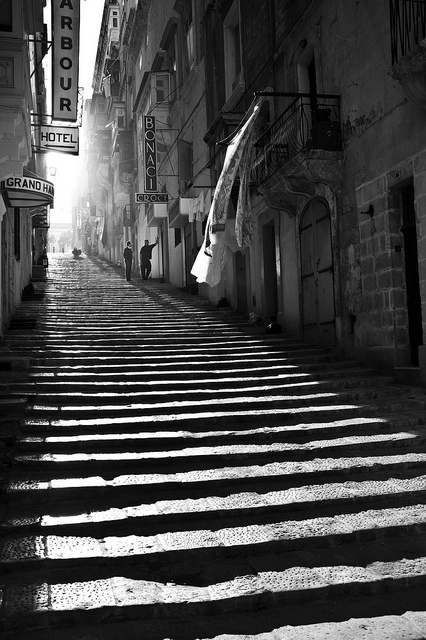
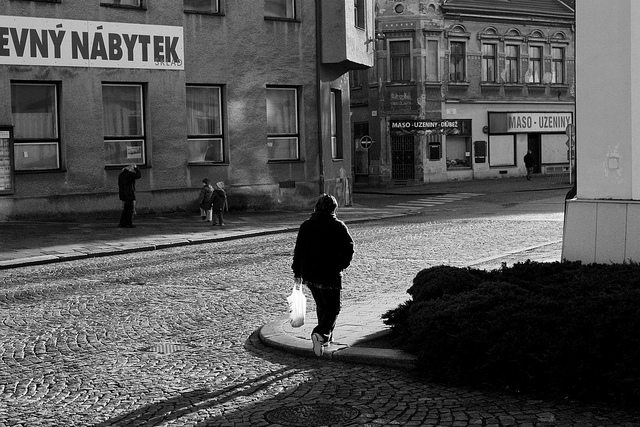
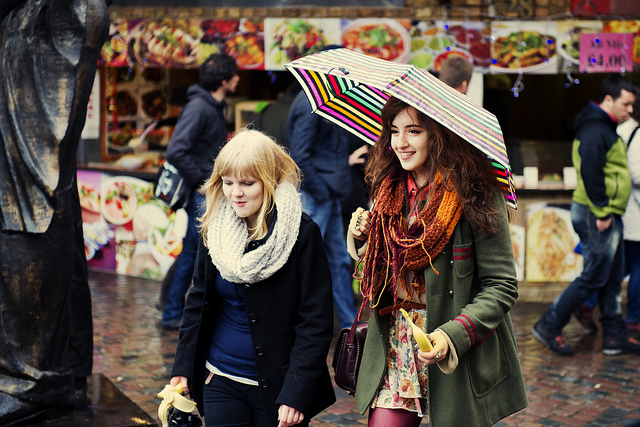
Today I want to share some street photography images I found particularly good for different reasons. Whether you do this type of photography or not, appreciate the art and skill and enjoy these images. Notice there are a lot of black and white images. It’s pretty common for street photography as it really narrows down to the subject, light and shape.

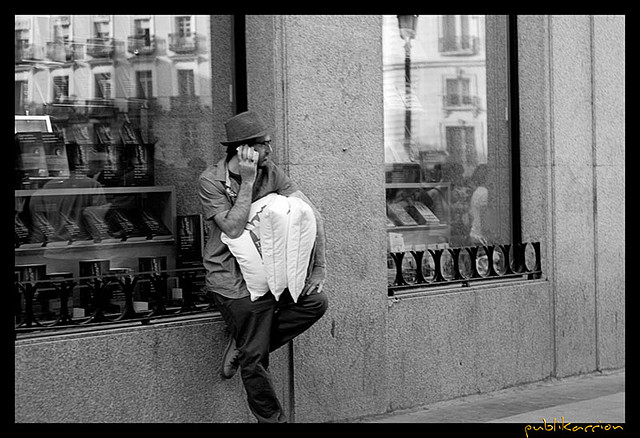
By publikaccion

By Stepan Mazurov

By praline3001

By Chris JL

By Pavel P.

By Thomas Leuthard

By Thomas Leuthard

By Thomas Leuthard


By gato-gato-gato

By Pavel P.

By Chris JL

By Hamed Masoumi

By Ines Njers

By gato-gato-gato

By Geraint Rowland

By Thomas Leuthard

By Thomas Leuthard

By Takeshi Garcia

By Eric

By Phil Hilfiker

By Charly ‘n Paris

By micadew

By Mario Mancuso

By Chris Ford

By Rakesh JV

By Björn Bechstein

By helmuthess

By DaiLuo

By Emanuele Toscano

By Thomas Geiregger


Post originally from: Digital Photography Tips.

Check out our more Photography Tips at Photography Tips for Beginners, Portrait Photography Tips and Wedding Photography Tips.

30 Street Photography Images to Inspire You

The post 30 Street Photography Images to Inspire You by Darlene Hildebrandt appeared first on Digital Photography School.


Digital Photography School

 
Comments Off on 30 Street Photography Images to Inspire You

Posted in Photography


Street Photography – Weekly Photography Challenge

07 Dec

Something that tends to strike fear into the heart of many new photographers is street photography. So today I’m going to urge you to get out of your comfort zone and go try it. I teach a travel photography class and when I share my photos of different exotic places, it’s always the street photography, and in particular the people photos, that get my students most excited.

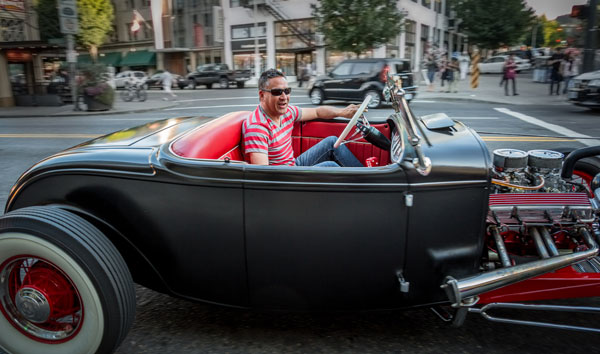
Taken during a photowalk in Portland, OR. This guy was stopped at a light and I took about 20 photos of him in 30 seconds. Made him laugh! If he had minded he would have said something, or gestured - if you get my drift.

Taken during a photowalk in Portland, OR. This guy was stopped at a light and I took about 20 photos of him in 30 seconds. Made him laugh! If he had minded he would have said something, or gestured – if you get my drift.

To me, it’s the people that make a place what it is; they are the essence, the culture. But that fear of photographing a stranger, in a public place, and actually having them see you take their photo is a biggie. Am I right?

Getting outside your comfort zone, doing something you don’t normally do, stretching your limits – that’s where real growth will occur. If you want to take your photography to the next level, give it a try and push yourself a little. You don’t need to travel to do this kind of photography. The two images below are done in my own city.

I was basically running behind these guys with a wide lens. Good timing is everything in street photography.

I was basically running behind these guys with a wide lens. Good timing is everything in street photography.

The other approach is talking to people. I chatted with this guy for 10 minutes. Then gave him $  2 for his newspaper (how he makes a living) and took his photo.

The other approach is talking to people. I chatted with this guy for 10 minutes. Then gave him $ 2 for his newspaper (how he makes a living) and took his photo.

Yesterday I posted 30 inspiring images of street photography, go have a look to get you fired up. Then find some a friend to go with you (even if they aren’t taking photos) and hit the pavement.

Your challenge this week – street photography

Get out there and walk around. Photograph what grabs your eye including architecture, traffic, people along the way – everything! Be fearless, you can do this!

To help you out – here are some other great articles with more tips to get started and overcome the fear.

Further reading to help you gather courage for street photography

  • Using Street Photography to see Beyond the Ordinary
  • 103 Things I’ve Learned about Street Photography 
  • My 30 Day Adventure with the Fuji x100s
  • Seeing and Street Photography 
  • How to Approach Street Photography in 12 Easy Steps
  • Terrified of Street Photography? So am I – here’s how I do it!

Post originally from: Digital Photography Tips.

Check out our more Photography Tips at Photography Tips for Beginners, Portrait Photography Tips and Wedding Photography Tips.

Street Photography – Weekly Photography Challenge

The post Street Photography – Weekly Photography Challenge by Darlene Hildebrandt appeared first on Digital Photography School.


Digital Photography School

 
Comments Off on Street Photography – Weekly Photography Challenge

Posted in Photography


World’s Smallest Park: 2-Foot Circle in the Middle of a Street

30 Nov

[ By WebUrbanist in Global & Travel & Places. ]

micro park street median

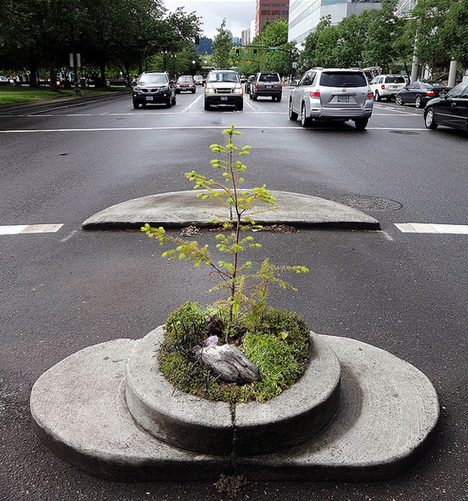
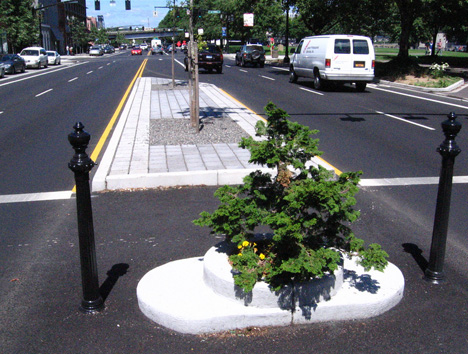
Originally designed to house a lamp post, this unassuming spot in Portland, Oregon, was left empty until a local journalist took it upon himself to declare it a park, naming it Mill Ends after his column in the regional paper.

micro one tree park

The earthen concrete-enclosed spot, outside the Oregon Journal office of writer Dick Fagan and situated between lanes and medians, had began to sprout weeds until one night in the 1940s he declared it a park. In a fit of fancy, he claimed it was occupied by leprechaun Patrick O’Toole and began printing stories about the space and its resident.

micro park crosswalk

Though only Fagan seemed to see its miniature occupant, his editorials claimed the area should be subject to the city’s park rules, including curfews. Soon enough, it was a local, then national, then international legend (though some outsiders mistakenly know it as ‘Mill’s End’).

micro park history placard

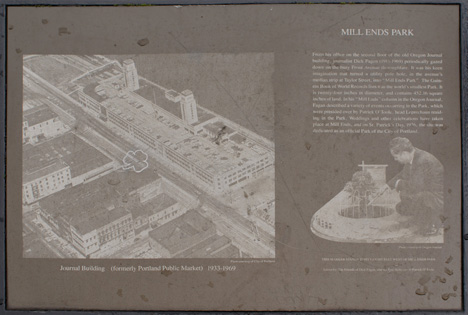
Today, the beloved micro-park even sports a sign explaining its history and origins, also showing its original location in the context of surrounding structures.

micro tree portland oregon

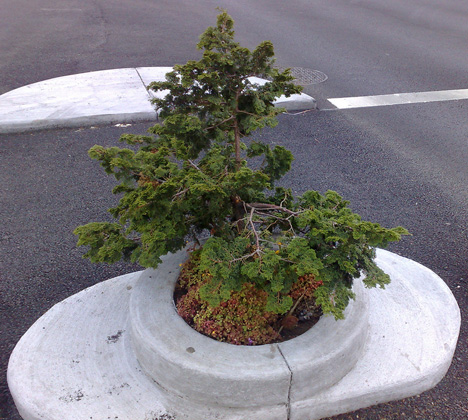
Although frequently occupied by a single tree today, the circular anomaly has featured everything from a swimming pool and diving board (for butterflies and, presumably, leprechauns) and a miniature Ferris wheel (also clearly for small occupants of the park). It was even relocated at one point to accommodate building construction in the area. (Images by Dukbrx0, Piutus, Craig Dietrich)

Share on Facebook


[ By WebUrbanist in Global & Travel & Places. ]

[ WebUrbanist | Archives | Galleries | Privacy | TOS ]


WebUrbanist

 
Comments Off on World’s Smallest Park: 2-Foot Circle in the Middle of a Street

Posted in Creativity