Tag: Street

  • Urban Jungle Street View: 3D Hack Uses Hidden Depth Data

    [ By WebUrbanist in Gaming & Computing & Technology. ]

    urban jungle street view

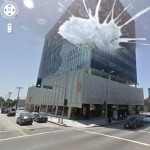
    An explicitly illicit use of dimensional data buried in Google Street View, the Urban Jungle project adds eerie layers of post-apocalyptic green overgrowth to major cities around the world.

    animated-new-york-city

    urban jungle side street

    As in Google Maps, a user can simply drag and drop their tiny avatar in a location of their choosing, then explore a plant-infested, tree-filled, vine-covered alternate version of reality. Click here to start exploring.

    urban jungle street maps

    From its creator: “This experiment using an undocumented part of Street View, the depth data. With that a depth map and a normal map is generated, which can be used in the shaders and to plot geometry and sprites in (almost) the correct position in 3d space.”

    animated-street-jungle-view

    street trees vines plants

    Despite a glitch here or there, most locations and settings are shockingly convincing, looking like something that was lovingly crafted in incredible detail for a game (or an artist’s rendition of life after the apocalypse).

    animated-time-square-signs

    street view urban jungle

    This otherworldly effect could just be the beginning – you too can grab the depth data at GitHub and create your own surreal landscapes or otherwise-hacked environments (samples via GMM, PSFK & PK).

    Share on Facebook


    [ By WebUrbanist in Gaming & Computing & Technology. ]

    [ WebUrbanist | Archives | Galleries | Privacy | TOS ]

    WebUrbanist

  • Tips for Taking Street Portraits – Lessons Learned in India

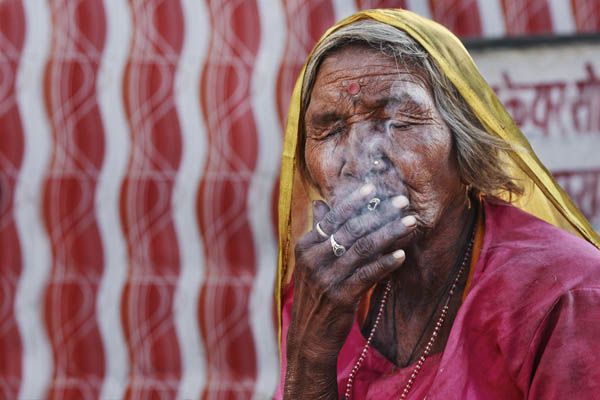
    On my trip to Rajasthan, India I packed my Canon 400D (Rebel XTi) with two lenses: my Canon EF 70-200mm f/2.8 IS USM (for long and candid photos) and my Canon EF 50mm f/1.8 II (for indoor portraits and low light photos) because I was aiming for portrait on the streets and specially head shots. Here are a few tips for taking street portraits, from my humble experience, and how to approach people before you take you shot.

    #1 Always smile

    11

    You always want to let anyone who sees you with a camera know that you are a cheerful person and therefore they won’t mind being photographed by you. Even if they become angry because you asked, just smile and back off. You need to remember that being a photographer in the street is an image for all photographers in the public eyes.

    #2 Avoid using the built-in flash on your camera

    A common mistake that most beginners fall into is using the built in flash. For me this is meant only for quick shots of friends or family. But if you want to a portrait with great light, use natural daylight in the shade by making the subject face towards the light not the opposite.

    21

    #3 Don’t shoot in the sun

    The reason is simple, hard light means hard shadows! Normally when you take a portrait for someone in the sun it creates hard shadows under the eyes, which is very bad for a portrait most of the time. Try to draw your subject to the nearest shady area available, or you can use a smooth board (or reflector) to make the light more even on the subject, that is if you dare to do all that with a stranger.

    31

    #4 Think about the light and shadows

    It’s not enough just to take the shot in the shade during the day, away from the sun. You also need to consider how the light and the shadows are becoming on the subject’s face. You can do that by taking a test shot, then reviewing it on your camera screen by looking for the highlights and the shadows. If you don’t know how, practice it at home with your family or friends before going out to the streets.

    41

    #5 Don’t ask the person to smile

    The good portrait comes first from the subject, then from you. So when you ask someone to smile, and they will, it won’t be a natural smile and sometimes it will bad for the shot. So don’t ask and they will reveal their true expression to the camera whether it’s a smile or sadness, sometimes you will be surprised.

    51

    52

    #6 Use a large aperture for a blurry background

    One of the key important things in portraiture is to focus on the eyes and blur the background, and sometimes part of the face. It will make a more dramatic and more attractive portrait to the viewer. And it also blur the background so it makes the viewer’s eye go only to the subject’s eye.

    61

    #7 Think about the background

    What lies behind the subject is important, sometimes it’s good to have people in it and sometimes it’s better empty with no one. It really depends on how you intend to show your portrait.

    71


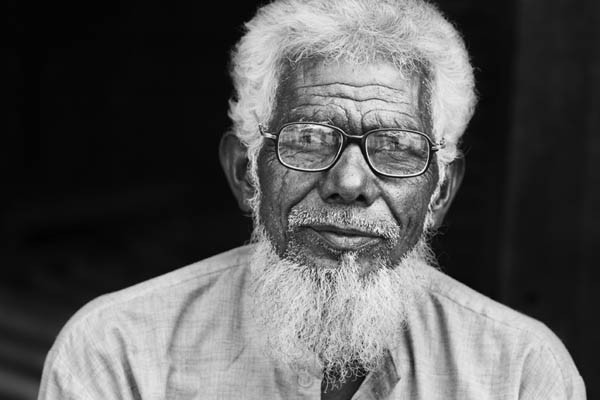
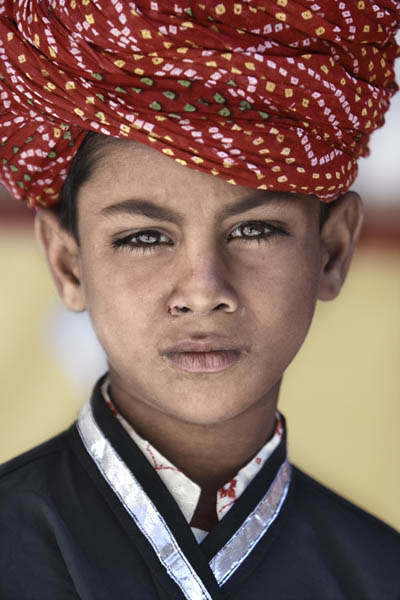
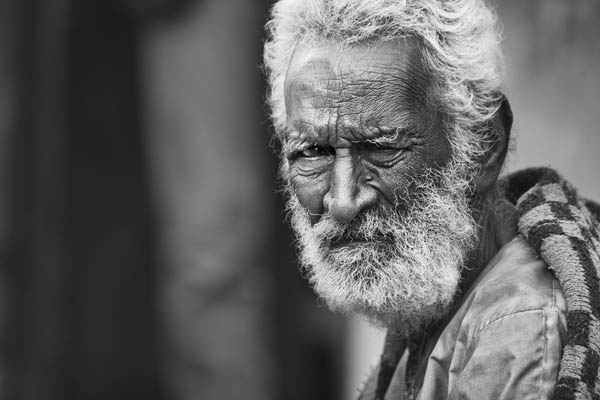
    Editor’s note: as I was searching Flickr for portrait images for the weekly inspiration collections (Portraits of men – portraits of women, I kept finding Zuhair’s portraits stood out among the rest. So I approached him and asked him to share some tips with us and he was gracious enough to do so. I hope you enjoy his images as much I do. If the eyes are the windows to the soul, I feel Zuhair’s portraits do a great job of showing us his subjects’ souls. 


    The post Tips for Taking Street Portraits – Lessons Learned in India by Zuhair A. Al-Traifi appeared first on Digital Photography School.


    Digital Photography School

  • Sand Paintings: Temporary Street Art Will Blow (You) Away

    [ By WebUrbanist in Art & Street Art & Graffiti. ]

    sand painted sidewalk drawing

    After 650 such works, it is perhaps no wonder that this artist generates each new sand painting spontaneously on the spot, letting the pattern evolve as he pours him efforts (and handfuls of sand) into each piece.

    sand 1

    Joe Mangrum is a New York City painter, sculptor and all-around installation artist whose works of colorful, organic and fractal geometry often span as much as 15 or 20 feet in diameter.

    sand art painting floor

    Inspired by Celtic knots and Asian mandalas, he began creating these public pieces which, in turn, kept being swept up from the city streets. His story gained national attention in part due to tension with authorities, including a Parks Department in California.

    sand colorful public art

    Part of the beauty of his approach is its accessibility, both conceptually and physically – people can watch him work on a sidewalk for hours, and see the art evolve before their eyes.

    sand public space art

    He describes his work as “visual rebellion” against “the urban grid” – a sort of organic counterpoint to the strictly-defined and linear streets and sidewalks on which he works.

    sand sidewalk street painting

    He writes of his strategy: “Each painting  is spontaneously improvised, using colorful sand, poured directly from my hand. In the process of creation, I whisk a mash-up of visual cues, inspired by ancient traditions synced up with a rhythm of animation.”

    sand art street fractal

    His free-style approach and Pop Art colors are inspired by everything from undersea creatures to carnivorous plants, botanical geometries and other cultures experience through international travels.

    sand 2

    His pieces have be set indoors as well as outside, and in formal as well as informal contexts: “Mangrum’s  work has been exhibited worldwide. Creating over 650 public sand paintings since 2009. In 2012 he has been featured in  “Swept Away” at the Museum of Arts and Design in NYC, The Flag Art Foundation’s “Watch Your Step” exhibit and at The Corcoran Gallery Rotunda in Washington DC.  In 2003 Joe was awarded the Lorenzo de Medici Award at the Florence Biennale for his piece titled “Fragile” as it relates to economic structures. “

    Share on Facebook


    [ By WebUrbanist in Art & Street Art & Graffiti. ]

    [ WebUrbanist | Archives | Galleries | Privacy | TOS ]

    WebUrbanist

  • Open-Source Street Store Offers Free Clothes for Homeless

    [ By WebUrbanist in Design & Guerilla Ads & Marketing. ]

    pop up store hangars

    Donated boxes of right-sized clothing can be a boon for those who cannot afford another choice, but this clever approach empowers people in need to choose their own apparel.

    pop up sidewalk homeless

    pop up shoppers

    The Street Store assistants set out flat-pack cardboard hangars, signs and stands along sidewalks and fences, encouraging people to drop off clothing. Volunteers also help passerby in need package what what they find, and those with something to give find a place to put their donations.

    pop up helper volunteer

    Though the project was started in Cape Town, South Africa, as a collaboration between M&C Saatchi Abel and the Haven Night Shelter Welfare Organisation, it is offered as open-source to applicants from around the world who wish to use the files and create their own  regional variant.

    pop up shop volunteer

    The open-air approach makes everything more accessible for both donating and recipient parties; it also renders indoor spaces and infrastructure redundant, enabling pop-ups to happen in various public spaces.

    pop up cardboard elements

    pop up street store

    As for the first day’s effort in the project’s original city: “Over 1,000 homeless people visited our store that day. Each put together an outfit that they wanted. An outfit, that for many, was the first they had ever been able to choose for themselves.”

    Share on Facebook


    [ By WebUrbanist in Design & Guerilla Ads & Marketing. ]

    [ WebUrbanist | Archives | Galleries | Privacy | TOS ]

    WebUrbanist

  • 5 Street Portrait Tips to Overcome Your Fear of Approaching Strangers

    It can be scary to start taking street portraits, especially if you’re an introvert. You like being quiet, people are busy and you don’t want to bother anyone. But you’re a photographer, so you see all of these “decisive moments,” and every time they slip away, it hurts a little. With practice and a few tips, though, you can shoot Continue Reading

    The post 5 Street Portrait Tips to Overcome Your Fear of Approaching Strangers appeared first on Photodoto.


    Photodoto

  • Point & Click: Street Stencils Show Tourists Where to Shoot

    [ By WebUrbanist in Global & Travel & Places. ]

    shitty photo standing spot

    Urban travelers love taking pictures, but ideal angles are not always obvious to visitors – many ultimately either stand in same hard-to-find spot or fail to take an interesting photograph altogether.

    shitty photos shoe stencil

    shitty photo stencil yellow

    shitty perspective angle picture

    That’s where Mimi Chan and Utsavi Jhaveri step in, spray-painting a set of shoe prints around cities. These markings in turn tell people where to place their feet, point and click to capture the ‘perfect’ (if a bit redundant) image of a given monument or sight.

    shitty pic street graffiti

    Starting with San Francisco and New York City, the pair found some of the project upsides included: having an excuse to wander cities (especially after dark), getting external sponsorship to cover expenses and ultimately being thanked by tourists who genuinely appreciated being told how and where to take a better picture – all that and increasingly copious press coverage, of course.

    no shitty photos project

    no shitty photos coverage

    Overtly, the #noshittyphotos project is aimed at reducing poor photography via these cookie-cutter stencils, but of course it makes you wonder: does the world really need more photos taking from the same angle of the same thing? What is it about retaking the same shot that attracts people to documenting something over and over again? Does it help us remember or is it simply a way to lay our own small claim to having seen something?

    Share on Facebook


    [ By WebUrbanist in Global & Travel & Places. ]

    [ WebUrbanist | Archives | Galleries | Privacy | TOS ]

    WebUrbanist

  • Subtractive Street Art: Sculptural Murals Cut into City Walls

    [ By WebUrbanist in Art & Street Art & Graffiti. ]

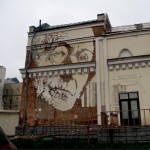
    cut face wall mural

    Vhils is adept at carving, cutting and peeling to reveal art inside solid surfaces, but his artistic experiments also include carefully-calculated explosions to create pictures and phrases when the dust settles and debris clears.

    mural multi level city

    mural subtracted painted art

    mural alley family portrait

    While this Portuguese artist (real name: Alexandre Farto) has exhibited in galleries, his 3D building-side murals are somehow especially sublime, tied as they are to gritty urban contexts and turning crumbling paint, plaster and brick into physically and emotionally layered portraits.

    mural experimental stencil explosion

    mural explosive wall art

    His work with explosives is also powerful, playing with both relentless reality of controlled demolition and the festivity of fireworks, with elements of unpredictable chaos thrown into the mix.

    Next Page – Click Below to Read More:
    Subtractive Street Art Sculptural Murals Cut Into City Walls

    Share on Facebook


    [ By WebUrbanist in Art & Street Art & Graffiti. ]

    [ WebUrbanist | Archives | Galleries | Privacy | TOS ]

    WebUrbanist

  • Stealing Light – Using Street Lights for Portraits

    Turn the street into your studio by using street lights for portraits Most people that I see taking photos after dark around the city have a flash mounted on the camera pointing at their subject. If shooting outdoors with nothing to bounce the flash off, the result usually is that rabbit out in front of headlights look, and flat lighting that rarely flatters your subject. As a professional wedding and portrait photographer, I will share with you my secrets of stealing available light when taking portraits around cities. No need for softboxes, beauty dishes, just put that flash away and start hunting for good light available in a city near you. It’s liberating carrying less gear and after a few light foraging trips, you will be well trained to find that tasty light!

    Types of light sources

    Illuminated advertisement signs

    Docklandsphoto 4

    f/1.8, 1/100th, ISO 1600

    One of my favorite methods is to light up my subjects with illuminated advertisement signs, every city has them. Above is a portrait of the couple lit with the bus stop’s advertisement. Just find a nice one with not too much colour if possible and it’s like photographing with a giant softbox. You get a nice soft light perfect for head shots. I’ve even used this method to great effect shooting friends in a nightclub with an iPhone.

    Street lights

    Tungsten streetlights are common, you see them everywhere. I prefer wall lights to give a nice directional light. The second bonus with using tungsten lights is that if there is any ambient light in the picture like you see in the back, it turns into a deep shade of blue. Great effect with no photoshop needed, all you have to do is to set your white balance to tungsten or if your camera has a manual colour temperature setting you can set it to 3000K (degrees Kelvin) during the shoot and play around with it. If I am under time pressure I usually leave the WB to auto and do the colour correction in post production. There is no loss of quality that way when shooting in RAW. Below image shot in London, notice how the background ambient light turns blue.

    Docklandsphoto 1

    f/2.8, 1/80th, ISO 1000, Tungsten White Balance

    LED lights

    LED lighting can be seen all over cites these days. They are getting popular as they are more power efficient than tungsten lights. They will offer a colder colour temperature compared to tungsten lights. The main thing to remember with LED lights is that there is a rapid light falloff. You need to have your subject as close as possible to the light source, normally within three feet, for the best quality of light. The couple below were lit with the LED lights attached to bridge hand rails. In the left image you can see where the light source was coming from, and I had to get the couple quite close to it for the effect.

    Docklandsphoto 2

    f/4, 1/30th, ISO 3200

    Learn to see the light

    When I first started out as a wedding photographer I would quiz other photographers and ask how they took their images. I recall posting on a forum asking a seasoned professional how he created such stunning portraiture, half expecting a response in the form of ISO, aperture, shutter values and lighting setup. He responded to a forum post with what I thought a rather abrupt and smug response. “Learn to see the light”. I now really do “see the light”, excuse the pun. For the photography that I shoot, it really is a case of training myself to understand and recognize good quality light. Below image left was shot after sunset and lit with the flood lights used to light St Paul’s Cathedral. A fast lens such as a 50mm f/1.4 comes in handy in these situations. The right image was just shot outside a Vietnamese restaurant lit with none other than a common halogen spotlight. The key to shooting with light source from above is to pose your subject so that their heads tilt up, to avoid the dreaded panda eyes!

    Docklandsphoto 3

    f/1.4, 1/80th, ISO 1600 left image
    f/1.4, 1/100th, ISO 1600 right image

    For more wedding and lighting tips read:

    • Are you Ready to be a Wedding Photographer?
    • “Photography Business Secrets” – A Review
    • Balancing Color for Flash and Ambient Light using Gels
    • 6 Portrait Lighting Patterns Every Photographer Should Know

    The post Stealing Light – Using Street Lights for Portraits by Garry Chung appeared first on Digital Photography School.


    Digital Photography School

  • Extreme Street View: Google Employee Maps Deserted Island

    [ By WebUrbanist in Global & Urbex & Parkour. ]

    street view battleship island

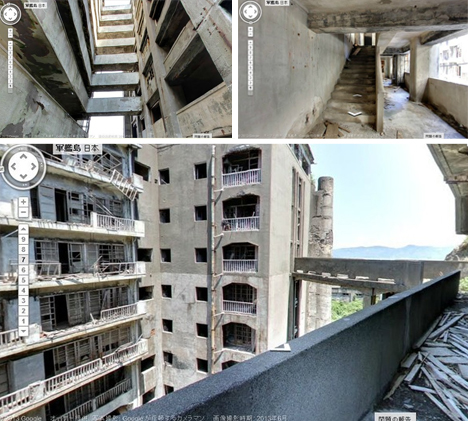
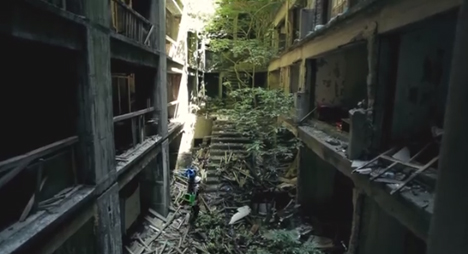
    Street View has mapped much more than roads in its, but sending a lone urban explorer through the haunting multistory ruins of a remote island may be one of their riskiest geographic ventures yet.

    street view abandoned island

    street view japanese employee

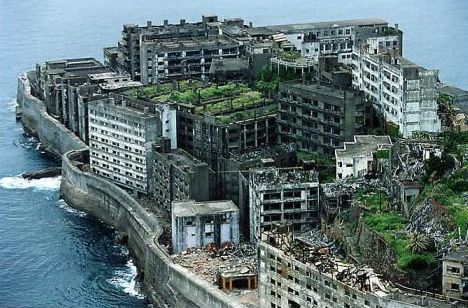
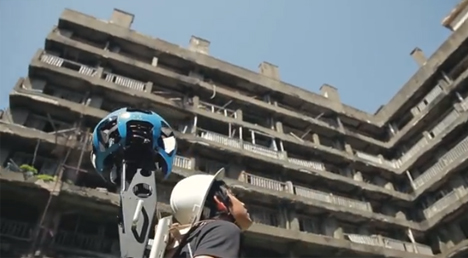
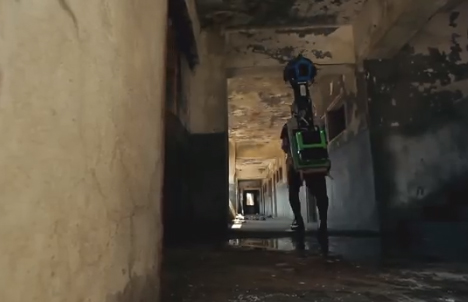
    Strapped with panoramic photography equipment, this video shows a lone Google employee crawling through rubble, scaling partially caved-in abandonments and standing on precarious roofs, all to document one of the most unique deserted cities on the globe.

    street view urban exploration

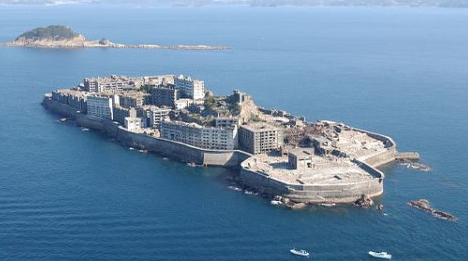
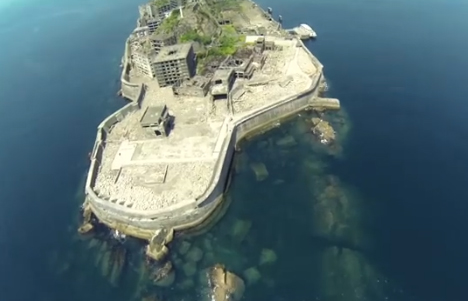
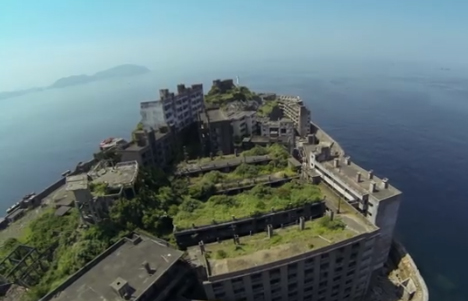
    Occupied for over a century, and briefly the world’s most densely-populated island, Gunkanjima, Japan (aka Hashima) is now one of the loneliest places on the planet.

    street view overview aerial

    street view island rooftop

    A giant concrete wall surrounds the ship-shaped Battleship Island, giving it its nickname. At one point it was packed with an average of 1.4 residents per square meter of space, almost like an overcrowded sea vessel.

    street view inside walking

    street view building infiltration

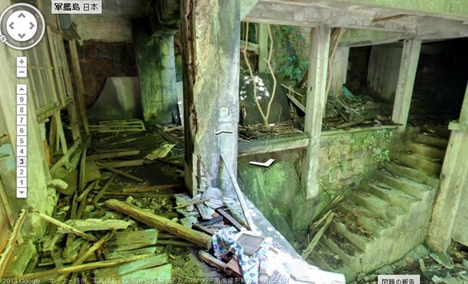
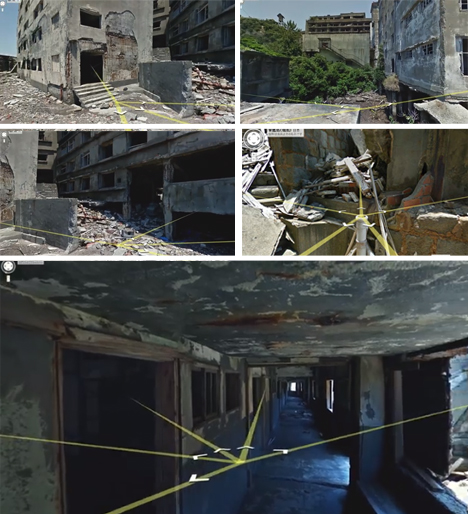
    Parts of the deserted island have since been reopened to the public, but Google secured special permission to go off the beaten path and pass through long-abandoned buildings that only intrepid infiltrators have seen in recent decades past.

    street view ruin interior

    street view routes paths

    Thanks to their carefully mapping, virtual visitors (web viewers) can now tour the corroded corridors, crumbling stairs and uncertain roofs from a much safer distance, almost look a choose-your-own-adventure for urban explorers.

    Share on Facebook


    [ By WebUrbanist in Global & Urbex & Parkour. ]

    [ WebUrbanist | Archives | Galleries | Privacy | TOS ]

    WebUrbanist

  • Cocaine Skull: Life-Sized Sculpture Made of Street Drugs

    [ By Steph in Art & Sculpture & Craft. ]

    Cocaine skull sculpture 1

    A pile of street cocaine mixed with gelatin is sculpted into a life-sized replica of a human skull in ‘Ecce Animal,’ a statement on humankind’s lingering tendency to lose control of ourselves. Artist Diddo created the piece as a private commission using street cocaine obtained the usual way – illegally – and declines to reveal the confidential details of the hows and whys.

    Cocaine skull sculpture 2

    Diddo had the cocaine tested at a laboratory before using it, and pharmacists and the unnamed facility discovered that mixed in with the pure cocaine was a number of other ingredients including “Phenacetin, Caffeine, Paracetamol, and a relative large percentage of sugars, most probably Mannitol or Inositol.”

    Cocaine skull sculpture 3

    Cocaine skull sculpture 4

    The piece was initially released with no information other than a companion poem written by the artist, which reads in part, “It is frightening to look at the face of our animal side laid bare by comfortable excess; the spoils of aggression. But what exactly is it about this image that is so confronting?”

    Cocaine skull sculpture 5

    The artist reveals to Bullett that despite its initial appearance, Ecce Animal isn’t meant to be a statement on the destructiveness of addiction, but rather about our inherent nature as human beings. “We have temporarily outgrown the intended uses for our animal instincts. This leaves us in an uncomfortable conundrum. Where can we safely store them  until we need them again?”

    Share on Facebook


    [ By Steph in Art & Sculpture & Craft. ]

    [ WebUrbanist | Archives | Galleries | Privacy | TOS ]

    WebUrbanist