RSS
 

Posts Tagged ‘Square’

20-Hour House: How to 3D-Print 2,500 Square Feet in 1 Day

14 Jan

[ By WebUrbanist in Conceptual & Futuristic & Technology. ]

3d printing building day

Combining ancient earthen-architecture approaches and cutting-edge robotic technologies, this contour crafting process promises a revolution in how we address one of our most basic and universal human needs: shelter.

Inventor and teacher Dr. Behrokh Khoshevis of University of Southern California points out that residential construction is labor-intensive, inefficient and hazardous. In short: it is overdue for a paradigm shift, one that not only automates and speeds up processes but also allows for mass customization and individualization.

3d printed architecture model

His Counter Crafting system “is a fabrication process by which large-scale parts can be fabricated quickly in a layer-by-layer fashion. The chief advantages of the Contour Crafting process over existing technologies are the superior surface finish that is realized and the greatly enhanced speed of fabrication” in part through the use of additives for faster hardening times.

3d building prototype printer

Steel reinforcement, plumbing and electrical can all be installed by robotic attachments as the concrete walls are poured. In turn, conventional shape and style limitations need not apply – curves are as simple to program as right angles. Part of the beauty of this system is that it cuts out the middle man – designs can go straight from the digital drawing board (CAD software) to the on-board computer.

3d printing on moon

Nor is this simply one man’s fantasy: “Contour Crafting has been under development under support from the National Science Foundation and the Office of Naval Research. Also, the application of CC in building adobe structures using inexpensive materials is being pursued in conjunction with the CalEarth organization.” Contour Crafting is also working with NASA to explore possibilities for 3D-printing structures in space.

Share on Facebook


[ By WebUrbanist in Conceptual & Futuristic & Technology. ]

[ WebUrbanist | Archives | Galleries | Privacy | TOS ]


WebUrbanist

 
Comments Off on 20-Hour House: How to 3D-Print 2,500 Square Feet in 1 Day

Posted in Creativity


20-Hour House: How to 3D-Print 2,500 Square Feet in 1 Day

12 Jan

[ By WebUrbanist in Conceptual & Futuristic & Technology. ]

3d printing building day

Combining ancient earthen-architecture approaches and cutting-edge robotic technologies, this contour crafting process promises a revolution in how we address one of our most basic and universal human needs: shelter.

Inventor and teacher Dr. Behrokh Khoshevis of University of Southern California points out that residential construction is labor-intensive, inefficient and hazardous. In short: it is overdue for a paradigm shift, one that not only automates and speeds up processes but also allows for mass customization and individualization.

3d printed architecture model

His Counter Crafting system “is a fabrication process by which large-scale parts can be fabricated quickly in a layer-by-layer fashion. The chief advantages of the Contour Crafting process over existing technologies are the superior surface finish that is realized and the greatly enhanced speed of fabrication” in part through the use of additives for faster hardening times.

3d building prototype printer

Steel reinforcement, plumbing and electrical can all be installed by robotic attachments as the concrete walls are poured. In turn, conventional shape and style limitations need not apply – curves are as simple to program as right angles. Part of the beauty of this system is that it cuts out the middle man – designs can go straight from the digital drawing board (CAD software) to the on-board computer.

3d printing on moon

Nor is this simply one man’s fantasy: “Contour Crafting has been under development under support from the National Science Foundation and the Office of Naval Research. Also, the application of CC in building adobe structures using inexpensive materials is being pursued in conjunction with the CalEarth organization.” Contour Crafting is also working with NASA to explore possibilities for 3D-printing structures in space.

Share on Facebook


[ By WebUrbanist in Conceptual & Futuristic & Technology. ]

[ WebUrbanist | Archives | Galleries | Privacy | TOS ]


WebUrbanist

 
Comments Off on 20-Hour House: How to 3D-Print 2,500 Square Feet in 1 Day

Posted in Creativity


Cokin revamps square filter lineup as ‘Creative Filter System’

06 Sep

CFS-logo.jpg

Cokin has announced a complete overhaul of the branding and packaging of its square filters. The existing different-sized ranges ( ‘A’, ‘P’, ‘Z-Pro’ and ‘X-Pro’) have been rebranded into a single ‘Creative Filter System’, with the four sizes relabelled ‘S’, ‘M’, ‘L’ and ‘XL’. Gone are the old bulky plastic storage boxes too, replaced by a slimmer ‘SlidePack’ design which takes up half the space, and uses a microfibre-lined sleeve to help keep your filters clean. Photographers nostalgic for the good old days can breathe a sigh of relief though – old classics such as Tobacco Grads and Sunset filters are still in the catalogue.

News: Digital Photography Review (dpreview.com)

 
Comments Off on Cokin revamps square filter lineup as ‘Creative Filter System’

Posted in Uncategorized


Porta-Park: Mobile Urban Square the Size of a Parking Spot

23 Aug

[ By WebUrbanist in Art & Installation & Sound. ]

portable urban square project

Compact and portable, this crafty collaborative design-build project is part art installation and part impromptu gathering space. This student-built platform pushes people to think about the flexible potential of public space – it also showcases the power of group brainstorming and rapid prototyping.

portable student public space

Facilitated by Izmo in Italy, participating students followed a process-oriented approach. They were presented a framework for construction – a metal-framed rectangle – divided into four quadrants. Each of these sections was assigned to a group along with a set of discarded building materials ready to be reused and a time limit for construction.

portable public space deployed

The cut, pasted and painted result looks somewhat like a three-dimensional patchwork quilt. Its various sides feature fold-out furniture, sliding drawers and secret slots from which various interactive objects are deployed on demand. The structure itself sits on wheels and is sized to fit into public parking spaces or other small and slim sites.

portable park design build

About Izmo itself: “The name Izmo originates from the word isthmus, a thin strip of land that joins two areas. Our research topic is in fact the territory: where interactions take place between individuals and public space . Our mission is to link the territories, the people with the land and the citizens with each other. We do this, for instance, through projects of urban design, installation; organization of seminars, meetings and workshops; and development of Web platforms. In all cases, the projects designed by Izmo come from reading and from listening to people and places that will benefit from our operations.”

Share on Facebook


[ By WebUrbanist in Art & Installation & Sound. ]

[ WebUrbanist | Archives | Galleries | Privacy | TOS ]


WebUrbanist

 
Comments Off on Porta-Park: Mobile Urban Square the Size of a Parking Spot

Posted in Creativity


An Introduction to the Inverse Square Law

21 Aug

I don’t know about you, but I was never much of a math student.  I needed a tutor in high school for both geometry and physics.  I chose a double major in college (Journalism/English) that required no math.  I practiced law for fourteen years, where any math I needed was either pretty easy or done on a calculator.  Even when I ditched my briefcase for a camera bag and embarked on a new career, I felt pretty secure in the knowledge that confusing math had no place in the world of photography.

And then the Inverse Square Law reared its ugly head.

It didn’t jump out and attack me right away.  No– the Inverse Square Law is much too cunning for that.  It was patient.  It bided its time.  It waited for me to get comfortable in my new skin a professional photographer.  It waited for me to feel secure in my knowledge and execution of studio lighting and off-camera flash.  And then it showed itself.

We all deal with light.  It is the defining element of what we do.  We capture light in a box and use it to tell a story.  Some photographers put themselves in the “natural light” category, while others work their magic with a firm grasp of off-camera flash.  While the Inverse Square Law comes into play more often with strobes, it is absolutely a concept that applies to every light source, and therefore affects every photographer.

So, what is it?  In all of its overly technical glory, the Inverse Square Law– as it applies to photography– is an equation that relates the intensity of a light source to the illumination it produces at any given distance.

Huh?

Regardless of how you classify yourself as a photographer, you already know that light travels.  It can be diffused.  It can be reflected.  It can be deflected.  But it travels.  This means that over time and distance its intensity can and will diminish.  What does that mean for your photography?  It means that doubling the flash-to-subject distance reduces the light falling on the subject to one-quarter.  Logically, we might assume that doubling the distance would reduce the power by half.  In actuality, however, doubling the distance reduces the power by 75%  More simply put, the Inverse Square Law is used (among other things) to determine the fall-off– the difference in illumination on a subject as it moves farther away from the light source.

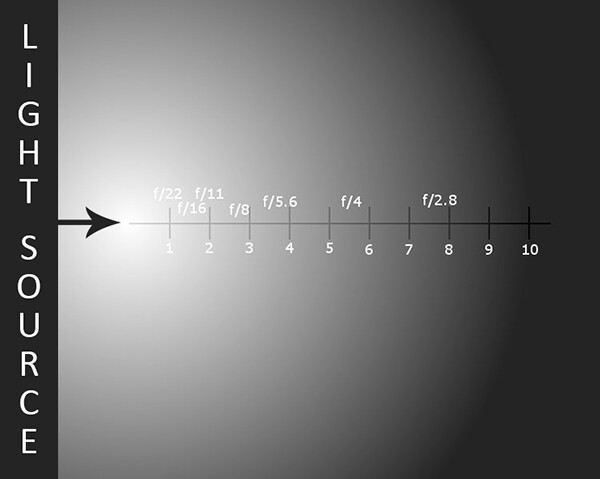
Let’s take a look at a graphic that will help us get our heads around this.  We are looking at a blank wall approximately ten feet long, illuminated with a single light source.  Meter readings along the wall show the progression of one-stop increments.  Notice how we move one stop from f/22 to f/16 in a matter of inches, yet we move one stop from f/4 to f/2.8 over the course of a few feet.

The Inverse Square Law relates the intensity of a light source to the illumination it produces at any given distance.

The Inverse Square Law relates the intensity of a light source to the illumination it produces at any given distance. One-stop increments are spread over a wider area the farther the light travels.

Now that we understand what the Inverse Square Law is and how it affects the intensity of light, how do we apply it to our photography?  Let’s assume that we are photographing a family of four on our wall.  If we position them closer to the light– let’s say in the f/8 – f//11 range– we are going to have a lot of contrast between the subjects.  Those closer to the light source catch the brunt of the light and may be overexposed, while those further from it could be underexposed.  The variance in the light over such a short distance means the light falling on our subjects will be very uneven.  If, on the other hand, we move our family down the wall to the 7- or 8-feet mark, we have a wider area in which to achieve a more even exposure across the group.

Remember, though, that the same principles apply not only to our subjects, but to the relationship between the light source and the background as well.  If we are photographing our imaginary family with a plain white wall for a background, simply moving them closer to or farther away from the wall will affect whether the wall appears white, gray, or even black.

So far, we’ve discussed what the Inverse Square Law is and how it applies to off-camera flash.  But what about natural light?  The same concept applies, whether you are using window light, a reflector, a sunset, or any other non-electrical light source.  The principles of how light travels do not change just because the light in question has no batteries.  Doubling your subject’s distance from the window, for example, is going to result in the same 75% drop in intensity that you will experience with strobes or speedlights.

So, what’s the bottom line?  The best advice I can give about the Inverse Square Law is to simply be aware of it and understand its potential impact on your photos and lighting setups.  The more you understand light and how it behaves, the better equipped you will be to efficiently compose and create consistent images with less trial and error.


Post originally from: Digital Photography Tips.

Check out our more Photography Tips at Photography Tips for Beginners, Portrait Photography Tips and Wedding Photography Tips.

An Introduction to the Inverse Square Law


Digital Photography School

 
Comments Off on An Introduction to the Inverse Square Law

Posted in Photography


Long Exposure Photography and the Square Format

04 Aug

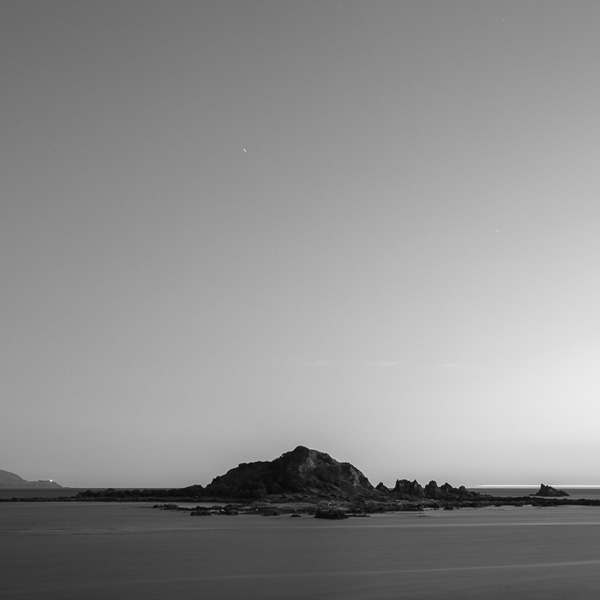
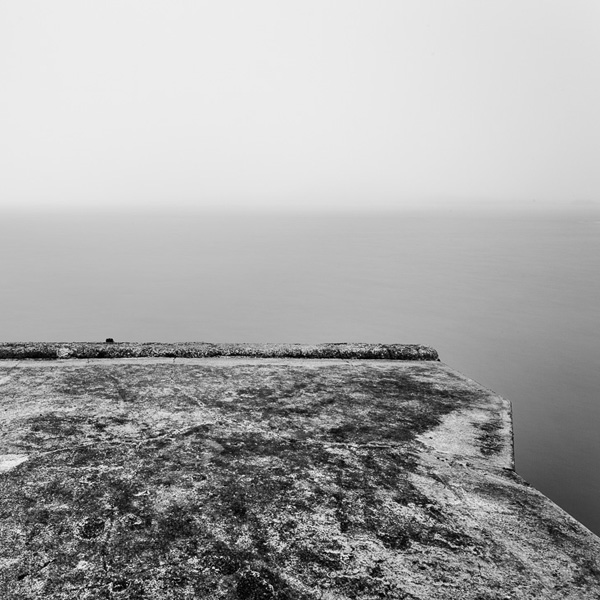
Square format black and white photograph

The rise in popularity of digital cameras over the past decade has coincided with the emergence of a new genre of photography – long exposure photography. Long exposure photography involves using shutter speeds of anything from one second to five minutes or more while using a tripod to keep the camera still. The result is a landscape or architectural study characterised by still elements, such as rocks or a building, contrasting with moving elements, such as water or clouds in the sky. Most long exposure photographers use neutral density filters to obtain long shutter speeds and would probably aim to use a shutter speed of at least thirty seconds to obtain their effects.

Digital cameras greatly assist with long exposure photography because there is no reciprocity failure with digital and the instant feedback provided by the LCD screen lets photographers see right away how effective the composition is.

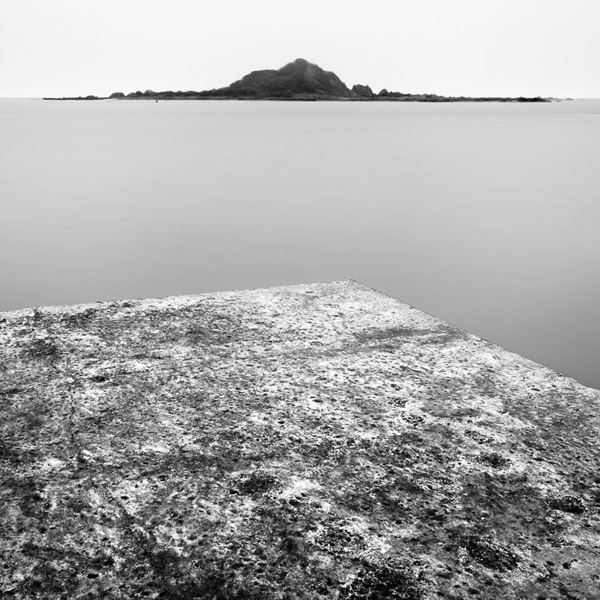
Square format black and white photograph

If you are familiar with the work of some of the more well-known long exposure photographers then you would no doubt have noticed that many of them choose to work in both black and white and the square format. Why is this?

Let’s start with black and white. Monochrome is the medium of choice for many fine art photographers. It’s moody, timeless, evocative and expressive. Removing colour from the composition concentrates attention on texture, contrast, line and light – the visual building blocks of powerful imagery.

The square format is different from other aspect ratios because of its balanced shape. The four sides of a square are equal in length and encourage the viewer’s eye to move around the frame in a circle, rather than side-to-side or up and down. The square frame lends itself to compositions that contain strong shapes, lines or other graphic elements. The strong shape of the square frame seems to emphasise other shapes that appear within it.

Not all long exposure photographers work exclusively in black and white or the square format, but many of them do. The heavy emphasis on simplicity led composition in the long exposure photography genre marries well with the compositional strengths of the square format.

Square format black and white photograph

Long exposure photographers

Looking at the work of other photographers is an excellent way to learn more about the creative side of photography. The following is a list of some of my favourite long exposure photographers. Each photographer in this list works predominantly in black and white and the square format. You will learn a lot from their work.

I have interviewed many of these photographers on my website. You can work your way through the interviews here.

Photographer Nathan Wirth has also interviewed some of these photographers on his blog Slices of Silence.

  • Joel Tjintjelaar
  • Moises Levy
  • Keith Aggett
  • Julia-Anna Gospodarou
  • Hengki Koentjoro
  • Spencer Brown
  • Didier Demaret
  • Thomas Leong
  • Andy Brown
  • Will Le
  • Maria Strömvik
  • Nathan Wirth
  • Steve Landeros
  • Paul Wheeler
  • Gavin Dunbar
  • Håkan Strand
  • Josef Hoflehner
  • Michael Kenna
  • Jeff Gaydash
  • Michael Diblicek
  • Xavi Fuentes

Conclusion

I hope you enjoyed looking through the work of the photographers listed above. If you’d like to find out more about long exposure photography, then Joel Tjintjelaar’s website BWVision is an excellent place to start. The tutorials page has plenty of information to get you started.

Post originally from: Digital Photography Tips.

Check out our more Photography Tips at Photography Tips for Beginners, Portrait Photography Tips and Wedding Photography Tips.

Long Exposure Photography and the Square Format


Digital Photography School

 
Comments Off on Long Exposure Photography and the Square Format

Posted in Photography


6 Lessons the Square Format Can Teach You About Composition

29 Jul

Square format composition

In another article I wrote that one of the main attractions of the square format for me is composition. Today I’m going to elaborate on that idea.

Composition in the square format is a different process than within a rectangular frame. The benefit of understanding of why that is so is that you will be able to apply the lessons learnt to improving the composition of your images in any aspect ratio. Even if you never intend to use it in earnest, it’s worthwhile playing around with the square format for this reason alone.

Let’s take a look at some of these factors:

1. Balance

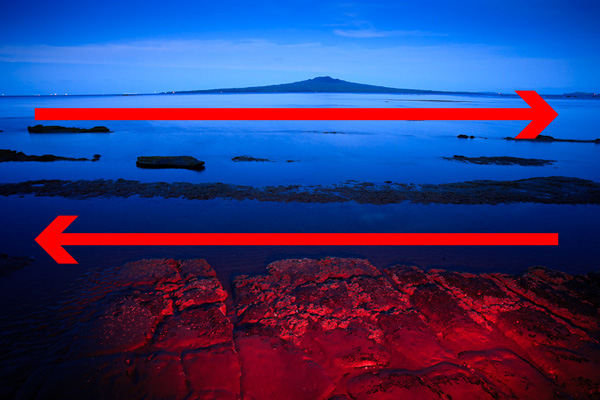
A square is a perfectly balanced shape. Each side is equal in length. Using the square format encourages the eye to move around the frame in a circle. This is different to the rectangular frame, where the eye is encouraged to move from side to side (in the landscape format) or up and down (in the portrait format). There are many factors that influence the way the eye moves around a photo, including the use of line, texture, colour, selective focus and negative space. But the shape of the frame is a major factor.

In this landscape, composed within the 3:2 aspect ratio of my 35mm camera, the eye is encouraged to move from side to side by the shape of the frame and the horizontal lines:

Square format composition

In this square format photo, the eye is encouraged to move around the frame in a circle:

Square format composition

2. Space

Negative space is the term used to describe the empty space in an image around the subject. Composition is often improved by getting closer to the subject. But sometimes you can create atmosphere or emphasise the shape of the subject by including negative space around it. In the rectangular frame, this can be difficult to do as it results in a lot of empty space. But it can be very effective in the square format.

Here is a photo that I took of a lizard in the 3:2 aspect ratio:

Square format composition

And here is the same photo cropped to a square:

Square format composition

Which do you prefer? There is no right answer – it’s entirely subjective. But it’s interesting how the dynamic of the image is changed by a single crop.

3. Simplicity

The square format lends itself to a simple approach. There is less room within the square frame than the rectangular one, therefore simplifying the composition becomes a necessity.

Creating a simple composition is often much harder than it seems. But it’s a very useful exercise. For your photos to have impact, you want to eliminate as many distractions as possible. The focus should be on your subject. If there are other elements within the frame that pull the viewer’s eye away from the subject that can lessen the strength of the image.

The composition of this image is about as simple as it is possible to get:

Square format composition

4. Shape

How many shapes can you see in the images below? There are circles, squares, diamonds, rectangles and triangles within these photos. The square format lends itself to this style of composition. I think that’s because the square is such a powerful shape in itself, that it emphasises other shapes within it. Linked with this are the ideas of balance and simplicity. Simplifying the composition emphasises shape, and so does placing shapes within a square frame. Converting to black and white emphasises them further.

Square format composition

5. Central composition

In the square format you can often place the subject in the centre of the frame for an effective composition. Generally speaking, many photographers tend to avoid place the subject off-centre for a more interesting composition.The rule-of-thirds is a reminder of this. But in the square format that doesn’t apply.

It’s even more true when the image is simple. The less distractions there are in the frame, the more effective a central composition becomes. If the subject has a strong shape, the empty space around it emphasises the shape. And the square format provides the perfect, balanced frame:

Square format composition

6. Black and white

Take away colour and what do you have? An image that relies on tonal contrast for impact and that emphases visual elements such as line, texture and shape. The square format and black and white seem made for each other, which perhaps explains its popularity with fine art photographers.

Take another look at the photos in this article. Do you prefer the colour images or the monochrome ones? The answer may give you an idea for future photo projects.

Final thought: Have fun

Whether you shoot with the intention of utilising the square format, or go back over old images to see whether they can be improved by cropping to a square, the most important thing is to have fun with the process. Enjoy the challenge of getting to grips with the square format and its implications for composition. Don’t take it too seriously. You’ll create some beautiful images and the lessons you learn about composition along the way will help you create better images in the future.


Post originally from: Digital Photography Tips.

Check out our more Photography Tips at Photography Tips for Beginners, Portrait Photography Tips and Wedding Photography Tips.

6 Lessons the Square Format Can Teach You About Composition


Digital Photography School

 
Comments Off on 6 Lessons the Square Format Can Teach You About Composition

Posted in Photography


The Beautiful Square

22 Jul

Square format photography

This article is written by Andrew S. Gibson, the author of Square, on sale now at Snap N Deals for a limited time.

The square format seems to have gone in and out of fashion over the decades – and there’s no doubt that it’s currently experiencing a resurgence in popularity. This is at least partly due to the popularity of toy cameras like the Holga and smartphone apps like Instagram. But it’s also got a lot to do ease of access. With film cameras, cropping aside, the camera you purchased determined the aspect ratio you worked in. With digital cameras you can take a photo and crop it to any aspect ratio you desire. That makes working in the square format a whole lot easier.

84 years of history

The first square format camera was made by Rollei in 1929. Square format cameras have been used by venerable names such as Richard Avedon, Irving Penn and Diane Arbus. Hasselblad, the mark of choice for many professional photographers in the film age, used the square format in its film cameras from 1948 to 2002. There are no current digital cameras (to my knowledge) that have a square sensor. But digital photography makes it easy to crop your images to any aspect ratio you want.

By the way, it’s well worth taking some time to study the works of the masters mentioned above. It will teach you a lot about composition, and hopefully inspire you to try out the square format. Click on the links to learn more about each photographer:

Square format photography

Richard Avedon was known for his stark, minimalist portraits. His approach changed the way fashion photos were taken forever. The first image in this article shows Avedon using a Rolleiflex camera.

Irving Penn is another famous fashion photographer who used minimalism and the square format to make his mark. His photos are known for their formal, graphic composition and stark use of white space.

Diane Arbus took the opposite approach to that of photographers like Irving Penn. She photographed outcasts and people on the margins of society, celebrating the ugly and unusual rather than the beautiful.

If you’d like to see the work of some of the modern exponents of square format photography, then take a look at my article 40 Beautiful Square Photos. I’ve collated a series of beautiful images from some of the best photographers around today.

Using the square format

Hopefully the above links have whetted your appetite for the square format. There are four main ways you can explore this aspect ratio:

1. Use a medium format film camera. These can be surprisingly inexpensive on the second-hand market. Look for brands such as Rolleiflex, Mamiya, Bronica or Hasselblad. Get the best quality scan you can of the negatives so you can work on them in Photoshop.

2. Use a toy film camera like a Holga. Again, a good quality scan is essential to make the most out of the negatives. If you don’t want to use film you can buy Holga lenses for digital cameras and crop the image to a square. That’s how I created this image:

Square format photography

3. Use a smartphone camera and convert the photos to square format using an app like Instagram. Another approach is load photos that you already have taken onto your phone or tablet and run them through Instagram. I used that method to create this photo:

Square format photography

4. Use a digital camera and crop the images to the square format when you process the Raw files. Many recent models let you take square images in Live View. I’m sure this is the method that the majority of readers of this website will use.

The appeal of the square format

I think of the square format as the fine art photographer’s format. It has a venerable history and has been used by some of the great names of 20th century photography. Now, in the digital age, photographers are using the square format in fields as diverse as long exposure photography and iphoneography. Here are some more reasons that I like the square format:

  • It changes my approach to composition. The square format is different, and there seems to be a certain inherent beauty to well composed square format photos that other aspect ratios lack. Shapes become more prominent, there is little wasted space and the balance between the elements changes. The subject of composition within the square format is so interesting that I will write an entire article about it.
  • It works well in black and white. There’s something magical about the combination of black and white and the square format. The lack of colour lends emphasis to graphic shapes and textures within the frame.

Square format photography

  • The square format seems to suit certain subjects. It seems to work best with subjects like portraits, the nude, landscape, still life, architecture, details and abstracts. These are all artistic subjects, and they all work well in black and white – which is perhaps why the square format is popular with fine art photographers.
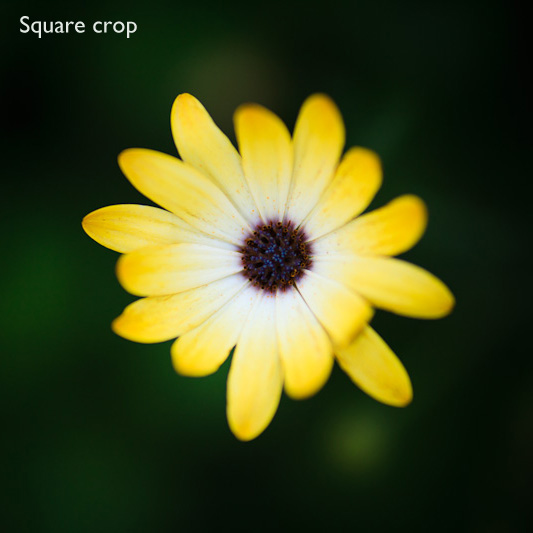
  • It’s fun. I enjoy going through my old images and seeing which ones can be improved by cropping to the square format. It may seem like an abstract exercise but it has taught me a lot about composition. Thinking about whether an image could be improved by cropping to a square makes me thing about whether I composed the image in the best possible way in the first place. Here’s an example. Cropping the image to the square format, and placing the flower in the centre of the frame, has created an new image with a different dynamic.

Square format photography

Square format photography

Conclusion

If you’ve never used the square format before, it’s well worth the effort. It’s so easy to crop your existing images in Lightroom or Photoshop that anyone can try it. It can give new life to old images – and the process will teach you a lot about composition and the use of space within the frame.

Square

Square format photography

My ebook Square explores the square format from the digital photographer’s perspective. It shows you how to use the square format on your camera, and how to make the most out of what I think of as the fine art photographer’s format.It’s available now at Snap N Deals for a special price for a limited period.

Post originally from: Digital Photography Tips.

Check out our more Photography Tips at Photography Tips for Beginners, Portrait Photography Tips and Wedding Photography Tips.

The Beautiful Square


Digital Photography School

 
Comments Off on The Beautiful Square

Posted in Photography


365 2010 NOV 24~Texture Tender Lovin’ Sky #1 Square

03 Apr

A few nice visual art images I found:

365 2010 NOV 24~Texture Tender Lovin’ Sky #1 Square
visual art
Image by julieabrown1
I did a texture with the sky shot yesterday….. this one is on the square. I have some other shots and want to do a little series. Well, I’m easily entertained….:) This texture is available for download if it would be useful. One of the ways I see it might be fun is to cut the section with the most clouds and put it in a sky you want some more visual in.
To download you can go to actions>see all sizes>download original size or you can use this link:
www.flickr.com/photos/julie_b1/5204206762/sizes/o/

I would love to see what you do with it. If you would like, post a small image in the comment thread.
Please credit me with the image and do not represent it to be your own.

VSP Visual Street Performance 2007 @ Fabrica Braco de Prata, Lisbon, Portugal
visual art
Image by Graffiti Land

 
Comments Off on 365 2010 NOV 24~Texture Tender Lovin’ Sky #1 Square

Posted in Photographs


On Facebook, The Square Format Photo is Now the King

17 Mar

On Facebook the Square Photo is Now the King

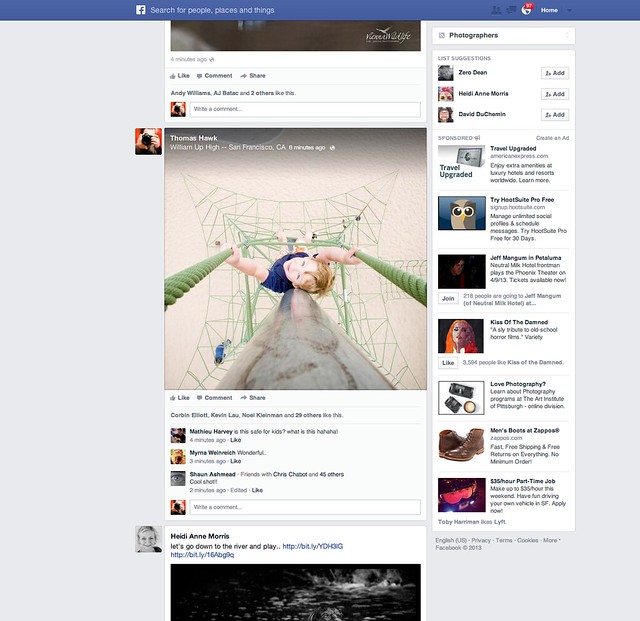
I’ve been using the new Facebook News Feed for a little while now. One of the things I noticed about it today (and maybe new even since the News Feed launch) is that square photos are now king on Facebook.

What do I mean by this? Square photos are the largest sized photos in the new Facebook News Feed. This is similar to how Flickr shows photos in our Flickrstreams.

Google+ on the other hand tries to squeeze a square photo into a horizontal photo envelope, which makes the square photo on Google+ have little side bars on it and looks awkward, smaller and ugly.

I, for one, welcome the new square format as the king of Facebook. The square crop is my favorite. What’s your favorite crop?


Thomas Hawk Digital Connection

 
Comments Off on On Facebook, The Square Format Photo is Now the King

Posted in Photography