Tag: Square

  • Walk on Water: Christo Unfurls 1 Million Square Feet of Golden Cloth

    [ By WebUrbanist in Art & Installation & Sound. ]

    christo island view

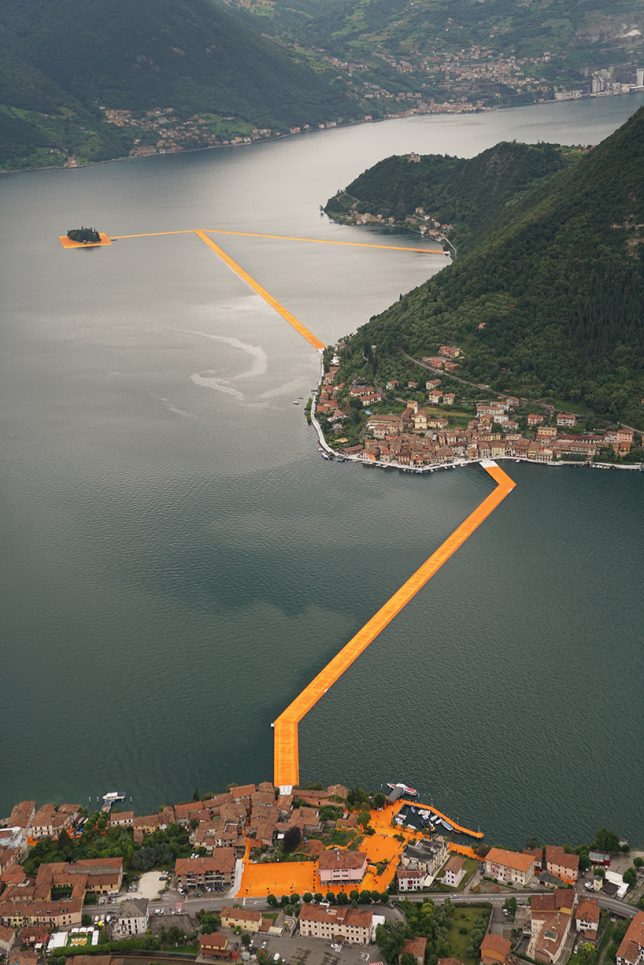
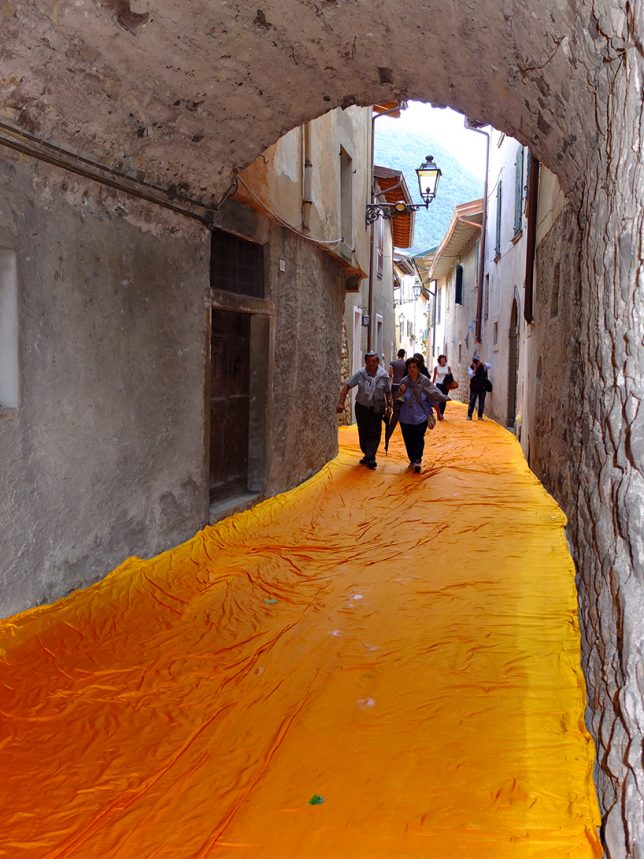
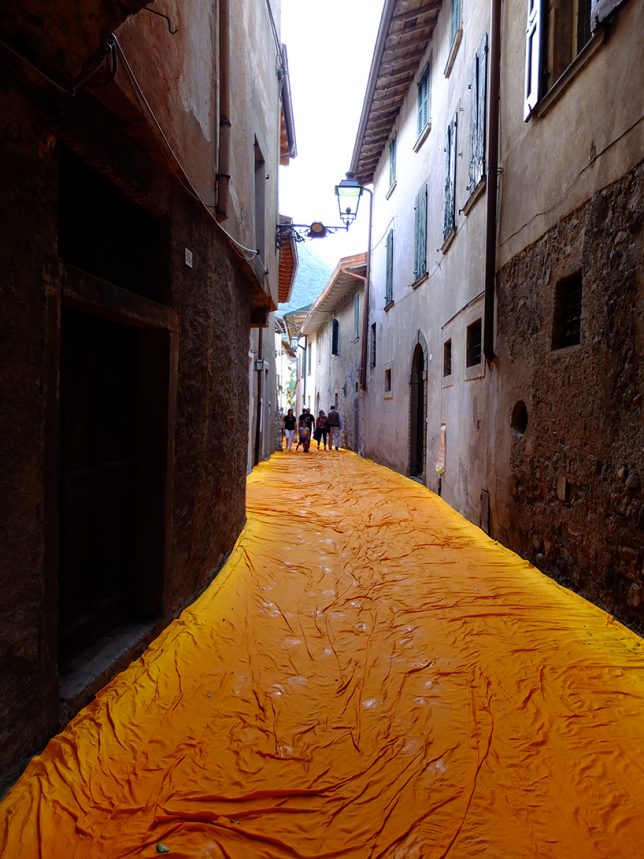
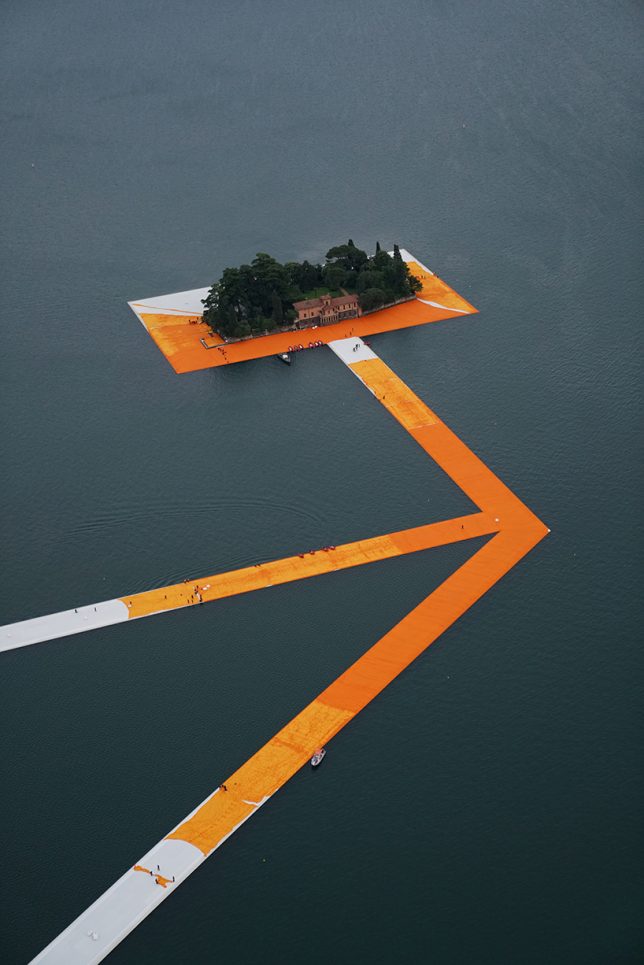
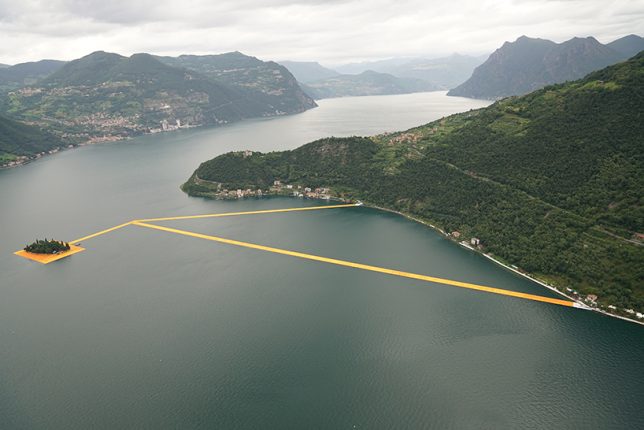
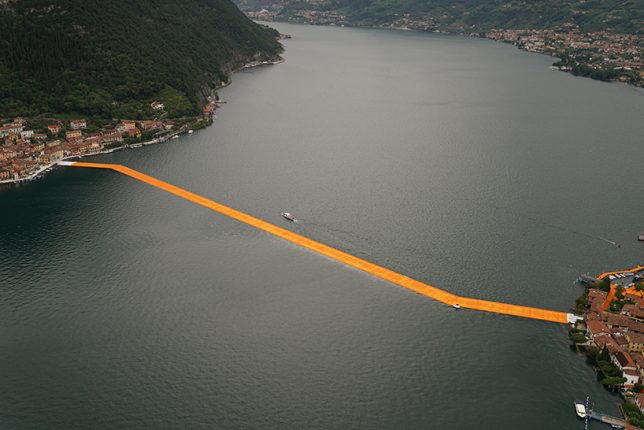
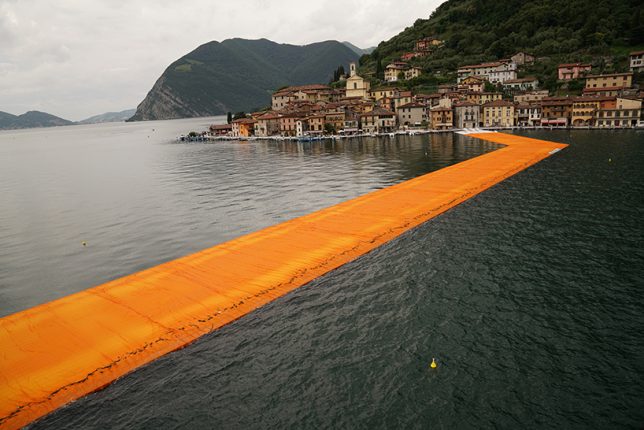
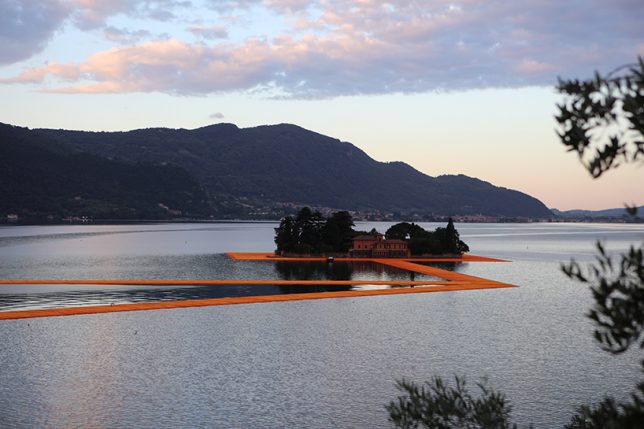
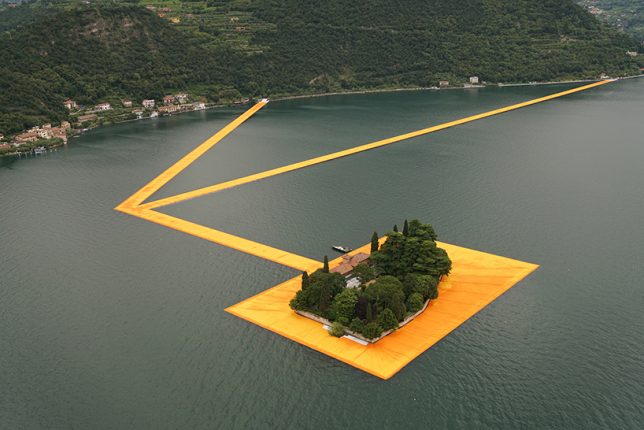
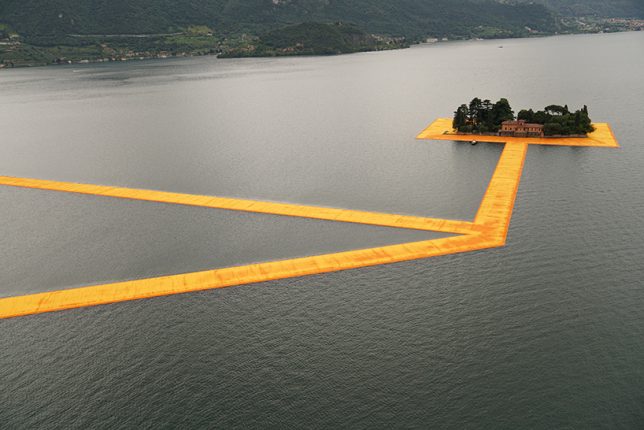
    Known for his work on large-scale art projects, including the world’s biggest interior art installation, artist’s latest piece features over 1,000,000 square feet (100,000 square meters) of shimmering yellow fabric, wrapped around floating docks that span for miles up to and across Lake Iseo in Italy.

    floating lake art

    christo aerial view

    Undulating with the waves, the Floating Piers project lets visitors walk between Sulzano, Monte Isola and to the island of San Paolo; the floating platforms are visible from surrounding mountains as well.

    christo golden path fabric

    christo streets alleys

    Christo conceived of the idea with his Jeanne-Claude as far back as the 1970s, exploring different potential venues for its installation. While Jeanne-Claude passed away in 2009, Christo has carried on the idea, and finally found a place for the temporary work in Northern Italy.

    christo unveiling

    christo day of

    Many works by this long-standing pair of ambitious artists were self-funded, in part through the sales of concept drawings and models in advance.

    christo floating path

    christo close up

    christo lake view

    “like all of our projects,” says Christo, “The Floating Piers absolutely free and accessible 24 hours a day, weather permitting. There are no tickets, no openings, no reservations and no owners. The Floating Piers are an extension of the street and belong to everyone.” The project opened this weekend and will run for just 16 days. Images by Wolfgang Volz.

    Share on Facebook


    [ By WebUrbanist in Art & Installation & Sound. ]

    [ WebUrbanist | Archives | Galleries | Privacy | TOS ]


    WebUrbanist

  • Magnum signed square print sale returns for third year

    $ (document).ready(function() { SampleGalleryV2({“containerId”:”embeddedSampleGallery_1660447426″,”galleryId”:”1660447426″,”isEmbeddedWidget”:true,”standalone”:false,”selectedImageIndex”:0,”startInCommentsView”:false,”isMobile”:false}) });

    Signed or estate stamped prints for $ 100 from over 60 Magnum photographers and artists will be available for a limited time, from 9am EST on Monday 6 June until 11pm Friday 10 June 2016, here: shop.magnumphotos.com

    Magnum’s Square Print sale is back, offering up museum-quality signed prints for just $ 100 each. Upwards of 70 prints are on sale from photographers like Martin Parr, Alex Webb, Rene Burri, Eve Arnold, Tim Heatherington and many more. Each photographer contributed an image that plays on a theme of ‘The More or Less Decisive Moment(s)’. 

    The 6×6″ prints are available for five days only, starting now through 11pm ET on Friday, June 10 at shop.magnumphotos.com.


    Press release:

    THE MAGNUM SQUARE PRINT SALE, June 6 – 10, 2016 THE (MORE OR LESS) DECISIVE MOMENTS

    Signed and estate stamped, museum quality, 6×6” prints for $ 100. For 5 days only.

    Magnum Photos co-founder Henri Cartier-Bresson is synonymous with the idea of ‘the decisive moment’, a critical idea in the theory and history of photography. In this Square Print Project the agency looks back at the impact and legacy of Cartier-Bresson, his influence on contemporary photography and the ways in which the decisive moment is manifest in the work of Magnum photographers today.

    For five days only, prints by Magnum photographers which respond to the meaning of the decisive moment, will be available to buy as signed, museum quality, 6×6” square prints, exceptionally priced at just $ 100. Including both classic and contemporary photography, over 60 works by Martin Parr, Alex Webb, René Burri, Elliott Erwitt, Tim Hetherington, Newsha Tavakolian, Peter van Agtmael, Eve Arnold and many more Magnum photographers will be available for a limited time only.

    ABOUT THE DECISIVE MOMENT

    The notion of the decisive moment was coined by Cartier-Bresson’s English language publisher Simon & Schuster in 1952, translating the French title of the book, Images à la Sauvette. Cartier-Bresson annotated Martin Parr’s personal copy to read ‘The More or Less Decisive Moment(s)’, hinting at the plurality and ambiguity of its meaning.

    Every photographer within Magnum Photos has been invited to select an image from their archive and to reflect upon how the photographic concept of the decisive moment influences their practice. Accompanied by personal written responses, these images and texts create a collective portrait of the critical thinking that defines the agency.

    The works included in the Square Print sale are intended to spark debate around the meaning of the decisive moment. What goes through a photographer’s mind when capturing a shot? What are the moral or ethical implications in the quest to find the decisive moment? What part does the unconscious play? Is the realisation of a decisive moment always in the present, or can that come later? Is there even such a thing as the decisive moment?

    The Magnum Square Print Sale will take place at the Magnum Photos Online Shop: shop.magnumphotos.com.

    It will be open from Monday, June 6th, 2016, at 9AM EST until Friday, June 10th, 2016, at 6PM EST.

    Articles: Digital Photography Review (dpreview.com)

  • How the Square Format Can Enhance Your Street Photography

    Square format and street photography

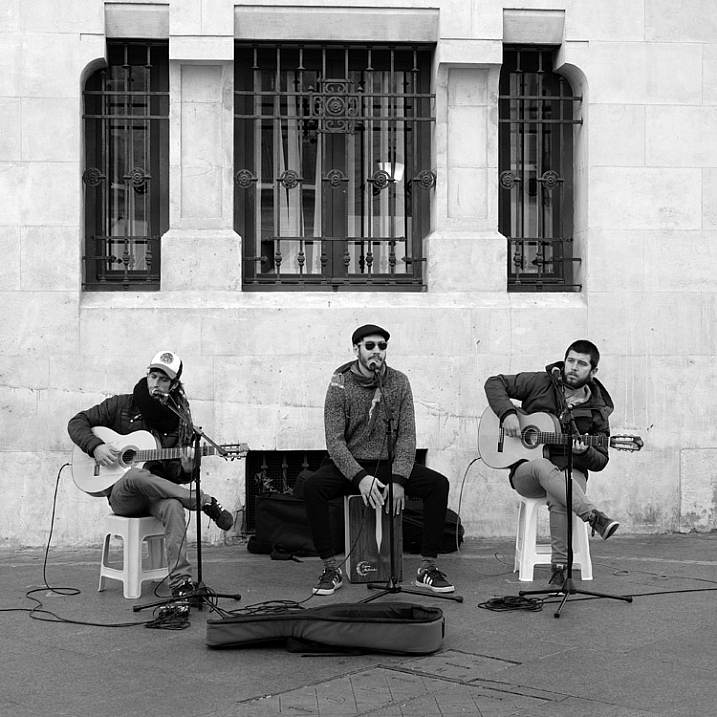
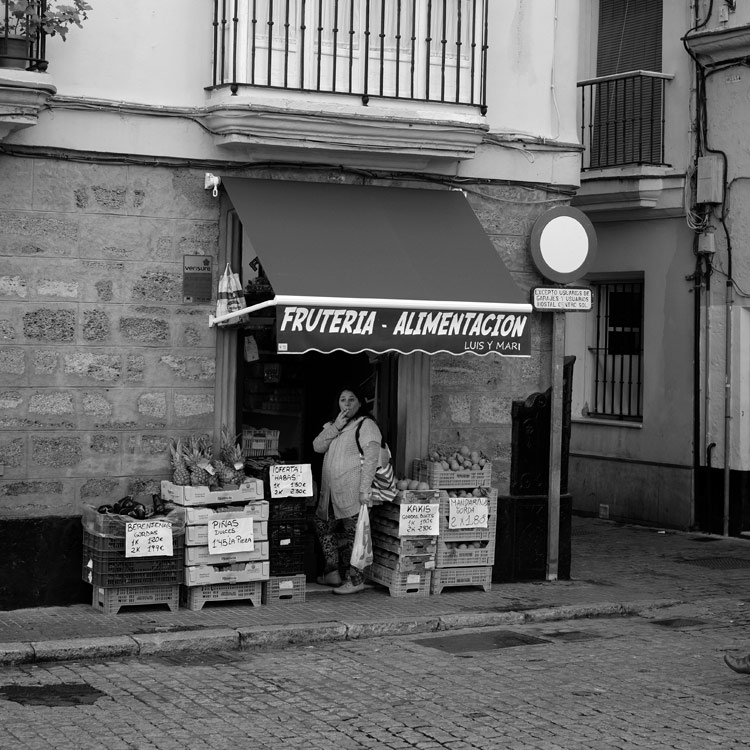
    In my last article about choosing the best lens for street and travel photography, you may have noticed that all the photos used to illustrate it, were in the square format. That’s not a coincidence. I recently discovered that I really like this aspect ratio for street photography. It’s made a big improvement to my photos, and I thought it would be interesting to go a little deeper into the reasons why.

    It started when I read a book by street photographer Willem Wernsen. I noticed that virtually all his photos were square, and I had an aha moment. There was something about the aspect ratio that worked really well. I couldn’t wait to try it out.

    The square format and street photography

    So, what is so good about the square format? I think it comes down to two factors. The first is to do with a fundamental weakness of the 3:2 aspect ratio of the 35mm format, that full-frame and APS-C cameras use. The long rectangle is difficult to use well, especially when the camera is turned on its side in the portrait orientation.

    You can learn more about this in my article Aspect Ratio: What it is and Why it Matters

    That’s why some photographers historically prefer using medium, or large format cameras, for landscape and portrait photography. These are two subjects where it seems especially difficult to compose within the 35mm rectangle, in the portrait orientation. The shorter rectangles of these cameras (not to mention the 4:3 aspect ratio of Micro four-thirds cameras) just seems to work better.
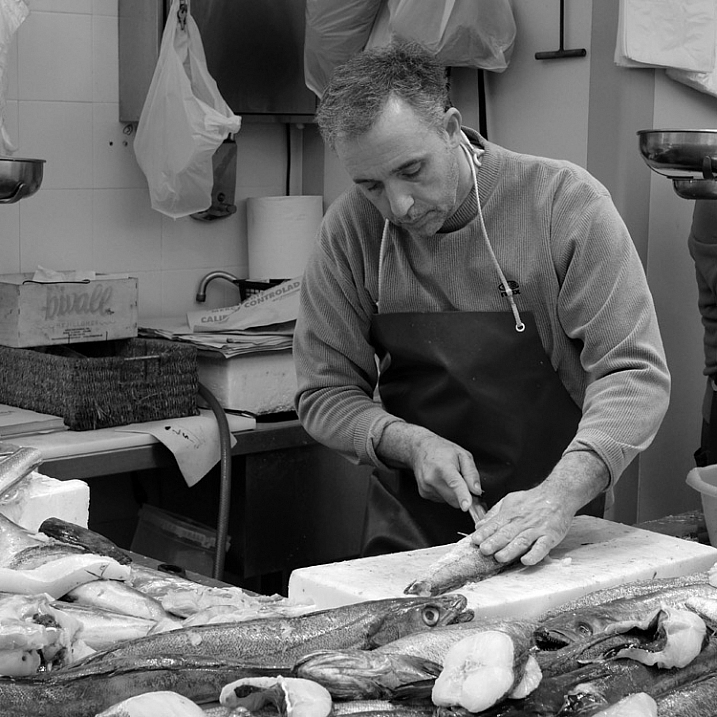
    Square format and street photography

    Keeping street photography simple

    The other factor is that the square format greatly simplifies the decision making process. Street photography is often about reacting quickly to the scene in front of you. The fewer decisions you have to make, the quicker you can do so. With the square format, there is no need to consider whether the composition would be better if you turned the camera on its side.

    Another benefit of the square format is that is seems much easier to create an effective composition within the square frame, than it does within the rectangular one. A good tip is to look for strong shapes, and simplify the composition as much as you can.
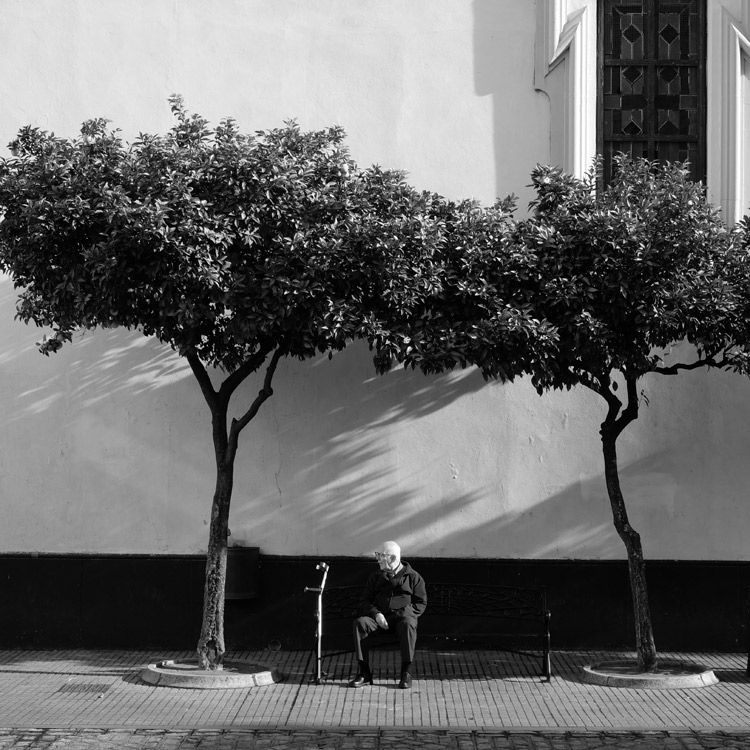
    square-format-street-photography-02

    Camera settings

    If you would like to try out the square format, it is relatively easy to do so, as most modern digital cameras let you select the aspect ratio. If your camera has an optical viewfinder it will probably display guidelines to let you know how to frame the scene. Check your user manual.

    If your camera has an electronic viewfinder you will see a cropped, square image. This, combined with the smaller size and quiet operation, makes mirrorless cameras ideal for street photography.
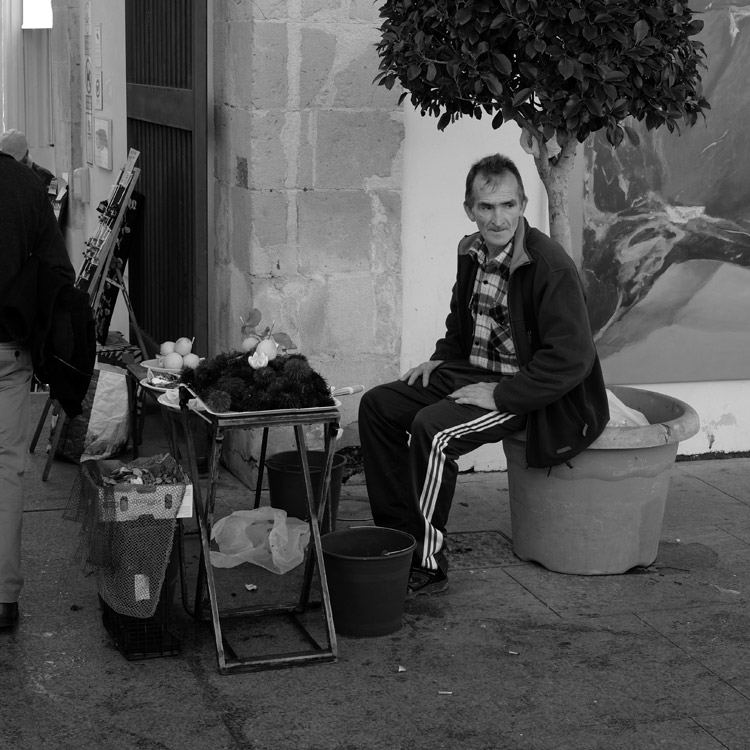
    Square format and street photography

    If you would like to shoot in black and white, as I have done for the photos in this article, then you can do so by setting your camera to its monochrome mode. Mirrorless cameras display the scene in black and white in the viewfinder, a great aid to composition. Digital SLRs display the photos in black and white when you play them back on the LCD screen.

    If you shoot Raw, most cameras will let you uncrop the image in Lightroom if you want to (the exceptions are Nikon and Panasonic, which crop the image even for Raw files). The key is to convert the Raw files to DNG when you import them into Lightroom. If you keep them in their native format, Lightroom won’t let you uncrop them.

    Using Raw also lets you convert your black and white files to colour if you wish to.
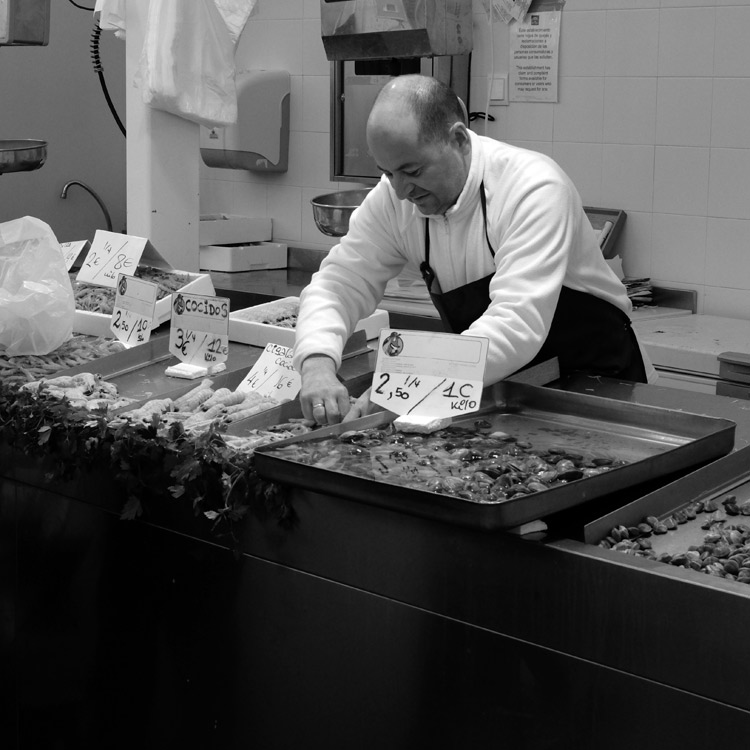
    Square format and street photography

    Your turn

    Have you tried using the square format for street photography? How did you get on with it? Please let us know in the comments, and share some of your photos.
    Square format and street photography


    Mastering Composition ebookMastering Composition

    My new ebook Mastering Composition will help you learn to see and compose photos better. It takes you on a journey beyond the rule of thirds, exploring the principles of composition you need to understand in order to make beautiful images.

    googletag.cmd.push(function() {
    tablet_slots.push( googletag.defineSlot( “/1005424/_dPSv4_tab-all-article-bottom_(300×250)”, [300, 250], “pb-ad-78623” ).addService( googletag.pubads() ) ); } );

    googletag.cmd.push(function() {
    mobile_slots.push( googletag.defineSlot( “/1005424/_dPSv4_mob-all-article-bottom_(300×250)”, [300, 250], “pb-ad-78158” ).addService( googletag.pubads() ) ); } );

    The post How the Square Format Can Enhance Your Street Photography by Andrew S. Gibson appeared first on Digital Photography School.


    Digital Photography School
  • Weekly Photography Challenge – Square

    Shapes are everywhere, have a look around you. Do you see any squares like these images I shared previously?

    Uqbar Is Back

    By Uqbar is back

    Weekly Photography Challenge – Square

    There are many ways you could choose to approach this week’s challenge. You could take it literally and photograph:

    • Things which are square shaped
    • Images cropped into a square format
    • Patterns that include squares

    Or you could take it a bit more off-beat and go for:

    • Squares as in city parks or plazas, and things that take place there
    • A person or thing which is a bit odd as in the old hippy phrase “He’s a square”
    • Something that happens directly, or shooting square on to the subject
    Philippa Willitts

    By Philippa Willitts

    Tom Waterhouse

    By Tom Waterhouse

    Uwe Potthoff

    By Uwe Potthoff

    Eivind Barstad Waaler

    By Eivind Barstad Waaler

    Gianmaria Zanotti

    By Gianmaria Zanotti

    Steve Bailey

    By Steve Bailey

    Share your images below:

    Simply upload your shot into the comment field (look for the little camera icon in the Disqus comments section) and they’ll get embedded for us all to see or if you’d prefer upload them to your favourite photo sharing site and leave the link to them. Show me your best images in this week’s challenge. Sometimes it takes a while for an image to appear so be patient and try not to post the same image twice.

    googletag.cmd.push(function() {
    tablet_slots.push( googletag.defineSlot( “/1005424/_dPSv4_tab-all-article-bottom_(300×250)”, [300, 250], “pb-ad-78623” ).addService( googletag.pubads() ) ); } );

    googletag.cmd.push(function() {
    mobile_slots.push( googletag.defineSlot( “/1005424/_dPSv4_mob-all-article-bottom_(300×250)”, [300, 250], “pb-ad-78158” ).addService( googletag.pubads() ) ); } );

    The post Weekly Photography Challenge – Square by Darlene Hildebrandt appeared first on Digital Photography School.


    Digital Photography School
  • City Lab: World’s Largest Urban Simulator Spans 26 Square Miles

    [ By WebUrbanist in Architecture & Cities & Urbanism. ]

    city lab new mexico

    It will be a brand-new, from-scratch American city like any other, with urban, suburban, exurban and rural zones dotted with houses, malls, power plants, police and fire stations, missing only one key ingredient: inhabitants. Currently under construction in the New Mexico desert, the Center for Innovation, Testing, and Evaluation (CITE) is a sort of real-life Sim City, the “first of its kind, in scale and scope,” a unique “fully integrated test, evaluation and certification facility dedicated to enabling and facilitating the commercialization of new and emerging technologies.”

    city lab deserted complex

    Known informally as City Lab (click to enlarge the diagram above), the 26-square-mile urban laboratory complex has a billion-dollar budget and will host all kinds of tests, including but not limited to: intelligent transportation systems, smart grid technologies and green energy strategies. Wired for data collection and replete with tunnels, system-wide scenarios can be monitored in the minutest detail, a dystopian twist on what might otherwise seem an idyllic mid-sized city capable of supporting 35,000 citizens.

    citylabmasterplan

    Complete with all the infrastructure of a ‘real’ city, the developer’s target clients include university researchers, federal agencies and commercial enterprises. The facility aims to combine elements of private and governmental test environments like Gravesend, a military and police complex in the UK, Liberty City, a drone-oriented cityscape in the US and Mcity, a newly-built autonomous vehicle testing site in Detroit.

    city lab simulation space

    If you have one in your town it is a safe bet CITE has one as well, from churches and highways to a city hall and even an airport. While this place contains all a community could ever hope for, the only ‘residents’ of the place will be a staff of over 300 that maintain its infrastructure and supervise experiments. Imagine the reaction of some archeologist from the distant future, seeing a sort of dystopian settlement wired for full surveillance and connected by a vast array of underground tunnels (The Cabin in the Woods comes to mind, poster below), but at the same time oddly unoccupied and devoid of art, brands or billboards.

    cabin in the woods movie

    Noting the lack of these quintessential hallmarks of modern civilization, a professor at the University of New Mexico decided to ask what kind of public art would fit such a strange and made-to-be-deserted city. Her students solicited proposals from around the country and selected a set of winners. Ingenious ideas included: sculptural mounds made from the dirt displaced during excavation, testing paint colors around the complex for durability and weather resistance and a farcical strategy to sell lots and gentrify the faux city.

    city lab public art

    More from Pegasus Global Holdings: “As a privately-owned, privately-operated test and evaluation center, CITE is open and accessible to a wide array of public and private customer segments – domestic and international. The structure and policies in place at CITE are specifically designed to remove legal, cultural and budgetary impediments as are currently prevalent in the process of moving beyond basic research and development activities.”

    Share on Facebook


    [ By WebUrbanist in Architecture & Cities & Urbanism. ]

    [ WebUrbanist | Archives | Galleries | Privacy | TOS ]


    WebUrbanist

  • Magnum offers signed square prints for $100 in limited edition sale

    Photo agency Magnum is offering prints from 50 of its photographers in a limited edition sale with each print costing $ 100. In a similar event to the one it ran last year, the agency challenged a collection of its photographers to find ‘an image that changes everything’ from their archive. The images will be made into 6×6″ prints, most of which will be signed by the photographer. Read more

    Articles: Digital Photography Review (dpreview.com)

  • The Inverse Square Law & Color Temperature

    Image by Alana Tyler Slutsky from her Surrealia series as featured on Fashion Photography Blog (FashionPhotographyBlog.com)

    LIGHT: THE INVERSE SQUARE LAW & COLOR TEMPERATURE


    Hey FashionPhotographyBlog.com readers,

    Welcome back and hang tight! Last time we are talked about the science behind lighting.

    Today’s topic gets a little confusing.

    The “Inverse Square Law” shapes EVERYTHING in photography.

    What does that even mean?! When opening up a stop, the light doubles. When closing down a stop, the light halves. This is applicable to light as well as all aspects of your camera: aperture, shutter, ISO.

    *DISCLAIMER* Before we get into this:

    LEARN YOUR APERTURE AND SHUTTER VALUES! It’s the only way any of this will make sense.

    Aperture and Shutter Values Chart as featured on Fashion Photography Blog (FashionPhotographyBlog.com)

    As far as light goes, if you move a light x2 as close, it appears x4 larger. If a light is moved x2 away, it appears 1/4 of the original size. Surface Area = Distance ²

    As far as the Inverse Square Law goes according to your camera (All numbers here are purely for example purposes)… If you have an aperture of f/11 and open up to f/8, the amount of light coming into your camera will double (same can be said of you change from ISO of 400 to 800 or a shutter speed of 1/60 to 1/30). If you have an aperture of f/11 and stop down to f/16 the amount of light coming into your camera will be cut in half (same can be said of you change from ISO of 400 to 200 or a shutter speed of 1/60 to 1/125.)

    Real life example:

    A light at 5′ with a meter reading of f/8 gives 100% (correct exposure)

    A light at 10′ with a meter reading of f/4 gives 25% (2 stop difference. Your image is now underexposed.)

    Basically… As you move away, the cone of light gets wider but weaker. Using the outer cone of light for weaker light output is called feathering and gives you a more diffused light.

    Light Intensity to Light Source Chart as featured on Fashion Photography Blog (FashionPhotographyBlog.com)

    Color Temperature

    All lights have a different and specific color temperature, which is measured in Kelvins. The lower the number, the warmer the color is, the higher the number, the cooler the color the light gives off.

    Color Temperature Chart as featured on Fashion Photography Blog (FashionPhotographyBlog.com)

    Be certain to set your own white balance based on the type of light you’re shooting in. White balance in camera makes up for changes in color based on the type of light you’re shooting with. Color shifts will occur when color temperature is not balanced correctly. If you don’t know what type of light you’re in, you can always use Auto White Balance (AWB)- when using AWB the camera figures out (approximately) what the color temperature is of the light source you’re shooting in and shifts colors in camera accordingly.

    White Balance examples as featured on Fashion Photography Blog (FashionPhotographyBlog.com)

    The most common types of light used in photography are continuous lights and flash.

    Continuous lighting, such as hot lights, are.. You guessed it… A continuous form of light.  This type of light, with incandescent bulbs, are tungsten balanced.  There are special bulbs and special lights referred to as “HMI’s.” These lights have bulbs which are balanced to day-light. HMI’s are commonly used in the film industry.

    Flashes (Strobes) are short bursts of light and are balanced to daylight. Types of flash include but are not limited to speed lights, mono-lights (single flash units), pack lights (generator and flash head units), ring lights, etc.

    Now that you have dealt with all of the boring stuff, check in tomorrow to see how everything from the past two days applies to real life and shooting.

    See you tomorrow –

    Alana


    IMAGE SOURCE:

    Feature image & image 1: photography by Alana Tyler Slutsky from her Surrealia series. To view the rest of the photos from this series visit her website.

    Image 2, 3, 4 & 5: Alana Tyler Slutsky


    Fashion Photography Blog

  • Massive 3,000 square foot pinhole photo on display

    6581p.jpg

    The Smithsonian National Air and Space Museum’s Steven F. Udvar-Hazy Center is already home to some of the most impressive aviation and astronomical technology in the modern wold, but it has also become the home of one of the most impressive photographs ever taken as well. On display now is a 107 feet wide ‘camera-obscura’ image of a decommissioned Marine Corps air station. Learn more

    News: Digital Photography Review (dpreview.com)

  • Cool Million: Famous 420 Square Foot SoHo Condo for Sale

    [ By WebUrbanist in Architecture & Houses & Residential. ]

    small space mobile partition

    A multifunctional masterpiece built with crowd-sourced design ideas and a small-space vision by the founder of TreeHugger, this New York City apartment is now for sale for $ 995,000.

    small space murphy bed

    small space divided apartment

    small space dinner party

    The star of Graham Hill’s LifeEdited, the unit boasts transforming furniture, sliding walls, secret panels and hidden resources from an array of manufacturers and custom installers.

    Per the Gizmodo video above, the space unfolds to accommodate everything from dozen-plus dinner parties to overnight guests when you pull out the magically-long dining table or push an entire wall to one side.

    small space kitchen drawers

    small space storage closets

    From the living room (which splits into bedrooms) to the bathroom and kitchen, lots of little tricks make it all work, including a microwave that doubles as an oven and modular burners that can be deployed on demand.

    small space bathroom windwo

    small space curtains divider

    Everyone knows a million dollars does not go quite so far in Manhattan, but some might still wonder if the place is worth the asking price. Cool factor and high-tech tweaks aside, though, it is worth noting that other units in the building have Zillow estimates of 1.5 million dollars in some cases, so at the very least this high-sounding price may not be wildly off base.

    Share on Facebook


    [ By WebUrbanist in Architecture & Houses & Residential. ]

    [ WebUrbanist | Archives | Galleries | Privacy | TOS ]


    WebUrbanist

  • Transforming Furniture: Fitting 5 Rooms into 640 Square Feet

    [ By WebUrbanist in Design & Fixtures & Interiors. ]

    transformingspaces2

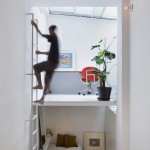
    With a mostly-open floor plan tucked into 60 square meters of space, the design challenge was to effectively fit the functionality of five rooms into the footprint of two.

    transformingspace

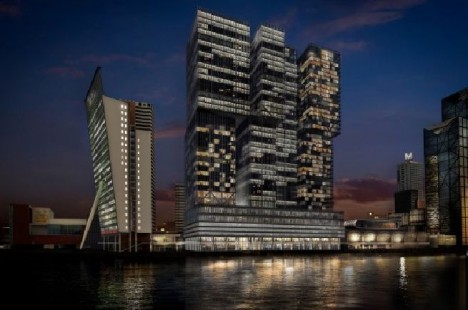
    The De Rotterdam project by star architect Rem Koolhaas, a Netherlands native and head of OMA, is the biggest building in the country but, being all about density, sports some of its smallest apartments as well.

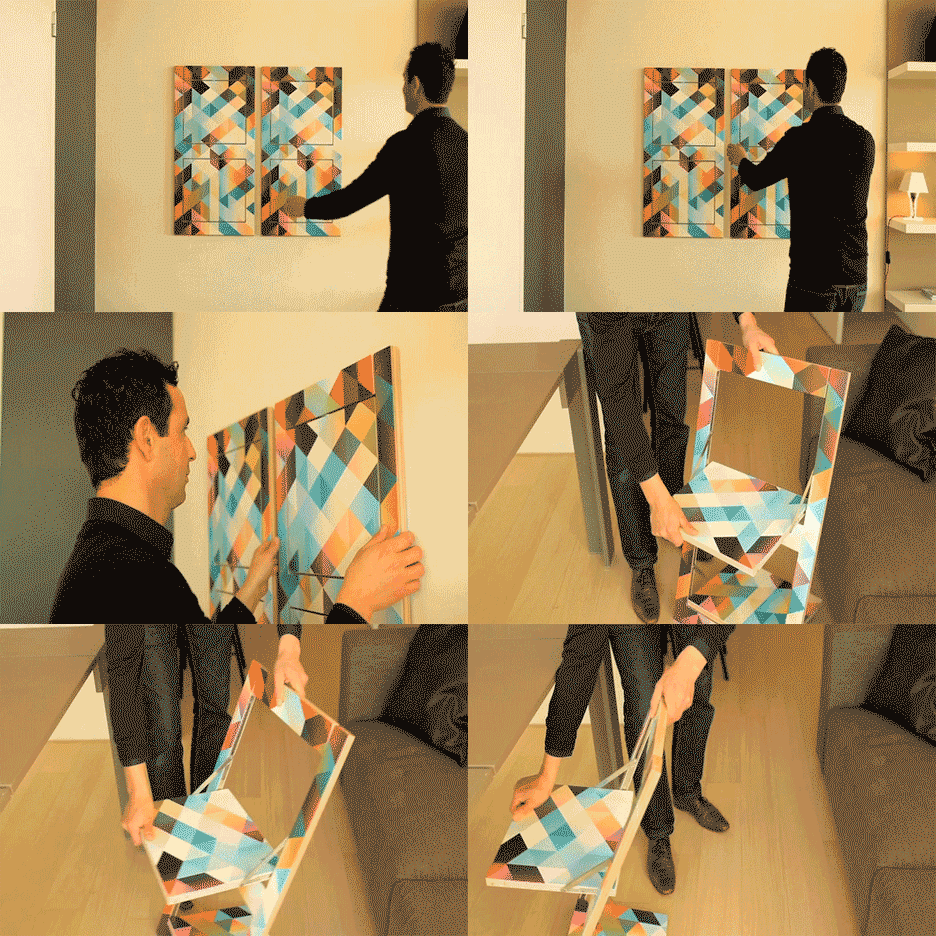
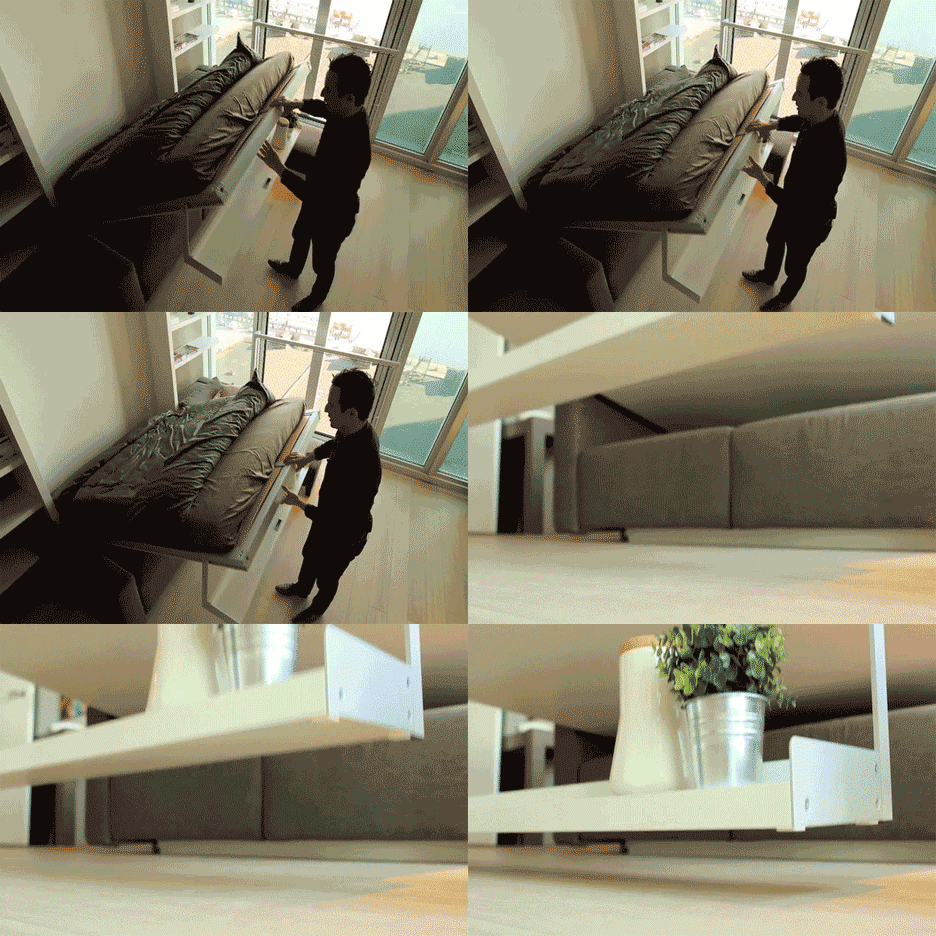
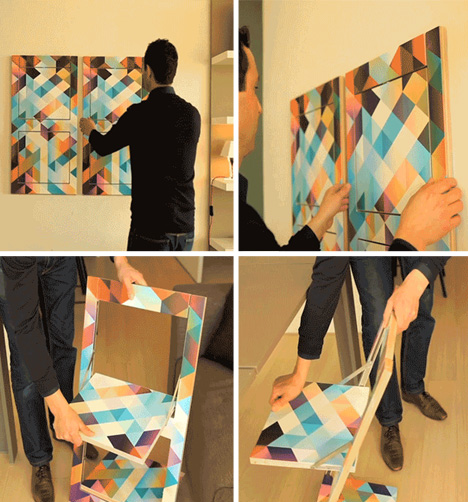
    A series of convertible furniture designs by Clei Italia makes it possible to expand side surfaces into dining tables, hang spare chairs on the wall and turn both desks and sofas into beds on demand.

    de rotterdam apartment complex

    The project’s developer,  Wim De Lathauwer, explains that the Dutch are used to thinking in multi-functional terms – making the most of every inch (or rather: centimeter) of available area.

    transforming chair design wall

    The approach not only to makes these small apartments livable for singles or couples, but also to allow the units to support surprisingly large gatherings and overnight guests as well. The living room and kitchen combination becomes a bedroom, dining room or office as needed.

    Share on Facebook


    [ By WebUrbanist in Design & Fixtures & Interiors. ]

    [ WebUrbanist | Archives | Galleries | Privacy | TOS ]


    WebUrbanist