RSS
 

Posts Tagged ‘Sports’

How to Capture the Perfect Action Shot in Sports Photography

08 Oct

Sports photography is a fun challenge for any photographer. There is plenty of intensity and emotion to be found at any competitive event. These elements combine to create the potential for some truly memorable images.

At the same time, the speed and unpredictability of some games can be intimidating. Especially if you are used to dealing with slower-moving subjects, like portraits or landscapes.

Never fear! This article will arm you with helpful knowledge so that your next brush with sports photography will result in some fantastic captures.

Getting your settings right
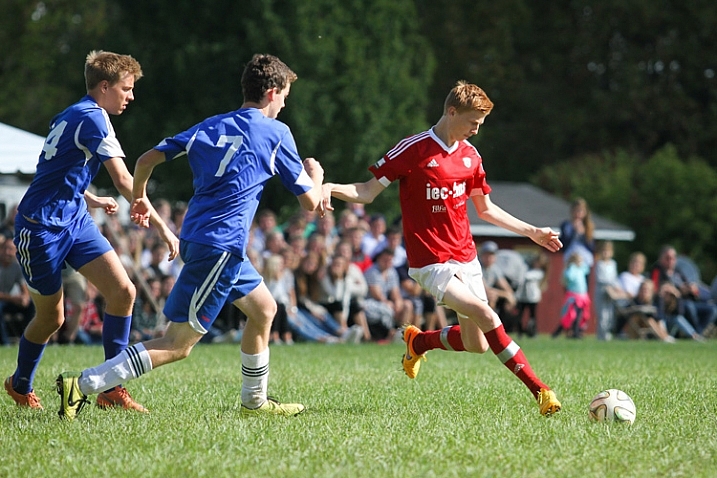
A soccer player about to kick a soccer ball, captured with a high shutter speed

This image was taken at 1/1600th of a second, which freezes the action completely. This super fast shutter speed is possible because there is a lot of sunlight.

Chances are that you’ve probably taken your fair share of blurry sports photo. Typically, players or athletes are moving at high speeds, and your camera doesn’t necessarily know for itself how to compensate.

Freezing the action

If you want to freeze the action in a photo, you’ll need to use to choose a fast shutter speed. But, how fast does it need to be? Well, that depends on the sport. 1/250th of a second should be enough to freeze kids playing soccer, but you’ll need to go a lot faster if you want to capture a baseball in mid-flight. Experiment and find what shutter speed you need to use in order to produce sharp images.

Adding motion

On the other hand, you can also experiment with slowing down the shutter speed and panning your camera throughout the picture to create a sense of speed and movement. It takes a bit of practice to get right, but if you match the speed of your subject, you can hold them in focus while the directional blur emphasizes the sense of movement.

Whenever possible, you will want to use a wide aperture, such as f/3.5 or lower. This will create a narrow depth-of-field, and helps the players to stand out, as the background distractions will be blurred.
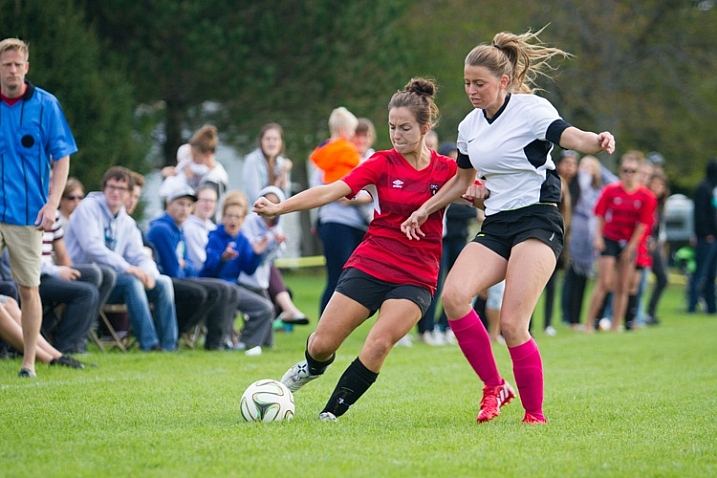
Two soccer players fighting for the ball with spectators watching the game behind them

This image was shot at an aperture of f/2.8 so that the spectators in the background don’t distract from the players chasing the ball.

If the sport is being held outside during overcast conditions or indoors with consistent lighting, consider using manual exposure mode and settings. It may take a bit of time to figure out, but you’ll get much more reliable and consistent images.

Pick your spots

When you first arrive at the field, arena, gym or track, consider all of your potential angles and options. Your options will be different depending on whether you have a short or a long zoom lens.

For many sports, you won’t be able to cover every angle. Getting up close with a wide-angle lens means you won’t be able to capture plays on the other side of the field. While using a long zoom means you may struggle to capture play right in front of you.

Find the “sweet spots” – the places on the field of play which are the perfect distance away for your camera and lens combination. You’re going to get your best images when the play is in these areas. Rather than trying to get an incredible picture when play is far away on the other side of the field, be patient and prepare so that you make the most out of every opportunity when play is in your sweet spots.
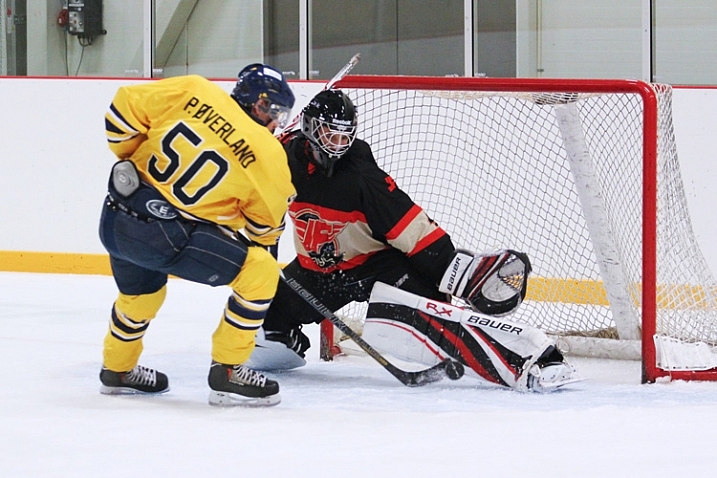
A hockey player tries to deke around the goaltender

When I stand near the benches with a 70-200mm lens, this play in front of the net is right in my sweet spot, which allows for strong composition.

Where possible, it’s a good idea to put yourself in a position where the players will be coming towards you. This allows you to see faces and get a better sense of depth than if you shoot from the sidelines and get a side profile view of everyone.
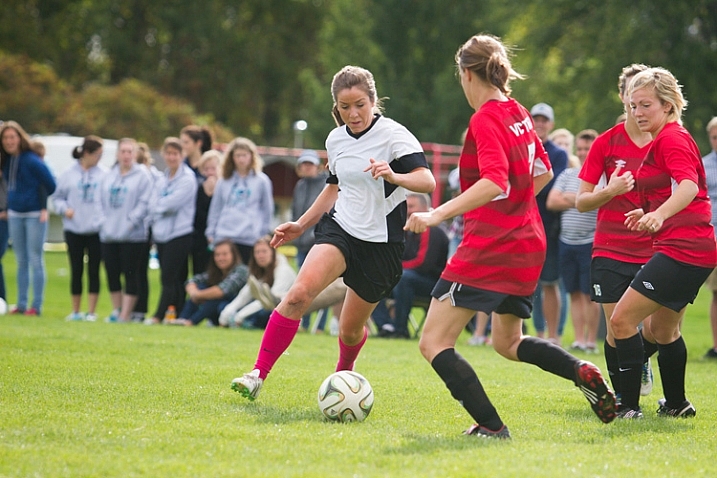
A female soccer player attempts to dribble the ball through two defenders

Get in the middle of the action

If you want to take a sports photo that will be memorable, you need to bring the viewer in as close as possible. Typically, this means using a zoom lens like the 70-200mm. If you don’t have a long zoom lens, simply get as close as possible to the field.

Perspective changes quite a bit as you zoom in. A wide-angle shot looks very different than a shot with full zoom (long telephoto). Consider how you can use this change in perspective to find some unique captures.

Many first-time sports photographers are nervous to zoom right into the middle of the action. Yes, it does come with some risks. You’re likely to snap plenty of frames where an unexpected zig or zag took the player partially out of the image. This is part of sports photography. Even the professionals aren’t able to nail the perfect shot every time.
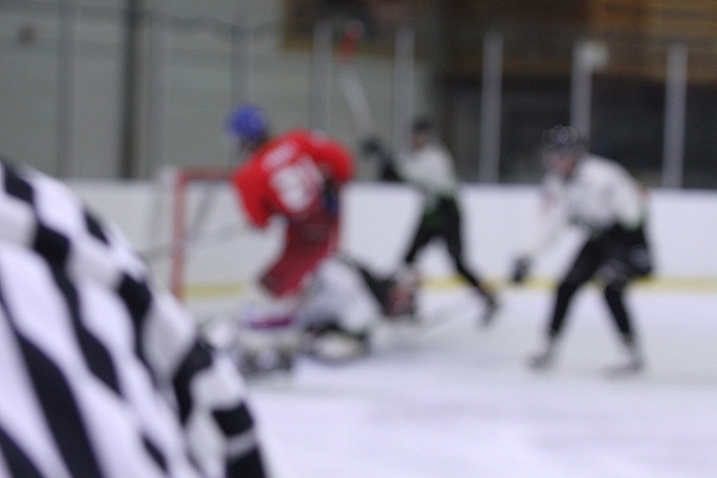
A hockey picture where the focus has missed

In this shot, the referee passed in front of the camera and messed up the focus. Don’t feel upset if some pictures turn out like this! These kinds of images will be very familiar to any sports photographer.

Risks sometimes pay off

If you have trouble following the play, it definitely is an option to play it safe by taking a wider shot and then cropping in closer afterward. But by taking a high risk, high reward approach to composition will result in some magnificent images!

Another reason to use zoom: To capture expressions!

The most memorable sports shots show faces full of emotion – whether that is the joy of the game, the thrill of victory or the agony of defeat.

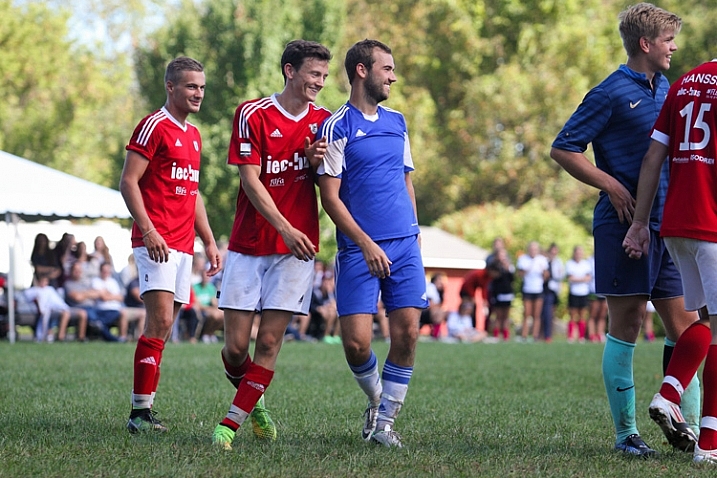
Image of hockey players celebrating on the ice after a goal

Image of two soccer players laughing while preparing for a corner kick

Timing is everything

There seems to be a furious competition between manufacturers to see who can make a camera that takes the most images per second.

Burst mode is an incredibly useful tool for sports photography, but all too often it can be a crutch. Just because you can take 10 pictures in one second doesn’t mean you should.
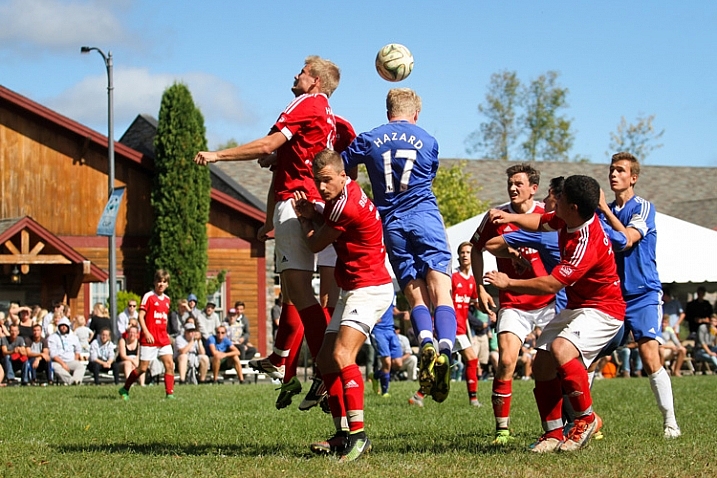
Soccer players attempting to head the ball into the net from a corner kick

Having the ability to take pictures in bursts should be secondary to anticipating the action. Understanding of the game and having a sense for what is going to happen next is more important than burst mode in every case. If you return from every event with thousands of pictures, all taken a fraction of a second apart, it’s going to be a strenuous job of sorting and finding the keepers.

With that said, burst mode can be a great tool if you don’t want to miss any opportunities and have lots of room on your card.

Lastly, don’t spend the whole game chimping! Chimping is when you get so caught up checking out all of your sweet pictures on your camera’s LCD screen that you miss an incredible play that happens right in front of you. Your pictures will still be there when the game is over. Focus on getting your shot!

Hitting your focus

Having the perfect settings, composition and timing won’t count for anything if you miss your focus.

With the possibility for spectators, colourful advertisements, and other players in the background of your images, your camera’s focus might wander and lock onto the wrong target.

For sports photography especially, you might want to consider using back button focus. With this method, your focus is controlled by a button on the back of your camera, which you can reach with your thumb. The shutter button doesn’t influence the focus at all.

By separating the actions of focusing and taking the picture, you will have greater control and independence over both roles. You may need to consult the manual for information on how to switch your camera to back button focus.

An sports action shot of hockey players fighting for the puck

Focus modes

Your camera comes with different focus modes that you can use to get more reliable results, even when dealing with fast and unpredictable subjects. The process for selecting these modes will be a bit different for every camera, so consult your manual for information on how to switch to these options.

First off, you can allow your camera to use all the focus points to determine the best target to lock onto. This can often go wrong, however, as the camera may choose the wrong point, leaving you with an out-of-focus image.

You can get a bit more specific with zone focus, which allows you to select a group of focus points that the camera uses to determine what it focuses on. This focus mode gives up greater control over what the camera locks onto, but still leaves some room for error.

If you want to be very precise, single point focus allows you focus based on just one point of your choosing. This is great if you want to focus on a specific player in a group. The drawback is that is may not be as accurate, and you may need to be very steady in order to stay locked on target.
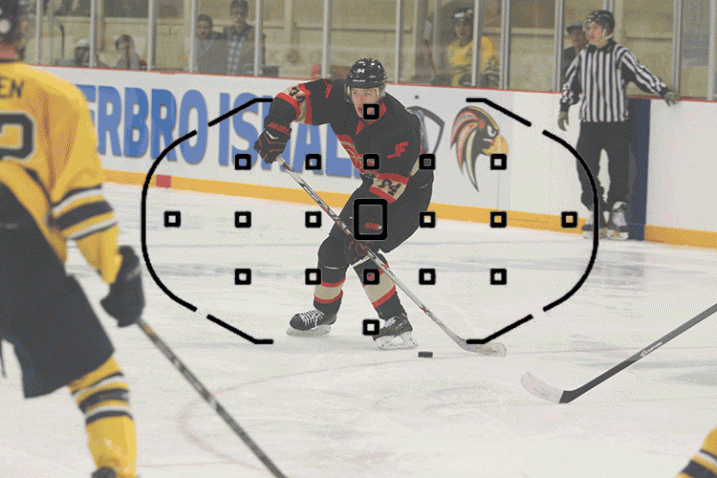
Shows all the different focus modes

This image shows three different focus modes as seen through a Canon 7D: Full Auto Focus, Single Point Focus, and Zone Focus

You can also select how the focus will track. These settings may have different names from manufacturer to manufacturer, but they do the same thing.

Continuous or AF-C (Nikon) / AI Servo (Canon):  In this mode, your focus will constantly seek for as long as you are holding your focus button down. This is ideal for moving subjects, and should be your first choice for sports.

Single or AF-S (Nikon) / One Shot (Canon):  In this mode, your focus will find a target and lock, even if you continue to hold down your focus button. While this is often slightly more accurate than servo focus, your subject may have already moved out of focus by the time you take the shot.

AF-A (Nikon) / AI Focus (Canon):  This mode is an intelligent blending of the two previous modes – it will determine if the target is moving and will lock or track accordingly.

Making the most of the focus technology your camera has to offer will play a big role in snapping some excellent sports shots!

Bonus tips and tricks

If you are photographing a car race or a long jump event, it can be a real challenge to track your subject in action. A fast moving car or runner isn’t an easy target for a lot of cameras.

One surefire way to hit your focus even under these tricky conditions is to prefocus. When using this technique, you pick a spot somewhere ahead on the track to carefully set your focus. Then, when your subject comes through, you simply snap the picture and voila!

Two hockey players in mid air after a body check collision

If you want to add drama and action to your images, consider shooting from a lower angle. This perspective can often make athletes seem heroic or larger than life. Shooting from a lower angle also means the background will show spectators or the opponents behind the player, giving a better sense of the setting and action.

Take Lots of Pictures!

When you get home and load the images on your computer, you’re going to find that many of your shots have missed focus, have players in awkward or unflattering angles, or other annoying distractions. This is perfectly normal! It isn’t easy to capture the chaos of sports, and you’re going to need to throw out a lot of shots.

Over time, as your feel for the game from behind the camera improves and as you begin to master these techniques, you will find yourself coming home with more and more keepers!

googletag.cmd.push(function() {
tablet_slots.push( googletag.defineSlot( “/1005424/_dPSv4_tab-all-article-bottom_(300×250)”, [300, 250], “pb-ad-78623” ).addService( googletag.pubads() ) ); } );

googletag.cmd.push(function() {
mobile_slots.push( googletag.defineSlot( “/1005424/_dPSv4_mob-all-article-bottom_(300×250)”, [300, 250], “pb-ad-78158” ).addService( googletag.pubads() ) ); } );

The post How to Capture the Perfect Action Shot in Sports Photography by Frank Myrland appeared first on Digital Photography School.
Digital Photography School

 
Comments Off on How to Capture the Perfect Action Shot in Sports Photography

Posted in Photography


Tips and Tricks to Help You Take Better Youth Sports Photos

07 Aug

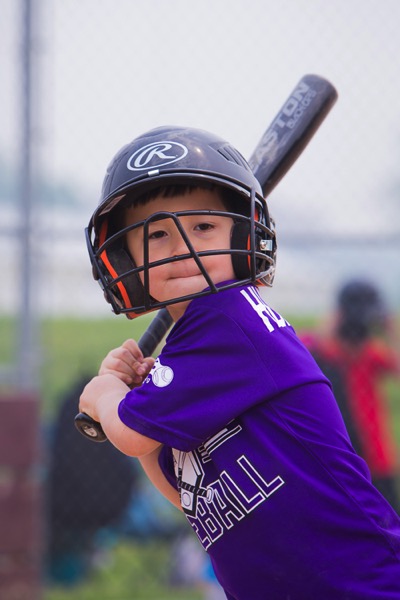
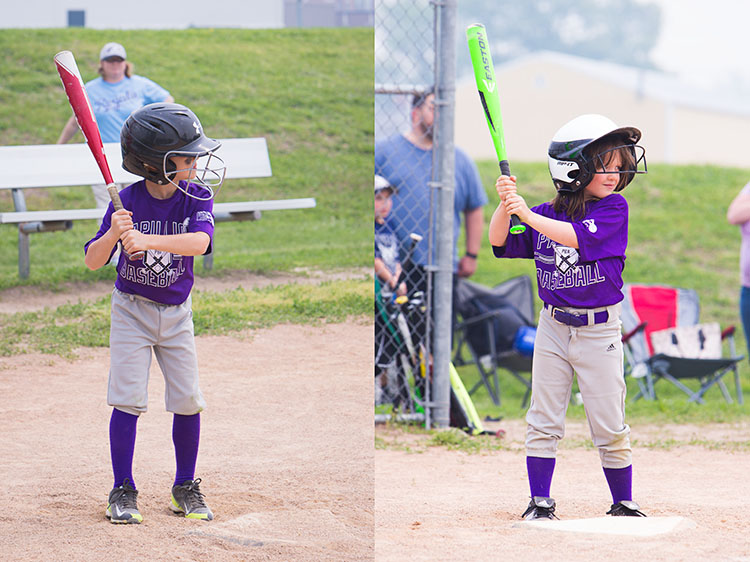
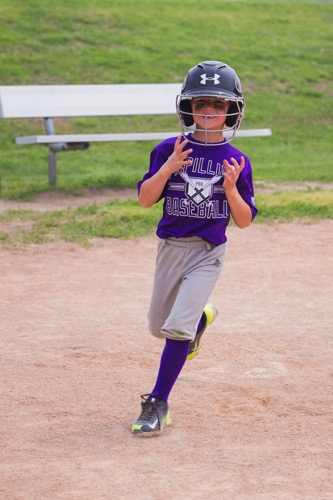
A favorite photography subject of any parent is their child’s sporting activities. But, sports photography can be challenging for the beginning photographer. It requires a robust understanding of camera settings and how they relate to one another. It can also be hugely rewarding to capture exhilarating moments that will be cherished for years to come.

Here are a few tips and Tricks I’ve learned for getting awesome sports photos.

_88J6306

1 – Know the Sport

Every sport has the picture perfect moment. You know the one – the horse with its leg tucked just so, or the peak of the handstand. The moments captured on trading cards, or those that appear on the front covers of sporting magazines are good examples.

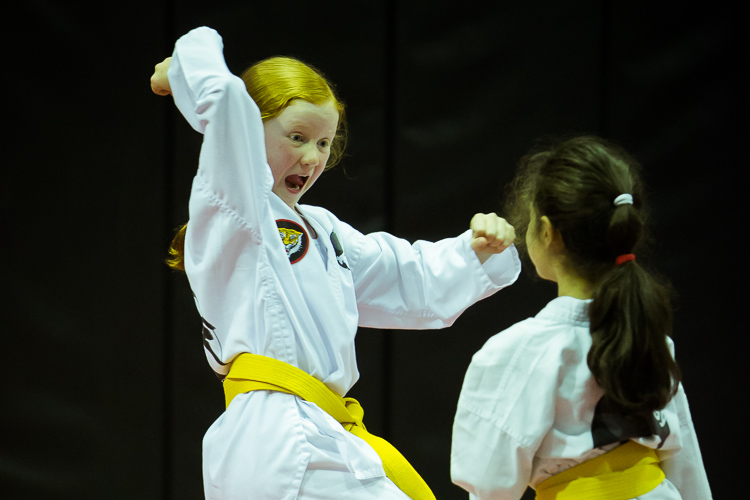
Chances are that because you’ve sat on the same bleachers week after week, that you know your child’s sport inside-out. A good sports photographer can anticipate the play, and is ready to capture the shot. For sports that are routine based – gymnastics, figure skating, equestrian, and the like – be sure to watch the practice so you’ll know when and where the picture perfect moments will occur, and where you need to position yourself to capture them.

Sports 2

Capturing the passion of the athlete. The flare from the flash in the background was a happy accident. Exposure info: 85mm, f/6.3, 1/160th, ISO 500.

2 – Be Courteous

Before the game, have a chat with your child’s coach and make sure it’s okay for you to photograph the game – some sporting organizations have special rules for photographers which you’ll need to be aware of beforehand. During the game, be courteous to the other parents who are watching their own children. Please don’t be “that guy”, taking up half the bleachers with mountains of gear, or the one standing at the front, blocking the view of others.

3 – Choose your Lens

Generally speaking, longer lenses are better for sports photography, as the action is occurring some distance from you (and it’s uncool for a parent photographer to be on the field during play). A lens around 200mm is a good place to start. If you’ve just won the lotto, I’m well informed that professional 400mm and 600mm lenses are awesome (they can also be rented if you really want to try them out, and don’t have a winning lotto ticket in your back pocket).

Sports 6 Sports 7

Exposure info on above images: 200mm lens, ISO 200, f/5.6, 1/320th of a second.

4 – Get the Camera off Auto

Yes, I know your camera has a sports/action mode. It might even have a cute little picture of someone running. But shooting sports in manual mode (or at least shutter priority) is a perfect way for you to learn how the exposure triangle works. It will also be a lesson in compromise because I can pretty much guarantee that unless you’re shooting in bright sunlight, something will have to give. Do you accept high ISO noise but stop the action, or do you accept some motion blur for less noise?

Sports 1

Shooting the pause moments. Note the ridiculously high ISO needed for this dimly lit indoor venue. Exposure info: 105mm, f/4, 1/160th, ISO 10,000.

Shutter Speed – Sports shooting is one occasion where the age old adage of “minimum shutter speed = 1/focal length” doesn’t work. In reality, you’ll need to go much faster if you want blur-free images. To stop action at walking speed, try at least 1/250th of a second. For running, you’ll need 1/500th or faster. If these shutter speeds aren’t possible (most likely due to low light), try to anticipate and shoot the posed moments – those times when the athlete pauses for a microsecond (image above). It might be landing a trick, a look before throwing the ball, the moment before throwing a punch.

Sports 10 Sports 4

Exposure info on above images: 200mm lens, ISO 200, f/5.6, 1/320th of a second.

Aperture – Shoot with the largest aperture your lens allows. Professional lenses will generally open up to f/2.8. This will have two benefits – you’ll minimize depth of field (throwing the background out of focus and drawing more attention to your subject), plus you’ll be letting more light in (thus allowing a faster shutter speed).

Sports 9 Sports 8

Exposure info on above images: 200mm lens, ISO 200, f/5.6, 1/320th of a second.

ISO – You’ll often have to shoot at a high ISO to get enough light, especially if you’re shooting indoors. Trial and error will tell you how high your camera can go while still achieving an acceptable image. If you end up having to shoot at ISO 6400 and end up with a noisy image, just turn it black and white and tell people (in your best British accent), “It’s art, dah’ling!”

Focus mode – Check that your focusing mode is set to Continuous or Servo mode. This will ensure that the camera is constantly recalculating focus as you track a moving subject in your viewfinder. Every camera will handle this slightly differently, so it’s worth thumbing through your camera manual to understand how your particular model works.

5 – Get Down Low

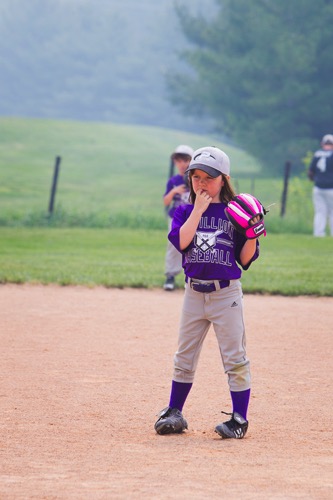
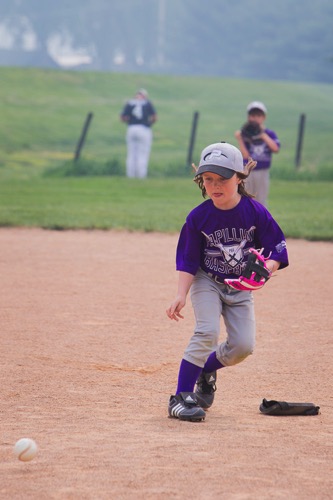
Many beginner photographers make the mistake of shooting from a standing position. For youth sports, this means that they are generally shooting down on the athlete – not a very flattering angle. Instead, try kneeling on the ground for a better perspective.

These two images, taken from different camera angles, show how shooting from a lower angle can make all the difference.

These two images, taken from different camera angles, really show how shooting from a lower angle can make all the difference. Notice you can see more of her face in the image on the right, taken from a lower camera position.

Exposure info on above images: 200mm lens, ISO 200, f/5.6, 1/320th of a second.

6 – Practice

As with all genres of photography, practice makes perfect. Try different angles or shooting from different positions around the field to see what works best. I guarantee you’ll see improvement as you keep shooting.

7 – Beware the Light Cycle

If your sport is being played in a large indoor venue (or outdoors at night), more than likely it will be lit by cyclic lights (mercury vapor, sodium vapor, fluorescent, etc). These cheap and efficient lights are a sports photographer’s worst nightmare. Unlike natural sources, these lights emit certain frequencies, and completely miss others, resulting in a unique color temperature that is difficult, if not impossible, to properly white balance in camera.

In addition – and completely undetectable to the naked eye – these lights have distinctive cyclic patterns, varying in both light intensity, and color temperature, multiple times per second. Shooting under them can be very much a hit-and-miss affair. Sometimes you’ll catch the light in a blue phase of the cycle; a millisecond later you’ll get magenta. You might get slightly darker, or brighter. Sometimes neighboring lights will be on different cycles, so part of your photograph will be dark and part will be light, each with a different color temperature. (Don’t believe me? Try this test: under a fluorescent light, set your camera to manual with a fast shutter speed like 1/250th, take a series of identical images in rapid succession, then compare the frames. The faster the shutter speed you pick, the more the effect will be visible.)

The lights here cycled yellow.

This image was shot under sodium vapor lights and shows the intense yellow frequencies emitted by this type of light, even with the camera color balanced for the white uniforms. Exposure info: 150mm, f/3.2, 1/320, ISO 5000.

Commercial architecture photographers combat this problem by lowering the shutter speed to allow more than one full cycle of light to be read by the sensor. However as we’ve already discussed, slow speed doesn’t usually work for action sports photography. Worse, many sports in these type of venues (equestrian, figure skating, gymnastics) don’t allow flash for player safety reasons, so you’re stuck using available light.

There is nothing you can really do about cyclic lights, other than to simply take more photos, and pray that you hit the cycle right. For odd colors, you could play with the individual channels in Photoshop, or convert the entire thing to black and white (this will be the only time you’ll ever hear me say “fix it in post-production”).  Regardless, it is something that you should be aware of so you don’t make yourself crazy trying to figure out why you got the results you did.

8 – Have Fun

Sports 5 Sports 3

Exposure info on above images: 200mm lens, ISO 200, f/5.6, 1/320th of a second.

Youth sports are all about participating and having fun. Photographing them is no different. If your cherub is playing in the sand or picking her nose instead of chasing the ball, capture it! These are the memories you’ll treasure one day (or so they tell me). And remember that it’s okay to put the camera down sometimes and just enjoy the game too.

googletag.cmd.push(function() {
tablet_slots.push( googletag.defineSlot( “/1005424/_dPSv4_tab-all-article-bottom_(300×250)”, [300, 250], “pb-ad-78623” ).addService( googletag.pubads() ) ); } );

googletag.cmd.push(function() {
mobile_slots.push( googletag.defineSlot( “/1005424/_dPSv4_mob-all-article-bottom_(300×250)”, [300, 250], “pb-ad-78158” ).addService( googletag.pubads() ) ); } );

The post Tips and Tricks to Help You Take Better Youth Sports Photos by Rebecca Olsen appeared first on Digital Photography School.

Digital Photography School

 
Comments Off on Tips and Tricks to Help You Take Better Youth Sports Photos

Posted in Photography


Brian “Babs” Babineau: Boston’s Premier Pro Sports Photographer

10 Jun

In 2008, just moments before the Boston Celtics defeated the Lakers to win the NBA Championship, Brian Babineau spotted Celtics All-Star Paul Pierce approaching Coach Doc Rivers with a cooler full of Gatorade.

Instinctively, he got up, backed off, lifted his camera and pressed the shutter.

The iconic shot of Rivers under a deluge of orange electrolytes is one that basketball fans will look back on years from now and treasure.

But today is just a regular day for the Celtics team photographer more commonly known as “Babs.” Read along as we follow Babineau for the day at a Celtics home game against the Utah Jazz and learn what it takes to be Boston’s go-to pro-sports photographer.

(…)
Read the rest of Brian “Babs” Babineau: Boston’s Premier Pro Sports Photographer (991 words)


© laurel for Photojojo, 2016. |
Permalink |
No comment |
Add to
del.icio.us

Post tags:


Photojojo

 
Comments Off on Brian “Babs” Babineau: Boston’s Premier Pro Sports Photographer

Posted in Equipment


Nikon D5: A pro sports photographer gives us his opinion

05 Jun

Nikon D5: a pro photographer’s opinion

A Bahaman athlete, shot through the flame and heat haze in the Olympics Stadium in the 4 x 100m Mens Relay – London Olympics 2012.

Nikon D4, Nikon 300mm F2.8, 1/500 sec F4 ISO 800. Photograph by Mark Pain


The Nikon D5 has impressed us with its speed and reliability, and earned a gold award when we reviewed it recently. But we don’t pretend to represent the camera’s core market of sports professionals and photojournalists. That’s why we turned to Mark Pain, a UK-based sports photographer and Nikon shooter, to get his opinion on the D5. Click through this article to learn how Mark got started, what makes a good camera for his needs, and how the D5 is measuring up.

Nikon D5: a pro photographer’s opinion

Zara Tindall (Phillips) jumps the lake At Badminton, on her horse High Kingdom.

Nikon D5, Nikon 400mm F2.8, 1/3200 sec F3.5. ISO 320. Shot using AF-C in D25 area AF mode. Photograph by Mark Pain


Mark Pain:

The first thing you notice when you use a D5 is the blisteringly fast and accurate autofocus. Many cameras feel quick and responsive the first time you pick them up, but very few continue to fill you with more and more confidence every time you use them. But the D5 does just that. It takes everything the D4s did well and improves on it. But most importantly Nikon seemed to have listened to photographers’ feedback on what wasn’t so good about the D4s and transformed those areas of performance with a total redesign.

The new AF system is nothing short of sensational. If you set the camera up properly the D5 doesn’t miss a beat. User error is far more likely to be the reason for a missed shot than the camera letting you down, even for the best of photographers.

Nikon D5: a pro photographer’s opinion

David Weir celebrates winning his third gold medal in the 1500m – London Paralympics 2012.

Nikon D4, Nikon 300mm F2.8, 1/1250 sec at F2.8. ISO 2000. Photograph by Mark Pain


I’ve been shooting sport professionally for over 25 years now, since I was 22. But I got the bug for photography and especially for photographing movement just after I was given my first SLR for my 13th birthday. I loved my fully manual Fujica STX-1 when I was asked to shoot some pictures of my school Sportsday for the school magazine, I was hooked.

The Fujica STX-1 was a superb camera for a young photographer to learn with, fully Manual and extremely well built. It made me concentrate on and master all the fundamentals of photography, fundamentals that remain the backbone of my photography today.

Nikon D5: a pro photographer’s opinion

Mark’s kit-bag. Nikon D5, Nikon D4s, Nikon 70-200mm F2.8, Nikon 24-70mm F2.8, Nikon 14-24mm F2.8, Nikon TC14 1.4x converter MkIII, Nikon 16mm F2.8, Nikon SB-800 Flashgun inside a Think Tank Airport International rolling case.


There have been two huge developments in photography since I started out; the coming of autofocus and the move from film to digital. As a professional there have been times when these changes have caused major headaches. AF systems take time to get right and professional sports photographers tend to be on the receiving end of their failings or quirks. Often the technical ability of the cameras in the field (even the top end Pro SLRs/DSLRs ) has lagged behind what the manufacturers claim to have achieved on paper. Especially when it comes to autofocus.

Nikon D5: a pro photographer’s opinion

The British Mens Team Pursuit team on their way to breaking the world record at the Beijing Olympics 2008.

Nikon D3, Nikon 70-200mm F2.8, 1/15th sec at F8, ISO 200. Photograph by Mark Pain


A camera’s success is dependent on three crucial aspects of its design and spec coming together in harmony; sensor performance, the processor used in the camera and the firmware. For me, the first digital camera that married all these important factors together was the Nikon D3. The D3 changed my world and I switched from Canon to Nikon in the January of 2008 because of it, and I took the D3 to the Beijing Olympics later that year. To my mind the D3 was the best balanced professional sports camera. Until the D5.

Nikon D5: a pro photographer’s opinion

Zara Tindall (Phillips) jumps the lake At Badminton, on her horse High Kingdom.

Nikon D5, Nikon 400mm F2.8, 1/3200 sec F3.5. ISO 320. Shot using AF-C in D25 area AF mode. Photograph by Mark Pain


The D5 seems to have that same balance, ease of performance and feeling of class that the D3 had. It’s the camera the D4 and D4s so nearly were. Of course it’s early days and I’ve only been shooting with it for a month or so. A camera’s abilities can only be fairly judged over a much longer period of time in a far wider variety of conditions than I have used the D5 in so far. How the camera performs at a rain soaked night match at a dark non-league football ground in the early rounds of FA Cup at 8000 ISO is just as important as how it performs at 200 ISO in bright sunshine at the Final at Wembley.

But the Olympics is the ultimate test of any camera claiming to have a sports pedigree and I’m seriously excited to be heading to Rio in a couple of months time with a couple of D5s at my side. The huge variety of sports both indoors and outdoors and the technical challenges they present will push the camera to its limits.

Nikon D5: a pro photographer’s opinion

Jesse Lingard celebrating his winning goal in the FA Cup Final.

Nikon D5, Nikon 70-200mm F2.8, 1/2000th sec at F2.8, ISO 2000, Shot using AF-C in D25 area AF mode. Photograph by Mark Pain


The sequence of 28 consecutive Raw frames I recently took of Manchester United’s Jesse Lingard celebrating his winning goal at the FA Cup Final confirmed the true AF performance of the D5. Every frame was sharp and in focus. Every frame. Camera manufacturers show sequences of sprinters running towards the camera in their brochures to try and sell the AF tracking performance of their new equipment. But that kind of movement has been easy for cameras to track for a long time.

Nikon D5: a pro photographer’s opinion

The next day’s papers!


In the real world of top professional and dynamic team sport with lots of random movement, AF systems inherently struggle. But the D5 has proved to be extremely capable and with a Nikon 70-200mm F2.8 the Lingard celebration was technically faultless.

Nikon D5: a pro photographer’s opinion

Saracens v Harlequins at Wembley Stadium in the Aviva Premiership Championship.

Nikon D5, Nikon 400mm F2.8, 1/2000 sec F2.8 ISO 1100. Shot using AF-C in D25 area AF mode. Photograph by Mark Pain


Even at ISO 2000 the files look sharp with a complete lack of noise or signs of in camera over-processing. Now that the D5 has 20.8 megapixels a shutter speed of at least 1/2000th is needed to freeze most fast moving sport. What many people don’t realise is that the more megapixels you have the faster shutter speeds necessary to freeze the same action. In real camera terms, six years ago I would have been shooting the whole of this year’s FA Cup Final on a D3s on a shutter speed of 1/800th sec. This year I was shooting the match at 1/2000th sec on a D5 – to freeze the very same type of images.

Mark Pain is a multi-award winning UK-based sports photographer who covers major events worldwide from the Olympic Games to the Ryder Cup. Mark was the Chief Sports Photographer for The Mail On Sunday for more than 20 years, and was named Sports Photographer of the Year in 2005 and 2011 at the British Press Awards. Mark launched the first ever Sports Photography School in 2011, and was named the British Airways Olympic Photographer Of The Year 2012 at the prestigious UK Guild Of Picture Editors Awards.

Articles: Digital Photography Review (dpreview.com)

 
Comments Off on Nikon D5: A pro sports photographer gives us his opinion

Posted in Uncategorized


Radical Aquatic Recreation: 10 Extreme Water Sports

14 Mar

[ By Steph in Gadgets & Geekery & Technology. ]

water sports jet pack 5

Whether powered by jet packs or taking the capabilities of the human body to whole new depths (literally,) these water gadgets and activities multiply the fun and danger of more conventional water sports like surfing and wake boarding. A shockingly realistic shark-shaped personal watercraft jumps out of the water, an Iron Man suit propels you high up into the air and a water ‘wing’ lets you fly beneath the surface.

Seabreacher
water sports seabreacher 6

water sports seabreacher

water sports seabreacher 2

waters ports seabreachers 3

water sports seabrachers 4

Designed to look like sailfish, killer whales, sharks and other large sea creatures, the Seabreacher is actually a two-person underwater vehicle dubbing itself “the ultimate diving machine.” It looks pretty insane when it bursts up out of the water in a dramatic leap, and has likely terrified more than a few nearby boaters when spotted doing so in the wild. An acrylic canopy and underwater view ports give the pilot and passenger a nearly 360-degree view as they ‘fly’ through the water. The dorsal fin acts like a snorkel during the 5-10 second periods in which you dive below the surface to a depth of 5-6 feet.

Water Wing for Flying Underwater
water sports wing

water sports subwing 2

water sports subwing 3

Have you ever gone wakeboarding and wished that you could dive below the surface of the water temporarily while being pulled behind the boat? A device called the Subwing makes that possible with a twistable joint in the center of a fiberglass or carbon fiber board towed behind a boat. Just angle the board so you dip under the water and stay under for as long as you like, using the bend in the board to steer, before popping back up.

JetSurf
water sports jetsurf

water sports jetsurf 2

water sports jetsurf 3

water sports jetsurf 4

Add a jet ski engine to a surfboard and what you get is a JetSurf, an ultralight carbon and kevlar board that can reach a top speed of 35mph and carry a 3-liter fuel tank that’ll take you on a 45-mile trip. It weighs about 30 pounds, it’s fairly compact and it floats. The experience is intended to be a sort of super-powered version of surfing. The prices start at $ 12K.

Deep Freediving
water sports freediving

water sports freediving 2

water sports freediving 3

Free diving is incredibly dangerous and strikingly beautiful to watch, as evidenced by this video of fearless diver Guillame Néry reaching the bottom of the world’s deepest salt water blue hole attests. Dean’s Blue Hole is an amazing 603 feet deep. Free divers are able to hold their breath for far longer than most people, relying on the capacity of their own lungs rather than breathing apparatus like scuba gear. It’s undoubtedly exhilarating, and there are dozens of things that can go terribly wrong. The world’s greatest free diver, Natalia Molchanova, disappeared in the Balearic Sea in 2015 after failing to surface from a recreational dive. It’s likely that she was swept away by a strong underwater current.

Next Page – Click Below to Read More:
Radical Aquatic Recreation 10 Extreme Water Sports

Share on Facebook


[ By Steph in Gadgets & Geekery & Technology. ]

[ WebUrbanist | Archives | Galleries | Privacy | TOS ]


WebUrbanist

 
Comments Off on Radical Aquatic Recreation: 10 Extreme Water Sports

Posted in Creativity


Keeping up with the big boys? Shooting pro sports with the Sony a7R II

05 Nov

On paper, the Sony a7R II is one of the best-specified cameras we’ve ever tested, and it is generating a lot of interest. We wanted to see whether the a7R II’s impressive specifications live up to their promise in the real world, so we decided to subject it to perhaps the ultimate stress test: a professional sporting event. DPReview writer Jordan Stead headed to a pre-season NFL game to see what the a7R II could bring to the football field. Read more

Articles: Digital Photography Review (dpreview.com)

 
Comments Off on Keeping up with the big boys? Shooting pro sports with the Sony a7R II

Posted in Uncategorized


Professional school and sports photography programming added to WPPI 2016 schedule

05 Nov

Emerald Expositions, the company that owns PhotoPlus Expo and the WPPI Wedding and Portrait Photography Conference, announced today the formation of a new association – the Professional School & Sports Photographers Association. The group will exist under the company’s Photo+ umbrella, alongside properties that include PPE, WPPI, PDN and Rangefinder magazine. Read more

Articles: Digital Photography Review (dpreview.com)

 
Comments Off on Professional school and sports photography programming added to WPPI 2016 schedule

Posted in Uncategorized


Q&A: Gearing up for the National Football League with sports photographer Otto Greule

16 Sep

As the National Football League season sweeps in, sports photographers across the United States take to the stadiums to create iconic images. In a Q&A below, veteran sports photographer Otto Greule shares insider knowledge & outstanding imagery to give insight into his fast-paced, visual craft.

Articles: Digital Photography Review (dpreview.com)

 
Comments Off on Q&A: Gearing up for the National Football League with sports photographer Otto Greule

Posted in Uncategorized


One One-Thousandth of a Second: Shooting Sports and Fast Action

05 Aug

Whether you’re a sports fan or not, if you’re a photographer, you’ll probably find yourself taking photos of some fast-paced competitive action at some point. If you’re used to shooting in a nice, controlled environment, like a studio, or if you’re used to street photography, where your subjects are probably walking at a normal, relatively slow pace, shooting a sporting Continue Reading

The post One One-Thousandth of a Second: Shooting Sports and Fast Action appeared first on Photodoto.


Photodoto

 
Comments Off on One One-Thousandth of a Second: Shooting Sports and Fast Action

Posted in Photography


Sports Illustrated lays off last remaining staff photographers

24 Jan

On the eve of the Super Bowl, Legendary US-based sports publication ‘Sports Illustrated’ has laid off its remaining six full-time staff photographers. According to Sports Illustrated director of photography Brad Smith, speaking to News Photographer Magazine, the decision was made due to ‘economic circumstances’. Click through to read more, including an interview with Jordan Stead, staff photographer for the Seattle Post Intelligencer.

Articles: Digital Photography Review (dpreview.com)

 
Comments Off on Sports Illustrated lays off last remaining staff photographers

Posted in Uncategorized